RSS
 

Archive for July, 2020

Nikon Z-mount 1.4x and 2x teleconverters arrive in August

21 Jul

$ (document).ready(function() { SampleGalleryV2({“containerId”:”embeddedSampleGallery_3643298427″,”galleryId”:”3643298427″,”isEmbeddedWidget”:true,”selectedImageIndex”:0,”isMobile”:false}) });

Nikon has announced that it will add two teleconverters to its mirrorless Z-series lineup this summer: the Z Teleconverter TC-1.4x and TC-2.0x. Both are weather-sealed, with fluorine coatings on front and rear elements to resist smudges, and retain autofocus capabilities with all AF points up to F11. The teleconverters will be compatible with ‘select’ Nikkor Z lenses, including the 70-200mm F2.8 VR S. It’s likely (but unconfirmed) that they’ll also work with the 100-400 and 200-600mm tele-zoom lenses currently on the Z-mount roadmap that should be released next year.

Both teleconverters are compact designs with a protruding front element meaning that, like recent F-mount equivalents, they cannot be ‘stacked’ or combined.

The 1.4x and 2.0x teleconverters will sell for $ 550 and $ 600, respectively, and will go on sale in late August. They will be sold alongside the previously-announced but delayed Z 70-200mm F2.8 S, which is expected to become available in the same timeframe.

Press release

EMBARK ON THE FULL-FRAME MIRRORLESS JOURNEY: NIKON UNVEILS THE Z 5, AN INNOVATIVE AND FEATURE-RICH MIRRORLESS FX-FORMAT CAMERA FOR EMERGING CREATORS

Nikon Expands the NIKKOR Z Lens Lineup with the Addition of the Extremely Compact and Versatile NIKKOR Z 24-50mm f/4-6.3 as well as the new Z TELECONVERTER TC-2.0X and TC-1.4X; Nikon Also Announces Free Webcam Utility

MELVILLE, NY (July 21, 2020) – Today, Nikon Inc. announced the Z 5, the new full-frame (FX-format) entry-point into its award-winning lineup of Z series mirrorless cameras. The Nikon Z 5 combines sophisticated features inherited from the Z 7 and Z 6 with the benefits of Nikon’s next generation Z mount at an unprecedented value. For those new to mirrorless or creators looking to push the limits of their craft with the power of full-frame, the compact Z 5 will exceed expectations. With an incredibly robust feature set, including in-camera vibration reduction (VR) image stabilization (IBIS) and the perfect balance of seamless automation and full manual control, creators can effortlessly share their artistic passions, travel adventures and so much more.

Nikon also unveiled the new NIKKOR Z 24-50mm f/4-6.3, the shortest, lightest and most affordable full-frame zoom lens in the NIKKOR Z lineup. Designed for on-the-go creators, the 24-50mm lens is the ideal companion for Z series users who want to capture it all – from vast landscapes and cityscapes, to street photography and striking portraits.

“The Nikon Z 5 offers the next generation of creators a gateway into the full-frame Z series lineup, opening the door to the limitless possibilities of mirrorless photo and video capture, while providing the means to share their creativity with others,” said Jay Vannatter, Executive Vice President, Nikon Inc. “With the addition of the NIKKOR Z 24-50mm f/4-6.3, Nikon is introducing the smallest full-frame NIKKOR Z lens to date, providing an extremely lightweight, versatile option to help users pursue all creative endeavors, regardless of which Z series camera they use.”

Nikon Z 5: The Full-Frame Journey Starts Here
As the new entry point to Nikon’s full-frame mirrorless lineup, the Nikon Z 5 offers a lot of power and capabilities at an attractive price, empowering the next generation to begin their journey with the confidence to learn and grow as creators.

  • Incredible Image Quality: Featuring a powerful FX-format 24.3-megapixel CMOS sensor, the Z 5 is the gateway to the benefits of full-frame, helping creators to capture intensely detailed images, ultra-shallow depth of field and clean low-light shots with unrivaled consistency. From portraits that flatter, nighttime landscapes that astound and street shots that impress, the gorgeous tones, faithful colors, minimal noise, and revered Nikon color science all play a part to help users capture images that are true to their vision.
  • High Speed Performance and Processing: Engineered with the EXPEED 6, Nikon’s fastest image processor to date, the Z 5 is a dependable, high-performance tool designed for content creation. EXPEED 6 allows for a boost in processing power and energy efficiency while rendering subtle textures and small details with amazing results.
  • Stellar Low-Light Performance: With an ISO range up to 51,200 (expandable to 102,400), the camera effectively reduces noise, maintaining both high sensitivity and resolution to excel in low-light situations, making it ideal for shooting everything from low-light events to an all-nighter under the Milky Way.
  • Capture with Speed: With shutter speeds up to 1/8000, the Z 5 can capture fast-moving subjects with clarity including fast-action sports and wildlife. This higher maximum shutter speed enables photographers to better tame even the brightest mid-day light to unleash the potential of fast-aperture NIKKOR glass. When the moment strikes, the camera can also capture full resolution bursts at 4.5 fps with full AF/AE.
  • Silent and Smooth: The combination of the camera’s silent photography mode and In-Body 5-Axis VR stabilization provides quiet, stable shooting to document sensitive moments without distractions.
  • Vast Lens Selection: Whether shooting glamorous portraits from a studio on the sidewalk, long-distance wildlife, epic wide landscapes in the field or street photography, the growing lineup of NIKKOR Z lenses provides Z 5 users the versatility to capture incredible shots with sharpness across the frame and superior light gathering in any situation. For even more flexibility, the vast array of traditional F-mount NIKKOR lenses can be used via the Mount Adapter FTZ to enhance images with a unique focal length or beautiful bokeh, while gaining the benefits of in-body stabilization.
  • Dual UHS-II SD Card Slots: Equipped with two UHS-II card slots for overflow, backup or separating RAW and JPEG photos, the Z 5 enables photographers to shoot with extreme confidence when using widely available consumer SD cards.

Simple Yet Sophisticated for Expanding Creativity
A great option for emerging creators getting started, the Nikon Z 5 is packed with powerful tools and user-friendly controls to help users explore and capture their artistry with ease.

  • Focus Anywhere: The Z 5 boasts 273[1] on-sensor AF points, to quickly and accurately track subjects throughout the frame, while Eye-Detection AF capabilities help precisely capture the eyes of humans and animals. The wide array of AF points covers nearly the entire frame, and multiple AF modes allows the user to have pinpoint control or fully automatic assurance to easily lock onto a subject.
  • Easily Shift Gears: The Nikon Z 5 offers the ability to effortlessly switch between manual mode for the ultimate in control, as well as a large variety of automatic creative modes to help mirrorless users capture truly distinct images and video.
  • Creativity Built-in: Equipped with 20 Creative Picture Controls, and advanced features like Focus Shift Shooting and multiple exposure mode, users can compose unique images, produce extraordinary depth of field, or combine several shots and layer images on top of each other with the in-camera image overlay function.
  • Advanced Video Capture: The Z 5 makes it easy to document any creative vision in 4K UHD/30p[2] or in 1080/60p (full-frame). When recording video, the PDAF system is rapid to react, allowing users to quickly lock critical focus on subjects, and is fully customizable to fit any production style. In-camera VR image stabilization and electronic VR reliably eliminate the shake when shooting video, plus users get the added benefit of focus peaking and the ability to capture stills while recording.
  • Flexible Recording Modes: In addition to the traditional interval timer and in-camera time-lapse modes, the Nikon Z 5 is equipped with a new Time-Lapse Movie mode that gives users the best of both worlds for more streamlined movie making – the ability to use images from interval timer mode and create a time-lapse in-camera.
  • Unique Lighting Options: For enhanced creative control, the camera features a hot shoe, and is fully compatible with the Nikon Speedlight wireless lighting system.
  • Get Connected: The Nikon SnapBridge[3] app makes it easy to remotely control the Z 5 or seamlessly transfer and share content to a smartphone, tablet, Mac, or PC thanks to built-in Wi-Fi[4] and Bluetooth[5] connectivity.

Rugged Reliability and Engineered for Versatility
In addition to providing high-quality imaging capabilities, the Nikon Z 5 is compact and comfortable in-hand while promising the rugged reliability as well as innovative features and controls that Nikon is known for.

  • Legendary Nikon Build: Designed with a durable, weather-sealed exterior for worry-free use, the Z 5 employs the same magnesium alloy shell and robustness as the Z 6 and Z 7. Both the camera and NIKKOR Z 24-50mm f/4-6.3 lens are built with consideration for dust and drip resistance and are ready to tackle the next adventure.
  • Functional Operability: The camera sports a powerful, high-resolution 3.2-inch LCD monitor with the capabilities to tilt, touch, tap, swipe, and pinch for an intuitive and flexible user-experience. Meanwhile, the 3.6M-dot Quad-VGA EVF ensures users can see exposure, ISO, white balance and creative picture controls in real time, making the transition from optical viewfinders seamless for new mirrorless shooters.
  • Packed with Power: Powered by the new EN-EL15c battery, the Z 5 offers significant advancements in the number of shots per charge and is the first Nikon camera to enable constant power through the USB port, even with select portable USB power banks[6]. For added power and grip, the camera is also compatible with the MB-N10 hot-swappable battery pack.
  • Webcam Ready: When connected via the USB-C cord, the Z 5 can be used as a webcam, making the camera a great option for modern vloggers, influencers and gamers looking to improve their livestreaming capabilities.

NIKKOR Z 24-50mm f/4-6.3: Portable, Yet Powerful
The NIKKOR Z 24-50mm f/4-6.3 is the latest addition to the rapidly expanding lineup of NIKKOR Z lenses and is the smallest FX-format NIKKOR Z lens yet. Optically designed to take advantage of the advancements of the wide Z mount, this lens delivers sharpness across the entire frame and a versatile zoom range for everyday use. The 24-50mm is less than three inches long when retracted, making it the perfect lens for shooters seeking a versatile yet compact option for lightweight travel and street photography. When used together, the Z 5 and 24-50mm lens are the ideal discrete travel kit that can easily be packed and carried for all-day adventures. This compact NIKKOR Z lens is also an enticing option for Z 6 and Z 7 users who want a small all-around lens for portraits, landscapes, and street photography.

New Z Teleconverters Take NIKKOR Z Lenses to New Lengths
Designed for photographers and videographers who need more telephoto reach in their kit, the new Z TELECONVERTER TC-1.4X and Z TELECONVERTER TC-2.0X bring added versatility with 1.4x and 2.0x magnification to select NIKKOR Z lenses. These lightweight teleconverters are great tools for those photographing sports, wildlife and aviation, reducing the need to crop images and allowing for tighter compositions with maximum resolution.

The new TC-1.4X and TC-2.0X teleconverters maintain superior rendering performance and minimize various lens aberrations, while retaining focusing speed, VR functionality and minimum focusing distance. As an added benefit, the new teleconverters allow Nikon Z series cameras to retain functionality on all focus points up to f/11, making it easy to focus on and track subjects throughout the entire frame. Featuring the same robust construction as NIKKOR Z lenses, the teleconverters are designed with a fluorine coating on the front and rear elements to resist dirt and smudges, and offer a durable, weather-sealed body to protect against the elements.

When the teleconverters are used with the NIKKOR Z 70-200mm f/2.8 VR S (availability scheduled for late August), the focal length on the telephoto end is extended to 280mm (1.4x) or 400mm (2.0x) producing a significant expansion of this telephoto lens’ shooting range. These new teleconverters will also be compatible with applicable interchangeable lenses for Nikon Z mount mirrorless cameras that Nikon will release in the future.

New Webcam Utility Software for Nikon Cameras
In August, Nikon will release a beta version of the Webcam Utility software for many Nikon DSLR and Z series mirrorless cameras, including the new Z 5. Initially available for Windows 10, the free software will allow compatible Nikon cameras to be used as webcams. When connected via USB, this free software will provide users with incredible sharpness, clarity and flattering depth of field for all of their livestreaming needs including teleconferencing and gaming.

For more information on how to use your Nikon camera as a webcam, please visit https://www.nikonusa.com/en/learn-and-explore/live-streaming-with-nikon-cameras.page

Pricing and Availability
The Nikon Z 5 will be available in August in several configurations, including body-only for a suggested retail price (SRP) of $ 1,399.95*, a one-lens kit with the new NIKKOR Z 24-50mm f/4-6.3 for an SRP of $ 1,699.95* and a one-lens kit with the NIKKOR Z 24-200mm f/4-6.3 VR lens for an SRP of $ 2,199.95* for those seeking extra reach when photographing wildlife or travel adventures. Also available in August, the NIKKOR Z 24-50mm f/4-6.3 lens can be purchased separately for an SRP of $ 399.95*. The new Z TELECONVERTER TC-1.4X and TC-2.0X will have an SRP of $ 549.95 and $ 599.95 respectively and will be available in late August.

For more information on the latest Nikon products, including the new Z 5 and NIKKOR Z 24-50mm f/4-6.3 lens, as well as the full Nikon Z mount system, please visit?www.nikonusa.com.

Specifications, equipment, and release dates are subject to change without any notice or obligation on the part of the manufacturer.

*SRP (Suggested Retail Price) listed only as a suggestion. Actual prices are set by dealers and are subject to change at any time.

1. With recording of still images using the FX-format image area and single-point AF. 231 focus points with movie recording.

2. When using this mode, the frame is cropped approx. ×1.7.

3. Using the SnapBridge App System Requirements:

a. Android 5.0 or later or 6.0.1 or later
b. A device with Bluetooth 4.0 or later (i.e., a device that supports Bluetooth Smart Ready/Low Energy) is required.
c. The SnapBridge app is available for compatible iPhone®, iPad® and/or iPod touch®, and for smart devices running the AndroidTM operating system. The app can be downloaded free of charge from Apple’s App Store® and GooglePlayTM. SnapBridge can be used only with compatible cameras.

4. This camera’s built-in Wi-Fi® capability can only be used with a compatible iPhone®, iPad®, and/or iPod touch® or smart devices running on the Android™ operating system. The Nikon SnapBridge application must be installed on the device before it can be used with this camera.

5. The camera’s built-in Bluetooth® capability can only be used to connect the camera to a compatible smart device running the SnapBridge app, and to take advantage of SnapBridge features.

6. Anker PowerCore+ 26800 PD 45W is the recommended portable charger. Use a USB cable with two Type-C connectors supplied with the portable charger. For more information about the portable charger, please visit the manufacturer’s website: Anker.com/support

Articles: Digital Photography Review (dpreview.com)

 
Comments Off on Nikon Z-mount 1.4x and 2x teleconverters arrive in August

Posted in Uncategorized


Nikon Z5 is an entry-level full-frame camera that doesn’t cut corners

21 Jul

Nikon has announced the Z5, an entry-level full-frame camera that uses the Z-mount. The Z5 has much in common with the Z6 (priced $ 600 higher), including its in-body image stabilizer, autofocus system, and a lot of design aspects.

The Z5 has a 24MP FX-format CMOS sensor – not the BSI variant used in the Z6 – but features the same Expeed 6 processor. The Z5 has in-body image stabilization that can reduce shake by up to five stops (per CIPA).

While the Z6 features an all magnesium-alloy chassis, the Z5 employs polycarbonate for its rear and base plates, but remains sealed against dust and moisture, to the same level as the higher-end models. The top plate has been simplified, with a traditional mode dial in place of the Z6/7’s status screen. The Z5 is the same size and exact weight as the Z6, at 675 grams (1.5 pounds).

The Z5 features a large OLED viewfinder with 3.69 million dots as well as a tilting 3.2″ touchscreen. Unlike the Z6/7 it offers dual SD card slots that support UHS-II speeds. It uses a new EN-EL15C battery, which offers 470 shots per charge using the LCD and 390 shots with the viewfinder. The camera is backward compatible with other EN-EL15 batteries: just expect fewer shots per charge. The Z5 can use the same MB-N10 battery grip as the Z6 and Z7. The camera supports USB Power Delivery for charging and powering the camera during operation.

Video is less of a focus on the Z5. It can capture 4K/30p video, though there’s a 1.7x crop to contend with. Video recorded at 1080 uses the full width of the sensor. Nikon did not include any high speed video modes on the Z5. The camera has both headphone and mic sockets.

The Nikon Z5 will be available in three kits: body only for $ 1399, with the new 24-50mm F4-6.3 lens for $ 1699, and with the versatile 24-200 F4-6.3 VR for $ 2199.

Official sample photos

$ (document).ready(function() { SampleGalleryV2({“containerId”:”embeddedSampleGallery_0625161297″,”galleryId”:”0625161297″,”isEmbeddedWidget”:true,”selectedImageIndex”:0,”isMobile”:false}) });


Press release

EMBARK ON THE FULL-FRAME MIRRORLESS JOURNEY: NIKON UNVEILS THE Z 5, AN INNOVATIVE AND FEATURE-RICH MIRRORLESS FX-FORMAT CAMERA FOR EMERGING CREATORS

Nikon Expands the NIKKOR Z Lens Lineup with the Addition of the Extremely Compact and Versatile NIKKOR Z 24-50mm f/4-6.3 as well as the new Z TELECONVERTER TC-2.0X and TC-1.4X; Nikon Also Announces Free Webcam Utility

MELVILLE, NY (July 21, 2020) – Today, Nikon Inc. announced the Z 5, the new full-frame (FX-format) entry-point into its award-winning lineup of Z series mirrorless cameras. The Nikon Z 5 combines sophisticated features inherited from the Z 7 and Z 6 with the benefits of Nikon’s next generation Z mount at an unprecedented value. For those new to mirrorless or creators looking to push the limits of their craft with the power of full-frame, the compact Z 5 will exceed expectations. With an incredibly robust feature set, including in-camera vibration reduction (VR) image stabilization (IBIS) and the perfect balance of seamless automation and full manual control, creators can effortlessly share their artistic passions, travel adventures and so much more.

Nikon also unveiled the new NIKKOR Z 24-50mm f/4-6.3, the shortest, lightest and most affordable full-frame zoom lens in the NIKKOR Z lineup. Designed for on-the-go creators, the 24-50mm lens is the ideal companion for Z series users who want to capture it all – from vast landscapes and cityscapes, to street photography and striking portraits.

“The Nikon Z 5 offers the next generation of creators a gateway into the full-frame Z series lineup, opening the door to the limitless possibilities of mirrorless photo and video capture, while providing the means to share their creativity with others,” said Jay Vannatter, Executive Vice President, Nikon Inc. “With the addition of the NIKKOR Z 24-50mm f/4-6.3, Nikon is introducing the smallest full-frame NIKKOR Z lens to date, providing an extremely lightweight, versatile option to help users pursue all creative endeavors, regardless of which Z series camera they use.”

Nikon Z 5: The Full-Frame Journey Starts Here
As the new entry point to Nikon’s full-frame mirrorless lineup, the Nikon Z 5 offers a lot of power and capabilities at an attractive price, empowering the next generation to begin their journey with the confidence to learn and grow as creators.

  • Incredible Image Quality: Featuring a powerful FX-format 24.3-megapixel CMOS sensor, the Z 5 is the gateway to the benefits of full-frame, helping creators to capture intensely detailed images, ultra-shallow depth of field and clean low-light shots with unrivaled consistency. From portraits that flatter, nighttime landscapes that astound and street shots that impress, the gorgeous tones, faithful colors, minimal noise, and revered Nikon color science all play a part to help users capture images that are true to their vision.
  • High Speed Performance and Processing: Engineered with the EXPEED 6, Nikon’s fastest image processor to date, the Z 5 is a dependable, high-performance tool designed for content creation. EXPEED 6 allows for a boost in processing power and energy efficiency while rendering subtle textures and small details with amazing results.
  • Stellar Low-Light Performance: With an ISO range up to 51,200 (expandable to 102,400), the camera effectively reduces noise, maintaining both high sensitivity and resolution to excel in low-light situations, making it ideal for shooting everything from low-light events to an all-nighter under the Milky Way.
  • Capture with Speed: With shutter speeds up to 1/8000, the Z 5 can capture fast-moving subjects with clarity including fast-action sports and wildlife. This higher maximum shutter speed enables photographers to better tame even the brightest mid-day light to unleash the potential of fast-aperture NIKKOR glass. When the moment strikes, the camera can also capture full resolution bursts at 4.5 fps with full AF/AE.
  • Silent and Smooth: The combination of the camera’s silent photography mode and In-Body 5-Axis VR stabilization provides quiet, stable shooting to document sensitive moments without distractions.
  • Vast Lens Selection: Whether shooting glamorous portraits from a studio on the sidewalk, long-distance wildlife, epic wide landscapes in the field or street photography, the growing lineup of NIKKOR Z lenses provides Z 5 users the versatility to capture incredible shots with sharpness across the frame and superior light gathering in any situation. For even more flexibility, the vast array of traditional F-mount NIKKOR lenses can be used via the Mount Adapter FTZ to enhance images with a unique focal length or beautiful bokeh, while gaining the benefits of in-body stabilization.
  • Dual UHS-II SD Card Slots: Equipped with two UHS-II card slots for overflow, backup or separating RAW and JPEG photos, the Z 5 enables photographers to shoot with extreme confidence when using widely available consumer SD cards.

Simple Yet Sophisticated for Expanding Creativity
A great option for emerging creators getting started, the Nikon Z 5 is packed with powerful tools and user-friendly controls to help users explore and capture their artistry with ease.

  • Focus Anywhere: The Z 5 boasts 273[1] on-sensor AF points, to quickly and accurately track subjects throughout the frame, while Eye-Detection AF capabilities help precisely capture the eyes of humans and animals. The wide array of AF points covers nearly the entire frame, and multiple AF modes allows the user to have pinpoint control or fully automatic assurance to easily lock onto a subject.
  • Easily Shift Gears: The Nikon Z 5 offers the ability to effortlessly switch between manual mode for the ultimate in control, as well as a large variety of automatic creative modes to help mirrorless users capture truly distinct images and video.
  • Creativity Built-in: Equipped with 20 Creative Picture Controls, and advanced features like Focus Shift Shooting and multiple exposure mode, users can compose unique images, produce extraordinary depth of field, or combine several shots and layer images on top of each other with the in-camera image overlay function.
  • Advanced Video Capture: The Z 5 makes it easy to document any creative vision in 4K UHD/30p[2] or in 1080/60p (full-frame). When recording video, the PDAF system is rapid to react, allowing users to quickly lock critical focus on subjects, and is fully customizable to fit any production style. In-camera VR image stabilization and electronic VR reliably eliminate the shake when shooting video, plus users get the added benefit of focus peaking and the ability to capture stills while recording.
  • Flexible Recording Modes: In addition to the traditional interval timer and in-camera time-lapse modes, the Nikon Z 5 is equipped with a new Time-Lapse Movie mode that gives users the best of both worlds for more streamlined movie making – the ability to use images from interval timer mode and create a time-lapse in-camera.
  • Unique Lighting Options: For enhanced creative control, the camera features a hot shoe, and is fully compatible with the Nikon Speedlight wireless lighting system.
  • Get Connected: The Nikon SnapBridge[3] app makes it easy to remotely control the Z 5 or seamlessly transfer and share content to a smartphone, tablet, Mac, or PC thanks to built-in Wi-Fi[4] and Bluetooth[5] connectivity.

Rugged Reliability and Engineered for Versatility
In addition to providing high-quality imaging capabilities, the Nikon Z 5 is compact and comfortable in-hand while promising the rugged reliability as well as innovative features and controls that Nikon is known for.

  • Legendary Nikon Build: Designed with a durable, weather-sealed exterior for worry-free use, the Z 5 employs the same magnesium alloy shell and robustness as the Z 6 and Z 7. Both the camera and NIKKOR Z 24-50mm f/4-6.3 lens are built with consideration for dust and drip resistance and are ready to tackle the next adventure.
  • Functional Operability: The camera sports a powerful, high-resolution 3.2-inch LCD monitor with the capabilities to tilt, touch, tap, swipe, and pinch for an intuitive and flexible user-experience. Meanwhile, the 3.6M-dot Quad-VGA EVF ensures users can see exposure, ISO, white balance and creative picture controls in real time, making the transition from optical viewfinders seamless for new mirrorless shooters.
  • Packed with Power: Powered by the new EN-EL15c battery, the Z 5 offers significant advancements in the number of shots per charge and is the first Nikon camera to enable constant power through the USB port, even with select portable USB power banks[6]. For added power and grip, the camera is also compatible with the MB-N10 hot-swappable battery pack.
  • Webcam Ready: When connected via the USB-C cord, the Z 5 can be used as a webcam, making the camera a great option for modern vloggers, influencers and gamers looking to improve their livestreaming capabilities.

NIKKOR Z 24-50mm f/4-6.3: Portable, Yet Powerful
The NIKKOR Z 24-50mm f/4-6.3 is the latest addition to the rapidly expanding lineup of NIKKOR Z lenses and is the smallest FX-format NIKKOR Z lens yet. Optically designed to take advantage of the advancements of the wide Z mount, this lens delivers sharpness across the entire frame and a versatile zoom range for everyday use. The 24-50mm is less than three inches long when retracted, making it the perfect lens for shooters seeking a versatile yet compact option for lightweight travel and street photography. When used together, the Z 5 and 24-50mm lens are the ideal discrete travel kit that can easily be packed and carried for all-day adventures. This compact NIKKOR Z lens is also an enticing option for Z 6 and Z 7 users who want a small all-around lens for portraits, landscapes, and street photography.

New Z Teleconverters Take NIKKOR Z Lenses to New Lengths
Designed for photographers and videographers who need more telephoto reach in their kit, the new Z TELECONVERTER TC-1.4X and Z TELECONVERTER TC-2.0X bring added versatility with 1.4x and 2.0x magnification to select NIKKOR Z lenses. These lightweight teleconverters are great tools for those photographing sports, wildlife and aviation, reducing the need to crop images and allowing for tighter compositions with maximum resolution.

The new TC-1.4X and TC-2.0X teleconverters maintain superior rendering performance and minimize various lens aberrations, while retaining focusing speed, VR functionality and minimum focusing distance. As an added benefit, the new teleconverters allow Nikon Z series cameras to retain functionality on all focus points up to f/11, making it easy to focus on and track subjects throughout the entire frame. Featuring the same robust construction as NIKKOR Z lenses, the teleconverters are designed with a fluorine coating on the front and rear elements to resist dirt and smudges, and offer a durable, weather-sealed body to protect against the elements.

When the teleconverters are used with the NIKKOR Z 70-200mm f/2.8 VR S (availability scheduled for late August), the focal length on the telephoto end is extended to 280mm (1.4x) or 400mm (2.0x) producing a significant expansion of this telephoto lens’ shooting range. These new teleconverters will also be compatible with applicable interchangeable lenses for Nikon Z mount mirrorless cameras that Nikon will release in the future.

New Webcam Utility Software for Nikon Cameras
In August, Nikon will release a beta version of the Webcam Utility software for many Nikon DSLR and Z series mirrorless cameras, including the new Z 5. Initially available for Windows 10, the free software will allow compatible Nikon cameras to be used as webcams. When connected via USB, this free software will provide users with incredible sharpness, clarity and flattering depth of field for all of their livestreaming needs including teleconferencing and gaming.

For more information on how to use your Nikon camera as a webcam, please visit https://www.nikonusa.com/en/learn-and-explore/live-streaming-with-nikon-cameras.page

Pricing and Availability
The Nikon Z 5 will be available in August in several configurations, including body-only for a suggested retail price (SRP) of $ 1,399.95*, a one-lens kit with the new NIKKOR Z 24-50mm f/4-6.3 for an SRP of $ 1,699.95* and a one-lens kit with the NIKKOR Z 24-200mm f/4-6.3 VR lens for an SRP of $ 2,199.95* for those seeking extra reach when photographing wildlife or travel adventures. Also available in August, the NIKKOR Z 24-50mm f/4-6.3 lens can be purchased separately for an SRP of $ 399.95*. The new Z TELECONVERTER TC-1.4X and TC-2.0X will have an SRP of $ 549.95 and $ 599.95 respectively and will be available in late August.

For more information on the latest Nikon products, including the new Z 5 and NIKKOR Z 24-50mm f/4-6.3 lens, as well as the full Nikon Z mount system, please visit?www.nikonusa.com.

Specifications, equipment, and release dates are subject to change without any notice or obligation on the part of the manufacturer.

*SRP (Suggested Retail Price) listed only as a suggestion. Actual prices are set by dealers and are subject to change at any time.

1. With recording of still images using the FX-format image area and single-point AF. 231 focus points with movie recording.

2. When using this mode, the frame is cropped approx. ×1.7.

3. Using the SnapBridge App System Requirements:

a. Android 5.0 or later or 6.0.1 or later
b. A device with Bluetooth 4.0 or later (i.e., a device that supports Bluetooth Smart Ready/Low Energy) is required.
c. The SnapBridge app is available for compatible iPhone®, iPad® and/or iPod touch®, and for smart devices running the AndroidTM operating system. The app can be downloaded free of charge from Apple’s App Store® and GooglePlayTM. SnapBridge can be used only with compatible cameras.

4. This camera’s built-in Wi-Fi® capability can only be used with a compatible iPhone®, iPad®, and/or iPod touch® or smart devices running on the Android™ operating system. The Nikon SnapBridge application must be installed on the device before it can be used with this camera.

5. The camera’s built-in Bluetooth® capability can only be used to connect the camera to a compatible smart device running the SnapBridge app, and to take advantage of SnapBridge features.

6. Anker PowerCore+ 26800 PD 45W is the recommended portable charger. Use a USB cable with two Type-C connectors supplied with the portable charger. For more information about the portable charger, please visit the manufacturer’s website: Anker.com/support

Nikon Z5 specifications

Price
MSRP $ 1399 (body only), $ 1699 (w/24-50mm lens), $ 2199 (w/24-200mm lens)
Body type
Body type SLR-style mirrorless
Body material Magnesium alloy, composite
Sensor
Max resolution 6016 x 4016
Image ratio w:h 1:1, 3:2, 16:9
Effective pixels 24 megapixels
Sensor photo detectors 25 megapixels
Sensor size Full frame (35.9 x 23.9 mm)
Sensor type CMOS
Processor Expeed 6
Color space sRGB, Adobe RGB
Color filter array Primary color filter
Image
ISO Auto, 100-51200 (expands to 50-102400)
Boosted ISO (minimum) 50
Boosted ISO (maximum) 102400
White balance presets 12
Custom white balance Yes (6 slots)
Image stabilization Sensor-shift
Image stabilization notes 5-axis
CIPA image stabilization rating 5 stop(s)
Uncompressed format RAW
JPEG quality levels Fine, normal, basic
File format
  • JPEG
  • Raw (NEF, 12 or 14-bit)
Optics & Focus
Autofocus
  • Contrast Detect (sensor)
  • Phase Detect
  • Multi-area
  • Center
  • Selective single-point
  • Tracking
  • Single
  • Continuous
  • Touch
  • Face Detection
  • Live View
Autofocus assist lamp Yes
Manual focus Yes
Number of focus points 273
Focal length multiplier 1×
Screen / viewfinder
Articulated LCD Tilting
Screen size 3.2
Screen dots 1,040,000
Touch screen Yes
Screen type TFT LCD
Live view Yes
Viewfinder type Electronic
Viewfinder coverage 200%
Viewfinder magnification 0.8×
Viewfinder resolution 2,369,000
Photography features
Minimum shutter speed 30 sec
Maximum shutter speed 1/8000 sec
Exposure modes
  • Program
  • Aperture priority
  • Shutter priority
  • Manual
Built-in flash No
External flash Yes (via hot shoe)
Flash modes Front-curtain sync, slow sync, rear-curtain sync, red-eye reduction, red-eye reduction with slow sync, slow rear-curtain sync, off
Flash X sync speed 1/200 sec
Continuous drive 4.5 fps
Self-timer Yes (2, 5, 10 or 20 secs)
Metering modes
  • Multi
  • Center-weighted
  • Highlight-weighted
  • Spot
Exposure compensation ±5 (at 1/3 EV, 1/2 EV steps)
WB Bracketing Yes
Videography features
Format MPEG-4, H.264
Modes
  • 3840 x 2160 @ 30p, MOV, H.264, Linear PCM
  • 3840 x 2160 @ 25p, MOV, H.264, Linear PCM
  • 3840 x 2160 @ 24p, MOV, H.264, Linear PCM
  • 1920 x 1080 @ 60p, MOV, H.264, Linear PCM
  • 1920 x 1080 @ 50p, MOV, H.264, Linear PCM
  • 1920 x 1080 @ 30p, MOV, H.264, Linear PCM
  • 1920 x 1080 @ 25p, MOV, H.264, Linear PCM
  • 1920 x 1080 @ 24p, MOV, H.264, Linear PCM
Microphone Stereo
Speaker Mono
Storage
Storage types Dual SD/SDHC/SDXC slots (UHS-II compatible)
Connectivity
USB USB 3.2 Gen 1 (5 GBit/sec)
USB charging Yes
HDMI Yes (micro HDMI)
Microphone port Yes
Headphone port Yes
Wireless Built-In
Wireless notes 802.11ac (dual band) + Bluetooth
Remote control Yes (via smartphone)
Physical
Environmentally sealed Yes
Battery Battery Pack
Battery description EN-EL15c lithium-ion battery & charger
Battery Life (CIPA) 470
Weight (inc. batteries) 675 g (1.49 lb / 23.81 oz)
Dimensions 134 x 101 x 70 mm (5.28 x 3.98 x 2.76)
Other features
Orientation sensor Yes
Timelapse recording Yes
GPS None

Articles: Digital Photography Review (dpreview.com)

 
Comments Off on Nikon Z5 is an entry-level full-frame camera that doesn’t cut corners

Posted in Uncategorized


Report: Google looking to stop smartphone manufacturers from adding built-in ‘beauty’ modes

21 Jul

According to a report from XDA Developers, Google might be making changes to its Camera API in Android 11 that will prevent them from using algorithms to smooth skin, change skin color or alter the facial geometry of subjects.

Sharp-eyed XDA Developers Editor-in-Chief, Mishaal Rahman, noticed in Google’s Android 11 Compatibility Definition Document that the company is banning equipment manufacturers from ‘implementing facial tweaking algorithms during image processing.’ Although the relevant section — [C-0–12] in particular — has been removed from the documentation, the below screenshot from Rahman shows it said the ‘facial appearance [can] NOT [be] altered including but not limited to altering facial geometry, facial skin tone or facial smoothing.’

This stipulation targets smartphone manufacturers who are suspected of adding these types of ‘beauty filters’ to the first-party camera app, even after turning off specific ‘Beauty’ modes, such as the one found on the Vivo X50 Pro.

Based on the wording of the documentation, it appears as though third-party apps that offer these kinds of ‘beauty’ features and filters won’t be affected — only the manufacturer’s first-party app. However, that hasn’t been confirmed at this point.

Articles: Digital Photography Review (dpreview.com)

 
Comments Off on Report: Google looking to stop smartphone manufacturers from adding built-in ‘beauty’ modes

Posted in Uncategorized


Slideshow: Shortlisted photos from the 2020 Astronomy Photographer of the Year contest

20 Jul

2020 Astronomy Photographer of the Year Shortlist

The Royal Observatory (Greenwich) has announced the shortlisted photos for its Astronomy Photographer of the Year 2020 competition. This year marks the 12th year of the competition, which is sponsored by Insight Investment and is held in association with BBC Sky at Night Magazine.

A record-breaking 5,200 photographs were submitted from nearly 70 countries across the world. The competition will ultimately result in one overall winner and winners within nine categories (Skyscapes; Aurorae; People and Space; Our Sun; Our Moon; Planets Comets and Asteroids; Stars and Nebulae; Galaxies; and Young Astronomy Photographer of the Year), as well as two special prizes (The Sir Patrick Moor Prize for Best Newcomer Award and The Annie Maunder Prize for Image Innovation Award). The winning images will be announced on September 10, 2020.

We’ve rounded up a few of the shortlisted images and presented them in the accompanying gallery. You can find out more about the Astronomy Photographer of the Year exhibition on the Royal Museums Greenwich website.

Geysir Aurora © Phil Halper (UK)

About the image: Close to the Spring and Autumn Equinox, the Earth’s magnetic field aligns with the incoming solar wind to create a better chance for aurora activity. The photographer had been waiting for signs of solar storm near the equinox date hoping that the ‘Russell-McPherron effect’ would kick in. During the last weekend in September it seemed there would be favourable terrestrial and space weather conditions, so the photographer travelled with a friend to Iceland. They were not disappointed. The northern lights danced all weekend, with clear skies every night. This shot shows the famous Geysir of Iceland preparing to blow with the aurora behind it.

Gear: Sony ILCE-7S camera, 24 mm f/1.4 lens, ISO 2000, 2-second exposure

Northern Dragon’s Eye © Elena Pakhalyuk (Ukraine)

About the image: The photographer loves to travel, especially exploring the north and chasing the Northern Lights. Trying to capture how ordinary things can take magical forms under the lights, the photographer selected and lit this rocky outcrop and waited for the aurora to work its magic.

Gear: Canon EOS 6D camera, 14 mm f/2.8 lens, ISO 1600, 30-second exposure

Hamnøy Lights © Andreas Ettl (Germany)

About the image: After two weeks of storm, clouds and snow in the Lofoten Islands, the sky finally cleared up, providing perfect conditions for hunting the northern lights. The photographer waited patiently in their car for the light show to begin and on the first sign of the aurora borealis in the sky, he set up his camera at this famous overlook of the idyllic fishing village Hamnøy. The image is a manual exposure blend consisting of one base image for the sky and foreground plus a total of seven bracketed images to balance the highlights and shadows in the fishing village and water.

Gear: Nikon Z7 camera, Tamron SP 15-30mm F/2.8 Di VC USD 17 mm f/2.8 lens, ISO 800, 10-second exposure

NGC 253 – Starbust Galaxy in Sculptor © Terry Robison (Canada)

About the image: This image depicts an object that many will recognise in the southern hemisphere skies – NGC 253, The Sculptor Galaxy. It is an intermediate galaxy located within the constellation Sculptor and is one of the brightest spiral galaxies visible to us. It is also one of the dustiest and currently undergoing a period of intense star formation. The photographer’s goals were to present this large and bright galaxy in a way that retains its subtle colouring and intricate textures throughout its disk.

Gear: RCOS 10″ telescope at f/9.1, AstroPhysics AP-900 mount, SBIG STL-11000 camera, L-RGB-Ha composite, 34 hours total exposure

M16 © Alexios Theodorov (Russia)

About the image: This entry tries to catch the feel of stargazing through basic optical instrument – a kind of Galileo’s telescope. Special processing of the image includes converting to Lab, channel mixing, increasing contrast, and applying filters, with the aim of illustrating that images with limited colour range may be as stunning as full colour ones.

Some Moons are Close, and Some are Small and Far Away © Andy Casely (Australia)

About the image: On 12th August, our moon occulted Saturn and its moons. The shadowed limb of the waxing gibbous Moon gradually hid the planet over several minutes. Shadowed mountains are visible against the bright planet and rings as an irregular edge where the planet is hidden. To Saturn’s left are two of its own icy moons, Tethys (lower) and Dione (upper), tiny specks in the darkness.

This is an image the photographer has long wanted to catch; the contrast of a big far away planet against the sharp details of the nearby Moon.

Gear: Celestron C14 Schmidt Cassegrain telescope at f/11, Celestron GCX-L mount, ZWO ASI290MM camera, Saturn: 2 x 30-seconds, Tethys and Dione: 4 x 30-seconds, Moon 1 x 60-seconds exposures

39% Crescent Moon © Richard Addis (UK)

About the image: This image of the Moon at 39% illumination was captured through eleven videos of different areas, which were stacked and then stitched together. The saturation process revealed the mineral compositions in the Lunar Basalts on the surface. These vivid browns and blues are due to high concentrations of titanium and iron. The photographer loves the contrast along the terminator and the close-up detail and clarity of this image.

Gear: Celestron Nexstar 6SE telescope, Celestron Advanced GT mount, ZWO ASI120MC camera, 4,400 x 0.08-second exposures.

Eruption…. © Elena Pakhalyuk (Ukraine)

About the image: The photographer was inspired to imagine what the Crimean peninsula would look like in the distant past, when thousands of volcanoes erupted on Earth. She used lighting and long exposure to illustrate this. The resulting image sees everything combined into one large panorama image and processed in a photo editor.

Gear: Canon EOS 5D Mark IV camera, Sky: Canon 24 mm f/2.8 lens, ISO 3200, 22 x 20-second exposures. Foreground: Samyang 14 mm f/2.8 lens, ISO 1600, 23 x 20-second exposures

Stargazing Giant © Dai Jianfeng (China)

About the image: This image is the view of the Milky Way rising above the Moai at Ahu Akivi. Ahu Akivi is a particularly sacred place in Easter Island in the Valparaíso Region of Chile, looking out towards the South Pacific Ocean. The site has seven moai, all of equal shape and size, and is also known as a celestial observatory that was set up around the 16th century. The shot highlights the central bulge of the Milky Way, the constellation Scorpio, as well as the planets Jupiter and Saturn.

Gear: Canon EOS 6D Mark camera, Sigma art 14 mm f/1.8 lens, ISO 12800, 10 x 15-second exposures

Meeting © Nicolai Brügger (Germany)

About the image: After a long hike and a little bit of climbing to the top of the mountain, the photographer was able to see the Milky Way. He only had five minutes time to take the panorama shot before the clouds moved. The photographer and his friend are pictured standing on the edge, looking out at the sky and over the city of Füssen in Germany.

Gear: Nikon D810 camera, Sigma 14 mm f/1.8 lens, ISO 4000, 33 x 20-second exposures

The Red Lake of Stars © Bryony Richards (USA)

About the image: Years ago, before over-fishing, Little Redfish Lake was called as such due to the vast numbers of salmon turning the lake a red colour. The red colouration is no longer seen because of salmon, but the colour of sunsets and airglow during the night still turn the waters a vibrant red. It is these beautiful warm echoes of red, combined with the mirror-like reflections of the Sawtooth Mountains in the distance and the alignment of the Milky Way with the mountains that make Little Redfish Lake one of the most spectacular places the photographer has ever shot at night. The photographer recalls that ‘we were fortunate enough that night to have the lakeshore to ourselves, just three of us, and a rather excited dog who tried his best not to run into our tripods! We spent the sunset here, waiting for the stars to come out and the Milky Way core to rise, marvelling at the red colour of the water.’

Gear: Sony A7riii camera, Sky: 50 mm f/2 lens, ISO 1600, 121-second exposure, Foreground: 50 mm f/1.4 lens, ISO 1600, 111-second exposure, Reflection: 50 mm f/1.4 lens, ISO 6400, 30-second exposure

The Cave of the Wild Horses © Bryony Richards (USA)

About the image: Located in the heart of the desert in Southern Utah, the Cave of the Wild Horses, with its copious wildlife, petroglyphs, rock varnish, and framed view of the summer Milky Way in its entrance, makes for a fairy-tale place to take astrophotographs. This photograph is one of the most complicated that the photographer has taken to date due to the location of the cave and the number of foreground images taken. Getting to the cave involves a long hike through the desert, over sandstone plateaus, through brush and desert sand. Upon reaching the cave, the photographer decided that she wanted to take a large panorama in order to preserve the feeling of looking out of the cave to the sky beyond.

Gear: Sony A7riii camera, Sky: 50mm f/2.2 lens, ISO 1250, 90-second exposure, Foreground: 50 mm f/1.4 lens, ISO 1600, 120-second exposure

Galactic Portal © Marcin Zajac (USA)

About the image: On the photographer’s trip to Australia, he travelled to the coastal town of Kiama, where he captured his first Milky Way image of the year – his first Milky Way image taken from the Southern Hemisphere. Once the sun set, the photographer made his way into the cave and waited for a few hours for the core of the Milky Way to appear. Being unfamiliar with the southern sky, the photographer was surprised to also see Jupiter appear soon after.

Nikon D600 camera, Sky: 24mm f/1.4 lens, ISO 6400, 15-second exposure, Foreground: 24mm f/8 lens, ISO 200, 30-second exposure

Thor’s Helmet © Ignacio Diaz Bobillo (Argentina)

About the image: One of the attractive things about astrophotography is that one can always improve on a previous image of an object, by going deeper with a longer integration, by trying new processing techniques, by changing the scale and framing, by using a better gear. This gives endless possibilities. In this particular case, the photographer went back to an image he did last year, and added 19 hours of data to complete a 25-hour integration. It is a bicolor narrowband image of a well-known nebula, which is sculpted by a central Wolf-Rayet star. With the added data, the structures are revealed in more detail and depth, and the surrounding nebulosity expands well towards the borders of the frame. The result, a ghostly helmet that seems to float in outer space.

Gear: Astro-Physics 167 FLZ telescope at f/7.2, Astrodon 3 nm filters, Astro-Physics 1100 mount, Apogee Alta U8300 camera, Ha-OIII composite, 75 x 20-minute exposures

Statue of Liberty Nebula © Martin Pugh (Australia)

About the image: Photographed using narrowband filters to accentuate the energy levels occurring in each emission line, sulphur was mapped to red, hydrogen to green and oxygen to blue. An additional 4 hours per RGB channel were acquired and substituted into the image, particularly for the stars. While aptly titled the Statue of Liberty Nebula (NGC 3576), the irony is that this is a southern hemisphere object.At lower left in the image is NGC 3603 containing the Starburst Cluster.NGC 3576 is located in the Carina arm of the Milky Way at approximately 20,000 light years distant.

Gear: Planewave CDK 17″ telescope at f/6.8, Bisque Paramount ME mount, SBIG STXL11002 camera, RGB-Ha-SII-OIII composite, Total exposure 35.5 hours

The Magnificent: Rho Ophiuchi Complex © Mario Cogo (Italy)

About the image: This image captures the photographer’s favourite astrophotography field and one of the most vibrant, colourful nebulas in space. It shows many interesting deep-sky objects as Rho Ophiuchi the triple star surrounded by the blue reflection nebula IC 4604 on top-left, the red supergiant star Antares and one of closest globular cluster to the Solar System M4 to the right. This two panel mosaic was taken under the dark Namibian sky over two nights in August 2019.

Gear: Takahashi FSQ106 ED APO refractor telescope at f/5, Astro-Physics Mach1 GTO mount, Canon EOS 6D Cooling CDS Mod camera, ISO 1600, 13 hours total exposure

Articles: Digital Photography Review (dpreview.com)

 
Comments Off on Slideshow: Shortlisted photos from the 2020 Astronomy Photographer of the Year contest

Posted in Uncategorized


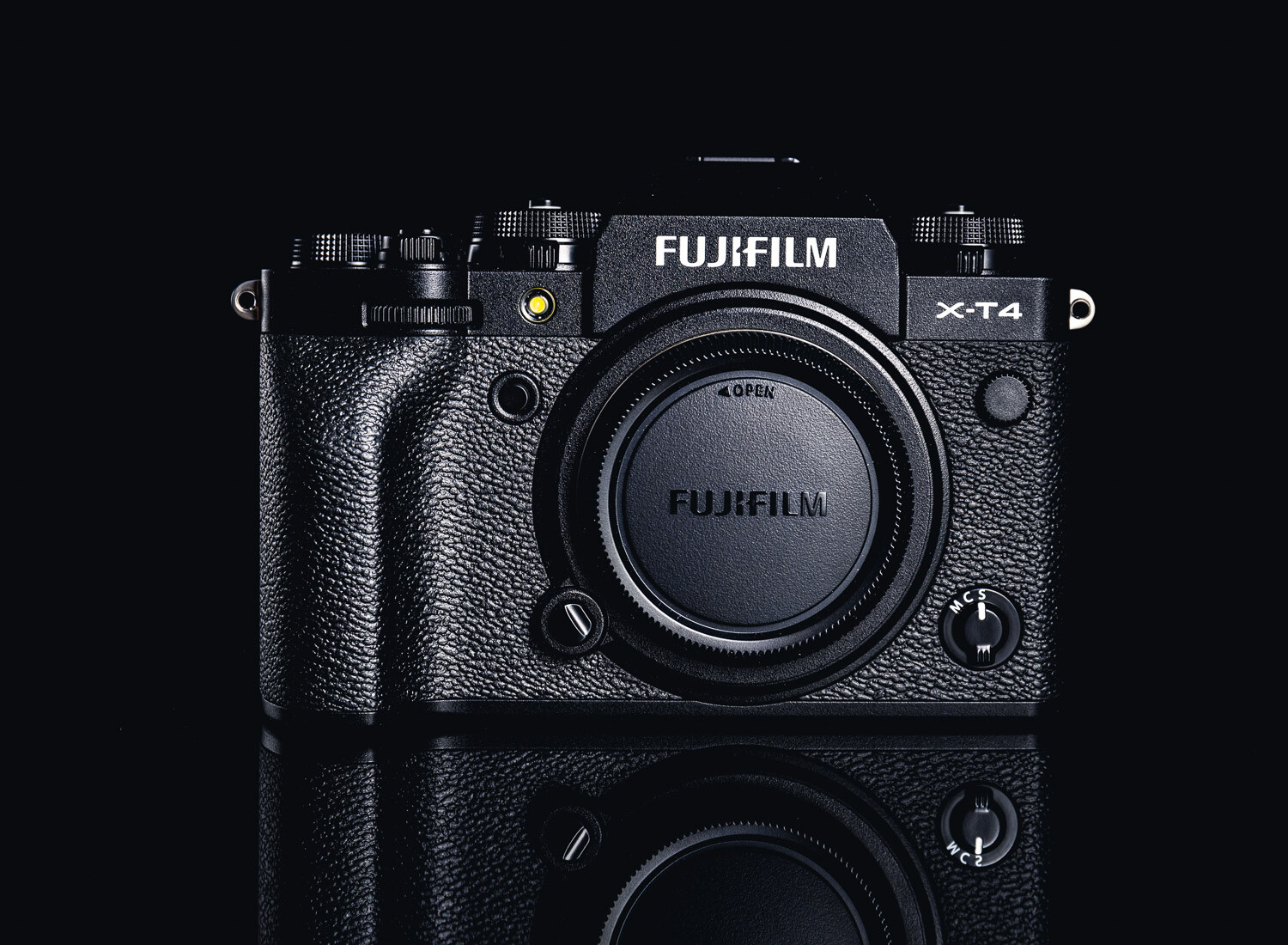
Fujifilm X-T4 Review: The Best APS-C Camera on the Market (For a Price)

20 Jul

The post Fujifilm X-T4 Review: The Best APS-C Camera on the Market (For a Price) appeared first on Digital Photography School. It was authored by Jaymes Dempsey.

Fujifilm x-t4 review

If you’re trying to decide whether the Fujifilm X-T4 is the right camera for you, then this comprehensive Fujifilm X-T4 review is exactly what you need.

Fujifilm X-T4 review

For several weeks, I’ve been putting Fujifilm’s newest camera through its paces, with the goal of answering a few key questions:

  1. What does the X-T4 offer over the X-T3?
  2. How does the X-T4 compare to other options on the market?
  3. And, ultimately, is the X-T4 worth the price?

All these questions, and more, will be answered in this review.

So, without further ado, let’s dive right in!

Fujifilm X-T4 review
Fujifilm X-T4 | Fujifilm XF 16-80mm f/4 | 80mm | 1/250s | f/8 | ISO 200

The Fujifilm X-T4: Overview

The Fujifilm X-T4 comes as the latest addition to Fujifilm’s flagship lineup, previously headed by the Fujifilm X-T3. Note that Fujifilm explicitly indicated that the X-T4 does not replace the X-T3, but enters the lineup as a sister model.

In many ways, the X-T3 and the X-T4 are the same; the ergonomics and aesthetics are exceedingly similar, plus you get 26 MP X-trans sensors, dual card slots, and 4K/60p video.

Fujifilm X-T4 film simulation modes

But there are also some fundamental differences. While there’s certainly still room for the X-T3 in a Fujifilm lover’s gear bag, the truth is, the X-T4 is the better camera (though significantly pricier!).

In fact, I’d go so far to say that the X-T4 is one of the absolute best cameras I’ve ever used, and certainly one of my favorites, thanks to its Fujifilm retro charm, as well as its generally strong performance across the board.

Fujifilm X-T4 review
Fujifilm X-T4 | Fujifilm XF 16-80mm f/4 | 32.5 mm | 1/250s | f/8 | ISO 200

Fujifilm is in the business of making all-around cameras: Mirrorless models that can do pretty much anything at a high level, from action to landscape to video. The X-T4 is simply another level of this superb well-roundedness, giving a combination of top-notch handling, improved autofocus, blazing-fast continuous shooting speeds, high-powered video, and excellent image quality.

Here are a few key Fujifilm X-T4 specifications:

  • 26 MP APS-C sensor
  • 4K/60p video
  • Continuous shooting up to 20 fps with electronic shutter (15 fps with mechanical shutter)
  • 3.68M-dot electronic viewfinder
  • 500 shot-per-charge battery
  • Dual SD card slots
  • In-body image stabilization

Note that, in purchasing the X-T4, you also get access to Fujifilm’s very impressive array of lenses. Many of these are very reasonably priced, not to mention optically stellar, which is why I consider Fujifilm to be something of a dark horse in the photography world.

That said, there are some drawbacks to buying the X-T4.

While it’s a fantastic all-around camera, it has no particular specialties, which means that it’s probably not the right choice if you’re seeking to capture, say, high-level sports or nothing but detailed HDR landscape photos.

So to find out more about the X-T4, both the good and the bad, read on.

Fujifilm X-T4 review
Fujifilm X-T4 | Fujifilm XF 16-80mm f/4 | 16mm | 1/500s | f/8 | ISO 200

Build Quality

If you’re a long-time Fujifilm shooter, the design of the X-T4 will feel familiar to you. It’s very much in line with the X-T3’s thin, metallic form, though it’s gained a slight amount of bulk, presumably due to the inclusion of IBIS.

For non-Fujifilm shooters, however, holding the X-T4 for the first time may offer a bit of a shock.

First, it feels like a squashed brick; you get a very well-made body, compressed into a compact form. And while the X-T4 does offer a decent-sized handgrip, it’s not as large as what you might expect from a Nikon or Canon camera (and certainly not a Nikon or Canon DSLR), which might take some getting used to.

Fujifilm X-T4 review top view

The Fujifilm X-T4 is weather-sealed, and it feels it; honestly, the whole body just screams durability, which means that you can feel comfortable taking the X-T4 in inclement weather (always important for serious outdoor and nature shooters).

I know I mentioned it above, but I really am a huge fan of the Fujifilm retro aesthetic, which somehow makes the X-T4 feel like less of a finely-crafted tool and more of a camera that works with you.

Handling

Fujifilm X-T4 side view

As with all Fujifilm cameras, handling is excellent, assuming you don’t mind the old-school dials and switches.

Note that this old-school aesthetic manifests in the form of a dedicated aperture ring on Fujifilm’s lenses, which means that you have to select the aperture by turning the ring on the lens rather than turning a dial on your camera. Also part of the old-school aesthetic is the dedicated ISO, exposure compensation, and shutter speed dials on the top of the X-T4.

I can see how this very external, dial-based handling would annoy some photographers. It’s certainly not built for speed and muscle memory in split-second action, but there’s something really wonderful about setting your shutter speed and ISO via dials on the top of the camera, as opposed to through your camera knobs or touchscreen.

The X-T4’s buttons are well-placed, and I like the focus mode dial on the front (also present on other Fujifilm models); it’s much easier to access in the heat of the moment.

Fujifilm X-T4 review lamppost sample photo
Fujifilm X-T4 | Fujifilm XF 16-80mm f/4 | 80mm | 1/1000s | f/11 | ISO 200

A noticeable upgrade over the X-T3 here is the addition of in-body image stabilization, which allows you to get up to 6.5 extra stops of handholding. This is a huge deal for anyone who frequently shoots in low light, and is a fantastic addition to the X-T4 over the X-T3. In fact, if you haven’t used IBIS before, then you’re going to want to check the X-T4 out immediately. It’s a big help for handheld landscape photography, macro photography, walkaround photography, and much more, further increasing the X-T4’s versatility.

One last handling upgrade worth noting:

The X-T4 comes with a brand-new battery, one that’s rated at 500 images per charge. As with most battery ratings, this one seems to (happily!) undershoot reality. There were at least a few days when I shot over 500 images and still had significant charge left to work with.

For me, and for many shooters out there, this is a big deal. For one, if you’re shooting in adverse conditions, you want to swap batteries as infrequently as possible.

Plus, the better the battery life, the fewer batteries you need to take with you when traveling, for outdoor trips, etc.

Electronic Viewfinder and Rear LCD

Fujifilm X-T4 review
Fujifilm X-T4 | Fujifilm XF 16-80mm f/4 | 16mm | 1/125s | f/11 | ISO 200

The electronic viewfinder looks spectacularly life-like and features a 3.68M-dot resolution. Personally, I neither love nor hate EVFs (they can be great in some situations and terrible in others), but I do think that a minimum resolution of 3.68M-dots is required for good viewing, at least for me, personally, and the X-T4 brings that to the table.

There was never a time when I wished for an optical viewfinder while using the X-T4, and the clarity of the EVF was a huge benefit when working with Fujifilm’s Film Simulation modes (more on these later!).

Fujifilm X-T4 review

You also get a fully-articulating rear LCD. This is useful for anyone who prefers to shoot without the EVF to their eye, but it’s especially important for macro photographers, architectural photographers, and landscape photographers in particular; basically, anyone who sets up their camera at odd angles.

With the X-T4’s articulating screen, you can get down-low perspective shots without having to get dirty (and without having to hurt your neck!).

Fujifilm X-T4 review

Note that the X-T4’s screen does offer touch functionality, though it’s pretty much limited to setting the autofocus points. This is just fine in my book, because that’s really all I like to use touch screens for since it’s far faster than moving between points with the AF joystick.

Autofocus and Continuous Shooting

The Fujifilm X-T3 was a decent autofocus performer in its own right, but the X-T4 improves on this AF prowess, primarily in terms of tracking. Honestly, I’ve always been impressed by the X-T3’s focusing capabilities, which makes me all the more pleased with the X-T4.

Fujifilm X-T4 review street photo of a person walking
Fujifilm X-T4 | Fujifilm XF 16-80mm f/4 | 80mm | 1/250s | f/5.6 | ISO 200

Focusing on still subjects was extremely snappy, even in more difficult lighting situations.

In terms of tracking, I found the X-T4 able to follow predictably moving subjects with ease (e.g., cars), and while my keeper rate wasn’t 100 percent, I was very pleased with the results. Face and eye detection are a bit variable, especially in lower light, but are far from bad.

One of the great things about Fujifilm cameras is the continuous shooting speeds, which are blazing-fast by any metric. On the X-T4, you get 20 fps shooting using the electronic shutter, and this drops to a very respectable 15 fps using the mechanical shutter (up over the 11 fps mechanical shutter on the X-T3).

In fact, continuous shooting is one of the many reasons why the X-T4, and Fujifilm’s top cameras more generally, are such excellent all-around options. While they aren’t really designed as action cameras, you can certainly use them for fast-paced street photography, sports photography, and wildlife photography, assuming you can get the autofocus to work for you.

Fujifilm X-T4 review street photo
Fujifilm X-T4 | Fujifilm XF 16-80mm f/4 | 21mm | 1/125s | f/10 | ISO 200

Image Quality

Fujifilm X-T4 review
Fujifilm X-T4 | Fujifilm XF 16-80mm f/4 | 80mm | 1/250s | f/11 | ISO 200

The X-T4 packs a 26 MP, APS-C sensor, and while it doesn’t offer many changes over the X-T3, it’s still pretty darn powerful.

I tend to be conservative in terms of my tolerance of noise levels, but I feel comfortable pushing the X-T4 to at least ISO 800. Really, noise doesn’t start to become noticeable until around ISO 1600, and images can remain usable through ISO 6400 or so, depending on your purpose.

This is a good performance, especially for an APS-C camera; to my eye, it’s around a half-stop better than the Sony a6600 and pretty much on par with the Nikon Z50. And while the X-T4 can’t quite compete with the full-frame heavy hitters, it’s still plenty useful for photographers seeking a camera that can handle itself in low light.

Fujifilm X-T4 review black and white building
Fujifilm X-T4 | Fujifilm XF 16-80mm f/4 | 25mm | 1/250s | f/8 | ISO 200

As mentioned above, one of the benefits of a Fujifilm camera is the film simulation modes, and here the X-T4 doesn’t disappoint. You get 12 high-quality options; it’s a lot of fun to toggle between them, just to see how the world will look with different types of film.

I find these modes to be especially useful for types of shooting where noticeable color grading is acceptable, such as street photography and portrait photography. However, you always have the option of experimenting with film simulation and making changes in post-processing if you’re not pleased.

The X-T4 includes useful film simulation modes

Price

Fujifilm X-T4 review american flag
Fujifilm X-T4 | Fujifilm XF 16-80mm f/4 | 16mm | 1/500s | f/10 | ISO 200

At the time of writing, the Fujifilm X-T4 costs $ 1700 USD, which is $ 500 USD more than its X-T3 sibling, and is nearly $ 1000 USD more than the X-T30.

And this is where things get a little tricky because while the X-T4 does offer some serious upgrades over the X-T3, I’m just not sure it’s enough to justify $ 500. If I were trying to decide between the X-T3 and the X-T4, I’d feel more tempted by the X-T3, unless I desperately needed the IBIS or autofocus improvements.

Another issue with the X-T4’s price point is that it puts the camera on par with full-frame options such as the Nikon Z6, and only a few hundred dollars cheaper than the Sony a7 III. This isn’t going to make the X-T4 compelling for DSLR photographers looking to make the leap to mirrorless, or non-Fujifilm mirrorless shooters looking for a more powerful camera.

That said, if you’re already a Fujifilm shooter, or you’re a photographer who appreciates the unique design and all-around capabilities of the X-T4, the $ 1700 may be worth it.

Fujifilm X-T4 review
Fujifilm X-T4 | Fujifilm XF 16-80mm f/4 | 16mm | 1/1000s | f/10 | ISO 200

Verdict

Fujifilm X-T4 review
Fujifilm X-T4 | Fujifilm XF 16-80mm f/4 | 21mm | 1/125s | f/10 | ISO 200

I’m a huge fan of the X-T3.

But I’m an even bigger fan of the X-T4, mostly thanks to the addition of in-body image stabilization, which makes the camera even more impressive for low-light shooting. It’s the ultimate generalist camera for hobbyists and professionals, and it’s an excellent addition to any kit.

Is the X-T4 the best APS-C camera out there?

Fujifilm X-T4 review

Truthfully, I think it is. You get excellent image quality, blazing-fast continuous shooting, great handling, dual card slots, good autofocus, and more.

My only reservation is the price, which feels a bit high compared to the X-T3. But you do get in-body image stabilization, as well as improved autofocus, so if you have the extra money to spend, go for it!

You won’t be disappointed.

?????

The post Fujifilm X-T4 Review: The Best APS-C Camera on the Market (For a Price) appeared first on Digital Photography School. It was authored by Jaymes Dempsey.


Digital Photography School

 
Comments Off on Fujifilm X-T4 Review: The Best APS-C Camera on the Market (For a Price)

Posted in Photography


How to Predict Dramatic Sunsets

20 Jul

The post How to Predict Dramatic Sunsets appeared first on Digital Photography School. It was authored by Bruce Wunderlich.

Summer sunset over Marietta Ohio just after a storm had past through earlier in the afternoon.
“Red Sky”  Summer sunset over Marietta, Ohio

One question every child asks is, “Why is the sky blue?” But let’s look at why is the sky red at Sunset. Light from the sun is made up of all the colors in the rainbow. As the sunlight enters the earth’s atmosphere, the short wavelength of blue light is scattered in all directions, more than any of the other colors, causing the sky to be blue during the day.

At sunrise and sunset, the light has farther to travel due to the low angle of the sun in the sky. This causes the blue light to be blocked and scattered away, allowing the longer wavelengths of red and yellow colors to appear in the sky.

I am sure you wish there was some magic formula that could tell you exactly the night for photographing a beautiful sunset? It’s not that easy, but hopefully, we can discover some ways to increase your odds.

Let’s take a closer look at some other factors that will help you predict brilliantly-colored sunsets.

You have no doubt heard the saying “Red sky in the morning, sailors take warning. Red sky at night, sailors’ delight”. This saying can also help you predict sunsets (and sunrises) if you know the weather forecast. Look for a red sky at sunrise ahead of a storm and at sunset after a storm. Knowing what to expect weather-wise is key to anticipating the right conditions for a shoot, so the first thing you need to do is find a good weather app or website.

A website such as Intellicast.com will give you a detailed hourly report for key factors: cloud cover, air quality, humidity, and wind speed.

Winter sunset after a snow storm.

Clouds and Cloud Cover

Clouds are a crucial factor to predicting dramatic sunsets, for without clouds there is not much to see.

One common misconception of brilliant sunsets is that clouds create the colors; in reality clouds only serve as the canvas to display the colors that the light is painting. High to mid-level clouds are the most effective canvases, as they will reflect the colors of the setting sun. Puffy clouds on the horizon at sunset will more than likely not allow the sun rays to pass through them, thus muting the colors. Lower clouds (such as dark rain-filled clouds) are not very helpful at reflecting much light.

If the clouds on the horizon are low and thick, the sun will not be able to shine through them. It is also worth noting that too many or too few clouds can be detrimental for an optimal photo, so check out your detailed weather report for cloud cover percentages between 30 to 70 percent at sunset.

You can observe cloud conditions in the afternoon and if the sky looks favorable, you can hope that these clouds will still be present at sunset. No guarantees, but if there is not much wind these clouds may stick around to create a beautiful sunset.

A brief description of fair weather clouds that may produce dramatic sunsets:

  • Cirrocumulus Clouds – These look like ripples on water. Blue sky is the usual backdrop.
  • Altocumulus Clouds – Often occur in sheets or patches with wavy, rounded masses or rolls, like little cotton balls. They are generally white or grey and usually appear after a storm.
  • Cumulus Clouds – Easily recognizable, large, white, and fluffy, often with flat bases.
  • Cirrus Clouds – Generally characterized by thin, wispy strands. These clouds arrive in advance of frontal systems indicating that weather conditions may soon deteriorate. Nevertheless, these are one of the best kind for photographing dramatic sunsets!
DSC_1917
If you see this kind of sky in the afternoon with calm winds, chances are good you are in for something special at sunset.
5939386215_2d2133ebcc_o

Clean Air

Clean air is very effective at scattering the blue light. For this reason, one of the best times for dramatic sunsets is right after a rain or wind storm. While lower clouds rarely reflect brilliant colors (as mentioned above), note that where the lower atmosphere is especially clean, as in over open oceans in tropical regions, more vivid colors are allowed pass through. This is the reason so many beautiful sunset images are captured in the tropics.

Humidity

The amount of humidity in the air will also have an effect on the colors of your sunset. Lower humidity will produce more vibrant colors. With higher humidity, the colors will be muted because of the water content in the atmosphere. The seasons of autumn and winter typically produce lower humidity than in the warmer seasons.

Wind

Wind is a factor that can either enhance or destroy a beautiful sunset. A change in wind direction can cause the clouds to develop ripples or billows, which can create a beautiful effect as the setting sun reflects a nice red glow onto the ripples.

Also, as established earlier, clean air will produce more brilliant colors, and a nice breeze before sunset can help clear the air.

Unfortunately, the wind can become a negative factor on those days when favorable clouds are present in the afternoon, but a weather front moves through with strong winds that remove those clouds and leave you with a clear sky at sunset.

This is another instance when a good weather app or weather website can give you an indication on its radar as to when a front may move through your area.

6022670360_25a65077ed_o

To summarize your sunset prediction, look for:

  • Mid to high-level clouds
  • 30 to 70 percent cloud coverage
  • Clean air
  • Lower humidity
  • Calm winds

A final thought to consider when photographing sunsets – sometimes the afterglow of the sunset, which can occur 15 to 20 minutes after the sun goes behind the horizon, can be much more spectacular than the actual sunset.

Generally, all these weather-related rules also apply to photographing sunrise, but the visual signs are more difficult to spot since it is darkest before the dawn. A good time to photograph at sunrise is in the fall and winter when it occurs later in the day than in the summer months.

Do you have any other tips for predicting dramatic sunsets? Please share some of your favorite sunset images. Who doesn’t love a good sunset? If you want some tips for shooting the great sunset you’ve found try: 8 Simple Guidelines for Capturing Spectacular Sunrise and Sunset Images

The post How to Predict Dramatic Sunsets appeared first on Digital Photography School. It was authored by Bruce Wunderlich.


Digital Photography School

 
Comments Off on How to Predict Dramatic Sunsets

Posted in Photography


Tokina’s new 400mm F8 mirror lens for full-frame, APS-C mounts will ship in August

20 Jul

Tokina has announced the upcoming release of its new SZX Super Tele 400mm F8 Reflex MF, a mirror (or reflex) lens for select full-frame and APS-C camera systems.

The 400mm F8 lens manages to pack an impressive focal length into a relatively compact frame thanks to its catadioptric design. Usually reserved for telescopes, this design choice makes the smaller design possible, but at the cost of having the signature ‘donut’ bokeh, the lack of autofocus and having a fixed aperture.

The lens is constructed of six elements in five groups, offers a 1:2.5 magnification ratio and measures in at just 355g (11.82oz). It’s 74mm (2.91”) diameter and 77mm (3.03”) in length.

To make the lens as versatile as possible, the SZX Super Tele 400mm F8 Reflex MF has a 0.75mm pitch and 42mm thread mount that can be used with adapters to work with nearly any camera system. In addition to offering the base lens without an adapter, Tokina is also selling versions with included adapters for Canon EF, Nikon F, Sony E, Fujifilm X and Micro Four Thirds camera systems.

Below are a few sample photos taken with the lens, provided by Tokina:

$ (document).ready(function() { SampleGalleryV2({“containerId”:”embeddedSampleGallery_0125896781″,”galleryId”:”0125896781″,”isEmbeddedWidget”:true,”selectedImageIndex”:0,”isMobile”:false}) });

Tokina says the lens is set to launch on August 7, but no pricing information has been given at this time. You can find out more about the lens and its design philosophy on Tokina’s product page.

Articles: Digital Photography Review (dpreview.com)

 
Comments Off on Tokina’s new 400mm F8 mirror lens for full-frame, APS-C mounts will ship in August

Posted in Uncategorized


Nikon Z 24-200mm F4-6.3 VR sample gallery

19 Jul

$ (document).ready(function() { SampleGalleryV2({“containerId”:”embeddedSampleGallery_9376083326″,”galleryId”:”9376083326″,”isEmbeddedWidget”:true,”selectedImageIndex”:0,”isMobile”:false}) });

The Nikon Z 24-200mm F4-6.3 VR is a multipurpose zoom lens for Nikon’s full-frame Z-mount cameras. Intended to be a ‘do anything’ lens, the 24-200mm should be perfect for travel and everyday photography.

As such, we’ve been shooting with the 24-200mm in as many different situations as we can find. Check out our gallery of samples to see how it performs.

View samples from the Z 24-200mm F4-6.3

Articles: Digital Photography Review (dpreview.com)

 
Comments Off on Nikon Z 24-200mm F4-6.3 VR sample gallery

Posted in Uncategorized


Photo competitions you can enter right now

19 Jul

Got a competitive streak? Bookmark this page for a list of open photo competitions, updated throughout the year. While the competitions we’ve highlighted are largely well-established, we aren’t endorsing any particular contest and we strongly encourage you to read the rules and conditions before entering. Once you’re ready to submit your photos, we’ve got a few pointers to help you put your best foot forward.

Let us know in the comments if we missed any that should be included, and best of luck!

Open for submissions

International Landscape Photographer of the Year

Region: Worldwide
Prizes: First prize $ 5000, Second prize $ 1000, Third prize $ 500
Submissions close: September 30, 2020
Entry fee: $ 25 per image

Travel Photographer of the Year

Region: Worldwide
Prizes: TBD
Submissions close: November 2nd, 2020
Entry fee: 8£ – 30£

Sony World Photography Awards 2021

Region: Worldwide
Prizes: $ 5000 – $ 25,000
Submissions close:

  • January 7, 2021 (National Award, Open and Youth Competitions)
  • January 14, 2021 (Professional Competition)

Entry fee: None

International Garden Photographer of the Year

Region: Worldwide
Prizes: £250 – 5000
Submissions close: October 31st, 2020 (Main Competition)
Entry fee: £5-25
Read the full contest rules

Monochrome Awards

Region: Worldwide
Prizes: $ 1000 (Amateur) / $ 2000 (Professional)
Submissions close: November 15th, 2020
Entry fee: $ 20 (Amateur) / $ 25 (Professional)
Read the full contest rules

10th Annual Mobile Photography Awards

Region: Worldwide
Prizes: $ 3000 grand prize
Submissions close: December 14th, 2020
Entry fee: $ 15 – 100
Read the full contest rules

International Wedding Photographer of the Year

Region: Worldwide
Prizes: $ 150 – 3000
Submissions close: September 1st, 2020
Entry fee: $ 18 per image
Read the full contest rules

Opening soon

2020-2021 Nikon Photo Contest

Closed

Insight Investment Astronomy Photographer of the Year

2020 Audubon Photography Awards [see winners]

Sony World Photography Awards 2020 [see winners]

Red Bull Illume Special Image Quest 2020

BigPicture: National World Photography Competition [see winners]

International Photography Awards One-Shot Movement Competition [see winners]

Natural History Museum Wildlife Photographer of the Year 2020

2020 World Press Photo Contest [see winners]

Apple’s Shot on iPhone Competition [see winners]

Articles: Digital Photography Review (dpreview.com)

 
Comments Off on Photo competitions you can enter right now

Posted in Uncategorized


Posing Guide: 21 Sample Poses to Get You Started with Photographing Women – Part I

18 Jul

The post Posing Guide: 21 Sample Poses to Get You Started with Photographing Women – Part I appeared first on Digital Photography School. It was authored by Guest Contributor.

This is the first in a series of Posing Guides with suggested starting poses for photographing different subjects. We are starting with the female posing guide.

Also in the series check out our posing guides for posing children, posing couples, posing groups and posing weddings.

Sample Poses to Get You Started with Photographing Women

If you ever run out of ideas, get stuck in creativity or simply need some guidance when shooting female subjects, you may use following posing samples as a “posing cheat sheet”. Many pro photographers use such a technique when preparing for and during the photo shoot.

The poses in this article are selected as an initial reference. I would advise you to look at the poses together with your subject, especially if she’s inexperienced. During a photo shoot, don’t hesitate to discuss with the subject which pose is or isn’t working in any particular situation. It’s usually very productive and you both will feel more confident in what you are doing.

OK, let’s start, one by one.

posing-photographing-female-models01.png

1. Very simple portrait pose to start with. Have the model look over her shoulder. Note how unusual and interesting a portrait might look, if shot simply from a different angle.

posing-photographing-female-models02.png

2. In portrait photography, hands are usually not visible or at least not dominant. However, you might get creative by asking the model to play around with her hands trying different positions around her head or face. Keep in mind, though: No flat palms, and the hands should only show their sides!

posing-photographing-female-models03.png

3. You might be familiar with composition rules like the rule of thirds. In a similar way, pleasing effects can be created by using diagonals. Also remember that you don’t need to always hold your camera on a perfectly even level. Don’t be afraid to tilt it, you might achieve some interesting and unusual perspectives.

posing-photographing-female-models04.png

4. A really nice and lovely pose with a model sitting. The knees have to touch each other. Shoot slightly from above.

posing-photographing-female-models05.png

5. Another open and inviting pose with the model lying on the ground. Get down and take your shot nearly from the ground level.

posing-photographing-female-models06.png

6. Just a variation for a pose with the model lying on the ground. Both hands might as well be resting on the ground. Works very well outdoors, on the grass or in a wild flower meadow, for example.

posing-photographing-female-models07.png

7. A basic easy pose, yet looks absolutely stunning. Get down and shoot nearly from a ground level. Then try to move gradually around the model while making shots. Also ask your model to change head and hand positions.

posing-photographing-female-models08.png

8. Another easy yet gorgeous pose for all body types. Try different hand and leg positioning. And remember to focus on the model’s eyes!

posing-photographing-female-models09.png

9. A really lovely pose. Works well in different surface settings: The model, for example, might lie on a bed, on the ground, in the grass, or on a sandy beach. Shoot from a very low angle and focus on the eyes.

posing-photographing-female-models10.png

10. Gorgeous and easy pose for a model sitting on the ground.

posing-photographing-female-models11.png

11. Another simple and friendly pose for a model sitting on the ground. Try different directions and angles.

posing-photographing-female-models12.png

12. A wonderful way to demonstrate the beauty of a model’s physique. Works very well as a silhouette when shooting against a bright background.

posing-photographing-female-models13.png

13. A simple and casual looking pose. Lots of variations are possible. Ask the model to twist her body, experiment with hand positioning and try different head turns.

posing-photographing-female-models14.png

14. Another very simple and elegant pose. The model is turned slightly to the side, hands in back pockets.
posing-photographing-female-models15.png
15. Leaning slightly forward can be a very attractive gesture. It is a subtle way to emphasize upper body shapes.

posing-photographing-female-models16.png

16. A sensual pose. By holding the hands above the head body curves are emphasized. Works with fit body types.

posing-photographing-female-models17.png

17. Endless variations are possible for posing in full height. This pose is just the starting point. Ask the model to slightly turn her body, change hand positioning, change head and eye directions etc.

posing-photographing-female-models18.png
18. A relaxed pose with the model standing upright and supporting her back against a wall. Remember that the model may use a wall not only to support her back, but also to put her hands on, or resting a leg against it.

posing-photographing-female-models19.png

19. Note that full height settings are very demanding and work well only with slim to athletic body types. Posing guidelines are simple: The body should be arched in an S shape, hands should be relaxed, while the weight finds support on just one leg.

posing-photographing-female-models20.png

20. An exquisite pose for slim to athletic models. Many variations are possible. In order to find the best posture, tell the model to slowly move her hands and twist her body constantly. When you see a good variant, ask your model to hold still and take some pictures. Repeat for a full set.

posing-photographing-female-models21.png

21. An absolutely romantic and delicate pose. Any kind of cloth (even a curtain) can be used. Note that the back doesn’t need to be completely bare. Sometimes as little as a bare shoulder could work pretty well.

So, there’s something for you to start with. Hope you will find at least couple of poses to work with in different shooting scenarios! Keep in mind that each of the initial sample poses is meant to be only a starting point. Each pose has endless variations! Just be creative and adjust the pose as needed (for example, try different shooting angles and ask your subject to change hand, head and leg positioning etc.)

Check out our other Posing Guides:

  • Posing Guide: Sample poses for photographing Women Part 1
  • Posing Guide: Sample posees for photographing Women Part 2
  • Posing Guide: Sample poses for photographing Men
  • Posing Guide: Sample Poses for photographing Children
  • Posing Guide: Sample Poses for Photographing Couples
  • Posing Guide: Sample Poses for Photographing Groups of People
  • Posing Guide: Sample Poses for Photographing Weddings

Grab Our Guide to Portrait Posing

Posing Guide: 21 Sample Poses to Get You Started with Photographing Women – Part I

Kaspars Grinvalds is a photographer working and living in Riga, Latvia. He is the author of Posing App where more poses and tips about people photography are available.

The post Posing Guide: 21 Sample Poses to Get You Started with Photographing Women – Part I appeared first on Digital Photography School. It was authored by Guest Contributor.


Digital Photography School

 
Comments Off on Posing Guide: 21 Sample Poses to Get You Started with Photographing Women – Part I

Posted in Photography