RSS
 

Archive for March, 2020

Slideshow: Nikon Australia Announces 2020 Surf Photo of the Year finalists

26 Mar

Slideshow: Nikon Australia Announces 2020 Surf Photo of the Year finalists

Nikon Australia has announced the finalists for its 8th annual Nikon Surf Photo and Video of the Year Awards. The leading optics and imaging company partnered with Surfing Australia to invite photographers and videographers of all skill levels to enter the competition. 20 images were selected along with three videos for consideration.

‘The Awards are a hugely important event on our calendar because they give the Australian surfing community a chance to honour our best, whether it be in the water competing or behind a lens. Inducting our latest Hall of Fame member is always a massive moment we cherish,’ says Chris Mater, CEO of Surfing Australia.

Images and videos were selected from a panel of 10 judges in the surfing industry, including seven-time World Surfing Champion and Nikon Brand Ambassador, Stephanie Gilmore. Entries were judged on the following criteria:

  • Innovation and creativity
  • Dramatic effect and sensory impact
  • Uniqueness
  • Composition of the panel

All finalist images and videos can be viewed here. Winners will be announced March 25th on what Nikon deems ‘an exciting new television format.’

Finalist: ‘Warrior’ by Greg Rugli

About this photo: ‘Motion blur photo of a surfer riding a large wave at sunset, Bronte Beach, Sydney, Australia.’

Finalist: ‘Portugal Sunset’ by Peter ‘JOLI’ Wilson

About this photo: ‘Post surf catch up after a late session near Peniche.’

Finalist: ‘Duck Dive’ by Matt Dunbar

About this photo: ‘This is from my first trip to Tahiti I really wanted to walk away with a shot that was different. I was swimming with a big dome port to try and shoot “over unders.” The water clarity was a dream and I got lucky to shoot back as a surfer duck dived. Easily the favourite swim of my life.’

Finalist: ‘The Right’ by Ren McGann

About this photo: ‘No matter how many trips you do, some waves always stand out amongst the rest.’

Finalist: ‘Froth Monster’ by Travis Johnson

About this photo: ‘I was shooting little Harry at a bit of a secret spot the groms love to frequent on the Gold Coast for shallow little drainers and close out barrels. As he took off I moved across the front of him and heard him yelling out as the barrel began to encase him, his eyes wide and looking up at the roof of the wave almost in awe. As I passed through the wave my only thought was “did he make it?” I surfaced on the other side I heard an ecstatic voice yell out “I made it! I made it!’

Finalist: ‘No Looking Back’ by Peter Jovic

About this photo: ‘Some heavy water during a solid Indian Ocean swell and an unnamed local charger racing the gauntlet as the sun begins to set in the west. There’s no helicopters, no fanfare. Just an individual dealing with what mother nature has put in front of him…or behind him. The prospect is (apart from drowning) a long swim in waters that are very lively with large marine creatures.’

Finalist: ‘Cascade’ by Ray Collins

About this photo: ‘Flowing with great rapidity and force.’

Finalist: ‘Jack in the Box’ by Tom Pearsall

About this photo: ‘Jack Robinson gritting his teeth and holding his line through a deadly section in remote Western Australia. Shot at f/3.2, a 16 thousand of a second and 160mm creates a frozen moment that in real time was violently fast, with an interesting depth of field. As the wave roared past it almost grabbed me and my housing and ground us into the reef.’

Finalist: ‘The Big Bang’ by Ray Collins

About this photo: A violent ignition of hydrogen and oxygen.’

Finalist: ‘Danny Sunset Stern’ by Stu Gibson

About this photo: ‘Picture perfect arvo at Shippies.’

Finalist: ‘Breathing. Surfer Scott Whip Dennis’ by Simon Punch

About this photo: ‘A perspective from deep behind the surfer riding the barrel as the wave breathes back before spitting.’

Finalist: ‘Gun Barrel Highway’ by Peter Jovic

About this photo: ‘This is an image of local shredder, Kael Walsh shot in the South West of W.A. I was really lucky to have someone who’s so unflappable in challenging conditions taking aim straight into the barrel and seemingly doing it with complete disregard for their own well being. It’s always a really good feeling when shots like this come off.’

Finalist: ‘Flume’ by Paul Smith

About this photo: ‘Taken at Sunshine Beach on the Sunshine Coast while most people were still sleeping. It was one of those perfect swells, and all the elements lined-up wave size, an offshore wind, and just enough light to illuminate the sea spray.’

Articles: Digital Photography Review (dpreview.com)

 
Comments Off on Slideshow: Nikon Australia Announces 2020 Surf Photo of the Year finalists

Posted in Uncategorized


TTArtisan to release a limited-run 50mm F0.95 lens for Sony E and Fujifilm X mounts

25 Mar

Lens manufacturer TTArtisan has released information on a new limited-edition 50mm F0.95 manual focus lens. According to Japanese photo gear distributor Shoten Kobo, TTArtisan will be making only 40 lenses: 20 with a Sony E-mount and 20 with a Fujifilm X-mount.

According to the product text, the lens is ‘designed for old lens fans.’ The manual focus lens is constructed of 12 elements in 7 groups, features a 12-blade aperture diaphragm, has a minimum focusing distance of 50cm (20in) and offers an aperture range of F0.95-F16.

The lens measures in at 69mm (2.72in) in diameter, 88mm (3.46in) in length and weighs roughly 725g (1.6lbs). Shoten Kobo says the lens will retail for ¥42,800 (~$ 410), but no release date is given.

Articles: Digital Photography Review (dpreview.com)

 
Comments Off on TTArtisan to release a limited-run 50mm F0.95 lens for Sony E and Fujifilm X mounts

Posted in Uncategorized


Artists and Explorers – What Photographer Type Are You?

25 Mar

The post Artists and Explorers – What Photographer Type Are You? appeared first on Digital Photography School. It was authored by Mat Coker.

Artists and Explorers – What Photographer Type Are You?

What drives you to pull out your camera and take a picture? The answer to this question will help you understand your photographer type.

Does an image of a finished photo jump into your mind, and then you have to go out and make it? Perhaps you pick up your camera and walk out the door, not knowing where it will lead you.

Maybe you’re only compelled to photograph new places you’re traveling to, or your (grand) children as they grow up.

Understanding yourself as a photographer, and knowing what inspires you, is one of the best ways to grow. Once you know your photographer type, you can focus on the photography you love without feeling the pressure to be like other photographers.

“As a photographer, you need to develop a way of working that suits your personality.”

Tim Hetherington, Photojournalist

Let’s look at four photographer types; the traveler, the parent, the artist, and the explorer so that you can discover where you fit in and what your strengths are.

photographer type traveler
ISO 400 f/11 1/640 sec 14mm
I began my journey as the traveler type, mostly picking up my camera when I was on a road trip.

The traveler photographer type

You know you’re the traveler photographer type if you only pull out your camera when you go on a trip. You’re probably not concerned with being called a photographer and mainly want to take snapshots to capture places you travel to. But unlike typical tourists, you want those snapshots to look really good.

Here are some quick tips for the traveler photographer type:

  • Learn how your camera works, so you’re not distracted and miss the joy of traveling.
  • Master some useful composition elements to elevate your photos above sloppy snapshots.
  • Learn to see light and your photos will begin to look beautiful.
  • Practice new techniques on short day trips before you go on major travels.

The parent photographer type

You know you’re the parent photographer type if your baby or children inspired you to get a camera. Like the traveler photographer type, you might not be concerned with being called a photographer. You just want to take snapshots and capture special family memories.

But unlike most other parents or grandparents, you want those snapshots to look really good.

Here are some quick tips for the parent photographer type:

  • Learn how your camera works, so you’re not fumbling and missing moments.
  • Master some creative composition elements to elevate your photos above sloppy snapshots.
  • Learn to see light so that your photos will look beautiful.
  • Your daily family life will provide you with infinite opportunities to practice these techniques, and you’ll capture a lot of memories along the way.

It’s okay to just want good photos

If you’re the traveler or the parent photographer type, it’s okay to want good photos of your travels and your children without being totally obsessed with photography.

Learn the most powerful camera settings, the best compositional techniques, play with the light, and your photos will begin to transcend sloppy snapshots.

photographer type
ISO 200 f/4 1/2000 sec 23mm
Perhaps you’re even a blend of the traveler and parent photographer types. Things become more exciting when you blend two types together.

The artist photographer type

How do you know you’re the artist photographer type?

Easy! If you talk about making art with your photography, then you’re the artist type. Artists have a vision of exactly how they want their photos to look. Their goal is to go out and make the photo they’ve envisioned.

As an artist, you begin with a vision or at least a basic concept. You work toward making it turn out, and then produce a finished product like a print or collection of photos for some purpose.

When showing their photographs, the artist often says, “look what I made.” Whereas the explorer type often says, “look what I discovered,” or “look what I saw.”

Artists usually take a higher degree of control over the moment and their images. They are happy to transcend the original photo, adding textures, film grains, or swapping backgrounds, etc. Nothing will stand in the way of your vision!

Here are a number of other things that characterize the artist photographer type:

  • Posing and direction in portraits
  • The use of advanced Photoshop techniques
  • Referring to their work as fine art
  • Specializing in one form of photography
  • Selling prints
  • Food photography
  • Fashion photography
  • Stylized shoots
  • Studio lighting
  • Sticking with things for a long time
photographer type artist
ISO 400 f/4 1/2000 sec 56mm
I’ve always hesitated to call myself an artist because whenever I meet an artist photographer, I realize how unalike we are. We both have a camera, love photography, study light, and composition, but it seems like we have totally different goals for our work.

The explorer photographer type

If you’re the explorer photographer type then you don’t necessarily have much in mind when you pick up your camera. You wander off into the world and photograph new places, people, and things that you discover.

You might happen to travel the world, but you don’t have to travel far to be fulfilled as an explorer. Your own backyard or city likely keeps you busy.

When you photograph people, you’re not just making portraits, you’re exploring the people and relationships that you photograph.

Often enough, when you photograph an object, it’s more about the interesting light than the object itself.

You often find yourself telling others about what you discovered or learned while exploring.

This list characterizes many explorer type photographers:

  • Street photography
  • Travel photography
  • Nature and landscapes
  • You’re more of a generalist photographer
  • Photojournalism
  • Natural light
  • Candid, natural
  • New and unexpected situations
  • Lifestyle photography
  • Constantly moving on to new things
exploring childhood
ISO 400 f/5.6 1/1000 sec 45mm
Explorers are willing to go just a little bit further into the unknown. Just a little further into the murky places.

When it comes to photography, my mind is blank. I have no vision, no idea what I should do, not a clue about how my photos will turn out.

I’m more comfortable heading off into the unknown.

Throw me into a situation that I’m completely unprepared for and I’ll figure it out. That’s because I’m an explorer. I want to learn new things. I want to be thrown into situations that I’m not familiar with. And, for some strange reason, I want to do it with a camera in my hand.

“Taking pictures is like tiptoeing into the kitchen late at night and stealing Oreo cookies.”

Diane Arbus

How are the traveler and the explorer different from each other?

The traveler may only pick up the camera occasionally, and only during times of travel. The explorer is likely dedicated to daily or at least weekly uses of the camera.

The explorer can’t help but pick up the camera more often and is not limited to landscapes and new locations. They also explore relationships. Often, the explorer learns new techniques, not because the technique is necessary, but simply because they are compelled to learn new things.

art and exploration
ISO 1600 f/2.8 1/1000 sec 23mm

The common link between artists and explorers

Even if we have different goals, the common link between artists and explorers is our creativity. When a photographer picks up their Fuji mirrorless to explore the streets, they’re no less interested in light, moment, and composition than the fashion photographer who reaches for their medium format camera.

Perhaps one is more interested in documenting and learning about human nature, while the other is creating art pieces. Photography is big enough for all sorts of intentions.

Exploration and artistry as a supertype

Just as the traveler and parent types can be merged to create a deeper type, so can the artist and the explorer.

If you’re the explorer type, you may find that you have a huge body of work that you’ve done nothing with. Perhaps it’s time to elevate your exploration toward something that approaches art.

Every now and then, an artist might do well to wander off into the world without intentions to create but to just see what they discover. Your art may reach a deeper level the more you explore your world.

photographer type exploring
Don’t be surprised if your type seems a little fuzzy at first, but pay attention and it will come into focus.

What photographer type are you?

4 photographer types

Are you the traveler, the parent, an artist or an explorer?

Let me know your photographer type in the comments and add a link to your photos if you can.

The post Artists and Explorers – What Photographer Type Are You? appeared first on Digital Photography School. It was authored by Mat Coker.


Digital Photography School

 
Comments Off on Artists and Explorers – What Photographer Type Are You?

Posted in Photography


Frozen soap bubbles create scenes from a fantasy world

25 Mar

$ (document).ready(function() { SampleGalleryV2({“containerId”:”embeddedSampleGallery_8718171696″,”galleryId”:”8718171696″,”isEmbeddedWidget”:true,”selectedImageIndex”:0,”isMobile”:false}) });

In a recent episode of DPReview TV, new host (and mad scientist) Don Komarechka introduced us to the magical world of frozen soap bubbles. Take a look at some of the fantastical images he captured.

View the frozen soap bubble sample gallery

This was a really fun video, so if you missed it you’ll want to give it a watch. You can see it below or watch it on YouTube.

Articles: Digital Photography Review (dpreview.com)

 
Comments Off on Frozen soap bubbles create scenes from a fantasy world

Posted in Uncategorized


SLC-1L-10: [COVID DIARIES] Shoot the Kids

25 Mar

Hey, there's a pandemic. Have you heard?

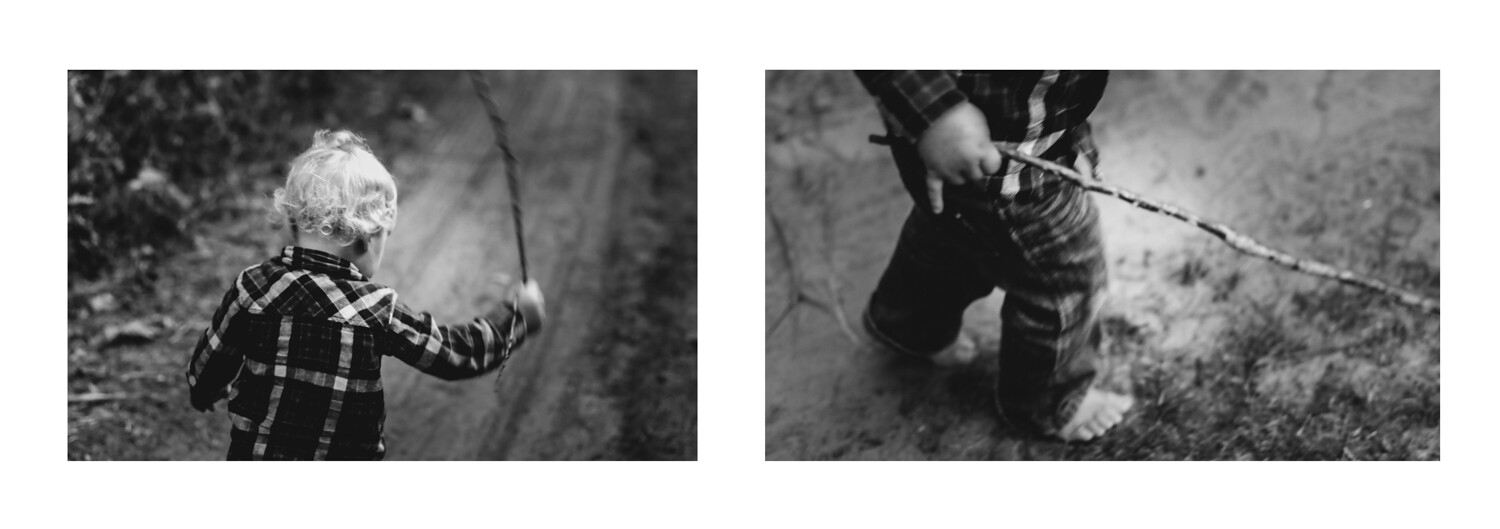
Looks like we might be spending a lot of time in the house with our immediate family these days. Maybe that family includes kids. And maybe they are starting to go a little stir crazy.

Keep reading for some ideas for any lighting photographer who might be looking to make the best of some unscheduled family time.Read more »
Strobist

 
Comments Off on SLC-1L-10: [COVID DIARIES] Shoot the Kids

Posted in Photography


Get something out of staying in: Ideas for isolation

25 Mar

Introduction

The COVID-19 pandemic has caught more than a few of us off-guard, and its impact is likely to roll on for months to come.

Advice in many countries is to stay at home and minimize your contact with other people. This isn’t an easy thing to do, and for a lot of people it’ll mean having to find additional ways to stay occupied.

Photography can provide plenty of ways of keeping yourself entertained and committing yourself to a project now might be a chance to emerge with new skills and new ambition when things start to get back to, well, whatever future normal looks like.

This is the first part of a series where we’ll put forward ideas for things to do. But we want your input, too. Throughout this article will be links to forum threads where we look to hear your suggestions.

Organize your images

You keep promising yourself you’ll do this. Whether it’s going through and trying to tag things in a coherent way, honing your catalogue by deleting the images you know you’ll never use, or importing and arranging those memory cards and old hard drives of images that aren’t stored in a systematic manner, there’s always an organizational project that you’ve been putting off.

Are you ever going to get a better time than now? Even as someone working from home, I’ve gained all the time I’d usually spend commuting, so there’s no excuse for me to put off getting my images organized.

It might sound dull, but an organized set of images makes it easier to do the more fun suggestions we’re just about to get to…

Revisit your existing shots

Coming at it with a fresh pair of eyes, is there something you could do differently with a favorite image?

I’ve found myself wondering whether some of the shots I’ve taken in the past might benefit from split toning, which isn’t a technique I’ve often used in the past. But it may simply be a case of starting again and seeing whether there’s a different crop or a different ‘look’ that might work better for images you’ve not looked at for a while.

Find new favorites

The other option is to look for new favorites in your back-catalogue. What about those shots that didn’t make the cut, first time ’round? Are there some hidden gems that, re-appraised, turn out to be more interesting than you thought?

Curate a photo book

Mpix is a great option if you’re looking to make prints or a photo book.

Even if you don’t get it printed right away, now might be a great time to organize a set of images into book form.

It’s easy to think of shoeboxes full of prints and negatives as wasted or lost, but they have a certain permanence that a well-organized hard drive or database probably doesn’t. Photo books can be the best of both worlds: gaining the visibility and (comparative) permanence of prints but in a more accessible, curated format.

Use your photos to stay engaged with loved ones

Instagram is a great way to curate and share photos with friends and loved ones.

Find old photos of friends and family in your archive and share them on social media. This could be a nostalgic way to stay engaged with loved ones while you’re all isolated from one another.

Maybe consider putting together a selection of your favorite photos from the last year. Keep the selection tight: you don’t want to stray into ‘making everyone view your holiday slides’ territory, but think about a highlights reel. Maybe try to weave a narrative together or add some anecdotes, to try to capture the experiences you perhaps weren’t able to share at the time.

Look through photo books by some of the greats

A great way to gain inspiration and to learn something is to take a close look at the work of established photographers.

Perhaps choose a single image: take your time thinking about what make it stand out to you. Analyzing great photos is, along with learning to select your own best work, one of the best ways to help you ‘see’ the best photo in a situation, next time you’re out shooting.

  • William Eggleston – Chromes
  • Sebastião Salgado – Migrations
  • Elliott Erwitt – Personal Best
  • Yousuf Karsh – Stern Portfolio
  • Galen Rowell – Mountain Light
  • Alex Webb – Istanbul: City of a Hundred Names
  • Robert Frank – The Americans
  • Dorothea Lang – Photographs of a lifetime
  • Vivian Maier – Finding Vivian Maier
  • Joel Meyerowitz – Where I find myself
  • Ansel Adams – Yosemite
  • Ansel Adams – Examples: The Making of 40 Photographs
  • Magnum – Contact Sheets
  • Annie Leibovitz – Portraits 2005-2016
  • Nan Goldin – The Ballad of Sexual Dependency

If there are any you’ve found particularly inspirational, let us know in this forum thread.

Learn a new photography application

Now’s the perfect time to try out new software, like Alien Skin Exposure X4, shown above.

Teach yourself to use a photo-related application you’ve been meaning to learn for a while. e.g. Have you been wanting to move from Lightroom to Capture One for a while? Now may be a good time to do it.

  • Alien Skin Exposure
  • Topaz Labs (including its AI-powered up-res and denoise apps)
  • On1 Raw
  • Capture One Pro
  • DxO Photolab
  • Affinity Photo
  • FastStone Image Viewer
  • Skylum Luminar

Again, if there are any pieces of software you’re particularly enjoying, let us know in this thread and we’ll build up the list.

Do an online photography course

Creative Live is an excellent resource for photo education.

The internet is full of advice and courses to help you improve your photography.

It’s impossible for us to be exhaustive, so we’ve created a forum thread, if there’s an online course that you’ve found useful enough to want to share. We’ll update this list with popular suggestions.

  • strobist.blogspot.com – is a great place to start learning about lighting
  • Lynda.com has lots of photo courses (access to which may be available with your local library card, depending on where you live)
  • Masterclass offers photography courses from Annie Leibovitz and Jimmy Chin
  • Creative Live
  • Udemy
  • KelbyOne

Listen to photography podcasts

The Candid Frame is one of our favorite photography podcasts.

Podcasts are another great way to learn, gain new perspectives, spark new ideas or simply keep yourself entertained.

Here are a few that we’ve enjoyed. Let us know in this forum thread if there are any you think deserve a mention.

  • The Candid Frame (Ibarionex Perello)
  • Photo Geek Weekly (Don Komarechka)
  • This week in Photo
  • Photo Active podcast (Jeff Carlson and friends)
  • Classic Lenses Podcast
  • Film Photography Podcast
  • A Small Voice – Conversations with Photographers

Build / rework your photography site

Format, shown above, is just one of many Website-building platforms we love.

Whether you’re using it to attract clients or just maintaining a stream to show off your work, how about showing your website a little love?

Whether it’s a question of replacing an over-familiar lead image or making sure all the best of your most recent work is included, there’s always something you can do to make your site look better.

Or, if you’ve not created one, why not now?

Learn to shoot /edit video

Chances are your camera can shoot pretty good video. Have you ever tried doing more than shooting a few clips?

Some of the skills of videography are directly transferable from photography, which means you don’t have to start from zero. But video there are also a lot of aspects of video that will be new and challenging (personally I’m finding the process of learning to shoot video to be one of the most creatively satisfying things I’ve done in many years).

So why not try setting yourself a little project? Think about what you need to shoot, how you need to shoot it and how you’re going to pull it all together.

There’s a free version of Blackmagic’s Davinci Resolve software that includes pro-level color grading and audio editing tools as well as non-linear editing capabilities. It’s not, perhaps, as immediately approachable as Apple’s Final Cut Pro X, but now’s a great time to familiarize yourself with the software.

Plan a photo trip for some time in the future

It’s too early to start booking flights or making hotel reservations, but a day will come when we can look forward to heading somewhere more ambitious than out front doors.

Why not give yourself something to look forward to by planning-out your next big photo expedition?

Articles: Digital Photography Review (dpreview.com)

 
Comments Off on Get something out of staying in: Ideas for isolation

Posted in Uncategorized


Pentax announces forthcoming 85mm F1.4 lens for its premium FA* full-frame lens lineup

24 Mar

Ricoh has announced it will release a new wide-aperture portrait lens for its full-frame cameras late this year, and that it will use the company’s Supersonic Direct-drive Motor to power the focusing system. The HD Pentax -D FA* 85mm F1.4 SDM AW with join the existing HD Pentax-D FA* 50mm F1.4 SDM AW and HD PENTAX-D FA* 70-200mm F2.8ED DC AW in a line-up of three models in the FA* range. Like the DA* lenses designed for APS-C cameras, these FA* models are intended to be premium quality and to represent a step-up from the standard lens series.

Pentax says that the new portrait lens uses three Super ED lenses to suppress chromatic errors while boosting contrast, and a single aspherical element to retain high resolution and focus across the frame. The aperture will be made from nine blades and the closest focusing distance will be 2.8ft. Although designed for the full-frame K-1 cameras, the KAF4 lens will also work on the company’s APS-C sensor cameras – due to the smaller sensor area it will offer the view that a 130mm focal length would on a full-frame model.

Pentax has yet to release the pricing of this new lens, but to give you an idea, the 50mm F1.4 FA* lens costs $ 1100/£1050 compared to $ 350/£400 for the standard SMC FA version.
For more information see the Pentax website.

Press release

Development of the new-generation D FA* high-performance single focus lens for digital SLR cameras

HD PENTAX-D FA* 85mmF1.4 SDM AW

RICOH COMPANY, LTD. and RICOH IMAGING EUROPE, SAS. are pleased to announce the development of the new-generation high-performance Star-series lens, the HD PENTAX-D FA* 85mmF1.4 SDM AW.

This product is the second “new generation D FA*” single focus lens following the “HD PENTAX-D FA* 50mm F1.4 SDM AW” which we presented as the first lens with a fixed focal length of the “New Generation D FA*”. This series is known for the perfect image quality and the lenses are characterized by the following parameters:

  • Best possible image quality with uniform sharpness from the center to the edges of the image.
  • Large aperture with a particularly expressive image effect.
  • High quality workmanship and materials with high robustness and easy handling

The D FA* 50mm quickly became one of the most popular lenses for the PENTAX 35mm system. Therefore many PENTAX photographers have demanded for an extension of this range of prime lenses. We are therefore pleased to announce the development of another lens in this series of high-performance lenses. With the HD PENTAX-D FA* 85mmF1.4 SDM AW, we follow the conquest of particularly high image quality without compromise.

Overview of the product under development

Model name: HD PENTAX-D FA* 85mmF1.4 SDM AW
Launch date: Scheduled to be launched in late, 2020

  • By incorporating three Super ED (Extra-low Dispersion) glass optical elements, it effectively compensates chromatic aberrations and produces brilliant, high-contrast images even from open aperture.
  • Adopts one aspherical lens and achieves high delineation performance with good correction of spherical aberration, coma and field curvature.
  • High speed and smooth operation with newly developed SDM (Supersonic Direct-drive Motor) equipped with high torque ring type ultrasonic motor
  • Developing as an AW (All Weather model) this lens features a dependable dustproof, weather-resistant structure to prevent the intrusion of water and dust into the lens interior.

Major Specifications

HD PENTAX-D FA* 85mm F1.4ED SDM AW

Focal Length 85mm
Max Aperture F1.4
Min Aperture F16
Angle of View 28.5 degrees
Mount KAF4
Min Focus Distance 0.85m (2.8ft)
Max Magnification 0.12x
Diaphragm Blades 9
Filter Diameter 82mm
Diameter/Length 95×123.5mm (3.7×4.9in)

Articles: Digital Photography Review (dpreview.com)

 
Comments Off on Pentax announces forthcoming 85mm F1.4 lens for its premium FA* full-frame lens lineup

Posted in Uncategorized


Exploring Your Home with Close-Up Filters

24 Mar

The post Exploring Your Home with Close-Up Filters appeared first on Digital Photography School. It was authored by Simon Ringsmuth.

Exploring Your Home with Close-Up Filters Featured Image

Macro photography is all about exploring the wonders of the world around you from a very close distance. Macro lenses let you see the tiniest parts of the world in extreme detail, often exposing an array of colors and patterns hidden right before our eyes. Macro lenses are also expensive! However, if you find yourself stuck at home for a while, you can start exploring your home with close-up filters instead. They’re a cheap alternative to macro lenses and can transform the mundane into the magnificent!

explore your home with close-up filters
Nikon D7100, 50mm, f/4, 1/125 second, ISO 220, +10 close-up filter

The first thing to do is actually get yourself a set of close-up filters.

These are basically just magnifying glasses that you screw on to the end of your camera lens. They’re absurdly cheap, ranging in price from $ 10 to $ 30 for a set of four. Just make sure you buy a set that fits your lens! The front of your lens will have a thread size listed in millimeters; for most kit lenses it’s usually 52mm or 58mm.

Close-up filters are not a substitute for a true macro lens. But they do let you get up close and personal with everyday subjects in a way that will blow your mind. It’s amazing how simple everyday objects, even just normal items in your house, take on a whole new appearance when viewed at extremely close distances.

explore your home with close-up filters
Nikon D7100, 50mm, f/5.6, 1/30 second, ISO 1600, +10 close-up filter

A normal puzzle piece looks like a work of art when shot with a close-up filter. Every detail, from the texture on the flat surface to subtle scratches in the table, becomes clear and crisp.

explore your home with close-up filters
Nothing to see here. Just an unfinished puzzle…until you see it through a close-up filter.

What makes this sort of photography any different than just putting your camera close to your subjects? All lenses have a minimum focusing distance, which is based on how the glass elements inside the lens bend and shape incoming light. Most camera lenses are physically incapable of shooting objects closer than about 250mm. You simply can’t get very close to objects and still maintain focus

Close-up filters change all that.

All you do is screw one of them on to the front of your lens and everything gets magnified right before your very eyes. Exploring your home with close-up filters is a great way to see everyday objects in a whole new light. Suddenly you can take pictures like you never imagined, or thought you couldn’t get without spending hundreds of dollars on a macro lens.

Fun for the whole family

One of the best parts about using close-up filters is exploring your home with your kids. All their toys and games suddenly take on new life when viewed up close. Blocks, crayons, action figures, toy cars, stuffed animals, even their shoes can all make great photography subjects.

explore your home with close-up filters
Nikon D7100, 50mm, f/5.6, 1/45 second, ISO 1600, +4 close-up filter.

This behemoth monster truck scaled a mountain and did it without a scratch! Luckily, I was there to capture the moment of glory with my camera. Or perhaps my oldest son and I were just playing around with some close-up filters.

explore your home with close-up filters

That’s one of the most enjoyable parts about exploring your home with close-up filters: sharing the experience with kids. They can find fun ways to look at familiar objects and see photographic opportunities where you might have never thought to look.

explore your home with close-up filters
Nikon D7100, 50mm, f/5.6, 1/30 second, ISO 1600, +4 close-up filter

When my son and I were looking throughout the house with a close-up filter on the camera, it was amazing how even the most mundane objects took on new life. Even simple things like a video game controller took on a new life of color and perspective.

explore your home with close-up filters

The important thing to remember is that it’s about creativity, not high art. You might not find the next wall hanging for the Smithsonian in your house just by taking pictures with close-up filters. But you will see an amazing world of photography open up before your very eyes that you never knew existed.

Tips and tricks

If you’re going to give this exercise a try, here are a few things to keep in mind for good results.

1. Use a Tripod

While you may take great shots with close-up filters when shooting handheld, a tripod will almost always yield the best results. Even the smallest movements are magnified many times over, so it helps to have your camera as steady as possible. You’re also working with razor-thin depth of field, so unless you’re a neurosurgeon, it’s unlikely you will be able to keep your hands still enough to get the shot you are going for.

explore your home with close-up filters
This was my setup for shooting the picture at the top of this article. There’s almost no way I could have gotten the shot in focus without a tripod.

2. Focus manually (using live view)

If you have never tried manual focus before, exploring your home with close-up filters might be a good time to give it a try.

Autofocus is very difficult when working with extremely close subjects because depth of field is so incredibly shallow. Manual focus gives you more control over your photos and helps make sure the results are exactly what you want.

explore your home with close-up filters
Nikon D7100, 50mm, f/5.6, 1/30 second, ISO 1600. Is it a pile of laundry, or is it high art?

Live View is a great option if you are not used to focusing manually. Many cameras, especially mirrorless, have a feature called focus peaking that lets you know exactly what part of your picture is in focus.

DSLRs don’t usually have focus peaking, but you can often use Live View to zoom in on a selected portion of your image. This is great for making sure your close-up photos are tack-sharp right where you want them.

explore your home with close-up filters
It’s just laundry! But shooting with close-up filters transforms normal objects into works of art.

3. Use smaller apertures

Normally when you want nice-looking, out-of-focus areas on your pictures, you use a wide aperture. The same is true when using close-up filters. But, you’ll quickly find that shooting wide open results in a depth of field that is basically unusable. Stop your lens down to f/5.6 or f/8 to get good results.

explore your home with close-up filters
Nikon D7100, 50mm, f/5.6, 1/125 second, ISO 640, +10 close-up filter

In the above image, which is just a normal washroom soap dispenser, the depth of field is so insanely shallow that just the very tip of the pump is in focus. And that’s with using a small aperture of f/5.6! Shooting at f/4, f/2.8, or f/1.8 would be a muddy, blurry mess.

4. Shoot in Manual Mode

Working with close-up filters is a great way to experiment with manual mode on your camera. Not manual focus, but manual exposure control where you set the values for aperture, shutter speed, and ISO.

Each of these parameters has a specific effect on your image, and when shooting close-up, you can easily see the effects that these parameters have. The stakes are low, the creativity is high, and if you’re stuck at home, you probably have some spare time to learn something new.

If you’re not sure where to start, just keep your eye on the light meter. Adjust aperture, shutter, and ISO until the meter shows that your image is properly exposed. Take a shot, and then change the aperture so it’s smaller. You’ll need to compensate by making the shutter speed longer, but that’s okay since you’re using a tripod.

Notice how the depth of field is different on the photo with a smaller aperture.

Keep experimenting with these, and pretty soon you’ll start to develop a good understanding of how to master your camera’s manual mode.

explore your home with close-up filters
Nikon D7100, 50mm, f/8, 1/15 second, ISO 1600, +10 close-up filter. Why did my son want to take a picture of a piece of cereal? I have no idea. He liked the final image though, and that’s what really matters to me.

Conclusion

Exploring your home with close-up filters is a great way to pass the time. Moreover, it’s also an outstanding opportunity to see the world around you in a whole new way. The possibilities really are endless. If you have ever wanted to try macro-style photography, this is a great way to do it without breaking the bank.

If you have any close-up shots you would like to share, or any tips I forgot to include, leave them in the comments below!

The post Exploring Your Home with Close-Up Filters appeared first on Digital Photography School. It was authored by Simon Ringsmuth.


Digital Photography School

 
Comments Off on Exploring Your Home with Close-Up Filters

Posted in Photography


Canon USA closes its service centers in California, Illinois and New Jersey

24 Mar

Canon has announced it will be closing service facilities in a number of states within the United States due to a growing number of ‘stay at home’ directives from authorities across the nation. This decision from Canon comes just days after Nikon announced it too will be closing its U.S. repair facilities for the foreseeable future due to the restrictions being put in place amidst this global pandemic.

According to the advisory, Canon service facilities in California (Burbank and Costa Mesa), New Jersey (Lyndhurst) and Illinois (Itasca) will be closed ‘until further notice.’ Canon notes any products needing repair can be sent to its Factory Service Center in Newport News, Virginia (which is no longer accepting walk-in service at this time).

Canon also used the advisory to provide an update to consumers regarding how it’s currently handling its COVID-19 response, saying:

‘The spread of COVID-19 is a rapidly evolving situation that is of great concern to everyone. Canon’s commitment is to take proactive and proportional steps in accordance with all recommended procedures and protocols as advised by the CDC, the United States Government, and state, regional and local public health agencies.Again, we sincerely appreciate your patience and understanding as we continue to monitor the ongoing situation and follow the advice and guidance of federal and state authorities. The health and well-being of our customers, clients, and employees remain our top priority during this difficult time. As conditions change, we will take recommended and appropriate steps to restore and continue the excellent service that you have come to expect from Canon USA, Inc.’

An annotated screenshot from Canon showing the ‘request product repair’ button on its service website.

As before, Canon is directing customers to its online system to coordinate repairs and providing updates on its COVID-19 measures on its website.

We have contacted Canon to clarify if any other service centers around the world are currently affected by the COVID-19 pandemic. We will update this article if we receive a response and will be updating this article if we receive news any other service centers shut down.

Articles: Digital Photography Review (dpreview.com)

 
Comments Off on Canon USA closes its service centers in California, Illinois and New Jersey

Posted in Uncategorized


Learning to Embrace Lens Flaws to Add Character and Nuance to Your Images

24 Mar

The post Learning to Embrace Lens Flaws to Add Character and Nuance to Your Images appeared first on Digital Photography School. It was authored by Adam Welch.

Learning to Embrace Lens Flaws to Add Character and Nuance to Your Images Feature

As I grow increasingly “long in the tooth” so to speak, I look back over the last twenty years or so since I first picked up a camera and reflect. I entered the professional arena of photography relatively late, being in my mid-twenties before I began to think about photography more in terms of a profession rather than simply an enjoyable hobby. Since then, it’s been a wild ride. I’ve used all sorts of lenses and have been fortunate enough to evaluate a host of lenses for published tests, many of which can be found right here on Digital Photography School. As of late, I’ve noticed a marked difference in the way I approach lens flaws in my reviews.

A lens with lens flaws can be viewed as an asset

This has caused me to reevaluate how I approach not only my own professional lens tests but my attitudes towards my own lenses and personal photography.

Why do some of us expend our energy searching for a “perfect lens” and feel that a lens’s flaws are determinants of our work? This is the question we’re going to examine today.

Come along with me for a unique investigation of the attitude we often take towards lens flaws and why many of these individual nuances are completely paradoxical and can actually bolster the creative magnetism of your photographs.

A question of character

Consider for a moment what you might consider to be the “ideal lens.” Not in terms of focal length or aperture but rather the quality of the image it is capable of producing. Think about its sharpness and contrast, the way it renders colors, its vignetting, and distortion.

Naturally, I think many of us would like a lens that has maximum sharpness from corner to corner, crisp contrast, zero distortion and vignetting while producing true, rich color tonality.

Why do we think this way?

Lens flaws such as vignetting are sometimes added in post-processing
24mm, 1/640th sec at F/2, ISO 320

What I mean here is why do we feel as if a perfect lens equates to a lens which carries no inherent flaws?

I think we can all agree that issues such as massive chromatic aberration aren’t desirable in any situation. However, I suggest we should begin to embrace other behaviors present in our lenses more as inherent character traits that can enhance our photos rather than issues to be avoided.

Going further (and likely stepping on a few toes), the approach that lenses ought to present the scene or subject as optical perfection could be viewed as quite a photo-modernist attitude.

We find ourselves bombarded with highly-advanced digital cameras capable of enormous resolving power.

Naturally, and rightfully so, we seek out lenses that we feel will bring out the most potential from our cameras. And yet, many of these lenses tend to present themselves as benignly unobtrusive tools that only serve to channel light into the camera while adding as little flavor as possible.

These are new concepts for a new time that have not always been so, at least not intentionally.

Woman crouching to make a photo in the desert
24mm, 1/200th sec at F/10, ISO 80

An unfortunate byproduct of this “lens sterilization” approach is that many, especially those who are just beginning their journey as photo makers, feel a looming sense of inadequacy if their lens or lenses present themselves with so-called lens flaws.

This is a dangerously slippery slope that can often breed the notion of gear dependency over-reliance on one’s own creative opinion and self-expression.

Famous lens flaws

It’s arguably true that some of the best examples of the benefits of embracing the flaws present in your lens come from the recent resurgence of photographers opting to use vintage film lenses with their modern digital cameras. Not only are these lenses relatively inexpensive compared to more modern lenses, but they also carry unique characteristics that have come to be desired.

Case in point, the fabled Helios 44-2 lens.

The Helios 44-2 has lens flaws which are prized
My beloved Helios 44-2

The interesting thing about the Helios (and other vintage lenses) is that it offers a distinctive “swirly” bokeh that has become prized by portrait photographers and others. 

Even more interesting is this swirl is brought about by the type of technical “flaw” with the lens elements, which results in the signature spherical aberration of the bokeh. 

You can also approximately simulate this effect in Photoshop, which I describe here in this article.

The lens flaws of the Helios 44-2 caused the distinctive swirl bokeh in this photo.
Made with the Helios 44-2 at F/2, 1/320th sec and ISO 320. Note the distinctive swirling of the background.

There are, of course, other lenses that have been embraced due to their inherent optical qualities as of late. These include the cult classic Kodak Aero Ektar, the Zeiss Jena series, and the Lomography Petzval along with many others.

The Petzval, purposefully engineered to offer heavily swirling bokeh and vignetting, is especially interesting.

The bottom line here is there could very well be a predominantly apparent splitting of the schism with photographers choosing lenses that offer more inherent character. This makes for more unique photos as it is left to the user to determine the exact application where and when these lenses work best.

Embracing the imperfections

Let’s face it, there are many cases where we have to make do with the lenses we have, myself included.

I used my very first digital camera for years with only the “kit lens” included with the camera.

The lens wasn’t considered an upper-tier piece of glass, but it was all I knew and, for me, it was beautiful.

Looking back, I can’t find a fault other than my assumption that it wasn’t good enough because it was the lens that came in the box. This is highly revealing of the common mentality of today’s photographic climate. It’s quite easy to look at our gear as the scapegoat for what might be lacking in our photography simply, well…because.

Camera and lens being held

There’s no denying that we all evolve as photographers and with that evolution, we must recognize that we will eventually outgrow our tools.

This doesn’t mean we shouldn’t shy away from our lenses because they might exhibit properties that are undesirable by the common mentality of our age.

Your lens isn’t sharp corner to corner? It has a heavy vignette at its wide-open aperture?

Think about these problems from a practical standpoint for a moment. How often do you add in a post-crop vignette in Lightroom during post-processing? Do you ever add an intentional Gaussian blur?

These questions hint at a deeper insight into our own approach to photography. Could it be that the very characteristics that we desire in our photographs tend to be viewed with a negative connotation depending on the context?

What’s the endgame?

The purpose of these thoughts is to show that the merits of any camera lens are truly based in the eye of the beholder.

Sure, there are some poorly-made, un-sharp monstrosity lenses out there that hinder rather than help you make the photographs you want. At the time, many of the lens flaws we have been conditioned to abhor possibly aren’t as detrimental as we might think once we drill down and identify for what they are.

This is the main objective of this article.

It could very well be that the old cliche’ of “the best lens is the one you have with” carries with it connotations which extend past mere practical convenience. This is especially applicable if you are new to photography.

As a professional photographer who has used some of the best modern lenses on the market, I can tell you my favorite lenses have been those that fit my own proclivities, regardless of their inherent flaws and quirks.

Lens flaws can make for great photos with character
Made with the Helios 44-2,

So I will leave you with this bit of hard-learned wisdom; there are no perfect lenses, just as there are no perfect photographs or perfect photographers for that matter.

All lenses have some measure of flaws, no matter their cost. Just because you might be using a “kit lens” or one that happens to have several so-called lens flaws, doesn’t mean that you can’t go out and make terrific photos as long as you shoot what makes you happy.

The post Learning to Embrace Lens Flaws to Add Character and Nuance to Your Images appeared first on Digital Photography School. It was authored by Adam Welch.


Digital Photography School

 
Comments Off on Learning to Embrace Lens Flaws to Add Character and Nuance to Your Images

Posted in Photography