RSS
 

Archive for February, 2019

Full Moon and Eclipse Photography: Your Guide to Where They Are in 2019 and How to Capture Them Effectively

26 Feb

The post Full Moon and Eclipse Photography: Your Guide to Where They Are in 2019 and How to Capture Them Effectively appeared first on Digital Photography School. It was authored by Caz Nowaczyk.

Jongsun Lee

Full moons and eclipses are a unique time to capture some interesting photographs.

Full Moons

Full moons usually happen once a month, with the occasional second full moon falling in the same month. This second full moon is called a Blue Moon.

Solar and Lunar Eclipses

A solar eclipse happens when the new moon passes between the earth and the sun, casting a shadow over the sun.

A lunar eclipse occurs when the earth passes between the full moon and the sun, causing the moon to fall into earth’s shadow. Lunar Eclipses occur only at the full moon.

To give you the opportunity to shoot the moon, below is a calendar of Full Moons and Eclipses for 2019, followed by some articles that will help you to capture the moon or eclipse effectively.

Full Moon and Eclipse Calendar

Full Moons

New York, N.Y (US/Eastern)

Date Time
Jan 21 00:17
Feb 19 10:53
Mar 20 21:43
Apr 19 07:12
May 18 17:11
Jun 17 04:31
July 16 17:39
Aug 15 08:31
Sep 14 00:35
Oct 13 17:10
Nov 12 08:37
Dec 12 00:14

Eclipses

Date Type
July 2 Total Solar Eclipse
July 16 Partial Lunar Eclipse
Nov 11 Mercury Transit
Dec 26 Annular Solar Eclipse


Full Moons

Sydney, Australia (AEST)

Date Time
Jan 21 00:17
Feb 20 02:53
Mar 21 12:42
Apr 19 21:12
May 19 07:11
Jun 17 07:38
July 17 17:38
Aug 15 22:29
Sep 14 14:32
Oct 14 08:07
Nov 13 00:34
Dec 12 16:12

Eclipses

Date Type
July 17 Partial Lunar Eclipse


Full Moons

London, England, UK

Date Time
Jan 21 05:16
Feb 19 15:53
Mar 21 01:42
Apr 19 12:12
May 18 22:11
Jun 17 09:30
July 16 22:38
Aug 15 13:29
Sep 14 05:32
Oct 13 22:07
Nov 12 13:34
Dec 12 05:12

Eclipses

Date Type
July 16-17 Partial Lunar Eclipse
Nov 11 Mercury Transit


How to Achieve Better Full Moon and Eclipse Photography

20 Dos and Don’ts for Shooting the Moon

Beyond Full Moon Photography

Moon Photography: 6 Tips for Better Moon Photos

How to Photograph a Solar Eclipse

Tips for Photographing a Lunar Eclipse

How to Photograph a Lunar Eclipse


The post Full Moon and Eclipse Photography: Your Guide to Where They Are in 2019 and How to Capture Them Effectively appeared first on Digital Photography School. It was authored by Caz Nowaczyk.


Digital Photography School

 
Comments Off on Full Moon and Eclipse Photography: Your Guide to Where They Are in 2019 and How to Capture Them Effectively

Posted in Photography


Newly announced microSD Express format offers transfer speeds up to 950MBps

26 Feb

The SD Association has launched the microSD Express format, bringing extremely fast read speeds of up to 985 MBps to microSD cards — approximately 10 times faster than current high-end cards are capable of.

Like the SD Express format, microSD Express uses the NVMe 1.3 and PCIe 3.1 interfaces that are deployed in PC computers to power high-speed SSD drives. This technology is integrated into the second row of pins on the card. This means microSD Express cards will work at full speed on compatible devices but will also be backward compatible.

The new standard will not only provide much higher transfer speeds but also reduce power consumption compared to regular microSD cards, thanks to support for the low-power sub-states (L1.1 and L1.2) of PCIe v3.1.

High-speed and high-capacity microSD card could be very useful in all sorts of applications, from automotive to mobile, but in the imaging realm might provide most value to video shooters who need the capability to shoot 360-degree and/or Raw footage without being limited by storage.

That said, we are likely still some time away from manufacturers launching any microSD Express cards and compatible devices. In the meantime more information is available in the video above and the official press release on sdcard.org.

Articles: Digital Photography Review (dpreview.com)

 
Comments Off on Newly announced microSD Express format offers transfer speeds up to 950MBps

Posted in Uncategorized


The Ricoh Theta Z1 is a $1K 360 camera with Raw capture, improved optics and more

25 Feb

Ricoh Imaging has announced the launch of the Theta Z1, its latest flagship model of its 360-degree camera system. The Ricoh Theta Z1 can capture 23MP (6720 x 3360 pixels) still images and 4K/30p (3840×1920 pixels) 360-degree video on its two 1″-type backside-illuminated CMOS sensor with a maximum sensitivity of ISO 6400.

Behind the sensor is a new image processing algorithm and improved image capture support. Specifically, Ricoh has added a new HDR Rendering mode, Interval Composite mode for recording star trails, and a multi-bracket mode for capturing the same scene with different settings. In addition to JPEG still image support, the Theta Z1 now supports Adobe DNG Raw capture for more post-processing flexibility.

To compliment the 4K/30p video capture, Ricoh has added a 4-channel microphone that supports 360-degree spatial audio recording. The lens itself has also been updated to reduce ghosting, flaring and purple fringing. An improved aperture mechanism makes it possible to choose between F2.1, F3.5 and F5.6. The Theta Z1 also features 3-axis stabilization to keep stills and video smooth.

The Ricoh Theta Z1 (the black camera) compared to Ricoh’s other 360-degree cameras. Note the much larger lens size and OLED screen.

The camera itself features a familiar two-lens design with a single button on the front of the device and three additional buttons on the side: one for power, one for Wi-Fi pairing and one for selecting the camera mode. A 0.93-inch OLED screen is used to show various settings and navigate through the shooting modes.

Ricoh has also added additional plug-in support thanks to the AndroidTM-based system, including a new ‘Time-Shift Shooting’ plug-in that makes it possible to remove the person capturing the image from the frame. As with past Theta devices, the Theta Z1 can post media directly to various social media platforms including Facebook, Twitter, Tumblr, YouTube and even Google Maps.

The Ricoh Theta Z1 is listed on Ricoh’s online shop for $ 999.95, but the ‘pre-order’ button only takes you to a sign-up page where Ricoh says you will be notified via email when the Theta Z1 becomes available for purchase.

Press release:

RICOH THETA Z1 — a camera that can shoot 360-degree spherical images in a single shot

Achieving 360-degree still image photo shooting in high-quality 23MP resolution

TOKYO, February 25, 2019 ?RICOH Imaging Americas Corporation announced today the launch of the RICOH THETA Z1, the latest model from the family of cutting-edge 360-degree cameras. The RICOH THETA Z1 supports approximately 23-megapixels resolution (6720 x 3360 pixels) 360-degree still image photo shooting as a high-end model of the RICOH THETA camera series, which can shoot spherical images in a single shot, giving consumers the opportunity to adventure, discover and capture life in 360.

Since RICOH launched the world’s first 360-degree consumer camera*1 in 2013, the company has stayed at the forefront of this emerging technology as it continues to evolve, and become an integral tool for the burgeoning industries of virtual reality (VR), social media, business, real estate + more. Exceptional imaging and sleek design come together to deliver unique, expected visuals; a seamless integration into any element of everyday life – business or pleasure.

The RICOH THETA Z1 is the flagship model of this series, with RICOH deploying exceptional optical and image processing technologies, cultivated through years of high-performance camera development, to pursue its highest resolution and quality to date. The compact main body is equipped with a 1.0-inch back-illuminated CMOS image sensor, enabling approx. 23MP resolution 360-degree still images. It supports a diverse range of shooting modes, such as aperture priority, allowing users to take high-quality images regardless of the setting: outdoors, nighttime, indoors, tropical beaches or snowy mountain views – nothing is off limits. Moreover, it is possible to shoot considerably smooth and immersive 360-degree videos in 4K (3840×1920 pixels) and 30 frames per second (fps) thanks to powerful 3-axis rotational stabilization to compensate for rotational shake.

The main body of the camera, with a 0.93-inch organic EL monitor and a Function (Fn) button, grants users access to a multitude of information at a glance, including number of possible shots, exposure settings, and more, thus greatly improving the operability of the camera itself. In addition to JPEG, RICOH THETA Z1 now supports Adobe® DNG format (RAW) so that users can enjoy professional image editing as with a general digital SLR camera. Basic performance improvements are most evident in the AndroidTM-based system, which now offers flexibility in number of expansions one can add to the Z1 through the installation of additional plug-ins. The overall functionality of the latest model from RICOH not only meets the high demands of serious photographers, offers an optimal performance for professionals and amateurs alike.

Opportunities to use 360 images in innovative ways are increasing at a rapid pace. RICOH THETA is heavily utilized in business use cases around the world. Advanced services leveraging RICOH THETA V in real estate and construction are offered by Ricoh Tours, Zillow 3D Home, Matterport Capture, and HoloBuilder JobWalk, and future integrations with these partners services and the new RICOH THETA Z1 are planned.

RICOH’S THETA Z1 will be available to preview up ahead of its official release at the RICOH Imaging booth during CP+ 2019, the world’s premier show for Camera and Photo Imaging held at PACIFICO Yokohama this February 28, 2019.

*1 As a mass-produced consumer product capable of capturing the scene around, above and below the device in a fully spherical image (as of October, 2013, based on RICOH research).

Articles: Digital Photography Review (dpreview.com)

 
Comments Off on The Ricoh Theta Z1 is a $1K 360 camera with Raw capture, improved optics and more

Posted in Uncategorized


Slideshow: World Press Photo announces nominees for its 2019 Photo Competition

25 Feb

2019 World Press Photo of the Year Nominees

Editors note: There are images in the above gallery that are considered graphic and explicit in nature. Keep this in mind while looking through the gallery.

World Press Photo has announced the nominees for its 2019 Photo Contest. The contest, which is in its 62nd year, celebrates the work of photojournalists around the world who have captured profound images that depict defining moments throughout the year.

78,801 photographs from 4,738 photographers were considered and the 43 nominees hail from 25 countries around the world.

The nominated photos fall under two headline awards: ‘World Press Photo of the Year’ and ‘World Press Photo Story of the Year,’ the latter of which showcases a series of images from a particular assignment or project from photojournalists around the world. There are eight additional categories, each of which has its own set of nominees: Contemporary Issues, Environment, General News, Long Term Projects, Nature, Portraits, Sports and Spot News. Each of these categories have the sub-categories of single picture entries and story entires with the exception of Long Term Projects, which is a series.

We’ve rounded up the single picture nominees for each category in the gallery above. Along with the image will be a caption and accompanying backstory provided by the photographers and edited for clarity and brevity by World Press Photo.

The winning photos and stories will be announced at the World Press Photo Award Show on April 11th in Amsterdam. All winners are chosen from an independent jury from a wide range of photo backgrounds.

2019 World Press Photo of the Year Nominees

Victims of an Alleged Gas Attack Receive Treatment in Eastern Ghouta | © Mohammed Badra, European Pressphoto Agency

Victims of an Alleged Gas Attack Receive Treatment in Eastern Ghouta | © Mohammed Badra, European Pressphoto Agency

Caption: A man and a child receive treatment after the suspected gas attack on al-Shifunieh, 25 February 2018.

Story: By February 2018, the people of Eastern Ghouta, a suburban district outside Damascus and one of the last rebel enclaves in the ongoing Syrian conflict, had been under siege by government forces for five years. During the final offensive, Eastern Ghouta came under rocket fire and air bombardment, including at least one alleged gas attack—on the village of al-Shifunieh, on 25 February 2018. Figures are difficult to verify, but Médecins Sans Fronti?res (MSF) reported 4,829 wounded and 1,005 killed between 18 February and 3 March 2018, according to data from medical facilities they supported alone. MSF also reported 13 hospitals and clinics damaged or destroyed in just three days. Reports on the end of the siege in Eastern Ghouta are conflicting, though the Syrian army appear to have recaptured most of the south of the country by July. UNICEF reported the siege of Eastern Ghouta to have ended by late-March, with limited humanitarian access becoming available.

2019 World Press Photo of the Year Nominees

Almajiri Boy | © Marco Gualazzini, Contrasto

Almajiri Boy | © Marco Gualazzini, Contrasto

Caption: An orphaned boy walks past a wall with drawings depicting rocket-propelled grenade launchers, in Bol, Chad.

Story: A humanitarian crisis is underway in the Chad Basin, caused by a complex combination of political conflict and environmental factors. Lake Chad—once one of Africa’s largest lakes and a lifeline to 40 million people—is experiencing massive desertification. As a result of unplanned irrigation, extended drought, deforestation and resource mismanagement, the size of the lake has decreased by 90 percent over the past 60 years. Traditional livelihoods such as fishing have withered, and water shortages are causing conflict between farmers and cattle herders. Jihadist group Boko Haram, which is active in the area, both benefits from the hardship and widespread hunger and contributes to it. The group uses local villages as a recruiting ground, and the protracted conflict has uprooted 2.5 million people, exacerbating food insecurity.

The Lake Chad Crisis was funded by InsideOver.

2019 World Press Photo of the Year Nominees

Being Pregnant After FARC Child-Bearing Ban | © Catalina Martin-Chico, Panos

Being Pregnant After FARC Child-Bearing Ban | © Catalina Martin-Chico, Panos

Caption: Yorladis is pregnant for the sixth time, after five other pregnancies were terminated during her FARC years. She says she managed to hide the fifth pregnancy from her commander until the sixth month by wearing loose clothes.

Story: Since the signing of a peace agreement between the Colombian government and the FARC rebel movement in 2016, there has been a baby boom among former female guerillas. Pregnancy was thought incompatible with guerrilla life. Women were obliged to put war before children, leaving babies with relatives or, some say, undergoing forced abortions—a charge FARC denies.

2019 World Press Photo of the Year Nominees

The Disappearance of Jamal Kashoggi | © Chris McGrath, Getty Images

The Disappearance of Jamal Kashoggi | © Chris McGrath, Getty Images

Caption: An unidentified man tries to hold back the press on 15 October, as Saudi investigators arrive at the Saudi Arabian Consulate in Istanbul, Turkey, amid a growing international backlash to the disappearance of journalist Jamal Khashoggi.

Story: A critic of the Saudi regime, Khashoggi had been missing since entering the consulate on 2 October to obtain documents. After weeks of rumor and false information, Riyadh announced that Khashoggi had been killed accidentally during an altercation. Turkish authorities and the CIA claimed he had been murdered by Saudi intelligence operatives, working under high Saudi authority.

2019 World Press Photo of the Year Nominees

Crying Girl on the Border | © John Moore, Getty Images

Crying Girl on the Border | © John Moore, Getty Images

Caption: Honduran toddler Yanela Sanchez cries as she and her mother, Sandra Sanchez, are taken into custody by US border officials in McAllen, Texas, USA, on 12 June.

Story: Immigrant families had rafted across the Rio Grande from Mexico and were then detained by US authorities. Sandra Sanchez said that she and her daughter had been traveling for a month through Central America and Mexico before reaching the US to seek asylum. The Trump Administration had announced a ‘zero tolerance’ policy at the border under which immigrants caught entering the US could be criminally prosecuted. As a result, many apprehended parents were separated from their children, often sent to different detention facilities. After this picture was published worldwide, US Customs and Border Protection confirmed that Yanela and her mother had not been among the thousands who had been separated by US officials. Nevertheless, public outcry over the controversial practice resulted in President Donald Trump reversing the policy on 20 June.

2019 World Press Photo of the Year Nominees

Akashinga – the Brave Ones | © Brent Stirton, Getty Images

Akashinga – the Brave Ones | © Brent Stirton, Getty Images

Caption: Petronella Chigumbura (30), a member of an all-female anti-poaching unit called Akashinga, participates in stealth and concealment training in the Phundundu Wildlife Park, Zimbabwe.

Story: Akashinga (‘The Brave Ones’) is a ranger force established as an alternative conservation model. It aims to work with, rather than against local populations, for the long-term benefits of their communities and the environment. Akashinga comprises women from disadvantaged backgrounds, empowering them, offering jobs, and helping local people to benefit directly from the preservation of wildlife. Other strategies—such as using fees from trophy hunting to fund conservation—have been criticized for imposing solutions from the outside and excluding the needs of local people.

2019 World Press Photo Contemporary Issues Single Nominees

Afghan Refugees Waiting to Cross the Iranian Border | © Enayat Asadi

Afghan Refugees Waiting to Cross the Iranian Border | © Enayat Asadi

Caption: An Afghan refugee comforts his companion while waiting for transport across the eastern border of Iran, on 27 July.

Story: UNHCR reports that Iran has almost one million registered refugees, the vast majority from Afghanistan. In addition, more than 1.5 million undocumented Afghans are estimated to be present in the country. Many people fleeing violence, insecurity and poverty in Afghanistan find no alternative but to use illegal traffickers, along routes where they are exposed to robbery, kidnapping and death. Their aim is to pass through Iran and Turkey or Greece to seek a better life elsewhere, but trafficked refugees are highly vulnerable to forced labor, debt bondage, forced marriage, or work in the sex trade.

2019 World Press Photo Contemporary Issues Single Nominees

Male Rape | © Mary F. Calvert

Male Rape | © Mary F. Calvert

Caption: Former US marine Ethan Hanson bathes at home in Austin, Minnesota, USA, after a sexual trauma experienced during his military service left him unable to take showers.

Story: During a boot camp, Ethan and fellow recruits were ordered to walk naked through a communal shower while pressed together. Ethan reported the incident, but was harassed by the other men for doing so. Nightmares and panic attacks later forced him to resign. Recent Defense Department figures show sexual assault in the military to be on the increase. Servicemen are less likely than women to report sexual trauma, fearing retaliation or stigma.

2019 World Press Photo Contemporary Issues Single Nominees

The Cubanitas | © Diana Markosian, Magnum Photos

The Cubanitas | © Diana Markosian, Magnum Photos

Caption: Pura rides around her neighborhood in a pink 1950s convertible, as the community gathers to celebrate her fifteenth birthday, in Havana, Cuba.

Story: A girl’s quinceañera (fifteenth birthday) is a Latino coming-of-age tradition marking transition into womanhood. It is a gender-specific rite of passage, traditionally showcasing a girl’s purity and readiness for marriage. Families go to great expense, often celebrating with a lavish party. The girl dresses as a princess, living out a fantasy and perceived idea of femininity. In Cuba, the tradition has transformed into a performance involving photo and video shoots, often documented in a photobook. Pura’s quinceañera had a special poignancy, as some years earlier, having been diagnosed with a brain tumor, she was told she would not live beyond the age of 13.

2019 World Press Photo Environment Single Nominees

Living Among What’s Left Behind | © Mário Cruz

Living Among What’s Left Behind | © Mário Cruz

Caption: A child who collects recyclable material lies on a mattress surrounded by garbage floating on the Pasig River, in Manila, Philippines.

Story: The Pasig River was declared biologically dead in the 1990s, due to a combination of industrial pollution and waste being dumped by nearby communities living without adequate sanitation infrastructure. A 2017 report by Nature Communications cites the Pasig as one of 20 most polluted rivers in the world, with up to 63,700 tons of plastic deposited into the ocean each year. Considerable efforts are being made to clean up the Pasig, which were recognized by an international prize in 2018, but in some parts of the river the waste is still so dense that it is possible to walk on top of the garbage.

2019 World Press Photo Environment Single Nominees

Evacuated | © Wally Skalij, Los Angeles Times

Evacuated | © Wally Skalij, Los Angeles Times

Caption: Evacuated horses stand tied to a pole, as smoke from a wildfire billows above them, on Zuma Beach, in Malibu, California, USA, on 10 November.

Story: The 2018 wildfire season in California was the deadliest and most destructive on record, burning an area of more than 676,000 hectares. While scientists pointed to the vegetation-drying effects of climate change as a cause, US President Donald Trump blamed forest management.

2019 World Press Photo Environment Single Nominees

Akashinga – the Brave Ones | © Brent Stirton, Getty Images

Akashinga – the Brave Ones | © Brent Stirton, Getty Images

Caption: Petronella Chigumbura (30), a member of an all-female anti-poaching unit called Akashinga, participates in stealth and concealment training in the Phundundu Wildlife Park, Zimbabwe.

Story: Akashinga (‘The Brave Ones’) is a ranger force established as an alternative conservation model. It aims to work with, rather than against local populations, for the long-term benefits of their communities and the environment. Akashinga comprises women from disadvantaged backgrounds, empowering them, offering jobs, and helping local people to benefit directly from the preservation of wildlife. Other strategies—such as using fees from trophy hunting to fund conservation—have been criticized for imposing solutions from the outside and excluding the needs of local people.

2019 World Press Photo General News Single Nominees

The Disappearance of Jamal Kashoggi | © Chris McGrath, Getty Images

The Disappearance of Jamal Kashoggi | © Chris McGrath, Getty Images

Caption: An unidentified man tries to hold back the press on 15 October, as Saudi investigators arrive at the Saudi Arabian Consulate in Istanbul, Turkey, amid a growing international backlash to the disappearance of journalist Jamal Khashoggi.

Story: A critic of the Saudi regime, Khashoggi had been missing since entering the consulate on 2 October to obtain documents. After weeks of rumor and false information, Riyadh announced that Khashoggi had been killed accidentally during an altercation. Turkish authorities and the CIA claimed he had been murdered by Saudi intelligence operatives, working under high Saudi authority.

2019 World Press Photo General News Single Nominees

Unilateral | © Brendan Smialowski, Agence France-Presse

Unilateral | © Brendan Smialowski, Agence France-Presse

Caption: US President Donald Trump leads France’s President Emmanuel Macron by the hand while walking to the Oval Office of the White House, in Washington DC, on 24 April 2018.

Story: President Macron’s three-day visit to the United States was the first official state visit of the Trump administration. Unexpectedly, the two presidents’ body language went beyond the norm for such visits, bordering on the intimate. The leaders also praised each other effusively. The 2015 international nuclear agreement with Iran was one of the main topics under discussion. Macron aimed to persuade Trump to adhere to the deal, which limited Iran’s nuclear program in return for a lifting of sanctions, but failed. On 8 May 2018, President Trump withdrew from the agreement, breaking with European allies. The relationship between the two leaders appears to have soured, with Trump later attacking Macron on Twitter.

2019 World Press Photo General News Single Nominees

Still Life Volcano | © Daniele Volpe

Still Life Volcano | © Daniele Volpe

Caption: The living-room of an abandoned home in San Miguel Los Lotes, Guatemala, lies covered in ash after the eruption of Volcán de Fuego on 3 June 2018.

Story: Fuego, around 40 km southwest of the capital Guatemala City, is one of Latin America’s most active volcanoes, and has been erupting periodically since 2002. It is monitored by volcanologists, but this eruption came without warning. People living around the volcano, many at Sunday lunch, were surprised by the suddenness of the event, as Fuego spewed red-hot lava, ash, poisonous gases and flaming debris onto villages below. The eruption was one of the deadliest in Guatemala for over a century. Guatemala’s National Institute of Forensic Sciences reported the recovery of 318 bodies, over a third of them unidentified.

2019 World Press Photo Nature Single Nominees

Flamingo Socks | © Jasper Doest

Flamingo Socks | © Jasper Doest

Caption: A Caribbean flamingo inspects the improvised socks created to help heal its severe foot lesions, at the Fundashon Dier en Onderwijs Cariben, Curaçao.

Story: The bird was brought by plane from neighboring island Bonaire, after spending a few weeks in a local rehabilitation facility. Such lesions are common among captive flamingos, as they have very sensitive feet and are used to walking on soft ground. After a few weeks of care the bird was transported back to Bonaire There are around 3,000 breeding pairs of Caribbean flamingos on Bonaire, and a further 200 to 300 birds on Curaçao.

2019 World Press Photo Nature Single Nominees

Glass Butterfly | © Angel Fitor

Glass Butterfly | © Angel Fitor

Caption: A winged comb jelly, Leucothea multicornis, its wings widely opened, propels itself through waters off Alicante, Spain.

Story: Leucothea multicornis, like other comb jellies, is a voracious predator, capturing its prey using sticky cells rather than by stinging. Little is currently known about the biology of comb jellies. Because the creatures are so fragile and fold their wings in reaction to the slightest vibration, they are extremely difficult to study and to photograph.

2019 World Press Photo Nature Single Nominees

Survival Instinct | © Bence Máté

Survival Instinct | © Bence Máté

Caption: Frogs with their legs severed and surrounded by frogspawn struggle to the surface, after being thrown back into the water in Covasna, Eastern Carpathians, Romania, in April 2018.

Story: Frogs legs are frequently harvested for food in the spring, when males and females gather to mate and spawn. Legs are sometimes severed while the animal is still living. Each year, about US$ 40 million worth are sold annually, with countries across the world participating in the trade.

2019 World Press Photo Portrait Single Nominees

Black Birds | © Heba Khamis

Black Birds | © Heba Khamis

Caption: Jochen (71) and Mohamed (21; not his real name) sit in the Tiergarten, Berlin. Jochen fell in love after meeting Mohamed, then a sex worker in the park. They have been dating for 19 months.

Story: Prostitution between consenting adults is legal in Germany, and German aid charities have reported a marked increase in the number of young migrants turning to sex work. While they wait for their documents, refugees are not allowed to work legally or attend school. The German government prioritizes assistance to refugees from countries with an ongoing war; those seeking asylum from countries without war are placed in a second category, where papers take longer to complete. This lack of employment opportunity creates a severe lack of choice for many, with some young men becoming sex workers, sometimes to fund a heroin addiction. The Tiergarten, a large park in central Berlin, is a popular meeting spot for male sex workers and older clients. Mohamed now works in a gay bar, and is quitting heroin.

2019 World Press Photo Portrait Single Nominees

When I Was Ill | © Alyona Kochetkova

When I Was Ill | © Alyona Kochetkova

Caption: Alyona Kochetkova sits at home, unable to face borscht (beet soup), her favorite food, during treatment for cancer.

Story: Alyona shot this self-portrait following surgery and chemotherapy, when, although she knew the vital importance of food, she struggled to eat. Taking photos was not only a way of sharing a difficult and personal story in the hope that it might support others with a cancer diagnosis, it was also a means of accepting her ordeal by doing what she loved.

2019 World Press Photo Portrait Single Nominees

Dakar Fashion | © Finbarr O’Reilly

Dakar Fashion | © Finbarr O’Reilly

Caption: Diarra Ndiaye, Ndeye Fatou Mbaye and Mariz Sakho model outfits by designer Adama Paris, in the Medina neighborhood of the Senegalese capital, Dakar, as curious residents look on.

Story: Dakar is a growing hub of Franco-African fashion, and is home to Fashion Africa TV, the first station entirely dedicated to fashion on the continent. The annual Dakar Fashion Week includes an extravagant street show that is open to all and attended by thousands from all corners of the capital. Adama Paris (who has a namesake brand) is a driving force behind the fashion week, and much else on the design scene.

2019 World Press Photo Sports Single Nominees

Sunlight Serve | © David Gray, Reuters

Sunlight Serve | © David Gray, Reuters

Caption: Naomi Osaka serves during her match against Simona Halep from Romania during the Australian Open tennis tournament, at Margaret Court Arena, Melbourne, Australia, on 22 January.

Story: Osaka, who was born to a Japanese mother and Haitian father is now based in Florida, USA, went on to win the tournament. In September, she won the US Open women’s singles, defeating Serena Williams. Over the course of 2018, Osaka rose from number 72 in world rankings to number one.

2019 World Press Photo Sports Single Nominees

Shields Strikes Back | © Terrell Groggins

Shields Strikes Back | © Terrell Groggins

Caption: Olympic champion Claressa Shields (right) meets Hanna Gabriels in a boxing match at the Masonic Temple in Detroit, Michigan, USA, on 22 June.

Story: Shields suffered a second-round knock down by Gabriels—the first in her career—but went on to win the match by unanimous decision. Shields is the first American woman to win an Olympic gold medal in boxing, and the first (male or female) to win a gold back-to-back in successive Olympic Games. She has had only one loss in her career, against British World Champion Savannah Marshal, in 2012.

2019 World Press Photo Sports Single Nominees

Boxing in Katanga | © John T. Pedersen

Boxing in Katanga | © John T. Pedersen

Caption: Boxer Morin Ajambo (30) trains in Katanga, a large slum settlement in Kampala, Uganda, on 24 March.

Story: More than 20,000 people live in Katanga, crowded together and often in extreme poverty. The boxing club receives no outside funding. From these disadvantaged beginnings, Ajambo, a mother of seven, went on to box in the Ugandan women’s team. Men’s boxing has a long history in Uganda, bur women boxers are often frustrated by the few opportunities to compete at an international level.

2019 World Press Photo Spot News Single Nominees

Warning: the above image is graphic in nature. Click here to see the original photo. The Death of Michael Nadayo | © Ezra Acayan

Warning: the above image is graphic in nature. Click here to see the original photo. The Death of Michael Nadayo | © Ezra Acayan

The Death of Michael Nadayo | © Ezra Acayan

Caption: The body of Michael Nadayao lies in the street after he was shot dead by unidentified men in front of mourners at a wake, in Quezon City, Philippines, on 31 August 2018.

Story: President Rodrigo Duterte began a concerted anti-drug offensive soon after taking office in June 2016, repeatedly ordering increased attacks against suspects. Amnesty International reports that this led to human rights violations, including extrajudicial killings by both civilians and police. A spokesman for the Philippine Drug Enforcement Agency said the campaign had led to 5,050 deaths by December 2018, with Human Rights Watch citing over 12,000. In June, 38 UN member states called on President Duterte to end the killings and probe the causes of the drug war.

2019 World Press Photo Spot News Single Nominees

Crying Girl on the Border | © John Moore, Getty Images

Crying Girl on the Border | © John Moore, Getty Images

Caption: Honduran toddler Yanela Sanchez cries as she and her mother, Sandra Sanchez, are taken into custody by US border officials in McAllen, Texas, USA, on 12 June.

Story: Immigrant families had rafted across the Rio Grande from Mexico and were then detained by US authorities. Sandra Sanchez said that she and her daughter had been traveling for a month through Central America and Mexico before reaching the US to seek asylum. The Trump Administration had announced a ‘zero tolerance’ policy at the border under which immigrants caught entering the US could be criminally prosecuted. As a result, many apprehended parents were separated from their children, often sent to different detention facilities. After this picture was published worldwide, US Customs and Border Protection confirmed that Yanela and her mother had not been among the thousands who had been separated by US officials. Nevertheless, public outcry over the controversial practice resulted in President Donald Trump reversing the policy on 20 June.

2019 World Press Photo Spot News Single Nominees

Climbing the Border Fence | © Pedro Pardo, Agence France-Presse

Climbing the Border Fence | © Pedro Pardo, Agence France-Presse

Caption: Central American migrants climb the border fence between Mexico and the United States, near El Chaparral border crossing, Tijuana, Baja California, Mexico, on 25 November 2018.

Story: Refugees who were part of a caravan that originated in Honduras in October 2018, began arriving at the border in November 2018 to find a backlog of some 3,000 people waiting to be processed into the United States, and a potential delay of months. This led to rising tensions, and to people breaking away from the caravan to attempt their own entry.

Articles: Digital Photography Review (dpreview.com)

 
Comments Off on Slideshow: World Press Photo announces nominees for its 2019 Photo Competition

Posted in Uncategorized


5 Tips for Better Forest Bird Photography

25 Feb

The post 5 Tips for Better Forest Bird Photography appeared first on Digital Photography School. It was authored by Samuel Bloch.

Birds are a delight for the eye, and it’s natural you want to capture them with your camera. However, when you start shooting more and more, you’ll realize that each environment offers challenges, and therefore each requires a unique approach.

Red-Crowned Parakeet © Samuel Bloch

Birds are often found in good numbers in the forest, but you’ll find them moving fast into dark places, making photography there truly difficult. Here are a few tips I gathered during my time in the woods; I hope they can help you make the most of your trips there.

1. Wait for cloudy days

Light is everything in photography, and bird photography is no exception. Ideally, you’ll want to shoot birds during the golden hour (at sunrise or sunset). However, you’ll face two main obstacles shooting at this time. Firstly, sunrise and sunset may not reach inside the forest, especially if you are in a valley that opens to the north or south. By the time the morning light reaches the bottom, it may be harsh and unflattering. Secondly, forest birds might not be as predictable as, say, waterfowl, and you’ll need much luck to find a bird in the right spot at the right time before light becomes harsh.

On the other hand, shooting during a sunny day creates too much contrast: leaves catching sunlight turn into bright spots, branches cast ugly shadows on your subject, and in general, all the generic issues with shooting during the day apply in the forest as well…unless you go on an overcast day.

If it’s a cloudy day, contrast reduces, light softens, and the overall atmosphere will be much more flattering for your subject.

As an example, here are two pictures of the same bird; a New Zealand Bellbird. The first one was taken on a sunny day and exemplifies all the issues described above. Notice the branch’s shadow over the bird’s face and the bright spots on the tree to the right. I photographed the second image on a cloudy day when the light was softer and more homogenous.

New Zealand Bellbird on a sunny day © Samuel Bloch

New Zealand Bellbird on a cloudy day © Samuel Bloch

2. Embrace high iso

Under the canopy, it’s darker than in an open area. If you’re shooting on an overcast day, it will be darker than on a sunny day. Therefore, as in every situation, you’ll have to adapt your camera settings.

The first thing to mention is that you don’t need as high a shutter speed as you think, especially if you have a stabilized lens. If you shoot handheld, the general guideline is to use a shutter speed no lower than the inverse of your focal (i.e., if you’re shooting with a 400 mm focal length, you shouldn’t go below 1/400s). While this is good to keep in mind, you can go down to 1/250s or even 1/200s and still make great photographs! This requires practice, as you need to be very stable, but it’s possible. Birds move fast, but when they perch on a branch, they stay still for only a short time; trigger a burst of shots at the right moment, and you should come up with good frames.

The other aspect I’d like to focus on is ISO. Again, you can push your ISO much further than you think. I’ve found that if your bird is well in focus, grain is a problem only in the background, where you can easily remove it (with Photoshop for instance).

As an example, I shoot with a cropped-sensor camera (Canon 7DII), and I’ve heard people with the same equipment tell me they won’t go over ISO800. In the forest, I’m happy to go as high as ISO3200. Of course, you should not expect the image quality to be the same as ISO100, but you can still produce images you’ll like. Full-frame users have more flexibility in that regard.

Stitchbird shot at ISO3200 with a Canon 7DII © Samuel Bloch

3. Shoot Aperture Priority with auto ISO

Birds, especially songbirds, move quickly. You won’t have time to use Manual mode.

I make the majority of my bird photography with Manual mode, but there’s no shame in using a semi-automatic mode if it helps you create amazing shots! However, you’ll need to help your camera. Let it decide what ISO it wants to use (Auto ISO), but if you can, set a maximum ISO number that the camera won’t overrun (I use ISO3200 on a Canon 7DII). You can also set a minimum shutter speed, to prevent your camera from going too low there.

The aperture is the only thing you need to decide. Personally, with a Canon 100-400mm II, I prefer to shoot at f/6.3 because I find it sharper than when it’s wide open. However, in very dark conditions, I go down to f/5.6 (the minimum at 400mm). Remember the wider, the brighter.

North Island Saddleback © Samuel Bloch

North Island Robin © Samuel Bloch

Once you’re set up, start shooting and keep an eye on your screen. You can play with Exposure compensation to adjust your exposure; I often like to underexpose by one or two-thirds of a stop, but it depends on the conditions.

4. Mind your background

Because you’re shooting in Aperture priority mode, you have more time to work on composition. Your image has more impact if you can draw the viewer’s eye directly to your subject (the bird), so it is good to limit distracting elements. A clean, smooth background is one way to achieve that. It doesn’t have to be uniform. Some color patterns can be pretty, but branches and foliage should not be recognizable (at least, not too much!) The best way to create such a background is to be close to your subject while the background is far away. The further the bird, the harder it will be to obtain this clean background.

New Zealand Bellbird © Samuel Bloch

The other trick you can use for composition is framing: use out-of-focus branches and leaves to surround the bird and direct your viewer’s eye. Again, on an overcast day, these elements look soft and pleasant, while they can be harsh and distracting on a sunny day, as they catch the sunlight.

Juvenile New Zealand Bellbird © Samuel Bloch

5. Anticipate

Forest birds move fast. You can’t expect them to stay on a perch for ten seconds for you to fine-tune your shot. One second, maybe two, and they are gone.

Therefore, you need to anticipate. Keep your camera up, at the ready. When you spot a bird, try to guess in which direction it will move next, and position yourself to maximize opportunities there. Study the possible perches, and choose those with the most favorable background. Prepare yourself to shoot when the bird lands on these perches.

The approach above can be a gamble, especially if you don’t know the birds. It pays to regularly watch birds to learn their habits. It also pays to visit a place time and again, to learn it, to know where to find each bird, what area they like, and what perches they favor.

Rifleman © Samuel Bloch

You may want to set up a hide, but it is also valuable to stay mobile. Forest birds are not necessarily shy. Move slowly, and they may grace you with fantastic encounters. Then, it’s up to you to make the great pictures happen! Good luck!

Conclusion

If you can’t find birds at sunrise or sunset, elect to shoot on a cloudy day. It will be dark, so you have to adjust your settings – don’t fear high ISO! Aperture Priority mode gives you more time to work on your composition (mind the background!), and if you take time to observe the birds, you will be rewarded with fantastic photo opportunities.

The post 5 Tips for Better Forest Bird Photography appeared first on Digital Photography School. It was authored by Samuel Bloch.


Digital Photography School

 
Comments Off on 5 Tips for Better Forest Bird Photography

Posted in Photography


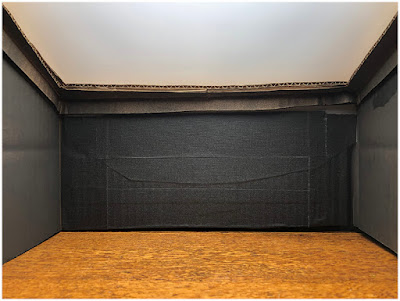
SLC-OE-06 Chocolate Box Studio

25 Feb

I am happy to announce my brand new studio. It features hardwood floors and a seamless, backlit ceiling as its primary light source.

Sadly, like many studios, this one is a little on the small side: it measures exactly one cubic foot. But that's fine, as this workspace was designed specifically for one subject: chocolates.

Today, we'll be harkening back to the roots of this website, namely working with cardboard and glue to solve a problem for next to nothing. Read more »
Strobist

 
Comments Off on SLC-OE-06 Chocolate Box Studio

Posted in Photography


Skylum announces development of AirMagic drone imaging software

25 Feb

Skylum software, the company behind the Luminar and Aurora HDR applications has announced it is developing a dedicated software for enhancement of aerial images captured with drones.

The application for Windows and Mac will be called AirMagic and is AI powered “to transform photos made with a drone from great to breathtaking.” It will become available sometime in spring.

Looking at the teaser video above AitMagic is capable of detecting what drone camera an image has been captured with. It can then scan the scene for haze, skies, and presumably other image elements and artifacts, before automatically adjusting exposure, color and other parameters for an optimized end result.

It looks like AirMagic will be targeted at users who prefer automated enhancement over manual optimization but we’ll hopefully know more in the near future. No information on pricing has been released yet.

Articles: Digital Photography Review (dpreview.com)

 
Comments Off on Skylum announces development of AirMagic drone imaging software

Posted in Uncategorized


15 Common Portrait Mistakes to Avoid

24 Feb

The post 15 Common Portrait Mistakes to Avoid appeared first on Digital Photography School. It was authored by Kevin Landwer-Johan.

Creating portraits is challenging for many photographers, for many different reasons. There can be so much involved in making a portrait of someone that it’s easy to make mistakes.

To make great portraits you need to be concentrating on more than just your camera settings. (I believe this is true for all photography.) You have to make sure the lighting is right, the background is suitable and wardrobe and props are on hand if needed. Most of all, you must give your attention to the person you are photographing.

Cleaning Dispute 15 Common Portrait Mistakes to Avoid

© Kevin Landwer-Johan

Juggling all this is not easy, especially when you have little or no experience.

Practising taking portraits of someone you know, who enjoys being photographed, is a fabulous way to gain experience. Working with the same person for more than one or two portrait sessions will help you develop the skills you need.

As you begin you will most likely make some or all of these common portrait mistakes. Being aware of them can help you avoid making them.

1. Poor composition

The most common portrait mistake I see people on our workshops making with portraits is leaving too much space above the subjects head. Emptiness above someone usually does nothing for the look and feel of the photo.

Unless there’s significant information above a person, crop in more tightly to the top of their head.

Red Head Scarf 15 Common Portrait Mistakes to Avoid

© Kevin Landwer-Johan

2. Distracting background

Having too much detail in focus behind your subject can draw attention away from them. Be careful about how you position your subject.

Also, make your lens choice thoughtfully. Using a longer lens will reduce the amount of background in your frame.

Woman Buying Chilli Peppers 15 Common Portrait Mistakes to Avoid

© Kevin Landwer-Johan

3. Subject too close to the background

Don’t get your subject to sit or stand right up against the background. If it’s a busy scene your subject may be overwhelmed and end up not being the main focus. Even with a fairly plain background, it’s often best if you separate your subject from it.

Smart Phone Photo 15 Common Portrait Mistakes to Avoid

© Kevin Landwer-Johan

4. Not enough in focus

You may be tempted to open your aperture to the widest setting so you can blur out a distracting background. Be careful doing this that you maintain enough in focus on your subject.

Blurring the background may also mean blurring your subject more than what really looks good.

Market Porter 15 Common Portrait Mistakes to Avoid

© Kevin Landwer-Johan

5. Out of focus eyes

If your subject has eyes, focus on them. This is one photography rule I stick to, most of the time. It’s not often a portrait with the eyes out of focus looks great.

When your subject is facing directly at the camera it’s easy to get both eyes in focus. If their head is turned to one side you need to focus on the eye closest to the camera.

Akha Friends 15 Common Portrait Mistakes to Avoid

© Kevin Landwer-Johan

6. Slow shutter speed

People move. You need to choose a fast enough shutter speed to freeze your subject. Even if they make a slight movement it can result in a blurred photo if your shutter speed is too slow.

1/250th of a second is usually fast enough. Slower than this and you may have problems.

Dreadlocks 15 Common Portrait Mistakes to Avoid

© Kevin Landwer-Johan

7. Poor lighting

Modern cameras can take photos when there’s next to no light, so it’s easy to get it wrong.

With portraits, it’s most important to have the right lighting for the mood you want to create in your photos. Hard, high contrast lighting is not good when you want a soft, romantic looking portrait. Equally, soft light will not help you create drama in a photo of a person.

Muddy Ceramic artist 15 Common Portrait Mistakes to Avoid

© Kevin Landwer-Johan

8. Bad timing

Capturing the right expression will flatter your subject. If you don’t, they may be reluctant to let you photograph them again.

Careful timing can make or break a portrait. Waiting and watching a person’s face for the right time to press the shutter button is vital. Most people will not stare into your camera without changing their expression. You need to be ready when they look their best.

If you’re photographing someone who is blinking a lot you need to time your photos in between blinks.

Buddhist Monk Yard Work 15 Common Portrait Mistakes to Avoid

© Kevin Landwer-Johan

9. Not taking enough photos

You need to take plenty of photos. Not taking enough photos will frustrate you when you are editing, because you will have too few to choose from.

Try to capture a range of expressions. Don’t just sit with your camera on burst mode filling your card up with nearly identical images. Aim to create a good variety. This will please your subject as it will allow them to make their selections more easily.

Man Studio Portrait 15 Common Portrait Mistakes to Avoid

© Kevin Landwer-Johan

10. Taking too many photos

Finding the balance between not enough and too many photos can be difficult. This will depend a lot on your subject.

Some people will be more comfortable being photographed for a longer period of time than others. You need to be aware of this. If your subject is getting bored or agitated because you are taking too long or taking too many photos, this will show in their face. Your results will suffer for it.

Man Studio Portrait 15 Common Portrait Mistakes to Avoid

© Kevin Landwer-Johan

11. Failing to connect with your subject

Connecting well with the person you are photographing is one of the most important aspects of portraiture. So many photographers spend more time and attention connecting with their cameras. This is a big mistake during a portrait session.

Building a rapport with your subject, even if you only have a few minutes, can make the biggest impact on your resulting photos.

When your subject is relaxed with you and happy, you will get better pictures of them. Your manner and the way you interact with them is vital.

Vege Vendor 15 Common Portrait Mistakes to Avoid

© Kevin Landwer-Johan

12. Not giving your subject enough direction

Communicate clearly what your intention for the portrait session is. What type of picture does your subject want? What kind of image do they want to portray?

When you know what they want, you will know what you have to achieve. If they do not understand what you are asking them to do, show them. Put your body, hands, face, just how you want them to look and they can mimic you.

Rag Doll Girl 15 Common Portrait Mistakes to Avoid

© Kevin Landwer-Johan

13. Feeling like you are imposing

This is common with photographing strangers. Many street photographers prefer candid portraits because they do not want to impose on people.

Standing back with a long lens on will not often produce an intimate portrait. You need to change your thinking and consider that what you are doing when you take someone’s photo has got the potential to bless them.

Akha Woman Laughing 15 Common Portrait Mistakes to Avoid

© Kevin Landwer-Johan

14. Not being confident

If you are self-conscious and not confident this will generally be reflected back to you by your subject.

Having a calm, confident manner when you are making portraits will enhance both their experience and yours.

You don’t need to put on a show, but just be relaxed and assured that you are creating good photographs.

Pretty Asian Karaoke Singer 15 Common Portrait Mistakes to Avoid

© Kevin Landwer-Johan

15. Rushing to get finished

Take your time. It’s not a race.

Give yourself space to concentrate well on what you are doing. Make sure you are getting what you want and your subject is more likely to be pleased with your pictures.

Boy With A Note Book 15 Common Portrait Mistakes to Avoid

© Kevin Landwer-Johan

Conclusion

It takes practice. Like learning to do anything well, it takes concentrated perseverance to succeed. This is why it’s good to practice making portraits with someone you know who is willing to be photographed.

Know your camera, be confident with it and with your subject and you will learn to make wonderful portraits.

When I started out as a photographer I found it incredibly difficult to photograph people. I was shy and lacked confidence. It was hard work, but over the years I have come to really enjoy the art of portraiture.

Do you have any other tips or portraits you’d like to share? If so, do so in the comments below.


The post 15 Common Portrait Mistakes to Avoid appeared first on Digital Photography School. It was authored by Kevin Landwer-Johan.


Digital Photography School

 
Comments Off on 15 Common Portrait Mistakes to Avoid

Posted in Photography


Olympus E-M1X versus the E-M1 II, Panasonic G9, Fujifilm X-T3 and Nikon D500

24 Feb

Introduction

With ‘Deep Learning’ autofocus, crazy-fast burst speeds and refined ergonomics, the Olympus E-M1X is the most focused action and sports shooting camera that Olympus has ever made. And though it retains a Four Thirds sensor like the E-M1 II, Olympus is touting the X as a credible alternative to the flagship Nikon D5’s and Canon EOS-1D X II’s of the world: in the right circumstances.

We’ll look at comparisons against the D5 and 1D X II in a future article, but for now, we wanted to take a closer look at how the E-M1X stacks up against other Four Thirds and APS-C cameras with sports-shooting chops. It’s true that the E-M1X is the only camera in this comparison with a true double-grip chassis, but its competition is fierce nonetheless.

Against the E-M1 Mark II

Olympus has been clear that the E-M1X does not replace the existing E-M1 II, and both will live alongside each other in their lineup. But since the E-M1 II was already such a capable camera and you can get one at a steep discount compared to the X, we figured we’d start with a look at how these two stack up against each other.

The most immediate change is obviously the body. Not only in terms of size, but also battery life (doubled on the X, since it has…double the batteries). There are also significant differences between the two in terms of their controls. By and large, there are more buttons on the X that are dedicated to a single purpose, and the dual 8-way joysticks free up the four-way controller to act as four distinct custom buttons.

Against the E-M1 Mark II

Another benefit of the larger body on the E-M1X is that it makes room for an all new in-body image stabilizer, now rated at up to 7 stops without a stabilized lens, and up to 7.5 stops with certain lenses such as the Olympus 12-100mm F4 Pro. The E-M1X is also officially rated to IPX1 standards; the E-M1 II is certainly a well sealed camera, but Olympus makes no claims regarding formal ratings for it.

Both cameras have the same viewfinders, the same rear screens and the same
(or very similar) sensors

Olympus also doubled the processors in the X relative to the Mark II, enabling not only the ‘Deep Learning’ autofocus that detects motorsport vehicles, aircraft and trains, but also the hand-held high-resolution mode that spits out 50MB files. And Olympus has told us that it’s tweaked its C-AF algorithm in the X (note, this is not the C-AF + Tracking algorithm) to allow for better autofocus performance when you keep an AF area over your subject.

As for the rest, well, there’s not much to tell. Both cameras have the same viewfinders, same screens and the same (or very similar) sensors and very similar menu systems. For all intents and purposes, unless you need a tougher camera, want a beefier camera to use with bigger lenses or are in love with the Olympus ecosystem and want the best possible autofocus performance your bucks can buy, it’s probably best to just stick with the E-M1 II for now.

Against the Panasonic Lumix DC-G9

Let’s start with Panasonic’s Four Thirds stills-shooting flagship, the G9. Although at first glance there doesn’t appear to be much between the two in terms of core specs, the experiences of actually using each of them are more disparate than you might expect.

But let’s start with those specs, just ’cause. While the E-M1X shoots at 18fps with autofocus, the G9 ups the ante with 20fps. But they both have 20MP Four Thirds sensors with native ISO ranges of 200-25600, they both have fully articulating rear touchscreens, AF joysticks and in-body image stabilization.

But whereas the E-M1X has an on-sensor phase detection autofocus system that is able to recognize subjects like aircraft, trains and automobiles, Panasonic has stuck with its Depth from Defocus technology in the G9’s contrast-detection autofocus system. The result is that there is ‘flutter’ in the G9’s EVF when shooting moving subjects, as the lens rapidly wobbles in and out of focus to reconfirm critical focus. The ‘keeper rate’ of in-focus shots on the G9 is actually quite good, but it can be difficult to see while shooting if your subject is in focus at all. It’s a bit disconcerting until you get used to it.

Against the Panasonic Lumix DC-G9

There are other considerations, such as the G9’s top-plate LCD that displays shooting settings, something missing on the Olympus. Both cameras have high-resolution modes, but only the Olympus lets you hand-hold the E-M1X to get those extra pixels. The G9′ s video spec is rather more impressive too. It shoots 4K/60p, while the Olympus tops out at 4K/30p. Missing a built-in battery grip, the Panasonic is of course smaller, and with around half the rated battery life of the Olympus.

Both cameras give great results from their Four Thirds sensors given enough light. In the end, we lean towards the Olympus for outright autofocus performance, but the Panasonic is the stronger option for those who also dabble in video.

Against the Nikon D500

Okay, with the E-M1X’s main Four Thirds competitor out of the way, let’s look at how it stacks up against Nikon’s APS-C flagship, the D500.

With a resolution of 21MP, the D500 is only slightly above the E-M1X in this regard – but the larger sensor will come with less noise, more dynamic range and better low light performance than the E-M1X. Physics is physics, simple as that.

The larger sensor in the D500 will have less noise, more dynamic range, and better low light performance

And while the D500 comes without any form of ‘Deep Learning’ in its autofocus system, it does have a highly capable 3D Tracking mode to track moving subjects. So it won’t automatically detect, say, a car, but if you manually tell the camera what to track, the D500 will stick to it with remarkable tenacity. By contrast, Olympus’ non-subject specific tracking is nowhere near as ‘sticky’ as the Nikon.

Against the Nikon D500

The viewfinder experience differs from one camera to the next, and not just because one is optical (Nikon) and one is electronic (Olympus). The Olympus’ viewfinder is noticeably larger than that on the D500, but because it uses LCD technology, contrast is lacking and blacks can appear somewhat ‘washed out.’

The D500 also tops out at 10fps, slower than the E-M1X but still respectable. Despite only having a single battery, the D500 is rated for more shots per charge than the E-M1X, in part because it doesn’t have to power its viewfinder. But the Olympus has incredible image stabilization, and Nikon’s lens lineup offers limited solutions for getting near the reach of the Olympus lineup without spending more money and carrying more weight.

In the end, both cameras will reward you with an insane number of in-focus ‘keepers’ and good image quality – but the Nikon will handily beat the Olympus as light levels drop and ISO values rise, while Olympus gives you more reach in a smaller overall package.

Against the Fujifilm X-T3

Aha! You weren’t expecting Fujifilm to make an appearance, were you? But the X-T3 is a credible contender, offering further evidence that Fujifilm is quickly learning from both its past and its competitors. It wasn’t that long ago that Fujifilm offered dismal video and slow autofocus, yet now the X-T3 is a stills / video hybrid camera that is among the best APS-C cameras we’ve ever used. So how does the E-M1X look against it?

The X-T3 has the highest resolution of any camera in this slideshow

With a new sensor offering 26 megapixels of resolution, the X-T3 will have the highest resolution of any camera in this slideshow. It also reads out very fast, allowing for 20fps burst shooting using the electronic shutter, and 30fps with an added 1.25x crop that yields 16MP images.

But what good are burst speeds if your subject is out of focus? Good thing the latest autofocus system in the X-T3 is really good, with a solidly capable tracking mode that works similarly to Nikon’s 3D Tracking. Also like the Olympus, there’s no top-plate LCD to check your settings, but that may not matter if you make use of the analog dials. And one last small-but-significant distinction: the E-M1X has a large AF-L / AE-L button that can be assigned to AF-ON for back-button shooters, and the X-T3’s AF-L and AE-L buttons are comparatively small and placed less conveniently.

Against the Fujifilm X-T3

Despite its relatively large sensor, the X-T3 will also be the smallest camera in this comparison – but that portability comes with compromises. The Fujifilm’s smaller grip is less well-suited to large lenses than the Olympus, and battery life is comparatively poor. But build quality is excellent, even if Fujifilm won’t commit to an ingress protection rating like Olympus will. Despite having excellent video capabilities, the Fujifilm has no in-body stabilization, limiting video shooting possibilities for some users, though it has a much nicer electronic viewfinder and zero-blackout shooting in those electronic bursts.

Like Panasonic’s G9, the Fujifilm X-T3 may be best seen as a more appropriate all-rounder for most people. But Olympus should be concerned about the little Fujifilm, particularly as the system has some excellent lens support that signals how seriously the company is taking sports and action shooting (see the XF 100-400mm zoom and the 200mm F2 prime). Fuji also offers – arguably – some of the best JPEG color in the business, which is not only an Olympus strong suit but also very important to action shooters that don’t have time to process thousands of Raw files.

The wrap

In looking at the E-M1X in comparison to these excellent crop-sensor cameras on the market today, you can’t help but wonder if Olympus really has their work cut out for them.

It occupies an interesting niche in the market. Olympus is clearly catering to users that may either aspire to own a professional double-grip DSLR, or perhaps already own an SLR of some sort but are tired of carrying it around. These users must be shooting in pretty decent light to avoid ultra high ISO values compromising image quality on the Four Thirds sensor and yet, these users must not want to compromise at all on autofocus capability.

There’s no denying that the E-M1X is an amazing piece of technology wrapped in what is perhaps the best-built camera body any of us have laid our hands on. In the right hands and in the right circumstances, it’s capable of astounding imagery. We’ll continue to put the camera through its paces as we press on with our final review.

What do you think of the E-M1X? Do you own any of the other cameras mentioned in this comparison? Do you want to pick up a copy of the Olympus for your very own? Let us know in the comments.

Articles: Digital Photography Review (dpreview.com)

 
Comments Off on Olympus E-M1X versus the E-M1 II, Panasonic G9, Fujifilm X-T3 and Nikon D500

Posted in Uncategorized


Have Digital Filters Replaced the Need for Physical Lens Filters?

24 Feb

The post Have Digital Filters Replaced the Need for Physical Lens Filters? appeared first on Digital Photography School. It was authored by Mark C Hughes.

Do you need filters for beautiful pictures?

If you are old enough to have used a film camera, you know why people needed lens filters in order to accomplish visual effects in their images.  Back in the film days, you had limited control over white balance or ISO. Once you selected your film from the available film stock, and put it in your camera, you were stuck with a roll (24 or 36 exposures) of single ISO negative or slide film that was probably daylight balanced. In order to not waste money, you did everything you could to carefully mete out your images and make the most of them.

Most film was daylight balanced so getting it right in-camera was critical

Back in the day

To help you make great images in the film days, you needed certain filters to help fix your white balance, and neutral density (ND) filters to allow you to slow your shutter speeds down. That was then, this is now. With the advent of digital cameras and the high-powered abilities of most image editing software, you can accomplish digitally much of the work that filters used to do.  Is there still a place in modern digital photography for optical lens filters?

The answer is yes, but only for a few specific types of filters. In fact, you may find it difficult to get many filters in your local camera store that would have been readily available in the film camera days.  Most bricks and mortar camera stores carry few filters. The more unusual filters might be found in the bargain bin section, next to the books on how to use your new Canon 5D mark 1 (hint: that is an old digital camera).

Some filters have to be really large to accommodate wide angle lenses

Types of Optical Lens Filters

I find that optical lens filters break down into six general types: UV/skylight filters, color modifiers, special effects, specialty filters, ND filters (including graduated), and circular polarizers. Most optical filters can be replaced by digital processes, either in the camera itself or in post-production. Some optical filters are really big and all take up space in your bag.

Ultraviolet (UV) or Skylight filters

Let’s consider UV or skylight filters. Film stock was often sensitive to UV light so it was important to protect your film by using a filter so that UV light wouldn’t make the images hazy.  Modern digital cameras are not susceptible to UV light interfering with their sensors as there are already UV and IR filters built into the cameras (we will discuss the importance of this later). Today, UV or skylight filters serve a completely different purpose: many photographers use them to protect the front element of their lenses.

A UV or Skylight Filter will protect your lens front element

UV/Skylight filters as lens protection

As an aside, there are two schools of thought regarding UV or skylight filters. Some argue that putting a cheap filter in front of a really expensive lens significantly degrades the optical properties of your lens and that most good quality lenses have great coatings and are quite robust.  Alternatively, others would prefer to replace a $ 100 filter than replace a $ 2000 lens. While I agree you should never use cheap filters, I do tend to think that if you use good filters they do protect your investment in much more expensive lenses. I have replaced lots of filters that were shattered from an impact. In all of those cases, the front lens elements were protected from contact by the filter. I am not sure that would have occurred without the sacrificial filters.

Regardless, since these UV/skylight filters don’t cause any significant changes to your image, they really are only useful for physical lens protection.

A warming filter to adjust white balance

Color filters

Color filters were another common filter used with film cameras for simple color correction. Back in the film days, the film stock was mostly daylight balanced so if your images were taken in non-daylight conditions, you would need to use a color filter to correct your white balance. Although film processors had some ability to adjust the white balance in the lab, back then – today too, for that matter – it was always easier when you got things right in camera. Color filters are still available but are more of a novelty item, used for a specific effect, often in concert with gelled flashes and strobes. They are also still used for film cameras, instant cameras, and for specific applications like underwater photography.

Special effects filters

Once upon a time, there were lots of special effects filters that would produce in-camera special effects like grids, streaks, and starbursts. These all still work on digital cameras, however, most of these effects can be digitally produced, reducing the need for the optical filter. Many film shooters will take their images and then scan them to edit them, so the extra effort and cost of using special effects filters seem unnecessary. They are also difficult to find.

Rectangular Graduated Neutral Density Filter

Neutral Density Filters – Graduated

The next filter type to consider is the neutral density filters, commonly used by landscape photographers (both film and digital). These divide into two groups: graduated neutral density filters and overall neutral density filters. Acting like sunglasses for your camera, graduated neutral density filters are all neutral colored – they should impart little color change – and darken only part of the image. Graduated filters help deal with the dynamic range of your sensors, particularly when shooting into scenes that are very bright and very dark in the same view. Most modern digital cameras have a dynamic range of about 10 – 14 stops whereas your eyes are more like 20 stops. Keep in mind that this is not really a fair comparison because our eyes work quite differently from camera sensors. Graduated neutral density filters can usually be applied in post-processing. Although, if the dynamic range is really huge, it often means you can take one image rather than multiple images that need to be composited (this is what HDR images really are).

The left shows the image normally processed with the right having a digital neutral density filter

Neutral Density Filters – Non-Graduated

A neutral density filter (non-graduated) is the first optical filter type that does things that cannot be easily duplicated, either in camera or in post-production. At least not all of its functions. While it is certainly possible to darken your images digitally in post, a non-graduated neutral density filter allows you to take images that your camera would not allow you to take in full sunlight. In full sun, it may be so bright that you may not be able to stop your lens down and slow your shutter down sufficiently to get motion to blur. Non-graduated neutral density filters allow you to slow your shutter speed down in the field when conditions are bright. You will be able to take images of moving subjects in bright locales and blur the motion to create interesting effects.  For example, waterfalls are often shot using a non-graduated neutral density filter. Neutral density filters are often measured in stops to indicate the number of stops you can slow things down. At the extreme end of the non-graduated neutral density filters are the specialty filters used for photographing solar eclipses. Without these strong filters, the sun can permanently damage camera sensors.

Neutral Density Filters on the front element of the lens

Smooth water motion with a non-graduated neutral density filter for longer exposures

Specialty filters

The second optical filter type that cannot be duplicated in post-processing or in-camera are specialty filters related to UV and IR light.  By default, cameras have filters on their sensors that cut UV and IR light out so that only visible light is recorded. However, it is possible to get these filters removed (you have to send your camera body away) to allow you to shoot UV-only, full spectrum (which includes UV, visible and IR), or IR-only images. Once this is done, your modified camera is generally limited to that particular use, but the images it produces can be quite interesting. By using specialty filters on a modified camera body that allows for full spectrum, you can control what portion of the spectrum is visible in your images. There are cut filters that allow full spectrum sensors to only see UV, visible light or IR spectrum. These filters cannot be duplicated in post-processing.

Slight neutral density cast for a circular polarizer

Circular Polarizers

The final optical filter type that cannot be duplicated in post-processing is a circular polarizer.  There are actually two types of polarizers, linear and circular. They both cut the same light out but circular polarizers can rotate an allow you to find the optimal orientation whereas linear polarizers are fixed (you should only use circular polarizers unless you know what you are doing). Circular polarizers do two things: cut down reflections and increase contrast. Some also act as a weak neutral density filter. When light hits a metallic or watery surface, the reflected light tends to be polarized (all the light is vibrating in the same direction). The circular polarizer lets you filter out this polarized light. You do this by turning the filter.  The change can be quite dramatic, and it cannot be achieved in any practical sense through post-processing. In addition, because there is always some polarized light in the atmosphere, the filter will make the colors in your images punchier. This is a secondary feature of polarizers but adds to their use. Colors just pop more.  Different brands and types alter how much this occurs. In general, you can’t go wrong using a circular polarizer, particularly for landscape photography.

Circular Polarizers help control reflections

Conclusion

Many filters that were used with film cameras are not really required anymore because of the ability to control white balance and ISO. Other filters created effects that can easily be duplicated using image editing software like Photoshop. Despite this there are a few filter types that cannot be replaced by processes applied in post, thus they remain vital tools in your photographer’s toolbox.

Do you use filters? Share with us in the comments below.


The post Have Digital Filters Replaced the Need for Physical Lens Filters? appeared first on Digital Photography School. It was authored by Mark C Hughes.


Digital Photography School

 
Comments Off on Have Digital Filters Replaced the Need for Physical Lens Filters?

Posted in Photography