RSS
 

Archive for January, 2019

Motorcycle photographer Mark ‘Kato’ Kariya talks gear

29 Jan

California native Mark ‘Kato’ Kariya has been shooting motorsports for more than 30 years, during which time he’s used countless cameras, lenses and bags. Recently he’s been working with Lowepro’s new range of ‘ProTactic AW II’ camera backpacks, designed for use in tough conditions. We spoke to him about his career, his gear, and his tips for successful motorsports photography.


What’s your background?

I grew up in rural Southern California, where my family grows oranges and avocados. I’ve been riding motorcycles since I was nine because that’s how we checked the sprinklers every morning and afternoon – a Honda 90 trail bike fits between the trees easily and it’s a lot faster than walking! I worked on the high school yearbook as a photographer in my junior and senior years, and I joined the Daily Trojan newspaper when I was at USC, where I got my BA in journalism.

After graduating, I figured I’d end up on a daily paper somewhere but instead I started covering local motocross races for Cycle News – a weekly publication centered heavily on race coverage. A year after graduating, Cycle News offered me a job as a staff editor, which was a dream melding of being in the motorcycle industry and using my degree.

After two years at CN, my former editor offered me a staff position at a new magazine he was starting called Dirt Rider. I accepted and stayed there for almost 15 years before going freelance in the late 90s, specializing in event coverage as well as photo shoots for various race teams and, on occasion, manufacturers.

How did you get your start in photography?

Upon graduating eighth grade we were asked what we wanted to do when we grew up. I had no idea! The first thing that popped into mind was photographer so I went with that. I took a basic photo class at a junior college one summer, but other than that, I learned by seeing what others were doing and figuring things out for myself.


Mark Kariya portfolio gallery

$ (document).ready(function() { SampleGalleryV2({“containerId”:”embeddedSampleGallery_0363762435″,”galleryId”:”0363762435″,”isEmbeddedWidget”:true,”selectedImageIndex”:0,”isMobile”:false}) });

What’s your ideal way of working?

It depends on the job. Even for race coverage, it varies. At some races, I can get by with hiking around to various shoot locations and get different types of shots. At other races, it really helps being able to ride to locations, usually on the course before the race starts, though this limits the equipment I can take. Then there are races like the Baja 1000 where there’s so much distance between locations that I drive my truck to various access points off the highway.

It just depends on what the client wants. If I’m shooting at a track or somewhere I don’t have to go too far, I can bring more equipment and hike around while sometimes the client wants a more remote location so I ride with a backpack to carry what I can.

What’s your perfect camera bag?

There’s no perfect bag. Each type of job seems to require a different bag depending on what equipment’s needed. I usually use one bag as a travel bag because it’ll carry most of the stuff I’ll need and fits underneath the seat in front of me or in the overhead of most larger commercial airliners (Boeing 737 Airbus A321 and larger, for the most part). For the smaller regional jets, it can get a little tricky; most of the time my travel bag will fit underneath the seat in front. The hard case/trunk for a 400mm F2.8 or 200-400mm F4 will fit in either spot on big and small jets.

What’s the most important factor for you, when it comes to gear?

As I cover a lot of desert races, dust is a huge issue so I try to stay upwind whenever possible. If it’s not dusty, then it’ll likely be muddy and rainy. Due to the harsh environments off-road motorcycle races are held in, I need my gear to be rugged as well as easily portable. I always use two of the same camera bodies and am currently running Nikon D5s as my primaries with a D4 as a third when required.

You don’t want to expose the sensor or other internals so I’ll typically leave lenses on the cameras all day, with the 17-35mm F2.8 on one body (always with a a Speedlight SB-900 or 910 on it for fill) and 70-200mm F2.8 on the other. If I think there’s going to be a situation where multiple lights might be called for, I’ll also carry two extra lights; the last of my SB-800s just died so I’m trying to get SB-5000s dialed in.


Mark’s top tips for motorsports photography:

  1. Know your equipment and what all the different buttons and settings are, something that only comes from reading the manual.

  2. Study the work of photographers you admire and figure out what makes their shots stand out for you.

  3. You’re not always going to be in a place with the best action so at least make sure the shots are technically excellent (in focus, properly exposed, composed well).

  4. Experiment with different settings, locations and equipment (one thing I’ve learned is my bodies produce the best color when I’m underexposing by anywhere from 0 to 1.7 EV depending on ambient light and where the sun is).

  5. Since everyone wears helmets you won’t be able to photograph the emotion associated with racing unless you shoot people shots (spectators, mechanics or racers after the event like on the podium or in their pit area).

How are you finding the LowePro ProTactic II bags?

I’m using the prototype BP 450 AW II that we used for the intro video and it is far superior to the kind of generic backpack I’d been using for 20 years. It’ll accept the two bodies with lenses attached that are my go-to’s with little more required than turning the lens hoods around. When I find a shoot location, I hop off the bike, take the ProTactic off, put it on the ground and unzip the rear panel. Easy! I haven’t needed to access gear through the side doors yet, though I appreciate their availability.

$ (document).ready(function() { SampleGalleryV2({“containerId”:”embeddedSampleGallery_9978621535″,”galleryId”:”9978621535″,”isEmbeddedWidget”:true,”selectedImageIndex”:0,”isMobile”:false}) });

I like how the ProTactic is a dedicated camera bag so the internal dividers are movable, allowing me to arrange things as I need to, and its padding provides a bit more protection from the elements (dust and mud, usually) and crashes, which happen occasionally when I run out of talent.

What advice would you give someone who wants to get into motorsports photography?

it’s very difficult to get trackside access for auto races, at least in the US. Dirt bike races are easier, except for the professional Supercross or motocross Nationals, flat track and road races – those are treated like car races as far as credentialing is concerned. But accessing the course for off-road motorcycle races is much easier. Contact the promoter/organizer a week or two before the race to see what’s needed. Even if you can’t get trackside, you can usually still get some nice shots from the fence.

Watch the way the light changes throughout the day and don’t ignore what’s in the background. Use everything you can environmentally to enhance your shot. If you’re just getting into race shots, fast shutter speeds like 1/1000 and higher are ‘safer’ and will let you get a higher percentage of good shots. I’m old school so I still try to keep my ISO as low as possible.

Once you get fairly comfortable capturing good action, experiment with different settings, from shutter speeds to white balance (again, keeping an eye on environmental factors).

Learn more about the Lowepro ProTactic range of bags and accessories


This is sponsored content, created by Vitec. What does this mean?

Articles: Digital Photography Review (dpreview.com)

 
Comments Off on Motorcycle photographer Mark ‘Kato’ Kariya talks gear

Posted in Uncategorized


Canon CEO expects ILC market to shrink 50% by 2020 to just 5-6M units

29 Jan

Since 2010, the interchangeable lens camera (ILC) market has been decreasing at an alarming and steady rate. Now, it seems Canon is projecting this trend will not only continue on, but expects it to increase exponentially with claims the ILC market will be cut in half within the next two years.

In an interview with Nikkei [translated, paywall], Canon CEO Fujio Mitarai shared a few insights into where Canon sees both its future and the market going.

As summarized by CanonRumors, Mr. Fujio says its camera sales have decreased approximately 10% year over year since ILC sales hit their peak in 2010.

A not-quite-accurate Canon analogy for decreasing ILC sales.

Currently, the global market for interchangeable lens cameras is estimated at 10 million units per year, according to both Mr. Fujio and CIPA data [PDF, page 2], but Canon expects that number to drop down to and plateau at roughly 5-6 million prosumer and professional cameras by the end of 2020.

Mr. Fujio also noted mirrorless camera sales aren’t adding to its bottom line, but are instead eating into the sales of DSLRs. This may very well have played into the reason Canon opted to release only one mirrorless camera in 2018 and doesn’t appear to be in a rush to get many more out by the end of 2019. It may have also been a factor in both Canon and Nikon taking so long to get into the full-frame mirrorless market; if all the capital put towards research and development (R&D) is only going to cannibalize your money makers, there’s not much need to rush the new technology.

To combat the declining revenue from ILC sales, Mr. Fujio says Canon plans to shift its focus to corporate sales rather than consumer sales over the coming years. As a result, Canon will be putting more emphasis — read: R&D — on industrial, surveillance, and medical imaging going forward.

Articles: Digital Photography Review (dpreview.com)

 
Comments Off on Canon CEO expects ILC market to shrink 50% by 2020 to just 5-6M units

Posted in Uncategorized


Kodak Alaris to release Ektachrome 120 and sheet film this summer

29 Jan

Kodak Alaris has revealed plans to ship its revived Ektachrome product in 120 format and sheet film variants later this year. The revelation was made by Kodak Alaris UK Quality Manager Andy Church on the Sunny 16 podcast last week (approx. 16 minute mark), during which he stated that the new products may launch in around three months, depending on production.

Kodak began shipping its new Ektachrome E100 film product globally in September 2018, followed by the Ektachrome 7294 Reversal Film in Super 8 format in October. The company previously indicated it would likely launch the E100 product in 120 format and sheet sizes, something it is now actively working on due to the 35mm product’s success.

The company must deal with some ‘technical hurdles,’ according to Thomas J. Mooney, Kodak Alaris’s film capture business manager who spoke with Kosmo Foto. According to Mooney, ‘Based on the very favourable response to our 135 format launch of Ektachrome E100, we recognise there is definitely a market need/demand for these additional formats, and activity is now underway.’

Church breaks down the technical issue during the podcast, stating the 120 format and sheet film require ‘slight adjustments’ to the formula. The company has ‘started having some pilot coatings and as things progress we’re going towards a more production-scale coating,’ Church explained.

Assuming everything proceeds smoothly, Church estimated the products may arrive in around three months, while Mooney provided ‘mid-summer’ as the company’s estimation.

Articles: Digital Photography Review (dpreview.com)

 
Comments Off on Kodak Alaris to release Ektachrome 120 and sheet film this summer

Posted in Uncategorized


Scouting the South Platte River near Greeley, Colorado

29 Jan

I haven’t paddled the South Platte since the last winter, so I decided to do some scouting around Greeley. There some changes … Riverside Park at Evans The park was rebuilt after flooding damages and reopened in October of 2018. […]
paddling with a camera

 
Comments Off on Scouting the South Platte River near Greeley, Colorado

Posted in Photography


7 Mistakes to Avoid When Photographing Wildlife

29 Jan

The post 7 Mistakes to Avoid When Photographing Wildlife appeared first on Digital Photography School. It was authored by Jeremy Flint.

Wildlife photography can be a great way to secure yourself a series of images of animals that you are proud of. However, it can be extremely challenging to capture good wildlife images because photographers often make errors resulting in missed opportunities.

1 - 7 Mistakes to Avoid When Photographing Wildlife

© Jeremy Flint

When you have been waiting for a while and are suddenly faced with photographing a wildlife encounter of a rare species, it is easy to get carried away with the excitement. You may forget the essentials and make mistakes, consequently missing out on the perfect shot.

To help you improve your chances of capturing a great wildlife image, avoid making these common mistakes:

1. Not doing your research

Knowing a bit about your subject, such as where and when you can see them, is an essential part of capturing a memorable wildlife shot. Turning up to a place and hoping for the best will likely result in disappointment. Your best bet is to do your homework and be as prepared as you can.

2. Motion blur

2 - 7 Mistakes to Avoid When Photographing Wildlife

Leopard, Wilpattu national park, Sri Lanka © Jeremy Flint

Generally, animals move quickly, and if you aren’t careful when taking your pictures, they can often result in motion blur. Sometimes adding intentional motion to your wildlife pictures can be effective and is a great way to add dynamism to your images through techniques such as panning. However, if you want to achieve sharper and more static images, which I would recommend for the majority of wildlife photographs, you need to take care that your shutter speed is not too slow.

3. Using too low an ISO

3 - 7 Mistakes to Avoid When Photographing Wildlife

Murlough Bay, Antrim Coast, Northern Ireland © Jeremy Flint

One way to ensure a faster shutter speed is to increase the ISO. Many photographers make the mistake of keeping the ISO low when photographing wildlife. This is usually to maintain maximum image quality. However, with a higher ISO, sharper shots will be achievable as the shutter speed increases.

4. Not being prepared

4 - 7 Mistakes to Avoid When Photographing Wildlife

Deer, Rondon Ridge Hotel, Mount Hagen, Papa New Guinea © Jeremy Flint

One of the biggest mistakes photographers tend to make when photographing wildlife is not being prepared. If you are not ready for the shot before it happens, you will miss it. Being unprepared could be something as simple as your battery going flat when you are taking photos or running out of space on your memory card.

Having prepared my camera the night before by charging my batteries and making sure my memory card had sufficient room to accommodate several images, I was able to take this shot of a deer as it appeared between the trees.

5. Out-of-focus pictures

5 - 7 Mistakes to Avoid When Photographing Wildlife

Green bea eater, Udawalawe national park, Sri Lanka © Jeremy Flint

Have you ever returned home from photographing wildlife images only to discover that your images are not sharp? This is one of the biggest pitfalls of recording good wildlife photos. It is likely that it may have been a case of not focusing on the subject properly. Therefore, be sure to aim and focus the camera on the part of the image you want sharp.

6. Your subject is too small in the frame

6 - 7 Mistakes to Avoid When Photographing Wildlife

© Jeremy Flint

Wild animals are easily spooked when approached by humans which means getting close to them is usually a challenging undertaking. As a result, you may find that your wildlife shots tend to have more of the surroundings in your shot, with your subject looking insignificant and lost in the background. Sometimes shooting an environment portrait of an animal can work well, but most of the time you will want to fill the frame with your animal shots. So if you aim to try and capture more of your subject, zoom in a bit closer.

7. The composition isn’t great

7 - 7 Mistakes to Avoid When Photographing Wildlife

Hornbill in flight, Wilpattu National Park, Sri Lanka © Jeremy Flint

Taking pictures of fast moving animals can often result in poor compositional shots. For example, a fleeting moment of a bird in flight or landing happens so fast that just getting a shot usually occurs to the sacrifice of the composition. Pictures can be spoilt by flapping wings, clipped parts of the body (such as the wings or tail), and not giving your subject enough space.

Conclusion

Common mistakes that you are likely to make when photographing wildlife include not being prepared or doing your research, motion blur, using too low an ISO, out-of-focus pictures, poor composition and including too small a main subject in the frame.

Now that you are aware of what not to do when photographing wildlife, turn these mistakes around to enhance your chances of capturing an image you can be proud of.

Now it’s your turn to venture out with your camera to photograph wildlife and share your images with us in the comments below.

The post 7 Mistakes to Avoid When Photographing Wildlife appeared first on Digital Photography School. It was authored by Jeremy Flint.


Digital Photography School

 
Comments Off on 7 Mistakes to Avoid When Photographing Wildlife

Posted in Photography


Nikon’s ‘Trade up to Z’ program offering additional discount for traded-in cameras

28 Jan

Nikon has announced a new incentive for its trade-in program that offers additional discounts on its Z6 and Z7 full frame mirrorless cameras if consumers hand over their operating interchangeable lens cameras (ILC).

From now through Sunday, March 31, 2019, consumers who hand over a working ILC to Nikon will receive an additional $ 200 off the Nikon Z6 and $ 400 off the Nikon Z7 on top of the trade-in value of their camera. The deal is honored regardless of the age or brand being turned in, so long as it’s functioning, and the discounts also apply to Nikon’s various kits that include the Z6 and Z7 cameras.

Nikon also mentions its FTZ Mount Adapter is also $ 100 off when purchasing it in tandem with a Z6 or Z7 camera.

For more information on the program and to get started on the trade-in process, head over to Nikon’s ‘Trade up to Z’ page.

NIKON INC. ANNOUNCES “TRADE UP TO Z” CAMERA TRADE-IN PROGRAM

Add an Additional $ 400 (for Nikon Z 7) or $ 200 (for Nikon Z 6) to Your Interchangeable Lens Camera’s Trade-In Value Towards the Purchase of a New Nikon Z Series Camera at Participating Nikon Authorized Dealers

MELVILLE, NY (January 25, 2019) – Today, Nikon Inc. announced a new trade-in program that makes it easier than ever to upgrade to the revolutionary new Nikon Z Series full-frame mirrorless camera system.

Starting on Sunday, January 27, 2019, consumers can trade in their operating interchangeable lens camera for a new, cutting-edge Nikon Z Series camera and get $ 400 towards a Nikon Z 7 or $ 200 towards a Nikon Z 6 in addition to their camera’s trade-in value, regardless of camera brand. What’s more, consumers can save an additional $ 100 on the Mount Adapter FTZ when purchased together with a new Nikon Z 6 or Z 7.* This limited-time trade-in program ends March 31, 2019. For more information about the Trade Up to Z Program, including full terms and conditions, please visit nikonusa.com/ztradeup.

Built around the next-generation Z Mount, the acclaimed Nikon Z 6 and Z 7 cameras achieve a new era in optical performance for Nikon. These full-frame mirrorless cameras are equipped with FX-format BSI CMOS image sensors for outstanding image quality, fast hybrid AF, 5-axis in-body stabilization, an exceptionally clear Quad VGA Electronic Viewfinder and amazing video features. Combined with the growing line of high-performance Z NIKKOR lenses, the Nikon Z Series empowers users to pursue their creative vision without limits.

For more information about the latest Nikon products, including the new Nikon Z Series full-frame mirrorless camera system, please visit www.nikonusa.com.

Articles: Digital Photography Review (dpreview.com)

 
Comments Off on Nikon’s ‘Trade up to Z’ program offering additional discount for traded-in cameras

Posted in Uncategorized


3 Top Cell Phone Photography Apps (Android or iOS)

28 Jan

The post 3 Top Cell Phone Photography Apps (Android or iOS) appeared first on Digital Photography School. It was authored by Glenn Harper.

One of the nice things about photography is that you don’t need an expensive camera or exotic lenses to produce good photos. Although such gear ensures the best image quality, to some degree that need has been nullified by the way today’s photos are shared. When viewed on a high-res smartphone or tablet, the technical imperfections of a phone image all but vanish. Cell phone photography is as legitimate as any other form of photography. Or is it?

In recent years, as the Internet has grown in power and influence, cell phone photography has become widely accepted by picture libraries and agencies. A huge market exists for web pictures, and it doesn’t always take DSLRs or even compact cameras to supply it. After inheriting an iPhone a few months back, and acquainting myself with various apps, I began sending phone photos to picture libraries.

When it comes to cellphone photos, libraries are surprisingly open-minded about the use of filters and effects. A conservative approach to editing is not necessary and may even be unhelpful. This article looks at three of the apps I use most for preparing images: MIX, PS Express, and Snapseed. Any of these three allows basic manual adjustments of color and tone. So instead of attempting repetitive in-depth reviews of all three, I aim to show you some of their individual features.

Three top cell phone photography apps

The opening screens of MIX by Camera360, Adobe PS Express and Snapseed by Google. All three are available for iOS or Android phones.

MIX by Camera360

MIX is filter-oriented with 100+ free filters and some in-app purchases. Of course, it also lets you make straight edits to your pictures (e.g. brightness, saturation, contrast, sharpness, spot removal). I’ve always liked presets and filters. If other photographers know exactly what they’re going to do with every photo, I’m not one of them. Sometimes it’s fun to try out different stuff and hit a few buttons.

Cine Filters

When you want to apply a color cast to an image, the Cine filters in MIX work well. They have various effects, including warm-up, cooling, and a classic orange & teal combo for movie-style color contrast (try Googling “orange and teal photography” to discover more). Using these filters is a bit like tuning the temp and tint sliders in Lightroom. They affect the white balance of the image.

Three top cell phone photography apps - teal and orange Cine filter from MIX

This orange (warm-up) and teal look is similar to an effect used in modern movies and comes from one of several Cine filters in MIX.

Slide Film Filters

As my photography predates the digital age, filters that imitate last-generation slide films appeal to me. I can’t testify as to their accuracy, but if I want a deep blue sky or just a bit more punch in color and contrast, MIX gives me an easy solution.

Three great cell phone photography apps - MIX Slide Film filters

These deep-blue skies were achieved with the Fuji Velvia Slide Film filters in MIX and are true to the effect often seen in Velvia transparencies.

Holiday Sky Filters

Being an old-school slide shooter (or old at any rate), I struggle with the idea of grafting new skies onto photos, but then photography rarely tells the whole truth. MIX offers a range of Holiday Sky filters that might just rescue disappointing photos. To make artificial skies seem realistic, you must take notice of how the light falls in your photo and make sure it doesn’t blatantly conflict with the new background. There’s also a MIX “Magic Sky” filter series for more dramatic effects.

3 top cell phone photography apps - MIX holiday sky filters

Sky grafting might be anathema for some, but Holiday Sky filters in MIX make it easy to replace a dull sky.

Adobe PS Express

As a long-time user of Photoshop, I tried PS Express hoping for a level of familiarity. I wasn’t disappointed. You can adjust photos using the same editing sliders found in other Adobe products: much of the toolbox seems intact.

Transform

If you shoot architectural photos, one of the best things about PS Express is its ability to easily correct the verticals and/or horizontals of a building. This avoids the “falling over” effect you get when pointing a camera at architecture. It helps if you leave space around the building when photographing it, otherwise, the transform tool will slice the edges off it.

Three top cell phone photography apps - transform tool in PS Express

The verticals in this photo of Florence were corrected with the Transform tool in PS Express.

Filters

PS Express has a decent selection of filters. I’m fond of the ones that apply a vignette, such as Basic/Autumn or B&W/pinhole. These give photos a sense of drama, and like all vignettes focus attention on the middle of the photo. You can give your photos a lot of mood with these filters.

Three top cell phone photography apps - PS Express pinhole filter

The PS Express B&W Pinhole filter focuses attention on the face of this effigy in Rouen Cathedral.

Text

Adding text to photos can seem a complicated process in some apps and programs, but PS Express makes it easy. You can easily create website graphics, greetings cards or memes and have plenty of control over fonts and opacity. As well, you can send your creations as layered PSD files to Photoshop CC on a computer.

Three top cell phone photography apps - PS Express text

Adding text with different fonts, opacity and colors is easy in PS Express.

Snapseed by Google

Developed by Google, Snapseed is an intuitive app that offers single-click “Looks” (filters by another name) and “Tools” for adjustable edits. It’s capable of great results with as little or as much input as you want. Among the tools, you’ll find anything from regular brightness, contrast or saturation sliders to more adventurous edits like “Double Exposure” or “Grunge”.

Looks: Fine Art

For black and white conversions, I find the “Fine Art” filter in Snapseed particularly pleasing. There is always a full range of tones to pack plenty of punch without much loss of shadow or highlight detail. The pictures are also very clean—no mid-tone noise in skies like there is with some B&W edits.

Three top cell phone photography apps - Snapseed fine art filter

The Snapseed Fine Art filter gives a well-balanced B&W conversion with a pleasing range of tones. I use it as my B&W cell phone default.

Tools: Drama

The Drama tool can easily produce overcooked results if you’re not careful, but it’s useful for bringing out the detail in clouds and/or lifting an otherwise dull photo taken on an overcast day. You can adjust the filter’s contrast effect as well as saturation to fine-tune the result.

Three top cell phone photography apps - drama tool

The Drama tool emphasizes mid-tone contrast and bleaches saturation on its default setting, often resulting in more dramatic skies.

Tools: Lens Blur

Snapseed’s Lens Blur tool lets you emphasize a particular area of a photo by controlling background blur and vignetting. The “Transition” slider lets you control the feathering area between the main subject and background, enabling natural-looking results.

Three top cell phone photography apps - Snapseed lens blur tool

The Snapseed Lens Blur tool emphasizes the face of this wooden sculpture of Christ in Venice.

Summary

The apps in this article will not be new to seasoned smartphone photographers, but I hope I’ve inspired others to use their cell phone cameras creatively. Phones have their limitations for some genres of photography, but that’s true of any camera and lens combo. They offer unrivaled portability. And while cell phones aren’t often seen in pro photography, they don’t rule out the chance of publication. Smartphones and their apps let you express yourself in countless ways.

The post 3 Top Cell Phone Photography Apps (Android or iOS) appeared first on Digital Photography School. It was authored by Glenn Harper.


Digital Photography School

 
Comments Off on 3 Top Cell Phone Photography Apps (Android or iOS)

Posted in Photography


7 Pros and 5 Cons of Volunteering Your Photography

28 Jan

The post 7 Pros and 5 Cons of Volunteering Your Photography appeared first on Digital Photography School. It was authored by Mat Coker.

Some experiences are worth more than money. Volunteering your skills as a photographer may be worth more to you than some of your highest paying jobs.

You want to do good and help others. Offering your photography as a gift is a wonderful way to do this. But you need to volunteer properly, otherwise, it’s a meaningless transaction.

Let’s work through the pros and cons of volunteering your photography so that you can volunteer in a way that builds up you and the person you’re volunteering for.

1 - Pros and Cons of Volunteering Your Photography

A big rig delivering an excavator to a Habitat for Humanity build site.

Pros of volunteering your photography

There are good reasons to volunteer your photography beyond just saying yes because you feel guilty.

1. Your photography is a gift

Volunteering shouldn’t just be about working for free. Think of yourself as giving a gift rather than merely volunteering or working for free.

When you consider your photography a gift you won’t feel as though anybody owes you anything and your motives will be pure.

2. Grow as a person

You might consider sharing your gift of photography in order to grow as a person, especially if you don’t consider yourself to be compassionate.

Practicing acts of compassion through your photography is a perfect way to become more compassionate.

2 - Pros and Cons of Volunteering Your Photography

3. Develop empathy

Empathy is related to compassion. If you live an easy life, you might not notice how much suffering there is around you. Photographing people living through cancer, poverty, or natural disasters can help you become more empathetic.

My wife is called out during all hours of the day or night to photograph families who have had a miscarriage or infant death. We were a year into this volunteer work when we too experienced a miscarriage.

4. When it’s something you just can’t resist

You should jump at opportunities to volunteer when it involves something you just can’t resist. If you love cute animals then volunteer at an animal shelter. Gifting my photography to Habitat for Humanity allowed me to get up close to heavy machinery. Photographing things that excite you is good for your soul – and even better when it’s a gift.

3 - Pros and Cons of Volunteering Your Photography

I allowed for a hint of motion blur to capture the movement of the spinning drum on the cement truck.

5. Explore something new

Some volunteer opportunities will allow you to explore something new. Take it a step further by documenting your journey with a photo blog.

Explore an aspect of life that you know nothing about and see what you can learn as you volunteer your photography skills.

6. Make it a project

Volunteering your photography may be a good way to work on a project. For longer-term projects, you could explore a theme over the course of a month or even a year. Or maybe you bring only one camera and one lens to see what you can accomplish with a constraint.

7. Do it as an artist

Giving your photography as a gift allows you to think beyond merely working for free. So does thinking like an artist. Whatever the volunteer opportunity is, do it as an artist. Make a beautiful set of photos as if it’s an art project.

4 - Pros and Cons of Volunteering Your Photography

Volunteer your photography skills alongside other people gifting their skills too.

Reasons NOT To volunteer your photography

Don’t volunteer if your work is going to be shallow or self-serving.

1. For exposure

New photographers often fall for the lure of exposure. You’ll often be approached with volunteer opportunities that promise amazing exposure for you. And you’ll almost always be let down.

On what grounds will it be good exposure? Is the event filled with your ideal client? Will you be promoted in a meaningful way (social media mentions often don’t lead to real exposure)?

Offering to volunteer your photography in order to gain experience rather than exposure is a great idea. Experience builds and lasts, but exposure fades quickly.

2. For your portfolio

You might be told that the volunteer opportunity will be good for your portfolio. But is this the sort of subject that you would like in your portfolio?

It’s easy for enthusiastic people looking for a volunteer photographer to promise exposure and rare portfolio opportunities, but you need to be the judge of that. They likely know nothing about what is good for you and your portfolio.

Rather than hoping to build your portfolio, you should take it as an opportunity to explore. Be grateful if you happen to create an image that you will use in your portfolio.

5 - Pros and Cons of Volunteering Your Photography

I gave up on trying to produce portfolio images based on my home build photos. But surprisingly, those gritty construction photos have led to headshot work. They enjoyed the wide variety of photos I take and trusted that I would be a good creative photographer for them.

3. It might lead to paid work

Your volunteer work will probably lead to something paid, but maybe not anytime soon and maybe not the work you’re really after.

There are better ways to pursue paid work:

  • Improve your website
  • Make cold calls
  • Promote yourself publicly in creative ways

If you’re really after paid work, maybe you would be better off making cold calls for 10 hours. 10 hours of sales pitches is almost guaranteed to get you paid jobs. But 10 hours of volunteer work might not lead to anything paid.

Volunteer as a gift and that will be payoff enough.

6 - Pros and Cons of Volunteering Your Photography

4. Just because you can’t say no

You always say yes to everything because you don’t have the assertiveness to say no. When you volunteer just because you can’t say no, you’re letting somebody take advantage of your weakness. They might actually be disappointed to find out you said yes but meant no.

5. When there is too much risk

It’s wonderful to experience a new type of photography through volunteer work. It can even help you improve your craft.

But you shouldn’t volunteer for important photography jobs that you are not confident doing.

For example, if you’re strictly a landscape photographer who is uncomfortable photographing people then you should not photograph a person’s wedding for free. You will likely mess up their once in a lifetime photos.

7 - Pros and Cons of Volunteering Your Photography

When the home is finally completed the work becomes a gift from a whole community to the new family.

6. If you’re being run down instead of lifting each other up

Your volunteer work shouldn’t be burning you out. You and the person you’re volunteering for should both be built up in the process. This might be a sign that you’re saying yes when you mean no, or you are being taken advantage of. The point of charity and volunteer work is to build something good, not burn out those who want to be compassionate.

Volunteer for yourself too

If you’re a working photographer it can be easy to neglect your own photography projects. Those projects might not bring you any money, but you should pursue them for the same reasons you would volunteer your time for somebody else. You need to volunteer your time to yourself just as much to other people!

8 - Pros and Cons of Volunteering Your Photography

The pile of shoes is a sign of family and friendship gathered in the new home.

Motivation and side benefits

You could volunteer merely for the sake of exposure, portfolio building, or the hope of paid work. Or simply because you just can’t say no. But these are not good reasons to volunteer. They are risky and might lead quickly to burn out.

But when you think of volunteering as a gift, then you and your community will experience growth in empathy and compassion. Your gift becomes an opportunity for exploration and may grow into a beautiful art project.

Exposure, portfolio building, and paid work become a side benefit rather than a primary motivation.

I’d love to hear about your volunteer experiences down in the comments!

The post 7 Pros and 5 Cons of Volunteering Your Photography appeared first on Digital Photography School. It was authored by Mat Coker.


Digital Photography School

 
Comments Off on 7 Pros and 5 Cons of Volunteering Your Photography

Posted in Photography


The Importance of Connecting With Your Photography Subject

28 Jan

The post The Importance of Connecting With Your Photography Subject appeared first on Digital Photography School. It was authored by Kevin Landwer-Johan.

Photography is more about connecting with your subject than the connection you have with your camera. If you love photography, hopefully, you will love your camera. Connecting with it will not be a problem for you.

Paying more attention to your camera than to your subject is a mistake I see so many photographers make.

Pretty Smile The Importance of Connecting With Your Subject

© Kevin Landwer-Johan

Technical settings are important. But making well-focused and exposed photos is just the first step.

Making photos which communicate more than what something looks like takes practice. Express your experience. Your relationship with and connection to your subject.

Your connection with the world is unique

Nobody else sees the world in exactly the same way you see it. This is what can make your photography special.

Communicating not only what you see, but how you feel about your subject produces more interesting photographs. Anybody can pick up a camera and take technically correct photos. Do they always have appeal? No. Do they always communicate meaning in a manner that’s attractive? No.

Telling the story of how you see the world must be an intentional pursuit. Be mindful of your message before you pick your camera up. Without doing this you will only be taking photos that anyone else with a camera can make.

Bubble Fun The Importance of Connecting With Your Subject

© Kevin Landwer-Johan

What are you connecting with?

Are you connecting with a person, a landscape, your dog, or a concept? Whatever you choose as your subject, the more fascinated with it you are, the more this will be expressed in the photographs you make of it.

Photograph what you love, what you enjoy. Show your experience of your subject in your photos. To successfully communicate this you must connect outside yourself for others to really be able to appreciate your photos.

“If your pictures aren’t good enough, you’re not close enough”

This is a famous quote from Robert Capa. He’s best known as a war photographer, but I think this advice has a far greater reach than with just conflict photography. I think it also has a deeper meaning than just physical closeness.

Getting closer to your subject in relational ways will make your pictures better.

Monk in a Saamlor The Importance of Connecting With Your Subject

© Kevin Landwer-Johan

Study your subject. Get to know it, or them. The better understanding you have of something the more dynamic your photographs of it will be.

Getting close takes time and commitment. Sometimes you’ll have years to build a relationship with your subject. Other subjects you may just have a few moments to make a connection. Getting close must be intentional.

We often visit the same locations in the photography workshops we teach. Over the years we have come to know the feel and flow of life in these locations. We have built a relationship with a lot of the people. Sometimes this can lead to tardiness in the way you approach photography.

Keeping a freshness of mind, thinking relationally, not just visually, keeps you motivated. Doing this, you’ll be able to continue making creative photos in places you visit often. By proxy, the people who join our workshops also reap some benefits from the relationships we have worked hard to build.

How do you get close enough?

Attach a wider angle lens to your camera. Standing back with a long lens will mean you are physically and relationally more removed from what you are photographing.

Fresh Market Butcher The Importance of Connecting With Your Subject

© Kevin Landwer-Johan

Be bold and step closer. Being in close proximity to your subject will make connecting more intimate. This requires you to present yourself well to your subject, especially when you are photographing people.

Be open and friendly. Approach a stranger with a smile and a warm greeting in their own language. Most people will reflect your warmth back to you. Making eye contact with people in most cultures will deepen your relationship instantly. Don’t be overbearing or too demonstrative, as this may put people off.

Take a little time to observe a situation and consider how you can best make a connection. This takes practice.

In big cities, this can be more challenging as people are typically more personally guarded. In smaller towns and rural locations, people can be more comfortable with being photographed.

Give something back

When you’re photographing people, show them the photos you’ve made. I love this about digital photography, that it’s so easy to share.

Be ready to take some more photos to capture their response. This is one reason I love making portraits with a 35mm lens. I can show my subject the pictures and be close enough to turn the camera back around and quickly take a few more of their reaction. With telephoto lenses, this is not possible because you have to be further away.

Portrait Print The Importance of Connecting With Your Subject

© Kevin Landwer-Johan

Ask for their email address or Facebook profile. Tell them you’ll send them a few pictures. If you photograph close to where you live, get prints made and take them back. People love this as it’s so rare these days to see a printed photograph of yourself.

Connecting with places and things

Photographing your favorite beach or city street can become more personal with mindfulness. Concentrate on why you like being there. Think about how you feel when you go to these places. Try to convey this in your pictures.

If you love photographing your car or pet, bring your experience into your expression. You’ve probably photographed these things many times already, so fresh concepts can be hard to come up with. Instead of looking for a new visual angle, seek one that reveals more about how you feel.

Thailand Mountain Sunset The Importance of Connecting With Your Subject

© Kevin Landwer-Johan

Time of day, quality of light, colors and other factors will influence feeling in your photos. Consider how the visual elements you include in your compositions reflect the way you feel about your subjects.

Conclusion

Practice your camera technique. Know your settings well. Give your brain more room to concentrate on what you want to convey about your subject.

Think what your photographs are about, not just what they are of.

Contemplation The Importance of Connecting With Your Subject

© Kevin Landwer-Johan

Some of these ideas may be challenging or seem rather abstract. Build a habit of connecting with your subjects. Over time you will see your photographic style develop. You will become more creative and your photographs become more appealing.

The post The Importance of Connecting With Your Photography Subject appeared first on Digital Photography School. It was authored by Kevin Landwer-Johan.


Digital Photography School

 
Comments Off on The Importance of Connecting With Your Photography Subject

Posted in Photography


SLC-1L-07: Small, Fast and Powerful

28 Jan

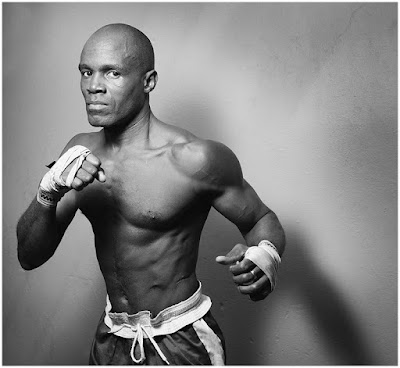
Much like a welterweight fighter, a leaf-shuttered camera and a speedlight in a mini softbox throws a punch that is much harder than you'd expect. Even outdoors, in midday light.

Case in point, these portraits of Cuban boxer Osmany Barcelay. Read more »
Strobist

 
Comments Off on SLC-1L-07: Small, Fast and Powerful

Posted in Photography