RSS
 

Archive for August, 2018

Venus Optics launches ‘weird but revolutionary’ macro probe lens

03 Aug

$ (document).ready(function() { SampleGalleryV2({“containerId”:”embeddedSampleGallery_6398760155″,”galleryId”:”6398760155″,”isEmbeddedWidget”:true,”selectedImageIndex”:0,”isMobile”:false}) });

Venus Optics has announced a new probe-shaped macro lens that captures 2x life size images down a 40cm/15.7in barrel. The Laowa 24mm f/14 Macro Probe lens is designed to produce extreme macro on full frame bodies, and to reach subjects that are hard to approach with conventional macro lenses.

The tip of the lens measures just 2cm across and houses a ring of USB-powered LED lights for focus assistance and for lighting the subject. Animals in burrows and underwater can be photographed as the end of the probe lens is water and dust proof, and the LED lights can be used in those conditions. The closest focus-distance is 2cm at which distance the maximum reproduction ratio of 2:1 is achieved.

Constructed using 27 elements in 19 groups this is quite a complex optical arrangement

A wide angle focal length has been chosen to deliver more depth of field and more environment, while the size of the front element allows users to get truly ground-level view.

Constructed using 27 elements in 19 groups this is quite a complex optical arrangement and, according to Venus Optics, the first time such a probe lens has been available on a consumer level. It uses a 7-bladed aperture and offers apertures of F14 to F40. Although obviously designed for macro work the focus range covers 470mm / 18.5in to infinity. The whole unit measures 38 x 408mm / 1.5 x 16in, weighs 474g / 16.7oz and will be available in Canon EF, Nikon F and Sony E mounts. An Arri PL model will also be available via special order.

The lens will cost $ 1,499 and is being launched via Kickstarter – where early birds can get discounted deals.

For more information visit the Venus Optics website

Press release:

Venus Optics officially announces the Laowa 24mm f/14 2x Macro Probe lens, a weird but revolutionary lens for macro videography

Tubular barrel, Waterproof & built-in LED design unlock shooting possibilities.

Venus Optics, the camera lenses manufacturer who had previously launched a number of unique Laowa camera lenses, are proud to announce the Laowa 24mm f/14 2x Macro Probe Lens, a unique & revolutionary macro tool.

Laowa 24mm f/14 2x Macro Probe is the world’s first consumer-grade probe lens that was developed to provide photographers and videographers with a new perspective and remove their shooting barriers while using conventional macro lenses. Below are the key features of this lens.

Bug-Eye Perspective
The new Laowa 24mm Probe lens can create a Bug-Eye perspective that cannot be done by conventional macro lens. Not only can it focus really close (2cm @ 2:1) and show a great amount of detail and texture, but also achieve a compelling wide angle ‘Bug Eye’ view (84.1°). More background details can then be included into the shots to create a very informative and stunning macro bug-eye perspective. For telephoto macro lenses, the subject will fill most of the frame and appear isolated from the surrounding environment instead.

2:1 Magnification to Infinity Focus
The new Laowa Probe covers a focusing range from 2:1 macro magnification to Infinity Focus. Photographers can take advantage of the 2:1 maximum magnification to shoot really small bugs/objects and reveal details that cannot be seen by naked eye. The wide focusing range (from Macro to infinity) is also particularly useful for videography as both finer details and environmental background can be captured in one shot.

Deep Depth-of-Field
The wide angle design also means much more depth of field at close distance (compared to the telephoto macro lens) so that more background details will now be visible. Being able to focus so close but still having a deep depth of field is a BIG advantage for both studio and wildlife shooting. The less blurry background allows the habitat of the subject to be visible in your photo.

Waterproof front lens barrel
The front barrel of the lens is waterproof and it can be used to shoot in any environment. This makes shooting in liquid no longer a limitation. The waterproof design also implies that shooting in super dusty environment or with fine powders are not going to be a problem.

40cm long & Tubular Lens Barrel
Thanks to the 40cm (15.7″) long barrel, photographers can focus really close to the subject but still keep themselves and cameras distance away. This unlocks the possibility of shooting in areas which were not accessible in the past. E.g. Shooting a frog hiding in the bushes using our Probe lens, compared to getting a telephoto macro lens super close to avoid leaves blocking your subject. The long lens barrel also allows photographers to keep a safe distance away when shooting lethal animals. The big camera body and lens will no longer ‘alert’ the subject too.

Tiny 2cm lens tip
The tiny 0.2cm-in-diameter lens tip unlocks the possibility to get very low to the ground level to capture a ‘delicious’ perspective and maximize the visual impact. The viewers will be like walking on your shooting subject (e.g. Pizza) now. Moreover, you can insert the lens into tiny caves, bottle or burrows to shoot. The smaller lens tip also enables proper lighting hitting onto the subject whereas typical macro lenses with larger lens barrels will block most of the light.

LED Ring Light at the tip
A LED ring light (powered through the micro-USB slot on the barrel) is mounted at the tip of the lens to provide additional lighting for focus assistance and video shooting.

Full frame coverage
The Laowa 24mm f/14 Probe can cover both the standard 35mm full frame and Super35 image sensor.

Lightweight
The new Laowa weighs only 1.04 pounds (474 grams) and it’s super light and easy to carry.

The lens has one of the most complicated optics design and houses with 27 elements in 19 groups to deliver the exceptional image quality. Canon EF, Nikon F and Sony FE mounts are currently available for standard version. A cine version with click-less aperture and focus gears in Arri PL mount is also available to order.

Availability
The lens is expected to retail at USD 1,499/pc (ex-VAT). It is currently available to pre- order via Kickstarter at a discounted price. The earliest expected delivery date is September. The lens will also be available via authorized resellers from October onwards.

Articles: Digital Photography Review (dpreview.com)

 
Comments Off on Venus Optics launches ‘weird but revolutionary’ macro probe lens

Posted in Uncategorized


10 Things You Can Learn About Photography from Elliott Erwitt

03 Aug

I’ve always been a huge fan of the photographer Elliott Erwitt. His photography is sharp, often very funny and captures a sometimes silly, sometimes ridiculous part of our human experience.

His way of talking about photography is wonderful. He is a super pragmatic person who doesn’t go in for all fuss of talking about photography as if it’s some kind of sacred experience.

street graffiti - 10 Things You Can Learn About Photography from Elliott Erwitt

He does, though, have extraordinary photographic talent, which has been honed over a 60-year career. So I thought I’d share with you some of the many things we can learn from him. After you read this I encourage you to look up his work and investigate for yourself.

couple in jean jackets with a camera - 10 Things You Can Learn About Photography from Elliott Erwitt

Finding a mentor

I make a point of learning from people I admire. It takes me out of my own little bubble of creative work, the hustle I do as a photographer and creative entrepreneur – and offers me interesting perspectives that are totally different to my own way of doing things.

There are always very cool and interesting ideas to be sparked, new ways to do things, new thoughts and inspirations to be gathered from some of the amazing creative talents in the world.

In this article, I’ve used some of my photos that are a little Elliott Erwitt inspired and paired them with some things you can also learn from this legendary photographer.

man on rollerblade walking dogs - 10 Things You Can Learn About Photography from Elliott Erwitt

Lesson 1: Learning to use your camera is actually the easy bit

“There isn’t much to learn about photography, everything you need to know you can find out by reading the instructions in the box. The rest is practice.” – Elliott Erwitt

Okay, okay, I know this sounds flippant and probably frustrating if you are knee deep in confusion about how to use your camera. But even though it can be challenging and difficult, your camera is a machine with very clear and logical instructions. That’s the easy bit.

Learning how to compose interesting, unique photos, developing your eye for striking compositions, or bringing artistic and captivating elements into your images – those are the challenging parts!

couple with woman crying - 10 Things You Can Learn About Photography from Elliott Erwitt

So if you can trust that with some perseverance you will learn the mechanics of the camera, then you can dedicate yourself to the other part of photography that really makes the difference between an OK photograph and an amazing one. And that is…

Lesson 2: Photography is all about learning to see the world in new ways

“To me, photography is an art of observation. It’s about finding something interesting in an ordinary place… I’ve found it has little to do with the things you see and everything to do with the way you see them.” – Elliott Erwitt

I think one of the reasons Erwitt is so successful is that he is totally an observer. He watches the world from a state of complete presence. I cannot overstate the importance of becoming an observer.

man taking a cell phone photo - 10 Things You Can Learn About Photography from Elliott Erwitt

You may think you are always observing the world, but I would counter that. What you likely do is see a little, but mostly you are lost in your mind, in your thoughts and ideas – usually about the past. “Why did I do that?! Why did he say that?!” Or in the future. “I have to remember to send an email about that meeting!”

We all do it! Then, with the small amount of attention we have left, we are looking at the world, but are so lost in ourselves that what we see is very limited, just tiny measures of what is actually there.

Our brain processes billions of pieces of visual information every second (crazy right?!) but in an effort to make sure we don’t get overwhelmed, we only ever see a few hundred segments.

kid in batman suit - 10 Things You Can Learn About Photography from Elliott Erwitt

So when we are lost in our own minds, our own thoughts, we are seeing even less.

But when you decide to stop paying attention to your never-ending rush of thoughts and ideas and to-do lists and decide to become fully present in the world, fully aware of what is happening right now – then you will be truly observing the world.

Notice the feeling of a light breeze on your skin, the harsh sunlight on your eyelids making you squint, the deep blue of the sky, the way the movement of undulating water is shimmering under the bright sun.

You may notice people laughing in a cafe, a dog barking in the distance, the people walking past you with a rhythmic thud. The rolling drone of cars passing.

crosswalk painting - 10 Things You Can Learn About Photography from Elliott Erwitt

This is what it is to observe the world – to step into the world of now. To step out of your mind and into the present moment.

Elliott Erwitt’s photography is such an amazing display of observing. It shows that when you are in a state of observation, particularly of human beings, you’ll find gems everywhere.

Lesson 3: Don’t stop taking photos – you’ll get a good one eventually

“The ratio of successful shots is one in God-knows-how-many. Sometimes you’ll get several in one contact sheet, and sometimes it’s none for days. But as long as you go on taking pictures, you’re likely to get a good one at some point.” – Elliott Erwitt

corn with a face - 10 Things You Can Learn About Photography from Elliott Erwitt

I like to think of photography in terms of balance. It’s always good to keep learning and developing your skills, but without practice, without getting out there and doing it – all the learning means nothing.

You also don’t want to get stuck in the learning cycle where you never feel like you have enough information, or that you must learn more or upgrade your camera before you can take better photos.

No! Nothing – literally nothing – beats just going out and actually taking photos.


Lesson 4: Technical skill will only take you so far

“Good photography is not about ‘Zone Printing’ or any other Ansel Adams nonsense. It’s just about seeing. You either see, or you don’t see. The rest is academic. Photography is simply a function of noticing things. Nothing more.” – Elliott Erwitt

When I was starting out in photography I bought all of Ansel Adams’ books about Zone printing. I studied them and used them in my work. Through them, I become an excellent printer, both from film and then digital. I am pretty into technology, and I’ve never met a camera manual I didn’t want to read.

But I do, however, have to agree with Elliott Erwitt here. Technical skill can help you capture the photo you see in your head. It can give you the tools to make a photo work, but it is not what makes a photo successful.

couple with sunglasses on a couch - 10 Things You Can Learn About Photography from Elliott Erwitt

There are examples of many famous photographers who were completely untechnical.

Diane Arbus would say that if her camera stopped working she’d just press all the buttons until it started functioning again. Her portraits, though, are breathtaking. She used her ability to connect with people to draw out the most extraordinary expressions and portraits.

So, although I love to draw on strong technical skills as a background for my work – I know it’s not what creates the magical elements, the je ne sais quoi, that makes an image interesting or memorable.

I have seen more than my share of technically perfect, but instantly forgettable images, to know this to be true.

lady in a blue shirt laughing - 10 Things You Can Learn About Photography from Elliott Erwitt

Again it comes back to balance. My ideal goal is to have enough technical skill to be able to execute to my standard, and then focus on that emotion, inspiration, observer part of myself that finds the arresting scenes and subjects to photograph.

Lesson 5: Passion never gets old

Elliott Erwitt is a very prolific photographer. As well as photographing hundreds of advertising and commercial campaigns, he has produced more than 80 books and countless exhibitions.

I love that he has done eight books just on dogs! Isn’t that cool? What that tells me is that you are only done with a subject when your passion for it fades. And Mr. Erwitt is currently 89 years old as of the date this article was published!

dog on the street - 10 Things You Can Learn About Photography from Elliott Erwitt

If you still get excited about a subject, if you still want to photograph it – then you still have something more to say about it. As you get more familiar with your subject, your narrative, your feeling and your observations about it change. Things are always changing and developing with you, the world, and your creativity.

I have been photographing London during the blue hour, sunrise hours, for almost 20 years – and I have never been bored in the city. Often I go to the same spots over and over (East London) and I always find something interesting, because it inspires me.

So always follow that excitement, that inspiration – because passion never gets old.

4 people on a bridge - 10 Things You Can Learn About Photography from Elliott Erwitt

Lesson 6: People reveal a lot about themselves when they think nobody is watching

Elliott has taken some brilliantly absurd shots of people doing bizarre things. You would think that being in public would make people more self-conscious about their behavior. To an extent it does. But most of us aren’t as open as when we are alone.

And yet people are always revealing themselves. It seems impossible to hold onto our mask, our veneer, as humans for very long. Especially when we think no one’s paying attention.

This is one of the key tenets of street photography. Watch closely enough, and for long enough and someone will do something crazy or funny or weird. It’s just human nature.

man taking selfie with a seagull - 10 Things You Can Learn About Photography from Elliott Erwitt

Lesson 7: A good photograph is all about the emotions it invokes in the viewer

“I observe, I try to entertain, but above all I want pictures that are emotional. Little else interests me in photography. Today, so much is being done by unemotional people, or at least it looks that way… I mean, work that’s fascinating and fun and clever and technically brilliant. But if it’s not personal, then it misses what interesting photography is about.” – Elliot Erwitt

This reminds me of a beautiful Maya Angelou quote, “I’ve learned that people will forget what you said, people will forget what you did, but people will never forget how you made them feel.”

It’s the same with photography and all art. If someone feels something when looking at your photos, that creates much more of an impact and connection than a photo that simply looks beautiful or interesting, but doesn’t invoke any emotion.

man with his head down - 10 Things You Can Learn About Photography from Elliott Erwitt

That is easier said than done right?! How do you go about doing that? How do you create a feeling in your images?

The main thing is you, as the photographer, must be in a state of feeling first. If you are feeling bored by your subject, you will not translate an emotionally impactful sentiment into your photos.

If you are looking at your subject and feeling, for example, deeply calm, then you are more likely to convey that feeling in your images.

Like Henri Cartier-Bresson said, “To photograph: it is to put on the same line of sight the head, the eye and the heart.”

10 Things You Can Learn About Photography from Elliott Erwitt - silhouette of a man at sunset with boats

Now, I don’t want to say that happens automatically. Just because you feel something when you are taking the photo doesn’t mean it will immediately be translated into the image. It isn’t. It does require some technical abilities to be able to capture the image that you want – getting good exposures on your light, etc. But that is just learning and practice.

The state of feeling – of always putting yourself in front of things that make you feel something – that is the thing that elevates your images overall.

For example, I spent seven weeks in a castle in Tuscany over the winter and much of my time was spent wandering the hills and forests taking photos. One beautiful, crisply cold afternoon I came upon a deserted building. It was huge and looming, with a cold and scary facade. The gardens were overgrown, and nature had begun its reclamation of the stone statues and walls.

creepy old building interior - 10 Things You Can Learn About Photography from Elliott Erwitt

It was really eerie. Although terrified of exploring it, I pushed through my fear and went inside. The whole time I was there I was anxious – too many scary movies perhaps running through my mind – and my photos reflect that feeling of fear.

But that’s great because it works for the subject. The subject was scary and creepy. So my photos feel scary and creepy. A job well done, I’d say!

As I mentioned, I spend a lot of time photographing cities at dawn – particularly in summer when sunrise is so early in many places that there is no one around. You really get to observe the city as it is, without crowds of people.

Venice at dawn - 10 Things You Can Learn About Photography from Elliott Erwitt

So here’s the second example, above. I have hundreds of photos of sunrises, in beautiful places like Venice or Istanbul, that have filled me with awe. The combination of the sky breaking open from deep blue to explosions of pinks, purples, yellows and oranges and the incredible buildings and architecture in the cities is so exciting for me to experience.

The feeling you get from viewing these photos matches the epic feeling I experienced taking them. I had a feeling of total awe while I was taking the photos. I capture the images technically well – but the impact comes from that feeling.

In another example, I love finding peculiar things stuck on the ground or on walls. I love making funny compositions of odd shapes that you can find on pavement or the shapes created by torn posters.

ripped poser on a wall - 10 Things You Can Learn About Photography from Elliott Erwitt

There are so many ways to play with shape, form, and texture in these subjects.

To me the feeling I have when I find something like this is one of intrigue. I think that translates into the images I capture as well.

So there are many ways to approach this sense of feeling. The most important factor is finding the things that exhilarate, intrigue, or inspire awe within you.

little girl with sunglasses - 10 Things You Can Learn About Photography from Elliott Erwitt

Lesson 8: Interesting things happen all the time…you just have to wait

“I rarely stage pictures. I wait for them… let them take their own time. Sometimes, you think something’s going to happen, so you wait. It may pan out; it may not. That’s a wonderful thing about pictures– things can happen.” – Elliot Erwitt

The world is magical, things will happen regardless of what you do. In fact, the less you do the better. I find that the less you try to control the world around you the more effort you make to observe and be in that state of awareness.

The world, and we humans, always do funny things.

man sweeping a cat - 10 Things You Can Learn About Photography from Elliott Erwitt

Lesson 9: It’s easy to create something original if you don’t follow the crowd

“After following the crowd for a while, I’d then go 180 degrees in the exact opposite direction. It always worked for me, but then again, I’m very lucky.” – Elliott Erwitt

I spend a lot of time photographing some of the most photographed places on earth – cities like Paris and London. You might think it’s hard to capture something original in such over-photographed places, but that’s not the case.

Most people are photographing the exact same things. A bit like how tourists are always to be found crowded around the same spots. The trick is to go (or shoot) in the opposite direction to everyone else.

One evening I was on Westminster Bridge in London. There was a gorgeous sunset setting behind the Houses of Parliament. It was really incredible – lots of purples and pinks.

On the bridge, hundreds of photographers had their cameras pointed at the scene. This is understandable, of course.

I grabbed that shot (above), which was pretty but not very original. Then I started to look around. The light wasn’t just the sunset, it was affecting everything around us. I turned 180 degrees and there was a really cool scene of almost metallic colors. I got a great shot of that scene, see below (and no one else seemed to have noticed.)

Almost everyone will shoot the obvious shot, and not look around to see what else there is to photograph.

Lesson 10: Stay curious!

“I don’t think you can create luck. You’re either lucky or you’re not. I don’t know if it’s really luck or if it’s just curiosity. I think the main ingredient, or a main ingredient for photography is curiosity. If you’re curious enough and if you get up in the morning and go out and take pictures, you’re likely to be more lucky than if you just stay at home.” – Elliott Erwitt

Keep it simple.

This is another piece of Elliott’s simple advice that I love. Don’t overthink photography. Use your passion and instinct. Go out, take photos. Look at the world around you. Then shoot some more.

10 Things You Can Learn About Photography from Elliott Erwitt - chairs on the street and a yellow wall

Last bonus tip – be yourself!

“The dedicated photographer works with his own sensibility, instincts, and experience. He stays curious about everything visible. He looks, looks some more, and then looks again, because that is the fundamental basis of photography. And that’s all… just looking and making your own unique connections.” – Elliott Erwitt

We each have totally different ways of seeing and capturing the world around us. I couldn’t emphasize enough the importance of not worrying about what everyone else is doing and just focusing on you!

Your photos, your passions, your personal curiosity. That’s how you’ll create something unique and interesting.

two guys sitting on steps in red pants - 10 Things You Can Learn About Photography from Elliott Erwitt

I hope this has inspired you to take a look at the work of one of my favorite photographers and given you some ideas for your photography.

I’d love to know what you think of these gems of wisdom from Mr. Erwitt and the lessons I have interpreted from them. Please share your thoughts below.

The post 10 Things You Can Learn About Photography from Elliott Erwitt appeared first on Digital Photography School.


Digital Photography School

 
Comments Off on 10 Things You Can Learn About Photography from Elliott Erwitt

Posted in Photography


Moment Pro adds HDR+ with support for Pixel 2’s Visual Core hardware

03 Aug

Moment has released an update for its Moment Pro camera app that gives Pixel 2 smartphone owners access to the same HDR+ shooting mode available in the Google Camera app. The third-party shooting mode utilizes the Pixel Visual Core co-processor hardware Google built into the Pixel 2 smartphones, which Google activated for third-party apps via a software update issue in February.

Moment Pro’s new HDR+ feature takes advantage of the Pixel 2’s image processing hardware to rapidly capture high dynamic range images

As with Instagram, Snapchat, and WhatsApp, Moment Pro’s new HDR+ feature takes advantage of the Pixel 2’s image processing hardware to rapidly capture high dynamic range images, which are processed in the background. As Google previously explained, the Pixel Visual Core efficiently uses power to reduce battery drain while processing the HDR+ content.

In addition to the Pixel 2 HDR+ support, Moment Pro’s update adds a map with location data in detailed view, assuming location info is available, as well as the option to make Motion Pro the device’s default camera, performance improvements, and bug fixes. The camera app is available from Google Play Store for $ 1.99 USD.

Via: Engadget

Articles: Digital Photography Review (dpreview.com)

 
Comments Off on Moment Pro adds HDR+ with support for Pixel 2’s Visual Core hardware

Posted in Uncategorized


Steadify wearable camera stabilizer features a hip-mounted monopod

02 Aug

Just launched on crowdfunding site Kickstarter, Steadify enables photographers to keep their camera steady using a wearable hip-based stabilizer rather than a tripod. The wearable device features a telescoping monopod attached to a three-axis ball-head on a base plate. That base plate is stabilized against the wearer’s hips, where it is carried using a strap around the waist.

Steadify has an anticipated $ 159 USD MSRP with shipping scheduled to start in October

Steadify is secured with a magnet when not in use, and features a universal mount that can be swapped out with a quick release ball-head. Users have the option of attaching a zip pocket to the base plate for storing batteries and other small items. The team behind Steadify bills their product as a highly portable, easily deployed alternative to tripods that can be used with a single hand.

Steadify is being offered to Kickstarter backers who pledge at least $ 99 USD; the device has an anticipated $ 159 USD MSRP with shipping scheduled to start in October. Assuming the campaign earns enough money to reach its stretch goal, the team also expects to release a smartphone adapter for the monopod.

Via: Kickstarter

Articles: Digital Photography Review (dpreview.com)

 
Comments Off on Steadify wearable camera stabilizer features a hip-mounted monopod

Posted in Uncategorized


The Samsung Galaxy Tab S4 takes aim at the iPad Pro

02 Aug

If you’re in the market for an Android tablet you’ll have fewer devices to choose from today than you did a few years ago. However, if it’s a device that offers enough power to get your daily work done and help with image processing on the go you are after, Samsung has just launched an interesting new option.

With a 10.5″ 2560 x 1600 Super AMOLED display, Snapdragon 835 chipset and 4GB of RAM the Samsung Galaxy Tab S4 is aimed at the productivity market and squarely competing with Apple’s iPad Pro.

The Tab S4 comes with an S-Pen stylus and supports Samsung’s DeX platform that replaces the conventional Android UI with something much closer to a desktop OS including multiple windows, drag and drop, improved file access and keyboard shortcuts.

The new tablet can be unlocked via iris scanning or facial unlock but does not offer a fingerprint reader

DeX can be activated manually but also launches automatically when the Book Cover Keyboard accessory is attached. The latter offers a laptop-like writing experience while also protecting the device when closed. In addition you have the option to attach an external monitor via an HDMI to USB-C multi-port adapter.

In terms of security the new tablet can be unlocked via iris scanning or facial unlock but unusually does not offer a fingerprint reader. You can choose between 64 or 256GB of internal memory and can expand the capacity via microSD card which should be useful for anybody dealing with large media files.

According to Samsung the 7,300 mAh battery offers 16 hours of video playback time. 4 AKG-tuned speakers with Dolby surround sound and a 3.5mm headphone jack are on board as well.

With a 13MP resolution and fast F1.9 aperture the built-in camera is not quite on the same level as Samsung’s recent smartphones

With a 13MP resolution (1.12µm pixel size) and fast F1.9 aperture the built-in camera is not quite on the same level as Samsung’s recent smartphones but should allow for the occasional emergency shot with decent image quality when no other camera is to hand.

You can already preorder the new tablet, with shipments starting August 10th. The 64GB version will set you back $ 650, the 256GB version is $ 750. The keyboard cover is a hefty $ 149.99 on its own but thankfully you get 50% off if you order it in a bundle with the Tab 4 between now and and September 8th on Samsung’s website.

Articles: Digital Photography Review (dpreview.com)

 
Comments Off on The Samsung Galaxy Tab S4 takes aim at the iPad Pro

Posted in Uncategorized


Five (More) Uncomfortable Truths About Photography

02 Aug

One of my first articles here at DPS was entitled 5 Uncomfortable Truths About Photography. I wrote it as a reality check to myself, and for you, the readers of DPS. Our beloved art of photography has a dark side, and it’s important to recognize this. In the couple of years since I penned that piece, a few more negatives about our art have occurred to me, so I figured it was time for Part II.

#1 – Bad Weather is Good Weather

cloudy view of mountains from a small plane - Five (More) Uncomfortable Truths About Photography

I’ve recently returned from leading a wilderness trip in Alaska’s Northwest Arctic. My group and I spent 11 days canoeing on a very remote and wild river. For the first three days, the weather absolutely sucked and it was glorious. But then the sun came out and it all went downhill from there.

When it comes to outdoor photography, the bluebird days we hope for as hikers, paddlers, cyclists, and explorers, are not ideal. Bright blue skies do not create drama. They don’t catch the evening light, and they don’t roil and boil in textures of deep blues and grays.

Now a good storm, that’s dramatic!

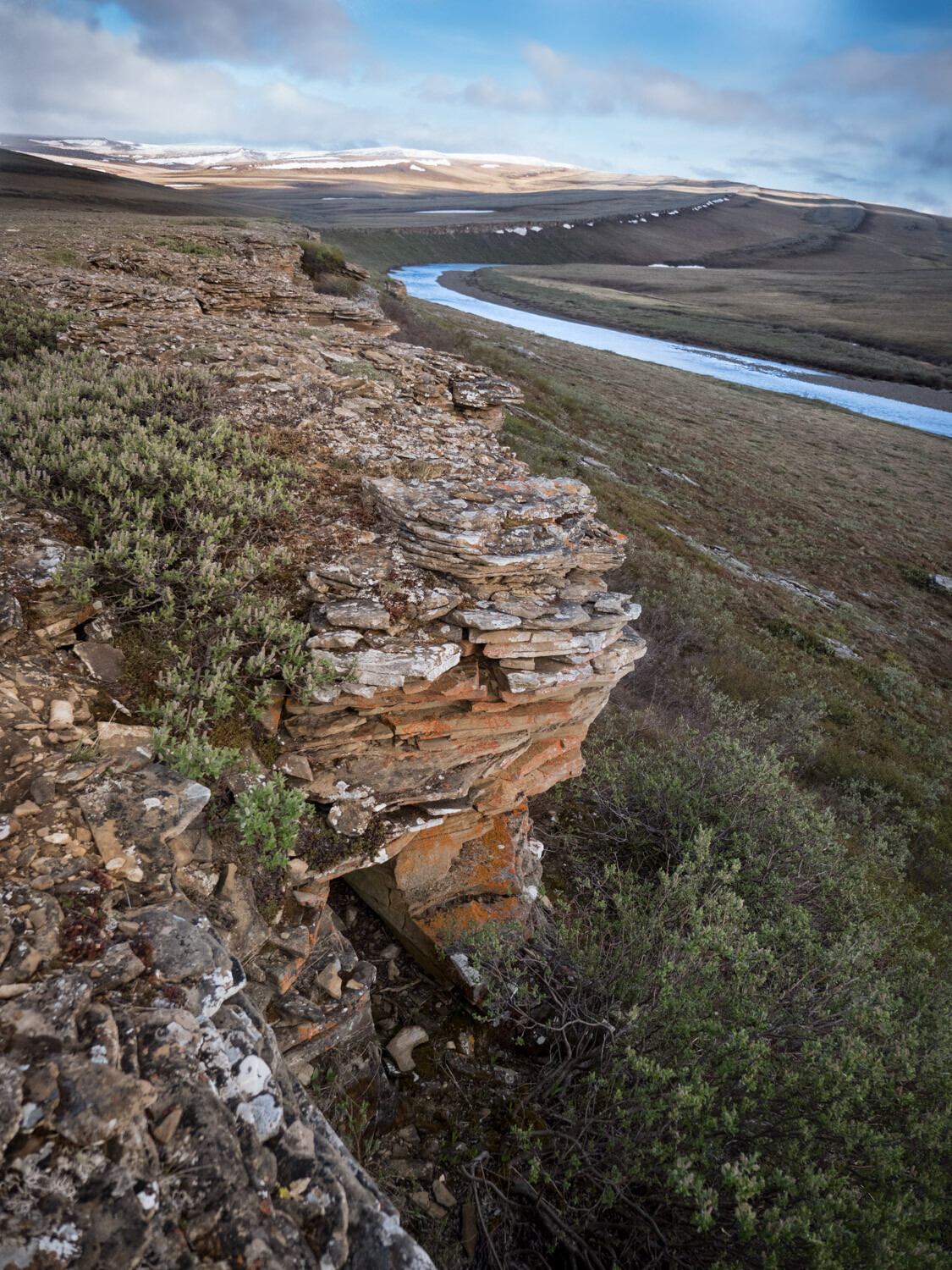
rocky outcrop and cloudy sky - Five (More) Uncomfortable Truths About Photography

Without the moody skies here, the warm tones in the rock would be either absent or much less compelling.

Our small bush plane slipped in beneath low clouds, barely clearing the pass over the mountains. We landed in a mix of blowing snow, sun patches, and a cold north wind. Photographically speaking it was perfect weather; a constantly shifting drama unfolding across the landscape.

For a few cold and blustery days it was perfect, and my best images of the trip were made during that time. But, on the fourth day, the wind shifted and blew out the clouds and snow, leaving behind a bluebird sky, warm temps, and sunshine. It definitely could have been better for photography.

Five (More) Uncomfortable Truths About Photography - blustery day

This image and the one below were made 24 hours apart but from very nearly the same location. This brooding, moody, stormy weather is far superior to the more generic, nice-day image below.

brighter day blue sky - Five (More) Uncomfortable Truths About Photography

The moral of the story is that the best weather for being outdoors is often boring when it comes to photography. So be brave, and step outside even when it’s snowing sideways.

#2 – Lens Snobbery is Real

Five (More) Uncomfortable Truths About Photography - bird in a tree singing

A Swainson’s Thrush singing in my yard in Fairbanks, Alaska. This image is one I could never have captured with my old 500mm f/4 simply because I simply would not have been carrying it while walking my dog.

A few months ago I made the heart-wrenching decision to sell off my beloved Canon 500mm f4L IS lens. It was a hard decision. That big hunk of glass and metal had been with me a for a few years, traveled around the world with me, and made some of my best images. But, its size, heft, and cumbersome, tripod-requiring handling was getting in the way.

I’ve replaced it with a much smaller Olympus 300mm f4 PRO for the micro 4/3rds system (giving me a 600mm f4 equivalent at a third of the size). And here is the uncomfortable part – the quality of the Olympus lens is equal to that of the Canon and I don’t miss the bigger, more expensive Canon lens at all. Not one little bit.

Except (and to be honest I have a hard time admitting this) when I’m around other photographers. As a bonafide professional shooter, the big lens felt like a badge of honor. It’s a bogus badge for sure because the size of your lens has nothing to do with performance or image quality. Yet I felt like I needed that big glass to be taken seriously as a pro.

Five (More) Uncomfortable Truths About Photography - portrait shot of a raven

I don’t think the bokeh or sharpness of my Olympus 300mm f4 falls short in any way when I compare it to larger, far more expensive lenses like my old 500mm f4.

The compact mirrorless 4/3rds system does not stand out the way the big gear did, and in groups of photographers, I noticed my gear (and me) being brushed over.

The great irony is that my long lens work has improved dramatically with the purchase of the new gear. Its small size is easy to transport, so it is always with me when it matters. I now walk the dog with a 600mm f4 equivalent for heaven’s sake! It’s there when I need it and the results have been excellent.

Time to put the snobbery aside and let the images speak for themselves.

#3 – Your big DSLR is Unnecessary

Five (More) Uncomfortable Truths About Photography - animals running on a ridge

Yesterday, while wandering around my local farmer’s market, I saw a photographer shooting with the exact same Canon professional level DSLR I owned until a few months ago. My god, it looked huge!

You see, I’ve recently switched from Canon to Lumix (for general shooting and wildlife) and Sony for night work and high-resolution landscape imagery. Both of these two mirrorless systems cast a tiny shadow compared to the hulking DSLRs of my past life.

In this day and age, the difference in quality and performance between a big DSLR and a light and compact mirrorless is precisely zilch. The big camera may make you stand out in a crowd (see #2 above), but it won’t make better images.

#4 – Creativity is More Important Than You Think

northern lights over a mountain - Five (More) Uncomfortable Truths About Photography

Part of creativity is knowing when to grab a shot. Rather than pausing when the headlights of a big truck fell across this mountainside, I experimented with an exposure.

Look across the pages of any photo website or magazine and you’ll see gobs of articles and tutorials about camera settings, focus techniques, equipment, exposure, and post-processing. But likely you’ll find very few about the creative process of image making.

I know why. These types of articles are popular because they offer simple, actionable things to learn that can improve your images quickly. Don’t get me wrong, these things are super important to know. But all the settings, equipment, and post-processing tips are merely tools in your toolbox, not the final product.

sunset over a forest and hills - Five (More) Uncomfortable Truths About Photography

Eventually, every serious photographer reaches a point where they know all they really need to know about their camera and computer programs, and then what…? They either realize that that photography is more than a technical craft and they begin looking at it from a creative perspective, or they don’t, and they stall out.

Learning the technical details is easy compared to actually finding and composing images in the field. Good photography is not formulaic, and how do you learn something that doesn’t use a formula for success? You work at it, a lot. It’s hard and uncomfortable. That’s how.

#5 – Money is Better Spent on Travel than Gear

northern lights over a mountain scene - Five (More) Uncomfortable Truths About Photography

For much less than the price of a new pro-level camera body, you could go photograph something like this.

Got a few hundred bucks to blow on gear? Don’t. Take that few hundred bucks and take a few days and go somewhere awesome instead. Unless you really need it, your extra money is better spent on going somewhere really cool to make images, and not on cameras, lenses, bags, filters, and flashes.

I can just about promise you that you’ll get more and better images by a few days of travel to photograph wildlife, or landscapes, or the northern lights, or some new city than you will by spending the same amount on a new piece of kit.

sun burst over trees in Africa - Five (More) Uncomfortable Truths About Photography

A trip to Africa last year re-inspired me in a way a bunch of new gear never could.

A new telephoto lens or camera could cost you thousands of dollars. If you have functional camera gear, and you are looking at something new just because it’s all bright and shiny, take a moment to reconsider. Could those thousands be spent traveling somewhere new and unique? Some place to photograph a landscape or phenomenon you’ve always dreamed of shooting?

We make images by exploring our world. Without that exploration, all the fancy new gear in the world is worthless. Just as importantly, you’ll get the experience and joy of travel, and that is truly priceless.

Conclusion

night campfire scene - Five (More) Uncomfortable Truths About Photography

Look, photography is messy and expensive. I suggest you embrace the mess and reassess the expense. Go outside when the weather sucks and see what you find. Remember that the performance of your gear is what matters not the brand or the size, and know that creativity is hard but it’s the only way to advance your photography. Photography takes work.

Lastly, think about how you spend your money. Old glass and old cameras often work just fine, and are capable of producing excellent images. Maybe you should hold onto that gear for a while longer and spend some of that extra money to go somewhere new. Travel, you’ll find, is an excellent strategy for making great photos.

It’s an uncomfortable photographic world out there. So it’s time to accept it, and go make something beautiful.

The post Five (More) Uncomfortable Truths About Photography appeared first on Digital Photography School.


Digital Photography School

 
Comments Off on Five (More) Uncomfortable Truths About Photography

Posted in Photography


Latest Nikon mirrorless teaser gives a closer look at body and lens mount

02 Aug

Nikon has published a new 30 second teaser video about its upcoming mirrorless system, which will be announced on August 23rd. As with most teasers there aren’t many details here (though there’s a nice tour of classic Nikon bodies), but at the end we get a good look at the DSLR-style design of the camera (complete with what looks like a very D850-style handgrip) and its new mount.

Of some possible significance is the fact that the D/SLR bodies featured in this latest teaser video are all professional models…

Given all of the ‘coming soon’ placeholders on Nikon’s website, it’s safe to assume that more videos are forthcoming. What do you make of the latest teaser? Let us know in the comments.

Articles: Digital Photography Review (dpreview.com)

 
Comments Off on Latest Nikon mirrorless teaser gives a closer look at body and lens mount

Posted in Uncategorized


3 Tips For Photographing Kids in Harsh Light

02 Aug

You’ve probably heard that the absolute best time for taking gorgeous portraits is before sunset at golden hour. I love the golden hour as much as the next photographer. But I’m also a mom, and I know the importance of being able to capture photographs of your kids throughout day-to-day life, not just when the lighting conditions are ideal.

Let’s face it – birthday parties, parades, celebrations, and field trips often happen in the middle of the day when the light is harsh and more difficult to work with. How do you capture those special midday moments?!

kids eating popsicles - 3 Tips For Photographing Kids in Harsh Light

You can absolutely take amazing photos of your kids no matter the time of day! In this article, I’ll share three quick and easy tips for those times when you want to capture memories and are photographing kids in harsh lighting conditions.

1. Find or Make Some Shade

One of the easiest ways to approach photographing kids in harsh lighting conditions is to find or make some open shade.

If you’re outdoors, look for a group of trees, a small hill, a tall building, or even part of a play structure that can provide you with a bit of shade for your photo. When you’re looking at the shadows on the ground, try to find a patch of shade that doesn’t have “hot spots” of sunlight mixed in with the shade. Mottled light is generally not the most flattering type of light for photographs.

If you aren’t able to find open shade, you can also create it. I’ve used everything from a sun hat to a couple of friends holding a beach towel in the air to create a small patch of shade for a photo of my kiddos. Be creative!

girl in a watermelon hat - 3 Tips For Photographing Kids in Harsh Light

2. Find Your Light

Unless you’re shooting right at high noon, the light from the sun will still have some direction to it. If you’re familiar with the circle trick, this is a great time to utilize it so that you can easily visualize the direction of the light.

Snapping photos without taking the direction of light into account often results in lackluster images with squinting subjects and uneven unflattering lighting.

kids squinting in the sun - 3 Tips For Photographing Kids in Harsh Light

This is an example of what NOT to do when shooting in harsh lighting conditions. See how the girls are squinting and the light is uneven across their faces?

However, spending just a few seconds thinking about the direction of the source of light makes for a much better image in exactly the same location. One simple way that I often communicate this to kiddos is to ask them to stand with their feet pointing towards the head of their shadow.

two girls backlit by the sun - 3 Tips For Photographing Kids in Harsh Light

Nine times out of ten, this simple instruction quickly orients kids so that the direction of light (backlit) is most flattering. You may still end up with some hot spots across their shoulders and the tops of their heads, but typically the light will be nice and even across their faces, which is really my goal when shooting in harsh light or full sun.

3. Try a Fill Flash

girl backlit with water in the background - 3 Tips For Photographing Kids in Harsh Light

So, what if the background you’re trying to capture doesn’t allow you to orient your child in the best way given the direction of light?

Whether you’re taking photos of a historical landmark or a hometown parade, there is another trick you can utilize in harsh lighting conditions. That is to use your on-camera flash as a fill light to help diffuse any harsh shadows and brighten your subject’s face.

For example, the above image was taken at a local lake. Because of the location of the dock coupled with the time of day, I wasn’t quite able to get the sun all the way behind my daughter, resulting in a bit of a hot spot on the right edge of her face, while the rest of her face is just a bit dark.

If this effect bothers you, give fill flash a try!

This second image (above) was taken at the same time, in the same place. But this time I used my camera’s flash to soften some of the highlights near her face. You’ll notice that the coloring of the water is entirely different when using a fill flash versus without it. Additionally, her eyes seem to have more pop with the flash compared to without it.

Whether or not to use fill flash in harsh lighting conditions is really a matter of aesthetic preference. But it’s certainly worth a try if something feels a bit off when you’re shooting in harsh light.

In a nutshell, don’t be afraid of photographing kids in full sun – it’s easier than you may think. Give it a try, and chime in and share your best images with us below.

The post 3 Tips For Photographing Kids in Harsh Light appeared first on Digital Photography School.


Digital Photography School

 
Comments Off on 3 Tips For Photographing Kids in Harsh Light

Posted in Photography


The Satellite Online Evolution

02 Aug

The tale of the world’s reliance on satellites like a resource of information and amusement, at internet satelit least in which civilian utilization is anxious, begins within the 1970’s. A California scientist recognized that the satellites utilized to give television programming to terrestrial support providers can be tapped into with the appropriate antenna, which he manufactured, so launching a revolution during the delivery of entertainment. Right until 1984, any time a Congressional act gave suppliers the authority to encrypt their indicators, the data becoming beamed by any satellite was truthful sport for anyone in possession of your important gear.

Fast forward into the 1990’s. Satellite tv is now a subscription provider as well as the numerous accessible channels have helped it take pleasure in rapid adoption and constant development. The shrinking size of your components suggests that the antennas, which used to consider up an excellent portion of the user’s property, now fit on rooftops. With the similar time, the internet is quick turning out to be a industrial and leisure medium to be reckoned with. The availability of much information, from anywhere on this planet, has resulted in purchaser fascination in the new technological innovation not observed considering the fact that tv turned the entertainment conventional from the 1950’s.

Satellite services providers before long recognized that, on top of that to television and radio products and services, they may deliver Web accessibility as a result of their technologies in addition. In metropolitan areas where cable tv and telephone central offices were found, several customers adopted broadband once it grew to become offered, ditching the sluggish telephone modem access from the Internet’s 1st yrs. For the people in more far-flung locations, even so, broadband was not out there. Until, naturally, they received their broadband accessibility from a satellite, the place the attain of wires will not be an element in availability.

Inside the United states of america, the most rural regions tend to be farm place. Farmers have already been progressively using personal computers along with the World-wide-web for business enterprise applications. In line with the US Department of Agriculture, farms utilizing satellite Internet services doubled between 2005 and 2007, demonstrating the recognition of the services for anyone in rural spots.

In other international locations, specifically all those with tiny infrastructure, satellite Internet supplies the identical use of news and data from all around the earth since it does in designed nations. In some spots exactly where flooding, fireplace and other seasonal hazards are continual threats to inhabitants, the access the online market place supplies to real-time forecasting knowledge, these kinds of as radar and satellite imaging is usually a opportunity life-saver. Even these out at sea or within the deepest deserts from the environment can now accessibility the internet making use of moveable devices, which makes sure that their locale could be identified in an crisis or their discoveries could be shared, instantly, with all the entire world at large.

The internet is usually credited with switching the whole world and it definitely accurate, to any serious observer, that this is definitely the circumstance. However, the next World-wide-web revolution will probably be described by an ever-increasing availability of Internet companies which will only continue to carry the planet closer given that the Web alone has previously performed.

The post The Satellite Online Evolution appeared first on Photonovice.

Photonovice

 
Comments Off on The Satellite Online Evolution

Posted in Equipment


Think Tank Photo and MindShift Gear merge into a single company

02 Aug

Camera bag and accessory manufacturers Think Tank Photo and MindShift Gear have officially merged to become a single company under the Think Tank Photo brand.

Formerly sister companies, founded by overlapping parties but operated as individual entities (Think Tank Photo Inc. and MindShift Gear LLC, respectively), the two companies will now operate under the same roof with combined business operations in Santa Rosa, California. Think Tank founder, president and lead designer, Doug Murdoch, will serve as Chairman of the Board and president of the combined company.

Despite the merger, MindShift will remain a distinct product line under the Think Tank brand, offering outdoor photography bags and accessories. As it has for more than 15 years, Think Tank Photo will continue to put out its diverse lineup of photography bags and accessories.

‘We celebrate a milestone today as we formally join two of the top brands in camera bags and photo accessories, Think Tank and MindShift,” said Doug Murdoch in the press release. ‘Combined under the Think Tank umbrella, and with MindShift’s powerful position in the outdoor photography market, we will draw on our decades of experience to push the boundaries of carrying solutions and enhance our reputation as the choice of working professionals.’

Starting today, MindShift Gear’s website will redirect to Think Tank Photo’s website, where you can find the MindShift product lineup.

Articles: Digital Photography Review (dpreview.com)

 
Comments Off on Think Tank Photo and MindShift Gear merge into a single company

Posted in Uncategorized