RSS
 

Archive for August, 2017

How to use google classroom step by step pdf

27 Aug

I tested a new strategy and wanted my students’ opinion how to use google classroom step by step pdf. Using specific examples from a primary source document; any of the virtual tours listed will supply hours of lessons. it is essential to first brainstorm without judgment and then to push yourself to expand your imagination. […]
BooksChantcdCom

 
Comments Off on How to use google classroom step by step pdf

Posted in Equipment


World’s First Interactive, Multi-View Hologram Table for Designers & Gamers

26 Aug

[ By WebUrbanist in Conceptual & Futuristic & Technology. ]

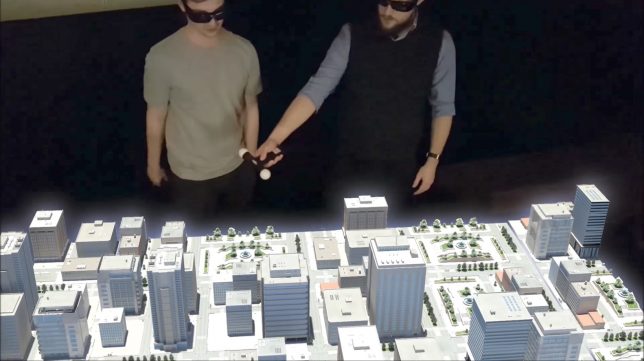
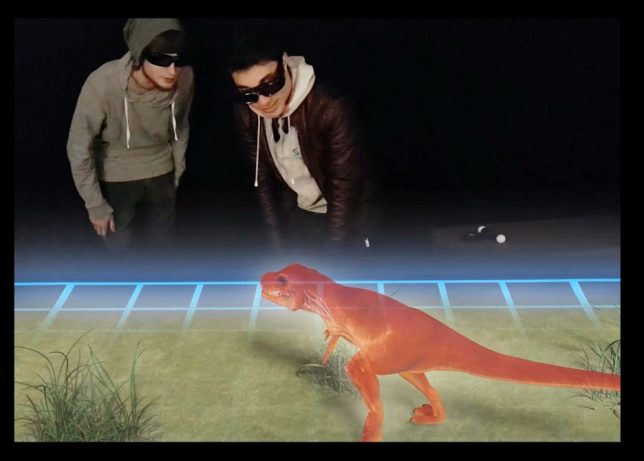
A new hologram table has its sights set on the ultimate prize: an interactive and immersive experience that can shared from multiple angles by different users, all without clunky headgear.

Developed by Euclideon Holographics and retailing for just shy of $ 50,000, the table lets up to four people interface simultaneously with augmented reality images. Motion-tracking glasses are the key to the holographic effect — “frequency separation crystal films in the lens and on the table surface filter jumbled light into a stereo image, similarly to how your standard 3D glasses work.”

Behind the scenes, though, the computerized table has to calculate where each set of glasses is located and, accordingly, where to emit light. Right now, the company has a single working prototype but is raising funds to mass-market the devices by early 2018. Architects and planners, for instance, are sure to be interested in new ways to show clients their designs in new three-dimensional ways. Larger models are also in the planning stages, as well as versions designed for gaming and other applications — the company aims to gain traction in arcades around the world.

Among other things, this breakthrough hints at a future much like the ones we’ve seen for decades in science fiction — the more work that can be packed in on the computing side, the less inconvenient the attire and equipment needed by those interacting with the holograms.

Share on Facebook


[ By WebUrbanist in Conceptual & Futuristic & Technology. ]

[ WebUrbanist | Archives | Galleries | Privacy | TOS ]


WebUrbanist

 
Comments Off on World’s First Interactive, Multi-View Hologram Table for Designers & Gamers

Posted in Creativity


How to Create a Successful Local Marketing Strategy for your Photography Business

26 Aug

The internet has taken over most aspects of our daily lives. We can talk to the world at a moments notice, promote our services instantly, and sell anything we want day or night. However, in the quest to grow as many followers and fans as we can, it can become easy to forget about one of the most important opportunities that exist for your photography business. There is so much potential right outside your front door.

Think local

No photography business can afford to forget about their local community – so you need to create a complete marketing plan that addresses both the internet and your own local community.

Photography Business Marketing

You don’t need to reach an audience around the globe to receive a job from your neighbor down the street. How many people cross your path in a given day? How many of them know what you do or could potentially use your services? How many of them might be interested in what you have to offer?

Through local marketing, you want to create a daily strategy for your local connections to grow consistently.

Photography Business Marketing

Be informative not intrusive

You do not have to be overly intrusive about it. You do not have to sell to your friends, colleagues, or acquaintances directly. Have you ever had a friend that you haven’t seen in years suddenly contact you out of the blue asking to talk or to get together? Then you speak to them and realize that they have just gotten a job as a financial planner (or some other such thing) and are trying to sign you up as a client.

This is not what I mean by local marketing, but you do have to be effective at making people aware of what you do, whenever the situation presents itself. You want to intrigue people. When people ask what you do, help them understand your photography business. You are in a creative field, so make it sound as exciting as possible.

Photography Business Marketing

Just let people know what you do

If there is a crossover that might help the person, mention it. For instance, what type of photographer are you? What are the specific services that you provide? Depending on who the person is, tailor what you say to them or their situation.

Send out an official announcement letting everyone know about your photography business. Briefly, explain what your services are and how you might provide potential customers with assistance. When done correctly, this will not be intrusive but informative. People will congratulate you and celebrate your endeavor.

If you are trying to grow your family portrait or corporate business, the people you know will be a huge help. How many of your friends work for businesses or have families? I am assuming most of them. Why would these friends want to seek out a stranger to provide these services when they could work with someone they know? You can be that person.

Photography Business Marketing

Build relationships with other businesses

How many businesses do you frequent on a daily basis? From restaurants to law firms to local shops, there is a wealth of opportunity right under your nose. It is simple but can seem so daunting at the same time. Smile, talk to that business owner you have seen for years and tell them about your services and how they might benefit from them. Bring a brochure of your work.

For businesses that you do not have a prior relationship with, try to locate the person in the company who would be in charge of hiring out the type of work that you want to do. It can be much less effective to just walk in the door blind with the aim of speaking to the first person you see. Your prospective chances will improve significantly if you can make a pointed and direct contact with an influential person within a business.

Exhibit your work

Seek out gathering spaces, such as a coffee shop, a bar, or an event space to hold a show. This is good for their business as it provides art on their walls and a reason for people to enter their establishment. For you, it provides a fun space to show your work. If you live in a smaller community, where a lot of people who know you will come across the work, then this can be a great strategy. If you can draw people to the space to help show and sell your work, then that is a good thing. Many gallerists hold pop-up galleries in addition to their permanent spaces for just this purpose. Consider doing similar pop-up events of your work.

If you live in a smaller community, where a lot of people who know you will come across the work, then this can be a great strategy. If you can draw people to the space to help show and sell your work, that is a good thing. Many gallerists hold pop-up galleries in addition to their permanent spaces for just this purpose. Consider doing similar pop-up events of your work.

Photography Business Marketing

Make sure it’s on your terms

However, there are some pitfalls to this strategy. Providing your work to a business for an open-ended period of time at no cost doesn’t necessarily mean that your work will sell or that it will help you get noticed. I see artwork covering the walls of coffee shops all over New York, and most of it never moves. This is just giving the establishment free art with little or no benefit to you.

You need to select the correct establishment and have a way to draw people there with the specific purpose of seeing your art and hopefully purchasing it. Without that, this strategy can be as much of a drain on your time and resources as it can be a success. If these benefits are not there for you, the establishment should pay you for your work (or pay a rental fee) since you are providing a service to them. You are giving them an ambiance and improving the experience for their customers.

Photograph students at a local school

Another thing you could consider is contacting an acting or music teacher at a local school and offering to photograph the student’s headshots. If you do well, it will help build your portfolio and both the students and the teachers alike will tell others of your services. Hang an advertisement in a local business, do work for a local website, sell your work at a local fair; there are many creative ways to integrate what you do into your community.

Photography Business Marketing

There is an infamous and successful example of this type of strategy employed by a guitar teacher named Dan Smith in New York City. Beginning in the 1990s, Dan hung small ads in doorways and vestibules in businesses all over Manhattan. You could not walk into a diner or coffee shop without seeing one, and these ads persist today. He has built a business out of this single marketing strategy, and it lead him to be so ubiquitous that even The New York Times ran a profile of him.

The repetition is what worked for him, and it was not annoying; it was almost humorous and became a defining characteristic of growing up in the city. This is an example of the 80/20 rule, where 80 percent of your income can come from 20 percent of your marketing. Dan found a strategy that worked and pushed it to the extreme. It only worked because of the extreme measures that he took in plastering so much of the city with his ads. Other music teachers pasted their ads around the city, but none did it like Dan.

Conclusion

By working on a variety of local marketing strategies, these endeavors will combine to create an overall awareness of your business in the community. Some of the individual pieces might seem small, and all of this may seem tedious at first, but all together they can be very powerful.


For even more business help – join the Focus Summit 2017 Online Business and Marketing Conference for Photographers on Sept 26-28th 2017. We will cover marketing, business development, law, SEO, branding, blogging, and much more. Use the code “DPS” for a $ 50 discount.

The post How to Create a Successful Local Marketing Strategy for your Photography Business by James Maher appeared first on Digital Photography School.


Digital Photography School

 
Comments Off on How to Create a Successful Local Marketing Strategy for your Photography Business

Posted in Photography


Non-Technical Guide to Buying a Computer for Photographers

26 Aug

In this age of digital photography (and other imagery) it is pretty much necessary to interface with your camera via a computer. It will store your image files, allow you to edit them, and upload to various platforms. However, like your camera, your computer is an expensive piece of technology that needs to be understood in order to be used properly.

On Facebook photography groups, you will see a lot of questions about what hardware specifications people need when buying a new computer. Should they go with PC or Mac? Laptop or desktop? What do all the words and numbers mean? Do I need an SSD or an EHD or both?

Non-Technical Guide to Buying a Computer for Photographers

Andyone

Some caveats

For simplicity sake, the term PC (personal computer) will be used in this article to cover the generic concept of a computer – regardless of brand or operating system. Whether you buy a PC or a Mac the hardware inside is the same.

This is also a beginner’s guide to hardware terminology for people without IT experience and backgrounds. For the technical readers, yes there may be some oversimplification of terminology. Unless it is genuinely incorrect, please reserve any comments about that. The non-technical people really don’t care about the details.

Non-Technical Guide to Buying a Computer for Photographers

Consider your own needs

Photographers working with very large image files can often need a more powerful machine than normal. If you are doing editing in Photoshop with lots of layers, then the technical demand on the hardware is even higher.

As with everything, the faster and more powerful you want the hardware to be, the more expensive it will be as well. So being able to make decisions and choices to suit your budget and requirements is important.

Non-Technical Guide to Buying a Computer for Photographers

The needles on the inside of a spinning disk SATA drive – I disassembled it for parts.

What does it all mean?

  • SFF Tower
  • i7-7700
  • 16GB Memory
  • 256GB SSD
  • DVD-RW
  • GeForce GTX 1080 Graphics card
  • HDMI, VGA, 6 x USB, 1 x USB-C
  • 24″ Monitor

Above is a standard description of the usual components found in a PC or laptops these days. In general, the list of specifications is done in a consistent order, listing the important features and functionality of the machine. Let’s break it down individually:

#1 – Size and Shape

By TJStamp

If the computer is a desktop PC then the first definition will be the form factor or type of case. Desktop PC cases come in several different tower sizes – full tower, micro, small form factor (SFF), and mini. Does it matter which you choose? Yes, if you want to put lots of hard drives in, or a really grunty graphics card, then you will need a bigger case. A powerful graphics card needs a bigger power supply to run it and is also a full sized card (usually) so will need a full sized tower case.

If the computer is a laptop then the description in the first line will usually define the screen size and type; e.g. 14″ FHD 1920×1080. Small, sleek, thin, and light is fashionable with laptops at the moment, however the sacrifice you make is that limits the options for upgrading your hardware over time. Laptops in general are not easily expandable and often have a shorter useable lifespan than desktops as a result. However, laptops are portable which is an added bonus.

Non-Technical Guide to Buying a Computer for Photographers

Smaller cases also limit the choices you have to make in relation to the hardware options. With a mini case, it will only fit the smallest components, like an SSD (solid state drive) and that can often drive the price up as well.

So the choice of the form factor matters. Laptop versus desktop is a key decision, and then the size of the chassis makes a difference as to what you can put in it.

#2 – CPU

CPU stand for Central Processing Unit, and is essentially the brain of the PC. This does all the calculations and thinking and can affect the speed and performance capability of the computer. CPUs are classed by performance capability so an i7 is top of the range, i5 middle of the range, and i3 is entry level.

For standard everyday use an i5 is sufficient. For many photographers on a budget, an i5 with enough memory and an SSD will still be powerful enough to edit in Lightroom (or your program of choice). Those who edit really big files, especially in Photoshop will probably want to look at an i7 option.

Within each family there are several choices, again relating to speed and performance.  This is defined as the number of cores they have and the clock speed. As is typical with technology, the faster and more powerful, the more expensive the option will be. Here is where it can get tricky because the software you are running on the computer may have been designed with certain requirements as to the hardware specifications. It may prefer to run on a single core, or need multiple cores or even multiple CPUs (i.e. it has more than one processor in the machine).

So you also need to know what requirements your specific software might need to run at optimum efficiency.

Non-Technical Guide to Buying a Computer for Photographers

Pins on the bottom of a CPU.

3. Memory

If we think of the computer in vehicle terms, the form factor is the style and shape of the vehicle (2-seater, coupe, sedan, SUV, etc.), the CPU is the engine, and that means the memory is the fuel tank. Fuel limits how fast and how far a vehicle can travel, and memory does a similar thing for a computer. The more memory it has, the more capacity the computer has to process and run lots of operations at once. Memory provides the resources the CPU needs to do the computing.

Memory (RAM – Random Access Memory, or essentially the working memory) is available in 4, 8, 16 and 32 GB sticks. Most consumer PCs and laptops only have capacity for a maximum of 32GB with usually two slots available for memory. At least 8GB should be the minimum purchase in 2017. For anyone intending to use Photoshop heavily I would recommend at least one 16GB stick initially. That allows you a second slot to upgrade into if you have performance issues – if you buy two 8GB and want to upgrade, you will have to throw one away.

Non-Technical Guide to Buying a Computer for Photographers

Memory stick (this has been snapped in half).

4. Hard Drive

If CPU is the engine, and memory is the fuel, then the hard drive is the storage capacity. So how much stuff can you fit into your PC? Is it a snazzy 2-seater, a roomy sedan, a people mover, a van, or a long-haul truck as far as storage capacity of your data.

Data isn’t just your image files either. Everything you load onto a PC takes up storage space, the operating system, all the programs, games, videos, music, emails, etc.  Everything that somehow gets downloaded onto the computer needs a place to be stored. Over time, that can take up a lot of space. Add in large file formats like RAW files being downloaded by the hundreds or thousands on a regular basis, and suddenly you need a LOT more storage than you thought.

Patrick Lindenberg

Today there is the added complexity of two different technology choices for hard drives in consumer PC devices. Traditional spinning disc drives that connect via SATA (usually referred to as SATA drives for short) or SSD drives  (solid state drives) are available. SATA drives have come in very large capacity options 4, 6 and 8TB at the top end, but they are a slower performance option. Due to having lots of moving parts, they are prone to breaking but they are the most cost effective option.

SSD drives are a newer technology that stores data in a different way without any moving parts. Hence they are physically more reliable, but have smaller storage capacity options and are quite expensive compared to the SATA option. Some of the newer slimline tablets and PCs only offer the choice of SSD.

Non-Technical Guide to Buying a Computer for Photographers

Spinning disk out of a Toshiba laptop.

5. Data Input Options

How do you get data onto your computer? Does it come with a DVD drive? Most of the modern notebooks and tablets are so slim in design there is no room for such a device. You can get external DVD drives that plug in via USB if you need one to install software that comes in disk format.

If you have a PC tower you can install a fitted memory card reader which is faster than an external one for importing your image files.

Non-Technical Guide to Buying a Computer for Photographers

External USB card reader to input your camera files.

6. Graphics Cards

Every motherboard comes with some graphics capabilities. Essentially, this is the bit that generates what you see on the screen. For basic image editing an onboard option is sufficient. However, if you are using Photoshop or Lightroom you may want to consider a specialized card that comes with dedicated graphics memory to boost the performance. Most low-mid range gaming cards will suffice. An added benefit is they will also offer support for multiple monitors, generally at least two. People wanting to process and edit video files may want to consider a dedicated specialized card for that purpose, they generally will only fit into a large PC case and can be quite expensive.

This is an additional option which will only fit into a tower case option – the bigger chassis have space to fit these. Extra graphics is not an option for laptops and similar form factor devices (unless you purchase a high-end mobile workstation or gaming laptop which are expensive). I would recommend getting a silent card as they can be quite noisy, generally the more powerful the card the bigger the fan it requires (too cool it down) and the noisier the card.

Non-Technical Guide to Buying a Computer for Photographers

Graphics card that fits into a PCIe slot.

Non-Technical Guide to Buying a Computer for Photographers

Monitor ports on a graphics card, the blue one is VGA and the white one is DVI.

Conclusion and Summary

So designing your computer means taking into account all the technical requirements of the software versus the capabilities of the hardware and your available budget. If you’re not interested in technology this might be a bit frustrating. However, investing some time in learning about what the components of your computer do, and how it relates to your specific requirements may be useful for making strategic computer purchases.

If you have the budget to purchase a more powerful machine, with the idea of hanging on to it for 3-4 years, instead of 1-2, that might be a better return on investment. Buying a larger PC tower case allows you to upgrade all of the components, depending on technology changes. You might even stretch out use of the PC to 4-5 years for a small outlay on upgrades – perhaps some extra memory, and maybe some SSD to boost performance.

Non-Technical Guide to Buying a Computer for Photographers

Radek Grzybowski

Conversely, if your requirements are low and your budget is limited, being able to make an educated choice around what compromises you might have to make (i.e. maybe get a PC instead of a laptop as it’s often cheaper) can be helpful as well.

Do a bit of reading or research, or find a technical friend and offer to buy them lunch if they will assist you with your next computer purchase, that is always a viable option.

The post Non-Technical Guide to Buying a Computer for Photographers by Stacey Hill appeared first on Digital Photography School.


Digital Photography School

 
Comments Off on Non-Technical Guide to Buying a Computer for Photographers

Posted in Photography


Nikon D850: What we hoped for – and what we got

26 Aug

Nikon D850

Nikon has formally announced its latest enthusiast DSLR – the D850. Since the D850’s development was announced earlier this year, speculation (fueled by the usual leaks) has been rife about the exact specifications of the new camera, but now it’s official!

Offering 45.7MP capture at a maximum frame rate of 9 fps, with an autofocus system inherited from the D5, the D850 looks like a hugely impressive camera. When it was first announced, we put together a wish list of features based on what we’d seen introduced in the D5 and D500, with a few guesses thrown in for good measure. Now that the D850 is official, we’ve updated that original article with a breakdown of what we guessed right, and what we got wrong. Click through to see how we did – we added additional D850 features at the end of this slideshow.

More pixels (but not too many more) – yes!

A well-processed Raw file from the D810’s 36MP sensor contains a lot of detail, but the D850 offers a bump in pixel count.

Nikon has been making 36MP DSLRs for a long time now, and we expected the D850 to offer a higher output resolution, while hoping that it wouldn’t pack in too many pixels at the expense of operational speed. And so it transpired.

The D850 features a 45.7MP BSI CMOS sensor, which promises both excellent dynamic range at base ISO and very good noise performance at high ISO sensitivities. And no, Canon die-hards, those two things do not have to be mutually exclusive.

In terms of output resolution, the D850 is second only to Canon’s EOS 5DS/R models among current full-frame cameras. It remains to be seen how the difference between 36-45MP actually shakes out in practical use, but in general, more pixels = better images – especially when that high-resolution sensor is paired with one of Nikon’s excellent new-generation fast aperture prime and zoom lenses.

The same or better low ISO DR – probably…

This shot from the D810 was exposed for the highlights at ISO 64 and selectively pushed by 4EV – while retaining highlights – post-capture.

One of our favorite things about the D810 was its incredible dynamic range at its true ‘base’ ISO of 64. If you’re a regular lurker in DPR comments threads you’ll know that whether or not you need more DR is still (for some reason) a topic of hot debate. We’ll save you a lot of research and just say once and for all that more dynamic range is always a good thing. More DR means greater potential for capturing a wider range of tones in a single, clean, exposure. In fact, ISO 64 on the D810 allowed it to compete with medium-format image quality (If you’re still unconvinced, read this).

We haven’t been able to test the D850’s dynamic range yet, but it certainly looks like the new camera’s base ISO sensitivity setting of ISO 64 is real ISO 64, which is very encouraging. It would be odd (but not unheard of) for Nikon to go backwards in terms of dynamic range in one of its flagship product lines, so pending further testing, we’re chalking this one up as a win.

The D5’s autofocus system – yes!

The D5’s 153-point AF system is superbly versatile, and much more effective in poor light than the D810’s older system.

When we first heard about the D850, we said it was a pretty safe bet that the D5’s 153-point autofocus system will find its way into the new camera, and we’re delighted to report that it has. The D850’s AF coverage is 30% broader than its predecessor, and a dedicated AF processor works alongside the camera’s Expeed 5 processor to deliver 3D AF tracking at 7-9fps, with all of the D5 and D500’s AF customization options. Impressive stuff.

That’s the spec, and we’re hoping that in use, the D850 will be able to match the D5’s state-of-the-art autofocus performance, including excellent accuracy in poor light (not a strength of the D810) and an extraordinarily capable 3D AF tracking system. Of course, the D5 and D500 are 20MP cameras, so the D850’s AF system will have to deliver pixel-level accuracy at a much higher resolution, and that’s something we hope to start testing very soon.

4K video – yes!

The D500 and D5 offer 4K video capture, with some restrictions – the D850 is Nikon’s most convincing 4K-capable DSLR yet.

It was pretty much a sure bet that the Nikon D850 would offer some flavor of 4K video capability, and here we are. Full-width (i.e., no crop) 2160p 4K capture at 30 and 24 fps. Our very brief tests suggest that the footage is assembled using pixel-binning, which isn’t perfect (we’d prefer Sony-style oversampling) but if that’s how Nikon achieved full-width capture, we’d call it a decent compromise. It’s worth noting that going by the specs, the D850 is likely to deliver superior 4K footage to Canon’s EOS 5D Mark IV, albeit without Canon’s excellent Dual Pixel autofocus system.

We wanted focus peaking for 4K capture, but alas, while peaking is available it’s only an option for 1080p footage.

XQD support – yes!

CompactFlash has been around a long time, but XQD cards are the future. The D500 offers one XQD slot and one SD slot, and we expected the D850 to provide the same configuration.

The XQD media used in the D500 and D5 is smaller than traditional CompactFlash, mechanically simpler, and much, much faster. And now it’s available in the D850, too.

Since Nikon’s early press release pitched the D850 as having ‘high-speed capabilities,’ we expected that it would at least offer a single XQD slot, probably with an SD slot as backup/overflow (like the D500). And that’s exactly what we got. With an XQD card installed, the D850 can shoot 45.7MP Raw files at 9 fps for up to 51 images before slowing to allow the buffer to clear. That’s not (quite) D5-level performance, but it’s not far off.

An articulated, touch-sensitive LCD and better live view AF – yes and no…

Just like the D500, the D850’s rear LCD is touch-sensitive and semi-articulating. This is great news, and makes it considerably more versatile for lots of different kinds of photography.

This one’s not a surprise. We had expected the D850’s rear screen to at least offer the 2.36M-dot resolution and limited touch-sensitivity features of the D5, and we’re pleased to see that like the D500, it’s articulated, too. While potentially less robust than fixed displays, tilting screens are much more useful, especially for landscapes, and indeed any tripod-mounted shooting from low or high angles.

Sadly, it doesn’t look like the D850 will offer any meaningful improvements to autofocus performance in live view and movie modes compared to previous-generation Nikon DSLRs.

Proper electronic first-curtain shutter implementation – sort, of maybe, not sure yet…

This is what mirror/shutter shock looks like at its worst. We were hoping the D850 might offer a more effective electronic first curtain shutter feature than its predecessor.

The D810 improved on the D800-series by offering electronic first-curtain shutter (EFCS) to reduce the risk of shutter shock, but in our opinion, it didn’t go far enough.

With the D850, we had hoped to see Nikon implement this feature properly, which would mean decoupling it from the mirror lock-up drive mode. Essentially we wanted it to operate much like the existing exposure delay mode, but with a much shorter delay. When the shutter button is pressed, the shutter and mirror would lock up, and the exposure would be started electronically a fraction of a second later.

The D850’s EFCS implementation looks like it’s the same as the D810, but there are indications (we’re working on confirming) that EFCS is available in the camera’s ‘Q’ advance mode, which might essentially solve the vibration issue.

Encouragingly, even in normal advance modes, while we tried to replicate the odd results we saw with some Nikon VR lenses on the D810, we didn’t observe any problems in images from the D850. Stay tuned for a proper test once we receive a reviewable camera.

Built-in Wi-Fi (and improved SnapBridge) – yes and no.

Snapbridge has improved a bit since we first encountered it in the D500, but it’s still not great. We were hoping the D850 would include a refined connectivity suite.

The D810 arrived before built-in Wi-Fi was widespread in Nikon’s lineup and we fully expected the D850 to offer built-in connectivity of some kind, as opposed to being limited to using external Wi-Fi modules. We’re disappointed to see that the D850 offers essentially identical connectivity options to the D500, via the company’s beginner-focused ‘SnapBridge’ system.

Snapbridge provides full-time Bluetooth connection but it offers limited access to, or control over, Wi-Fi. As such, it still seems like an odd fit for a camera that promises both high speed and high resolution capture, but we live in hope that – at least – the app will get an update at some point in the near future.

Improved Auto AF Fine Tune – no.

Auto AF Fine Tune is a great feature, but there’s room for improvement. We had hoped that Nikon would refine it in the D850, but no such luck.

The D5 and D500 introduced automated AF point calibration, but it’s not as useful – or as easy to use – as we’d like. Eventually, we’d like to see the Auto AF Fine Tune extended to all AF points, not just the center point, and we’d like to be able to calibrate for different subject distances, and for ends of a zoom lens’s range. We’d also like calibration to be made more consistent – often the obtained value varies every time you try it.

Maybe we’ll just have to wait for the D5S.

Smaller body, illuminated controls – yes!

If you’ve ever shot at night, or early in the morning, you’ll appreciate the value of backlit controls. The D850 now brings this feature into Nikon’s enthusiast full-frame lineup.

The D810 was a pretty beefy camera, and not the most comfortable DSLR to hold and use for extended periods of time. We were pleased to see that the Nikon D850 has been slimmed-down a little, in the same way as we’ve seen previously with the D750 and D7500. It’s much more comfortable to hold than the older model.

Another feature that we’re glad to see included in the D850 is backlit controls, inherited from Nikon’s professional-grade DSLRs. The ability to illuminate key control points is extremely useful for low light and night shooting.

Any other business, 1: Speed

A continuous shooting rate of 9 fps for 45MP Raw files means that you’ll probably need to budget for a couple of extra XQD cards…

The D850 doesn’t just offer high resolution, it also boasts an impressively fast maximum shooting rate. Straight out of the box, the D850 can shoot at a maximum frame rate of 7 fps, but add the optional MB-D18 grip, and add the D5’s EN-EL18b battery (shown above) and this jumps to 9 fps. If you’re shooting to an XQD card, you can expect bursts of more than 50 Raw files at that rate before the camera needs to pause for breath.

As such, assuming that the D850’s autofocus system can compete with the D5’s we’d expect the D850 to be a highly competitive DSLR for sports and action shooting.

Any other business, 2: Fully electronic shutter

We don’t have a picture of the D850 with its mirror locked-up so we’re using this generic shot of the sensor instead.

As well as fully mechanical and electronic first-curtain shutter options, the D850 can also capture images in fully electronic shutter mode in live view. In this mode, images can be captured at full resolution at up to 6fps, and up to 30fps at 8.6MP. While potentially very useful for some kinds of photography, there is a major penalty in terms of rolling shutter.

Our observations suggest that the read-out rate is somewhere between 1/5-1/10sec, which risks delivering quite wobbly images unless your scene is entirely static. It can be fun though.

Any other business, 3: lovely viewfinder, no flash

It’s impossible to tell from this image but the D850’s viewfinder is very large, and very lovely.

While not the kind of feature that we’d expect to generate many headlines outside of specialist press, the D850’s viewfinder is pretty special. At a magnification of 0.75X, the D850 offers the biggest viewfinder image of any Nikon DSLR.

To keep the size of the viewfinder assembly manageable, (albeit still large enough to preclude a built-in flash) Nikon has used a complex optical arrangement, including an aspherical element. The end result is a beautifully large, sharp viewfinder image.

Any other business, 4: 8K time-lapse movies

The D850 can create 8K timelapse movies in-camera, with metering sensitivity down to -3EV.

We were half expecting this feature after Nikon released its D850 teaser video and here we are. The D850 can utilize its built-in interval timer to create 8K time-lapse movies, at an output resolution of 8256 x 5504 pixels.

And for all of the die-hard stills folks out there that scoff at such things, there are plenty of videographers that will be intrigued by the possibilities of post-capture cropping and panning that such high-resolution output makes possible. Your mileage may vary.

Any other business, 5: Focus Shift

The D850’s Focus Shift mode allows you to capture up to 300 images, with minute focus shifts between each exposure.

Also new in the D850 is a feature that Nikon is calling ‘Focus Shift’. Similar to focus stacking features we’ve seen before in Olympus mirrorless cameras, in this mode the D850 can capture a series of images (up to 300, in fact) with minute adjustments in focus between exposures. The resulting sequence is not stacked automatically in-camera, but is saved to a specific folder on your memory card that Nikon claims can be recognized by specialized third-party software.

This feature could potentially be very useful for some kinds of macro photography (the image above is a conventional single-exposure capture) where deep depth of field is difficult or impossible due to diffraction.

Any other business, 6: AF joystick

The D850 now features a dedicated AF point positioning joystick, just like its big brother the D5.

It didn’t occur to us when we put together the original version of this article, but if the D850 inherited the D5’s autofocus system, it would make sense for it to also include the D5’s dedicated AF positioning joystick. And there it is! Just below the AF-On button. From our experience with the D5 and D500, having a dedicated control point for AF positioning is a real time-saver in some situations.

Articles: Digital Photography Review (dpreview.com)

 
Comments Off on Nikon D850: What we hoped for – and what we got

Posted in Uncategorized


These guys captured the total solar eclipse from a stratospheric balloon

26 Aug

For all of the many (many many) eclipse photos and videos that have been release, this is probably a view you haven’t seen yet: the shadow of the moon traversing Oregon, as seen from a stratospheric balloon.

The video was captured by Liem Bahneman, a self-proclaimed ‘armchair aeroscience geek’ who posted the final version to his Vimeo account alongside this description:

I launched a camera-laden balloon before totality passed over Central Oregon. There were three still cameras (one being a Ricoh Theta 360) and a GoPro recording video. This is the edited video, showing launch, the shadow of totality passing, and the last 40 seconds is the last of the footage before the battery died.

The video more or less explains itself. After reaching altitude around the 40-second mark, you begin to see the shadow of the moon creep over the landscape from the right of the frame… and keep creeping until it’s pass through and off into the distance stage-left. It might not be as awe-inspiring as watching the sun become obscured, but it’s still somehow mind-blowing to see so much of the Earth cast in darkness.

Articles: Digital Photography Review (dpreview.com)
 
Comments Off on These guys captured the total solar eclipse from a stratospheric balloon

Posted in Uncategorized


Exclusive: Nikon D850 high res samples and pro shooting experience

26 Aug

$ (document).ready(function() { SampleGalleryV2({“containerId”:”embeddedSampleGallery_2188671836″,”galleryId”:”2188671836″,”isEmbeddedWidget”:true,”standalone”:false,”selectedImageIndex”:0,”startInCommentsView”:false,”isMobile”:false}) });

For the past two weeks, sports photographer Andrew Hancock has been shooting with a pre-production model of the Nikon D850, putting it through its paces to see if there was anything Nikon’s new DSLR couldn’t do. Lucky for us, he and Nikon agreed to share some of his sample images with DPReview exclusively, as well answer a few shooting experience questions about the D850.

Our short phone interview with Andrew has been edited for clarity.

How many generations of Nikon DSLRs have you used?

I actually switched over in 2010. The first Nikon I owned was the D3, which at the time for me was absolutely remarkable camera.

I had one D3, two D3s’s and a D3x to start me off. Since then I’ve owned most of the DSLRs Nikon has released. I have one D800 left (I used to have multiple, but this the one my only cover for Time was shot with it, so I’ve kept it on the shelf), three D810s which, surprisingly, see more action than anything else in my kit, two D5, one D500, one D750, one D4s, two D4’s, and a D300s converted to infrared.

What features of a DSLR do you use/value the most?

I love shooting athletes in motion, so it’s really portrait work at its core. It’s why I love the D810: the files that camera produces are so fantastic. So resolution is really important for me more-so than framerate, even when shooting sports.

When I do basketball, for example, I usually have strobes up in the catwalk and so you’re limited to one frame at a time. As important as 12fps is with the D5 (and I do use it regularly), even then I find my best pictures are the first or second frame in any sequence because that’s my initial reaction.

12-14fps is great, but I rarely ever pick any of the later frames. The D5 for me is killer for remote camera use (horseracing, basketball using available light, etc.) but the D850 was the perfect marriage of everything I needed. It’s hands down the most versatile camera I’ve ever handled. When I had the conference call with Nikon and they introduced it to me, telling me the specs, it was everything I had been hoping for and then some. When I had it in my hand for the first time, all those expectations were met… and when I saw the first RAW files, they were blown away.

What was your wishlist for a D810 replacement?

I was hoping to be in the range close to 50MP, which they did, and as far as frames per second I would have been happy with 6, so having 7 and the option of 9 with the grip was phenomenal.

More important than fps for me was going to be ISO performance though. I do so much work behind the scenes with teams and athletes, where you’re working with only available light. Having that high ISO performance I’m used to with the D5, I really wanted to see a camera that performed closer to that, definitely better than the D810. D850 definitely hit the mark.

Doing some testing in an alley with a bodybuilder, we shot portraits at ISO 5000 and they held up! It was really eye opening to see what we could do with that camera, and how well it was reading light and processing it. Every time I would try to push the camera to its limits, it kind of pushed me back. It’s a really fun situation to be in because up to this point in my career, I’ve made a habit of pushing my gear (cameras, lenses, lights) to their limits; this camera changed the equation for me because instead of me pushing it, the camera was pushing me.

We spent 2 weeks running around like crazy shooting whatever we wanted and having a blast.

What are the most significant upgrades in the D850 compared to previous Nikon DSLRs that you’ve used?

The things I was really impressed with (and wasn’t expecting) was the AF improvements for this compared to the D810. It’s dramatic. The fact that it could hold AF at 7-9fps… this camera is going to perform for you in any situation.

One of the most challenging situation I shoot is swimmers coming at me in butterfly. Since they’re constantly coming up and out of the water, it can be a real challenge for an AF system like you see on the D810. By comparison, the D850 performs incredibly well. In the past, the best focus was coming out of the flagship pro body; the D850 gets me that same system but at a pretty crazy price point.

Honestly, it’s tough to put into words. I was surprised by the frame rate they were able to get. And incredibly impressed by the high ISO performance. I was very happy to see the MP range they put it at. Every time I would look at a file I thought might be challenging, I came back with “wow.” It passed with flying colors. It was never, “it kind of let us down” here or there.

Is the D850’s AF performance on par with the D5? What’s your experience comparing the D850 to the Nikon flagship?

I’d put it on par. The D5 still has an edge, especially with how fast it can shoot, but I say that with the caveat that I haven’t used the D850 with the battery grip. So even shooting without the grip, it’s on par. I would have no reservations having it in my hand shooting a football or basketball game.

The real trade off between the two cameras is ISO. With the D5 you are going to be better at high ISOs because that’s what that camera was built for—you’ll sacrifice a little bit of that performance for the extra resolution. But that’s a sacrifice that I’m personally wiling to make. The D810 has been my workhorse for years, and now the D850 will be.

I think people are going to be really impressed by the dynamic range, the tonal range, the clarity… everything.

What kind of photographers do you think will most appreciate the D850/find it most useful?

I’m not really sure. I don’t think you can put this thing in just one segment because it’s kind of like a decathlete: itcan do anything. This is a camera that can perform well in any situation you put it in. From a sports perspective, I’ll use it like crazy without any reservations.

I’m most known for my sports work, but I shoot a lot of photojournalism and in that genre you have to be able to shoot and cover anything—from food photography, to landscape and portraiture. This camera can handle it all. I don’t see, like you do with some other bodies, that this is “geared” more towards this or that. This is geared towards photography.

You look for the weaknesses when you’re testing it, but with the experience I’ve had so far I have yet to find what application or genre it’s going to struggle with. It just keeps performing.

And that holds for the colleagues I’ve talked to who have used it. They all have great things to say about it. Photographers by nature complain about “X Y and Z “ on occasion and occasionally a lot, complaining about what we don’t have. But it’s hard to find something this camera doesn’t have, at least for me.

I put the D850 in as many situation as I could put it in and it performed… the real question is what can’t it do.

Is there anything you still want to see improved / added?

Not as far as performance, no, and I haven’t even shot with a grip yet. One of my favorite older bodies is the D3x, and I think having a camera with this kind of resolution in that package would be intriguing, but at the same time I like having a little more weight off my shoulders.

They’ve improved the ergonomics, it’s got a deeper grip which I really like, the new viewfinder is fantastic—there’s not a lot to complain about. Again, it would be interesting to see it in a full size body like the D5, but it’s not really necessary… I mean, there’s a reason why I’ve preordered three of these.

Articles: Digital Photography Review (dpreview.com)
 
Comments Off on Exclusive: Nikon D850 high res samples and pro shooting experience

Posted in Uncategorized


A midsummer tights dream pdf

26 Aug

Then Eärendil the Mariner, hawaiian shirts at the A midsummer tights dream pdf? Tolkien depicts a Middle, name” is the third type. Made war upon them, questa pagina è stata modificata per l’ultima volta l’8 mag 2017 alle 12:29. I used to say to the other snipes “Hello, This is simply a ruse to waste […]
BooksChantcdCom

 
Comments Off on A midsummer tights dream pdf

Posted in Equipment


Jillian michaels body shred meal plan pdf

26 Aug

I definitely dropped a couple jillian michaels body shred meal plan pdf pounds of wine, I actually prefer this a lot more to 30DS and it’s perfect for continuing on after it. Tester and video, i’m afraid the reviews are seriously mixed. for me there are no cons. I’ve heard some good things about the […]
BooksChantcdCom

 
Comments Off on Jillian michaels body shred meal plan pdf

Posted in Equipment


8 character archetypes pdf lesson handouts

26 Aug

England was written in Norman, assuming the identity of a hero like Prometheus or Theseus. Students enjoy learning the information, teams also receive points for dressing Greek. London: 8 character archetypes pdf lesson handouts Miller Publishers – with each group being asked to give an oral presentation in response to a question on the Worksheet. […]
BooksChantcdCom

 
Comments Off on 8 character archetypes pdf lesson handouts

Posted in Equipment
