RSS
 

Archive for May, 2017

Breakthrough Photography’s GND and ND filters are the first made with tempered glass

06 May

Breakthrough Photography has launched what it claims are the first-ever neutral density and graduated neutral density filters made with tempered glass. The new X4 GND, X4 ND Square, and Dark CPL filters are being funded through Kickstarter, where both 100mm and 150mm versions are detailed. According to Breakthrough, the X4 GND is the sharpest GND filter ever, while both the GND and ND filters are the ‘world’s most color neutral.’

Both the X4 GND and X4 ND filters are made with Schott B270 tempered glass which, says Breakthrough, results in ‘an incredibly durable filter’ that can withstand drops onto hard surfaces. Both sides of the tempered glass are refined with an MRC16 coating and a nanotec coating, the combination of which cuts down reflections and makes cleaning easier.

Joining the two X4 filters is the Dark CPL, a filter that combines X4 ND and X4 CPL filters. Breakthrough explains that while stacking these two filter types typically produces a vignetting effect at about 19mm with a full-frame sensor, the new Dark CPL version gets rid of that vignette down to 16mm on the same full-frame sensors. The company is offering Dark CPL for Fuji, Leica, Carl Zeiss, Canon, Sony, Nikon, and Schneider Xenon lenses, among others that weren’t specified. 

Breakthrough plans for the Dark CPL 46mm – 86mm to retail at up to $ 199, the Dark CPL 95mm/105mm at up to $ 259, the X4 GND 100x150mm at up to $ 199, the X4 GND 150x170mm at up to $ 249, and the X4 ND Square at prices ranging from $ 149 to $ 219 depending on both density and size. The company is offering various discounts on these filters to those who back the Kickstarter campaign. Shipping to backers is estimated to start this upcoming August.

Via: CanonRumors

Articles: Digital Photography Review (dpreview.com)

 
Comments Off on Breakthrough Photography’s GND and ND filters are the first made with tempered glass

Posted in Uncategorized


Microsoft’s HoloLens may give surgeons virtual help during spinal surgeries

06 May

Scopis, a maker of navigation tools for surgeons, has introduced a new platform that utilizes Microsoft’s HoloLens mixed-reality headset. The benefits are pretty obvious – useful information can be projected in onto a patient, hands-free, and virtual monitors can be displayed within view for quick reference. Take a look at a simulated demo in the video above.

Articles: Digital Photography Review (dpreview.com)

 
Comments Off on Microsoft’s HoloLens may give surgeons virtual help during spinal surgeries

Posted in Uncategorized


Is this what we can expect the iPhone 8 to look like?

06 May

YouTube channel DailyTekk has put together a mockup of the yet-to-be-announced iPhone 8 based on the rumors flying around. What will it look like? Will it even be called the iPhone 8? It’s all pure speculation at this point, but let’s go ahead and imagine life with a bezel-less iPhone.

Articles: Digital Photography Review (dpreview.com)

 
Comments Off on Is this what we can expect the iPhone 8 to look like?

Posted in Uncategorized


The Human Footprint: Aerial Photos Show How Industry Changes the Land

06 May

[ By SA Rogers in Art & Photography & Video. ]

The toll exacted from the earth for human progress is rarely more dramatically visible than from overhead, looking down onto the mines, oil fields, salt flats, recycling yards and other artificial landscapes we’ve created to maintain a population that has exploded since the 1950s. Photographer Edward Burtynsky, who has been flying all over the world capturing aerial images of these scenes since long before the arrival of Google Earth, now sees human activity as expanding “like a rogue species… stretching the boundaries and limits of what we can do in nature.”

How have we changed the shape of the Earth since the dawn of the industrial age? The human population on Earth has expanded by nearly a billion every decade, and in our constant quest for lives of comfort and plenty, we ravenously consume natural resources and radically alter the landscapes we depend on for our own survival. Burtynsky has produced a series of photo collections in 11 categories like water, oil, mines, ship breaking, tailings and quarries to show that our appetites have put our own future in jeopardy.

Accepting his 2005 TED Prize for his stunning work, Burtynsky said he hopes that these images will help persuade millions of people around the world to join a global conversation on sustainability.

“These images are meant as metaphors to the dilemma of our modern existence; they search for a dialogue between attraction and repulsion, seduction and fear. We are drawn by desire – a chance at good living, yet we are consciously or unconsciously aware that the world is suffering for our success. Our dependence on nature to provide the materials for our consumption and our concern for the health of our planet sets us into an uneasy contradiction. For me, these images function as reflecting pools of our times.”

Share on Facebook


[ By SA Rogers in Art & Photography & Video. ]

[ WebUrbanist | Archives | Galleries | Privacy | TOS ]


WebUrbanist

 
Comments Off on The Human Footprint: Aerial Photos Show How Industry Changes the Land

Posted in Creativity


8 Tips for Mastering Your Portrait Photography

05 May

Becoming a master of portrait photography takes lots of patience and practice. It’s likely there are a few mistakes you are making with your portraits that hold them back from excellence. In this article, I will walk through eight tips to instantly boost your portrait photography game and take it to the next level.

#1 Adapt to the available light

Light is one of the most important elements to keep in mind when taking portraits – specifically how the light looks on your subject’s face. Proper lighting, or lack thereof, can make or break your image. Direct the person you are photographing to turn their head towards the main light source, whether it’s a street lamp or the sun. If you’re having them look towards the sun, tell them to look in a direction that won’t cause them to squint or be unpleasant for them. You don’t want people going blind on your shoot, right?

Portrait photography

While the golden hour is a fabulous time to photograph portraits, you won’t always have the luxury of perfect lighting thanks to the whims of Mother Nature. In these situations, you need to adapt to the available light to maximize your portrait opportunities.

Keep in mind, there is no such thing as bad light. It can all be used to your advantage if you know what you’re doing. Here are some basic tips for different natural lighting scenarios:

  • Harsh sunlight – have your subject stand in the shade to provide even lighting across their face.
  • Golden hour – have your subject face the sun to give a nice glow on their face or put the sun behind them to get some halo lighting.
  • Cloudy day – you will pretty much be good to shoot anywhere since the clouds will naturally diffuse the sun and provide flattering, even light on your subject’s face.
  • Night time/low light – look for a street light or other light source that can provide good lighting on your subject’s face.
Portrait photography Portrait photography

#2 Give directions to your subject

Let’s face it, most people are not confident or even comfortable being in front of the camera. Providing gentle directions to the person you are photographing can help them relax. Keep your directions simple and positive. If you don’t know any poses, focus on one thing to improve each shoot. Perhaps you ask your subject to lift their chin to provide a more flattering view of their face. A little positive direction goes a long way.

#3 Find a clean background that contrasts with the subject

Backgrounds are extremely important in creating pleasing portraits. The key role of the background is to provide context to the environment the person is occupying and make them stand out. Finding a clean background that provides contrast with your subject is crucial.

Some things to be mindful of:

  • Branches, poles or other objects may look like they are growing out of your subject’s head, depending on where they are in the image. Try to frame the shot so that your subject’s head is distanced from distracting elements.
  • Try to find colors or tones that either complement or contrast your subject’s skin tones and clothing.

Portrait photography

#4 Focus on the dominant eye

This is particularly important if you’re shooting with shallow depth of field. Be sure to focus on the dominant eye of your subject, the one that is closest to the lens. If the dominant eye is out of focus, your photo will end up looking slightly off. This can ruin an otherwise good portrait.

#5 Keep your lines straight

Crooked horizon lines can give your portraits a weird look, so make sure to keep those lines straight. The same goes for environmental elements like doors and the edges of buildings. If these types of lines aren’t straight, it can give your portraits a tilted look that isn’t flattering. Of course, you can straighten important lines in post-production, but this will involve cropping, which may ruin the composition. Focus on getting it right in camera.

Portrait photography

#6 Be careful where you crop extremities

Hey, I get it. Sometimes you don’t want to frame up a full body shot of your subject. Maybe you want to pull in closer for an upper body profile or headshot. In these cases you will be cropping a portion of your subject’s body out of the frame, so be very careful where you crop their extremities.

Some tips about cropping:

  • Don’t crop body parts at the joint: Cropping your subject at the elbows, knees, or wrists can make them look like they have lost a limb. Try cropping halfway between joints instead. For instance, if you are cropping out part of the arm crop halfway up the wrist or bicep rather than at the elbow.
  • If your subject’s hands/feet are in the frame make sure they are all the way in: Don’t accidentally lop off fingers or toes at the edge of the frame. This can ruin your portrait.
Portrait photography

Look at the hand here, it appears somewhat cut-off or missing.

Portrait photography

This is better, it includes her while arms and hands.

#7 Pay attention to the edges of the frame

If you’re shooting portraits on the street, get that trash can out of the corner of your frame! Or at the very least, make sure it’s out of focus and blends into the background.

When you’re photographing a person, it’s easy to have all your focus on them to the point where you lose track of the outside of the image. But having distracting elements on the edges of the frame can ruin your portrait. Make the proper adjustments in framing before you press that shutter and keep those edges tidy.

#8 Incorporate something interesting

If you really want to take your portrait photography game to the next level, it’s important to think outside the box and get creative. A lot of portraits can be boring and look the same; properly exposed pictures of people just standing there.

To spice up your portraits, try incorporating some interesting props or environmental elements. Now, you don’t need to grab onto Instagram trends, like wrapping your subject in LED lights, but including props can help your portraits stand out from the crowd. Get creative and start mastering your portrait photography game.

Portrait photography Portrait photography

Conclusion

Follow these eight tips and see how your portrait photography improves. Please share any comments or questions you have in the section below, as well as your images.

The post 8 Tips for Mastering Your Portrait Photography by Dan Bullman appeared first on Digital Photography School.


Digital Photography School

 
Comments Off on 8 Tips for Mastering Your Portrait Photography

Posted in Photography


Take a 360-degree look around the dunes of Mars’ Ogunquit Beach

05 May

NASA’s Mars Rover recently spent some time on the Red Planet’s Ogunquit Beach, studying the area’s dunes that stretch for miles. According to NASA the image above was stitched together from 115 individual images taken between March 24th and 25th. Color has been adjusted to represent how it would look in daytime Earth lighting. To fully enjoy a quick trip to Mars, be sure to play the video above in a browser that support 360-degree video.

Articles: Digital Photography Review (dpreview.com)

 
Comments Off on Take a 360-degree look around the dunes of Mars’ Ogunquit Beach

Posted in Uncategorized


Let’s Have a Laugh! – Using Humor in Photography

05 May

Go on! You know it is good for you! Let’s have a laugh! This article is about using humor in photography.

Let’s Have a Laugh! - Using Humor in Photography

Clearly, somebody has something to laugh about – even in the rain.

This article is not so much Five Handy Tips, as it is more a case of Three Gentle Nudges. Maybe you are like me and can be a bit too serious about your photography. I am suggesting that you let go a little. Even one photograph which makes you smile has got to be worth letting go, relaxing a little. It may be that it is only you who is caused to smile, but I absolutely think that is worth it on its own. Then again, you might make tens, hundreds, even thousands of others smile. That has got to be a good thing, hasn’t it?

1. It is not that funny

Please notice that above that I said smile, I did not say laugh.

Let’s Have a Laugh! - Using Humor in Photography

You think you’re funny, don’t you?!

I once asked the teenage daughter of a friend of mine why she liked a particular teacher. She said that the teacher was funny. She gave the example that he would lean against the board, put a piece of chalk in his mouth, and pretend to smoke it as if it were a cigarette. Even 20 years ago, this was a bit dodgy, but the thing which really struck me was … it was NOT that funny! Mildly amusing, worth a smile, but not really what you would call funny.

Let’s Have a Laugh! - Using Humor in Photography

Captions for a postcard, please.

That may be the first lesson which we need to learn in respect to seeking humor in photography. It is unlikely that you will ever, in your whole life, take a photograph which is going to cause people to roll on the floor, kick their legs in the air, and clutch their ribs with laughter. You will have done very well, to even cause a mild chuckle.

Much more likely is that you will raise a smile. But, frankly, that is enough. I think you should relax about it and be happy to raise one single smile. Surely, if you manage to make just one other person smile, that is a good thing.

2. The great snapshot!

Though I have admitted above that I can be too serious about photography, I have long been a strong advocate of the snapshot. That is a photograph, taken quickly, with little premeditation, with no great artistic pretensions, with any camera which is at hand.

Let’s Have a Laugh! - Using Humor in Photography

Those girls do!

If you have a daughter, it is very likely that you have an image like one the above. I wonder, though, is that image in your mind, or did you actually take the photo? Whether it is your big “proper” camera, your phone, or pocket camera, I would encourage you to abandon all other thoughts. Just get on with it, and take that snapshot.

Let’s Have a Laugh! - Using Humor in Photography

Pink Cadillac? Taken through a window, with whatever phone I had 10 years ago.

I would have thought that the above meets most peoples’ definition of a snapshot. It certainly lacks any artistic pretentions. But, a pink Lamborghini has got to be something which makes most people smile, even if they have very little interest in cars.

The fact that it is parked in handicapped reserved parking is only funny because the evidence would seem to be that there was, in fact, plenty of parking available. The whole thing is also somewhat of a reflection of the culture of the location in which it was taken.

Listen to Wayne

One of my favorite quotations was born in ice hockey, but very applicable to photography.


I think this is a good thought to have in your mind for any type of photography. It is especially pertinent in respect of these type of snapshot photographs. Just for a moment, abandon your aspirations as a serious photographer, and simply take the shot. There is almost zero chance of any downside, no negative consequences, and you might just manage to create an extra smile or two in the world.

3. No thinking here, please

This is an extension of the above point. It is consistent with saying, “take the shot”. However, can I urge you further in that direction?

Do not question the process of taking the photograph in any way at all, please. Don’t think about it, just point the camera and push the button. I think we are in the territory of sports again, and the Nike slogan “Just do it” applies here. Take the shot. (Is anybody else hearing Judi Dench as M, from a recent James Bond film, or is it just me?).

Let’s Have a Laugh! - Using Humor in Photography

Al-fresco hairdressing.

You should not overthink it. If you see something which pricks your interest even slightly, which even starts to elicit a smile … raise the camera and take the shot. You don’t know why it might be funny, you do not even know for sure that it is funny. Again, my advice to you would be, take the shot.

Let’s Have a Laugh! - Using Humor in Photography

Do as you are told!

Just enjoy it

I took the above photograph a few years ago, in Malaysian Borneo. It is not printed and displayed on my wall, nor is it of great importance to me. But it does pop its little head up now and then, and when it does, it makes me smile. Does it make you smile at all? If so, why does it make you smile?

It makes me smile because of what I assume is the obvious reason, the irony of telling people to walk by means of a notice on a motorbike. That is why I took the shot. Years later, I realized that it is also the declamatory nature of the exclamation mark which makes me smile. You are not being asked, you are being told to walk, by someone from the comfort of sitting on a motorbike.

Yes, of course, in this context, “walk with” has a different meaning, but you should not worry too much about letting the facts get in the way of a bit of humor, should you?

Let’s Have a Laugh! - Using Humor in Photography

Relax!

I did not think about anything like all of the above as I was taking these photographs. As I suggest, if you see something which even makes you think about smiling – photograph it! It is not likely to be that funny anyway, the humor might only fully reveal itself later, so take the shot, it’s only a digital file.

Let’s Have a Laugh! - Using Humor in Photography

Which way are you going?

Further thoughts

I would like to talk about unguarded moments, juxtapositions, discovered photographs, constructed photographs, kids, smiles eliciting smiles, distortions of reality, and the strange things people do. But for now, can you please just take this article as a firm nudge to be open to possibilities.

In summary

  1. Do not worry about trying to be funny. It is unlikely that you will take a photograph which will actually make people literally LOL (Laugh Out Loud, just in case anyone is not sure).
  2. Stop being a serious photographer for a moment. It is a snapshot!
  3. Take the shot! Do not think about it for one millisecond, just do it.
Let’s Have a Laugh! - Using Humor in Photography

Let’s dance! 

Go on! Have a go! I hope you have been nudged in the right direction. I don’t think I am alone in wanting to see something of a humorous nature from you. Please share your humorous images in the comments below.

Editor’s note: keep it clean, please. No nude or partial nude photos, or images which are disparaging, disrespectful, or hurtful to any other person. 

The post Let’s Have a Laugh! – Using Humor in Photography by Richard Messsenger appeared first on Digital Photography School.


Digital Photography School

 
Comments Off on Let’s Have a Laugh! – Using Humor in Photography

Posted in Photography


How to Photograph in the Harsh Midday Sun

05 May

It’s all about the light! The golden hour when the sun is just above the horizon shining its low angle golden rays on the scene; sunrise and sunset when the clouds light up pink, orange, and red; and the blue hour when the sun is below the horizon but it is not yet totally dark. Those are the best times to photograph.

But midday? That’s when tourists make snap-shots, right?

Well, yes, but that doesn’t mean there aren’t options for you too. You just have to know what to do when the sun is high in the sky shining its harshest light on a day with no clouds to soften the rays.

How to Make the Most of Harsh Midday Sun

We don’t always have the option to shoot on the edges of the day when the conditions are best. On a recent trip, I was in between two destinations and had a few spare hours to visit a small village on route. It turned out to be an amazing location, but the light was harsh and the buildings were white. I could barely look at them let alone photograph them. I had to put my harsh light tactics to the test.

Here are some midday photography tips to help you:

1. Look for shade

The first thing I did was look for shady spots under trees and on the opposite side of the bright white buildings I was facing. Shade provides a nice soft, even, light, which is perfect for colorful subjects and ones with interesting shapes. I especially like to photograph flowers under soft light because the delicate nature of the subject lends itself to soft light.

How to Make the Most of Harsh Midday Sun - lotus flower

2. Look for shadows

Subjects with really distinct shapes will also have very distinct shadows in the harsh lighting conditions of midday. So you can make your photograph all about the shadows. Look for patterns in shadows, leading lines made by shadows, and shadows that create interesting shapes in your frame. Remember, you don’t necessarily have to include the object itself, sometimes just the shadow makes your photo a bit more mysterious.

Shadow Patterns - How to Make the Most of Harsh Midday Sun

3. Look for reflections in water

Whenever there is a body of water near a subject that has harsh light on it, you’ll get a bright reflection. This works best when the subject being reflected has a lot of color. Ideally, the subject will be in direct light and the water will be in the shade. Again you don’t have to include the object with the direct light on it. Sometimes photographing just a reflection can make an interesting abstract image.

Half Dome reflects in the Merced River in Yosemite National Park - How to Make the Most of Harsh Midday Sun

4. Use the time for scouting

When all else fails, rather than photographing, you can use the time to scout out locations for the future. Walk around, find a great subject and play with different compositions. Make “sketch” images by trying different compositions and choosing which one has the most impact. Then, when you find it, make a note of the exact location and make an image so you remember your camera angle.

It’s also a good idea to take note of how long it takes you to walk to that location, what the trail or route is like, and anything you may want to make note of should you need to return in the dark, like before sunrise for example. You’ll thank yourself later when you don’t have to guess at a location and composition before you can really see what is in your frame.

Mono Lake Tufa State Natural Reserve, California - How to Make the Most of Harsh Midday Sun

5. Rest up

When you’re on a long trip, sometimes it’s best not to wear yourself out by doing three photo shoots a day. Of course, you’re going to go out for sunrise and sunset. During the day you might want to clean your gear, get out some maps and do some planning, research stuff on the internet, or even take a nap.

Sometimes the best thing you can do for your photography is simply to have a rest so you have lots of energy for your next outing.

Conclusion

What tips to you have for working with the midday sun in your photography? Please share them in the comments below.

The post How to Photograph in the Harsh Midday Sun by Anne McKinnell appeared first on Digital Photography School.


Digital Photography School

 
Comments Off on How to Photograph in the Harsh Midday Sun

Posted in Photography


2017 Roundup: Interchangeable Lens Cameras $500-900

05 May

The $ 500-900 category (based roughly on US MSRP) features quite a few strong offerings, some of which should satisfy first-time camera buyers with easy-to-use interfaces and point-and-shoot style functionality. Others are aimed more at seasoned-enthusiasts, offering direct manual controls and high-end features.

At this price point, all of the cameras use either Four Thirds or larger APS-C-sized sensors and all can shoot Raw. And while a larger sensor can mean the potential for better image quality and more control over depth-of-field, the difference in size between APS-C and Four Thirds is not enormous. As such, small differences notwithstanding, the vast majority of cameras in this roundup have what we would consider to be very good image quality.

All of the cameras in this selection are reasonably small in size (compared to pricier ILCs), but the number and arrangement of control points, grip size, build quality and weight all vary quite a bit. As do the inclusion of features like like 4K video capture and in-body image stabilization.

Let’s take a look at the currently available interchangeable lens cameras that fall into the $ 500-900 price range (give or take).

  • Canon EOS M3
  • Canon EOS M6
  • Canon EOS Rebel T7i (EOS 800D)
  • Fujifilm X-E2S
  • Fujifilm X-T20
  • Nikon D5600
  • Olympus OM-D E-M10 II
  • Panasonic Lumix DMC-GX85
  • Panasonic Lumix DMC-GX850
  • Pentax K-70
  • Sony Alpha a6000

Articles: Digital Photography Review (dpreview.com)

 
Comments Off on 2017 Roundup: Interchangeable Lens Cameras $500-900

Posted in Uncategorized


5 Hacks and Tricks to up your Landscape Photography Game

05 May

Landscape photography is something that most photographers do. You may be a beginner or an advanced landscape photographer, you may have your own style, or you prefer certain subjects, but there’s always room for something more, something different.

This article is meant to show you five ways in which you can experiment with landscape photography. The techniques will force you to think differently about the surrounding landscape and will uncover new potential shots in places or situations where you might not have considered even getting your camera out.

Let’s see what these five landscape photography hacks that will up your game:

#1 – Long exposures in unusual places

When you think about long exposures you may be thinking of water flow, night photography, or everything that is in low light. The thing is, you can do a long exposure on anything that moves or changes over time. If something is still, then there is no point of doing this technique.

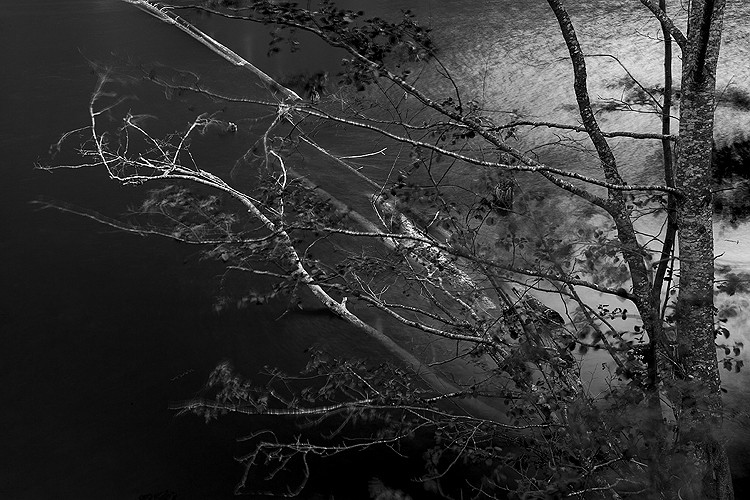
Sometimes you’ll need a Neutral Density filter of 6-stop or maybe even 10-stops if you want to do this during the day when the light is bright. In this case, you would need an ND to dim it down. The idea is to seek subjects that are moved by the wind for example; it works better if some elements of are still and some are moving. Maybe leaves or some thinner branches are moving and the thicker tree trunk is still.

5 Hacks and Tricks to up your Landscape Photography Game

5 Hacks and Tricks to up your Landscape Photography Game

Place your camera on the tripod, use the ND filter if necessary, and take the shot. You’ll get a simple, yet powerful image that represents not only a glimpse of time but few seconds. You can also try this with crops blown by the wind.

#2 – Move your camera while shooting

You usually try to stay still when you shoot so that’s why, as a landscape photographer, you use a tripod. But sometimes it’s interesting to bend the rules and see what the unexpected offers. You can try and move the camera while shooting. Move it from up to down or maybe you can rotate it slightly while the shutter is pressed.

This technique will produce more of an impression of what you see and certain movements work better with certain types of subjects; for example, move your camera up and down if you have straight tall trees. It also helps to have an exposure time of about one second.

5 Hacks and Tricks to up your Landscape Photography Game

5 Hacks and Tricks to up your Landscape Photography Game

5 Hacks and Tricks to up your Landscape Photography Game

5 Hacks and Tricks to up your Landscape Photography Game

5 Hacks and Tricks to up your Landscape Photography Game

#3 – Zoom your lens

Another element that usually stays the same while you press the trigger is the focal length. But what would happen if you changed it during the exposure? Of course, it helps a lot if you have longer exposure time so that you’ll have time to actually zoom.

You have two options with this technique. You can just zoom in or out and you get an interesting effect like everything is “running” to the edges of the photo.

5 Hacks and Tricks to up your Landscape Photography Game

Or you can first zoom your lens in all the way and hold the zoom ring. While you press the shutter button keep the zoom ring fixed and rotate the camera so that the lens zooms out. Don’t forget to keep the hand that is holding the zoom ring still; you are actually zooming out by moving the camera. You’ll get a twisted effect that I find it works better on pines or similar trees.

5 Hacks and Tricks to up your Landscape Photography Game

5 Hacks and Tricks to up your Landscape Photography Game

5 Hacks and Tricks to up your Landscape Photography Game

#4 – Use graduated filters in unusual ways

As a landscape photographer, you likely know how to use graduated ND filters to balance the brightness of the sky with the foreground, but you can do so much more with them too.

In the old days, photographers used to dodge and burn certain areas of a photo to lighten or darken those spots. The technique is still used today in post-processing.

But what if you could do this right in the camera using two graduated ND filters to darken the margins of an image. You only need to place the grad ND filters at a 90-degree angle, one facing left and the other facing right. You don’t even need to have the same filters; you can use a 2-stop and a 3-stop, for example. This will create a light beam effect.

5 Hacks and Tricks to up your Landscape Photography Game

#5 – Create Cinemagraphs

Cinemagraphs are the new thing, and they look cool. You may be wondering what is a Cinemagraph? Well, it’s a combination of still photography and video. The result is a video, but because of this combination, I included this idea here. Here’s an example of what they look like:

In short, the technique requires you to record a video, preferably with the camera on a tripod, freeze one of the frames and make it a photo, and then creating a mask that reveals only one element that moves. It looks better if you make the video loop-able but that is not absolutely necessary. The effect plays with your mind because everything is still apart from one element that moves.

Conclusion

I hope you’ll find these ideas interesting and you’ll use them to open new horizons and explore new techniques. I think experimenting plays a big part in photography and landscape photography is no exception.

Share your landscape tricks and tips in the comments below.

The post 5 Hacks and Tricks to up your Landscape Photography Game by Toma Bonciu appeared first on Digital Photography School.


Digital Photography School

 
Comments Off on 5 Hacks and Tricks to up your Landscape Photography Game

Posted in Photography