RSS
 

Archive for April, 2017

Sleeves Are For Nerds: Geeky iPad, Tablet & eReader Covers

23 Apr

[ By Steve in Gadgets & Geekery & Technology. ]

Tablets, iPads and eReaders are so ubiquitous, nerdy owners are employing extreme acts of graphic personalization to imbue their devices with unique geek chic.

Faaaalkooorr!! Almost every child of the Eighties holds a special place in their heart for The NeverEnding Story. The 1984 film spawned a pair of sequels and a TV show, cementing its hold on once-youthful imaginations and imbuing all who watched with the urge to ride a giant flying dog – OK, “luckdragon”, whatever.

Fans of the endearingly clunky, West German-produced fantasy film have grown into jaded adults but as Falcor famously advised, “Never give up and good luck will find you.” Yeah, tell that to Artax. Anyway, you can look up that and more on your tablet, ideally if its encased by a NeverEnding Story iPad / Tablet / EReader / Kindle Cover. Note the faux Auryn medallion affixed to the cover. Hey, it’s better than Nothing.

Hit The Button, Frank

Designed ideally for an Apple product like a Macbook or iPad and size-customizable by the seller, this MST3K adhesive vinyl decal features the familiar – to those in the know – silhouettes of Tom Servo, Mike Nelson and Crow T Robot in full-on movie-riffing mode. Now that Mystery Science Theater 3000 has been revived for a new run on Netflix, your robot roll call is as timely as ever.

Ultimate Zelda

The Legend of Zelda is one of Nintendo’s most successful gaming franchises though considering it debuted way back in 1986, it’s had plenty of time to accrue legions of devoted fans. This “Ultimate Zelda Fan Package” from Etsy seller SkinzNhydez includes a Zelda book cover, Zelda wallet, Zelda iPad case, even a Zelda belt buckle. All you need now is a girlfriend named Zelda… oh, wait.

Time McFly’s

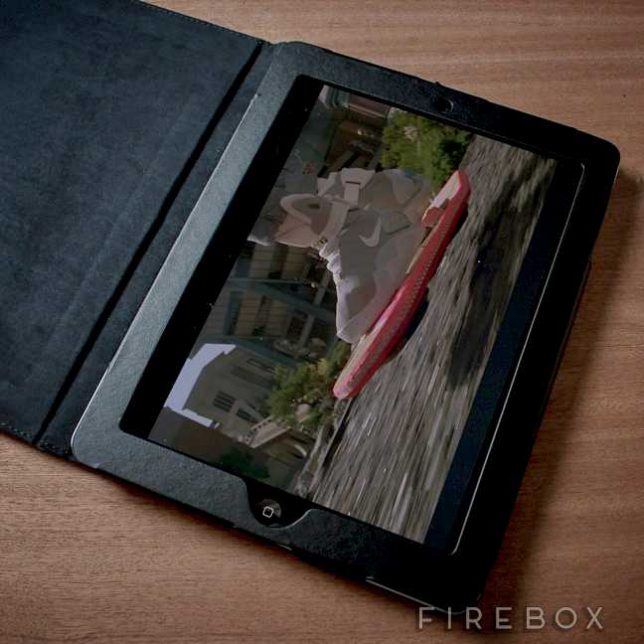
Channel your inner Biff Tannen with this Back To The Future 2 iPad case, featuring the cover of Gray’s Sports Almanac 1950-2000: the book that brought our heroes from BTTF2 so much Griff, er, grief.

Seller Firebox kindly advises potential purchasers that while “this book tells the future,” it’s “not to be used to create a series of paradoxes that destroy time.” Besides, since November 8th of 2016 we’ve already been living in the darkest timeline, amiright?

Next Page – Click Below to Read More:
Cover Ups Geeky Ipad Tablet Ereader Case Covers

Share on Facebook


[ By Steve in Gadgets & Geekery & Technology. ]

[ WebUrbanist | Archives | Galleries | Privacy | TOS ]


WebUrbanist

 
Comments Off on Sleeves Are For Nerds: Geeky iPad, Tablet & eReader Covers

Posted in Creativity


Sony a9 shooting experience: Here’s why I’m impressed

23 Apr

Introduction

Sony’s looking to storm the sports photography market with its new a9 mirrorless camera.

When I started shooting sports for college publications, I was stuck working with 3 fps. Then I graduated to a new camera offering 5 fps, and gravitated towards weddings and events. Now that I’ve been with DPReview for a year and a half, I’ve gotten used to 12, 14, 18 and 24 frames per second for shooting just about everything.

To be blunt, past a certain threshold, burst shooting speeds don’t net me appreciably more keepers in my usual style of photography. But that won’t be the case with everyone, and honestly, it doesn’t hinder my enthusiasm with regards to the new Sony a9, even though that’s one of its headline features. Even setting burst speeds aside, this camera is among the best I’ve ever used, bar none. Here’s why.

Background

During my time at DPReview, Sony’s always left me feeling a little conflicted.

On one hand, the technology and features crammed into the company’s cameras are always impressive; during my interview for this job, our own Rishi Sanyal showed me Eye AF on an a7R II, and I accidentally blurted out an expletive as my jaw dropped – it was something I’d never seen before. On the other hand, I’ve consistently found the usability of Sony’s cameras to be a primary concern for me. The interface and general operation were laggy enough to be irksome, I got lost in the menus all the time (movie options should never be nonsensically shuffled among stills options), and there were times that I felt I was fighting the camera to get it to just do what I wanted.

Sony’s RX100 V is an incredibly capable pocket camera, but the series hasn’t seen any ergonomic or UI improvements in two generations.
Photo by Samuel Spencer

The list of qualms I have with the a7-series in particular is full of items that, on their own, are quite insignificant; but as the list grows, they all combine to make for cameras that I almost never choose for personal work or play. But the sheer volume of improvements and refinements in the a9 are having me singing a different tune.

So, what exactly has changed with the a9?

Despite similarities to the a7-series at first glance, a lot.

The buttons and dials all come with better haptic feedback. The AF joystick replaces an eternity of clicks when moving the AF point. When you flip the screen out, the eye sensor is disabled, which resulted in fewer missed shots when working at odd angles. Boot-up time is shorter. Battery life is way better. The interface is more responsive. I don’t get lost in the menus at all anymore. All of these changes add up to a camera that is more transparent, in the sense that it just ‘gets out of the way’ more than any previous Sony camera I’ve used, and lets me get on with taking pictures.

The controls, the feel and the operation of the new a9 have all been improved relative to Sony’s a7-series of full frame mirrorless cameras.

Even if you don’t use the full 20 fps (electronic shutter) burst speed, shooting anything you could want without any intrusive shutter noise (important for delicate moments during, say a wedding reception) without any blackout whatsoever is a revelation. Sure, the RX100 V and Olympus E-M1 II both also offer fully electronic shutters and silent operation, but neither has a full-frame image sensor, neither can show you a live view during bursts (only slideshows of images being taken), and the a9 suppresses rolling shutter so ably that it’s one more thing that I almost never have to worry about.

I had a big hand in the reviews of Nikon’s D5 and Canon’s EOS-1D X Mark II, and while the optical viewfinder blackout on both of those cameras is incredibly short, I have to stress that the Sony a9 goes one step further in that it shows no blackout whatsoever. None. This camera makes it easier than ever to simply follow the action, and catch exactly the moment you want.

An additional plus – this camera has taken the preliminary crown (review units are forthcoming) for the best mirrorless autofocus system I’ve ever used. We were given the opportunity to photograph hockey, figure skating and a full-on track meet, and the a9 rarely let me down. Watch our site next week, when we’ll be able to post actual photos and videos from these events for you to examine for yourself.

What’s the catch?

Okay, there’s a few catches here.

First of all, do you need 20 fps? I don’t. There are, of course, those that will. But that feature, that incredibly fast readout speed of that new 24MP sensor, is something you’re paying for if you shell out $ 4,500 for this new camera, even if you’re only interested in the other (not insignificant) improvements outlined above.

I shot over 2,800 images during our shooting experience with Sony in New York. That caused me worries about card space (even with a 128GB card), cost me hard drive space, and cost me time during downloading and editing. I’m no pro sports shooter, so take this with a grain of salt, but I’m having a hard time convincing myself that I got an appreciably greater number of keepers because of the a9’s burst rate than I would have with a slower-shooting camera. Heck, I even switched to 10fps halfway through to save card space, and I still came away with images I was pleased with. And it’s worth noting that the absence of any blackout whatsoever is still incredibly awesome, even at 10fps.

This image is from the first occasion where I really soaked a camera in the name of a shoot; photographing the King County Search and Rescue team during a training exercise as part of my job for Puget Sound Energy. That D800 and 24-70mm F2.8 are still in good working order, though the rubber zoom ring on the lens had started to come a little loose.
ISO 1600 | F4 | 1/100 sec
Photo copyright Puget Sound Energy, image via Flickr

Also, Sony’s made claims that the a9 is weather resistant, but after handling the camera and flipping out the port doors, battery door and memory card doors, I just don’t have the same faith that it would survive a downpour that a D5, 1D X II or E-M1 II could shrug off. That said, this isn’t necessarily a common requirement, but it’s something to keep in mind. Were I to take a personal a9 into a rainstorm, I’d gaff tape the heck out of it.

And lastly, where are the XQD card slots? Yes, the a9 has an amazing buffer that I never once hit, but that buffer takes a good amount of time to clear. Incorporating XQD cards would also have meant my download times would be closer to three minutes instead of thirty at the end of the day, plus they’re simply more durable for demanding situations. After having used them extensively on Nikon’s D500 and D5, I’m sold: for sports cameras, faster media is the way to go.

The wrap

Looking forward – does the a9 have what it takes to steal the hearts of sports shooters around the globe? Only time will tell. Okay, time, durability and quality of professional service and support.

Professional sports and action photographers have demanding jobs, and it goes without saying that learning a new camera system is not usually something they’re looking to add to their workload. But the a9 might just be worth it.

Sony says it’s rolling out more robust professional support, with one-day turnaround for loaner units when a camera needs repair, and walk-in service centers in New York and Los Angeles (with more coming soon), and better support throughout Canada. That’s promising, for sure, but in a chicken-and-egg dilemma, do you want to be among the first to adopt the Sony system and test the validity of those claims for yourself, or wait to see what other professionals who switch have to say? 

For a professional wedding and event photographer who isn’t spending hours in inclement weather, I’d say the Sony a9 is worth a look if you’re used to Dx-series cameras from Nikon, and 1D-series models from Canon. With the a9, you’ll save a ton of weight, have a higher frame rate (again, only relevant if you need it), and likely have an easier time following the action than with even the best DSLRs. 

But it must be said, the cost of switching systems isn’t something to be sneezed at – and it’s something we’ll be looking at in detail in a forthcoming article, so stay tuned.

Articles: Digital Photography Review (dpreview.com)

 
Comments Off on Sony a9 shooting experience: Here’s why I’m impressed

Posted in Uncategorized


Huawei P10 camera review

23 Apr

$ (document).ready(function() { SampleGalleryV2({“containerId”:”embeddedSampleGallery_4964545235″,”galleryId”:”4964545235″,”isEmbeddedWidget”:true,”standalone”:false,”selectedImageIndex”:0,”startInCommentsView”:false,”isMobile”:false}) });

The P10 is Huawei’s latest high-end smartphone in a more compact form factor compared to the company’s Mate 9 phablet. A 5.1″ Full-HD display with very thin bezels allows for a design that easily fits into even small pockets. On the inside, top-end components, including Huawei’s HiSilicon Kirin 960 octa-core chipset and 4GB of RAM, provide top-end performance.

The Leica-branded camera comes with the same specification as its equivalent in the Mate 9 and combines a 12MP color sensor with a 20MP monochrome chip. Both lenses have an F2.2 aperture and the color variant also features optical image stabilization. As before, color and monochrome image information is combined for better image detail, higher dynamic range and lower noise levels. Other features include laser-assisted autofocus, a two-tone LED flash and 4K video recording.

On the software side of things a new ‘Leica-style’ portrait mode uses 3D face detection and applies a combination of fake bokeh, adjustable illumination and ‘beautification’ effects to your portrait subjects. We’ve put the hardware and software through its paces for our full camera review. Read on on the following pages to find out how the P10 performed.

Key Photographic / Video Specifications

  • Leica-branded dual-camera with 12MP color and 20MP monochrome sensors
  • F2.2 aperture
  • OIS on the color sensor
  • 27mm equivalent focal length
  • On-sensor phase detection and laser-assisted AF
  • Dual-tone LED flash
  • 4K video
  • 8MP front camera with F1.9 aperture
  • Manual camera control and DNR Raw capture

Other Specifications

  • 5.1″ IPS display with 1080p resolution
  • Android 7.0
  • HiSilicon Kirin 960 octa-core chipset
  • 4GB RAM and 64GB storage
  • microSD support up to 256GB
  • 3200 mAh battery
  • Stereo speakers
  • Fingerprint reader

DPReview smartphone reviews are written with the needs of photographers in mind. We focus on camera features, performance, and image quality.

Articles: Digital Photography Review (dpreview.com)

 
Comments Off on Huawei P10 camera review

Posted in Uncategorized


The Sony a9 is a 24MP sports-shooting powerhouse

23 Apr

$ (document).ready(function() { SampleGalleryV2({“containerId”:”embeddedSampleGallery_1338244761″,”galleryId”:”1338244761″,”isEmbeddedWidget”:true,”standalone”:false,”selectedImageIndex”:0,”startInCommentsView”:false,”isMobile”:false}) });

Sony has announced the alpha 9 high-end full frame mirrorless camera at a live event in New York. The a9 has a 24MP, stacked CMOS sensor for super-fast readout, allowing a completely silent electronic shutter. It can shoot at 20 frames per second for more 241 compressed Raw frames. It can performing AF/AE calculations at 60 fps, all while providing a 60 fps live feed (meaning no blackout) during bursts. Sony claims improved subject tracking and Eye AF speeds, and focus down to -3 EV with F2 lens (a whole stop better than the a7R II).

The camera primarily uses an electronic shutter but also features a mechanical shutter mechanism, allowing a flash sync speed of up to 1/250th of a second.

Sony is also expanding its Pro support program, adding support for Canada and opening two walk-in centers in the USA (New York and Los Angeles).

The camera features 693 on-sensor phase detection points, covering 93% of the frame. It also has five-axis image stabilization that offers 5 stops of correction.

The a9 has a 1280 x 960 (QuadVGA) resolution viewfinder that runs at 120 fps with very low latency.

It has twin SD card slots (one of which supports UHS-II cards) and Sony says the battery has twice the capacity of previous models. A battery grip holding two batteries will also be available.

Features such as an AF joystick, AF mode dial and customizable ‘My Menu’ have been added. You can also instantly switch to one other AF area mode by assigning it to a custom button, to quickly adapt to changing scenarios.

The company says it’s the most capable camera ever: mirrorless or DSLR. Sony stresses it’s not even largely about physical differences between mirrorless and DSLR anymore, but instead about the capabilities of mirrorless that give it advantages over DSLRs. We’ll be curious to put these claims to the test.

The a9 will be available in May 2017 at a cost of around $ 4500/£4500.


Press Release

Sony’s New ?9 Camera Revolutionizes the Professional Imaging Market

Groundbreaking Full-frame Mirrorless Camera Delivers Unmatched Speed, Versatility and Usability

  • World’s First1 full-frame stacked CMOS sensor, 24.2 MP2 resolution
  • Blackout-Free Continuous Shooting3 at up to 20fps4 for up to 241 RAW5/ 362 JPEG6 images
  • Silent7, Vibration-free shooting at speeds up to 1/32,000 sec8
  • 693 point focal plane phase detection AF points with 60 AF/AE tracking calculations per second
  • Extensive professional features including Ethernet port for file transfer, Dual SD card slots and extended battery life
  • 5-Axis in-body image stabilization with a 5.0 step9 shutter speed advantage

NEW YORK, Apr. 19, 2017 – Sony Electronics, a worldwide leader in digital imaging and the world’s largest image sensor manufacturer, has today introduced their new revolutionary digital camera, the ?9 (model ILCE-9).

The most technologically advanced, innovative digital camera that Sony has ever created, the new ?9 offers a level of imaging performance that is simply unmatched by any camera ever created – mirrorless, SLR or otherwise.

The new camera offers many impressive capabilities that are simply not possible with a modern digital SLR camera including high-speed, blackout-free continuous shooting3 at up to 20fps4, 60 AF/AE tracking calculations per second 10, a maximum shutter speed of up to 1/32,000 second8 and much more. These are made possible thanks to its 35mm full-frame stacked Exmor RS™ CMOS sensor – the world’s first of its kind – which enables data speed processing at up to 20x faster than previous Sony full-frame mirrorless cameras11. This unique sensor is paired with a brand new, upgraded BIONZ X processing engine and front end LSI that maximizes overall performance.

This industry-leading speed and innovative silent shooting7 is combined with a focusing system that features an incredible 693 phase detection AF points. Covering approximately 93% of the frame, the focusing system ensures that even the fastest moving subjects are reliably captured and tracked across the frame.

The new ?9 also features a vibration free, fully electronic, completely silent anti-distortion shutter7 with absolutely no mechanical mirror or shutter noise, making it an extremely powerful photographic tool for any shooting situation that demands quiet operation. To ensure maximum usability and reliability, the camera features a new Z battery with approximately 2.2x the capacity of W batteries, as well as dual SD media card slots, including one that supports UHS-II cards. An Ethernet port (wired LAN terminal) is available as well, and there is a wide variety of new settings, controls and customizability options that are essential for working pros.

“This camera breaks through all barriers and limitations of today’s professional digital cameras, with an overall feature set that simply cannot be matched considering the restrictions of mechanical SLR cameras” said Neal Manowitz, Vice President of Digital Imaging at Sony Electronics. “But what excites us most about the ?9 – more than its extensive product specs – is that it allows professionals to see, follow and capture the action in ways that were never before possible, unlocking an endless amount of new creative potential.”

A New Standard of Speed and Focusing Accuracy

Critical to the record-breaking speed of the new ?9 is the combination of the new stacked 24.2 MP2 Exmor RS image sensor, new BIONZ X processor and front end LSI.

The immense processing power from these new components allows for faster AF/AE calculation while also reducing EVF display latency. The processor and front end LSI are also responsible for the larger continuous shooting buffer, enabling photographers to shoot at a blazing 20 fps4 with continuous AF/AE tracking for up to 362 JPEG6 or 241 RAW5 images.

The camera’s innovative AF system tracks complex, erratic motion with higher accuracy than ever before, with the ability to calculate AF/AE at up to 60 times per second10, regardless of shutter release and frame capture. Further, when the shutter is released while shooting stills, the electronic viewfinder functions with absolutely no blackout, giving the user a seamless live view of their subject at all times 12. This feature truly combines all of the benefits of an electronic viewfinder with the immediacy and “in the moment” advantages that not even the finest optical viewfinders can match, and is available in all still image modes including high speed 20 fps4 continuous shooting.

With 693 focal plane phase detection AF points covering approximately 93% of the frame, the camera ensures improved precision and unfailing focus in scenes where focus might otherwise be difficult to achieve. The Fast Hybrid AF system – pairing the speed and excellent tracking performance of phase detection AF with the precision of contrast AF – achieves approximately 25% faster performance when compared with ?7R II, ensuring all fast-moving subjects are captured.

Professional Capabilities in a Compact Body

Sony’s new full-frame camera is equipped with a variety of enhanced capabilities that give it a true professional operational style.

The ?9 features an all-new, high-resolution, high-luminance Quad-VGA OLED Tru-Finder with approximately 3,686k dots for extremely accurate, true-to-life detail reproduction. The new Tru-Finder, which is the highest resolution viewfinder ever for a Sony ? camera, incorporates an optical design that includes a double-sided aspherical element, helping it to achieve 0.78x magnification and a level of corner to corner sharpness that is simply outstanding. The EVF also utilizes a ZEISS® T* Coating to greatly reduce reflections, and has a fluorine coating on the outer lens that repels dirt.

This all adds up to a luminance that is 2x higher than the XGA OLED Tru-Finder from the ?7R II, creating a viewfinder image with a brightness level that is nearly identical to the actual scene being framed, ensuring the most natural shooting experience. The frame rate of the Tru-Finder is even customizable, with options to set it for 60 fps or 120 fps13 to best match the action.

The ?9 is equipped with an innovative 5-axis image stabilization system that provides a shutter speed advantage of 5.0 steps 9, ensuring the full resolving power of the new sensor can be realized, even in challenging lighting. Also, with a simple half press of the shutter button, the effect of the image stabilization can be monitored in the viewfinder or on the LCD screen, allowing framing and focus to be accurately checked and continually monitored.

The ?9 also offers an Ethernet port (wired LAN terminal), allowing convenient transfer of still image files to a specified FTP server at high-speed, making it an ideal choice for studio photography, high-profile news and sporting events and more. There is a sync terminal as well, enabling external flash units and cables to be connected directly for convenient flash sync.

New Features for Fast Operation

Sony’s new ?9 has several new and updated focus functions that support faster, easier focusing in a variety of situations. The camera features a multi-selector joystick on the back of the camera, allowing shooters to easily shift focus point within the frame by pressing the multi-selector in any direction up, down, left or right when shooting in Zone, Flexible Spot or Expanded Flexible Spot focus area modes. The new model also offers touch focusing on the rear LCD screen for easily selecting of and shifting focus towards a desired focus point or subject.

New for Sony E-mount cameras, the ?9 includes the addition of separate drive mode and focus mode dials, plus a new “AF ON” button that can be pressed to activate autofocus directly when shooting still images or movies.

Additional new capabilities include the “AF Area Registration”, which allows frequently used focus area to be memorized and recalled via custom button assignments. There is also the ability to assign specific settings (exposure, shutter speed, drive mode, etc) to a custom button to be instantly recalled when needed. The camera can memorize and automatically recall the last focus point used in a vertical or horizontal orientation as well, instantly switching back to it when that specific orientation is used again.

For enhanced customization, a “My Menu” feature is available, allowing up to 30 menu items to be registered in a custom menu for instant recall when needed.

Double Battery Life, Double Memory

The innovative ?9 camera features an all-new Sony battery (model NP-FZ100) with 2.2x the capacity of previous Sony full-frame models, allowing for much longer shooting performance.

Also, based on extensive customer feedback, the new camera offers two separate media card slots, including one for UHS-II media. The same data can simultaneously be recorded to both cards, or the user can choose to separate RAW / JPEG or still images / movies. Movies can also simultaneously be recorded to two cards for backup and more efficient data management.

High Sensitivity and Wide Dynamic Range

The unique design of the ?9 image sensor represents the pinnacle of Sony device technology. The 24.2 MP 2 full-frame stacked CMOS sensor is back-illuminated, allowing to capture maximum light and produce outstanding, true-to-life image quality. The sensor also enables the diverse ISO range of 100 – 51200, expandable to 50 – 20480014, ensuring optimum image quality with minimum noise at all settings.

The enhanced BIONZ X processor plays a large part in image quality as well, as it helps to minimize noise in the higher sensitivity range while also reducing the need to limit ISO sensitivity in situations where the highest quality image is required.

The new ?9 also supports uncompressed 14-bit RAW, ensuring users can get the most out of the wide dynamic range of the sensor.

4K Video Capture

The new ?9 is very capable as a video camera as well, as it offers 4K (3840x2160p) video recording across the full width of the full-frame image sensor15, 16. When shooting in this format, the camera uses full pixel readout without pixel binning to collect 6K of information, oversampling it to produce high quality 4K footage with exceptional detail and depth. Recording is also available in the popular Super 35mm size.

Additionally, the camera can record Full HD at 120 fps at up to 100 Mbps, which allows footage to be reviewed and eventually edited into 4x or 5x slow motion video files in Full HD resolution with AF tracking17.

New Accessories

Sony has released a variety of new accessories to compliment the new ?9 camera, including:

  • NP-FZ100 Rechargeable Battery – high-capacity battery with approximately 2.2x the capacity of the NP-FW50 W-series battery. It also supports InfoLITHIUM® technology, making it possible to view the remaining battery power as both a percentage display and five step icon on the camera’s LCD screen.
  • VG-C3EM Vertical Grip – provides same operation, handling and design as the?9 camera, doubles battery life and allows USB battery-charging via the camera body.
  • NPA-MQZ1K Multi-Battery Adaptor Kit – External multi-battery adaptor kit capable of functioning as an external power supply for four Z series batteries and as a quick charger. Kit comes with two packs of NP-FZ100 rechargeable batteries.
  • GP-X1EM Grip Extension – Grip extender with same look, feel and design as ?9 body. Enables more solid hold on camera.
  • FDA-EP18 Eyepiece Cup –eye piece cup with locking mechanism
  • BC-QZ1 Battery Charger –quick-charging battery charger. Charges one new Z series battery in approximately 2.5 hours.
  • PCKLG1 Screen Protect Glass Sheet – hard, shatterproof glass screen protector with anti-stain coating to prevent fingerprints. Compatible with touch operation and tilting LCD screen

Pricing and Availability

The Sony ?9 Full-frame Interchangeable Lens Camera will ship this May for about $ 4,500 US and $ 6,000 CA. It will be sold at a variety of Sony authorized dealers throughout North America.

Notes to Editors:

  1. As of April 19th, 2017
  2. Approx. effective
  3. Electronic shutter mode. At apertures smaller than F11 (F-numbers higher than F11), focus will not track the subject and focus points will be fixed on the first frame. Display updating will be slower at slow shutter speeds.
  4. “Hi” continuous shooting mode. The maximum frame rate will depend on the shooting mode and lens used. Visit Sony’s support web page for lens compatibility information.
  5. “Hi” continuous shooting mode, compressed RAW, UHS-II memory card. Sony tests.
  6. “Hi” continuous shooting mode, UHS-II memory card. Sony tests.
  7. Silent shooting is possible when Shutter Type is set to “Electronic” and Audio signals is set to “Off.”
  8. 1/32000 shutter speed is available only in the S and M modes. The highest shutter speed in all other modes is 1/16000.
  9. CIPA standards. Pitch/yaw stabilization only. Planar T* FE 50mm F1.4 ZA lens. Long exposure NR off.
  10. At shutter speeds higher than 1/125 sec, smooth and blackout-free live view images are shown in EVF.
  11. Compared to the front-illuminated CMOS image sensor in the ?7 II.
  12. Display updating will be slower at slow shutter speeds.
  13. When the auto or electronic shutter mode is selected the viewfinder frame rate is fixed at 60 fps during continuous shooting.
  14. Still images, mechanical shutter: ISO 100 – 51200 expandable to ISO 50 – 204800.
    Still images, electronic shutter: ISO 100 – 25600 expandable to ISO 50 – 25600.
    Movie recording: ISO 100 – 51200 expandable to ISO 100 – 102400.
  15. In full-frame shooting, the angle of view will be narrower under the following conditions: When [File Format] is set to [XAVC S 4K] and [ Record Setting] is set to [30p]
  16. Class 10 or higher SDHC/SDXC memory card required for XAVC S format movie recording. UHS Speed Class U3 required for 100Mbps or higher recording.
  17. Sound not recorded. Class 10 or higher SDHC/SDXC memory card required.

Sony Alpha a9 specifications

Price
MSRP $ 4500/£4500
Body type
Body type SLR-style mirrorless
Body material Magnesium alloy
Sensor
Max resolution 6000 x 4000
Image ratio w:h 3:2, 16:9
Effective pixels 24 megapixels
Sensor photo detectors 28 megapixels
Sensor size Full frame (35.6 x 23.8 mm)
Sensor type BSI-CMOS
Processor BIONZ X
Color space sRGB, Adobe RGB
Color filter array Primary color filter
Image
ISO Auto, ISO 100-51200 (expands to 50-204800)
Boosted ISO (minimum) 50
Boosted ISO (maximum) 204800
White balance presets 10
Custom white balance Yes
Image stabilization Sensor-shift
Image stabilization notes 5-axis
Uncompressed format RAW
JPEG quality levels Extra fine, fine, standard
File format
  • JPEG (Exif v2.31)
  • Raw (Sony ARW)
Optics & Focus
Autofocus
  • Contrast Detect (sensor)
  • Phase Detect
  • Multi-area
  • Center
  • Selective single-point
  • Tracking
  • Single
  • Continuous
  • Touch
  • Face Detection
  • Live View
Autofocus assist lamp Yes
Number of focus points 693
Lens mount Sony E
Focal length multiplier 1×
Screen / viewfinder
Articulated LCD Tilting
Screen size 3
Screen dots 1,440,000
Touch screen Yes
Screen type TFT LCD
Live view Yes
Viewfinder type Electronic
Viewfinder coverage 100%
Viewfinder magnification 0.78×
Viewfinder resolution 3,686,400
Photography features
Minimum shutter speed 30 sec
Maximum shutter speed 1/8000 sec
Maximum shutter speed (electronic) 1/32000 sec
Exposure modes
  • Program
  • Aperture priority
  • Shutter priority
  • Manual
Built-in flash No
External flash Yes (via hot shoe or flash sync port)
Flash modes Flash off, Autoflash, Fill-flash, Slow Sync., Rear Sync., Red-eye reduction, Wireless, Hi-speed sync
Flash X sync speed 1/250 sec
Drive modes
  • Single
  • Continuous (H/M/L)
  • Self-timer
  • Bracketing (AE, WB, DRO)
Continuous drive 20.0 fps
Self-timer Yes (2, 5, 10 secs + continuous)
Metering modes
  • Multi
  • Center-weighted
  • Highlight-weighted
  • Average
  • Spot
Exposure compensation ±5 (at 1/3 EV, 1/2 EV steps)
AE Bracketing ±5 (3, 5 frames at 1/3 EV, 1/2 EV, 2/3 EV, 1 EV, 2 EV steps)
WB Bracketing Yes (3 frames, H/L selectable)
Videography features
Format MPEG-4, AVCHD, H.264
Microphone Stereo
Speaker Mono
Storage
Storage types Dual SD/SDHC/SDXC slots (UHS-II compatible)
Connectivity
USB USB 2.0 (480 Mbit/sec)
HDMI Yes (micro-HDMI)
Microphone port Yes
Headphone port Yes
Wireless Built-In
Wireless notes 802.11b/g/n + NFC + Bluetooth
Remote control Yes (Wired or wireless)
Physical
Environmentally sealed Yes
Battery Battery Pack
Battery description NP-FZ100
Battery Life (CIPA) 650
Weight (inc. batteries) 673 g (1.48 lb / 23.74 oz)
Dimensions 127 x 96 x 63 mm (5 x 3.78 x 2.48)
Other features
Orientation sensor Yes
GPS None

Articles: Digital Photography Review (dpreview.com)

 
Comments Off on The Sony a9 is a 24MP sports-shooting powerhouse

Posted in Uncategorized


The PolarPro Katana Mavic Tray turns your DJI Mavic Pro into a handheld stabilizer

23 Apr

The DJI Mavic Pro camera drone has been designed with portability in mind. The PolarPro Katana Mavic Tray is a new accessory that increases the Mavic Pro’s versatility even further by turning it into a stabilized handheld shooting platform while on the ground. 

This allows Mavic Pro users to use their drone for shooting smooth, cinematic video on the ground that complements the drone’s aerial footage perfectly. The PolarPro Katana Mavic Tray is made from glass-filled nylon and features two grips on either side of the clamping mount that holds the Mavic Pro securely in position. An integrated smartphone mount at the top of the tray lets you use the drone’s companion app for framing and camera controls.

The PolarPro Katana Mavic Tray will be officially launched at the NAB trade show later this week and carry an anticipated MSRP of $ 49.99. More information is available on the PolarPro website.

Articles: Digital Photography Review (dpreview.com)

 
Comments Off on The PolarPro Katana Mavic Tray turns your DJI Mavic Pro into a handheld stabilizer

Posted in Uncategorized


Everything You Need to Know About Tripods with Phil Steele

23 Apr

In this really helpful video Phil Steele covers everything you need to know about tripods including; how to choose the right one, how to use them, and special features you may not know about.

  • How to choose the right tripod
  • How to use a tripod properly
  • Special features you may not even know about

Here are some tripod articles and reviews for you to check out:

  • Overview of the Vanguard VEO 235AB Aluminum Travel Tripod
  • Benro FGP18C SystemGo Plus Travel Tripod with B2 Ball Head Review
  • Product Review: Polaroid Carbon-Fiber Travel Tripod and Varipod
  • The 3Pod P3COR Tripod and SH-PG Ball Head Review
  • How to Build the Ideal Tripod
  • Tripod versus Monopod – a Comparison and When to Use Each
  • 5 Tips to Get Sharp Photos While Using a Tripod

If you want to learn more from Phil check out some of his video courses covering topics like event photography, Lightroom, headshots and more on Steele Training.com.

The post Everything You Need to Know About Tripods with Phil Steele by Darlene Hildebrandt appeared first on Digital Photography School.


Digital Photography School

 
Comments Off on Everything You Need to Know About Tripods with Phil Steele

Posted in Photography


Digital Knitting Machine: Kniterate is a 3D Printer for Custom Apparel

23 Apr

[ By WebUrbanist in Gaming & Computing & Technology. ]

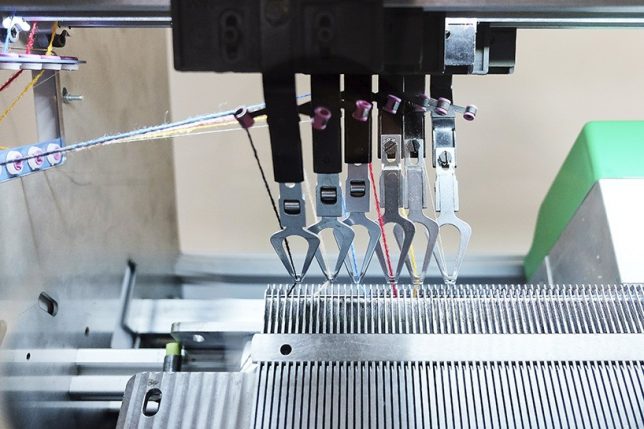
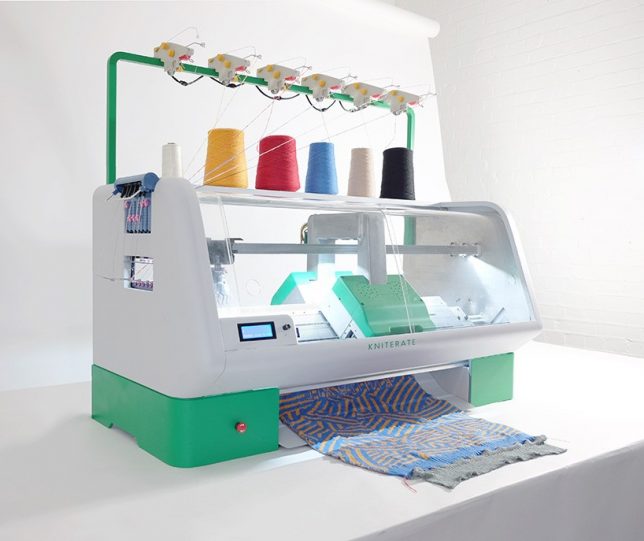
Borrowing logic from the 3D printing industry, Kniterate lets users turn ideas and designs from digital files to one-off wearable garments in hours. Able to “print” shirts, scarves, sweaters, dresses and more, the machine is aimed at enabling customized creations as well as rapid prototyping.

Compact, portable and affordable, the gadget itself links into computer and mobile apps – creatives can build out ideas in Photoshop, build them in Kniterate’s device-specific application, then send them to straight to production with the touch of a button.

The application comes with a number of preset patterns that can be used but the intuitive interface is also designed to allow for easy from-scratch creations, even by people with limited digital design experience. Even in cases there the final product will be made via other methods or materials, this machine allows for iterative design experiments to test size, fit and styles.

The system is also designed to reduce waste from off-cut materials, printing with the exact amount of material needed to make a particular piece. The device can carry up to six yarns at a time to span an array of colors and materials – it is also made to be compatible with off-the-shelf yarns, making it more flexible and affordable than printers (often designed to make money from material sales rather than the machines themselves).

Share on Facebook


[ By WebUrbanist in Gaming & Computing & Technology. ]

[ WebUrbanist | Archives | Galleries | Privacy | TOS ]


WebUrbanist

 
Comments Off on Digital Knitting Machine: Kniterate is a 3D Printer for Custom Apparel

Posted in Creativity


Manfrotto launches fluid head counterbalanced with a nitrogen piston

23 Apr

Tripod and accessories manufacturer Manfrotto has announced a new tripod head for stills and video users that it claims provides smooth motion and continuous counterbalance for loads of up to 8kg. The new Nitrotech N8 uses what the company describes as a ‘nitrogen piston mechanism’ to counteract movements of the head and the pull of gravity to produce fluid and controlled motion for video and still photographers. While the new technology has obvious applications in the video market, Manfrotto also suggests the head for still photographers working with long lenses.

Users can adjust the degree of resistance in the pan and tilt axes to suit the shoot, and a side locking mechanism secures a quick release plate that offers 1/4in and 3/8in screws. The head is made from aluminum, features Easy Link threads for attaching accessory arms and an illuminated bubble level is powered by a lithium-ion battery.

The Nitrotech N8 head can be bought on its own for $ 449.95/£449.95, but Manfrotto has also created a number of kits using both carbon fiber and aluminum leg sets.

For more information see the Manfrotto website.

Press release

Manfrotto Introduces Nitrotech New Fluid Video Head 

  • Breakthrough Nitrogen piston technology for precise, continuous counterbalance
  • Variable pan & tilt fluidity for smooth and accurate shooting
  • Easy link connector with anti-rotation to support off-camera accessories
  • Side-lock sliding plate attachment
  • Secure, 8 kg load capacity
  • Flawlessly constructed professional video heads for superlative videography
  • High-impact, ground breaking design, superior quality materials

Manfrotto, world leader in the photography, imaging equipment and accessories industry, presents the new Nitrotech Video Head – a revolutionary head that combines the most successful features of Manfrotto’s Video Heads range with the ground-breaking, unique-to-the-market Nitrogen piston mechanism that guarantees continuous counterbalance.

The new Nitrotech N8 head securely supports a load up to 8 kg. The new head features a precise, continuous counterbalance system that effortlessly and safely holds and operates a wide array of video camera and camera models – in a variety of sizes. The variable fluidity function on both pan and tilt allows smooth, judder-free movement that is perfect for video work and photography work for example: wildlife, long lens, or sports photography. It allows precise control and balance over a heavy telephoto lens or video camera and features a 3/8” Easy Link equipped with an anti-rotation function that enables an external monitor or other accessories to be fitted.

This new head also features a side-lock sliding plate mechanism that allows safe, quick and easy camera attachment. The NITROTECH head has a flat base mount with a standard 3/8” thread that is highly versatile for different support combinations such as a tripod, slider or rig.

Manfrotto’s game-changing N8 Nitrotech Video Head makes a strong impression at first sight through its distinctive, impactful design, which emphasizes this core breakthrough technology. Ideal for both video and photography work, the Nitro head is a revolution in fluid video heads.

For more information, please visit www.manfrotto.co.uk

Prices start from £449.95.

Articles: Digital Photography Review (dpreview.com)

 
Comments Off on Manfrotto launches fluid head counterbalanced with a nitrogen piston

Posted in Uncategorized


Professional powerhouse: Hands-on with the full-frame Sony Alpha a9

23 Apr

Hands on with the Sony a9 (ILCE-9)

We got a chance to get our hands on the Sony alpha 9 immediately after its announcement. Our first reaction? Continuous shooting with full time live view isn’t a gimmick: you can follow the action without any interruption. 

This is an entirely different beast compared to the a6500, which only had 8 fps live view during continuous shooting. This is a nearly 8-fold increase in frame rate: actual 60 fps live view during bursts (120 fps when not shooting).

Hands on with the Sony a9 (ILCE-9)

It feels more substantially built than the existing a7 cameras, but without it becoming hefty. Sony says the a9 is ‘well sealed – especially around most buttons and dials’ for dust and moisture resistance. Whether it’s up there with the Canon EOS-1D X Mark II or Nikon D5 remains to be seen.

The camera’s grip is a little deeper than the a7 cameras, which means it’s more comfortable to hold with larger, heavier lenses such as the 24-70mm F2.8 GM.

Hands on with the Sony a9 (ILCE-9)

Despite the fairly radical specifications, the a9 retains the same fundamental form factor as the existing series II a7 cameras. However, as you’ll be aware if you were following the camera’s launch, just about everything inside the body shell has been revised to optimize speed. And outside the shell too – far more direct controls, like the AF and drive mode dials up top.

Hands on with the Sony a9 (ILCE-9)

Here’s just some of the cleverness that lives inside the camera: the processing board with twin SD card slots, a 3.7m dot OLED viewfinder and a beefed-up lens mount with more screws for greater strength and durability. But the big news is the 24MP stacked CMOS sensor, mounted on a 5-axis stabilized cradle.

The 24.2MP stacked CMOS design includes memory for buffering immediately behind the pixel layer. This and the (comparatively) modest pixel count are key to the camera’s fast readout, which underpins the camera’s headline features: 20 frames per second shooting, 60 fps AF/AE calculations for improved subject tracking, and a fully electronic (truly silent) shutter with minimal rolling shutter.

The Bionz X processor itself is also new (relative to the a7R II and a99 II), and comes with a front-end LSI. These improvements help increase processing speeds 1.8-fold and the buffer 6-fold relative to the a7R II, allowing for 241 continuous compressed Raws during 20 fps bursts. These improvements also help reduce power consumption by 40% compared to the a7R II.

Hands on with the Sony a9 (ILCE-9)

Although it looks a lot like an second-generation a7 series camera, the a9 features a range of improvements, many of them things that photographers (including us) have been requesting for some time.

The most obvious of these is the AF point joystick on the camera’s rear panel. This and the dedicated AF-On button (as opposed to the recessed button switchable between AF/MF and AEL on previous cameras) will be immediately welcome by anyone who’s shot with an existing Sony camera. The joystick is responsive, but often as you’re using it it accidentally registers a center (downward press), which can be assigned to any function custom buttons can be assigned to. For now, we suggest assigning it to ‘Not Set’ (nothing) so you don’t inadvertently activate something else (like center point AF-S, which it’s set to by default) while trying to move your AF point.

There have been changes to the elements that have been carried over too. For example, the dial on the rear plate of the camera is larger and has more noticeable ‘clicks’ as you turn it, making it far easier to use with precision. The buttons also have a more direct feel, rather than the slightly spongy sensation of the ones on the existing models (particularly the a7R II and a7S II.

Hands on with the Sony a9 (ILCE-9)

Our first impressions of the camera are that everything is that bit faster. Startup time is reduced (30% faster than a7R II), as is the speed at which the viewfinder panel is activated when you pull the camera up to your eye. AF is faster as well: 25% faster AF acquisition speeds, and 30% higher detection rate when it comes to Eye AF and face detection, compared to the a7R II. Low light AF speeds and performance should be improved as well, as Sony now claims AF at -3 EV with F2 lenses (1 EV better than the a7R II).

We’re also impressed with the new quad VGA viewfinder. Its offers a crisp, detailed view and fast enough refresh rate to follow action (120 fps, dropping to 60 fps during bursts). Since it’s OLED, it’s nice and contrasty. We wish the LCD had improved though: Nikon and Canon DSLRs offer retina-esque displays on their newer cameras that make shot images look that much more inspiring.

Hands on with the Sony a9 (ILCE-9)

Other changes include the addition of a physical control for switching between MF and the camera’s different AF modes. This, along with the ability to assign an AF area mode (with or without AF activation, a la Nikon D5/500) to the camera’s custom buttons, should make the a9 as quick to operate as it is at shooting.

Unfortunately, as of now, only one AF area can be assigned as ‘Reg. AF Area’ (oddly by long-pressing the Fn button while in that AF area mode), so you’ll only be able to instantly switch to one other AF area mode from the one that is currently engaged. We’ve requested Sony to enable multiple AF area modes to be assignable to multiple buttons, directly via the menu, as opposed to having only one ‘Registered AF Area’ the camera can store in memory. This might allow you to quickly switch between, say, Lock-on AF, complete Auto (when Lock-on fails), and good old center point. It would be even nicer if one could specify AF-S vs. AF-C for any of these modes so that, for example, I could generally keep the camera in AF-C, but always fall back to good old center-focus-and-recompose when all else fails.

Hands on with the Sony a9 (ILCE-9)

Stills aren’t the only area that gains massive improvements over previous models: Full-frame 4K video is now oversampled 2.4-fold from 6K footage. No pixel-binning, no line skipping. This leads to incredibly crisp footage but, more importantly, with extremely low rolling shutter thanks to the incredibly fast readout speeds of the new stacked CMOS sensor.

Which makes it all the more a shame that, for some reason, Sony decided to forego S-Log (and Picture Profiles entirely) on this camera. Sony claims this is because the camera is aimed at professional stills shooters, but for a camera that shoots such good full-frame 4K, we feel it’s a bit of a shame.

Hands on with the Sony a9 (ILCE-9)

The a9 uses a new battery. The ‘Type Z’ NP-FZ100 is bigger than the existing batteries and offers significantly more capacity: 16.4Wh to be exact, up from 7.7Wh in the older, ‘W’ type packs used in previous models. This allows the camera to achieve a rating of 650 shots per charge, based on CIPA standard tests.

As always, it’s quite common to be able to get many more shots out of a battery than the rating suggests, but the higher rating should mean the a9 will regularly be able to shoot for twice as long as most of the a7 series before needing a battery swap.

Hands on with the Sony a9 (ILCE-9)

Announced alongside the a9 is an accessory that should excite existing E-mount camera owners, particularly videographers.

The NPA-MQZ1K Multi-Battery Adaptor Kit comes with two of the new NP-FZ100 batteries and has space for another two. It not only works as a charging station for up to four Z type batteries but also has a dummy battery that allows it to be used as an external power pack. The unit is compatible not only with the a9 but also with the a7, a7R, a7S, a7 II, a7R II, a7S II, a6000, a6300, a6500, a5000, a5100 and RX10 III, providing up to 8x their current battery capacity. It include tripod-style mounting sockets, for attachment to a video rig.

Hands on with the Sony a9 (ILCE-9)

The ports on the camera’s left flank are all fairly familiar: headphone, mic, USB and HDMI. What’s slightly unexpected is that, despite the camera’s speed, the USB port is only version 2, rather than the much faster USB 3.

As you can see, the doors aren’t especially substantial, which is presumably why Sony isn’t making particularly strong claims about weatherproofing.

Hands on with the Sony a9 (ILCE-9)

The a9 is the first Sony to feature an Ethernet port, making clear its pitch-side intentions.

We’re surprised to see a traditional flash sync socket, for studio work. We’d expect that of Sony’s current models: the higher-resolution a7R II (which, curiously, lacks a flash sync socket) would appeal more to studio photographers. A hint perhaps that there’s a higher-resolution a9-series body on the way…

Hands on with the Sony a9 (ILCE-9)

An optional VG-C3EM battery grip doubles the camera’s battery life. The grip itself holds two batteries but fills the battery compartment, meaning you end up with two batteries in total, rather than three. Still, a rating of around 1300 shots per charge with two batteries puts the a9 will into DSLR territory in terms of longevity.

What do you make of the Sony a9? Let us know in the comments.

Articles: Digital Photography Review (dpreview.com)

 
Comments Off on Professional powerhouse: Hands-on with the full-frame Sony Alpha a9

Posted in Uncategorized


Solarcan is a single-use pinhole camera made out of a soda can

23 Apr

A new Kickstarter campaign is seeking funds for Solarcan, a single-use pinhole camera that’s housed in a tall soda can. This long-exposure camera is intended to capture the sun’s path over the course of several days onto a 5×7 piece of Ilford Pearl photographic paper. Users then remove the top of the can using a can opener and ‘develop’ the film using a smartphone app.

According to Solarcan’s Kickstarter campaign, this would be the first ever mass-produced solargraphy camera, one that ships preassembled so that users merely mount it in a particular location and then reveal the photographic paper to sunlight by removing a small black tab from the can. After several days (or longer) have passed, the can is opened and the photo negative is removed.

Users then take a picture of the photo negative using the Solarcan smartphone app, which inverts the image, ‘developing’ it as a digital photo with proper colors. According to the Kickstarter page, a total of 1,000 units of Solarcan are in the pipeline for production; interested backers can pledge £12 (about $ 15) or more to reserve a unit. Shipping to backers is expected to start next month.

Articles: Digital Photography Review (dpreview.com)

 
Comments Off on Solarcan is a single-use pinhole camera made out of a soda can

Posted in Uncategorized