RSS
 

Archive for April, 2017

Speedmaster 65mm and 85mm fast primes for Fujifilm GFX on the way

26 Apr

$ (document).ready(function() { SampleGalleryV2({“containerId”:”embeddedSampleGallery_1143527949″,”galleryId”:”1143527949″,”isEmbeddedWidget”:true,”standalone”:false,”selectedImageIndex”:0,”startInCommentsView”:false,”isMobile”:false}) });

Chinese manufacturer Zhong Yi Optics has shown of a pair of manual focus prime lenses for Fujifilm’s medium format GFX 50S at a tradeshow at Beijing. The lenses are currently the fastest yet announced for GF mount.

The new lens is a Speedmaster 65mm F1.4, which is exclusively designed for the GFX system. Details are scarce, other than what can be seen from photos of the lens. It has manual aperture and focus rings and supports 77mm filters. Mounted on the Fujifilm it will be equivalent to a 51mm F1.1 lens on a full frame body.

The second lens already exists and is being made available for the G-mount. The Speedmaster 85mm F1.2 is equivalent to 67mm F0.95 and features ED, HRI and low-dispersion elements. The lens has a minimum focus distance is 1 meter and 11 aperture blades. It too accepts 77mm filters.

This pair of lenses will ship sometime in 2017 at prices to be announced later.

Articles: Digital Photography Review (dpreview.com)

 
Comments Off on Speedmaster 65mm and 85mm fast primes for Fujifilm GFX on the way

Posted in Uncategorized


How To Choose Photo Paper for Printing?

26 Apr

Photography is not a hobby nor a profession – it is an art. Although, being different from many other hobbies, it requires sheer dedication, skill and talent to end up making something outstanding. Choosing the optimum paper may not be as easy as we think. I would say this part is most challenging to a neophyte. Having no experience in Continue Reading

The post How To Choose Photo Paper for Printing? appeared first on Photodoto.


Photodoto

 
Comments Off on How To Choose Photo Paper for Printing?

Posted in Photography


Shaolin Flying Monks Temple: Wind Tunnel Facilitates Midair Kung Fu Fighting

26 Apr

[ By WebUrbanist in Architecture & Public & Institutional. ]

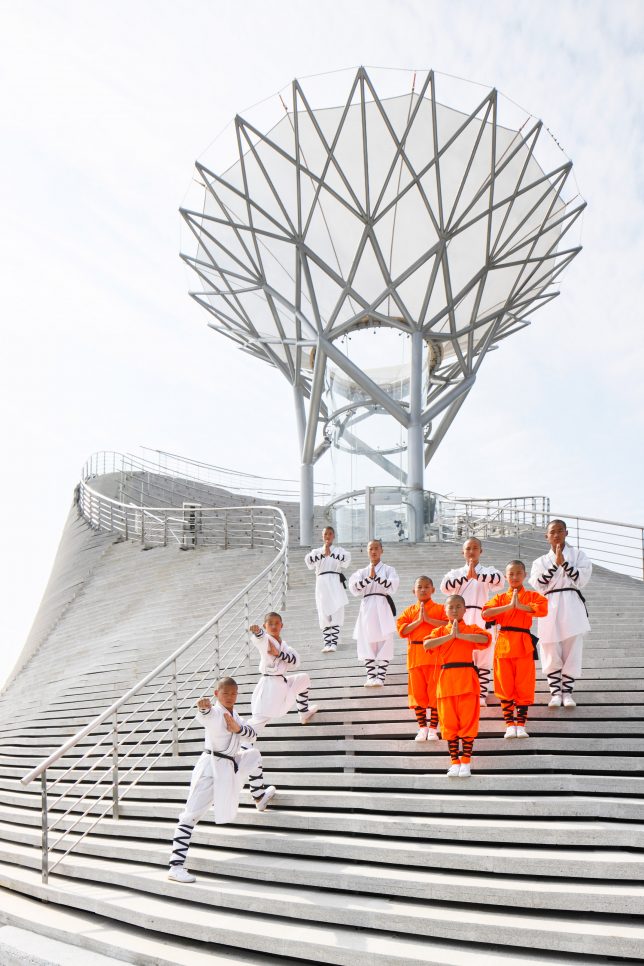
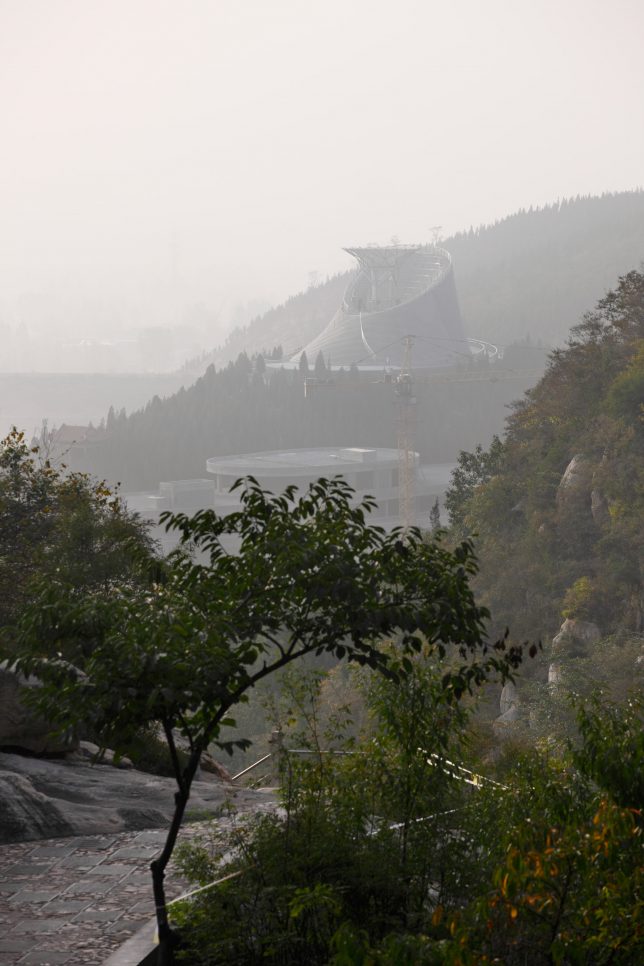
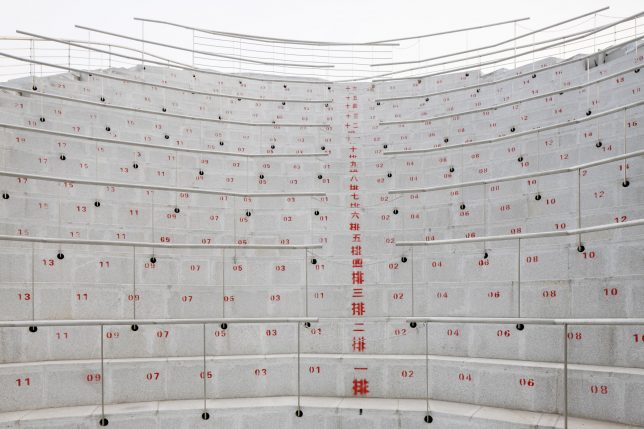
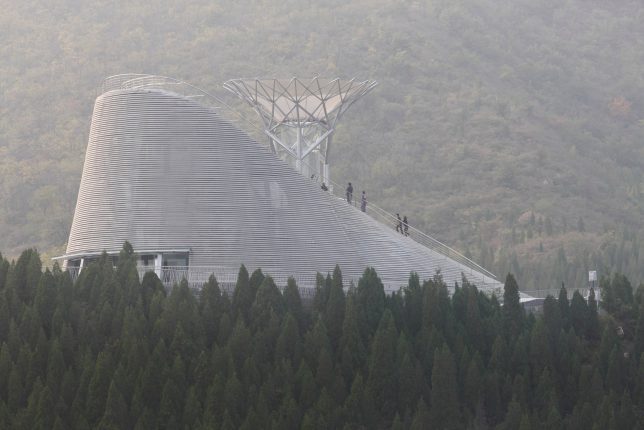
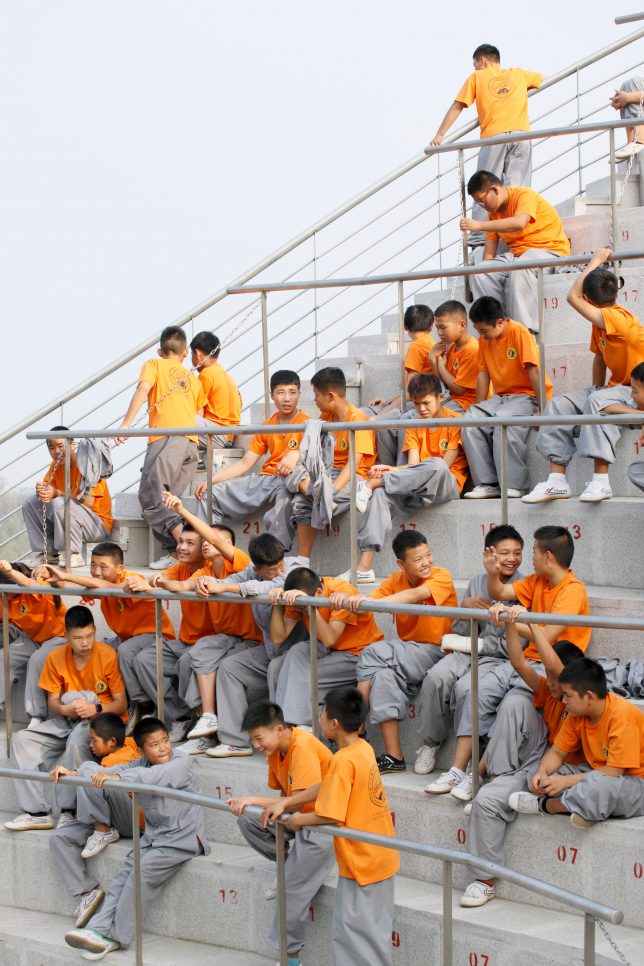
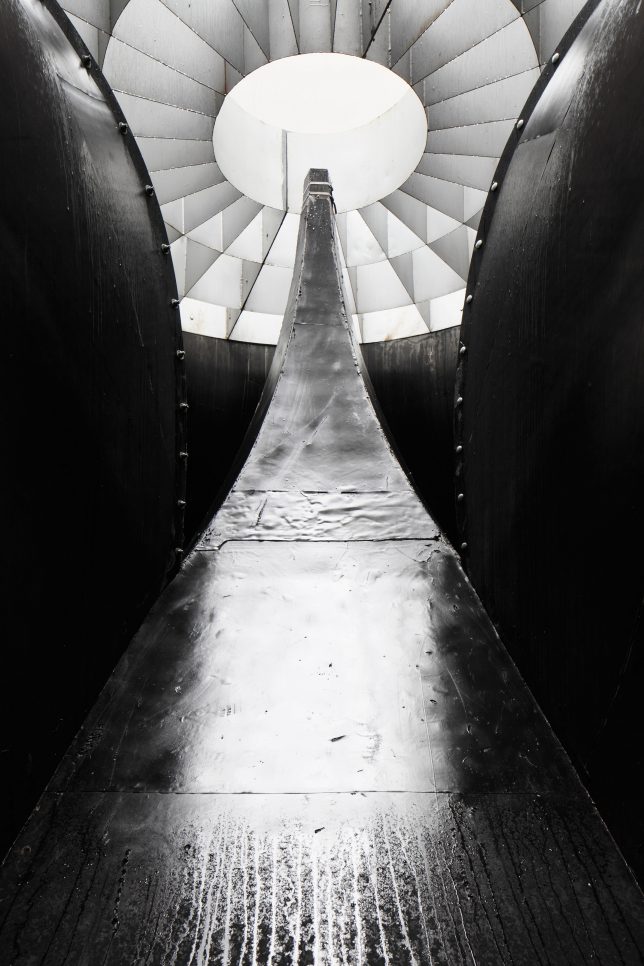
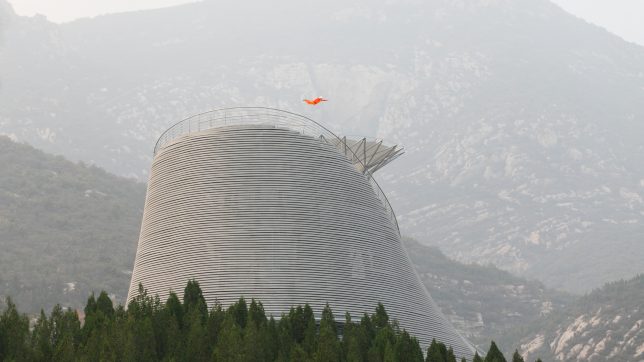
Mixing modern architecture and traditional arena theater design, the Shaolin Flying Monks Temple features a massive wind tunnel that lets combatants in rural Henan, China, fly and fight in front of hundreds of fascinated observers.

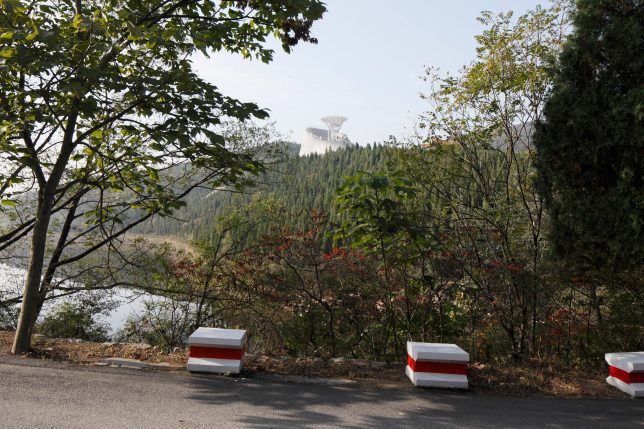
The mountainous setting is home to the historical Shaolin Monastery (UNESCO World Heritage Site) and is considered the birthplace of Zen Buddhism and the Kung Fu martial arts practice (as well as the cradle of Chinese civilization more broadly).

Designed by Latvian architect Austris Mailitis, the pavilion is designed to be both contemporary while also deferential to the region and its traditions. The designer was commissioned based on a chance meeting at the Shanghai Expo in 2010.

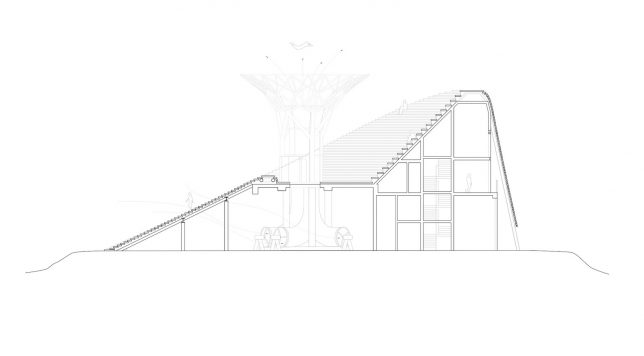
The mounded shape of the complex and branching, trunk-like protrusion of the tunnel take their inspiration from a translation of Shaolin, meaning: mountain in the wood.

“The architectural and conceptual image pays respect to the beauty of surrounding nature and the historical heritage of the site. Developed in the shape of two symbols – mountain and tree – it serves as a platform for any kind of scenic arts focusing especially on flying performances.”

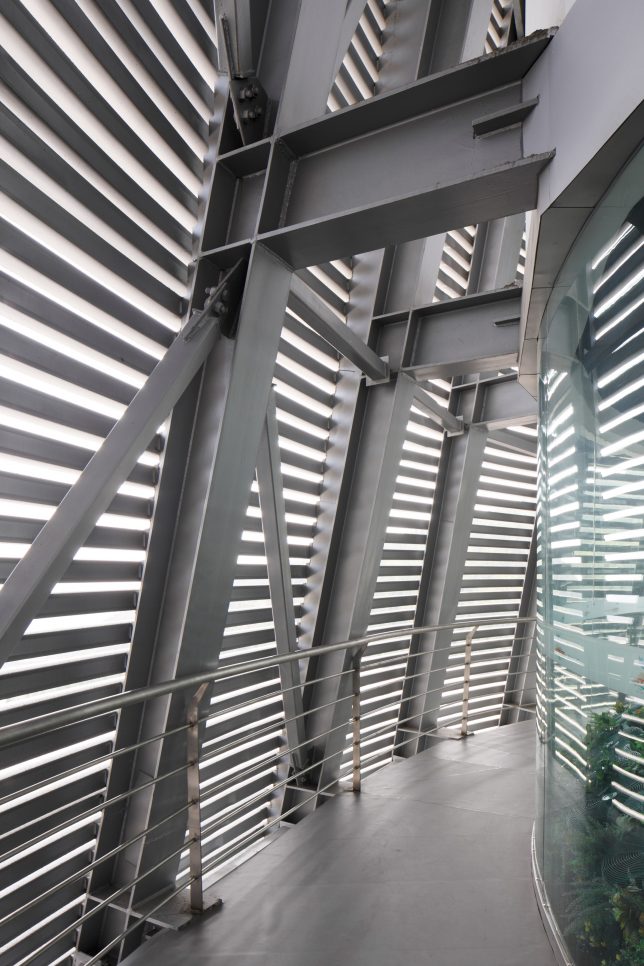
“The building method combines modern and ancient technologies,” explained the architect” — a laser-cut steel superstructure supports stone steps handcrafted using local quarry resources.”

Share on Facebook


[ By WebUrbanist in Architecture & Public & Institutional. ]

[ WebUrbanist | Archives | Galleries | Privacy | TOS ]


WebUrbanist

 
Comments Off on Shaolin Flying Monks Temple: Wind Tunnel Facilitates Midair Kung Fu Fighting

Posted in Creativity


YI Technology announces consumer-level 360 live VR camera

25 Apr

YI Technology today announced the YI 360 VR consumer-level live VR camera. The new model is capable of capturing 360-degree spheric video footage at 5.7K resolution and 30 frames per second. It also offers 4K instant in-device stitching and 2.5K live-streaming.

The camera weighs only six ounces and can be controlled via basic on-device controls or a mobile app. It uses a pair of 220-degree lenses and 12MP Sony IMX377 CMOS sensors to record video footage or 5.7K 360-degree still images.

“Virtual reality is exciting. It promises a whole new range of opportunities for creating and sharing truly immersive experiences,” said Sean Da, CEO of YI Technology, “but it can also be really intimidating. For VR to truly take off it has to be easy and fun. At YI Technology, we challenge ourselves to bring the most innovative technologies together in a way that is simple, enjoyable and useful for anyone, from kids to professionals. VR is no exception. Too many of today’s solutions are exciting in theory but really complicated in practice. That is why we worked so hard to perfect YI 360 VR. Using the best components, rigorous industrial design and many years of testing, we eliminated the cables, confusing interfaces and bulky components and added 5.7K fidelity, 4K in-device stitching and 2.5K live-streaming, all in a handy, affordable package so everyone can share exciting moments live, from any angle.”

The camera is available for pre-order from today at $ 399. Delivery is scheduled for June 2017. The Yi 360 VR will also be on display at this week’s NAB 2017 show in Las Vegas.

Press Release:

YI Technology Announces YI 360 VR™, First High-end, Live VR Camera for Any Consumer

Newest pocket-sized, camera combining 360-Degree 5.7K VR capture, 4K instant in-device stitching, and 2.5K live-streaming debuts at NAB 2017 today and releases in June

LAS VEGAS–(BUSINESS WIRE)–NAB Show – YI Technology, the leading, international provider of advanced, intelligent imaging technologies, today announced the new YI 360 VR™, a major step in making truly high-end virtual reality video easy and accessible to anyone who wants to create and share content. Scheduled to be released in June 2017, the YI 360 VR™ is available for early ordering now and will be on display at this week’s National Association of Broadcasters (NAB) show in Las Vegas, NV.

With a simple, handheld and mountable camera design, the YI 360 VR™ is the first VR camera to combine high-fidelity, 360-degree video capture, mobile application for easy use along with 4K instant, in-device stitching and 2.5K live-streaming to any sharing channel. With these innovations, the YI 360 VR™ provides a complete solution for anyone to create immersive, 360-degree video experiences easily, quickly and anywhere.

“Virtual reality is exciting. It promises a whole new range of opportunities for creating and sharing truly immersive experiences,” said Sean Da, CEO of YI Technology, “but it can also be really intimidating. For VR to truly take off it has to be easy and fun. At YI Technology, we challenge ourselves to bring the most innovative technologies together in a way that is simple, enjoyable and useful for anyone, from kids to professionals. VR is no exception. Too many of today’s solutions are exciting in theory but really complicated in practice. That is why we worked so hard to perfect YI 360 VR. Using the best components, rigorous industrial design and many years of testing, we eliminated the cables, confusing interfaces and bulky components and added 5.7K fidelity, 4K in-device stitching and 2.5K live-streaming, all in a handy, affordable package so everyone can share exciting moments live, from any angle.”

YI 360 VR™ CAMERA HIGHLIGHTS:

VIVID: The camera delivers stunning video and images – in 360. YI 360 VR™ features professional-grade video quality at up to 5.7K/30fps in 360 degrees for post-production work, thanks to Ambarella’s virtual reality SOC H2V95 chip and a pair of sharp 220-degree lenses mated to a pair of 12MP SONY IMX377 CMOS sensors. It also captures 5.7K 360-degree still photos. Most other multi-lens VR cameras give you clunky, choppy video images and require streams to be stitched together on a computer. The YI 360 VR™ offers seamless in-device stitching without added software so anyone can make high-quality 4K, 360-degree VR videos instantly.

EASY: YI 360 VR™ is lightweight and compact. At only six ounces and easily mountable wherever you put an action camera, it can go anywhere you go. Simple controls are on the device or the companion YI 360 VR™ mobile app allows you to control the camera, preview, playback, edit and share 360-degree videos from any smartphone. Record for over an hour on one battery charge (AC power also included) the YI 360 VR™ connects with WiFi so you can view, edit and share instantly and continuously right in the app.

LIVE: YI 360 VR™ features up to 100Mbps high-speed WiFi (Dual-band Wi-Fi 2.4GHz & 5GHz) to enable users to live-stream 2.5K/30fps 360-degree videos or download photos and videos from camera to smartphone. Connect with a WiFi network and you can start live-streaming everything around you to Facebook, YouTube, and more at 2.5K in 360 Degrees. The high-speed WiFi makes photo auto-sync possible and video download extremely fast. Photos taken by the camera can be automatically synchronized to any smartphone instantly so manual download is no longer needed. Use the app to easily post photos or videos with one click to all your favorite social networks.

Pricing & Availability

At $ 399 MSRP, YI 360 VR™ will be available for early ordering beginning today, with scheduled delivery for limited release in June 2017. https://yitechnology.com/yi-360-vr-camera

YI 360 VR™ is only one of YI Technology’s advanced 360-degree video solutions unveiled today at NAB 2017. The company also announced today the YI HALO™, the newest professional-grade 360-degree, stereoscopic camera for the Jump platform from Google.

See and experience YI Technology’s two new products, YI 360 VR™ and YI HALO™, at NAB 2017 in the Virtual & Augmented Reality Pavilion, Booth N1121VR. Visit www.yitechnology.com for more information.

Note, the company will also present its products at the Sixteenth Annual Las Vegas SuperMeet on Tuesday, April 25, 2017 from 7:00 pm – 11:00 pm in the Brasila Ballroom at the Rio Hotel.

Articles: Digital Photography Review (dpreview.com)

 
Comments Off on YI Technology announces consumer-level 360 live VR camera

Posted in Uncategorized


Sonoma, Redux

25 Apr

I am quickly becoming a big fan of Northern California. I first went out last year for my birthday, had a blast, drank lots of wine. This was my second trip up to SF/Sonoma – Hung out for a day or two in the city, then drove up to the wine country. Only carried my GF1, but it served me well. (although my buddy who isn’t a photographer himself had an old Hasselblad 503cw from his dad, which we took out for some shots!) Early winter seems the perfect time to go as well – the countryside was a rainbow of reds and yellows… the vine covered hillsides were shockingly bright, especially when viewed from afar – the highly maicured vines created an almost solid carpet of color across the rolling hills.

Lots of pictures, lots of wine… what more could you ask for? (slideshow below)

[portfolio_slideshow]

Tweet This Post Stumble This Post


F/1.0

 
Comments Off on Sonoma, Redux

Posted in Photography


Dell announces 4K HDR10 monitor

25 Apr

At NAB Dell announced its new UP2718Q UltraSharp 27 4K monitor, which is the company’s first HDR10 display. This 27″ monitor, which has earned UHD Alliance Premium Certification, has a peak brightness of 1000 nits (a unit for luminance). It covers 100% of the sRGB, Adobe RGB and REC 709 color spaces, plus 97.7% of DCI-P3 and 76.9% of REC2020.

Dell says that each monitor is individually calibrated at the factory and, naturally, users can create their own color lookup tables using included software and an optical colorimeter.

The UP2718Q will be available on May 23rd for a price of $ 1999.99.

Press Release:

Dell Reinforces End-to-End Technology for Creative Professionals with New HDR10 Monitor with UHD Premium Alliance Certification

Date : 4/20/2017

Las Vegas, Nevada

  • World’s No. 1 monitor brand¹ introduces additional UltraSharp displays at the National Association for Broadcasters 2017 conference
  • Dell uses NAB 2017 to showcase a spectrum of technology for media and entertainment from devices to storage
  • Dell Precision 5720 All-in-One gives creators UltraSharp 4K touch display, 100% Adobe color and full workstation power with VR capabilities

To celebrate its first appearance at the National Association of Broadcasters conference as part of a combined company, Dell announces new solutions to improve its powerful ecosystem for media and entertainment professionals. The company proudly unveils the latest additions to its innovative, industry-leading monitor portfolio, including the company’s first HDR monitor that meets HDR10 standard and two new premium UltraSharp monitors with InfinityEdge displays. Joining these new monitors will be the new Dell Precision all-in-one workstation, virtual reality (VR) creation powerhouse towers and notebooks, and the innovative Dell Canvas smart workspace. The new monitors and workstation PCs are among the broad lineup of solutions designed for creative professionals in visual effects and filmmaking, post-production, broadcast and photography.

The Dell UltraSharp 27 4K HDR Monitor (UP2718Q), the company’s first HDR10 display with UHD Alliance Premium Certification, boasts an Ultra HD 4K display, with four times more detail than full HD and the depth of 1.07 billion colors. This monitor allows creative professionals to view and edit HDR10 content to create incredibly realistic images. With a peak brightness of 1,000 nits, the UP2718Q produces the deepest blacks and brightest whites and the REC2020 color coverage makes it an ideal choice for video editors working on color-critical post production. The UP2718Q also offers a broad, brilliant color spectrum with Dell PremierColor – 100 percent Adobe RGB, 100 percent sRGB, 100 percent REC 709, 97.7 percent DCI-P3 and 76.9 percent REC2020. For exceptional color reproduction, each monitor is individually factory-calibrated and users can customize the color parameters using the custom color mode, or make adjustments by storing the preferred color parameters onto the internal Look-Up Table using Dell UltraSharp Calibration software with an optional colorimeter.

“As the No. 1 monitor brand¹ in the world, we deliver the latest, most innovative display technology to our customers to meet and exceed their expectations, whether that’s at work or at home,” said Bert Park, senior vice president and general manager, Dell Software & Peripherals. “At NAB 2017, we’re proud to continue Dell’s tradition of world-class innovation – our first HDR monitor that meets HDR10 standard – by providing creators with the most strikingly accurate images and lifelike, unparalleled color performance.”

To provide a full spectrum of displays to meet the needs of customers in media and entertainment, finance, and oil and gas, Dell also is excited to announce the Dell UltraSharp 27 4K Monitor (U2718Q) and Dell UltraSharp 25 Monitor (U2518D), two new monitors from its premium UltraSharp line that feature Dell’s innovative InfinityEdge display. With Dell HDR², visuals are true-to-life with stunning color, terrific contrast and great detail. Both monitors allow industry professionals to push the limits of productivity with an edge-to-edge viewing experience and optimized eye comfort with a flicker-free screen featuring ComfortView. Announced to much acclaim earlier this year, the Dell UltraSharp 32 8K Monitor is now available, raising the visual bar even higher for creative professionals.

At NAB, Dell is celebrating the recent availability of the Dell Precision 5720 All-in-One workstation for digital content creators, like video editors, animators, designers and sound engineers. The 5720 features Dell’s innovative InfinityEdge display around a beautiful 27-inch 4K 100 percent Adobe color screen. The addition of Jack Joseph Puig Signature Series Audio powered by Waves MaxxAudio® Pro delivers studio-quality production, editing, and play back in one sleek and powerful workstation device. This sets an all new standard of built-in audio visual quality unlike any other all-in-one workstation in the market today.

The Precision 5720 delivers ISV certifications to optimize the hardware for major creative applications and the latest gen, responsive AMD Radeon™ Pro graphics allow it to keep pace with even the most demanding rendering and graphics-intensive tasks. The Xeon® or 7th Gen Intel® Core™ processors, Thunderbolt™ 3 technology and the exclusive Dell Precision Optimizer automatically tunes the workstation to run specific programs at the fastest speeds possible. The Precision 5720 All-in-One joins the Dell’s leading lineup of VR-ready solutions and is the first all-in-one workstation to boast VR performance.

Dell will be also be showcasing the Dell Canvas, an all-new smart workspace with touch, totem and pen capabilities that expands creative productivity for content developers and designers. Since its introduction earlier this year, leading partners and customers have been testing and delivering new application support for Canvas. Most recently, Adobe has developed totem functionality for intuitive timeline scrubbing in Premiere Pro for a Canvas environment. Dell is now expanding this early evaluation program to work with more partners and customers in preparation for global availability this summer.

“With the emergence of industry-shifting technology, we’re at an inflection point for building innovative products that empower creators to do what they do best – create!,” said Rahul Tikoo, vice president and general manager, Dell Precision. “At Dell, we’re working hard with our partners to provide the right solutions that will help revolutionize industries and we’re committed to delivering innovative solutions that will allow creators to do their best work yet.” 

Pricing and Availability

  • Dell UltraSharp 32 8K Monitor (UP3218K) is available on Dell.com in the U.S. for $ 4,999.99.
  • Dell UltraSharp 27 4K HDR Monitor (UP2718Q) will be available May 23 on Dell.com in the U.S. for $ 1,999.99.
  • Dell UltraSharp 27 4K Monitor (U2718Q) will be available mid-July on Dell.com in the U.S. for $ 699.99.
  • Dell UltraSharp 25 Monitor (U2518D) will be available mid-July on Dell.com in the U.S. for $ 499.99.
  • Dell Precision 5720 All-in-One is available on Dell.com starting at $ 1699.
  • Dell Canvas will be available in early July on Dell.com in the U.S. for $ 1799.

Articles: Digital Photography Review (dpreview.com)

 
Comments Off on Dell announces 4K HDR10 monitor

Posted in Uncategorized


My new evaluation criteria for my portfolio work…

25 Apr

From the inimitable “Burns Auto Parts Blog”


So here’s my challenge to you: look at your work on your site. Do you love it–all of it? Does it make you smile/get you excited/make you want to do more of it? Be honest–don’t look at it from its technical side and definitely do not ask “Do I think buyers will want this?” If you do, then look at your marketing.

If you don’t, then get off your creative butt and start making the work that you make out of love and that weird compulsion that makes you do this and not be a 9-5 “normal” person.


Words of wisdom indeed.  I have been working on a major portfolio overhaul, with just this in mind.  You know the saying… Show what you wanna shoot!


Tweet This Post Stumble This Post


F/1.0

 
Comments Off on My new evaluation criteria for my portfolio work…

Posted in Photography


I think most “creatives” can relate:

25 Apr

A great quote from Sebastian Marshall:

I don’t differentiate between work and play. I think my time is spent in either excellent, good, okay, or bad fashion. If too much of my time is just “okay” or “bad” – I’m doing something wrong

I think most freelance photographers, painters, writer, and pretty much anyone in a non-“standard” 9-5 job can relate.  Kinda reframes the whole “wasting time” thing – instead of trying to stop wasting time, just aim to increase the amount of time spent in excellent fashion!

Tweet This Post Stumble This Post


F/1.0

 
Comments Off on I think most “creatives” can relate:

Posted in Photography


Here’s how much it would actually cost a pro to switch from Canon to Sony

25 Apr
Read on for a non-scientific look at the cost of switching from Canon to Sony. Note: you’ll need a lot more cash than shown here.

The Sony a9 is here and with the ability to shoot 20 fps with AF-C, it’s likely to make a lot of sports photographers curious about switching to the Sony mirrorless system. We’re already impressed as heck. After all, it is meant to face off directly with the Canon 1DX II and Nikon D5. 

We’ve talked about the structural considerations that may prevent some working pros from switching systems. But let’s imagine that those logistical concerns aren’t a problem, or you’re a freelance photographer who isn’t working with an employer’s supply of lenses. What would it actually cost in dollars and cents to switch systems?

We surveyed four Seattle photojournalists and found out what equipment they consider essential on assignments. Interestingly, their kits all consisted of a lot of the same gear and all four shoot Canon. Once we got a sense of what goes into a pro’s bag, we estimated what kind of money that kit might fetch if it were to be flipped. Finally, using our grand total, we looked at how much kit they could replace if they went Sony.

Before diving in, it is worth noting that switching brands is never a cost-effective move. And someone truly considering making the move from Canon to Sony, or Nikon to Canon, or Nikon to Sony, can assume a loss going in. Also all pricing estimates are current as of publishing, but are subject to change with time.

In the bag: the ideal kit

Below we’ve listed out a sports photography kit based on our feedback from working photojournalists. All four photographers shoot with two bodies minimum, and occasionally use a third. Interestingly, none have upgraded to the Canon EOS-1D X Mark II or 5D Mark IV, though for the ‘Value if purchased new,’ column we used the price of the latest version of each camera, since that’s what they’d likely buy, if anything needed replacing.

We look to used camera retailer KEH for pricing estimates. Note: selling used gear is not an exact science – you might be able to get more or less depending where you sell – but KEH tends to be a good industry standard. And for the sake of simplicity, we assumed all gear is in well-used but working condition (KEH calls this category ‘Excellent,’ just below ‘Excellent Plus’ and ‘Like new minus’). Below we’ve broken down the payout for the whole haul of gear, plus the cost if purchased new for comparison.

  Estimated value on KEH (w/ accessories) Value if purchased new
Canon 1DX (x2)  $ 2000 x2 $ 6000* x2 (1DX II)
Canon 5D Mark III   $ 1200 $ 3500* (5D IV)
Canon 35mm F2 IS  $ 275 $ 550 
Canon 85mm F1.8  $ 200 $ 350
Canon 135mm F2  $ 500 $ 1000
Canon 16-35mm F2.8 III  $ 1030 $ 2000
Canon 24-70mm F2.8  $ 435 $ 1700* (version II)
Canon 70-200 L IS II $ 1030 $ 1900
Canon 300mm F2.8 IS II  $ 2950 $ 6100
Canon 580 EX II  $ 140 $ 480* (600EX)
Canon LP-E6N battery (3)  $ 0 $ 65 x3
Canon LP-E4N (2)  $ 30 x2 $ 165 x2
Grand total:  $ 11,820 $ 30,105

*This number reflects the price of upgrading to the latest version of each piece of gear 

Wowza that’s a lot of kit. For the most part we’re looking recouping less than half the new value for each lens sold used (ouch!). So with $ 11,820 in pocket, how much kit could be bought back in Sony gear? Read on…

Making the switch

It isn’t completely fair to price it out what previously was used equipment against brand new Sony gear. So to make things more even, we’ve included new and used prices where applicable.

“There is no exact replacement for each
piece of kit.”

Also important: the Sony FE system is nowhere near as vast as the Canon EF lens family and as such, there are not exact replacements for each piece of kit, something you can read more about in our recent article Sony a9: Why being better might not be enough.

One example of this: all four photographers mentioned using a prime tele – either a 300mm F2.8 or 400mm F2.8 (we used the former in our example). Sony does not yet have a 300mm F2.8 – the closest lens they make is the new 100-40mm F4.5-5.6, which is far from a perfect substitute. We’ve included it in our chart below, but this lack of long primes is certainly something that may keep sports shooters from switching.

 Equivalent Sony gear  Estimated price new Estimated price used if applicable
Sony a9 (x2)  $ 4500 x2  n/a
Sony a7II  $ 1550 $ 1200 (Ebay)
Sony 35mm F2.8  $ 800 $ 620 (KEH)
Sony 85mm F1.8  $ 600  n/a
Sony Zeiss Batis 135mm F2.8 $ 2000  n/a
Sony 16-35mm F4 ZA OSS $ 1350  $ 790
Sony 24-70mm F2.8 GM  $ 2200  $ 2000 (KEH)
Sony 70-200mm F2.8 GM  $ 2600 n/a
Sony 100-400mm GM  $ 2500  n/a
Sony HVL-F60M flash  $ 550  n/a
Sony a9 vertical grip  $ 350 x2  n/a
Sony NPFW50 battery (3)  $ 50 x3  n/a
Sony a9 battery (2)  $ 80 x2  n/a
Grand total:  $ 24,160  $ 22,870

Full system switch

Using our example, the cheapest one could go full-on Sony, with most of the same kit is $ 22,870. After applying the $ 11,820 discount from having sold off all the Canon equipment, a photojournalist would still have to cough up about $ 11,050 to make the switch. Or they could simply take that $ 11,820 and buy a couple of a9 bodies and maybe a lens.

“A photojournalist would still have to cough up about $ 11,050 to make the switch.”

But wait…

Although there’s a drop in performance and features when using Canon glass on a Sony a9 with adapter, for some photographers this lower performance level may still be sufficient (at least in the short term). In that case our photojournalists would only need to switch their cameras, batteries and flashguns.

Just swap the bodies

Two Sony a9 bodies with grips, and a used a7 II with batteries and flash would cost about $ 11,760 plus another $ 800 for two metabones adapters bringing the grand total to: $ 12,560. If our photojournalists were to sell their Canon bodies and accessories to KEH, it would put $ 5,400 in their pocket, meaning they’d have to shell out about $ 7,160 to make the switch. This doesn’t sound quite so bad. Another option would be to simply switch one body for the Sony a9 to get the fast burst rate, and hang onto the rest of the gear.

“Another option would be to simply switch one body for the Sony a9 to get the fast burst rate, and hang onto the rest of the gear.”

On the other hand, if or when our photojournalist upgrades to the latest versions of their camera bodies – having sold their current models and used the cash to step up – it would cost $ 10,300 to make the upgrade to two 1DX II and a 5D IV, so that cost is probably waiting for them at some point down the line.

Notably, if they were starting fresh with a new system, the cost of entry is somewhat similar: $ 30,105 for the full kit in Canon and $ 24,160 for the kit in Sony. However, these numbers are skewed by the fact that we are comparing a $ 6100 Canon tele prime to a $ 2500 Sony tele zoom. If we ignore those two, the price difference is even closer: $ 24,005 for the Canon sports kit and $ 21,660 for the Sony.

The takeaway

Switching systems is a headache and sports photography gear is crazy expensive. Like cars, cameras lose a lot of value as soon as they go from ‘new’ to ‘used’ condition – essentially, as soon as you take them home from the store. Not for nothing are most pro photographers familiar with the concept of depreciation from their tax returns.

It’s hard to say whether sports photographers or publications out there are considering making a switch to the Sony system with the introduction of the a9. The four photojournalists we spoke with all seemed intrigued by what it offers, though. Whether they’d actually considering switching is another story.

“Switching systems is a headache and sports photography gear is crazy expensive.”

One thing is for certain: Sony is pushing deep into territory previously only inhabited by Canon and Nikon and it is only a matter of time before making the switch to mirrorless doesn’t seem so crazy – even for pro sports shooters. Then again, the camera is only one part of the equation. A 20 fps bursts with continuous AF and no black out seems nice, but if you don’t have the right glass for the job, that spec won’t get you far.

Articles: Digital Photography Review (dpreview.com)
 
Comments Off on Here’s how much it would actually cost a pro to switch from Canon to Sony

Posted in Uncategorized


THE HAUS Berlin: Abandoned Building Taken Over By 165 Street Artists

25 Apr

[ By SA Rogers in Art & Street Art & Graffiti. ]

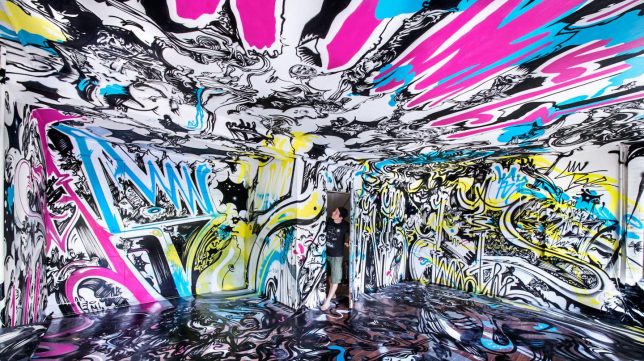
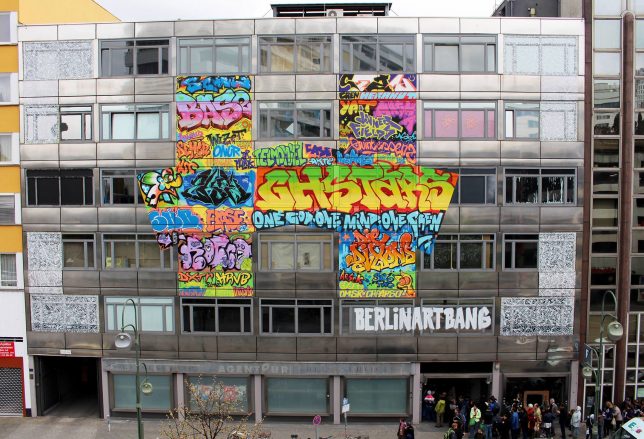
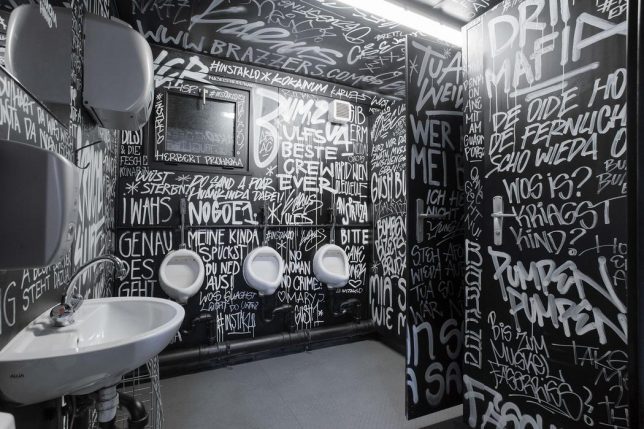
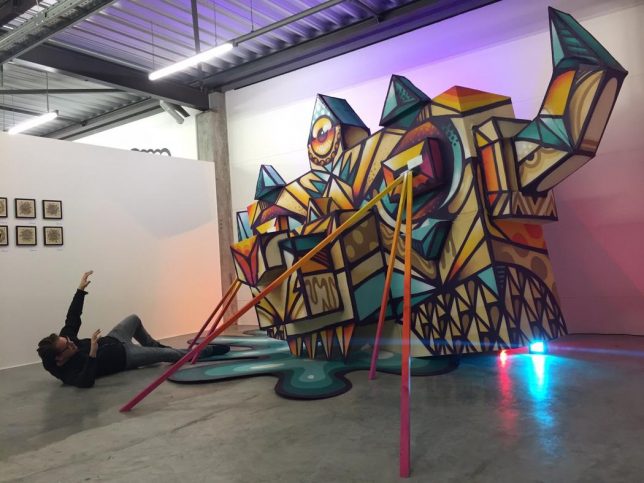
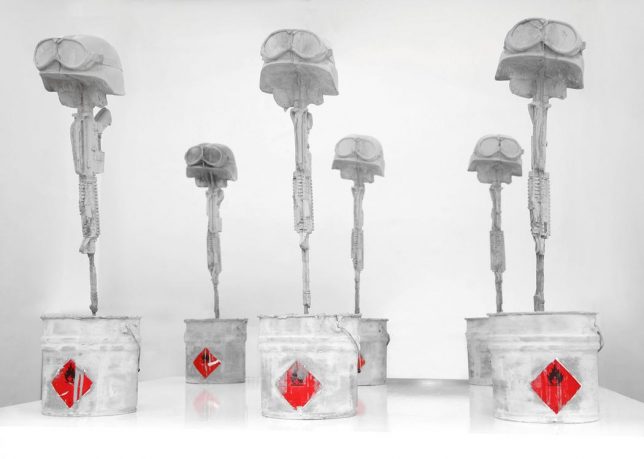
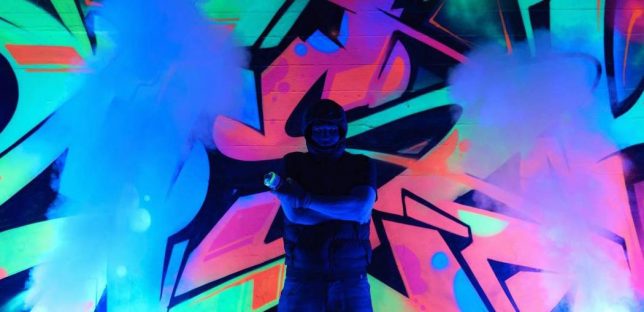
Set to be demolished in June to make way for an apartment building,THE HAUS in Berlin is a formerly abandoned 5-story building filled with site-specific works by 165 street artists. Dreamed up by artists Kimo, Bolle and Jörni of Die Dixons collective, THE HAUS was once a bank on avenue Kurfürstendamm, but fell into disuse over the years. The artists activated their network of creative contacts to temporarily turn it into a street art free-for-all that’s so popular with visitors, there’s often a two-hour wait outside.

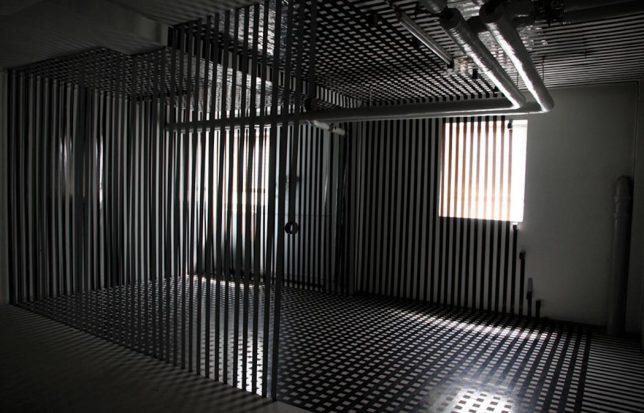
The artists, who range from Berlin locals to international activists, worked almost nonstop from mid-January through March 9th to complete the project, and installations include geometric patterns made of tape, video projections, interactive exhibits and sculpture.

The exhibit opened April 1st, and guided tours run almost all day long on Tuesdays through Sundays with a donation-based, pay-what-you-can system and a ‘no phones’ rule. “Look through your eyes and not through the screen of your phone,” the website urges. You can see each individual installation on THE HAUS website, and learn more about the artists who created them.

Even beyond the art itself, the project is definitely a community effort. Nearly all of the supplies were donated by supportive businesses, and a four-star hotel even put up all the artists free of charge. Berliner Pilsner donated beer. In an interview with Vice’s The Creators Project, Kimo stresses that THE HAUS is “not a marketing joke,” noting that nothing was for sale.

“Feel the freshest urban art gallery ever with a guided tour!” says the site. “108 dope artworks are waiting to be seen, to be experienced and to be memorized by you. Every single piece is created by one of the 165 artists from Berlin and all over the world. But be aware that THE HAUS is created to be destroyed – in the end of May the gallery is going to close and the wrecking ball will follow.”

Share on Facebook


[ By SA Rogers in Art & Street Art & Graffiti. ]

[ WebUrbanist | Archives | Galleries | Privacy | TOS ]


WebUrbanist

 
Comments Off on THE HAUS Berlin: Abandoned Building Taken Over By 165 Street Artists

Posted in Creativity