RSS
 

Archive for April, 2017

Faith Lift: 14 Modern Churches Reinvent Religious Architecture

18 Apr

[ By SA Rogers in Architecture & Public & Institutional. ]

The classic silhouette of a church may be iconic and instantly recognizable, but modern-day religious architecture proves itself to be adaptive after all, evolving into a broad variety of dramatic shapes that frame views of the natural world and prioritize a sense of community. These 14 modern church designs run the gamut from small, modest chapels on the beach to grand, showy structures with undulating rooflines and unexpected interiors.

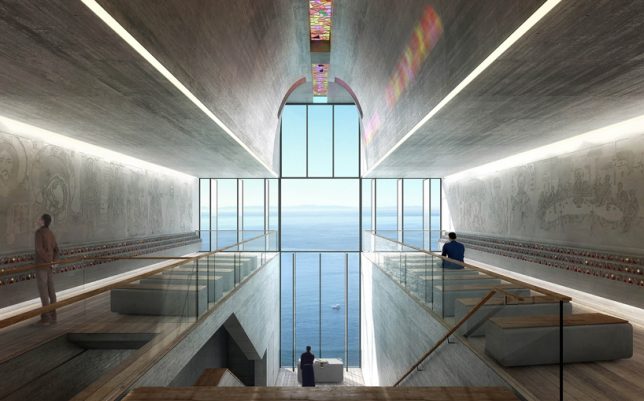
Cliffside Cross-Shaped Church Concept by OPA

Mimicking its own Casa Brutale design for a residence built into a cliff face, Greece-based firm OPA (Open Platform for Architecture) reveals ‘Chapel of the Holy Cross,’ proposed for the island of Serifos with a single cross-shaped glass facade facing the Aegean Sea. The entire structure is dug into the rock to take advantage of thermal insulation and avoid disrupting the surface landscape.

Synhavnen Church Proposal by NOMOstudio

Submitted as a proposal to a competition to design the first new church to be built in Syndhaven, Copenhagen in 30 years, this design by NOMOstudio is envisioned as a landmark with a deeply sloping roof covered in steps, allowing the public to climb the structure all the way to its peak for spectacular views of the sea.

Seashore Chapel by Vector Architects

Right on the sand of China’s Beidaihe Beach, the ‘Seashore Chapel’ offers a peaceful getaway. “We imagine the seashore chapel as an old boat drifting on the ocean long time ago,” says Vector Architects. “The ocean receded through time and left an empty structure behind, which is still lying on the beach.”

Rainbow Chapel by Coordination Asia

Located within a museum park, ‘Rainbow Chapel’ by Coordination Asia aims to attract young creative couples with a bright, contemporary design enclosed in 3,000 vivid glass panels in 65 colors for a kaleidoscopic effect. Its exterior design of a circle set within a square references fullness and unity contained by honesty and virtue.

Sunset Chapel by BNKR Arquitectura

The sun sets over the sea directly behind the altar cross in ‘Sunset Chapel’ by BNKR Arquitectura, which is set within a forest and designed to mimic an oversized boulder. The faceted concrete structure looks different from every angle, and features slatted openings along its upper level that let in fresh air and sunlight.

Next Page – Click Below to Read More:
Faith Lift 14 Modern Churches Reinvent Religious Architecture

Share on Facebook


[ By SA Rogers in Architecture & Public & Institutional. ]

[ WebUrbanist | Archives | Galleries | Privacy | TOS ]


WebUrbanist

 
Comments Off on Faith Lift: 14 Modern Churches Reinvent Religious Architecture

Posted in Creativity


Guitar for Modern Nomads: This Digital Instrument is Designed to Travel

18 Apr

[ By SA Rogers in Gadgets & Geekery & Technology. ]

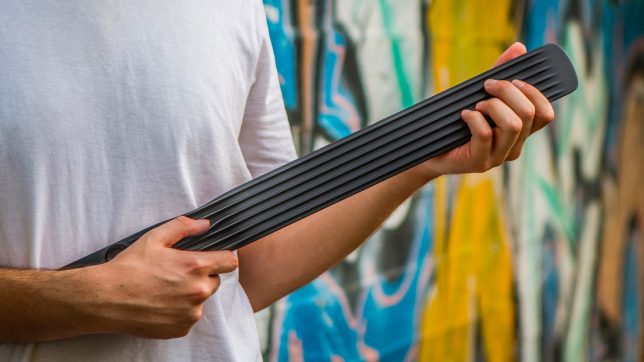
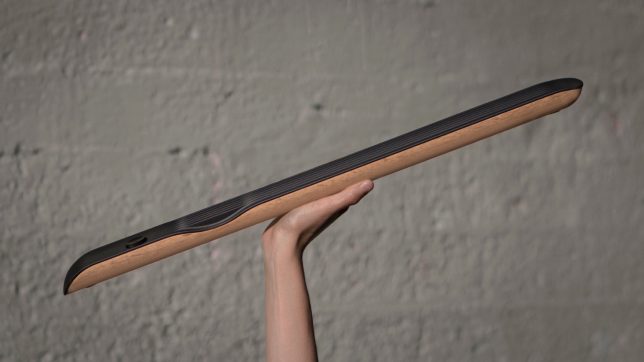
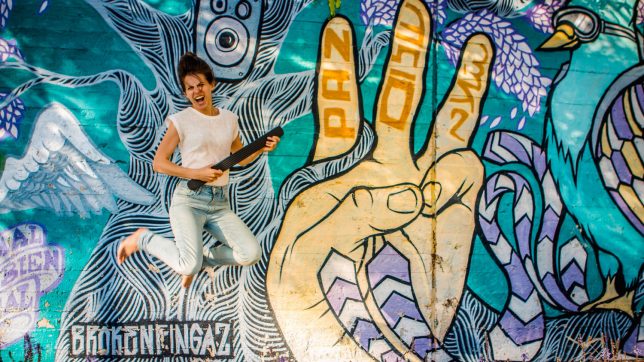
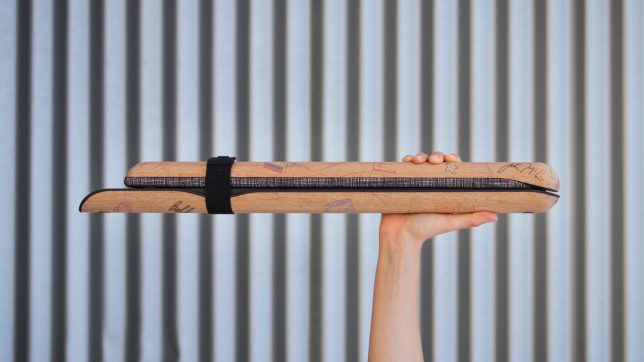
What if you were to eliminate the unwieldy parts of a guitar but maintain its resonant sound and the same exact way of playing, in order to make the instrument are more convenient traveling companion? It might sound ridiculous or downright impossible, but that’s exactly what designer Orit Dolev has done with NOMAD, a compact digital instrument with pressure-sensitive frets and flexible rubber strings to replicate the traditional guitar playing experience.

Dolev came up with the idea for NOMAD after taking a long journey through Asia and South America, where she imagined her guitar would offer a handy and powerful way to make new connections across language barriers. She quickly learned that getting around would be frustrating, noting that she couldn’t just shove it into her backpack, and the strings were constantly breaking and getting out of tune.

Designed to encourage mobility, the NOMAD features a wooden neck for a familiar feel in your hands. It pairs up with an app to play a wide variety of sounds, and you can turn the frets on and off to switch between acoustic and electric guitar modes or even to entirely different string instruments, like sitars. Hook it up to headphones so you can play on train rides or in hotels without disturbing anyone, or play through the accompanying portable amp, which doubles as a case cover.

“Technology is constantly changing the way we are living,” says Dolev. “Powerful mobile devices and widespread connectivity are serving as fertile ground for a new generation of nomads. From urban work-from-anywhere lifestyle to digital nomads roaming the globe freely, new cultural movements are rising. We are more mindful of the objects we surround ourselves with, striving to travel light and collect experiences more than things. Own less, explore more.”

Share on Facebook


[ By SA Rogers in Gadgets & Geekery & Technology. ]

[ WebUrbanist | Archives | Galleries | Privacy | TOS ]


WebUrbanist

 
Comments Off on Guitar for Modern Nomads: This Digital Instrument is Designed to Travel

Posted in Creativity


Camera Showdown: Phone v. DSLR

18 Apr

We’re going to answer the age old* question “What’s a better camera – a phone or a DSLR?” once and for all.**

*The actual age of the question is something like 15 year. The first camera phone was released in 2002.

**Not “for all” so much – it’s pretty subjective.

Look at our pretty chart and decide for yourself.
(…)
Read the rest of Camera Showdown: Phone v. DSLR (0 words)


© laurel for Photojojo, 2017. |
Permalink |
No comment |
Add to
del.icio.us

Post tags:


Photojojo

 
Comments Off on Camera Showdown: Phone v. DSLR

Posted in Equipment


Lensrentals blog looks at off-camera recorders

18 Apr
Lensrentals looks at digital off-camera video recorders.

Most still cameras today are capable of shooting HD, and often 4K, video. Unfortunately, video quality is frequently limited by factors such as codecs, bit rates, or write speeds to memory cards, and often doesn’t reflect what the camera and sensor are capable of capturing when unshackled from such limitations. 

To work around this, many videographers use digital off-camera recorders that leverage a camera’s ability to output higher quality video to an external source via the HDMI port. Joshua Richardson over at Lensrentals has published a helpful article about digital recorders and why you may want to consider using one, and calls out some common models worth considering.

We’re working on on some in-depth articles about some of these recorders to bring you even more detail. Stay tuned!

Articles: Digital Photography Review (dpreview.com)

 
Comments Off on Lensrentals blog looks at off-camera recorders

Posted in Uncategorized


Andy Warhol estate preemptively sues photographer over infringement claims

18 Apr

Photographer Lynn Goldsmith has been sued by The Andy Warhol Foundation following her alleged claims that the artist infringed upon a photo she took of musician Prince in 1981. The lawsuit appears to be a preemptive strike against Goldsmith; it argues that Warhol merely ‘drew inspiration’ from the photo to create an entirely new – and therefore infringement-free – image.

At the heart of the issue is a 1981 publicity photo of Prince taken by Goldsmith, who has allegedly raised issues with the artist’s estate over claims that Warhol’s ‘The Prince Series’ artwork infringes her copyright. The lawsuit seeks to establish that the artist’s work (made in 1984) is a new creation, thereby preventing any future potential lawsuits brought by the photographer against Warhol’s estate.

The lawsuit highlights elements of Warhol’s work that deviate from Goldsmith’s photograph, including, ‘substantially heavier makeup’ around the eyes, as well as a different angle of the head. According to The Wrap, Warhol’s estate is seeking a declaratory judgement stating both that the statute of limitations has run out on any possible infringement claims by Goldsmith, and likewise that the artist’s work does not violate the photographer’s copyright.

Via: The Wrap, US District Court via Scribd
Homepage photo By Jack Mitchell, CC BY-SA 4.0-3.0-2.5-2.0-1.0

Articles: Digital Photography Review (dpreview.com)

 
Comments Off on Andy Warhol estate preemptively sues photographer over infringement claims

Posted in Uncategorized


Alpine Labs’ Spark 3-in-1 camera trigger seeks funding on Kickstarter

17 Apr

Alpine Labs, the company behind the Pulse camera remote, is back on Kickstarter with a more powerful and versatile triggering device. The Spark camera remote allows for triggering your camera in three ways: you can either use it as an infrared wireless remote, control, plug it into your camera with a cable and use it as a wired remote, or connect it to your smartphone and a dedicated app via Bluetooth to unlock a variety of creative trigger options. 

The app offers customizable settings and lets you shoot timelapses, HDR brackets and long exposures and can trigger up to three cameras at once. Using the infrared connection you can trigger single shots or capture time lapses at one-second intervals by holding-down the shutter button.

The cable connection offers more reliability and doesn’t require line of sight to your camera’s infrared sensor. According to Alpine Labs the button battery will work for over 2,000 hours of use. In addition the device works with a large number of cameras. The Spark Kickstarter campaign will be running until May 20. Until then you can reserve a Spark device for $ 44 which is 25 percent off the envisaged future retail price.

Articles: Digital Photography Review (dpreview.com)

 
Comments Off on Alpine Labs’ Spark 3-in-1 camera trigger seeks funding on Kickstarter

Posted in Uncategorized


Nikon D7500: Should I upgrade from my D7200?

17 Apr

D7500 vs D7200

The D7500 is Nikon’s latest enthusiast DSLR that gains a handful of components and refinements from the higher-end D500. However, it’s also a model that loses a couple of features in order to leave a more decisive gap between the two models.

So where does that leave existing D7200 owners? It’s fairly unusual for successive models to offer enough of a change to provide a significant upgrade, so does the D7500 do that? For that matter, should would-be buyers try to pick up the last of the D7200s, while they’re cheap?

Image quality

For all the hoopla about better image quality, we’ve seen little significant difference between this 20MP chip (when it appeared in the D500) compared with the 24MP sensor in the D7200. The differences that do exist become visible in side-by-side comparison at extremely high ISO settings, but don’t expect a significant uptick in noise or dynamic range performance in return for the slight cut in resolution.

The D7500’s highest native ISO rises by 1EV and its extension settings keep going to a dizzying Hi 5, which is equivalent to ISO 1.6 million (I’m not going to speculate about how Nikon’s engineers celebrated when they achieved this milestone), but the main benefits of this chip appear to be readout speed, rather than significant differences in image quality.

Autofocus improvements

For us, one of the most significant factors will be how closely the D7500 can match the D500’s autofocus. It gains the much higher resolution metering sensor used for subject tracking, along with nominally the same processing (though Nikon’s Expeed naming system doesn’t necessarily mean they have the same chip).

However, the D7500 doesn’t gain the AF module from the D500, which means it can only offer 51 AF points (15 of which are cross-type), rather than 153 points, 99 of which are cross-type. This also means it misses out on the incredibly broad AF coverage that the D500 offers.

Even so, the processing and meter module should ensure the autofocus and, in particular, the subject tracking, works better than the already rather good D7200. It remains to be seen whether it can match the uncannily good performance of the D500.

Autofocus auto fine-tune

One of the nice features to make its way down to the D7500 is the Auto AF fine-tune system. This allows you to set the focus precisely in live view such that the camera can then check this against the results of its separate phase detection AF module. Any difference is captured as a correction value.

This is a useful addition since it allows the user of the camera to calibrate their lenses without the considerable degree of trial and error required with the D7200’s AF fine-tune system (which essentially required that you guess and check a correction value).

The autofocus fine-tune system isn’t a panacea: it applies a single correction value for all focus points, so will not necessarily improve the performance of off-center focus points, which tend to be less reliable, particularly with lenses that exhibit spherical aberration.

High-speed shooting

Obviously the biggest change with the D7500 is the move from six frame per second to eight frame per second shooting. This isn’t a match for the D500’s 10 fps shooting but it’s likely to be enough for a lot of people. Hell, this is around the level of performance that the world’s best sports shooters used around 2005.

As well as 8 fps shooting, the D7500 has a buffer nearly three times deeper than the D7200’s. 50 uncompressed 14-bit Raws in a burst is likely to be enough for all but the most demanding action shooters.

4K Video

The D7500 brings 4K UHD video recording and, assuming it looks like the D500’s output, it’s pretty good. It’s taken from a 1.5x crop of the sensor, meaning it’s using sub-Four Thirds sized sensor region, which means you won’t get the ‘Super 35’ style noise or depth-of-field characteristics that other APS-C cameras can offer. The significant crop also means your lenses will offer a significantly less wide field of view when shooting. A standard Nikon 18-something DX zoom will start at a fairly restrictive 40mm equivalent field of view.

Just as significantly as the addition of 4K is the gain of power aperture, which means you can change aperture in live view mode on the D7500. On the 7200 it’s a dance of dropping out of live view, changing the aperture and then jumping back in again, with no way at all to change it once you’ve hit REC.

Backwards compatibility takes a step backwards

The D7500 also loses a little in the way of backwards compatibility. Nikon has tried to keep its F mount as backwards compatible as possible, even as it’s added more modern features. The D7X00 series has, for some time now, been the lowest level of Nikon to retain a screw drive for older AF-D lenses but the D7500 sees another small element of compatibility chipped away. Specifically, the tab that checks what aperture old ‘AI’ lenses are set to (pictured, center) has been removed, meaning the camera can only use manual exposure mode with these lenses, with no aperture priority option.

For most users, this is likely to be irrelevant (manual focusing using the viewfinder focusing screen of a DX DSLR isn’t the most life affirming process), but it does mean anyone with an older lens collection will need to think about the D500 as their next step, and it’ll be another factor to consider when scouring eBay.

SnapBridge

The D7500 gains the SnapBridge system that uses a constant Bluetooth LE connection to auto-transfer 2MP images or keep the hailing frequencies open for when you want to use Wi-Fi.

We remain unconvinced by SnapBridge, especially in terms of what it offers the higher-end, more shutter-button-happy user, but it’s not necessarily worse than the D7200’s system. That may sound like damning with faint praise but, until Nikon develops more distinct ways of using SnapBridge, we feel it’s better suited to the D5600 user than it is to the more demanding enthusiast user of the D7500.

Still, the D7500 does gain a batch in-camera Raw conversion system, which we’re hoping will work well in conjunction with SnapBridge to provide an effective Raw + Wi-Fi workflow. Time will tell.

Flip-up touchscreen

The D7500 gains a flip-up/down touchscreen. The flip screen is likely to be handy for video shooting but, with underwhelming video autofocus and no sign of the D5600’s ability to use the rear panel as an AF point touchpad, we don’t think the touch sensitivity of the screen is less exciting. Sure, the D5600’s touchpad implementation only really worked for photographers who put their right eye to the viewfinder, but that at least made it a major benefit for those users.

The LCD panel itself has also changed, but don’t read too much into the lower dot count. The new panel may only be 922k dots, rather than 1.2 million, but the difference is that there is no longer a white ‘dot’ making up each pixel: they’re both displaying 640 x 480 pixels.

Battery life/battery type

The D7500’s battery life rating has fallen 15%, compared with the D7200, presumably as a result of the demands of the faster processor and possibly less energy-efficient screen.

It uses a new version of the EN-EL15 battery called the EN-EL15a. Other than coming in a lighter grey plastic case, Nikon was unable to give specifics about what’s changed. Our assumption is that it’s just Nikon making it easier to distinguish between the newest versions of the EN-EL15 and the older ones which don’t seem to get on with its newest cameras.

However, this is where you see another attempt to put more clear water between the D7500 and the D500: the 7500 no longer has a port for connecting to a battery grip. So you’ll need to stick with your D7200 or jump to the D500 if you regularly shoot beyond the capacity of a single battery or appreciate the improved ergonomics for portrait orientation shooting.

Is this really the D7200 replacement?

Yes. Absolutely.

While it’s true that the D7500 isn’t a step up from the D7200 in every last respect, it follows the D7X00 pattern in every way that matters. Twin dials, screw drive, large prism viewfinder and comparable price point. Nikon will, naturally, say that the D7200 and D7500 will sit alongside one another, but that’s what manufacturers say to avoid devaluing any stock left in retail channels.

However, it’s important to bear in mind that when the D7200 was launched, it sat at the top of Nikon’s DX lineup, whereas the D7500 has to slot in beneath the D500. Inevitably that means some users will be better served by stepping up a tier, but we don’t think it’ll inconvenience a significant number of users. 64, 128 or 256GB cards offer plenty of capacity and card errors are rare enough that a second card slot isn’t a vital feature. The D7500 is still a camera that shoots faster and for longer, and can capture better video than its predecessor, so it’s not like Nikon’s evil marketing department has left would-be D7X00 users out in the cold.

Should I upgrade?

To a large extent, the degree to which we’d recommend upgrading from the D7200 to the D7500 will depend on how its new AF system performs. If you’ve already been thinking about a camera with faster performance, though, then take a look at our D500 vs D7500 comparison: the D500 will give you a bigger performance boost.

If your needs are less action driven, it’s a much harder call and, unless the AF performance turns out to be great, the answer has to be that it’s probably not worth it. However, if you own a D7000 or even a D7100 that’s starting to show its age, the D7500 offers a host of benefits, not least better dynamic range, faster shooting and a much deeper buffer.

Overall, then the D7500 isn’t better than the D7200 in every respect, but it’s at least a little better in most of the ways that will matter to most people. But, while the last of the D7200s are available at end-of-life prices, it’s worth thinking about how much the extra features are worth, to you.

Articles: Digital Photography Review (dpreview.com)

 
Comments Off on Nikon D7500: Should I upgrade from my D7200?

Posted in Uncategorized


Labyrinthine Loophole: Bar Entry Maze Beats 500 Meter Minimum Distance Law

17 Apr

[ By WebUrbanist in Architecture & Offices & Commercial. ]

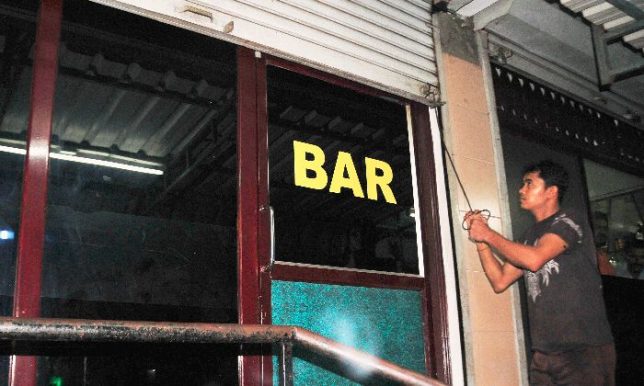
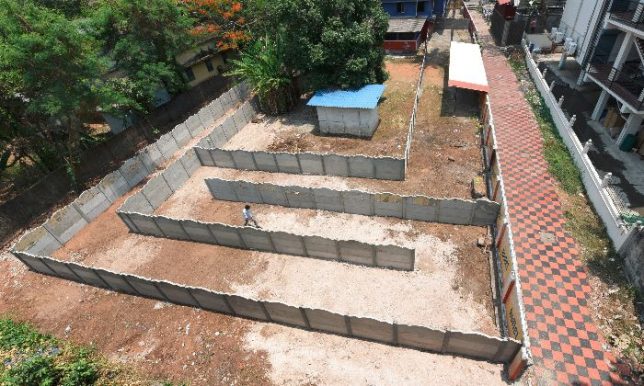
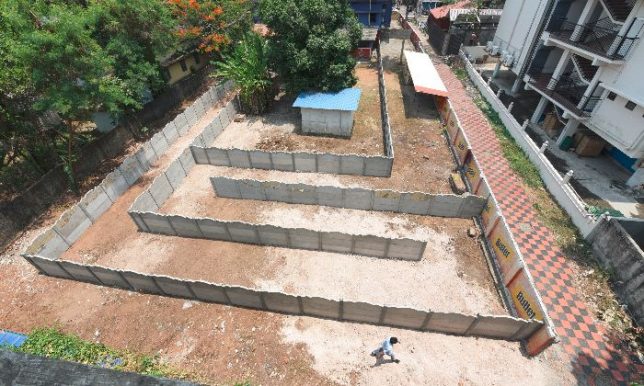
Following a Supreme Court of India ruling that bars must be a minimum of 500 meters away from highways, one intrepid watering hole wrapped itself in a 250-meter maze to effectively circumvent the law. Handed down earlier this month, the ruling has closed down liquor-serving establishments across the country prompting some to get creative.

Owners of the Aishwarya Bar in North Paravoor, a Kochi suburb, maintain: “We have done nothing illegal. The plot behind the bar also belongs to the owner and we have constructed an extended way to reach the bar. Now it is 520 meters from the highway. We are set to approach the circle inspector of excise with the new route map to authorize the reopening of the bar.”

Perhaps most remarkably: since the purpose of the law relates to walking distance (rather than linear), officials have given their blessing to this unusual solution — he intent of the legislation, after all, is to reduce intoxicated driving accidents. With that potential code violation remedied, the only accusation left leveled against the establishment related to changing around the property without a building permit, resulting in a small fine.

The solid-walled fence shaping the labyrinth was installed at minimal cost in a matter of days, expanding into adjacent property also owned by the bar’s manager. Pub crawlers, meanwhile, may find themselves somewhat lost when loaded, but at least there are no dead ends. However, bars like this one may still find themselves with fewer customers since the federal ruling also prohibits roadside signage directing drinkers to pubs. Other specific exceptions have been granted on a case-by-case basis, but this particular solution may lead to a series of similar approaches.

Share on Facebook


[ By WebUrbanist in Architecture & Offices & Commercial. ]

[ WebUrbanist | Archives | Galleries | Privacy | TOS ]


WebUrbanist

 
Comments Off on Labyrinthine Loophole: Bar Entry Maze Beats 500 Meter Minimum Distance Law

Posted in Creativity


How to Use Colored Gels for Creative Off-Camera Flash Photography

17 Apr

Diving into off-camera flash photography opens up a world of exciting, new and creative possibilities. Besides giving you the option to shape and control the light in your image with a flash unit, you can also use colored gels to modify the color of your scene to add either a subtle creative touch or a more dramatic impact.

off-camera flash using a blue colored gel

A man playing electric guitar lit creatively by an off-camera flash colored blue.

This guide will help you to get started using off-camera flash and colored gels to bring your photography to the next level!

What are colored gels and how are they used?

Colored gels (sometimes called color filters or lighting gels) are thin pieces of colored transparent material. They can be fitted over the top of your flash unit to modify the color of the light.

Examples of colored gels that can be used to modify the color of light from off-camera flashes

A small example of the variety of colored gels available.

Often, the reason for using a colored gel is to tone of the flash so that it matches the color (white balance) of the room. For example, a typical camera flash fired in a room lit by tungsten light bulbs will appear much bluer against the orange ambient background light. By covering the flash with a gel that is tinted orange, you can make the flash match the existing lighting conditions so that all sources contribute the same color to your final image.

Attaching the colored gels to your flash

A gel can be attached to a flash in a number of ways. Perhaps the most common method for portable flash units is with a velcro strap that wraps around the flash tube. If you’re in a real pinch, you could even simply use a piece of tape. Just make sure that the gel completely covers the flash so that it completely modifies that color of the light.

Note: Magmod makes a system to do just that – read Suzi Pratt’s overview of Magmod options here.

  • Magmod Basic Kit on Amazon including attachment device and gels – $ 89.95 (are a bit more durable and will last longer than the gels).
  • Honl Photo Speed Strap – $ 10.95
  • Honl gel kits – around $ 19.95
A red colored gel filter covering an off-camera flash unit

A red gel has been attached snugly to the flash unit and will now change the color of the light from the flash to red.

A sideview of a colored gel fitted over a flash unit, attached by a Velcro strap

A view of the Honl Photo Speed Strap, which uses velcro to allows you to quickly and easily attach a color gel to your flash unit.

Gels come in a wide variety of colors and are very inexpensive, which makes it easy to get started experimenting with this fun style of photography. Also, they can continue to be used even if they are scratched or folded. You only need to replace a gel if it has a rip or a small hole.

Once you have your off-camera flash or multiple speedlight units ready, you can begin to get creative!

Using colored gels with a dark background

When getting started, one of the best ways to get a sense of how to use color gels is by taking pictures in a dark room. This gives you full control over the light throughout the scene. Creating a dark background doesn’t have anything to do with putting up black curtains or finding a wall that is painted black – it’s all about controlling where the light spills.

First, you’ll want to find a medium to large sized room. Dim the lights so that you can produce a perfectly black image without flash (available room light only). Place your subject a fair distance away from the far wall. By directing the light from your flash units only towards your subject and away from the wall behind them, you can create a completely black background.

To add just a hint of color, put a color gel only on your secondary flash. The key (main) light provides adequate lighting for the subject, while the secondary flash adds drama, intrigue, and style to the photo.

A man plays guitar with a burst of blue color from the flash behind him

This photo was taken with two flashes – the one in the front hitting him is not tinted with any color, the one behind him is gelled blue. Light from the blue-tinted flash has been allowed to “spill” towards the camera lens, created the colored lens flare effect.

Once you’ve mastered this straight-forward style of shot, you can start to mix and match colors for unexpected and fascinating results.

Getting creative with color

Color plays an incredibly vital role in telling a story or establishing a mood. We are all familiar with typical color associations – yellow represents happiness, red represents anger, blue represents sadness, and so on.

With a variety of color choices at your fingertips, you can craft a precise feeling or mood in your images simply by adding a colored gel over your flash unit.

A portrait of a man taken with a light from a flash that has been tinted blue

This image was lit by a single flash with a blue colored gel to give it a mood of introspection and melancholy.

It is important to visualize the final image you intend to create, otherwise, your shot can quickly turn into a jumble of mismatched colors.

Remember that you can also color more than just the subject. Firing a colored flash at the background wall can instantly update it, which is perfect for adding some variety to studio-style portrait shots.

An image of a man with a lightsaber, made possible through a red colour placed over an off-camera flash unit

Since lightsabers haven’t been invented yet, an off-camera flash that has been covered with a red color gel provides the distinctive glow for this image. The lightsaber itself was added later in Photoshop.

How understanding color can help you create drama

Once you start playing with color, it helps to have an understanding of how and why certain colors work better together than others.

Colorwheel

You can apply even some basic knowledge from a color wheel to get a sense of how you can create bold and vibrant color pairs. For example, colors directly opposite each other on the color wheel are called complementary colors, as they pair together very well. Knowing this you can mix blue and orange for a dramatic shot. Many Hollywood movies use color theory to help make their footage more vivid.

Or, you can break the rules for more surprising and unexpected results!

A man holding a guitar, lit by light from blue and red colored gels on off-camera flashes

Blue and red create a strong contrast, which adds a feeling of tension and drama to this image.

Once you get comfortable with controlling and creating colored light, your creative options are endless. For example, you can use a flash tinted orange to recreate the glow of a sunset. You can also begin mixing and matching with ambient light conditions, which is much trickier but can be very rewarding.

You’ll be surprised how much a thin sheet of colored plastic can transform your photography!

Some important tips to remember

  • Darker color gels, such as deep reds or blues, block a portion of the light that the flash gives off. When working with these colors you will need to increase the amount of flash power compared to when you use flash on its on.
  • If you don’t have a full set of colors, you can layer two colored gels over top of each other. For example, blue and red colored gels can be combined to make purple. Remember that doubling them up will block even more light and require additional flash power.
  • You can use any traditional flash modifiers, such as umbrellas and soft boxes, along with color gels in order to soften or shape the light that is produced.
  • Experiment and play! Even if it seems intimidating or complicated at first, trial and error is a fantastic way to learn a new skill or technique that you can add to your repertoire.

Please share your questions, comments and images shot with colored gels below.

The post How to Use Colored Gels for Creative Off-Camera Flash Photography by Frank Myrland appeared first on Digital Photography School.


Digital Photography School

 
Comments Off on How to Use Colored Gels for Creative Off-Camera Flash Photography

Posted in Photography


NK INK: North Korea Graffiti, Stencils & Street Art

17 Apr

[ By Steve in Art & Street Art & Graffiti. ]

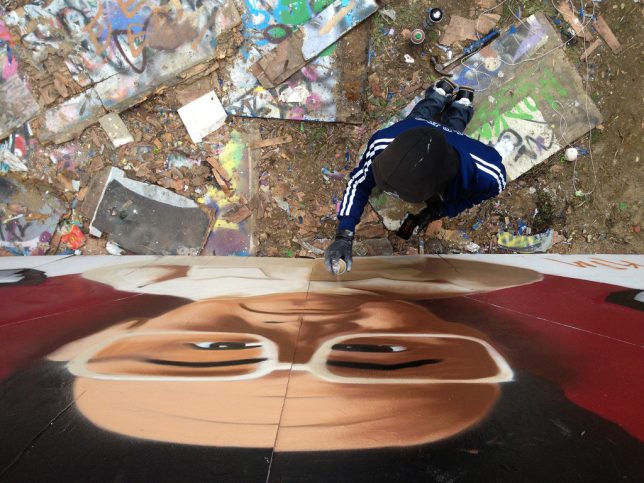
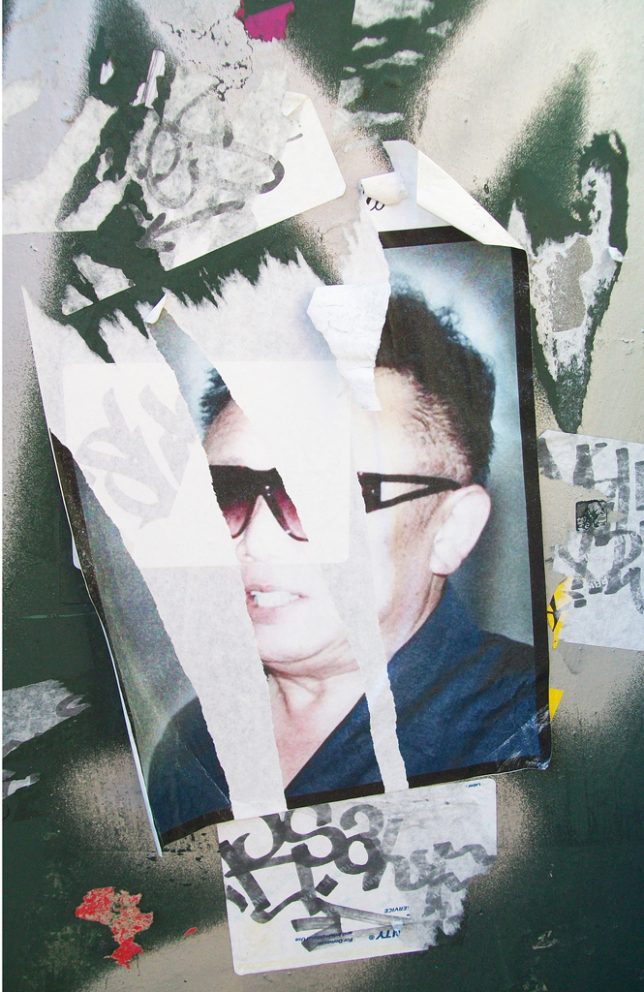
North Korea may be making the headlines like never before but the world’s graffiti artists have been featuring the Hermit Kingdom’s leaders for years.

When it comes to North Korea, there’s a lot to look down on. Take the country’s unique leadership – a communist dynasty? Who knows what the late Karl Marx might think of that (though it’s not hard to guess). In any case, NK-themed graffiti and street art should never be looked down upon, at least not by those living outside North Korea. Flickr user _eddie999_ brings us our lead image featuring Team America: World Police’s take on Kim Jong-il, snapped in Brighton, UK early in 2012. Just below, Mauricio Balvanera’s (maubrowncow) 2007 photo of a stenciled North Korean soldier with a flower in the muzzle of his rifle gazes out from a wall near the Toy Factory Lofts in Los Angeles, California.

The Sun Is (Still) There

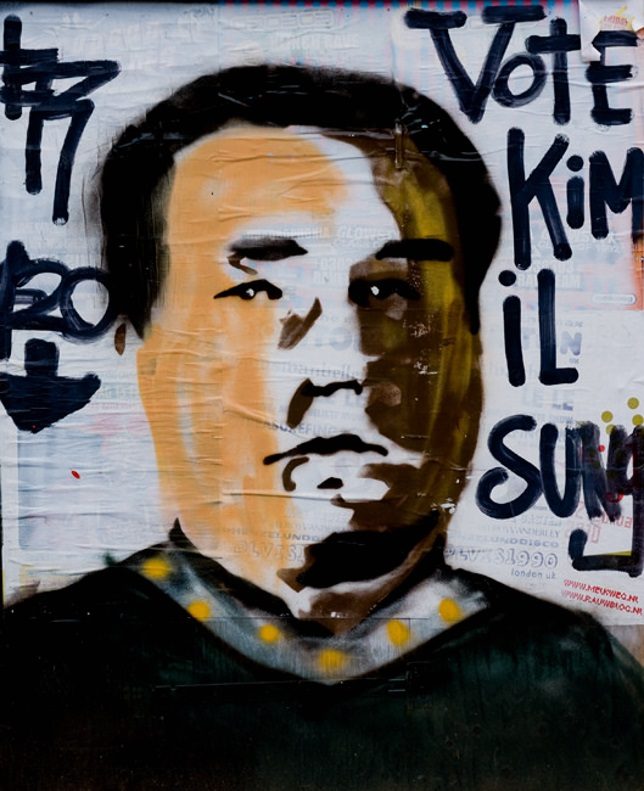
Kim Il-sung (“Kim become the sun”) was North Korea’s first supreme leader – the “Great Leader” in official parlance – who held power from 1948 to his death from natural causes in 1994. Among his most lasting accomplishment was the establishment of the Kim ruling dynasty, now into its third generation in the form of Kim Jong-un. Speaking of lasting accomplishments, Flickr user Loïc Brohard snapped the above artwork captioned “Vote Kim il Sung” in Amsterdam, the Netherlands, in April of 2010.

The Son Is Here

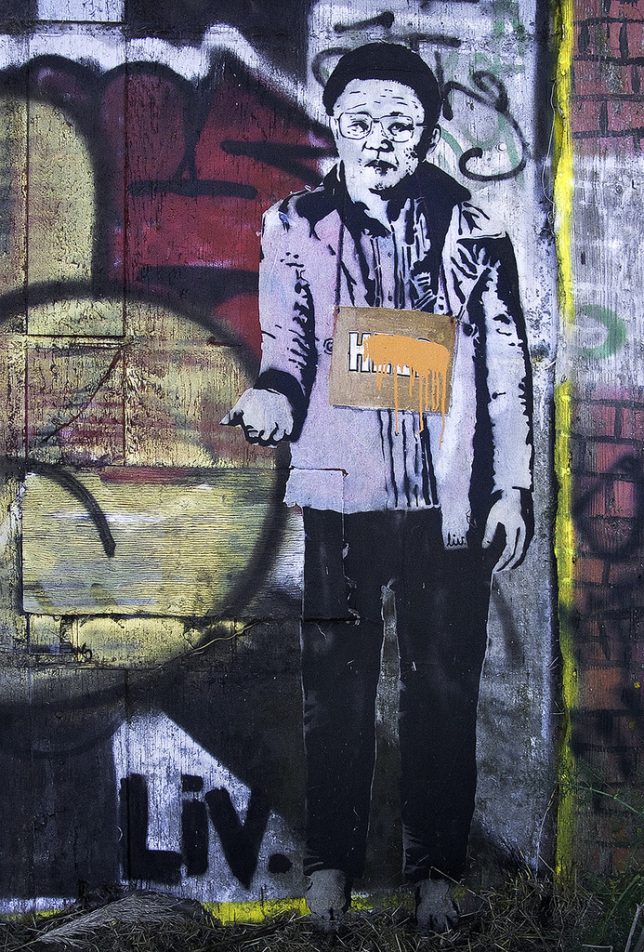
Kim Jong-il inherited power from his father in 1994 and was known in North Korea as the “Dear Leader”. Flickr user Larry Jones (westbymidwest) captured this full-color portrait of Kim Jong-il in full panhandler mode on September 20th of 2009 at the Albany Bulb, an artificial landfill peninsula extending westward from the the east shore of San Francisco Bay. It’s uncertain whether the splash of orange paint across the portrait’s “HELP” sign is part of the original composition or a later amendment.

A Spectacles Of Himself

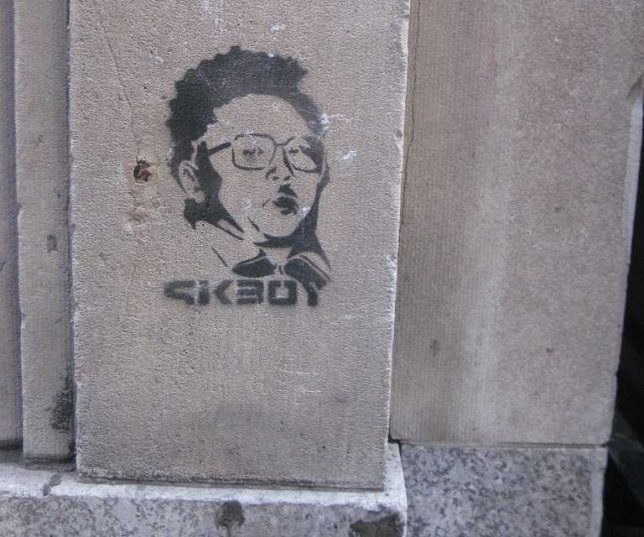
Kim Jong-il was over 50 years old when he assumed North Korea’s leadership but he had been groomed for the position since the early 1980s. Kim the Second raised the cult of personality established and encouraged by his father to ever-greater heights. The stencil above, found in NYC’s Koreatown district, dates from 2009 and was captured in April of that year by Flickr user e.yamasaki.

The Future’s So Bright…

Kim Jong-il’s designer shades take center stage in the above NYC photo pastiche snapped in late 2011 by Flickr user allan molho (amolho4). Sources state Kim Jong-il was a fervent fan of Western cinema, boasting a collection of over 20,000 titles including every Elvis Presley flick. His fascination with “The King” in his late-1960’s rhinestone jumpsuit phase may have influenced Kim’s sartorial preferences, at least when it came to prescription and fashion eyewear.

Thanks, Obama

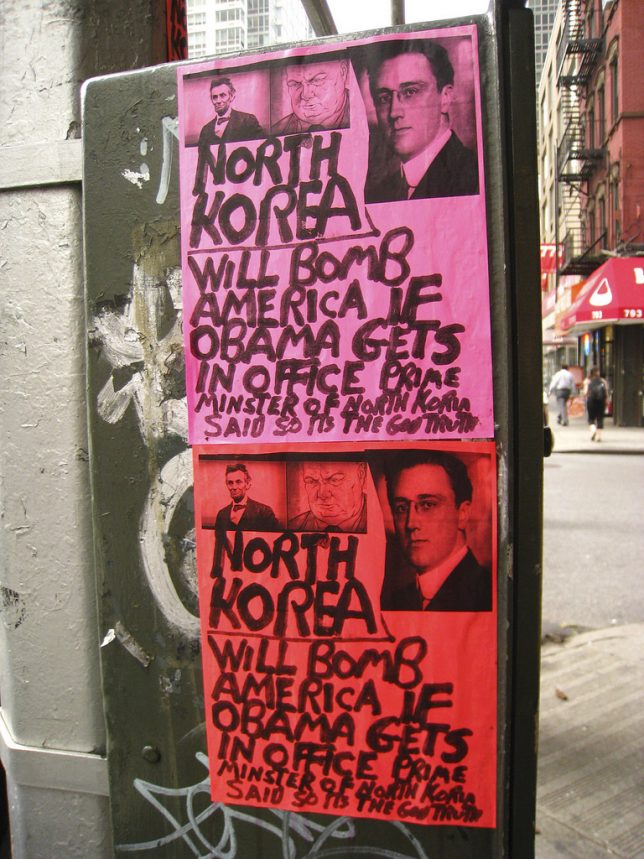
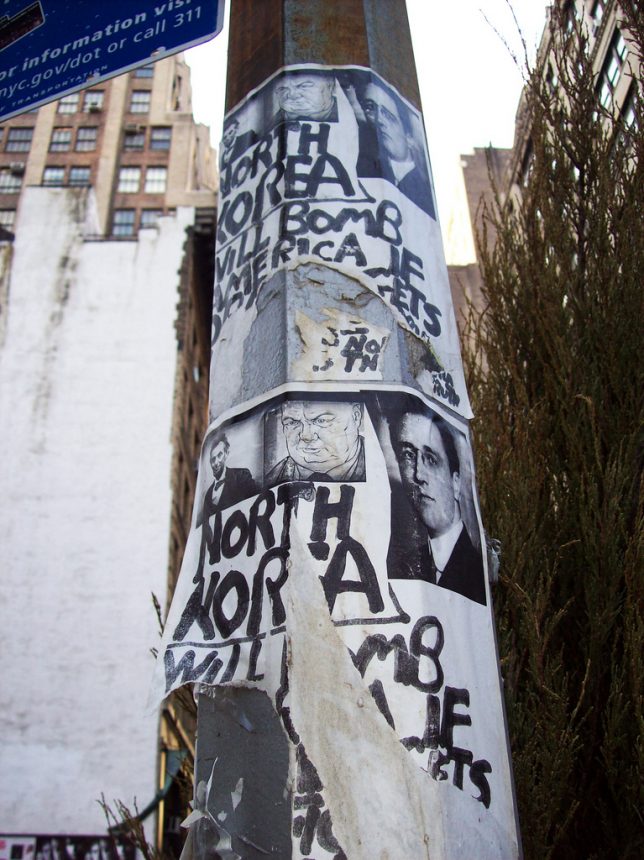
First rule of tinfoil-hat prognostication and doomsday cult propaganda: never predict near-future events! The unknown creator of the above paste-up mini-manifesto evidently didn’t get that memo. To their credit, they did manage to evoke the spirits (and images) of Lincoln, Churchill and an alarmingly youthful FDR to add weight to their shrill Cassandra callout. Bonus: stating “Prime minister of North Korea said so its the God truth.” Kudos to Flickr users shoehorn99 and allan molho (amolho4) for capturing these ravings in August of 2008 and April of 2009, respectively.

Next Page – Click Below to Read More:
Nk Ink North Korea Graffiti Stencils Street Art

Share on Facebook


[ By Steve in Art & Street Art & Graffiti. ]

[ WebUrbanist | Archives | Galleries | Privacy | TOS ]


WebUrbanist

 
Comments Off on NK INK: North Korea Graffiti, Stencils & Street Art

Posted in Creativity