RSS
 

Archive for August, 2016

6 Ways to Take a Candid Portrait of Somebody You Know

04 Aug

Get Andrew’s The Candid Portrait eBook at 43% off now over at Snapndeals, only until August 9th (AUS time).

The phrase candid portrait is often used to refer to the type of portrait taken when the subject is unaware of the photographer. This is usually seen in street photography, but also applies in other areas such as documentary style wedding photography.
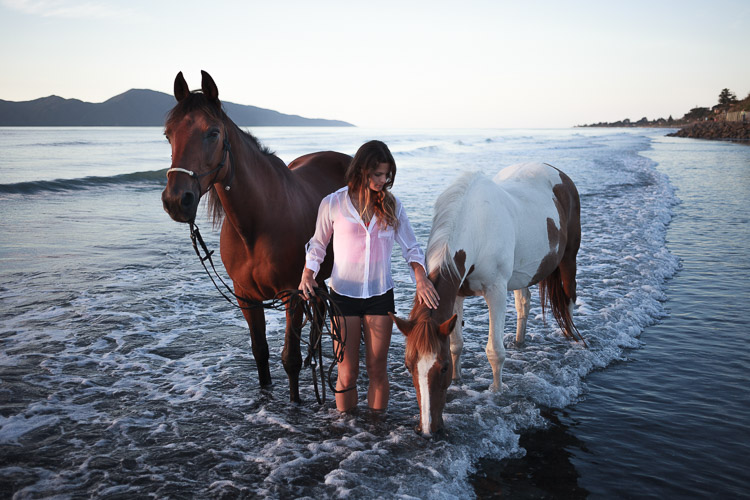
A candid portrait

If you think of a candid portrait as being one that captures someone acting authentically or with a natural expression, as opposed to one where the model has been directed to pose or act in a certain way, then it follows that you can also take candid portraits of people you know. Or even somebody that you don’t know, but have seen in the street and asked for permission to make a portrait.

Here are some tips for taking candid portraits of people with permission.

1. Look for expressions that capture character

If you are taking photos of somebody in a formal situation and you want to capture natural expressions rather than a more forced one (or the sullen expressions preferred by many fashion models) then you need to become a keen observer.A candid portrait
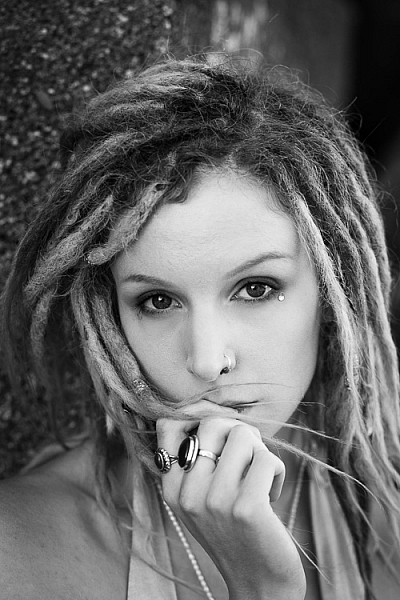
Watch for the moments in-between, the ones where your model is relaxed while you pause before taking another photo. How do they behave while the camera isn’t pointing at them? How do they respond when you talk to them? What expressions do you see when they talk about something that interests or excites them? What unconscious gestures do they make?

I was taking photos of a friend when I noticed that she had a particular gesture that she sometimes made, when the camera wasn’t pointing at her. I waited until it happened again, then asked her to hold the pose while I took the photo (right). The resulting portrait is one of her (and my) favorites from the shoot.

2. Make the most of random encounters

I remember my first evening taking photos in Bolivia. It was late afternoon, quickly fading to dusk, and the streets were lit by a soft red glow, cast by the setting sun.

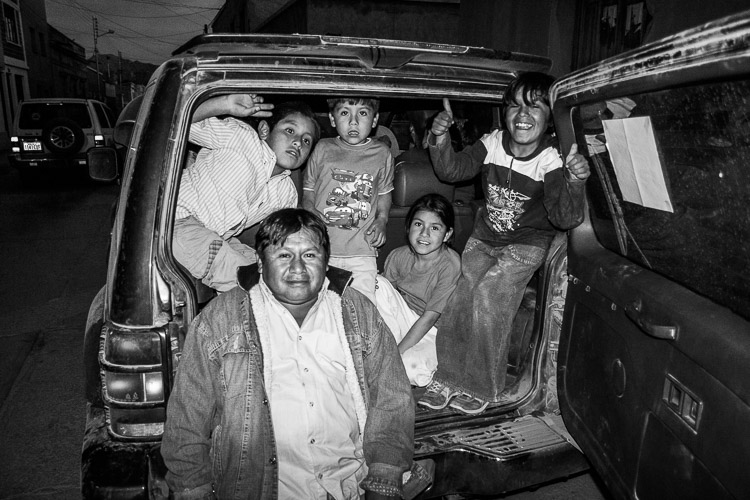
I raised my camera to take a photo of a mud brick building. From the corner of my eye I saw a small boy running down the street. He passed in front of the camera, stopped, turned towards me, and started waving his hands in the air. He obviously wanted to be in the photo, and a few seconds later he was joined by an older boy, presumably his brother, who also posed for a photo. Then they continued on down the street, and beckoned me to follow them.

Curious, I followed, and they led me to a car parked around the corner, where their father was waiting for them. They explained what had happened, and then the father asked me to take a photo of all of them together. He was a little drunk, and invited me to their house for dinner. I politely declined, although I would have liked to see the look on his wife’s face when I arrived.
A candid portrait

When you are traveling and people are being open and friendly like this, take advantage. Be open to random encounters, and the possibilities that can arise from them. At the very least you will have some interesting experiences and new stories to tell.

3. Use a small camera and lens

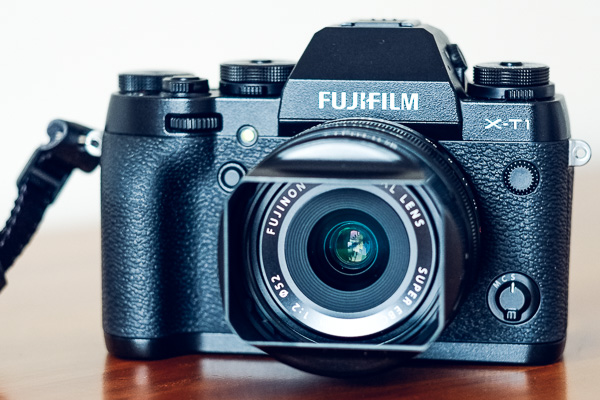
A friend of mine is an experienced model. I have photographed her with an EOS 5D Mark II and an 85mm lens, which is a fairly large combination. I have also used a Fujifilm X-T1 and 56mm lens, which is much smaller. She commented afterwards that the experience was different, and that she felt under much less pressure to be a good model with the smaller camera.
Fujifilm X-T1 firmware upgrade

If an experienced model feels this way, then imagine the effect on somebody who is not used to having their photo taken. I’m sure this is one of the reasons that people like to take photos on smartphones, and why the results can be surprisingly good – because the people being photographed feel no pressure to do anything, other than act natural.

The lesson is that camera and lens size matter. Cameras and lenses are tools, and it is up to the photographer to choose the most appropriate one for the job at hand. A smaller set up will help you capture candid portraits, even of people you know.

4. Find a good reason to ask someone if you can make a portrait

If you are not used to asking strangers if you can make a portrait of them, it becomes a lot easier if you can give them a good reason. You don’t always have to search very hard to find one.

For example, a few weeks ago I visited a blacksmith’s forge that uses forging techniques from 100 years ago. The smiths there do demonstrations for the visiting public, and I simply asked if I could take some photos while the smith was doing his demonstration. The result is a very natural portrait of somebody at work.
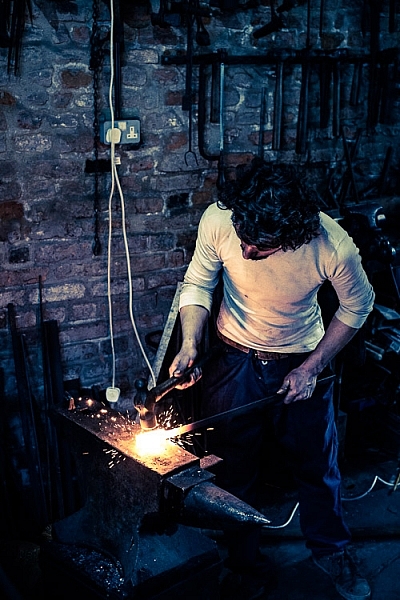
A candid portrait

At carnival in Cadiz earlier this year there were lots of people dressed in costume, but only a few with face paint. When I saw somebody with interesting face paint I asked if I could take a photo (it helps that I speak reasonable Spanish). Each time I explained that I really liked their make-up, the person said yes, and I took a couple of photos.

This is one of the natural expressions I was rewarded with.
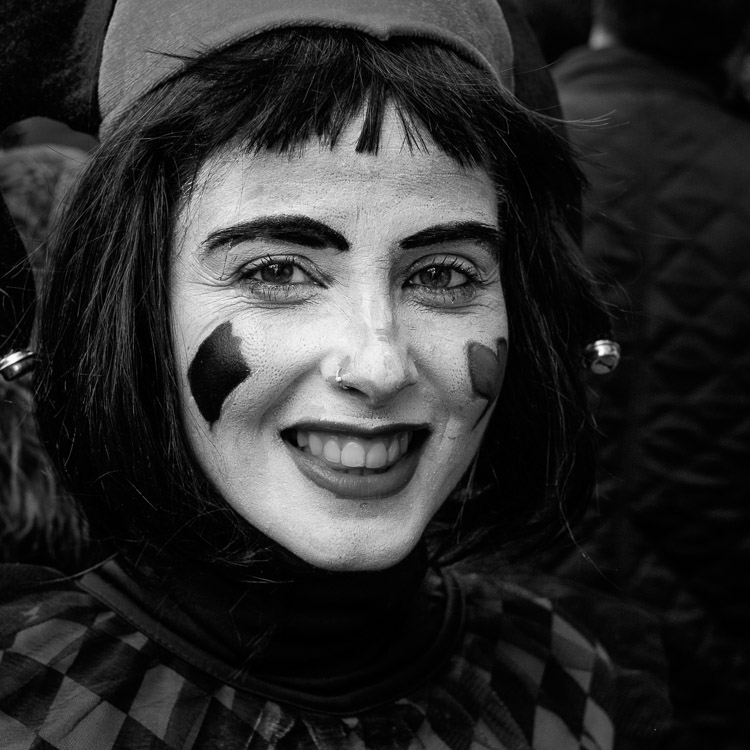
A candid portrait

5. Undertake a project

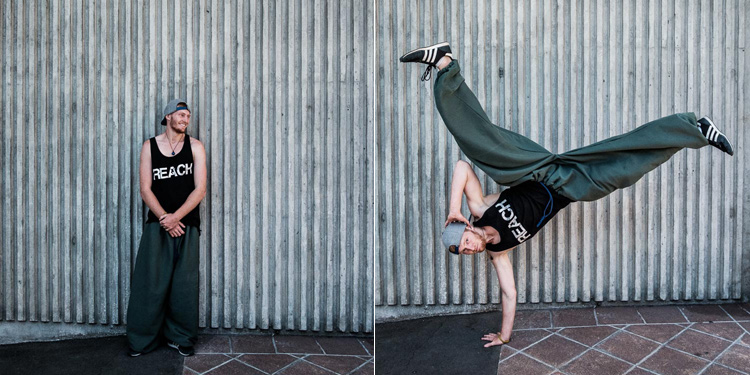
Early last year I thought it would be interesting to take some photos of people practicing parkour, and got in touch with some local traceurs through a Facebook group. Two of them in particular were interested in a shoot, so we went out into the streets of Wellington and they showed me some of the things that they do. I took photos and portraits as we went along. It was easy to create candid portraits as well as some action photos, because they were enjoying what they were doing and having fun.

I didn’t think about it until afterwards but now it occurs to me that what we were doing was a form of street photography, just one where I was working in a collaboration, rather than trying to take photos of people without them noticing me. That led to a entirely different set of photos than I could have made if I had seen them doing their thing in the street, and just taken some photos without any form of interaction.
A candid portrait

6. Take photos of friends doing interesting things

A friend of mine made her own gypsy caravan to live in. I think this is a fantastic tiny space project, and once it was finished I asked her if I could take some photos of her there. Her natural enthusiasm came across as we talked about it. I asked her to sit outside and play her guitar. While she was absorbed in what she was doing, I made some candid portraits that captured expressions like this.
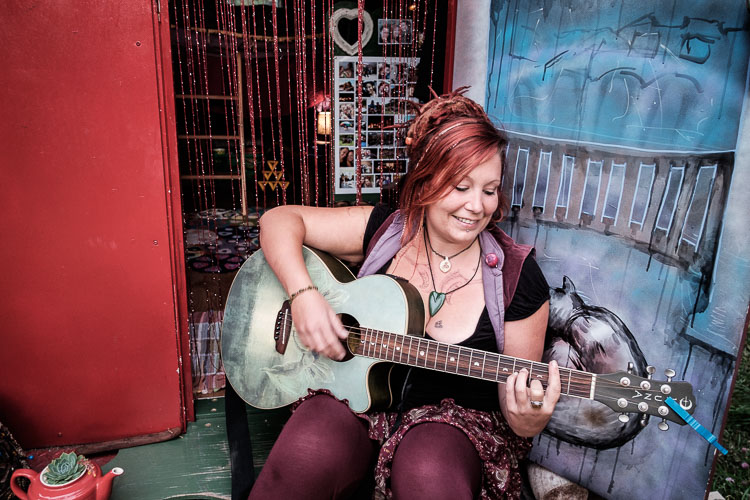
A candid portrait

Do you have any techniques of your own for taking candid or natural portraits of people that you know? I’d love to hear them – please let me know in the comments.

Get Andrew’s The Candid Portrait eBook at 43% off now over at Snapndeals, only until August 9th (AUS time).

googletag.cmd.push(function() {
tablet_slots.push( googletag.defineSlot( “/1005424/_dPSv4_tab-all-article-bottom_(300×250)”, [300, 250], “pb-ad-78623” ).addService( googletag.pubads() ) ); } );

googletag.cmd.push(function() {
mobile_slots.push( googletag.defineSlot( “/1005424/_dPSv4_mob-all-article-bottom_(300×250)”, [300, 250], “pb-ad-78158” ).addService( googletag.pubads() ) ); } );

The post 6 Ways to Take a Candid Portrait of Somebody You Know by Andrew S. Gibson appeared first on Digital Photography School.
Digital Photography School

 
Comments Off on 6 Ways to Take a Candid Portrait of Somebody You Know

Posted in Photography


How to Look at Other Photographers’ Images to Improve Your Work

04 Aug

When you’re starting out in photography, it’s quite easy to become obsessed with getting critique and feedback on own work to help you improve. Your peers may suggest a different crop, highlight issues with composition, and help you along your journey with camera settings and post-production techniques. Receiving feedback from your peers also provides a fantastic forum for you yourself to ask questions about specific items that have been brought up in discussion, and clear up any little issues that you may have.

While these are always very helpful methods of improving your photography, they are not the only ways. Another method is to simply look at others photographers’ work and ask yourself questions about it. You can even share websites of other photographers on social media, where you and many of your peers can have fantastic discussions about the work. Here are some tips for learning by reviewing other photographers’ work.

Fig.4

Discussion Points

Some great topics to discuss may be:

How do you think the photograph was made?

For help on this read: 4 Steps on How to Read Images and Learn to Replicate the Results

We all like to discuss camera settings and possible post-production techniques, so this is an important question to ask. Reverse-engineering an image will help you understand how the photograph was made, and give you a better insight. It will help you replicate a particular technique for you to try on your own.

Fig.2

What compositional techniques have been used?

How has the photographer composed the image? Have they used the Rule of Thirds (or as I like to call it, the Guide of Thirds!) or is the subject in the centre of the frame? How has the composition and placement of the subject helped the photograph? From what vantage point have they photographed the subject – straight on, from up above looking down, or down low looking up? How does this vantage point influence the impact of the subject (looking down on someone makes them look more vulnerable, for example).

Fig.6

How does the photo make you feel?

What emotions does the image evoke in you, and why does it make you feel that way? For example, if the image has a blue colour-cast, this could make you feel cold. Or does the image have a lot of vibrant, warm colours which can make you feel warm and happy? How does the composition techniques employed affect how you feel?

For this, if the image has been photographed from above looking down, the viewer will feel more powerful where the subject will look more vulnerable – it is the opposite if the photograph has been taken from down low looking up.
Is the image confronting? Knowing how you feel about and image and why, are very important for you to be able to achieve the same result in your own work.

Fig.1

What elements have been included in the frame?

Has the photographer kept the frame clear of any distractions and gone for a minimalist look, or have they included extra elements in the frame? How do these elements work together with the subject; do they complement it, or do they clutter the frame and distract from the subject?

What is the light like?

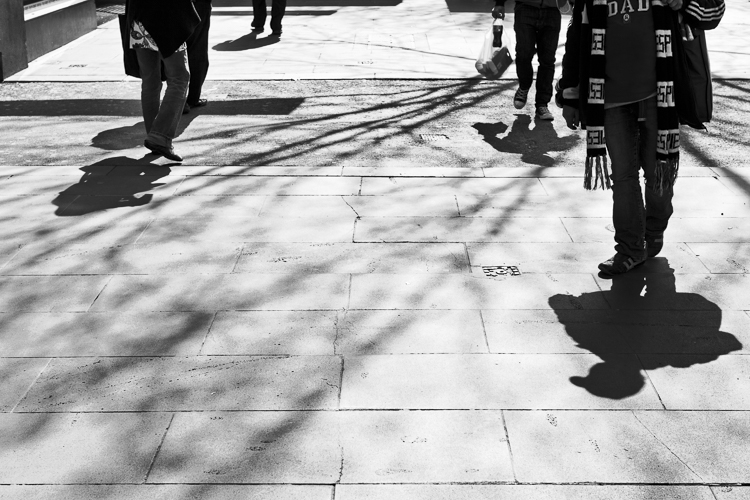
Discussing the light will help you see light better in your own work. Is the light hard or soft? To answer this, look for the shadows; the more defined a shadow is the harder the light (sunny day versus overcast day). How much light is there, and in what direction is it coming from? The direction of the light will influence the shape and form of a subject, as well as its colour. For example, if an object is backlit, this can create a silhouette.

Fig.3

Places to Look for Images

Now that you have a list of discussion topics, it’s time to look around for some images to discuss! The internet is full of fantastic websites where you can view the work of other photographers. Websites such as 500px.com, 1x.com and Flickr all have some fantastic images, that span a wide range of genres.

Here is a list of some websites, and photographers, that I often look at: (this list is by no means exhaustive!)

  • Getty Images: fantastic collection of sport, editorial, and entertainment images photographed by some of the world’s best photographers.
  • Time Lightbox: nice collection of images and projects from Time Magazine. The content often changes, so it’s always a good idea to check often.
  • Instagram: I’m not going to give you a list of accounts to follow, but Instagram as some fantastic photographers on it sharing some amazing work. Follow dPS on Instagram here.
  • Adam Pretty: an Australian sports photographer.
  • Trent Parke: an Australian documentary photographer. His style is something that I often like to incorporate in to my own work. He is also a member of Magnum Photos.
  • Clive Brunskill: a UK based sport and commercial photographer and someone I have been luck enough to work with.
  • James Nachtwey: the world’s best documentary and war photographer. He has taken some amazing images across his almost 30-year career!
  • Vladimir Rys: European sports photographer. I really like his style of photographing through objects.
  • Rob Cianflone: Australian based photographer with Getty Images.
  • Quinn Rooney: Australian based photographer with Getty Images.
  • Al Bello: Getty Images Chief Sports Photographer – North America.

Editor’s note: you can also come join the new Digital Photography School Facebook group where we encourage lots of images sharing and commenting. 

Fig.5

Over to You

While feedback on your own work is important, in many ways looking at other photographers’ work will help you more. These are just a few suggestions on what you can discuss about an image, and where to look for images, and they are by no stretch of the imagination exhaustive!

Do you have a favourite place to look at images? It would be great to hear about them in the comments below.

googletag.cmd.push(function() {
tablet_slots.push( googletag.defineSlot( “/1005424/_dPSv4_tab-all-article-bottom_(300×250)”, [300, 250], “pb-ad-78623” ).addService( googletag.pubads() ) ); } );

googletag.cmd.push(function() {
mobile_slots.push( googletag.defineSlot( “/1005424/_dPSv4_mob-all-article-bottom_(300×250)”, [300, 250], “pb-ad-78158” ).addService( googletag.pubads() ) ); } );

The post How to Look at Other Photographers’ Images to Improve Your Work by Daniel Smith appeared first on Digital Photography School.

Digital Photography School

 
Comments Off on How to Look at Other Photographers’ Images to Improve Your Work

Posted in Photography


Here it comes: Japanese network begins airing 8K broadcasts

04 Aug

Japan’s NHK has started broadcasting the world’s first 8K television content on a new ‘Super Hi-Vision’ satellite channel. NHK will air a mix of 4K and 7680 x 4320 8K content from 10AM to 5PM, with programming that includes concerts and highlights from the 2012 Olympics. There’s just one problem – nobody actually owns an 8K TV, so NHK has set up six viewing stations in Japan as well as in Rio de Janeiro, and plans to air live footage from Opening and Closing Ceremonies at the Olympic Games kicking off this Friday.

NHK has had its eye on 8K broadcasts for years, hosting public viewing events as early as 2014. The company has used NAB in Las Vegas as a showcase for its latest innovations since 2006, highlighting its advances in high-resolution broadcasting in April of this year by using a 133MP ‘portable 8K camera’. 

Articles: Digital Photography Review (dpreview.com)

 
Comments Off on Here it comes: Japanese network begins airing 8K broadcasts

Posted in Uncategorized


Go Big or Go Home: Athletes are Larger Than Life in Rio Art Installation

04 Aug

[ By SA Rogers in Art & Street Art & Graffiti. ]

JR main

Athletes have arrived in Rio for the Olympics on a massive scale in the form of two monumental photographic installations supported by construction scaffolding, one looking like he’s about to back flip over an entire building. French artist JR brings his signature black-and-white style to the streets for a dramatic addition to his ‘Inside Out Project,’ a global series bringing real people and their personal stories to public spaces through art.

JR street art rio 1

The athletes depicted aren’t household names – in fact, they’re not even Olympic athletes who will be physically present in Rio for the Games. The first, installed on the roof of a large residential complex, represents Mohamed Younes Idress of Sudan. “He lives and trains in Cologne, Germany,” says JR. “He missed out on the qualifications for the 2016 Rio Olympics but he is there some how.”

JR street art rio 3

The second figure appears to be that of a diver about to leap into the adjacent ocean. This installation rises from a rocky jetty overlooking the water in the Barra neighborhood. JR says he’s been working on this new technique, with the images supported by metal beams, for almost a year.

JR louvre

JR inside out 2

JR inside out 3

We previously featured JR’s large-scale work of urban camouflage outside the Louvre in Paris, where a black-and-white photographic installation made the museum’s iconic 11,000-square-foot pyramid by I.M. Pei seem to disappear. Other ‘Inside Out Project’ installations have included massive paste-ups inside Paris’ Pantheon building as well as covering a mass area of the ground in New York City’s Times Square.

Share on Facebook


[ By SA Rogers in Art & Street Art & Graffiti. ]

[ WebUrbanist | Archives | Galleries | Privacy | TOS ]


WebUrbanist

 
Comments Off on Go Big or Go Home: Athletes are Larger Than Life in Rio Art Installation

Posted in Creativity


Astropad 2.0 brings better performance and increased compatibility

04 Aug

Astropad, the app that turns your iPad into a graphics tablet for your Mac, has released its first major update. Astropad 2.0 comes with a range of improvements that allow for a more responsive drawing experience and increased compatibility with Mac software packages. The makers of the app claim the technology is so good that users are starting to replace their Wacom tablets with Astropad.

The new version of Astropad comes with the following improvements:

  • Astropad’s LIQUID technology, which allows for very smooth operation at 60 fps, has been upgraded to run three times faster and with significantly reduced pixelation.
  • The new velocity control analyzes network conditions at a very high frequency to find the optimal balance between image quality and latency.
  • Astropad 2.0 uses 3x less CPU power and 4x less memory than before, extending the iPad’s battery life.
  • The pressure curve has been refined for a more natural drawing feel.
  • Ehanced software capability means that the app now supports panning and zooming gestures across more software applications, including: Affinity Designer, Affinity Photo, Art Rage, Clip Studio Paint, Lightroom, Mischief, Autodesk Sketchbook.
  • The cursor can now be auto-hidden while drawing.
  • The user interface has been updated for a sleeker look and feel.

The update to Astropad 2.0 is free for existing users. Anyone else can purchase the app now for $ 29.99 on the Apple App Store. Astropad 2.0 works on all iPads with iOS 8 and all Macs with 10.9 (Mavericks) or later.


Articles: Digital Photography Review (dpreview.com)

 
Comments Off on Astropad 2.0 brings better performance and increased compatibility

Posted in Uncategorized


Manfrotto launches new Digital Director models and updates app with extra features

04 Aug

Manfrotto has added depth of field preview, an intervalometer and time-lapse controls to the app that runs its Digital Director camera-remote-control and external monitor device. Version 2.1 of the app, that is now compatible with a wider range of iPad models, also brings auto playback so images can be displayed automatically after they are recorded, as well as exposure bracketing and a more precise focusing system. The new app makes it possible to download Raw images to transfer via Wi-Fi web server, e-mail and FTP, and users can now send processed and resized JPEG files directly to social media apps on the host iPad.

Version 2.1 also imports metadata into the desktop version Adobe Lightroom via a plug-in. While the device offers controls for shooting video content it still isn’t possible to play video back through the Digital Director or to download movie files to the iPad. The Digital Director is compatible with 14 Canon EOS cameras and 15 DSLRs from Nikon but the company says that the new depth of field preview function only works with Canon models.

Manfrotto has also released a rigid case for the Digital Director as well as a sun shield and a range of frame inserts that convert the physical structure of the device to accommodate the different form factors of a series of iPad models.

The Digital Director now has configurations for iPad Pro 12,9”, iPad Air 2, iPad Air, iPad mini 4, iPad mini 3 and iPad mini 2 models, all of which cost $ 299.99/£249.95. For more information visit the Manfrotto website.

Press release:

Digital Director App V. 2.1, new Digital Director iPad compatibility and new accessories

Manfrotto, the leading global innovator and manufacturer of premium photo, video and lighting support products and accessories, announces the launch of Digital Director App V 2.1, new Digital Director models compatible with iPad Pro 12,9“ and iPad mini 4 – and new accessories including a new semi-rigid case, sunhood and frames.

Originally launched in 2015, Digital Director won Videomaker’s Best of NAB 2015 and was recently awarded the prestigious Red Dot Award: Product Design 2016.

Digital Director is the only Apple certified (MFi – Made for iPad Certification) electronic device that connects your camera and iPad for easier, more effective image making. Just tap the iPad screen to set up and control your camera, shoot, check, edit, share and manage your pictures. Digital Director ensures a reliable USB cabled connection between the camera and iPad, and its free dedicated App allows shoot monitoring and camera setting control. It is compatible with select Canon and Nikon DSLRs and iPad Pro 12,9”, iPad Air 2, iPad Air, iPad mini 4, iPad mini 3 and iPad mini 2.

Capturing, editing and sharing all your moments has never been so easy: it’s all just a touch away on your iPad!

The new Digital Director App V. 2.1 is available in the App store now and brings exciting new features and improvements, including:

Camera and shoot set up:
* Quick and easy Intervalometer + time-lapse set up
* Bracketing
* Depth of field preview in photo mode for Canon DSLR
* New, high-precision control step focus
* Optional continuous auto-play displaying full screen pictures as they are shot
* Simplified workflow

Album and picture management:
* Keyword assignment
* Pictures are easily moved to other albums
Edit with history option manages previous edits on images post produced in Digital Director
* Faster Gallery access

Sharing options:
* More sharing options: via social networks, using installed apps, via Wi-Fi web server straight to computer
* Manfrotto Digital Director Plug-in for Adobe Lightroom desktop imports Digital Director metadata into Adobe Lightroom for desktop
* Optional download of RAW images for sharing via Wi-Fi web server, e-mail and FTP
* Optional picture resizing when sharing
* Improved FTP configuration with subfolder option

The updated compatibility for iPad models is as follows:

* Digital Director for iPad Air 2 £249.95
* Digital Director for iPad mini 2 £249.95
* Digital Director for iPad mini 3 £249.95
* Digital Director for iPad mini 4 £249.95
* Digital Director for iPad Pro £249.95
In addition to the updated app and new compatibility, a range of new accessories will also be available:
* A new semi- rigid case designed to organize and carry Digital Director for iPad Air 2, iPad Air, iPad mini 4, iPad mini 3 and iPad mini 2. RRP £49.95

* A Sunhood, designed to protect the iPad screen from direct sunlight. Compatible for Digital Director for iPad mini 4, mini 3 and mini 2. RRP £24.95

* Separate frames for the iPad Air, Air 2, mini 2, 3 and 4, and iPad Pro 12.9”. This allows you to easily swap the frames to accommodate different iPad sizes with one Digital Director unit.

For more information please visit www.manfrotto.co.uk/shop-by/collections/digital/digital-director

Articles: Digital Photography Review (dpreview.com)

 
Comments Off on Manfrotto launches new Digital Director models and updates app with extra features

Posted in Uncategorized


Publishing Today and Tomorrow: Lighting 102 v.2.0

04 Aug

Hey folks,

Things may have appeared rather quiet around here, but there is a lot going on under the hood. You’ll remember that in 2014 Strobist transformed from a 2x/week blog to more of a knowledge bank. This was done to create the time and space to develop other projects.

The latter has included things like The Traveling Photographer and the Photographer’s Oil Collective, both of which are off and running.

But the flipside of this change in rhythm at Strobist was also to be able to put more time into the larger chunks of the site as opposed to day-to-day posting. I want to keep growing and improving the larger modules that create the real long-term value at Strobist, rather than just posting for posting’s sake. To that end, today and tomorrow a completely revised and updated Lighting 102 series will be debuting on Strobist.

Apologies in advance for the feast-or-famine situation in your RSS feed or inbox. I have been working on the L102 redo for a while now, along with Lighting 103 (in production) and Lighting 104 (fully mapped out).

Thanks for your continued interest and support. You guys rock.

Cheers,
David

Strobist

 
Comments Off on Publishing Today and Tomorrow: Lighting 102 v.2.0

Posted in Photography


Private Urban Paradise: 13 Dreamy Residential Rooftop Pools & Gardens

04 Aug

[ By SA Rogers in Architecture & Houses & Residential. ]

rooftop oasis madrid 1

If you don’t have access to your own private rooftop paradise, you can at least dream about it during the hottest months of the year with the help of this collection of dreamy swimming pools and lush gardens. Rooftop bathtubs, infinity pools overlooking some of the world’s most glamorous cities and elevated lawns offer respite from the heat and access to fresh air, even in densely populated urban areas.

Beach House Extension in Peru

Rooftop Oasis Beach House 1

rooftop oasis beach house 2

rooftop oasis beach house 3

This stepped home on a hillside overlooking the bay of Ancón in Lima, Peru features a rooftop infinity pool that seems to extend right out into the sea. Architect Adriá Noboa added to and renovated the existing home, built in 1958 by Swiss architect Theodor Cron, whose work in Peru is considered historically valuable.

Tel Aviv Townhouse Pool, Israel

rooftop oasis tel aviv 1

rooftop oasis tel aviv 2

rooftop oasis tel aviv 3

Another apartment terrace swimming pool in an urban area sits atop a six-level townhouse in Tel Aviv. Architect Pitsou Kedem placed the lap pool at the edge of the rooftop terrace alongside a lounge area. The pool feels open to the city when you’re enjoying it, yet remains private from ground level.

Rooftop Bathtub and Shower, Portugal

rooftop oasis bath

rooftop oasis bath 2

rooftop oasis bath 3

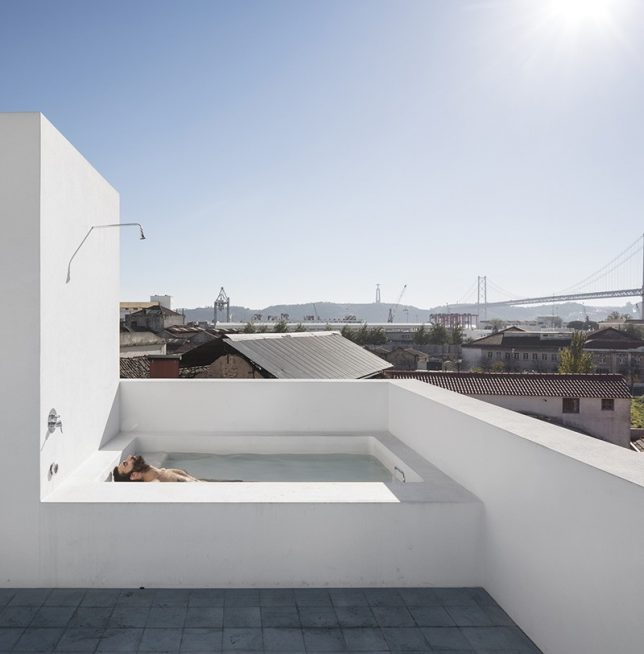
Enjoying a relaxing bath while staring up at the sky from your own private rooftop in Lisbon definitely isn’t too shabby. José Adrião Architects added this unusual feature to the all-white rooftop terrace of a home with a view of the historical city.

The Wall House, Singapore

rooftop oasis wall 1

rooftop oasis wall 2

There’s no house in the world quite like this one, designed for a client in Singapore who wanted two distinct yet connected homes for various generations of his family while maintaining lots of privacy and outdoor recreation space. FARM architects created a multi-level plan with a lower-level courtyard connecting both residences while the lushly planted rooftop levels are private, each with their own swimming pool.

Apartment Pool Overlooking Madrid, Spain

rooftop oasis madrid 1

rooftop oasis madrid 2

rooftop oasis madrid 3

A terrace sticks out of the side of this top floor apartment in the heart of Madrid, its kidney-shaped swimming pool nearly at roof level on one of the city’s tallest buildings. I! Arquitectura wanted to bring the ‘countryside’ to a city setting, with all the perks of living in the suburbs. That deck could only be better if the pool went right up to the edge, allowing you to take in the views while swimming.

Next Page – Click Below to Read More:
Residential Rooftop Dreams 13 Top Level Terraces Pools

Share on Facebook


[ By SA Rogers in Architecture & Houses & Residential. ]

[ WebUrbanist | Archives | Galleries | Privacy | TOS ]


WebUrbanist

 
Comments Off on Private Urban Paradise: 13 Dreamy Residential Rooftop Pools & Gardens

Posted in Creativity


Gallery update: Nikon 300mm F4E PF ED VR

03 Aug

The Nikon 300mm F4E PF ED VR is one heck of a compact telephoto lens. Since we posted our first samples from the lens last May, we’ve shot quite a lot with it including concerts, motocross, sprint boat racing, rugby and tennis (some of the images previously appeared in our Nikon D5 review). The more we use it, the more we like it, so this seemed like a great time to update our original sample gallery with with some fresh shots.

Articles: Digital Photography Review (dpreview.com)

 
Comments Off on Gallery update: Nikon 300mm F4E PF ED VR

Posted in Uncategorized


Lighting 102: Introduction

03 Aug

Welcome to the all-new, completely revised Lighting 102. If you are here, you should already have read through Lighting 101, and have a good understanding of its concepts.
__________

In lighting 101 you learned the basics of getting your light off camera, how to sync it, and how to position it to reveal form. In Lighting 102 we'll go beyond those basics. You'll learn how to create shape and form while at the same time controlling your light throughout the three-dimensional space in your photo.Read more »
Strobist

 
Comments Off on Lighting 102: Introduction

Posted in Photography