RSS
 

Archive for February, 2016

CP+ 2016: A look inside the G Master lenses at the Sony booth

27 Feb

CP+ 2016: Sony stand report and G Master action

Earlier this year, Sony announced a trio of new lenses dubbed G Master, which include the Sony FE 24-70 F2.8 GM, the Sony FE 70-200 F2.8 GM and the Sony FE 85mm F1.4 GM. These three lenses helped to fill noticeable gaps near the higher end of Sony’s lens lineup.

And, no, we didn’t Photoshop in that gap in the lens lineup above just to make a point.

CP+ 2016: Sony stand report and G Master action

The G Master lenses are chock-full of new and advanced technologies meant to maximize image quality, autofocus speed and accuracy, durability, and bokeh. Let’s take a look inside…

CP+ 2016: Sony stand report and G Master action

Here’s the 24-70mm F2.8 GM lens cut in half. This lens comprises 18 elements in 13 groups, and features three aspherical elements, including an extreme aspherical (XA) element – more on that later. An ED (extra low dispersion) and Super ED glass element help minimize chromatic aberration while maintaining high resolution and bokeh characteristics. We believe it – our initial samples show very well-controlled chromatic aberration, and bordering on eye-popping sharpness even on a 42MP sensor, when shooting this lens wide open.

A 9-bladed aperture helps confer a circular shape to out-of-focus highlights, but it’s the autofocus system in this lens that most excites us. A Direct Drive SSM (super sonic wave motor) positions a relatively small group of focus elements accurately and quickly, and when we say quickly we mean with nearly unprecedented speed for this type of lens. We’ve become fans of Direct Drive SSM for AF ever since we saw the speed it confers in the FE 35mm F1.4. Focus, including continuous tracking, is nearly instantaneous on this 24-70 GM, which is fairly unexpected considering its counterparts in the DSLR arena. Focus is also both smooth and quiet, making it a great lens for video as well as stills.

CP+ 2016: Sony stand report and G Master action

The new XA (extreme aspherical) element is claimed to reduce aberration and deliver high resolution throughout the entire zoom and aperture range, across the entire frame. Sony claims to have achieved this via extremely high surface precision, maintained to within 0.01 micron tolerances. This should help reduce imperfections that can lead to onion-ring bokeh, typically an issue with aspherical lenses. 

And speaking of high precision, Sony claims to iterate their internal development of optical design by looking at actual lens MTF performance at 50 lines/mm. That doesn’t mean the lens only resolves to 50 lines/mm, it means that Sony’s threshold for acceptable performance in designing these lenses is quite high. Judging from the sharpness wide open on an a7R II, we’re inclined to believe it’s working for Sony.

CP+ 2016: Sony stand report and G Master action

Sony has also recently announced the FE 85mm F1.4 GM, shown here cut in half. This lens comprises 11 elements in 8 groups, and features a new XA (extreme aspherical) element as well as three ED (extra low dispersion) elements that help optimize both resolution and smooth transitions to out-of-focus areas. It’s also got a ‘Nano’ anti-reflective coating on its front element to reduce flare and ghosting, particularly useful for maintaining contrast in backlit portraits. 

The 85mm GM lens utilizes a ring drive SSM (super sonic wave motor) to drive the lens’ large, heavy focus group. In other words, this lens is much like some of its DSLR counterparts in terms in focusing speed – very fast, but not quite as fast – in our initial impressions – as Sony’s own Direct Drive SSM combined with a relatively small focusing group in the 24-70mm F2.8 GM. Two position sensors support accurate positioning of the focus elements, which should ensure accuracy of focus.

CP+ 2016: Sony stand report and G Master action

Particularly nice is the 11-blade circular aperture in the 85mm F1.4 (and 70-200mm F2.8) GM lenses. The more blades you have, the more circular the aperture remains even when stopped down significantly – especially with the curved blades typical of almost all lenses today. Most modern lenses have between 7 and 9 blades these days, with 9 blades being reserved more pro-level lenses. 11 takes it a step further and, indeed, the opening retains a circular, less polygonal shape as you stop down (here it is in action). This should ensure circular out-of-focus highlights and increased quality of bokeh, even at smaller apertures.

And why go from 9 to 11 blades, skipping 10? Odd numbers of aperture blades are generally better for their more favorable sunstar rendition, creating sunbursts with twice the number of rays as aperture blades when stopped down. Even-numbered designs only create sunbursts with as many rays as aperture blades, so while a 10-blade aperture would produce 10-ray stars, an 11-blade aperture would produce 22-blade stars. Of course, longer focal lengths and circular aperture designs are less prone to creating sunstars at all – and we have no idea if this was the actual thinking behind the choice – but it’s still nice to see the general trend toward odd numbers of aperture blades.

CP+ 2016: Sony stand report and G Master action

Pictured here is the new FE 70-200mm F2.8 GM OSS telephoto zoom lens Sony recently announced, cut in half of course. This lens, like the 24-70mm GM lens, features XA, Super ED, and ED glass elements to help achieve high resolution and desirable bokeh characteristics. It’s got 23 elements in 18 groups. A ‘Nano’ anti-reflective coating ensures reduced flare and ghosting. An additional fluorine coating to the front of the lens help keep it clean, and the lens is dust and moisture resistant.

OSS (Optical Steady Shot) is built into the lens, despite the availability of IBIS in a7-series cameras, because for longer focal lengths, it’s beneficial to do a certain amount of the stabilization in-lens, because of how much the sensor would have to move to compensate for even slight angular displacements. The two systems – OSS and IBIS – theoretically work together to provide even more effective stabilization than any one method might provide.

CP+ 2016: Sony stand report and G Master action

The autofocus system on the FE 70-200mm GM OSS is quite intriguing: it’s a floating focus system, which sees its debut in an ? lens. This floating system design contributes to its impressive minimum focusing distance of 0.96m, and also helps control aberrations that might otherwise be problematic when focusing at close distances. 

Pictured on the left is the more traditional ring-drive SSM motor that’s required to drive the large, heavy glass elements typical of this type of lens. The double linear motor of this system, pictured on the right, allows for effective ‘wobbling’ actuation (typically used in contrast-only AF), which is useful when shooting video. The entire focusing mechanism is also very quiet – and smooth – which ensures AF performance is optimized for both stills and video shooting. 

The 70-200mm F2.8 GM OSS lens also functions with Sony’s newly announced 1.4x and 2x teleconverters, which may somewhat make up for the lack of longer telephoto lenses (for the time being anyway).

CP+ 2016: Sony stand report and G Master action

Lifting our heads back up from the tech demos and turning our attention to other things (wait, where’d Rishi go?), we see that in typical trade-show form, Sony’s provided some subject matter for eager attendees to test the latest tech. But if you were to show up to CP+ hoping to capture some model mayhem using the new GM lenses, you’d have to make do with the 85mm F1.4 GM, the only new GM lens available in front of this display.

And don’t worry, if you’re already missing the lens-cut-in-half thing, you can get your fix when our Editor Barney returns with many more things cut in half later this week. Like nicely packed, and then cut in half (naturally) sandwiches.

CP+ 2016: Sony stand report and G Master action

At first glance, the 85mm F1.4 GM looks a little unwieldy on an a7-series camera, but in hand, the pair balance remarkably well. The lens has a pleasingly solid heft to it without feeling too front-heavy. At 820g, it’s significantly heavier than, say, Nikon’s counterpart (595g), but our initial impressions are that the sharpness wide open – even off-center – and lack of chromatic aberration might make the weight more than worth it.

CP+ 2016: Sony stand report and G Master action

Beyond the price of a CP+ admission ticket, there’s no charge to try out the new 85mm F1.4 GM – but to get one of your very own, you’ll need $ 1800 when it goes on sale in March. Also of note for video shooters is the ability to de-click the aperture dial for smoother operation.

CP+ 2016: Sony stand report and G Master action

Although you’re a little ways away from the real models, you can try out the FE 24-70mm F2.8 GM on some beleaguered Sony reps behind the counter. And though it appears a bit hefty on the smaller a7-series bodies, it balances well – particularly if you have a vertical grip attached. At 886g, it’s not unreasonably heavy, and the extra heft may be well worth it anyway – our preliminary impressions are that this is the sharpest 24-70mm zoom (particularly wide open) we’ve ever seen.

It will be available in March for $ 2200.

CP+ 2016: Sony stand report and G Master action

Last up is the FE 70-200mm F2.8 GM. As you can probably tell from this image, the lens itself isn’t overly large, but it’s definitely got some weight to it. At 1480g, it’s around the weight of Canon’s equivalent lens, which means you’ll really want a grip on an a7-series camera to balance the weight well. The FE 70-200mm F2.8 GM OSS will be available in March, and the price is still TBD.

Overall, the G Master lenses appear to be solid additions to Sony’s FE lens lineup, potentially addressing the need for professional-level lenses for the system. We’ve shot a few shots with these lenses on a 42MP a7R II, and it’s clear from the sharpness and chromatic aberration results, as well as AF speeds, that Sony is clearly targeting professionals, and high-end enthusiasts, with these lenses. And we expect them to compare favorably against even the best counterparts offered by the stalwarts in the industry. We’ll reserve judgement until we’ve had time to do more rigorous, side-by-side testing, but for the time being, it’s safe to say we’re very impressed.

Articles: Digital Photography Review (dpreview.com)

 
Comments Off on CP+ 2016: A look inside the G Master lenses at the Sony booth

Posted in Uncategorized


Video: Hands-on with Sony’s G Master lenses and the a6300 at CP+ 2016

27 Feb

There are lots of new products vying for attention at CP+ 2016, including Sony’s a6300 and new GM series lenses for its full-frame mirrorless cameras. And they are getting plenty of attention from show attendees, especially those eager to try out the FE 85mm F1.4 GM’s portrait capabilities. We took another look at the a6300 and the GM lenses on display at the buzzing Sony booth in Yokohama. 

Articles: Digital Photography Review (dpreview.com)

 
Comments Off on Video: Hands-on with Sony’s G Master lenses and the a6300 at CP+ 2016

Posted in Uncategorized


Polaroid launches Eyeball panoramic tripod head

27 Feb

A remote control spinning tripod head that is said to be ideal for shooting panoramas has been launched in the US and UK by Polaroid. The Panorama Eyeball Head fits on a tripod or stands freely on its own feet, and can accommodate DSLRs as well as compacts. The control unit connects with the head via an IR link and manages both the speed and direction of rotation. 

The head is capable of turning a full 360° and the company says that careful gearing ensures the motion is always smooth. There are five speed modes as well as a mode that provides three fixed viewpoints up to 75° apart. 

The head is powered by a built-in rechargeable battery that is said to provide up to five hours of standby time, and which can be recharged via a powered USB port. 

The Polaroid Panorama Eyeball Head costs £44.99/$ 49.99 through Amazon. 


Press release:

RIDGEFIELD PARK, NJ – The versatile Polaroid remote-controlled 360° panorama eyeball head accessory is a compact, portable freestanding mini tripod that can also be placed on a tripod, slider or even selfie stick. Designed for Polaroid cameras, other small popular cameras and SLRs, the Polaroid remote-controlled 360° panorama eyeball head is ideal for creating the perfect panoramic video or picture. IR remote controls offer five speed modes, clockwise and counter clockwise rotation, as well as a triangle mode up to 75°.

Panoramic Shooting Made Plenty Fun

For the contemporary videographer, being able to capture expansive panoramic vistas without any shake or distortion is an absolute must. Thankfully, the Polaroid remote-controlled 360° panorama eyeball head delivers effortless and precisely controlled results. It is compatible with a range of action cameras such as the Polaroid Cube lifestyle action camera line and smaller digital cameras (with ¼” threaded hole). Attachment comes included.

Turns on a Dime – or Quarter

The Polaroid remote-controlled panorama eyeball head rotates your camera in its place, clockwise or counterclockwise, for smooth shooting action. Users can easily control the turning degree from 0 to 360°.

Heeds Your Need for Speed

Using the remote, shooters can also control the exact rotational speed. Press a button to speed up, and press a button to slow down. And thanks to finely calibrated gears, the action always remains perfectly smooth.

Functions Free or Mounted

At the top, a ¼” threaded screw connects to a wide variety of cameras. A padded platform prevents motion-related scratches. At the bottom, a ¼” threaded hole accepts tripod and slider connections for greater application flexibility.

Runs on Built-In Battery

To make this already compact and pocket-sized head as portable as possible, the built-in battery is rechargeable from any USB port or power outlet. A single charge provides five hours of standby and over three hours of non-stop runtime.

The Polaroid remote-controlled 360° panorama eyeball head accessory is available now for $ 49.99.

Articles: Digital Photography Review (dpreview.com)

 
Comments Off on Polaroid launches Eyeball panoramic tripod head

Posted in Uncategorized


Macphun offers Aurora HDR Pro 3-month payment plan

27 Feb

Macphun has announced a new 3-month payment plan for Aurora HDR Pro, the image editing application for Mac OS X it launched in November. Rather than requiring the full $ 99 USD price at the time of purchase, the payment plan allows users to pay $ 33 per month for three months, while still gaining immediate access to the software license.

According to Macphun, Aurora HDR has been downloaded more than 150,000 times since its launch. The payment plan doesn’t involve a subscription and does not charge interest. The company’s ‘bonus of the month’ gift to customers is also provided to users who opt for the 3-month installment.

The payment plan is now available through the Aurora HDR website.

Articles: Digital Photography Review (dpreview.com)

 
Comments Off on Macphun offers Aurora HDR Pro 3-month payment plan

Posted in Uncategorized


Smart Move: Domino Loft Maximizes Space in Micro Apartments

27 Feb

[ By Steph in Design & Fixtures & Interiors. ]

domino loft 1

A 500-square-foot condo feels a lot larger when you can manage to fit a bedroom, guest bed, dining area, work space and closet in one tiny room without cluttering every possible surface. To prove that it’s possible, the designers at ICOSA teamed up with Peter Suen to make the most of a very modestly sized residence in San Francisco’s Financial District, creating a clean, contemporary, adaptable solution that translates to other small spaces.

domino loft 2

domino loft 3

The Domino Loft is the result of testing a wide variety of space-saving features within the limited apartment, which has high ceilings, but only one room to work with aside from the kitchen and bathroom. The designers tried drop-down ceilings, movable walls and other more complex ideas, but ultimately settled on the tried-and-true loft concept as the simplest and most effective way to maximize every inch of available space.

domino loft 4

domino loft 5

The room-within-a-room features a partially enclosed space topped with a sleeping loft, which is accessible via sliding library ladder from the closet area. Inside, a thin and light bed comes down from the wall, and its bottoms surface acts as a whiteboard when stowed away. There’s a built-in bench next to a fold-down dining table, a standing desk and lots of storage. The closet fits an impressive number of shoes and offers drawers as well as space for hanging garments.

domino loft 6

domino loft 7

Made of concrete panels, wood slats, metalwork and custom cabinets, the components were fabricated off-site in an Oakland workshop before assembly within the apartment.

Share on Facebook


[ By Steph in Design & Fixtures & Interiors. ]

[ WebUrbanist | Archives | Galleries | Privacy | TOS ]


WebUrbanist

 
Comments Off on Smart Move: Domino Loft Maximizes Space in Micro Apartments

Posted in Creativity


Leica and Huawei announce partnership to ‘reinvent smartphone photography’

27 Feb

We’ve seen established members of the optical industry partner with smartphone makers before – Nokia high-end phones used to come with Carl Zeiss branded lenses, and Schneider Kreuznach optics have been used in various models from Chinese manufacturer Oppo. Now it seems we could soon see Leica-branded lenses and other imaging technology in Huawei smartphones. Read more

Articles: Digital Photography Review (dpreview.com)

 
Comments Off on Leica and Huawei announce partnership to ‘reinvent smartphone photography’

Posted in Uncategorized


Weekly Photography Challenge – Square

27 Feb

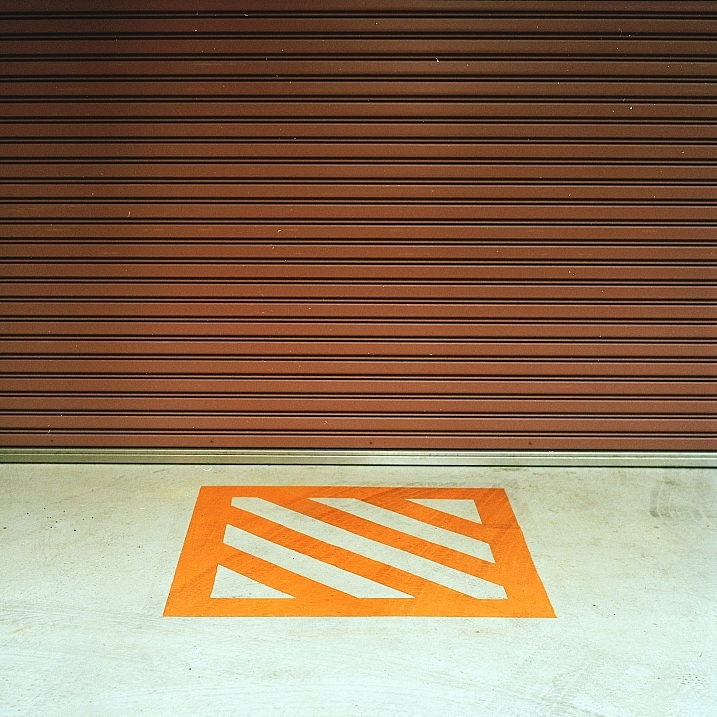
Shapes are everywhere, have a look around you. Do you see any squares like these images I shared previously?

Uqbar Is Back

By Uqbar is back

Weekly Photography Challenge – Square

There are many ways you could choose to approach this week’s challenge. You could take it literally and photograph:

  • Things which are square shaped
  • Images cropped into a square format
  • Patterns that include squares

Or you could take it a bit more off-beat and go for:

  • Squares as in city parks or plazas, and things that take place there
  • A person or thing which is a bit odd as in the old hippy phrase “He’s a square”
  • Something that happens directly, or shooting square on to the subject
Philippa Willitts

By Philippa Willitts

Tom Waterhouse

By Tom Waterhouse

Uwe Potthoff

By Uwe Potthoff

Eivind Barstad Waaler

By Eivind Barstad Waaler

Gianmaria Zanotti

By Gianmaria Zanotti

Steve Bailey

By Steve Bailey

Share your images below:

Simply upload your shot into the comment field (look for the little camera icon in the Disqus comments section) and they’ll get embedded for us all to see or if you’d prefer upload them to your favourite photo sharing site and leave the link to them. Show me your best images in this week’s challenge. Sometimes it takes a while for an image to appear so be patient and try not to post the same image twice.

googletag.cmd.push(function() {
tablet_slots.push( googletag.defineSlot( “/1005424/_dPSv4_tab-all-article-bottom_(300×250)”, [300, 250], “pb-ad-78623” ).addService( googletag.pubads() ) ); } );

googletag.cmd.push(function() {
mobile_slots.push( googletag.defineSlot( “/1005424/_dPSv4_mob-all-article-bottom_(300×250)”, [300, 250], “pb-ad-78158” ).addService( googletag.pubads() ) ); } );

The post Weekly Photography Challenge – Square by Darlene Hildebrandt appeared first on Digital Photography School.


Digital Photography School

 
Comments Off on Weekly Photography Challenge – Square

Posted in Photography


CP+ 2016: Canon shows off new EOS-1D X Mark II, EOS 80D and G7 X Mark II

26 Feb

CP+ 2016: Canon shows off new DSLRs and G7 X Mark II

As usual at the CP+ show in Yokohama, one of the longest lines can be found Canon’s booth. This year, Canon’s EOS 80D and EOS-1D X Mark II were in huge demand from both press and public attendees alike, and we fought our way through the crowd to get hands on with both new models – and the surprisingly nice PowerShot G7 X Mark II.

CP+ 2016: Canon shows off new DSLRs and G7 X Mark II

First up is the Canon EOS 80D. The 80D features a 24MP APS-C CMOS sensor, 45-point all cross-type autofocus system, and the company’s DIGIC 6 processor. Cosmetically similar to the popular 70D, the new model offers a number of significant updates.

CP+ 2016: Canon shows off new DSLRs and G7 X Mark II 

The 80D will be familiar to users of the 70D of course, but operationally it shares a lot of features from much earlier cameras in Canon’s EOS lineup, going right back to the original D30 of 2000. It’s easy to dismiss this kind of homogeneity as conservative – even unimaginative, but there’s a reason that DSLRs in 2016 still look and function much like DSLRs from the early 2000s. It works. 

CP+ 2016: Canon shows off new DSLRs and G7 X Mark II 

When using live view or recording video users can take advantage of the 80D’s improved Dual Pixel CMOS AF system, which provides phase-detection autofocus with the mirror locked up in Live View. This particular iteration is Canon’s first attempt at Servo AF using Dual Pixel technology – and it works very nicely in our initial testing with moving subjects. So nicely, in fact, that we can’t to see it extended to all Canon DSLRs… and maybe even, well, that’s a lot of wishful thinking.

The 3″ rear LCD is touch sensitive and fully articulating, which is handy for shooting from low and high angles, and also for video. The 80D can record 1080/60p video and offers sockets for both a microphone and headphones. Wi-Fi is also built in, with support for NFC.

CP+ 2016: Canon shows off new DSLRs and G7 X Mark II

Although it lacks 4K, the 80D is a capable HD video camera. With the addition of the PZ-E1 Power Zoom Adapter (currently only compatible with the new 18-135mm kit zoom) and DM-E1 shotgun microphone it’s a powerful and surprisingly ergonomic package. We suspect that most serious Canon videographers will look towards the Cinema EOS line but students and beginner filmmakers will appreciate the 80D’s ease of use, and potentially its excellent autofocus – with no hunting – in video. 

CP+ 2016: Canon shows off new DSLRs and G7 X Mark II

One camera that is definitely of interest to professionals is Canon’s new flagship stills model the EOS-1D X Mark II. The 1D X Mark II builds on the basic concept behind the 1D X, but offers increased resolution (from 16 to 20MP) increased speed (14fps in live view mode, 12fps in conventional DSLR mode) and 4K video capture. 

CP+ 2016: Canon shows off new DSLRs and G7 X Mark II

The EOS-1D X Mark II’s autofocus system has also been upgraded. The 61-point AF array covers a greater area, and these AF points work in concert with a 360,000 pixel metering sensor which should, in theory, mean better tracking of moving subjects. 

CP+ 2016: Canon shows off new DSLRs and G7 X Mark II

Ergonomically, the EOS-1D X Mark II is – like the 80D – very similar to its predecessors. Professional users are even less accepting of change than enthusiasts because with years of muscle memory built up, they need key controls to stay more or less in the same place from model to model. As such, the EOS-1D X Mark II looks and operates a lot like its predecessor, and indeed some key controls have barely moved since the original film EOS-1.

CP+ 2016: Canon shows off new DSLRs and G7 X Mark II

The EOS-1D X Mark II’s battery (which fits horizontally inside the base of the camera) should be good for more than 1200 images in normal use – a major differentiator of professional DSLRs compared to lower-end models (and any current mirrorless camera). Needless to say, the EOS-1D X Mark II is fully weather-sealed and feels like it’s been milled from a solid lump of something very solid, very expensive and very heavy.

CP+ 2016: Canon shows off new DSLRs and G7 X Mark II

Who would have thought that after 16 years, professional Canon DSLRs would still be using CompactFlash cards? But here we are in 2016, and the same media that fit inside the original EOS-1D can still be used in the EOS-1D X Mark II. New in the current flagship though is a second slot for cosmetically similar (but physically incompatible) C-Fast cards. C-Fast cards are capable of greater data throughput, which will help if you’re one of those people that likes to shoot extended bursts of 170 Raw files at 14fps.

CP+ 2016: Canon shows off new DSLRs and G7 X Mark II 

If you are one of those people, you should pay attention ti the warning inside the EOS-1D X Mark II’s card slot. Don’t go burning your fingers after shooting. It gives a new meaning to the term ‘blazingly fast’…

CP+ 2016: Canon shows off new DSLRs and G7 X Mark II

Ethernet? Why yes. Although the EOS-1D X Mark II features built-in Wi-Fi, a 330Mbps wired connection is still the best option for absolute speed when shooting intensely at (say) the Olympics. It’s no coincidence that Canon (like Nikon) likes to release new professional cameras in Olympic years. 

CP+ 2016: Canon shows off new DSLRs and G7 X Mark II 

At the other end of Canon’s camera range is the 20MP PowerShot G7 X Mark II. We really liked the original G7 X for everyday ‘carry everywhere’ shooting but it had some limitations. The Mark II has not been significantly changed when it comes to ergonomics or core features (inside you’ll find the same excellent 20MP 1-inch sensor and 24-100mm equivalent lens), but Canon has made some improvements. 

CP+ 2016: Canon shows off new DSLRs and G7 X Mark II

One of those improvements is a front dial that can be switched from clicking to non-clicking operation, and a subtle front grip, in place of the smooth body of the original G7 X. 

CP+ 2016: Canon shows off new DSLRs and G7 X Mark II

A new Digic 7 processor brings very welcome performance improvements, especially in Raw mode. Raw capture is now possible at 8fps and while standing at Canon’s booth we shot for more than 20 frames before the camera that we used started to slow. Finally, a Canon PowerShot G-series compact that is genuinely usable in Raw mode… 

CP+ 2016: Canon shows off new DSLRs and G7 X Mark II 

The G7 X Mark II’s rear screen is a multi-angle 3.0-inch capacitive  model with 1.04 million dots, capable of tilting up to 180° upwards (for selfies) and 45° down (for other things). The G7 X Mark II will be available in May for $ 699.

Articles: Digital Photography Review (dpreview.com)

 
Comments Off on CP+ 2016: Canon shows off new EOS-1D X Mark II, EOS 80D and G7 X Mark II

Posted in Uncategorized


23 Geometric Images of Quadrangles or Squares

26 Feb

Finding geometric shapes to photograph is a great exercise for beginners. It helps train your eye to look for something specific.

A quadrangle (also known commonly as a square, of course) is easily found in many places. Look around you, how many do you see in your room?

Here are some images of squares – either cropped into the square format, or subjects the represent the shape – as interpreted by a few different photographers:

Wicker Paradise

By Wicker Paradise

Torbakhopper

By torbakhopper

Stuart Hines

By stuart hines

Dustin Gaffke

By Dustin Gaffke

The Hamster Factor

By The Hamster Factor

John Catbagan

By John Catbagan

Jordi E

By Jordi E

Michael Pardo

By Michael Pardo

David Santaolalla

By David Santaolalla

Jed Sullivan

By Jed Sullivan

? ? ? ?

By ? ? ? ?

Kevin Chan

By Kevin Chan

Vitor Antunes

By Vitor Antunes

Marcy Leigh

By Marcy Leigh

Ynot-Na

By Ynot-Na

Timothy Neesam

By Timothy Neesam

DurhamDundee

By DurhamDundee

Carol Von Canon

By Carol Von Canon

Tommpouce

By tommpouce

Matthew G

By Matthew G

VirtualWolf

By VirtualWolf

Henk Sijgers

By Henk Sijgers

Jr2142

By jr2142

googletag.cmd.push(function() {
tablet_slots.push( googletag.defineSlot( “/1005424/_dPSv4_tab-all-article-bottom_(300×250)”, [300, 250], “pb-ad-78623” ).addService( googletag.pubads() ) ); } );

googletag.cmd.push(function() {
mobile_slots.push( googletag.defineSlot( “/1005424/_dPSv4_mob-all-article-bottom_(300×250)”, [300, 250], “pb-ad-78158” ).addService( googletag.pubads() ) ); } );

The post 23 Geometric Images of Quadrangles or Squares by Darlene Hildebrandt appeared first on Digital Photography School.


Digital Photography School

 
Comments Off on 23 Geometric Images of Quadrangles or Squares

Posted in Photography


Nikon announces trio of long-zoom Coolpix cameras, two of which support 4K capture

26 Feb

$ (document).ready(function() { SampleGalleryV2({“containerId”:”embeddedSampleGallery_2887748447″,”galleryId”:”2887748447″,”isEmbeddedWidget”:true,”standalone”:false,”selectedImageIndex”:0,”startInCommentsView”:false,”isMobile”:false}) });

Nikon has announced a trio of new superzooms, two of which support 4K/UHD video capture. All three have a new naming scheme, with the A-series replacing the ‘L’ cameras and the B-series taking over for the ‘P’ models.

All three cameras offer what Nikon calls SnapBridge, which combines Wi-Fi (with NFC) and Bluetooth. By using a low energy version of Bluetooth, your phone can maintain a constant connection with the camera, meaning that you don’t have to re-pair every time you want to share photos.

The compact Coolpix A900, which offers a 20MP BSI CMOS sensor, 35X (24-840mm equiv.) F3.4-6.9 lens, 3″ tilting LCD and 4K video capture at 30p. It will be available in silver and black at a price of $ 399.

Next is the Coolpix B500, which loses 4K capture but uses four AA batteries for power – a real rarity these days. It sports a 40X (22.5-900mm equiv.) F3.0-6.5 lens, 16MP BSI CMOS sensor, tilting 3″ LCD and 1080/30p video recording. Your color choices for this model are black and red and the estimated selling price is $ 299.

The B700 has the most zoom of the bunch, with a 60X (24-1440mm equiv.) F3.3-6.5 lens, 20MP BSI CMOS sensor, fully articulating, touch-enabled 3″ LCD, a 921k-dot electronic viewfinder and 4K video capture. You can pick one up for $ 499 in black only.

All three models will be available later this spring.

GET CLOSER TO WHAT MATTERS: NIKON’S NEWEST LONG-ZOOM COOLPIX CAMERAS OFFER OUTSTANDING IMAGE QUALITY AND PERFORMANCE TO CREATIVELY CAPTURE FROM AFAR

With Nikon’s New SnapBridge, The New COOLPIX B700, B500 and A900 Provide a Simplified Way to Share and Transfer Images Easily

MELVILLE, NY (Monday, February 22, 2016 at 11:01 P.M. EST) – Today, Nikon Inc. announced three new COOLPIX cameras, the latest additions to its compact zoom camera lineup. Designed to capture stunning images, 4K UHD (in select models) and HD video from up close or far away, these new COOLPIX cameras boast super-long zoom lenses and superior performance while also offering Nikon SnapBridge for easy sharing of photos. Providing outstanding zoom capabilities ranging from 60x and 40x respectively, the COOLPIX B700 and COOLPIX B500 allow users to explore their creative freedom regardless of the distance. With a powerful 35x zoom lens, the COOLPIX A900 is a compact, stylish and feature-packed camera that fits comfortably in a pocket. 

All of these COOLPIX cameras offer a new way to share photos wirelessly through the new Nikon SnapBridge. SnapBridge creates an “always on” Bluetooth® supported connection between the camera and compatible mobile device, making automatic upload and sharing of images possible. 

“Nikon’s latest COOLPIX cameras are exciting options for creative photographers seeking a compact camera that is easy-to-use, yet features incredible zoom capabilities, superior performance and stunning image quality,” said Masahiro Horie, Director of Marketing and Planning, Nikon Inc. “The COOLPIX B700, B500 and A900 provide the lens power needed to get closer to subjects and capture sharp images and HD video.”

Easily Share and Transfer Images: The New Nikon SnapBridge

With more images being shared than ever before, Nikon has developed the new Nikon SnapBridge to help consumers automatically transfer images via Bluetooth®1 low energy (BLE) directly to a compatible smartphone2 or tablet, establishing an “always on” connection, making it easier than ever to share amazing images with the world. The Nikon SnapBridge app allows users to document the time and location images were taken, embed copyright or photographer information on any image, as well as operate the camera remotely, which is great for capturing group shots. Built-in Wi-Fi3 and NFC are also available to further increase connectivity and promote sharing great images.

Additionally, SnapBridge users can take advantage of Nikon’s free image storing service, Nikon Image Space, to store up to 20 GB of images and an unlimited number of thumbnail images (up to 2MB) to the cloud, while the application will also send registered users firmware updates directly to their smart device.

COOLPIX B700

The COOLPIX B700 is a compact superzoom camera that offers incredible range and outstanding image quality. Whether trying to capture birds in-flight or the star player from the sidelines, images captured will be rendered in amazing quality thanks to the camera’s impressive 20.3-megapixel BSI CMOS sensor, even when shooting in low-light. The B700 can capture impressive portraits or landscapes with a phenomenal 60x optical zoom NIKKOR ED glass lens (120x with Dynamic Fine Zoom4) that expands from wide-angle to telephoto zoom for accuracy and precision in every shot. Capable of shooting at 5 frames per second (fps), fast motion is captured with ease, while a 3-inch Vari-angle LCD display helps compose unique perspectives at any angle. Other user-friendly features include a myriad of Creative Modes, RAW (NRW) shooting support, new 4K UHD video capability (30p) and Nikon SnapBridge for seamless sharing of amazing images with friends and family. 

COOLPIX B500

Another superzoom option from Nikon, the COOLPIX B500 is an ergonomically designed zoom camera powered by AA batteries for added convenience. A 16-megapixel BSI CMOS sensor alongside an impressive 40x optical zoom NIKKOR glass lens (up to 80x with Dynamic Fine Zoom), lets users capture high quality images from near or far. The camera also offers hybrid VR to combat camera shake when shooting on-the-go. To complement still images captured, the B500 can record full 1080p HD video, while framing every shot is made easy using the high resolution tilting 920k-dot 3-inch LCD screen that helps capture images at any angle. Users can easily upload their creations to social media via Nikon SnapBridge using any compatible smartphone or tablet.

COOLPIX A900

Ideal for travel, the COOLPIX A900 is a slim long zoom compact camera that fits comfortably into any user’s pocket. While the A900 may be small, it packs an amazing 35x Optical Zoom NIKKOR glass lens (70x with Dynamic Fine Zoom) that helps reach far away subjects. Supported by a 20-megapixel BSI CMOS sensor that renders amazing quality and detail, users can also capture 4K UHD video at 30p; an impressive feature set for such a lightweight and pocketable compact camera. A 3-inch tilting high resolution 920k-dot LCD display helps frame an image at any angle and easily navigate through numerous creative options at the user’s disposal. The A900 also makes it easy to share incredible images and video using Nikon SnapBridge.

Price and Availability

The Nikon COOLPIX B700, COOLPIX B500 and COOLPIX A900 will be available in Spring 2016 with suggested retail prices (SRP*) of $ 499.95, $ 299.95 and $ 399.95, respectively. The B700 will be available in Black, the B500 in Black and Red and the A900 in Silver and Black.

1 The Bluetooth® word mark and logos are registered trademarks owned by Bluetooth SIG, Inc. and any use of such marks by Nikon Corporation is under license. 

2 WI-FI COMPATIBILITY

This camera’s built-in Wi-Fi® capability can only be used with a compatible iPhone®, iPad®, and/or iPod touch® or smart devices running on the Android™ operating system. The Nikon SnapBridge application must be installed on the device before it can be used with this camera. The SnapBridge app is not yet available (coming soon Spring 2016).

3 Wi-Fi and the Wi-Fi logo are trademarks or registered trademarks of the Wi-Fi Alliance. N-Mark is a trademark or registered trademark of NFC Forum, Inc., in the United States and/or other countries.

4 Dynamic Fine Zoom magnification is calculated from the full-wide end of optical zoom

Nikon Coolpix A900 specifications

Price
MSRP $ 399
Body type
Body type Compact
Sensor
Max resolution 5184 x 3888
Image ratio w:h 4:3
Effective pixels 20 megapixels
Sensor photo detectors 21 megapixels
Sensor size 1/2.3" (6.17 x 4.55 mm)
Sensor type BSI-CMOS
Color space sRGB
Color filter array Primary color filter
Image
ISO Auto, 80-3200
White balance presets 5
Custom white balance Yes
Image stabilization Optical
Uncompressed format No
File format
  • JPEG (Exif v2.3)
Optics & Focus
Focal length (equiv.) 24–840 mm
Optical zoom 35×
Maximum aperture F3.4 – F6.9
Autofocus
  • Contrast Detect (sensor)
  • Multi-area
  • Center
  • Selective single-point
  • Tracking
  • Single
  • Continuous
  • Face Detection
  • Live View
Autofocus assist lamp Yes
Digital zoom Yes (4x)
Manual focus No
Normal focus range 50 cm (19.69)
Macro focus range 1 cm (0.39)
Screen / viewfinder
Articulated LCD Tilting
Screen size 3
Screen dots 921,000
Touch screen No
Screen type TFT LCD
Live view Yes
Viewfinder type None
Photography features
Minimum shutter speed 8 sec
Maximum shutter speed 1/4000 sec
Exposure modes
  • Program AE
  • Aperture priority
  • Shutter priority
  • Manual
Scene modes
  • Backlighting
  • Beach
  • Close-up
  • Dusk/Dawn
  • Easy Panorama
  • Fireworks Show
  • Food
  • Multiple Exposure Lighten
  • Night Landscape
  • Night Portrait
  • Party/Indoor
  • Pet Portrait
  • Portrait
  • Scene Auto Selector
  • Snow
  • Sports
  • Sunset
  • Superlapse Movie
Built-in flash Yes
Flash range 6.00 m (at Auto ISO)
External flash No
Drive modes
  • Single
  • Continuous H
  • Continuous L
  • Continuous H (120/60)
  • Pre-shooting cache
Continuous drive 7.0 fps
Self-timer Yes (2, 5, 10 secs)
Metering modes
  • Multi
  • Center-weighted
  • Spot
Exposure compensation ±2 (at 1/3 EV steps)
Videography features
Resolutions 3840 x 2160 (30p, 25p), 1920 x 1080 (60p, 50p, 30p, 25p), 1280 x 720 (60p, 30p, 25p)
Format MPEG-4, H.264
Videography notes High speed modes: 1080/15p and 480/120p
Microphone Stereo
Speaker Mono
Storage
Storage types SD/SDHC/SDXC
Connectivity
USB USB 2.0 (480 Mbit/sec)
HDMI Yes (micro-HDMI)
Microphone port No
Headphone port No
Wireless Built-In
Wireless notes Has 'always on' Bluetooth to maintain connection
Remote control Yes (via smartphone)
Physical
Environmentally sealed No
Battery Battery Pack
Battery description EN-EL12 lithium-ion battery & charger
Battery Life (CIPA) 300
Weight (inc. batteries) 289 g (0.64 lb / 10.19 oz)
Dimensions 113 x 67 x 40 mm (4.45 x 2.64 x 1.57)
Other features
Orientation sensor Yes
GPS None

Nikon Coolpix B500 / B700 specifications

  Nikon Coolpix B500 Nikon Coolpix B700
Price
MSRP $ 299 $ 499
Body type
Body type SLR-like (bridge)
Sensor
Max resolution 4608 x 3456 5184 x 3888
Image ratio w:h 4:3
Effective pixels 16 megapixels 20 megapixels
Sensor photo detectors 17 megapixels 21 megapixels
Sensor size 1/2.3" (6.17 x 4.55 mm)
Sensor type BSI-CMOS
Color space sRGB
Color filter array Primary color filter
Image
ISO Auto, 80-3200 Auto, 100-3200
White balance presets 5
Custom white balance Yes
Image stabilization Optical
Uncompressed format No
File format
  • JPEG (Exif v2.3)
Optics & Focus
Focal length (equiv.) 23–900 mm 24–1440 mm
Optical zoom 40× 60×
Maximum aperture F3.0 – F6.5 F3.3 – F6.5
Autofocus
  • Contrast Detect (sensor)
  • Multi-area
  • Center
  • Selective single-point
  • Tracking
  • Single
  • Continuous
  • Face Detection
  • Live View
Autofocus assist lamp Yes
Digital zoom Yes (4x)
Manual focus No
Normal focus range 30 cm (11.81) 50 cm (19.69)
Macro focus range 1 cm (0.39)
Screen / viewfinder
Articulated LCD Tilting Fully articulated
Screen size 3
Screen dots 921,000
Touch screen No
Screen type TFT LCD
Live view Yes
Viewfinder type None Electronic
Viewfinder coverage 100%
Viewfinder resolution 921,000
Photography features
Minimum shutter speed 1 sec 15 sec
Maximum shutter speed 1/4000 sec
Exposure modes
  • Auto
  • Scene
  • Scene Auto Selector
  • Smart Portrait
  • Special Effects
  • Program AE
  • Aperture priority
  • Shutter priority
  • Manual
Scene modes
  • Backlighting
  • Beach
  • Bird-watching
  • Close-up
  • Dusk/Dawn
  • Easy Panorama
  • Fireworks Show
  • Food
  • Landscape
  • Moon
  • Night Landscape
  • Night Portrait
  • Party/Indoor
  • Pet Portrait
  • Portrait
  • Scene Auto Selector
  • Short Movie Show
  • Snow
  • Sports
  • Sunset
  • Backlighting
  • Beach
  • Close-up
  • Dusk/Dawn
  • Easy Panorama
  • Fireworks Show
  • Food
  • Multiple Exposure Lighten
  • Night Landscape
  • Night Portrait
  • Party/Indoor
  • Pet Portrait
  • Portrait
  • Scene Auto Selector
  • Snow
  • Sports
  • Sunset
  • Superlapse Movie
Built-in flash Yes
Flash range 6.90 m (at Auto ISO) 7.50 m (at Auto ISO)
External flash No
Drive modes
  • Single
  • Continuous H
  • Continuous L
  • Continuous H (120/60)
  • Pre-shooting cache
  • Single
  • Continuous H
  • Continuous L
  • Continuous H (120/60)
  • Pre-shooting cache
  • Interval timer
Continuous drive 7.4 fps 5.0 fps
Self-timer Yes (2, 5, 10 secs)
Metering modes
  • Multi
  • Center-weighted
  • Spot
Exposure compensation ±2 (at 1/3 EV steps)
Videography features
Resolutions 1920 x 1080 (60i, 50i, 30p, 25p), 1280 x 720 (60p, 50p, 30p, 25p), 640 x 480 (30p, 25p) 3840 x 2160 (30p, 25p), 1920 x 1080 (60p, 50p, 30p, 25p), 1280 x 720 (60p, 30p, 25p)
Format MPEG-4, H.264
Videography notes High speed modes: 1080/15p and 12.5p, 480/100p and 125p High speed modes: 1080/15p and 12.5p, 720/60p and 50p, 480/120p and 100p
Microphone Stereo
Speaker Mono
Storage
Storage types SD/SDHC/SDXC
Storage included 20MB
Connectivity
USB USB 2.0 (480 Mbit/sec)
HDMI Yes (micro-HDMI)
Microphone port No
Headphone port No
Wireless Built-In
Wireless notes Has 'always on' Bluetooth to maintain connection
Remote control Yes (via smartphone)
Physical
Environmentally sealed No
Battery AA Battery Pack
Battery description Four AA batteries (alkaline, lithium, NiMH) EN-EL23 lithium-ion battery & charger
Battery Life (CIPA) 600 350
Weight (inc. batteries) 541 g (1.19 lb / 19.08 oz) 565 g (1.25 lb / 19.93 oz)
Dimensions 114 x 78 x 95 mm (4.49 x 3.07 x 3.74) 125 x 85 x 107 mm (4.92 x 3.35 x 4.21)
Other features
Orientation sensor Yes
Timelapse recording Yes
GPS None

Articles: Digital Photography Review (dpreview.com)

 
Comments Off on Nikon announces trio of long-zoom Coolpix cameras, two of which support 4K capture

Posted in Uncategorized