RSS
 

Archive for November, 2015

Weekly Photography Challenge – Wind

21 Nov

Earlier I shared a set of images that represent wind here.

Garry Knight

By Garry Knight

It is one of those tricky concepts or subjects to photograph because it’s sort of invisible. So what can you do to capture an image of it? How about these ideas:

  • Sailing or sailboats
  • Kites
  • Trees, flowers or grass blowing in the wind
  • Flags
  • Clouds moving quickly across the sky
  • Windmills or turbines
  • A person’s hair blowing off or across their face
  • Weathervanes

Weekly Photography Challenge – Wind

Your challenge this week is to go and photograph something that shows the viewer it is windy. Use your imagination and get creative with it.

Mikko Kaaresmaa

By Mikko Kaaresmaa

Beverley Goodwin

By Beverley Goodwin

John Sonderman

By John Sonderman

Shahadat Hossain

By Shahadat Hossain

Share your images below:

Simply upload your shot into the comment field (look for the little camera icon in the Disqus comments section) and they’ll get embedded for us all to see or if you’d prefer upload them to your favourite photo sharing site and leave the link to them. Show me your best images in this week’s challenge. Sometimes it takes a while for an image to appear so be patient and try not to post the same image twice.

googletag.cmd.push(function() {
tablet_slots.push( googletag.defineSlot( “/1005424/_dPSv4_tab-all-article-bottom_(300×250)”, [300, 250], “pb-ad-78623” ).addService( googletag.pubads() ) ); } );

googletag.cmd.push(function() {
mobile_slots.push( googletag.defineSlot( “/1005424/_dPSv4_mob-all-article-bottom_(300×250)”, [300, 250], “pb-ad-78158” ).addService( googletag.pubads() ) ); } );

The post Weekly Photography Challenge – Wind by Darlene Hildebrandt appeared first on Digital Photography School.


Digital Photography School

 
Comments Off on Weekly Photography Challenge – Wind

Posted in Photography


Sea Organ: Concrete Jetty Makes Music with Crashing Waves

21 Nov

[ By Steph in Art & Installation & Sound. ]

sea organ 1

The ocean already makes music of its own, but in one Croatian town, its natural sounds are enhanced with the help of an interactive jetty-turned-instrument called ‘Sea Organ.’ Created by architect Nikola Basic in collaboration with engineers, craftspeople and a musical professor who tuned all of the pipes, the 230-foot installation on the coast of Zadar emits a constantly-changing concert of harmonic sounds with the flow of wind and water.

sea organ 3

A system of polyethylene tubes and a resonating cavity are disguised beneath a set of marble steps leading straight into the Adriatic Sea. The channels connect to 35 organ pipes, and each set of steps containing five pipes is tuned to a different musical chord. As waves and the wind push air into the pipes, they create a haunting chorus of sound. The rougher the sea, the louder and faster the music.

sea organ 4

sea organ 2

The Zadar-Morske Orgulje, as it’s known locally, is also topped with an interactive display of LED lights that seem timed to show the movement of the water under the marble. This 22-meter-diameter, disc-shaped solar-powered installation called ‘Sun Salutation,’ also created by Basic, only serves to make the music of the sea even more magical.

Images via Flickr Creative Commons: linssimato, J We, Suzanne Hamilton, EyeofJ

Share on Facebook


[ By Steph in Art & Installation & Sound. ]

[ WebUrbanist | Archives | Galleries | Privacy | TOS ]


WebUrbanist

 
Comments Off on Sea Organ: Concrete Jetty Makes Music with Crashing Waves

Posted in Creativity


2015 Roundup: Interchangeable Lens Cameras $1200-2000

20 Nov

In the latest of our roundup we’re looking at interchangeable lens models ranging from roughly $ 1200 – $ 2000. This price range spans sensor sizes from Four Thirds to full-frame, and contains a diverse range of cameras geared toward fast-action still shooting, ultimate resolution, great video and more. If you are considering this price range for a camera, you have an opportunity to choose the camera that is really right for you based on features, size and operation. Read more

Articles: Digital Photography Review (dpreview.com)

 
Comments Off on 2015 Roundup: Interchangeable Lens Cameras $1200-2000

Posted in Uncategorized


19. November 2015

20 Nov

Das Bild des Tages von: Matthias Leberle

© Matthias Leberle

Im Ausblick: Darth Vader, Solar-Energie und Fahrräder an Hauswänden.
kwerfeldein – Fotografie Magazin | Fotocommunity

 
Comments Off on 19. November 2015

Posted in Equipment


Hobart Rivulet: Doll Heads Adorn Pillars in Tasmanian Tunnels

20 Nov

[ By WebUrbanist in Travel & Urban Exploration. ]

tasmania baby face dolls

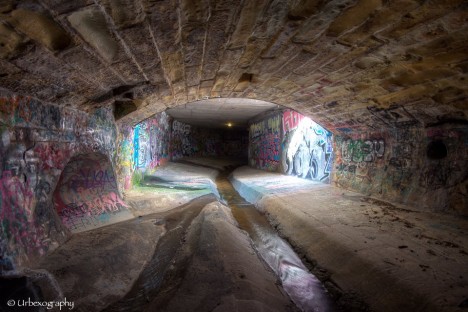
Below the streets of Hobart, Tasmania’s capital and most populated city, lie a network of centuries-old runoff tunnels that are slowly being turned into the backdrop for a growing body of collaborative (and sometimes creepy) art.

tasmania sewer tunnel exploration

rivulet tasmania

Urbexography (previously featured in a tale of Grimm Abandonments) has gone underground this time to capture the current state of the tunnel system and the strangely fascinating works that populate it at the present time.

tasmania underground doll pillars

tasmania doll wall detail

One series in particular may be best avoided after dark: an array of plaster-cast doll heads, a tribute to catacombs lined with human skulls found elsewhere in the world.

tasmania light from above

tasmania runoff system

Artist Shaun McGowan is behind much of the work. “I’d love to keep doing this project for years to come,” he told The Mercury. “It’s the opposite of gallery and studio work. There’s no barrier around it saying that other people can’t contribute or break it or do whatever they like. I love that collaborative nature.”

tasmania hobart underground

tasmanian tunnel art

Remarkably, many of his interventions have so far remained intact, drawing tourists and thrill seekers by day and night to these once-forgotten waterways. McGowan does not expect any particular piece to last, however, and accepts that change is inevitable and the place will always be a series of works in progress. Meanwhile, see more photographs of this amazing and evolving set of spaces on Facebook.

Share on Facebook


[ By WebUrbanist in Travel & Urban Exploration. ]

[ WebUrbanist | Archives | Galleries | Privacy | TOS ]


WebUrbanist

 
Comments Off on Hobart Rivulet: Doll Heads Adorn Pillars in Tasmanian Tunnels

Posted in Creativity


5 Ways to Use Lightroom Virtual Copies Better

20 Nov
Virtual Copies in Lightroom

Virtual Copies in Lightroom

Imagine that you have just processed a colour image and you are happy with the result, but you’d also like to experiment with it a little. Perhaps you’re curious to see how it will look if you convert it to black and white. Maybe you’d like to apply a Develop Preset or two, or crop to the square format, or even all three.

It’s easy in Lightroom. All you have to do is make a Virtual Copy and experiment.

A Virtual Copy is an exact replica of the original photo, including all edits made in Lightroom. Once you have made a Virtual Copy you can process it any way you like without affecting the original.

Virtual Copies are a fantastic tool because they let you make multiple copies of a single image, while using very little hard drive space (it only makes a new thumbnail it doesn’t duplicate your image file). You can try out different techniques, and keep all the results. Each Virtual Copy exists as a set of text commands in the Lightroom Catalog, an addition measured in kilobytes rather than megabytes.

You can review this by reading A Brief Introduction to Lightroom if you are unsure how it works.

Are you making the most of Virtual Copies? Here are five ways to use them better in Lightroom.

Creating Virtual Copies

There are four ways to create a Virtual Copy.

Start in Grid View in the Library module (press the G key to go there from any part of Lightroom). Select the image (or images) that you want to make Virtual Copies of:

1. Go to Photo > Create Virtual Copy. Lightroom creates the Virtual Copies and places them in the same Collection as the original images.

2. Alternatively, use the keyboard shortcut. If you’re using Windows press Ctrl plus apostrophe (Ctrl + ‘), on a Mac press Command plus apostrophe (Cmd + ‘).

3. Alternatively, right click on one of the selected photos and choose Create Virtual Copy.

Virtual Copies in Lightroom

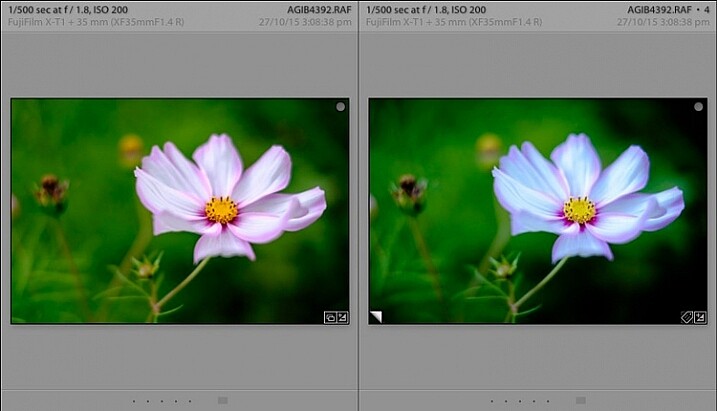
When you create a Virtual Copy it appears alongside the original in Grid View, and is identical in every way. You can make as many changes to the Virtual Copy as you lik,e without affecting the original.

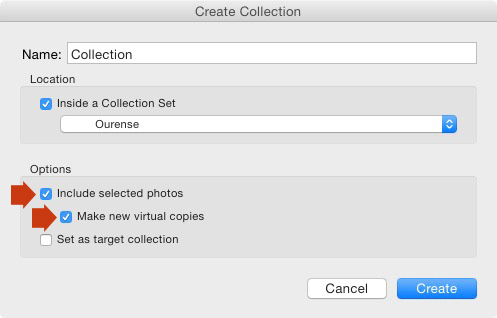
4. The fourth way is to go to Library > New Collection. The Create Collection window opens. Under Options, tick the Include Selected Photos and Make New Virtual Copies boxes. Lightroom creates a new Collection (with the name you give it), and adds Virtual Copies of the selected images.

Virtual Copies in Lightroom

Using Virtual Copies Better

Now you know how to create Virtual Copies, let’s look at some ways you can use them better in Lightroom.

1. To create multiple versions of the same photo

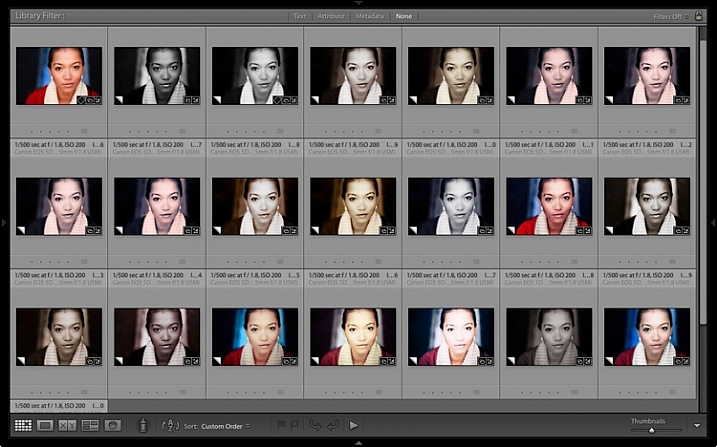
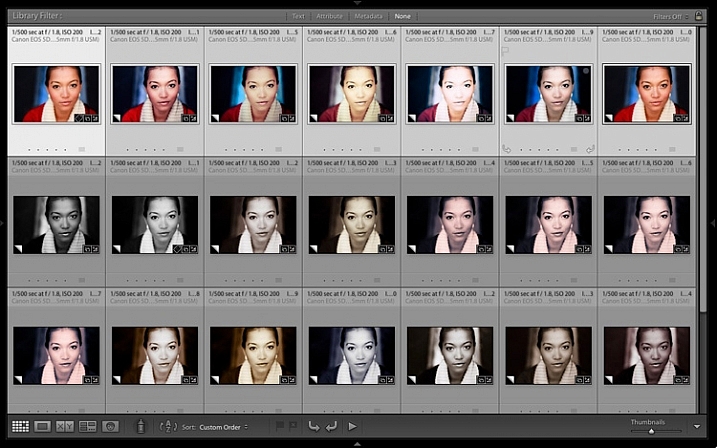
This is the main reason that you would want to create Virtual Copies – so you can process the same photo, a number of different ways. The photo shown below is a great example. I created a colour version first, then made a Virtual Copy and converted it to black and white. Then I made some more Virtual Copies and experimented with different Develop Presets and split tones. I ended up with 22 different versions in a mixture of colour and black and white.

Virtual Copies in Lightroom

2. Stacking Virtual Copies

You can use Stacks to simplify the thumbnails displayed in Grid View. In this example I’m going to create two Stacks – one containing colour photos, and the other black and white.

  • Select the photos you want to place in the same stack. Click and drag thumbnails to rearrange them in Grid View if you need to. Here, I grouped all the colour photos together.

Virtual Copies in Lightroom

  • Go to Photo > Stacking > Group into Stack. You can also find this option by right-clicking a thumbnail. Or use the keyboard shortcuts, Ctrl+G (Windows) or Cmd+G (Mac).

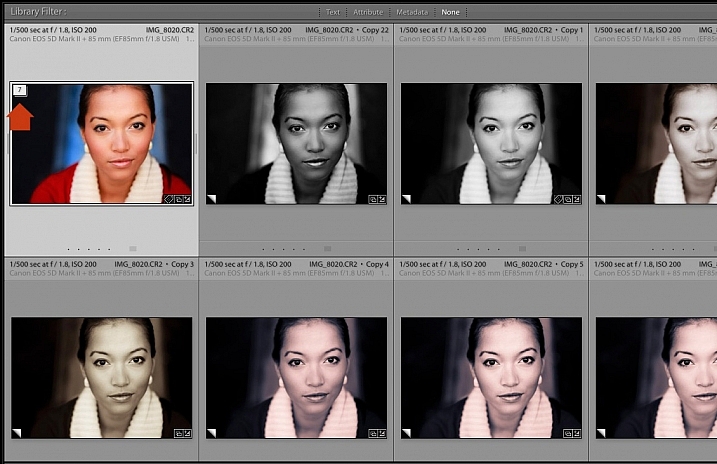
Lightroom places the photos into a Stack. The first photo in the selection is used as the cover image. The Stack icon is displayed in the top left corner of the thumbnail (marked below). The number inside tells you how many photos are in the Stack.

Virtual Copies in Lightroom

Repeat if you want to group other Virtual Copies into another stack. Below, you can see that I did the same with the black and white versions.

Virtual Copies in Lightroom

To view the photos in a Stack, click on the Stack icon in the thumbnail. Click it again to hide the stacked photos.

Virtual Copies in Lightroom

3. For working with plug-ins and Photoshop

If you want to send a photo to a plug-in or Photoshop, the recommended approach is to process it in Lightroom first (applying at least basic settings such as Camera Calibration, Lens Corrections and tonal adjustments in the Basic panel).

Before the export, make a Virtual Copy and send the Virtual Copy to the plug-in or Photoshop. Then, when you return to Lightroom, you can compare the two. You can also make more Virtual Copies from the original to send to other plug-ins, or to work on in Lightroom.

4. Set up View Options to show which images are Virtual Copies

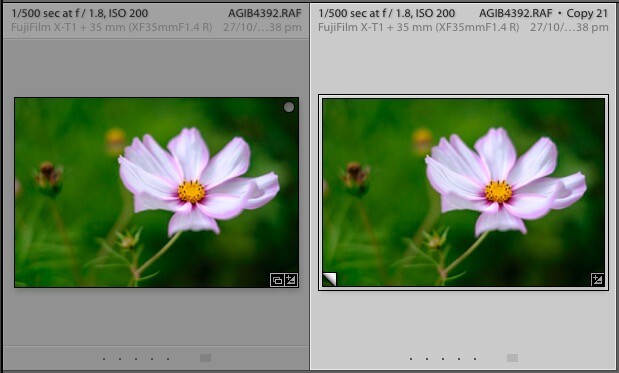
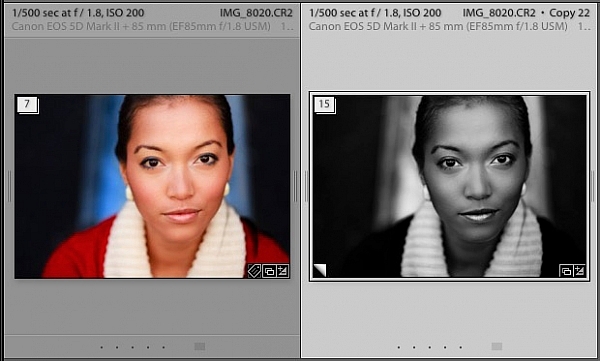
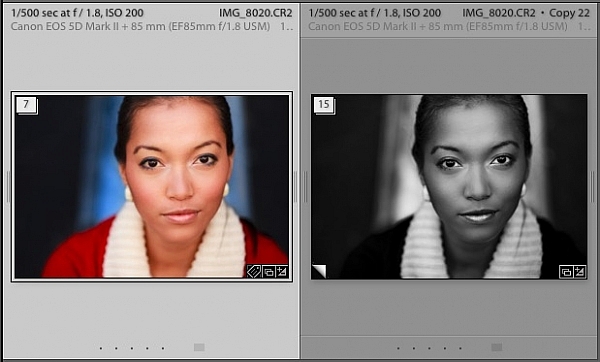
In the screen shot below, you can see that the image on the right is a Virtual Copy as it is labelled Copy 22. The image on the left is the original and just has the file name.

Virtual Copies in Lightroom

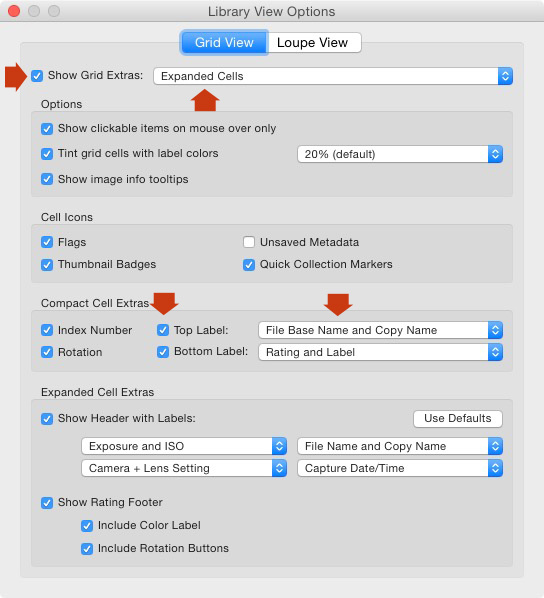
You can set this up in View Options (View > View Options or Ctrl+J/Cmd+J). Tick the Show Grid Extras and Top Label boxes (marked below). Set Show Grid Extras to Expanded Cells and set Top Label to File Base Name and Copy Name (the other options in the same section do a similar thing).

Virtual Copies in Lightroom

5. Use the Excessor plug-in to create a Collection of photos processed with different Develop Presets

The Excessor plug-in creates Virtual Copies and applies a different Develop Preset to each one. This is how to use it:

  • Go to the Capture Monkey website and download the Excessor plug-in. It is available on a shareware model – you can download and use it, and if you find it useful, you are encouraged to pay a one time registration fee of $ 10. Add it via the plug-ins manager (my article Useful Lightroom Plug-ins explains how – scroll to the bottom for instructions).
  • Select the photo you want to work with. Go to Library > Plug-in Extras > Excessor.
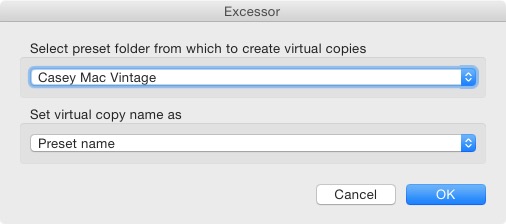
  • The Excessor window opens. Use the top menu to select a Develop Presets folder. Select Preset name from the bottom menu to give each Virtual Copy the name of the Develop Preset used to process it. Press OK.

Virtual Copies in Lightroom

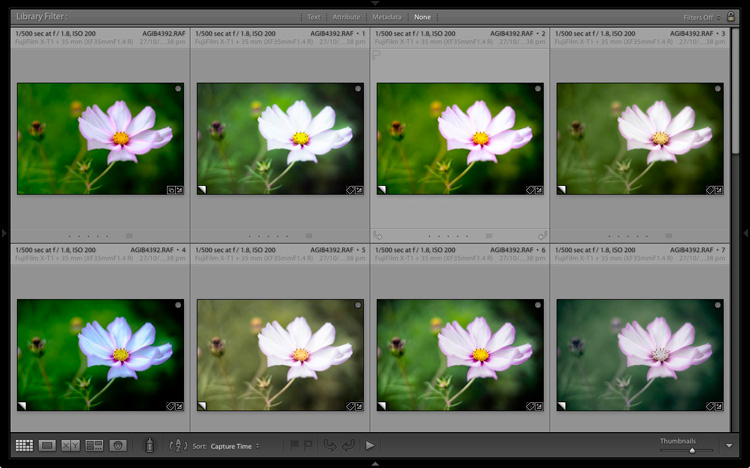
  • Lightroom creates a Virtual Copy for each Develop Preset in the selected folder.

Virtual Copies in Lightroom

Tip: Create Preset folders containing your favourite Develop Presets. You can create different folders for different subjects: e.g., a folder for portraits, another for landscapes, another for black and white, another for vintage presets, and so on. Then you can use the Excessor plug-in as a shortcut to applying your favourite presets to a photo.

Your turn

These are my five suggestions for using Virtual Copies better in Lightroom, but how do you use them? Have you come up with anything that I haven’t thought of? Let me know in the comments.


The Mastering Lightroom CollectionMastering Lightroom ebook bundle

My Mastering Lightroom ebooks are a complete guide to using Lightroom’s Library and Develop modules. Written for Lightroom 4, 5, 6 and CC  they  show you how to import and organise your images, use Collections, creatively edit your photos and how to work in black and white.

googletag.cmd.push(function() {
tablet_slots.push( googletag.defineSlot( “/1005424/_dPSv4_tab-all-article-bottom_(300×250)”, [300, 250], “pb-ad-78623” ).addService( googletag.pubads() ) ); } );

googletag.cmd.push(function() {
mobile_slots.push( googletag.defineSlot( “/1005424/_dPSv4_mob-all-article-bottom_(300×250)”, [300, 250], “pb-ad-78158” ).addService( googletag.pubads() ) ); } );

The post 5 Ways to Use Lightroom Virtual Copies Better by Andrew S. Gibson appeared first on Digital Photography School.


Digital Photography School

 
Comments Off on 5 Ways to Use Lightroom Virtual Copies Better

Posted in Photography


LifePrint portable printer uses augmented reality app to bring photos to life

20 Nov

A portable photo printer called LifePrint, now seeking funding on Kickstarter, creates ‘living’ photos by combining a printed photograph with a digital video. An augmented reality app makes this possible, so that when a print is viewed through a smartphone’s camera, the video appears where the photo is located, making it seem as if the image – called a HyperPhoto – has come to life. Read more

Articles: Digital Photography Review (dpreview.com)

 
Comments Off on LifePrint portable printer uses augmented reality app to bring photos to life

Posted in Uncategorized


How to Find Inspiration Photographing Locations Near Home

20 Nov

Everywhere you look there are thousands of images depicting beautiful places in the world. How many times have you thought to yourself, “I wish I could travel so I could take the same photographs?” The reality is that most of those photos were taken by people who live close to the locations, or have the ability to travel there multiple times.

It is a statement that you hear from many photographers. It may be true, but the truth is most of us live in wonderfully rich photographic areas. The problem is that you see it every day, so it no longer seems interesting.

leanne-cole-photographing-home-008

Knowing that a storm is coming, then being able to get to a good location quickly, is an advantage when you photograph near where you live.

What would you recommend to a visitor

If another photographer was coming to your area and wanted to know places to go, what would you recommend? Think about what someone else might be interested in, that is a way you can photograph it. Try to look at your area from another point of view.

How to find something to shoot

There has to be something unique or different about where you are located. Look at the history of your town or area. See if you can find out about an event that happened where you can visit the place. Use the history as your motivation for photography. Google the area around you, and see what you can find.

Think about interesting buildings, ones that are abandoned or still in use. There may be some interesting landmarks that can help tell a story. Perhaps there was an industry there that no longer exists.

For example, suppose in your area the local hospital started as a home for incurables. Then the land was given to the city for a permanent hospital. How has that hospital shaped the town? Is the original hospital still there? Has the hospital gone, but now something else is in its place?

There is always the possibility that nothing has ever happened. Maybe your location is devoid of that, and in which case you could photograph the normality of it. What makes it boring? What does the main street look like? Is there anything interesting there at all? There will always be something.
leanne-cole-photographing-home-001

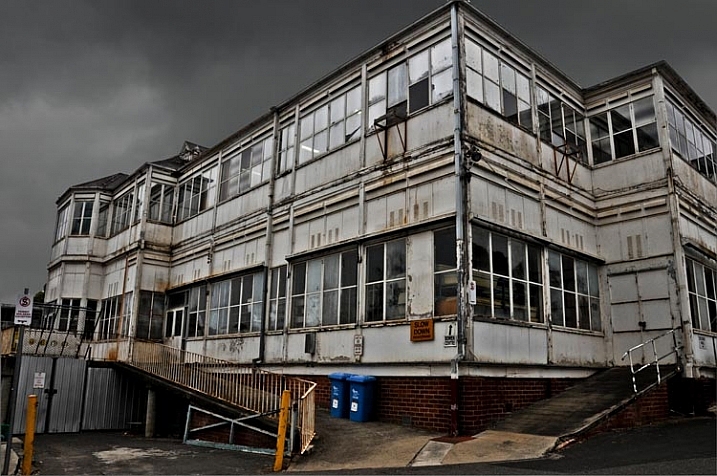
An older part of the Austin Hospital in Heidelberg.

How far are you willing to travel?

Mark a circle on a map of where you would be willing to travel to in a day. For instance, you might be prepared to travel at least two hours to get somewhere. Perhaps time isn’t on your side, and you can only travel 15 minutes in any direction. That becomes your zone, and the area you are going to photograph.

My area is two hours, or around that. I will travel somewhere for the day and take photos. I will go back to the same areas. There is a lot that is within that area near where I live.

Find the story

Perhaps instead of finding individual images of the place you might be better off trying to do a whole story on it. Find the story of the area. What makes it important to the people who live there? Why have they stayed? Why do you live there?

The answers to all these questions will help you find the story, and can inform your photography.

leanne-cole-photographing-home-002

An old car left to rust in the Mallee.

Advantages

When you photograph where you live, you have nothing but all the advantages:

1 – You can take photos at the best time of day

One definite advantage you have over visitors to your area, is that you can work out when the best time to photograph that spot. Then, you can go back as many times as you need.

If it is very close, you can get up early and see if it is worthwhile going there for a sunrise. Perhaps in the afternoon you can see if there are clouds in the sky, which might make it a good opportunity to get a sunset. You will be able to look out the window and figure out when you want to go.

Most people have to hope that the one time they go, the conditions will be perfect for what they want to photograph. You know how often that happens.
leanne-cole-photographing-home-003

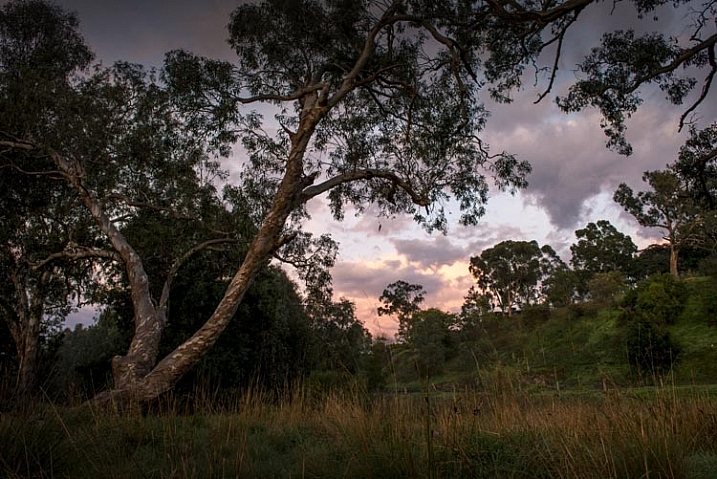
Getting sunrises is easier when you can wake up and go down the road to capture it.

2 – Experiment with different techniques

You can try a lot different techniques to take photos. You can go home and see what you have, then go back and experiment with other angles or conditions another time. You can try more experimental types of photography, that other people who only have one opportunity to go there, might not want to try.

Every time you go, try to shoot it that spot a different way.

leanne-cole-photographing-home-004

Sunset over a salt pan in the Mallee. Being able to get back to the same spot to get the best photos is a bonus.

3 – Visiting the location multiple times

How often have you gone somewhere, put your photos on the computer when you got home and thought, “I wish I had noticed that tree” or something else on the side of the image? Maybe you wished you could have taken it at a different angle.

If you live there, that will never be a problem for you again. You can visit that spot as many times as you like, to get exactly the photos that you want.
leanne-cole-photographing-home-005

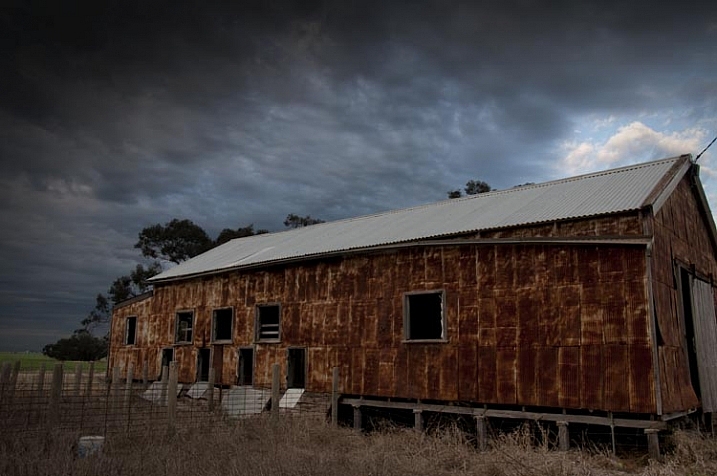
Old towns can have great buildings that have just been left, like an old shearing shed make from kerosene tins.

4 – Have access to local knowledge

Visiting any places where you might only go once, you have to be content with information from the internet, or with what you see when you get there. However, when you live in an area, you can talk to people you know, who may be able to introduce you to others. If they know you are interested in the local area and taking photos, then you might find people coming to you, to tell you about places that you didn’t know existed.

Disadvantages

Are there really any disadvantages? Perhaps the fact that you aren’t going anywhere exotic to take photos, unless you already live somewhere like that.

When you decide to photograph the area you live in, you get all the advantages that so many others don’t have for that place. It is up to you to make the most of it. Some examples:

A Mallee Town of not much consequence

Take a small town in North West Victoria (Australia) where my mother lives. I go up there to visit all the time. According to the locals there is nothing there. But when I drive around, I see shops that are now empty, or a train station that has closed, and stopped being used many years ago. There are things that give hints to a time past, that was industrious. The town had a past where it was bigger, where those stores were open for business.

It would be easy to agree with the locals that there is nothing there, but that would be a mistake. The story is there in those closed buildings and what is left of the town. As a photographer you can then show what is happening there.
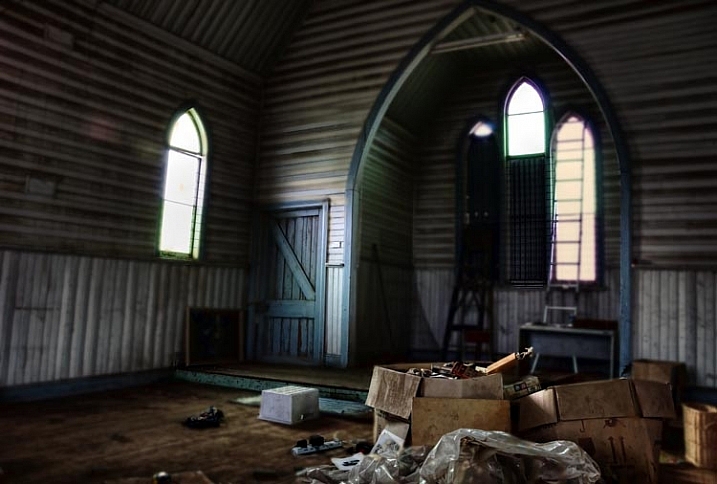
leanne-cole-photographing-home-007

Getting to know locals in towns can give you access to buildings, like this old church in a Mallee town.

Finding the history of where you live

For many years I always travelled to other places, in the city, or in the state of Victoria, to take photos because I was convinced that what was around me was boring. Who would be interested in what’s here?

I started to realize that this area has a rich art history. Some famous Australian artists have painted this area, and perhaps that was where I needed to start looking. Once I started looking with different eyes, a lot of new places started to open up to me. This area has some great parks. It is quite old so there are ancient homes, hospitals, cemeteries. Now I photograph it all the time.
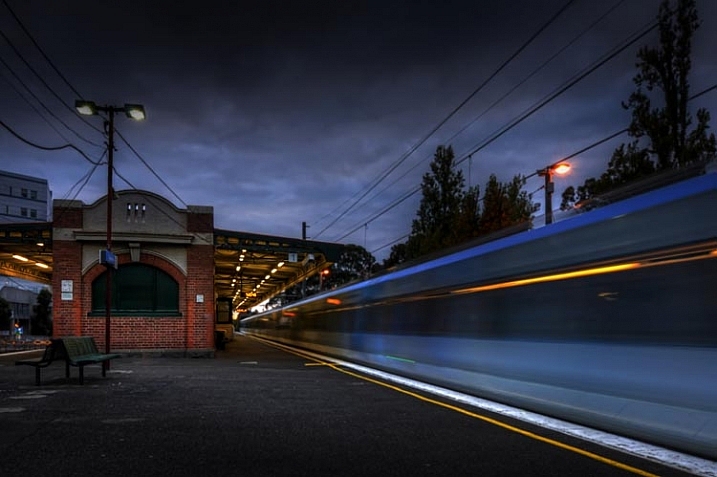
leanne-cole-photographing-home-006

Knowing the local train station and timetable, can be great for getting to the station at a good time to take photos.

When you photograph somewhere you live or a place you travel to often, you really get so many wonderful opportunities.

Many photographers dream of travelling to other places and photographing the world, but sometimes your best subject is right outside your door or within a stone’s throw of where you live. You just need to get out there and see what you can find.

Please share your local photography finds and your images in the comments below.

googletag.cmd.push(function() {
tablet_slots.push( googletag.defineSlot( “/1005424/_dPSv4_tab-all-article-bottom_(300×250)”, [300, 250], “pb-ad-78623” ).addService( googletag.pubads() ) ); } );

googletag.cmd.push(function() {
mobile_slots.push( googletag.defineSlot( “/1005424/_dPSv4_mob-all-article-bottom_(300×250)”, [300, 250], “pb-ad-78158” ).addService( googletag.pubads() ) ); } );

The post How to Find Inspiration Photographing Locations Near Home by Leanne Cole appeared first on Digital Photography School.


Digital Photography School

 
Comments Off on How to Find Inspiration Photographing Locations Near Home

Posted in Photography


PIX 2015: Tim Grey and reframing your story

20 Nov

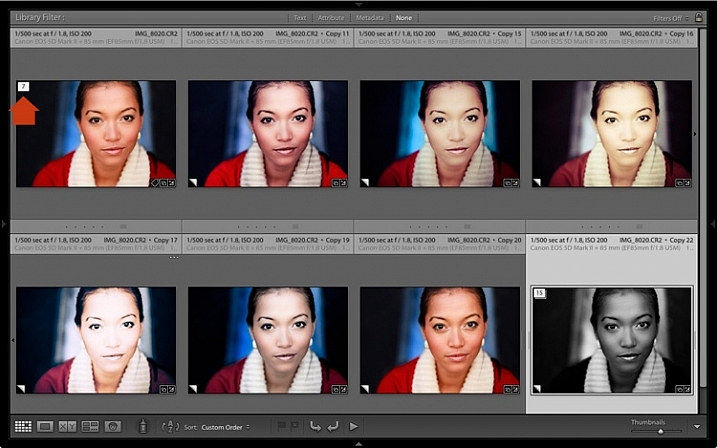
Photographer and author Tim Grey argues that sometimes the difference between getting a good picture and a great picture can be as simple as taking a few steps to the right. His PIX 2015 talk highlights 13 smalls changes photographers can make that can add up to some huge improvements in their images. Read more

Articles: Digital Photography Review (dpreview.com)
 
Comments Off on PIX 2015: Tim Grey and reframing your story

Posted in Uncategorized


Robotic Delivery: 6-Wheeled Drones Set to Roll Out in London

20 Nov

[ By WebUrbanist in Technology & Vehicles & Mods. ]

drone bots streets london

With all the focus on flying drones, grounded versions can fly under the radar, like the bot driving this latest business from the co-founders of Skype. Facilitating robotic deliveries in London, Starship Technologies aims to advance driverless automation in smaller steps, beating autonomous car companies to getting driver-free wheels on the ground in England.

drone real street delivery

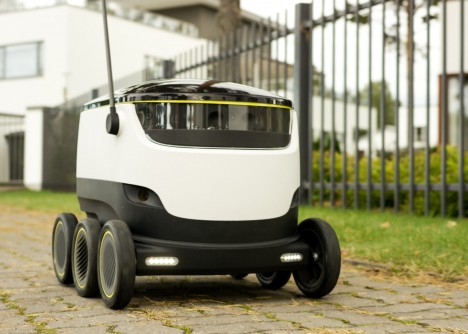
The little driverless electric vehicles that will be making the rounds are six-wheeled rovers just over 20 inches tall and able to be packed with a sizable load of goods for short shipments.

drone on sidewalk

Customers simply select items online, pick from delivery windows, then track progress on an app and tap on their logged-in device to open the lid when their shipment of stuff arrives.

drone open hatch

Cruising at just four miles per hour, it remains to be seen how they will handle even sidewalk foot traffic, let alone road crossings. Its creators also presumably anticipate that a watchful public (and CCTV cameras) will help keep the little drones safe on their journeys. However, the bots can also directly relay distress signals to the police in an emergency or be remotely operated by human pilots as needed.

drone london open

They also come with an antennae that both helps with wireless connectivity but also provides visibility beyond each drone’s natural height.

drone neighborhood deliveries

“Our vision revolves around three zeroes – zero cost, zero waiting time and zero environmental impact,” say the founders. “We want to do to local deliveries what Skype did to telecommunications.”

drone bot delivery vehicle

So far the robots have only been tested indoors (interoffice experiments), but the company aims to hit the streets (or at least sidewalks) next year.

drone remote delivery street

It is in many ways an attempt to solve the ever-vexing ‘last mile’ problem: “The last few miles often amounts to the majority of the total delivery cost.”

drone robot delivery service

“Our robots are purposely designed using the technologies made affordable by mobile phones and tablets – it’s fit for purpose, and allows for the cost savings to be passed on to the customer.”

Share on Facebook


[ By WebUrbanist in Technology & Vehicles & Mods. ]

[ WebUrbanist | Archives | Galleries | Privacy | TOS ]


WebUrbanist

 
Comments Off on Robotic Delivery: 6-Wheeled Drones Set to Roll Out in London

Posted in Creativity