RSS
 

Archive for September, 2015

Colorful Cabs: Taxi Fabric Project is a New Form of Urban Art

04 Sep

[ By Steph in Design & Fixtures & Interiors. ]

taxi fabric project

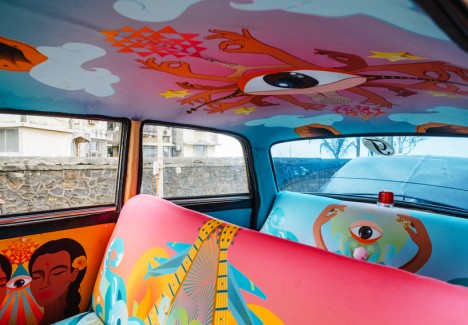
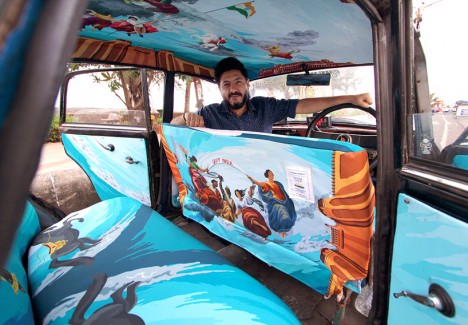
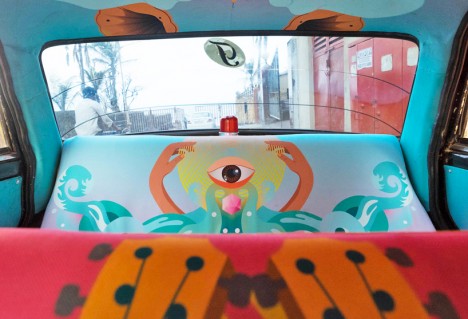
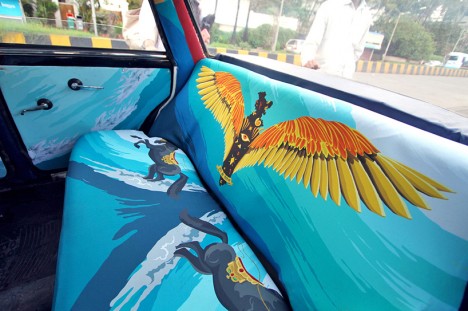
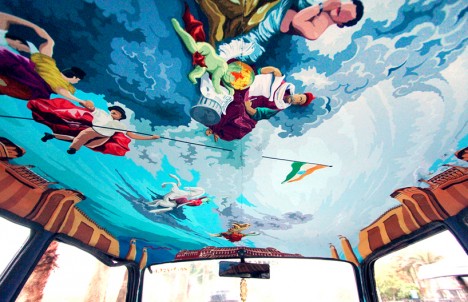
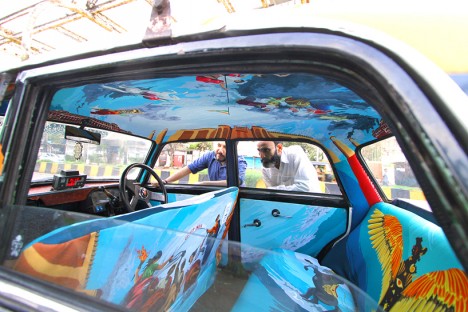
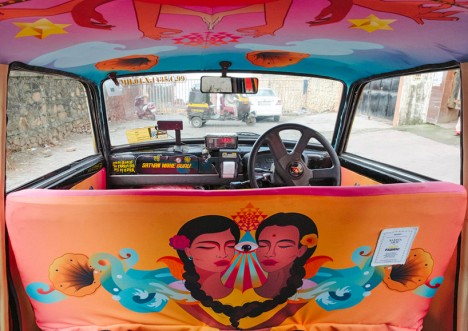
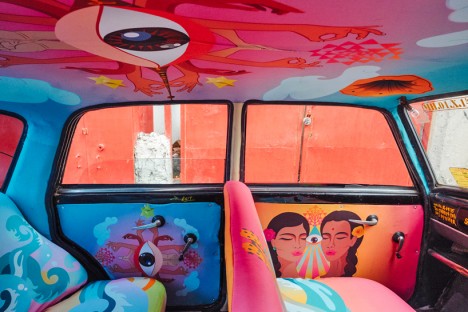
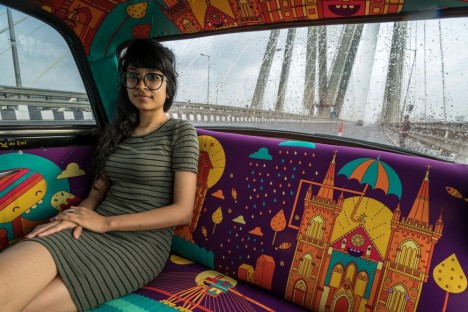
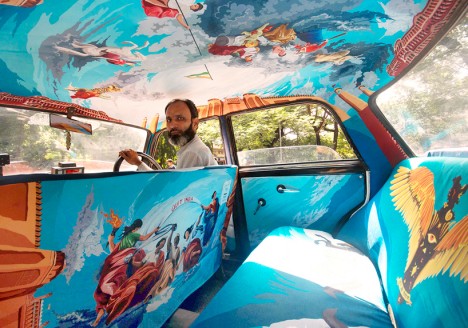
Thousands of people get to gaze at beautiful original artwork while taking a ride from one place to another in Mumbai, India, bringing exposure to local design talent through a new form of urban art. The Taxi Fabric Project beautifies this often impersonal mode of transport, making cabs stand out as individuals in a crowded sea of cars and creating mobile galleries that immerse riders in a particular artist’s imagined world.

taxi fabric project 10

taxi fabric project 5

taxi fabric project 9

“Design – as a job or studied at school – is unfortunately not widely recognized in India,” say the creators of the project. “Older generations don’t understand it. Design to them just performs a function. Many people don’t know that design can create a real impact. With so few spaces for young people to show off their skills, it’s hard to change that perception.”

taxi fabric project 2

taxi fabric project 7

taxi fabric project 8

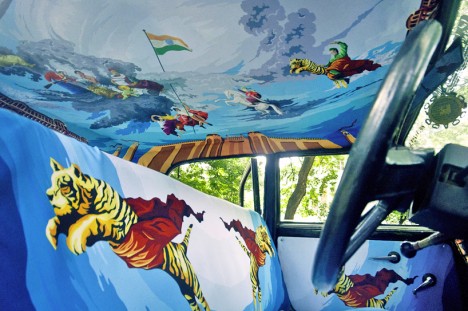
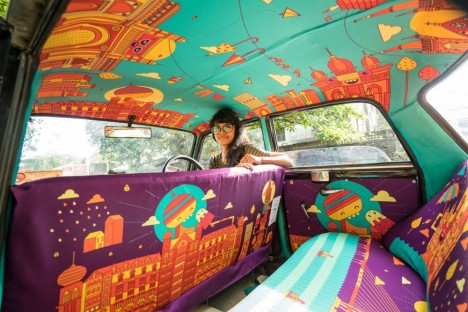
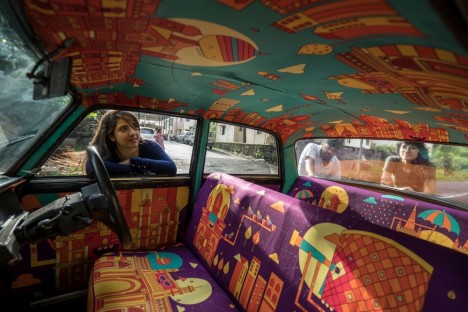
In a city where cabs are the most convenient and common way to get around, this unusual mashup of art and transportation has the potential to get a lot of people excited about design and curious about the artists. Up to 30 taxis will be made over for the project, printing colorful works onto fabric and stitching it directly to the interior surfaces of each car.

taxi fabric project 6

taxi fabric project 4

taxi fabric project 3

One notable example is ‘A Century of Revolt’ by Kunel Gaur, which illustrates the Indian Independence in a fresco-inspired style. Another – ‘Monad’ by Samia Arif – reminds Indians how similar their culture is to that of neighboring Pakistan, while conflicts continue to rage between the two countries.

taxi fabric project 11

taxi fabric project 12

taxi fabric project 13

‘Happily Ever After’ by Shaivalini Kumar celebrates the landmarks of Mumbai. “The architecture of Mumbai blends Gothic, Victorian, Art Deco, Indo-Saracenic and contemporary architectural styles. Many buildings, structures and historical monuments remain from the colonial era. All these buildings coexist beautifully and are also as resilient as the amazing people of Mumbai.”

Share on Facebook


[ By Steph in Design & Fixtures & Interiors. ]

[ WebUrbanist | Archives | Galleries | Privacy | TOS ]


WebUrbanist

 
Comments Off on Colorful Cabs: Taxi Fabric Project is a New Form of Urban Art

Posted in Creativity


Epson introduces EcoTank printer range with two years of ink and low-cost refill bottles

04 Sep

That inkjet printer ink costs more than champagne is the frequent moan of anyone who has to replace their cartridges. Take heart though, as Epson has launched a range of printers called EcoTank that it claims will help users save 70% on home printing. The five new machines come with what Epson says is enough ink to last two years, and once empty the tanks can be refilled from a bottle instead of being replaced. Read more

Articles: Digital Photography Review (dpreview.com)

 
Comments Off on Epson introduces EcoTank printer range with two years of ink and low-cost refill bottles

Posted in Uncategorized


Reading List: 7 Great Photography Books for Beginners

04 Sep

We like to think of ourselves here at Photodoto as a resource that beginning photographers can utilize to help them improve their photography and find new, interesting sources of inspiration. We even have our handy-dandy 7-day email course, which you can receive for free by entering your email in the box just to the right of this paragraph. But sometimes, Continue Reading

The post Reading List: 7 Great Photography Books for Beginners appeared first on Photodoto.


Photodoto

 
Comments Off on Reading List: 7 Great Photography Books for Beginners

Posted in Photography


Orangutan photo snags Sony World Photo prize for DPR reader

04 Sep

We first became acquainted with Andrew Suryono’s name when his ‘Orangutan in the Rain’ photo popped up as one of the top submissions to the Sony World Photography awards. As we later found out, he’s a DPR regular and his photo eventually took first place in Sony’s Indonesia National Award category. Find out the story behind the image. Read more

Articles: Digital Photography Review (dpreview.com)

 
Comments Off on Orangutan photo snags Sony World Photo prize for DPR reader

Posted in Uncategorized


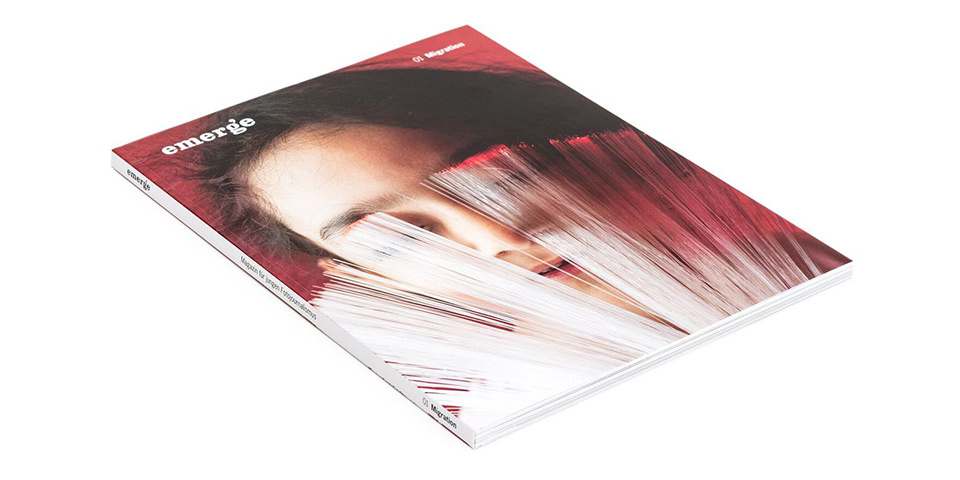
Emerge Magazin: Migration

04 Sep

© Emerge Magazin

Emerge ist ein Online-Magazin für modernen Fotojournalismus und hat den Schritt zum gedruckten Magazin gewagt. Während viele andere Magazine aus der Printwelt ihre Präsenz im Netz ausweiten, hat emerge es genau anders herum gemacht. Damit man die Geschichten in Ruhe zu Ende liest und den Bildern genug Zeit gibt, anstatt sie schnell durchzuklicken, so heißt es im Vorwort.
kwerfeldein – Fotografie Magazin | Fotocommunity

 
Comments Off on Emerge Magazin: Migration

Posted in Equipment


Squeeze to Zoom: No Need to Fold this Egg-Shaped Analog Map

04 Sep

[ By WebUrbanist in Design & Products & Packaging. ]

egg shaped map design

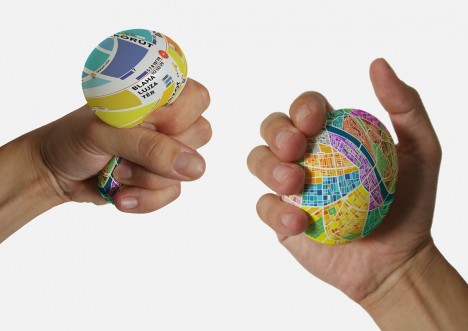
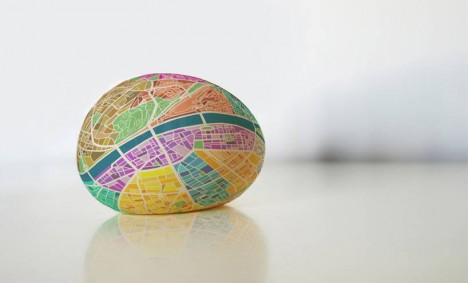
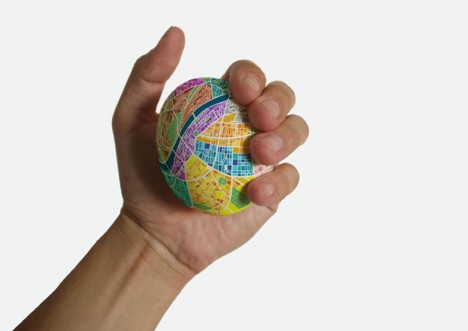
Tapping into the natural expansion of a squeezable ball under pressure, this urban micro-globe provides both big-picture views and detailed streetscapes on one continuous surface.

squeeze color coded map

Hungarian designer Dénes Sátor created the rubber EggMap ball in response to both traditional paper maps and newer digital equivalents, wanting a to pack more information into less space without relying on external energy or connectivity.

squeeze eggmap zoom out

squeeze eggmap zoomed in

The spherical solution addresses classic issues with other geographical guides. Folding maps wear out over time, are susceptible to weather and conspicuous to examine publicly in unfamiliar places. Online maps may fail for lack of battery or internet.

squeeze map legend

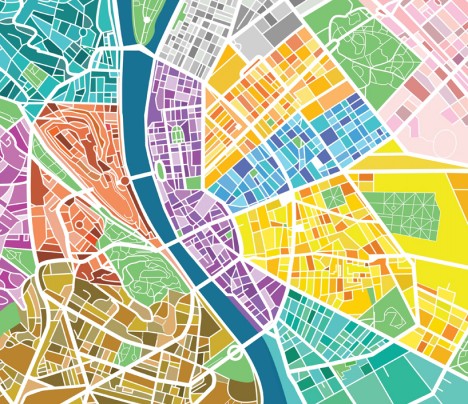
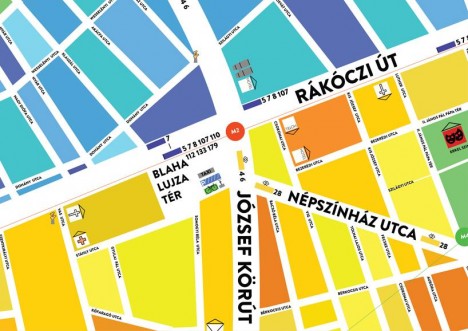
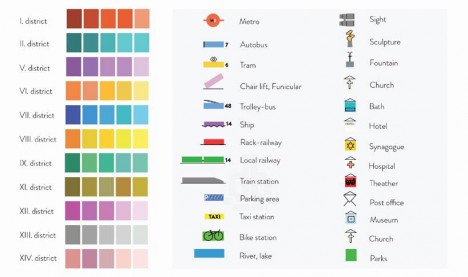
Color-coded city sections let you easily spin and locate places on the map; a quick squeeze then reveals street names, specific locations and transit details (illustrated in the legend above).

squeeze to zoom map

squeeze ball egg map

Made to be robust and portable, the air-filled ball easily resists rain, wind, mud or snow and can be tossed in a pocket or backpack when not in use. And if you still manage to get lost, you can always throw it against the wall in anger – it will rebound.

Share on Facebook


[ By WebUrbanist in Design & Products & Packaging. ]

[ WebUrbanist | Archives | Galleries | Privacy | TOS ]


WebUrbanist

 
Comments Off on Squeeze to Zoom: No Need to Fold this Egg-Shaped Analog Map

Posted in Creativity


5 Ways a Telephoto Lens Can Improve Your Landscape Photography

04 Sep

2-for-1 special

As part of Landscape Photography Week here on dPS, we’re offering TWO for the price of ONE on our best-selling Living & Loving Landscape Photography ebooks!

Click here to take advantage of this offer.


While it may seem counter-intuitive at first, the most sophisticated compositions are often the simplest. For this reason, ultra wide angle lenses are not typically the ideal choice for outdoor images. By including too much information, you risk losing the subject to visual clutter. This creates a unique challenge for landscape photography. While it’s tempting to include the vast expanse of a splendid horizon, a stronger image may only contain a small portion of it. This is where a telephoto lens becomes an invaluable part of your kit.

Here are five ways using a telephoto lens can help you do better landscape photography:

1) Eliminate Clutter

It’s rare to come upon a landscape that doesn’t require decluttering. Common sights include power wires, fences, trail head signs, unsightly dirt patches, and dumpsters. You can try to compose with your feet at first, but what about those situations when you can’t go any further?

Where a wide angle lens falls short, a telephoto in the 70-300mm range, will be very useful. With such a lens, you can pick the precise area where all of the essential elements come together, and work to eliminate everything else.

2) Isolate Your Main Subject

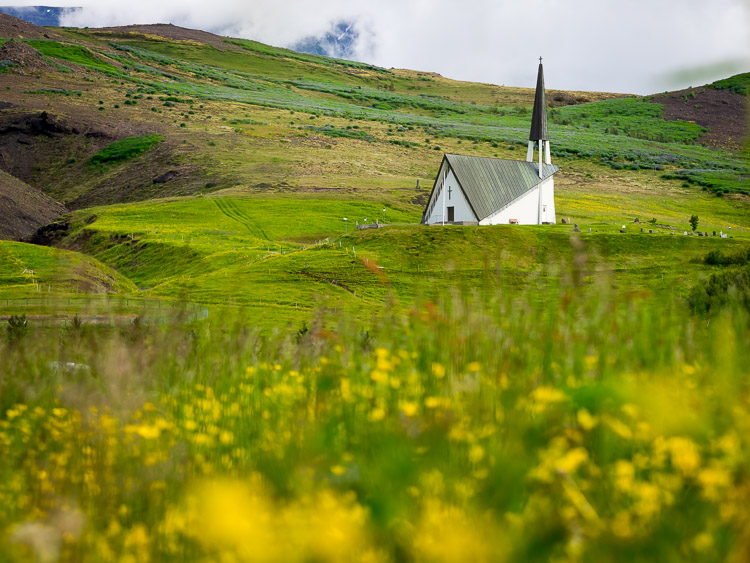
A telephoto lens gives you the ability to pick a single part of a larger landscape and bring attention to it. Of course the increased reach isn’t the only part of the equation. You’ll still need to consider various methods of composition, like the rule of thirds and a strong foreground element. Try shooting from a low vantage point, through flowers or grass for added depth. At wide apertures foreground elements will become a nice wash of color that lead the eye to the subject.

3) Expand Your Horizons

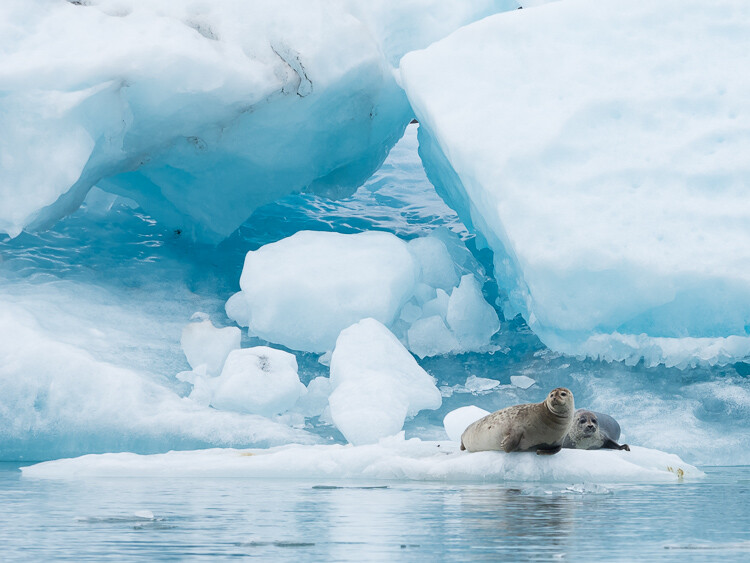
The potential for subject matter multiples with a longer focal range. For instance, wildlife that would appear very small at 55mm, become much more prominent at 420mm. No longer are you just shooting landscapes, but possibly wildlife as well. Just remember that good technique is essential for sharp telephoto images. Even the slightest bit of camera shake will be magnified if your shutter speed is too slow. When shooting hand-held, try to set an exposure no slower than 1/500th of a second. Image stabilized lenses and camera bodies absolutely offer some flexibility here, but it’s best to err on the side of caution if your goal is to make tack sharp enlargements.

4) A Different Perspective

If you look at the front cover of many photo magazines, they often encourage the use of ultra wide angle lenses for landscapes. While it’s true that certain scenes come to life at 16mm, it’s the exception rather than the rule. If you’re looking to create a unique representation of a scene, a greater focal range can help you find it. At a time when it seems just about everyone has a camera, going beyond the reach of a normal kit lens can lead to extraordinary results.

5) Finding Patterns

By searching for organized patterns and repetition with a long lens, you can bring order to the world around you. This method of seeing will help to further develop your eye and strengthen your compositions. Rather than looking at the bigger picture, you’re choosing to focus on the smaller details.

While this particular strategy of composition doesn’t require any overly technical methods, it does require a different approach. The trick is to zoom in and carefully scan the landscape through your viewfinder. Patterns don’t always reveal themselves right away, so take your time and compose carefully. You may be surprised at where you’ll find these unique photo opportunities as they can appear just about anywhere.

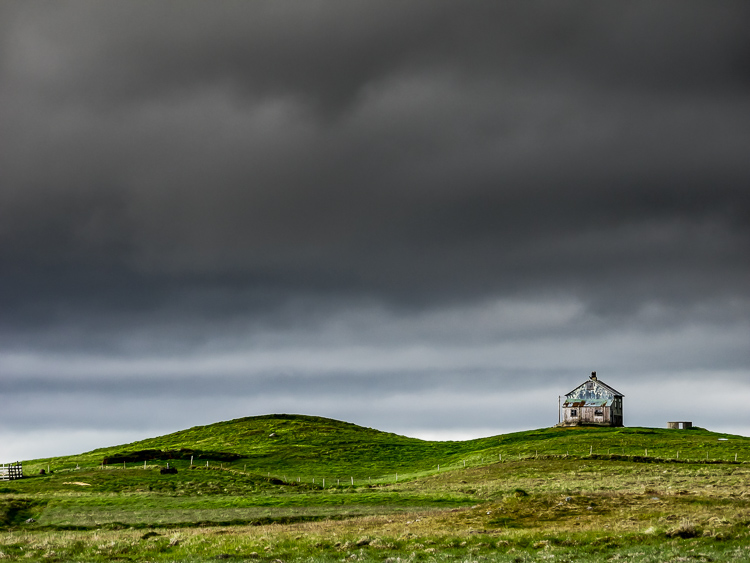
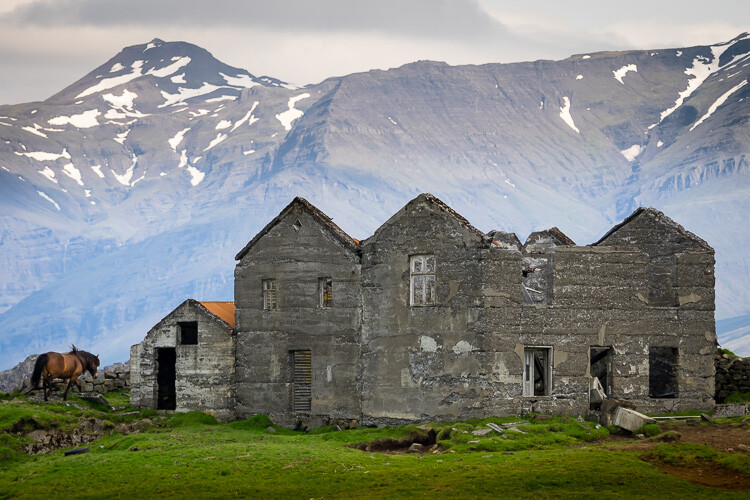
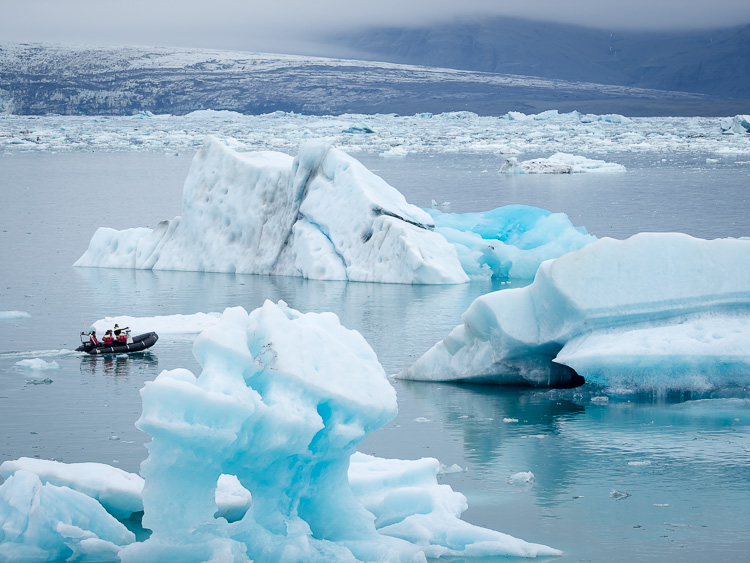
All of these images were captured in Iceland where landscapes often have an abundance of empty space. There were definitely times when the wide angle came in handy, in tight quarters for example, or at the base of a waterfall. For just about everything else, a 40-150mm (Olympus OMD EM1 with the 40-150mm f/2.8, effective 80-300mm) proved more effective. In fact, many of my favorites were shot at the long end of the lens’ range. The next time you head out to photograph scenery, think long, and make a telephoto lens your first option.


Here on dPS it is landscape week. You can see the previous ones listed below. Watch for a new article (or two) on landscape photography daily for the next week.

  • 6 Tips for Better Low-Light Landscape Photography
  • Landscape Photography and the Human Element

googletag.cmd.push(function() {
tablet_slots.push( googletag.defineSlot( “/1005424/_dPSv4_tab-all-article-bottom_(300×250)”, [300, 250], “pb-ad-78623” ).addService( googletag.pubads() ) ); } );

googletag.cmd.push(function() {
mobile_slots.push( googletag.defineSlot( “/1005424/_dPSv4_mob-all-article-bottom_(300×250)”, [300, 250], “pb-ad-78158” ).addService( googletag.pubads() ) ); } );

The post 5 Ways a Telephoto Lens Can Improve Your Landscape Photography by Chris Corradino appeared first on Digital Photography School.


Digital Photography School

 
Comments Off on 5 Ways a Telephoto Lens Can Improve Your Landscape Photography

Posted in Photography


Polaroid Snap instant digital camera prints 2×3″ photos

04 Sep

This year’s IFA show in Berlin saw the introduction of the Polaroid Snap instant digital camera. It features a 10 megapixel sensor and integrated ZINK Zero Ink printer that produces 2 x 3 inch adhesive-backed color photos using heat-activated dye crystals and a polymer overcoat rather than ink. Read more

Articles: Digital Photography Review (dpreview.com)

 
Comments Off on Polaroid Snap instant digital camera prints 2×3″ photos

Posted in Uncategorized


Landscape Photography from the Side of the Road

04 Sep

2-for-1 special

As part of Landscape Photography Week here on dPS, we’re offering TWO for the price of ONE on our best-selling Living & Loving Landscape Photography ebooks!

Click here to take advantage of this offer.


For most people the idea of landscape photography means getting a good backpack that can carry everything, then hiking for miles to a destination. You need to be fit, and prepared for anything that might happen. You might have to camp, and sleep, out in the wilderness. It would be an adventure, and you get to photograph some areas that others never get to see.

I don’t do that. Never have, and I can’t see it happening anytime in the near future. I don’t think there is anything wrong with it, but I would never do that on my own, especially not here in Australia. The hiking part would be okay, but, again, only if I had company. There are just so many other ways of doing landscape photography.
cole-landscape-road-side-photography-0002

The sun trying to break through the trees meant we had to find somewhere to stop and take some photos.

One of those methods is car trunk photography, also known as roadside photography.

It sounds easy right? It’s simply about doing photography that isn’t far from your car.
cole-landscape-road-side-photography-0004

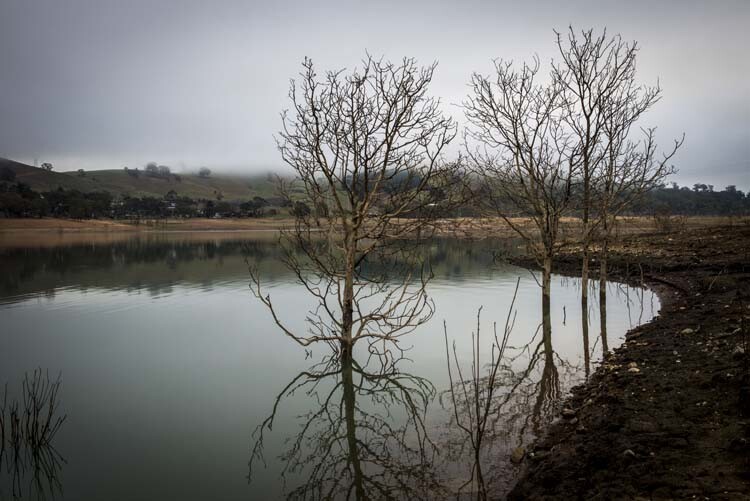
Lake Eildon water level was down and these trees were reflected in the water beautifully, but we had to walk to get to them. We could still see the car in the distance.

One of the most famous photographers of our time was well known for using his car to take photos, Ansel Adams. You likely have seen the photo of him on top of his car with his camera, setting up an image. Boards were put over his roof racks so he could stand up there with his big view camera. My car has roof racks, maybe I should consider doing the same.

Moose Peterson is another photographer that loads up the trunk of his car with his full set of gear, and has a second bag to carry some of it around.  He has full knowledge that the car isn’t too far away if he needs to grab something.

Gear

One of the best advantages of doing this kind of photography is that you can take as much gear as you like with you. You aren’t restricted by how much you can carry, you can take everything you think you might need.
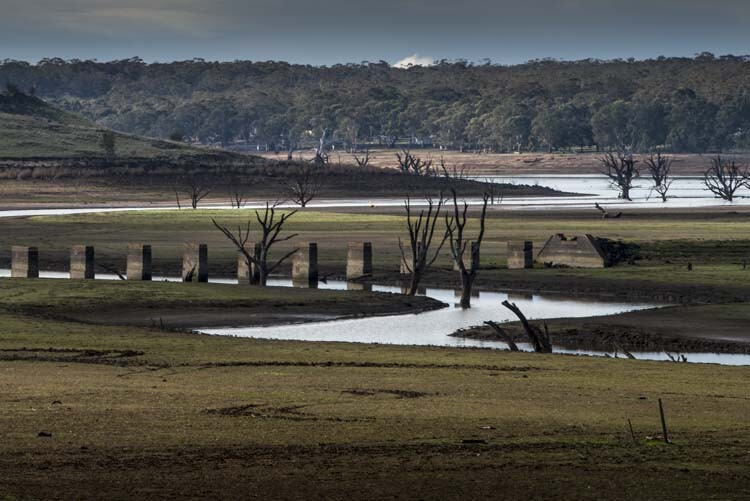
cole-landscape-road-side-photography-0007

The car was right behind me, I got out my zoom and took this shot of a dam showing an old bridge that had emerged as the dam water level went down.

You may just have a compact camera and not a lot of photography gear, but you may also decide to take your umbrella, coat, scarf, gloves and hat, or other weather appropriate clothing. If it is hot take your sunscreen and sunhat, don’t be silly with the sun.

But if you are doing this type of photography you will likely be using a DSLR or Mirrorless camera, and you might have a lot more to take with you. If you do have a lot of gear, it may be best to use two bags – one as the main bag to hold everything, usually the bigger one, and the second one to carry what you need for any particular place you stop.

Once you get out and look around, you often find you don’t have the right lens, but as the car isn’t that far away you can go and change it easily. This also means you can take tripods, filters, monopods, anything that there might be a possibility of using. You just never know.
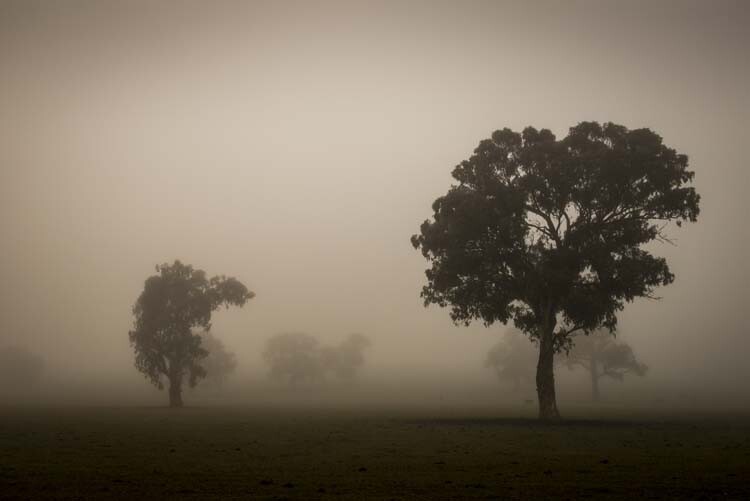
cole-landscape-road-side-photography-0001

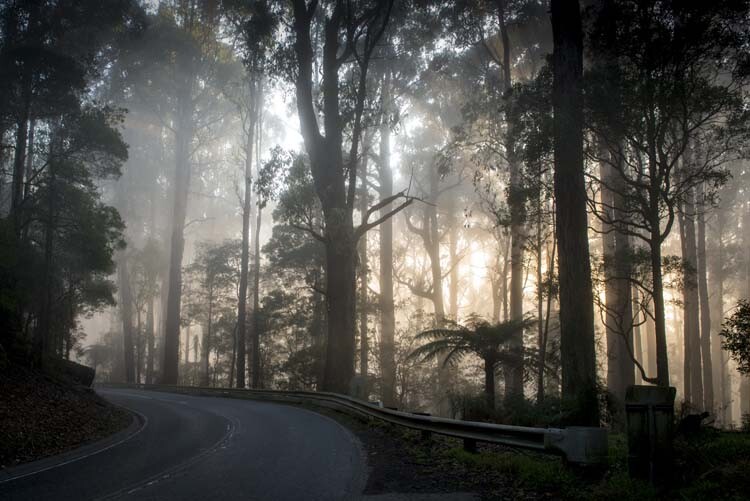
A foggy morning along the road. Just pull over, take some photos and get back in the car before you get too cold.

Safety

It is all very well pulling up on the side of the road to do what you want to do, but you also have to make sure that it is safe as well. When you pull up, get right off the road and as you get out of your car, or back in again, look for cars or trucks that might be driving past so you don’t get hit.

Look at the sides of the road before you pull off. Make sure the road is not wet and you won’t get stuck. Find out if there has been lots of rain. If you are in Australia in summer, be careful about long grass and snakes hiding in it.

When you are moving away from the car, lock it. While someone might not steal the car they might take all the gear you have left inside. You need to take the normal precautions that you would take if leaving your car anywhere else.
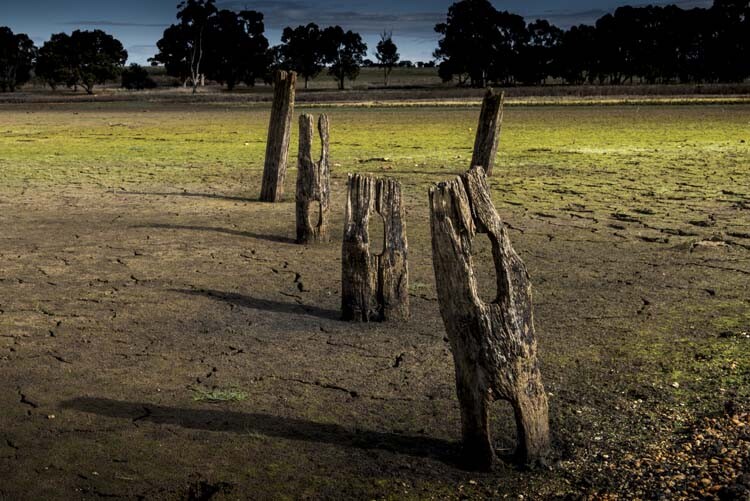
cole-landscape-road-side-photography-0006

We pulled into the side track, but then had to take a short walk to see these old fence posts in the dried out dam.

Planning Your Trip

It is something you can do on your own, or with others. You can do it on a day trip to somewhere, or go away for a few days exploring countrysides to see what you can find.

The most common way is to pick a day with friends and then decide on a destination. Discuss what are you going to look for and where will you find it. You need to decide if you are going to do any small hikes. Roadside photography doesn’t mean you can’t leave your car on the side of the road while you explore somewhere close.
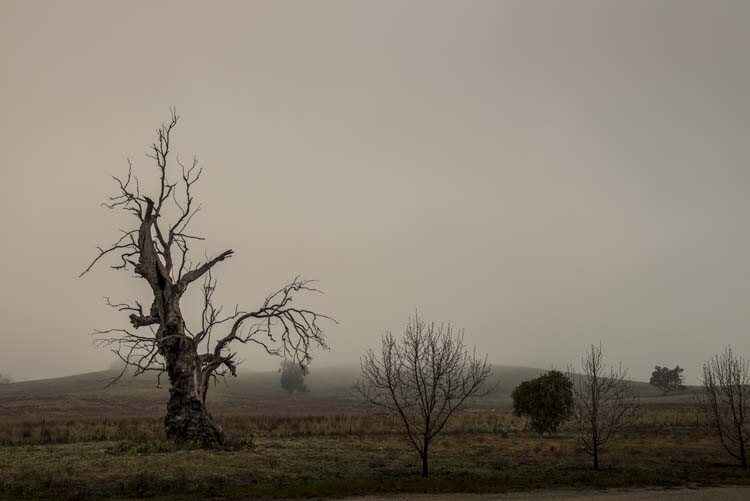
cole-landscape-road-side-photography-0002

Like a scene from a movie, fog, and a gnarly dead tree. We saw this going to Mansfield and on the way back knew we had to stop.

There has to be a warning, while it is best to take roads that are not the normal route, so no freeways or highways, you can get very distracted. You might find that you want to stop constantly, and if you have a final destination it can mean that when you get there you don’t have enough time or light left to shoot.

It is best to decide one way or the other if you are going to stop on the way. From experience, it is good to decide so you know how much time you will have when you get where you want to go. It can also be fun to drive aimlessly and stop at anything you find interesting along the way. You never know what you might find.

Looking for a Subjects to Photograph

One of the advantages of doing things on the roadside is that you aren’t trespassing, and in most cases, can’t get into trouble for photographing things you see over the fence. As long as you don’t go over the fence you should be fine. Sometimes you might find the person who owns the land and get permission to enter.

cole-landscape-road-side-photography-0005

I see this all the time, but it was the first time I was on the right road to photograph the old flour mill.

There are lots of different things to take photos of, it depends on what you find interesting. There are the beautiful, big landscapes showing the scenery of the area, although one thing that many photographers look for are the old sheds or houses that have been abandoned, and are now falling apart. When you drive on the roads you can often see them, though sometimes you need a big zoom to get good photos.

The coast can be great for this kind of photography too. You nearly always want to explore more than one area. So, with the smaller bag, you can go to one area, then drive to another.

Don’t think that the only way to take landscape photos is to pack the bag and slog through lots of harsh land to get the ideal image. Do it from the luxury of your car, take a friend, and make a day of it.


Here on dPS it is landscape week. You can see the previous ones listed below. Watch for a new article (or two) on landscape photography daily for the next week.

  • 6 Tips for Better Low-Light Landscape Photography
  • Landscape Photography and the Human Element
  • 5 Ways a Telephoto Lens Can Improve Your Landscape Photography

googletag.cmd.push(function() {
tablet_slots.push( googletag.defineSlot( “/1005424/_dPSv4_tab-all-article-bottom_(300×250)”, [300, 250], “pb-ad-78623” ).addService( googletag.pubads() ) ); } );

googletag.cmd.push(function() {
mobile_slots.push( googletag.defineSlot( “/1005424/_dPSv4_mob-all-article-bottom_(300×250)”, [300, 250], “pb-ad-78158” ).addService( googletag.pubads() ) ); } );

The post Landscape Photography from the Side of the Road by Leanne Cole appeared first on Digital Photography School.


Digital Photography School
 
Comments Off on Landscape Photography from the Side of the Road

Posted in Photography


Hive Habitats: Modular Floating Survival Shelters Band Together
04 Sep

[ By WebUrbanist in Conceptual & Futuristic & Technology. ]

survival pod swarm hive

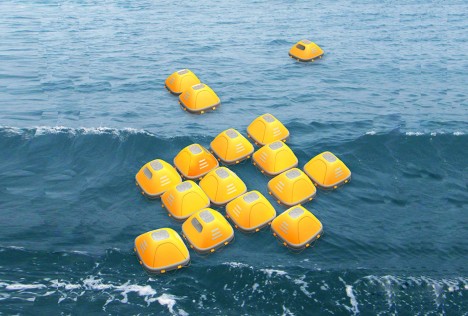
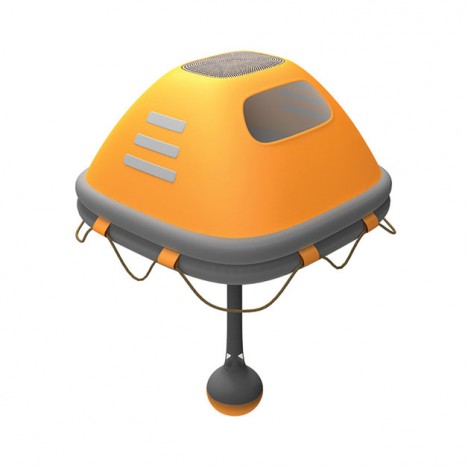
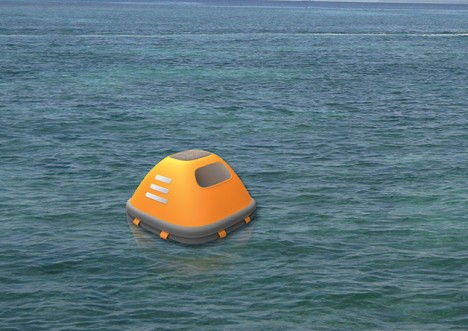
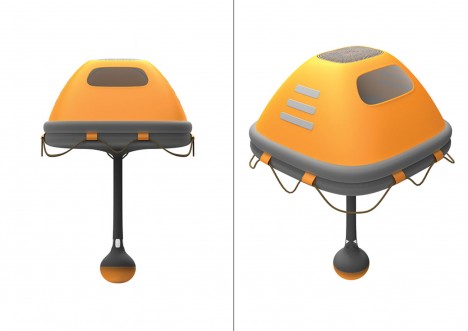
Providing secure enclosures and other critical safety features in the face of tsunamis, floods and accidents at sea, this system of survival pods adds another critical dimension as well: connectivity. The award-winning Duckweed Survival House units come with variable-length tethers and are individually designed to stay upright and keep their occupants sheltered in the harshest conditions.

duckweed pod

Much like the series of independent-but-connectable space habitats proposed in Neal Stephenson’s Seveneves, each individual unit is self-supporting but also benefits by networking with the rest. The rounded-square shape helps allow the different units to be organized in grids, lines or otherwise without sharp corners that could damage adjacent units.

pod survival unit

Together, they provide increased stability, visibility, wave and wind resistance, but the units can be separated as well to avoid obstacles or for situations-specific emergency needs, like jettisoning a defective pod. As in the aforementioned work of science fiction, the idea is to maximize the odds for all survivors by creating options for configuration and collaboration.

survival pod module

A stem projecting beneath each unit stabilizes the crafts while a built-in, reverse osmosis filter turns salty water potable. Pressurized carbon dioxide gas provides quick inflatability while an operable overhead vent allows in fresh air. Bright markers aid in night rescue while also helping people in disparate pods spot one another more easily on the ocean waves.

Share on Facebook


[ By WebUrbanist in Conceptual & Futuristic & Technology. ]

[ WebUrbanist | Archives | Galleries | Privacy | TOS ]


WebUrbanist

 
Comments Off on Hive Habitats: Modular Floating Survival Shelters Band Together

Posted in Creativity