RSS
 

Archive for July, 2015

6 Tips to Find Undiscovered Photography Locations in Your City

02 Jul
This location was discovered by walking BEYOND the main public area and exploring nearby dirt paths.

This location was discovered by walking BEYOND the main public area and exploring nearby dirt paths.

There’s nothing quite like the rush of finding a nook, a cranny, a wall, a corner, or a building that looks amazing in photos but has not been fully discovered by others just yet. Ask any photographer about unique locations, and most likely they will cringe a bit at the thought of giving up their secret spots. How, then, do you find new locations for yourself? It’s not always necessary to go outside of your city (or even your neighborhood!) to find a great photography location.

Here are several tips for how to find those hidden gems you crave:

1. Break routine

Do you have a usual way to drive home from work? How about that super fast shortcut that you love to take when meeting friends for dinner? Set some time aside to go a different route, and really look at your surroundings as you drive by. Take note of things like texture, if there is a lot of shadow or direct sun on a wall, if there are bright colors, and if certain areas have easy access from the road. Are there any buildings that stand out to you? How about the landscaping – any beautiful trees that provide a dramatic canopy or a large flowering bush that has bright colors?

Use this designated time to explore, stop spontaneously when something speaks to you, and take some quick sample photos (even if with your phone!) to keep on file for future reference.
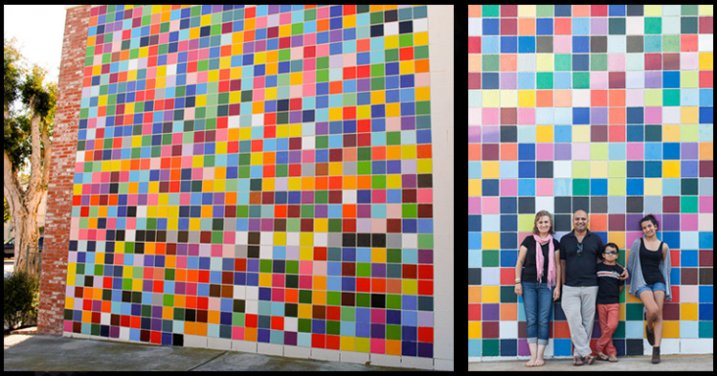
Cell phone shot while exploring is on the left.  Finished photo for a family portrait is on the right.

Cell phone shot while exploring is on the left. Finished photo for a family portrait is on the right.

2. Leave the car at home

This may sound extremely basic, but if you are like most people, you’re used to driving everywhere. While this is a huge time-saver, it also causes you to not SEE your surroundings in as much detail. When you walk, you see the cracks in the sidewalk, the nooks full of graffiti in the small alley behind the shops, or the vantage points that can be seen at eye level. Changing your perspective is an instant way to re-evaluate your surroundings. If you’re not able to walk, consider riding your bike. It’s still a more leisurely way to explore the details than by car would be, and it’s much easier than a car to stop repeatedly and explore.
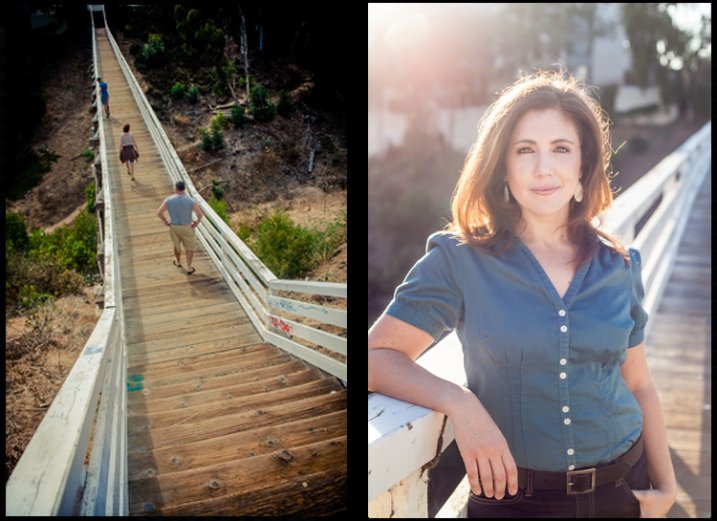
Not visible from the street, this pedestrian bridge gets overlooked from a car.

Not visible from the street, this pedestrian bridge gets overlooked from a car.

3. Ask

Sounds simple, right? Yet, how many of us actually do this? Most of us will search online, scan the forums and Facebook groups, and explore on our own. All this, we do instead of simply asking those around us. Next time you go into a small local store, ask the clerk if they have any favorite spots for photos, or ones that offer a fantastic view. Reach out to other local photographers you know; ask them if they have any locations they love going back to time and time again, and if they would be willing to take you there sometime. Ask your friend or relatives if they have any spots in town that they’ve always thought would be great for photos. Their answers may surprise you. Oftentimes, all you need to do is ask.
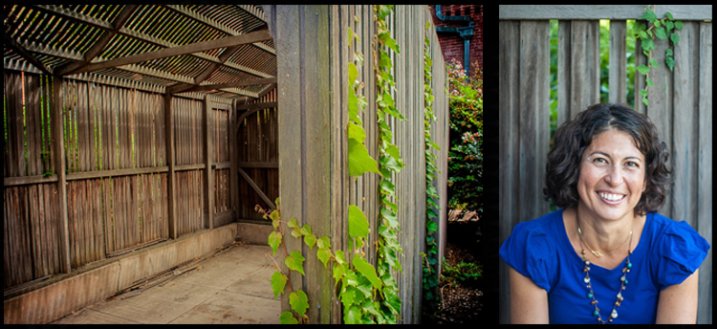
Many locals recommend this property, but few use the old carports as backdrops. Cell phone shot on left, final portrait on right.

Many locals recommend this property, but few use the old carports as backdrops. Cell phone shot on left, final portrait on right.

4. Create an assignment

It can be overwhelming to just get in your car and drive without knowing what you’re seeking. To make things easier, give yourself a specific type of location that you’re looking for that day. Perhaps you want to find a beautiful skyline view of your city, or you want to find a wall that has colorful graffiti for a backdrop. Maybe just give yourself a theme – industrial buildings, or lush bright flowering landscapes, or open pastures, or patterns.

Having a goal in mind can give you some direction as to where to start looking. Looking for rustic and open? Head out of the city and into wide open spaces. Looking for urban and gritty? Go straight for urban neighborhoods and industrial areas of town.
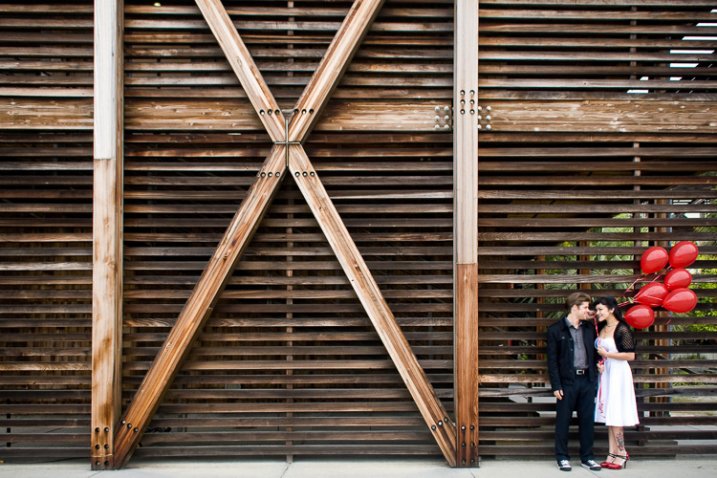
On a search for great texture and patterns, this wall was discovered. It is part of a research facility at a local university.

On a search for great texture and patterns, this wall was discovered. It is part of a research facility at a local university.

5. Yes, asking Google can help, too

Let’s face it, we go to Google for all our questions these days, and that’s okay. Do a bit of online research, keeping in mind some parameters for what you’re seeking. If you’re looking for old industrial buildings, be sure to enter that into your search. Be as specific as you can be, then get more general as needed to widen the net. There are also a good number of websites and books about “weird places” or “abandoned places”, all of which would have loads of appeal to photographers. If you do seek out abandoned or off-the-beaten-track locations, be sure to take all safety precautions possible to ensure a safe return.
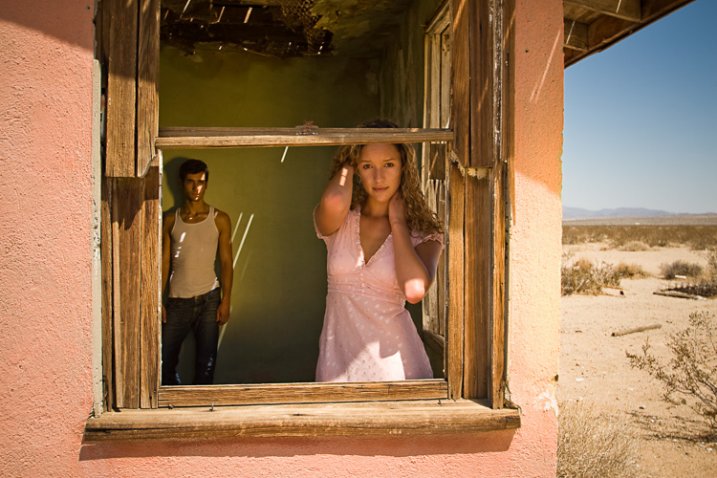
Researching abandoned locations in the desert resulted in this location near a major attraction.

Researching abandoned locations in the desert resulted in this location near a major attraction.

6. Keep records of your discovered gems

This is a tip about finding locations, but more about making sure to remember them. Find a system that works for you to keep track of locations you like, what type of work they may be suited for, any outstanding characteristics, and any sample photos you snapped while exploring. While everyone will have a slightly different way of organizing this information, Google Maps is highly recommended for marking locations on a map and adding notes.

If you have a Gmail account, you can go to Maps and create your own. After each outing, you can add pins to locations you want to remember, name them whatever you’d like, and even add a few notes. In addition to this, I would recommend keeping a folder on your computer that is specifically for sample photos of locations. This comes in handy, not only for remembering a location yourself, but also for showing a potential subject and convincing them of your vision for their photos.
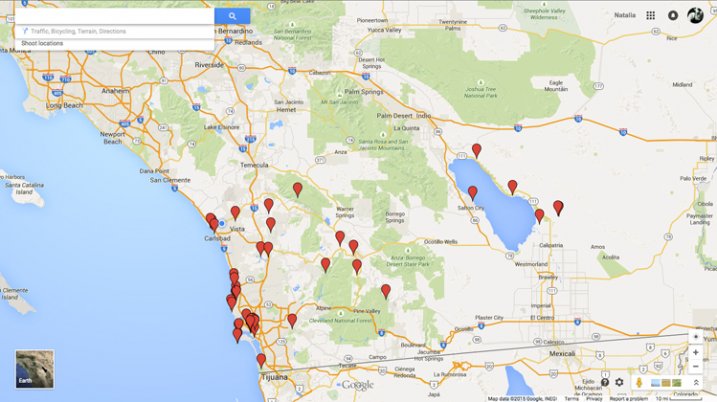
An ongoing project - the personalized Google Map.

An ongoing project – the personalized Google Map.

Have you found tucked away locations that you are proud of? What tactics did you use for stumbling upon these spots? Please share in the comments below.

googletag.cmd.push(function() {
tablet_slots.push( googletag.defineSlot( “/1005424/_dPSv4_tab-all-article-bottom_(300×250)”, [300, 250], “pb-ad-78623” ).addService( googletag.pubads() ) ); } );

googletag.cmd.push(function() {
mobile_slots.push( googletag.defineSlot( “/1005424/_dPSv4_mob-all-article-bottom_(300×250)”, [300, 250], “pb-ad-78158” ).addService( googletag.pubads() ) ); } );

The post 6 Tips to Find Undiscovered Photography Locations in Your City by Natalia Robert appeared first on Digital Photography School.

Digital Photography School

 
Comments Off on 6 Tips to Find Undiscovered Photography Locations in Your City

Posted in Photography


Sony: An eye on focus

02 Jul

Sony recently shook things up with the announcement of the 42.4MP, backside-illuminated full-frame a7R II mirrorless camera, alongside stacked 1″-type sensors in the updates to the popular RX100 and RX10 lines. While stills and video quality are sure to break new ground with these updates, perhaps even more interesting are the autofocus improvements. We put the new AF systems to the test in our brief hands-on time with the cameras recently. See videos of the cameras in action

Articles: Digital Photography Review (dpreview.com)

 
Comments Off on Sony: An eye on focus

Posted in Uncategorized


Mind Mining: Subterranean Library Descends Into Darkness

02 Jul

[ By Steph in Art & Installation & Sound. ]

subterranean library 1

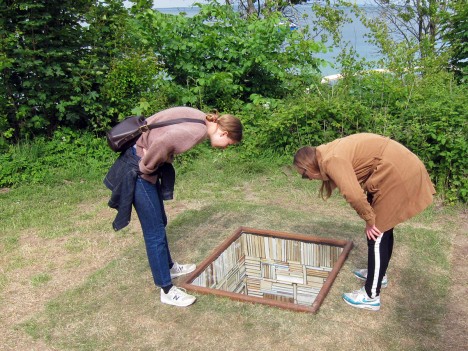
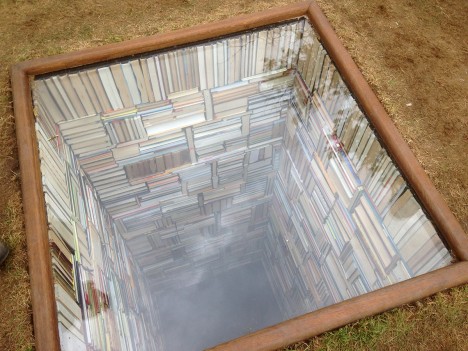
A fragile layer of glass is all that prevents you from falling, Alice-in-Wonderland-style, into a tunnel of books that seems to descend deep below the surface of the earth, its bottom shrouded in darkness. Roughly the size of a mine shaft, this miniature subterranean library hides all of its titles from view, the spines of the books turned inward, making it all the more mysterious.

subterranean library 2

Entitled ‘When My Father Died It Was Like a Whole Library Had Burned Down,’ the intriguing installation by Swedish artist Susanna Hesselberg has been dug into the sand on a Denmark beach for the biennial Sculpture by the Sea art festival. The name references a line in the song World Without End by pioneering experimental electronic musician Laurie Anderson. Hesselberg previously installed the piece as a tower of books rising into the air, rather than plummeting under the surface of the earth.

subterranean library 3

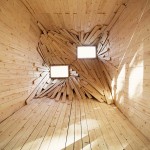
We previously covered another entry into the show, ‘New Horizon,’ a wooden observation point that perfectly frames views of the sky and sea. Check out the rest of the 56 site-specific exhibits, including large-scale architectural sculptures on land and on the water, currently lining the coast of Aarhus, Denmark. Sculpture by the Sea is the nation’s largest outdoor sculpture exhibition, occurring every two years and featuring artists from two dozen countries.

Share on Facebook


[ By Steph in Art & Installation & Sound. ]

[ WebUrbanist | Archives | Galleries | Privacy | TOS ]


WebUrbanist

 
Comments Off on Mind Mining: Subterranean Library Descends Into Darkness

Posted in Creativity


Storage Issues, Begone! More Space for More Pics

02 Jul

We’ve all seen that dreaded “out of storage” notification pop up on our phones.

(And usually at the worst times.)

But no need to fear! We’ve teamed up with our pals over at Trunx, who’ve provided a super handy guide to help you conquer the storage war on your iOS device.

So take note, ’cause more space means you’ll never have to miss out on an awesome photo op again!

5 Tips for More Device Storage

(…)
Read the rest of Storage Issues, Begone!
More Space for More Pics (606 words)


© Taylor for Photojojo, 2015. |
Permalink |
No comment |
Add to
More Space for More Pics”>del.icio.us

Post tags:


Photojojo

 
Comments Off on Storage Issues, Begone! More Space for More Pics

Posted in Equipment


Nikon unveils AF-S Nikkor 500mm F4 and 600mm F4 full-frame lenses

02 Jul

Nikon has announced a pair of super telephoto FX prime lenses: the AF-S Nikkor 500mm F4E FL ED VR and 600mm F4E FL ED VR. Both are significantly lighter than the versions that preceded them and each use an electromagnetic diaphragm for more consistent exposure control during burst shooting. Read more

Articles: Digital Photography Review (dpreview.com)

 
Comments Off on Nikon unveils AF-S Nikkor 500mm F4 and 600mm F4 full-frame lenses

Posted in Uncategorized


Lehm und Asche

02 Jul

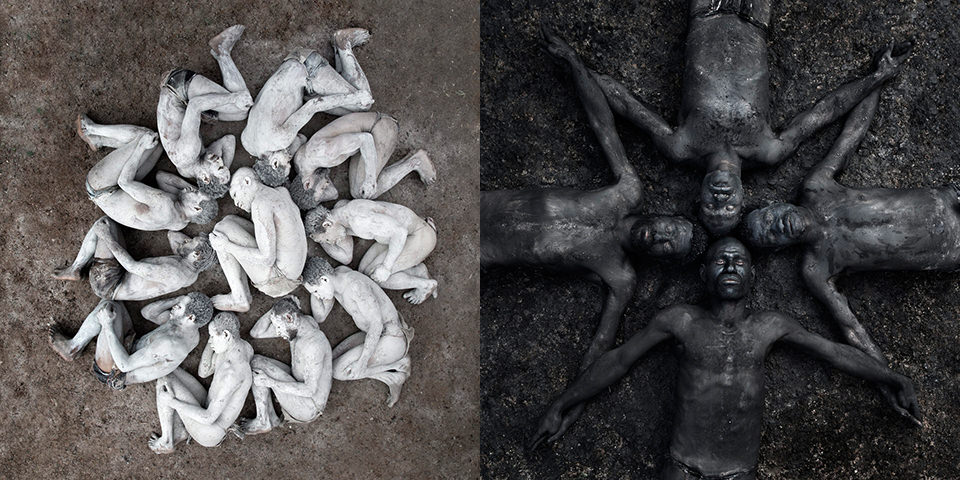
© Roberto Falck

Das Projekt „Clay and Ash“ entstand auf einer Reise durch Papua-Neuguinea. Der amerikanische Fotograf Roberto Falck besuchte verschiedene Stämme des Landes und interessierte sich dabei vor allem für die traditionellen Feste, Tänze und Bräuche. Einer der Stämme, die Simbu, haben die Tradition einer Körperbemalung im Stil von Skeletten, um ihre Feinde einzuschüchtern. Dies war die Inspiration für seine Serie.
kwerfeldein – Fotografie Magazin | Fotocommunity

 
Comments Off on Lehm und Asche

Posted in Equipment


Nikon offers AF-S DX Nikkor 16-80mm F2.8-4E ED VR

02 Jul

Nikon has introduced the AF-S DX Nikkor 16-80mm F2.8-4E ED VR, designed to provide an enthusiast photographer with a wide range of options. Covering a 24-120mm equivalent range on Nikon’s APS-C bodies, it offers Nano Crystal Coating for the first time in a DX lens. Read more

Articles: Digital Photography Review (dpreview.com)

 
Comments Off on Nikon offers AF-S DX Nikkor 16-80mm F2.8-4E ED VR

Posted in Uncategorized


Fujifilm X-T10 shooting experience is now live

02 Jul

Though it has much in common with the X-T1 in terms of image quality, starting with its 16MP X-Trans APS-C sensor and EXR Processor II, the X-T10 presents a very different shooting experience. We’ve updated our Fujifilm X-T10 first impressions with some thoughts on using the camera in the field. Read more

Articles: Digital Photography Review (dpreview.com)

 
Comments Off on Fujifilm X-T10 shooting experience is now live

Posted in Uncategorized


Toshiba TransferJet 16GB SDHC card launches July 31 in Japan

02 Jul

Following some trade show demos, Toshiba is officially introducing a new 16GB SDHC card with TransferJet technology. The card, which looks to be available in Japan only first, is able to wirelessly transfer photos and videos from a camera to a TransferJet-compatible device. Read more

Articles: Digital Photography Review (dpreview.com)

 
Comments Off on Toshiba TransferJet 16GB SDHC card launches July 31 in Japan

Posted in Uncategorized


How to Take Great Photographs at the Fairground

02 Jul

Packed with people, bright lights and fast-moving rides, fairgrounds can provide photographers with loads of opportunities to take some colourful and creative images. So, why not grab your camera, head to your nearest fair and try out some of the following ideas for yourself.

Somethingwicked750

When to visit

Fairgrounds can be fun to take pictures of, whether you go in the daytime, or at night. However, with their bright lights, they really come alive once the sun has gone down. My preferred time to arrive is around one hour before sunset, as this allows you to take a look around before it gets dark, and gives you time to plan your shots.

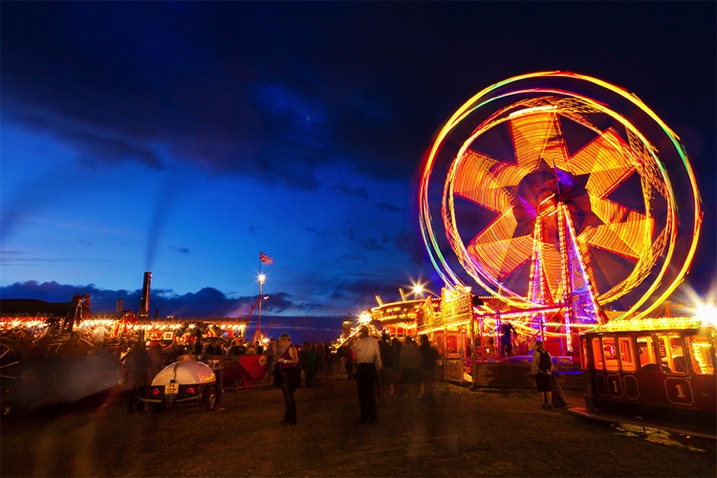
Arriving at this time will also enable you to shoot during the crossover period – the part of the evening where the sun has set, but there is still light and colour in the sky. The deep, dark blue sky provides a striking contrast to the bright, colourful lights and can often look better in photographs than a fully black night sky. In my opinion, this is the optimum time to capture fairgrounds in all their vibrant glory.

What to take with you

Whatever lens you choose to take, there should be some great photo opportunities awaiting you. However, if possible, take a variety of lenses to expand the range of shots you can take. A wide-angle will be useful for capturing the action of fairground rides and a telephoto will enable you to crop closer into details, or people on the rides. The accompanying shots were taken using 24-105mm and 70-200mm lenses. When visiting the fair with friends and family, I have also found it useful to take a 50mm (f/1.8) lens so that I cAN take some pictures of them enjoying themselves.

If you’re planning to capture the fairground rides after sunset you are going to need a tripod due to the slow shutter speeds that you will be using. A remote shutter release will also come in very useful to reduce the risk of blurred images from camera shake.

Photographing fairground rides

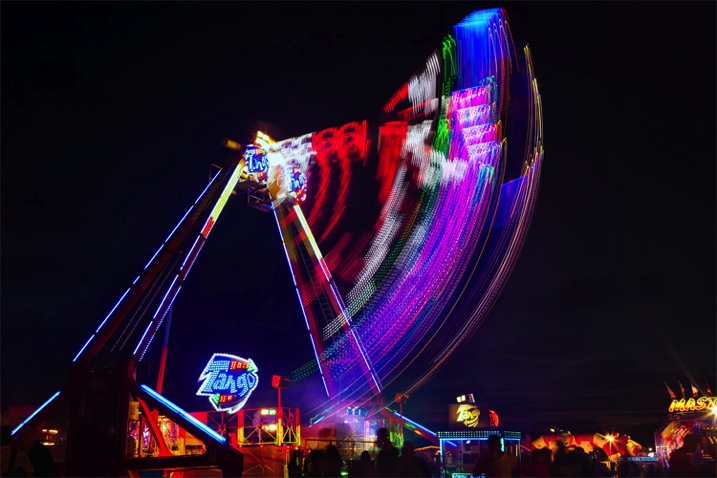
Tango750

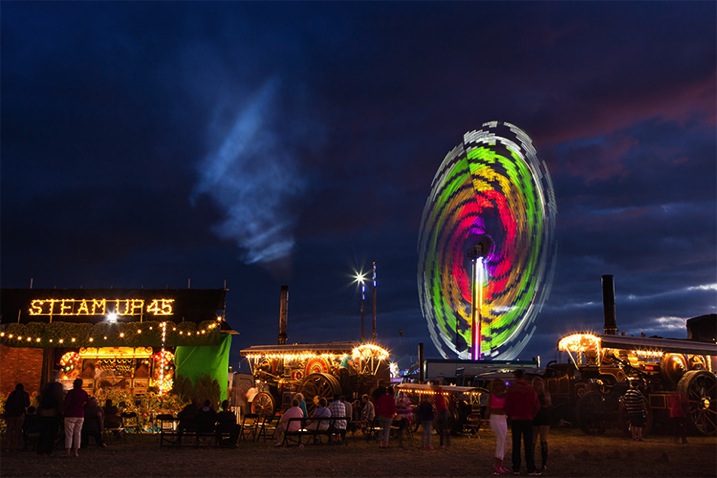
The most dynamic and exciting photographs of fairground rides aim to convey a sense of speed and movement. Slow shutter speeds are used to capture the colourful trails and patterns created by the fast-moving lights. They’re fun to take, and you can get some dramatic shots relatively easily.

Once you have decided which ride to shoot, fix your camera to your tripod and fit a remote release. (Remember to turn off Image stabilization if your lens has this.) Shutter speed is the most important aspect of getting the correct exposure in this instance, so set your camera to shutter-priority or manual mode. The amount of movement you capture in the image will vary on a number of factors, not least the speed of the ride itself, but a good place to start is with a shutter speed of one second.

Set the ISO to the lowest setting available and the white-balance to Auto, as this should be effective in most situations. (For long-exposure shots such as these, I would recommend shooting in RAW so that you will be able to change the white balance settings during post-processing if necessary.) Autofocus may struggle in low-level light, so manually focus on a part of the ride when it is not moving.

Take a test shot using these settings while the ride is stationary to check the exposure. Pay particular attention to the sky and, if necessary, use exposure compensation. Then, as the ride begins to move, play around with the shutter speed to see what works best. Anything longer than ½ second should produce a decent amount of motion blur and light trails, the effect does depend on the speed of the ride. Keeping the shutter open for a longer time means that you can capture more light trails and patterns – although sometimes this can result in images with messier light trails and a lack of clear, distinct shapes. Ultimately, your choice of shutter speed will depend on the nature of the ride (how fast and how much it moves – vertically, horizontally, diagonally etc.) and your creativity (personal preferences between clean light trails or chaotic swirls of colour).

When composing your shot, give some thought to the angle you are taking it from. Try to get in close and shoot from a low angle, looking up at the ride to minimize distracting backgrounds, but always stay a safe distance from moving rides. Remember to leave enough space in the frame to capture all of the movement so that you don’t inadvertently cut anything off. Spend some time watching how the ride moves before taking a shot. Also, with all the movement going on, try to include a still element in the frame to help ground the image. Signage, fairground stalls, or even (non-moving) spectators can add to the story you are telling in your final image.

Photographing people at fairgrounds

Fairgroundportrait750

Fairgrounds are not just about the rides. By providing great lighting and a fun-filled atmosphere, they’re the ideal place to try out some candid photography. Candid shots of people engaging in activities around the fair will be more interesting than shots of people sitting around doing nothing and often will add an element of story to your image. Also, by being focussed on the activity, your subject is less likely to focus on you taking their photograph. This can produce better candid shots because as soon as a person knows they are being photographed, their natural behaviour tends to disappear quite quickly. Why not take advantage of all the activities on offer at the fair, and try to capture people’s reactions to the action – whether that is trying to win a prize on a fairground stall, eating one of the many sugar-based treats on offer, or even waiting in line for a ride.

When taking candid pictures, set your camera to continuous shooting mode and take a number of shots in quick succession to stand a better chance of perfectly capturing the reaction you want from your subject. Use a wide aperture to let in lots of light. It may also be necessary for you to increase the ISO setting to get the correct exposure. A telephoto lens with a focal length of around 200mm should enable you to capture the (often extreme) reactions of people on fairground rides for some particularly dramatic candid shots.

The lighting at fairgrounds can also be great for illuminating people for some posed shots. Colourful lights can produce great background bokeh for fun portrait shots of friends and family. Simply put, bokeh is created by out-of-focus light so you will need a shallow depth of field. Using a very wide aperture will help, but you will also need to think about the distance between the subject and the light sources (the further away the better) and the distance between the subject and your camera (stand close to the subject and use a reasonably long focal length). There is often enough light available from other sources to fully illuminate the subject, but a flash with a diffuser may also come in handy.

Get creative

Superbowlzoom750

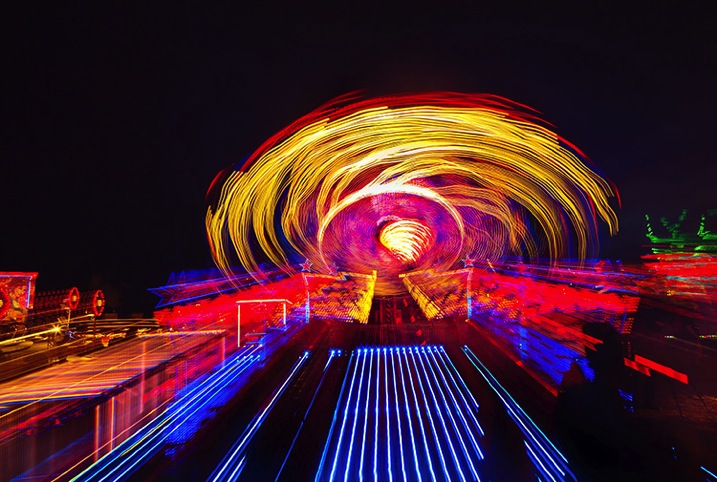
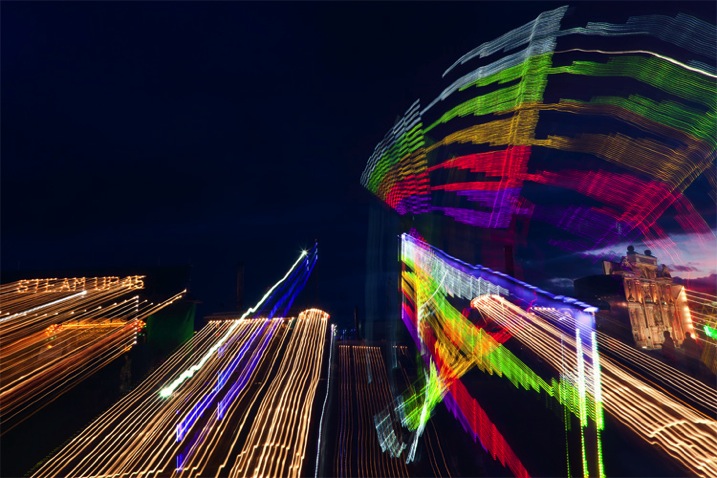
One of the best reasons to take pictures at fairgrounds is that they’re a great place to get really creative as a photographer and experiment with a range of techniques. You can add movement and drama to your images, even when the rides are not moving. For instance, try to create a zoom burst effect in-camera. Use the slow shutter speed settings detailed previously, then manually change the zoom on the lens, while the shutter is open. Experiment with different shutter speeds and staggered zooms; you may be surprised at how the effect changes. For even wilder shots, try the zoom effect on a ride that is moving – to illustrate the type of effects you can achieve, the two shots below show the same moving fairground ride with the zoom burst technique applied to the second image.

Steamup452750

Steamup45zoomburst750

A good way to add an increased sense of speed to a slower ride, such as the dodgem cars or carousel, is to take a panning shot by moving your camera in line with the moving subject during exposure. The aim is to keep the subject (carousel horse) as sharp as possible and the background as blurry as possible. Shoot in shutter-priority mode and select a speed of 1/30th of a second to start. You can then experiment with slower speeds depending on the level of light and the speed of the subject. Make sure to shoot in continuous shooting mode and, if your camera has it, use automatic focus tracking. Press the shutter half way to activate the focus tracking when the subject enters the frame. Lock focus on the subject and, as smoothly as possible, pan your camera to match the movement of the subject and take your shots.

Funfairhorsepanning750

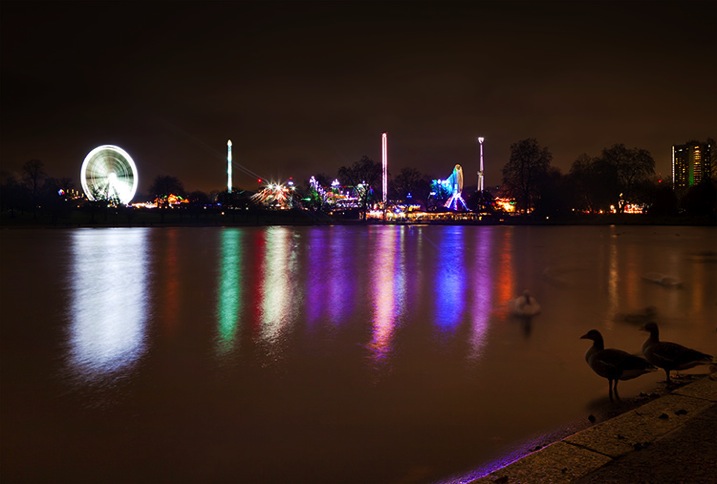
Finally, when leaving the fair, try to capture the fairground lights as part of a wider landscape shot if possible. If the fair is anywhere near water (on a seaside pier, for example) look out for the creative potential of reflected fairground lights.

Have fun!

When taking pictures at the fairground, like at any other busy event, stay safe, keep an eye on your kit and remember to have some fun while you are there!

Geesespectators750

googletag.cmd.push(function() {
tablet_slots.push( googletag.defineSlot( “/1005424/_dPSv4_tab-all-article-bottom_(300×250)”, [300, 250], “pb-ad-78623” ).addService( googletag.pubads() ) ); } );

googletag.cmd.push(function() {
mobile_slots.push( googletag.defineSlot( “/1005424/_dPSv4_mob-all-article-bottom_(300×250)”, [300, 250], “pb-ad-78158” ).addService( googletag.pubads() ) ); } );

The post How to Take Great Photographs at the Fairground by Richard Beech appeared first on Digital Photography School.

Digital Photography School

 
Comments Off on How to Take Great Photographs at the Fairground

Posted in Photography