RSS
 

Archive for July, 2015

Camera Showdown: the Nikon D5500 and D3300, Canon 70D and Sony a6000 Compared

05 Jul

With so many cameras on the market now it’s hard to know which one to buy if you’re just getting into digital photography. Should you get a full on DSLR or go for the more streamlined mirrorless ones?

4 Popular cameras compared

In this video Tony Northrup and his partner Chelsea do a comparison of four different cameras in roughly the same price range (under $ 1000) including:

  • The relatively new Nikon D5500 – $ 747 body only
  • Nikon D3300 – $ 497 with 18-55mm lens
  • Canon’s 70D – $ 949 body only
  • Sony’s a6000 – $ 548 body only

Watch as they put all four cameras through their paces doing a portrait in studio, outdoor landscape photography, and a sports simulation (action photography).

Each camera has pros and cons, so there is no one perfect choice. It’s about knowing what your needs are and selecting the one that is right for you.

googletag.cmd.push(function() {
tablet_slots.push( googletag.defineSlot( “/1005424/_dPSv4_tab-all-article-bottom_(300×250)”, [300, 250], “pb-ad-78623” ).addService( googletag.pubads() ) ); } );

googletag.cmd.push(function() {
mobile_slots.push( googletag.defineSlot( “/1005424/_dPSv4_mob-all-article-bottom_(300×250)”, [300, 250], “pb-ad-78158” ).addService( googletag.pubads() ) ); } );

The post Camera Showdown: the Nikon D5500 and D3300, Canon 70D and Sony a6000 Compared by Darlene Hildebrandt appeared first on Digital Photography School.


Digital Photography School

 
Comments Off on Camera Showdown: the Nikon D5500 and D3300, Canon 70D and Sony a6000 Compared

Posted in Photography


5. Juli

05 Jul

Das Bild des Tages von: Manuel Lohschmidt

Ein Mann im Regencape und eine Sense im Baum

Im Ausblick wirds heute ein bisschen gruselig.
kwerfeldein – Fotografie Magazin | Fotocommunity

 
Comments Off on 5. Juli

Posted in Equipment


Plains, trains and automobiles: The landscape photography of Bill Leigh Brewer

05 Jul

Bill Leigh Brewer’s career in photography started with a road trip, a Canon AE-1, lots of Kodachrome 25, and The Clash. His landscapes lend a surrealist quality to the commonplace and unique aspects of Americana, without demeaning its subjects. Take a look at his work and read our Q&A. See gallery

Articles: Digital Photography Review (dpreview.com)

 
Comments Off on Plains, trains and automobiles: The landscape photography of Bill Leigh Brewer

Posted in Uncategorized


Die 5 Videos des Monats

05 Jul

Video © Aileen Wessely

Die Sonne brät gnadenlos vom Himmel und verursacht Temperaturrekorde, doch Sommerpause gibt es bei kwerfeldein erst einmal nicht: Neben dem in dieser Woche gestarteten kwerfeldein Award arbeiten wir weiter an einer ganzen Reihe von Themen und Ideen, die wir im Februar mit Euch zusammen entwickelt haben. Dahinter sollen natürlich auch die regelmäßigen Artikel nicht zu kurz kommen: Film ab für unsere Videos des Monats.
kwerfeldein – Fotografie Magazin | Fotocommunity

 
Comments Off on Die 5 Videos des Monats

Posted in Equipment


DEAL: Photo Magic ebook – at the magic price of $7!

05 Jul

photomagic-363x448It’s the 4th of July and time for deal #4 in the dPS summer sale.

Today you can pick up a copy of our Photo Magic ebook for just $ 7 here!

At 65% off the normal price of $ 19.99, there’s no better way to learn the tricks and techniques for creating spectacular special effects images:

  • Zoom effect
  • 360 panorama
  • Flour hair flick
  • Light painting sparklers
  • Light painting steel wool
  • Little world
  • Mixing ambient and flash
  • Multiple exposures
  • Star trails
  • Water droplets

And best of all, you don’t need expensive high-end equipment or advanced skills in Photoshop to pull these off — they can all be done with the most basic DSLR.

It’s photography magic, at the magic price of just $ 7… for the next 24 hours only!

Get your 65% discount here.

googletag.cmd.push(function() {
tablet_slots.push( googletag.defineSlot( “/1005424/_dPSv4_tab-all-article-bottom_(300×250)”, [300, 250], “pb-ad-78623” ).addService( googletag.pubads() ) ); } );

googletag.cmd.push(function() {
mobile_slots.push( googletag.defineSlot( “/1005424/_dPSv4_mob-all-article-bottom_(300×250)”, [300, 250], “pb-ad-78158” ).addService( googletag.pubads() ) ); } );

The post DEAL: Photo Magic ebook – at the magic price of $ 7! by Darren Rowse appeared first on Digital Photography School.


Digital Photography School

 
Comments Off on DEAL: Photo Magic ebook – at the magic price of $7!

Posted in Photography


How To Lead Your Viewer’s Focus to the Subject

05 Jul

Take a look at this photo and remember what your initial thoughts are:
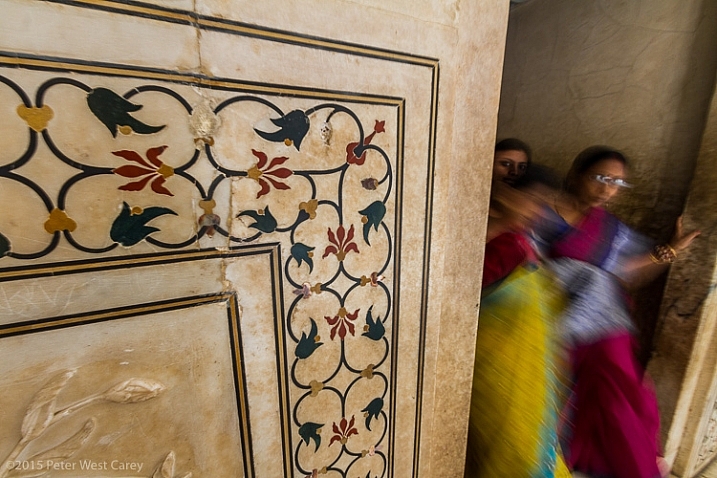
Inlaid Marble Detail Inside Taj Mahal, Agra, India, Asia

Inlaid marble detail inside Taj Mahal, Agra, India, Asia

Where was the first place you looked in the photo? What about the second?

Some of the more interesting photos (and artwork in general) moves your view around the image, and often brings you back for more.

When you take a photo, you know what you’re looking at and what is most important, but this doesn’t always come through in your picture, unless you make a concerted effort to help the viewer see the same thing. Luckily, as a photographer you have more than a few tricks to lead your viewers in your photos.

Leading Lines

The first technique is to simply point the way. As humans, we like lines that go somewhere and we tend to follow them. A trail, a road, repeating patterns; they are all fodder for the technique of leading lines.
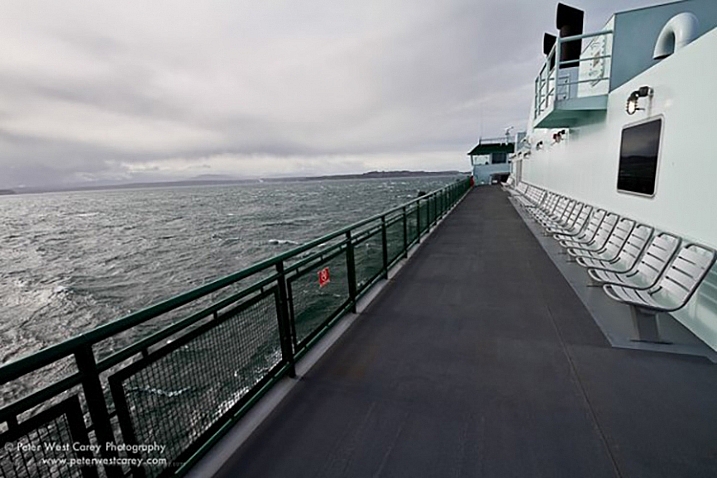
PWC-2011-0207-0588

Crossing to the Olympic Peninsula, Washington, USA
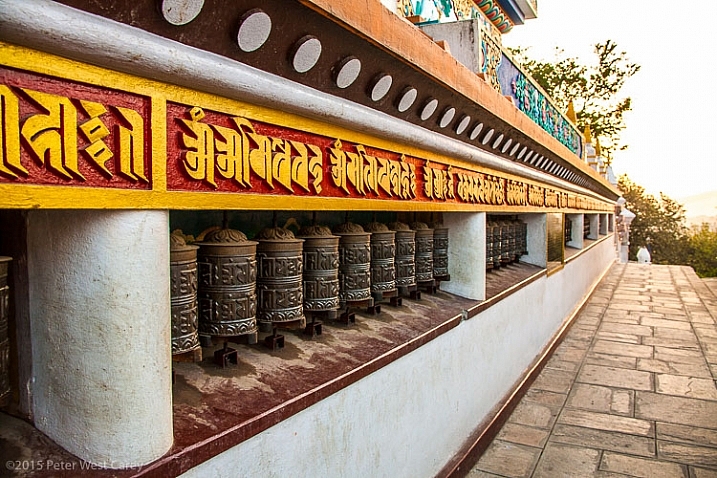
Prayer Wheel Wall, Kathmandu, Nepal

Prayer wheel wall, Kathmandu, Nepal


Leading lines, when stretched far, can also give your image greater depth by taking viewers into your scene. The lines need not be straight. They can be as meandering as a forest path.
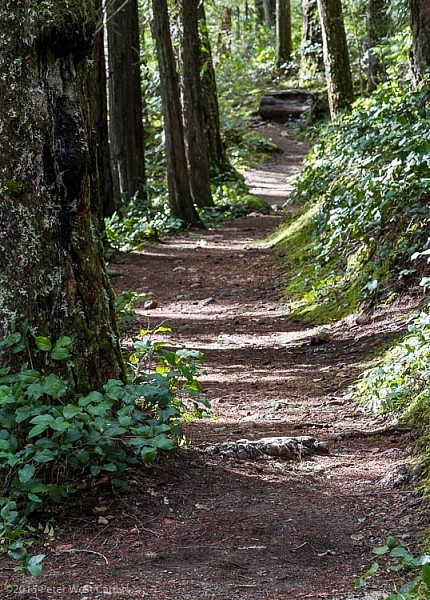
PWC-110402-153640-3017

Meandering path, Cascade Mountains, USA

Non-traditionally, I consider a repeating pattern, moving in a particular direction, to be a form of leading line. Such as with this line of bridge braces.
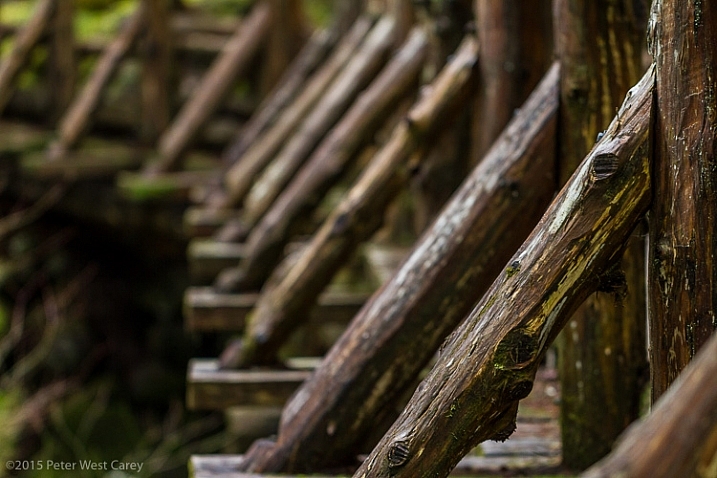
Across The Bridge

Wooden bridge in Olympic National Park, Washington, USA

Selective Focus

Selective focus seems so simple, but can be tricky if you haven’t mastered the use of aperture in your photography. Selective focus is also useful when you have a subject far on the edge of your photo. By habit we tend to look at the middle of a scene first and it’s quite easy to use selective focus to move your viewers to the edge, and the main subject.
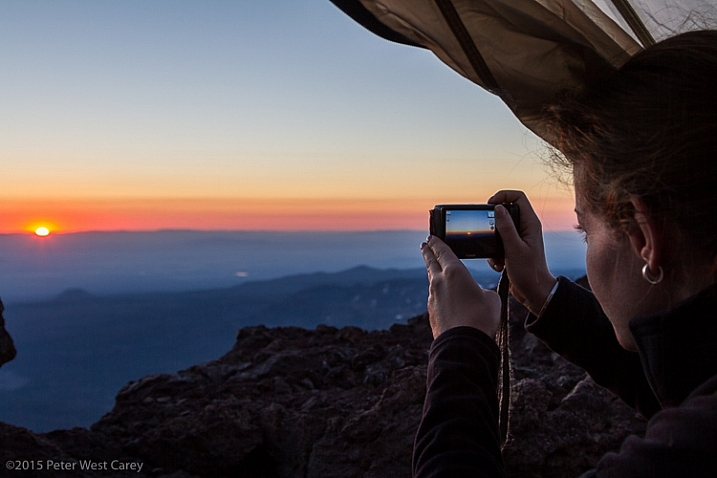
PWC-100815-070403-0541

Sunrise on South Sister Mountain, Oregon, USA

It’s also another way to help your viewers ignore the distractions in the scene and find the main subject.

Alaska Rainforest Floor, Glacier Bay National Park, Alaska, USA

Alaska Rainforest Floor, Glacier Bay National Park, Alaska, USA

There is a great article here: How to Use Leading Lines for Better Compositions by Anne McKinnell, that expands on this topic.

Colors

We’ve all seen this technique that became quite popular many years ago.
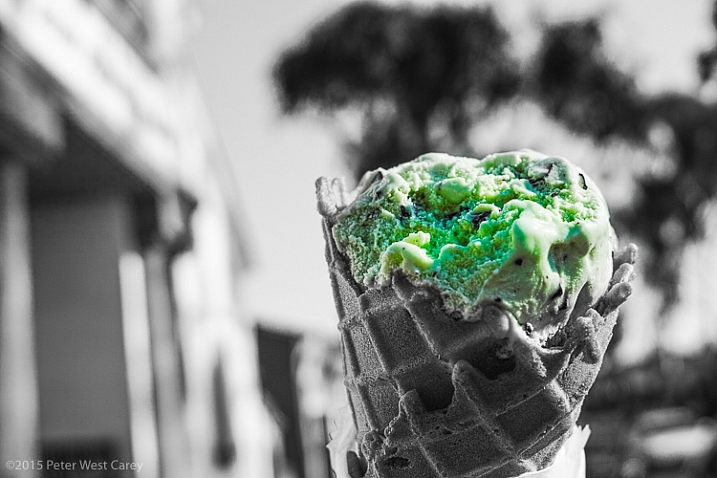
Chocloate Chip Mint Icre Cream Cone, Balboa Island, California, USA, North America

Chocolate chip mint ice cream cone, Balboa Island, California, USA, North America

You might have just cringed or you might have liked the technique, but there is no doubting where you looked in the photo.

But color need not be a single instance amongst black and white. Simply having a splash of color in a fairly monotone scene helps move the viewer to your main subject.
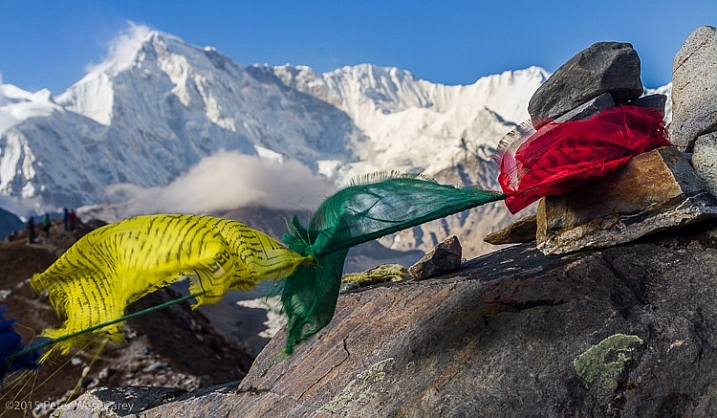
Prayer Flags And Cho Oyu, Gokyo, Nepal, Asia

Prayer flags and Cho Oyu, Gokyo, Nepal, Asia

Plumeria flowers, outdoors

Plumeria flowers, outdoors

Coffee Cherries Sit Ripe For Picking In Hawaii, USA

Coffee cherries sit ripe for picking In Hawaii, USA

Contrast

Something or someone going against the grain also brings focus and attention to that point.
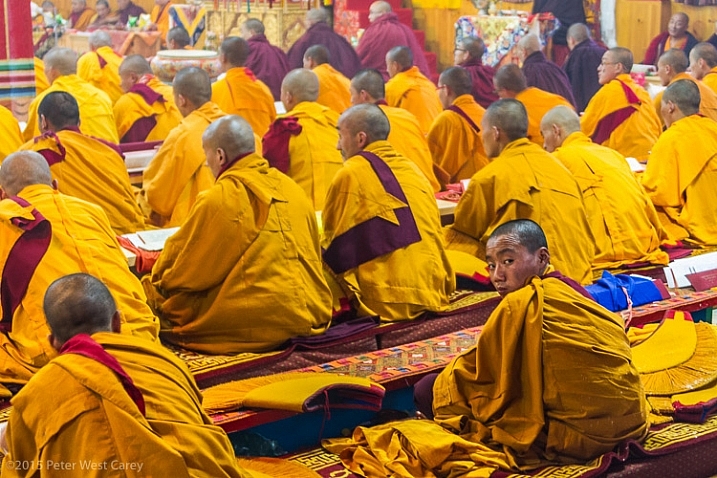
PWC-Bhutan2013-0321-6240

Buddhist monks, Jakar, Bhutan

It can also be a contrast in colors or patterns.
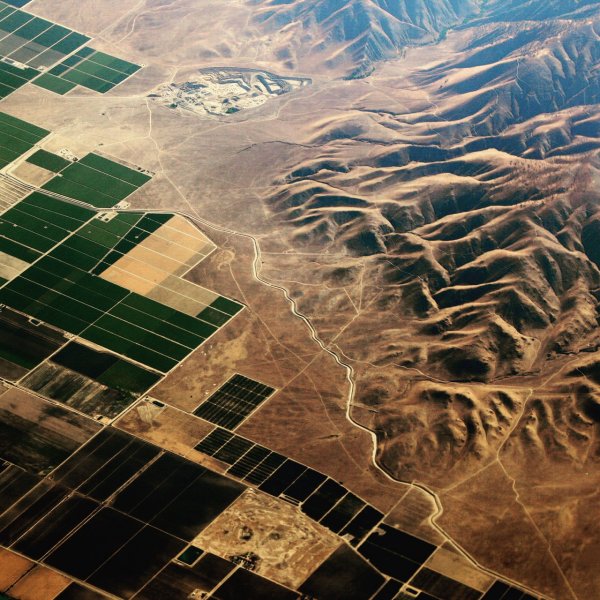
High above California's Central Valley, USA

High above California’s Central Valley, USA
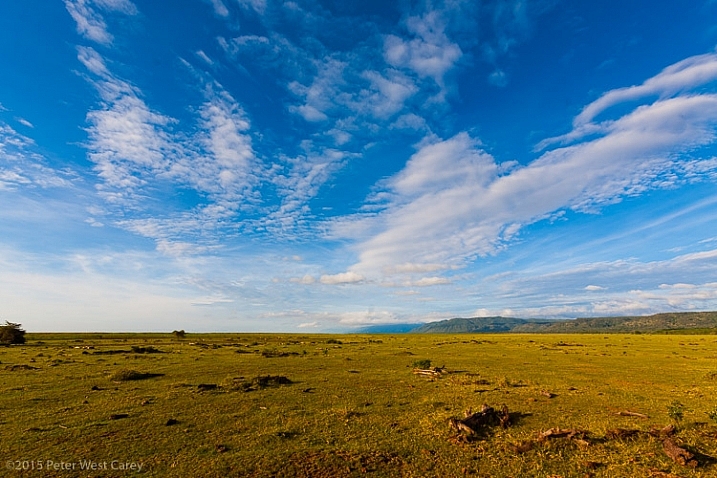
The wide open spaces of Serengeti National Park beckon, Tanzania, Africa

The wide open spaces of Serengeti National Park beckon, Tanzania, Africa

Or it can be a juxtaposition that is the contrast; old and new, youth and elders, fast and slow, etc…
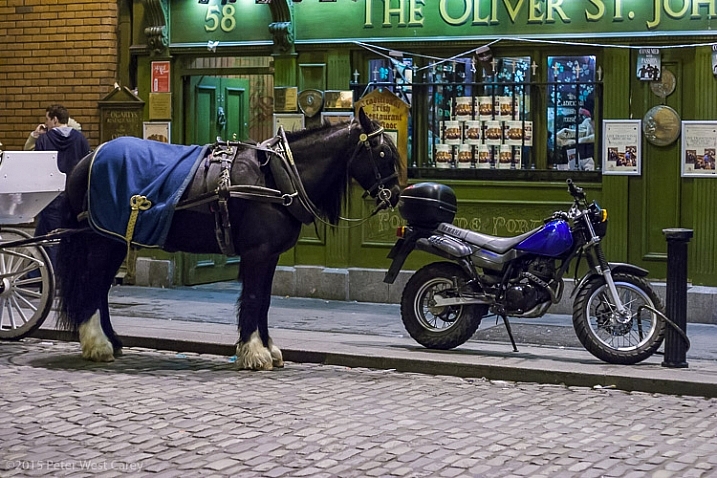
PWC-040318-215251-9790

Old:New; Slow:Fast, Natural:Man-made – Dublin, Ireland

Eyes

Eyes are an easy way to draw focus. So easy, it almost seems like cheating. We naturally connect with eyes, be they human or animal. We can look around a scene and find eyes faster than most objects.

Use that to your advantage!

Close-up of monkey - East Africa - Tanzania

A baboon in the thicket, Serengeti National Park, Tanzania

PWC-India2012-0418-7848

Pygmy owl, Ranthambhore National Park, India

Eyes can also be used to point a way. I have often stated that we don’t like eyes looking off the edge of the photo because we want to know what the person is looking at. But eyes looking toward the middle of an image invite exploration.
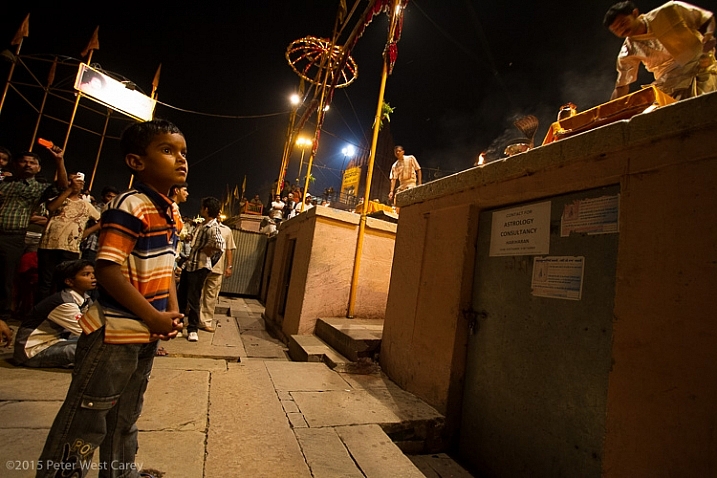
PWC-India2012-0422-8911

Child watching Ganga Arti Celebration, Varanasi, India

Frozen Action

Panning blur is a simple technique to freeze action on your subject, while letting the rest of the image blur. This is a type of selective focus, when we get right down to it, but used in a unique way.
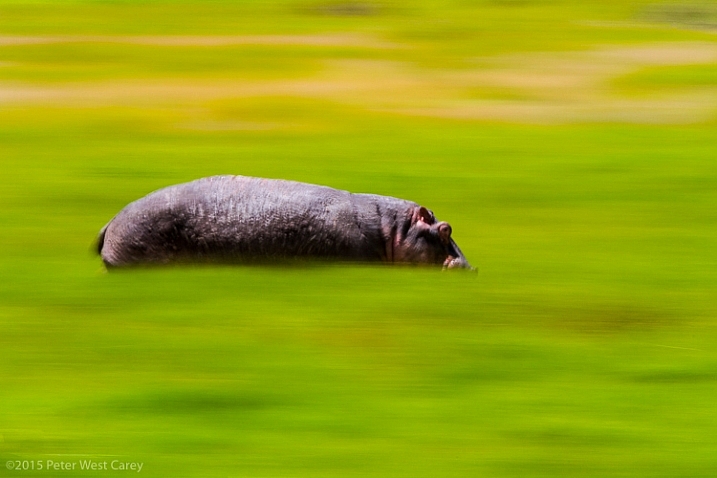
Hippos are amazingly fast animals, deceptively so. I had heard about this before heading to Africa in 2010, but once I witnessed just how fast they can run, and how mean they can be, I made sure my daughter and I were always close to, or in, a vehicle larger than a hippo when they were around. Ngorongoro Conservation Area, Tanzania.

Hippos are amazingly fast animals, deceptively so. I had heard about this before heading to Africa in 2010, but once I witnessed just how fast they can run, and how mean they can be, I made sure my daughter and I were always close to, or in, a vehicle larger than a hippo when they were around. Ngorongoro Conservation Area, Tanzania.

The technique not only leads viewers directly to the main subject as it is the only thing in focus, but also has them looking back where the subject came from, and asking why is there movement.

For more on this technique, check out: Mastering Panning – Photographing Moving Subjects.

It can also be used when inside a moving object to emphasize speed, while also giving focus to the stationary objects of interest.
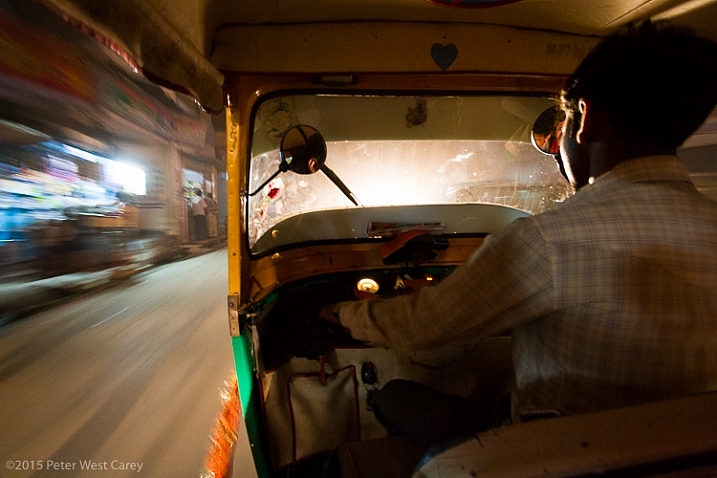
Speeding through the night streets of Varanasi, India

Speeding through the night streets of Varanasi, India

Going Into Your Photo

Arches, doorways, tunnels…these are all things that naturally make us want to go “into” a photo. We want to progress from the outside in. Craft your images by having more than one layer, in a three dimensional sense.
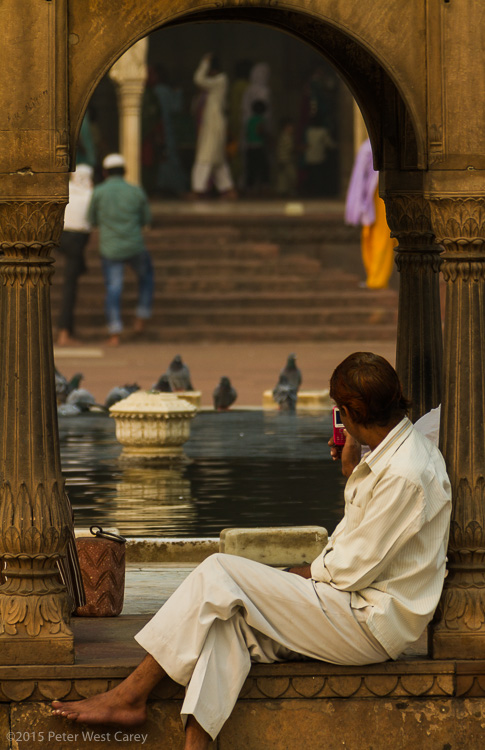
PWC-India2011-1031-9584

Taking photos at Masjid-i Jah?n-Num?, Delhi, India
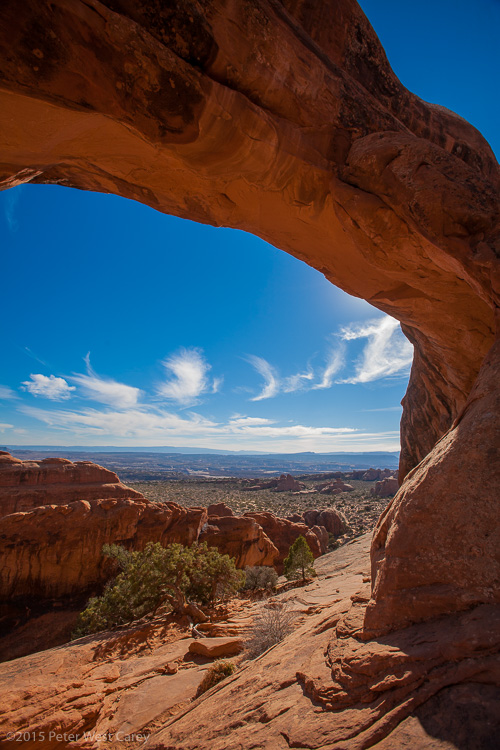
Through The Arch

Arches National Park, Utah, USA

Conclusion

Postcard shots are certainly a fine use of a digital camera. They capture a whole scene and make things static. But if you want to move your viewers around your images and have them coming back for more, think about how you are composing your photos.

googletag.cmd.push(function() {
tablet_slots.push( googletag.defineSlot( “/1005424/_dPSv4_tab-all-article-bottom_(300×250)”, [300, 250], “pb-ad-78623” ).addService( googletag.pubads() ) ); } );

googletag.cmd.push(function() {
mobile_slots.push( googletag.defineSlot( “/1005424/_dPSv4_mob-all-article-bottom_(300×250)”, [300, 250], “pb-ad-78158” ).addService( googletag.pubads() ) ); } );

The post How To Lead Your Viewer’s Focus to the Subject by Peter West Carey appeared first on Digital Photography School.


Digital Photography School
 
Comments Off on How To Lead Your Viewer’s Focus to the Subject

Posted in Photography


Malls of America: The Death & Life of Indoor Shopping Centers

05 Jul

[ By WebUrbanist in Architecture & Offices & Commercial. ]

southdale_center_1956

The inventor of the suburban American mall as we know it came to hate the effect his creations, turning over time from the creator of this building typology to its biggest critic. Architect Victor Gruen’s first mall was Southdale in 1956, located in Edina (a suburb of Minneapolis) only miles away from the Mall of America, now the largest indoor shopping center in the United States. Later this month, you can learn more first hand about the man and legend on Gruen Day, hosted by Tim Hwang of the Bay Area Infrastructure Observatory and Avery Trufelman, producer of 99% Invisible’s episode ‘The Gruen Effect‘.

The episode (embedded above) takes its title from that phenomena we all have come to associate with malls: a compulsion to consume, driven by dazzling displays and careful product placements in stores designed to sell. Gruen had loftier aspirations and nobler inspirations, however, when he first began to illustrate the problem of suburbs and conceive of malls as the solution.

gruen suburban analysis chart

More than just shopping centers, these were to be all-in-one ‘third spaces’ – places in addition to home and work where people could walk, interact and socialize. Following the model of European city centers, he also envisioned them as mixed-use architecture, blending commercial with residential and office spaces, perhaps even including public services like medical centers, libraries and daycares.

southdale center aerial view

Recognizing American reliance on automobiles, Gruen hoped to lure people with ample parking to these centers of activity, then recreate for them the experience of tightly-packed urban streets, vibrant and full of everyday life. Walking into Southdale, you would never guess that this was a first attempt, given its resemblance to other malls around the country.

southdale opening photo

The shortcomings of this plan were, as we now know, numerous, including but not limited to the privatization of public space. One cannot protest in a mall or walk its halls at any time day or night, and skylights are not a replacement for open skies. Indeed, while malls were popular for a time, the public has fallen out of love with them – the last full-sized shopping center was built nearly a decade ago and there appear to be few if any new ones on the horizon.

mall of america exterior

In some ways, the Mall of America in Bloomington, MN, built in the 1990s and currently being expanded, embodies more of what Gruen envisioned for malls, containing at its center a series of recreational spaces, rides and amusements, and flanked on its sides by places to stay (albeit temporarily – hotels not homes). People even walk and jog its halls in the early hours before stores open, much as they might on city streets – some even get married within its walls.

mall of america interior

Perhaps, though, the relative success of this venture is tied in part to the location – the Minneapolis area is almost unbearably cold for most of the year, then quite hot and humid in the summer, making it a perfect place for a temperature-controlled alternative to being outside.

gruen day celebration

As for Gruen: he eventually returned to Vienna and rejected his work on American malls, advocating for urban renewal in city centers. Meanwhile, interested Bay Area readers will want to get tickets for Gruen Day, taking place in one of Gruen’s earliest malls and featuring speakers, tours, and (of course) food courts, and read more of this story (and many others) at 99% Invisible (illustration by Victor Gruen, poster by the BAIO and photographs via LIFE Magazine, MallsofAmerica and MNopedia).

Share on Facebook


[ By WebUrbanist in Architecture & Offices & Commercial. ]

[ WebUrbanist | Archives | Galleries | Privacy | TOS ]


WebUrbanist

 
Comments Off on Malls of America: The Death & Life of Indoor Shopping Centers

Posted in Creativity


4. Juli 2015

04 Jul

Das Bild des Tages von: Sina Domke

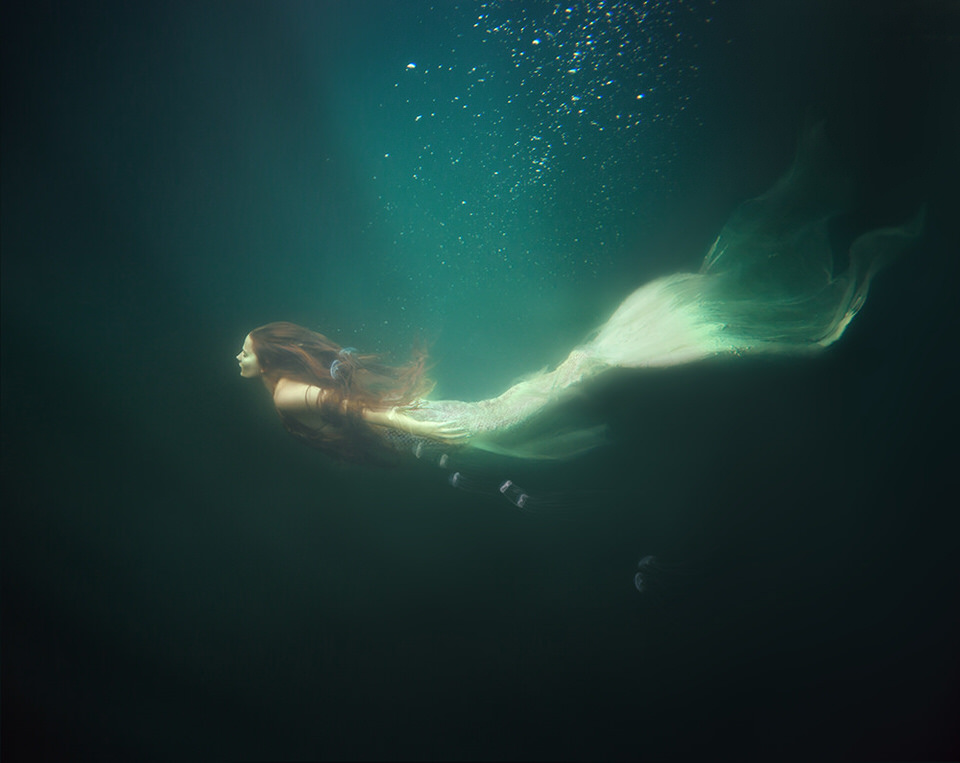
Meerjungfrau Unterwasser

Im Ausblick schwimmt heute eine Meerjungfrau durchs kühle Nass.
kwerfeldein – Fotografie Magazin | Fotocommunity

 
Comments Off on 4. Juli 2015

Posted in Equipment


Photography in public places across Europe threatened by harmonization proposal

04 Jul

The right to use pictures taken in a public place is under threat by a European Parliament proposal for the harmonization of copyright laws across the region. Buried in a complex set of amendments is the idea that the automatic Freedom of Panorama be removed from those countries that maintain it, so that copyright holders of permanent artworks and buildings will need to authorize commercial use of pictures that include their works. Read more

Articles: Digital Photography Review (dpreview.com)

 
Comments Off on Photography in public places across Europe threatened by harmonization proposal

Posted in Uncategorized