Sony shook up the camera industry recently with the launch of three new cameras – the Alpha a7R II, Cyber-shot RX100 IV and RX10 II. At the launch event we sat down with Kimio Maki, Sr. General Manager of Sony’s Digital Imaging Business Group to speak about the process of designing the a7R II, and what he has learned from customers invested in the a7-series. Click through to read our interview
Month: June 2015
-
Empfehlenswerte Fotodokumentationen Teil 1
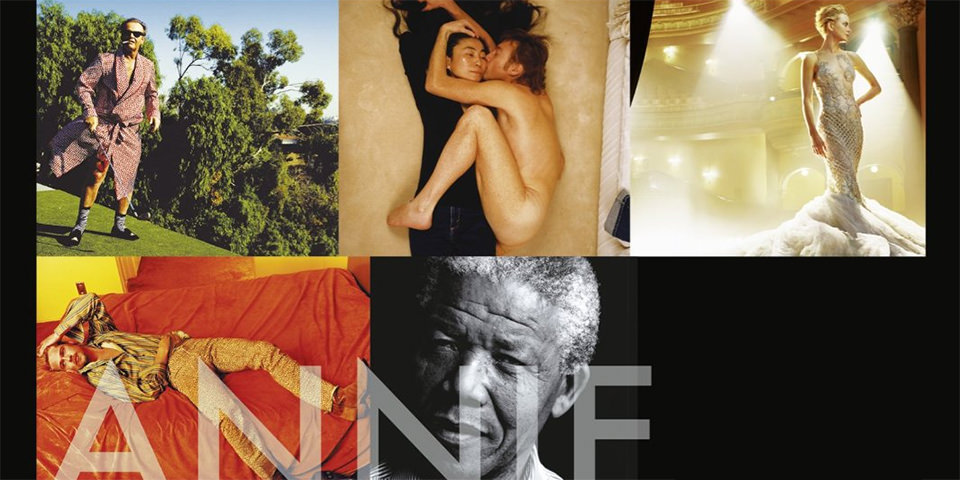
Immer häufiger gibt es aufwändig produzierte Dokumentarfilme über Fotografen. Filme, die sogar im Kino laufen. Die Fotografen werden regelrecht zu Stars, was uns zum einen freut, denn so erfahren wir mehr über die Männer und Frauen hinter den Kameras. Zum anderen führt der Hype jedoch auch zu starken Inszenierungen, durch die man die entstanden Filme durchaus kritisch betrachten muss.
kwerfeldein – Fotografie Magazin | Fotocommunity -
10 Things Photoshop Beginners Want to Know How to Do
Terry White is an Adobe Photoshop expert and in this video he answers the 10 things that Photoshop (particularly for Photoshop CC) beginners want to know how to do including:
- How to touch up a photo; how to make people look better
- Layers and adjustment layers; what are they and how to use them
- Working with layer masks
- How to crop a photo
- Adjusting the exposure and using the Adobe Camera Raw filter
- Removing something from an image
- Move or copy objects in a photo
- How to put a person from one photo onto a new background (or putting two photos together)
- How to add text
- Saving photos and saving formats that are shareable
It’s a bit of a long one but some really good tips in here that I’m sure you’ll find helpful if you’re new to Photoshop.
He also mentioned grabbing a Wacom tablet to use for your editing instead of a mouse. I use one in Lightroom as well and it is much better and more precise and doesn’t leave you with a cramped hand after working on images for hours.
googletag.cmd.push(function() {
tablet_slots.push( googletag.defineSlot( “/1005424/_dPSv4_tab-all-article-bottom_(300×250)”, [300, 250], “pb-ad-78623” ).addService( googletag.pubads() ) ); } );googletag.cmd.push(function() {
mobile_slots.push( googletag.defineSlot( “/1005424/_dPSv4_mob-all-article-bottom_(300×250)”, [300, 250], “pb-ad-78158” ).addService( googletag.pubads() ) ); } );The post 10 Things Photoshop Beginners Want to Know How to Do by Darlene Hildebrandt appeared first on Digital Photography School.
-
The Photographers Ephemeris (TPE) Versus PlanIt! for Photographers
Note: I have no affiliation with either program.
TPE is probably the best known ephemeris application used by photographers. There is, however, a new kid on the block, PlanIt! for photographers.
While TPE does a good job of being a basic ephemeris, it ends there.
Shortcomings or challenges with TPE
Like all good photographers, you’re planning a future shot of the moon rise. You consult TPE for the rise time at your selected location and, in due course, set off with plenty of time to prepare your gear. Comes the appointed time and the moon doesn’t show! TPE got the moon rise time over the horizon right, but didn’t note the hill in the way. TPE can, however, find the hill. It’s a fairly complex process that involves many steps and some calculation on your part, and the potential for getting it wrong is high.
How PlanIt! picks up the slack
PlanIt!, on the other hand, goes much further. Not only does it give you the rise and set times of moon, sun, Milky Way and many stars but it lets you know if there is an obstruction and when the desired celestial object will clear that obstruction. All you need to do is read the information off the screen.
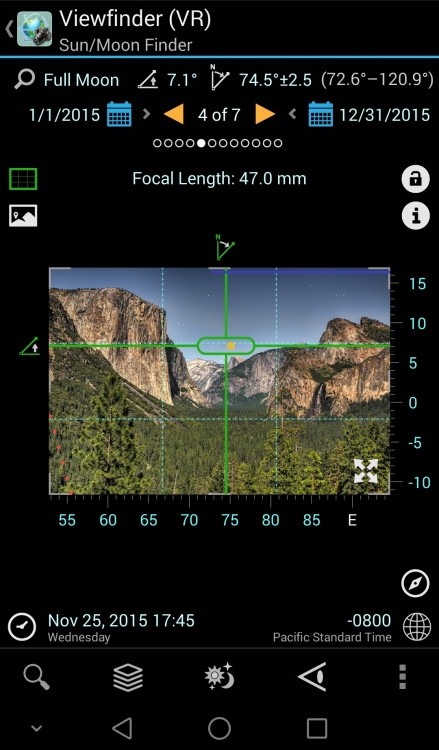
There are three major menus in PlanIt!: Ephemeris Features, Tools, and Backgrounds. By combining the features of these menus there are more than 500 possible variations of the information available to you, the photographer. All the features in Planit! are location and time specific. You set them to your requirements.
With 12 separate Ephemeris Features, see below, PlanIt! pretty well has it all covered.

With a few exceptions, the Ephemeris Features are self-explanatory.
Milky Way:
By zooming out on the map you will be able to use the Milky Way Center and Finder functions. In the Milky Way Center function you will see the times of visibility, the angle above the horizon and the bearing of the centre. If it is visible at the time and place entered, you will see an arc of red dots with a row of green dots representing the center of the Milky Way. The Finder function, on the other hand, will produce a list of times, between starting and ending dates, when the Milky Way will be visible at the selected location.
The screen shot below shows the Milky Way over the Half Dome. This screen shot is in Panorama mode with the background in Viewfinder (VR) and graphically shows the relative heights of the mountains in the background. The broken lines at the bottom of the picture tell you that with a focal length of 24mm, a resulting field of view of 40 degrees, and an overlap of five degrees you will need five shots, at the centres shown, to create this panorama.

Dark Sky:
This function uses the 1-9 Bortle Scale to indicate where you are most likely to get the best showing of stars. A one on the scale indicates a very dark sky, in other words no city lights and lots of stars, while nine means forget the star shots and photograph the brightly lit buildings instead.
Time-lapse:
Calculates the various parameters for a time-lapse film strip. You insert up to three of the four criteria, and PlanIt! calculates the rest. If you are doing star time-lapse, and the sun or moon will affect your plans, then PlanIt! will alert you to the fact and correct your timings.

The example above reads, from right to left, as: To make a 30 fps clip of 10 seconds duration, and you decide to take a shot every three seconds, it will take you 15 minutes in total and 300 photos will be taken.
Exposure:
Calculates the exposure triangle based on current light conditions as detected by your phone. Various Neutral Density filter values, and light measuring methods, are available via a drop-down menu.
Light and shadow:
Light and shadow gives you a graphical representation of where the light and the shadows will fall on a scene.
That covers the ephemeris part.
On my Samsung phone, pressing the bottom left key brings up, among other things, the Settings Menu. Scroll all the way down until you come to the Camera Settings. By entering your camera type, especially the sensor size, you enable the full strength of the scene planning features of PlanIt!.
These features are selected in the Tools Menu and, coupled with various ephemeris and background features, a whole new world of scene and equipment planning is yours.
Tools

Once again the menu items are mostly self-explanatory.
Location:
Allows you to enter a location by name or latitude – longitude. Provided you have internet coverage, and have enabled location services on your phone, PlanIt! will centre the map on your selection and, if necessary, automatically correct the time zone to the new location.
Distance:
Calculates the distance between the camera and scene icons. If the view is obstructed the green sight line will include a red section indicating where the obstruction is located. This feature gives you the opportunity to reframe your shot before going on location. The screen shot below shows the camera (the blue pin) just west of Yosemite Creek. The scene pin (red one) is off-screen but still located at the Half Dome. The shot cannot be made from this location because the ridge marked Yosemite Point rises higher than the sight line, hence the red section.

The scene pin shown here with an exclamation mark indicates that the actual pin is off-screen. The camera pin will also be shown this way if it is off screen. Both pins can be left floating (will always be shown on-screen) or can be locked to their selected positions on the map, as is the case above.
Focal Length:
Part of planning your shot is knowing what lens to use. Here is where PlanIt! really shines.
In the screenshot below, the green shaded area represents your Field of View for a given focal length. By altering the width of that view, PlanIt! immediately calculates the focal length necessary to achieve the shot. Conversely, altering the focal length will change the Field of View. So, by using PlanIt! you will always have the correct lens in your kit for any shot. Coupled with focal length, you can also see Depth of Field, and hyperfocal distance.

Depth of Field:
The aperture setting is ignored in every setup except Depth of Field. Here you are able to alter the aperture setting, and read off the Depth of Field limits as you do so.
Panorama:
As the name suggests, it calculates the number of shots, the focal length, the Field of View, and the overlap required to produce a cohesive set of shots with which to create your panorama.
Backgrounds
PlanIt! uses Google Maps as the basis for its various displays. This means the usual Google Map functions are available, plus a few others.

The Map (Picture) background allows you to use a downloaded, or photographed map, e.g., a picture of a tourist map in a park. This requires correct orientation of the map to be of any real use.
The various Viewfinder backgrounds allow the scene to be depicted in a number of ways, each giving different details of the scene. The (Picture) option actually uses the phone viewfinder as the background. Obviously this requires you to be on location, and your phone to have compass and GPS capabilities.
It goes without saying, in such a comprehensive piece of software, that camera orientation, portrait or landscape, can be selected and this, in turn, affects the view presented. The change between horizontal and vertical focal length being a classic example.
Compare the almost bewildering array of possibilities in Planit! with the ephemeris features of TPE and I think there is a clear winner. Planit! for photographers is available for Android 4 and above in Google play store and has recently been ported to iOS. My thanks to David Qiao of Yingwen Technologies for the screenshots.
googletag.cmd.push(function() {
tablet_slots.push( googletag.defineSlot( “/1005424/_dPSv4_tab-all-article-bottom_(300×250)”, [300, 250], “pb-ad-78623” ).addService( googletag.pubads() ) ); } );googletag.cmd.push(function() {
mobile_slots.push( googletag.defineSlot( “/1005424/_dPSv4_mob-all-article-bottom_(300×250)”, [300, 250], “pb-ad-78158” ).addService( googletag.pubads() ) ); } );The post The Photographers Ephemeris (TPE) Versus PlanIt! for Photographers by John Sharples appeared first on Digital Photography School.
-
10 Essential Pieces of Gear you Need for Landscape Photography
If you are interested in going out and getting some high quality landscape photographs, here’s a comprehensive list of items you will either want to consider, or must have, in order to increase your chances of getting some keepers:
#1 – The Internet
Whenever I start to plan a photo shoot to a particular location, I usually begin by googling the area. If it’s a relatively well-known location, you will probably find some very interesting, and comprehensive, websites made by other photographers or adventurists/bloggers. The problem is, if it’s a famous location, you will also get a ton of not-so-interesting and even incorrect information as well. Weeding through Google to isolate the helpful and high quality blogs or websites from the crummy ones is an art form all its own. Once you get used to perusing Google, reading just a few sentences of a blog will clue you in as to whether or not the information you’ve found is worth taking it to heart or not.
If you aren’t lucky enough to find two or three really good blogs about the location, head over to Alltrails.com. It has a sizeable database of locations around the country that have been hiked, including user’s reviews of the location and the level of difficulty in getting there. If it’s a famous site, TripAdvisor.com has a good database of information, including the places to stay nearby.
From there, you’ll be off and running with more information than you probably need. In most cases, what becomes tricky is weeding through everything you find and parsing it down into just a few brief paragraphs on your overall plan of action.
#2 – A Strong Backpack
If you’re looking for a place to save some money, a backpack is not where you want to be counting pennies. You get what you pay for, and when it comes to choosing a backpack to take on a landscape shoot, it is very important you use a bag that is strong and water resistant, with reinforced padding.
Don’t fall victim to the lame zipper bug (you know you’ve been there before, trying to unzip the bag and before you know it, the zipper pops off the bag like a cricket). Do yourself a favor and invest in a high quality bag, like the Tamrac Expedition Series, or the Lowepro Pro Trekker. It will last you many years, and will help you take care of your camera and lenses in the long run.

#3 – A Weather-Sealed DSLR Camera
Generally speaking, for various reasons, I still much prefer a DSLR (such as the Nikon D810) over a full-frame mirrorless camera (such as the Sony A7r) for landscape photography. One reason is that certain DSLR models are significantly more rugged and weatherproof than mirrorless.
Eventually you’re going to drop a camera. It happens to all of us (at least that’s what everyone told me the first time I dropped a camera), especially those of us who are out in less than perfect weather conditions. DSLRs made from composite magnesium handle some rough treatment much better than the plastic-bodied entry level DSLRs. My first full-frame DSLR was the Nikon 700. That camera could survive being run over by a small truck. A perfect companion for the clumsy, just-starting-out landscape photographer that I was then.
Also consider investing in a quality raincoat for your lens/camera. I don’t recommend getting one of the cheap, flimsy, clear plastic covers made from recycled sandwich bags…they will tear easily and won’t stay put in windy conditions. Get a cover that is heavy duty…one good coat will last a long time, and they aren’t pricey.
#4 – A Sturdy Tripod
To handle poor footing out in the muddy, rocky, sandy wilderness, and to protect your camera lens setup, a tripod is one item you don’t want to mess around with. In fact, this is the one item more than any other that I would recommend you consider heading to the northern end of your projected budget in order to select a high quality tripod.
A flimsy tripod could end up costing you a chunk of a paycheck in repair bills. It only takes one good gust of wind to knock over an unstable tripod. Having a nice camera and lens, but an entry-level tripod is like putting four worn down, old tires on a Ferrari. It won’t run properly and it’s dangerous for the rest of the setup.

A good tripod will outlive both of us, so it’s rare you’ll need to invest in more than one over the course of many years. A few extra bucks goes a long way towards getting having a more stable, secure setup.
See Really Right Stuff, Manfrotto, Gitzo, or Feisol for excellent tripods. In my opinion, you should strongly consider carbon fiber over aluminum; they are the lightest and strongest on the market.
#5 – Lenses
This is where the fun begins, and your wallet ends. Lenses are the single most important piece of equipment in photography. You can have the finest camera, tripod, backpack, media card, and accessories available, but if you don’t have quality glass, it will severely complicate your ability to take a good photograph.
I typically prefer to shoot with prime (fixed focal length) lenses, as opposed to using zoom lenses. My preference for primes is mostly about making sure that I get as personal and into the scene as possible.
With zoom lenses, I tend to get a bit lazy and shoot without adequately working the scene. There is no substitute for moving your feet and SEEING the composition with your own eyes, and not just through the viewfinder. The element of perspective is lost if you simply zoom, instead of walking around and checking things out with your own eyes first.
That said, it’s strictly a subjective thing. I know plenty of photographers who prefer using zoom lenses, and that’s great. Most of the time, the best gear for you is the gear you’re most comfortable with. The key suggestion here, with any lens, prime or zoom, is that you RENT one and try it out before buying it. You can’t know how the lens will work for you until you use it in various situations.
#6 – A Reliable Remote Trigger or Shutter Release
This is often overlooked by many photographers, but I firmly believe having a remote trigger makes a big difference. Without one, you have to physically press on the top of the camera. No matter how careful you are, and no matter how securely fastened the camera is to the tripod, this will introduce some micro-shake into the setup. If you want your image to be as tack-sharp as possible, you don’t want anything touching the camera that doesn’t have to. Once the mirror locks up, you want your setup to be as steady as a concrete slab. Every DSLR has its own proprietary remote shutters, and you can also find quality third-party remote shutters available at a lower cost.
#7 – Filters
For landscape photography, some filters are almost as essential as lenses. I’ll keep it brief here and stick with just a few basic filters I would always want to travel with:
Circular Polarizer
A polarizing filter helps mitigate the nasty, harsh reflection of the sun off of shiny objects such as water or anything wet. To get it to work, you simply turn the filter until you see the glare disappear, then you stop turning the filter. A polarizer will also help darken a blue sky and make it a deeper, richer blue. Some people like that look, some don’t. If you do, a polarizer will help you achieve it. I use a polarizer practically all of the time when shooting in daylight.
Neutral Density Filter
An ND filter basically acts as sunglasses for your lens, it blocks some light from reaching the camera’s sensor, thereby slowing down the exposure. For example, a 3-stop ND filter (usually denoted as an 8X or 0.9 ND filter) allows three stops less light through than you’d get without the filter attached. A 5-stop ND filter will allow five stops less light, and so on. For the serious landscape photographer I’d recommend having a 2-stop, 3-stop and 10-stop ND filter. If you want to do some long exposure waterscape work, the 10-stop will come in handy to help make the water look silky smooth. You can also stretch out clouds or turn people into invisible ghosts with ND filters.
Graduated Neutral Density Filter
These are similar to ND filters, but instead of the entire filter being tinted, only the upper portion is darkened, with the tint getting darker from the middle to the edge. So, for example, if you’re photographing a horizon with a sky that’s two or three stops brighter than your foreground, you could use a graduated ND filter to help bring out the foreground more, without blowing out the horizon. It will effectively balance the amount of light received from both the brighter horizon and the darker foreground. Usually just a two or three stop GND filter is necessary. Here’s a photograph of a Graduated ND Filter:

Reverse Graduated Neutral Density Filter
Same principle as the one above, except instead of the tint getting darker from the middle of the filter to the edge, it’s reversed. The middle of the filter starts out the darkest, and gradually gets lighter as you travel towards the edge. These are excellent for shooting sunrises and sunsets, where the horizon line is the brightest area of the frame, and as you go higher in the sky, it becomes less bright. This is what a Reverse Graduated ND Filter looks like:

UV or Clear Filter
If it’s my lens, I want to do everything I can to protect it from wear and tear. I always have a clear, or UV, filter on the front of every lens I own. It does nothing to help improve the photograph in any discernible way, but it does a great job protecting the front lens element from dirt and dust, or from me walking into a door lens-first, which has happened more times than I prefer to admit.

#8 – Extra Batteries and Media Cards
Always, without exception, carry an extra battery for your camera, an extra media card, and an extra battery for any other battery-consuming device. If you’re bringing along a flash that takes four AA batteries, take an extra set of four with you. Chances are you won’t ever need them, but there will always be the one time when you do, and you’ll wish you had them.
#9 – The Photographer’s Ephemeris
This clever app (TPE) does an amazingly accurate job at detailing when and where the sun, and moon, will rise and set. If you’re out chasing sunsets and sunrises for photographs, this app is a must-have.
#10 – A good pair of shoes
No joke; having a comfortable pair of shoes is like having good vision. If your feet aren’t comfy, then nothing else matters. You will not be as good a photographer as you otherwise would be with comfy feet. This especially holds true on longer hikes; invest in a good pair of hiking boots. A pair that strike a balance between breathing well but also offering some water resistance.
That’s enough for the list of equipment you’d want to consider having to photograph landscapes. If you’ve made it this far in this article, I hope you’ve gotten something useful out of it. Have fun shooting those landscapes!

googletag.cmd.push(function() {
tablet_slots.push( googletag.defineSlot( “/1005424/_dPSv4_tab-all-article-bottom_(300×250)”, [300, 250], “pb-ad-78623” ).addService( googletag.pubads() ) ); } );googletag.cmd.push(function() {
mobile_slots.push( googletag.defineSlot( “/1005424/_dPSv4_mob-all-article-bottom_(300×250)”, [300, 250], “pb-ad-78158” ).addService( googletag.pubads() ) ); } );The post 10 Essential Pieces of Gear you Need for Landscape Photography by Jeb Buchman appeared first on Digital Photography School.
-
Climactic Table: Zero-Energy Furniture Regulates Temperature
[ By WebUrbanist in Design & Furniture & Decor. ]
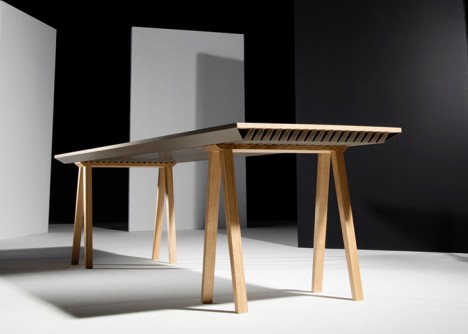
Able to reduce cooling costs by up to 30% and heading expenses by as much as 60%, this series of temperature-regulating furnishings stores thermal energy without requiring an external power source, helping maintain room temperatures both during the day and at night.
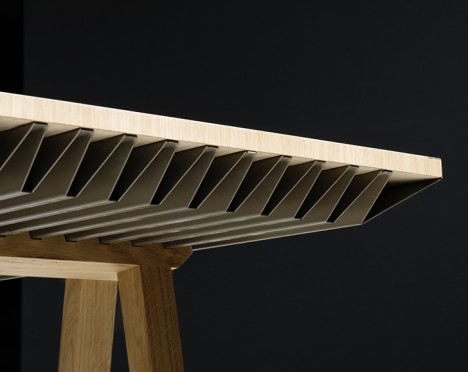
Designed by Raphaël Ménard and Jean-Sébastien Lagrange, designs in this series such as the Climactic Table are composed of a combination of solid oak and corrugated aluminum with phase-change materials (PCM) sandwiched in between.
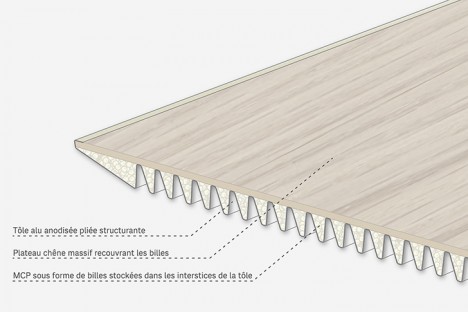
The wood contributes to desired thermal properties while the shaped aluminum provides structural support and conductivity. As a passive heating and cooling strategy, these objects can augment existing systems or replace them entirely in moderate climates.

A familiar phenomena in the realm of architecture, the idea of using materials to store and discharge heat or cold naturally is an old one. Stone, concrete or brick, for instance, are often placed to pick up warmth during the day then mitigate the temperature change at night, releasing that stored heat energy. While there is no specific control mechanism in play, such systems naturally create a level of equilibrium that reduces the next for external active (HVAC) systems.
Want More? Click for Great Related Content on WebUrbanist:
Tensile Table: Floating Wood Furniture Levitates via Magnets
Science meets luxury in this levitating coffee table composed of hovering blocks that seem to magically shift back into formation when applied pressure is …
Click Here to Read More »»

16 Creative Modern Tables and Crazy Table Designs
Are modern tables having an identity crisis? Here are 16 creative modern table designs that look like they are eager to transform into something else entirely
Click Here to Read More »»
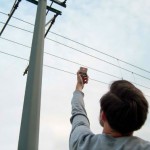
Harvest Energy from Power Lines to Recharge Your Batteries
A small hand-held ‘parasite’ gadget harvests wasted electromagnetic fields from cell phones, home appliances and power lines to charge a battery.
Click Here to Read More »»


[ By WebUrbanist in Design & Furniture & Decor. ]
[ WebUrbanist | Archives | Galleries | Privacy | TOS ]
-
What Time is it? It’s Time-lapse Time!

You’ve been drooling over time-lapses lately, and with good reason.
They’re perfect for capturing the buzz of a cityscape, the fun of your pool party and the awesomeness of storm-clouds moving over your hometown.
We’ve rounded up the best time-lapse tools for everyone from DSLR wielding pros to time-lapse newbz. You can finally snag perfect time-lapses … time after time.
Click Here Fast, We’ll Time You!
(…)
Read the rest of What Time is it? It’s Time-lapse Time! (310 words)
© Erin for Photojojo, 2015. |
Permalink |
No comment |
Add to
It’s Time-lapse Time!”>del.icio.us
Post tags:
-
Do I Need a Photo Release For That?
With the increasing presence of quality Smartphone cameras and affordable, pro-grade compact digital cameras, there are more people than ever who have the power of taking photos. But how many people are aware of the legal constraints that come with being a photographer, even on a hobby or amateur basis? Perhaps more importantly, how many of us know when it’s legally okay, or not okay, for someone to snap a photo of ourselves?

The answers to these questions are important for both photographers and photo subjects to know, so let’s examine some of the laws that have to do with photography. Before we dive into it, let’s also establish that these are the rules that apply in the United States in particular. If you are based elsewhere, or an American traveling abroad, it may be worth it to investigate photography rules pertaining to specific countries. Also, please note that I am not a legal professional and this is simply advice from another photographer based on experience and consensus of other online sources.
Public versus private places
First of all, let’s be clear that you are always free to sell photos of any subject without permission or a signed release, with one big exception: You cannot legally photograph people in private places without their expressed permission. In the United States, every citizen is guaranteed a reasonable expectation of privacy, meaning if you are in your home or on private property, you have the right to prevent someone from taking your photo if they are standing on your private land. However, the moment you step out into public areas, such as a public park, you forfeit your right to privacy and may be photographed by anyone without your consent. Thinking of this from a photographer’s perspective, it’s also important to realize that no one can legally prevent you from taking a photo in a public space, but they can do so in private spaces.
Editor’s note: Just because you have the legal right to take someone’s photo it doesn’t mean you have the right ethically if they do not wish to be photographed. Be respectful of others as you’d want for your own wishes.

Example of a private space
Using someone’s likeness for promotion
Despite the above notion of freely photographing people in public spaces, it doesn’t mean you can do as you please with those photos. This is where the idea of a person’s likeness comes into play, and this same concept also applies to recognizable private property. In a legal sense, one’s likeness has to do with a representation of that person or private property being used to promote something, such as a product, service, or idea. Every person, whether it be a celebrity or your average Joe/Jane, has the right to protect his or her likeness.
Put into practice, this means that if you take a photo of someone in a public space and were to sell it to a publication or newspaper, you’re likely within your rights of doing so since that person and photo is not being used for the sake of promoting anything. However, you would be restricted from selling or using that photo for any sort of promotion, such as an ad for your product, service, or cause. The reasoning is simple: that person didn’t consent to having their likeness used to further your promotion. Imagine being dedicated to a specific political party and seeing your mugshot used in an advertisement to promote the opposing party’s campaign. If you didn’t agree to it, you would have the grounds to ask the opposing campaign to take your photo down.

To use this photo to promote something or sell something you would need a release
When photo model releases come into play
This idea of protecting one’s likeness is where the need for photo model releases becomes necessary. As a photographer, it all comes down to intent. If you snap a photo knowing there’s a high chance you’ll use it to promote something, it’s best to evaluate that scenario for any instances where a model release might be necessary. In fact, photo releases aren’t just for people. Depending on the use of the photo, you may also need a property release for privately owned buildings. Again, it all comes back to how you plan to ultimately use the final image, as well as the specific rules set in place by the agency or company selling the images. Below are some specific scenarios when you’ll want to have a photo (model or property) release.
Stock Photography
Selling images as stock photography can be a way to make a small, yet somewhat steady side income, but it does come with the expectation that any shots with identifiable people or landmarks come with a photo release to make them commercially licensed. The rules may vary according to the stock agency you work with, but most agencies require releases because there’s a high chance customers will use the photos for commercial purposes to sell something. In these cases, the likeness of people will need to be protected, or at least authorized, for possible commercial use via the photo model release.
Editorial Photography

Could be used for editorial
There is one exception to the stock photo rule. In some cases, stock images of people can be sold without a photo release, but only for editorial use in magazines, newspapers, textbooks or other such publications. The one catch to this scenario is that the payout for editorial stock photos is usually significantly lower than if the same photo had a signed release and a proper commercial license. If you have any aspirations of making good money by selling stock photos, you should definitely consider going the commercial licensing route.
Photography Contests
With the number of photo contests available today, many photographers wonder if model or property releases are needed to submit photos to these contests. Again, it all comes down to intent. Some contests are hosted by companies who may want to use those photo entries for possible commercial use, in which case they’ll need signed photo releases. However, consider a magazine that wants to publish winning photos in an upcoming issue, or print images for an exhibit or gallery. In this case, photo releases most likely won’t be necessary. The bottom line is be sure to read the fine print before submitting your work to any photography contests and be on the lookout for how your submitted photos may be used.
Summary
In a nutshell, this is a brief summary to photo releases and some common scenarios when you may want to investigate the need for one. Do you have any advice or questionable encounters with photo releases to share? Let us know in the comments below!
googletag.cmd.push(function() {
tablet_slots.push( googletag.defineSlot( “/1005424/_dPSv4_tab-all-article-bottom_(300×250)”, [300, 250], “pb-ad-78623” ).addService( googletag.pubads() ) ); } );googletag.cmd.push(function() {
mobile_slots.push( googletag.defineSlot( “/1005424/_dPSv4_mob-all-article-bottom_(300×250)”, [300, 250], “pb-ad-78158” ).addService( googletag.pubads() ) ); } );The post Do I Need a Photo Release For That? by Suzi Pratt appeared first on Digital Photography School.
-
Photo Finished: 12 Closed & Abandoned Camera Stores
[ By Steve in Abandoned Places & Architecture. ]
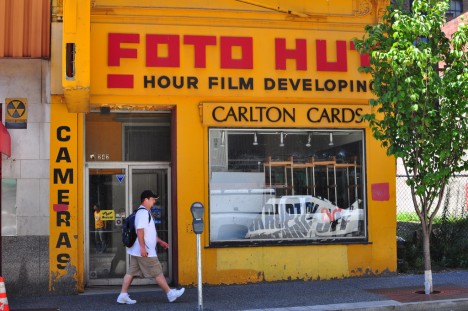
Point, click, shut! Camera stores are rapidly fading into obsolescence as smartphones take the place of mass market cameras, film and paid photo processing.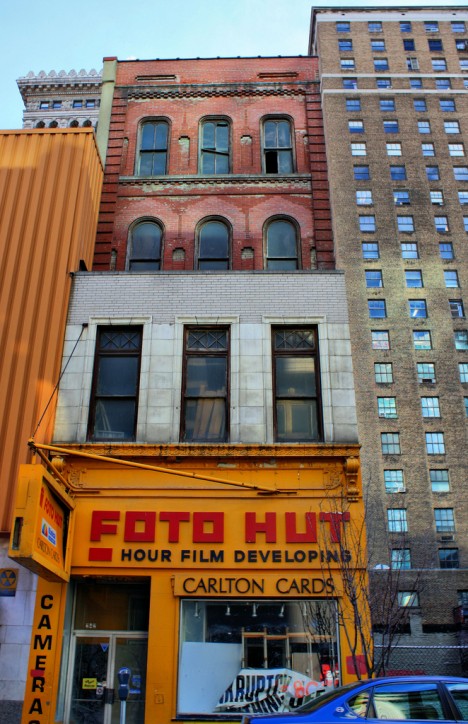
Now here’s a developing story… NOT! The long-abandoned Foto Hut on Forbes Avenue in downtown Pittsburgh sold cameras, film and greeting cards while promising to develop film in an unknown number of “hour” – well, either “one” or “24”, it’s hard to tell from the red rectangle on the Kodak Yellow sign. Kudos to Flickr users strawbrryff and john (J Blough) for capturing this frozen-in-time, eternally bankrupt abandoned camera store in November 2010 and February 2011 respectively.
Chick Clinic
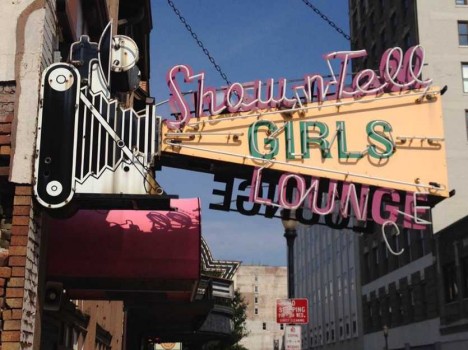

Once a one-stop-shop for Louisville, Kentucky’s photo fans, Schuhmann’s Click Clinic opened in 1946 and its eye-popping animated signage dates from the early 1950s. Schuhmann’s kicked the bucket in 2001, however, and the sign out front was modified to advertise the store’s new tenants: the Show-N-Tell Showgirls Lounge. No cameras allowed, we’re guessing.
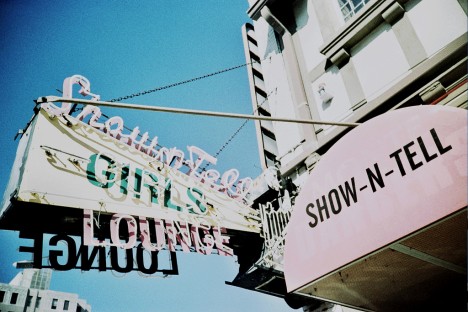
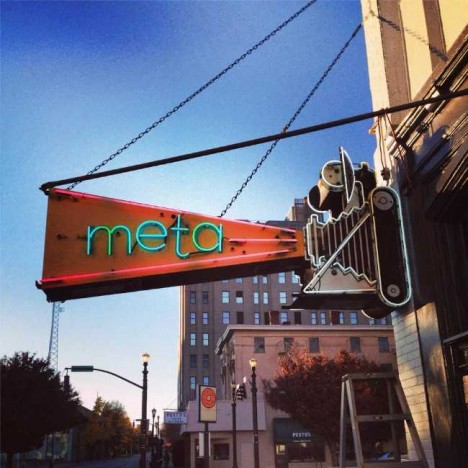
Takes a licking and keeps on clicking? Both the club and the subsequent owners, the circa-2013 Meta bar, cleverly modified the front signage while completely ignoring the former camera store’s other sign, mounted on the back of the building overlooking the parking lot.
Foto Finis
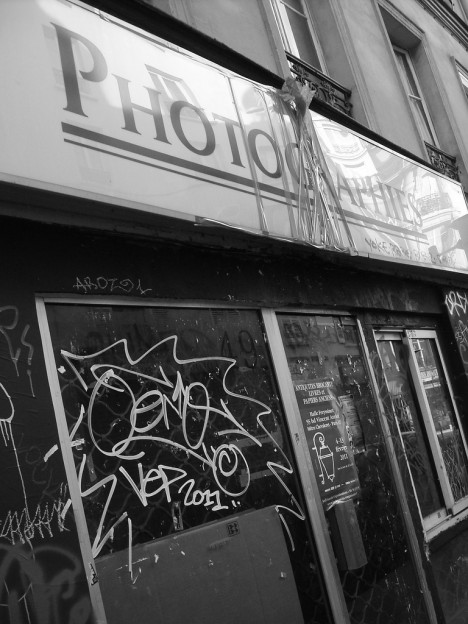
Flickr user Who Cares? (busy.pochi) snapped this abandoned Photographies camera and book store in February of 2011, and it didn’t take long for graffiti taggers and handbill posters to take advantage of the stores neglected status. One would think a city as photogenic as Paris could support at least a few camera stores.
Morgue & Camera
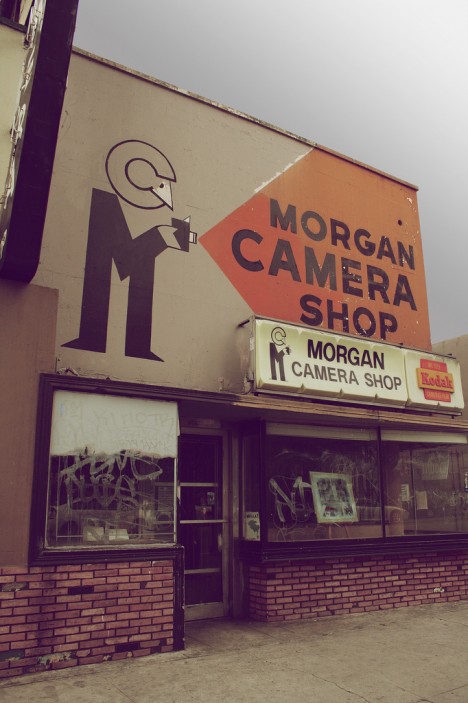
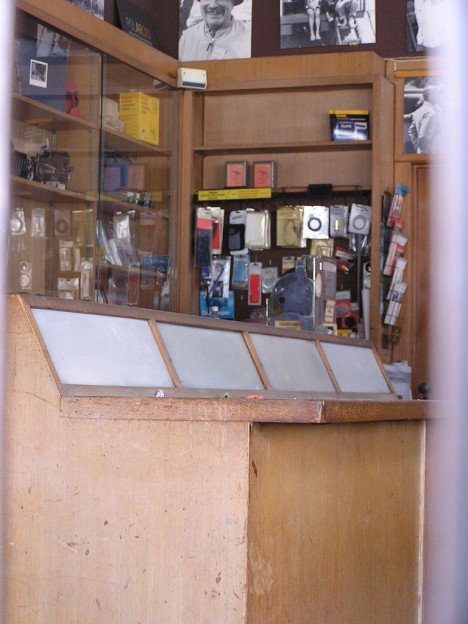
A Hollywood landmark since the 1930s, Morgan Camera Shop finally gave up the ghost a few years into the twenty-first century. Boasting an idyllic location amongst Hollywood’s iconic tall palms and a sign influenced by Bauhaus architecture, Morgan Camera played a large roll in introducing 35mm photography to the United States from Europe.
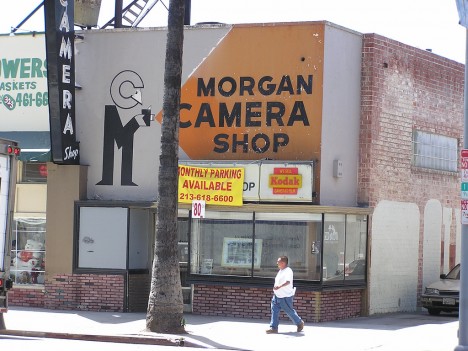
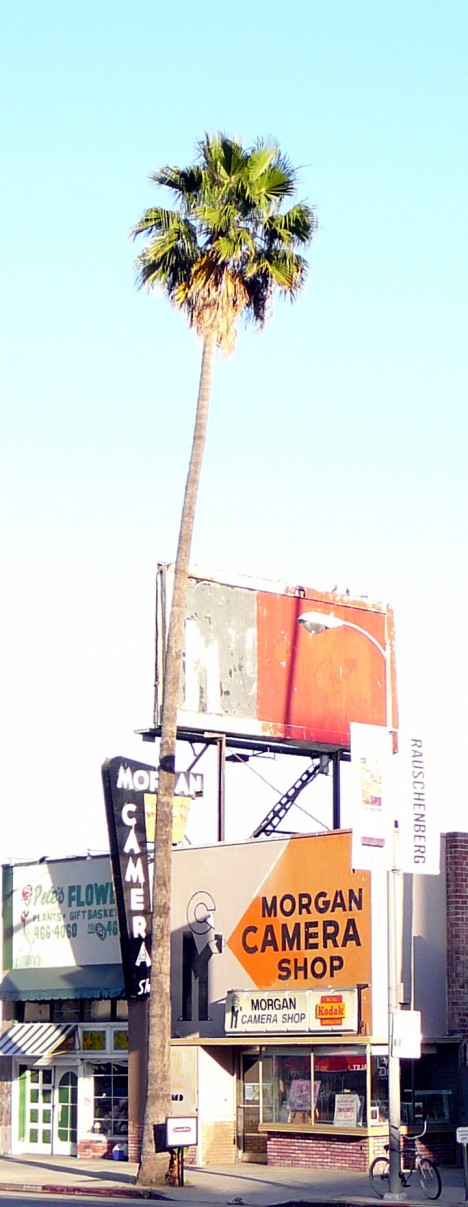
Morgan Camera exists in an odd sort of limbo – closed to be sure, but otherwise left pretty much alone inside and out thanks to the efforts of the Morgan family, members of whom who still own both the shop and the building.
Next Page – Click Below to Read More:
Photo Finished 12 Closed Abandoned Camera Stores
Want More? Click for Great Related Content on WebUrbanist:

Empty Chambers: 10 Closed & Abandoned Gun Stores & Shops
If your business involves getting fired, going off half cocked or triggering bankruptcy, you just might be one of these 10 closed and/or abandoned gun shops.
Click Here to Read More »»
Photo Finished: 9 Snappy Camera-Shaped Buildings
Yo dawg, these 9 camera-shaped buildings allow you to take selfies with your camera in front of buildings built to look like cameras. Now say “cheesy”!
Click Here to Read More »»

Nix Tape: 10 Closed & Abandoned Blockbuster Stores
Blockbuster Video’s torn-ticket logo once fronted thousands of stores worldwide. That was then, this is now… by late 2013, Blockbuster was officially busted.
Click Here to Read More »»
[ By Steve in Abandoned Places & Architecture. ]
[ WebUrbanist | Archives | Galleries | Privacy | TOS ]
-
21. Juni 2015
Das Bild des Tages von: Normen Gadiel
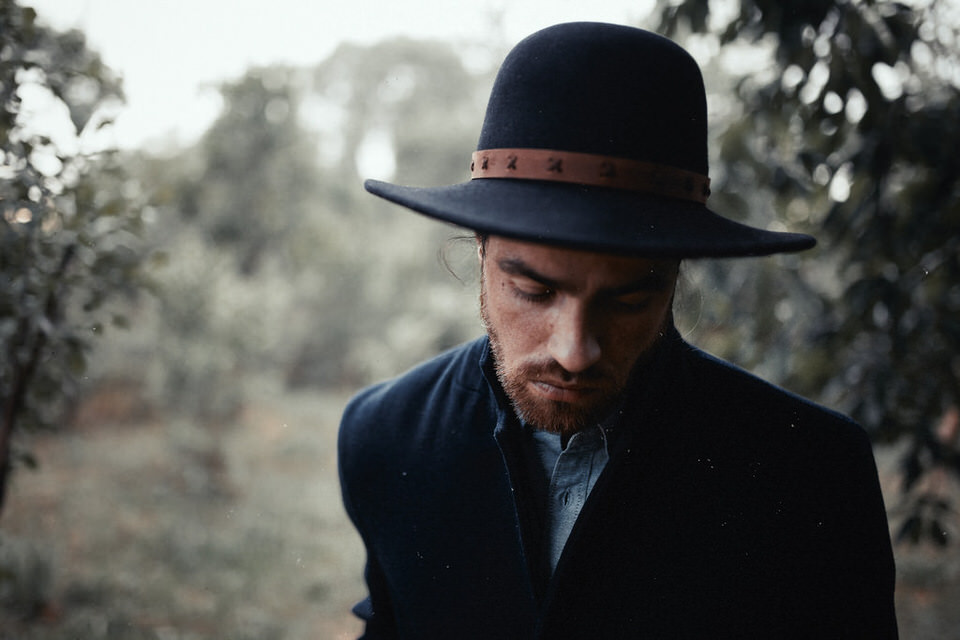
Heute sind wir im Ausblick etwas sentimental.
kwerfeldein – Fotografie Magazin | Fotocommunity