Das Bild des Tages von: Jonas Hafner

Im Ausblick: Gepuderte Tänzer, ein lustiges Meme und Erotikfotografen im Test.
kwerfeldein – Fotografie Magazin | Fotocommunity
Das Bild des Tages von: Jonas Hafner
Im Ausblick: Gepuderte Tänzer, ein lustiges Meme und Erotikfotografen im Test.
kwerfeldein – Fotografie Magazin | Fotocommunity
In modern society websites are all about storytelling and conveying the right message. Designers try to “make it big” by using proper images and videos to give users the maximum impact. Videos rose in popularity in 2014, and have been a growing trend ever since. Being a sister medium to photography, video can help you enhance your online brand presentation Continue Reading
The post How to Use Video for Your Photography Website appeared first on Photodoto.
Using a video feed to capture stills isn’t a new idea – Nikon’s first electronic camera, the QV-1000C, did it in the late 1980s – but the resolution of 4K makes it more useful. Panasonic has recognized this way of working and has introduced 4K Photo mode to its 4K cameras, to make things easier for the user. We took the feature for a test drive. Read more
Das Bild des Tages von: GST Foto’s

Im Ausblick: Sony A7R II, Leica Q und Unterwasseraufnahmen.
kwerfeldein – Fotografie Magazin | Fotocommunity

Ein Beitrag von: Sohail Karmani
Für gelegentliche Besucher wird es als eines der gefährlichsten Länder der Welt betrachtet: Auf Empfehlung des US-Außenministeriums sollten amerikanische Bürger alle Reisen, die nicht dringend notwendig sind, aussetzen. Auch das Außenministerium des Vereinigten Königreiches betont eine starke Bedrohung durch Terrorismus, Kidnapping und konfessionsgebundene Gewalt.
kwerfeldein – Fotografie Magazin | Fotocommunity
[ By Delana in Architecture & Houses & Residential. ]

A tiny 750 square foot apartment is definitely not a lot of space for two people, but this couple was lucky enough to find an exceptionally creative architect. This Tokyo home had a lot of room to grow vertically, so Hiroyuka Shinozaki Architects used floating floors and a series of stairs and ladders to create a spacious living area and studio.
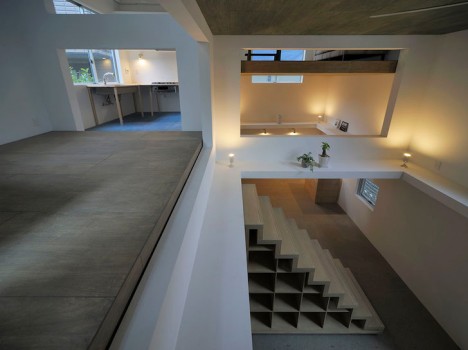

The interior of the home is virtually free of walls and even features huge cutout areas in some of the floors. The architects named it House T, but the owners call it a “ninja house.” Their reasoning behind the name? The couple feels that they have to be as nimble as ninjas to navigate the innovative interior.


Large hanging lights and the wide-open space fill the combination home/studio with bright, cozy light. Part of the space is largely unfinished, with plywood floors and very little furniture. It contributes to the austere yet homey feel of the apartment.


In addition to the absence of walls, many of the home’s functions and features were built into the walls to maximize available floor space. A decent amount of storage is built into the home’s central set of stairs. While walking along ledges and tiptoeing around holes in the floor might not be for everyone, the pair who live in the apartment say that the unique layout – and the unusual way in which they have to navigate it – has made them healthier.
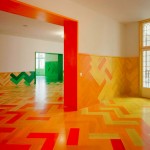
Color, pattern, unexpected materials and careful editing of rustic historic architectural details make these apartment and condo remodels one-of-a-kind.
Click Here to Read More »»
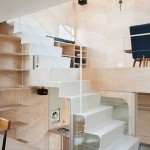
Measuring just 280 square feet, this tiny house in Tokyo by architecture firm Flathouse includes a public biscuit shop on the first level and manages to fit a …
Click Here to Read More »»
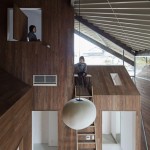
Japanese architects have come up with some of the world’s most extreme, clever and off-the-wall solutions for spatial challenges, manipulating the shapes and …
Click Here to Read More »»


[ By Delana in Architecture & Houses & Residential. ]
[ WebUrbanist | Archives | Galleries | Privacy | TOS ]
Editor’s note: this week we will be featuring a series of articles on posing for portraits. Look for a new one each day. If you miss any make sure you subscribe to our newsletter and you’ll get a reminder of all our articles once a week.
Posing kids is a whole different thing from posing models (unless you’re photographing a child model, and then you might not need this article). My biggest goal when capturing kids is to help them look as natural as possible, so truly I want to “unpose” them. Stiff, awkward, posed shots aren’t really what anyone wants, but I want to take this even a step further and talk about capturing kids’ true inner selves.
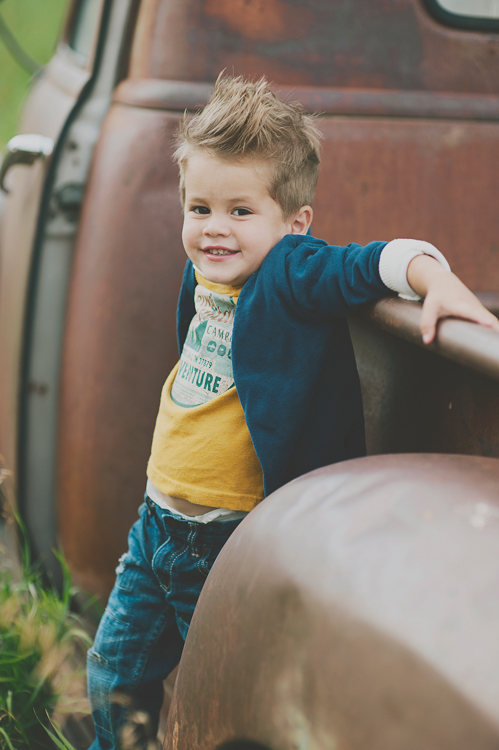
Have you ever had a kid in front of your camera, and whatever you tell them to do ends up looking like the most unnatural position ever? Chances are, the kid is as baffled as you are. He doesn’t know what you want from him. He hasn’t been studying pinterest boards and kid’s clothing catalogues. He just knows his mom dressed him up and told him not to get dirty or mess up his hair, and now some stranger is telling him to put his hand there, look over here, bend his elbow like this. Most kids don’t understand this.
Let me share some unposing tips with you for helping kids to be more nature, so you and your little model can get some great shots!
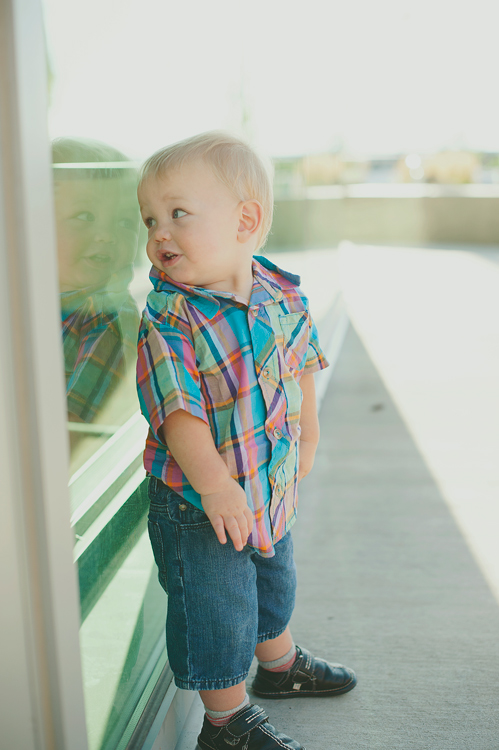
If you can just let a kid be themselves, and explore, sometimes the photos you get can be more adorable than anything you could think up yourself. Part of each session could be unstructured, no posing direction, kid-led, fun. Photos like the above could happen all on their own, or if the child is shy, you could ask them, “What’s in that window?” Make picture time into play time, and let kids be themselves.
Some props can be good, but sometimes they just add to the chaos, and you end up with a lot of canned, posed photos. I love kids’ cute faces, and that’s what I want to be the main focus of my photos. Don’t stress too much about making everything around the kid amazing. Like I said, kids don’t need much help to be adorable!
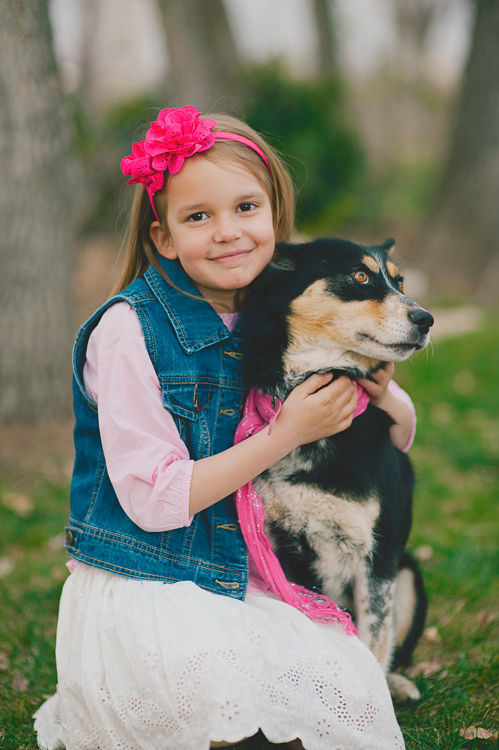
Sometimes kids are nervous and anxious about getting their photos taken. Letting them take a few photos with a beloved pet, favorite stuffed animal, or even Mom or Dad, can really help relieve the pressure, and help them feel comfortable.

Sometimes the most spontaneous laughs, the happiest smiles, and the most relaxed poses, just happen when they’ve got their buddy with them in the photos. Adding a live wiggly friend can add extra work to getting a photo, but the payoff is often worth the work. Have Mom or Dad help you keep the pet under control, and be quick. Encourage a lot of interaction, and be ready for anything!
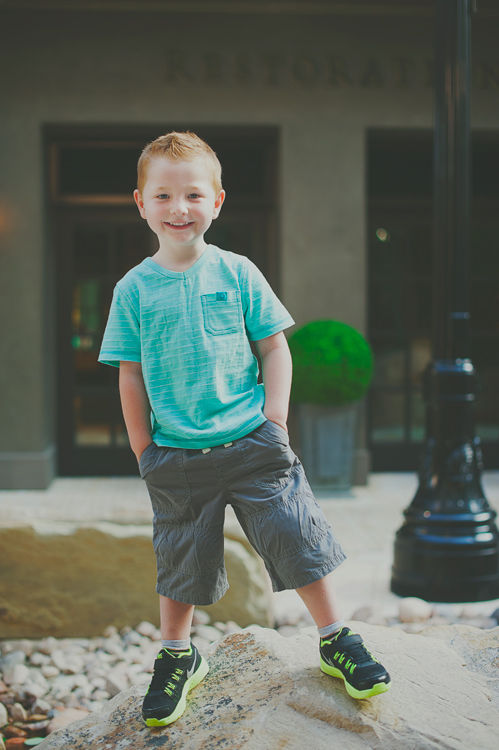
Kids aren’t going to be patient with a lot of posing cues and tweaks. You can give general direction, and then shoot fast. You could give some quick commands, “Now laugh at the silly caterpillar on my head!”, but don’t take a long time moving their arm just so, or turning their heads just so. Most kids won’t respond well to that, and will quickly tire before you get any good photos.
Have your camera on a fairly fast shutter speed (I like mine at least 1/100th for kids), because they’re not going to hold very still for very long.
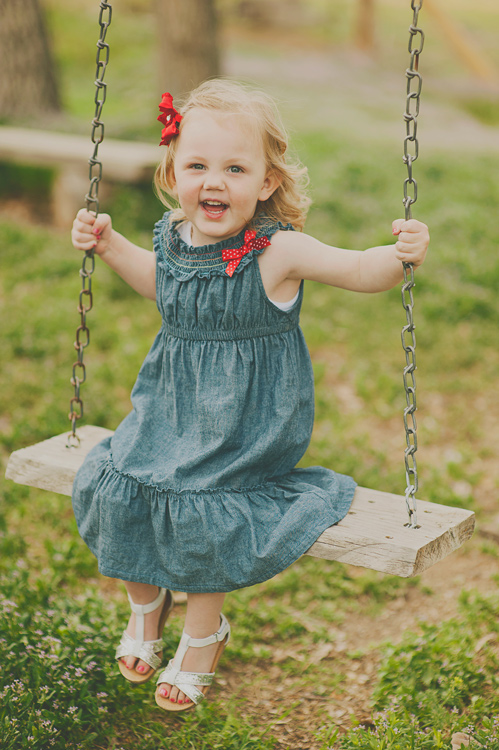
You don’t want to stand there, staring the kid down, waiting for them to spontaneously be in a spot with great light, doing something amazingly photogenic. You’ve got to give some direction, but try to do it in a way that makes the whole experience fun and relaxed. Here are some phrases that you could try:
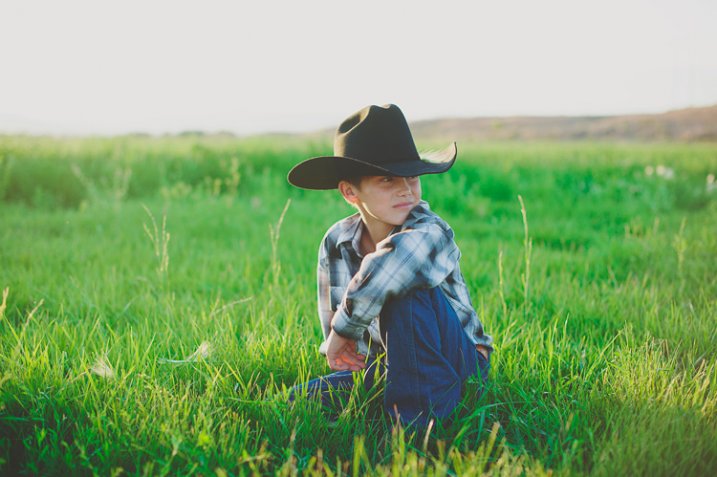
Some kids love silly, others are pretty shy. Pay attention to how they react to you, and adjust accordingly. If they’re really rambunctious, you might want to dial down your silly a bit so you don’t get them too wound up. You can still have fun with them, but talk in a calm voice, and don’t ask them to do too many crazy things, because they’ll take what you say and bring it up a notch or two. Before you know it, you’ve got a kid running in circles that isn’t listening to a word you say.
If they’re really introverted, you might want to try to capture more serious photos, and let them be contemplative. Don’t ask them to do things they are obviously uncomfortable with. When they’ve warmed up to you a bit, you may be able to give more requests, but really pay attention to the cues kids are giving you, and focus on capturing who they are, not the canned five poses that you do with every kid.
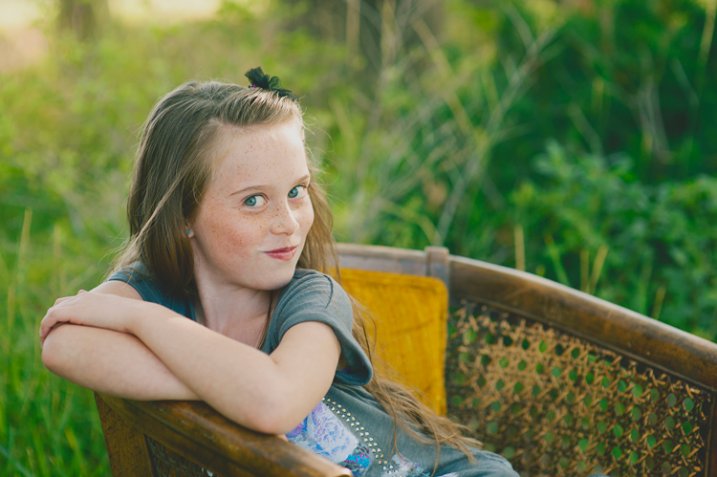
I would love to hear your tips for getting great unposed shots of kids! What are the fun things that you say to coax a smile? How do you get their attention, and make photo time fun?
Check out Portrait Posing Tips- How to Help People to Relax and Take Better Photos for more in the posing series.
googletag.cmd.push(function() {
tablet_slots.push( googletag.defineSlot( “/1005424/_dPSv4_tab-all-article-bottom_(300×250)”, [300, 250], “pb-ad-78623” ).addService( googletag.pubads() ) ); } );
googletag.cmd.push(function() {
mobile_slots.push( googletag.defineSlot( “/1005424/_dPSv4_mob-all-article-bottom_(300×250)”, [300, 250], “pb-ad-78158” ).addService( googletag.pubads() ) ); } );
The post 5 Unposing Tips for Kids for More Natural Photos by Melinda Smith appeared first on Digital Photography School.
Leica has just introduced the Q (Typ 116), a full-frame compact camera with a fixed, stabilized 28mm F1.7 Summilux lens. It offers a 24MP CMOS sensor and a 3″ 1.04M dot touch-sensitive LCD. A built-in LCoS EVF offers an equivalent resolution of 3.68MP, and the Q skips a built-in flash but provides a standard hot shoe. Video recording at 1080/60p and built-in Wi-Fi are also offered. Read more
[ By Delana in Conceptual & Futuristic & Technology. ]

Technology to assist visually impaired people is progressing far beyond the dog and cane. These technology concepts – all of which are still in the design stages and not available for purchase – could someday bring the world into focus for those who can’t necessarily see it unassisted.

Watches for blind folks are all about feeling, rather than seeing, the time. This concept from designer Jung Hoon Lee is known as the Rub Feel Know watch. It puts a rather unusual twist on the expected raised bumps on the watch face. The hour hand is represented by an indentation near the center of the watch. The minute hand is a small bump which is situated closer to the outside of the face.

If feeling the positions of the indentation and the bump doesn’t give enough haptic information, there is another helpful element. The hour indicator feels warm when you touch it, and the minute hand feels cool – along with the concave and convex indicators, the temperature lets users feel exactly what time it is.

The 3D-printed EyeRing, developed by a team at MIT, is worn on the finger like a ring. It’s equipped with a tiny camera, a processor, a Li-ion battery, and a Bluetooth module.

To identify an object, the user only has to point the EyeRing at it and then press a small button on the side of the device. It snaps a picture, which it then sends to the user’s smartphone. After giving it a simple voice command, the app can then identify colors, currency, text, or price tag information and relay the information to the user’s Bluetooth earpiece.
The concept still needs a lot of development to be viable as a real-world product, but the creators think that they’ll be able to produce the module at a consumer cost of less than $ 100.

Retinal implants are nothing new, but current iterations aren’t perfect. They’re often painful and need to have a physical link between the implant and a pair of sunglasses – an arrangement that doesn’t sound pleasant at all. Researchers at Stanford took the traditional retinal implant idea a step further by making the implant wireless.
The user still needs to wear sunglasses which contain a small camera. The camera projects images directly onto the user’s retina so – while they won’t be able to see perfectly – it will restore at least some of their vision. As a bonus, the entire setup is solar-powered so there’s no need to wear a bulky battery.

Using a white cane to navigate sidewalks is a huge help to people who can’t see well enough to navigate by sight alone, but the cane can’t tell you where you are or how to get to your destination. The Blind Guider concept works by embedding “smart bricks” into city sidewalks that work with sensors on an electronic cane.

The cane comes with a Bluetooth earpiece that fits into the cane’s top when not in use. When the earpiece is in use, it relays information from the smart bricks. Each brick is equipped with an RFID tag that transmits information when the cane makes contact. It tells the user what intersection they are standing at and, when moved around to other parts of the brick, can give information about the surrounding areas as well.

Using this system, visually impaired walkers could easily find their way around a city with minimal knowledge of its layout. It seems that this product is just a dream, though, because the infrastructure needed to make it work would be expensive and complex for cities to install.
The blind can now navigate, read, create art and solve puzzles much more easily with incredible gadgets and technology using sound, vibrations and texture.
Click Here to Read More »»
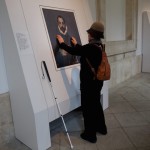
Enabling the visually impaired to quite literally put their hands on priceless artworks, this unique exhibition allows blind people to experience works like …
Click Here to Read More »»
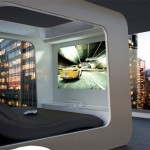
From cybernetic contact lenses to contraptions that shoot you up to rooftops in seconds, these 15 futuristic gadgets would make even Batman jealous.
Click Here to Read More »»
[ By Delana in Conceptual & Futuristic & Technology. ]
[ WebUrbanist | Archives | Galleries | Privacy | TOS ]
London’s Victoria and Albert museum is to hold a major exhibition of the work of Julia Margaret Cameron to mark the bicentenary of her birth. One of the most important female photographers in the form’s history, Cameron would have been 200 years old this year, and the exhibition will be part of a series of exhibitions around the UK to celebrate her work. Read more