Das Bild des Tages von: Liancary

Im Ausblick: Neuseeland, ein Objektivtest und Autowaschanlagen.
kwerfeldein – Fotografie Magazin | Fotocommunity
Das Bild des Tages von: Liancary
Im Ausblick: Neuseeland, ein Objektivtest und Autowaschanlagen.
kwerfeldein – Fotografie Magazin | Fotocommunity
[ By Delana in Boutique & Art Hotels & Travel. ]

Iceland has become quite the tourist destination for world travelers thanks to its ethereal landscapes, amazing history, unique culture, and unspoilt views of the Northern Lights. It’s the Northern Lights that draw eco-conscious travelers to the breathtaking Ion Hotel by Minarc Architects.


The hotel was designed to provide visitors with an unobstructed view of the otherworldy surroundings while itself blending into the landscape. Emerging from the mossy mountain like a natural rock outcropping, the Ion Hotel could almost be mistaken for a body of hardened lava extending out into the mountainous area.


An abundance of floor to ceiling windows were designed to let in natural light while allowing an optimized view of the hotel’s settings. A glassed-in lounge at the building’s terminus lets visitors gaze out on the utterly exquisite Northern Lights after the sun goes down.


But the Ion isn’t all about looks; it is also a decidedly Earth-friendly place to spend a vacation. The luxury hotel uses locally-sourced materials included repurposed natural materials like lava and driftwood. The huge windows cut down on the building’s electricity consumption by reducing the need for artificial lighting.


Local customs and culture inspired the interior design of the hotel; nods to the country’s history and notable features can be seen in every area of the building. When locally-sourced materials are not available, Fair Trade products are used instead. And as a truly exceptional feature, the hotel utilizes the abundant surrounding natural hot springs as a source of clean geothermal heating and hot water.
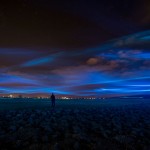
Floating above an 18,000-square-foot area of Dutch land that would be underwater were it not for defensive measures, the ethereal effect hovers between …
Click Here to Read More »»

Nemo and his companions on the Nautilus would find themselves quite at home in this self-contained underwater retreat, complete with wraparound views and …
Click Here to Read More »»
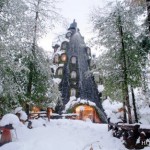
A beautiful hotel in Chile, nestled in the middle of a nature preserve, looks just like a mountain with a waterfall spewing from the top.
Click Here to Read More »»


[ By Delana in Boutique & Art Hotels & Travel. ]
[ WebUrbanist | Archives | Galleries | Privacy | TOS ]
Nature photography never gets boring. Whether it be wildlife or landscape photography you are interested in, there is always a new angle you can introduce to your photos.
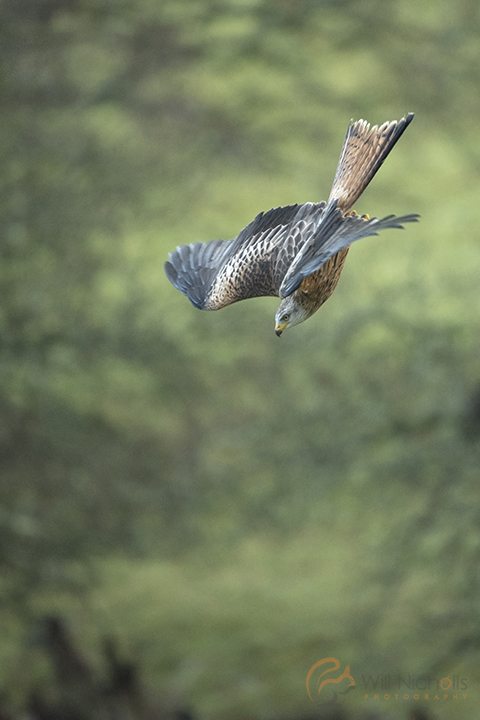
For landscape photography, the weather is never exactly the same – clouds make unique formations, and the way sun rays cast over the scene in front of you are always very special.
If you take photos of wildlife, then you will be forever capturing moments that will never be repeated. Take the example of two birds fighting on a branch: you will never get a photo of the exact same birds, with the exact same body and wing positions, in exactly the same backdrop. You have an opportunity to record something truly unique.
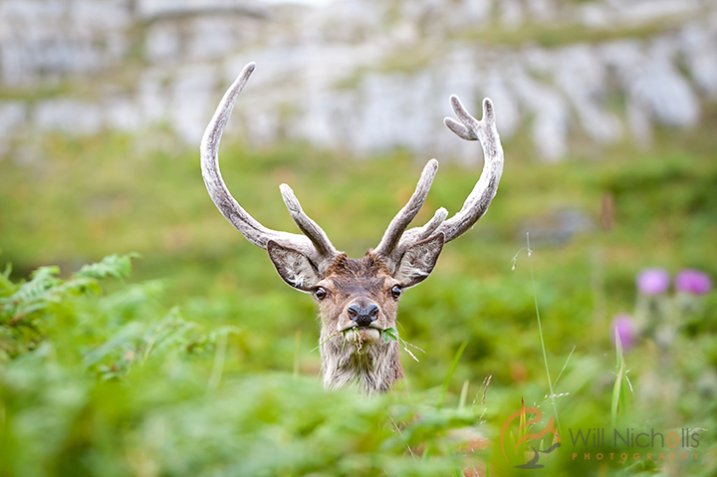
There’s no better excuse for getting outside than feeding your thirst for nature photography. Nowadays a lot of people spend too much time indoors, and going outside is extremely beneficial for your wellbeing – that’s for both your health and enjoyment. If you’ve caught the photography bug then getting into the outdoors with your camera becomes something you really enjoy doing.
Nature is everywhere – you don’t need to look far to find a beautiful scene or a bird that is willing to come to a bird feeder. You don’t have to book a studio and a model to take photos; just go outside and start clicking that shutter.
Even for those who live in cities, there is wildlife everywhere – you may just not know it yet. At night, deer and foxes come into suburban areas and make for interesting photographs. Venture out into the countryside and you will find rolling hills and endless photographic opportunities.
Nature photography is extremely therapeutic if you can reap enjoyment from it. If you have had a stressful week, heading out to be alone with your camera and the natural world can be a great way to wind down and forget any troubles.
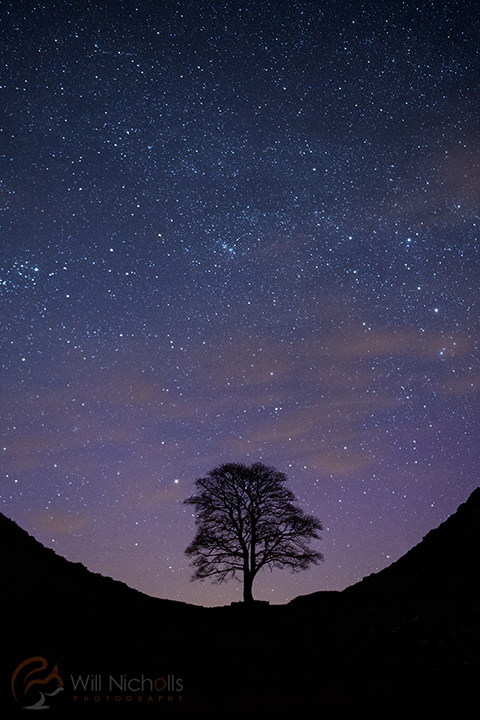
Most people admire nature in some form. Whether that be appreciating a dramatic, serene landscape or the glint in a swooping eagle’s eye, your photos are going to be appreciated by a wide audience. If you are looking to share something that people can connect with, nature photography is a great way to do this.
When done correctly, nature photos will transport the viewer into your shoes, allowing them to imagine the scene as if they were there with you. Providing this window into the natural world to those who may not be able to access it themselves is a great thing to do.
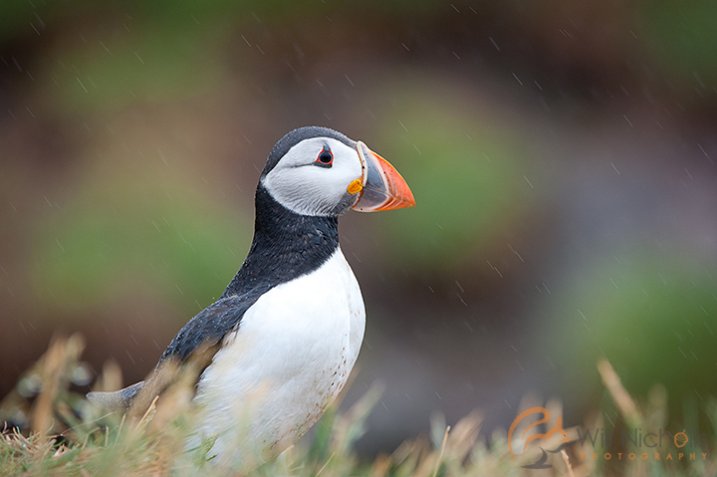
Nature photography helps to raise the profile of our planet and the environment. It allows people to experience things they may not see themselves, and therefore encourages them to care about its preservation. You can, in a small way, help to raise awareness of the natural world and work to promote its conservation.
googletag.cmd.push(function() {
tablet_slots.push( googletag.defineSlot( “/1005424/_dPSv4_tab-all-article-bottom_(300×250)”, [300, 250], “pb-ad-78623” ).addService( googletag.pubads() ) ); } );
googletag.cmd.push(function() {
mobile_slots.push( googletag.defineSlot( “/1005424/_dPSv4_mob-all-article-bottom_(300×250)”, [300, 250], “pb-ad-78158” ).addService( googletag.pubads() ) ); } );
The post 6 Reasons to Become a Nature Photographer by Will Nicholls appeared first on Digital Photography School.
[ By Delana in Design & Fixtures & Interiors. ]

Prohibition, otherwise known as the Volstead Act or the Eighteenth Amendment, barred the manufacture, transportation, and sale of all alcoholic beverages in America from 1919 to 1933 – but for some people, the appeal of the “forbidden” remains today. Despite the illegality of drinking establishments during prohibition, hidden bars could be found in just about every major American city if you knew where to look. Today, speakeasies are making a comeback in a very big way.


The name of this establishment may sound like a cruel joke or even an anti-advertisement, but it’s all part of a brand that has come to represent a simpler time. Past generations have enjoyed gathering and socializing in barber shops, and even today customers trade gossip as they get a haircut and enjoy a glass of wine in upscale salons.


This type of community gathering place is recreated in Blind Barber. An old-timey barber shop up front provides a bright and friendly place to sit and shoot the breeze as you enjoy a shave or a trim. Take a little walk through the secret door in the back and you’ll enter an a very different type of space.


The bar is outfitted in rich wood, low lighting, and period-appropriate black and white tiles on the floor. The owners wanted to create not only an enjoyable drinking establishment, but a place where people could get together to socialize, relax, and maybe pretend for a bit that they are part of a small crowd of those who are “in the know” about a secret club.


It might be surprising to learn that there is an American-style speakeasy in China (although if you’ve been there you will have seen quite a few), but it’s even more surprising to witness someone actually entering the bar. The building’s front contains a bright, cheery sandwich shop with a classic Coca-Cola machine on the back wall.


Pulling a lever on the soda machine reveals a “secret” passage that leads to Flask, an intimate and delightfully mysterious bar designed by Alberto Caiola. An eclectic mix of furniture calls to mind the furtive nature of assembling these establishments during prohibition.


A floor-to-ceiling display of 25 liter jugs filled with whiskey is a visually stunning detail which may or may not be historically accurate – speakeasies were generally designed to be easy to disassemble if the cops came sniffing around, after all. Regardless, it is still a charming deviation from the loud, crowded urban bar.

The first thing that will strike you as unusual when you walk into the small Denver “bookstore” called simply Williams and Graham is that it’s only open from 5 pm to 1 am. Good news for insomniac bibliophiles, perhaps…or maybe there’s a little more to this story.


At the back of the shop, a heavy curtain swings open to reveal a very cozy little space with scarce seating, low lighting, and vintage furnishings. One can imagine the hoodlums and society folks alike lining up in the 1920s for a tasty libation while always keeping a wary eye trained on the door.


The bar serves cocktails straight out of the prohibition era – though admittedly, not with liquor made in clandestine basements distilleries or delivered only under the cover of night. The establishment emphasizes its mission to replicate the speakeasy with its fancy drinks, relative exclusivity (reservations are recommended), and general air of mystery.
You’d never guess that there’s anything amiss at ‘The Press,’ a sandwich bar in Shanghai, unless you actually witnessed the surreal …
Click Here to Read More »»
Secret rooms and hidden passages in homes are all the rage in architecture today. But the practice of sneaking around in concealed places has deep, dark roots.
Click Here to Read More »»

You’d never guess that behind these ordinary-looking bookcases, wine racks and wardrobes are entirely undetectable hidden rooms and passageways.
Click Here to Read More »»
[ By Delana in Design & Fixtures & Interiors. ]
[ WebUrbanist | Archives | Galleries | Privacy | TOS ]
Taking photographs of wildlife can be one of the most exhilarating photographic experiences you can try. Spotting an animal in the wild can be thrilling, and being able to record that moment can be highly rewarding. However, wild animals can be a particularly challenging subject matter, so wildlife photography can often prove frustrating.
To help you get the most out of this compelling type of images, here are some tips to improve your wildlife photography.
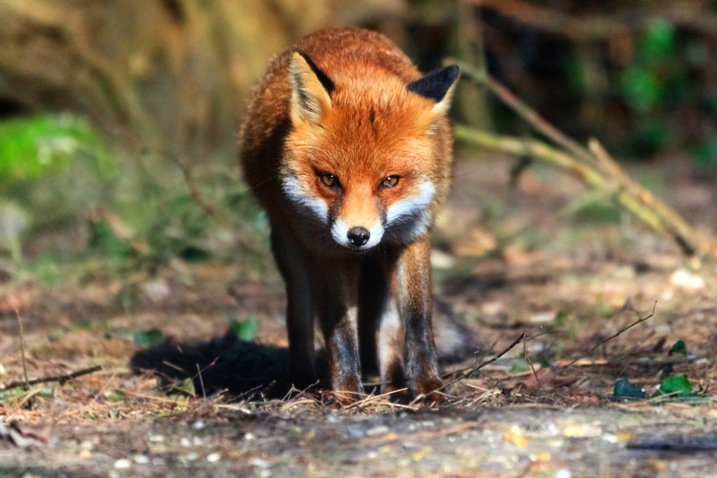
No matter what type of wildlife you have chosen to photograph you will need to spend time getting to know its behaviour, routine and movements. Read up about your subject in advance, or search online for video or audio files, that can help you learn more about spotting your chosen subject. If possible, talk to experts in the field who know where, and when, to spot wildlife. If you are heading to a nature reserve or national park to take photographs, staff and volunteers are normally very willing to let you know of recent sightings, or give you some handy local advice.
Because you may only get a limited time in which to take wildlife photographs, getting to know your camera settings is extremely important. Familiarize yourself with how your camera and lens work before you get to the location so that you don’t miss an important shot by having the incorrect settings.
Before setting out, make sure you have packed all of the required gear, and you have spare memory cards and charged batteries. For wildlife photography, a telephoto lens is probably going to be essential, but do not overlook packing a wider angle lens to capture your animals as part of the landscape. Some of the best wildlife photographs show an animal in its environment and are not necessarily frame-filling portrait shots. If you are using a telephoto lens, a tripod or monopod can also form a useful part of your kit to minimize camera shake. A monopod offers greater flexibility of movement than a tripod when you are tracking wildlife on the move, but can still provide adequate stability for your camera to get sharp images.
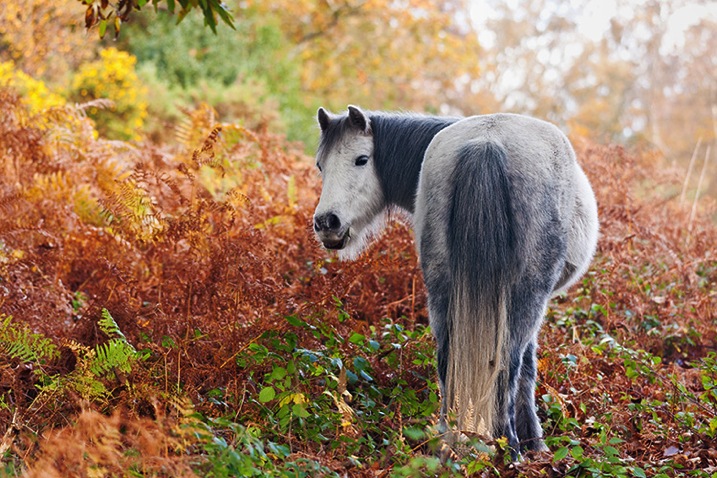
Check weather reports for the day you are going to shoot wildlife, but do not necessarily be put off by bad weather. Animals do remain active during rainy or stormy days, and it is possible to get some dramatic shots in such conditions. You can buy special covers to protect your camera and lens in wet weather but, often, a durable plastic bag fixed in place with elastic bands can work just as effectively.
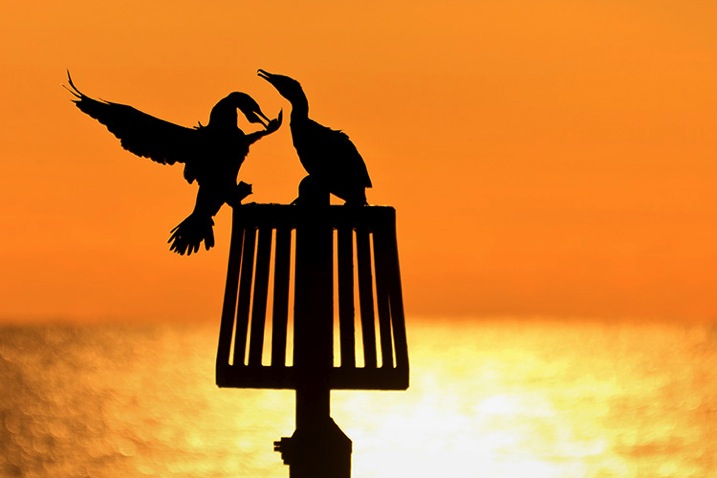
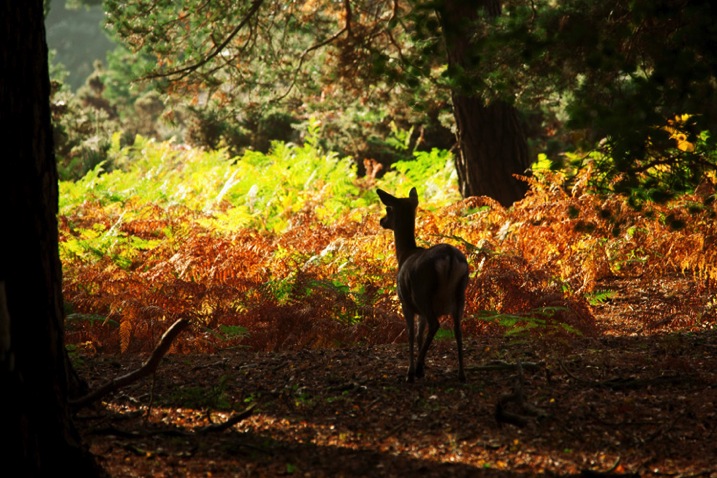
As with all genres of photography, lighting is key, and the best light for wildlife photography tends to be around sunrise and sunset. Animals also tend to be more active at these times of day, often searching for food. Therefore, make sure you get up early to be ready to take photographs in the golden light as the sun rises. Shooting into the sunset can transform a mundane subject into something special, so look for opportunities to capture dramatic wildlife silhouettes as the sun goes down (see image below).
As with all types of photography, composition can make the difference between a good image, and a great image. When composing wildlife photographs, remember basic compositional guidelines such as the highly effective Rule of Thirds. If your subject is looking to the left or right, leave an appropriate amount of space in the frame into which they can look. The same guideline applies if a moving animal is being captured – always leave room in the frame for them to move into.
Getting down to eye-level (or lower) with an animal can produce dramatic images. Taking a shot of an animal from a standing height looking down on it will usually lack any Wow Factor as this is the angle from which we are most used to seeing wildlife. Laying down on the ground so that you are at eye-level with, or looking up at, the animal will make your chosen subject seem large and powerful, and can add an element of drama to your final image.
A fundamental rule of wildlife photography is that the subject’s eyes must always be in perfect focus. However, the autofocus system on your camera can easily be tricked into locking onto another part of the animal. A helpful way around this is to set the camera to One Shot mode (AF-S for Nikon users), select the centre focus point in the viewfinder, lock the focus on the eyes by pressing the shutter release button halfway down and then, without releasing, recompose your shot. In addition to being perfectly focused on the eyes, the most compelling wildlife images have a catch-light in the eye. A flash, or speedlight, in your kit can be extremely useful for adding light to dark eyes when taking close-up animal portraits.
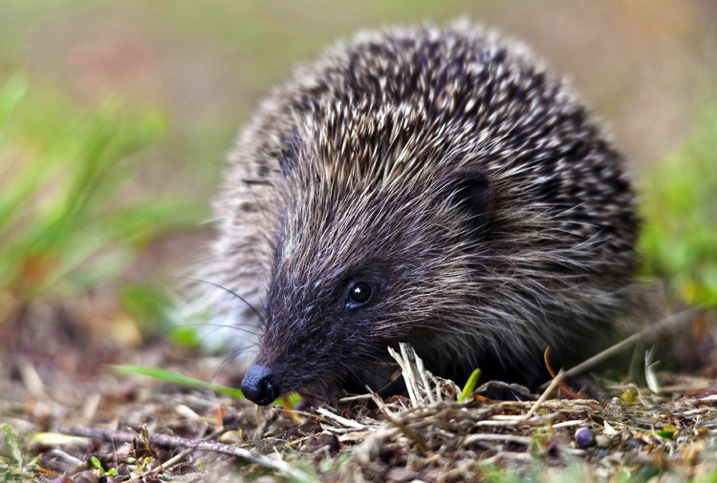
Getting the right focus becomes even harder when shooting an animal in motion. For moving wildlife, select a continuous autofocus mode such as AI Servo (AF-C) and select a single focus point in the viewfinder. Track the action by keeping the single focus point on the subject to ensure that remains in focus at all times, rather than the background or foreground.
Shooting in Aperture Priority mode can be extremely useful for wildlife photography. By using the widest aperture available (such as f/2.8) you will be able to use the fast shutter speeds necessary to produce sharp images. The narrow depth of field from using a wide aperture will also help to blur the background and, therefore, will isolate your subject and really make it stand out in the final image.
Do not be afraid to increase your ISO settings a little in order to keep the shutter speed fast, particularly if shooting in environments where lighting can be difficult, such as in a thick forest. A little bit of noise in your image is more acceptable (and easier to correct if you so wish) than an out-of-focus, or blurry image.
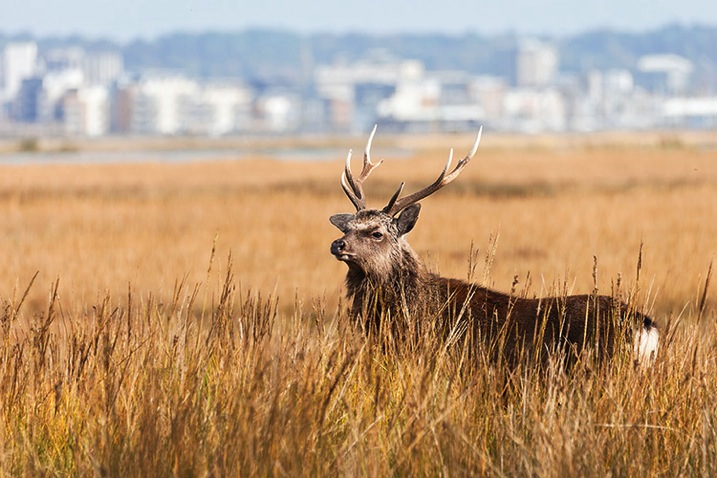
While there is no denying that a certain amount of luck definitely comes in handy, the real key to taking better wildlife photographs is patience. Not necessarily the patience required for your chosen subject to appear, but the patience to capture the perfect shot that you have envisioned.
When you do find an animal out in the wild, watch it for as long as possible and not just from behind the viewfinder. Spend time with it and learn its ways. While observing the animal, try to capture some form of behaviour that is unique to that species. Documenting such behaviour can produce compelling wildlife shots. Most importantly, enjoy the experience of wildlife watching as much as taking photographs.
One quick tip is to keep all noise (as in be quiet, not camera noise) to a minimum when you are shooting in the wild. Dress appropriately, tread carefully, and possibly most importantly, switch your phone to silent mode. There is nothing worse than framing a shot and having your subject scared off by a ringing phone.
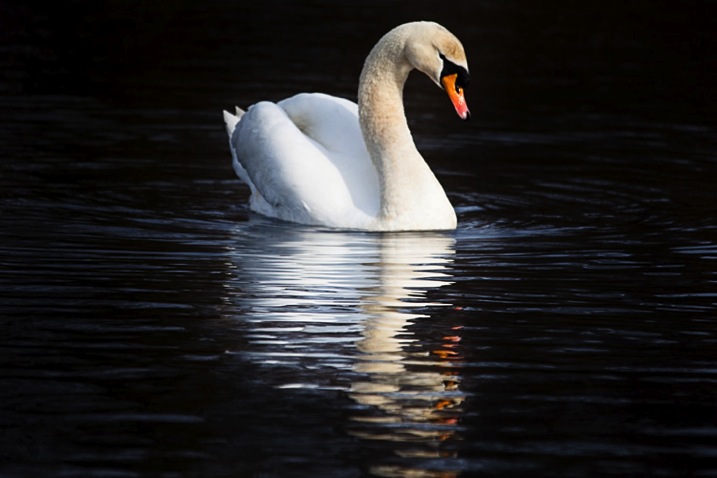
There may very well be some periods of waiting and watching. Try not to get too focused on one particular subject, take a look around while waiting for your subject to return. You never know, there may very well be something more interesting waiting just around the corner.
If you want to put in more practice with your wildlife photography but don’t have much time to spare, a public park can be a great place to visit on a lunch hour or after work. Parks attract a range of wildlife such as geese, swans or deer and often you can get a little bit nearer to the action. A duck pond can produce many opportunities for action shots and is a great place to practice your skills at close range.
To take your wildlife shots from good to great, you need to be passionate about the natural world you are photographing. Take the time to appreciate nature and wildlife in all of its forms, wherever you find it. You do not have to go to an exotic location to do great wildlife photography. For example, macro photography offers a range of wildlife opportunities including spiders, beetles and flies. As someone who was once highly arachnophobic, I can now appreciate the beauty of spiders and, since photographing them, I do find them more fascinating than scary.
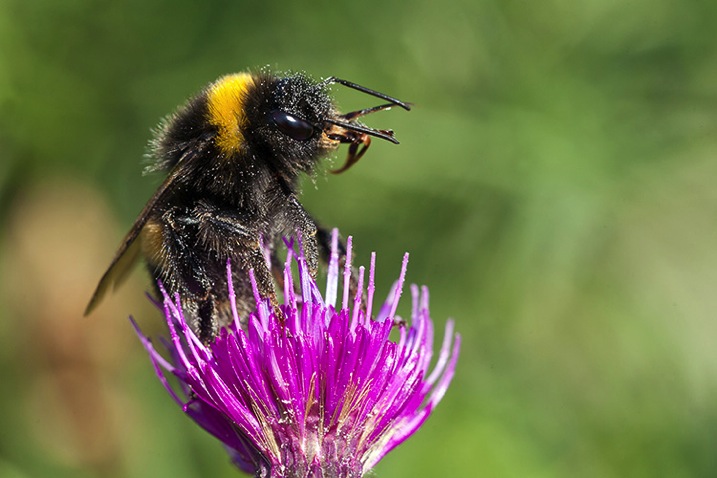
You could even make a few simple changes to your own garden to encourage more wildlife to come to you. Making your garden wildlife friendly can be relatively inexpensive and highly beneficial to local wildlife. Adding a pond or wildflower patch is both good for the environment, and may provide you with photographic opportunities.
Most importantly, take great care when photographing wildlife. Do not put yourself, or the wildlife, at risk and do not disturb their natural habitats in the process of getting your shot. Respect all wildlife, get to know your subject well and you will be rewarded with some great images to share with others, to inspire them to care as much about the natural world as you do.
googletag.cmd.push(function() {
tablet_slots.push( googletag.defineSlot( “/1005424/_dPSv4_tab-all-article-bottom_(300×250)”, [300, 250], “pb-ad-78623” ).addService( googletag.pubads() ) ); } );
googletag.cmd.push(function() {
mobile_slots.push( googletag.defineSlot( “/1005424/_dPSv4_mob-all-article-bottom_(300×250)”, [300, 250], “pb-ad-78158” ).addService( googletag.pubads() ) ); } );
The post The 4 Ps – Tips for Improving Your Wildlife Photography by Richard Beech appeared first on Digital Photography School.
We spoke with photographer and multimedia artist Tim Matsui last year about the making of his feature documentary, The Long Night. A year later the film has won some of the top awards in photojournalism and the work hasn’t stopped for Matsui. We caught up with him again to discuss what it took to make and distribute this film and what comes next for him. Read more
I’m a big fan of the new Flickr. Despite a few bumps along the way, like last weekend’s uploading fiasco, it feels like a new fresher Flickr and I think the fact that people can download their photos now in bulk will be a wonderful way to attract new talent to the site.
There are two little things that bug me about Flickr right now though. They are unimportant in the big picture of things, but the compulsive side of me tends to focus on the little things sometimes.

The first is the artifacting that takes place around icon that tells you if a photo is favorited or not or commented on not when you hover. Something just doesn’t seem right to me about this. It’s not a big deal for sure, but I wonder if Steve Jobs would let something like this fly? There appears to be two little dots around the star and the comment bubble seems cut off for me. I wonder if there is a way that this can be fixed?
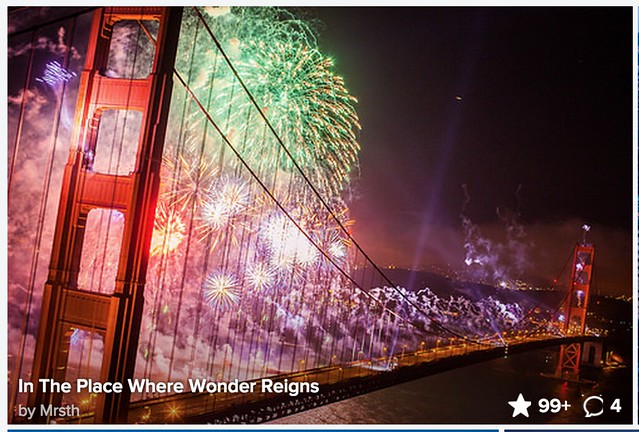
On most of Flickr a full white star means a photo has been favorited.
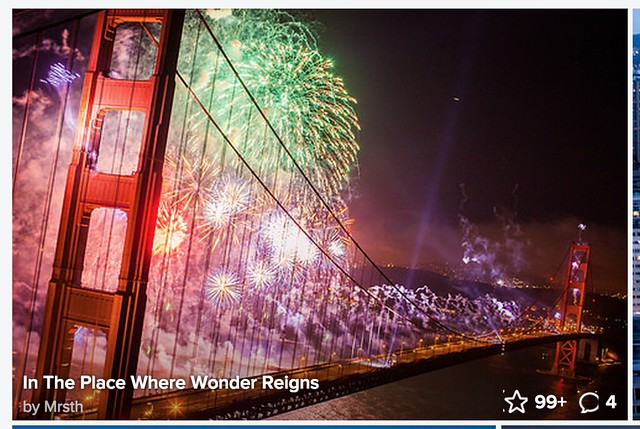
On most of Flickr an empty white star means a photo has *not* been favorited.
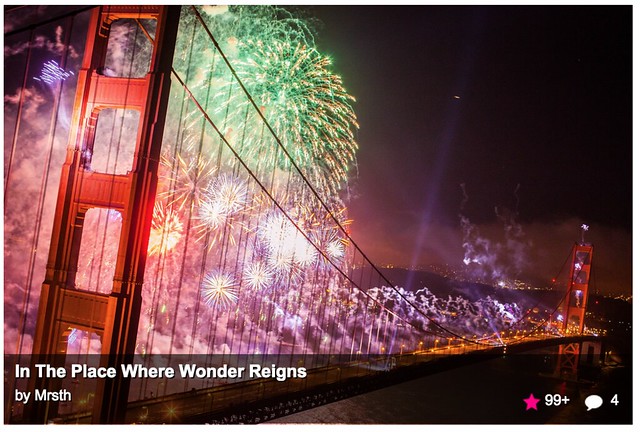
On the “photos from your contacts” page a colored pink star means a photo has been favorited.
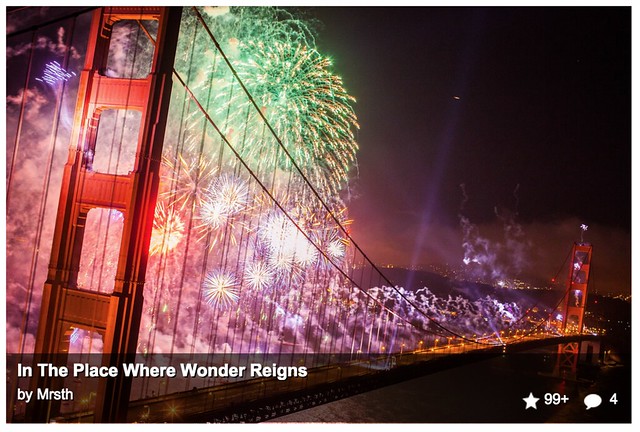
On the “photos from your contacts” page a full white star means your photo has *not* been favorited.
The second problem is a more serious one and something I’m sure will be addressed when Flickr rolls out their new page build to the “photos from your contacts” page — here the problem has to do with consistency in design.
On most places when you favorite a photo on Flickr it turns an empty star into a full white filled star — but on the photos from your contacts page, it’s confusing. On the photos from your contacts page a full white star actually means the opposite, that a photo is *not* favorited, here the signal for a favorited photo is a colored pink star.
As your eyes learn Flickr you become accustomed to seeing an empty or full white star to signal to you if it’s favorited or not, but when you go to this one page on Flickr and see a full white star it means the opposite.
As Flickr rolls out their new page design to other areas of this site I’m sure that this inconsistency will be fixed.
I’ve got a more serious problem with the “photos from your contacts page” that only affects some accounts at Flickr, and that is that the page is jumpy and unstable when I browse it. This is not a universal problem though and one that is only affecting some accounts (unfortunately mine is one) at the present time.
These are first world problems for sure. With each new build Flickr gets better and better, and the team should be commended for doing such a great job these days.
 |
|||
Tabletops are great for elbow leaning, finger drumming and they make pretty good photo backdrops too!
You can set anything down on ‘em, from baked goods to the newest product in your Etsy store, and just snap away.
But if you’re sick of the same ol’, plain ol’ tabletop, we’ve thought of five fun ways to spice up your next tabletop shot.
Whether you’re selling something or just want to up your Instagram game, you’re gonna love these tabletop makeover tips.
Take Tabletop Photos That Pop
(…)
Read the rest of Liven Up Your Tabletop
Photoshoots (629 words)
© Taylor for Photojojo, 2015. |
Permalink |
No comment |
Add to
Photoshoots”>del.icio.us
Post tags:

Ein Beitrag von: Esthaem
Auch wenn jede meiner Arbeiten sehr persönlich ist, so traue ich mir zu – zwar nur vorsichtig, aber doch – zu behaupten, dass diese Serie meine vielleicht persönlichste ist, an der ich bis zu diesem Zeitpunkt gearbeitet habe.
kwerfeldein – Fotografie Magazin | Fotocommunity
Toronto-based Town 30 has launched the Emissary Series camera bag on Kickstarter, where it is seeking funding for production of the photography-centric bags. The Emissary is geared specifically to photographers’ needs with attachable pockets, a removable laptop compartment, a locking mechanism inspired by film-advance levers and a lens cap mount. Read more