RSS
 

Archive for July, 2014

Almost Human: 15 Frighteningly Realistic Robots & Androids

01 Jul

[ By Steph in Conceptual & Futuristic & Technology. ]

Creepy Androids Main

How would you react if you were chased down the street by a sprinting android wearing head-to-toe camouflage and a gas mask? Probably about the same way you’d react to finding a dead-eyed mannequin convulsing alone in a closet with blood streaming from its mouth. Android technology is getting more disturbingly realistic every year, and these 15 represent some of the most jaw-dropping examples yet.

World’s First Android Newscaster
Creepy Androids  Newscaster 1

Creepy Androids Robot Newscasters 2

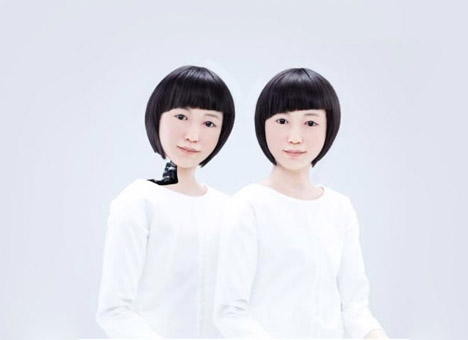
The world’s first news-reading android reported on an earthquake and an FBI raid in Tokyo on June 24th, 2014. The pair of remarkably realistic humanoid robots include a child (kodomoroid) that can recite reports gathered from around the world in a variety of voices and languages, and an adult woman (otonaroid) who will serve as a robot science communicator for Japan’s museum of emerging science and innovation.

BINA48
Creepy Androids BINA 1

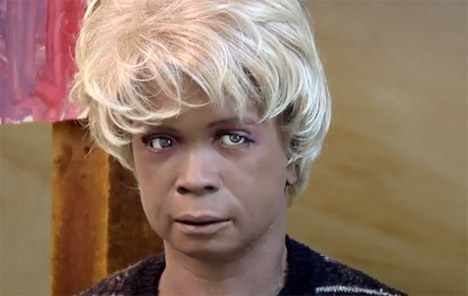
The memories, beliefs and core personality of a real-life woman have been transferred to a robot called Bina48, who’s sophisticated enough to detect and reach to racism, discuss philosophy and tell jokes. The woman the android was modeled after, Bina Rothblatt, was interviewed for more than 20 hours on topics that ranged from her childhood to her career, and the conversation was transcribed and uploaded to an artificial intelligence database. Robot designer David Hansen crafted the bust-only robot for $ 125,000.

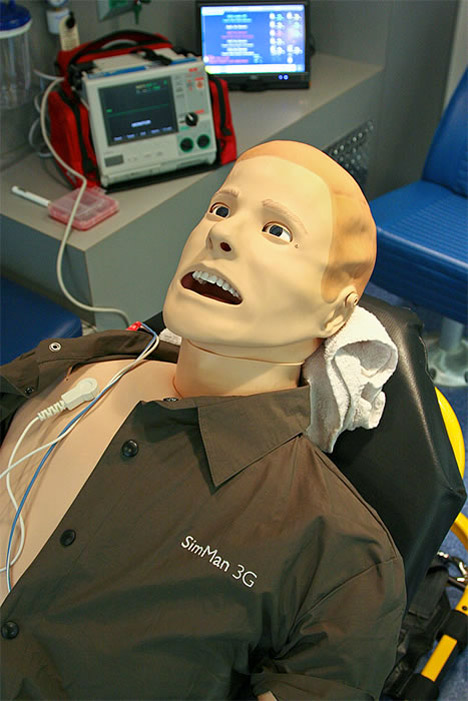
SimMan 3G Patient Simulator
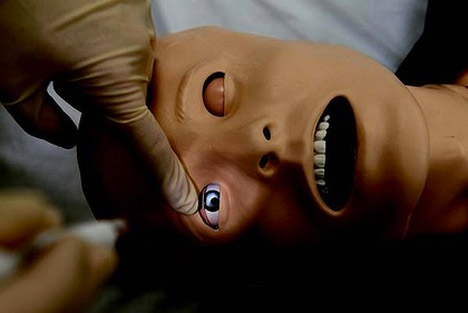
Creepy Androids SimMan 1

Creepy Androids SimMan 2

The SimMan 3G might be a great way for medical professionals to practice, but that doesn’t make it any less disturbing to look at, especially when it starts bleeding, convulsing, crying or foaming at its gaping mouth. It’s designed to simulate virtually every emergency medical situation in the book and it can withstand four hours of surgery. Just imagine being the cleaning person who opens a closet at the hospital to find this thing staring back.

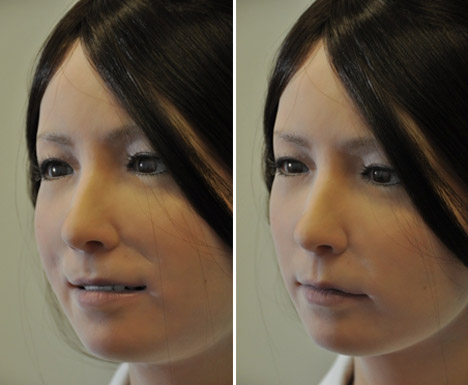
Geminoid F
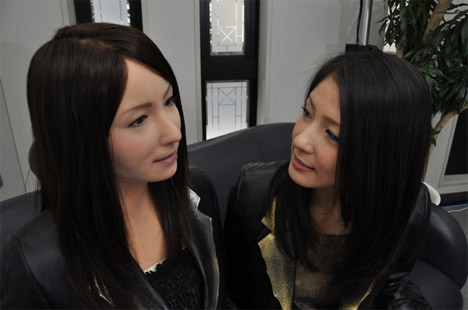
Creepy Androids Geminoid F 1

Creepy Android Geminoid F 2

Japanese robot designer Hiroshi Ishiguro outdid himself with Geminoid F, a female android who can smile, furow her brows, talk and sing. Her face is equipped with 12 motorized actuators powered by air pressure to mimic human expressions, and she’ sso realistic she was actually used as an actress in a Tokyo play.

Geminoid DK

Creepy Androids Main

Creepy Androids Geminoid DK 1

With Geminoid DK, Ishiguro made an android copy of Henrik Scharfe, an associate professor of Aalborg University in Denmark (the roboticist’s first non-Japanese creation.) The purpose, he explains, is to understand the ‘emotional affordances’ in human-robot interaction. In the video you can see just how realistic the robot’s facial movements are, blinking and moving its mouth.

Next Page – Click Below to Read More:
Almost Human 15 Frighteningly Realistic Robots Androids

Share on Facebook


[ By Steph in Conceptual & Futuristic & Technology. ]

[ WebUrbanist | Archives | Galleries | Privacy | TOS ]


WebUrbanist

 
Comments Off on Almost Human: 15 Frighteningly Realistic Robots & Androids

Posted in Creativity


Meet the Dream Scope, An IRL Filter Kit

01 Jul

Extra photos for bloggers: 1, 2, 3

When you snooze, you have visions of flying on a unicorn over a cloud raining glitter, through fields of rainbow-y color never seen in the waking world … until now.

The Dream Scope Filter Kit will make your dreams a reality.

The Dream Scope comes with a true blue (and red, and yellow) set of 37mm pro-grade glass and aluminum gradient color filters.

Use one or all three. Stack and spin them to get awesome technicolor patterns, lens flare and swirly rainbow hues in-camera, without an app.

The kit attaches to any phone even includes a tripod mount! Set it up next to your bedside and maybe some of those colorful filters will take your dreams to a whole new level of technicolor.

Color Your World with the Dream Scope
$ 30 at the Photojojo Shop


© Britta for Photojojo, 2014. |
Permalink |
No comment |
Add to
del.icio.us

Post tags:


Photojojo

 
Comments Off on Meet the Dream Scope, An IRL Filter Kit

Posted in Equipment


Using Depth of Field and Perspective for Better Composition

01 Jul

We all know this problem. You take a picture of a beautiful scene but it just doesn’t turn out the way you want. Something is missing. It usually isn’t a matter of your camera or the settings you are applying. But what is it then? The question at hand is how do you get from a snapshot to an interesting, unique, and well composed photograph.

To answer this, we have to move away from the technical aspects and go more into the creative and artistic aspects of photography. You might say that this is a very subjective matter and that beauty is in the eye of the beholder, but there are a few building blocks that will help to improve your photography and also develop your own unique visual language.

Depth of field for a more three-dimensional Look

An important aspect of photography is that we want to capture a three-dimensional reality by taking a two-dimensional image. When we are out in the field, our eyes in collaboration with our brain create very complex images within split seconds. The most important factor in this context is that our eyes are constantly moving while focusing on different subjects. The focal plane is shifting with a subject in focus and everything in front or behind appearing to be blurred. This “Depth of Field” is one the most important techniques we can utilize to simulate depth and three-dimensionality.

Begginner photography tips 06

Utilizing depth of field to create a more three-dimensional look

In order to play with depth of field, we need a scene with a defined foreground and a background. Whereas the background is usually a given, a lot of images lack foreground which makes an image appear flat and boring. Choosing a defined foreground will enable us to actively compose an image and become creative.

Once you have chosen a background and a foreground you like (ideally both complementing each other), you have to find the right position for you and your camera in order to combine both for an appealing overall image. To find the right position, you should try different angles, move around, get low to the ground and don’t solely rely on your zoom. By using a large aperture (small f-stop number) and a selective focusing, we can isolate the foreground from the background by making the foreground objects sharp and the background blurry (or vice versa). This will convey a sense of depth and three-dimensionality.

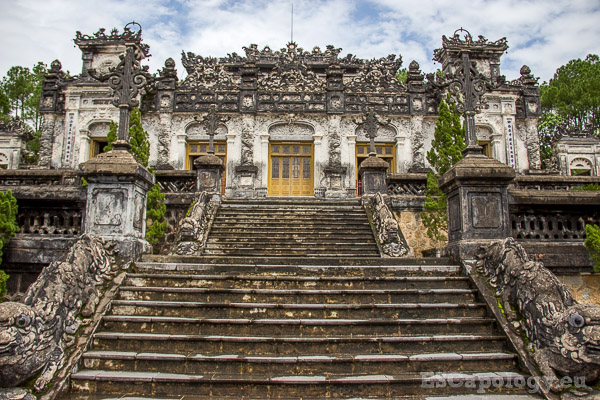
Begginner photography tips 10

No foreground. Lack of depth and composition.

This image (above) of one of the ancient tombs around Hue, Vietnam looks flat. There is no depth, no three-dimensionality and it lacks a clear composition. Because a foreground is missing, the image is too busy and distracting.

Begginner photography tips 04

Foreground and background nicely isolated to create a sense of depth.

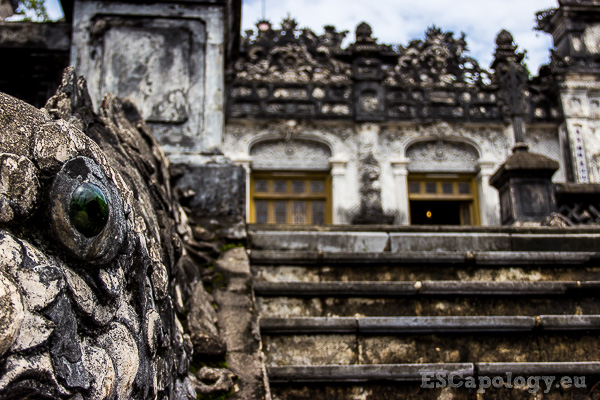
Above an image of the same subject but with a much better composition. The focus is on the eye of one of the dragons, making it our foreground. The rest of the tomb is our background, slightly blurred and nicely separated. It generates a sense of depth and also appears much calmer and structured than the first image. The viewer is being led into the picture. You can use this technique when photographing very popular places like for example the Eiffel Tower, Angkor Wat or other monuments. Instead of taking the same shot as every other tourist, experiment with different backgrounds and foregrounds, get creative, move, and I am sure you will end up with an original and authentic image.

Begginner photography tips 03

Cambodian Fighter. Focus on the subject, still including the environment.

You can also apply this technique to your people and portrait photography. It not only helps to really put emphasis on your subject, but also to incorporate some of the environment, which will help to tell a story. In the picture above, the focus is on the weary fighter, catching his breath during a fierce Khmer Boxing fight in Cambodia. We are at eye level with the fighter and again, the foreground is nicely separated from the rather blurry background. Yet, we can still see parts of the surrounding environment which is the ring and the crowd in the back. The focus however always remains on the main subject.

Leading lines for a sense of perspective

Of course depth of field is not the only means to create a sense of depth and three-dimensionality. The concept of leading lines is another one of those building blocks that you can apply. The viewer of a photograph usually associates diagonal lines which are leading into an image, to a vanishing point perspective. This means that objects which are farther away also appear smaller. This context automatically and unconsciously gives the viewer an impression of three-dimensionality.

Begginner photography tips 02

Two images with a clear vanishing point perspective.

As you can see in the images above, a shallow depth of field is not necessarily needed to convey that sense of depth we are looking to achieve. Here it’s all done by using a jetty as lines, which connect different layers of the picture – the image becomes much more plastic and complex.

Begginner photography tips 01

Night Scene: The bridge leading into the picture.

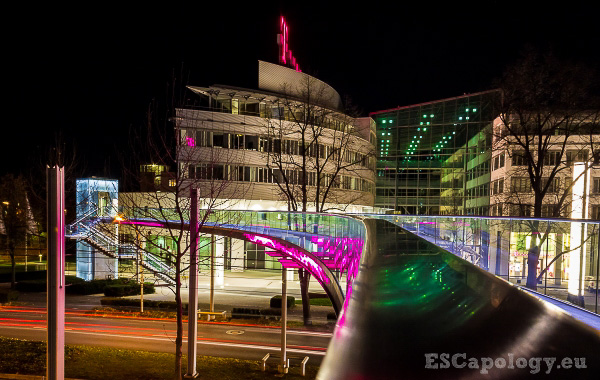
Similarly the image above becomes three-dimensional because the pedestrian bridge is leading into the image. It also appears to become smaller and smaller as it leads into the background. This way the image has that sense of depth even without applying a low depth of field. The bridge as a leading line is connecting our different layers, the foreground and the background.

Begginner photography tips 07

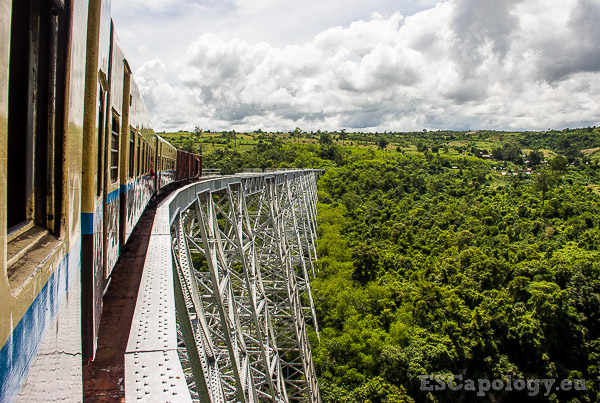
The bridge and the train convey a sense of depth.

Providing a relationship in size

When regarding a picture, the viewer often needs a reference point in order to correctly interpret the information our two-dimensional images provide. We can do this by establishing proportions and providing a relationship in size. Often this isn’t needed as we know a lot of the subjects we are capturing. In the image above we were dealing with familiar objects like a pedestrian bridge, a street and a commercial building. It was easy to put everything into context. But a lot of times, when we are confronted with unfamiliar things, this isn’t as easy.

Begginner photography tips 09

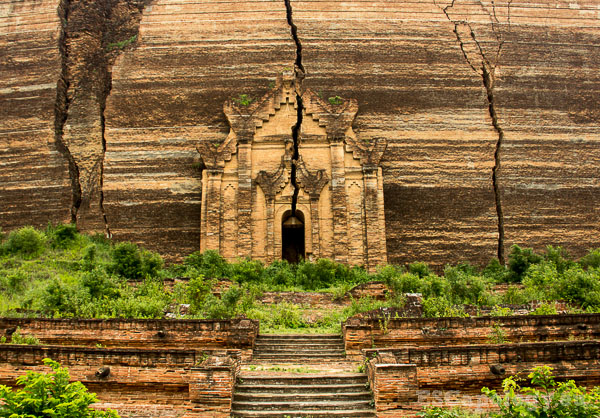
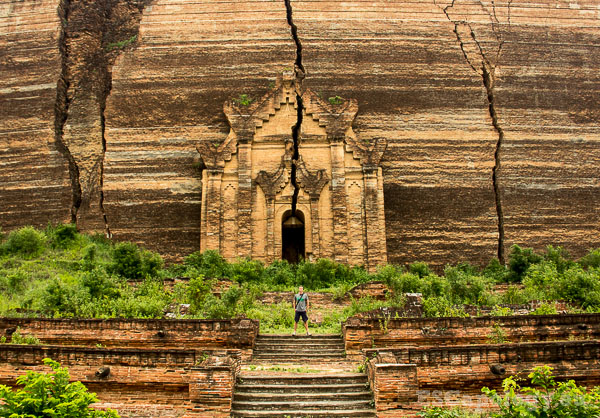
Mingun Pahtodawgyi in Mingun, Myanmar. Can you tell how big it actually is?

In the picture above is Mingun Pahtodawgyi, a temple in Mingun, Myanmar. Left unfinished, this huge construction was planned to become the world’s biggest stupa with a height of 150 meters. It is huge and impressive but the picture above somehow doesn’t manage to convey this. Just by looking at this image it is impossible to gauge the sheer size of the temple. A reference is missing.

Begginner photography tips 08

Mingun Pahtodawgyi. Are you getting a better sense of dimension?

Here I have added myself to the picture and despite my rather stupid pose, it instantly provides a point of reference. This relationship in size helps to categorize the stupa and establishes a sense of dimension. To achieve this effect and to provide a relationship in size, you can also use other elements which help the viewer to better comprehend an image.

Begginner photography tips 05

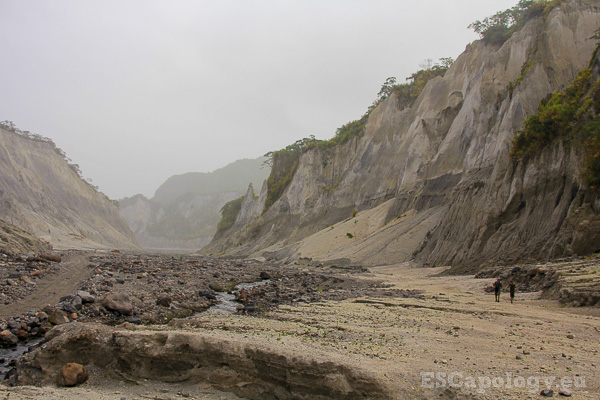
The hike up Mt. Minatubo, Philippines. Another example of relationship in size.

Try to practice, and utilize, these three building blocks to improve your photography. You can also try combining two of these techniques to generate an even greater sense of depth. Of course these concepts are by far not the only factors that make for a good and well composed image. There are many more things to take into account but for now, it should give you a good starting point.

Begginner photography tips 11

Temple dogs – a shallow depth of field and leading lines combined.

I hope you liked this article. Feel free to comment below and let us know what other techniques or concepts you found helpful on your quest of becoming a better photographer.

The post Using Depth of Field and Perspective for Better Composition by Philipp Dukatz appeared first on Digital Photography School.


Digital Photography School

 
Comments Off on Using Depth of Field and Perspective for Better Composition

Posted in Photography


Leica M firmware 2.0.1.5 released

01 Jul

Leica has released a firmware update for its M Typ 240 camera with a huge list of improvements and bug fixes. Firmware 2.0.1.5 adds a few new interesting features such as expanded Auto ISO options and the ability to use live view with any lens. The new firmware is available now. Read more

related news: Digital Photography Review (dpreview.com)

 
Comments Off on Leica M firmware 2.0.1.5 released

Posted in Uncategorized