RSS
 

Archive for January, 2014

DIY: Photo Shake Notebooks

10 Jan
Extra photos for bloggers: 1, 2, 3

This is the year you get organized. You’re gonna need a notebook for to-do’s and goal lists.

But not just any ol’ notebook … a fun photo notebook with pix on the cover that move when you shake ‘em!

Keep organized and show off your happy snaps at the same time by giving any notebook a makeover using photos, confetti and a bit of cellophane.

Say no to boring this year and shake things up with a fun new notebook covered in photos (that move around).

Learn How to Make Your Own Photo Shake Notebooks

(…)
Read the rest of DIY: Photo Shake Notebooks (380 words)


© Erika for Photojojo, 2014. |
Permalink |
No comment |
Add to
del.icio.us

Post tags:


Photojojo

 
Comments Off on DIY: Photo Shake Notebooks

Posted in Equipment


CES 2014: Samsung Stand Report

09 Jan

DSC00131.jpg

CES 2014: Samsung’s biggest announcement thus far this year (okay, we’re only a handful of days in) came the week before CES with the NX30. That didn’t stop them from announcing a few more compacts for the show, continuing the theme of connectivity by including Wi-Fi in all of them. We checked out the always-impressive Samsung booth and got a first look at the latest fleet of smart cameras. 

News: Digital Photography Review (dpreview.com)

 
Comments Off on CES 2014: Samsung Stand Report

Posted in Uncategorized


5 Photography Rules Moms Can Ignore

09 Jan

If you’re anything like me, you made the investment in a DSLR camera to take beautiful professional quality photos of your kids. You want to document their childhood so the moments they may not remember on their own, they’ll have at their fingertips down the road.

Photography rules mom can break 02

Your camera has opened up a world of possibility in how to go about documenting your days as a family. But, if you’re new to photography, you may have quickly realized that your camera has a lot of buttons, settings, and dials that you have no clue how to use. On top of it all, the advice you’ve been given or articles you read have had conflicting information as well.

When I began my learning journey with the wonderful world of technical photography I was bombarded with information overload. There was no shortage of advice, opinions, and tutorials for what I needed to do to take beautiful pictures. I was told I needed to learn flash, and that I needed special filers, or software, or more lenses, or even a different camera.

During my years of ‘going pro‘ I’ve learned it’s that photography is all about intention and purpose. The rules a nature photographer follows, are going to be much different than the rules that apply to a mom trying to take better photos of her kids.

Photography rules mom can break 05

These days, I’m breaking some of the most common photography rules that were shared with me on my own photography learning journey. Why not become a ‘rule breaker‘ with me? If there’s one thing I’ve learned from my kid, it’s that rules are always meant to be broken. Life (and your photography) will be so much more fun that way.

5 rules moms can ignore

Rule #1: You need to invest a lot of money in gear and accessories

Once you get your camera other DSLR owners will be lining up to tell you all the other gadgets and gizmos you should have to go along with it. If you’re a mom who is just starting out, you don’t need to run out and invest in big bulky external flashes, studio light set ups, lots of lenses and filters, etc. The few affordable accessories I DO think a mom can benefit from are: a 1.8 prime lens (a 35mm works well on an APS-C or cropped sensor) for low light indoor photos, a 70-300mm zoom lens for sports photos, a sturdy tripod, and a wireless remote so you can trigger the shutter away from the camera and actually be in photos with your kids every now and then.

Photography rules mom can break 07

Rule #2: Manual mode is the only way to take good photos

The next piece of advice that I constantly read over and over again was that I needed to learn how to put my camera in ‘M’ (Manual mode) to take good photos. Although there is definitely a better level of control and confidence that comes from mastering Manual mode and knowing how Shutter Speed, ISO, and Aperture all work together to expose photos, it’s not the be-all, end-all, to shooting amazing images. I’d argue that finding decent light is definitely a better starting place for moms. There are still times when I’m running after my preschooler taking snapshots in tricky, constantly changing light, and I won’t shoot in full Manual mode. In these moments I typically opt to use A/Av mode instead and get a bit of help from my camera in choosing shutter speed for me.

Photography rules mom can break 01

Rule #3: The bigger the camera the better

I will admit, as I learned more and more about my photography, I got a bit of camera envy. I knew that the pros shot with some really fancy top of the line cameras, and I thought that I needed the same gear, in order to achieve the same results. The truth is, entry level SLRs are improving by leaps and bounds and are rivalling the bigger cameras in their low light, high ISO capabilities. If your camera is over four or five years old you might want to consider a slight upgrade. Because as it is with technology, newer models will have additional power to them (especially in the area of ISO limits), but you don’t need to immediately jump to a top of line model that costs thousands of dollars in order to take beautiful shots.

Rule #4: The best times of day to photograph are sunrise and sunset

This was another rule that was stated to me over and over and over again, especially as I made the transition to professional photography. Even though the light tends to be awesome during these times (sunset isn’t called the ‘golden hour‘ for no reason), a shoot during these times can go south rather quickly when your child hasn’t had a nap and it’s nearing their dinner time. I want to challenge you to take photos of your kids when they are in the best mood. Good photography is all about finding the right light. The middle of a bright sunny day might be more tricky to seek out even lighting, but if that’s when your kids are the most awake, and alert and willing to play for the lens, then that’s when you should shoot. At the end of the day, it’s all about their beautiful smile and not the beautiful sunset behind them.


Photography rules mom can break 03

Photography rules mom can break 06

Rule #5 You need to invest in Photoshop or Lightroom to edit professionally

One misconception I had when I bought my first DSLR camera was that my photos would come straight out of the camera looking professionally retouched. I learned very quickly that wasn’t always the case, and that editing software would allow me to transform my drab photos into fabulous works of art. Photoshop and Lightroom are two of the most frequently talked about and discussed programs out there for professional photographers, but they are complicated and in some cases expensive, pieces of software that can take a great deal of time and effort to learn. For a mom who is on the go and wants something a bit more user friendly and lower cost, I absolutely love the website PicMonkey. From basic editing features, to filters, collages, and more this website makes it super easy for the mom on the go to still make her DSLR photos look incredible.

Photography rules mom can break 04

Are there any other photography ‘rules’ you’ve heard before that you have a difficult time following? I’d love to hear about them in the comments. Happy snapping!

If you want some inspiration, or more reading and tips for photographing kids, check out these articles:

  • The 3 Biggest Kid Photography Mistakes
  • KIDS: Weekly Photography Challenge
  • How to go Beyond the Regular Composition Advice for Getting the Best Shots of your Kids
  • 7 Tips for Photographing Kids
  • Click! a dPS ebook to help you take better photos of your kids

The post 5 Photography Rules Moms Can Ignore by Beryl Young appeared first on Digital Photography School.


Digital Photography School

 
Comments Off on 5 Photography Rules Moms Can Ignore

Posted in Photography


Alles, was mich am Leben interessiert

09 Jan

Ein Beitrag von: Chema Hernández

Meinen ersten ersthaften Kontakt mit der Fotografie hatte ich an der Universität, an der ich Kunstwissenschaften studierte. Ich interessierte mich für dokumentarische Fotografie und im Besonderen für Cartier-Bressons Arbeiten.

Nachdem ich mich jahrelang der Malerei gewidmet hatte, erwachte mein Interesse mit dem Aufleben der neuen Straßenfotografie im Internet. Dort fand ich Weggefährten mit den gleichen Vorlieben, die ich mit meinem Schaffen konfrontieren konnte. Und natürlich gab es eine ganze Menge Informationen.

© Chema Hernández

Ich nehme an, dass ich kein Fotograf im engeren Sinne bin. Ich mag es einfach, Bilder zu machen indem ich male, zeichne oder fotografiere. Und als Fotograf bin ich daran interessiert, Bilder aus meiner nahen Umgebung zu extrahieren, indem ich den direkten Stil der Schnappschuss-Fotografie auf eine offene, nicht gestellte Art benutze.

© Chema Hernández

Dafür benutze ich eine kleine Kamera, die ich in meine Tasche stecken kann. Wenn ich auf der Straße fotografiere, halte ich für gewöhnlich nicht nach einem bestimmten Thema Ausschau. Ich reagiere auf das, was mir ins Auge fällt: Zum Beispiel eine ungewöhnliche Situation, ein Licht-Effekt oder bestimmte Farben.

© Chema Hernández

Ich bevorzuge suggestive Fotos, die eine Geschichte erzählen, offen sind und dem Betrachter die Möglichkeit geben, das, was er sieht, zu interpretieren.

Manchmal ist der Inhalt des Bildes nicht so wichtig und die formalen Aspekte wecken meine Aufmerksamkeit. Ich versuche meist, eine bestimmte Magie einzufangen. Eine Kombination von Elementen, die unterschiedliche Interpretationen und Emotionen zulassen.

© Chema Hernández

In meinen Fotos treten anonyme Menschen auf. Sie sind Charaktere ohne Identität, deren Funktion die Darstellung menschlicher Archetypen ist. Gewöhnlich bin ich nicht an Gesichtsmerkmalen oder -ausdrücken interessiert, eher an menschlichem Behehmen oder Situationen, in die Menschen involviert sind.

© Chema Hernández

Wenn wir gerade schon beim Stil sind: Ich glaube ich nicht, dass ich einen eigenen habe. Meine Bilder sind unterschiedlich, wie alles, was mich am Leben interessiert. Vielleicht ist das der Stil ohne Stil?

Dieser Artikel wurde von Martin aus dem Englischen ins Deutsche übersetzt.


kwerfeldein – Fotografie Magazin

 
Comments Off on Alles, was mich am Leben interessiert

Posted in Equipment


JK Imaging updates Kodak line with superzooms and ‘Smart Lenses’

09 Jan

pixpro10x.png

CES2014: JK Imaging has announced an array of Kodak-branded cameras, including a superzoom compact with a 65x optical zoom and a couple of ‘Smart Lenses’ designed to clip onto smartphones (very much like Sony’s QX cameras). It’s also given more details about its long-in-development PIXPRO S1 Micro Four Thirds mirrorless camera. Click through to learn more.

News: Digital Photography Review (dpreview.com)

 
Comments Off on JK Imaging updates Kodak line with superzooms and ‘Smart Lenses’

Posted in Uncategorized


CES 2014: Sigma Stand Report

09 Jan

DSC00220.jpg

CES 2014: Sigma Photo had a good-sized booth and were showing off their latest lenses, as well as some old favorites. The new lenses are a budget-friendly 18-200mm F3.5-6.3 superzoom, as well as a 50mm F1.4 Prime. Click to see them in action.

News: Digital Photography Review (dpreview.com)

 
Comments Off on CES 2014: Sigma Stand Report

Posted in Uncategorized


Jumpstart Your Photography: Start a 365 Project

09 Jan

With the beginning of a new year, many people around the world take time to reflect on the past year and set goals or resolutions for the upcoming year.

McEnaney candle

It’s a good time to ask yourself; “What do I want out of my photography this year?” For most of us, the response might be to improve our skills, to be inspired, and to find more time and energy to pursue our passions. No matter what you want out of your photography, your path to accomplishing your goals will require dedicated time and effort.

If you are looking for a way to dramatically improve your photography this year, now is an excellent time to consider starting a 365 project.

What is a 365 Project?

There are many different 365 projects, but they all share one goal in common: taking at least one photograph every single day, for a full year. Many photographers take that idea one step further to including taking, and posting, at least one photograph a day for an entire year. Some people start 365 projects on January 1st, but you can begin one at any time.

McEnaney 365 2012

A 365 project is an important commitment that will make an immediate and lasting impact in your photography. While the idea of daily photography sounds deceptively simple, such a project will push and stretch you, and your photography.

There are many different online communities that support 365 projects including 365 Project, Capture Your 365, and many, many 365-themed groups on Flickr and Google+. Joining a community will help you in your 365 journey by providing encouragement and accountability. You will also find many ideas, challenges, themes, and examples for inspiration and motivation.

Why Do a 365 Project?

The most important part of a 365 project is the commitment to daily photography. If you truly want to improve your photography and push yourself, then you need to be using your camera, often! Accepting the challenge of using your camera everyday will help make photography a commitment and even a habit for you.

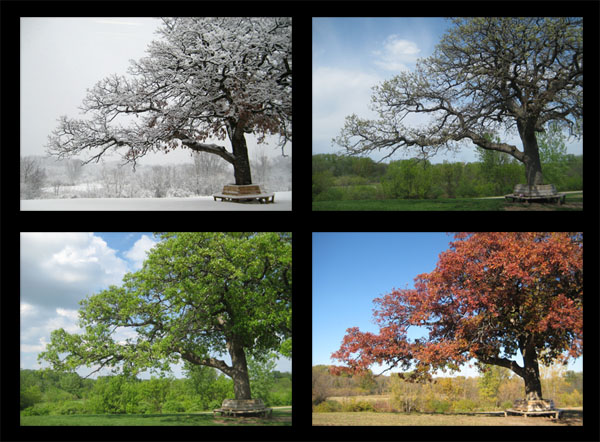
Using your camera every day will also open your eyes to the photographic possibilities that abound in your everyday life. I find myself noticing so much more now that I would have just passed by without comment before: the way the shadows on the wall change with the hours, or the tiny details of fallen pollen on the inside of a flower. Daily photography has made me keenly aware of the passing of the seasons and the small differences in each day.

McEnaney oak seasons

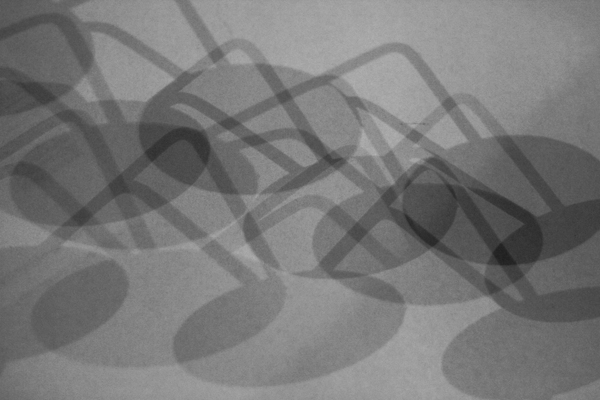
Daily photography will push you out of your comfort zone and force you to engage with other types and styles of photography. You may love shooting macro (close-up) shots of insects, but will now have to deal with rainy days and changing seasons. You may love shooting portraits of people but will need to find new ways and places for finding willing subjects. Whatever photography you ‘do’ now, you will find yourself in situations or late nights when you simply must find something to photograph. You may find that these more desperate times led to your most productive photographic ideas and images.

McEnaney abstract

Daily photography will also help you better plan your day or your time. I have found that waking up fifteen minutes earlier allows me to leave the house earlier in the morning, to spend those fifteen minutes taking a photography break along my commute. Watching the sun rise over one of the many lakes in town is an amazing joy and privilege, but it is a commitment I would never had made on my own, without 365.

Tackling a 365 Project

I highly encourage you to try a 365 project, as there is no better way to keep yourself taking pictures and making progress in your photography. While a 365 project is a huge commitment, there are some steps you can take to keep yourself (and your friends and family) sane and motivated along the way.

  • Plan for photography. Make a commitment to scheduling time for daily photography. Think about the subjects and situations you are attracted to, and plan for how to include those in your day. Maybe it is waking up 15 minutes earlier, or picking up your camera as soon as you get home in the evening, or taking a walk during your lunch break. Or it could be something more elaborate, like planning a photography outing to bucket list locations near or far.McEnaney heron
  • Plan for posting, viewing, and commenting. If you want to get the most out of your 365 project, then you will want to get involved in a photography community. Viewing photographs and leaving comments will keep you inspired, while receiving comments and feedback from others will help you improve and motivate you to keep going. I found early on that it was much easier for me if I was taking a photograph every day, but was posting and sharing yesterday’s photograph each day. That gave me a day in-between to look back and select the previous day’s picture as well as a chance to do any editing or post-processing.
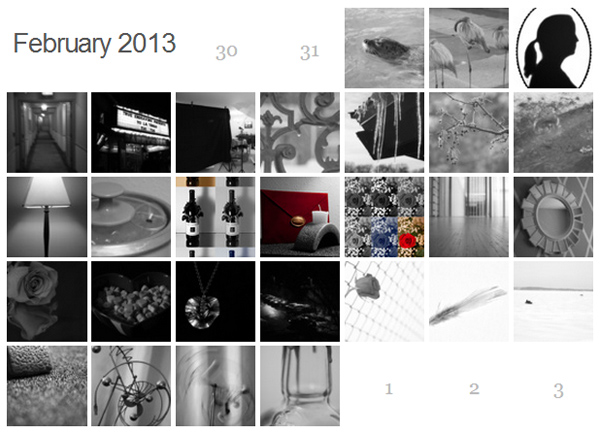
  • Pick a theme or try a challenge. At some point (or, more likely, many points) during your project, you will find yourself in a slump. Pushing through the low points will teach you a great deal about commitment and motivation. Think about picking a theme for a week or a month or perhaps trying a challenge offered by other 365ers. Last year in February, I was part of a “Flash of Red February” challenge that involved taking black and white photographs for the entire month, except for a red photograph on the 14th for Valentine’s Day. This was a creative twist, and black and white was a great choice for a potentially dull winter month.McEnaney flashofred
  • Seek out balance. A 365 project is a large commitment and one that can occasionally be draining on your friends and family. Remember that taking a photograph a day does not mean you have to be taking a photograph every moment of the day. Your children, pets, spouses, and friends will thank you.

Interested in starting your own 365 project?

All you have to do is pick up your camera and get started. Think about joining a 365 photography community too, as the motivation and support along the way will be priceless. You can find my project at Archaeofrog.

The post Jumpstart Your Photography: Start a 365 Project by Katie McEnaney appeared first on Digital Photography School.


Digital Photography School

 
Comments Off on Jumpstart Your Photography: Start a 365 Project

Posted in Photography


March Fashion Photography Workshop in LA

09 Jan

There’s one thing that I have noticed from doing my workshops that is quite endearing: I watch the workshop students forge friendships from the weekend long seminar that carry on for months afterwards. I see them add each other on Facebook and continue to encourage each other along their individual paths towards becoming fashion photographers. It’s been really sweet for me to watch this! I see them commenting on each other’s pictures and keeping in touch with one another through skype and email, because they comment about it! Very cool! We all need to have people on our team when we’re starting out. People who we trust to critique our work as we develop as photographers and people who root us on and tell us to keep going, even when we feel like sacking it in and giving up! It’s been a wonderful PLUS to see this happening in my workshops.


Photo by: Jerome Lim – Workshop Student 2012

This March, in Los Angeles, I will hold another Fashion Photography Workshop. Held at BoxEight Studios in (the now very hip) downtown LA, BoxEight becomes our home for two days of intensive learning. Saturday we’re going to cover how to light beauty using different modifiers strictly for lighting the face and we’ll learn how to position the light for optimum benefits. After lunch on Saturday we learn lighting for fashion. We try 4 or 5 different lighting set ups, going from basic catalog or look book lighting, to showing you some much edgier, editorial lighting. The great thing about Los Angeles in March is that the weather is fantastic! The great thing about BoxEight is there is an outdoor studio which makes it perfect to take the shoot outdoors at the end of Saturday and conquer some outdoor lighting set ups!

Photo by: Jerome Lim– Workshop Student 2012

Sunday is all about honing your retouching skills. We teach you about dodging and burning instead of using filters and plug ins. We take your work to a whole other level! A much more professional one! In the afternoon, I teach about the business of fashion photography and what it takes to get your foot in the door. It’s a whole afternoon of lecture and Q & A. This is the time when you can ask me anything you have ever wanted to know about fashion photography but were afraid to ask!

Photo by: Mario Gandia – Workshop Student 2012

You can read about the entire workshop by clicking on the link here. Tickets are selling fast as we posted loosely about it on our launch post. So don’t delay! Come join us in one of the most exciting cities in the world, Los Angeles! And let’s take your work to The Next Level!

See you there!


Fashion Photography Blog

 
Comments Off on March Fashion Photography Workshop in LA

Posted in Uncategorized


The Nikon D800 AKA: My New BFF

09 Jan

“It’s just a feeling thing, baby. Nothing else.”

If you’ve been following my blog for any length of time, you know by now that I am a devoted Nikon user. Often asked WHY am I so devoted to Nikon over Canon, it’s really a matter of the way the camera has always felt in my hands when I’m shooting. It’s felt more solid, I guess. Even when I’ve played around with Canon’s in the past, Canon has just felt more lightweight, a little flimsier. They’re equally great cameras, I can’t say that one is better than the other. It’s just a feeling thing, baby. Nothing else. Last February when Nikon announced their newest Pro DSLR, the Nikon D800, I was excited to get my hands on it. I pre-ordered the camera from B + H and then waited. And waited. shoots came and went and I even traveled to Europe to shoot and still, no D800. Finally I wrote B + H and told them that I had waited over 6 months for my camera. 2 days later, my new camera arrived!


The D800 features a brand new 36 Megapixel full-frame FX-format sensor, which makes it the highest resolution camera outside of the medium format world. Offering 36 megapixels, critics argue that too many pixels on a small sensor can introduce grain when shooting in low light or at higher ISO speeds. Wait, is that a problem? My main disappointment with the digital format has always been the loss of grain and grittiness that I used to love about film. So that was not a negative aspect of getting the Nikon D800. Depending on the quality of lenses, this “grain” can be quite lovely, actually. At least to someone like myself that likes to shoot in low light situations. And the D800 has a full frame sensor so that means it’s a match for a 35mm film camera. With shortcut buttons on top of the camera, I can get to my ISO controls and WB modes instantly without having to go into the menu. There’s even a LV button which pops the camera’s mirror back to preview what I’m shooting when I’m shooting video. Fantastic!


Even though it’s lighter than other NIkon’s I’ve owned, it’s still retains the same durable, workhorse build that I’ve relied on with Nikon for over 25 years of shooting professionally. The last Nikon I shot with had over 1/2 million actualizations before I burned the shutter motor out. My Nikons take a beating, I’ve shot in freezing cold climates and in the rain and I’ve never had one fail on me. It’s usually me just shooting the hell out of them before they finally say, okay that’s enough. Time for a new one!

Must Have Nikkor Lenses:


Nikon AF-S Nikkor 50mm f/1.4G – Good normal lens for capturing straight shots


Nikon Telephoto AF Nikkor 85mm f/1.4D IF Autofocus – Best Lens in the World


If you’re using DX lenses, it does cut your pixels down to 15.4, which to me, is still high in pixels. This whole craze with photographers thinking that “more pixels, better camera” is kind of lost on me. I shot many a shoot on lower pixels and unless I had a job where I was going to shoot for a billboard, the pixels did just fine. Most of my work is editorial and print advertising. I don’t need 64 pixels for this type of work. But if you have the money and think that adding pixels to your images will make them better images, go right ahead and buy that expensive gear. For me, I would rather see you invest in better quality glass for your DSLR’s. I can’t tell you how many times I hear about someone scrimping on the glass but buying a very expensive camera. Just my two cents, feel free to argue away!


One of the biggest pluses on my new camera is the video feature. The Nikon D800 offers 1920 X 1080 pixels full HD video with an eloquent 30fps. I just came off a 2 day video shoot and I used my Nikon for the whole shoot while my collaborator, video director Dimitrios Papagiannis shot with a Lumix. After looking at my footage, Dimitrios was impressed with the quality of the footage I shot. I was too, although I’m not a pro yet at video. I was just impressed I could capture motion because I have been thinking in “still” mode my whole life. If I could be so humble to say that I think my strong suit as a photographer is my ability to capture a moment, or at least, that is what I strive for, in video you need to capture the MOMENTS! It’s a whole way of seeing/visualizing. Thank God I’ve had a camera plastered to my face for over 33 years. That kinda’ helps with the whole “seeing” part. : )

Still Outtake from the D800 Video


If you got the cash, I highly recommend this camera. Will it make you a better photographer. Quite plainly, no. You shooting all. the. time. will make you a better photographer. But the Nikon D800 will capture a beautiful image as you trudge the road to shooting all. the time.


Fashion Photography Blog

 
Comments Off on The Nikon D800 AKA: My New BFF

Posted in Uncategorized


House in Reverse: Rooftop Driveway Leads to Hillside Home

09 Jan

[ By Steph in Architecture & Houses & Residential. ]

House in Reverse 1

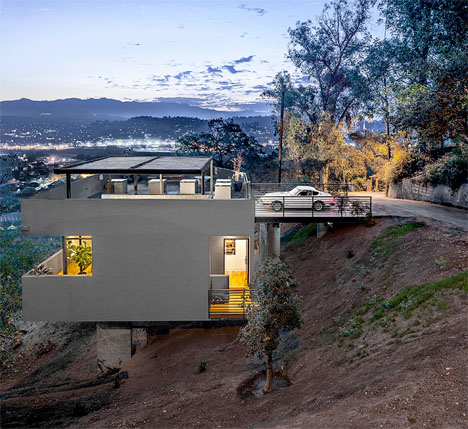
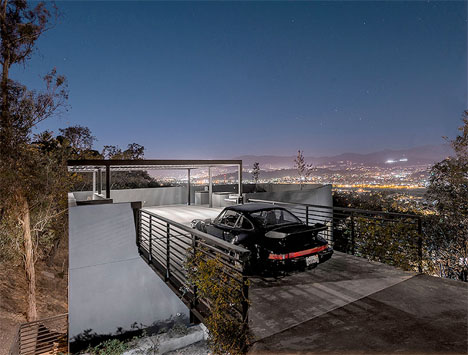
Most people with single-family homes are used to pulling up into their driveways and then ascending flights of stairs to get to the living spaces. But in this case, a ground-level driveway leads directly to an open-air rooftop terrace, and to enter the home, you go down.

House in Reverse 2

House in Reverse 3

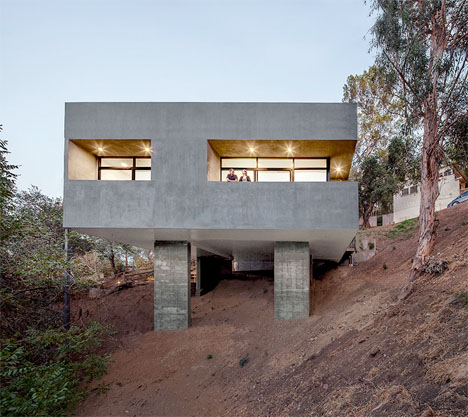
‘Car Park House’ by Anonymous Architects takes advantage of the hilly Los Angeles landscape. Built on a steep plot of land just off a winding road, the home makes the most of a challenging site, maximizing views from every level. Local building code requires the home to have two parking spots.

House in Reverse 4

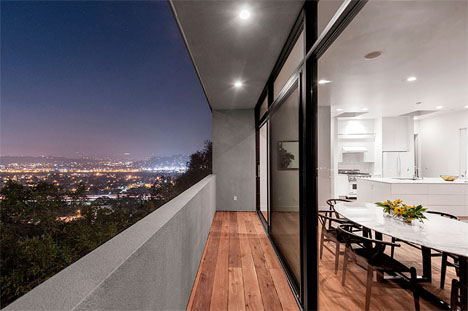
A steel frame and a series of concrete pillars support the modern house as it projects out from the hillside, with two separate terraces looking out onto the San Gabriel mountains from the kitchen and master bedroom.

House in Reverse 5

House in Reverse 6

Calling it a ‘car park house’ puts the emphasis on the least attractive part of the home, but perhaps it’s appropriate considering Los Angeles car culture. But it’s a lot more than just a driveway with a view.

Share on Facebook


[ By Steph in Architecture & Houses & Residential. ]

[ WebUrbanist | Archives | Galleries | Privacy | TOS ]


WebUrbanist

 
Comments Off on House in Reverse: Rooftop Driveway Leads to Hillside Home

Posted in Creativity