Month: October 2013

  • LiftBed & BedUp: 2 Space-Saving Beds Stored on Ceilings

    [ By WebUrbanist in Design & Furniture & Decor. ]

    lift bed up systems

    In a bid to one-up the traditional fold-up Murphy bed, two companies are switching a wall-based storage approach for a ceiling-centric alternative. For those with higher spaces above but less square footage below, this design direction takes advantage of headroom while keeping clutter off floors and walls.

    bedup hybrid space design

    bedup ceiling design

    BedUp is a French creation that solves multiple problems with folding wall beds. First, as alluded to above, it shifts the burden to storage vertically rather than horizontally.

    bedup up down configurations

    Second, however, the BedUp also can come to rest at various heights, leaving room for storage or full-sized furniture underneath even when deployed downward for use.

    liftbed up and down

    LiftBed is a German company offering an arguably sleeker-looking solution but it comes with a few catches. The cantilever that allows the bed to look like it is hovering, for instance, means more hidden mechanical and support elements are needed, in turn taking up more space.

    up-and-down-beds

    That said, the resulting LiftBed looks clean, minimal and incredibly well-integrated with its interior surroundings, so if aesthetics are your primary concern, this approach may be the best.

    Share on Facebook


    [ By WebUrbanist in Design & Furniture & Decor. ]

    [ WebUrbanist | Archives | Galleries | Privacy | TOS ]


    WebUrbanist

  • At The Hops: 9 Loud & Proud Rock ‘n’ Roll Beers

    [ By Steve in Design & Graphics & Branding. ]

    rock 'n' roll beer
    If a party ain’t a party without beer and rock ‘n’ roll, then beer brewed by, for & about rock ‘n’ rollers is practically a party in a keg, bottle, can or case!

    Iron Maiden’s TROOPER Ale

    TROOPER Iron Maiden beer Bruce Dickinson (images via: The Sun/News Group Newspapers Ltd. and WW2 Talk)

    Iron Maiden beer? Excellent! Bill & Ted references aside, TROOPER is a premium ale inspired by the legendary British heavy metal band and handcrafted at Robinsons brewery in Stockport, UK. “I’m a lifelong fan of traditional English ale;” explains Bruce Dickinson, Iron Maiden’s lead vocalist. “I thought I’d died and gone to heaven when we were asked to create our own beer.”

    Iron Maiden TROOPER ale(images via: Rock Video Fever!, Blabbermouth and Dementesx)

    Dickenson, a real ale enthusiast in his spare time, visited Robinson’s a number of times during the ale’s development period. “Their magic has been to create the alchemical wedding of flavour and texture that is TROOPER,” enthuses Dickenson. “I love it.”

    TROOPER Iron Maiden beer (image via: Facebook/Iron Maiden Beer)

    According to the product page at the Robinson website, TROOPER ale exhibits “malt flavours and citric notes from a unique blend of Bobec, Goldings and Cascade hops (that) dominate this deep golden ale, with a subtle hint of lemon.” TROOPER’s distinctive label features a unique version of band mascot Eddie decked out in a tattered Crimean War uniform, evoking Iron Maiden’s song TROOPER from which the ale got its name.

    Miles Davis’ Bitches Brew

    Dogfish Head Bitches Brew beer (images via: Drink Philly and By The Pint)

    Miles Davis’ Bitches Brew beer from renowned craft brewer Dogfish Head was released in June of 2010 to commemorate the 40th anniversary of Miles Davis’ seminal album of the same name. According to the reverent brewer, limited edition Bitches Brew is “a bold, dark beer that’s a fusion of three threads imperial stout and one thread honey beer with gesho root, a gustatory analog to Miles’ masterpiece.”

    Dogfish Head Bitches Brew beer (image via: Daily Beer Review)

    Bottles of the 9% ABV beer feature the 1970 album’s iconic artwork created by the late Mati Klarwein. Delaware-based Dogfish Head introduced Bitches Brew during “SAVOR, An American Craft Beer & Food Experience,” held at the National Building Museum in Washington DC on June 5th, 2010. Two 40th anniversary editions of Miles Davis’ Bitches Brew were produced: a Legacy Edition and a deluxe Collector’s Edition.

    KISS Destroyer

    KISS Destroyer beer (images via: Mason Hell – Cat’s Beer Blog, Kissopolis and Frozen Summers)

    Gene Simmons has earned a legendary reputation as a relentless merchandizing machine so it’s no surprise he’s branded beer with the familiar KISS iconography. It’s not even a surprise he’s done it twice, the first time being in 1996 when cans of KISS pilsner were produced in the Czech Republic to help promote the band’s ALIVE/WORLDWIDE tour concerts in Prague.

    KISS Destroyer beer can(image via: Badger & Blade)

    This time, however, the band is aiming for world drinking domination on two fronts: beer and wine. Released in 2010, Kiss Destroyer Beer is a German-style brew (that’s made in Sweden) available in cans and bottles. Along with the beer, KISS is also releasing Kiss Zin Fire wine, because the KISS Army is evidently exploring more mature tastes these days. “This isn’t just something we put a label on. We wanted wine and beer unique to KISS and we got it,” explains band guitarist (and non-drinker) Paul Stanley. “This stuff will set your taste buds on fire.” Or so he’s been told.

    Next Page:
    At The Hops 9 Loud Proud Rock N Roll Beers

    Share on Facebook


    [ By Steve in Design & Graphics & Branding. ]

    [ WebUrbanist | Archives | Galleries | Privacy | TOS ]


    WebUrbanist

  • Defining Your Photographic Specialty

    By Lori Peterson

    Recently I came across a photography page and the photographer’s About Me said “I specialize in everything photography.” I couldn’t help but wonder how many other people had stumbled across that particular page and dismissed it because they wanted someone who had a more defined photographic specialty. When you are looking for a photographer to capture images of your newborn, family, or senior, aren’t you looking for someone who really knows how to take images that really grab your attention?

    Photographers spend so much time trying to figure out what their style is and during those times they shoot whatever sessions are available to them. If you are shooting weddings, babies, seniors, products, and anything else you can, are you really defining your specialty?

    The first thing you should figure out is what your favorite photo shoots have been. If you shot weddings and hated it, then you should reconsider booking them. If you think newborns and small children require too much time to be set aside and too much patience, then you should rethink advertising for newborns and children. It might take some time, effort, and networking, but finding your niche can be well worth the wait once you get your foot into that door.

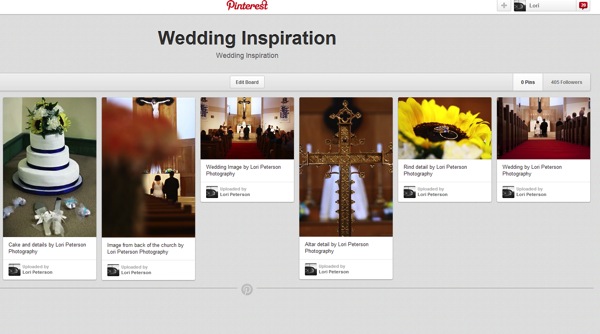
    If you are new to the photography business and are considering shooting weddings you should find an experienced wedding photographer who would let you be their second shooter. (Yes, you should be paid for your time. Don’t spend hours and hours shooting for free!). Do your homework on wedding photography. Looking at wedding blogs and even Pinterest for ideas of shots that people frequently request can help you figure out if shooting weddings might be a good fit for you. Keep in mind that weddings are often long, long days and some photographers don’t really get breaks (or even meals). Meetings ahead of time with the bride and groom and a firm contract are always key items for weddings, even as a second shooter you will want to know ahead of time what the expectations they have of you are. Personally, I have shot weddings and realized that is not where I wanted to focus my time and energy and so I stopped booking weddings. You will know if it’s something you want to forge ahead with or not after a few under your belt.

    Photographic Specialty

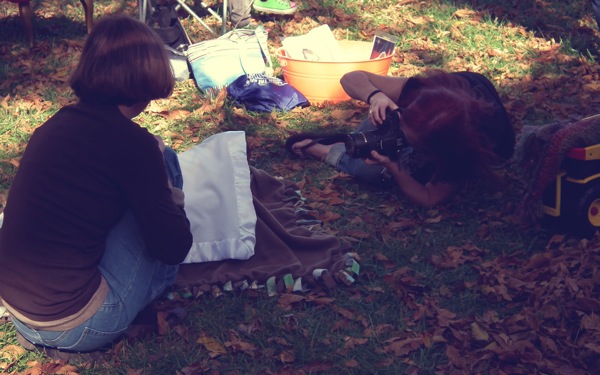
    Newborns and small children require lots of patience and even though those shoots dates are not as extensive as shooting a wedding, you will still be working without a real break. Kids have those rare little ‘windows’ of time that are perfect for shoots and if you miss that it’s very hard to get it back. Talking ahead of time to the parents about naps and feeding schedules can help you get into that small window of time and help you to nail the shoot. Shooting newborns requires a lot of props (blankets, pillows, etc.). You will also be shooting in all sorts of odd angles that can be hard on your back and limbs.
    Photographic Specialty

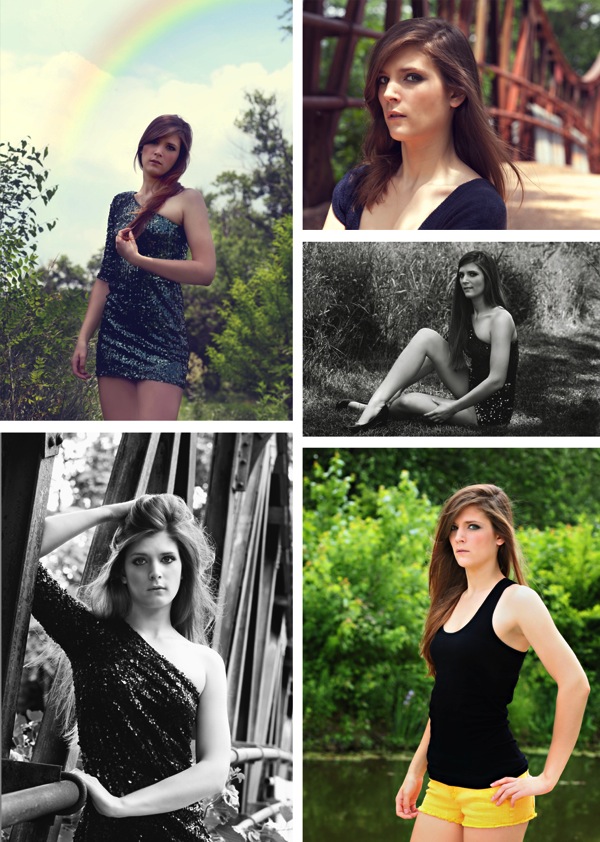
    Adults (models, couples and seniors) are easier to work with because you don’t need to fine tune that window of opportunity for a good shoot. Their shoots don’t take as long as weddings and generally they can be scheduled any time that works around a school or work schedule. They can take direction easily and most of the time they are welcoming at getting their images taken.

     Photographic Specialty 1

    Getting your contracts in order, meeting with your clients ahead of time to let them know how your shooting and editing works, and knowing what your client expects of you can all be huge factors in helping you figure out where your business heads. After shooting a few sessions you will get a general idea if those shoots are where you want to take the direction of your business. Don’t be afraid to stop shooting the things you don’t enjoy. A lot of photographers get nervous about turning away shoots when the reality is that when you really put your time into shooting what you love that you enjoy what you do more and that can only increase your business.

    The areas that you specialize in should reflect your best work and it should make you want to get out your camera and shoot more. If you are finding it hard to get motivated or excited about shoots, then those shoots may not be where you need to be concentrating your energy and creativity. Ask yourself “If I could only take on one more photo shoot and then have to retire my camera, what would it be?” You might surprise yourself with your answer or you might really understand where you need focus more. It’s hard to specialize in everything, so find the things you love to shoot, the ones that feed your creative soul and run with it. You can do great things once you really start pointing yourself in the right direction.

    Lori Peterson is an award winning photographer based out of the St. Louis Metro Area. Her dynamic work ranges from creative portraits to very unique fine art photography. Lori’s work can be seen at www.loripetersonphotography.com and also on her blog at www.loripetersonphotographyblog.com. You can follow her on Facebook at https://www.facebook.com/LoriPetersonPhotography.

    Post originally from: Digital Photography Tips.

    Check out our more Photography Tips at Photography Tips for Beginners, Portrait Photography Tips and Wedding Photography Tips.

    Defining Your Photographic Specialty

    The post Defining Your Photographic Specialty by Guest Contributor appeared first on Digital Photography School.


    Digital Photography School

  • The Secrets of Great Portrait Photography – Great Video from Brian Smith

    Late last year I was giving a copy of celebrity portrait photographer Brian Smith’s book – Secrets of Great Portrait Photography: Photographs of the Famous and Infamous. It was a great read and one that gave me load of ideas for my own portraiture.

    Today I was surfing on YouTube and came across a great lecture that Brian Smith gave at B&H Photo that really is a great walk through of the book and many of the tips in it. While long – the video is really useful on many levels.

    The video goes for almost an hour and a half so grab yourself a beverage and snack and make yourself comfortable – it really is a great watch!

    Get Brian Smith’s Book – The Secrets of Great Portrait Photography

    Grab Brian’s book here and check out more of Brian Smith’s work on his website.

    Post originally from: Digital Photography Tips.

    Check out our more Photography Tips at Photography Tips for Beginners, Portrait Photography Tips and Wedding Photography Tips.

    The Secrets of Great Portrait Photography – Great Video from Brian Smith

    The post The Secrets of Great Portrait Photography – Great Video from Brian Smith by Darren Rowse appeared first on Digital Photography School.


    Digital Photography School

  • Images from the past: Circular snapshots from the Kodak 1

    kodak-1-national-media-museum2.jpg

    The first consumer point-and-shoots didn’t have art effect modes or face detection smile-shutters. They looked like the Kodak 1, a leather-encased box with a key to wind the film, a shutter release and not much else. Introduced to the public in 1888, each Kodak 1 contained a roll of film with 100 exposures. The National Media Museum owns a collection of prints from these first consumer ‘compacts.’ Click through to take a look at a set of these early snapshots.

    News: Digital Photography Review (dpreview.com)

  • browserFruits Oktober #1

    Jetzt, da die Tage spürbar dunkler werden, sitzt Ihr vielleicht am Abend am Computer und wisst nicht recht, was Ihr tun könntet. Wir suchen immer Gastautoren, die ihre eigenen Fotoserien und Projekte vorstellen oder auch mal ganz theoretische Gedanken zur Fotografie veröffentlichen möchten. Wie genau das funktioniert, erfahrt Ihr hier.


    Fotospecial: Köln

    Flickr

    500px


    Deutschsprachig

    • „Go Find Momo“ heißt eine Fotoserie, bei der man auf jedem Bild den fünf-jährigen Border-Collie Momo des kanadischen Designers Andrew Knapp suchen kann. Schön kurzweilig.

    • Akt Now stellt die deutsche Fotografin Susann Probst im Interview vor, deren Aktbilder ganz wunderbar ruhig und unaufgeregt sind.

    • Die Fotografin Natalie Kriwy dokumentierte ihre Krankheit ab der Diagnose Brustkrebs. Nach 5987 Bildern besiegte sie den Krebs. Auf Brigitte gibt es eine Bilderserie mit der Geschichte dazu.

    • Juliane Herrmanns erkundet die Stadt Den Haag. Herausgekommen ist eine schöne Serie, die auf emerge mag vorgestellt wird.

    • Andrea Hübner zeigt ihre neue Fashionserie „Tartan“.


    International

    • In Neuseeland gibt es ganz wunderbare Bäume, die der Wind geformt hat. Eine kleine Reihe von Fotos davon findet Ihr hier.

    • Elena Jasic zeigt ihre neue Fashion-Serie für das SYN magazine.

    • Kennt Ihr das Online-Magazin „Lost Freedom“? Gerade erschien die neue Ausgabe zum Thema Freiheit.

    • Wenn Ihr Euch für Geburtsfotografie interessiert, empfehlen wir diesen Artikel von Sharon Johnson, in dem sie viel über ihre Arbeit verrät.

    • Sind wir eigentlich Fotografen oder Schönheits-Chirurgen? Jeff Cable stellt sich dieser Frage.

    • Mashable präsentiert 125 Jahre National Geographic in zehn atemberaubenden Fotos. Natürlich lässt sich NG nicht auf zehn Bilder reduzieren, doch die gezeigten sind definitiv großartig.

    • Wie verläuft der Dynamikumfang diverser Kameras bei ansteigendem ISO-Wert? Dieses Tool bietet einige Antworten.

    • Ein kurzes Interview mit der beeindruckenden Fotografin Mariam Sitchinava, die mit alten Soviet-Kameras arbeitet, gibt es im Positive Magazin.

    • Ein wenig gruselig, aber auch schön wirken diese Bilder von toten Vögeln auf dem Lake Natron in Afrika des Fotografen Nick Brandt.


    Neuerscheinungen und Tipps vom Foto-Büchermarkt

    buchtipp

    • Eine nette Abwechslung zu Martin Parrs kritischer Strandfotografie ist der Bildband „Orchard Beach“* von Wayne Lawrence. Weniger zynisch, aber auch inszeniert. Wer sich nicht sicher ist, kann sich hier ein paar Aufnahmen ansehen.

    • Wer sich für Fashionfotografie interessiert, dem könnte dieses Buch gefallen. Kein Bildband, sondern Einblicke in die Modewelt: „Talking Fashion: Von Helmut Lang bis Raf Simons: Gespräche über Mode“*.


    Wettbewerbe

    • Das C/O Berlin sucht weltweit Fotografen und Künstler, die an einer großen Ausstellung partizipieren möchten. Bis zum 1. November 2013 können Fotografen ihre Serien zum Thema „My Secret Life“ einreichen und mit ihren Bildern die Ausstellung gestalten.

    • Ihr seid unter 30 und arbeitet bereits als Fotograf oder seid noch in der Ausbildung bzw. im Studium der Fotografie? Dann könnt Ihr beim Canon Profifoto Förderpreis 14/1 teilnehmen und mit Glück Euer eingereichtes Konzept für ein Fotoprojekt verwirklichen. Eine Jury entscheidet anhand von Arbeitsproben.


    Videos

    Magnum-Fotograf Chris Anderson spricht darüber, warum und wie er fotografiert. Desweiteren geht er auf sein neues Buchprojekt „Son“* ein und erklärt, wie es entstanden ist. Via Martin Wolf.


    Ausstellungen

    »Ich bin ein Berliner – Kennedys Deutschland-Besuch im Juni 1963«
    Zeit: 20. Juni – 27. Oktober 2013 (verlängert!)
    Ort: The Kennedys, Auguststraße 11-13, 10117 Berlin
    Link

    Aufbrüche – Bilder aus Deutschland
    Zeit: 13. Juli – 3. November 2013 (verlängert!)
    Ort: Suermondt-Ludwig-Museum Aachen
    Link

    Che Guevara. Fotografien der Revolution aus der Skrein Photo Collection
    Zeit: 10. November 2013 – 10. Januar 2014
    Ort: Michael Horbach Stiftung, Wormser Str. 23, 50677 Köln
    Link

    Käthe Augenstein
    Zeit: 25. Oktober 2013 – 9. Februar 2014
    Ort: das verborgene Museum, Berlin
    Link

    Mehr aktuelle Ausstellungen


    * Das ist ein Affiliate-Link zu Amazon. Wenn Ihr darüber etwas bestellt, erhalten wir eine kleine Provision, Ihr bezahlt aber keinen Cent mehr.


    kwerfeldein – Fotografie Magazin

  • Canon Powershot N Review

    PowerShot N_3.jpg

    You never know in this reviewing game: one day it’s a DSLR, then a MILC, rapidly followed by a compact camera. Each with its own attractions, each with its own foibles … but few that really break convention very much.

    Then, suddenly, the door bangs open and in comes a crazy, ground-breaking innovation. Is it a pack of cards, ciggies or business card holder?

    NOTA: none of the above!

    It’s Canon’s entry into the fashion world of desirable gadgets.

    PowerShot N_5.jpg

    PowerShot N_10.jpg

    Canon Powershot N Features

    Gone is the usual myriad of external controls. Absent are cascading viewfinder menu options. Gone is a top-mounted viewfinder. Missing is a comprehensive instruction manual … in its place is a pamphlet ‘Getting Started’ with the instructions covering only one side of the A3 paper. Oh and there’s a CD with a more elaborate instruction manual in linked files.

    Before heading out on a shooting spree I suggest you thoroughly immerse yourself in either or both! Don’t want to be caught with your shutter down in the wild outdoors! For one thing, the camera is ‘driven’ by touch screen operation and well implemented it is too. But manual controls? De nada!
    camera in hand 1.jpg

    camera in hand 2.jpg

    In construction, the camera is a fold out job to form an L shape; with screen swung 90 degrees outwards, the l8x zoom lens faces forwards, protruding some 18mm. So you hold the camera facing forward to take pictures with the screen facing upwards …or you can fold the screen back onto the body and hold it like a normal camera. In either configuration, outdoors the screen washes out.

    Want to zoom? Simply rotate a metallic ring at the front of the camera body and just aft of the lens itself.

    At this stage I have to warn you that holding the camera is a little nerve-wracking. For one, it’s tiny. It’s light. And there are no handholds that you usually find on DSLRs or many compacts, so you’re on your own. There are two lugs, one one either side of the camera so I suggest you string some sort of neck-bearing strap to prevent you dropping the little beast!

    One note: the camera accepts micro cards: microSD, microSDHC and microSDXC. So that will be your first buy before you head out shooting.

    My usual habit with a new camera to review is to fire up and start shooting straightaway. But the N floored me right at the starting gate. Having a touch screen I saw a large red button at left, tapped it and the N began video recording. Gave up on the stills front.

    I scanned the external controls. At left is the power button.
    Creative.jpg

    On the right edge, a tiny toggle that swings between normal shooting and creative mode. The latter shoots a bracket of five shots bearing different treatments: washed out; underexposed; diffused top and bottom of shot (1200×1200 pixels); centre enlarged; edges whited out. A lot of fun!

    Lower down is a mobile device connect button. The N offers integrated Wi-Fi and one-touch connectivity to smartphones or tablets.

    Then, beneath that is the replay button and the card slot.

    Forward of the lens ring is another ring which gives you manual control of the camera: focus confirmation and shutter firing.

    Front of camera: at the top right corner is a tiny clear button. Waffor? It’s the flash. Believe me!
    Menu 1.jpg

    Menu 2.jpg

    The menu options are minimal, allowing control of the touch shutter, AF, the stabiliser etc. You can also choose shooting modes that include Miniature Effect, Soft Focus, Toy Camera Effect and Monochrome.

    There’s a novel option that commands the camera to shoot a four second movie before every still shot resolution. Sort of a ‘behind the scenes’ video of your still shooting efforts!
    Stairway.JPG

    Flowers 2.JPG

    And that’s about it.

    The 12.1 megapixel CMOS captures a maximum image size of 4000×3000 pixels, enough to make a 34x25cm print.

    Full HD video at 1920x1080m pixel resolution can be shot. No, you can’t shoot stills mid video recording.

    Startup Times

    About a second from startup to first shot; under a second per shot from then on.

    Distortion

    No problems.

    Canon Powershot N ISO Tests

    Canon PowerShot N ISO 80.JPG

    Canon PowerShot N ISO 400.JPG

    Canon PowerShot N ISO 800.JPG

    Canon PowerShot N ISO 1600.JPG

    Canon PowerShot N ISO 3200.JPG

    Canon PowerShot N ISO 6400.JPG

    I made four attempts to shoot my favourite orange/bicarb and vanilla. AF was the problem… it just wouldn’t lock in.

    Eventually, I managed to shoot the run from ISO 80 to 6400. The sharpness and lack of noise was OK up to ISO 1600. At ISO 3200 sharpness fell off noticeably; noised still quite low. At ISO 6400 sharpness had dropped noticeably but noise was still low.

    Thinking that my efforts were suffering from operator error or newbie complex, I shot a test shot at ISO 6400 outdoors. Perfect. Sharpness 100 per cent. I can only put it down to the camera’s general unhappiness with AF at close quarters.

    Canon Powershot N Review Verdict

    Quality: about average.
    Why you’d buy it: glam cam!
    Why you wouldn’t: fiddly for experienced photographers.

    The N is available in white or black.

    I found some aspects of the N quite irritating: for one, the lens and shutter rings are easily perplexing … I often found I had to do a visual check to find either.

    Pick up the camera and I often did not know which way was up.

    Despite this, the N is the perfect companion for the smart phone set and has obvious ambitions to surpass the latter’s picture taking prowess. Doubt it will tho’!

    Canon Powershot N Specifications

    Image Sensor: 12.1 million effective pixels.
    Metering: Multi pattern, centre-weighted, spot.
    Exposure Modes: Auto, Program AE.
    Sensor: 11mm CMOS.
    Lens: f3.0-5.9/5-40mm. 35 SLR equivalent: 28-224mm.
    Shutter Speed: 15 to 1/2000 second.
    Memory: microSD/microSDHC/microSDXC.
    Image Sizes (pixels): 4000×3000 to 640×480. Movies: 1920×1080, 1280×720, 640×480, 320×240.
    LCD Screen: 7.1cm LCD (461,000 pixels).
    File Formats: JPEG, MPEG4.
    Continuous Shooting: 2.3 fps.
    ISO Sensitivity: Auto, 80 to 6400.
    Interface: USB 2.0, Wi-Fi.
    Power: Rechargeable lithium ion battery, DC input.
    Dimensions: 79x60x29mm WHDmm.
    Weight: 195 g (inc battery and card).
    Prices: Get a price on the Canon PowerShot N at Amazon.

    Post originally from: Digital Photography Tips.

    Check out our more Photography Tips at Photography Tips for Beginners, Portrait Photography Tips and Wedding Photography Tips.

    Canon Powershot N Review

    The post Canon Powershot N Review appeared first on Digital Photography School.


    Digital Photography School

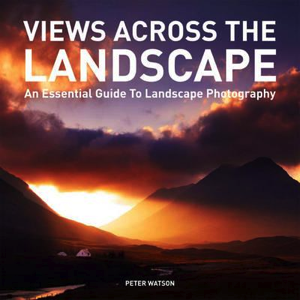
  • Views Across the Landscape [Book Review]

    NewImageAgain, another large format book, sized precisely to best show off the subject matter.

    As befits this subject, the pictures get priority and so they should … text takes the back seat but not to a demeaning degree.

    Author Peter Watson is a self-taught photographer and has authored five other books, all to do with landscape photography. In his view ‘recent developments in digital technology have simplified landscape photography.’ Perhaps this could have been better said as the arrival of digital photography has simplified landscape photography.

    How so? Well, for one thing the burden of establishing, equipping and operating a darkroom has gone, along with the bane of keeping chemicals fresh, enlargers clean and dust free and the pain of long hours of operation, mostly at night. In nearly all forms of photography today, software is king!

    Photographers now have total control over the process, right from concept through to the tap on the shutter and on to the final print. Never before has the photographer had complete control.

    While we can now enjoy enormous control post exposure there are still limits to what can be achieved and many a trap may lay in waiting for the unwary. What may emerge after software processing can only be as good as the original material: RIRO or Rubbish In Rubbish Out!

    Landscapes are a demanding subject. You have no control over the subject, none over the lighting of it, its placement or orientation. Watson’s attitude is that it is sanguine to adopt techniques that require minimal post exposure adjustment; as he says ‘post processing should be considered the icing on the cake, not the main recipe.’

    The book begins by suggesting research methods for prospective subjects, location hunting, the ‘right equipment’ and accessories such as tripods and pan heads, filters … even down to the right clothing for the location.

    The chapter headings show the way:

    • Equipment
    • Technique
    • Light in the Landscape
    • Composition and Design
    • Taking a Closer Look
    • Landscape Locations

    In terms of equipment the book is realistic: beware of buying and using a digital camera with a ‘kit lens’ included in the purchase price; they are all built with a smaller maximum aperture and mostly offer lower resolution than fixed focal length primes lenses.

    There is some basic info on lens apertures and shutter speeds, understanding histograms, the use of filters, etc.

    Then, to my mind, some of the most important elements in successful and satisfying landscape photography are outlined: finding the best viewpoints and using light.

    With the former, location recces using Google Earth lets you ‘fly’ to anywhere in the world, check out sample photos of the area in question and even scout a shooting position. The message is search for a shooting spot by discovering one with a useful foreground.

    With the latter, light can impart mood, atmosphere, tranquility, harmony etc. Visit the location at different times of the day and year. Notice its angle, colour, strength and distribution.

    In scanning the book I was struck at how the author/photographer used light to lift the quality of his landscape images. If the same images had been shot at different times of the day or at times when the light was a less powerful element those pictures would not have ‘worked’.

    There are four pages of pictures and text on how to use mist in photographing the landscape: a fine balance is essential; too much landscape will diminish it; too little will leave you wondering what you’re looking at. Balance is crucial.

    IMHO the book’s purchase is worth it for the value of the pictures alone!

    Author: P Watson.
    Publisher: Ammonite Press.
    Length: 192 pages.
    Size: 25x25x12mm.
    ISBN 978 1 90770 884 8. Price: Get a price on Views Across the Landscape

    Post originally from: Digital Photography Tips.

    Check out our more Photography Tips at Photography Tips for Beginners, Portrait Photography Tips and Wedding Photography Tips.

    Views Across the Landscape [Book Review]

    The post Views Across the Landscape [Book Review] appeared first on Digital Photography School.


    Digital Photography School

  • Cardboard Cathedral: Temporary Structure Acts as Placeholder

    [ By Delana in Architecture & Public & Institutional. ]

    shigeru ban cardboard cathedral

    In 2011, Christchurch, New Zealand was hit with a massive 6.3 magnitude earthquake. Among the city’s most heartbreaking losses was the destruction of the iconic 1864 Anglican cathedral. The city plans to have a new cathedral built, but designing and erecting a large building doesn’t just happen overnight. Shigeru Ban Architects, masters of cardboard constructions, came to the rescue with a temporary solution.

    temporary cardboard cathedral new zealand

    The Cardboard Cathedral is built to last up to 50 years, which should be more than enough time to get a permanent structure in place. The temporary building is made from 98 cardboard tubes and eight shipping containers, with the tubes forming the dramatic ultra-high peaked ceiling. Rather than constructing a simple emergency building to house the congregation, the architect did something extraordinary and created a temporary cathedral that actually looks like a place of worship.

    cardboard cathedral

    Shigeru Ban wants to make it clear that, although paper is traditionally a rather weak material, this structure is one of the most earthquake-proof in Christchurch. A concrete building is easily crumbled by an earthquake, but the paper building is far less rigid. This means that it can absorb the shock of a quake without falling apart.

    christchurch new zealand cardboard cathedral

    The cardboard tubes are coated with waterproof polyurethane and a flame retardant, so they won’t succumb to the elements. Outside of the cardboard tube ceiling, a semi-transparent polycarbonate roof adds further protection for the building and its occupants. The cathedral can hold up to 700 people, and not just for religious services; it can also be used as an event venue or concert hall.

    earthquake proof cardboard church

    One of the most touching parts of this project is the etched stained glass window at the entrance. The colorful glass triangles show pictures from the destroyed church’s facade, ensuring that part of that beloved landmark lives on.

    (images via: Shigeru Ban and Jocelyn Kinghorn)

    Share on Facebook


    [ By Delana in Architecture & Public & Institutional. ]

    [ WebUrbanist | Archives | Galleries | Privacy | TOS ]


    WebUrbanist