Month: October 2013

  • 7 October, 2013 – Capture One 7 Tutorial Now Available

    Luminous-Landscape releases the long awaited Capture One 7 Pro Tutorial today.  This 7.5 hour multi-segment training video answers all your questions about Capture One.  Learn this very robust program from top to bottom with Kevin Raber, Michael Reichmann and David Grover of Phase One.  Learn more about this new release by CLICKING HERE.  You can go directly to our e-shop by CLICKING HERE. 

    There has been a lot of things happening at Luminous-Landscape.  Check back tomorrow evening and you’ll get a taste of what we have been up to.


    …
    The Luminous Landscape – What’s New

  • Banksy Tags Manhattan: Fresh New Graffiti Live from NYC

    [ By WebUrbanist in Art & Street Art & Graffiti. ]

    banksy manhattan no graffiti

    Making his way through the boroughs of New York, the infamous but mysterious interventionist Banksy is broadcasting new stencils, installations and mixed media work all month as a street-artist-in-residence in America’s largest city.

    banksy new york accent

    In Midtown Manhattan, his figures, phrases, plays on words and signage can be found defacing (or at least: refacing) concrete walls and garage doors in Banksy’s typical self-referential style. From there, he has moved onto Williamsburg and otherBrooklyn neighborhoods, and no one knows quite where he will pop up next.

    banksy the musical

    As he often does in new destinations, Banksy is actively toying with New York City culture and tropes, from its stylized graffiti fonts to its world-famous Broadway shows (his contribution to existing tags above: “The Musical” stenciled alongside each).

    banksy mobile truck art

    Branching out from two-dimensional pieces, here is “a New York delivery truck converted into a mobile garden (includes rainbow, waterfall and butterflies).” This piece in particular is also actually moving around the city: “The truck will visit a different location every evening from dusk,” starting in an East Village location.

    banksy dog fire hydrant

    banksy big truck mural

    Perhaps best of all, this time Banksy also provides wonderful faux-vintage commentary on this series (titled: Better In Than Out) in the form of audio tour files you can click to play on Banksy’s website – or by calling a special toll-free number found spray-painted next to a number of these pieces: 1-800-656-4271. Of course, as always and almost as quickly as they appear, many of his works are being erased or defaced by city workers or other street artists – it goes with the territory.

    Share on Facebook


    [ By WebUrbanist in Art & Street Art & Graffiti. ]

    [ WebUrbanist | Archives | Galleries | Privacy | TOS ]


    WebUrbanist

  • Ricoh launches weathersealed HD PENTAX-DA 55-300 mm F4-5.8ED WR

    55-300WR-news520.png

    Ricoh has launched the HD Pentax DA 55-300mm f/4-5.8 ED WR, a telephoto zoom that’s weathersealed to complement the company’s recent SLRs. It also gains Pentax’s latest ‘High Definition’ coating to minimize flare and ghosting. Aside from that, the specifications are practically identical to the existing smc DA 55-300mm f/4-5.8 ED. It’ll be on sale in November 2013 for a suggested retail price of $ 449.95 / £399.99.

    News: Digital Photography Review (dpreview.com)

  • Ricoh announces Pentax K-3 24MP DSLR with selectable low pass filtering

    K3_18135.png

    Ricoh has announced the Pentax K-3 – a 24 megapixel enthusiast APS-C DSLR. In addition to the higher pixel count, the range-topping camera gains a 27-point autofocus system and a more advanced 86,000 pixel metering sensor, compared with the K-5 II. Rather than offering versions with an without an optical low-pass filter, the company has found a way to selectively use the image stabilization system to mimic its effect. It also offers twin SD card slots and USB 3.0 connection. Click through to find out more.

    News: Digital Photography Review (dpreview.com)

  • Shaking up the market? Pentax K-3 First Impressions Review

    K-3.jpg

    Ricoh’s Pentax K-3 is the first DSLR we’ve encountered that allows you to totally disengage its low-pass filtering – letting you choose between maximum detail and moire suppression – it’s also the first to wear the new parent company’s branding. The more we looked at the K-3 the more we found it offers over the existing K-5 models. Read our First Impressions Review to examine the fine changes with no false detail.

    News: Digital Photography Review (dpreview.com)

  • Terrified of Street Photography? So Am I! Here’s How I Do It

    by Mridula Dwivedi.

    I am truly terrified of street photography. It is such a daunting task to point my camera at a stranger’s face and click. I know in India (and many other places) not too many people mind, but I just completely freeze somehow. Yet I was fascinated by street photography. I would keep reading tips after tips thinking something would unlock the secret for me. In the end I had to discover my own way. I am still far from comfortable but I look forward to street photography as well on my trips. These are the things that got me started, even if tentatively.

    My Street Photography Tips

    Shooting Things

    Street Photography

    Since I was petrified of shooting people I started with shooting things. Most of the times, the street vendors are fine when you walk up close, exchange a glance towards their stuff and raise an eyebrow. They generally wave a hand to go ahead. I know this is not real street photography but I had to start somewhere. That is where I started and remained, for a very long time.

    Use a Zoom Lens

    Street Photography

    I know, every self street respecting street photographer would advise you against it. But remember we are not dealing with a self respecting street photographer but terrified street photographer. I actually gathered courage only after I used a 75-300 to shoot people walking by at Phewa Lake in Pokhara, Nepal. I was sitting on a bench under shade as it was too hot. I saw boats coming and going as well as people walking by the lake. I decided to use the zoom. No one took any notice as I was a little away from the scene. It helped that I stationary as well. Using a zoom lens certainly got me started.

    Framing Wider

    Street Photography
    So, when I found myself in the colorful border market at Aranyaprathet (Thai-Cambodia border) recently I wanted to do street photography. I was using a 50 mm prime lens which would not let me zoom anything. I wanted to click the man under the umbrella but my nerves failed me as usual. I then decided to frame the scene wider. What to do, you have to think of ways to click things when you are scared of offending people.

    Clicking Busy People

    Street Photography
    While walking through the Rong Kluea Market at the Thai-Cambodian border I realized that the vendors were so busy doing their business they hardly had any time for nosy photographer. Now that is a good thing for scared novices like me.

    Positioning Myself in a Corner

    Street Photography
    But what has worked best for me is positioning myself in a corner of a busy street. That way I could watch the world go by and occasionally get a picture too. I must have clicked at least 30 pictures standing at this particular corner of Rong Kluea Border Market. Not one person stopped and asked me what I thought I was doing! A very happy scenario if you ask me.

    Mridula Dwivedi is a full time academician from India. She blogs at Travel Tales from India. Her blog has taken her places as she was invited by the tourism boards of South Africa, Malaysia and recently Thailand.

    Post originally from: Digital Photography Tips.

    Check out our more Photography Tips at Photography Tips for Beginners, Portrait Photography Tips and Wedding Photography Tips.

    Terrified of Street Photography? So Am I! Here’s How I Do It

    The post Terrified of Street Photography? So Am I! Here’s How I Do It by Guest Contributor appeared first on Digital Photography School.


    Digital Photography School

  • Texture as a Design Element in Photography

    While it’s true that photography is a visual medium, I am always fascinated by images that can suggestively invoke my other senses. Have you ever looked at a photo in a cookbook or magazine and commented that the food looked so good you could practically taste it? What really pulls me into the essence of a photograph, though, is texture. Whether I’m feeling colorful autumn leaves crunching under my feet, the delicate edges of flower petals on my fingertips, or the jagged shards of a broken window– when a photo makes me want to touch it you have me hooked. That’s probably why I’m such a sucker for texture and why I strive to include it as a design element in so much of my photography. I want (or is it need?) these images to speak not only to your eyes, but to as many of your other senses as I possibly can. I want them to speak to your heart.
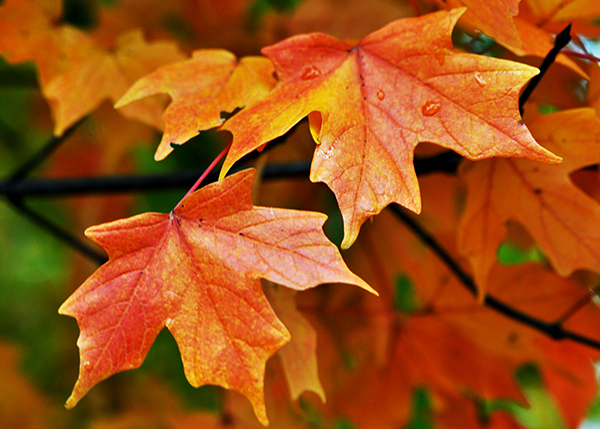
    texture-002-leaves

    1/80, f/5, ISO 250

    One of the first things to consider when photographing texture is that the beauty is in the details. While the deserted hallway of an abandoned building can evoke a strong sensory response, it’s filling the frame with a broken window or rusted pipe from the deserted hallway that’s going to really bring your textures to the forefront. That’s not to say that the deserted hallway doesn’t have its own story to tell, but this is not the time for cramming as many elements as you can into the frame. Keep it simple.

    1/250, f/8, ISO 400

    1/250, f/8, ISO 400

    As with just about everything we do as photographers, lighting is crucial in accurately and effectively creating a both visual and textural  experience for the viewer. The three characteristics of light– color, quality, and direction– are just as defining when highlighting textural elements as they are when photographing people, landscapes, or any other subject. While it is difficult to separate the three, I find that quality and direction of light tend to have the most impact on photographing textures– accentuating them, rather than overpowering them. Generally speaking, soft, cool lighting will enhance softer, smoother textures like ice or water, while hard side-lighting will not only bring out the detail on that rusty pipe or stone statue, but elevate it as a tactile experience. Ambient light almost always works best, providing a more organic, natural feel.

    1/100, f/4.8, ISO 100.

    Remember that when you are shooting for texture, your model isn’t going to get bored or tired. Your child is not going to get all fidgety, wondering about the ice cream you promised if they sat still for a nice picture. The only timing issues you have to deal with when shooting texture are your shutter speed and how long your ambient light is going to cooperate.  As result, you usually have the luxury of taking your time. Experiment with your composition. Play with your angles. Adjust your camera settings, then adjust them again.  Your available light may be your primary tool in these scenarios, but you still have to able to make sure that your camera sees the scene the same way you do. Your digital camera is nothing more than a computer with a window on it. It has no opinions or artistic intent. You have to tell it what you are seeing, so play with your shutter speed and aperture. See where they take you.
    texture-008-broken-glass

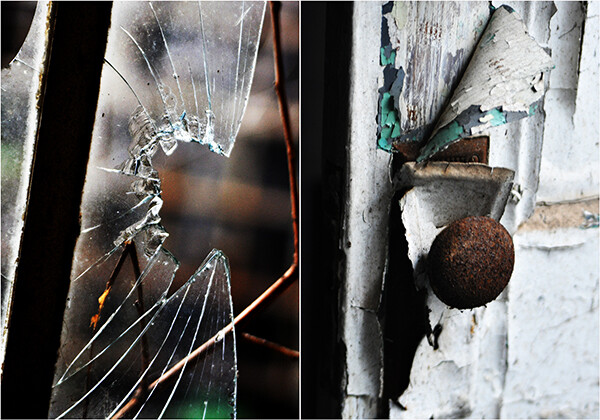
    Taken at an abandoned prison, the broken glass and decades worth of peeling paint not only tell a story, but evoke an almost physical reaction. Both shot at 1/250, f/5.6, ISO 640.

    Obviously, a certain amount of personal taste and preference come into play, but I tend to use smaller apertures when shooting textures. Shooting wide open and its resulting depth-of-field, can throw parts of your image out of focus– something I want to avoid when photographing texture, simply because textures will no longer look as they should when out of focus. I will, however, use wider apertures if I am including any background elements. Just as with a portrait, an out-of-focus background will place added emphasis on my subject and foreground– emphasis which will significantly enhance the textures in the frame. Try bracketing your exposures until you get the desired results.

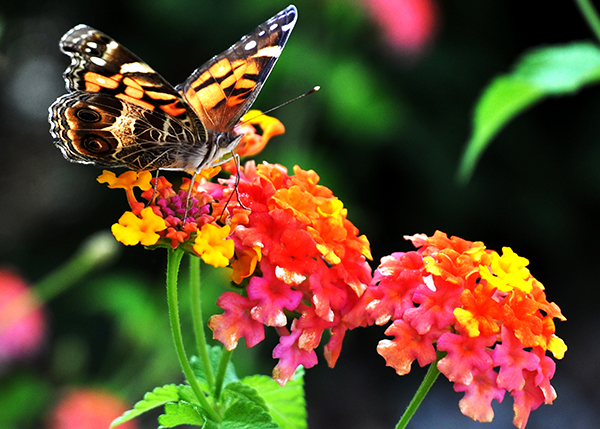
    In the examples below, I did go with wider apertures because of the background elements. For the cookbook shot, we needed a clearly defined background in order to really emphasize the texture of the ingredients. Blurring out the background behind the butterfly in the next example gave more definition to the textures of the wings and flowers.

    texture-007-food-photog

    1/80, f/5.6, ISO 400

    texture-009-butterfly

    1/250, f/5, ISO 200

    For the sunflower, however, notice that there are multiple textures on the same visual plane. Since I was working with a mostly solid, dark background, I wanted to make sure that every element– as well as all three textures– was in focus, which meant going with a smaller aperture.

    texture-006-sunflower

    1/250, f/5.6, ISO 100

    Texture is such an  interesting and effective design element because it provides visual cues that allow the viewer to put your images into their own context. It gives them something they can relate to. If your photo truly speaks to them, this is one of the reasons why. You’ve given them something that helps make it their own. By capturing the texture, you’ve captured at least part of the essence– and it doesn’t get much cooler than that.

    Post originally from: Digital Photography Tips.

    Check out our more Photography Tips at Photography Tips for Beginners, Portrait Photography Tips and Wedding Photography Tips.

    Texture as a Design Element in Photography

    The post Texture as a Design Element in Photography by Jeff Guyer appeared first on Digital Photography School.


    Digital Photography School

  • Samsung announces new 13MP camera unit with optical image stabilization

    TS520x0~cms_posts-5978951149-OIS_camera.JPG

    Samsung has revealed a brand new 13MP smartphone camera unit with optical image stabilization and improved low light performance. Samsung’s press release doesn’t specifically name any devices that the new camera is slated to appear in, but it’s safe to assume that we’ll see it next year in the Galaxy S5 and Note 4. Click through for more details at connect.dpreview.com.

    News: Digital Photography Review (dpreview.com)

  • House of Hemp and Blood: 16 Futuristic Building Materials

    [ By Steph in Conceptual & Futuristic & Technology. ]

    Future building materials main
    Future buildings could be made of artificial human bone, hemp, bacterial byproducts or concrete that absorbs greenhouse gas emissions and lasts thousands of years. Innovations in building materials have led to synthetic creations that are stronger, lighter and more sustainable than those we already use, potentially leading to architecture unlike anything we’ve ever seen before.

    Animal Blood Bricks

    Future Building Materials Blood Bricks

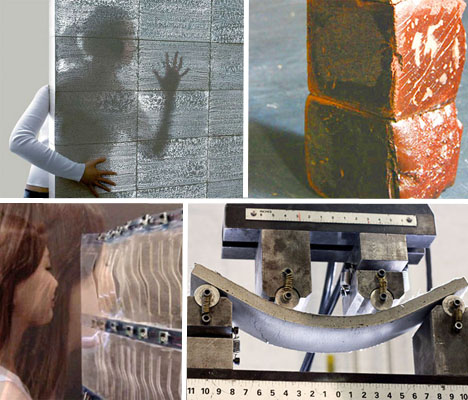
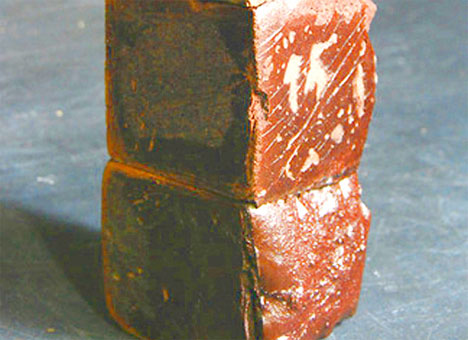
    Abundant and yet almost always wasted, animal blood is an unlikely – and grisly – possible base material for building bricks. Architectural graduate Jack Munro sterilized the blood, added sand and baked them together to yield a strong, traditional-looking brick that’s also waterproof.

    Translucent Concrete

    Future building materials translucent concrete

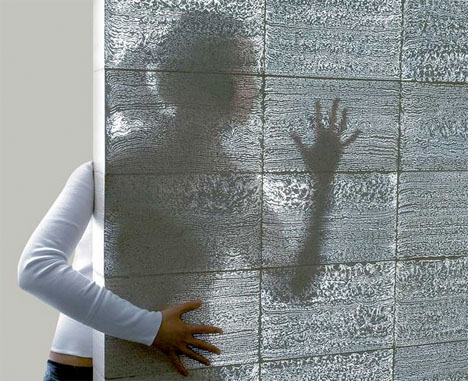
    Litracon is a combination of optical fibers and fine concrete, produced as prefabricated building blocks for a translucent glass-like look with surprising strength. It’s handmade, so each block has its own individual pattern of light.

    Bacteria Building Blocks

    Future Building Materials Bacteria

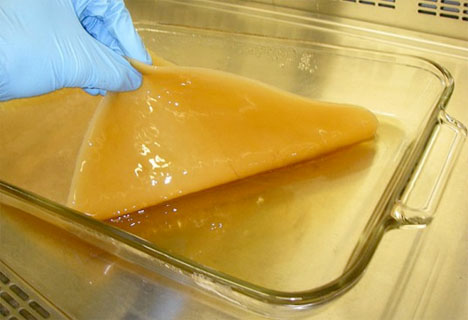
    Will bacteria build the walls of our houses in the future? Scientists have directed the creation of bioplastics, cellulose and other materials by feeding certain materials to specific varieties of bacteria. The resulting metabolic process produces solid, surprisingly durable byproducts that could be used for all kinds of processes. Bacteria might even create bricks that could be used for building on Mars.

    Concrete That Lasts 16,000 Years

    Future Building Materials Concrete 16000

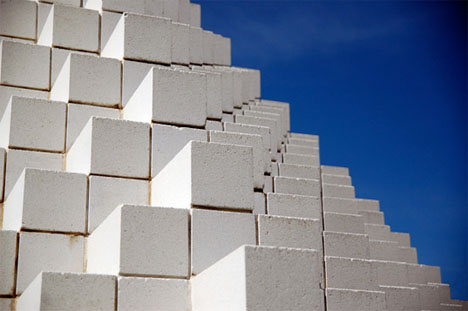
    Not only would the new concrete being developed at MIT drastically reduce the carbon emissions currently associated with the manufacturing of this material, it would also result in an astonishing reduction in the amount needed in the first place. That’s because it’s strong enough to last for an incredible 16,000 years. This concrete will not only be stronger, but also lighter and thinner, so large-scale, lightweight structures require far less material.

    Hempcrete: Hemp Biocomposite

    Future Building Materials Hempcrete

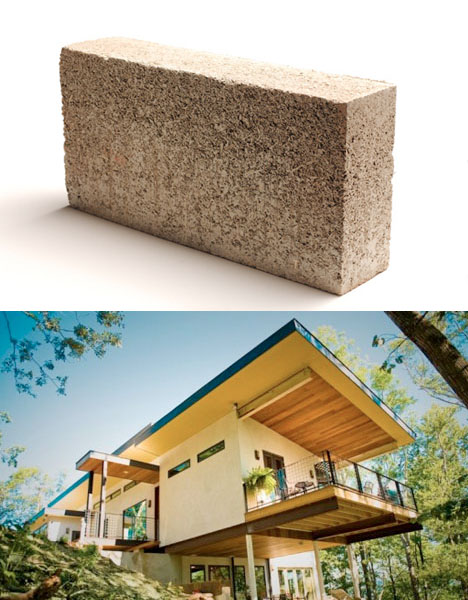
    A new bio-composite, thermal wall material made of hemp, lime and water is not only eco-friendly but actually carbon-negative thanks to the amount of CO2 stored during the process of growing and harvesting hemp. It’s 100% recyclable, waterproof and fireproof and could be used for everything from walls and insulation to flooring. Once demolished, the material can be used as fertilizer.

    SensiTile

    Future Building Materials SensiTile

    Sensitiles are made up of a light-conducting matrix embedded in a substrate, so that they redirect and scatter incoming light in a similar way as fiber optics. Shadow-producing movements around these tiles produce an interesting rippling effect, and the tiles absorb and ‘bleed’ colors.

    Next Page:
    House Of Hemp And Blood 16 Futuristic Building Materials

    Share on Facebook


    [ By Steph in Conceptual & Futuristic & Technology. ]

    [ WebUrbanist | Archives | Galleries | Privacy | TOS ]


    WebUrbanist