Month: October 2013

  • Your Essential Guide to Photographing Cats and Dogs: Snapn Paws

    Do you have a cat or a dog in your life?
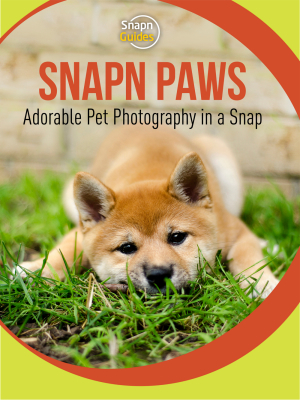
    SnapnPaws coverIf so, we’ve just released a great pet photography guide on our
    sister site snapnguides.com you’ll definitely want to check out.

    It is called Sanpn Paws and it’s all about creating adorable photos of your furry little friends.

    As an Early Bird special… it’s just $ 7 for a limited time!

    Pet photography presents the photographer with a load of wonderful opportunities and some real challenges.

    On the one hand pets are not self-conscious and can be really playful – but on the other hand they are not always known for taking direction well and can take a lot of patience to work with.

    This mini-guide will equip you to work through the challenges and create some beautiful images.

    It will teach you to:

    • pose your pets to show them off at their best
    • position yourself and leverage backgrounds
    • choosing locations
    • use the right camera and gear
    • shoot moving subjects
    • make the most of light – both indoor and outdoor with natural and artificial light
    • get your pets attention

    Snapn Paws is designed to be a quick read that gets straight to the point and present you with actionable information that you can apply straight away.

    While it’s focused on photographing cats and dogs, there’s no
    reason you can’t apply what you’ll learn to other pets as well.

    About the Author

    Snapn Paws is written and beautifully illustrated by Erin McNulty. Erin’s twin passions of photography and animals made her the perfect author for this eBook and makes her a wonderful pet photographer (it is her business).

    Erin has been featured in in numerous magazines, newspapers and TV-shows for her pet photography and you may have even seen some of them on the packaging of pet food in your supermarkets.

    She’s a great teacher and her images in the book will give you loads of inspiration.

    Grab Your Copy Today and Save 33%

    As an early bird special you can grab your copy of Snapn Paws today for just $ 7.

    Get yours here today and start taking beautiful shots of your cats and dogs.

    Post originally from: Digital Photography Tips.

    Check out our more Photography Tips at Photography Tips for Beginners, Portrait Photography Tips and Wedding Photography Tips.

    Your Essential Guide to Photographing Cats and Dogs: Snapn Paws

    The post Your Essential Guide to Photographing Cats and Dogs: Snapn Paws by Darren Rowse appeared first on Digital Photography School.


    Digital Photography School

  • Nokia to offer Raw photo support for Lumia 1020 and 1520 smartphones

    raw.jpg

    In addition to announcing a trio of new mobile devices today, Nokia is also making headlines by offering Raw photo support for one of those Lumia models, the new 1520 ‘phablet.’ The oversized smartphone will have the option to save uncompressed Digital Negative (DNG) files. The feature will also come to the 41MP Lumia 1020 early next year. Learn more about the new devices and new Raw support on connect.dpreview.com.

    News: Digital Photography Review (dpreview.com)

  • Lens reviews update: a quick look at the Nikon 18-140mm f/3.5-5.6 VR

    lensreview-thingsmall1.png

    DxOMark has recently tested the Nikon AF-S DX Nikkor 18-140mm f/3.5-5.6G ED VR, which in some markets will be sold as a ‘kit’ zoom with the latest D5300 SLR. As part of our ongoing collaboration, we’ve added the test data to our lens widget, so you can compare it with Nikon’s other current DX standard zooms. We’ve included test data on both the D7000 and D7100 – the latter should be a good indicator of its performance on the D5300. Click through for the data and analysis. 

    News: Digital Photography Review (dpreview.com)

  • Limbo

    Ein Beitrag von: Andrej Glusgold

    Wir haben nur zwei Alternativen: Entweder halten wir alles für gesichert und real oder wir tun es nicht. Wenn wir das erstere tun, dann enden wir in tödlicher Langeweile an uns selbst und der Welt. Wenn wir das letztere tun und unsere persönliche Geschichte auslöschen, dann schaffen wir einen Nebel um uns her, einen sehr erregenden und geheimnisvollen Zustand, bei dem niemand weiß, wo der Hase hervorspringen wird.

    Tatsächlich halten wir unsere Welt mit unserem inneren Gespräch aufrecht. Die Welt ist so und so, bloß weil wir uns sagen, dass sie so und so ist. Wann immer wir aufhören, mit uns zu sprechen, ist die Welt stets so, wie sie sein sollte.

    – Don Juan Matus zu Carlos Castaneda

    Limbo © Andrej Glusgold

    Limbo © Andrey Glusgold

    Wie sieht das Leben nach dem Tod aus? Wie sieht die Erde ohne Leben aus? Wohin fliegt die Seele, wenn sie den Körper verlässt?

    Diese Fragen haben mich bewegt, als ich im September 2013 nach Marokko aufbrach, um Landschaften zu finden, die meiner Vision entsprechen könnten. Zu einer kosmischen Szenerie gehören für mich die Sterne, aber nicht die Sonne. Deswegen war es für mich klar, dass ich die Fotos nachts und bei Vollmond machen werde, damit man noch etwas von der Landschaft erkennen kann.

    Ich war öfter in Marokko und kenne die Gegend dort relativ gut. Dennoch bin ich erst nach vielen Hunderten Kilometer im Auto (im Westen war es zu wolkig, im Süden gab es einen Sandsturm) letztendlich im Osten, im Gebirge Jebel Saghro fündig geworden. In Begleitung eines Maultiers und eines Maultiertreibers, der leider kaum Französisch sprach, bin ich in die Berge des Antiatlas aufgebrochen. Es wurde zu einem sehr archaischen Erlebnis für mich.

    Limbo © Andrej Glusgold

    Limbo © Andrej Glusgold

    Das tagelange Marschieren auf einsamen Ziegenpfaden durch unwegsames Gelände, die Zubereitung von Essen und das Schlafen unter freiem Himmel ohne WC, Strom und Dusche, die ergangenen und mit den eigenen Knochen „erfühlten“ Kilometer, die Sonne, der Schweiß und die Müdigkeit – all das hat mir noch einmal bewusst gemacht, wie wir Menschen bis vor Kurzem jahrtausendelang gelebt haben. So führte Moses das Volk Israel 40 Jahre lang durch die Wüste, damit es spirituell gereinigt das Heilige Land betreten konnte.

    Die Wüste ist eine reduzierte Landschaft, genauso wie das Wandern darin ein auf die Grundbedürfnisse reduziertes Leben darstellt. Es hat etwas Befreiendes, festzustellen, mit wie wenig Dingen man auskommt. Der ununterbrochene Strom aus Bildern, Musik, Mails, Nachrichten, Anrufen fällt auf einmal weg und fehlt einem gar nicht. Nachts wirkte die Wüste von einem eigenartigen, inneren Leben erfüllt.

    Limbo © Andrej Glusgold

    Limbo © Andrej Glusgold

    Ich lief vorsichtig, um nicht abzustürzen, wie ein Schlafwandler mit Kamera und Stativ über die Felsen. Das bläuliche Mondlicht ließ die Landschaft wie unter Wasser aussehen. Es war absolut still. Einmal sah ich einen Kometen mit einem lodernden Feuerschweif irgendwo nicht weit von mir über der Wüste abstürzen.

    Die kindliche Vermutung, dass die Welt in ihrem Urkern eine magische ist, kam wieder. Ich dachte an Carlos Castaneda, die Kräfte des Nagual und daran, dass, wenn ich meinen Körper verlasse, ich mir den Weg ins Licht gern wie diese Landschaft vorstellen würde.


    kwerfeldein – Fotografie Magazin

  • Canon updates firmware for EOS-1D X and EOS-1D C

    shared:download-button.png

    Canon has announced upcoming firmware updates for its top-of-the-range SLRs, the EOS-1D X and video-optimised EOS-1D C. Version 2 for the EOS-1D X adds a range of additional autofocus settings, along with substantially improved Auto ISO options. It’ll be available to download in January 2014. Meanwhile the EOS-1D C gains improved audio recording, and support for aberration corrections with cinema EOS lenses. The update will be available from November, and requires the camera to be sent to an authorized Canon Factory Service Center.

    News: Digital Photography Review (dpreview.com)

  • Behind the Shot: Erez Marom walks us through his ‘Winter Paradise’

    Winter_Paradise.jpg

    In the latest “Behind the Shot” article, landscape photographer Erez Marom walks through how he got this Aurora Borealis image in the Mývatn district of northern Iceland. Marom talks about his equipment choice and exposure settings. He also gives a step-by-step look at his post-processing technique. Click through for the full article. 

    News: Digital Photography Review (dpreview.com)

  • Converting from Android Back to the iPhone, Initial Observations

    I’ve been using smartphones for a long time. I was an original owner of what I believe was the very first smart phone, the Kyocera PDQ 800 back in 2000. I had a couple of Microsoft Windows based phones after that. I waited in line down in Palo Alto with my pal Robert Scoble to get the very first iPhone when it was launched back in 2007. I then upgraded to an iPhone 3G, then an iPhone 3Gs. I skipped the iPhone 4 opting instead to give Android a run for the money. I switched to a Samsung Vibrant in 2010 and then in 2011 to a Samsung Galaxy Nexus.

    On Friday my new iPhone 5s arrived.

    I returned to the dark side of Apple for a lot of different reasons. I hated the poor battery life on both of my previous Android phones. I hated that it felt like the only way to get updates on Android phones was to buy a new Android phone. I thought it sucked how difficult it was getting updated software and I thought Google didn’t do enough to pressure the hardware manufacturers and carriers to better support Android updates in the aftermarket.

    A lot of things felt broken on my Android phones all the time. Things crashed, didn’t work, etc. People kept suggesting that I “root” my phone to fix things — but I didn’t want to root my phone. I’m not a phone geek. I just want something really good that consistently works with little effort.

    On my recent trip to New York City last month, I felt like I spent the whole trip apologizing to people who couldn’t get a hold of me on my Nexus because it was constantly dead. I didn’t dare listen to music on it or it would die even faster.

    It’s totally unfair to compare my new iPhone with a 2 year old Galaxy Nexus, but I’m going to do it anyways. Maybe Android’s come a long way since my Nexus, but I’m not interested in shelling out $ 500 to see if in fact this is the case — not after feeling like I’ve been burned twice with my last two Android phones.

    I’ve only been using my new iPhone for a few days, but here are my initial observations.

    1. The iPhone battery is wayyy better than my old phone. Last night I went to bed with my iPhone fully charged, but unplugged. This morning it had 98% of it’s battery life still. That was amazing to me. My Nexus would have been dead. It’s so nice having a phone that actually has a battery life.

    2. The internet reception is better on this phone than my Nexus. For the last two years I’ve thought that Verizon just had really crappy internet service in the Ferry Building here in San Francisco. It turns out it was my phone! All the places in the Ferry Building where I couldn’t get Verizon LTE service on my Android, now work perfectly with Verizon LTE on my iPhone. I was so frustrated all the time when my LTE connection wouldn’t work on my old phone. I was constantly blaming Verizon when the real culprit was MY PHONE! Verizon LTE works GREAT. I just needed the right phone.

    3. I didn’t care about the fingerprint technology on the new iPhone. I never locked my Nexus and didn’t think I’d lock this one — I’m one of those optimists who never thinks they will lose their phone. It turns out that the fingerprint tech is so easy that I do now lock my iPhone. I totally get that the NSA likely now has my fingerprint, but I don’t care about stuff like that.

    4. It’s nice to be able to hear my music again. One of the things that I disliked about my old Nexus was the music volume. It was too low at max volume. Sometimes when you are on a train or something you want the music louder. The iPhone music can go louder and that’s nice.

    5. It’s nice having my iPhone sync with my iTunes. I transferred about 7,000 of my favorite songs on it. I tried downloading doubleTwist to somehow port my iTunes to my old Nexus, but I could never get it working. I think my music library was too large for doubleTwist or something. Letting iTunes manage my music flawlessly with my iPhone is great.

    6. My new iPhone just feels better. I don’t know how to describe it. It feels more responsive, more accurate, faster. It feels smoother. The Flickr and Google+ apps flow easier on it.

    7. The first shocker for me was how much smaller the phone and the screen felt to me. I got over this quickly and barely notice at this point.

    8. I don’t really feel like I’m missing the best Google stuff from my Nexus. I can get Google Maps on my iPhone. I can get Gmail on my iPhone. I can get Google Chrome on my iPhone. All of the best things that sort of set Google apart initially for me as an incentive to go Android feel like they are now on iPhone.

    9. Setting up my new iPhone took me a lot longer than I thought it would. Some of this was my fault and some was the phone’s I think. I couldn’t activate it at first. My phone couldn’t connect to the activation server. I finally got it activated and it wouldn’t connect with my wifi at home initially (now it works fine). I had to download all of my favorite apps. It seemed to take longer to download my apps than I would have liked. I had to reset some passwords because I’m always forgetting my passwords (on Flickr now your password must include upper and lowercase letters, a number, a special character AND be at least 8 digits!) I spent about an hour trying to figure out how to get my Google Calendar into my iPhone calendar. It turns out what was screwing me up was two step authentication. Once I turned that off at Google it worked.

    Thanks to everyone online on Twitter, Google+, Facebook, etc. who gave me input on what phone I should buy next. Rosa Golijan was especially helpful. :)


    Thomas Hawk Digital Connection

  • browserFruits Oktober #3

    Wie Ihr letzte Woche sicher schon gemerkt habt, haben wir das Titelbild für die browserFruits der Jahreszeit angepasst. Es stammt von unserer Redakteurin Katja. Und für alle, die beim Anblick gleich Lust auf’s Backen bekommen, gibt es im Fotospecial noch einige sehr leckere Kuchen. Mjam! Spätestens nach diesen Bildern sollte Euch die Backlust doch befallen haben. Eure Kreationen können gern in unserer Serie „Augenschmaus“ ihren Platz finden!


    Fotospecial: Kuchen

    Flickr

    500px


    Deutschsprachig

    • Monica Mendez verbindet Kunst und Fashion auf eine herausragende Weise. Blickfang hat ein Interview mit ihr.

    • Sony macht mit neuer Technik von sich reden. Wir sind gespannt.

    • Es gibt Neues von Flickr: Die Plattform bastelt erneut am Design und bittet ihre Mitglieder um Hilfe. Marc von Martial findet das sehr positiv.

    • Die Serie „Kopfüber“ des Fotografen Dirk Brömmel zeigt Boote und Schiffe auf eine ganz besondere Weise.

    • „Warum kosten Fotobücher oft mehr als Originalabzüge?“ Die Zeit fand schon 2008 die Antwort darauf.


    International

    • Bauchlandung für Emphas.is: Die Crowdfunding-Platform für Fotojournalismus ist nach knapp zwei Jahren insolvent.

    • Kennt Ihr schon die Selbstportraits von Vivian Maier?

    • Okay, das ist fotografisch nicht herausragend, aber wir sind tief beeindruckt von den Kletterkünsten dieser Ziegen.

    • Sicher habt Ihr von den Vorwürfen gegen Terry Richards gehört. Mittlerweile gibt es sogar eine Petition an seine großen Auftraggeber, ihn keine Fotostrecken mehr fotografieren zu lassen.

    • Diptycha von schönen Männer und Katzen in den gleichen Posen. Klingt verrückt, ist es auch – aber lustig.

    • Sehr schön surreale Bilder von Myles Katherine und ein kleines Interview haben wir hier gefunden.

    • Noch etwas Lustiges: Frauen und Männer präsentieren in identischen Posen eine Ducati.

    • Haru und Mina sind die beiden Söhne des japanischen Fotografen Hideaki Hamada, der sie wunderbar fotografiert hat.

    • Übrigens: Diese Fotos, gemacht mit der ersten kommerziellen Kodak, sind jetzt 125 Jahre alt.

    • Bradley Garrett sucht weltweit vergessene und verwahrloste Orte. Und was er dabei findet, zeigt The Atlantic.

    • TreeHugger berichtet mit Bildern darüber, wie Gefangenschaft für Tiere in Zoos überall auf der Welt aussieht. Fotograf Gaston Lacombe kommt dabei auch zu Wort und macht seine Sichtweise auf das Leiden der Tiere deutlich.


    Neuerscheinungen und Tipps vom Foto-Büchermarkt

    buchtipp

    • Bill Perlmutters Rolleiflex-Bilder aus seiner Zeit als US-Soldat in Europa sind eine fotografische und historische Entdeckung und wurden nun erstmals in einem Buch mit dem Titel „Through a soldier’s lens“* veröffentlicht.

    • Tipp vom Herausgeber: Wer schon immer mal wissen wollte, wie es eigentlich zur Gründung der renommiertesten Foto-Agentur der Geschichte, Magnum Photos, kam und wer wann weshalb Magnum beitrat, der sollte sich die Biografie von Magnum* zulegen und des Englischen mächtig sein. Sie ist auch für den Kindle* erhältlich.


    Wettbewerbe

    • Der Deutsche Jugendfotopreis ist für alle bis 25 Jahren ausgeschrieben. Einsendeschluss ist der 1. März 2014.

    • Sony bietet auf seiner Webseite monatlich Wettbewerbe an. Momentan zum Beispiel einen zum Thema „People Fotografie“.


    Videos

    Wunderbar! Magnum-Fotograf Steve McCurry präsentiert in diesem Video seinen Zugang zur Fotografie . Das Video verschafft auch einen groben Überblick darüber, wo und wie er in seiner Laufbahn fotografiert hat.


    Toller Zeitrafferfilm von Barcelona mit beeindruckenden Straßenfahrten.


    Ausstellungen

    Sergey Kleptcha – Mongolian Facebook
    Zeit: 18. Oktober – 23. November 2013
    Ort: BrotfabrikGalerie, Caligariplatz 1, Berlin
    Link

    Thomas Nitz – Fotografische Unikate
    Zeit: 26. Oktober – 29. November 2013
    Ort: Carpentier Galerie, Meinekestr. 13, 10719 Berlin
    Link

    Heike Ollertz – Pik As – 100 Jahre Nachtasyl in Hamburg
    Zeit: 17. Oktober – 8. November 2013
    Ort: FREELENS Galerie, Steinhöft 5, 20459 Hamburg
    Link

    FLORIAN HERZOG – Zwischen den Zeilen
    Zeit: 11. Oktober – 17. November 2013
    Ort: Leica Galerie, Mirabellplatz 8, A-5020 Salzburg
    Link

    PHILIPP SCHUSTER – A SKATEBOARDER´S ROMANCE
    Zeit: 18. Oktober – 31. Oktober 2013
    Ort: WestLicht, Westbahnstraße 40, 1070 Wien
    Link

    Martin Parr: “Souvenir”
    Zeit: 12. Juli 2013 – 5. Januar 2014
    Ort: Museum für Gestaltung Zürich
    Link

    Mehr aktuelle Ausstellungen


    * Das ist ein Affiliate-Link zu Amazon. Wenn Ihr darüber etwas bestellt, erhalten wir eine kleine Provision, Ihr bezahlt aber keinen Cent mehr.


    kwerfeldein – Fotografie Magazin

  • Blickfang: Transformation

    In meinem Bücherschrank bin ich vor Kurzem mal wieder über einen echten Klassiker gestolpert: „The Polaroid Book“* von TASCHEN. Wann immer ich einfach mal in der unendlich vielfältigen Bandbreite kreativer Polaroids schmökern möchte, nimmt mich diese Auswahl der Bilder aus der Polaroid-Sammlung gern für ein paar Stunden gefangen.

    Barbara Hitchcock beschreibt in dem im Buch enthaltenen Essay „Als Land auf Adams traf“, wie der Erfinder der Polaroid-Technologie, Edwin Land, den als herausragendster Landschaftsfotograf unserer Zeit geltenden Ansel Adams kennenlernt. Aus dieser Freundschaft entstand die Idee und Umsetzung der Polaroid Collections of Photography.

    Dabei kaufte Polaroid selbst Werke von Fotografen an oder stattete auch bis dato unbekannte Künstler mit Kameras und Filmmaterial aus. Damit konnten sie nach Herzenslust experimentieren, wenn sie dafür im Gegenzug einige ihrer besten Bilder für die Polaroid Collection zur Verfügung stellten.

    Joyce Tenneson in The Polaroid Book by TASCHEN

    Beim letzten Streifzug durch diesen Ziegelstein an Buch, das mehr als ein Kilogramm auf die Waage bringt, war ich auf der Suche nach dem Bild, das mich am meisten gefangen nimmt. Hängen geblieben bin ich dann bei dieser Arbeit ohne Titel der amerikanischen Fotografin Joyce Tenneson. Vom Stil her passt es zu ihren anderen Arbeiten im Portfolio Transformations, auch wenn ich das gleichnamige Buch leider nicht besitze.

    Zu sehen ist ein Kind mit freiem Oberkörper, einem Tuch um die Hüften, einer großen weißen Mitra auf dem Kopf sowie halbtransparentem Schleier und Umhang. Den Hintergrund bildet eine gemalte Säule, wahrscheinlich handelt es sich um eine Motiv(lein)wand im Studio, die auch in weiteren Arbeiten von Tenneson zu finden ist.

    Gefangen nimmt hier mich der undefinierbare Blick des Kindes, der durch eine Art Doppelbelichtung besonders entrückt wirkt. Diese Überlagerung ist vor allem am Kopf deutlich zu sehen, auch wenn man sie ebenfalls links am Umhang und unten am Tuch ausmachen kann. Wenn man genau hinsieht, lassen sich die zwei Aufnahmen aber zumindest so gut unterscheiden, dass klar wird, dass der gesamte Gesichtsausdruck bei beiden Belichtungen sehr leer war.

    Mich fasziniert, wie Tenneson hier mit dem sehr einfachen Mittel der Doppelbelichtung und einem minimalistischen Bildaufbau ein ganz surreales Werk geschaffen hat. Der Hintergrund mit seinen weichen Linien, etwas Struktur und den unterschiedlichen Durchsichtigkeiten des Umhangs tragen dazu bei. Gleichzeitig herrscht eine bestechende Klarheit: Man sieht genau, was abgebildet wurde, es herrscht kein Wischiwaschi.

    Bis hierhin bin ich schon vollkommen vom Bild eingenommen und habe noch gar nicht von den sanften Farben geschwärmt oder mich mit der Frage beschäftigt, warum hier überhaupt ein halbnacktes Kind mit seltsamem Blick abgebildet ist, das dank Mitra sofort an einen christlichen Würdenträger denken lässt.

    Joyce Tenneson wurde 1945 in Massachusetts geboren und ist heute für ihre Fine-Art-Fotografien bekannt. Ihre Arbeiten wurden in mehr als 100 Ausstellungen überall auf der Welt gezeigt und sie hat für einige bekannte Magazine das Titelbild beigesteuert. Ihre bevorzugte Kamera ist eine Großformat-Polaroid – womit sich der Kreis zum Buch schließt.

    Enden möchte ich diesen Blickfang mit einem Zitat von Joyce Tenneson, das mich ebenso wie das titellose Bild dazu anspornt, endlich eine eigene, surreale Bildsprache zu entwickeln:

    Ich glaube sehr stark daran, dass, wenn Du zurück zu Deinen Wurzeln gehst, wenn Du in diesem inneren Land gräbst, Du etwas zutage fördern kannst, das dauerhaft Du selbst und authentisch ist – wie Dein Fingerabdruck. Es wird Deinen Stil haben, weil es niemanden gibt, der genauso ist wie Du.

    * Das ist ein Affiliate-Link zu Amazon. Wenn Ihr darüber etwas kauft, erhalten wir eine kleine Provision, Ihr zahlt aber keinen Cent mehr.


    kwerfeldein – Fotografie Magazin