RSS
 

Archive for August, 2013

Panasonic Lumix DMC-FZ70 Review

27 Aug

Panasonic Lumix DMC-FZ70.jpg

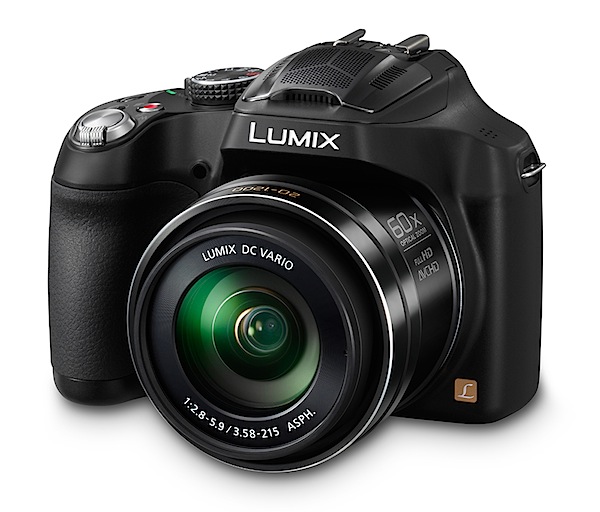
What a whopper! It looks like a compact digital camera but sure as hell offers far more than your average CDC.

Narrabeen lake tele 2.JPG

Narrabeen lake wide 1.JPG

The 60x zoom runs all the way up to a 35 SLR equivalent of 1200mm but — note this! — it begins from a super wide 20mm equivalent. That means you can shoot close shots of sports players from the sidelines and then cover cramped interiors with the same camera. You can also buy a 1.7x tele conversion lens that will take the focal length to 2040mm! Beat that!

The maximum image size is 4608×3456 pixels, large enough to make a 34x29cm print.

Video can be shot in either AVCHD or MPEG4 formats at Full HD 1920×1080 pixel resolution. But no, you can’t shoot stills mid video recording.

Another spec to die for is a 9fps continuous shooting rate at full resolution; moderating this is a continuous rate of 5fps with full AF in play.
Panasonic Lumix DMC-FZ70 back.jpg

Panasonic Lumix DMC-FZ70 top.jpg

Panasonic Lumix DMC-FZ70 Features

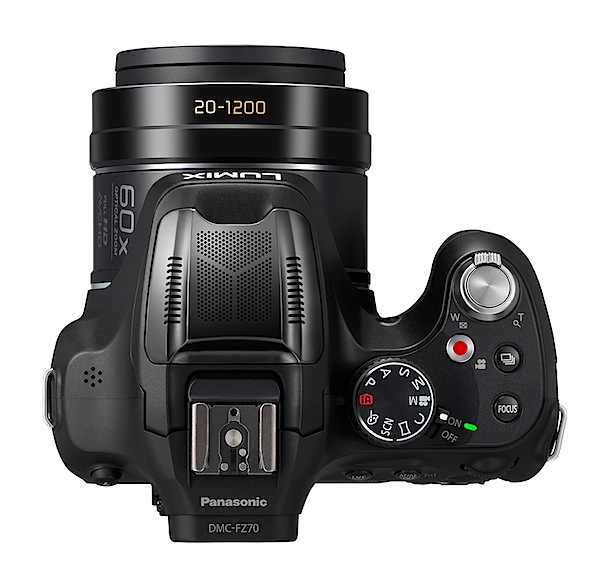
Controls: the top deck houses the mode dial with positions for intelligent auto, PASM, creative video, custom mode, scene mode, panorama shooting, scene and creative control modes.
Scene mode.JPG

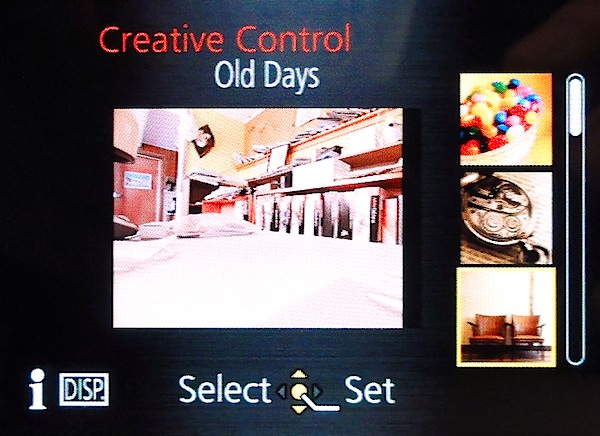
Creative control.jpg

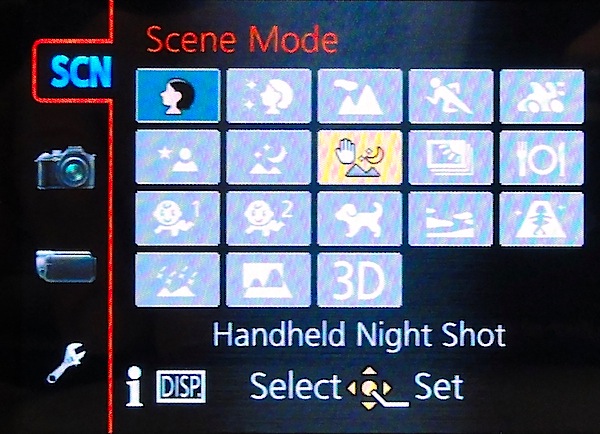
In scene mode you can choose from portrait, scenery, panning, HDR and 14 other settings. This feature alone should tell you heaps about the intended market: those with tonnes of ambition but little real photographic knowledge.

Creative control takes you further and into a re-rendering mode that can impart to a picture the feelings of a retro or old days look, high or key, sepia, dynamic monochrome, impressive art, high dynamic, cross processing plus a miniature or toy effect plus quite a few others.

Close to the mode dial is the shutter button, encircled by the zoom lever; the red video record button; a burst shooting button; and finally, a button that can lock in focus mid shoot … haven’t seen one of these before.

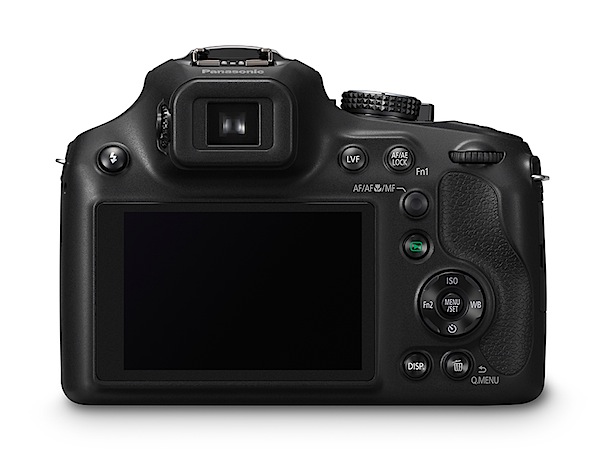
The camera’s rear has the flash activation button at extreme left; top viewfinder focus; a button to switch between the turret finder and the rear LCD screen; one to lock focus and exposure; the rotating rear dial that takes you through selection of settings; replay; the four way jog dial that offers control of ISO, white balance, self timer and function selection; centred is the menu button.

Lower are buttons for display options and access to a quick menu.

Battery and memory card are loaded via a door at the base of the camera.

I found the control arrangement to be entirely logical and non-confusing.
Menu.jpg

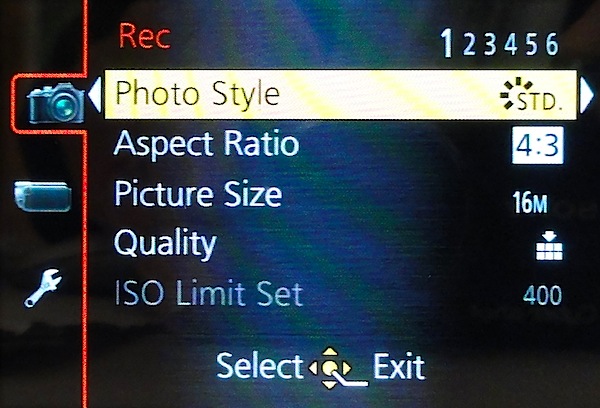
The menus are similarly well laid out and abundantly clear in their intent.

Narrabeen lake island.JPG

Family and kayaks 1.JPG

Some Notes

I had taken temporary ownership only a matter of hours before I took it out on a shooting essay: I found the camera to be well-balanced and easy to operate, even tapping controls during a video shoot.

The zoom needs special mention: don’t think for a moment that you can hand hold it with the focal length anywhere past 10x. No way José!

The zoom action is smooth and, amazingly, provides minimal steps along way. The stabiliser is most effective. A fine effort.

Notable is the wind noise protection thanks to a special wind shield built onto the microphone’s housing.

The rear LCD screen is of course virtually useless for viewing outdoors, so the top viewfinder comes in to play, although it offers less resolution.

The panorama mode offers four options: pan left or right; pan up or down.

Startup Time

It took two seconds to power up and let me take my first shot. Follow ons came in as fast as I could tap the button.

Distortion

No problems at the wide or tele ends of the zoom. A fine piece of glass.

Panasonic Lumix DMC-FZ70 ISO Tests

Panasonic Lumix DMC-FZ70 ISO 100.JPG

Panasonic Lumix DMC-FZ70 ISO 400.JPG

Panasonic Lumix DMC-FZ70 ISO 800.JPG

Panasonic Lumix DMC-FZ70 ISO 1600.JPG

Panasonic Lumix DMC-FZ70 ISO 3200.JPG
Only by ISO 1600 did some noise appear but with sharpness still acceptable; by ISO 3200 a blue colour cast appeared over the image, with noise up and sharpness down.

Panasonic Lumix DMC-FZ70 Review Verdict

Quality: average.
Why you’d buy it: that 60x zoom! excellent AF and stabiliser action; feels good in the hand.
Why you wouldn’t: bulky for some.

I well remember handling my first camera with a 10x lens …it was a Kodak I think! I thought the world had taken a turn for the best. Now look where we are!

Top gear.

Panasonic Lumix DMC-FZ70 Specifications

Image Sensor: 16.1 million effective pixels.
Sensor: 11mm CMOS (6.17×4.55mm).
Metering: Multi, centre-weighted, spot.
Lens: Leica DC Vario-Elmar f2.8-5.9/3.58-215mm (20-1200mm as 35 SLR equivalent)
Exposure Modes: Auto, Program AE, shutter and aperture priority, manual.
Shutter Speed: 8-1/2000 second.
Memory: SD/SDHC/SDXC plus 200 MB internal.
Image Sizes (pixels): Stills: 4608×3456 to 480×480.
Movies: 1920×1080, 1280×720, 640×480.
Continuous Shooting: 9fps max.
Viewfinder: Turret (202,000) and 7.6cm LCD screen (460,000).
File Formats: JPEG, RAW, MPO 3D, MPEG4, AVCHD.
ISO Sensitivity: Auto, 100 to 6400 (with boost).
Interface: USB 2.0, HDMI mini.
Power: Rechargeable lithium ion battery.
Dimensions: 130x97x118 WHDmm.
Weight: 606 g (inc battery).
Price: Get a price on the Panasonic LUMIX DMC-FZ70 at Amazon.

Post originally from: Digital Photography Tips.

Check out our more Photography Tips at Photography Tips for Beginners, Portrait Photography Tips and Wedding Photography Tips.

Panasonic Lumix DMC-FZ70 Review


Digital Photography School

 
Comments Off on Panasonic Lumix DMC-FZ70 Review

Posted in Photography


Die Sterblichkeit der Dinge

27 Aug

Die Menschen auf seinen Bildern sind manchmal seltsam verzerrt, als hätte gerade eben noch im Bild die Erde gebebt und ein gewaltiger Ascheregen fiel auf sie nieder, verdunkelte ihre Gesichter oder tauchte sie sogar in absolute Schwärze.

Ich denke wieder an Pompeii, wenn ich die Bilder von Arslan Ahmedov sehe. An die stillen Körper, die gerade noch schützend ihre Arme umeinander legten. An Menschen, die dem Endgültigen entgegen blickten und deren Konturen mit jedem Windhauch mehr und mehr verschwanden. Mich hatte das damals zutiefst berührt.

Persephone © Arslan Ahmedov

Jede Fotografie ist eine Art memento mori. Fotografieren bedeutet teilnehmen an der Sterblichkeit, Verletzlichkeit und Wandelbarkeit anderer Menschen (oder Dinge). Eben dadurch, dass sie diesen einen Moment herausgreifen und erstarren lassen, bezeugen alle Fotografien das unerbittliche Verfließen der Zeit.*

Dieses Zitat von Susan Sontag beschreibt, so Arslan Ahmedov, am besten die psychologische Essenz des fotografischen Mediums, besonders im Bezug auf Menschen.

In seinen Bildern versucht er, archetypische Charaktere oder Erinnerungen an jemanden zu erzeugen. Wenn wir an Menschen denken, die wir lange nicht mehr gesehen haben, so löscht die Zeit die Konturen jener Person langsam aus, sagt er. In unserem Kopf wird die Person zu einer unscharfen Erinnerung ihrer selbst.

Paloma Negra © Arslan Ahmedov

Wenn er Menschen portraitiert, dann ist das sein persönliches Ringen mit dem Tod, aber vor allem mit der Zeit, so sagt er. Mit der Fotografie kann er eine Idee oder einen Teil der Persönlichkeit eines anderen sichtbar machen und festhalten und zwar für mehr als nur eine Sekunde.

Ich versuche, die Gegenwärtigkeit und Energie, nicht Erscheinung und Form einer Person vor der Kamera einzufangen.

Und so ist mein Vergleich zu Anfang mit den Toten von Pompeii vielleicht gar nicht so abwegig, wenn ich seinen Worten glauben schenke.

Mother and Daughter © Arslan Ahmedov

Manchmal ziehe ich es vor, die Persönlichkeit zu verstecken, um den Geist der Leute zu zeigen, aber wenn ich das tue, verschwindet sie nicht völlig, ich ziehe nur eine Haube darüber, denn ohne die Aura, den Charakter einer Person käme ich nicht aus.

Er spricht aus, was ich selbst oft denke. Dass der Mensch nicht einfach nur Objekt ist, sondern sich auf einem Bild immer wesentlich mehr abspielt.

Egal ob nun das wahre Wesen einer Person abgelichtet werden will oder eben ein angedachtes oder interpretiertes Gefühl aus der Situation heraus, in der sich Fotograf und Portraitierte befinden.

Danae Ne Dort Pas © Arslan Ahmedov

Arslan Ahmedov ist ein bulgarischer Fotograf, der in Sofia wohnt und arbeitet. Er fotografiert seit 2006 und hat an einigen Gruppenausstellungen in Bulgarien, Brasilien und der Türkei teilgenommen. Seine Arbeiten kannst Du in seinem Flickr-Stream bewundern, wozu ich Dich nun auch inständig dränge.

* aus Susan Sontag: „Über Fotografie.“ Aus dem Amerikanischen von Mark W. Rien und Gertrud Baruch. München/Wien 1989. S. 9-28.


kwerfeldein – Fotografie Magazin

 
Comments Off on Die Sterblichkeit der Dinge

Posted in Equipment


Sony launches Zeiss 16-70mm F4 OSS, 18-105mm F4 G, and black 50mm F1.8 E-mount lenses

27 Aug

SEL1670mm.png

Sony has announced three new E-mount lenses today for NEX system cameras: the Carl Zeiss Vario Tessar T* 16-70mm ZA F4, 18-105mm F4 G OSS power zoom, and a black version of its 50mm F1.8 OSS. All three feature Sony’s Optical SteadyShot image stabilization. According to Sony, the 50mm F1.8 and 16-70mm F4 zoom will be ready to ship to consumers in September, with the 18-105mm F4 power zoom following in December. Click through for more details.

News: Digital Photography Review (dpreview.com)

 
Comments Off on Sony launches Zeiss 16-70mm F4 OSS, 18-105mm F4 G, and black 50mm F1.8 E-mount lenses

Posted in Uncategorized


Sony introduces NEX-5T Wi-Fi and NFC enabled mirrorless camera

27 Aug

nex5t_angle.png

Sony has announced the Sony Alpha NEX-5T, boasting all the same features that the Alpha NEX-5R offered with the addition of NFC. Smartphones and tablets with the technology will be able to pair easily with the NEX-5T to take advantage of its wireless connectivity. With a 16.1 megapixel APS-C sized sensor, Wi-Fi connectivity and a 3.0-inch flip-up touch LCD, the NEX-5T is introduced at $ 50 less than its predecessor’s initial MSRP. Click through for more information.

News: Digital Photography Review (dpreview.com)

 
Comments Off on Sony introduces NEX-5T Wi-Fi and NFC enabled mirrorless camera

Posted in Uncategorized


Sony A3000 1st-Impressions Review: An SLR-like camera with the heart of a NEX

27 Aug

A30001.jpg

The Sony A3000 is essentially a 20.1MP mirrorless camera that uses the same E-mount as the Sony NEX, yet which has the look and feel of a traditional SLR. Though not the first manufacturer to take this approach, Sony is the first to achieve the low starting price point of $ 399 for body and lens. It’s a bold move; click through to read our first impressions review to see what we think in more detail.

News: Digital Photography Review (dpreview.com)

 
Comments Off on Sony A3000 1st-Impressions Review: An SLR-like camera with the heart of a NEX

Posted in Uncategorized


Sony introduces SLR-esque A3000, a mirrorless camera for $400

27 Aug

a3000_front_thumbnail_1.png

Sony’s latest interchangeable lens camera may look like an SLR, but underneath the hood it’s all NEX. The Sony A3000 offers a 20.1 megapixel APS-C sensor, a built-in electronic viewfinder, full HD video and a Sony E-mount for interchangeable lenses all for an MSRP of $ 399 with an 18-55mm kit lens. The competitively priced A3000 offers all the trimmings of an entry-level DSLR including a fixed 3.0-inch LCD, built-in flash and hotshoe. Click through for the full press release and pricing.

News: Digital Photography Review (dpreview.com)

 
Comments Off on Sony introduces SLR-esque A3000, a mirrorless camera for $400

Posted in Uncategorized


Human Harp: Suspension Cables on Bridge Make Music

27 Aug

[ By Steph in Art & Installation & Sound. ]

Human Harp Suspension Bridge Installation

A digital and mechanical module that fastens onto bridges and connects via retractable strings to a wearable suit creates a ‘human harp,’ a musical collaboration between the user and the bridge. The harpist moves in a sort of dance to pull the strings, creating the sounds, which are felt in real-time through vibrations on the bridge. The installation will travel to bridges around the globe, so pedestrians have a chance to try it out for themselves.

London-based artist Di Mainstone got the idea when looking at the Brooklyn Bridge during a residency in New York City, and seeing its similarity to the musical instrument. She envisioned a clip-on sound interface that would allow pedestrians to ‘play’ the bridge as if it were really a harp.

Human Harp Suspension Bridge Installation 4

The Human Harp was created by a collaborative team of artists, e ngineers and researchers using cutting-edge technology. The modules on the device utilize magnets in acrylic bubbles to detect the angle of the ropes. The movements are processed using software packages to generate the sounds. Watch the video to get an idea of the process.

Human Harp Suspension Bridge Installation 2

“As I listened to the hum of the steel suspension cables, the chatter of visitors and the musical ‘clonks’ of their footsteps along the bridge’s wooden walkway, I wondered if these sounds could be recorded, remixed and replayed through a collaborative digital interface? Mirroring the steel suspension cables of the bridge, I decided that this clip-on device could be harp-like, with retractable strings that physically attach the user or Movician’s body to the bridge, literally turning them into a human harp.”

Human Harp Suspension Bridge Installation 3

“We could imagine this process is a game of international research whispers, with information passing from one laboratory onto another.  All hubs will be integral to this dialogue, as the Human Harp develops and grows on its journey around the globe.”

Share on Facebook


[ By Steph in Art & Installation & Sound. ]

[ WebUrbanist | Archives | Galleries | Privacy | TOS ]


WebUrbanist

 
Comments Off on Human Harp: Suspension Cables on Bridge Make Music

Posted in Creativity


Blickfang – State and Lake streets, 1987

27 Aug

Gary Stochl ist als Straßenfotograf noch nicht lange bekannt. Das undenkbare Gegenteil ist der Fall. Stochl fotografierte vom 17. Lebensjahr an sage und schreibe 40 (!) Jahre lange auf den Straßen von Chicago. 2004 entschied er sich, seine Fotos dem Photography Department der Columbia College Chicago zu zeigen. Heute verkauft er Vintage Prints für 1500 $ .

Das Bild, das ich heute vorstelle, stammt von Gary Stochl. Es bekam keinen Namen, wie alle seine Bilder. Nur Ort und Jahr sind bekannt, wie der Titel des Blickfangs beschreibt. Lassen wir erst einmal das Foto auf uns wirken.

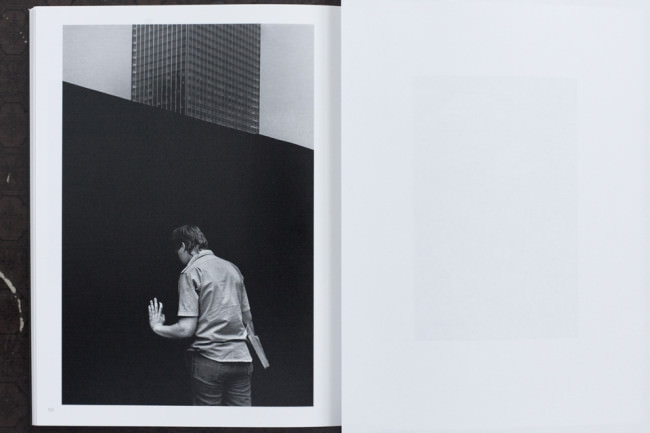
State and Lake streets, 1987 © Gary Stochl

Das Foto ist in typischer Stochl-Manier, kein Ausreißer. Es ist düster, dunkel und hat einen faden Beigeschmack. Stochl selbst sagt, er habe nichts gegen Glücklichsein, es wäre nur einfach nicht sein Wesenszug. So sehen wir hier einen echten Stochl, mit viel Schwarz und einer Person.

Stochl hat das Bild nicht beschnitten, sonden den Wolkenkratzer im Hintergrund gelassen. So bleibt der urbane Kontext erhalten, jedoch fällt mein Blick unweigerlich auf die linke Hand des Mannes, der in der anderen Hand Bücher und Papier hält.

Ich habe dieses Foto schon einige Male überflogen, doch ich entschied mich, heute mal genauer hinzusehen und das Foto einem längeren Studium zu unterziehen. Und die grundsätzliche Frage, die dieses Bild aufwirft ist:

Hä?

In lang: Was macht dieser Mensch eigentlich? Hält er sich fest? Berührt er gar einen anderen Menschen? Oder drückt er sich nur an die Wand? Schiebt er etwas weg?

Das spannende an der Fotografie ist ja, wie Gary Winogrand (von dem Stochl beeinflusst war) sagte, dass es kein Vorher und kein Nachher gibt. Des Rätsels Lösung liegt in den Sekunden davor oder in denen danach.

Und doch ist es mir das Foto lieber als die Lösung. Denn so behält das Bild eine Magie, etwas Komisches, Unübliches. Und genau das ist es, was ich an Stochls Fotos mag, die ich allesamt im Buch „On City Streets, Chicago 1964-2004“* gefunden habe.

* Das ist ein Affiliate-Link zu Amazon. Wenn Ihr darüber etwas bestellt, erhalten wir eine kleine Provision, Ihr zahlt aber keinen Cent mehr.


kwerfeldein – Fotografie Magazin

 
Comments Off on Blickfang – State and Lake streets, 1987

Posted in Equipment


Facebook introduces shared photo albums

27 Aug

facebook-trans.png

Facebook has started rolling out shared photo albums to select users of their social networking website. Currently, photo albums are limited to the user that created it. Shared albums will allow users to create a gallery that can be used by as many as 50 friends, each of whom can upload up to 200 photos. You can learn more about shared photo albums and when you can try it for yourself on our sister site, Connect.

News: Digital Photography Review (dpreview.com)

 
Comments Off on Facebook introduces shared photo albums

Posted in Uncategorized


Meet The Super Secret Smartphone Spy Lens

27 Aug

Extra photos for bloggers: 1, 2, 3

The kittens of the world are onto us. They seem to have learned to cut the cute stuff as soon as we get our camera phones out.

Well, we can finally outsmart those smartycats thanks to the 90° periscoping Smartphone Spy Lens! Hold your phone in texting position, all the while snapping pix of the cuteness.

Its high quality glass lens allows you to shoot at a less conspicuous angle without losing photo quality. You can position it in any direction while still looking at your screen for framing and focus.

Shoot more natural candids of your cute but camera-shy pets, pals and kiddos.

Check Out The Smartphone Spy Lens
$ 20 at the Photojojo Store

 Tweet it!      Share

Related posts:

  1. Super-Secret Photo Projects Just for Kids! Back Off, Grownups. ~Have a cool photo product or site? Reach 250,000 photo…
  2. The iPad Telephoto Lens Has Super
    Zoom Powers Elephants, body pillows, King sized candy. We’re huge fans of…
  3. The Phlash: Camera Phone Super Flash Every photographer knows that the key to the art is…


Photojojo

 
Comments Off on Meet The Super Secret Smartphone Spy Lens

Posted in Equipment