We normally don’t publish news reports, leaving that to those sites who feed us all a daily stream of new product announcements. But, there were so many interesting developments in the past few days that we thought it worth bringing them to your attention.
– Adobe has released updates to both Lightroom and Camera Raw. These incude bug fixes and support for several new cameras.
– Sigma has announced a new service that will allow owners of their latest series of lenses to change the lens’ camera mount when one changes systems. A cool and innovative service.
– The Swiss company Ilford Imaging has stated to it has been unsuccessful in finding new owners or investors, and has laid off 220 employees in prepartion for bankrupcy filing.
Please point me in the direction of the photography books.
Thank you.
Love, A photographer in need of a little inspiration.
If dust is settling on your camera and your creative juices need some stirring, the library is a great place to explore photographers and books on photography that’ll light that photo bug inside you. It’s always in there… sometimes it just needs a a little push in the right direction.
Learn some super simple tips on finding the photo books in your library and what to do once you’ve found them.
If you’ve got yourself a free afternoon, strap on your sneakers and head to the library to peruse the photo books and get inspired!
Find Photo Inspiration at the Library
p.s. We’re looking to re-invent what/how/where we publish online, and we’re seeking one amazing Editorial & Community Lead to lead the charge.
GETTING STARTED
Find your local library.
This is a handy website to discover where to locate the library in your hood.
Walk into the library and breath in the musty and awesome smell that is special only to a public library.
Lots of people have been in this institution and many of them have come out of it knowing something they didn’t when they walked in. Or they went in, used the restroom, and left.
But not you! You are going in to be inspired by photography and all of the wonder that comes along with looking at a photograph in print.
What’s great about the library is that you have access to all kinds of photo catalogs that aren’t available online.
You are part of this storied piece of public learning now.
Go forth brave photographer. Inspiration is now shooting out of your fingertips.
DO A LITTLE DIGGING
Thanks to Melvil Dewey and his Dewey Decimal System there is a super simple way to find the photo books in most libraries.
When at the library head straight to the stacks labeled 770.
All nonfiction books have a 3 digit number in front of them that corresponds with their subject matter. The 700 section of the library is The Arts section. All photo books start in the 770 section of the library. Anything with the numbers 770-779 on the binding is a photography book.
If you happen to be in a library that uses the Library of Congress system, then you’ll find the arts in section N.
Once at the photo stacks it’s pretty darn fun to run your hand over the books and see a name or binding that strikes your fancy.
Pull some books off of the shelf and find a cozy place to peruse what you just picked out.
A GOOD PLACE TO START
If you like to have a little more direction when you are searching for books here are some awesome books to look for.
Names of Photographers to Look for at the Library
Wegee (aka Arthur Fellig)
Scandal! Intrigue! Awesome black and white photographs from a man who beat the police to the scene of many a crime!
Lee Friedlander
Magic street photographs, idiosyncratic landscape photos, and bizarrely awesome self-portraits.
Francesca Woodman
Beautiful and sad stories told through images of the artist herself. If you love taking self-portraits, take a look at Ms. Woodman’s poignant images.
Since there are so many amazing photographers out there, here’s a starting list of 100 of the most influential photographers of all time.
Books on Photography
The Photographer’s Eye by John Szarkowski
A formative guide to the visual language of photography.
The Flame of Recognition by Edward Weston
A fascinating glimpse into the life of a photographer who was constantly on the lookout.
The Education of a Photographer edited by Charles T. Traub, Steven Heller, and Adam B. Bell
A great collection of essays about what it means to be a photographer now.
How-to Photo Books
Photography by Barbara London, John Upton, and Jim Stone
This book guides you to be your own photo teacher!
The Art of Photography: An Approach to Personal Expression by Bruce Barnbaum
Barnbaum explains photography in a way that won’t leave you saying “what?!!”
Image Transfer Workshop: Mixed Media Techniques for Successful Transfers by Darlene Olivia McElroy and Sandra Duran Wilson
Learn how to turn your photos into fun mixed media pieces.
Photojojo!: Insanely Great Photo Projects and DIY Ideas by Amit Gupta and Kelly Jensen
Lots of DIY ideas to help you inspire yourself and others with photo projects. From your favorite photo people: us!
Magazines Have Photos, Too!
Books aren’t the only sources for your photo research.
Magazines are full photos, and the amazing thing about the library is that they’re subscribed to basically every magazine ever.
Exploring magazines will introduce you to photography besides the kind you’ll find in the Arts section of the book stacks. You’ll see nature photography, fashion photography, interior design, and portraiture.
Magazines are also a great place to discover emerging photographers. PDN Magazine in particular does a fantastic job of featuring up and coming photogs.
Some more awesome magazines to check out: National Geographic, PDN, Vogue, American Photo, Kinfolk Magazine, Popular Photography, B&W, Wallpaper, Time, Vanity Fair.
TAKE NOTE
Bring a notebook, sketchbook or your phone to the library with you.
While you are joyfully perusing the books you’ve picked off the shelves take notes on photographers, photo tips, or quotes.
Write down words that come to you while looking at photographs. You don’t have to get crazy or put pressure on yourself… free associate as you flip pages. This is all for the joy of photography.
If a photo really grabs your attention write down what you are feeling as you look at the photo. Why did this one photo jump off of the page and into your heart?
Remember how you felt when you looked at the specific image while you are out taking your own beautiful photographs.
When you find you are in need of a little inspirational kick in the pants you can look through your notes and see what inspired you.
YOU CAN TAKE IT WITH YOU
Start an inspiration archive by designating a folder or binder for all things photography.
We feel it important to note that this is a compilation of things you love and is only for personal reference. We don’t believe in stealing artwork or infringing on copyrights.
Once you’ve found something that strikes your fancy make some photocopies of images that you really love and put them in your binder. You can categorize them into sections, like street photography, portraiture, or landscape. Think of it as a Pinterest board, but for your eyes only.
You can also put the notes you have taken in the binder as well.
Organize the images by photographer’s name, subject matter, however you like to look at later and get inspired whenever you are feeling a creative lull.
Related posts:
World Photography Day — Ideas & Inspiration to Celebrate All Things Photo Do you remember the first time you held a camera?…
DIY: Make Crazy Detailed Light Paintings with Photo Light Stencils Extra photos for bloggers: 1, 2, 3 Ever tried painting…
A Healthy Dose of Photo Inspiration — George Lange’s 2006 Photo Flipbook Every so often, we run across photos that make us…
Inspiriert durch Bilder der Künstler Cenci Goepel und Jens Warnecke entdeckte ich meine große Leidenschaft – die Lichtkunst. Ich finde es faszinierend, nur mit Licht in der Dunkelheit die unterschiedlichsten Objekte zu erzeugen. Sehr viel Zeit investiere ich dabei in die Erstellung der perfekten Umsetzung von Lichtsphären.
So kontrolliere ich jede einzelne Aufnahme noch vor Ort und korrigiere die Umsetzung solange, bis ich damit zufrieden bin. Dabei bedarf es mitunter einer zeitintensiven und aufwändigen Ausleuchtung der Szenerie, die speziell auf den jeweiligen Ort und das geplante Objekt abgestimmt wird.
Trotz meines Hangs zur Perfektion gibt es dann hin und wieder doch auch einige Lichtkompositionen, die auf sehr zufällige Weise entstehen. So zum Beispiel ein Bild, auf dem während der Belichtung ein hell erleuchtetes Boot im Hintergrund vorbei fuhr und für das gewisse Etwas sorgte.
Bei vielen anderen Motiven bedarf es aber einer weitaus genaueren Planung und Vorbereitung. So müssen für bestimmte, der Öffentlichkeit nicht zugängliche Orte oder Gebäude zunächst Genehmigungen eingeholt und Vorbesichtigungen vereinbart werden, was dann schon einmal einige Wochen dauern kann.
Kurz nach den ersten Bildern, die ich noch allein anfertigte, merkte ich, dass es schwierig werden würde oder gar unmöglich ist, bei komplexeren Bildern alle Arbeitsschritte allein durchzuführen. Aus diesem Grund holte ich mir meinen Bruder und meine Freundin mit ins Team.
Neben ihrer tatkräftigen Unterstützung bei der Durchführung bringen sie auch sehr oft eigene Ideen und Verbesserungsvorschläge in die Arbeit ein.
Ein Bild beginnt meist mit dem Informieren bei verschiedenen Online-Wetterdiensten, bei denen ich die aktuellen Wetterprognosen der nächsten drei Tage abrufe, um den optimalen Zeitpunkt für eine Aufnahme zu bestimmen. Bei gutem Wetter fahren wir noch vor Sonnenuntergang zum Aufnahmeort, um erste Vorbereitungen zu treffen. Mit dem Einsetzen der Dämmerung beginnt schließlich der wichtigste und spannendste Teil unserer Arbeit.
Und was wäre Lichtkunst ohne die passenden Leuchtmittel? Reichten mir zu Beginn noch gewöhnliche Taschenlampen aus, entwickelte ich mit der Zeit eigene Leuchtmittel und Vorrichtungen, um neue Formen zu erstellen. Mittlerweile füllen sich ganze Taschen mit den unterschiedlichsten Lampen und Accessoires.
Abschließend bleibt nur noch zu sagen, dass ich jeden Leser dieses Artikels dazu ermutigen möchte, selbst einmal die Kamera auf Langzeitbelichtung zu stellen und mit einer Taschenlampe in der Dunkelheit zu malen.
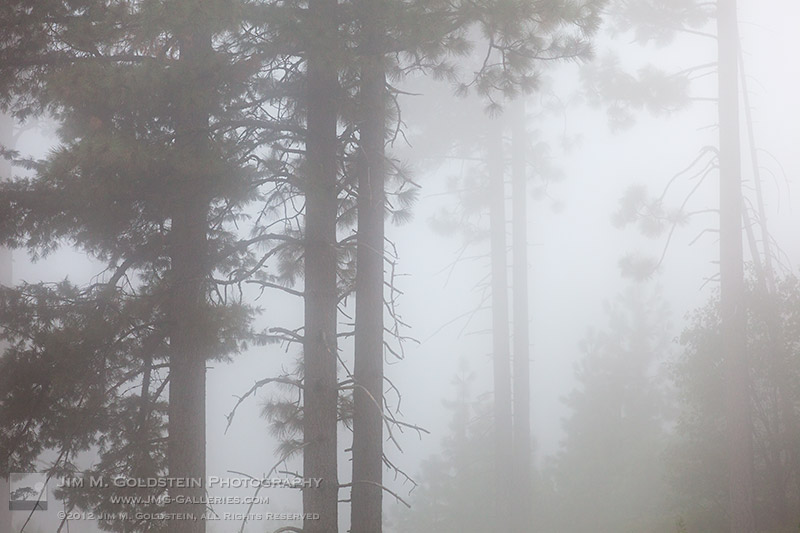
One aspect of nature that I love is fog. Perhaps my love for fog is rooted in the fact I seldom saw it in my youth. Now every time I see it I can’t help but enjoy it. It’s not that I love being cold and wet, I merely enjoy the atmosphere it lends to any scene.
Fog is an instant game changer making the most ordinary of scenes seem mysterious. It is when you stop to watch the fog that it’s movement becomes most captivating. In remote locations this movement has unique quiet to it. The quiet of the fog combined with the sensation of its condensation on your skin connects you physically to the scene you’re witnessing. It’s as if the landscape before you reaches out to touch you.
Related Reading:
The Journey: It’s What You Can’t See That Will Thrill You
Copyright Jim M. Goldstein, All Rights Reserved
Quiet of the Fog
The post Quiet of the Fog appeared first on JMG-Galleries – Landscape, Nature & Travel Photography.
The Japanese imaging manufacturers association, CIPA, has just released its global shipments report for the first half of the year, and there’s not a lot of good news in it. Between January and June 2013 Japanese manufacturers shipped just short of 30 million digital cameras – that’s a 45% drop in a single year. And it’s not just point and shoots in decline: SLR and mirrorless sales are down too. More after the link…
Alongside the enthusiast-oriented DMC-GX7, Panasonic has announced the Leica DG Nocticron 42.5mm F1.2 – the fastest autofocus lens ever created for the Micro Four Thirds system. If you’re getting a sense of deja vu that’s because Panasonic actually announced this lens already (sort of) at last year’s Photokina tradeshow in Cologne, Germany. But what was then a dummy lens behind glass now appears to be a real product, albeit one without any firm availability date or pricing information.
Panasonic has announced the Lumix DMC-GX7 – the follow-up to the DMC-GX1 – which is its first mirrorless interchangeable lens camera to include in-body image stabilization. This 16MP, rangefinder-style camera also includes a high-resolution, widescreen EVF that can be tilted upwards 90 degrees. Panasonic claims that their newly designed Live MOS sensor improves both detail and color saturation by 10%. Other features of note include a tilting LCD, a ‘silent shooting’ mode, focus peaking, 1080/60p videos, and Wi-Fi with NFC capability.
Prior to its announcement today, we had the opportunity to use Panasonic’s new high-end Lumix DMC-GX7 mirrorless interchangeable lens camera. As well as a redesigned 16MP Live MOS sensor, the GX7 features a tilting camcorder-style EVF, a tiltable rear LCD screen and a silent mode designed to capture full-resolution still images without the mechanical shutter. Click through for our hands-on first impressions review.
Sigma has announced a ‘Mount Conversion Service’ for any of its recent ‘Global Vision’ lenses – a paid-for service designed to reduce the uncertainty of changing camera systems. The company says it will charge between $ 80 and $ 250, plus shipping costs, depending on the specific lens. The Global Vision range currently includes seven lenses – from the huge 120-30mm F2.8 DG OS Sport for full-frame DSLRs, down to the 19mm F2.8 DN Art for Micro Four Thirds. The company has also extended the warranties on all new products to four years.


 Bring a notebook, sketchbook or your phone to the library with you.
 Start an inspiration archive by designating a folder or binder for all things photography.




You must be logged in to post a comment.