Ein Beitrag von: Hans Findling

The revolution in the cinema / video segment of our industry continues. Blackmagic, a respected video equipment manufacturer out of Australia, is about the ship its Blackmagic Pocket Cinema Camera.
If you’re a meat-and-potatoes still photographer, why should you care? Well, maybe you shouldn’t. But if you’re a film / video creator of any stripe this is another major step toward the democratization of high quality production equipment at an amazingly low price.
And if you’re one of the major camera makers, well, it’s time to wake up and smell the coffee. Here’s a relatively small Ozy company trumping you all by producing a video camera that shoots raw video for under $ 1,000, including an active Micro Four Thirds mount and a touch screen. Be afraid!
The Luminous Landscape has just announced two spectacular new
Antarctic Photographic Expeditions for January and February 2015

Find Out More Now
These Expeditions Will Sell Out Quickly. They Always Do.
In the app marketplace, it’s a fact that Apple is out in front, mainly thanks to its huge iTunes website. There is literally an endless amount of iPhone apps, including fine serious iPhone photography apps, which we spotlighted not too long ago. However, as far as Android, Google’s smartphone operating system, is concerned, it is catching up faster and faster Continue Reading
The post The Best Android Photo Apps You Can’t Live Without appeared first on Photodoto.
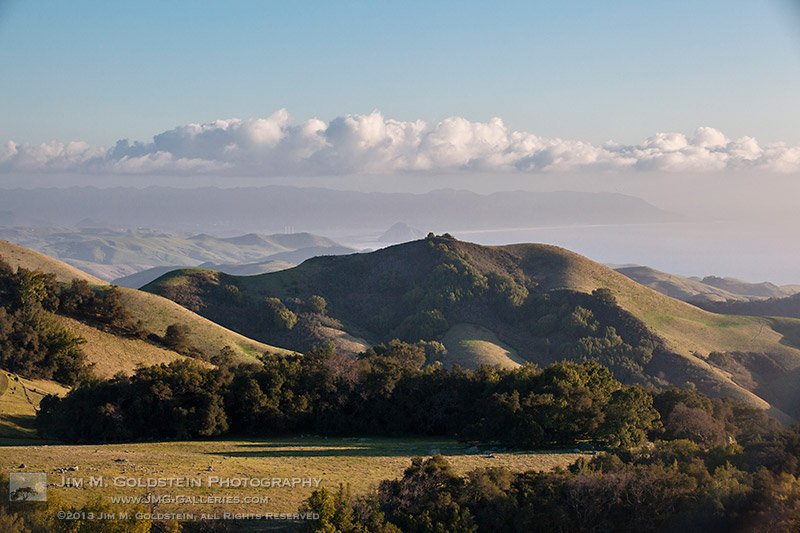
Golden light falls on rolling hills near Morro Bay, California
Having just returned from central California where the grass has turned golden brown, I thought it might be nice to take a moment to go back in time a few months and revisit the views while it was green. Pictured in late afternoon light are the rolling hills near Morro Bay, California. If you look carefully you can make out the view of the monstrous Morrow Rock, a 581-foot volcanic plug, in the distance. As always I’m awed and inspired by California’s diverse geology.
Copyright Jim M. Goldstein, All Rights Reserved
Rolling Hills Near Morro Bay, California
The post Rolling Hills Near Morro Bay, California appeared first on JMG-Galleries – Landscape, Nature & Travel Photography.
Verstörend und beängstigend wirken die Bilder des italienischen Fotografen Francesco Sambio. Menschen mit Tierköpfen in animalischen Posen. Die Bearbeitung tut ihr übriges, um diese Wirkung noch zu intensivieren.
Francesco faszinieren die menschliche Natur, die Gefühle, Ängste und vor allem die Widersprüche, die häufig mit ihr einhergehen. In der Serie „Bestiaro“ wollte er das Tier in uns darstellen. Mit Hilfe von Fotomanipulationen ersetzt er die menschlichen durch tierische Köpfe. Dabei steht für ihn jedes Tier für eine bestimmte Eigenschaft. Der Elefant für Weisheit, die Eule für Eitelkeit, das Schwein für Trägheit und so weiter.

Als Fancesco mir seine Assoziationen zwischen den Tieren und ihren Eigenschaften beschrieb, merkte ich schnell, dass dies ein kulturelles Phänomen ist. Ich selbst weise den Tieren nicht dieselben Eigenschaften zu, so steht für mich die Eule eher für Weisheit, das Schwein für einen Moslem eher für Unreinheit. Ein spannender Nebeneffekt des Projektes, wie ich finde.
Aber der Grundgedanke hinter diesem Projekt bleibt: Es zeigt das Tier in uns, das Instinktive, das rational nicht Erfassbare. Es wirkt abschreckend, aber gleichzeitig fazinierend.
Die verarbeiteten Portraits und Selbstportraits werden zu einer Art Oberfläche, auf der sich der Betrachter spiegeln und vielleicht auch selbst erkennen kann. Die Serie erhebt nicht den Anspruch, konkrete Antworten auf die Fragen unserer Existenz zu geben. Vielmehr ist sie so etwas wie ein persönliches Reisetagebuch, aus dem jeder vielleicht etwas für sich mitnehmen kann.


Francesco ist bei der Bearbeitung seiner Bilder nicht zimperlich. Er montiert und nutzt starke Texturen. Hier und da brennen die Lichter aus. Die harte Bearbeitung passt für mich aber zur Serie. Die Bilder wirken surreal und ein wenig schmutzig.
Wem der Stil der Serie zusagt, dem werden auch Francescos andere Serien und Bilder gefallen. Finden kann man seine Arbeiten auf Behance, Flickr und Facebook. Zudem bietet er ein Buch mit seinen Arbeiten bei Blurb an.
[ By WebUrbanist in Design & Products & Packaging. ]

Nothing but time can heal broken hearts, but there are some salves that can at least help bridge the gap between a breakup and happier times.

That is the idea behind this half-serious (and currently conceptual) relationship survival kit titled Love Hurts by New York graphic, product and packaging designer Melanie Chernock (images by Luke Nilsson).

About its contents: “Love Hurts contains all of the essentials for going through a rough breakup such as dark chocolate, vodka, bubble bath soap, a candle with matches, candy hearts, a mix CD, and if all else fails, tissues. All of the products come neatly packaged in a compact kit.”

Modern minimalist gift box meets traditional metal medical case in the simple red-and-white-themed design. The contents are a combination of cute, cliche and pragmatic – really, no one should have to go through the end of a long-temr relationship without access to chocolate.


[ WebUrbanist | Archives | Galleries | Privacy | TOS ]

     |
In this video tutorial Trevor Dayley gives a few quick and helpful tips on using the Adjustment brush in Lightroom. If you’re new to Lightroom this is a great place to start to get a little more creative control. Enjoy!
Post originally from: Digital Photography Tips.
Check out our more Photography Tips at Photography Tips for Beginners, Portrait Photography Tips and Wedding Photography Tips.
How to Use the Adjustment Brush in Lightroom
By Frank Wang
One of the most retouching powerful tools in Photoshop is a relatively new feature called Puppet Warp. Introduced in Photoshop CS5, it can be extremely useful when you want to bend and shape parts of your image as if it were silly putty (or, as the name implies, like a puppet). I am going to give you a quick crash-course into how to make the most out of Puppet Warp.
The first step to puppet-mastery is to isolate the object you want to warp. This often involves making a selection of the object and deleting the background.
Assuming you are familiar with selection tools, I am going to start with an isolated image below. I would suggest making the object you want to edit into it’s own later after you’ve selected it (control+J or command+J). Puppet Warp works even if you don’t isolate the object from the background, but I find it less effective as you’ll end up moving background elements unintentionally. Not isolating the object will also slow things down, as you’ll be moving more pixels than necessary.
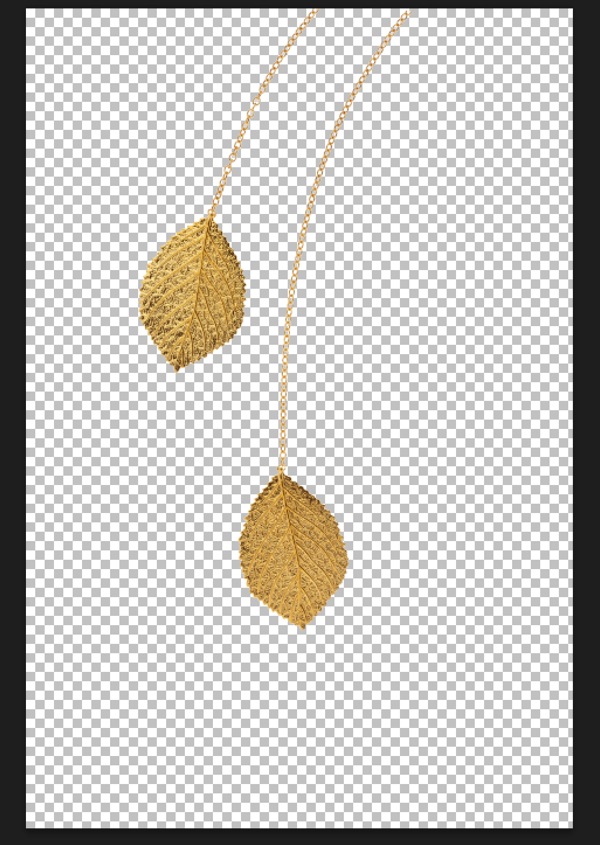
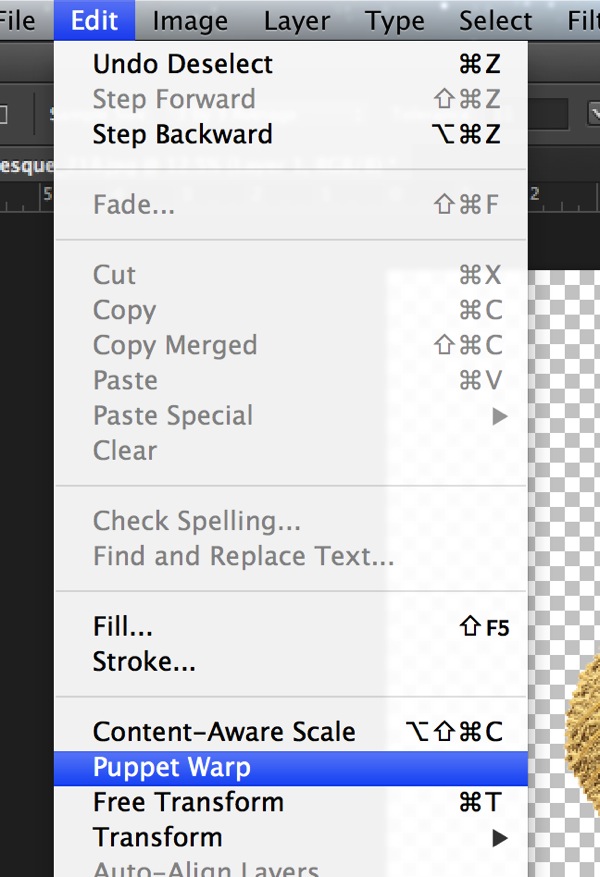
With the layer you want to edit selected, go to the Puppet Warp tool, which is found under the “Edit” menu.
Once you’ve entered the Puppet Warp mode, you can start adding anchor points or “joints” that function both as anchors and points where you can click and drag. I’ve added some anchor points to my jewelry pieces below.
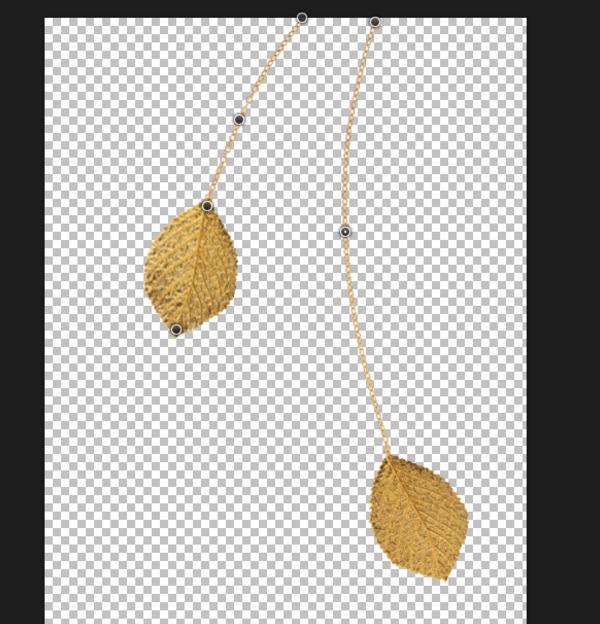
Next, select an anchor point and start dragging. Puppet Warp is a fairly intuitive tool once you’ve added some anchor points and started to move them around. The anchor points you are not dragging will stay put, while the ones you’ve selected (hold shift to select multiple points) bend to your will. Cool, right?
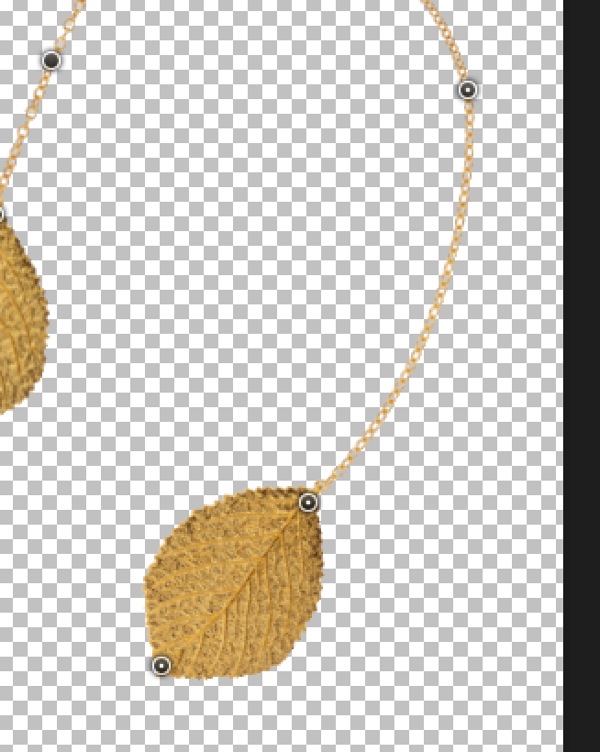
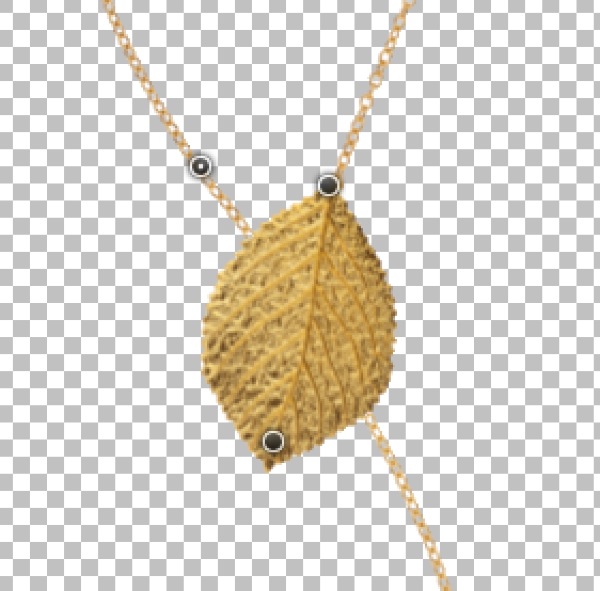
Another useful feature of Puppet Warp is the Pin Depth option. As you add anchor points and move them, you may discover you want to move one part of the object behind another. This is where Pin Depth comes into play. If I want a part of this chain to move behind the left leaf, all I have to do is to select the anchor point on the chain, click on the Pin Depth button with the “down” arrow, and voila, I can drag that part of the image behind another.

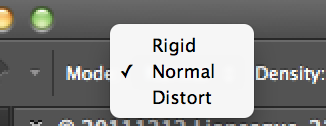
The “mode” option of Puppet Warp allows you to control how dramatic the changes to your image are when you move an anchor point. The default is Normal, which should suffice for most situations. For more dramatic changes, you can select the “Distort” option.
To delete anchor points simply select the point in question and hit the DELETE or key on your keyboard. Alternatively, you can hold down the ALT key and click an anchor point to delete it.
Puppet Warp is fairly intuitive but it takes a bit of experimenting to get a sense of how best to use it. I suggest alternating between the “Rigid”, “Normal”, and “Distort” modes to get an idea of how the tool works. Once you’ve gotten the hang of it, Puppet Warp is a VERY powerful tool.
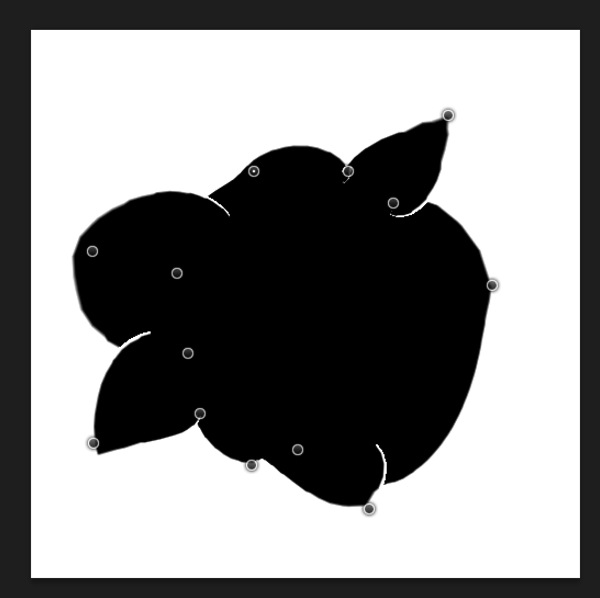
As an additional example, I am going to warp the following black square. I’ve added four anchor points at the corners.

Once I’ve added the anchor points I can bend and stretch the rectangle to something else entirely.
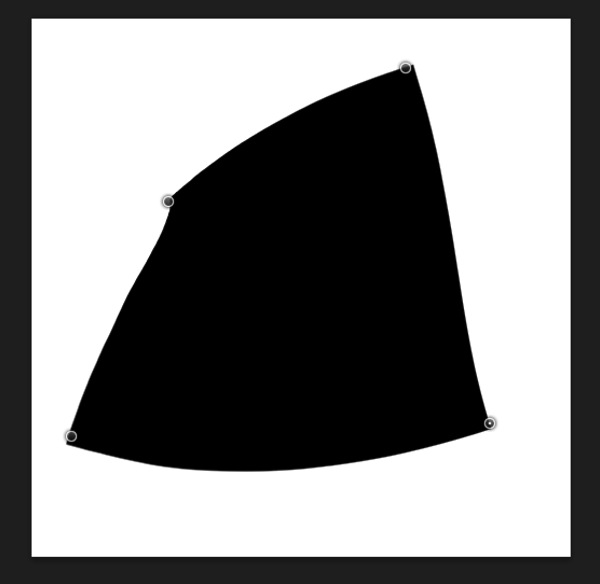
If you want to edit it further, you can add even more anchor points until you’ve warped the square to something akin to a Rorschach inkblot test. What do you see? A moth? A bird? Hm…
Frank Wang is a NYC photographer specializing in portrait and architectural photography. You can find him online at www.frankwangphotography.com and www.framephotographics.com. Connect with him via Twitter / Instagram: @frankwangphoto
Post originally from: Digital Photography Tips.
Check out our more Photography Tips at Photography Tips for Beginners, Portrait Photography Tips and Wedding Photography Tips.
Introduction to Puppet Warp in Photoshop
[ By Steve in Global & Travel & Places. ]

These 9 Chinese statues are so awful, many were demolished within days of their unveiling after enduring scorn and ridicule by the People’s Republic’s people.
 (images via: Sh.People.com and News Hefei)
In April of 2013, citizens of Luoyang in east-central China’s Henan province were excited about the soon-to-open Hualong Amusement Park with an enormous gold-toned Buddha statue at its heart. Imagine the shocked silence when the covers came off the statue, revealing what incredulous netizens quickly dubbed the “Big Maitreya with the Swept-back Hairstyle.” When pressed, park managers admitted the statue’s head was modeled after a local entrepreneur who believed his grinning golden visage would help “inspire young people.” Inspire them to commit arson, one would guess.
 (image via: Chinanews.com)
After a few days of scathing and unrelenting criticism from local web commentators, park visitors arrived to find the statue headless – odd, yes, but still an improvement. As for the missing head, it turned up shortly thereafter mounted on a small, nondescript building some likened to a public restroom, presumably so young people would be inspired to answer nature’s call in a more entrepreneurial manner.
 (images via: Atlas Obscura and China Tour Advisors)
Want to know where the money you spend at Walmart is going? Try Inner Mongolia, where white elephants and green dinosaurs (in this case, one and the same) are free to roam. Unlike other constructed-but-unoccupied cities in the area, Erenhot boasts a population of about 75,000 and a thriving wind farm but city managers felt something was missing. Solution: build a Dinosaur Town & Tea Road Park, plunk a flock of life-sized dinosaur statues around the wind farm to make it look more natural, and have two of the biggest beasts kiss as they arch their necks over a highway… because dinosaurs DID kiss, of course. Wiiiilmaaa!
 (images via: SINA Weibo)
So Long Soong Ching-ling, we hardly knew you or at least, knew your statue! Soong Ching-ling was the second wife of Sun Yat-sen, founding father of the Republic of China, and is held in high regard by all Chinese to this day. Therefore it was no surprise the Henan province Soong Ching-ling Foundation was able to scrape up 120 million yuan ($ 19.5 million) to construct a 24 meter (78.5 ft) tall statue honoring her in Henan’s capital city of Zhengzhou. What WAS surprising was that the statue was demolished before it was even half-finished. Sun, I am disappoint.
 (image via: China.org.cn)
Curiously, it seems that managers at the Henan Provincial Soong Ching Ling Foundation took issue with the appearance of the statue, which was supposed to have been based on a design by Professor Liang Mingcheng of the Guangzhou Academy of Fine Arts. “Though the statue and our design look alike, it is terrible in both effect and quality,” stated (or rather, spun) Professor Liang, who evidently isn’t one to mince words. End result: mince the statue.
[ WebUrbanist | Archives | Galleries | Privacy | TOS ]

| |
