Ein Beitrag von: Andreas Krone

kwerfeldein – Fotografie Magazin
[ By WebUrbanist in Architecture & Offices & Commercial. ]

A blend of fun, flexible, efficient and honest, The Gourmet Tea shop design in Brazil’s biggest city is both regional and universal, responding to everyday needs for opening and closing while also attractive to passerby pedestrians.

Designed by Alan Chu (images by Djan Chu), the storefront is a patchwork of brightly-colored squares and reflects the brand and its rich variety (35 flavors) of organic teas to be found within.

But the patches are more than decorative – they unfold in various ways to reveal everything from the store’s signage to its purchasing counter and shelves full of wares.

Despite its apparent complexity, it is ultimately built of inexpensive plywood and folds down into a space-saving box in a few simple steps, making it a cost-effective solution for street-side vending.


[ WebUrbanist | Archives | Galleries | Privacy | TOS ]

     |
Unless you haven’t been on your computer at all in the last 24-48 hours, you have probably heard by now that Adobe announced an end to their Creative Suite of products and will now be moving to a subscription only based service. This news was not received well in the photography community on Monday as photographers flocked to social media sites to bash Adobe and voice their opinions. Here are some facts about Adobe’s new move…
Adobe Photoshop CS6 Extended used to cost $ 999. On average, Adobe seemed to be on an 18 (some odd) month product cycle between CS updates. This means that if you divide $ 999 by 18 months you come out with $ 55.50 per month.
Going forward (and this has been an option ever since the Creative Cloud became available) you’ll have the option of buying an annual subscription to Photoshop alone for $ 19.99/month or you can have access to the entire lineup of Adobe products (formerly known as the Creative Suite) for $ 49.99/month. And as a bonus, if you are a CS3/CS4/CS5/CS6 customer, you’ll get the entire suite of products for $ 29.99/month for the first year. Adobe used to have an option for if you just wanted to pay month to month without an ‘annual agreement’ but that seems to be gone now. I believe that was $ 29.99 a month. Now you have to make an annual agreement but it’s unclear at this point what that entails.

So let’s see if this is more expensive, less expensive or a wash. Well, as you’ve already read above, if you used to be a customer who upgraded with each update (ie: always upgraded from CS4 to CS5 to CS6) then you will save money now. You won’t have to shell out a fat stack of Benjamin’s any longer at your local software store. If you pay just the $ 19.99 a month on an annual agreement plan, you will pay $ 359.82 every 18 months. That’s a savings of $ 640.17 according to my calculator. Am I missing something? That’s a savings of 64%…
The entire creative suite (Photoshop, Dreamweaver, Illustrator, InDesign, After Effects, Premier Pro, Muse and more) used to cost $ 2599.99. Divide that by 18 months (again, 18 months is the average amount of time between previous versions of CS) and you get $ 144.44 a month. Compare that to the new $ 49.99 a month and you have a $ 94.45/month savings or (again) about 65% less.
Now, I was never much of a math wiz in school but I’m pretty sure I didn’t screw any of that up.

Did Adobe just decrease their pricing by 65%? It sure seems that way to me. At least if you’re going off an average 18-month product cycle. You do have to take into account that there will be no more Creative Suite. That means Adobe will no longer come out with NEW versions of Photoshop. There won’t be a CS7. They will only add features to Photoshop that will become available the next time you open up Photoshop.
What About Those Who Didn’t Buy Every New Version?
That’s a great point. At $ 19.99 a month, it would take 50 months to come out to $ 999.99 (the cost of the old Photoshop CS6 Extended version). That’s just over 4 years. That’s just under 3 18-month product cycles. Call it two. That means that for those who are still using Photoshop CS4 and haven’t updated to CS6; they are still paying the same amount in the long run but are now getting the advantage of having the latest version of the software, with effortless updates as well as access to Adobe’s new Behance community.
I’ll admit…when I heard about all this on Monday I was pissed. I even blogged about it. I’m the kind of guy who likes to save up for things I want and pay cash for them, rather than throw it on a credit card and make payments. I don’t have a car payment. I would never lease a car. So the idea of basically leasing Photoshop on a month-to-month basis doesn’t make me particularly happy. The issue for a lot of people is that the consumer, the customer, no longer has a choice. There are some people out there who just want to buy a product and not worry about their bank account getting drafted every month. It’s one thing to plan for automatic drafts like your gas or electricity, your cable or your car payment. It’s another when you start adding stuff like software programs. It’s just one more thing that could go through at just the wrong time and cause someone to overdraft their account. People like having a choice. With the new system you are giving up your right to actually OWN a product.
Some people are also worried that since Adobe will have reliable/consistent income now with subscriptions that they will lose their competitive edge. They used to have to wow us all with each CS update. New features, new tools, new interface. They had to make us WANT it so we would flock to their website and stores to buy the new programs. If they get us all to sign up for these plans where they already have us, will they stop trying so hard to impress us? Who knows? Will that open the door to some relevant competitors? Who knows? Time will tell.

To be perfectly honest, I’m completely on board with getting rid of the physical copies of Photoshop and all the other Adobe products. When I buy a program like onOne Software’s Perfect Photo Suite, I don’t get anything shipped to my house. I get a license code emailed to me that I plug in once the software is downloaded. Easy peasy. What I think Adobe should do is just make an option available to us where we can rent the software for a full year or even multiple years at a time. And give us a discount for paying in advance. That way it’s pretty much just like it was before. Those of us who prefer this method won’t feel like we are renting a software program. It will be the same as owning it except we won’t have a disk sitting in the bottom of our junk drawer. This, at least to me, sounds very reasonable.
So what do you all think? This has been a very hot topic for the past day or so and everybody has different views. Let me know in the comments below and be sure to follow me on Twitter where you can get in touch as well.
Post originally from: Digital Photography Tips.
Check out our more Photography Tips at Photography Tips for Beginners, Portrait Photography Tips and Wedding Photography Tips.
Say Goodbye To Adobe Creative Suite (Adobe Moves To The Cloud)
Ein Beitrag von: Olivia Michalski
Die Welt der Makrofotografie ist faszinierend und wunderschön zugleich. Diese Welt zu entdecken, ist eine Passion vieler Fotografen. Ich habe es mir zur Aufgabe gemacht, Menschen klar zu machen, was sie oft verpassen und wie verwundert sie sein können, wenn sie genauer hinschauen würden. Allein schon durch Hinhocken und genauer Betrachten findet man Insekten, Blumen und allerlei andere kleine Wunder der Natur.

Die Makrofotografie hat viele Tücken und die größte ist es wohl, den richtigen Fokus zu finden. Der Autofokus hat mich oft im Stich gelassen, als es darum ging, eine tolle Stimmung mit Hilfe der Tiefenschärfe zu erreichen. Deshalb habe ich schon früh auf manuelles Fokussieren umgestellt und begann, auf den Modus „A“ bei Nikon umzusteigen.
Die Zeitautomatik erlaubt es mir, die Blende frei zu wählen und meine Kompositionen einfacher zu gestalten. Allerdings möchte ich auch bald den Schritt in die gänzlich manuelle Fotografie tun.

Ob Blumen, Tiere, oder Gegenstände – in der Makrofotografie gibt es viele Möglichkeiten, sich kreativ auszutoben. Bei dem obigen Bild habe ich zum Beispiel einfach ein Gänseblümchen gepflückt und in eine grüne Pflanze gesteckt.
Schon ein paar künstlich erzeugte Wassertropfen helfen, ein wenig Frische ins Bild zu bekommen. Man kann zum Beispiel eine kleine Spritze benutzen, die Ärzte auch zum Injizieren von Medikamenten benutzen oder eine Sprühflasche, die man mit Wasser gefüllt hat.

Auch eine Schwarzweiß-Konvertierung kann ein edles Image verleihen. So kann ein einzelner Wassertropfen zum Juwel werden.
Hier sieht man einen Weihnachtsstern, dessen Blütenblätter wasserabweisend sind. Wenn man den Tropfen darauf platziert, breitet er sich nicht auf dem Blatt aus, sondern perlt ab. So kann man tolle, runde Wassertropfen auf ein Foto bannen.

Die Welt der Makrofotografie ist leicht zu entdecken. Man braucht nicht das teuerste Objektiv dafür. Angefangen habe ich mit meinem Kit-Objektiv 18-55mm, dann auf einen Zoom gewechselt und bin letztlich bei Festbrennweiten geblieben.
Diese haben qualitativ hochwertiger verarbeitete Linsen, die eine hohe Lichtstärke und somit einen geringen Schärfebereich ermöglichen. Mein 50mm f/1.8 von Nikon war das gesamte letzte Jahr mein treuer Begleiter, während ich jetzt vorwiegend mein Tamron 90mm f/2.8 Macro benutze.

Ein guter Tipp ist es, mit Live-View zu arbeiten. Man kann durch Hineinzoomen den Fokuspunkt sehr präzise wählen und die Vorschau hilft einem, eine geeignete Komposition zu finden.
Doch ein gutes Objektiv und eine gute Komposition helfen nicht immer. Viel wichtiger ist die Lichtstimmung, die mittags oft gar nicht erreicht werden kann, weil die Sonne zu „hart“ von oben auf die Motive scheint. Ich bevorzuge es daher, in den Abendstunden rauszugehen, da ich ein ziemlicher Langschläfer bin.
Wenn abends das Licht golden wird und alles in einen weichen Schein taucht, dann ist die beste Zeit für Blumenfotografen. Die Blüten beginnen, sich langsam zu schließen und wenn die Sonne anfängt, unterzugehen, ist es auch oft noch warm draußen.

Meine große Passion ist jedoch immer die Marienkäferfotografie geblieben.
Auch mit scheinbar „schlechtem“ Equipment kann man tolle Bilder machen – man muss nur seiner eigenen Kreativität freien Lauf lassen und machen, was man wirklich will, was einen wirklich inspiriert. Ist diese Leidenschaft und Motivation vorhanden, sind gute Bilder nicht fern.
Es lohnt sich auf jeden Fall, einen kleinen Einblick in die Makrofotografie zu wagen und die kleinen Dinge des Lebens zu erforschen!
kwerfeldein – Fotografie Magazin
  |
|||
You’ve always wanted to catch one awesome photo of lightning striking down on Earth’s surface.
Turns out we’ve been doing it wrong this whole time.
Phillip Stearns figured it out: Step 1 — throw out your camera. Step 2 — expose your film with 15,000 volts of electricity.
Inspired by the science between cameras and our very own eyes, Phillip turned to experimenting with peel-apart instant film.
He starts by pouring household chemicals (like bleach) onto the film to manipulate color and then touches a neon tube ballast to the film to electrocute the surface.
The result is a dreamy rainbow of lightning-like images emblazoned onto a final print.
It’s no wonder that Phillip’s main work has dealt with digital glitches. You might call this the ultimate analog equivalent of a glitch.
You can watch how it all goes down in this awesome video.
Extra cool thing: Learn how to make emulsion lifts with instant film!
Phillip Stearns’ Electrified Instant Film
p.s. WE ARE HIRING A WEB DEVELOPER. If you love photography and San Francisco and codes, APPLY HERE.
p.p.s. WE ARE ALSO HIRING AN EVANGELIST/BIZ DEV HERO. Creative deal-maker types, APPLY HERE.
Related posts:
[ By Steph in Conceptual & Futuristic & Technology. ]

The chewed gum, fingernail clippings and cigarette butts you leave behind in public places could say a lot more about you than you’d like to imagine. Artist Heather Dewey-Hagborg makes this abundantly clear with her series, ‘Stranger Visions’, which reproduces people’s faces using DNA extracted from such forensic evidence collected in New York City and Brooklyn.

Dewey-Hagborg is a PhD student studying electronic arts at Rensselaer Polytechnic Institute in Troy, New York. After extracting the DNA from her samples, she focuses on specific genomic regions, sequences them and then enters the data into a computer program, which produces a model of the face of the person who tossed that item onto the ground.

From those models, Dewey-Hagborg produces sculptures of the faces using a 3D printer. These life-sized portraits, which look similar to death masks, hang on gallery walls, often beside wooden boxes holding the original samples and showing photographs of where they were found.

The artist learned about DNA extraction from a course in molecular biology at Genspace, a do-it-yourself biology lab in Brooklyn where she does some of her work. She uses standard DNA extraction kits ordered online to analyze the DNA. The results are shockingly detailed; a mask of her own face made using the same technique shows just how accurate the results can be. However, there’s no way to tell age from DNA, so the computer produces a 25-year-old version of the person. Learn more about the process at Smithsonian.
[ WebUrbanist | Archives | Galleries | Privacy | TOS ]

| |

The UK Intellectual Property Office has issued a ‘myth-busting’ document about the effect on photographers of a newly-introduced law. The law includes new rules regulating the use of ‘orphan works’ – intellectual property whose copyright holder cannot be identified. This has led to concern that the changes will allow UK companies to use copyright material from anywhere in the world without the approval of the copyright holder.
News: Digital Photography Review (dpreview.com)

When you think about Apple products, the pictures that come to mind of gleaming glass and aluminium are likely the work of a photographer you’ve never heard of – until now. In an interview with The Verge, industrial photographer Peter Belanger offers an insight into his painstaking processes, including his complex lighting schemes and choice of camera equipment. Learn more on connect.dpreview.com.
News: Digital Photography Review (dpreview.com)
This article is an excerpt from the newly released and critically acclaimed Natural Light Couples Photography Workshop by SLR Lounge. This 8 hour workshop on DVD has been designed from the ground up to teach photographers how to create professional portraiture using just a camera, reflector and their creative eye. Master planning, posing, lighting, shooting and post producing beautiful natural light portraiture in this gold standard workshop. Learn more by clicking on any of the links above, or at the end of this article.
If you have ever shot portraiture, then you probably know how difficult it can be to get your subjects to be comfortable when in front of the camera. Probably one of the biggest challenges in creating a great portrait is getting your subject to emote the types of expressions that you want for your imagery. It is a challenge that every portrait photographers will face virtually on every single shoot, which is why it is such a large area of focus in our workshop.
We have found that the majority of people have a hard time in front of your camera for two primary reasons. If you can address and resolve these two issues, then you will immediately find an improvement in the emotion you are capturing within your subjects and images.
So, let’s jump in and discuss these two issues and how we can resolve them.
Professional actors and models are comfortable with being in front of a camera because for the most part they know how to act/pose in front of a camera. But, let’s be honest, as portrait photographers, the majority of our clients are going to be people that aren’t professional actors and models.
Instead you will generally have clients with little or no experience at all in front of a camera. Due to this lack of experience, your subjects are naturally going to be nervous because they do not know how to pose or what looks good in front of a camera.
The beginning of every shoot for our studio, Lin & Jirsa Photography, starts the exact same way. We start each portrait session by teaching our clients several simple posing techniques. We refer to our posing system as “Foundation Posing Framework” and we teach it extensively on the Natural Light Couples Photography Workshop and all the images that we will be showing here are from the workshop.
Now, when we instruct clients, we are avoiding a lot of the details and technical explanations. What we are doing, is simply giving them a foundation of what to do in general when posing. This Foundation Posing Framework creates a simple and common set of posing vocabulary making it incredibly simple to communicate poses to your subjects.
When starting the instruction, I ask my clients, “Have you ever wondered why celebrities always look good when they pose on the red carpet? It’s cause they know the posing basics! Do these things, and all your friends will wonder why you guys are so photogenic in every photo you take.”
Before teaching them the basics, I generally will take a quick photo of them. Once they have learned the basics, I take another portrait simply with the intent of showing them how big of a difference the posing tips made, and how great they look in the photo. Virtually every time my clients see that first great looking shot, they immediately and visibly relax. They now know that look great, and that they can rely on you, as the professional, for posing instruction. At this point, I remind them that I will be helping pose them throughout the shoot, so they don’t need to feel like they have to remember everything they just learned.
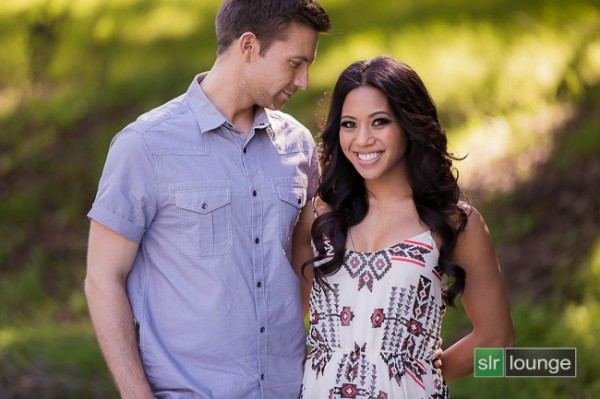
Now this entire process only takes about 10 minutes. You will not only start capturing better photos and expressions from the start of your shoot, you will also find that about half way through a portrait session, your clients will start doing all the posing on their own! All you have to do is use keywords from the Foundation Posing Framework and say, “V-up and look at each other” and boom, they do it all by themselves!
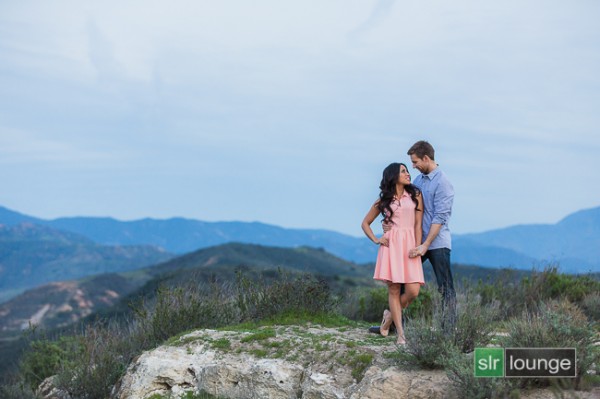
The second reason reason why your clients will feel awkward during the photo shoot is really common sense. It is simply because they are not comfortable with you yet. Hence, they will be more reserved with their emotions, (especially if they have just barely met you for the first time!) making it difficult to capture natural and genuine expressions.
The bottom line is that you will have to connect with your clients in a personal way, as quickly as possible, and have more than just a surface level “photographer-subject” relationship.
On the Natural Light Couples Photography Workshop, we show a lot of the interaction that I have with Ryan and Jackie. Ryan and Jackie are our actual clients, and this is my first time shooting them. So you can literally watch me build up this relationship during the shoot as I joke around and have fun with them.
Since each photographer has their own personality and shooting style, they will connect with their clients differently. I tend to joke around a lot with my clients, self-deprecate, poke fun, tell stories, etc. Anything I can to help them feel like I am their friend, not just their photographer.
Interestingly enough, I find that if I focus on the guy, making sure he is having a good time, the girl is quick to relax as well. This is because in general, we have found that guys generally are not into taking photos. Instead, the guy is going along with it essentially as a “favor” and the girl is constantly worrying about whether he is bored, having fun, acting natural, etc. So, once the guy is having a good time, the girl stops worrying about him and relaxes as well.
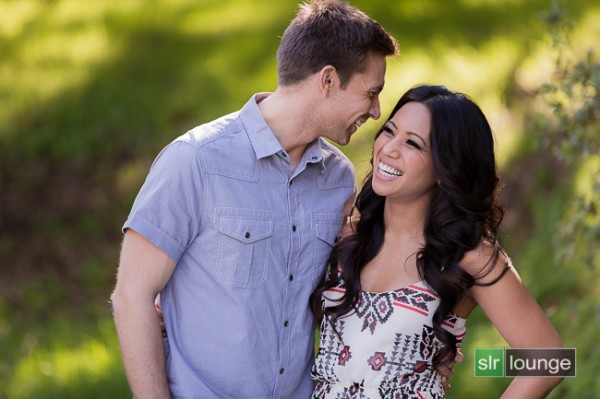
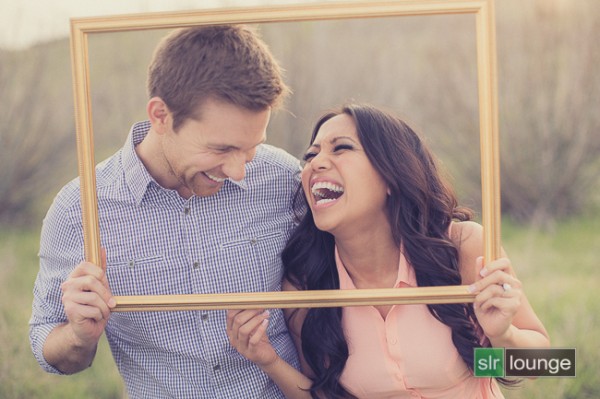
The same rules still apply when shooting a subject solo, whether it is for portraiture, editorial or fashion. Prior to the photo shoot, we talk about everything except for photography with the client. Instead, get to know your client and just have a good time. This conversation before the shoot helps to break the ice and will make your client feel comfortable during the shoot since your client will look at you as more of a friend, a real person, and less as a photographer.
Once you start the shoot, remember to still coach your subject and show them some shots taken at the very beginning of the shoot. Seeing great photos of themselves right at the start of the shoot will again help them to realize they already look great, so they can relax and have a good time.
If they point out something that they don’t like in your initial photos, you can keep that in mind throughout the rest of the shoot and maybe show them images again here and there to make sure they are happy with the photos.
If you are interested in learning more, join us on the Natural Light Couples Photography Workshop. This 8 hour workshop on DVD teaches photographers how to create professional portraiture using just a camera, reflector and their creative eye. We cover how to:
1. Plan and prepare a moodboard with clients
2. Pose and instruct clients using the Foundation Posing Framework
3. Modify and perfect the scene’s natural lighting with a simple reflector
4. Work through 5 different scenes and locations utilizing different set props and activities
5. Compose and shoot consistent, creative imagery
6. Post produce a professional final product
Learn more by Clicking Here.
Post originally from: Digital Photography Tips.
Check out our more Photography Tips at Photography Tips for Beginners, Portrait Photography Tips and Wedding Photography Tips.
How to Help Your Clients Feel Comfortable In Front of Your Camera


You must be logged in to post a comment.