RSS
 

Archive for March, 2013

How to be Creative with White Balance

08 Mar

This is the fourth in a series of articles by Andrew S Gibson, the author of Understanding EOS: A Beginner’s Guide to Canon EOS cameras.
01

My approach to photography is to keep things as simple as possible from a technical point of view. That helps me concentrate on emphasising with my subject, finding beautiful light and getting the best possible composition. These concepts are harder to pin down but they are the ones that are really important when it comes to creating beautiful images. Of course, the technical settings are important too, because they help you capture and make the most of the vision that you have in your mind. But keeping the technical side as simple as possible gives you time to concentrate on the other stuff.
02

White balance

Now, you’re probably wondering what this has to do with white balance. Here’s the answer:

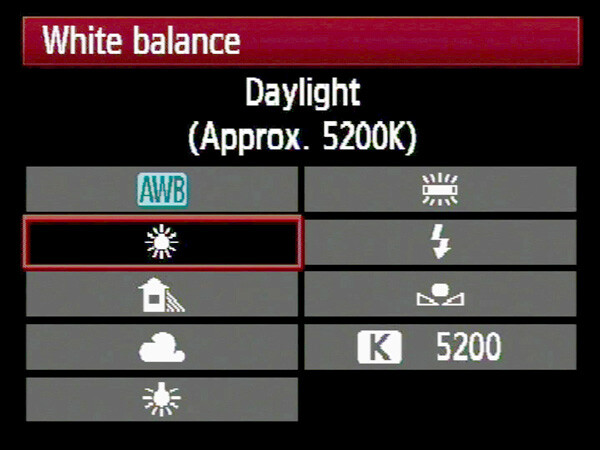
The simplest way to deal with white balance is to set your camera’s white balance setting to daylight and then forget about it.

If that statement puzzles you don’t worry, I’ll come back to it in a bit.

First, let’s take a brief look at what the white balance function does.

Colour temperature

If this is the first time you’ve come across an explanation of white balance you may be surprised to learn that the colour of ambient light can vary. Our eyes adjust to it automatically, so we often don’t realise until it is pointed out. This phenomena is called colour temperature.
03

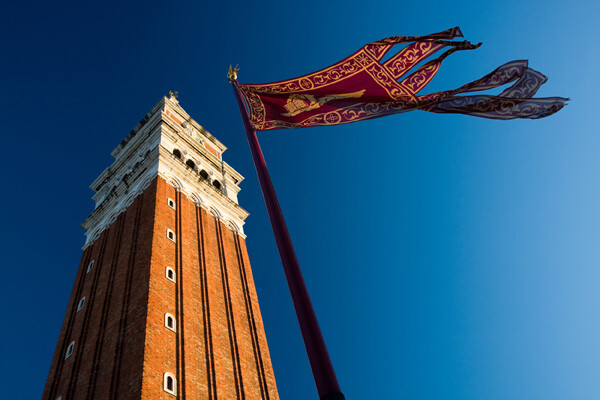
If you take photos by the light of the setting sun, then anything illuminated by the sun’s light turns orange. That’s because the light from the sun, at this time of day, has a strong warm cast (that’s why it’s called the ‘golden hour’).

Similarly, if you take a photo of something lit by the light of a tungsten bulb (ie at night or indoors) then the light has a strong orange colour and your subject will also come out orange.
04

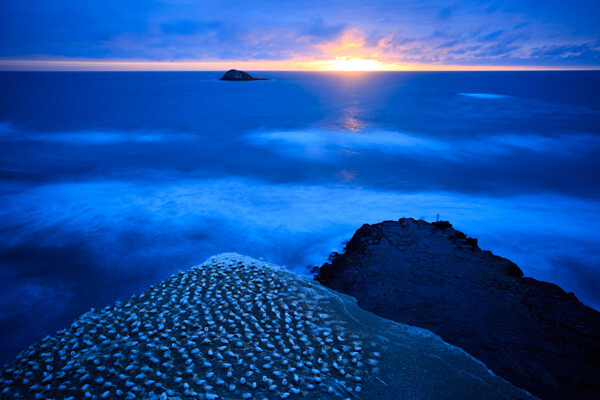
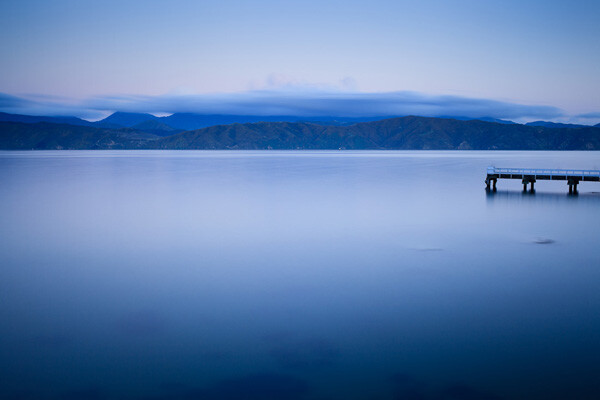
If you take a photo after the sun has set, but while there is still a little light in the sky, then the light has a strong blue colour. I mentioned the golden hour earlier, this period is called the ‘blue hour’ by landscape photographers.

If you take a photo on a cloudy day, the light also has a blue colour, although it is not so noticeable.

If you take a photo of something in the shade on a sunny day, the light also has a surprisingly strong blue colour.

If you take a photo lit by the sun at around midday it will have neutral colour. That’s because the white balance setting on your camera is calibrated to give photos with a neutral colour cast at this time of day. The exact colour of the light at this time of day depends on your geographic location and the season, so it does vary, but generally holds true.

Candescent light

What do all these scenarios have in common? The light in each is created by a candescent light source. That means that the light is generated by a burning object. In the case of daylight, that’s the sun (a burning ball of flammable gases). In the case of tungsten light, it’s the filament inside the bulb that is burning. There are no flames because there is a vacuum inside the bulb.

Light produced by candescent light sources behaves predictably and is easy for your camera to cope with. It is either neutral in colour (ie sunlight at midday) or it has a warm colour cast or it has a cool colour cast.

Daylight white balance setting

So, why do I use the daylight white balance setting on my camera? The reason is that I always use the Raw format. That lets me make the final decision regarding white balance when I process the images in Lightroom 4 (the software I use to process all my Raw files). I can warm up or cool down the white balance as required. I also use a calibrated monitor so I know the colours I see on-screen are accurate.

There are two benefits to setting colour temperature in post. One is that you can see the result of your adjustment right away on the monitor. The other is that you can also set the white balance on an individual basis per photo if you need to.

If you use the JPEG format life gets a little more complicated. While there is a lot you can do to a JPEG file in post, it’s not as flexible as a Raw file. You need to get the white balance setting as accurate as possible when you take the photo. That takes more work. It can distract your attention from making the most of the light and the subject at the time of shooting, so I avoid it.

There’s another reason I use the daylight setting, and it’s a personal one. I started in photography before the digital age, and I used daylight balanced slide film for most of my colour work. It taught me to appreciate the way that the colour of light changes throughout the day. With slide film, there is no post-processing, so you had to think about the colour temperature of the light and use filters to warm it up or cool it down if necessary. Now, I appreciate that my digital cameras make dealing with colour temperature much easier. That’s why I set it and forget it.

Using white balance

There are three ways to use the white balance function:

1. To create a photo with a neutral colour cast. This is important if you’re taking say, a product photo for a catalogue company, or you want a ‘clean’ look to your photos.

2. To emphasise the natural colour of the light. This is a creative way to use white balance. For example, if you are taking a photo of something lit by the setting sun, you may choose a white balance setting that emphasises the warmth of the light instead of trying to neutralise it.

3. To warm up photos that benefit from warm colours. A good example is portraits. Warm light is generally the best for creating a flattering portrait. There are exceptions, but warm is generally best.

There are some examples of photos with creative light balance at the end of the article.

Incandescent light sources

We’ve already looked at candescent light sources (light sources that burn). But light can also come from incandescent sources. These are light sources that produce light by a method other than burning something. The most common types you will see are fluorescent light, neon light and sodium lights (used in street lighting).

The light from these sources is more difficult for your camera to deal with as they don’t fit neatly on the cool to warm scale of candescent light sources. They are often mixed with daylight which makes your job even more difficult. You may be able to adjust the white balance to produce a neutral coloured image in daylight, you might also be able to do it with the artificial light, but (fancy post-processing techniques aside) you can’t get the white balance right for both light sources at the same time.

The lesson? Avoid fluorescent, neon and sodium lights as much as you can when you take photos. For example, if you are taking a photo in a building indoors lit by fluorescent light (and daylight coming through the windows) turn off the fluorescent lights (if you can) and just use daylight. Or turn off the lights and use flash instead (that’s how real estate photographers get such great results). The results will be better.

However, there are times when you can use these light sources creatively. A good example is if you take a photo of street scene at night or at dusk. The light from different light sources may add to the atmosphere.

Creative white balance examples

Here are some photos where I have used white balance creatively:
05

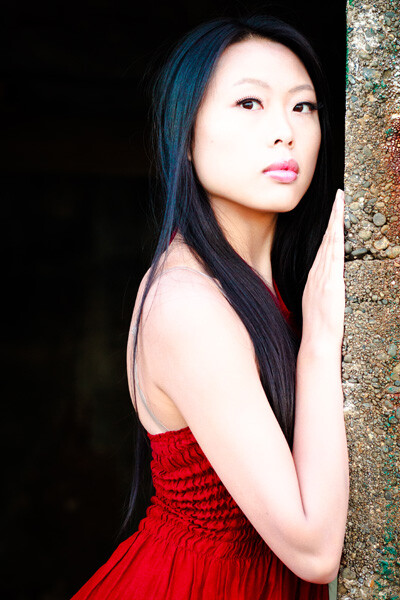
Here’s a portrait taken in shade. The quality of light in the shade is soft and beautiful – perfect for portraits. But the colour of the light is blue. I warmed up the image in Lightroom 4.
06
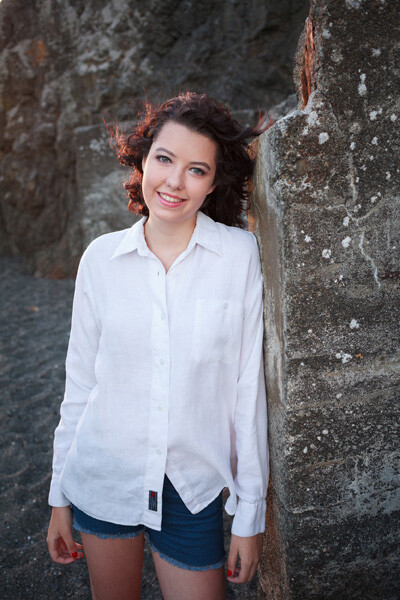
Here’s another portrait taken in the shade. The difference is that the girl’s hair is lit by the last rays of the setting sun. That’s what has produced that lovely warm colour on her hair.
07
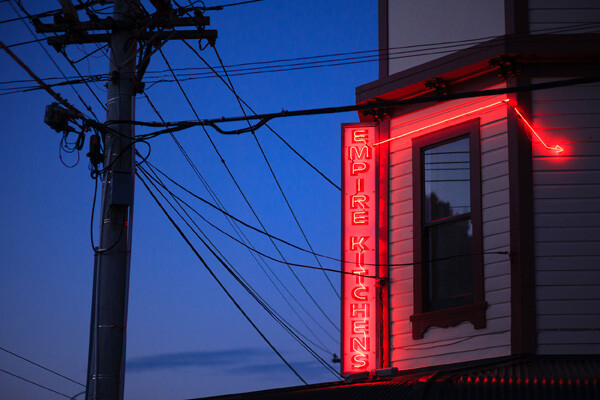
A neon light against the evening sky. The light from the neon sign is red, and the ambient light illuminating the rest of the scene is blue. The colour contrast between the two is what makes the photo.
08

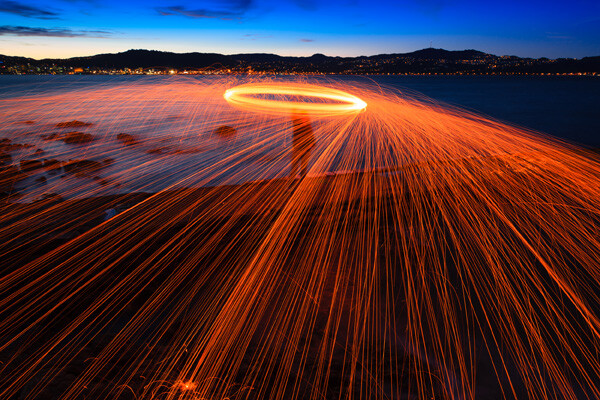
Steel wool spinning. Again, the colour of the ambient light at this late hour is blue. The light of the from the buildings in the distance and the burning sparks from the steel wool spinning is orange. There is a strong colour contrast between the two.

Previous articles

This is the fourth in a series of four articles. You can read the previous articles here:

Introducing the Creative Triangle

Finding Your Way Around the Mode Dial

Understanding Colour on Your Digital Camera

Understanding EOS
09

Andrew S Gibson is the author of Understanding EOS: A Beginner’s Guide to Canon EOS cameras. The use of white balance is one of many topics explored within the ebook.

Post originally from: Digital Photography Tips.

Check out our more Photography Tips at Photography Tips for Beginners, Portrait Photography Tips and Wedding Photography Tips.

How to be Creative with White Balance


Digital Photography School

 
Comments Off on How to be Creative with White Balance

Posted in Photography


Nice Visual Art photos

08 Mar

Check out these visual art images:

study for a remnant factory: installed today
visual art
Image by jodigreen
installation for a performance i’ll be doing over the next two weeks, as part of artcite’s visual fringe. july 18, 19, 20th and 25, 26, 27th from noon to six i’ll be on site making dresses, at 32 university west in windsor ontario (for you locals, that’s the former tanning salon next to the former greyhound station and across from the former armouries).

 
Comments Off on Nice Visual Art photos

Posted in Photographs


ACDSee 15 and Pro 6 gain Raw support for 19 additional cameras

08 Mar

ACDSee.png

ACD Systems has extended the Raw support offered by its ACDSee Pro 6 and ACDSee 15 software packages. Version 6.2 of the Pro version and and ACDSee v15.2 gain support for an additional 19 cameras including the Canon EOS M, Nikon D5200, Sony SLT-A99V and the Olympus E-PL5. This update also includes performance improvements. Click through for more information.

News: Digital Photography Review (dpreview.com)

 
Comments Off on ACDSee 15 and Pro 6 gain Raw support for 19 additional cameras

Posted in Uncategorized


Im Gespräch mit Przemek Strzelecki

08 Mar

Schräg, komisch, absurd – das sind die Adjektive, mit denen sich Przemek Strzeleckis Fotografien beschreiben lassen. Sie sprühen zugleich vor Lebensfreude und zeigen das ausgeprägte Feingefühl für Situationskomik ihres Uhrhebers. Ich habe den Meister des Moments zu einem Gespräch eingeladen.

Hey Przemek. Schön, dass ich Dich für ein Interview gewinnen konnte. Deine Fotos sind – wie soll ich es sagen? – extrem erfrischend. In jedem steckt immer irgendwie ein Grinsen. Seit wann fotografierst Du und wie hast Du gemerkt, dass die Fotografie das richtige Medium für Dich ist?

Zuerst einmal danke, dass Du mich hierzu eingeladen hast. Schön, dass Du diese zwei Worte gesagt hast: Erfrischend und Grinsen.

Mit dem Grinsen hast Du etwas in meinen Bildern erkannt, das immer in mir steckt. Und erfrischend gefällt mir, weil ich vor ein paar Jahren meine Denke über Fotografie geändert habe. Ich habe angefangen, nach etwas Neuem und Frischem zu suchen, nach etwas Anderem und Unkonventionellem.

Mongolia 2012 © Przemek Strzelecki

Ich mache schon ziemlich lange Bilder und kann mich sogar noch an meine erste Smena – eine alte russische Kamera – erinnern und haha an meine ach so tollen Fotos von Vogelnestern.

Dann hatte ich eine ganze Menge Zenit-Kameras, zwei davon habe ich immer noch, bis mir meine Eltern damals meine erste Canon kauften. Eine EOS 5000, glaube ich.

Vor ungefähr sechs Jahren erst habe ich erkannt, worum es bei der Fotografie wirklich geht und bin inzwischen total verrückt danach.

Mongolia 2009 © Przemek Strzelecki

Mir gefällt die Ironie, mit der Du auf Deine früheren Bilder schaust. Du sagtest, Du hast erkannt, worum es bei der Fotografie geht. Worum denn Deiner Meinung nach?

Wenn man feststellt, dass das Leben eigentlich ein großer Witz und voller Ironie ist, warum soll man dann nicht auch versuchen, Ironie in Bildern zu finden?

Vor einigen Jahren habe ich aufgehört, typische Touristenfotos zu machen. Ich mag solche Bilder, wie sie die meisten Leute von ihren Reisen mitbringen, nicht.

„Hier bin ich am Denkmal, neben dem Denkmal, vor dem Denkmal …“ – und so weiter.

Solche Bilder bringen einem nichts bei. Ich habe meine Sicht auf die Welt geändert, habe angefangen, Stereotypen zu durchbrechen und meinen eigenen Stil zu entwickeln.

Mongolia 2012 © Przemek Strzelecki

Aber es ist schwierig zu erklären, was Fotografieren bedeutet, weil es für jeden etwas anderes ist. Für mich hat es viel mit Gefühl und Intuition zu tun.

Ich muss nur einen Blick auf ein Foto werfen, um zu wissen, ob es mir gefällt oder nicht, aber ich kann nicht sagen, warum. Es ist schwierig, das zu definieren. Es ist eher wie Poesie.

Du fotografierst nach wie vor analog. Entwickelst Du selbst?

Ja, ich nutze immer noch Film, den ich der Digitalfotografie vorziehe. Ich entwickle Schwarzweißnegative selbst, scanne sie ein und drucke sie dann aus.

Mein Traum ist eine eigene Dunkelkammer, aber das ist leider nicht billig.

Egypt 2008 © Przemek Strzelecki

Poland 2012 © Przemek Strzelecki

Welche sind Deine Lieblingsfotografen? Hast Du Vorbilder?

Hier ist eine Liste meiner Lieblingsfotografen:
• Josef Koudelka
• Alex Webb
• Jindrich Streit
• Anders Petersen
• Larry Towell
• Marry Elen Mark
• Ragnar Axelsson
• Nikos Economopoulos
• Junku Nishimura
• Pentti Sammallahti
• Kim Thue

Und noch viele, viele mehr.

Besonders zwei von ihnen finde ich einfach irre: Josef Koudelka und Alex Webb. Ich versuche, eine Sammlung wie ihre zu erreichen.

Mongolia 2006 © Przemek Strzelecki

Du reist sehr oft, oder? Was motiviert Dich dazu?

Ja, ich reise, aber eigentlich nicht sehr viel. Pro Jahr mache ich normalerweise eine große Reise in die Mongolei und einen kürzeren Trip – meist mit dem Fahrrad – an irgendeinen Ort in Osteuropa.

Ich unternehme auch sehr viele Wochenendtrips in die Slowakei oder nach Tschechien, weil es mir dort einfach sehr gefällt.

Ich stecke mir immer etwa 25 Euro ein, das reicht dann für drei Tage. Ich schlafe im Wald oder in verlassenen Häusern, bewege mich zu Fuß oder mit dem Fahrrad und trinke viel Bier mit den Einheimischen, was mir Gelegenheit gibt, eine Menge guter Bilder zu machen.

Und meine Motivation? Ich werde mal die Worte eines unbekannten Autors verwenden, um den zweiten Teil Deiner Frage zu beantworten: „Reise weit. Bleib lange. Schau genau hin. Und möge die Sonne zwei Mal aufgehen, bevor Du schlafen gehst.“

Mongolia 2011 © Przemek StrzeleckiMongolia 2012 © Przemek Strzelecki

Dass Du den Menschen nahe bist, spiegelt sich sehr gut in Deinen Bildern wider, insbesondere in Deinen Fotos aus der Mongolei. In ihnen steckt eine gewisse Vertrautheit. Was ist es, das Dich Jahr für Jahr immer wieder zurück in dieses Land führt?

Die Mongolei ist ein Ort, an dem man sich absolut frei fühlen kann. Ich habe dort alles gefunden, was ich in all den Jahren des Reisens gesucht habe.

Wenn ich dort bin, fühle ich mich, als wäre mein Traum wahr geworden. Ein Traum, den ich als Kind hatte, wenn ich bis spät in die Nacht Bücher von Jack London las, die mir mein Vater gegeben hatte.

Für mich ist die Mongolei einer der letzten Orte auf der Erde, an denen man Stille und Weite finden kann, raue Menschen und einen so klaren Sternenhimmel, dass man den Eindruck hat, die Sterne seien so nah wie Äpfel an einem Baum. Das ist wirklich erstaunlich.

Mongolia 2011 © Przemek StrzeleckiMongolia 2011 © Przemek Strzelecki

Das klingt fantastisch. Würdest Du Dich selbst als Romantiker bezeichnen?

Ich find’s eher schwierig, mich selbst zu beschreiben. Romantiker? Vielleicht, ja, doch, ich denke schon. Ich lebe in einer Welt von Träumen und ich wurde zu spät geboren.

Die Zeit der großen Abenteuer und Entdeckungen ist längst vorbei. Als ich klein war, habe ich Hunderte Bücher gelesen, die mich verrückt danach machten, etwas Neues zu entdecken und zu erleben. Ich bin immer noch ein Kind im Körper eines fast vierzigjährigen Mannes. Habe die ganze Zeit Tausende neue Ideen.

Mongolia 2011 © Przemek Strzelecki

1993, als ich gerade 16 Jahre alt war, machte ich meine erste große Reise zum Baikalsee. Danach habe ich drei bis vier Jahre lang unter offenem Himmel geschlafen.

Ich habe festgestellt, dass ich krank bin – infiziert mit der Abenteuerkrankheit – und ich hoffe, dass ich niemals geheilt werde. Ich möchte an dieser Stelle Joe E. Lewis zitieren: „Man lebt nur einmal, aber wenn man es richtig anstellt, ist einmal genug.“

Es gibt nichts Schöneres als in einem Schlafsack unter dem Sternenhimmel zu liegen. Egal wo, es geht überall.

Przemek, herzlichen Dank für das Interview und Dir alles, alles Gute für die Zukunft.

Wir haben das Interview auf Englisch geführt. Ich habe es anschließend ins Deutsche übersetzt.


kwerfeldein – Fotografie Magazin

 
Comments Off on Im Gespräch mit Przemek Strzelecki

Posted in Equipment


Sigma US to ship 19mm f/2.8, 30mm f/2.8 and 30mm f/1.8 this month

08 Mar

Sigma_30mm_F1p4_DC.png

Sigma US has announced the price and availability for its three latest ‘Art’ series prime lenses – the 19mm f/2.8 DN and 30mm f/2.8 DN for mirrorless cameras, and the 30mm f/1.4 for APS-C DSLRs. The DN lenses will be available for street price of $ 199 and the redesigned 30mm f/1.4 will be available in Canon, Nikon and Sigma mounts for $ 499. All three will start shipping from the end of this month. No details were given about the 60mm f/2.8 lens also announced  during the CP+ tradeshow.

News: Digital Photography Review (dpreview.com)

 
Comments Off on Sigma US to ship 19mm f/2.8, 30mm f/2.8 and 30mm f/1.8 this month

Posted in Uncategorized


Temporary Urban Coffee Farm Grows & Sells Bean Brew

08 Mar

[ By Steph in Culture & Cuisine & Global. ]

Urban Coffee Farm Melbourne 1

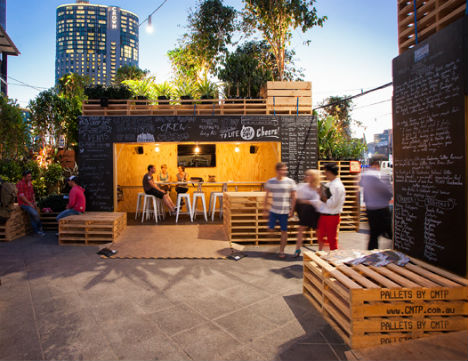
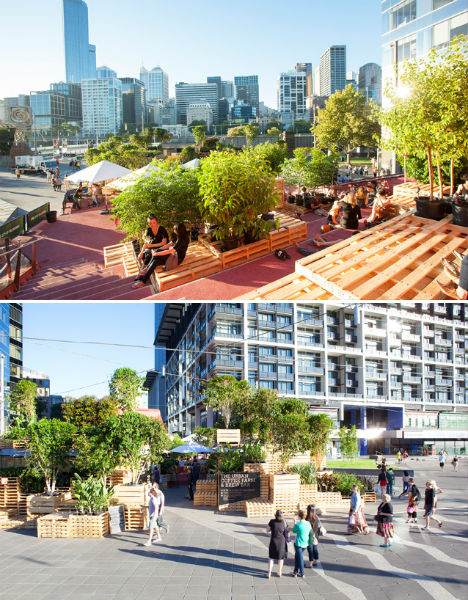
Coffee lovers are getting a special treat at this year’s Melbourne Food and Wine Festival: an urban coffee farm installation made primarily of pallets, which functions as both a temporary coffee shop and a learning experience. Australian design firm HASSELL created the ‘festival hub’ for the two-week annual event, placing it on the red stairs at Queensbridge Square.

urban Coffee Farm 2

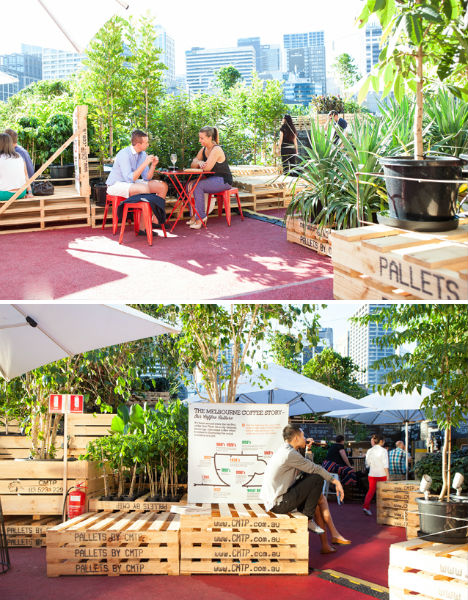
While the installation won’t be around long enough for Melbournians to drink coffee grown right there in the middle of the city, it does have more than 120 coffee plants, in pots set into the stacked wood pallets. HASSELL’s Shaun Schroter and Mary Papaioannou told Habitus Living that their aim was to connect coffee consumers to the laborious and resource-heavy processes required to produce the beverage.

Urban Coffee Farm Melbourne 3

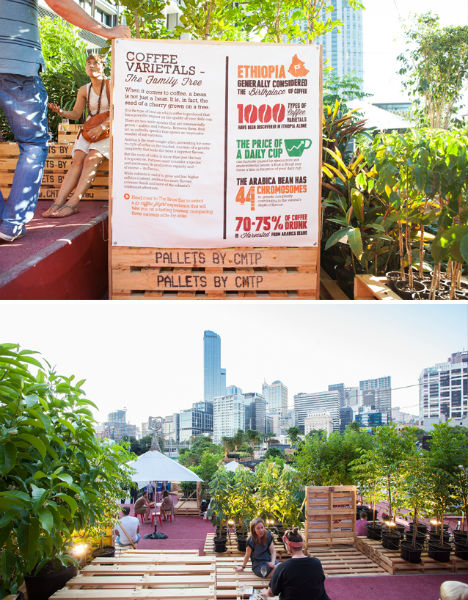
Educational signs offer coffee facts, including info on various types of beans and where they’re grown. The temporary cafe was installed in an underutilized area of Melbourne’s South Bank, inviting residents to explore their city in a new way.

Urban Coffee Farm Melbourne 4

“Coffee has become one of those consumables that is linked to a lifestyle experience and very rarely connected to the places of harvest,” says Schroter. “Embedding this narrative into the conceptual story then becomes important because it is a holistic experience.”

Share on Facebook


[ By Steph in Culture & Cuisine & Global. ]

[ WebUrbanist | Archives | Galleries | Privacy | TOS ]


WebUrbanist

 
Comments Off on Temporary Urban Coffee Farm Grows & Sells Bean Brew

Posted in Creativity


Article: Theme and Variation

08 Mar

CKP_Landscape_Clare110.jpg

Great landscape imagery doesn’t have to involve travel to faraway locales. Photographer Carsten Krieger believes there’s much to be gained by shooting close to home. Over the years he has challenged himself to shoot from the same vantage point; a task made feasible by choosing a scene only minutes from his home. Learn how lens choice and attention to seasonal patterns can lead to surprisingly varied imagery.

News: Digital Photography Review (dpreview.com)

 
Comments Off on Article: Theme and Variation

Posted in Uncategorized


7. März 2013

08 Mar

Ein Beitrag von: Christian Beirle González

Some Prefer Red © Christian Beirle González


kwerfeldein – Fotografie Magazin

 
Comments Off on 7. März 2013

Posted in Equipment


Facebook further pushes photo prominence in the News Feed

08 Mar

Screen-Shot-2013-03-07-at-1.31.29-PM.jpg

Facebook has announced an upcoming update to the way photos are presented in user News Feeds. More space will be devoted to images, displaying them more prominently on the page. This is the second redesign that focuses on bigger pictures since July last year. The result of the redesign is not too dissimilar to the gallery view in Google+. In addition, the News Feed can be filtered to view only photo-based updates. The company says it is rolling the changes out in the coming weeks to both desktop and mobile version.

News: Digital Photography Review (dpreview.com)

 
Comments Off on Facebook further pushes photo prominence in the News Feed

Posted in Uncategorized


Airborne Architecture: 12 Images of Flying French Houses

08 Mar

[ By WebUrbanist in Art & Photography & Video. ]

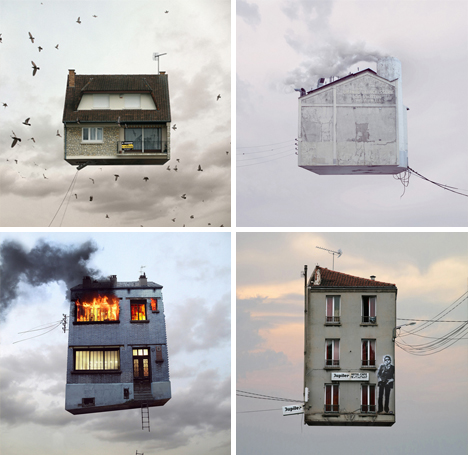
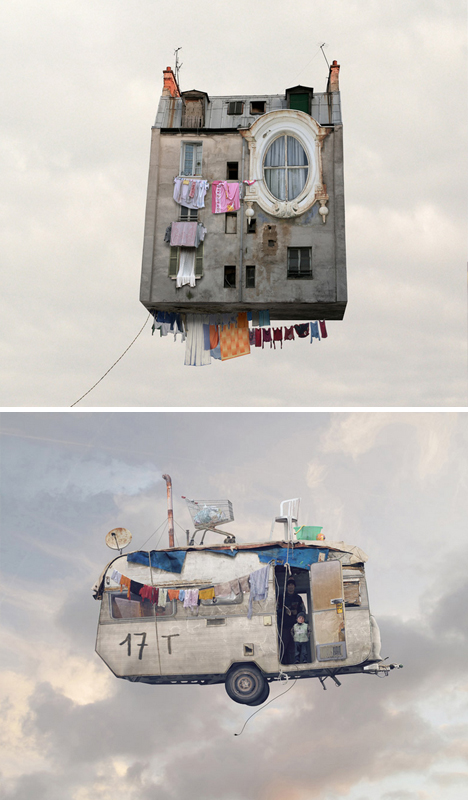
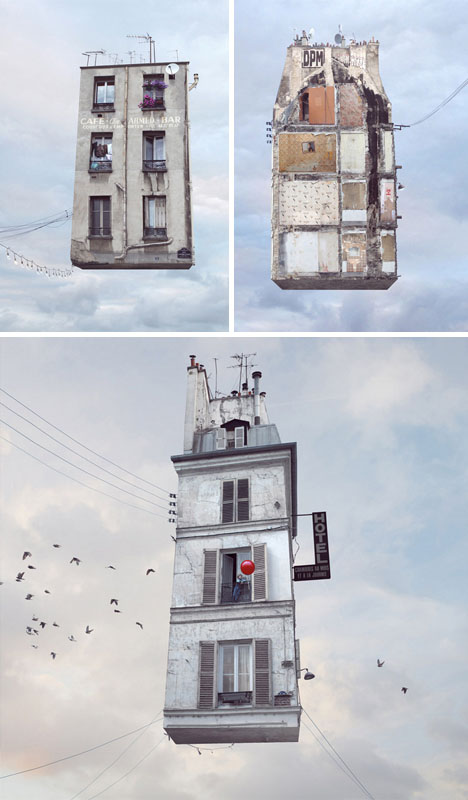
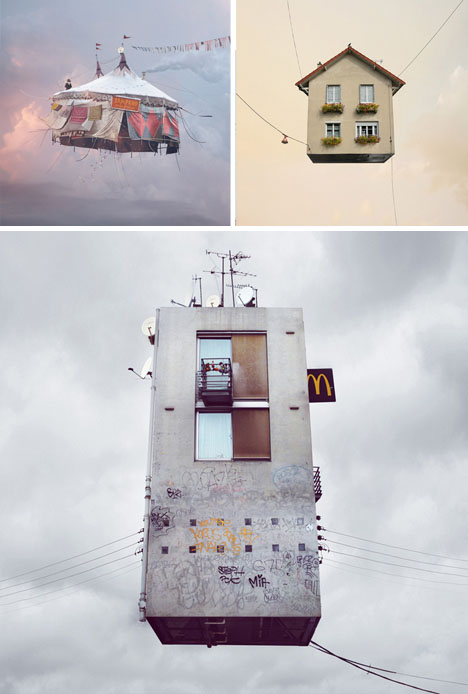
Context – that is the key to taking the ordinary and making it amazing in this series of displaced homes soaring up from forgotten streets of Paris. The results float like an intentionally mundane version of Pixar’s UP, or a modern-day urban Wizard of Oz Tale.

Laurent Chehere picks a range of dwellings, but most are dilapidated and seem perhaps sad in their crowded urban environment. She takes photographs of local buildings, tents and trailers, then photoshops their surroundings into something radically new.

Some are slathered in graffiti – others shown with clotheslines in everyday use. To this, she adds a few whimsical gestures – power lines, strings of lights, earthward ladders and other odds and ends to tie down each piece like a balloon and keep it from floating away.

One consequence of ripping these from the ground and setting them in the sky is simply an enhanced focus on an otherwise-connected building. In these isolating images, townhouses become standalone works, and we start to see them differently.

Share on Facebook


[ By WebUrbanist in Art & Photography & Video. ]

[ WebUrbanist | Archives | Galleries | Privacy | TOS ]


WebUrbanist

 
Comments Off on Airborne Architecture: 12 Images of Flying French Houses

Posted in Creativity