RSS
 

Archive for February, 2013

City Cycle: Curved Urban Tread Wraps ‘Round Bike Tire

21 Feb

[ By WebUrbanist in Design & Graphics & Branding. ]

bike tire city

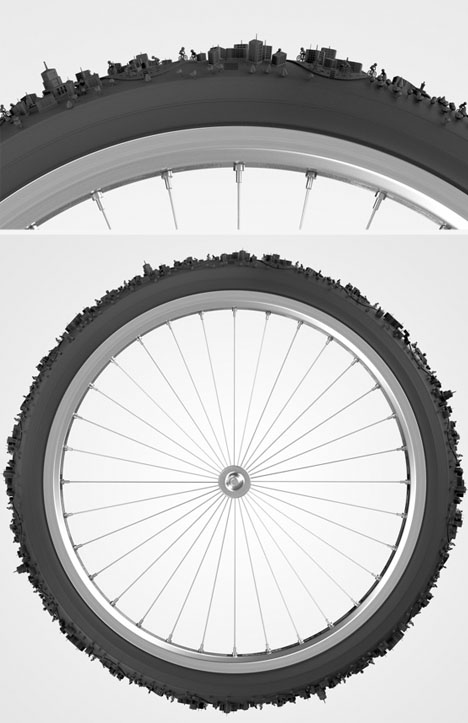
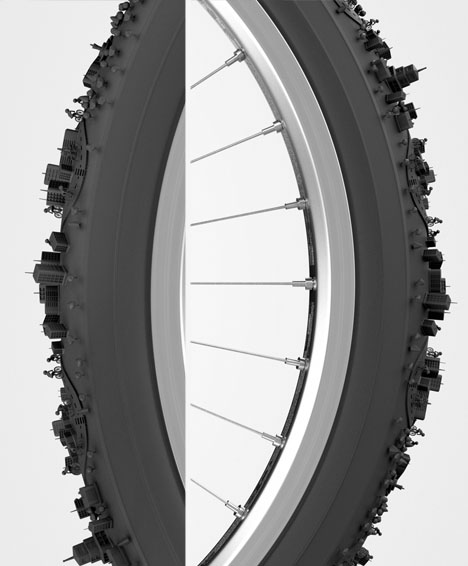
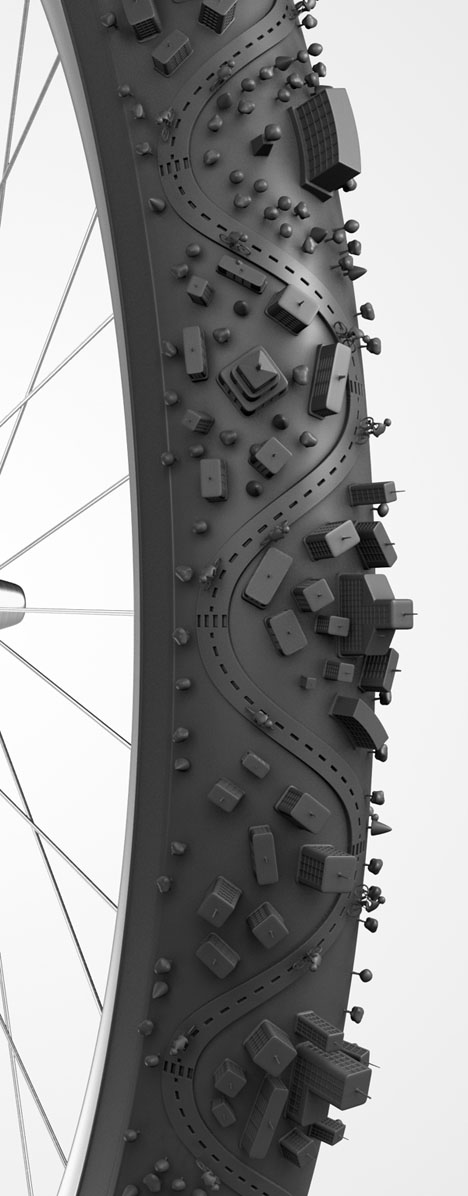
Rough around the edges, we rarely notice the unique landscape that evolves from regular wear and tear on our bicycle tires – this illustration draws on that familiar-yet-foreign topography.

bike tire cityscape concept

bike tire rubber rendering

Bruno Ferrari & Rodrigo Paranhos used Luxology and a little bit of Photoshop to craft this series of images for a creative agency – yes, sadly this is not a prototype for a real rubber bicycle tire tread pattern.

bike tire tread art

bike tire urban design

Yet you have to wonder: why not? If issues of unevenness were resolved, it would sure make a neat additional designer touch for riding around in cities. Either way, it is a neat inversion of the Halo-style ringed landscape concept.

Share on Facebook


[ By WebUrbanist in Design & Graphics & Branding. ]

[ WebUrbanist | Archives | Galleries | Privacy | TOS ]


WebUrbanist

 
Comments Off on City Cycle: Curved Urban Tread Wraps ‘Round Bike Tire

Posted in Creativity


Use Diptychs to Tell a Story

20 Feb

If a picture is worth a thousands words, how much is a diptych (pronounced diptik) worth?

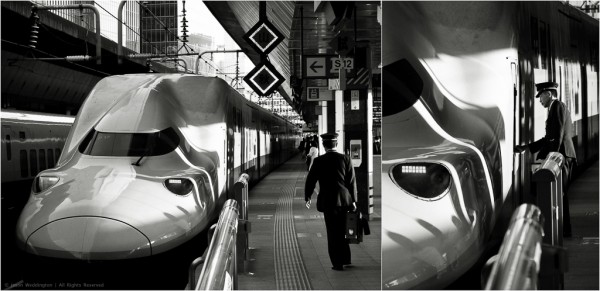
Train conductor walking to a Japanese Bullet train in Tokyo Station, Japan

Train conductor walking to a Japanese Bullet train in Tokyo Station, Japan

Photography is about visual communication: sharing stories, ideas, and feelings through images. A diptych of two images, or parts of two images, is an impactful storytelling tool. Look for thematic, compositional, and other visual synergies that will make your diptychs more powerful than the sum of their parts.

Combine wide angle and telephoto shots

By using a zoom lens, or simply cropping a larger photo, you can combine two images that have different effective focal lengths. This can be used to complete the story and prevent the viewer from asking “what’s going on here,” like in this photo of my son collecting acorns in a park. And by the way, what is it with kids and acorns? I remember stuffing acorns into a plastic soda bottle and keeping them in my bedroom as a child…

Small boy picking up acorns

Boy collecting acorns

This diptych from from an engagement shoot in Kyoto, Japan, tells a story by combining a “before” and “after” image.

Cute couple taking a self portrait with a smart phone

Smartphone portrait

Think about your final aspect ratio

There are endless possibilities here. Factors to consider are how the images work together, as well as your final use for the diptych. If your image will be viewed on computer screen, a horizontal orientation will allow viewers to appreciate a large photo without scrolling. If you’re thinking about printing the photo, or showing it on a tablet or smartphone then this isn’t as much of an issue.

Here are a few diptych aspect ratio templates that I like. These are not hard and fast rules, just some ideas to get you started.

Two square images placed next to eachother

Two square images placed next to eachother

Two 2:3 aspect ratio portrait images placed next two eachother

Two 2:3 aspect ratio portrait images placed next to eachother

Two 3:2 aspect ratio images placed one above the other.

Two 3:2 aspect ratio images placed one above the other.

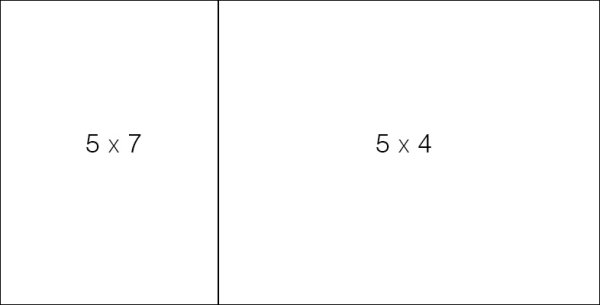
A 5x7 image next to a 5x4 image places the division between the images almost exactly at the golden ratio line of the larger diptych.

A 5×7 image next to a 5×4 image places the division between the images almost exactly at the golden ratio line of the larger diptych.

I hope this article has given you a few new ideas for how to showcase your photos. Feel free to post a link to your diptychs in the comments.

I appreciate feedback, please comment below or feel free to connect with me through Facebook or Google+. I’ll do my best to answer questions and reply to comments.

Post originally from: Digital Photography Tips.

Check out our more Photography Tips at Photography Tips for Beginners, Portrait Photography Tips and Wedding Photography Tips.

Use Diptychs to Tell a Story


Digital Photography School

 
Comments Off on Use Diptychs to Tell a Story

Posted in Photography


Portraits: Geister und ein Kind

20 Feb

In der Ausstellung „Portraits“, die demnächst in der aff Galerie in Berlin anläuft, werden Arbeiten aus der Serie „Geister“ unserer Redakteurin Marit Beer gemeinsam mit Bildern aus „One Child“ von Dvorah Kern präsentiert. Anlass genug, sich Gemeinsamkeiten und Unterschiede der Arbeiten beider Fotografinnen anzusehen.

Zuerst einmal lassen sich Eckdaten ausmachen, die Grund genug sein könnten, gerade diese Bilder nebeneinander zu zeigen. Marit Beer und Dvorah Kern sind beide junge Frauen, die in Berlin leben, arbeiten und analog fotografieren. – Das allein macht aber noch keine zwei Stile, die sich unbedingt vertragen müssen.

Es gibt auch genug Unterschiede. Spannung entsteht durch Nähe, Intimität, ständigem Zusammensein auf der einen und Fremdheit, Herantasten, nur einzelnen kurzen Treffen auf der anderen Seite. Die eigenen Innenwelten finden beide Fotografinnen von ihren Gegenübern reflektiert und halten diese neben den Geschichten, die sich vor der Kamera abspielen, ebenfalls auf Film fest.

Dvorah Kern begleitete die Entwicklung ihrer kleinen Schwester im Alter von etwa 7 bis 14 Jahren fotografisch. Es gab dabei kein gestalterisches Konzept, keinen Anspruch auf Vollständigkeit oder objektive Dokumentation. Stattdessen finden sich Fragmente spontaner Beobachtungen, ungestellter Momente, kindlicher Koketterie auf dem Weg zum Erwachsenwerden.

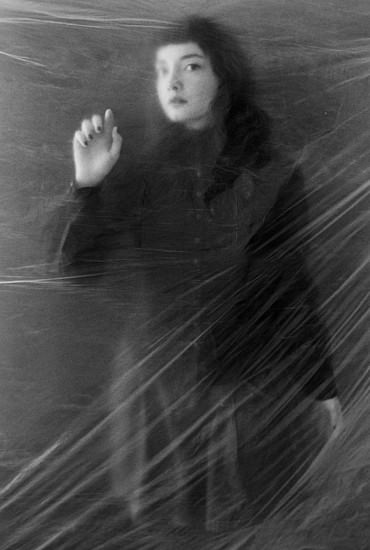
Die wie selbstverständlich vorhandene Nähe zwischen Geschwistern, die nur schwer und selten zwischen völlig Fremden entsteht, fehlte bei Marits Arbeit mit Modellen vollkommen. Durch das Hinzufügen einer noch stärker verfremdenden Ebene – der Folie – machte sie sich auf die Suche nach Nähe zu den fremden Menschen vor ihrer Linse.

Ghosts © Marit Beer

Sie verbergen sich auf Nebelfeldern im Morgengrauen oder des Nachts in unseren Zimmern außerhalb des Lichtscheins der Leselampe, wenn wir die Seiten des Buches weiterblättern. Manchmal erzählen wir ihre schönen, manchmal auch traurigen oder sogar grausamen Geschichten weiter. Und manchmal versuchen wir, sie festzuhalten.

Sie suchte die Details der Geschichten, die sie nur wage von den Fremden kannte. Durch die ort- und zeitlose Struktur der Folie hindurch kann der Betrachter diese Geschichten nun selbst fortsetzen. Inspiriert von den Gefühlen, die die Fremden mit Marit im Bild zwischen den Zeilen eingefroren haben.

So entstehen ähnliche Stimmungen mit Andeutungen des Suchen und Findens von Nähe und Fremdheit, Vertrauen und Kennenlernen, gemeinsamen Jahren oder Momenten – trotz unterschiedlicher Herangehensweisen zwischen Spontanität und Inszenierung, zufälligem Ort und Licht oder arrangierter Stimmung im Nichts.

Ghosts © Marit Beer

Eine Schwester, so nah und vertraut wie einem nur jemand sein kann, wird durch die Entwicklung, durch erwachsenes Anderswerden fremd. Fremde, deren Lebensläufe sich nur für wenige Stunden treffen, um dann wieder auseinanderzudriften, kommen sich für den Hauch eines Augenblicks so nah, dass eine tiefere Verbundenheit in den Graustufen zwischen Schwarz und Weiß festgehalten werden kann – bevor sie mit dem nächsten Windhauch, der durch die Folie fährt, wieder aus Raum und Zeit getragen wird.

~

Ausstellung

Portraits: „Geister“ von Marit Beer, „One Child“ von Dvorah Kern
Zeit: 2. – 24. März 2013
Vernissage am 1. März 2013 um 19 Uhr
Ort: aff Galerie, Kochhannstrasse 14, 10249 Berlin
Link


kwerfeldein – Fotografie Magazin

 
Comments Off on Portraits: Geister und ein Kind

Posted in Equipment


Seeing vs. Photographing the Moon: The Moon Illusion

20 Feb
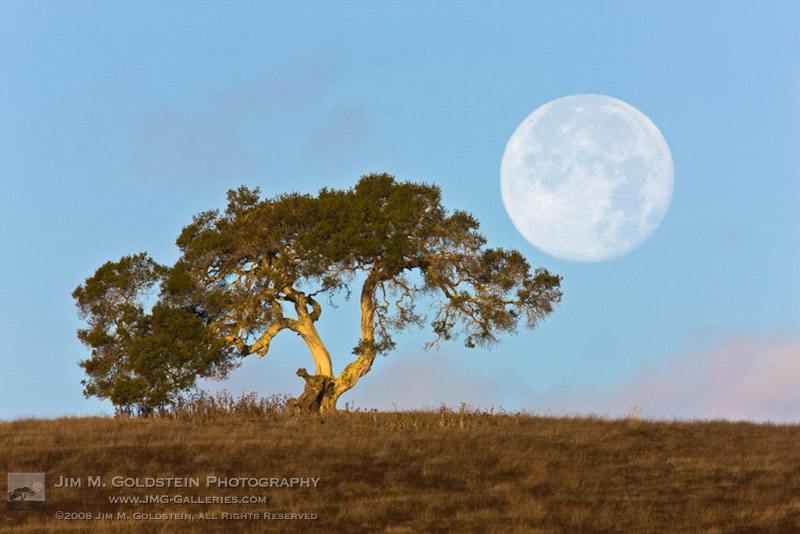
Perigee Moon & California Oak

Perigee Moon & California Oak near the Monterey coast, California

One of the more intriguing visual phenomenon is seeing a giant moon on the horizon. One might think that there is some physical explanation as to why the moon is larger when low on the horizon, but its actually a visual illusion where your brain is playing a trick on you. This illusion is aptly called the “Moon Illusion“. This illusion is incredibly well explained in the following video:

So how do people capture a super large moon in their photographs?
There are a few ways:
1) Use a large telephoto lens to photograph the moon so that it fills a larger portion of the frame
2) Add the moon to a scene using the in-camera technique of double-exposures
3) Use a Photoshop or other image editing software to composite two images together.

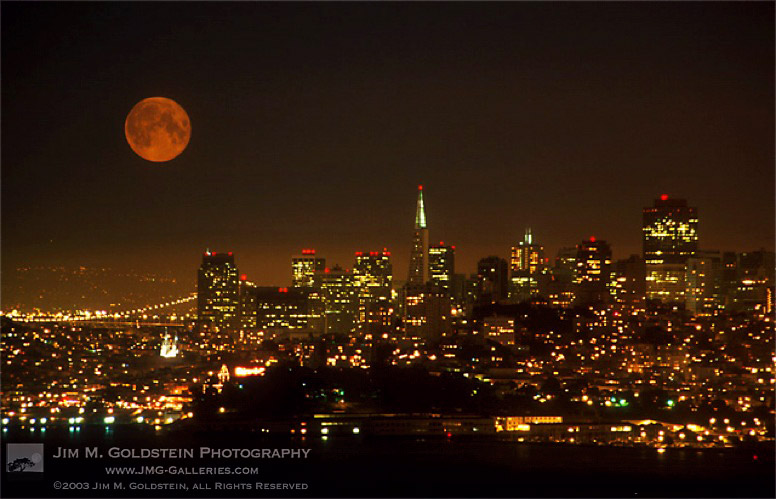
No one way is right or wrong as the end result pursued is at the creative discretion of the photographer. Still some people can get confused between real and altered photos to display large moonscapes. The photo at the top of this post was taken with  a 600mm lens and 1.4x teleconverter for a net focal length of 840mm. The photo below was taken with a 70-300mm lens employing my film cameras double-exposure functionality.

San Francisco Moonrise

Photoshop clearly can provide the fastest path to high impact photos, but not always the most natural rendition. A perfect example of this is comparing the two images of a moon above a Los Angeles skyscraper taken at 105mm. Moon photo composite made with Photoshop versus a straight 105mm photo of the moon. Clearly the first image has had some artistic license applied while the second is a straight representation of what a 105mm lens can capture.

All in all photographing the moon can be incredibly challenging and fun. How you represent the scene you see with your naked eye is up to you, but take into account the “Moon Illusion” when creating your final photo. It might just explain why what you see in your photo doesn’t match up to your memory of the scene.

Copyright Jim M. Goldstein, All Rights Reserved

Seeing vs. Photographing the Moon: The Moon Illusion

The post Seeing vs. Photographing the Moon: The Moon Illusion appeared first on JMG-Galleries – Landscape, Nature & Travel Photography.


JMG-Galleries – Landscape, Nature & Travel Photography

 
Comments Off on Seeing vs. Photographing the Moon: The Moon Illusion

Posted in Equipment


Sony has revealed the Planar T* 50mm F1.8 and a 70-400mm F4.5.6 G SSM II

20 Feb

SAL70400G2_D.png

Sony has revealed the Zeiss-branded Planar T* 50mm F1.8 ZA SSM and 70-400mm F4-5.6 G SSM II A-mount lenses, alongside a redesigned DT 18-55mm F3.5-5.6 SAM II entry-level kit zoom. The redesigned 70-400mm telephoto zoom offers faster autofocus than the existing version and comes in a while body that matches the recent 70-200mm and 500mm G lenses. Meanwhile, the 50mm F1.4 features a dust and moisture resistant design and quiet autofocus.

News: Digital Photography Review (dpreview.com)

 
Comments Off on Sony has revealed the Planar T* 50mm F1.8 and a 70-400mm F4.5.6 G SSM II

Posted in Uncategorized


Sony announces NEX-3N 16MP entry-level mirrorless camera

20 Feb

sony_nex3n.png

Sony has announced the NEX-3N, its entry-level NEX camera, replacing the NEX-F3. The 3N is, as before, aimed at users stepping up from compact cameras and gains a compact-style zoom lever around its shutter button. It features a smaller body than the F3, and Sony says it is the smallest, lightest mirrorless camera to feature an APS-C sensor, despite featuring a built-in flash. The camera will be bundled with the e-mount 16-50mm F3.5-5.6 power zoom lens, to make the most of the camera’s zoom control.

News: Digital Photography Review (dpreview.com)

 
Comments Off on Sony announces NEX-3N 16MP entry-level mirrorless camera

Posted in Uncategorized


Sony announces SLT-A58 20MP mid-level DSLR-style camera

20 Feb

sony_slta58.png

Sony has announced the Alpha SLT-A58, a mid-range SLT camera with a newly-developed 20MP sensor. The A58 will replace both the A37 and A57 models, helping to simplify the company’s lineup. The A58 builds on the A57’s feature set and gains an SVGA (800×600 pixel) OLED viewfinder, rather than its predecessors’ LCDs. It gains a new lock-on focus mode and Auto Object Framing mode – an extension of the auto portrait mode in the A57. It will be sold with a redesigned 18-55mm F3.5-5.6 SAM II kit lens that offers quieter autofocus. The camera is not being launched in the USA at this point.

News: Digital Photography Review (dpreview.com)

 
Comments Off on Sony announces SLT-A58 20MP mid-level DSLR-style camera

Posted in Uncategorized


Sony launches Cyber-shot WX300, HX300 and TX30 compact cameras

20 Feb

sony_dschx300.png

Sony has announced the Cyber-shot DSC-WX300, DSC-HX300 and DSC-TX30 compact cameras. The HX300 is a 50x superzoom with a 24-1200mm equivalent lens in front of a 20MP CMOS sensor. Meanwhile the WX300 is a Wi-Fi compact superzoom that Sony says is the slimmest 20x camera. It has an 18MP CMOS chip behind its 25-500mm equiv. lens. Finally, the tough, waterproof card-style TX30 shares the same sensor and offers a 26-130mm equiv zoom. The three models are not currently being announced in the USA.

News: Digital Photography Review (dpreview.com)

 
Comments Off on Sony launches Cyber-shot WX300, HX300 and TX30 compact cameras

Posted in Uncategorized


Learning to See, Part V

20 Feb

The colour of the object illuminated partakes of the colour of that which illuminates it. – Leonardo da Vinci

In our past columns (see links below) we have discussed such topics as how one colour can complement or distract from a bordering colour. We have also learned that to truly see colour one has to understand how shades of grey are comprised of mere percentages of black ranging from pure white to pure black. A primary objective coming from these discussions should be an understanding of how contrast plays a primary role and is an integral component of the final image.

Let’s look a little deeper into this concept and how we might apply this knowledge in our own picture making.

For the nature photographer there are essentially two core subject matters upon which we will concentrate our efforts, those being critters and where critters live. How each is approached and photographed will depend on a litany of variables, but essentially the one constant is that we will have little control over the lighting. The quality of that light, however, will often decide how we have to approach the image and what type of photograph to make.

Generally speaking, where I live on the Tropic of Cancer, the light will be best up to about two hours after sunrise, and from two hours before sunset. It can also be safely assumed the closer you get to the equator, the more quickly the light will become harsh with contrast and hard edges shadows after sunrise. Conversely, the closer you are to the poles the longer the “golden hours” of nice warm coloured light.  When the sun is high in the sky at noon it is often too harsh and creates far too much contrast to provide good photo opportunities, unless we adjust our approach.

Photo-1

Photo 1

 It has been said that beauty is in the eye of the beholder.  This old gobbler, in photo 1, was having a difficult time locating a mate — evidently it wasn’t just me who thought he was butt ugly. His temperament wasn’t stellar either as I recall, let’s just say this was the last image of the sequence. With that having been said, the photograph was made around high noon and in lighting conditions that had far too much contrast for a pleasing image. By selecting a tight composition to take advantage of the contrasting colour it becomes possible to shoot throughout the entire day. Should this composition not be so tight, the image would have been far less effective. Identify the complementary colours in the scene and allow those to be the focal point while being somewhat oblivious to the subject.  In this case the red is the focal point and is accentuated by the blacks.

Photo-2Photo 2

 If one is driving down a country road around lunch time, some great tunes rockin’ on the radio, a cloudless blue sky overhead, the arm thrust out the window ala truck driver style … well, what could be better?  Why a field full of beautiful sunflowers appearing over the next hill of course.

Should one compare the golden colour of the sunflower to the deep blue sky in image 2, you would soon realize that gold and blue are opposite on the colour wheel. As a consequence of being complementary colours (or very close to) they will immediately create a colour contrast that will work even when the light is harsh. All that remains is to get permission from the farmer to enter his field and compose the image so there are no competing colours in the viewfinder. Voila, you now have a successful photo taken at a time of day when most photographers are having a noonday nap.

If you think of the colour wheel and how colours complement each other you will soon intuitively be making photographs without even thinking of colour theory. When the scene looks good in the viewfinder it usually is, capture the image and analyse it at home.

And remember, if you are having fun you are doing it right.

Read the Full ‘Learning to See Series’ at:

  • Learning to See Part 1
  • Learning to See Part 2
  • Learning to See Part 3
  • Learning to See Part 4

Post originally from: Digital Photography Tips.

Check out our more Photography Tips at Photography Tips for Beginners, Portrait Photography Tips and Wedding Photography Tips.

Learning to See, Part V


Digital Photography School

 
Comments Off on Learning to See, Part V

Posted in Photography


Just Posted: Sony Cyber-shot DSC-RX1 review

20 Feb

Sony_RX1.jpg

Just posted: Our review of the Sony Cyber-shot DSC-RX1. The RX1 is one of the most ambitious cameras Sony has ever built: a full-frame compact with a fixed 35mm F2 lens. Those specifications make the RX1 a high-end, niche camera, as its $ 2,800/€3,100/£2,600 price tag confirms. So how does it perform? We’ve run through the RX1 through our standard tests and looked into its performance and what this unique camera offers. Click here to see what we found.

News: Digital Photography Review (dpreview.com)

 
Comments Off on Just Posted: Sony Cyber-shot DSC-RX1 review

Posted in Uncategorized