RSS
 

Archive for January, 2013

4-Foot-Wide Home in Poland is Now Thinnest in the World

27 Jan

[ By WebUrbanist in Architecture & Houses & Residential. ]

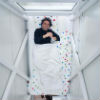
Nestled in the interstitial space between two existing structures and raised up one story from the street sits an improbable structure, proposed then built as an artist-in-residence live/work dwelling of incredible audacity and engineered ingenuity.

We have seen skinny houses and other buildings in places like Japan before, but no single-unit residence that matches this narrow wonder where even the bed is barely wide enough to sleep one.

Transparency, translucency and a tall angled roofs are essential to making the interior feel larger than it is. A bedroom, lounge, bathroom and office are all included at various levels, giving it a sense of separation despite all spaces running (by necessity) along the same plane.

Exposed cross-beams give each wall a sense of depth, and direct the eye up, down and out, enhancing the illusion of openness. And the inspiration for this art-centric abode designed by Bartek Warzecha for the Polish Modern Art Foundation? An extreme short story writer named Etgar Keret.

Share on Facebook


[ By WebUrbanist in Architecture & Houses & Residential. ]

[ WebUrbanist | Archives | Galleries | Privacy | TOS ]


WebUrbanist

 
Comments Off on 4-Foot-Wide Home in Poland is Now Thinnest in the World

Posted in Creativity


ONLY SELLING PARTS!!!1979 dodge powerwagon w200 3/4ton v8 360ci 4X4

26 Jan

1979 dodge w200 power wagon 3/4ton v8 360ci 4wheel drive only parts for sale … it runs good it has 188000miles on body, the engie was rebuilt 65000miles ago, new gear box, new shocks in the front, new header gaskets, new rebuilt 2barrol carb, new tune-up, and many other parts………….the camper top i will let it go for for 8ft bed………..if u got any questions please call me at 586 265 9635 david or email me at redneckdavid69@yahoo.com PS.. im only selling parts it has good running motor 0, good transpercase 0, and good front & rear axles with 4.11 gear ratio!!!0; it has good solid hood 0; tailgate 0, grille , receiver hitch , rear bumper , it has a lot good part, steering wheel, wire harness, all the glass, and mirrors…. rest of the parts r poor to me like the cab, doors, finders, seat, frame and bed they already been scarped!!! the parts will fit 1972,73,74,75.76,77,78,1979 d100, d200, d300 w100 w200, w300 or ramcharger

SUB!!!
Video Rating: 0 / 5


Trains and Rails – A West Coast Experience – The Watford Gap to Greenholme

26 Jan

The West Coast Mainline has always attracted the serious railway enthusiast due to its attractive line side locations and stations. In this DVD we visit 12 locations with helpful maps of where the footage was taken, informative narration and train head codes. Famous locations like Millmeece and the now closed Norton Bridge Station both offer the discerning photographer excellent opportunities, as do the fabulous surroundings of the Cumbria Fells. Locomotive types featured include 220 Voyager, Class 37s, 47s, 57s, 60s and Class 390 Pendolino. Workings featured include Holyhead/Birmingham, coal, steel, stone, containers and postal. It is a pure train watching experience, beautifully filmed and a must for the avid railway enthusiast.
Video Rating: 0 / 5

 
Comments Off on Trains and Rails – A West Coast Experience – The Watford Gap to Greenholme

Posted in Photography Videos


Nice Visual Art photos

26 Jan

Check out these visual art images:

Anna Packwoods100th Birthday guests
visual art
Image by ocean.flynn
In the mid-1990s Anna Packwood’s family and friends came from across continents to celebrate her 100th birthday. This was the culmination of research on the Positive Presence of Absence: a history of the African Canadian community through works in the collection of the National Gallery of Canada. I can honestly say that of the ten years working at the NGC, this impromptu gathering — which almost did not happen because of security concerns over the large numbers and the last-minute arrangements — this was the high point of a decade of work there.

One of the catalysts for my research in the early 1990s was a conversation with Fritz Benjamin, a Haitian-Canadian who was working at that time as a security guard. He asked me who Tommy Simmons was, the man portrayed in the larger than life bronze bust prominently displayed in the water court. I didn’t know but once I started looking there were more questions about more works of art. After sharing my interests with Mairuth Sarsfield, author of No Crystal Stairs and her sister Lucille Vaughan-Cuevas they became my mentors. Lucille in particular spent hours with me clarifying histories. I eventually met other members of the Montreal community and wove various fragments together so I could present this walking tour to friends, then to fellow graduate students and finally to the public. It was a personal project that the Gallery promoted from 1995-1997 when they advertised it and offered it as a contract tour.

The image is my first experiment in using Adobe Photoshop to create transparent .png images. I needed to learn .png for my new Google Earth community.

The Adobe Photoshop layers include Anna Packwood on the lower left, with a bronze of her daughter, Lucille Vaughan, an activist, educator and librarian. Beside them is Dr. Carrie Best, pioneer Nova Scotia journalist, activist and author. To the right of the water court is Jennifer Hodge Sarsfield, Anna Packwood’s granddaughter ,a pioneer in Canadian film narratology and beside her is the cover of Mairuth Sarsfield’s book entitled No Crystal Stairs, which was on the short list for Canada Reads. A photograph taken in that part of Montreal Mairuth called ‘burgundy city’ shows Mairuth, Susan and Lucille, Anna Packwoods, daughters in the 1940? The collage of the family and friends from across the States, Canada and the Caribbean wasn’t large enough to include them all.

In the 1920’s awareness of black culture spread from Harlem in New York across the continent and the ocean. During this Renaissance African American arts and literature reached new pinnacles of celebrity. Marcus Garvey, Paul Robeson, Langston Hughes, Duke Ellington and Louis Armstrong inspired Canadians. Visual artists in Canada attempted to reverse negative stereotypes of black subjects. This sculpture of Tommy Simmons, which celebrates both his blackness and his individuality, gave the emerging artist Orson Wheeler a sense of accomplishment. Simmons was a Montreal sleeping car porter for forty-three years. Work conditions were difficult. The transcontinental trips meant days away from home. Severe employment limitations were placed on black workers. Many, including those with higher education, even doctors and lawyers, were obliged to become porters. Sleeping car porters became the economic elite and catalysts of change in African Canadian communities. Tommy Simmons was a dedicated coach of winning teams. His integrated baseball teams which included girls of African, French and Italian descent, were unprecedented in the 1940’s and 1950’s. Because he was bilingual he entered tournaments in French and English communities from Chicoutimi, Québec to St. John, N.B. [Interviews with Carl Simmons and B. Jones, 1995]

Visit my blog for more reading on African Canadian history

Woman in a Striped Dress
visual art
Image by cliff1066™
Woman in a Striped Dress, 1895, oil on canvas by Edouard Vuillard

Vuillard belonged to a quasi-mystical group of young artists that arose in about 1890 and called themselves the Nabi, a Hebrew word for prophet. The Nabi rejected impressionism and considered simple transcription of the appearance of the natural world unthinking and unartistic. Inspired by Gauguin’s work and symbolist poetry, their paintings evoke rather than specify, suggest rather than describe. Recognizing that the physical components of painting — colored pigments arranged on a flat surface — were artificial, they considered as false the traditional convention of regarding paintings as re-creations of the natural world.

Woman in a Striped Dress is one of five decorations Vuillard painted in 1895 for Thadée Natanson, publisher of the avant-garde journal La Revue Blanche, and his wife Misia Godebska, an accomplished pianist. The five, which differ in size and orientation, are intimate, self contained interiors, Vuillard’s principal subject. All display rich harmonies in a restricted range of color and densely arranged in intricate patterns. The introspective woman arranging flowers here perhaps represents the red-haired Misia, whom Vuillard admired greatly. Vuillard adopted the symbolist idea of synesthesia, whereby one sense can evoke another, and in Woman in a Striped Dress the sumptuous visual qualities of Vuillard’s reds may suggest the lush chords of music that Misia performed.

www.nga.gov/fcgi-bin/tinfo_f?object=61388&detail=none

Malvina Hoffman, American sculptor 1885-1966 (at right), and Anne Morgan, philanthropist, standing in front of relief of St. Francis of Assisi.
visual art
Image by Smithsonian Institution
Description: Malvina Hoffman is best known for her commission to sculpt a head of each race of man by the Field Museum of Natural History in Chicago. She spent 5 years traveling the world, getting frostbite on the island of Hokkaido modeling Ainu tribe members and adventuring in the jungles of Bali where she sculpted the lovely temple dancers. In all, over 100 ethnographic types were sculpted for the installation called the Hall of Man. She had a gift for capturing the essence of movement in her other works and specialized in sculptures of dancers as well. Outside of art, she was passionate about seeking aid for refugees, and worked for Yugoslavian relief after World War I.

Creator/Photographer: Peter A. Juley & Son

Medium: Black and white photographic print

Dimensions: 8 in x 10 in

Culture: American

Date: 1930

Persistent URL: http://photography.si.edu/SearchImage.aspx?id=5826

Repository: Smithsonian American Art Museum, Photograph Archives

Collection: Peter A. Juley & Son Collection – The Peter A. Juley & Son Collection is comprised of 127,000 black-and-white photographic negatives documenting the works of more than 11,000 American artists. Throughout its long history, from 1896 to 1975, the Juley firm served as the largest and most respected fine arts photography firm in New York. The Juley Collection, acquired by the Smithsonian American Art Museum in 1975, constitutes a unique visual record of American art sometimes providing the only photographic documentation of altered, damaged, or lost works. Included in the collection are over 4,700 photographic portraits of artists.

Accession number: J0001710

 
Comments Off on Nice Visual Art photos

Posted in Photographs


Canon EOS Rebel T3 / 1100D Video Test Foootage

26 Jan

Some Shots were filmed at very awkward angles without tripod, so they are shaky. Also, a lot were filmed through windows, because it was rainy. Just got my new Canon T3, and i love it. I use it for videos as well as photos. It has auto focus and manual. my favorite feature is the button that zooms in on the image on the screen, so you can focus it more accurately. Love this camera,
Video Rating: 4 / 5


Pool Action Shots

26 Jan

Taken with a Nikon D1 Digital SLR Camera My friend in it was D-ROCK
Video Rating: 2 / 5


Der Fuchs: bejagt, verdrängt und wunderschön

26 Jan

Ein Beitrag von: Hermann Hirsch

Der Fuchs hat es oft nicht leicht. Er wird stark bejagt, seine Lebensräume und Nahrungsangebote verknappen sich häufig, Krankheiten setzen ihm zu und auch im Volksmund ist er nicht gerade beliebt.

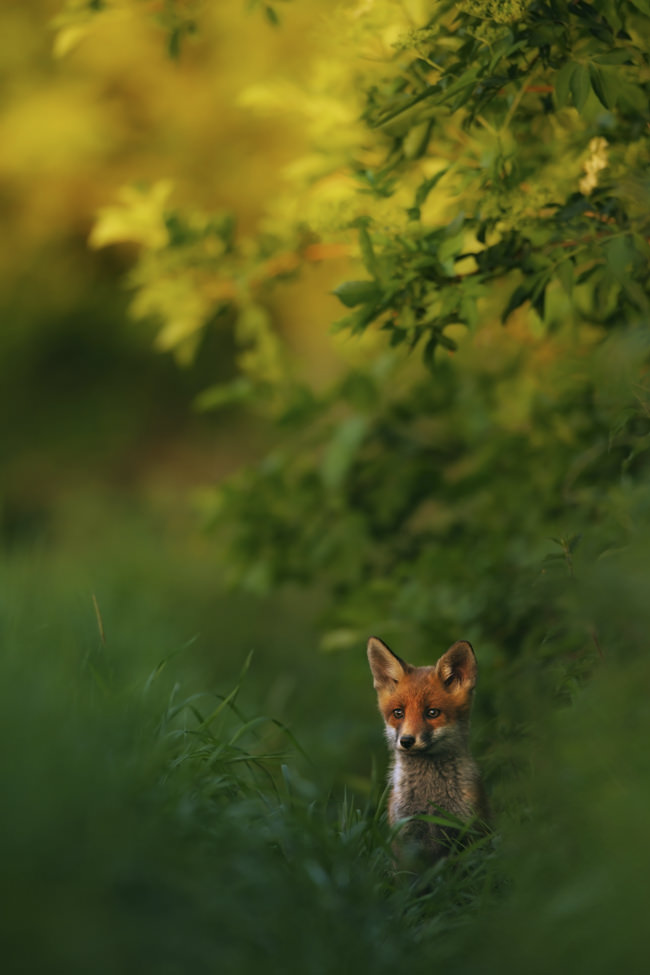
In Wahrheit ist der Fuchs ein sehr schlaues, schönes und zu unrecht so häufig gehasstes Tier! Im Frühjahr 2011 fing ich an, Fuchsbauten in meiner direkten Wohnumgebung in Dortmund zu suchen, um ein Fotoprojekt zu starten, das mir einfach nicht mehr aus dem Kopf gehen wollte.

Einen schönen Fuchsbau zu finden, der im Optimalfall möglichst ungestört liegt und abends noch etwas Sonne abbekommt, ist eine nicht ganz leichte Aufgabe, da in einer Stadt wie Dortmund jede noch so kleine Grünfläche von häufig leider sehr rücksichtslosen Hundebesitzern frequentiert und somit für Füchse beinahe unbewohnbar wird.

Nach einigen Wochen des Umhörens, Auskundschaftens und gezielten Suchens fand ich tatsächlich einen befahrenen Bau mit Jungfüchsen auf einem Feld nur wenige Fahrrad-Minuten von meinem Zuhause entfernt.

Das war Ende April und ich fing sofort an, den Bau jeden Tag zu besuchen und die kleinen zu beobachten.

Nach ein bis zwei Wochen wagte ich mich nach und nach etwas näher an den Bau heran und stellte fest, dass trotz Rückenwind die kleinen Füchse nicht viel Angst vor mir hatten. Wenn ich meine Tarnung jedoch vorsichtig ablegte, so reagierten sie deutlich scheuer.

Doch auch so folgten unbeschreiblich schöne drei Wochen des Fotografierens, in denen ich jeden Tag bis zu fünf Stunden vor Ort war.

Natürlich erzählte ich auch dem einen oder anderen Fotokollegen von meinem Glück und nahm einen guten Freund von mir auch einmal mit zum Bau. Was mich nicht überraschte, war, dass die Füchse plötzlich vollkommen anders reagierten, da sie meinen Freund als fremd und neu wahrnahmen.

Sie schienen eine Art von Vertrauen zu mir aufgebaut zu haben, was mir ein gutes Gefühl gab, da ich mir häufig anhören musste, dass man mit Wildtieren nicht so umzugehen hat, weil sie sonst beispielweise in die Städte kommen und im Müll nach Fressbarem suchen.

Die Füchse wuchsen rasch heran und wurden immer selbstständiger. Ihre Streifzüge wurden länger und die Füchse entfernten sich immer weiter vom Bau. Ende Mai wartete eine vier-tägige Finnlandreise auf mich, die ich nicht verschieben konnte und auch nicht absagen wollte.

Ich verließ also schweren Herzens Deutschland und „meine“ Füchse, um im Norden Küstenseeschwalben fotografieren zu gehen. Als ich wieder zurück kam, war meine erste Tat selbstverständlich, die Füchse besuchen zu gehen.

Zu meiner Enttäuschung konnte ich keine Füchse entdecken – sie waren während meiner Abwesenheit ausgezogen und selbständig geworden. Von den Erlebnissen aus 2011 angespornt, machte ich mich im Frühjahr 2012 noch früher als im vergangenen Jahr auf die Suche nach den kleinen roten Vierbeinern.

Am gleichen Bau wie im Jahr zuvor schienen sie leider nicht zu sein, doch am Nachbarbau, der keine 100 Meter neben dem alten lag, tat sich etwas. Mit der Wildkamera observierte ich über Wochen das Verhalten der Fähe, die den Bau regelmäßig besuchte und auch das eine oder andere Junge konnte ich nachweisen.

Leider kamen die Jungen so gut wie gar nicht im Tageslicht an die frische Luft, was das Fotografieren für mich unmöglich machte.

Es verging Woche für Woche und die Füchse wuchsen heran, ich blieb jedoch vollkommen ohne brauchbare Fotos! Bei meinem 67. Besuch des Baus sah ich endlich, worauf ich so lange gewartet hatte: Drei junge Füchse spielten vor dem schönsten der vier Eingänge des Baus drei Stunden lang vor dem Sonnenuntergang.

Direkt am nächsten Tag saß ich mit voller Kameraausrüstung bereit. Die Kleinen kamen nicht. Es dämmerte… nichts! Doch dann, als ich gerade einpacken wollte, kamen zwei der kleinen Racker raus, schnupperten kurz, lieferten sich eine kleine Rangelei und waren auch schon wieder verschwunden.

Es sollten die einzigen schönen Momente sein, die ich 2012 zusammen mit Füchsen verbringen durfte.

Am Folgetag war ich natürlich direkt wieder vor Ort und sah schon aus der Entfernung einen Jungfuchs etwa zehn Meter vom Bau entfernt auf dem Boden liegen und ruhen. Ich näherte mich, was der Kleine völlig ignorierte.

Aus einer Entfernung von zehn Metern beobachtete ich ihn. So langsam begann ich mich zu wundern, denn auch wenn Jungfüchse zumeist keine große Scheu haben, so sind sie doch an allem Neuen immer sehr interessiert.

Ganz offensichtlich stimmte hier etwas nicht – es ging dem kleinen Jungfuchs ganz und gar nicht gut. Er versuchte aufzustehen, was ihm nicht richtig gelang. Immer wieder brachen seine Beine weg, fiel er um.

Er schleppte sich ins Feld, um dort völlig apathisch kleine Kreise zu ziehen und sich letztendlich geschützt zwischen dem Getreide auf den Boden zu legen – er sollte nicht mehr aufstehen.

Es folgten qualvolle Momente, in denen der Kleine von Krämpfen geschüttelt auf dem Boden lag und jaulende Laute von sich gab. Während die Muskelkrämpfe wie Blitze durch seinen Körper schossen, saß ich in einiger Entfernung und fühlte mich vollkommen hilflos.

Nach 40 schrecklichen Minuten des Leidens hörte das Jaulen auf – der Fuchs war tot.
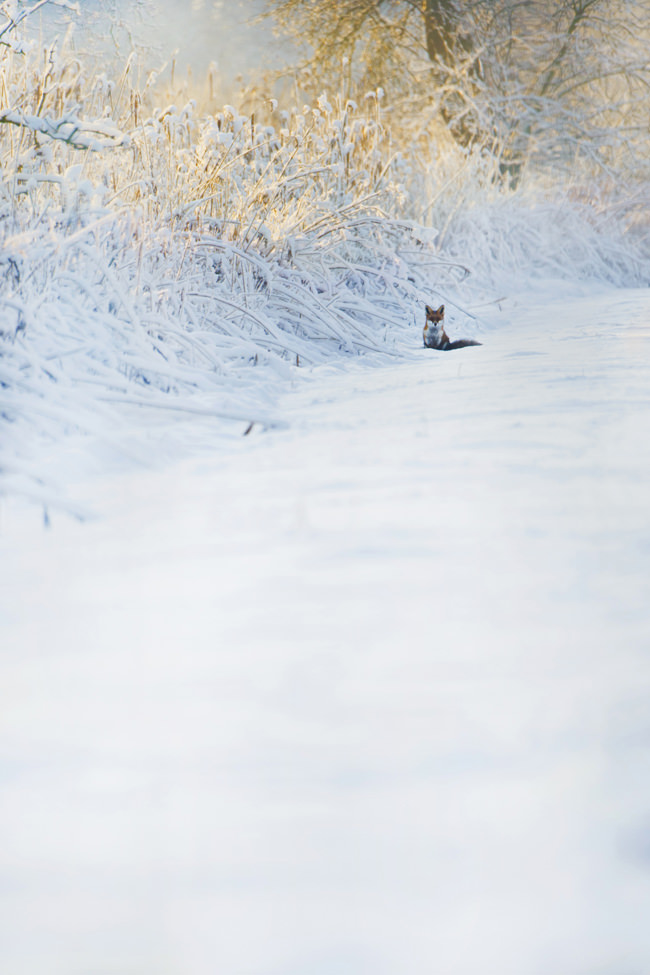
Es ist recht wahrscheinlich, dass all seinen Geschwistern dasselbe widerfahren ist, da die Symptome auf Staupe, eine Virusinfektion, hindeuten, die sich unter den kleinen Füchsen sehr schnell verbreitet.

Hierbei konnte ich leider nichts tun, da selbst, wenn ein Tierarzt sofort herbeigeeilt wäre, er bei einem Jungtier keine sichere Behandlung hätte durchführen können.

Sich diese Tragödie anschauen und völlig machtlos daneben stehen zu müssen, war sehr hart. Natürlich war das nicht die Saison, die ich mir vorgestellt hatte. Das Projekt für 2012 ist mit den Jungfüchsen gemeinsam gestorben.

Ich war 2012 in drei Monaten 70 Mal am Bau, was ungefähr einer Zeit von 50 Stunden entspricht. Der Traum, meine Fuchsserie aus dem vorherigen Jahr fortzusetzen, ist also trotz sehr großer Vorbereitungsmaßnahmen auf traurige Art und Weise zumindest für dieses Jahr gescheitert.

Ich erhoffe mir – aber besonders für die Füchse, die ich so liebe – ein besseres Frühjahr 2013. Dann hoffentlich mit so schönen Ergebnissen wie im Jahr 2011, als ich die Füchse bei den ersten Wochen ihres Lebens begleiten durfte.


kwerfeldein – Fotografie Magazin

 
Comments Off on Der Fuchs: bejagt, verdrängt und wunderschön

Posted in Equipment


Episode 320 – 31-05-2004

26 Jan

Abhimanyu confronts Kiran about the money but she reminds him that she was the one who was working during the last few months, so the money was hers. Akshay cautions Kiran to be careful of Abhimanyu because of a likely attack from him. Saurabh shows Kavita s letter to Rohit and informs him that Rashmi wants to fulfil Kavita s dying wish. Rohit asks Rashmi to think calmly. Rohit eventually relents for the marriage. Saurabh informs Simran about Rohit s consent. Pranay is told about Rashmi and Rohit s wedding by her family. An upset Pranay asks them not to get Rashmi married.
Video Rating: 5 / 5

 
Comments Off on Episode 320 – 31-05-2004

Posted in Photography Videos


2D Photography Rube Goldberg Machine

26 Jan

facebook.com 2dhouse.com – This is our Photography-themed Rube Goldberg Machine. We hope you all enjoy the clip! Watch our video explaining some of the process of getting this video done here: youtu.be You can watch the teasers we put out in the months leading up to our Rube Goldberg Machine here: Teaser #1: youtu.be Teaser #2: youtu.be Special thanks to everyone who helped make this video possible!! Check out the blog post above for more information.
Video Rating: 4 / 5


Nice Visual Art photos

26 Jan

Check out these visual art images:

Les brouillages / Scrambled – 17
visual art
Image by jlndrr
This series is part of an ongoing research on visual ways to dissolve pornographic imagery in abstraction and absurd.

For the Scrambled series, using video footage downloaded from Internet, I exploit the artifacts, errors, blurs inherent to heavy digital compression and incomplete files.

Dozens of snapshots are generated. Here, the creative process in itself rely on selecting the right images : identifiable as pornographic, but somehow deactivated.

 
Comments Off on Nice Visual Art photos

Posted in Photographs