RSS
 

Archive for December, 2012

Wheely Great Ideas: 10 Bodacious Bike Technology Concepts

12 Dec

[ By Delana in Technology & Vehicles & Mods. ]
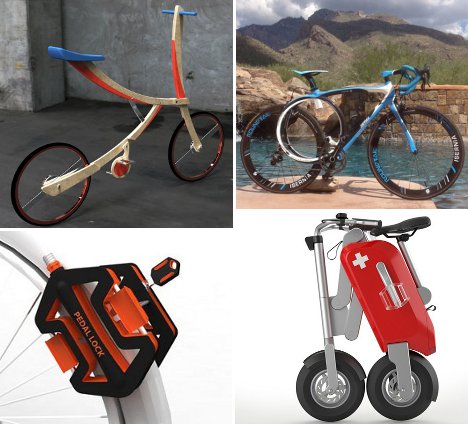
The bicycle has been a favorite form of transportation for around two centuries, and every generation adds its own advances and accessories to the time-tested design. Living in the technology age as we do today, bike-related advances abound. These 10 concepts use high technology, advanced design skills, and plain old common sense to create some truly useful and beautiful bikes and bike-related accessories.

Samurai Sword Folding Bike

(images via: Nick Domanski)

Folding bikes are perfect for people who ride to work or school and then need to stash the bike somewhere during the day. They fold up into very small sizes, but they aren’t always easy to carry around or to fit under a desk or into a coat closet. The Odachi Folding Bike concept from design student Nick Domanski makes it a bit easier – and a lot more attractive – to carry around a folded bike. When in its smallest form, the Odachi bike can be either pulled along behind the rider or strapped onto the back like a samurai sword. Although the chain and brakes do not appear in the rendered images, the Odachi bike would work just like any other bike.

Twist Tandem Bike

(images via: Jose Hurtado)

The Twist bike doesn’t strive to break down into the smallest package possible; instead, it wants to expand. The concept from designer Jose Hurtado features a symmetrical frame and hubless wheels, one of which can connect to another frame to form a tandem bike. The freedom to ride single or double on this modern bike makes it an unusual but stylish choice for biking enthusiasts.

Revolutionary Roundtail Bike

(images via: Roundtail)

The Roundtail is a truly world-changing modification to the typical bike frame. Rather than the familiar triangular frame configuration which is full of straight lines, the Roundtail features a frame with a circle in the center. This circular frame acts as a sort of shock absorber, making riding a bike far less painful for cycling enthusiasts.

Swiss Army Knife-Inspired Folding Electric Scooter

(images via: Voltitude Switzerland)

The Voltitude V1 was invented by a Swiss father and son design team who took their inspiration from Swiss Army knives and from scooters. The folding electric bike features wide wheels to get it over the urban terrain, electric assisted pedaling and a silent, zero-emission ride. But the most notable feature of the Voltitude V1 is its ability to fold up like the famous Swiss Army knife into a small package – small enough to be stowed in a trunk or closet.

The Greencycle

(images via: Paulus Maringka)

Can a bike really change the world? The Greencycle may do just that. The lightweight but tough bicycle is built of sustainable, affordable bamboo and metal joining brackets. The bike is modular and all parts of it can be easily replaced in the event of breakage. Meant for third-world countries where bikes are the most efficient and sensible means of transportation for vendors and farmers, the Greencycle also features built-in attachment points and platforms for heavy cargo.

Expanding Wheel City Bike

(images via: Yanko Design)

The Smart City Cycle from designer Yo-Hwan Kim takes a novel approach to the concept of the cargo bike. Rather than adding a shelf or hook to the bike’s frame, the designer simply integrated a cargo compartment into the rear wheel. A regular hubless wheel takes the rider to and from work or school every day, but on those days when a stop at the grocery store is necessary a cargo wheel can be fitted to the back of the bike. The cargo wheel holds a load securely in place while increasing the bike’s wheel base to create a stable ride.

Bike Seat Tire Pump

(images via: BioLogic)

Minimizing the stuff you carry – and thus the weight of your cargo – is important for making the most of your bike ride. But there are some essentials that you need to have for longer rides, including a pump to reinflate tires. BioLogic’s clever PostPump 2.0 Seatpost is a bike pump built into a bicycle seatpost. When you need to inflate a tire, the pump easily detaches from the bike’s frame and the seat acts as a handle.

Airless Bike Tires

(images via: Energy Return Wheel)

Of course, a bike tire pump would not be necessary if the cycling world adopts the incredible Energy Return Wheel (ERW). This airless tire features a honeycomb layer of rubber where the air would normally be in a standard tire. As the ERW rides over obstacles and rough terrain in the road, the energy from those little impacts is turned into forward propulsion. This helps the rider move along with less effort – and as an added bonus, there is no need to ever worry about flat tires.

LED Handlebars

(images via: Mitchell Silva)

There are plenty of products meant to keep cyclists safe in the dark, but the Globars are a smart twist on the subject. The handlebars are lit up brightly with LEDs and function as safety lights, headlights and turn signals all in one. Because the turn signal buttons can be activated while the rider’s hands are still on the handlebars, these safety devices are truly safe.

Bike Pedal Lock

(images via: Cheng-Tsung Feng)

Keeping your bike safe while you aren’t on it is an important concern for any bike owner. The Pedal Lock is a neat concept product that would use the bike’s own pedals as security devices. You don’t have to carry a heavy lock around because it’s built right into your pedals, and thieves who try to simply take off the tire to steal your bike from the rack wouldn’t be able to ride it away thanks to the missing pedals.


Want More? Click for Great Related Content on WebUrbanist:

Riding High: 30 Outrageous Bike Mods

One way to get more people to start traveling via pedal power is to add a little creativity to an otherwise mundane form of transport.
9 Comments – Click Here to Read More »»


Bike Campers: 12 Mini Mobile Homes for Nomadic Cyclists

Who says you can’t camp in luxury when taking a bicycle tour? These 12 bike trailers
6 Comments – Click Here to Read More »»


Share on Facebook


[ By Delana in Technology & Vehicles & Mods. ]

[ WebUrbanist | Archives | Galleries | Privacy | TOS ]


WebUrbanist

 
Comments Off on Wheely Great Ideas: 10 Bodacious Bike Technology Concepts

Posted in Creativity


AntiVJ – SONGDO

12 Dec

AntiVJ presents: SONGDO an audiovisual performance, August 2009 New Songdo city, South Korea. Full details: www.antivj.com
Video Rating: 5 / 5

 
Comments Off on AntiVJ – SONGDO

Posted in Nikon Videos


DC SHOES: REDISCOVER MIKEY TAYLOR

12 Dec

Skateboarding has given more to Mikey Taylor than he ever thought possible. And with a new signature shoe on DC, he’s rediscovered that for him, the best time in skateboarding is right now. Here’s Mikey’s Rediscover video for his new signature shoe, the Mikey Taylor S. The Mikey Taylor S is available now: bit.ly Edited By Chris Ray Ryan Loughridge Filmed By Chris Ray Jimmy Astleford Ryan Loughridge Frankie Martinez Matt Mullen Leigh Bolton Heath Brinkley Aaron Chilen Cody Green Photography By Mike Blabac Music By The National “Terrible Love (Alternate Version)”

www.jasonmraz.com facebook.com twitter.com Congratulations to @alijardine, @amandampb, @cguggs, @chowda, @corey89, @daniellecoons, @dannilyn, @earthcaptured, @elgwicole, @emilywhite4031, @gooniegirl, @hellokittykat11, @jag109, @krissy_lin, @ldugdale, @lisandypants, @maggggggg, @misvincent, @nrandaz, @paigee1185, @reallyruff, @rycar, @sarzola1, @taylortrgovac, and @weissbro — and thank you to everyone who submitted their photo! jasonmraz.com
Video Rating: 4 / 5

 
Comments Off on DC SHOES: REDISCOVER MIKEY TAYLOR

Posted in Photography Videos


Nice Visual Art photos

12 Dec

A few nice visual art images I found:

experimental art
visual art
Image by dietmut
koolster

v2 da biblioteca
visual art
Image by Eduardo Loureiro
Infelizmente os agatha christie não cabem mais.

Então, nessa ordem:

DEMPSEY, Amy. Estilos, escolas e movimentos – Guia enciclopédico da arte moderna. Tradução: Carlos Eugênio Marcondes de Moura. São Paulo: Cosac Naify, 2003.

HURLBURT, Allen. Layout: o design da página impressa. São Paulo: Nobel, 2002.

BRINGHURST, Robert. Elementos do Estilo Tipográfico. São Paulo: Cosac Naify, 2005.

BESSA, José. Diário de Bordo. Rio de Janeiro: 2AB, 2004.

MUNARI, Bruno. Design e Comunicação Visual: Contribuição para uma Metodologia Didática. São Paulo: Martins Fontes, 2001.

FARINA, Modesto. Psicodinâmica das cores em comunicação. 4 ed. São Paulo: Edgard Bluchor, 2003.

PÉON, Maria Luiza. Sistemas de identidade visual. Rio de Janeiro, 2AB editora, 3º edição, 2001.

NIEMEYER, Lucy . Elementos de Semiótica Aplicados ao Design. 1. ed. Rio de Janeiro: 2AB Editora, 2003.

FILHO, João Gomes. Gestalt do Objeto – Sistema de Leitura Visual da Forma. São Paulo, Escrituras, 2004.

FALCONI, Vicente. O Verdadeiro Poder – Práticas de Gestão que Conduzem a Resultados Revolucionários. 1 ed. Minas Gerais: INDG Tecnologia e Serviços Ltda, 2009.

REIS, Abel. Trendzoom – um Olhar Local Sobre Tendências Globais de Comportamento do Consumidor. 2008.

KELLEY, Tom. The Ten Faces of Innovation: IDEO’s Strategies for Beating the Devil’s Advocate & Driving Creativity Throughout Your Organization. New York: Doubleday, 2005.

LOCKWOOD, Thomas. Design Thinking : Integrating Innovation, Customer Experience, and Brand Value. New York: Allworth Press, 2010.

BROWN, Tim. Change by Design: how design thinking transforms organizations and inspires innovation. HarperCollins, New York, 2009.

VERGANTI, Roberto – Design Driven Innovation: Changing the Rules of Competition by Radically Innovating What Things Mean. Harvard Business Press, 2009.

MIETTINEN, Satu; KOIVISTO, Mikko (eds.): Designing Services with Innovative Methods. Keuruu: Otava Book Printing Ltd, 2009.

STANLEY, King. Co-Design: a Process of Design Participation. New York: Van Nostrand Reinhold, 1989.

LECOMPTE, Margaret D.; JEAN J. Schensul. Designing and Conducting Ethnographic Research. Walnut Creek: Altamira Press, 1999.

DEMO, Pedro. Pesquisa e informação qualitativa. Campinas: Papirus, 2001.

GARRETT, Jesse James. The Elements of user Experience: User–Centers Design for the Web. Indianapolis (Indiana), 2003.

MOGGRIDGE, Bill. Designing interactions. Cambridge, MA: The MIT Press, 2007.

NORMAN, Donald. O design do dia-a-dia. Rio de Janeiro: Rocco, 2006.

NORMAN, Donald. Design emocional: por que adoramos (ou detestamos) os objetos do dia- a-dia. São Paulo: Rocco, 2008.

Technology Review: MIT Magazine of Innovation, 2008:April.

ACM interactions magazine, 2009, v.16, n.5.

ACM interactions magazine, 2009, v.16, n.6.

ACM interactions magazine, 2010, v.17, n.1.

ACM interactions magazine, 2010, v.17, n.2.

ACM interactions magazine, 2010, v.17, n.3.

ACM interactions magazine, 2010, v.17, n.4.

PREECE, Jenifer; ROGERS, Yvonne; SHARP, Helen. Design de interação: além da interação homem-computador. Porto Alegre: Bookman, 2005.

SAFFER, Dan. Designing for Interaction: Creating Smart Applications and Clever Devices, New Riders, 2007.

LÖWGREN, Jonas; STOLTERMAN, Erik. Thoughtful interaction design: A design perspective on information technology. Cambridge, Mass.: MIT Press, 2004.

ROSENFELD, Louis; MORVILLE, Peter. Information Architecture for the Word Wide Web. 3ed. Sebastopol: O’Reilly, 2006.

AGNER, Luiz. Ergodesign e arquitetura de informação: trabalhando com o usuário. Rio de Janeiro: Quartet, 2006.

FRISONI, Bianka Capucci; MORAES, Anamaria. Ergodesign: produtos e processos. Rio de Janeiro: 2AB, 2008.

BROWN, Dan. Communication Design – Developing Web Site Documentation For Design And Planning. Berkeley, California: New Riders, 2007.

WROBLEWSKI, Luke. Web Form Design: Filling in the Blanks. NY: Rosenfeld Media, 2008.

DIAS, Cláudia. Usabilidade na Web: criando portais mais acessíveis. Rio de Janeiro: Alta Books, 2003.

NIELSEN, Jacob. Usability Engineering. Boston: Academic Press, 1993.

ROCHA, Heloisa Vieira; BARANAUSKAS, Maria Cecília C. Design e avaliação de interfaces humano-computador. Campinas, SP: NIED/UNICAMP, 2003.

RUBIN, Jeffrey. Handbook of usability testing: how to plan, design, and conduct effective tests. New York: John Wiley & Sons, 1994.

KRUG, Steve. Não me faça pensar: uma abordagem de bom senso à usabilidade na web. 2ª edição. Rio de Janeiro: Alta Books, 2006.

MEMÓRIA, Felipe. Design para a internet: projetando a experiência perfeita. Rio de Janeiro: Campus, 2006.

WARFEL, Todd Zaki. Prototyping: A Practitioner’s Guide. NY: Rosenfeld Media, 2009.

SPENCER, Donna. Card Sorting: Designing Usable Categories. NY: Rosenfeld Media, 2009.

YOUNG, Indi. Mental models: Aligning design strategy with human behavior. NY: Rosenfeld Media, 2008.

CYBIS, Walter; BETIOL, Adriana Holtz; FAUST, Richard. Ergonomia e Usabilidade – Conhecimentos, Métodos e Aplicações. São Paulo: Novatec, 2007.

SINKER, Daniel. Não Devemos Nada a Você. Tradução: Marina Melchers. São Paulo: Edições Ideal, 2009.

MACNEIL,Legs; MCCAIN, Gilliam. Mate-me Por Favor. Porto Alegre: L&PM, 1997.

CHOMSKY, Noam. Contendo a Democracia. Tradução: Vera Ribeiro. Rio de Janeiro: Record, 2003.

MARX, Karl; ENGELS, Friedrich. Manisfesto do Partido Comunista. Porto Alegre: L&PM, 2001.

NORTE, Sergio A. Q.. Bakunin: Sangue, Suor e Barricadas. Campinas: Papirus, 1988.

GONZÁLEZ, Horácio. A Comuna de Paris: os assaltantes do Céu. 3ª edição, São Paulo: Brasiliense, 1999.

WOODCOCK, George. História das idéias e movimentos anarquistas – Vol 1. Tradução de Júlia Tettamanzy. Porto Alegre: L&PM, 2006.

WOODCOCK, George. História das idéias e movimentos anarquistas – Vol 2. Tradução de Júlia Tettamanzy. Porto Alegre: L&PM, 2006.

ALVES, Rubem. O amor que acende a lua. Campinas: Papirus, 1999.

Floating-Indonesian-Angels-1
visual art
Image by bernardoh

 
Comments Off on Nice Visual Art photos

Posted in Photographs


5 Impressionist Photo Techniques

12 Dec
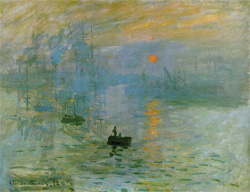
Impression, Sunrise

Impressionism is an art movement that began in the 19th century with the works of Monet whose painting "Impression, Sunrise" gave rise to the name of the art movement.

I often think of photography as two different art forms.

There is the traditional style that depicts a literal representation of a scene by showing how it actually appears to the person who is present – the style used in photojournalism and travel images.

Then there is another style when the photographer tries to convey the feeling of a scene, a general impression, or suggestion of a scene.

Lacking in detail these impressionist images emphasize colour over line and are often soft, dreamy, and have a painterly feel.

Think of the impression a scene leaves in your mind when you glance at it quickly and then look away before giving your eyes a chance to focus. Usually it is an impression of colour and shapes and maybe an idea of some things that were in the scene with little detail – just the essence of a subject.

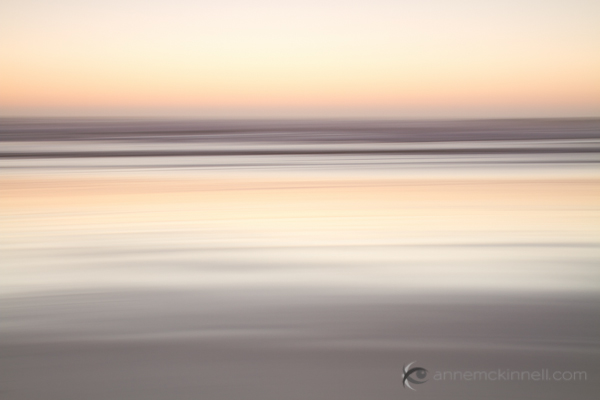
Beach blur using the intentional camera motion technique.

Beach blur using the intentional camera motion technique.

When it comes to creating these dreamy sorts of images where things are out of focus it should be obvious to the viewer that the photographer intended it to be out of focus. If it’s only out of focus a little bit it looks like a mistake.

Try to capture the feeling or mood of the scene rather than a literal representation.

Now, on to the techniques.

1. Intentional Camera Movement

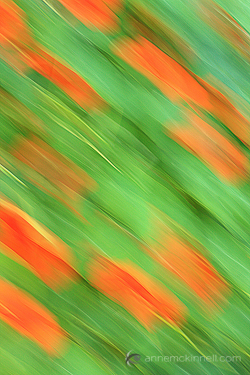
Flower blur using the intentional camera movement technique.

For this image I moved the camera in a diagonal direction. I also sharpened the image in post-processing which is what gives it the appearance of brush strokes.

This technique works great on landscapes with strong lines such as the horizontal lines in a beach scene (shown above) or the vertical lines in a forest scene but you can do it anywhere.

You will need to experiment quite a bit before you get a result you like but that is all part of the fun. Every frame will turn out differently.

  • * Start on shutter priority and pick a long shutter speed such as 1/20 to 1/2 a second.
  • * Point your camera at the middle of the scene and hold the shutter half way down to lock in the exposure.
  • * Pan in the same direction as any strong lines that exist in the scene.
  • * Start the panning before you completely press the shutter and continue after the shutter closes. That will make the movement smoother.
  • * Experiment with shutter speeds.


2. Zooming

Similar to the above technique, this one is intentional camera movement too, but instead of panning you zoom your lens in or out during the exposure. I like how this technique looks on city lights.

The Legislature in Victoria, British Columbia using the zoom blur technique.

The Legislature in Victoria, British Columbia using the zoom blur technique.

  • Set your camera to shutter priority and pick a shutter speed of at least a couple of seconds.
  • I find it easier to do this technique at night to allow for a really long exposure. If you do it during the day you might need to use a neutral density filter to block out some of the light to allow for the long exposure time.
  • While the shutter is open slowly zoom the lens. Try to make the zoom as smooth as possible.
  • You will probably have to try a number of different exposure times and try zooming quickly and slowly for different results.

3. Selective Focus

With this technique only a very very small portion of the frame will be in focus. The rest will be extremely soft and painterly. You will need to use a lens that has a very wide aperture opening (f/1.8 or 2.8 for example). It will work best if you move away from your subject and use a telephoto lens to zoom in.

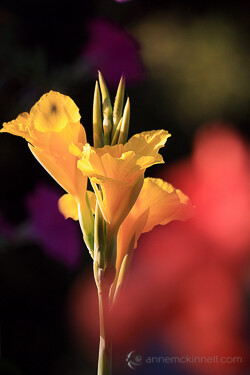
Sap abstract using the selective focus technique.

Or you can use a specialty lens like a Lensbaby.

Bourbon Street, New Orleans during Mardi Gras captured with a Lensbaby.

Bourbon Street, New Orleans during Mardi Gras captured with a Lensbaby.

  • Use the aperture priority setting on your camera and set it for the widest aperture (lowest F stop number).
  • You might have to focus manually to get the right part of the frame in focus.
  • This technique tends to works best when you have good colour in the frame.

4. Long Exposures

I always remember the day I made this image because what I really wanted to do that day was the selective focus technique. But when I got to the location it was super windy and there was no way I was going to get anything in focus.

At first I was disappointed until I decided to go with the flow. The flowers blew all over the place while the shutter was open for half a second and I was delighted with the result.

Flowers using the long exposure blur technique.

  • Set your camera to shutter priority and pick a long shutter speed like half a second or longer.
  • Find a subject that is in motion.
  • You will probably have to try lots of different shutter speeds before you get one that is just right depending on how quickly your subject is moving. I like it when the result is very abstract yet there is still enough detail to identify the subject.

5. Focus Through

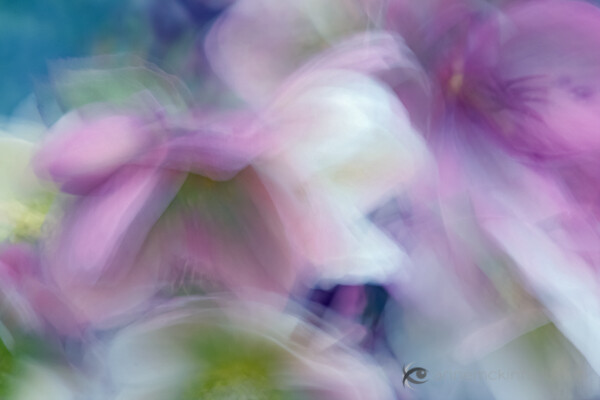
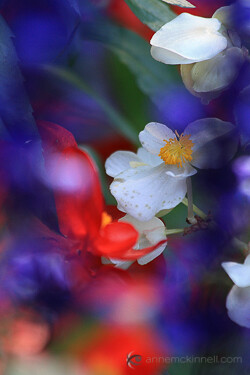
This technique works great with flowers because the petals are semi-transparent and light shines through them. What you want to do is focus on a flower that is a couple of feet away and allow another flower to be extremely close to the end of your lens, so close that it could never be in focus.

Flowers using the shoot through technique.Flowers using the shoot through technique.

  • Use a telephoto lens.
  • Find an object that is semi-transparent that you can place in front of the subject which is in focus.
  • Use manual focus so your camera isn’t confused by the object in the foreground.

The reason I like these techniques is because it gives me a real sense of freedom when there are no rules and I can play around as much as I like.

Even if these sorts of images aren’t your thing, I really encourage you to try it out for a day just for fun, just to release yourself from the obligation of making everything super sharp all the time.

Remember – you are the artist and you can do whatever you want.

I would love to hear about your experience with these techniques! Let me know how it worked out for you in the comments.

Post originally from: Digital Photography Tips.

Check out our more Photography Tips at Photography Tips for Beginners, Portrait Photography Tips and Wedding Photography Tips.

5 Impressionist Photo Techniques


Digital Photography School

 
Comments Off on 5 Impressionist Photo Techniques

Posted in Photography


12. Dezember 2012

12 Dec

Ein Beitrag von: Henning Welslau


kwerfeldein – Fotografie Magazin

 
Comments Off on 12. Dezember 2012

Posted in Equipment


12. Dezember 2012

12 Dec

Ein Beitrag von: Henning Welslau


kwerfeldein – Fotografie Magazin

 
Comments Off on 12. Dezember 2012

Posted in Equipment


Red Sea underwater HD

12 Dec

Red Sea dive, 5D mk2 with 15mm FE By Amir Stern Join My FB page Join my FB : www.facebook.com Tags: amir stern red sea israel eilat jews photograpy dive diving photo fish bird crazy fast nikon d300 300d shoot shooting lans sky 105mm desert nature national geographic music animals pet cat nice huge 1st big jump compition travel bull jane ocean fishing sea water under underwater inspirational hebrew lior2911 cayman Shark Stingray Eel Coral Turtle Squid aquatic wildlife
Video Rating: 4 / 5

 
Comments Off on Red Sea underwater HD

Posted in Nikon Videos


DIY: How to Make a Photogram Wreath!

12 Dec

We spotted this fantastic Inkodye wreath project over at Design*Sponge, and we just had to share it with you guys!

If you haven’t heard of Inkodye, it’s fabric dye that’s light sensitive.

That means you can print photos onto fabric in all kinds of colors – blue, orange, red or mix them to make new colors! You can print photos onto scarves, dresses, bags, furniture, canvas, satin, even leather.

Here’s what you need:

  • Inkodye (light sensitive fabric dye)
  • A paintbrush
  • A plastic cup
  • Solid colored cotton fabric
  • Pine branches or a small wreath
  • Cardboard (the size of your fabric)
  • Thumbtacks
  • Laundry detergent

And here’s what you do!

1. Get your fabric ready

Cut your fabric to a size that will fit your wreath and pin it to your piece of cardboard in each corner. If you don’t have a wreath, you can use a few sprigs from a holiday tree to form a small wreath. You can also get creative with objects or make photo transparencies on your printer to create an image on the dye.

2. Prep your Inkodye

Shake your Inkodye bottle for 10 seconds, and then pour it into a plastic cup.

3. Paint the dye onto your fabric

In a dim place, use the brush to paint the Inkodye onto the fabric. It’s up to you what shape you want the dye to make. Just make sure it’s big enough to fit your wreath.

4. Lay down the wreath

Place the wreath onto the painted fabric while it’s still wet. Use your thumbtacks to pin down the parts of the pine branches that are sticking up. This will help you get a sharper, more detailed outline.

5. Expose it!

Take your fabric as is outside, and expose it to direct sunlight for 5 to 10 minutes. Your exposure time will depend on how strong the sunlight is, so gauge on how dark the dye is getting over time until it’s how you want it.

6. Wash it

To stop the dye from darkening more, wash it. Remove the wreath and wash the fabric with hot water and detergent two times (15 minutes by hand or in a washing machine). You can then dry it in a dryer or on a line. Fin! You have a lovely wreath photogram.

Thanks to Maxwell Tielman & Design*Sponge for this great project! See their full write-up.

Related posts:

  1. Photo Fabric Dye: Make Multicolored Sun Prints! Extra photos for bloggers: 1, 2, 3, 4 What do…
  2. Make Custom-Printed Fabric Using Your Photos Don’t miss our second New York Photo Safari this Sunday!…
  3. Photography, Cubed! Make Your Own Photo Cubes the Cheap and Easy Way Whether you’re talking beverage cubes, G4 Cubes, the perfect cube,…


Photojojo

 
Comments Off on DIY: How to Make a Photogram Wreath!

Posted in Equipment


Tether Tools: Product Reviews: Adorama Photography TV

12 Dec

AdoramaTV presents Tether Tools. This week Mark will show some products from Tether Tools. This product line is designed to help photographers meet their tethered photography needs . He will show you a couple lightweight and versatile tables that attaches to any studio light stand or tripod providing a stable working surface for photographers shooting in studio or on-location. For more information about Tether Tools and related videos, go here: www.adorama.com Send your questions to: AskMark@Adorama.com

 
Comments Off on Tether Tools: Product Reviews: Adorama Photography TV

Posted in Photography Videos