
James Cameron left one bit out of this blockbuster… why was Jake there all along?? I see you! This is How It Should Have Ended. The way we think your favourite films should have ended! Visit mnc.tv for more endings. Daniel Baxter Tina Alexander
James Cameron left one bit out of this blockbuster… why was Jake there all along?? I see you! This is How It Should Have Ended. The way we think your favourite films should have ended! Visit mnc.tv for more endings. Daniel Baxter Tina Alexander
Surprise, our original award winning Zen Magnet video was filmed in 3D the whole time. Watch it in yt3d 720p or above. You can get free red/cyan anaglyph 3D Glasses at 3d.zenmagnets.com If using red/cyan glasses, use “optimized debois” mode, or grayscale to strengthen the 3D effect. If watching on a 3D screen, you should be 3-5 times the screen diagonal measurement away from the display. For example, be at least 10 feet away from a 42 inch screen. If you’re watching on an Evo 3D, hold it a foot and a half away. The original video: “Never Let Go Of Childhood Wonder” Which was Best of Youtube #531, can be found here: www.youtube.com Zen Magnets can be found at ZenMagnets.com If you’re having trouble watching 3D. Make sure your screen is not the problem www.youtube.com Music: Kilowatts – Old Twisted Trees DLID – Color in your Hands (Leonizer/Metroplastique) YT3D
It was nice to unplug for a bit this weekend in Yosemite National Park. I took my first father/son trip with my 22 month old son. Photography wasn’t the priority this trip so it was nice to just enjoy and share the scenery as seen through the eyes of my son. While I wasn’t setting up for moonbows, sunset or sunrise photos with my dSLR I still had my iPhone with me just in case. In both of the photos below I was hiking around with my son sitting on my shoulders and it would seem the sights and sounds we took in made an impact.

Classic Half Dome, Yosemite National Park
Now when I ask him to say “Half Dome” he points out the window and says “hav dum”. I can’t wait to get back out with him to see what else he picks up. It was a real treat to see a place like Yosemite with fresh eyes and witness my son’s raw curiosity as we explored the valley on our day hikes.

Half Dome Sunset, Yosemite National Park
.gif)
Copyright Jim M. Goldstein, All Rights Reserved
Rediscovering Yosemite Through Fresh Eyes

Peru has an amazingly diverse geography. From deserts on the coast to lush jungle in the East and high altitude mountain environments in between, the country is wedged between the Amazon River and the Pacific Ocean in South America.
I thank the DPS readers who submitted not only their images, but helpful tips if you should decide to travel to Peru in the future.
This is the twelfth country we are covering in the reader fueled DPS Travel Photography Inspiration Project.
If you would like to be involved in the next country’s post, drop me a line here.

Hillsides of Peru by Jeff Johnson
Description:On the road from Cuzco to Ollantaytambo, you will find beautiful scenery.
Tip: I took many pictures from the inside of a taxi with a fast shutter speed. This is one of them. You will find the weather changes rapidly, but frequently rains.

Girl And Cat by Misty Neilsen
This girl and her cat were sunbathing when I caught them. Many of the homes are reached through narrow entrances and alleyways and it pays to take a closer look at these areas.

Taxi by Bruno Santos
Those taxi there, asked for panning photos…. Slow shutter speed (those taxis aren’t fast), the right place to be at, smooth camera movement, and a lot trial and error to get the photo.

Untitled by Sergio Burani
The fauna is also gorgeous. You can benefit from a good telephoto lens – at least 200mm.

Uros, Paradise by Patricia Reyna
Uros Floating Islands is a group of artificial islands on Lake Titicaca, made ??of reeds. The construction of these islands is ??by weaving the reeds and forming a natural layer on which they build their homes.
You can arrive to the place by using a boat.
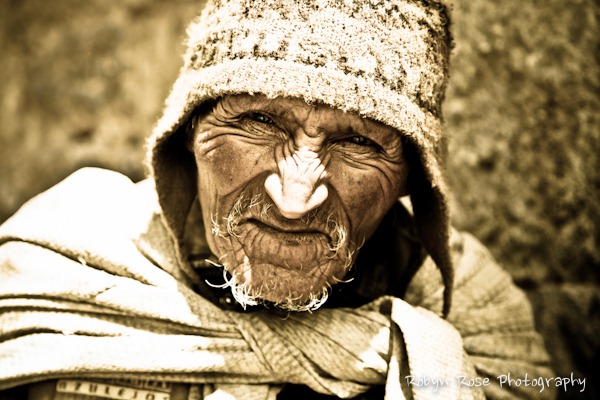
Aged beggar by Robyn Rose
This old man stood on a street corner in Huanchaco. He had a warm and gentle disposition. I gestured that I would like to take a photo of him and he was most obliging. I was happy to contribute some local currency for his time. TIP – Even though my Spanish is poor, with a smile and gesturing we managed to share a few minutes together and comfortably too. I am always nervous approaching strangers, as I never enjoy getting rejected. However if I smile, treat them politely and passively, then the rejection seem to hurt less! Of course the ones who allow you to take their photo seem so much more worth it after plucking up some courage to approach them and ask.

Arequipa Convent by Lori Sorrentino Photography
This convent in the colonial city of Arequipa is a photographer’s paradise, and one not too many travelers seem to visit in Peru. I spent an entire day in the convent, the size of a large city block, and could have spent more! It’s well worth the trip and traveling the 8 hours or so by bus to get there from Puno and Lake Titicaca.

Posing Llama by Jeff Johnson
Description: While in Machu Picchu, nearly ten llamas surprised us as they appeared from around a corner. This particular one was not camera-shy.
Tip: While atop Machu Picchu, it’s suggested that you have one lens that can zoom from 18mm to at least 250mm. Without such a luxury of a single multi-purpose lens, I was challenged with having to swap lenses frequently.

Untitled by Misty Neilsen
While waiting for THE Machu Picchu photo, I decided that the partially fog covered shot was more interesting than the clear shot…and I still think so.

Coca Tea by Bruno Santos
The traditional tea, served at the home stay.

Untitled by Sergio Burani
The children are beautiful. This little girl is playing “mother” to her brother. People are very available to being photographed, especially children. They expect a little money.

Playing the Pututo by Patricia Reyna
This man of the Taquile island is playing a Pututo, an instrument made ??of seashells, which was used by the Quechua-speaking peoples in ancient times to call meetings or make announcements of something.
Taquile island is in the Titicaca Lake, and hundreds of tourists from all around the world visit this beautiful and interesting place.

Machu Pichu Security by Robyn Rose
These guards watch over and protect the sacred ground of Machu Pichu. The Wayna pichu looms overhead. TIP – To give a sense of the mist and clouds that were descending all around us I converted to black and white.

Camera Fun by Lori Sorrentino Photography
The highlight of my trip was a homestay visit to the island of Amantani (Machu Picchu was great but this has it beat!). If you join a small tour from Puno, you can stay overnight with a local indigenous family and spend time learning about their culture. Part of our stay included a tour of their school. I met several of the young children who were so fascinated by my point-and-shoot camera. So I handed it to them and they had a ball taking photos of themselves with the reversing LED screen. Two of these little girls belonged to the family we stayed with, and these photos they took of themselves making faces and laughing at themselves are some of the most dear to me.

Proud Boy by Jeff Johnson
Description: In the city of Ollantaytambo, this hard-working young boy was spotted working away.
Tip: This photo was taken with a Canon Rebel T3 with the stock lens in the kit. I used the “Creative Auto” setting. While in Peru, explore the ruins of the mountain Pinkuylluna.

Feeding the Lama by Bruno Santos
At the home stay in Ccaccallo, near Cusco, we had contact with some Lamas.
Tip: Making the Inca Trail is a must do in Peru. It’s hard, yes, but you can do it at your speed and arriving at Machu Pichu is a rewarding victory. But you have to be lucky do don’t get rain, cause the tropical forest is tricky.

View of Peru by Robyn Rose
The view from the Sacsayhuaman ruins. The high altitude and the ever changing cumulonimbus clouds create for dramatic photographs. TIP – I boosted contrast and used a graduated filter in Lightroom to darken the clouds and create a more ‘moody’ shot.

Hiking Huayna Picchu by Lori Sorrentino Photography
We decided to hike the giant mountain you see in the background of all the shots of Machu Picchu, called Huayna or Wayna Picchu. The mountain is another 1000 ft higher and is not for the faint of heart, but is definitely worth it to get a different perspective looking down on the Machu Picchu site. Take a wide lens for the best images to capture the immense and wide never ending views!

City trawlers by Robyn Rose
These women and their alpacas roam the cobbled streets of Cusco trying to make a buck posing for photographs. The police are constantly chasing them away. TIP – This was taken in mid day where the light was harsh and created harsh shadows. I used a 480 EC Canon flash to create a more even light across the shot as well as desaturated the colours using Lightroom in order to induce a more uniformed look.

Cuzco Woman by Lori Sorrentino Photography
This is my favorite photo I took in Peru. This woman sat at the top of this hill at the base of the Christo Blanco (White Jesus) statue overlooking Cuzco, and was so gracious in letting me photograph her. The expression on her face is so intriguing and calm, as if she’s lived a thousand lifetimes.
Lastly, here’s my take of Machu Picchu as a time lapse as the morning clouds burned off:
Post originally from: Digital Photography Tips.
Check out our more Photography Tips at Photography Tips for Beginners, Portrait Photography Tips and Wedding Photography Tips.
Travel Photography Inspiration Project: Peru

Photo ©Martin Schoeller
Martin Schoeller is one of my favorite photographers, and it so cool to see a BTS video of the Time cover above with a few nice layers of technical info included.
Video and links after the jump. Read more »

Kim Thue arbeitet als Fotograf in London und hat anfang des Jahres sein erstes Buch herausgebracht. Im Interview verrät er etwas über die Entstehung des Buches und seine Reise nach Sierra Leone, wo er für den Bildband 10 Monate gelebt hat.
Hallo Kim. Vielen Dank, dass Du Dir für das Interview Zeit nimmst. Auf Deiner Homepage erfährt man nur wenig über Dich, kannst Du kurz etwas über Dich erzählen?
Ich bin ein 31-jähriger, dänischer Fotograf, der seit 1998 in England lebt. Ich habe mein Studium 2006 beendet, aber mein Diplom tatsächlich nie erhalten, da ich der Universität noch Geld schulde. Ich habe ein Faible für Sludge Metal, Lakritz-Toffees und bunte Turnschuhe. In meiner Freizeit laufe ich viel.

Dein erstes Buch „Dead Traffic“, das Bilder aus Sierra Leone zeigt, wurde Anfang des Jahres von dienacht Publishing veröffentlicht. Warum hast du dich für diesen neuen, unabhängigen Herausgeber entschieden?
Auf dem Weg dorthin hatte ich auch Gespräche mit einem renomierten und sehr viel etablierteren Verlagshaus in London. Zu dieser Zeit dachte ich, dass es die offensichtlich beste Wahl wäre, aber es wurde bald deutlich, dass ich damit total falsch lag. Zunächst hatten sie auch großes Interesse an meinem Projekt bekundet, aber aus irgendeinem Grund gaben sie mir immer weiter das Gefühl, dass ich sie bedrängen würde und zu einem gewissen Maß auch eine hochnäsige Haltung mit wechselnd warmer und kalter Behandlung mir gegenüber.
Es fühlte sich fast so an als würden sie sicherstellen wollen, dass mir klar war, was für einen großen Gefallen sie mir da taten, da sie ein großes Verlagshaus waren und ich nur ein weitgehend unbekannter Fotograf. Ich erinnere mich auch daran, dass sie für meinen Geschmack zu stark den Inhalt zuschneiden wollten und besorgt waren über die Zielgruppen; befürchteten, es würde nicht genug verkauft werden. Wir waren nie auf der gleichen Wellenlänge und ich beschloss, weiter zu ziehen.
Ein paar Wochen später kontaktierte mich Calin Kruse von dienacht und schlug vor, mein Buch zu veröffentlichen. Er hatte zuvor schon eine Auswahl einer früheren Version in seinem Magazin veröffentlicht, sodass ich wusste, dass er das Projekt mochte. Ich habe sofort eingewilligt und es nie bereut. Es war eine absolute Freude, mit ihm zusammenzuarbeiten. Er hat eine wahrhaft unendliche Liebe für Bücher und lässt viel Arbeit in auch die kleinsten Details fließen.

Wie hast Du Dein Projekt finanziert?
Geld ist natürlich immer ein Thema, wenn man so etwas plant, aber wir waren nie wirklich besorgt, ob das Buch finanziell erfolgreich sein würde oder nicht. Ich arbeitete während des gesammten Prozesses auch in meinem Hauptberuf, um Essen auf den Tisch zu bekommen.
Wir hatten auch keine Sponsoren oder Ähnliches, aber wir schafften es, einen großen Teil der Produktionskosten zu decken, indem wir signierte Exemplare im Vorverkauf anboten, bevor es überhaupt gedruckt wurde. Die wirklich gute Nachricht ist, dass ich jetzt, wenige Monate, nachdem es offiziell veröffentlicht wurde, nicht so finanziell ruiniert dastehe, wie ich es mir vorgestellt hatte.
Ein weiterer Weg, um aus einem Buch Geld zu machen, ist natürlich die Möglichkeit des Vertriebs von Drucken. Also biete ich seit Kurzem Original-Editionen der Abzüge von bestimmten Bildern an, um etwas mehr Einkommen zu generieren.
Allgemein kann ich sagen, dass obwohl ich nicht denke, dass Fotobücher zu machen ein gerissener Businessplan ist, für mich trotzdem das riesige Gefühl von Erfolg dabei ist. Für mich ist es nicht sehr befriedigend, mir im Internet Fotos anzusehen und im digitalen Zeitalter ist es großartig, endlich etwas Greifbares zu haben, das in der realen Welt existiert. Etwas, das die Menschen tatsächlich fühlen, anfassen und riechen können.

Wie wurde Dein Buch denn von den Menschen aufgenommen?
Ehrlich gesagt, war die Reaktion überwältigend und der Vertrieb läuft viel besser, als ich zu hoffen gewagt hatte. Was ich trotzdem am meisten genieße, sind aber die ganzen E-Mails und Nachrichten, die ich von Menschen auf der ganzen Welt bekomme und die mir sagen, dass sie mein Buch mögen. Dies verspricht Gutes für die Zukunft und gibt mir viel Selbstvertrauen darin, mehr Bücher zu produzieren.
Du hast für deine Bilder fast ein Jahr in Freetown gelebt. Wie hast du dich in dieser Zeit dort gefühlt?
Ja, die Reise sollte man nicht unterschätzen und das alte Klischee eines Marathons, nicht eines Sprints, ist eines, das ich mit offenen Armen begrüße. Trotzdem fühlt sich Fotografieren für mich meist wie eine einsame Jagd an und ich würde lügen, wenn ich sagte, dass meine zehn Monate in Freetown mich nicht zuweilen auf eine harte Probe gestellt hätten. Ich wurde dort ernsthaft krank, verlor viel Gewicht und kämpfte oft mit dem unvermeindlichen Gefühl, ein ständiger Außenseiter zu sein.
Der Großteil meiner Zeit dort war aber auch sehr befreiend, da ich froh war, in einer Welt zu leben, in der es keinen Druck im Bezug auf meine Arbeit, die Erwartungen anderer oder Abgabetermine gab. Ich kämpfte einfach so gut es ging, behielt mein Bewusstsein im Hier und Jetzt und versuchte, so tief in mein Thema zu dringen, wie es nur ging.

Haben sich Deine Bilder im Laufe der Zeit in Sierra Leone verändert?
Ich bin mir nicht sicher, denn die Themen, die ich suche, bleiben in der Regel dieselben. Außerdem wurde alles mit analoger Ausrüstung aufgenommen, weshalb es schwierig für mich war, genau zu wissen, wohin ich wollte. Ich hatte jedoch das Gefühl, dass meine Bilder interessanter wurden, nachdem ich den Punkt erreicht hatte, an dem ich realisierte, dass ich keine Geschichte erzählen würde.
Ich begann, meinem Bauchgefühl zu vertrauen und hörte auf, mich mit Geschichten zu beschäftigen. Es hat lange gedauert, aber schließlich gelang es mir, meinen eigenen Rhythmus zu finden und gab mich all den aufgebrochenen Bildsequenzen in meinem Kopf hin, die ich noch nicht richtig sehen konnte.

Deine Bilder zeigen oft Portraits von Menschen, die viel erlebt haben. Viele tragen sichtbare Narben und sehen ernst in die Kamera. Wie bist Du in Kontakt mit den Menschen gekommen?
Diese Frage wurde mir schon ziemlich oft gestellt, aber ich bin mir nicht sicher, ob ich die Antwort kenne. Alles, was ich sagen kann, ist, dass ich nie der Typ Fotograf war, der einfach irgendwo aufschlagen und die Filmrollen direkt eine nach der anderen durchschießen kann.
Ich denke, dass ich für eine Art der Dokumentarfotografie einstehe, in der es für mich wichtig ist, zumindest zu versuchen, zuerst eine Art Verbindung aufzubauen. Den Großteil meiner Zeit in Freetown verbrachte ich mit meiner Kamera fest in ihrer Tasche, nichts weiter tuend als rumhängen, ein bisschen Gras rauchen und mit Leuten sprechen. Das waren Elemente ihrer täglichen Routine und ich war nicht dort, um das zu ändern, sondern um daran beteiligt zu sein.
Außerdem reise ich auch nicht, um „Berichte“ zu machen. Ich reise, weil ich einen unerklärbaren Drang habe, Fremde kennenzulernen. Ich denke, dass ich mit einigen Menschen im Buch eine Art gemeinsame Basis aufbauen konnte, unserer offensichtlich kulturellen und wirtschafltichen Unterschiede zum Trotz. Ich fühlte, dass ich eine ganz einfache, grundlegende Form der menschenlichen Akzeptanz erreicht hatte.


Wie haben sie auf Deine Kamera reagiert?
Nunja, im Allgemeinen habe ich herausgefunden, dass die Menschen in Freetown sehr viel mehr im Hier und Jetzt leben als ich es normalerweise tue. Es gab keine Paranoia, die mit der Fotografie verbunden wird und niemand war besorgt, dass es ein unvorteilhaftes Foto mit seinem Tag auf Facebook geben würde. Stattdessen schienen sie den Vorgang des Bildermachens beinahe zu zelebrieren, was ich als wirklich erfrischend und als Privileg empfand, dort als Fotograf anwesend zu sein.
Bist Du auch mal in Schwierigkeiten geraten?
Ein paar Mal musste ich ziemlich schnell weg, wenn ich mich selbst in Situationen wiedergefunden habe, in denen ich nicht willkommen war und ein bisschen Geld wurde mir gestohlen, aber nichts wirklich Ernstes.
Das Frustrierendste war es für mich, als meine Anwesenheit als einziger weißer Typ begann, meinem Assistenten, einem Straßenjungen aus der Gegend, Probleme zu bereiten. Die Polizei hatte uns in der Stadt zusammen herumlaufen gesehen und fing an, ihn ohne einen Grund festzunehmen.
Sie wussten, dass er für mich und mein Projekt wichtig war, dass ich etwas Geld hatte und es nur eine Frage der Zeit war, bis ich auf der Polizeistation auftauchen und ihn freikaufen würde. Ich musste das also vier oder fünf Mal machen, es wurde ein wirklich dummes Spiel, wobei der Preis für die Freilassung natürlich mit jedem Mal größer wurde. Also, keine wirklichen Schwierigkeiten – nur ein paar wirklich korrupe Polizisten!

Im Buch gibt es Bilder, die man von einem Land erwarten würde, das vom Bürgerkrieg gezeichnet ist und der Großteil ist auch sehr dunkel gehalten. Warum hast du dich dazu entschieden, die Bilder so einseitig zu halten?
Ich denke nicht unbedingt, dass die Bilder einseitig sind, aber ich stimme zu, dass es da vielleicht eine gewisste Stimmung oder ein Gefühl gibt, das das ganze Ding zusammenhält. Es ist schwer zu erklären, warum man von bestimmten Dingen angezogen wird und ich denke, dass gerade diese Bilder genauso viel über meine eigene Psyche verraten wie über die Menschen, die ich portraitiert habe oder die Realität dieses Ortes.
Nun, da Dein Buch draußen ist, was kommt als Nächstes für Dich? Ich habe gesehen, dass du Mitglied bei der italienischen Fotojournalismus-Agentur Prospekt geworden bist. Gibt es ein paar Projekte in der Zukunft, über die Du schon ein bisschen was verraten kannst?
Ja, Prospekt ist eine großartige Plattform, um meine Arbeiten auszustellen, aber eigentlich versuche ich recht verzweifelt, dieses „Fotojournalist“-Etikett loszuwerden, dass ich mir scheinbar irgendwann erworben habe. Im Moment arbeite ich an einem anderen, ziemlich abstrakten Buchvorschlag, der hauptsächlich in London fotografiert wird.
Es ist ein Projekt, das ich anfing, bevor ich nach Afrika ging und es ist auf eine Art sehr herausfordernd, aber ich bin entschlossen, es fertigzustellen. Ich habe noch keinen Verleger dafür und in diesem Stadium kann ich noch nicht viel darüber sagen, außer dass ich mir vorstelle, dass es so eine Art Hommage an die Gemütsart eines verstorbenen Freundes von mir ist. Es ist noch viel Arbeit, aber ich kann eine kleine Vorschau geben, für die die interessiert sind.


Vielen Dank für das Interview, Kim.
Gern geschehen, es war mir ein Vergnügen. Ich danke Dir.
~
Wer Interesse an Kims Buch hat, kann es im dienacht-Shop erwerben.
“DEAD TRAFFIC” von Kim Thue
Hardcover, Leineneinband
Offset-Druck, 18 x 24 cm
96 Seiten + 12 Seiten mit einem ausführlichen Interview auf Englisch
Auflage: 1000 (nummeriert)
Preis: 24,90 Euro
This week we take a look at another wide-angle zoom, but this time from Nikon. This is a monster lens, with a monster aperture for a wide-angle: f/2.8. How does this Nikkor perform? Is it worth the cash? Pricing reference: www.digitalrev.com
Video Rating: 4 / 5
The Nikkor 28mm f/1.4 was a legendary lens with stunning performance but was disappointingly discontinued. This new 24mm f/1.4 is somewhat taking its place as a fast wide-angle, but the question is – is it as good? We take the Nikon lens out to the Chinese University of Hong Kong to take some shots and find out what it’s like. Pricing Reference: www.digitalrev.com
It wasn’t long ago that when experts were asked about what the next big thing in photography would be that ‘geotagging’ images was the commonly heard answer. We have seen more cameras released with geotagging capabilities and a lot of post processing software being released with it built in – but is anyone geotagging their images?
We decided to ask our readers if they’ve ever geotagged an image and here’s what they said (based upon 17,478 responses).

So 72% of our readers have never Geotagged an image and a further 2% have done it in the past but no longer do.
Of course this might not be too bad for Geotagging – after all its a relatively new thing isn’t it?
Here’s where it gets interesting – we ran exactly the same poll just over 3 years ago – back in 2009 – when Geotagging was much newer and where it was more difficult to do (in fact many of our readers back then were doing it quite manually). So what were the results back in 2009?

That’s right – back then 35% of our readers said that they either geotagged all the time or some of the time (as opposed to 26% today).65% didn’t geotag any more as opposed to 74% today.
Now these are not scientific results by any means and our readership has grown and changed a fair bit since 2009 – however I find it interesting that despite there being more tools available to geotag images that our readership is doing it less than they did 3 years ago.
Post originally from: Digital Photography Tips.
Check out our more Photography Tips at Photography Tips for Beginners, Portrait Photography Tips and Wedding Photography Tips.
Is Geotagging Images a Dying Trend? POLL RESULTS
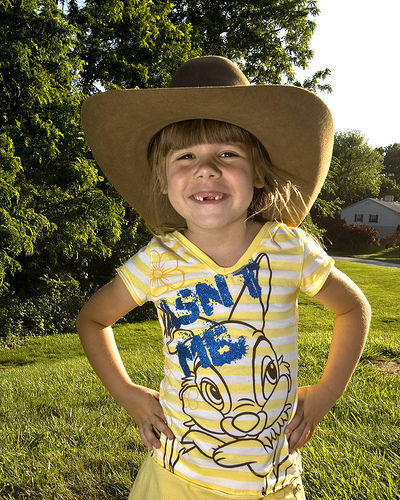
Fill Flash with the Sun Behind the Subject Creates Nice Backlighting but a Well Lit Face (the hat helped shade the face too) – Image by Cayusa
It’s a bright sunny day and you’re out with friends making the most of the good weather. You decide to take your camera – after all what better day to shoot some portraits of your friends than a sunny day – bright light = great shots doesn’t it?
Unfortunately lots of light doesn’t always equal great shots – in fact sometimes when you’re shooting portraits in bright sunshine you can run into real problems.
For starters shooting in bright midday sun where light is coming from directly above is going to mean that your subject can have some pretty heavy shadows cast on parts of their face.
Not only that, if you’ve ever posed for someone taking a picture in bright sunlight you’ll know just how difficult it can sometimes be to look natural and not end up looking like you’re grimacing in pain while you squint to keep the sun out of your eyes.
So what’s one to do?
Here’s three simple tips for shooting portraits in bright sun light. I’ve kept them pretty basic for those of you who are out and about and don’t want to haul an outdoor studio along with you!
It seems a little odd switching the flash on in bright sunlight but it’s one of the best times to do it. Those heavy shadows cast on your subjects face (particularly under the eyes) by the midday sun can be a thing of the past with a little extra light from your camera’s popup flash.
Many cameras will allow you to control the intensity of the flash output with their flash compensation function so don’t be satisfied with your first shot – dial it up or back a little once you’ve taken a first test shot until you get a nice natural light.
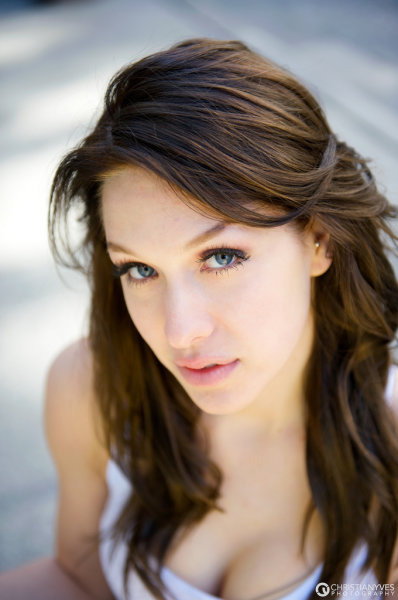
Shot in open shade and using a reflector – Image by christianyves
The bonus of using a little fill flash is that it will often darken your background a little which can give your shot a little more punch and make your subject stand out a little from their background. Fill flash will also create a little catchlight in the eyes of your subject, giving their eyes that little extra sparkle!
Sometimes using fill flash will also allow you to shoot with the sun behind your subject – this means their face has no direct sunlight on them but that they have a little back light falling upon their hair and shoulders which can create a nice impact.
Another easy way to stop the shadows on the face of your subject is to simple move them (and yourself) into a much bigger shadow and to shoot in the shade.
The key is to find a spot where they’re not in the dark but have a nice even light falling on them. So avoid dappled light under some trees a tree or you’ll get spots on their face but go for something with a nice even coverage.
If you’re going for a tight head shot you might even be able to get away with having someone hold up an umbrella or some other object to create some shade over their face (as long as the other person is out of shot).

A combination of shooting in shade and using a reflector gives this portrait an even lighting – Image by JesseBarker
It’s unlikely that you’ll be hauling a proper reflector around with you (although I know some dPS readers always travel with a small foldable reflector in their camera bag) but that doesn’t mean you can’t use the same principle to bounce a little light into the face of your subject to help light up some of those shadowy areas.
Pretty much any white (or light) surface can act as a reflector of light and held at the right angle you can use it give your subject a little extra light.
One photographer we talked to a while back swore by always wearing a white t-shirt for this but you could get a similar result by positioning your subject by a white wall or positioning many white objects just out of frame to reflect light. I’ve even seen one photographer friend take aluminium foil from a picnic and using it to help make a reflector (although it did create a little ‘dappled’ light on his subject.
Bonus Tip: Get Creative
Once you’ve taken a few nice portraits with the above tips, why not try a few experiments and use the bright light to see if you can inject a little creativity into your shots. You might just take one with the WOW factor. For try creating some lens flare by shooting into the sun (just be careful not to burn your eyes looking directly into it). Alternatively you might try some silhouette shots for portraits with a little mystery and drama.
What other tips would you give someone looking to shoot portraits in bright sunlight?
Post originally from: Digital Photography Tips.
Check out our more Photography Tips at Photography Tips for Beginners, Portrait Photography Tips and Wedding Photography Tips.
3 Tips for Shooting Portraits in Bright Sunshine

