RSS
 

Archive for August, 2012

Casio Europe releases Exilimi EX-ZR300 Mini DV high-speed compact camera

03 Aug

casio_exzr300.png

Casio Europe has launched the Exilim EX-ZR300 Mini DV – its name for the EX-ZR300, released in Japan in May 2012. It features a 12.5x, 24-300mm zoom lens and dual processors to help it offer focus times as short as 0.12s. It is also designed to offer control over both Flash Air and Eye-Fi wireless SD cards, for simple connection to smartphones. In common with other recent Casio flagship models, it also offers a series of high-speed features and is rated at an impressive 500 shots per charge, using CIPA testing methodology. It will be available for August at a cost of around €279.

News: Digital Photography Review (dpreview.com)

 
Comments Off on Casio Europe releases Exilimi EX-ZR300 Mini DV high-speed compact camera

Posted in Uncategorized


Minecraft Monday Show 54 – Minecraft News CRASH!

03 Aug

Thanks for understanding guys! My HDD completely crashed and I had to re-edit the McM Show a 2nd time. Audio wasn’t recoverable so thanks for putting up with on board camera audio. Enjoy and smash the like button for still getting the show out! Subscribe for more Minecraft, Mojang & Community news! www.Youtube.com ? Gaming Channel: www.Youtube.com ? Vlog Channel: www.Youtube.com ? Twitter: www.Twitter.com ? Facebook: www.facebook.com ? Livestream – Click “Follow” www.twitch.tv ? Minecraft Monday’s Gear: minecraftmondays.spreadshirt.com —————————————————————– The MCM Show Server IP mc.bebopvox.com Provided by: legendarycraft.com News ? Notch Death Threats: onforb.es ? New Game: 0x10c.com ? New Snapshot Info 12w15A: bit.ly ? New Snapshot Download: bit.ly ? AMA: Bukkit Mojang Team Dinnerbone: bit.ly ? AMA: Bukkit Mojang Team Grum: lb.vg ? AMA: Mojang Customer Support Manager Marc: bit.ly ? Automated Hunger Games minecraftsurvivalgames.com Videos ? Minecraft in 2 mins, 1 shot: bit.ly ? Animated Minecraft Misadventures 2: youtu.be ? Rube Goldberg Machine: bit.ly ? Video Jems To Flood: ? Jedi’s Dont Run Animation: bit.ly ? “Running” youtu.be ? Mod: Smart Pressure Plate – bit.ly ? Texture Pack: Softy – bit.ly Holy $ #!7 Did You See That: ? Minecraft DOTA: Video: bit.ly Download: bit.ly ? Hangman: bit.ly ? 8X8 Programmable Dance Floor: bit.ly ? Huge Epic Built Map: bit.ly ? Seed Of The Week: 1331190930986990350


3D Laika on the Beach ~ USE RED/BLUE (CYAN) GLASSES

03 Aug

You need RED/BLUE 3D glasses to watch this. Here’s is how you can get them: 1) Make your own 3D glasses: www.wikihow.com 2) Order them online for 2.95 with free shipping: www.amazon.com 3) Buy one the following DVDs that come with 3D glasses: The Call of the Wild The Adventures of Shark Boy and Lava Girl Once you have them you will be able to enjoy M&M’s 3D videos! Mishka’s Facebook: www.facebook.com Mishka’s Twitter: twitter.com Mishka’s Channel: www.youtube.com

IEEE Spectrum checked out the first camera with two imagers and onboard processing that creates real-time, 800×600 red-cyan anaglyphs at 30 frames per second.
Video Rating: 4 / 5


Photography Tutorial: Photographing Mid-Day (landscape photography)

03 Aug

SSe my photos at www.momentsofnaturephotography.com This video is about the types of shots I take and the techniques I use during mid-day photography shoots. This video was filmed out in the field. I used a Nikon d3x in the video, a nikon d300 and nikon 12-24mm lens were used to get some of the shots in the video.
Video Rating: 4 / 5


Cool Visual Art images

03 Aug

Some cool visual art images:

Street Art In Drogheda
visual art
Image by infomatique
Visual Arts

October 2006 saw the opening of the town’s first dedicated municipal art gallery and visual arts centre, the Highlanes Gallery, housed in the former Franciscan Friary on St. Laurence Street. The Highlanes Gallery holds Drogheda’s important municipal art collection which dates from the 17th century as well as visiting exhibitions in a venue which meets key international museum and gallery standards.

The original Drogheda bypass bridge over the river Boyne, known locally as the "Bridge of Peace", is well-known regionally for its aerosol graffiti murals. Under the bridge, on each side of the river there are two large concrete supports that measure approximately 8 metres high, and 20 metres long. Starting in the 1980s with the breakdance craze, these supports were painted and sprayed with murals by aerosol artists. This activity at the time was technically illegal and frowned upon by the local authorities. Today the murals are frequently updated and limited sponsorship of the artists is provided by local businesses.

Street Art In Drogheda
visual art
Image by infomatique
Visual Arts

October 2006 saw the opening of the town’s first dedicated municipal art gallery and visual arts centre, the Highlanes Gallery, housed in the former Franciscan Friary on St. Laurence Street. The Highlanes Gallery holds Drogheda’s important municipal art collection which dates from the 17th century as well as visiting exhibitions in a venue which meets key international museum and gallery standards.

The original Drogheda bypass bridge over the river Boyne, known locally as the "Bridge of Peace", is well-known regionally for its aerosol graffiti murals. Under the bridge, on each side of the river there are two large concrete supports that measure approximately 8 metres high, and 20 metres long. Starting in the 1980s with the breakdance craze, these supports were painted and sprayed with murals by aerosol artists. This activity at the time was technically illegal and frowned upon by the local authorities. Today the murals are frequently updated and limited sponsorship of the artists is provided by local businesses.

 
Comments Off on Cool Visual Art images

Posted in Photographs


CANON 60D Training Video

03 Aug

Agency PARADOX MEDIA Agency Creatives Seb Lee | Lynn Ho Production House JAY YAO PHOTOGRAPHY Producer | Jay Yao Director | Glenn Chan Writer | Johann Production Manager | Leslie Kwok Production Manager (Vietnam) | Le Thi Hong Anh Director of Photography | Glenn Chan Additional Photography | Joseph Lee | Jay Yao Camera Operator | Tang Kin Yee Gaffer | Alfred Lim Stylist | Woei Seah Model | Gonzalo Post-Production Infinite Frameworks Audio Post-Production Home Studio Pte Ltd Composer Joshua Chia Sound Design Jesper Zeng VO Talent. Christian lee Special thanks | Cinegear (S) Pte Ltd | Ministry of Foreign Affairs Vietnam | Eric Dan Anh Tuan | boutique sapa hotel Final montage soundtrack by Joshua Chia Title: “Twilight Meal”, “Three Frogs” & “Great World” Publisher: Home Studio Music Pte Ltd © Canon Singapore Pte Ltd

www.euronews.net Disturbing and graphic images of killings and gangster arrests in depression-era New York by photographer Weegee are on show at the International Center of Photography in New York.


The DRIVER – Official Trailer 2

03 Aug

“TheDRIVER” is an adrenaline-fueled animated title aimed squarely at the car culture and racing enthusiast. The story follows the escapades of a mysterious driver out to rid the streets of Los Angeles of illegal street racers.
Video Rating: 4 / 5


zSpace – a virtual-holographic experience

03 Aug

Infinite Z, Inc.® is a digital design technology provider that enables natural interaction with virtual-holographic 3D imagery to bring designs to life. The company’s mission is to transform human interactions with today’s computing environment into an incredibly lifelike, interactive and immersive experience. Its revolutionary platform, zSpace®, provides a highly realistic visualization experience that enables designers and engineers to directly interact with virtual holographic simulations as if they were real physical objects, which accelerates the design and development process and increases productivity. Infinite Z is a privately held, venture backed company located in Mountain View, CA, and has filed more than 30 patents for its innovative technologies. About zSpace zSpace provides a highly realistic 3D visualization experience that enables designers and engineers to work with product designs in a way not previously possible in a traditional 2D computing environment. Using a proprietary stereoscopic display, trackable eyewear, a new type of direct interaction stylus and an innovative software platform, objects in zSpace appear “solid” in open space, with full color and high resolution, and can be directly manipulated as if they were real physical objects. This capability gives users a natural way to navigate, grab, slice, carve, zoom and explore models as never before possible.

The LG Thrill 4G features a dual-core 1GHz Texas Instruments OMAP4 processor aided by a PowerVR SGX 540 GPU, 512 MB of RAM and 8GB of ROM storage. The screen is glasses-free auto-stereoscopic 3D of WVGA 800×480 resolution and is sized at 4.3″. The display plays 3D content also captured by its own dual five megapixel cameras that can record 1080p 2D (30 fps) and 720p 3D (30 fps) video. There’s also a 1.3-megapixel front-facing camera for video calls and conferencing in addition to the usual suspects: accelerometer, proximity sensor, light sensor, Wi-Fi 802.11 b/g/n with DLNA and hotspot capability, Bluetooth 3.0 with A2DP and EDR, microUSB and HDMI-out ports, GPS with A-GPS support, and a 1500mAh battery. The radio supports GSM 850/900/1800/1900MHz 2G and HSDPA 900/1900/2100MHz, HSDPA 1700/2100/850MHz frequencies. Website: pocketnow.com Twitter twitter.com Facebook: www.facebook.com
Video Rating: 4 / 5


A Guide to Create Eye Catching Composite Images

03 Aug

A Guest Post by Tom Di Maggio from Tom Di Maggio Photography.
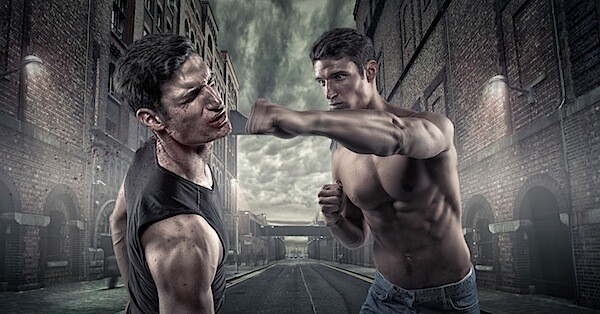
Compo_StreetFight.jpg

My use of composite pictures has been drastically increasing in the last few months. It started with locations that got cancelled due to unavailability, then bad weather made it impossible to shoot at certain location and as of lately people came to me asking specifically for composite photographs. And to be honest I really enjoy doing them, it gives my imagination a lot more freedom, and there is certain flexibility that I really enjoy.

As with the preparation of any shoot, the most difficult part is finding the right setting. In this case the right background. I try to shoot them myself whenever I can but I tend to rely on stock photography as well. Basically I usually split a composite into three main parts: the subject or model, the background and the post processing.

The Subject
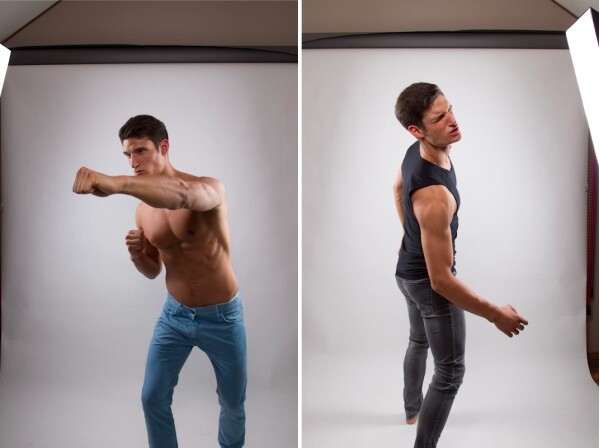
These are the images as they were captured.

The base for a good composite is obviously a correctly exposed subject. I adapt that light to the theme or mood that I want to convey in the final picture. It is really important that you have your final image in mind at all stages of the creation of a composite. It will dictate the lighting scheme you will have to use and at which angle you will need to photograph your model.

Which lighting setup to use usually varies from one to four lights? It really depends on the expected result. No matter which setup you choose lighting position and exposure are key factors here, they need to be spot on or you will spend a great amount of time in Photoshop trying to correct this. At this stage I try not to build too much contrast, so I like the light to be on the soft side.

I can only stress the fact that even though I will be using Photoshop to a certain extent, I will always want to work with a correctly exposed subject. Exposition and position are crucial in every kind of photography. Something you can solve in a few seconds during the shoot might take hours to correct in Photoshop. I don’t have any preference as to the background from which I will extract the subject from. As long as there is enough contrast between the subject and the background it won’t be a problem.

The Background
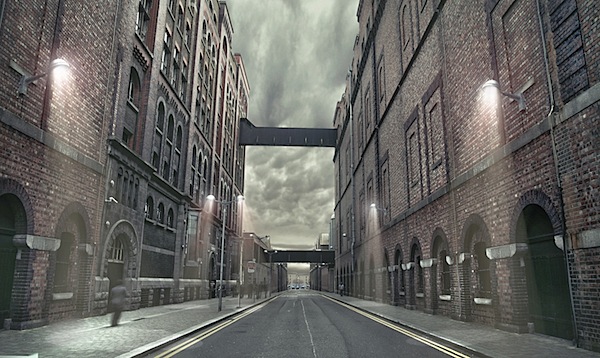
Original Background

Even when I shoot on location I really put a lot of effort into the choice of the background. The background is what gives the picture a context; it is an integral part of the story the picture is supposed to tell. You can photograph a very beautiful model in front of a dumpster; it will have a lot less impact as if you photograph the same model on a beach or in a nice hotel room. It’s the same when working with composites. If I have the chance to photograph the background for my composite myself I have a lot more flexibility in terms of angles.

A bought background gives you very little leeway as to perspective in Photoshop. When I photograph the background myself I usually have the idea for the subject shoot already in mind. Should I find myself in a situation where I see a nice background and I have my camera with me, I shoot it three times: ground height, belly height and chest height. I resort to stock photography when a shoot is booked and I don’t have the possibility to photograph the background myself.

As I mentioned earlier in the article angles is one of the key elements here. There’s no point in choosing a background that was shot at a dramatically different angle that your subject. It will look fake. I give my backgrounds a light HDR touch but I actually don’t use any HDR technique. I apply tonal adjustments and basically the same treatment as for the subject. It will nicely blend the subject and the background together.

The Post Processing

Like most of us out there I didn’t invent the wheel when it comes to post processing. All of my techniques are a mixture of things I picked up in books, on the web, trainings and so on.

To start with I shoot everything in RAW; the techniques I will explain below will suppose that you do the same. To be honest, and this cannot be said enough, with the pricing on memory cards nowadays there is absolutely no reason not to shoot in RAW. The advantages of doing so are just to enormous to ignore.

I usually start in Lightroom by taking out as much contrast from the picture as I can. The way I work I will build up the needed contrast during the post processing in Photoshop. Why do I remove contrast only to add some back later? It’s all about control.

I basically use a combination of two techniques that include Blur, High Pass filters and the Apply Image function. This allows me to add contrast and sharpen my images to the pixel and thus I can use it to create a clean smooth skin or a grungy style image with one workflow only. (see the portrait of Bora) I spend as much time here as I need to until the image is 100% the way I want it to.

Any imperfection here will be amplified once I put the Color Efex Pro layer on top of it. I created a few Color Efex Pro recipes that I use as a starting point on my images. I will then tweak them slightly to fit the image. I will intentionally push this process way over the top in order to give me more flexibility on the final image. Once I am happy with the result I save it as a layer on top of my image and then adjust the opacity of that layer accordingly.
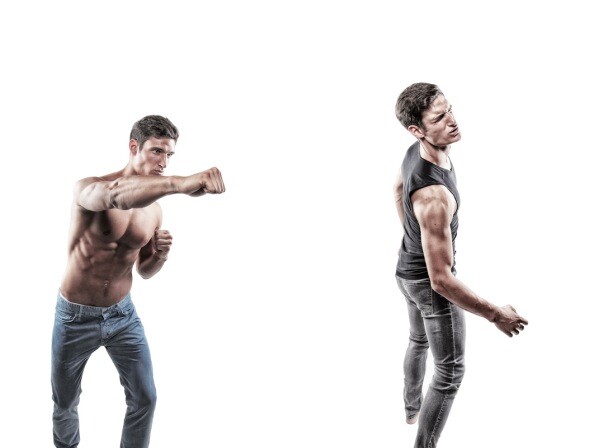
Below the two Layers after my Color Efex treatment. You can see that the effect is way to strong here, but a slight adjustment on the opacity solves this. And it’s always easier than to go back into Color Fx and redo the effect until it fits.

At this stage I proceed with the extraction of the subject from the background. Personally I think that there is no perfect solution for this. I use whatever tool fits the need. It ranges from the refine edge tool to the smudge tool and even a normal brush.When I am done with the extract I drag the subject onto the prepared background and tweak both again so that the color tones and temperature match each other.
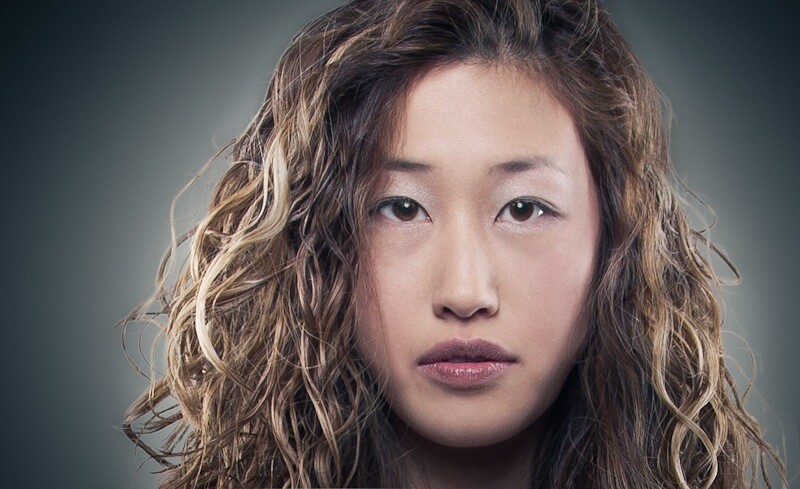
This portrait of Bora was processed with the same technique. All I did differently, was to apply different opacities to the correct layers.

Feel free to get in touch if you have any further questions regarding the subject. Below the two Layers after my Color Efex treatment. You can see that the effect is way to strong here, but a slight adjustment on the opacity solves this. And it’s always easier than to go back into Color Fx and redo the effect until it fits.

See more of Tom Di Maggio’s work at Tom Di Maggio Photography, InFocus Photography and on his Flickr Account.

Post originally from: Digital Photography Tips.

Check out our more Photography Tips at Photography Tips for Beginners, Portrait Photography Tips and Wedding Photography Tips.

A Guide to Create Eye Catching Composite Images


Digital Photography School

 
Comments Off on A Guide to Create Eye Catching Composite Images

Posted in Uncategorized


Paul Kalkbrenner – Altes Kamuffel Video ( Berlin Calling)

03 Aug

Lilla was searching for a builiding site for her architect project. Filmed by a Nikon D90. Music by Paul Kalkbrenner

Adorama Photography TV presents outdoor speedlight portraits. This week, Mark Wallace teaches you how to adjust flash and ambient exposures separately when using an on-camera speedlight. These are great techniques that apply not only to portraits, but any speedlight photography! Products used in this episode: Canon Speedlite 580EX II, Shoe Mount Flash adorama.com/?CA580EX2U.html Canon EOS-7D Digital SLR Camera Body adorama.com/?ICA7D.html Nikon SB-900 TTL AF Shoe Mount Speedlight adorama.com/?NKSB900AFU.html Nikon D90 12.3 Megapixel Digital SLR adorama.com/?INKD90L.html Visit adorama.com/?learn for more photography videos! Send your questions to: AskMark@Adorama.com
Video Rating: 4 / 5