RSS
 

Archive for the ‘Uncategorized’ Category

Zeiss’ 37MP Lightroom-capable, full-frame ZX1 camera is here — and it costs $6K

30 Oct

Zeiss has announced the release of its long-awaited ZX1 mirrorless camera in the United States and Germany.

First announced back in September 2018, the Zeiss ZX1 full-frame Android-powered camera is designed, in Zeiss’ own words, to help users ‘Shoot. Edit. Share.’ all on one device thanks to the integration of hardware and software.

At the core of the ZX1 is a 37.4-megapixel full-frame CMOS sensor developed by Zeiss. In front of the sensor is a non-interchangeable Zeiss Distagon 35mm F2 T* lens with a focus and aperture ring (both of which appear to be electronically controlled). In addition to stills, the camera is capable of recording 4k (3,840 x 2,160 px) video at 30 frames per second (fps) and 1080p video at 60 fps in the H.264 codec. All images and video are stored on a 512GB internal SSD and can be transferred off the device using the USB-C port or the wireless connectivity (Wi-Fi 802.11b/g/n/ac, 2.4/5.0 GHz and Bluetooth 4.2 LE).

Other specifications include a shutter speed range of 1/2000th to 30s, an ISO range of 80 to 51,200 (1/3 EV increments), Hybrid AF that uses both contrast and phase detection, and a 0.7” OLED electronic viewfinder (EVF) with a 1920 x 1080px resolution. The camera uses a 3,190mAh 22.9Wh Li-ion battery, but Zeiss doesn’t mention how many shots the battery is rated for (likely because how much editing is done on-camera will greatly affect the battery life).

What makes the Zeiss ZX1 different than, say, the Leica Q2, is its massive 4.3” multitouch display on the rear that not only allows you to navigate the menu system, but also serves as a means of editing images directly on the camera with the Adobe Lightroom Mobile application. Zeiss said it’s worked alongside Adobe to ensure full compatibility and all buyers will receive a year’s worth of Adobe’s 1TB Photography Plan.

Despite clearly running on some version of Android, Zeiss no longer mentions the word ‘Android’ on any of its marketing material, so there’s no way of knowing what version it runs and what kind of support we can expect going forward.

The Zeiss ZX1 is available starting today for $ 6,000 at select dealers in the United States and Germany, including Adorama and B&H. You can read our initial hands-on with the ZX1 from CP+ 2019.

Articles: Digital Photography Review (dpreview.com)

 
Comments Off on Zeiss’ 37MP Lightroom-capable, full-frame ZX1 camera is here — and it costs $6K

Posted in Uncategorized


Slideshow: Winners of the 2020 Int’l Photography Awards

30 Oct

Winners of the 2020 Int’l Photography Awards

This year’s International Photography Awards (IPA) received over 13,000 submissions from 120 countries. Judges selected winners and finalists for 13 categories and they were announced on Tuesday, October 27th.

‘In these unprecedented times, this year’s entries reflect some of the biggest challenges facing our generation–not the least of which is dealing with a virus which, for the first time, is an event that has affected every person on earth in some way. We see photography at its best–whether covering the COVID pandemic, or the world’s uprising against injustice–the images captured are breathtaking. I can easily say these are the best images I have seen in the last decades,’ says Hossein Farmani, IPA’s founder and president.

This slideshow contains images from Professional Category winners who received the Lucie Trophy and a $ 10,000 cash prize. The Non-Professional/Student Finalists for “DISCOVERY OF THE YEAR,” who were awarded a Lucie Trophy and $ 5,000 cash prize, can be found here. The final winners of the Pro and Non-Pro titles will be announced in an online event later this year and will be recognized at the Lucie Trophy at the 2021 Lucie Awards event.

Analog/Film Photographer Of the Year: ‘New Seas’ by Paulius Makauskas (Lithuania)

Artist Statement: Timothy Morton thinks of climate change as a ‘hyperobject’ – an incomprehensibly large object stretched in the space-time. Recognizable only in parts, but never all at once.

Microplastics are barely noticeable particles, but at the same time omnipresent in the ocean. I imagined them as synthetic plankton of all conceivable colors, invisibly wandering from one place to another. I have spent a great deal of time by the sea, so it was easier for me to see that the white ridges of waves creates boundless white-gray paper in space and time. I only needed to fill it with light to reveal the invisible.

Technical Info: 4×5, Fuji Provia 100, 40 – 50 min exposure, 210mm

Architecture Photographer Of the Year: ‘From the Stage’ by Jesús M. Chamizo (Spain)

Artist Statement: El teatro puede convertir el escenario en un templo, y el espacio de actuación, en algo sagrado. En el sur de Asia, los artistas tocan con reverencia el suelo del escenario antes de pisarlo, una antigua tradición donde se entrelazan lo espiritual y lo cultural.

Este es mi especial homenaje al Templo del Teatro y lo que representa, una noble labor cultural que ayuda a la humanidad a crecer. Contemplado desde el escenario, observamos ese majestuoso espacio vacío, que adquiere un doble significado. De asombro, pero también de esperanza, con este mensaje: ”La representación, sin duda…continuará.

Translated (Machine): The theater can turn the stage into a temple and the performance space into something sacred. In South Asia, artists reverently touch the floor of the stage before stepping on it, an ancient tradition where the spiritual and the cultural intertwine.

This is my special tribute to the Temple of the Theater and what it represents, a noble cultural work that helps humanity to grow. Contemplated from the stage, we observe that majestic empty space, which acquires a double meaning. Of astonishment, but also of hope, with this message: ”The performance, without a doubt… will continue.

Technical Info: Nikon, varias ópticas

Book Photographer Of the Year: ‘ANTARCTICA: The Waking Giant’ by Sebastian Copeland (Germany)

Artist Statement: This book documents over a decade’s worth of trips on and around Antarctica. While the coast stirs up visions of a lost world, it is the interior that hints to another planet. I spent 84 days crossing its lifeless plateau with no help but skis and kites.

Temperatures never warmed above -35C, a challenge on everything, particularly the equipment. My research gave me a deeper perspective on the variations taking place at the hands of climate change. The images I bring back tell the story of a changing environment which spells the oncoming re-drawing of the world’s map, and all that it implicates.

Deeper Perspective Photographer Of the Year: ‘Exodus’ by Nicolo Filippo Rosso (Columbia)

Artist Statement: This project chronicles the epic journey of the Venezuelan migrants, driven by desperation and hunger, at the stake of forces beyond their control. Two years ago, I decided to document their story and self-funded the project Exodus.

Spending weeks, and months at a time, in some of the border areas, I traveled alongside migrants who call themselves ‘the walkers.’ They were taking a long journey from the eastern Colombian border, through the Andes, up to the capital city, Bogotá. This series of photographs is the result of the time spent with them.

Editorial / Press Photographer Of the Year: ‘Pro Democracy Demonstrations, Hong Kong: The Revolution of Our Time’ by Kiran Ridley (France)

Artist Statement: On June 9th 2019, an estimated one million people took to the streets of Hong Kong to march in protest to the government’s proposed Extradition Bill, allowing citizens to be extradited to mainland China for prosecution.

Since that day, Hong Kong has been plunged into a political crisis, with waves of demonstrations and violent clashes between Police and protestors with an alarming rise in the number of police brutality and misconduct allegations, as protests morphed into a wider call for democratic rights and freedom in the semi-autonomous city.

Technical Info: Canon EOS 1Dx Mark ii, Canon 24-70mm f2.8L

Event Photographer of the Year: ‘Elements’ by Katja Ogrin (United Kingdom)

Artist Statement: Exploring the elements of live music performance such as water, fire, smoke and other pyro effects that enhance the visual impact for the viewing audience.

Fine Art Photographer of the Year: ‘Looking out from Within, 2020’ by Julia Fullerton-Batten (United Kingdom)

Artist Statement: Looking Out from Within, 2020 Covid-19 came. Life changed. Probably irrevocably. I felt numb. Couldn’t stand around helpless. I decided to document the new daily existence of millions. I advertised my idea on social media and through my local paper in West London. The response was enormous. Imprisoned in their home, they gaze forlornly out of their window onto a different desolate world outside.

Technical Info: f5.6, 1/30th sec.

Nature Photographer Of the Year: ‘Black Mountain’ by Ari Rex (Australia)

Artist Statement: On January 2019 Canberra had one of the most spectacular lightning storms ever. It passed the city from West to East over the black mountains and continued towards Brindabella mountains.

Technical Info: Canon EOS 5D Mark iii 88mm, x16, 4″, f5.6, ISO 640

People Photographer Of the Year: ‘Odilo Lawiny – Handmade Soccer Balls’ by Brian Hodges (Australia)

Artist Statement: Miles from the main roads in rural Uganda, soccer balls bounce unevenly. Playing fields are arid, lush, weedy, sandy—any flattish space will do. Some feet are bare, others shod in fraying sneakers, boots, or rubber sandals. Yet children kick and chase handmade, lopsided balls with skill and abandon, competing for pride and joy—for the sheer pleasure of playing.

The balls are spun into being with whatever’s at hand: rag or sock, tire or bark, plastic bag or banana leaves. Made entirely of recuperated materials, they give another life to something that would otherwise just be thrown away.

Technical Info: Leica S

Special Photographer Of the Year: ‘The Silent Menace’ by Toby Heikkila (Canada)

Artist Statement: An eerily quiet downtown Calgary during what normally is rush hour. The only inhabitant, a silent menace. Unseen and invisible.

Technical Info: Sony, 7rm2, FE 55mm f1.8

Sports Photographer Of the Year: ‘Bodies of the NFL’ by Howard Schatz (United States)

Artist Statement: The body type informs what position a player plays. The position necessitates the body type All NFL players.

Still in Motion / Video Photographer Of the Year: ‘The Journey to the Land of Dreams’ by Iwona Podlasinska (Poland)

Artist Statement: The video is a series of moving pictures that tell the story of an imaginary journey to the wintry land of dreams. Children shown in the photos travel by horses, trains or on foot to finally reach the land of imagination. The video was created by Zaman Dizini with photos taken by Iwona Podlasi?ska.

Articles: Digital Photography Review (dpreview.com)

 
Comments Off on Slideshow: Winners of the 2020 Int’l Photography Awards

Posted in Uncategorized


The Lensbaby Spark 2.0 lens makes you squeeze and tilt it to focus

30 Oct

Lensbaby has announced the Spark 2.0 lens and its design draws inspiration from the original Lensbaby launched in 2004. The new lens allows you to adjust the ‘sweet spot’ of focus by physically bending the lens across a wide range of angles. You can adjust where the spot of focus is across the entire frame.

The Spark 2.0 is a 50mm lens with a maximum f/2.5 aperture. With respect to the angle of tilt, Lensbaby states that it is 46mm. The manual focus lens can focus as close as 15″ (38cm). The lens includes a pair of elements in a single group and its total weight is 6.5 oz. (184g).

Image credit: Lothar Adamczyk

Lensbaby founder Craig Strong recorded a user guide video for the Lensbaby Spark 2.0, which can be seen below.

The original Spark 1.0 lens came out in 2012 and had a fixed f/5.6 aperture. The Spark 2.0, on the other hand, comes with the Sweet 50 lens attached, which has an aperture range of f/2.5-f/22, with its respective sweet spot size increasing as you decrease the aperture.

Image credit: Sharon Covert

Strong notes that you may need to enable shooting without a lens in your camera’s settings to shoot with the Lensbaby Spark 2.0. He recommends shooting in aperture priority mode. While your camera won’t communicate electronically with the lens, the camera will read the amount of light coming through the lens and set the exposure settings accordingly.

To focus the Spark 2.0, you squeeze the lens. If you pull the lens straight back toward the image sensor, the sweet spot of focus will remain in the center of the frame. As you tilt the lens, its area of focus moves toward the edge of the frame.

Image credit: Lee Manston

The Spark 2.0 is the first flexible Lensbaby lens available for mirrorless camera systems. The Spark 2.0 is available for a wide array of lens mounts: Canon EF (DSLR), Canon RF (mirrorless), Fuji X, Micro 4/3, Nikon F (DSLR), Nikon Z (mirrorless), Sony E (mirrorless) and Pentax K (DSLR). The Lensbaby Spark 2.0 ships with the Sweet 50 and costs $ 200 USD. You can view and purchase additional optic swaps here.

Articles: Digital Photography Review (dpreview.com)

 
Comments Off on The Lensbaby Spark 2.0 lens makes you squeeze and tilt it to focus

Posted in Uncategorized


Hasselblad firmware update adds Distance Meter, improved Interval Timer features to its X1D II 50C, 907X 50C cameras

30 Oct

Hasselblad has released a pair of firmware updates for its X1D II 50C and 907X 50C medium format cameras that adds, amongst other improvements, an on-screen distance scale for measuring focus and improved intervalometer features.

Firmware version 1.4.0 for both the X1D II 50C and 907X 50C adds a new Distance Scale feature that effectively recreates the distance scale that’s traditionally on the lens and overlays it on the liveview display. It can be set to metric or imperial units and will work with any XCD lens updated to the latest firmware.

Hasselblad has also improved the Interval Timer feature, adding the option to capture up to 1,000 frames (previously, the limit was 99 frames or ‘No Limit.’ When shooting between 2 and 25 frames you can select any number; from 25–100 you can select intervals of five; and from 100–1,000 you can select intervals of 50. The ‘No Limit’ option also remains.

Hasselblad has also added the ability to meter the exposure for every shot. Previously, the first image captured served as the baseline by which all subsequent images’ exposure settings were shot at. Now, the cameras will be able to meter for each individual frame, which should help when capturing timelapses in varying lighting conditions.

The firmware updated also improves compataibility with Hasselblad’s Phocus Mobile 2 app, improving live view quality and addressing a bug that prevented the camera from changing its white balance settings when changed inside the app. Other changes include an array of unspecified bug fixes.

You can download firmware version 1.4.0 for the X1D II 50C and 907X 50C on Hasselblad’s website (at the bottom of the page — note you will need to be logged into your Hasselblad account).

Articles: Digital Photography Review (dpreview.com)

 
Comments Off on Hasselblad firmware update adds Distance Meter, improved Interval Timer features to its X1D II 50C, 907X 50C cameras

Posted in Uncategorized


DPReview TV: Canon EOS R6 firmware update 1.1.1 – Did they fix the overheating?

29 Oct

Canon recently announced an EOS R6 firmware update to address overheating issues. Does firmware 1.1.1 improve the camera’s video performance? Quite a bit, it turns out.

Subscribe to our YouTube channel to get new episodes of DPReview TV every week.

  • Introduction
  • Our previous R6 experience
  • Continuous recording test
  • The 'ice pack' test
  • Intermittent recording test
  • Key takeaways
  • Our real fake promotion!

Articles: Digital Photography Review (dpreview.com)

 
Comments Off on DPReview TV: Canon EOS R6 firmware update 1.1.1 – Did they fix the overheating?

Posted in Uncategorized


The Insta360 ONE X2 is an image-stabilized 5.7K 360-degree camera that fits in your pocket

29 Oct

Insta360 has announced the ONE X2, a new waterproof 360-degree camera that features stabilized 5.7K recording, a round touchscreen display and built-in editing tools.

The overall shape of the ONE X2 is similar to the Insta360 ONE X, but instead of a black and white OLED display, the ONE X2 features a full-color display that can be used to both compose your shots and navigate through the camera’s settings.

The ONE X2 features four shooting modes: 360, Steady Cam, InstaPano and MultiView. In 360 mode, the camera will capture and stitch together a 5.7K 360-degree video. Steady Cam makes it possible to compose your shot — from the whole 360-degree view — and capture digitally-stabilized video that’s ready to share off the bat. InstaPano is a new mode that captures full panoramas of a scene with a single tap. Lastly, MultiView allows you to capture two angles at once, enabling you to capture both the scene in front of you as well as yourself in two separate videos.

Powering the image stabilization in both the 360 and Steady Cam shooting modes is Insta360’s updated FlowState technology, which is now ‘better than ever’ with improved stabilization performance. Also new is Deep Track, a new algorithm-powered feature that makes it easy to track subjects with a voice command or tap of the screen. Once the video is offloaded into the Insta360 app or Insta360 Studio, the program will automatically adjsut the video to track humans, animals and other moving objects, keeping them in the center of the frame.

Insta360 has also improved the Shot Lab functionality inside its app, making it easier to create videos with a single tap using built-in templates such as Dolly Zoom, Stop Motion and more.

The ONE X2 is IPX8 rated, meaning you can use it without a case down to 10m (33ft) and down to 45m 9148ft) with the optional Dive Case. To help improve the quality of underwater images, Insta360 has included AquaVision, a specialized shooting mode that auto-balances colors to create a more natural-looking scene. For low-light situations, the ONE X2 features PureShot, a mode that will capture and merge multiple images to increase dynamic range and reduce noise.

Insta360 has packed inside a larger (compared to the Insta360 ONE) 1630mAh battery, which is rated for shooting up to 80 minutes.

Being we’re still in the middle of a global pandemic, Insta360 has also added a webcam option for video conferencing apps such as Zoom, Google Hangouts and more. The usual live video streaming features for Facebook, YouTube and other platforms is also available.

The Insta360 ONE X2 is available to order today through Insta360’s online shop and authorized retailers (Adorama, B&H) for $ 430.

Articles: Digital Photography Review (dpreview.com)

 
Comments Off on The Insta360 ONE X2 is an image-stabilized 5.7K 360-degree camera that fits in your pocket

Posted in Uncategorized


Fujifilm releases major 4.00 firmware update for X-T3, bringing dramatic autofocus improvements

29 Oct

As it said it would at the beginning of October, Fujifilm has released a firmware update for its XT3 camera that it claims will dramatically improve autofocus performance.

Firmware version 4.00 for the XT-3 claims to triple the autofocus speed from 0.06 seconds down to 0.02 seconds, bringing it in line with the autofocus speed of the newer X-T4. The algorithm that predicts the location of subjects has also been improved, according tot he changelog.

Overall autofocus tracking performance has been doubled (compared to firmware version 3.30), with faster and more accurate subject acquisition. Both Eye AF and Face Tracking have also been given a performance boost with this firmware, doubling the tracking speed according to Fujifilm.

As noted in its initial announcement, this firmware also allows for autofocus performance down to -7 EV when using the new Fujifilm XF 50mm F1 and adds a focus limited option for pre-determining specific focus ranges.

Although much less exciting, the Fujifilm X-H1 has also received a firmware update (version 2.11) that addresses minor bugs.

You can download and find out more information about firmware version 4.00 for the Fujifilm X-T3 and firmware version 2.11 for the Fujifilm X-H1 on Fujifilm’s website.

Articles: Digital Photography Review (dpreview.com)

 
Comments Off on Fujifilm releases major 4.00 firmware update for X-T3, bringing dramatic autofocus improvements

Posted in Uncategorized


A photo history quiz tests the impact of color on guessing when images were captured

29 Oct

Does how we place an image in history depend upon its presentation? A new quiz (and experiment) by Matt Daniels and Jan Diehm aims to test this question. The quiz, published on The Pudding, shows users a series of five images captured in the United States during the last century and asks you to estimate the year the photo was taken.

We recommend taking the quiz before reading the rest of this article to preserve the integrity of the data results.

The quiz shows some images in color, and others in black and white. In some cases, the black and white image has been digitally altered from its original color presentation. Daniels and Diehm want to know if users estimate the age of the same image in black and white as being older than that image in color.

The pair were inspired to construct the experiment after reading this tweet from Hannah Beachler, Academy Award Winning production designer. In her tweet, Beachler shared a series of color photos from the Civil Rights movement and posited that showing this important period in American History as digitally altered black and white images leads people to believe it took place longer ago than it did, which may very well impact the general societal conception of the movement, particularly among a younger generation.

Daniels and Diehm write, ‘How we view history is largely defined by the aesthetics we associate with each period. When you were dating the photos, you probably looked for context clues — what people were wearing, if there were any familiar buildings, and if you recognized any faces. You were probably also looking at color…we wanted to test how color does or does not warp our perception of time.’

On the results page, you see the five photos you were shown again, this time with the color original and black and white versions. You then see how your guess compares against the average guesses for both the color and black and white versions. For example, one of the images I was shown in color was captured in 1987. In this case, users shown the same photo in black and white guessed that it is seven years older than it is. This same gap was present in another photo I was shown in color.

You can also view an additional series of images others saw when they took the quiz. In some cases, users guessed that the black and white versions were upwards of 14 years older than the same image in color. In the case of every image, participants guessed that the black and white version was older.

The photo, typically visible to the left in color (top) and black and white (bottom) has been removed. Here we can see that the average guess when presented the black and white version of the image is seven years older than the same image in color. While the difference varies, this pattern is consistent.

Color photography has been around for a long time, since the 19th century in fact, but its mainstream adoption lagged far behind for decades. While The Milwaukee Journal first printed a color image in 1891, many newspapers were very slow to follow suit. Even in 1993, when The New York Times wrote ‘newspapers’ adoption of color nearly complete,’ there were still newspapers in North America printing exclusively in black and white.

Given the results of the quiz, it appears that the presentation of an image does impact how users place the photograph in historical context. Further study, repeated testing and peer review are needed to produce definitive conclusions, but Daniels and Diehm intend to build analysis in the future.

Articles: Digital Photography Review (dpreview.com)

 
Comments Off on A photo history quiz tests the impact of color on guessing when images were captured

Posted in Uncategorized


A visual and auditory journey through the shutter sounds of vintage film cameras

28 Oct

Photographer Ace Noguera has published a video highlighting not only the great style of vintage cameras but also their distinct shutter sounds. It’s a satisfying watch and listen.

Of his video, Noguera told DPReview, ‘The video came from an idea I’ve had for a while, to simply showcase how shutter sounds and technology has changed over the years. I thought it would be cool and entertaining to put it in a visual format and share with others how not only designs have changed over the years, but how we’ve been able to integrate electronics to help automate how we take photos.’

In total, the video below showcases the look and sound of nine cameras, dating back to the 1940s. The cameras come from Noguera’s collection with some additions from his friend, Patch Agan. It’s fascinating to hear how shutter sounds have changed over the years. There’s something particularly satisfying about the Olympus Trip XB3 from 1996.

While the video isn’t overly comprehensive in the cameras it covers, Noguera assures us there are more shutter sounds on the way, telling us, ‘I do plan on making another video that will also include some digital cameras as well as just further show the advancement in the tech and design of cameras. I plan to somewhat pick up where this video left off and showcase the next 20 years of sounds and cameras.’

Noguera hopes to record medium format cameras as well. He continues, ‘I think it would be awesome to be able to record some medium format cameras like the iconic Pentax 67 or even the modern medium format like Hasselblads as well.’ Hopefully, some photographers near Noguera in Atlanta will be able to help him out.

To see more from Noguera, follow him on Instagram and check out his YouTube channel. On his YouTube channel, you will find tutorials, lens reviews and much more.

Do you have a favorite camera shutter sound? Do you miss the physical shutter sound when using an electronic shutter in many modern cameras? Let us know in the comments.

Articles: Digital Photography Review (dpreview.com)

 
Comments Off on A visual and auditory journey through the shutter sounds of vintage film cameras

Posted in Uncategorized


Field review: The Olympus M.Zuiko 12-100mm F4 IS Pro goes to Oz

28 Oct
Silver Award

84%
Overall score

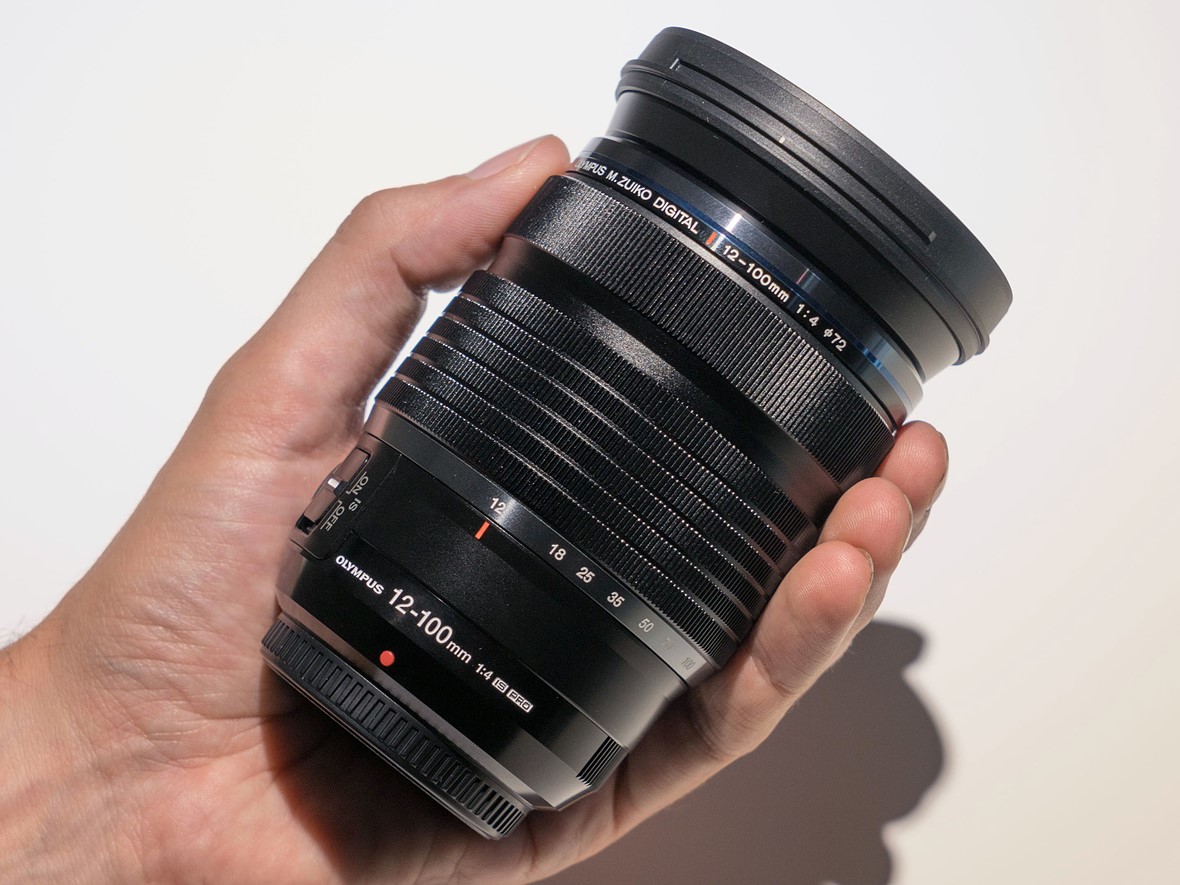
The Olympus 12-100mm F4 IS Pro is a rugged, professional-level zoom lens with a focal length range that can cover almost any everyday situation. It also focuses impressively close, only adding to its versatility. It’s the kind of one-lens solution that might tempt you for travel photography in particular, but these types of lenses often trade convenience for outright image quality – so is that the case here? Let’s find out.


Key specifications:

  • Focal length range: 12-100mm (24-200mm, 35mm equiv.)
  • Stabilization: Up to seven stops with Olympus bodies
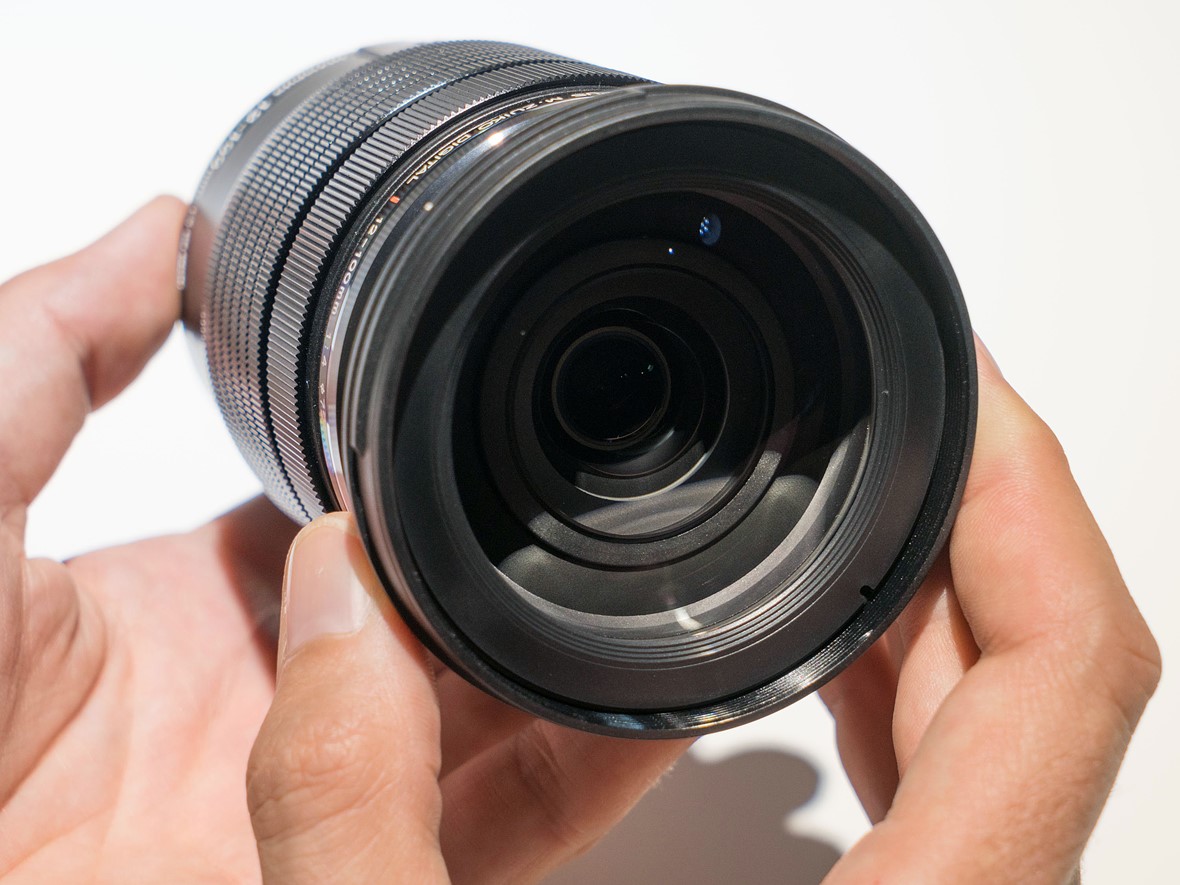
  • Filter thread: 72mm
  • Close focus: 1.5cm (0.6″) at 12mm; 27cm (10.6″ at 100mm)
  • Maximum magnification: 0.3x at wide end of zoom (0.6x 35mm equiv.); 0.21x (0.42x 35mm equiv.) at tele end
  • Diaphragm blades: seven
  • Hood: LH-76B (included)
  • Weight: 561g (1.24 lb)
  • Optical construction: 17 elements in 11 groups
The Olympus 12-100mm F4 is pretty much up for anything. Like a good Port Douglas sunrise.
ISO 200 | 1/6400 sec | F4 | 47mm

Back in 2018, which feels more like two decades ago instead of two years, I took the Olympus 12-100mm F4 on a vacation to Australia for three weeks as my main lens alongside a single bright prime. Mounted on an OM-D E-M1 Mark II, it seemed to me to fit the bill of a reasonably sized solution for just about everything I’d want to photograph. Plus, I knew from prior experience that the Olympus kit would stand up to just about anything mother nature could throw at me.

Full disclosure: I organized and paid for this personal trip on my own, and the choice to bring Olympus gear was my own as well.

All images edited in Adobe Camera Raw 13 with adjustments limited to white balance, exposure, highlights, shadows, white and black levels. Sharpening at ACR defaults; noise reduction at 25 luminance, 25 chroma.


Handling and design

The M.Zuiko 12-100mm F4 joins Olympus’ Pro lineup of prime and zoom lenses, offering top-notch build quality, with claims of dust-proof, splash-proof and freeze-proof construction. It has a manual focus clutch mechanism, giving the feel and very nearly the response of a mechanical focus ring, even though it’s technically a focus-by-wire system. The large, metal-ribbed zoom ring has just the right amount of resistance to it.

The manual focus clutch mechanism in its pulled-back position The stabilization switch and customizable L-Fn button

There’s no denying it, hold this lens in your hand and it just oozes quality. Nearly everything is metal, though even the plastic IS switch on the side of the lens doesn’t so much ‘snap’ into place as ‘thunk’.

What you get in exchange for this feeling of solidity, though, is some heft. At 561g (1.24 lb), it’s very nearly the weight of an Olympus E-M1 Mark III, and significantly weightier than the E-M5 Mark III and E-M10 Mark IV. That said, the larger grips of the E-M1 Mark III and E-M1X mean it actually balances quite well on those bodies.


Autofocus and stabilization

Autofocus on the Olympus 12-100mm F4 is extremely quick, whether you’re shooting close-up or far away. The bokeh isn’t half-bad either, considering that’s fencing in the background. A more in-depth look at bokeh is coming up later in the review.
ISO 200 | 1/250 sec | F4 | 100mm

The Olympus 12-100mm F4 racks through the entirety of its focus range really quickly. It’s perhaps not quite as quick as some Panasonic lenses designed to take advantage of those cameras’ Depth-from-Defocus technology, but it’s more than fast enough for any wildlife I encountered, both inside and outside the Australia zoo.

The rapid AF speeds also make it easy to use the lens when you’re near minimum focus distance, allowing for easy capture of close-ups without necessarily needing to resort to manual focus.

Great stabilization with slower shutter speeds helped to keep my ISO values low a lot of the time, even when working around the F4 max aperture.
ISO 250 | 1/3 sec | F4.5 | 12mm

The stabilization promised by the combination of the 12-100mm F4 and the E-M1 Mark II was part of the reason I could see past this lens’ F4 maximum aperture for general use. It wouldn’t be great for shooting fast action in failing light, but it was perfect for images like this travel snap of a crazy-colored hostel under warm sunset light.

And really, the nice thing about the M.Zuiko 12-100mm F4 is that unless you need to stop down for depth of field or another reason, the lens is more than sharp enough to just shoot wide-open all the time.


Image quality

Olympus’ line of Pro lenses has a history of being renowned for their great image quality, and the M.Zuiko 12-100mm F4 is a strong performer in most respects.

Sharpness

The lens maintains a great level of sharpness throughout the zoom range, and it doesn’t get hazy or fall apart if you’re close to your subjects. So while there were times on this trip where I stopped the lens down, it was usually to get more depth of field, not to increase sharpness.

Things stay nice and sharp even at 200mm (equiv.), and with a relatively close distance to the subject.
ISO 200 | 1/200 sec | F4 | 100mm

On the wider end of things, the 12-100mm is more than a match for the 20MP sensor in the E-M1 Mark II even at F4. This is great news for users that might be leery of a Micro Four Thirds lens that ‘only’ opens up to F4, as well as those users that want to take advantage of the high-res shot mode.

Wide open, the Olympus 12-100mm is plenty sharp across the frame for the 20MP sensor. Click-or-tap-through for the full-size image.
ISO 200 | 1/2500 sec | F4 | 12mm

Vignetting and distortion

As is the case with most lenses designed for mirrorless systems, the M.Zuiko 12-100mm F4 Pro has some non-optional software corrections built into its design. These are applied automatically to the Raw files. So while characteristics like vignetting and distortion appear really well-controlled, it’s likely that software is partly responsible. You can see in the image above that there’s still some vignetting in the extreme corners, but it clears up somewhat as you zoom in.

There’s a bit of vignetting at the wide end of the zoom, but it’s not too objectionable.
ISO 200 | 1/5 sec | F4.5 | 12mm

Again, likely due to built-in software corrections, there’s not much to complain about with regards to distortion either. There looks to be a small amount of barrel distortion at the wide end of the zoom, and without much in the way of pincushion distortion at the longer end of the zoom. Check out the vertical lines present in the two images below to get a sense of how the lens’ distortion will (or won’t) impact your images.

At longer focal lengths, there’s not much in the way of distortion at all.
ISO 200 | 1/500 sec | F5.6 | 80mm
Click through to see a small amount of barrel distortion in this image at wide-angle.
ISO 1250 | 1/10 sec | F4 | 12mm

Bokeh

While this lens was never going to be a bokeh machine owing to its F4 maximum aperture, you can absolutely get some subject isolation depending on your distance to subject and focal length.

For snapshot portraiture, you can get some subject isolation even in the middle of the zoom range.
ISO 200 | 1/250 sec | F4 | 54mm

In most cases, the bokeh is nice and smooth. You’ll struggle to really blur the background fully away unless you’re real close to your subject and at near maximum zoom. Unfortunately, if your background is full of lots of out-of-focus highlights, you may sometimes notice it looks a bit ‘busy’, with rings around the outsides of the ‘bokeh balls’ and in some cases some ‘onion ring’ effects.

I found the bokeh in this image to be a bit ‘busy’ for my taste.
ISO 200 | 1/800 sec | F4 | 100mm
For smaller subjects, you can get close and zoom in for nice isolation.
ISO 640 | 1/60 sec | F4 | 70mm

Flare and sunstars

Flare and loss of contrast aren’t serious issues on the 12-100mm F4, even with the sun in the frame. What I was never really sold on, though, were the sunstars. They just didn’t ‘sharpen up’ even as I stopped down further, which then softened up the rest of the image due to diffraction.

After all, F11 on Micro Four Thirds is F22 equivalent for full-frame systems, so if you’re stopping down to the same aperture you would on 35mm to get better sunstars, your sharpness will drop off a cliff. Admittedly, I did put up with some diffraction to get some fantastic sunstars with the M.Zuiko 17mm F1.2 on this trip, so it seems like this is just a slight weak point of the 12-100’s design.

Flare is pretty well controlled, but I’m not super sold on the sunstars; stopping down might help more, but on Micro Four Thirds, that’s guaranteed to soften the image. (And apologies for those couple specks of dust, as well).
ISO 200 | 1/800 sec | F8 | 13mm

Lateral and longitudinal chromatic aberration

The M.Zuiko 12-100mm F4 does a pretty good job keeping chromatic aberrations at bay. If you look closely, though, you will see some fringing in challenging situations. The bottom-left corner of the below image shows some residual fringing around the leaves; the built-in corrections look to have taken care of much other fringing, but left the purple behind. At least this type of CA (lateral) is easy to remove.

Less easy to deal with is the bit of fringing around the slightly out-of-focus sticks just to the right of the center of the frame; this is longitudinal CA, and you can see a bit of it in as green/cyan fringing in the reptile image earlier in the review. So it’s there, but we’ve definitely seen worse.

Bats. So. Many. Bats.
ISO 200 | 1/200 sec | F4 | 100mm

But jumping back to bokeh for a moment, I think the biggest issue with this image (other than the subjects, if you’re not a fan of bats) is the severe onion-ring bokeh in the highlights behind the flying mammals.


Conclusion

What we like What we don’t
  • Sharp across the zoom range
  • Built like a tank
  • Resistant to flare
  • Incredibly versatile range
  • Very good stabilization
  • Low distortion
  • Bokeh can be busy
  • Sunstars aren’t the best
  • Some CA present, even with built-in corrections
  • Heavy
  • Expensive

And so, as happens occasionally on this site, I will be forced to eat some of my previously published words. I’ve said before that I don’t need a zoom on vacation. And I said I like cameras that are small and light, maybe even pocketable. Well, it turns out that I may have become a convert to zooms, depending on the destination.

If I myself was in the Olympus ecosystem, this is a lens I’d strongly consider. Also, this is the beach on which I got sunburned through my shirt. That Australian sun is no joke.
ISO 200 | F9 | 1/320 sec | 20mm

The M.Zuiko 12-100mm F4 provides such a versatile range in such a well-built package that I really did feel ready for anything. From dimly lit church interiors and landscapes to portraits and wildlife, the 12-100mm can handle pretty much anything. No, it won’t blur backgrounds to oblivion most of the time, and when you do get some subject isolation, the backgrounds will occasionally look a bit busy. Sunstars aren’t the best (nor the worst), and some people will have trouble accepting an F4 zoom on a Micro Four Thirds body.

On the other hand, the stabilization offered by this lens (when mounted to a compatible body) is pretty insane, which allowed me to keep my ISO values lower much of the time. I also love being able to hand-hold images at 1/10th of a second to get some motion into a scene while the surrounding environment stays tack sharp.

ISO 200 | 1/160 sec | F4 | 28mm

I think the biggest knock against this lens is the price; with an MSRP of $ 1299, it’s a costly proposition. There are a few Olympus options that fall within this focal range that are less expensive and built similarly well, but that’s just the nature of this particular offering.

If you want solid image quality and don’t want to be fumbling around and changing lenses on a beach next to a sweltering Australian rainforest, the M.Zuiko 12-100mm F4 IS Pro is well worth considering.


Scoring

Olympus M.Zuiko Digital ED 12-100mm F4.0 IS Pro
Category: Superzoom Lens
Optical Quality
Build Quality
Autofocus
Image Stabilization
Ergonomics and Handling
Value
PoorExcellent
Conclusion
The Olympus M.Zuiko 12-100mm F4 Pro IS is a solid option for travel and generalist photographers using the Micro Four Thirds system. It doesn't grant you the blurriest backgrounds nor the most compact dimensions available among other Olympus lenses, but it's well-built, offers excellent stabilization and gives a great zoom range to match almost any situation you find yourself in.

Good for
Travel and generalist photography, including landscape and architecture work.

Not so good for
Situations where you need a fast aperture as well as a fast shutter speed to freeze the action, as in low-light sports imagery.
84%
Overall score

RegularScoreCompareWidget({“mainElementId”:”scoringWidget”,”mainProduct”:”olympus_12-100_4p0_is_pro”,”scoringSchema”:{“id”:”Lenses”,”variables”:[{“id”:”OpticalQuality”},{“id”:”BuildQuality”},{“id”:”Autofocus”},{“id”:”ImageStabilization”},{“id”:”ErgonomicsAndHandling”},{“id”:”Value”}],”categories”:[{“id”:”Wideangle”,”label”:”Wideangle Lens”,”shortLabel”:”Wideangle”},{“id”:”Normal”,”label”:”Normal Lens”,”shortLabel”:”Normal”},{“id”:”Telephoto”,”label”:”Telephoto Lens”,”shortLabel”:”Telephoto”},{“id”:”Superzoom”,”label”:”Superzoom Lens”,”shortLabel”:”Superzoom”}]},”helpText”:”Choose one or more lenses from the drop-down menu, then roll your mouse over the names to see how their scores compare to the lens on review.”})


Sample gallery

Please do not reproduce any of these images without prior permission (see our copyright page).

$ (document).ready(function() { SampleGalleryV2({“containerId”:”embeddedSampleGallery_6403402487″,”galleryId”:”6403402487″,”isEmbeddedWidget”:true,”selectedImageIndex”:0,”isMobile”:false}) });
Articles: Digital Photography Review (dpreview.com)

 
Comments Off on Field review: The Olympus M.Zuiko 12-100mm F4 IS Pro goes to Oz

Posted in Uncategorized