RSS
 

Archive for the ‘Uncategorized’ Category

DPReview TV: Lensbaby Omni review

25 Aug

Photographers used to do crazy things like smear petroleum jelly on their lenses to create interesting photos, but thanks to the Lensbaby Omni you can get those same effects without plopping goo on your glass. Join Chris and Jordan for some creative photography.

Get new episodes of DPReview TV every week by subscribing to our YouTube channel!

  • Introduction
  • How it works
  • Wand options
  • Using the Omni for video
  • Useful tool or novelty?

Articles: Digital Photography Review (dpreview.com)

 
Comments Off on DPReview TV: Lensbaby Omni review

Posted in Uncategorized


Video: Beat creative block with these 5 tips

25 Aug

In his latest video YouTuber and photographer Jamie Windsor offers a collection of inspiring tips to lift us out of those dead-end moments when creativity temporarily abandons our world. When ideas seem to dry up it rarely feels like a temporary situation, even though experience proves that with time masterpieces will be made again. The problem is how long it takes to regain our mojo.

In A Few Quick Thoughts On Staying Creative Jamie discusses creative block and his theory on how it happens – and most importantly how to accelerate the return of fresh inspiration. He tells us to put ourselves in the way of new ideas, to listen to others plans and to try a new environment – and to review the ideas we have been working on.

If you are going through a dry spell at the moment this might just lift you out of it, and if you aren’t it could be your insurance for next time one comes along.

Articles: Digital Photography Review (dpreview.com)

 
Comments Off on Video: Beat creative block with these 5 tips

Posted in Uncategorized


Interview: Colin Goudie, feature film editor

24 Aug
In the edit suite for The Show, a new film written by and starring Alan Moore

Colin Goudie is a feature film editor with a career spanning over 35 years, editing everything from 16mm film to Digital 65mm, and has cut films in big studios, hotel rooms and even tin shacks. Most recently, he’s known for his work on Rogue One: A Star Wars Story and Monsters, though he doesn’t limit himself to big budget productions and can often be found editing lower budget documentaries and dramas too.

Colin talked with DPRevew about editing movies back in the film days, and the transition to a fully digital workflow.


How did you start out as an editor?

I got a placement at Nene College of Art and did a foundation course for two years where I discovered 35mm stills photography. I graduated from Nene and got a placement at Bournemouth College of Art School of film, photography and TV production.

Instead of just concentrating on stills photography, in year one I would actually go to the second and third year students and ask them if they wanted a unit stills photographer and, of course, everybody always wanted a free unit stills photographer. I did that, and of course the thing about a film set is there’s always too much work to be done and not enough people to do it, so people would start asking you to hold this boom mic, could you alter those barn doors on that light, so you start to learn the process.

Of course, if you don’t mess up people give you more and more responsibility. By the time I went into my second year people were asking me to edit their films, so I jumped ahead by a year. Then I left film school and I managed to get a job at the BBC in their trainee assistant film editor course.

Do you remember the first time you saw non linear editing and what was your reaction?

I left the BBC after 10 years editing on film and tape, and the very first job I was offered was for a tiny documentary series for the BBC about volunteering. There were 15 minute films and the director of one of the episodes had recommended me to the Series Producer. The Series Producer phoned up to talk to me; we got on well over the phone and he said I’d been highly recommended, but the film was cutting on Lightworks and was I OK with that? I said yes.

In year one I would actually go to the second and third year students and ask them if they wanted a unit stills photographer and, of course, everybody always wanted a free unit stills photographer.

I hung the phone up and then I picked it up right away and called directory enquiries and said, “Can you put me through to a company called Lightworks?” and they looked up the number and put me through. I said, “Hi, can you tell me what a Lightworks is and how can I learn to use one?” Lightworks ran a training course that was two days, and I went and spent a lot of money to do the course and then on the following week I started on the series.

I do remember that the other person – there were only two of us on the course – when the instructor talked about using the mouse, said she had never used a computer mouse in her life. I had because of my days at the BBC, because you had to do some stuff with the mouse and a bit of DOS work. Also, because I used an Atari ST as a gamer.

It’s really interesting, everything everybody tells you that playing computer games are bad. But actually it turned out not to be because I understood about loading floppy disks, doing backups, using a mouse, what a DOS monitor was and how to type in code. All those things I learnt in gaming were really useful in an editing environment, and I did see other people struggle who had never done that.

I loved Lightworks straight off because for me it was finally a combination of of the dexterity of film editing, the fact that I can cut in a single frame, the fact that I can drop it in two-thirds of the way through a film or a third of the way through the film. It meant I didn’t have to re-conform my tape like it had on on the U-matic based editing system. It also meant that I could keep all my previous cuts of the film.

A young Colin editing 16mm. It was a very delicate process.

Editors who have worked with film often talk about the physicality of it. Do you miss it?

No, mainly because Lightworks felt physical when you were using that controller. It was lovely to have your pictures at better quality than they had been on U-matic in the early days of offline. Of course, you did come a cropper because you had to digitize at a quite a low quality picture rate, so sometimes you would miss things.

I remember editing a show once, a World War II drama, and there was an extremely wide shot of the outside of St. Pancras station with hundreds of cast members walking through shot, and a shot like that eats up your data rate so things look very blocky.

It was only when they conformed the film and the guys were dubbing it, and the sound crew were laying in the footsteps, looking at the film frame by frame for footsteps, said, “Do you know there’s somebody walking through shot with a Sainsbury’s shopping bag?” Which for a WWII drama was a bit of an error. Nobody has ever seen it, I never saw it on the rushes because I only saw the digitized picture.

It was a learning curve. It really made me learn to look for those kind of things even more on a heavily digitized picture. It also made me fight vociferously for productions moving forward from that day that I would have more memory and be able to digitize my rushes at the highest possible quality.

I learnt to do all my wide shots at a higher quality digitization rate than the close-ups, whereas up until that time it was always quicker and easier to do everything at the lowest possible rate, which is what everybody did because memory was so expensive in those days. A 9 gigabyte drive was £2,400. If you do the maths on that it was £90,000 in memory alone just for an edit, so you cut your cloth accordingly but those are all learning things. It was the early days of nonlinear.

Colin and Gareth Edwards on Rogue One.

You’ve edited in some quite odd places. Normally, people picture director and editor sitting in a air conditioned room with coffee and croissants coming in, but that’s not always been your experience has it?

Certainly among my peers I seem to have edited in more weird locations than many. I have done my fair bit of editing in suites, but I’ve also done a lot of location editing. I have edited at Soho and Pinewood and Shepperton, Skywalker Ranch at the Lucasfilm Presidio in San Francisco and also in the rim of a volcano, but it wasn’t active.

I like location editing for the access it gives me to the director and sometimes to the cast. It’s very useful if you befriend the actors on location and they become your mates, because when you go up to them and say, “Could you just record this line of dialogue for me so I can lay it into the edit and try out an idea with some new dialogue?” it’s much easier if you know them.

Certainly among my peers I seem to have edited in more weird locations than many.

Obviously, having the access to your director when on location is great because if I look at the rushes in the afternoon that they shot in the morning and spot something that I need a pickup on, I can pop down to set straight away while they’ve still got the cast on that set. I can even show them a little rough edit that I might have done and say this is why I need this shot, so everyone understands why you need it, and I’ll get it bashed out for you really quickly – there’s no delay in that process.

Don’t you find yourself out on a limb in those situations?

The drawback of editing on location is lack of technical backup, so if something goes wrong and you’re on the other side of the world with a laptop and suddenly your card reader doesn’t talk to your drive or your camera media, then you’re really stuffed. I have made numerous phone calls to people in the UK pleading for some help down a dodgy phone line to get me out of a scrape or send me a new driver down the internet.

My joke I always used when I talked to the production manager was, I don’t care about the quality of my hotel room so long as I’ve got a table and a chair, stable electricity mains supply and the internet, and you wouldn’t believe how many times you can’t get all four of those things. That can really affect your workflow.

If you don’t have a stable electricity supply it’s impossible to run your drives because they just keep dropping out the whole time, so suddenly the Producers are like, “Why didn’t you cut anything today?” and it’s like “I don’t have a main supply to edit it, to run the external hard drives up on.”

You get used to the fact of taking portable drives that you can maybe clone material from, and work off of on the short-term until you can get to some sort of electricity supply and recharge your laptop.

Colin editing Monsters on location.

You’ve also shared your edit suite with some non human occupants as well haven’t you?

I’ve had an edit suite where a scorpion came in underneath the door.

I also worked on a BBC series which was edited inside London Zoo, in a large Portacabin. It was a real team experience with four other freelance editors, a bit like the old days at the BBC. The great thing about that was that the zoo keepers sometimes brought a few of the animals into the office. We had Coatis and even a Lynx come round; the Coatis ate our lunch (they loved yogurt) and the Lynx pawed the carpet. We all adopted them.

We did have a problem with some other wildlife at the Zoo. One day I came into my suite, turned on my Avid and then booted up all the others. When I got back to mine all the media was offline and I checked the same had happened in every other edit too. On investigation, the Technical Manager found that a rat had chewed through the fiber optic cable than ran between the edit suites and the main building where the drives were kept.

I’ve had an edit suite where a scorpion came in underneath the door.

Cheap plastic cable cost us days in edit time until it could be replaced by the armored variety. Cutting costs there actually didn’t work out too well.

If you could re-cut one film that you haven’t made what would it be?

I’d inter-cut Dunkirk with The Darkest Hour and make one movie because I think there’s a way of doing that. When I was a kid growing up epic films were Lawrence of Arabia, which had incredible battle scenes, and they also had really intelligent political dialogue scenes and these days it seems that you have to have one or the other.

Dunkirk is a spectacular looking action movie but I don’t understand what’s going on plot wise in terms of the history of Dunkirk. I mean, I know because I grew up watching World War II movies, I’ve talked to my dad who fought in the war, but for a modern audience in terms of teaching you about Dunkirk it’s incomprehensible.

It doesn’t have any plot, it just has incredible action scenes, The Darkest Hour is a really brilliantly made Churchillian biopic which gives you all the political background but has no scale, it’s almost all people in rooms talking.

I think that if you took the rushes for those two films it would be fascinating to see if you could have a crack at making one 3 hour long Lawrence of Arabia style epic which told the story of Dunkirk and told the story of Churchill and made effectively the modern Lawrence of Arabia. You’d have to have the rushes, and you’d have to have carte blanche to do what you wanted, but I think that would be amazing to do that.

X Wings and kilts, not often seen together.

Thinking about Star Wars, what’s your favorite film and why?

Empire Strikes Back, definitely.

I saw Star Wars (Episode IV) when it came out. I liked it, but it wasn’t my favorite movie of all time, but I did enjoy it. I think one of the reasons why it wasn’t my favorite movie is because it took six months to get from America to the UK and by the time we actually sat in the cinema to watch it they’d shown so many clips of it on TV you kind of knew the story.

When Empire Strikes Back came out it was all shrouded in secrecy, there were no clips. Up until that movie I had not seen the Godfather Part II, so basically I’d never seen a good sequel. Every sequel that I’d ever seen was not as good as the original film; Jaws 2 was not as good as Jaws, and it was effectively the same film.

With Empire Strikes Back I sat down to watch what I thought was going to be Star Wars part II, and I saw a film that took things in a totally different Direction. It introduced new characters, had Yoda, who has got to be one of the greatest cinematic characters of all time, and was not flagged up in the first movie at all all.

Every sequel that I’d ever seen was not as good as the original film; Jaws 2 was not as good as Jaws, and it was effectively the same film.

Then the Twist with what they did with the Luke Skywalker character and the Darth Vader character, and the fact that it ended on a cliffhanger, which in those days no movie did. Now every movie does it. I just remember walking out of that movie theater on opening day – I saw it at 10:30 in the morning at Odeon Leicester Square in 70mm, and all I wanted to do was go back in and see that movie again, which I couldn’t do because it was sold out.

I just thought it was incredible, and I think that the score had some of the tracks from the original movie, but the Empire theme was new for Empire Strikes Back. Imperial March is not in the first movie, that is one of the most defining pieces of music in cinematic history, so to get all those pieces was incredible and the visual effects (VFX) were on a new level.

I understood how they did the VFX in the original Star Wars film, spaceships against black, because I really studied and knew about 2001 and how they did that. But, when they had sequences of snow speeders going across landscapes against snow in Empire… my little brain was going, “How did they do that?”

Colin editing at the BBC on tape.

Moving from 16mm to tape, and now on to digital, what’s been the biggest challenge?

I think the biggest technical difference during my career as an editor has been the introduction of video tape, and now digital over film, because when we shot on film the average shooting ratio was 10 to 1. I remember when I made my University film I shot on a ratio of 1.25 to 1. I had 40 minutes of film stock to make a 25-minute finished drama.

When you learn that discipline 10 to 1 seems like luxury. The skill set, the training that most directors had in the first part of my career, was that everybody had come up through film and they learnt to shoot on a 10 to 1 shooting ratio, so they don’t get the minimum amount of coverage needed, but have sufficient coverage – not excessive coverage – and that it was correct.

When I made my University film I shot on a ratio of 1.25 to 1. I had 40 minutes of film stock to make a 25-minute finished drama.

What happened with videotape was things started to become a bit more ‘shoot everything that moves and we’ll sort it out the edit’, and that’s a tradition that is even more prevalent with digital today. Traditionally capture was only in real time, now you don’t even to wait that long so shooting ratios have exploded. That is almost always to the detriment of what happens in the edit because that means that the editor now has more footage to look at than there are hours in the day to look at it.

Unless you are on a very long schedule you need either the director to have gone through the material and come in with at least some notation, and some honing down clarification as to what they’ve shot, so that you only need look at the minimum amount for what you need to do the edit.

Quite often what I’ll do is do that, and when I’ve assembled the film I will then talk to them and say, “What else have you got that I’ve not seen?” that we can now go back and look at with a view to improving some of the sequences, because you just don’t have time to watch everything on a standard schedule.

Articles: Digital Photography Review (dpreview.com)

 
Comments Off on Interview: Colin Goudie, feature film editor

Posted in Uncategorized


Video: Incredible timelapse shows Earth’s rotation relative to the Milky Way

24 Aug

Photographer Aryeh Nirenberg has shared an incredible timelapse from a trip to Northeast Colorado that shows the Earth’s axial rotation in relation to the location of the Milky Way Galaxy in the night sky.

The timelapse, which was captured nearly two years ago, but only now uploaded to YouTube, was captured with an astro-modified Sony a7S II with a Canon 24-70 F2.8 lens attached via an adapter. Approximately 1,100 10-second exposures were captured at 12-second intervals to create the 55-second timelapse.

In speaking with DPReview, Nirenberg said:

I was trying to shoot a regular Milky Way timelapse at a reservoir, but access to it was blocked on the side of the reservoir that I needed to be at to face the Milky Way. So, instead of just shooting the Milky Way with the boring field in the foreground, I thought I’d try doing it with my iOptron portable equatorial mount to make it more interesting and I [photographed] until most of the sky was out of the frame.

The resulting images were processed in Lightroom and the timelapse was rendered using LRTimelapse. You can find more of Nirenberg’s work on his website, Instagram profile and YouTube channel.

Articles: Digital Photography Review (dpreview.com)

 
Comments Off on Video: Incredible timelapse shows Earth’s rotation relative to the Milky Way

Posted in Uncategorized


Unreal Engine’s Project Spotlight uses LED walls for real-time in-camera visual effects

24 Aug

Epic Games has showcased Project Spotlight, an Unreal Engine-powered way to capture real-time visual effects in-camera. The company has detailed the work in a new video showing off the system, including its ability to track the camera’s position in space in real-time for a realistic and customizable background.

Rather than filming in front of a blue or green screen for post-production later on, the Project Spotlight system enables filmmakers to shoot in front of LED walls showing the virtual environment in real-time. Creators can digitally manipulate this 3D virtual scene when necessary and the LED walls adjust the on-set lighting for realistic ambient light.

‘No matter what the project is,’ Lux Machina chief technology officer Philip Galler said, ‘creatives always want to see the closest representation to the final product as early on in the creative process [as possible].’

Experts featured in the video explain that because the virtual environment can be adjusted in real-time, the project saves critical time that may otherwise be wasted waiting for changes. As well, people from different departments can work together to determine how the virtual world is portrayed.

The technology was demonstrated at SIGGRAPH 2019 by Epic Games in partnership with Magnopus, Lux Machina, Quixel, Profile Studios, DP Matt Workman and ARRI. Future plans for the system are unclear at this time.

Articles: Digital Photography Review (dpreview.com)

 
Comments Off on Unreal Engine’s Project Spotlight uses LED walls for real-time in-camera visual effects

Posted in Uncategorized


Slideshow: Winners of the 2019 Australian Geographic Nature Photographer of the Year

24 Aug

2019 Australian Geographic Nature Photographer of the Year Winners

The South Australian Museum has announced the 2019 Australian Geographic Nature Photographer of the Year and also shared the winning images from each of the ten categories offered in this year’s contest.

In total, 2,219 images were submitted and judged by Justin Gilligan, Glenn McKimmin and Tui De Roy. In the end, the 2019 Australian Geographic Nature Photographer of the Year award was handed out to Mat Beetson of Western Australia for the above image of a beached Fin Whale being circled by sharks on Cheynes Beach in Albany, Western Australia. The winning image was captured with a DJI Phantom 4 Pro drone, marking the first time a drone-captured photograph has won the competition.

‘It was unreal, arriving at a peaceful coastal town with a pristine beach and then seeing this huge whale not even five metres from shore – we then noticed the thrashing close by and realised that a few sharks had also stopped by,’ Beetson told the Southern Australian Museum about the capture. ‘I launched the drone to see the aerial view and captured a sequence of photographs, this shot was one of the last ones I took and I was very lucky that the shark came back for a look.’

Beetson received a $ 10,000 cash prize as well as a Coral Expeditions cruise for winning.

The remainder of the images in this gallery are the ten winners in each of this year’s categories.

You can find out more information about the Australian Geographic Nature Photographer of the Year competition and the South Australian Museum by visiting their respective websites.

Above Image:

Overall Winner

Fin Whale, Balaenoptera physalus

The fin whale is sighted regularly in this region; seeing one beached, however, is rare. The whale sits less than 5m from shore and 100m from residential homes, giving whale researchers access to an unusual occurrence for this species. Bronze whalers and great whites feasted over the remains before removal.

Location: Cheynes Beach, Albany, Western Australia

Gear: DJI Phantom 4 Pro Drone, 24mm, 1/500, f/5.6, ISO 100, 118m high, filmed with permission DPAW

Photographer: Mat Beetson, Western Australia


Photo credits: Images owned by their respective creators, used with the permission of the South Australian Museum.

Winner, Animal Portrait

Decorator crab, Achaeus spinosus

Typically, decorator crabs attach pieces of sponge and seaweed to themselves to camouflage and hide from predators (which makes them very poor photographic subjects). However, Achaeus spinosus attaches stinging hydroids to itself to ward off potential predators (making it a very attractive subject for photography).

Location: Lembeh Strait, North East Sulawesi, Indonesia

Gear: Canon EOS 7D Mk II, Canon EF 100mm, f/2.8 macro USM, 1/250, f/16, ISO 200, INON Z240 strobe with Retra Pro light shaping device, handheld

Photographer: Ross Gudgeon, Western Australia

Winner, Animal Behaviour

Humpback whales, Megaptera novaeangliae,
Dolphins, unidentified species

The heat run is the ultimate wildlife encounter – multiple whales competing for a female. The chase can last for hours or even days and males can display bubble netting, open mouth gulping, physical contact, loud acoustic sounds, and breaching. Even after 16 years documenting humpback behaviour in the region, it is still truly heart-thumping and adrenaline-pumping action.

Location: Tonga, South Pacific

Gear: Canon 1DX Mk II, Canon 8–15mm fisheye, 1/320, f/8, ISO 200

Photographer: Scott Portelli, New South Wales

Winner, Animal Habitat

Commensal amphipod living in solitary ascidian

I was searching for miniature pygmy seahorses on the reefs of West Papua when I happened across this tiny amphipod crustacean. Just 0.5–1cm long, this male is sitting at the mouth of the sea squirt to guard the females and young within. According to an amphipod expert, this is likely a new species.

Location: Raja Ampat, West Papua, Indonesia

Gear: Nikon D800, Nikkor 105mm macro, 1/125, f/14, ISO 100, twin INON Z240 strobes, handheld, Subal underwater housing

Photographer: Richard Smith, United Kingdom

Winner, Botanical

Ghost fungus, Omphalotus nidiformis

The elusive ghost mushroom show starts after dark, when the green light of its bioluminescence glows across the pine forest on the Bellarine Peninsula. It seems like magic but the glowing works to attract insects that then help disperse the spores and spread the mushroom.

Location: Ocean Grove, Victoria

Gear: Canon 5D Mk IV, Samyang 14mm, 30, f/2.8, ISO 3200, Manfrotto tripod

Photographer: Marcia Riederer, Victoria

Winner, Landscape

When Barron Falls (Din Din) is in flood, the usually tranquil scene is transformed into a tumultuous cataract as huge volumes of water make their way to the coastal plain below. The sheer violence of this display, coupled with the deafening roar, makes it an unforgettable experience.

Location: Barron Falls, Kuranda, Queensland

Gear: Pentax X-5, 28.3mm, 1/320, f/5, ISO 100, handheld

Photographer: Neil Pritchard, Queensland

Winner, Monochrome

Honeycomb moray eel, Gymnothorax favagineus
Maze coral, Leptoria sp.

I came across this amazing juxtaposition of a honeycomb moray eel and a textured brain coral. It screamed monochrome to me, but one of the significant disadvantages of shooting underwater is that you cannot just change your lens to suit the subject. Still, I slowly moved as close to the eel as possible, increased the depth of field, and adjusted my strobes to light up the coral and the eel.

Location: Banda Sea

Gear: Nikon D850, Nikonos 13mm RS, 1/200, f/16, ISO 400, Seacam housing, Ikelite 161s strobe

Photographer: Tracey Jennings, United Kingdom/Malaysia

Winner, Junior

This night was the most amazing display of lightning that I have ever seen, with constant flashes of lightning lasting hours. For the composition, I decided to focus on a man standing at the edge of the water with an umbrella to add a sense of scale to the image.

Location: Fingal Bay, New South Wales

Gear: Canon EOS 5D Mk lll, Canon 17–40mm f4 L, 15, f/4, ISO 200, tripod

Photographer: Floyd Mallon, New South Wales. Age 17

Winner, Our Impact

The Menindee Lakes were deliberately drained in 2016–17 and New South Wales has experienced a lengthy drought. Animals and birds desperately seek food and water and there is very little left due to these human-made and natural events. Lake Cawndilla is now just a drying lakebed scattered with the remains of our native animals.

Location: Cawndilla Creek, Menindee, New South Wales

Gear: DJI Phantom 3 Advanced, 20mm, 1/640, f/2.8, ISO 200, ND4 filter

Photographer: Melissa Williams-Brown, South Australia

Threatened Species Winner

Winner, Threatened Species

Mertens’ water monitor, Varanus mertensi

STATUS: ENDANGERED

Mertens’ water monitors are highly inquisitive. This extremely bold specimen ostentatiously approached me to investigate the good-looking lizard in my dome port while I observed another nearby pair engaged in courtship – sadly for him he was staring at his own reflection, not the mate of his dreams.

Location: Adelaide River, Northern Territory

Gear: Olympus OMD EM-1 Mk II, Olympus 8mm f1.8, 1/125, f/11, ISO 64, two Sea & Sea YS-D2 strobes, manual flash output, handheld, Nauticam underwater housing

Photographer: Etienne Littlefair, Northern Territory

Portfolio Prize

Portfolio Prize (best portfolio of size or more images)

Artist: Charles Davis, (NSW)

Articles: Digital Photography Review (dpreview.com)

 
Comments Off on Slideshow: Winners of the 2019 Australian Geographic Nature Photographer of the Year

Posted in Uncategorized


You can now search for images in Google Photos using text found within the image

24 Aug

Google has confirmed Google Photos is adding the ability to search for images using the text featured in the content. This is different than searching for images based on their filename, instead using Optical Character Recognition (OCR) technology to identify words featured in photographs, such as from an image of a menu or sign.

The feature was first spied by Hunter Walk, who shared the above screenshots of the new capability. The official Google Photos account responded to the tweet, confirming it’s rolling out the new search capability.

Though apps that use OCR to copy text aren’t anything new, the ability to search through albums of uploaded photos for text located within the images will come in handy for many users, particularly those who use Google Photos for storing scanned copies of invoices and other business documents.

According to The Verge, the new OCR-based search option is available on some Android devices at this time. Google indicated in its tweet that the feature is rolling out over the course of this month, so it may take a number of days or weeks to arrive for everyone.

Articles: Digital Photography Review (dpreview.com)

 
Comments Off on You can now search for images in Google Photos using text found within the image

Posted in Uncategorized


Sony Cyber-shot DSC-RX100 VII Review

23 Aug

$ (document).ready(function() { SampleGalleryStripV2({“galleryId”:”9588852492″,”isMobile”:false}) })

Sample photoSample photoSample photoSample photoSample photo
Gold Award

85%
Overall score

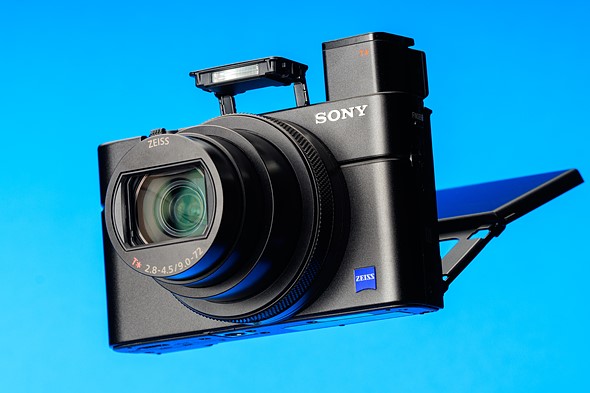
The Sony RX100 VII is the company’s latest pocketable 1″ sensor compact. It uses the same 24-200mm equivalent F2.8-4.5 lens as its predecessor but features a more capable, easier-to-use autofocus system.

This comes in addition to the already impressive capabilities we saw in the Mark VI, including very fast continuous shooting and high-quality 4K video capture. And, for the first time in the series, the Mark VII has a mic socket for improved audio recording.

The Mark VII can shoot at up to 20 frames per second with no viewfinder blackout: specs that are a match for the company’s flagship a9 sports camera. And it’s this capability, along with the enhanced AF, that prompts Sony to talk about ‘the power of an a9 in your pocket.’ To be clear, though, it does not share its hardware with that model.

Key Specifications

  • 20MP 1″-type stacked-CMOS sensor with phase detection and built-in DRAM
  • 24-200mm equivalent F2.8-4.5 zoom
  • 20 fps continuous shooting with full autofocus and auto-exposure, and no blackout
  • Seven frame, 90 fps ‘single burst’ mode
  • Retractable 2.36M-dot EVF with 0.59x equiv. magnification
  • 3″ touchscreen LCD (flips up 180° or down by 90°)
  • Oversampled UHD 4K video (up to 5 min clips in standard temperature mode)
  • Combined lens and digital ‘Active’ stabilization mode in video
  • High speed video at up to 1000 fps
  • Intervalometer
  • Wi-Fi with Bluetooth and NFC

The RX100 VII will be available in August 2019 at a recommended price of $ 1200. It’ll sell for around €1300 in Europe and £1200 in the UK, with both figures including tax. These are around the same prices as its predecessor was launched at, so we expect to see the Mark VI get re-positioned, to make room.


What’s new and how it compares

The RX100 VII looks like its predecessor but borrows know-how (though not hardware) from the pro-sports a9 model.

Click here to read more

Body and handling

The RX100 VII is an evolutionary product but somehow finds room for a mic socket, as well as that massive lens.

Click here to read more

Operation and controls

The control layout and logic is unchanged from previous models (for better or worse). There’s a good degree of customization available.

Click here to read more

AF and video performance

The RX100 VII offers one of the best autofocus implementations of any compact on the market, video impresses too.

Click here to read more

Image quality

Image quality from the RX100 VII is slightly improved over the VI. Check out our studio test scene to see how it compares to the competition.

Click here to read more.

Conclusion

The RX100 VII receives our gold award and recommendation. Here’s why.

Click here to read more.

Sample gallery

We’ve been shooting with a pre-production RX100 VII for a few days now. Have a look at what the new sensor can do.

Click here to see the gallery.

Articles: Digital Photography Review (dpreview.com)

 
Comments Off on Sony Cyber-shot DSC-RX100 VII Review

Posted in Uncategorized


Tamron teases four new lenses for Sony E mount cameras

23 Aug

Tamron USA has shared the above video on Facebook teasing four new lenses for Sony E mount camera systems.

In the 18-second video, which is accompanied by the description ‘Tamron Thrives on Challenging the Limits,’ Tamron shows off the silhouette of four new lenses alongside its currently-available 17-28mm F2.8 Di III RXD and 28-75mm f/2.8 Di III RXD lenses.

No additional details are given, but based on the sizing of the lenses, it appears as though the tallest of the four lenses will be a telephoto zoom (note the focus and zoom rings on the edge of the silhouette) and the remaining three lenses will be more compact primes.

In a follow-up post, Tamron says the lenses will be ‘Coming Soon,’ but leaves it at that. Sony Alpha Rumors is reporting the new lenses being shown off at PhotoPlus in October, but that’s far from confirmed at this point.

Articles: Digital Photography Review (dpreview.com)

 
Comments Off on Tamron teases four new lenses for Sony E mount cameras

Posted in Uncategorized


Viltrox APS-C lenses for Fujifilm, Sony and Leica detailed ahead of launch

23 Aug

Chinese camera gear brand Viltrox is planning to release three autofocus lenses for Fujifilm X-mount, Sony E-mount, and Leica M-mount, according to FujiRumors, which initially spied the upcoming products back in May.

In a new report published this week, FujiRumors detailed the alleged specs for the three lenses, product images for which it found published on Viltrox’s official profile on Chinese social media website Sina Weibo. Below are images of the lenses and a breakdown of the specifications based on the charts provided by Viltrox:

$ (document).ready(function() { SampleGalleryV2({“containerId”:”embeddedSampleGallery_2165464926″,”galleryId”:”2165464926″,”isEmbeddedWidget”:true,”selectedImageIndex”:0,”isMobile”:false}) });

Viltrox 23mm F1.4:

  • Aperture range: 1.4 – 16
  • Aperture blades: 9
  • 10 Groups, 11 elements
  • Filter size: 52mm
  • Weight: 250g (8.8oz)

Viltrox 33mm F1.4:

  • Aperture range: 1.4 – 16
  • Aperture blades: 9
  • 9 Groups, 10 elements
  • Filter size: 52mm
  • Weight: 270g (9.5oz)

Viltrox 56mm F1.4:

  • Aperture range: 1.4 – 16
  • Aperture blades: 9
  • 9 Groups, 10 elements
  • Filter size: 52mm
  • Weight: 290g (10.2oz)

It’s unclear when the new lenses will launch. The initial report in May claimed on behalf of a source that the new models may launch in October, but the latest report points toward ‘around November’ as the official release time frame. Prices haven’t been revealed at this time. These three lenses will join Viltrox’s previously launched 85mm F1.8 autofocus APS-C lens.

Articles: Digital Photography Review (dpreview.com)

 
Comments Off on Viltrox APS-C lenses for Fujifilm, Sony and Leica detailed ahead of launch

Posted in Uncategorized