Category: Photography

  • Photography SEO And The Importance Of Local Marketing

    So far in this photography SEO series, we have discussed local link building, local relationship building and today we are going to talk local marketing. Photography SEO isn’t only about the algorithms. In fact, relationships and marketing efforts also play a big role. Especially with the ever-changing algorithms and importance of social signals.

    photography seo local marketing

    Photography SEO & Local Marketing

    Building relationships is also marketing, however there are additional local marketing techniques that can be used.

    Incentive

    Provide your relationships with an incentive to send more business your way. For instance, a 5% referral bonus for every new customer you get. Make the bonus exclusive to partners you have exchanged links with.

    Local Listing

    Utilize local marketing sites and get your business listed on the most important websites, the ones your potential clients would be browsing.

    Associations

    Display your associations and memberships on your website, and make sure you are listed on theirs. For instance, if you are a wedding photographer it could be important to be listed on Best of Wedding Photography in your local area.

    Host & Education

    If you have a studio, host a meet and greet there. If you do not, partner with one of your relationships to use their venue. Offer a couple of presentations where you can further educate your partners so they can be an indirect and unofficial sales person for your business.

    Local Metrics

    Use Google Webmaster Tools and Bing Webmaster Tools and identify what local keywords are working for you and where you need improvement.

    Answer Questions

    Use social sites like Quora, searching for local questions worth answering.

    Where Your Customers Are

    Your customers hang out on Facebook and Pinterest. You may not realize it, but Pinterest is important for photographers and more so for local marketing.

    Plus Local

    Google Places is now called Google Plus Local. Even if your customers are not on Google Plus, it is important to have your business set up and merged with your Google Plus Local listing.

    Like with anything else, this list can go on for a while. So I want to hear from you. Comment below and share your advice for photographers to utilize local marketing for photography SEO.

    Thanks for reading,

    Scott

    dslrBlog

  • Grab Our Natural Light eBook for Just $9 [55% Off] Today Only

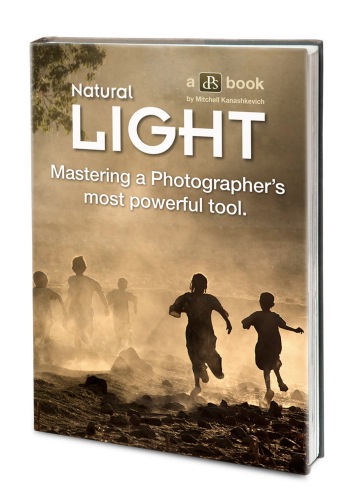
    2012 has been a huge year for dPS and one of the biggest moments for us was launching our biggest selling eBook for the year – Natural Light: Mastering a Photographers Most Powerful Tool.

    Today you can get this eBook at the amazing price of just $ 9 USD.

    When we asked author Mitchell Kanashkevich to write this eBook we knew the topic of ‘Natural Light’ was on an important topic – however we didn’t anticipate the amazing response from dPS readers who not only made this our fastest selling eBook ever but who began to submit some wonderful reader reviews and feedback.

    “Last week just before I was about to spend several thousand dollars on some lighting gear I saw a post about your Natural Light eBook. On a whim I bought a copy and I am so glad I did – the improvement in my photography is out of this world.

    Best of all I no longer see the need for all that gear I was eyeing off because I’m equipped with the best light there is – natural light. This was the best few dollars I ever spent!” – Jesse Sadler (via email)

    “I absolutely loved the e book and learned a lot from it. Now everywhere I go I look at the light. I also really loved Mitchell’s images, very inspirational.” – Mary Caughley (via facebook)

    This eBook has impacted many photographers and so we want to get it in the hand of as many of our readers as possible today by reducing its price so drastically.

    What’s Natural Light All About?

    In Natural Light, pro travel photographer Mitchell Kanashkevich reveals his secrets for using natural light to enhance the mood, atmosphere, and quality of images.

    Really it is about creating Beautiful Photos… just the way Nature Intended it.

    Get a full run down of what is included in this eBook on it’s information page here.

    But in short – here’s what you’ll discover in Natural Light:

    • Understand the essential qualities of natural light
    • Master the technical components you’ll need to work with natural light, including exposure, metering, and the histogram
    • Learn expert methods to control natural light to suit your creative needs
    • Grasp the potential of harsh light, diffused light, fog, twilight, and other settings
    • Learn to sculpt light, create light interplay, reveal silhouettes, and more
    • Practice professional post-processing techniques to enhance natural light
    • Harness the countless creative possibilities that natural light affords

    Natural Light is beautifully illustrated and is full of useful examples and diagrams

    Why do we think this is the Best Guide to Natural Light on the Market?

    • Because it’s packed with real-world advice. Mitchell has built a successful photography career by learning to harness natural light in any situation. His hard-won advice will save you years of trial and error, and help you get more from your photography, starting today.
    • Because it’s comprehensive. This ebook covers all aspects of photography using natural light. It gives you the skills you need to conduct your own experiments with natural light—to breathtaking effect.
    • Because it’s ultra-practical. Mitchell’s hands-on advice leads you from the essentials to more advanced aspects of natural-light photography. His field guide to natural light is supported by detailed case studies, tips and tricks, and clear illustrations to help you build up your skills super-fast.
    • Because it was created with the passionate amateur in mind. You don’t need an expensive camera, high-end equipment, or stunning subjects to get real value from this ebook. Mitchell targets his advice to the photographer who wants to use natural light to maximum effect in every image they make.

    Grab Your Copy Today at just $ 9 [55% Off]

    After the Camera, Your most Powerful Photographic Tool is Light. This eBook will help you to understand and use it to create beautiful images.

    Learn more about it here or grab it today only at the hugely discounted price of just $ 9 by clicking the download button below.

    download_it_now_click-1.jpeg

    // < ![CDATA[ function EJEJC_lc(th) { return false; }

    // ]]>

    Post originally from: Digital Photography Tips.

    Check out our more Photography Tips at Photography Tips for Beginners, Portrait Photography Tips and Wedding Photography Tips.

    Grab Our Natural Light eBook for Just $ 9 [55% Off] Today Only


    Digital Photography School

  • Photographers Upset By Instagram’s Change in Terms of Service

    Earlier today Instagram announced that they are changing their Terms of Service effective January 13th 2013.

    The most controversial part of the change is outlined below:

    “To help us deliver interesting paid or sponsored content or promotions, you agree that a business or other entity may pay us to display your username, likeness, photos (along with any associated metadata), and/or actions you take, in connection with paid or sponsored content or promotions, without any compensation to you.”

    Now I have no idea if Instagram actually plans on selling/licensing your photos or not — sometimes the lawyers get a hold of things like this and push the envelope too far with a TOS — but this change seems to go further to me than the typical giving up of rights to your photos for typical social media display purposes.

    Facebook’s TOS by contrast reads:

    “For content that is covered by intellectual property rights, like photos and videos (IP content), you specifically give us the following permission, subject to your privacy and application settings: you grant us a non-exclusive, transferable, sub-licensable, royalty-free, worldwide license to use any IP content that you post on or in connection with Facebook (IP License). This IP License ends when you delete your IP content or your account unless your content has been shared with others, and they have not deleted it.”

    While this appears functionally similar to Instagram’s, Facebook doesn’t actually mention so specifically the idea of selling your content and you getting zero compensation.

    Google+’s TOS tends to provide photographers greater protection with a provision that your content there can be used for the “limited purpose of operating, promoting and improving our services, and to develop new ones.” Nothing about selling off your photos to third parties there, folks.

    “When you upload or otherwise submit content to our Services, you give Google (and those we work with) a worldwide license to use, host, store, reproduce, modify, create derivative works (such as those resulting from translations, adaptations or other changes we make so that your content works better with our Services), communicate, publish, publicly perform, publicly display and distribute such content. The rights you grant in this license are for the limited purpose of operating, promoting, and improving our Services, and to develop new ones.”

    Flickr takes it even one step further actually dedicating a specific blog post to this issue last year titled “At Flickr Your Photos are Always Yours.”

    This change today has upset a lot of photographers and content creators. The New York Times takes apart the new TOS here. Blogger Robert Wagner puts his view more succinctly in a blog post titled Goodbye Instagram and f*** you.

    Personally speaking, I trust that Google will not sell my photos out from underneath me. I think their TOS is pretty clear about their limited scope of use. I applaud Flickr for taking it one step further with a blog post spelling out that you always own your photos on Flickr. Interestingly enough, even before this announcement I saw my first “I’m leaving you Instagram for Flickr” post this past weekend.

    Wired has a post that shows you how to take your photos off of Instagram and delete your account.

    Gizmodo seems to take a different view of this situation, calling folks concerned with today’s announcement whiny little babies.

    What are your thoughts? Will you continue to use Instagram? Are photographers overreacting here?

    My own view is that I think Instagram is pushing it a little too far with this one. I think I’d rather pay them a subscription fee like I pay Flickr than have them out there selling my photos.


    Thomas Hawk Digital Connection

  • Get our iPhone Photography eBook for $7 [65% Off]

    Today is day #4 of our 12 Days of Christmas and it is our biggest discount yet with a whopping 65% discount on our recently launched iPhone Photography eBook.

    That means for the next 24 hours you can pick it up for just $ 7!

    Our iPhone Photography eBook is a comprehensive guide to shooting, editing and sharing great photos from the phone that many of us take everywhere with us – our iPhones.

    The iPhone is currently the most commonly used camera in the world, with millions and millions of snap shots taken everyday, but only a few photographers are using the full creative potential of the camera.

    But that’s about to change because this eBook, written by one of the world’s leading mobile photographers Misho Baranovic, is all about giving you complete control over your iPhone and enabling you to take images that your friends won’t believe came from a camera phone.

    iPhone Photography is written for anyone with an iPhone 3GS, 4, 4S or with the new iPhone 5 and is broken down into 3 main sections – ‘Shooting‘, ‘Editing‘ and ‘Sharing‘.

    In its 106 pages you’ll discover:

    • How the iPhone Camera works and how to use it to take great photos
    • How to take more control of your iPhone using Camera Replacement Apps (with a rundown of the best ones)
    • Advanced shooting techniques with the ProCamera App to gain maximum control over focusing and exposure
    • How to find compelling subjects including; with the family, on the street, in nature, while travelling and at night
    • How to develop your own editing style
    • A rundown of native iPhone editing functions
    • An overview of the best editing apps including one touch apps, filter based editing apps and professional editing apps and techniques
    • How to add text and graphic elements to your photos
    • How to share your images with family and friends through popular photo-sharing apps including Instagram
    • How to get your images ready to print

    Beautifully designed and full of inspiring example images, screenshots, exercises and step by step instructions.

    This eBook comes as both a PDF and ePUB (you get both) so can be read on any computer or PDF reading device plus with the ePUB you can read it on a variety of devices including iPads, iPhones, (via iBooks), Nook Readers, Sony Readers, Kobo Readers and many more.

    Need more information? Get a full rundown of the eBook here or grab your copy at 65% off by clicking the download button below (but don’t wait too long – this lasts just 24 hours).

    // < ![CDATA[ function EJEJC_lc(th) { return false; }

    // ]]>

    Post originally from: Digital Photography Tips.

    Check out our more Photography Tips at Photography Tips for Beginners, Portrait Photography Tips and Wedding Photography Tips.

    Get our iPhone Photography eBook for $ 7 [65% Off]


    Digital Photography School

  • 5 Simple Secrets To Sharper Photos

    Many factors play a part in image sharpness, not the least of which is the lens.  Most of us who ever pick up a camera judge our images, at least in part, on overall sharpness.  Before you go out and plunk down some hard earned cash on that top of the line pro-level lens you’ve been drooling over, think about these steps you can take with the lenses you already own to get sharper images.

    1. Pay attention to the basics.  Hold the camera properly.  Your right hand should grip the camera with your finger ready to press the shutter button. Your left hand should cradle the lens. Tuck your elbows firmly against your side. Press the eye cup of the camera firmly against your head.  This three-point stance stabilizes the camera and holds it steadier than holding the camera out and away from your face, with your arms extended.
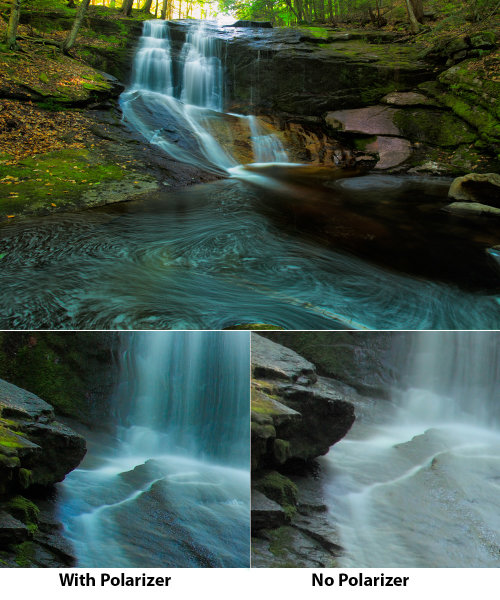
    2. Use a polarizing filter. Polarizers are famous for darkening blue skies on sunny days, but they are just as useful in other situations. In misty or hazy situations, polarizers can help cut through that haze.  Haze has the effect of softening an image, so using a polarizer to eliminate the haze enhances sharpness. So don’t hesitate to put the polarizer on your lens, even when darkening a blue sky isn’t the reason.
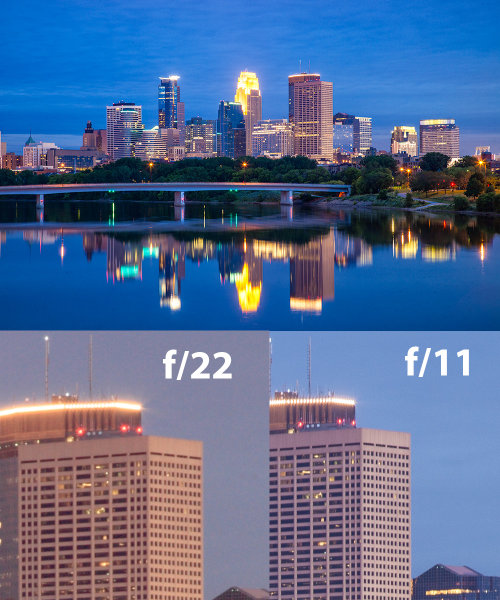
    3. Use the “sweet spot” of your lenses. Most lenses are at their sharpest when stopped down 2 or 3 stops from maximum aperture. However, even if for depth of field reasons it’s not possible to stop down that far, closing the aperture 1/3 to 2/3 of a stop will still increase sharpness.  By the same token, when a lot of depth of field is required, shooting one or two stops open from minimum aperture will provide the best sharpness. This is because at minimum aperture, lenses begin to exhibit diffraction. Diffraction happens when light is forced through a small hole, and begins to disperse. At larger apertures, this light is a small percentage of the total light hitting the sensor.  At smaller apertures, this diffracted light is a much greater percentage of the total light hitting the sensor.  Diffracted light causes images to appear softer.  By shooting at f/16, rather than say, f/22, you can minimize diffraction and thus get sharper images.

      The above finished and edited image was shot at f/11. Beneath are two crops. The crop on the left shows the same scene, shot a few moments later at f/22. The crop on the right is from the same file as the completed image, shot at f/11, but unedited. In the shot at f/22, you can clearly see the effects of diffraction, as the windows on the building are just not as sharp as those shot at f/11.

    4. Select the AF point you want to use, and put it where you want to focus.  Many photographers I talk to like touse the center AF point and use the “Focus and Recompose” method of focusing to create their images.  Unfortunately, while easier in many ways, this method can contribute to less sharp photos.  This is especially apparent when shooting at wider apertures and depth of field is shallower. When you do this, the focal plane shifts, moving it away from where you originally focused. It’s not a big deal when shooting at smaller apertures, but when shooting near wide open, it will be noticable. A better technique is to choose the AF point nearest where you want the sharpest focus.  This reduces focal plane shift, thus keeping the sharpest focus where you want it in your photo.
    5. When using zoom lenses, focus at the focal length you plan to shoot at. In the past, in the manual focus days, lenses were parfocal, meaning that you could zoom the lens and the focus would stay the same. Many of today’s lenses, however, are not parfocal.  So changing the focal length by zooming causes focus drift, and the lens is no longer focused where it was before it was zoomed.  The better bet is to zoom the lens where you want it for your composition, and then focus the lens.

    There is obviously much more to getting sharper images, but these five basic tips are a good start to keeping your images sharp.


    Post originally from: Digital Photography Tips.

    Check out our more Photography Tips at Photography Tips for Beginners, Portrait Photography Tips and Wedding Photography Tips.

    5 Simple Secrets To Sharper Photos


    Digital Photography School

  • Amateur or Professional, Part II

    In a recent post on the topic of Amateur or Professional Photography I asked an open ended question that would solicit responses.  While I was not surprised by the polarization, I was disappointed by how personal the comments became.

    I will state categorically that any professional who is not willing to share information must be quite insecure in their own abilities. Like any business certain facets have to remain confidential in order to remain competitive in a free market enterprise.  Beyond that, I believe we do owe it to our industry to be honest with each other – no one, regardless of standing, is bigger than the industry itself – and that includes amateurs being honest with professionals.

    Are you ready to open shop?

    Many readers missed my point entirely in the opening post, that being if you are going to delve into the medium as a means of income then one should play by the rules.  The one rule that professional photographers cannot compete against is the various taxes that they must pay as a result of their vocation and business.  Each country and city has their own tax laws, and in Canada essentially all income has to be declared as taxable income. Should the professional photographer’s neighbour who photographs weddings on Saturday’s only for $ 300, not declare their income several things happen by default:  1. They are automatically at a 30% (the average income tax in Canada) price advantage due to tax evasion, 2. They have potentially broken tax statutes and that affects the economy of the community; and 3. They have devalued the industry as a whole. These are examples of ethics to which I was referring in the original post.

    Believe me, your time, your equipment and your experience has value and as each increases so too should the value of your service. That is a basic business premise and has nothing to do with photographers feeling threatened. Should you really be interested in learning the profession, and haven’t had the opportunity to attend school, source a local photographer whose work you respect and ask if you can assist or apprentice with them for free for six months (I don’t agree with this approach personally, but if you are going to shoot jobs for free you would be doing the industry and your eventual clients a far greater service by learning from a well respected and established business person).

    Beyond that, it is very much a wild west as far as photography as an industry is concerned.  There are no trade union protections to benefit the photographer, and likewise there are no minimum standards of delivery to protect the client.  Whether there should be is a whole other debate and one best not discussed on the DPS forum.  It is very much a climate of client and providers beware.

    Moving forward, let’s take the wedding photographer completely out of the picture and think in the bigger realm.

    Let’s also set the record straight: NO, it is not necessary to go to university or college to become a photographer.  NO, it is not necessary to apprentice with an established firm to become a photographer. NO, it is not necessary to become a student of business administration to become a photographer.  However, should you be fortunate enough to have been able to pursue photography as a profession by travelling these paths you will inherently have a huge advantage over the amateur who aspires to turn a love of craft into a successful business venture.

    In short, you can be the best photographer in the world but if you do not know how to manage and market your business the chances of success are greatly diminished. The aspiring pro should have no illusions – photography is a tough business and the more you can learn about the industry and appropriate business practises, the better the opportunity of success. The client will decide whether your skill with a camera is commensurate with your fee structure.

    Regardless of how you have entered the profession it is possible to earn a successful living with a camera while satisfying an internal desire to be a photographer by following a few well laid out principles.  The first golden rule that must be cemented in your business plan is to, well, have a business plan.  The second golden rule is to learn to pay yourself first; you are, after all, starting a business to earn an income.

    If you can’t accept the fact that you need a business plan, you will unquestionably be wandering around aimlessly and without direction. The business plan today must reflect the current market, and, as we all know the photo industry is rapidly adjusting itself without checks and balances. Therefore your business plan will have to be fluid; no longer can we work on a five year plan.  Some would suggest a three year plan is risky and the proprietor should be giving serious consideration to a two year plan.

    You are entering a service based industry and for the most part your skill level, locale and client base will dictate what you can charge as a fee. There are several web-based outlets that offer great advice, and are well worth reviewing.  As a poster earlier shared, Mark Wallace (Adorama TV) has a great video on You Tube:

    In this video Mark offer a huge bucket full of sage advice; however I would caution that you not plug his “days of work” numbers in your daily costs calculations as it is quite unlikely you will work 250 days on start up.  To clarify, you will probably work more than 250 days, but what are your billable days?  Another resource that makes life easier for calculating the daily cost of business is a calculator from NPPA found here:  https://www.nppa.org/calculator .

    From both of these resources there were several topics not itemized in the calculations.  You may decide to work from your home, and there may be tax advantages to doing that. However, there are also going to be increased costs on the home budget that require consideration. Are you even legally permitted to operate a home-based business in your community?  The calculators and Mark’s video –I could stand to be corrected—have not identified capital reserve requirements. You have expensive equipment that will most likely have to be replaced every three years due to technology advances. Should you be channeling funds into a capital reserve to lessen the blow when that day arrives? Are there tax advantages to renting your equipment?

    Navigating the labyrinth of roads involved in any business will be a nightmare when starting out. You will be well served by educating yourself on solid business practices.

    Spend some money on a lawyer and accountant.  Regardless if you are working as a professional or semi-professional, or even an amateur, you will be exposing yourself and equipment to liability risks that probably will not be covered by any type of home insurance policy you currently have. Your lawyer will also advise whether you are best served by incorporating or working as a sole proprietor.  Don’t forget about learning Intellectual Property laws, and learn who owns the results of your toil and under what circumstances.  It is imperative you have iron-clad contracts so both you and your client completely understands the others position before you even accept the commission.

    Good accountants are worth their weight in gold; the better ones will give you sage advice and don’t particularly care about hurting your feelings.  If you really want a good gauge on how good your business plan has been prepared, go visit a local bank and ask for a business start-up loan.  These folks will not lend money if they see any risk in your plan and their judgement should, and can, speak volumes.

    If you want to turn that avocation to a vocation, start working on a business plan first.  Make no mistake, it will be tough to succeed with long hard hours of non-paying administrative and business training that will siphon your cash flow quicker than a drop of water evaporating on hot asphalt in the desert sun.

    If you are skilled and savvy enough there is always room for good photographers, and there probably always will be. At least I hope so – we all deserve to pursue our dreams providing we respect our neighbours in an honest and ethical way.

    Postscript: By now I hope the readers following my posts will have recognized I am targeting two audiences. The first being the amateur who is just starting their journey, and the second being the advanced amateur who believes they are ready to advance into the profession. I would ask that you fire your criticisms toward me and not each other. Thank you in advance for following the posts. –Dale Wilson

    Post originally from: Digital Photography Tips.

    Check out our more Photography Tips at Photography Tips for Beginners, Portrait Photography Tips and Wedding Photography Tips.

    Amateur or Professional, Part II


    Digital Photography School

  • 5 Pillars of Post-Processing

    Year 2013 is already at the door, and I still meet people who critique photos as “photoshopped” or “post-processed”, putting the very negative sense in this word. Like, “it’s not art, it’s not real, it’s not your merit”. I don’t know if you have ever thought about it, but every single photo is post-processed. By you in Photoshop, or by Continue Reading

    The post 5 Pillars of Post-Processing appeared first on Photodoto.


    Photodoto

  • Unlock the Secrets of Night Photography: 38% Off Today Only

    On the 5th day of Christmas dPS gave to me – 38% off Neil Creeks Night Photography Course.

    We’re flying through the deals now and it’s so exciting to see so many dPS readers snapping up some bargains. The last few days have been something of a frenzy around here. Today’s deal is another great one!

    Regular dPS readers will know Neil Creek well. He’s written quite a few posts in our archives and has also authored our 3 highly popular Photo Nuts eBooks.

    Lately Neil has also been working hard on creating a video course on a topic that he’s passionate about and which I know many dPS readers also love – Night Photography.

    The Challenges and Opportunities of Night Photography

    Getting your camera out after the sun goes down is something that presents us as photographers with a lot of potential but also many challenges.

    • On one hand night time is a time of many possibilities for creative images – the beauty of city skylines, dusk landscapes, atmospheric portraits and more.
    • But on the other hand the challenges include blurry photos, faces that are nuked by flashes and poorly exposed shots

    Considering so much of our life happens after dark – it’s an important topic to tackle – which is why we wanted to bring this course to you today!

    What You Get with Neil’s Night Photography Video Course

    You can get a full run down of the course on it’s information page (including a full rundown of topics covered) but in short it gives you a great coverage of how to approach night photography, choose settings, use the Histogram on your camera, focus in low light and also tackles issues facing different types of camera owners (from smartphone though to high end DSLR).

    You also get some great case studies of different types of night photography and also a great set of lectures on post processing your images.

    All in all it is 20+ lectures and over 3 hours of content in these videos.

    Get Access to this Course at 38% Off Today Only

    As Neil is one of the dPS family we were able to get a good deal on this course – he’s putting it up for just $ 30 (38% off the normal price).

    This offer lasts for 24 hours – so grab yours now here.

    Post originally from: Digital Photography Tips.

    Check out our more Photography Tips at Photography Tips for Beginners, Portrait Photography Tips and Wedding Photography Tips.

    Unlock the Secrets of Night Photography: 38% Off Today Only


    Digital Photography School

  • AurumLight: Mixing Flash and Modeling Lights

    One of my New Year's resolutions is to learn to be more creative and adventurous with mixing color and light. UK-based photographer Jarek Wieczorkiewicz's photograph of Jay Jessop does just that—using daylight flash, gelled flash and tungsten modeling lamps.

    I love this kind of thing, and would like to evolve my lighting to the point to where I can have the confidence to almost never use just white light. Below, a full BTS video on how Jarek lit this image. Read more »


    Strobist

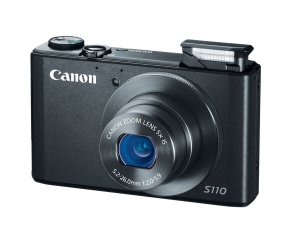
  • Does A Point & Shoot Camera Still Make Sense For You?

    With the increase in capability of smartphone cameras, the argument for purchasing a point and shoot camera is quickly becoming moot. This year’s Black Friday sales figures tell the tale, with a reported 36% drop in unit sales compared to 2011, even when the price of devices stayed essentially the same (moving from an average of $ 101 in 2011 to $ 106 in 2012). The writing may be on the wall.

    On the other side of the coin, for ‘experienced’ photographers, are the shortcomings with current generation smartphones:

    • Non-variable aperture
    • Little or no optical zoom
    • Poor noise performance at high ISO (very small sensor size)
    • Less pixels (noting that this is not a sole reason to purchased one camera over another)
    • Supplemental lighting (flash) is often sub-par
    • Dynamic Range suffers

    Camera companies are already struggling as competition increases year after year and the market shifts. Phones, after all, are more easily updated via firmware (apps) and have the advantage of almost always being in a pocket when a photo needs to be taken. Plus they are currently light-years ahead on the grounds of ‘share-ability’ and connectedness that a new generation of owners seems to be demanding.

    I have been without a point and shoot camera since I acquired my iPhone 4s this last Spring. It can’t do everything I want in a Point and Shoot. I want to shoot in RAW and I want optical zoom. But the hurdle to get me to buy a second device, at around $ 300 for the model I would want (likely a ‘tough’ camera for my type of travel and use by my daughter), is too high at this point in time.

    What can the camera manufacturers do to entice people like me back to Point and Shoot cameras?

    1) Keep making the ‘tough’ models. This will likely be my next purchase.

    2) Make sharing very easy. I know this is difficult without putting a cell phone in the camera, but maybe that is the way to go. Or tether the camera off existing cell phones via Bluetooth or Wifi.

    3) Keep the form factor small. They have this going for them as smartphones seem to be growing with a desire for bigger screens.

    4) GPS is quite handy for me, but not for everyone.

    5) The flash on Point and Shoots almost always rivals smartphone flashes. This needs to be highlighted and retained and is a reason I would use one in dark settings, instead of a smartphone.

    What about you?

    Would you buy a point and shoot camera this year or would you prefer to switch to a smartphone?

    And what about those of you who own both? Do you use one more than the other?

    Post originally from: Digital Photography Tips.

    Check out our more Photography Tips at Photography Tips for Beginners, Portrait Photography Tips and Wedding Photography Tips.

    Does A Point & Shoot Camera Still Make Sense For You?


    Digital Photography School