RSS
 

Archive for the ‘Photography’ Category

Four Signs it’s NOT Time to Upgrade Your Camera

09 Jul

The post Four Signs it’s NOT Time to Upgrade Your Camera appeared first on Digital Photography School. It was authored by Adam Welch.

I’m reminded about a conversation between Ansel Adams and Ernest Hemingway that went something like this:

Hemingway: You take the most amazing photographs I’ve ever seen! What sort of camera do you use?

Adams: You write the most amazing stories. What sort of typewriter do you use?

Even though I know this chance encounter between two of my favorite Masters never actually occurred (though I secretly hope it did), the weighty implications of this fictional exchange are obvious.

4-signs-its-not-time-to-upgrade-your-camera-3.jpg

The power of a photograph is no more coupled to the superiority of one’s camera than are the words of a good story which move us to emotion. While it’s true that cameras are indeed the tools of our trade, and those tools vary in terms of capability, there seems today to be a sort of “cart before the horse” mentality. It looms heavy over the majority of the photographic community; a mentality which implies that if your photographs aren’t up to your expectations, the quickest remedy is to buy a better camera.

Upgrade, upgrade, UPGRADE! That’s the song often heard. Upgrading your camera is a natural facet of the evolution of any photographer. I’m not in disagreement with that notion. However, what if I told you that getting a new (or new to you) camera should be more of a last resort than a first idea?

Today, we’re going to talk about four signs that it’s NOT time to upgrade your camera.

You’re still “figuring out” what you want to do with your photography

About 300 years ago (it seems), when digital cameras were becoming relatively cost-effective for the average shooter, I began thinking about switching from my film SLR to a DSLR. I searched around and was advised on a camera that would be “magic” for the work I was trying to do. The problem was that I had no real idea of what that work actually would be.

4-signs-its-not-time-to-upgrade-your-camera-4

Much like a certain popular character from a certain popular TV show…”I knew nothing.” I went with the camera others told me I should have and went after the sort of photography jobs (wedding, portraits, events) that were available in my area. I had upgraded my camera – not for any true physical or technical need – but rather because I thought that a new camera was necessary for the task at hand.

In fact, I hadn’t stopped to think about what I wanted to do and how I should go about doing it before I took the plunge. It was like buying brushes before knowing how to paint.

If you’re still wondering what kind of photography is “right” for you, a good starting point would be to continue working with whatever camera you have right now. Shoot everything and anything with it: people, events, landscapes, nature, street, and still life.

Only after you see yourself leaning to one side should you begin thinking about upgrading the tools you need to accomplish a better outcome.

You’re stilling using the “kit lens” that came with your camera

Your brain is an amazingly complex, incredibly capable bio-computer which we’ve only begun to understand. Yet without input and feedback from our senses, the brain is just – well – a brain. It only knows it’s environment based on the information allowed to pass along to its consciousness.

The same is true for our cameras.

A digital camera can sport the most beautifully huge sensor that somehow produces no noise even at 4 billion ISO. Or, has enough megapixels to make enlargements larger than the Earth and still it would be reliant on the information passed to it by its lens. In the end, it is the lens that dictates the quality of the raw informational light the camera will use to build an image.

So why do so many of us put more emphasis on the camera instead of the lens?

Especially today, the lenses which come with bundled camera kits are generally much sharper and faster than previous packages offered ten or fifteen years ago. This is likely due to the higher expectations of the “average photographer” – if there is such a thing.

Still, if the reason you’re considering upgrading your camera is wholly due to a lack of sharpness or low-light performance, then I urge you to first invest in a higher quality lens. Please note that higher-quality does not translate into high prices. Many prime (non-zoom) lenses with maximum apertures of f/2.8 and larger offer excellent optics for under $ 300 with slightly used models going for even less.

Always remember that an inferior camera with a superior lens will almost always perform better than a superior camera with an inferior lens. To that end, consider upgrading your lens before the camera body.

You’ve never gone fully manual

The functional operations of producing a photograph are surprisingly simple. In terms of image-making settings for our camera/lens, there are only three things we can directly control, which determine the overall outcome of our exposures; shutter speed, aperture, and ISO. These are essentially all we have to select to produce a digital image.

However, choosing those three parameters can instantly fill us with terror. Instead of taking full control of our photographs, we often choose to rely on aperture or shutter priority modes (which are usually quite good these days). Alternatively, we release the reigns entirely and allow our cameras to make the big decisions for our exposures by choosing Auto Mode.

4-signs-its-not-time-to-upgrade-your-camera-2

I’ll admit this subject is a slippery slope. I’ve said many modern cameras perform beautifully when operating in these semi-automated shooting modes. Still, without the conscious and deliberate control of the user, a camera is, well, just a camera.

For whatever reason, if you find yourself never determining the “big three” settings of your camera and notice your photos lacking in their technical or creative merits, I urge you to begin shooting in manual mode.  Entirely new doors will open up to you when you begin to understand the relationships between motion and shutter speed, or depth of field and aperture. Not to mention the brilliant nuances of working with ISO settings. Once you’ve discovered these possibilities, it will likely become clear that it doesn’t make sense to upgrade your camera in the hopes for a better automatic shooting experience.

First, try to assume a more dynamic role in determining the technical aspects of your photographic experience. Then decide if it truly is time to upgrade your camera.

You think your photography isn’t as good as someone else

This is the big one. It is the number one reason why you shouldn’t run out and upgrade your camera without first doing some serious self-inventory. You’ve seen someone else’s body of work, and instantly it registers in your mind “if only I had the camera they use,” or “no wonder their pictures are so good, look at that camera!”

In this situation, I default back to that epic fictional meeting between Ansel and Ernest. The obviously secondary nature of the tool of choice becomes readily apparent next to the prowess of its owner. I doubt few of us could pen another “The Old Man and the Sea” if supplied with the stationary and typewriter of Hemingway. It’s unlikely we might reproduce “Moon over Hernandez” if gifted the same camera and film as Ansel Adams used on that fateful evening in New Mexico.

The point is that it’s not the camera that makes the photograph. A camera is merely a conduit for the expression of skill and emotion of the user.

If you find yourself in pure envy of a certain photograph, an easy misstep is to wonder what type of camera or lens they used. The more difficult aspect to understand is that a person made the image; a person who was feeling a certain way at the time of capture – someone who was empowered by their knowledge and skill to produce a photograph.

The camera may have been the method to transform light into a photograph, but the power and the emotion conveyed through that photograph was born elsewhere.

I can assure you, upgrading your camera will not instantly make you a better photographer; only learning can do that. A camera doesn’t make a photograph; only a person can do that.

Some final words on cameras…

We’ve dipped into some heavy ideas in this article when it comes to all the reasons you should think twice before upgrading your camera. However, with anything that involves “art” and self-expression, these ideas are far from being absolutes.

In the end, only you can decide whether or not a new or different camera will nudge you along the path to fulfilling your potential as a photographer. It’s not a process you should enter into lightly or without solid reasoning.

4-signs-its-not-time-to-upgrade-your-camera-2

Socrates said, “Know thyself.” That’s good wisdom.

If you find yourself looking at your current camera with a growing sense of disgust, ask yourself whether the performance you find lacking stems from the tool or the craftsman? In both cases, you can remedy the problem easily. You can obtain new cameras and acquire new knowledge. The trick is knowing which one you need more.


4 signs its not time to upgrade your camera

The post Four Signs it’s NOT Time to Upgrade Your Camera appeared first on Digital Photography School. It was authored by Adam Welch.


Digital Photography School

 
Comments Off on Four Signs it’s NOT Time to Upgrade Your Camera

Posted in Photography


Get Moving – Four Ways to Create Abstract Light Trail Photography

08 Jul

The post Get Moving – Four Ways to Create Abstract Light Trail Photography appeared first on Digital Photography School. It was authored by Megan Kennedy.

Light trail photography is a unique facet of photography. By combining slow shutter speeds with light and camera movement, fascinating abstract photography can be made. Here are four abstract light trail photography techniques to experiment with in your own photographic practice.

What is abstraction?

Before we get started, let’s talk about abstraction. Abstract photography (often called non-objective, experimental or conceptual photography) is photography that does not have an immediate association with the visual world. Instead, abstract photography uses aspects like color, light, texture, shape, and form to evoke an emotional response from a viewer.

Often, in light trail photography, light trails complement a scene or subject. However, in abstract light trail photography, it’s the light trails themselves that are the sole conveyor of meaning. By erasing any other context, the viewer relies solely on the nature of light and photography to read a photograph. This creates intriguing photography that captures and holds the attention of the viewer as they visually unpack the image before them.

When to make abstract light trails

Although it can be done in daylight, abstract light trail photography is best carried out in the evening, at night, or in a dark room indoors. This is to minimize distraction and enhance the efficacy of our chosen light source/s.

What to photograph for abstract light trails

Traffic lights, building lights, car lights, phone light, glow sticks, torches, neon signage… there is an abundance of light sources available to photograph at night. With the right camera settings and technique, almost any point of light can be used to create an interesting light trail.

Camera tossing

Abstract light trail photography rests on the nature of the light source/s (brightness, movement, color etc) and the behavior of the camera (exposure settings, camera movement etc). For example, during a long enough exposure, a set of car lights will leave a trail as they pass by, whereas a stationary light source requires camera movement to activate an abstract light trail. Camera tossing predominantly involves the latter, physically moving the camera to achieve interesting abstract light trail results.

Taken over two seconds at f/4 and ISO 100, this tangle of lights demonstrates the path of the camera as it is tossed in the air.

A disclaimer…

Camera-tossed abstract light trails involve the tossing of a camera into the air during an exposure. Purists argue that a true camera toss means that the camera is tossed without the use of a guiding hand or camera strap. This is why for this method, I strongly advise you to use an old, cheap camera. A compact camera works well. You can even use a phone with a durable case.

I wouldn’t recommend taking your DSLR out for some air-time (although I must admit I did use my 5D MKII with a 50mm lens for some camera tossing sessions). If you aren’t keen on risking your camera, (which is totally understandable) skip forward to camera swinging and keep an eye out for old tossable cameras on sale or in local charity shops.

How to camera toss

The first step to camera tossing is to find somewhere safe to toss. Camera tossing in a quiet location, over grass or carpet is a good idea.

Once you’ve found a good spot with an interesting light source or two, it’s time to organize your camera settings. I went with a shutter speed of one or two seconds to allow the camera movement to really gain traction. I then set my aperture to f/4 and my ISO to 100.

Set your focus to manual. Aim your camera lens at the light source/s and adjust your focus. You can aim for the sharp rendering of the light source/s, or take intentionally unfocused shots for softer light trails.

Depress the shutter button and quickly toss the camera in the air (10-30 cm is high enough, though you can go higher if you’re game). Catch the camera as gently as possible and have a look at your results. Make any amendments to your exposure and have another go.

When you are happy with your exposure and focus, start introducing different throwing methods. Try spinning the camera as you flick it into the air, or throwing it carefully so that the lens is orientated at a particular angle for the duration of the exposure. The results between different throwing techniques can be quite pronounced, so take some time to experiment a little.

Taken at f/8 at 1/4th of a second, I left my lens unfocused to introduce a soft quality to the resulting photograph.

Camera swinging

A variation on camera tossing, camera swinging involves swinging your camera by your (firmly secured) camera strap.

Find a light source and take a few photographs to determine exposure and focus. Just like camera tossing, you want a longer shutter speed to give the camera movement time to take shape. For camera swinging, I started with an exposure of two seconds at f/4 with an ISO of 100.

Once you’ve settled on an exposure, make certain that your camera strap is fastened to your camera. Double-knot, even triple-knot your strap to hold it in place. You really don’t want your camera to go flying once you start swinging.

Two examples of camera swinging. Different light sources make varying light trails.

When you’re ready, depress the shutter button and have a go at gently swinging your camera back and forward like a pendulum. When the exposure finishes, check your results and make adjustments to your camera settings or technique as required.

The possibilities for camera-swung imagery are endless. Each swing creates unrepeatable paths of light from one image to the next, so again, don’t be afraid to experiment a little. Try jumping while swinging your camera or spinning around in a circle with your camera fastened to your wrist.

Moving your body

Not all abstract light trail photography is based around swinging and tossing your camera. Light trails can also be created by moving your body with a camera in hand.

Locate an interesting light source and figure out your exposure with a few test shots. I found that the combination of a one-second exposure at f/4 with an ISO of 100 was a good starting point.

Depress the shutter button and start moving. Ever seen those inflatable tube men, dancing around in the wind? Well, you don’t have to go THAT crazy, but shifting your arms up and down, twirling around, doing a little dance or moving from a sitting position to a standing position are great examples of camera-body movement.

As long as the shutter is open, and the lens is pointed toward a light source, the movements you make will be recorded in the image, creating kinetic abstract imagery.

Moving subjects

As an alternative to moving yourself around, photographing a moving light source can create dynamic light trail imagery too.

Star trail photography is the photography of stars as they appear to transit the night sky. Though it is us that is rotating on earth, the star trails illustrate our perception of the celestial sphere as a moving body.

Car trail photography records the movement of car lights in darkness, revealing trails that trace the routes of traffic in a given setting. For a more abstracted image, isolate the car trails from the surrounding landscape.

Physiography is a method of light painting that can be done in your darkened living room. Suspend a light source on a string and let it swing over your camera during a long exposure. The results are often surprising and intricate, documenting the path of the light source as it swings through the air with diminishing momentum.

This physiogram traces the path a moving light source has taken while suspended over a camera

Burning steel wool photography is another form of recording light trails. Though it can be a little hazardous, the results are quite spectacular.

abstract light trail photography

Burning steel wool leaves golden trails of light not dissimilar to this example of camera movement.

Conclusion

When the day turns to night, many pack up their photography gear and head home. But night time doesn’t necessarily mean that photography is over for the day.

Creating abstract imagery with light is an intriguing aspect of photography. Through the use of camera and/or subject movement you can create fascinating imagery that engages and intrigues an audience.

Go out and try these techniques for yourself, and share your abstract light trail photography with us in the comments below.


4 ways to create abstract light trail photography

The post Get Moving – Four Ways to Create Abstract Light Trail Photography appeared first on Digital Photography School. It was authored by Megan Kennedy.


Digital Photography School

 
Comments Off on Get Moving – Four Ways to Create Abstract Light Trail Photography

Posted in Photography


Generalist vs Specialist Photography – What Best Describes You?

08 Jul

The post Generalist vs Specialist Photography – What Best Describes You? appeared first on Digital Photography School. It was authored by Mat Coker.

Are you a photographer who drills deep and specializes in one area, or a generalist who casts a wide net and photographs everything?

From these two worlds come specialists such as Ansel Adams (black and white landscapes) and Yousuf Karsh (portraits), as well as generalists such as Joe McNally and Steve McCurry.

Types of photography

Sometimes specialists and generalists have a hard time understanding each other’s approach. To the generalist, you’re too narrow, and to the specialist, you need to settle down and find your niche.

There are arguments (many of them coming down to skill level or money) as to why you should be one or the other. But I think that being a generalist or a specialist is connected with your nature as a person. If you’re a generalist at heart, try as you may, you’ll likely never specialize. If you’re a specialist, you’ll never see the sense of photographing such a wide variety of subject matter. And that’s okay. You can love what you do either way, and you can make a living with it either way.

Let’s look at the nature of specialist and generalist photography and discover the value of each. Understanding what you were built for will give you the confidence to stop doubting your approach and move forward with purpose. You’ll also better appreciate what other photographers are up to, even if you feel like the opposite of them.

Specialists

A specialist digs deep into one area of photography and masters a constantly growing number of details. Things are often more predictable for the specialist, they know all the ins and outs of their branch and style of photography.

It may be the same subject matter over and over but the variety is in the details. This may sound rather monotonous to the generalists, but there is great joy in digging deep for the specialist.

As a result, specialists have a clear niche. It’s never in question, it’s never difficult to explain what they do.

Landscape photography

Waterscapes are not what I’m best at, but I pay attention to everything I’ve learned and those who specialize in waterscapes so that I’m able to take a nice photo when there is a chance.

Specialist photographers are organized and excellent at managing their shoots because they’ve done it the same way so many times. They notice the tiniest details that the generalist easily overlooks (and perhaps doesn’t see the importance of). There is often more concern about the details of this one branch of photography than the big picture of photography in general.

As a specialist, you may photograph the same thing for your whole life or career. It’s not that you never try anything new, it’s that you have drilled deeply into one thing and know it well. You are also well-known for it. As a specialist you can say, this is what I’m good at, this is what I do.

Among DPS writers, Darina Kopcok (food photography), and John McIntire (portraiture) are good examples of specialists. We might also think of:

  • Richard Avedon – fashion and portrait photography
  • Diane Arbus – B&W portraits of people on the fringes of society
  • Ansel Adams – B&W landscape photography

Generalist landscape photo

Generalists

Generalists work with many different types of photography. If you’re a generalist, you’re happy to learn from all the specialists, but can’t narrow it down to one thing yourself. You can’t help but photograph whatever ends up in front of your lens. Photography is unpredictable, and spontaneous for generalists. You never know what the day is going to look like. Newborns, landscapes or sports cars could be your next project!

Generalists love road trips and exploring new places. They take what they’ve learned from the specialists and explore the world with it.

There is a good chance that your specialist photographer friends will find your approach a little too chaotic or whimsical. On the other hand, they may envy you a bit as you seem so free to explore. Perhaps the same way you envy them for their deep technical skills in areas that you tend to skim over.

Generalists are a little more comfortable with the chaos and unpredictability of pursuing different types of photography. There is a great joy in the variety of discovery for the generalist.

Travel photography

Inspired by those who specialize in travel photography, I had in mind all those interesting situations and colors you see in travel photos. The colors pop against the neutral background and there is an awkward sense of balance (or is it imbalance?) to the photo.

As a generalist, you should certainly stick with one thing until you get good at it. But it definitely be will more about learning the principles of photography and then applying them broadly, rather than digging in as deep as you can. You’re more “big picture” than detail-oriented.

You’re often exploring, experimenting, and consolidating what you’ve learned, then repeating the process until a distinct body of work begins to appear over time.

You can’t stick to one thing because so many things excite you. But look for the common link in your work. For me, it’s awkward, candid, gritty, real human nature. Even a landscape has got to have character.

Color and shadow in photography

I couldn’t resist the reds and the shadow.

As a generalist, you will shoot your own style across many types of photography. You accept the joy and challenge of applying techniques to new unexpected situations. Even if you feel overwhelmed, leap in, and figure it out.

Among DPS writers, have a look at Andrew Gibson. Then lookup:

  • Steve McCurry
  • Joe McNally
  • Jay Maisel
Specialist street photography

As we walked down the street in a small town, I noticed this man repainting a house. I thought that’s the sort of thing a street photographer might photograph. So I did likewise.

Is one way the right way?

Sometimes generalists feel inferior because they don’t have an obvious specialty. They are often referred to as a “Jack of all trades, but master of none.”

The specialist can confidently say, “I shoot stylized, strobe-lit weddings.” While the generalist says, “I do weddings too… and newborns and sports cars and landscapes and, and, and.”

But here is what they have in common. They have both studied light, moment, color and gesture among other things. But one applies that knowledge deeply in one specific scenario, while the other applies it broadly in many scenarios.

So the generalist is not so much a “Jack of all trades” but someone who has ‘mastered’ light (as has the specialist) and applies the knowledge more broadly.

Reflection in water photograph

Whether you’re a generalist or specialist, there is always going to be more to see and more to learn. When I hit slumps in my photography, I stop and ask what I’m missing. What interesting things are right in front of me that I’m not noticing?

It’s not that either approach is right or wrong. They are different paths. They are different ways to explore, learn and apply.

Being a generalist doesn’t mean that people can’t point to anything specific about your work. And being a specialist doesn’t mean that you never try anything different. But you can find a home in either approach and visit the other every now and then.

So which are you; a generalist or a specialist?


specialist photography

The post Generalist vs Specialist Photography – What Best Describes You? appeared first on Digital Photography School. It was authored by Mat Coker.


Digital Photography School

 
Comments Off on Generalist vs Specialist Photography – What Best Describes You?

Posted in Photography


Godox SL60W Review – A Light for Those that Don’t Like Flash

07 Jul

The post Godox SL60W Review – A Light for Those that Don’t Like Flash appeared first on Digital Photography School. It was authored by Sean McCormack.

The SL60W is a monobloc-style LED continuous light from Godox. Godox is probably more well known for its excellent flash systems, which incorporates everything from small Speedlites to 600W battery flashes. We’ll see if they can also match this excellence in continuous light with the Godox SL60W.

About the light

While taking the look of a monobloc, the Godox SL60W is actually smaller than a typical studio flash head. It still weighs in at a hefty 1.6kg. First impressions of this light in the box were that it was a little smaller than I expected and that although it looked plastic, it looked well made.

Removing the light hood revealed the LED itself and the aluminum heatsink. It gave the light an immediate hi-tech look – instantly increasing the perceived build of the lamp. The heatsink, combined with the internal fan, keeps the LED chip cool.

As the LED lamp is a combined controller chip and LED, it means the light has a high CRI, translating to accurate and consistent color in use. Rated at 5600k ±300, this is daylight balanced, which matches your midday light and any flashes you may have.

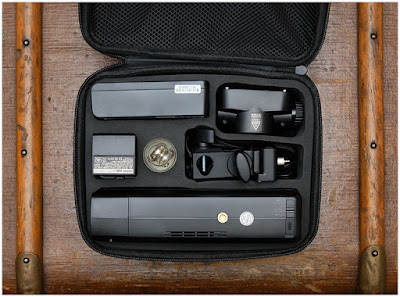
In the box are a long IEC cable, a Bowens mount reflector and remote control. The remote needs AAA batteries (not included). The remote can be set to 16 channels with 4 groups, the same as the light. This allows for a large number of lights to be controlled remotely. While the remote does appear to allow temperature changes, this light is white light only. You can dim the light from 100-10%. A single pushes give 1% changes while holding down the + or – buttons speeds this up. You can also turn the LED off from the remote, while the light remains powered up.

As well as the remote, you can dim the light from the dial on the back, and power on and off.

The included reflector has a pop-out hole that allows an umbrella shaft to run through, for better on-axis light modification.

Specifications

The Godox SL60W has the following specifications:

  • AC Power Supply: AC 100~240V 50/60Hz
  • Channels: 16
  • Groups: 6 Groups (A-F)
  • Power: 60W
  • Color Temperature: 5600k ± 200K
  • 100% Illuminance (LUX): 4100 (1M)
  • 100% Luminous Flux: 4500
  • Color Rendering Index: >93
  • TLCI (Qa): >95
  • R9: >80
  • Light Brightness Range: 10%-100%
  • Operation Temperature: 10-50ºC
  • Safe Temperature: <70ºC
  • Dimension: 23X24X14cm (without lamp cover)
  • Net Weight: 1.61kg approx

The key things to note are that the light can be used worldwide and has high color accuracy.

Why continuous light?

Despite having years of experience with flash, I get that it takes time to learn. You’re effectively guessing what the light will look like, every time. With continuous light, there is no guessing. You turn it on and modify it as you see fit. Every change you make is there before your eyes. You can immediately see if it’s bright enough, and whether or not moving the light will improve the shot.

The first and foremost thought about using the SL60W is that what you see is quite literally what you get. No guessing or external metering required. Your in-camera meter will give an accurate reading and those on mirrorless with preview simulation on will see the shot in-camera before shooting (same for Live View users with Exposure Simulation on).

You’re reading this article at a photography site, but it’s worth mentioning that this light is perfect for basic lighting applications for video such as YouTube channels. Yes, it has a fan, but the light position behind camera mixed with directional mics should minimize this during recording.

Changing the look

You may be considering this light for food or product photography, so here’s how you can change the look of the light to get a variety of photo options. There are a few ways of getting modifiers onto the light. The most basic is the umbrella slot in the stand mount, coupled with the standard reflector. You can use either bounce or shoot-through umbrellas for this.

Further options open up with the Bowens mount. Any modifier than can fit a studio light with a Bowens  S-type mount will work. As most studio lights have modeling bulbs that heat up inside the modifier, it should work no bother with the SL60W.

Hard light

With just the included reflector you get a crisp hard light. Placing the edge of the light roughly 2-feet from the side of the plate gives you an in-camera reading of 1/400sec ISO200 at f/2.4. (My Fuji has a default ISO of 200).

By bringing in a white foamcore card from the opposite side, it fills in the shadows. While the hard shadows from the reflector are still visible, the bounced light softened the overall look.

Soft light

By placing a shoothru umbrella on the light, you’ll get a softer light, but at the expense of lower power. This is because you tend to lose about two-stops of light when using any kind of diffuser modifier.
I’m using a Westcott double fold with the black back removed. The umbrella edge is also about 6-inches closer to the plate than the reflector, giving you a reading of 1/160 ISO200 at f/2.4. Not quite a full two-stop drop, but close. Notice how much softer the shadows are, even without a bounce card.


Adding your card again makes a difference. You could increase the shutter speed to compensate, but this sample hasn’t changed to show the increased light in the scene

Lighting product

With photographing products, it’s similar. Here’s the hard light scene on some colorful products. The high CRI means that you know you have good color accuracy here.

First, the reflector.

Using the white reflector card:

And the umbrella:

Finally, here’s how the umbrella looks with the foamcore card.


If you’re shooting for e-commerce, or even like this situation where you need to create product shots for reviews or tutorials, the SL60W makes it remarkably easy.

Here are a few random shots in this vein.

Godox SL60w lighting a product set

I’ve started making camera wrist straps and bracelets, so this light makes it easy to capture shots of my work.

Portraits

Again, the “what you see is what you get” factor is great. Using Fuji’s iOS app, I could pose myself easily for this self-portrait. Here I’ve used a Neewer 26″ Octagonal Softbox. This is now my go-to YouTube video setup.

Conclusions

The Godox SL60W is a keenly-priced continuous light with accurate color, good remote control, and more than adequate output for most of your indoor lighting applications. As well as photo applications, you’ll find it’s also usable for video – something more and more photographers are involved in.

If you need more light, the Godox SL200W is a higher-powered option.

I can’t speak to the long term reliability of the product yet, but I do own quite a few Godox products – some for quite a few years – and they still function perfectly.


Godox SL60W Continuous Light

The post Godox SL60W Review – A Light for Those that Don’t Like Flash appeared first on Digital Photography School. It was authored by Sean McCormack.


Digital Photography School

 
Comments Off on Godox SL60W Review – A Light for Those that Don’t Like Flash

Posted in Photography


How to Control Depth of Field in Your Photography

07 Jul

The post How to Control Depth of Field in Your Photography appeared first on Digital Photography School. It was authored by Kevin Landwer-Johan.

It’s a common misconception that the f-stop you use will control depth of field (DOF). Aperture setting certainly has an influence, but there are other factors to consider.

DOF is the area in a photograph which is acceptably sharp. Lenses can only focus at a single point. There is always a certain amount in front and behind the focus point which is acceptably sharp.

How To Control Your Depth of Field Thai dancer

Camera: Nikon D800, Lens: 85mm, Settings: f2, 1/250 sec, ISO 200 © Kevin Landwer-Johan

This varies depending on:

  • Aperture setting
  • Lens focal length
  • Camera distance to the subject
  • Sensor size.

The transition between what’s sharp and what’s not is gradual. It’s important to learn how to manage the variables to create the look you want in your photographs.

How sensor size affects DOF

The physical dimension of the sensor in your camera affects DOF. Unlike the other variables, it’s not possible for you to change, unless you use a different camera.

Small sensors, such as in phones and compact cameras, give you the most DOF. This is one main reason people upgrade from a phone to a camera. Because they are not able to achieve a shallow depth of field with their phone.

Phone manufacturers are trying to mimic shallow DOF in various ways. But as yet it appears to be little more than a poor gimmick. There is no substitute for size.

Basically, cameras with smaller sensors make photos with more DOF at the same aperture and distance settings. To make comparisons of DOF from different-sized sensors, you must calculate the same effective focal length and aperture settings.

Larger sensors in DSLR and mirrorless cameras have made them popular with video producers. This is because of their capacity for shallow DOF. Traditional video cameras contain small sensors so therefore generally have deeper DOF.

How To Control Depth of Field Thai models

Camera: Nikon D800, Lens: 105mm, Settings: f3.2, 1/400 sec, ISO 500 © Kevin Landwer-Johan

How camera to subject distance affects DOF

The closer you are to your subject, the less DOF you will have at any given aperture setting, with any lens on every camera. Move further back, and your DOF increases.

This is why it can be challenging when taking close-up photos to have enough DOF. Being very close to your subject may mean you do not get it all in focus. Using macro lenses and close up attachments amplifies this problem.

So if you are still only using your kit lens, you’ll need to move in close to achieve a shallow DOF. This is because these lenses do not have a very wide maximum aperture or long focal length.

Remember that from the point you are focused on 1/3rd of the DOF will be closer to you and 2/3rds of it will be further away. Knowing this can help you choose your point of focus to control you DOF more precisely.

How To Control Your Depth of Field Model and Mask

Camera: Nikon D800, Lens: 105mm, Settings: f3, 1/100 sec, ISO 400 © Kevin Landwer-Johan

How lens focal length affects (apparent) DOF

The longer focal length lens you use the shallower the DOF appears. But it doesn’t actually change.

If you take photos of the same subject with two different focal length lenses, the images made with the wider lens appear to have a deeper DOF. The aperture should remain constant. When you crop the image made with the wider field of view, so the elements in the images are the same size, you will see no real difference.

The idea that longer focal lengths produce a shallower DOF is a myth. Peter West Carey has already written an article for DPS about this based on Matt Brandon’s experimentation. Matt’s images prove the point clearly. It can be a difficult concept to comprehend. Especially if you are predisposed to the popular idea that focal length affects DOF.

Thai Elephants and Model

Camera: Nikon D800, Lens: 85mm, Settings: f2, 1/1000 sec, ISO 400 © Kevin Landwer-Johan

How aperture affects DOF

The aperture is an adjustable opening within a lens. The primary function is one of the controls used to control the amount of light entering the camera. A narrow aperture setting lets in less light than a wider setting. The settings are measured in f-stops.

Adjusting the aperture setting, (changing the f-stop value,) not only controls the amount of light entering, but also the DOF. Changing the aperture is the most common way photographers choose to control DOF. The wider aperture the shallower the DOF. So the lower f-stop number you choose (eg. f/1.4), the less of your image will be acceptably sharp. Choosing a narrower aperture, a higher f-stop number (eg. f/22), will render more of your photo in focus.

Lenses are made with differing maximum apertures. Typically a kit lens will have a widest aperture value of f/3.5 when the lens is zoomed to its widest focal length. This value changes the more you zoom in. So the widest f-stop at the longest focal length may only be f/6.3. For information please read the article ‘What The Numbers On Your Lens Mean.’

Prime lenses usually have a wider maximum aperture. This is why they are often favored by photographers who like creating photos with a shallower DOF. Popular 50mm lenses have f-stop settings of f/1.8, f/1.4 or even wider. For more information about zooms and prime lenses please read ‘Primes Versus Zoom Lenses: Which Lens to Use and Why?’

Elephant Cuddle

Camera: Nikon D800, Lens: 85mm, Settings: f2.8, 1/1000 sec, ISO 400 © Kevin Landwer-Johan

How can you see the DOF when composing a photo?

Cameras with digital viewfinders or monitors will display the DOF as it will appear in the photo. Because of the small size, it can be difficult to see clearly unless you zoom in.

Cameras such as DSLRs with optical viewfinders will not allow you to see the effect of the DOF unless you use the DOF preview button. This is because the aperture is automatically set to the widest possible. It is adjusted to the f-stop you’ve chosen as you press the shutter release button. If the f-stop were able to be altered while composing, at narrow apertures, the image would appear dark in your viewfinder. You can see this when you use the DOF preview.

How To Control Depth of Field Thai Model with Elephants

Camera: Nikon D800, Lens: 85mm, Settings: f4, 1/640 sec, ISO 400 © Kevin Landwer-Johan

Manage your DOF well

Keeping all these variables balanced may seem complicated. But it’s important to know how each of them affects DOF so you can manage it well in your photos.

To help you learn how each aspect of DOF works try setting up a few photos and experimenting with them. Not for the sake of making great pictures, but to understand how changing each one affects the look of your images. It will be good to set your camera on a tripod or stable surface for this exercise.

Line up a few objects in your frame which are at different distances from your camera. Set your aperture to its widest – the lowest f-stop number (eg. f/1.4). Get as close to the first object as you can so that your lens will focus on it.

How To Control Depth of Field

Camera: Nikon D800, Lens: 55mm, Settings: f4, 1/30 sec, ISO 400 © Kevin Landwer-Johan

Take a photo of it, then focus on another object further away from you and take another photo. Repeat this with each object further away from you as you have in your frame.

Now repeat this process with a middle range aperture setting and then the narrowest your lens has. Try this with different focal lengths as well.

Then move back and make another series of photos the same way. Repeat this process as you move further back from your subject.

Compare the photos side by side on your computer and take note of the differences in DOF between them. Look at the EXIF data so you can see what your aperture and zoom settings were.

Working through an exercise like this will help you learn to control depth of field. As you can see the effects in your photos it will become less complicated.

Let me know in the comments below how you get on.


control depth of field in photography

The post How to Control Depth of Field in Your Photography appeared first on Digital Photography School. It was authored by Kevin Landwer-Johan.


Digital Photography School

 
Comments Off on How to Control Depth of Field in Your Photography

Posted in Photography


How to Recover Deleted Photos from an SD Card

07 Jul

The post How to Recover Deleted Photos from an SD Card appeared first on Digital Photography School. It was authored by Theodomentis Lucia.

A while back, all the photos stored on my Sony camera’s SD card were wiped off entirely. Needless to say, it was a nightmare as the SD card had pictures of my last vacation. This got me digging into data recovery for SD cards – as I was not ready to let go of my precious memories under any circumstances.

How to Recover Deleted Photos from an SD Card

Thankfully, after some unsuccessful attempts, I was able to get back my lost photos.

I took the assistance of a reliable data recovery tool and followed a stepwise process to recover my lost photos from the convenience of my home.

Is it possible to recover data from SD cards?

Before we get into the details, it is important to answer this million-dollar question.

In a nutshell – yes, you can get back your lost data from an SD card, hard drive, or any other data source.

This is because when you delete data from a source, it isn’t wiped away entirely. Instead, the address allocated to it becomes accessible to be overwritten by something else.

This is where a data recovery tool comes to the rescue. It can help you extract this inaccessible content before it gets overwritten by any other operation.

How to recover deleted photos from SD sards

To get back your lost or deleted data from an SD card, consider using a reliable data recovery tool. Personally, I encountered a few gimmicks and imposters on the web that didn’t yield expected results. Overall, I found Recoverit to be a very good data recovery tool out there. Since it was pretty easy to use Recoverit 8.0, I didn’t have to seek the help of a professional. I downloaded its Windows version. However, you can also get the Mac recovery application as well.

Here’s how I got back my lost photos from my SD card using Recoverit:

Step 1: Download Recoverit on your system

Needless to say, you need to start by downloading the data recovery tool on your computer. Just download Recoverit data recovery software on your Mac or Windows. You can get the free basic version if you wish. Although, to enjoy its unlimited features, you can purchase the pro or ultimate subscriptions too.

Step 2: Install and launch Recoverit

When the setup file is downloaded, simply open it and click on the “Install” button to get things started. Follow a basic click-through process to complete the installation and launch Recoverit on your computer.

How to Recover Deleted Photos from an SD Card - 2

Step 3: Connect your SD card

Carefully, unmount your SD card from your digital camera or camcorder and connect it to your system. If your computer doesn’t have an inbuilt card reader, then use a dedicated card reader unit to connect it. As soon as it is detected, you will be notified by the system.

Step 4: Select your SD card as a source location

Once you launch the Recoverit data recovery application on your computer, you can view different location options on its home page. This includes internal drives, partitions, and even connected external devices. You can select the drive of your SD card (under external devices) or browse to a specific folder to scan as well.

How to Recover Deleted Photos from an SD Card - 3

Step 5: Start the scan

After selecting the SD card as a source location, click on the “Start” button to initiate the data recovery process.

Step 6: Wait for the scan to be over

Sit back and wait for a few minutes as Recoverit Data Recovery scans the connected SD card in an extensive manner. Since it might take a while, make sure that your SD card stays connected to the system during the entire process. There is an on-screen indicator to depict the progress of the scan.

Step 7: Preview the extracted data

Upon the completion of the recovery process, the extracted content gets displayed under different categories. Here, you preview your photos, videos, documents, etc., and select the files you wish to save. The search option allows you to look for specific files in no time.

Step 8: Recover and Save your photos

On the native interface of Recoverit, you can select multiple files as per your convenience. In the end, just click on the “Recover” button to save the selected files. A browser window will open, letting you save these files to a secure location of your choice.

How to Recover Deleted Photos from an SD Card - 7


Tips for getting better recovery results

  • Recover the extracted content to a trusted location. Preferably, it should not be your SD card from where you have just recovered your lost photos.
  • After losing your photos, stop using your SD card or digital camera right away. If you restart it a few times, or use it for other reasons, then it might overwrite your old photos. This will make the chances of getting your photos back pretty bleak.
  • If there is no inbuilt card reader slot in your system, consider using a dedicated third-party unit to attach your SD card.
  • Don’t format the SD card or change its file system, hoping to get better results. Simply use a reliable recovery tool as soon as you can get positive results.

Conclusion

That’s it! By following this simple drill, I was able to get back my lost data from my SD card in no time. You can also try the same and perform an SD card recovery from the convenience of your home.

If you have also gone through a similar situation to recover deleted photos and would like to share your experience, feel free to let us know in the comments below.

Download Recoverit Free Version


Recoverit is a dPS paid partner

The post How to Recover Deleted Photos from an SD Card appeared first on Digital Photography School. It was authored by Theodomentis Lucia.


Digital Photography School

 
Comments Off on How to Recover Deleted Photos from an SD Card

Posted in Photography


Behind the Shot: Fireworks and Lightning

06 Jul

The post Behind the Shot: Fireworks and Lightning appeared first on Digital Photography School. It was authored by Caz Nowaczyk.

Fireworks-and-Lightning-31-days-student-Lyn Wernsmann

31 Days Student photo: Lynn Wernsmann

31 Days to Becoming a Better Photographer student, Lynn Wernsmann, captured this amazing fireworks and lightning photograph. To capture this spectacular photo, Lyn used the following camera settings:

I used my Fujifilm XT2 and the 50-230mm lens.

The settings for this shot were f/10, 5sec, ISO 100, 135mm.

I had my camera set on Interval Timer, and I was shooting 20 shots at a time which works well for things like the fireworks.

I was watching the Erie, Colorado fireworks show. It was a last-minute decision to watch this one which is near my home, instead of driving for 30-minutes to watch the fireworks that were happening in Denver.

I started playing with cameras about 15 years ago – the camera I used then was basically a point and shoot. Over the years, I have upgraded slowly to the camera I use now. I have taken classes online and watched a lot of YouTube videos.

My favorite type of pictures are landscapes, sunrises & sunsets, flowers, and macros.

I need to work more on people pictures.

What prompted her to join the class

I wanted to take a class that isn’t a beginning class, but that would refresh some of what I already know, but to also give me some fresh perspective.

One major thing that I want to learn is how to use Flash and some beginning info for Photoshop. This class touched on both of those.

I took Jim’s Nighttime class and found a lot of good information in that one.


31 Days to Becoming a Better Photographer is opening its doors again this month. Check it out here and make sure you get the alert when registrations open.

The post Behind the Shot: Fireworks and Lightning appeared first on Digital Photography School. It was authored by Caz Nowaczyk.


Digital Photography School

 
Comments Off on Behind the Shot: Fireworks and Lightning

Posted in Photography


Weekly Photography Challenge – Contrast

06 Jul

The post Weekly Photography Challenge – Contrast appeared first on Digital Photography School. It was authored by Caz Nowaczyk.

This week’s photography challenge topic is CONTRAST!

Cody Davis

Go out and capture absolutely anything from still life to street photography, landscapes, and portraits. They can be color, black and white, moody or bright. Just so long as there is strong contrast! You get the picture! Have fun, and I look forward to seeing what you come up with!

Nicholas Green


Greg Jeanneau


Check out some of the articles below that give you tips on this week’s challenge.

Tips for Shooting CONTRAST

How to Make Your Photos Stand Out Using Color Contrast

How to Use Shadow and Contrast to Create Dramatic Images

Add Contrast to Your Images by Using Complementary Colors

How to Improve Your Composition Using Juxtaposition and Contrast

Creating a Black and White High Contrast Portrait Edit in Lightroom

Improving Composition with Tonal Contrast

Getting Better Contrast In Your Photography


Weekly Photography Challenge – CONTRAST

Simply upload your shot into the comment field (look for the little camera icon in the Disqus comments section) and they’ll get embedded for us all to see or if you’d prefer, upload them to your favorite photo-sharing site and leave the link to them. Show me your best images in this week’s challenge.

Share in the dPS Facebook Group

You can also share your images in the dPS Facebook group as the challenge is posted there each week as well.

If you tag your photos on Flickr, Instagram, Twitter or other sites – tag them as #DPScontrast to help others find them. Linking back to this page might also help others know what you’re doing so that they can share in the fun.

The post Weekly Photography Challenge – Contrast appeared first on Digital Photography School. It was authored by Caz Nowaczyk.


Digital Photography School

 
Comments Off on Weekly Photography Challenge – Contrast

Posted in Photography


Do Larger Camera Sensors Create Different Looking Images? [video]

05 Jul

The post Do Larger Camera Sensors Create Different Looking Images? appeared first on Digital Photography School. It was authored by Caz Nowaczyk.

In this video from fstoppers, they show you whether large sensors create different-looking images to smaller sensors in cameras.

?

In the video, Lee Morris photographs his friend Keith Bradshaw with four different cameras each with different sensor sizes.

Lee uses the following cameras and settings:

FujiFilm GFX 50R/ 43.mm x 32.9mm sensor/ 64mm lens f/8

Canon 6D/ 35mm ff sensor/ 50mm f5.6

FujiFilm XT-3/ 23.6mm x 15.6mm sensor/ 35mm f4

Panasonic GH5/ Micro 4/3 sensor/ 25mm f2.8

He shot each image in RAW and only changed the white balance. he also cropped in on all images to hide the 4/3 aspect ratio of the GH5 and GFX.

You may be surprised by the results (or perhaps you already knew this).

Check it out.

You may also find the following helpful:

  • Full Frame Sensor vs Crop Sensor: Which is Right For You?
  • Full Frame VS Crop Sensor VS Micro Four Thirds: Camera Sensors Explained
  • Is it Time to go Full-Frame? Weigh These Pros and Cons Before You Decide
  • Is Full Frame Still the Best?
  • Making Sense of Lens Optics for Crop Sensor Cameras


The post Do Larger Camera Sensors Create Different Looking Images? appeared first on Digital Photography School. It was authored by Caz Nowaczyk.


Digital Photography School

 
Comments Off on Do Larger Camera Sensors Create Different Looking Images? [video]

Posted in Photography


How to Edit Fireworks Photos Creatively

05 Jul

The post How to Edit Fireworks Photos Creatively appeared first on Digital Photography School. It was authored by Rick Ohnsman.

I hope you had a chance to read my previous article, “Eight Tips for Better Fireworks Photos” before going out to make your fireworks images and found that helpful.  If so, you should have some good shots to work with here.  If not, these techniques will still work for you if you have some other good fireworks photos.  Either way, let’s see if I can teach you how to do the basic editing on your fireworks images. Then, how to creatively composite your shots and take the “wow factor” up another notch.

How to Edit Fireworks Photos

You shot in Raw, yes?

I realize that beginning photographers may be making their images with their camera set to save only the .jpg file, perhaps not having the editing tools or having learned to edit a Raw file.  While that’s not a deal-breaker, you will find doing so causes the camera to do much of the editing itself, using the camera’s built-in .jpg algorithm to “cook” the final image for you.  Perhaps while you are still a novice image editor, (cook), editing raw files can seem intimidating, and you may feel the camera is a better cook than you are.

The trouble is, with something like your fireworks photos, you will want as much latitude for creative editing as possible as well as much file information as the camera originally captured.  Letting the camera create a .jpg image lets it make the creative decisions and also throws away information you might have needed.

You will still be able to use the steps outlined here to edit a .jpg file.  Just understand things might not work as well.  One final plug for shooting Raw files before moving on – Almost all pros do, and that’s the level of work you want to create, right?  ‘Nuff said.

2 - How to Edit Fireworks Photos

This effect is what I call the “boom-zoom-bloom.” You’ll have to read Part One of this series if you missed how to create it.

Editing tools

The workflow described here assumes you will be using the editing programs I use for working with my images; Adobe Lightroom Classic and Photoshop.  Other editing programs may work equally well such as Photoshop Elements or another favorite of mine, Corel Paintshop Pro.  Use what you have and know; just understand the steps here are using the Adobe programs.  I will also sometimes use plug-in filters such as those in the Nik suite, Topaz Labs or Aurora.

Basic editing of a fireworks photo with Lightroom

This is my workflow with an image in Lightroom.  Much of the work simply involves moving each adjustment slider up and down to see what you like.  Playing is encouraged.

  • White Balance – You shot in Raw, right? Good, because if so, you can take the white balance wherever you like. Play with the Temperature and Tint sliders and get the colors you like.  Because fireworks have no “correct” color your viewer expects, you can pretty much adjust white balance however you like.  Although, if you’ve included foreground objects, you may want to use those as a reference in determining what is realistic.
  • Basic Controls – Play with the Exposure, Contrast, and other sliders to bring the image to your liking. If your highlights are a little bright, (but still not blown out), you can bring them back with the Highlights slider. You might also want to bring down the Blacks if the sky needs darkening
  • Adjust colors with the HSL/Color sliders. You can play with the Hue, Saturation, and Luminance sliders to tweak colors to your liking. Don’t forget to try the Targeted Adjustment Tool to pick and adjust specific colors in your image.
  • 3 - How to Edit Fireworks Photos
  • Dehaze – The Dehaze tool could be your friend and help reduce smoke in the shot if it became a problem.
  • Clarity and Texture  – These controls can give your fireworks images extra sharpness and pop.  Also, try sliding these controls toward the left for different looks.
  • Vibrance and Saturation – With standard photography, these two are typically used conservatively, particularly Saturation which is a bit of a sledgehammer. With firework images, however, often you are going for “pow,” so go ahead and play… it’s your shot.  Oversaturation will blow out details.  Watch each histogram RGB channel.  A histogram off the right edge means you’ve oversaturated that color.
  • Detail – Some sharpening can be good. The two best tools in this group for fireworks images are the Masking Tool and Noise Reduction/Luminance. Sharpen your image as desired.  Then, hold down the Alt key, (Option on Mac), and drag the Masking slider to the right.  What appears white will be sharpened, what is black will not.  The idea to allow the fireworks to be sharpened, but not the dark sky. As for Noise Reduction, if you shot at a low ISO you probably won’t need much. Use as little as needed here.
  • Consider saving settings as a Preset.  If you’ve used the sliders to get your image just right, you might want to apply the same settings to some of your other fireworks photos.  Saving the settings as a preset will allow you to apply the same look with a single click.

Other tools

I mentioned using plugins as options in your editing.  The sky really is the limit here.  Here are a few I have and sometimes find useful with fireworks photos:

Nik – Color Efex Pro, Viveza

Topaz Labs – Adjust, Denoise, (probably others too, I just I don’t have them).

Aurora HDR – You can work with a single image here not needing multiple shots as with traditional HDR work and can get some interesting looks.

Compositing for drama

Sometimes the best fireworks photo is a composite of several photos.  You can layer multiple images and create your own grand finale.  You can also put fireworks over places where they weren’t, but to your thinking should have been.

Confession time.

The image of the Boise (Idaho) Depot I used in the previous article, (and repeated above), is a composite.

They do have fireworks shows over this iconic landmark in our city; I’ve just never been there for a show.  I did, however, have nice nighttime images of the depot and also fireworks photos from another time and place.  With compositing, I created the image I wished I could have captured live but wasn’t there for.  What can I say, creative license, right?

So, you have a great fireworks photo.  You have a great night shot of a landmark or scene where you’d have liked to have captured a fireworks show.  Here’s how you make those come together.

Time for layers

If you only edit with Lightroom, this will be the end of the road for you.  Lightroom doesn’t do layers and they are a must for this technique.  Photoshop does layers, as does Photoshop Elements, Corel Paintshop Pro, and probably a few other editing programs.  Layers capabilities are a must for compositing. So, your editing tool of choice must have them.

Compositing images is a pretty advanced technique in some cases. However, because the background of your fireworks photo is likely to be black or very dark, things become much easier.  Learning compositing using fireworks images can be a great way to begin learning about layers, masks, and compositing in general.

Step-by-step compositing

  1. Open your fireworks image in Photoshop (or your editing program of choice).  You can open Photoshop first and then open the image or send it from Lightroom – (Photo/Edit In/Edit in Adobe Photoshop)

    How to send an image from Lightroom to Photoshop for editing. You can also send multiple images as layers in Photoshop, useful when doing the “Grand Finale” composites described later in this article.

  2. Open your other location photo, also in Photoshop.  You will have the fireworks photo and the scene photo each on separate tabs at this point. Just a note when selecting the scene photo: Select one that has a logical view, angle, and lighting that it will seem consistent with having fireworks in the shot.  Obviously, a daytime image or an image without much sky is just going to look weird.
  3. Go to the image of the fireworks.  Crop it to include just the fireworks section you want if you didn’t do this in Lightroom first.  Then Select All (Ctrl-A, Cmd-A on a Mac), Copy (Ctrl/Cmd-C)
  4. Go to the other tab with the Scene and hit Ctrl/Cmd-V for Paste.  The firework image will be placed as a layer on top of the scene image.
  5. With the fireworks layer selected, select the Screen blending mode.  The dark parts of the sky will become transparent and the fireworks will be superimposed over the underlying Scene image.

    Use the Screen blending mode and the black in the fireworks photo will become transparent showing the underlying image.

  6. You will need to place and size the fireworks where you want them over the Scene shot.  Use Free Transform for that.  With the fireworks layer still the one selected, Ctrl/Cmd-T.  Then hold down Shift and drag from a corner handle to resize while maintaining the aspect ratio of the fireworks image.  Click, hold and drag in the middle of the shot to move the overlying fireworks where you like.  Don’t worry about some of the fireworks perhaps appearing in front of things.  You’ll handle that in the next step.

    The fireworks moved and sized to put them where desired. Note: leaving a little overlap will add depth and make the composite look more realistic. You’ll clean-up in the next step.

  7. To touch up areas where the fireworks might overlap an area they should be behind, (note the fireworks overlapping the tower in my shot and the roof at the bottom), you will create a Layer Mask. Click the icon that looks like a rectangle with the dark circle in the center  A mask will be added to your fireworks layer.
  8.  With Black selected as your foreground color and the mask selected, use the brush tool to paint out areas where the fireworks overlap the foreground.  You want the fireworks to look like they are behind any foreground objects.
  9.  You may find areas in the fireworks layer weren’t black enough that the Screen blending mode eliminated them.  This might work for you –  With the fireworks layer selected, (not the mask, the layer itself), open the Camera Raw Filter (Ctrl-Shift-A).  Just the fireworks layer will appear in Camera Raw.  Take the Blacks slider down (left) to see if you can darken the problem areas.  Also, try the Shadows and Exposure sliders, but pay attention to how the fireworks are affected.  When you click OK, you will be returned to the Photoshop main window.  See if the problem is gone.  If not, use the brush on the mask as you did in step 8 to clean up any remaining areas.
How to Edit Fireworks Photos

This grand finale was captured in one 6-second shot and is not a composite.

The Grand Finale

The most exciting part of a fireworks show is when they shoot off a flurry of fireworks in rapid-fire fashion.  It can also be one of the harder parts of the show to photograph.  Sometimes the intensity of so many fireworks bursting in the air can result in a blown-out, overexposed mess with the settings used for most of the show not right now.

What to do?  How about creating your own finale with the compositing technique we just explored but this time, layering several fireworks images to build-up your finale shot.

How to Edit Fireworks Photos

When things really got crazy during the grand finale, the same 6-seconds was too much and the image was blown out. Look at the histogram. There’s no recovering highlights when they are pushed off the right side of the histogram. Way too overexposed!

Use the same steps as with the composite image we just covered. Stack up several layers of fireworks shots each on its own Photoshop layer.  Then turn on the Screen blending mode on all layers but the bottom one.  Use the technique as before, blending and masking as necessary.

Here’s what that might look like.

Position and clean each layer with a mask as before where necessary.  Voila!  Your own grand finale.

How to Edit Fireworks Photos

Fun even when the smoke clears

For most spectators, the fun of a fireworks show is over when the last boom is heard, and the smoke clears. As a photographer with editing skills, however, you can continue to create all kinds of exciting images with the fireworks shots you captured.  Using the editing and compositing techniques here will not only help you produce some great fireworks images but grow your editing skills in general.

Now, go have a “blast.”

Feel free to share your fireworks images with us in the comments below.


How to Edit your Fireworks Photos Creatively


The post How to Edit Fireworks Photos Creatively appeared first on Digital Photography School. It was authored by Rick Ohnsman.


Digital Photography School

 
Comments Off on How to Edit Fireworks Photos Creatively

Posted in Photography