RSS
 

Archive for the ‘Creativity’ Category

Parasitic Art: 11 Installations Taking Over Buildings Like Organic Growths

26 Oct

[ By SA Rogers in Art & Installation & Sound. ]

parasitic-art-1

Some art just can’t be contained, even by the buildings that house it, expanding beyond these constrictions like alien appendages to burst through windows, wrap around columns and slink onto the sidewalks below. Inorganic materials take on the qualities of living things, manifesting as artificial parasitic growths as they cling to the facades of buildings in architectural installations that take on lives of their own.

Hyperbolic Installation by Crystal Wagner, Poland

parasitic-art-2

parasitic-art-3

parasitic-art-4

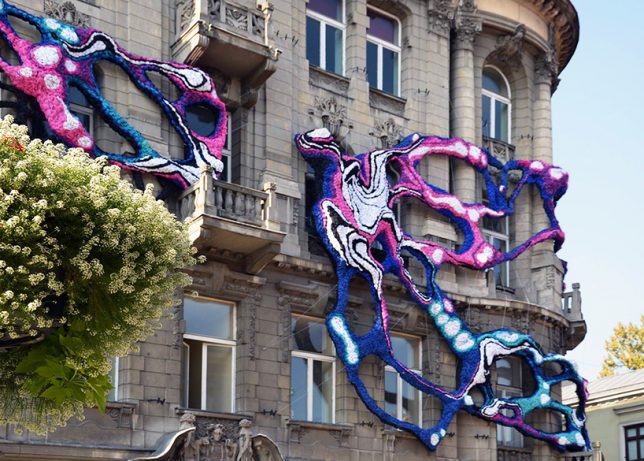
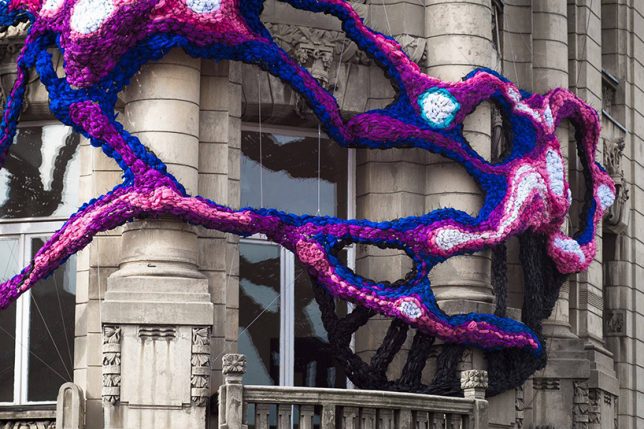
An alien-like growth wraps itself around the corner facade of a historic building in Lodz, Poland, stretching tentacle-like appendages in shades of vivid pink, blue and purple. The site-specific work by Crystal Wagner is made from woven strips of plastic.

Wood Tentacles by Henrique Oliveira
parasitic-art-wood-4

parasitic-art-wood-3

parasitic-art-wood-2

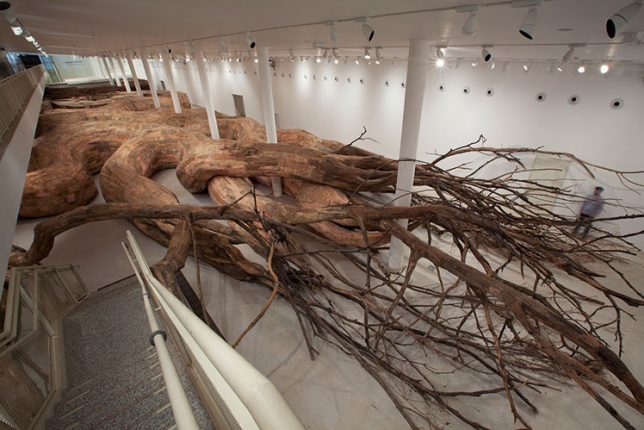
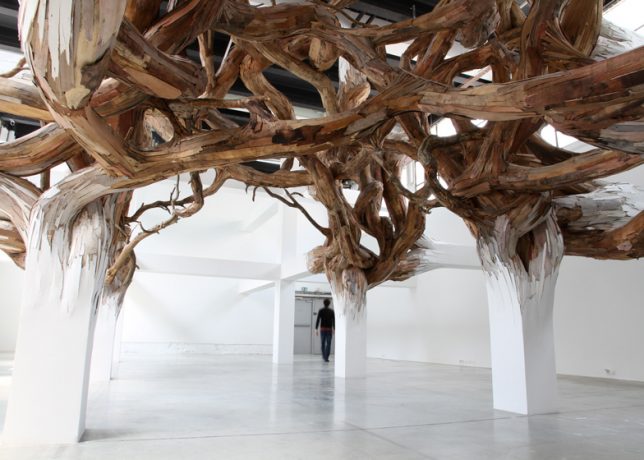
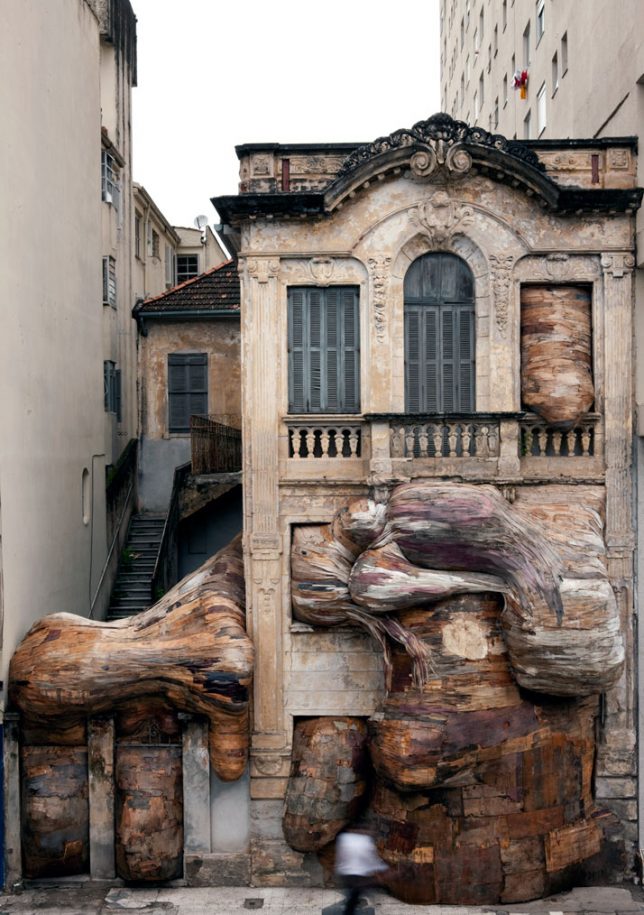
Wooden forms expand to fill entire interior spaces, taking over light root systems to push through windows and doorways and into the streets, or in one case, to act as a secret system of interior tunnels. Artist Henrique Oliveira of Brazil typically installs his organic sculptures in gallery spaces, but one particular work has it bursting out of the confines of Casa dos Leoes in Porto Alegre.

10,000 Bats on the Nature Concert Hall

parasitic-art-bats

parasitic-art-bats-2

parasitic-art-bats-3

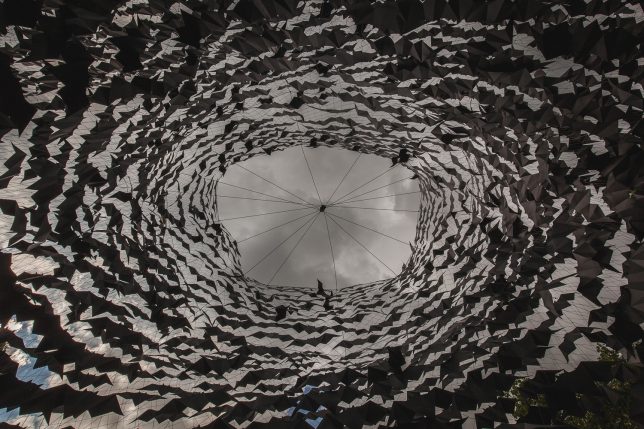
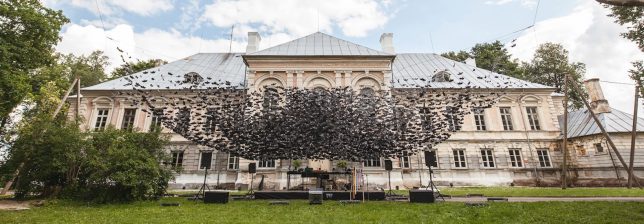
Thousands of bats stream straight out of the front door of the Nature Concert Hall at Zalenieki Manor in Latvia, forming a surreal cloud on its lawn. Architecture firm DJA took inspiration from the unpredictable formations found in nature when assembling the congregation of 10,000 paper bats, which create a tunnel effect when viewed from below.

Vortex by 1024 Architecture, Bordeaux, France
screen-shot-2016-10-25-at-9-36-26-pm

screen-shot-2016-10-25-at-9-37-33-pm

screen-shot-2016-10-25-at-9-36-45-pm

screen-shot-2016-10-25-at-9-37-42-pm

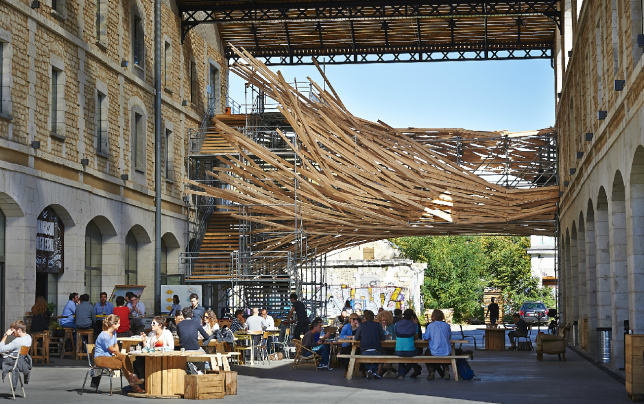
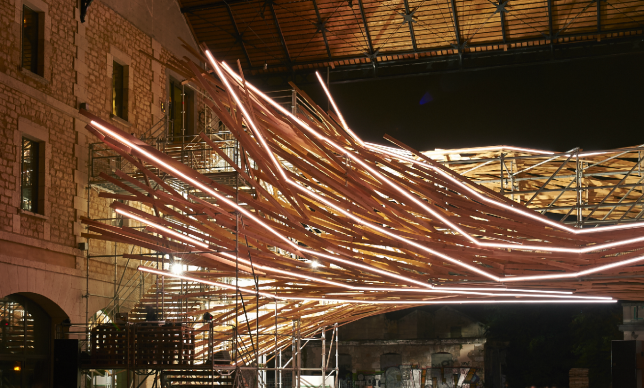
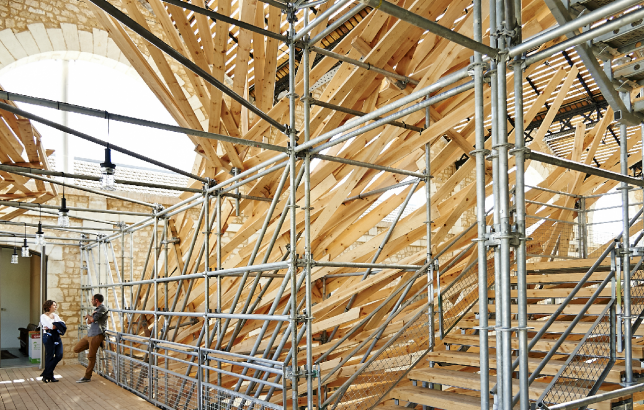
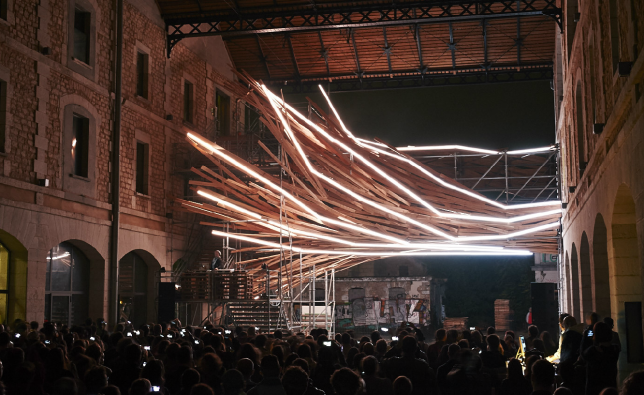
Strips of wood have taken it upon themselves to escape one building and grip the exterior of another, streaming toward it in a manner suggestive of autonomy. ‘Vortex’ is a generative light sculpture by 1024 Architecture almost completely made of scaffolding, installed on the Darwin Ecosystem Project’s green building in Bordeaux, France. “Merging organic materials with new technologies, this hybrid architectural artwork wraps around and embraces the footbridge between the complex’s two buildings, revealing and enhancing the venue’s dynamic energy while working as a live visualizer of energy consumption.”

Biografias by Alicia Martin, Madrid
parasitic-art-books-1

parasitic-art-books-2

parasitic-art-books-3

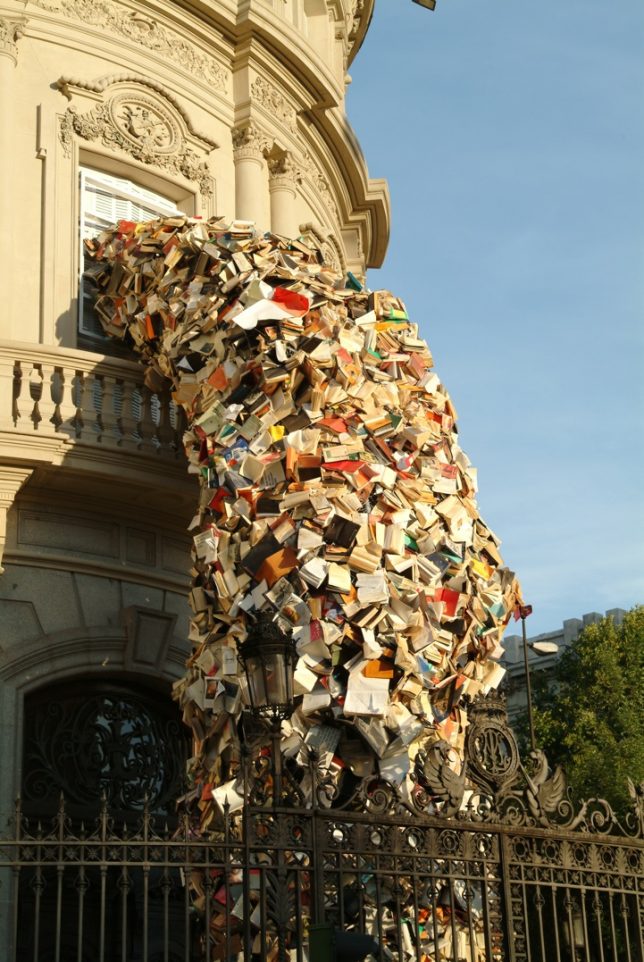
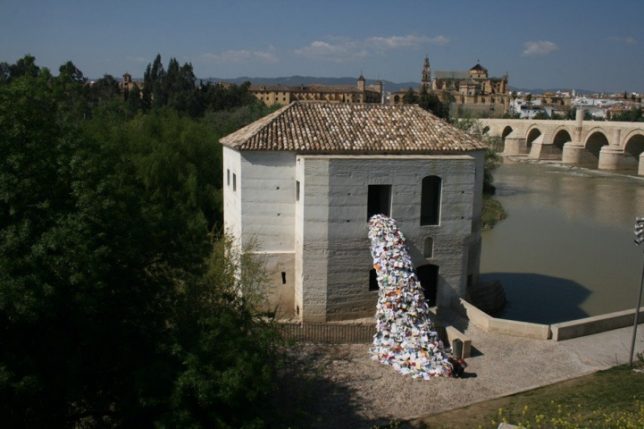
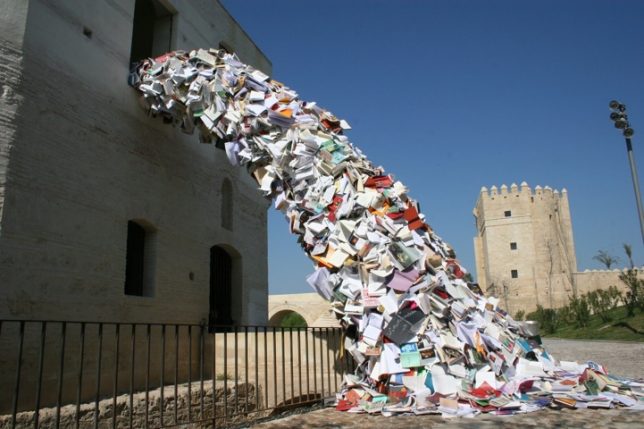
An ornate second-floor window seems to vomit thousands of books onto the sidewalk below in this installation by artist Alicia Martin, as if they, too, are hoping to escape the building. The effect is enhanced by the movement of the pages as they’re blown by the wind. Martin has created similar site-specific installations in buildings all over her home country of Spain.

Glowing Star in an Unfinished Building by Jun Ong
parasitic-art-star

parasitic-art-star-2

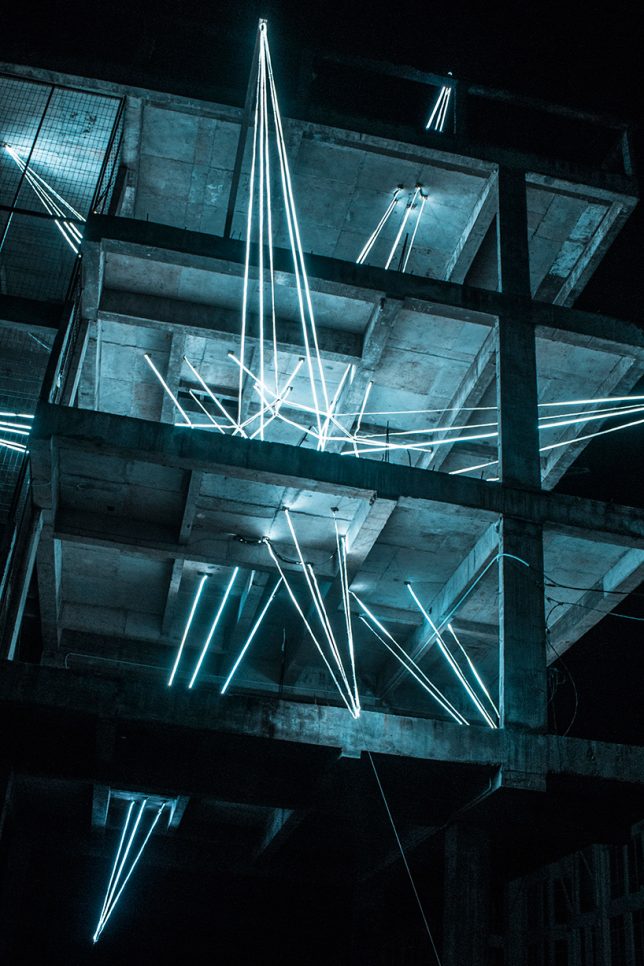
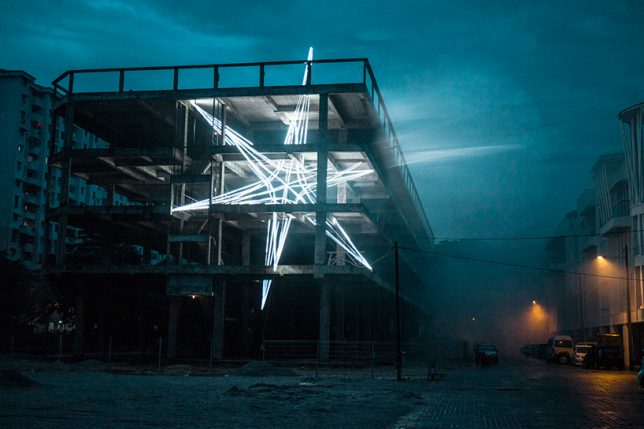
Like some kind of alien life form that started out tiny and suddenly expanded, impaling an entire building upon itself, this five-story star made of light by Jun Ong suggests rapid growth that could not be contained. The artist envisions the LED sculpture as a physical manifestation of a glitch.

Next Page – Click Below to Read More:
Parasitic Art 11 Installations Taking Over Buildings Like Organic Growths

Share on Facebook


[ By SA Rogers in Art & Installation & Sound. ]

[ WebUrbanist | Archives | Galleries | Privacy | TOS ]


WebUrbanist

 
Comments Off on Parasitic Art: 11 Installations Taking Over Buildings Like Organic Growths

Posted in Creativity


Plastic Village: Tropical Housing Estate Built from 1MM Recycled Bottles

25 Oct

[ By WebUrbanist in Architecture & Houses & Residential. ]

plastic-bottle-architecture

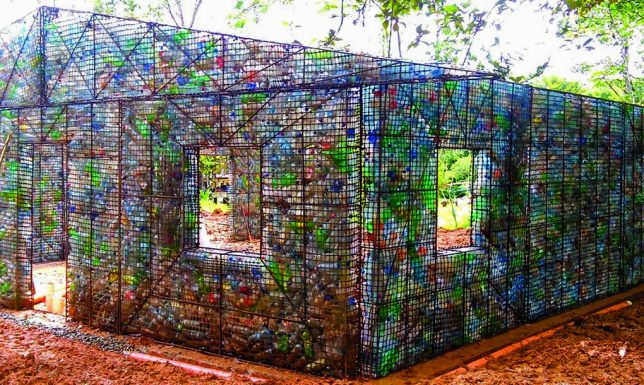
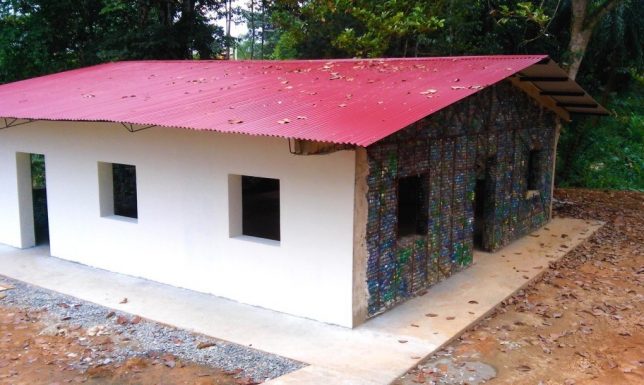
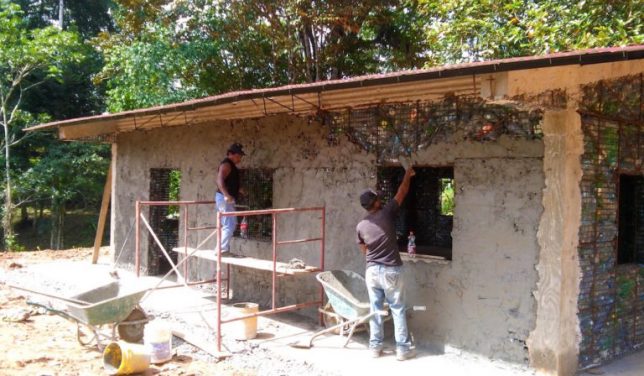
At a glance, it would be impossible to guess that the finished houses in Panama’s Plastic Bottle Village featured walls packed with recycled drinking containers. What started as a recycling initiative by a expat Canadian entrepreneur has become an architectural adventure that will ultimately reuse over a million plastic bottles.

plastic-bottle-finishing

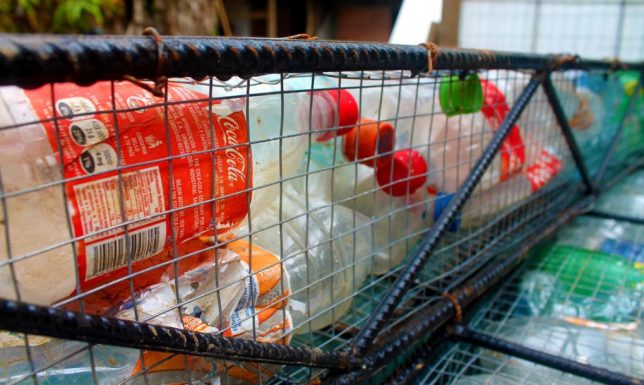
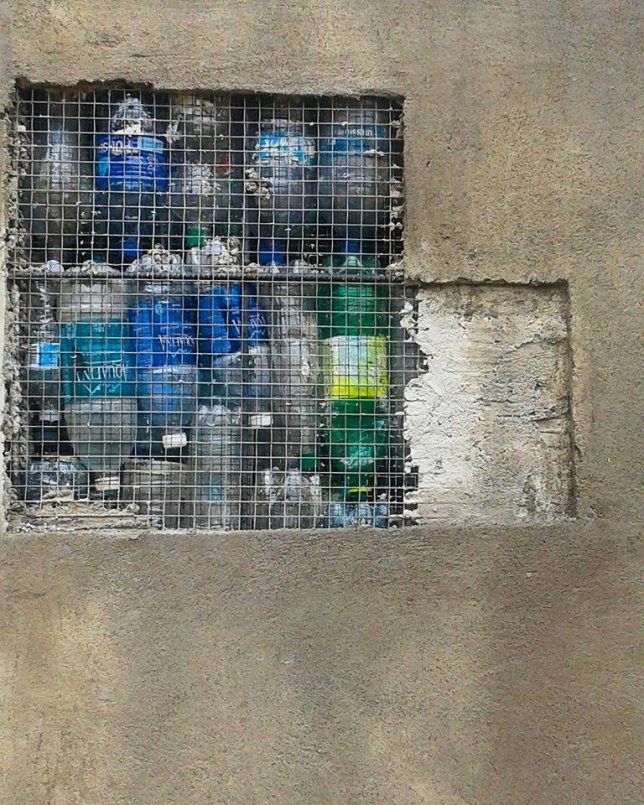
Since 2012, tens of thousands of bottles have been brought to the growing town to make buildings. These are stacked in steel cages with stones to fill in gaps and provide rigidity. Cement plaster covers the structures inside and out, making them appear like solid concrete or finished stucco.

The bottles, meanwhile, provide insulation while allowing airflow, keeping interiors in the hot climate a full 17 degrees cooler than the ambient outdoors.

plastic-bottle-castle

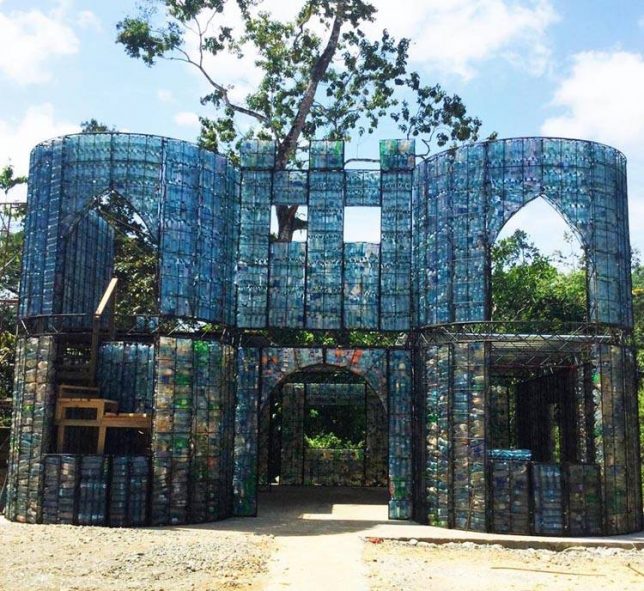
Multiple bottle-based houses already constructed on nearly 100 acres of lush tropical jungle land purchased for the Plastic Bottle Village, which will eventually be home to over 100 such structures. Also in the works: a small public park, retail operation and yoga pavilion.

plastic-bottle-complete

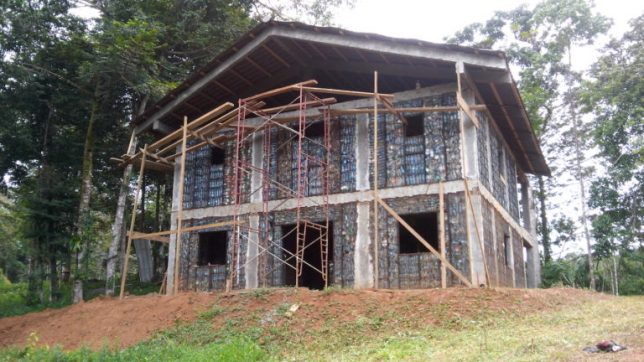
The steel-framed structures provide a balance of strength and flexibility, helping them stand up and support roofs but also to resist earthquakes. The Plastic Bottle Village is about more than just one place, too: its founder is educating others about how to build with this cheap and ubiquitous material that many see simply as waste.

plastic-bottle-cage

caged-bottle-concrete

The project puts consumption in context: “Average humans can consume 15 or more drinks in plastic bottles a month. If you were born after 1978, and live until 80 years old, you will leave behind a minimum of 14,400 plastic bottles on this planet.”

“These bottles take hundreds of years to break down into tiny pieces of plastic, never to completely disappear. Most of the waste is consumed by fish and birds, which has shortened their lifespans greatly.”

plastic-bottle-wall

It also illustrates the potential offsets: “If you live in a two story plastic bottle house of 100 square meters or 1,000 square feet per floor, then your house will be built reusing 14,000 plastic bottles. These recycled bottles could neutralize the negative effect of your passage on this planet,  and move closer to leaving only your footprints.”

Share on Facebook


[ By WebUrbanist in Architecture & Houses & Residential. ]

[ WebUrbanist | Archives | Galleries | Privacy | TOS ]


WebUrbanist

 
Comments Off on Plastic Village: Tropical Housing Estate Built from 1MM Recycled Bottles

Posted in Creativity


Beauty in Decay: Moody Murals Bring Human Faces Back to Abandoned Places

25 Oct

[ By SA Rogers in Art & Installation & Sound. ]

rone-murals-abandoned-places-1

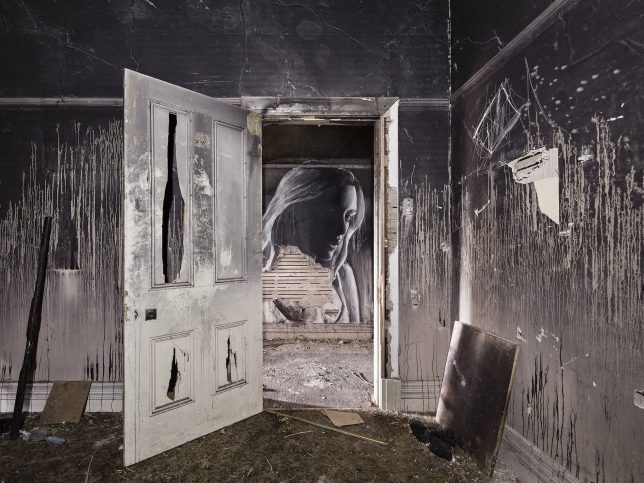
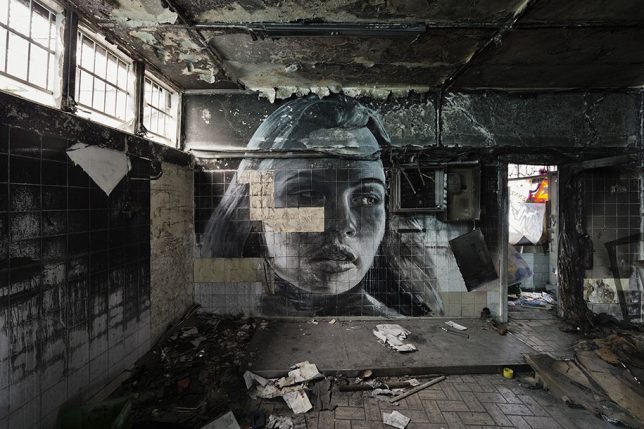
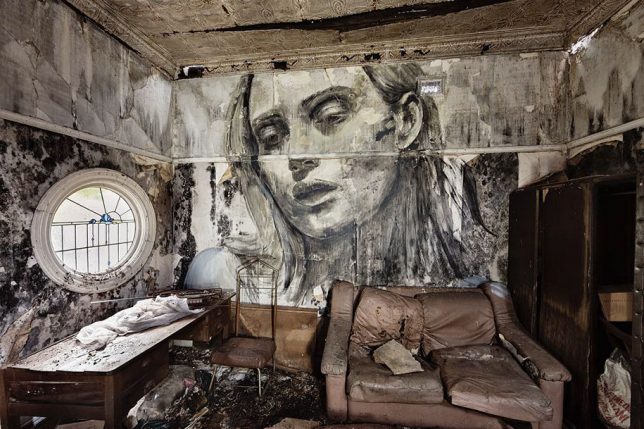
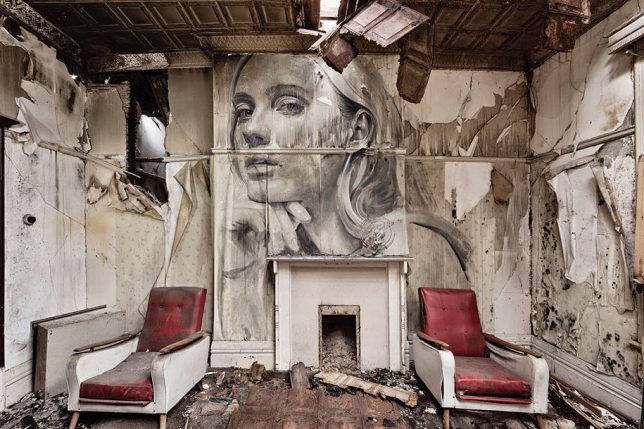
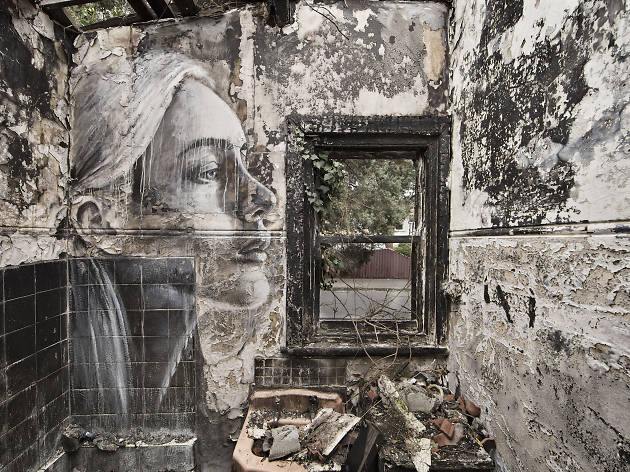
Abandoned places are often steeped in a mixture of emotional impressions, commingling a sense of loss and a confrontation of our own mortality with slivers of hopefulness for a new future, as nature begins to take over what we’ve left behind. As we move through these deteriorating spaces, strewn with the belongings of former inhabitants who seem to have simply disappeared, we wonder who they were and why the spaces that once sheltered them as they went about their lives have come to this. It’s these emotional qualities that make a new series of murals by Australian street artist Rone all the more poignant and powerful.

rone-murals-abandoned-places-2

rone

Entitled ‘Empty,’ the series places the artist’s signature portraits of women on the walls of abandoned interiors, deepening their emotional weight. Much of the subjects’ glamour is stripped away as their skin takes on the texture of peeling paint, the lines of their faces are interrupted by fallen tiles and their gazes are pointed down at the destruction of their environments.

rone-murals-abandoned-places-3

rone-murals-abandoned-places-4

For the Melbourne-based artist, this series represents a shift from the smooth, clean surfaces of his canvases and even the more clear-cut exterior walls upon which his murals are typically painted. But Rone has always found meaning in the temporary nature of these installations, as the artworks are gradually worn away by the elements or painted over by vandals and other artists.

rone-murals-abandoned-places-5

rone-murals-abandoned-places-6

rone-murals-abandoned-places-7

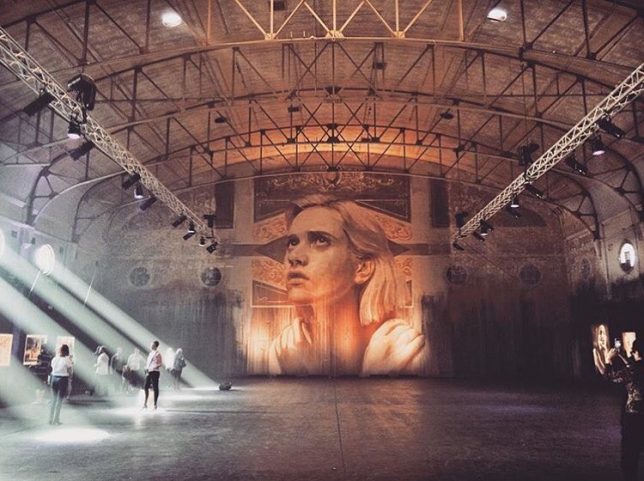
Rone exhibited ‘Empty’ at the soon-to-be-demolished Star Lyric Theatre building in Melbourne, presenting photographs of the murals in situ along with works on canvas and paper. The artist also painted a new mural directly onto the back wall of the theater, stretching nearly 33 feet from floor to ceiling. It’s a fitting way for the decaying Art Nouveau building to go out, with Rone’s canvases lining its blackened and stained surfaces. See more photos of the installation at Street Art News.

Share on Facebook


[ By SA Rogers in Art & Installation & Sound. ]

[ WebUrbanist | Archives | Galleries | Privacy | TOS ]

WebUrbanist

 
Comments Off on Beauty in Decay: Moody Murals Bring Human Faces Back to Abandoned Places

Posted in Creativity


Architectural Interventions: 12 Radical Modern Changes to Historic Buildings

25 Oct

[ By SA Rogers in Architecture & Houses & Residential. ]

architecture-intervention-main

Honoring the historic significance of deteriorating buildings while reinventing them for modern contexts and usage, these architectural interventions don’t try to erase signs of aging and damage or blend the demarcation between old and new. Cracks in stone manors are filled with glass, elegant Parisian facades are recreated in stark concrete, rusted steel volumes are lowered right into the empty shells of ruined brick houses. Whether renovating or reimagining the original structures, these projects preserve history and highlight the passage of time instead of demolishing or disguising it.

Astley Castle Renovation by Witherford Watson Mann, Warwickshire, England

architecture-intervention-astley-1

architecture-intervention-astley-2

architecture-intervention-astley-4

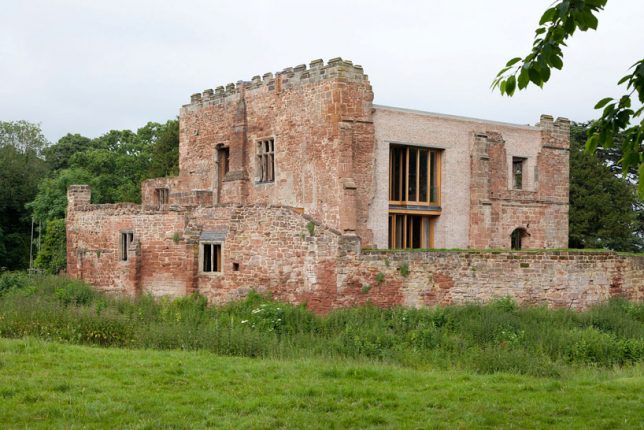
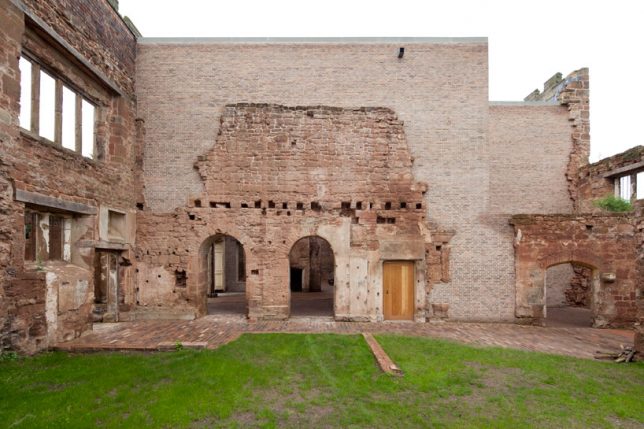
Ashley Castle, a former fortified manor for England’s Royal Family that fell into abandoned ruin for decades, comes back to life in the hands of London-based Witherford Watson Mann Architects, who repaired the damaged parts of the space with an insert that simultaneously blends and contrasts with the existing walls. The new brick follows the uneven breaks in the original masonry, preserving it not as it originally looked, but as it looked prior to the renovation, with all its years of history and wear.

Blencowe Hall by Donald Insall Associates, England

All images copyright nicholas yarsley (wizzwam ltd).

architecture-intervention-main

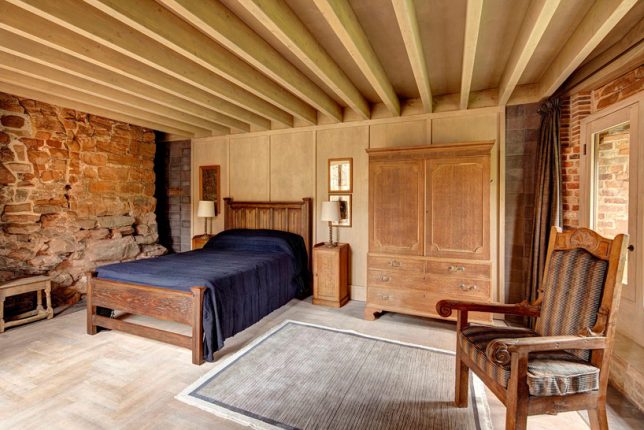
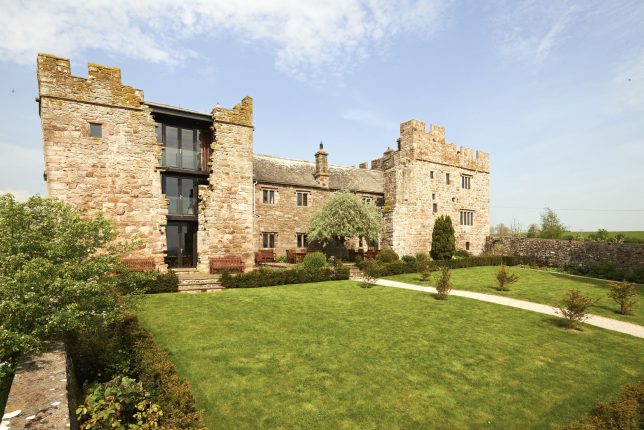
A similar approach fills a crack in Blencowe Hall in Cumbria, enabling a deteriorating former manor house to become a luxury hotel in the countryside. The south tower was missing a roof and had sustained a large breach in its east wall. Donald Insall Associates worked with local architect Graham Norman to insert a steel frame and glazed wall into the reach, retaining it “as part of the story of the building.”

The Dovecote Studio by Haworth Tompkins, England

architecture-interventions-dovecote

architecture-intervention-dovecote-2

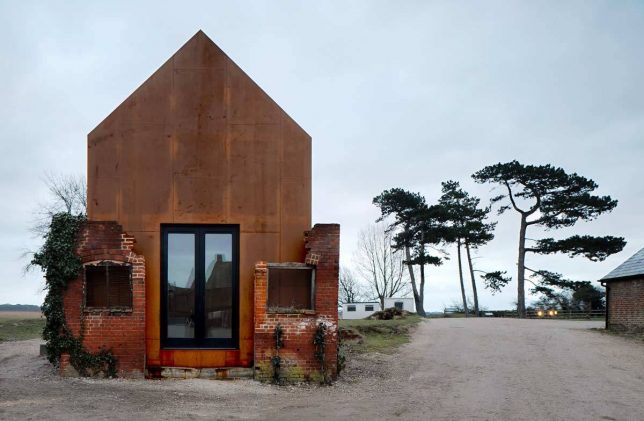
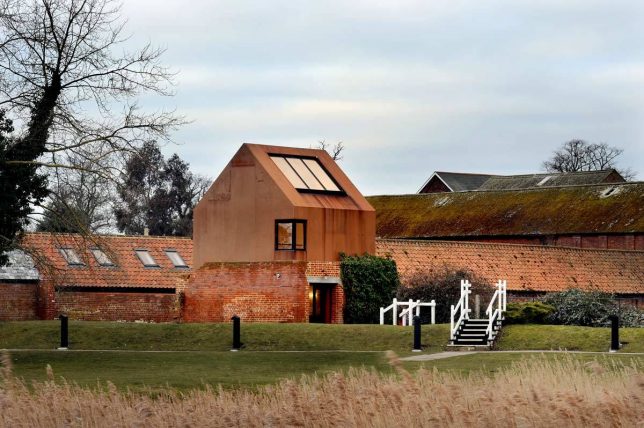
The Dovecote Studio is another example of radically preserving ruins that are deemed “too damaged to save” with some creative thinking. Studio Haworth Tompkins filled the empty shell of an abandoned building with a cortex steel building, which reads as an entirely separate structure within the original envelope but complements the red of the old brick as it rusts. The whole thing was preassembled and literally dropped inside by a crane. It now acts as housing for artists in residence, rehearsal space and temporary exhibition space at the internationally renowned music campus at Snape Maltings.

Kew House by Piercy & Company, London

architecture-intervention-kew-1

architecture-intervention-kew-2

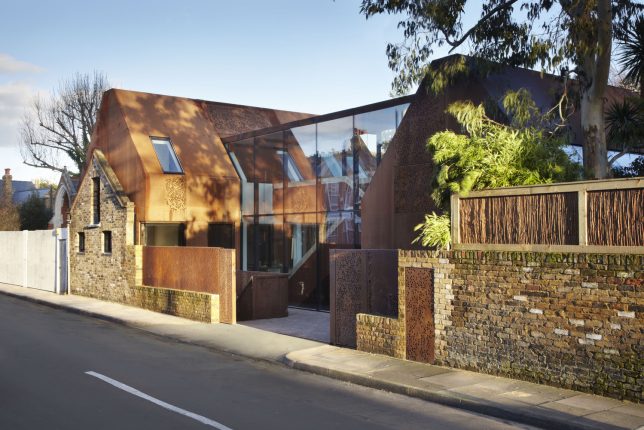
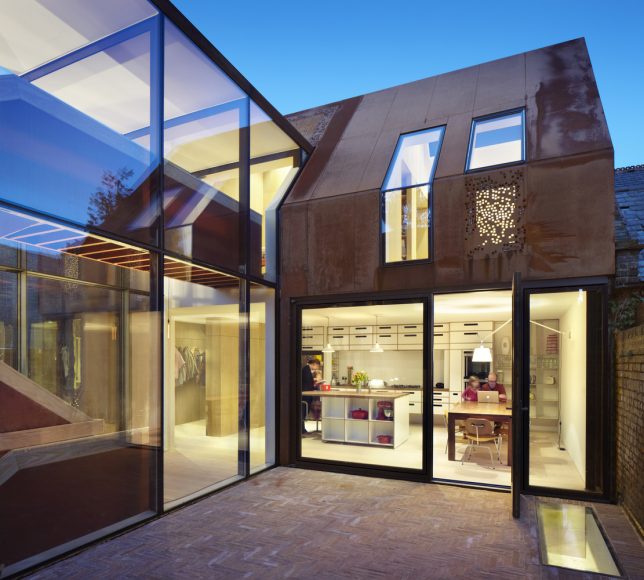
Very little was left of the original buildings that stood on this street within the Kew Green Conservation Area of southwest London, yet the new construction honors it all the same, incorporating it into the exterior facade. A nineteenth century stable wall acts as the defining architectural feature of the street-fronting side of a new four-bedroom family house by Piercy&Company, retaining its sense of history while allowing the construction of a modern home for modern needs.

Next Page – Click Below to Read More:
Architectural Interventions 12 Radical Modern Changes To Historic Buildings

Share on Facebook


[ By SA Rogers in Architecture & Houses & Residential. ]

[ WebUrbanist | Archives | Galleries | Privacy | TOS ]

WebUrbanist

 
Comments Off on Architectural Interventions: 12 Radical Modern Changes to Historic Buildings

Posted in Creativity


Bright Ideas for Dark Art: Murals by Skurk Play Tricks with Light & Night

24 Oct

[ By WebUrbanist in Art & Street Art & Graffiti. ]

painted-angler-fish-art

The deep sea anglerfish is a disturbing monstrosity that uses lights to lure in its prey and is the featured backdrop of a recent work of graffiti best experienced at night.

day-lit-night-art

Existing wall lamps serve as the lures in this case, while the fish itself is positioned to swallow up anyone brave enough to venture down the stairs from above.

night-light-painting

Hailing from New Zealand but living in Bergen, Norway, street artist Skurk hand-cuts stencils and paints large-scale murals around different themes but often involving light and shadow. The works are also site-specific, made to interact with and respond to conditions in a given physical context.

sillhouette-art

In some cases, his silhouettes seem to be cast like shadows. In other instances, the idea of electrical lighting takes various forms, like a bulb being plugged into an available (vent) socket.

light-socket-art

Share on Facebook


[ By WebUrbanist in Art & Street Art & Graffiti. ]

[ WebUrbanist | Archives | Galleries | Privacy | TOS ]

WebUrbanist

 
Comments Off on Bright Ideas for Dark Art: Murals by Skurk Play Tricks with Light & Night

Posted in Creativity


Nothing Shocking: Abandoned & Derelict Battery Factories

23 Oct

[ By Steve in Abandoned Places & Architecture. ]

abandoned-battery-factory-2a

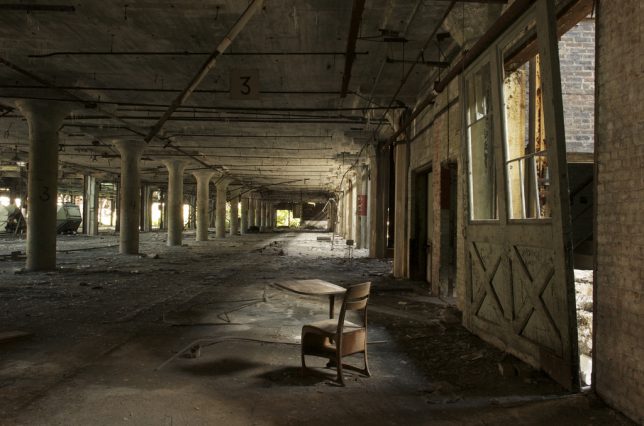
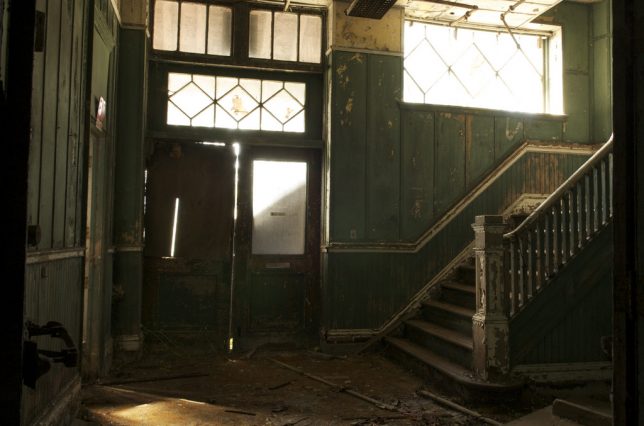
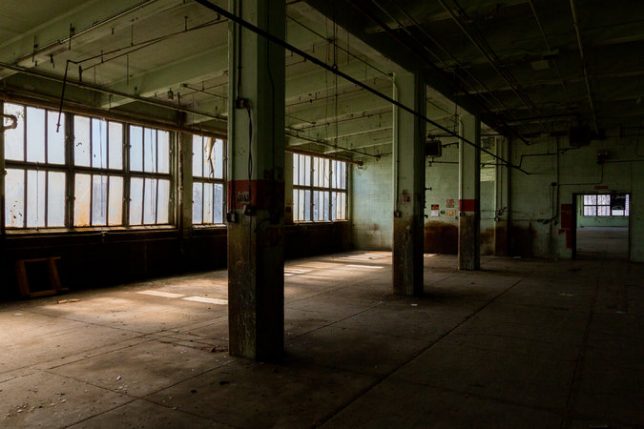
These former battery factories once lead, er, led the way in electrifying society; now they sit abandoned in environs rife with heavy metal contamination.

abandoned-battery-factory-2c

abandoned-battery-factory-2d

The abandoned Power City Warehouse in Niagara Falls, New York began producing batteries for automobiles and tractors back in 1910. In the early 1940s, work of a classified nature was being conducted there in support of the Manhattan Project – the top-secret initiative charged with creating the atomic bomb. By the 1960s it had been bought by the Prestolite Company, who re-tolled the factory to manufacture hard rubber battery cases and to fill lead-acid batteries with sulfuric acid. The factory was abandoned in the late 1980s.

abandoned-battery-factory-2e

abandoned-battery-factory-2b

abandoned-battery-factory-2f

The EPA conducted a survey of the site in 2001 that revealed extensive contamination with lead, semi-volatile organic compounds, PCBs, and pesticides in the soil and buildings. Radioactive slag was discovered on the property in early 2012. Flickr user Kevin McBride (Mr Kevino) visited “The Battery Factory”, as it is known colloquially by urbex’ers, in August of 2008 to snap a small selection of photos… hope he wore appropriate clothing like, say a haz-mat suit.

Edison’s Other Bright Idea

abandoned-battery-factory-7d

abandoned-battery-factory-7b

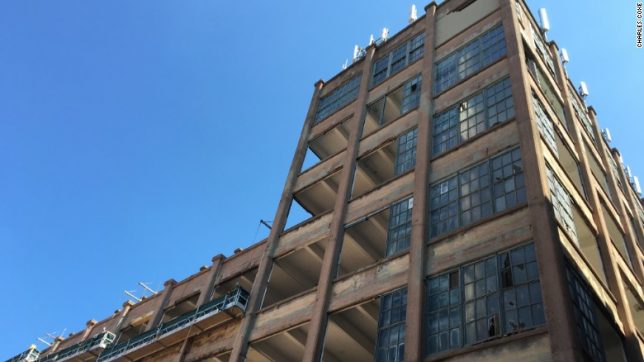
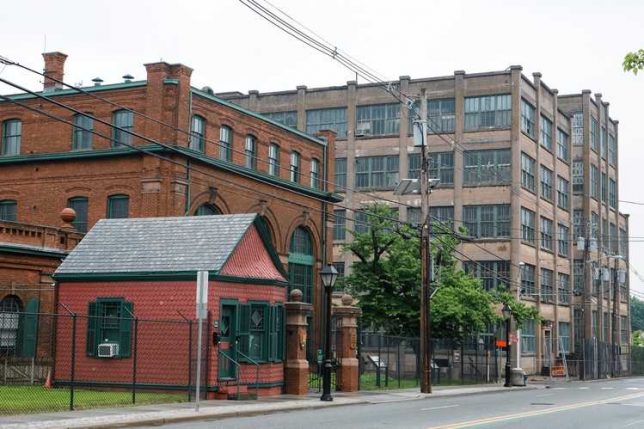
Better buy glass company stock STAT – the former Edison Storage Battery factory in West Orange, NJ is being renovated and re-purposed into Edison Village and roughly 900 windows in the circa-1914 main building are due to be replaced.

abandoned-battery-factory-7a

abandoned-battery-factory-7c

The factory manufactured batteries for submarines, mining lamps, railroad signals and more. The Battery Building, abandoned since 1965, was the only remaining building in Edison’s once-enormous West Orange industrial complex aside from Edison’s old laboratory, now part of the Thomas Edison National Historic Park. One reason for its longevity was the special “Edison Cement” used in its construction – wrecking balls bounced off the outer walls leaving nary a dent.

Next Page – Click Below to Read More:
Nothing Shocking Abandoned Derelict Battery Factories

Share on Facebook


[ By Steve in Abandoned Places & Architecture. ]

[ WebUrbanist | Archives | Galleries | Privacy | TOS ]

WebUrbanist

 
Comments Off on Nothing Shocking: Abandoned & Derelict Battery Factories

Posted in Creativity


Record Breaking: Magnetic Levitating Turntable Lets Vinyl Defy Gravity

23 Oct

[ By WebUrbanist in Technology & Vintage & Retro. ]

floating-record-turntable

Cool and clever trump common sense and normal physics in this levitating record turntable, which aims to bring a vintage technology into the future.

Mag-Lev Audio wants to push audio technology in a new (vertical) direction, creating an “uplifting experience of music” in the form of the world’s first floating record player.

floating-record-player

The device, the creators claim, not just about a look, but also the ability to “maintain the incredibly precise turning of the platter with sensor regulating software. Air is the smoothest medium with least amount of friction, which further elevates this project into a truly unique listening experience.”

record-player-feet

Feet support the spinning platter when it is not in use while stored-up power can bring the system to a comfortable stop and lift the needle in case of an outage (instead of it dropping the floating disc uncontrolled).

vinyl-with-leds

The makers boast the simplicity of the system: “pick a favorite record; turn the turntable on; move the tone arm into position; and lower the cueing lever; then let the smart-record player do the rest.”

hovering-turntable

night-light

hovering-disc-vinyl

A series of LED lights and digital displays lend the entire setup an air of cyberpunk futurism as well, reinforcing the ambient aesthetic created by the floating form of the disk. Whether this approach will take off remains to be seen, but the gadget has already raised enough money on Kickstarter to make it happen.

Share on Facebook


[ By WebUrbanist in Technology & Vintage & Retro. ]

[ WebUrbanist | Archives | Galleries | Privacy | TOS ]

WebUrbanist

 
Comments Off on Record Breaking: Magnetic Levitating Turntable Lets Vinyl Defy Gravity

Posted in Creativity


Pretty in Pink: Trump’s Border Wall as Envisioned by Mexican Architects

22 Oct

[ By SA Rogers in Architecture & Cities & Urbanism. ]

trump-border-wall-6

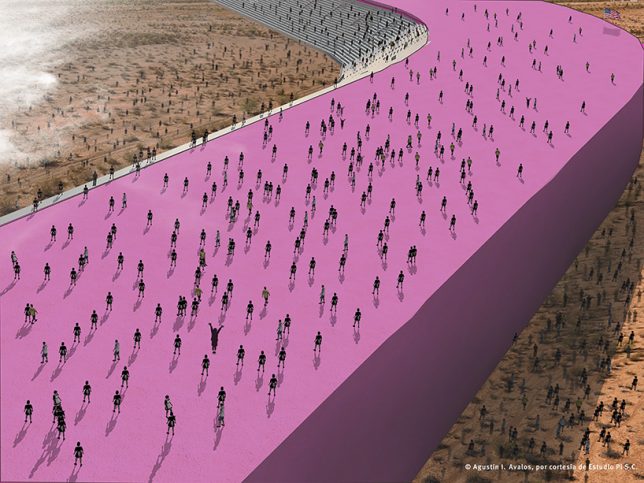
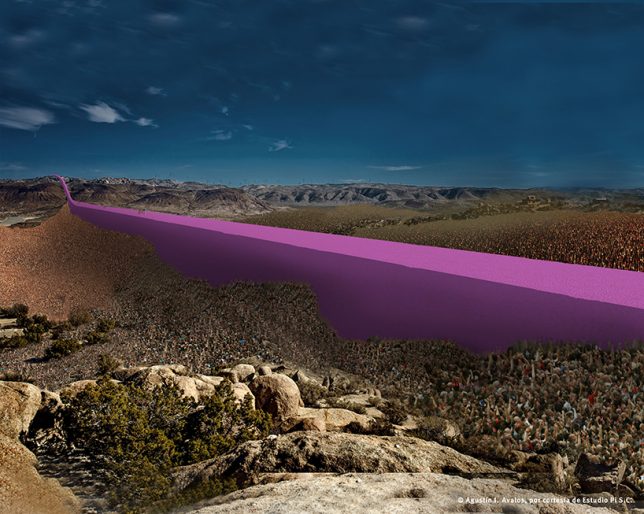
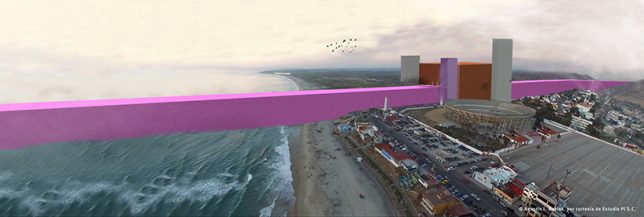
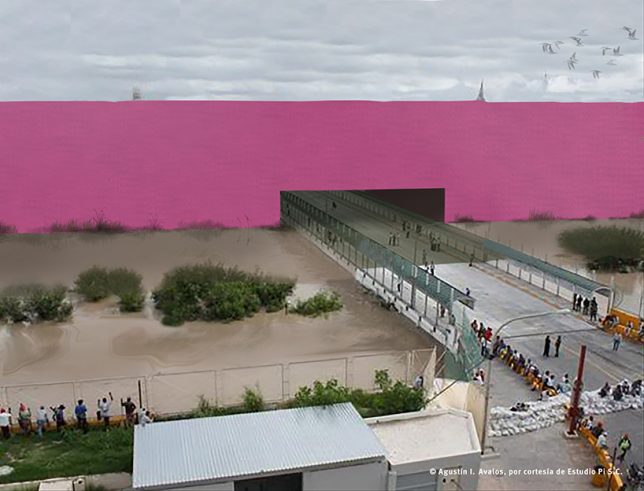
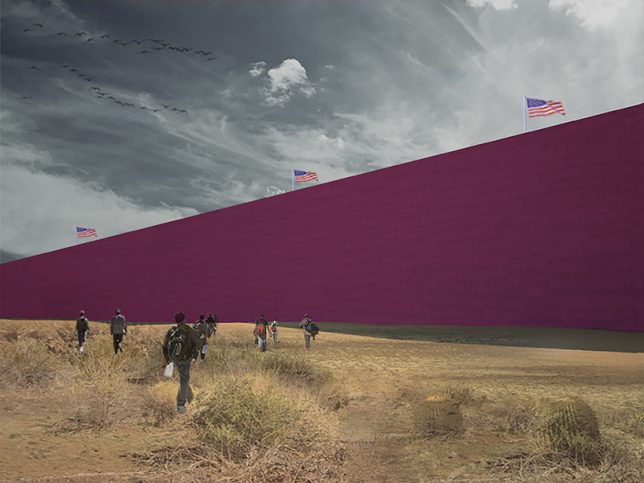
Donald Trump has promised that if he becomes President of the United States, he’ll build a “beautiful and impenetrable” wall and force Mexico to pay for it – so a group of Mexican architects have taken on the task of designing it for him, too. The firm Estudio 3.14 has envisioned the “gorgeous perversity” of the proposal in a vibrant shade of neon pink, a solid architectural ribbon running from the Pacific Ocean to the Gulf of Mexico and packed full of prisons.

trump-border-wall-1

trump-border-wall-2

“I will build a great wall – and nobody builds walls better than me, believe me – and I’ll build them very inexpensively,” Trump said during his candidacy announcement speech in June 2015. “I will build a great, great wall on our southern border, and I will make Mexico pay for that wall. Mark my words.”

trump-border-wall-7

trump-border-wall-8

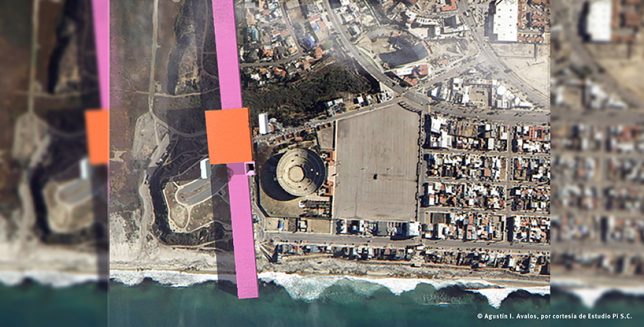
Estudio 3.14 presents a series of renderings of the structure in the various types of border landscapes one finds along that 1,954-mile stretch. The wall is painted pink in honor of Pritzker Prize-winning Mexican architect Luis Barragán. To understand exactly what the architects are getting at with this project, it’s best to hear it described in their own words.

trump-border-wall4

trump-border-wall-5

“Based on Trump’s statements, the economic, ecological and financial aspects have been called into question. However, he continues with his verbal plan. As architects and designers, we have the capacity to imagine and interpret what Trump is saying, and we are convinced that if we can make people see it, they can assess his words and the perversity in his proposal.”

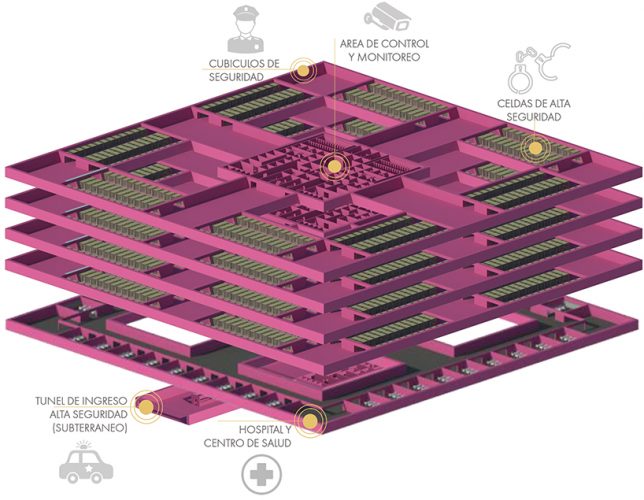
“Because the wall has to be beautiful, it has been inspired in by Luis Barragán’s pink walls that are emblematic of Mexico. It also takes advantage of the tradition in architecture of megalomaniac wall building. Moreover, the wall is not only a wall – as you can see in the hill landscape cross-section it is a prison where 11 million undocumented people will be processed, classified, indoctrinated, and/or deported.”

trump-border-wall-9

“The relation between the discipline of architecture and political perversity and/or megalomania has already been seen through previous characters such as Adolf Hitler and Benito Mussolini, who relied on the imaginative architects of their words and the creators, who materialized their macabre ideas. The proposal is made from the disciplinary field that has worked, since the existence of humanity, for the status quo and benefits from this tradition.”

Share on Facebook


[ By SA Rogers in Architecture & Cities & Urbanism. ]

[ WebUrbanist | Archives | Galleries | Privacy | TOS ]

WebUrbanist

 
Comments Off on Pretty in Pink: Trump’s Border Wall as Envisioned by Mexican Architects

Posted in Creativity


Invisible Solar: Panels Camouflaged as Wood, Clay, Stone & Concrete

21 Oct

[ By WebUrbanist in Design & Products & Packaging. ]

solar-shingle-design

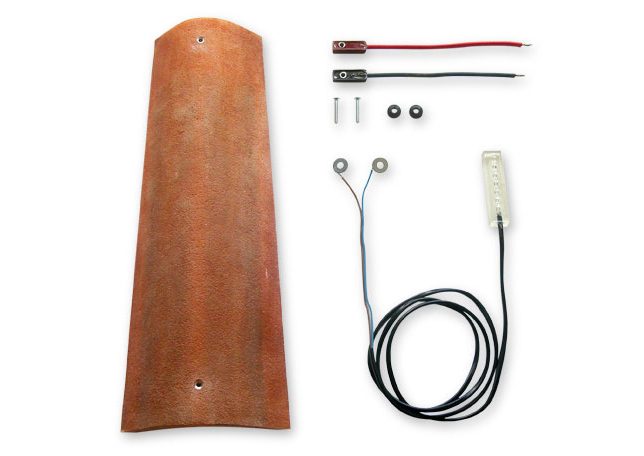
Overcoming the awkward aesthetic factor typically faced by home solar technology, these disguised panels look like ordinary building materials you would expect to spot along the sides, steps or roof of a house.

solar-camouflaged-disguised

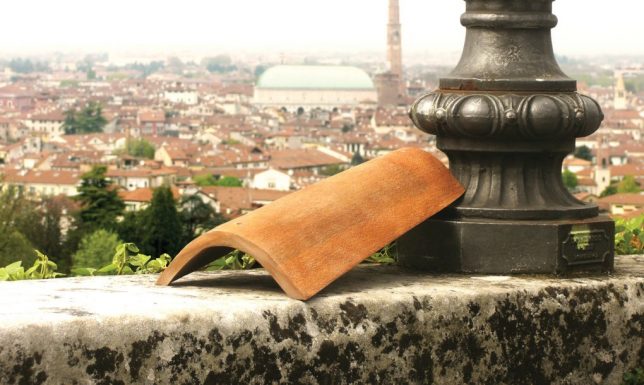
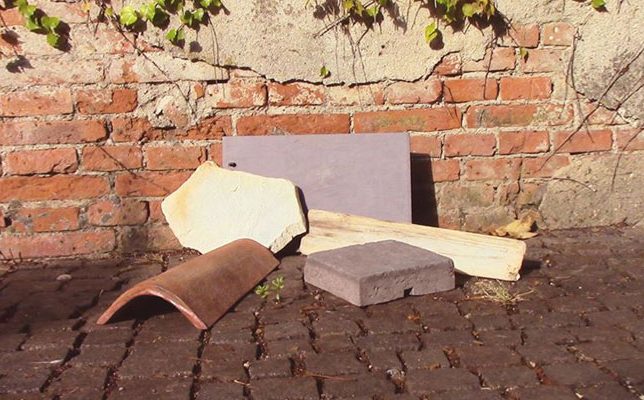
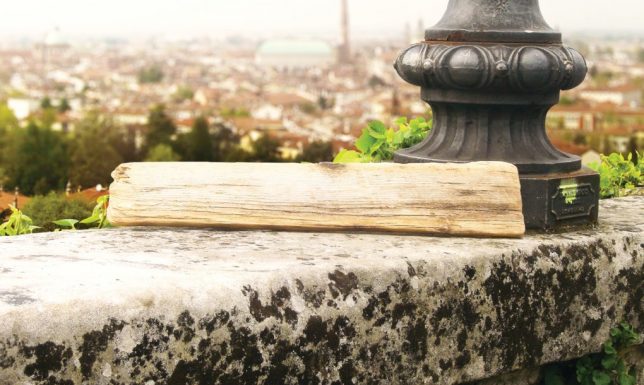
Dyaqua, an Italian company, has developed their Invisible Solar series to look like concrete bricks, slate shingles and wooden boards, allowing them to blend into ordinary built environments. A thin top layer mimics desired materials while allowing the sun’s rays through to the photovoltaic cells beneath.

solar-material-cover

From the company: “The Invisible Solar modules are composed of a non-toxic and recyclable polymeric compound, within which are incorporated the monocrystalline silicon cells. A special surface, opaque at the sight and transparent to the sun rays, covers the cells by hiding them without prevent their operation.”

invisible-solar-panel

Instead of adding semi-reflective, black-and-grey accents to a traditional wood or masonry structure, these fixtures are designed to fit any abode, historic or modern. The company has begun production with the Rooftile, which resembles a typical reddish-brown terracotta shingle.

solar-wood-block

secret-solar-panels

From there, they aim to create blocks and boards that can be used on walls (cladding) or walkways (pavement) sure to please even the toughest community design standards boards. They are also built for strength and durability, able to “withstand high static load, tolerates chemical solvents and atmospheric agents.”

Share on Facebook


[ By WebUrbanist in Design & Products & Packaging. ]

[ WebUrbanist | Archives | Galleries | Privacy | TOS ]

WebUrbanist

 
Comments Off on Invisible Solar: Panels Camouflaged as Wood, Clay, Stone & Concrete

Posted in Creativity


Attack of the Giant Spider! Watch This Optical Illusion Mural Come to Life

20 Oct

[ By SA Rogers in Art & Street Art & Graffiti. ]

spider-mural-1

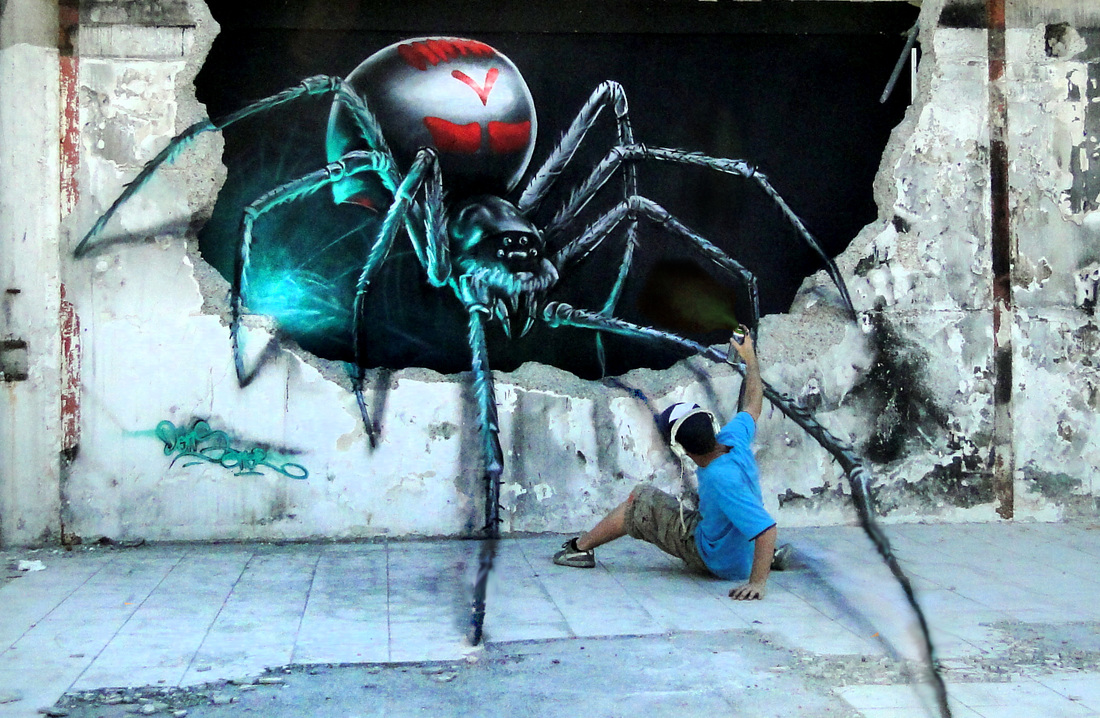
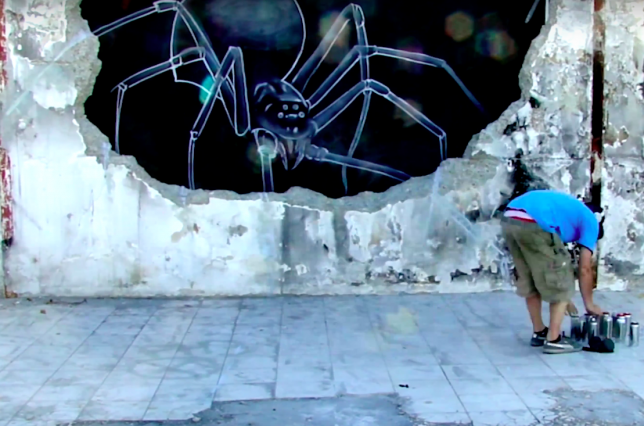
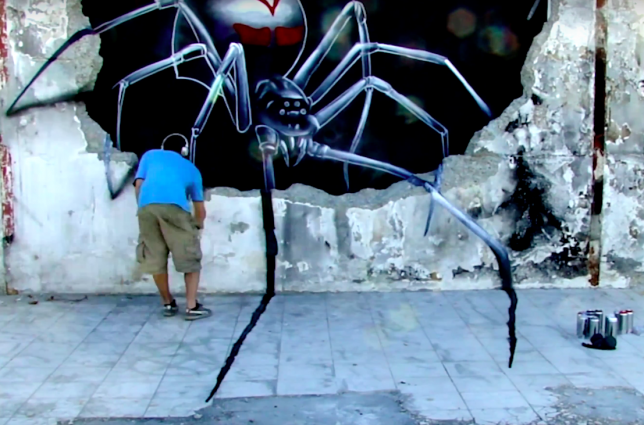
A nightmarishly oversized spider emerges from a gaping hole in a wall in this anamorphic optical illusion mural by French street artist Denys Pasco, better known as Densoner. Known for his highly detailed graffiti style as well as oversized murals frequently featuring creatures of the wild, Densoner created a creepy effect with the massive arachnid’s legs stretching out toward the viewer.

resized

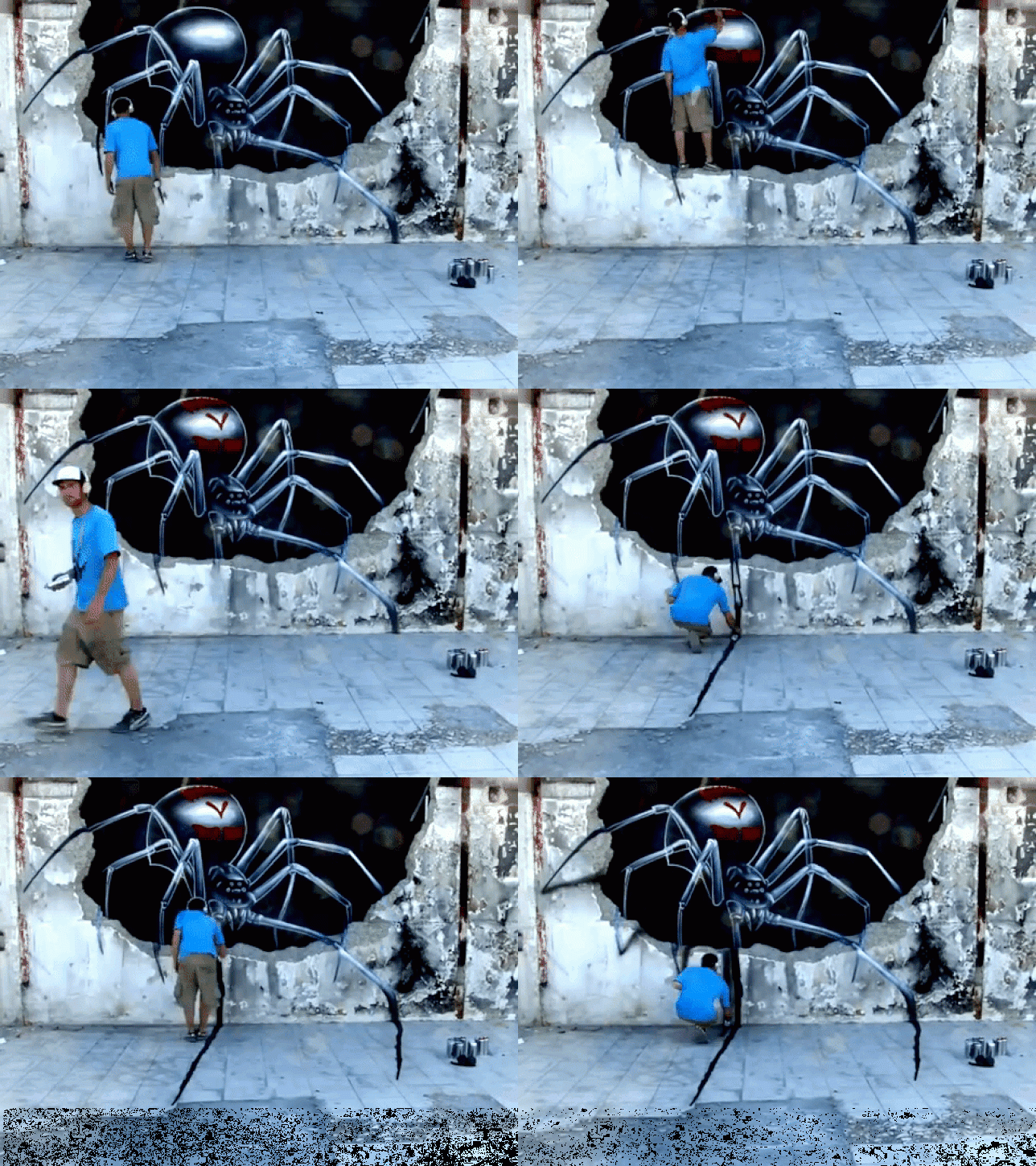
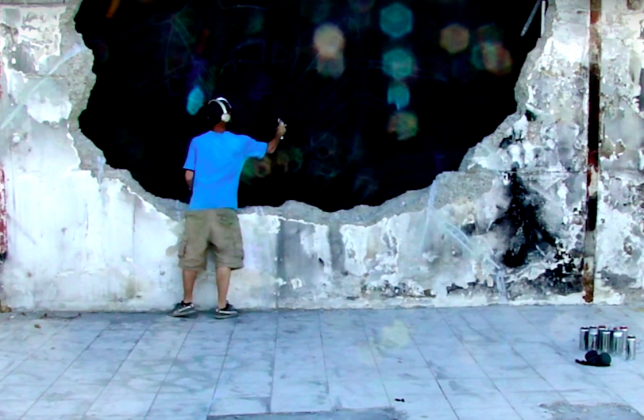
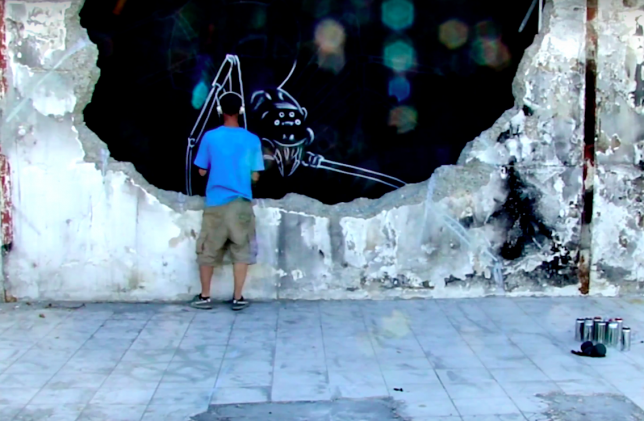
The process of creating ‘Eat Me’ is captured on video and sped up so you can watch the spider come alive in the hands of the artist. Denoner starts off by painting a photorealistic black hole on a tattered urban wall, with the edges painted in shadow to make it appear 3D.

densoner-spider-mural-1

densoner-spider-mural-2

densoner-spider-mural-3

densoner-spider-mural-4

Then, with a few strokes of white, the spider begins to appear, becoming more and more threatening as the artist works. Watch the video all the way to the end for a fun surprise.

Share on Facebook


[ By SA Rogers in Art & Street Art & Graffiti. ]

[ WebUrbanist | Archives | Galleries | Privacy | TOS ]


WebUrbanist

 
Comments Off on Attack of the Giant Spider! Watch This Optical Illusion Mural Come to Life

Posted in Creativity