RSS
 

Archive for the ‘Creativity’ Category

Teamlab Jungle: Step Inside a Massive Musical Instrument Made of Light

17 Feb

[ By SA Rogers in Art & Installation & Sound. ]

teamlab jungle light vortex

Anyone who visits ‘Music Festival, TeamLab Jungle’ this summer will get to immerse themselves in a space made of light, interacting with moving beams to help produce collaborative crowd-sourced music. ‘Light Chords’ is one of three ‘4D’ light-based installations the Japanese interdisciplinary group has planned for the event, all of which represent a unique intersection of art, design, technology and nature.

teamlab jungle light chords

teamlab jungle

‘Light Chords’ aims to create the sensation of being inside a massive musical instrument, touching the ‘strings’ to produce a sound and hearing it reverberate all around you. The beams of light rise into the sky when touched and then settle back down to be activated again.

teamlab jungle day

teamlab jungle light vortex 3

The second 4D space, Light Vortex, places visitors at the center of a surreal light show that bends and stretches around the space, while ‘Light Cave’ builds complex light-based architecture over attendees’ heads.

teamlab jungle vortex

teamlab jungle light vortex 4

Known for their use of illumination as an artistic medium and for a focus on interactivity, TeamLab brings their ‘Music Festival’ to various cities and spaces each year, with different experiences to be had by day and by night. Before dark, TeamLab Jungle is designed as a music festival for families, while after dark it becomes more like a dance party with BACARDÍ-sponsored bars.

Share on Facebook


[ By SA Rogers in Art & Installation & Sound. ]

[ WebUrbanist | Archives | Galleries | Privacy | TOS ]


WebUrbanist

 
Comments Off on Teamlab Jungle: Step Inside a Massive Musical Instrument Made of Light

Posted in Creativity


Build & Unbuild in 1 Day: Deconstructable Prefab House Moves with its Residents

17 Feb

[ By WebUrbanist in Architecture & Houses & Residential. ]

mobile prefab

No stakes to pull up or new foundation to pour for owners of his prefabricated dwelling, an open-plan home designed to be built, taken apart, moved and reconstructed on demand. Its factory-made components can be shipped between sites, assembled in under eight hours and taken apart just as quickly. Disassemble, reassemble — it’s that easy.

detail prefab

Most campers and other mobile micro-homes come with a built-in problem: they can only be so large and still move easily from one site to the next. Designed by Kodasema, an Estonian collective, this house aims to bridge the gap between conventional domiciles and portable retreats.

prefab forest

The so-called KODA features a lofted bedroom, open-plan living space and requires only a 270-square-foot site for deployment. “When choosing where to live however,” note the architects, “we may take risks. It can be difficult to make major changes to a conventional home as inconvenient and extensive repairs are often involved, or even full demolition and reconstruction.” In short: their solution is efficient, economic and also ecological, optimizing use of time and materials while allowing for flexibility.

box home

“In our minds KODA can become whatever you want – a city-center home, a lakeside summer house, a cosy café, an office, workshop or studio or even a classroom.” Like any home, water, sewer, internet and electrical connections will depend on the site, though it can generate its own power through rooftop solar (and his minimal energy requirements thanks to quadruple-paned glass).

prefab front

The design puts communal spaces (living room and kitchen) out front and private areas (bathrooms and bedrooms) toward the back. It also can be tweaked to an individual needs.

prefab night

“Its clever design provides the inspiration to make best use of every square inch of space and envisage how the built-in components, even the walls, can be adjusted to meet their purpose most effectively.” (Photos is by Paul Kuimet)

Share on Facebook


[ By WebUrbanist in Architecture & Houses & Residential. ]

[ WebUrbanist | Archives | Galleries | Privacy | TOS ]


WebUrbanist

 
Comments Off on Build & Unbuild in 1 Day: Deconstructable Prefab House Moves with its Residents

Posted in Creativity


The People’s Fridge: Free Excess Food for Anyone Who Needs It

16 Feb

[ By SA Rogers in Destinations & Sights & Travel. ]

people's fridge

Considering that the United Kingdom leads the European Union in food waste at over 15 million tons per year, spreading the concept of free community refrigerators could make a huge impact. Households in the UK toss out an average of 24 edible meals every month, and those figures are even worse in the United States, where about 40 percent of all food goes to waste. One project in London aims to prove just how powerful diverting that waste could be with ‘The People’s Fridge,’ where anyone can donate food or take what they need.

people's fridge 2

Located in Brixton, South London and open to the public, The People’s Fridge is run by a group of volunteers aiming to help tackle food poverty and cut food waste all at once. The crowdfunded project joins similar campaigns launched in Spain, Germany and India as well as other cities in the UK.

The folks running the project have a few simple rules to keep things fresh and manageable: offer prepared and cooked foods from certified businesses only as well as fruits, vegetables, bread and unopened packaged foods. Homemade foods, raw meat and seafood and opened milk are not allowed to prevent issues with spoilage and ensure that all ingredients are known.

So far, photos of the fridge on the project’s Twitter show the shelves brimming with fresh produce, beverages, sandwiches, cake and other treats. Employees at Pop Brixton, the venue where the fridge is located, clean and organize the contents daily.

“We want more people to be talking about cutting food waste!” says Olivia Haughton, a member of The People’s Fridge team. “In the process of saving food from the bin we provide a source of fresh food for anyone who needs it. The fridge works really simply. People with food to donate can bring it at any time during the day. All they have to do is fill in a quick register of what they’re donating and when, then anyone can come and help themselves. There is no policing of who benefits from the fridge, all we ask is that people don’t take food if they suffer from any food allergies and that they sign the food out of the fridge when they take it.”

Share on Facebook


[ By SA Rogers in Destinations & Sights & Travel. ]

[ WebUrbanist | Archives | Galleries | Privacy | TOS ]


WebUrbanist

 
Comments Off on The People’s Fridge: Free Excess Food for Anyone Who Needs It

Posted in Creativity


Worlds Under Glass: 33 Miniature Cities & Architectural Sculptures

16 Feb

[ By SA Rogers in Art & Sculpture & Craft. ]

thomas doyle 7

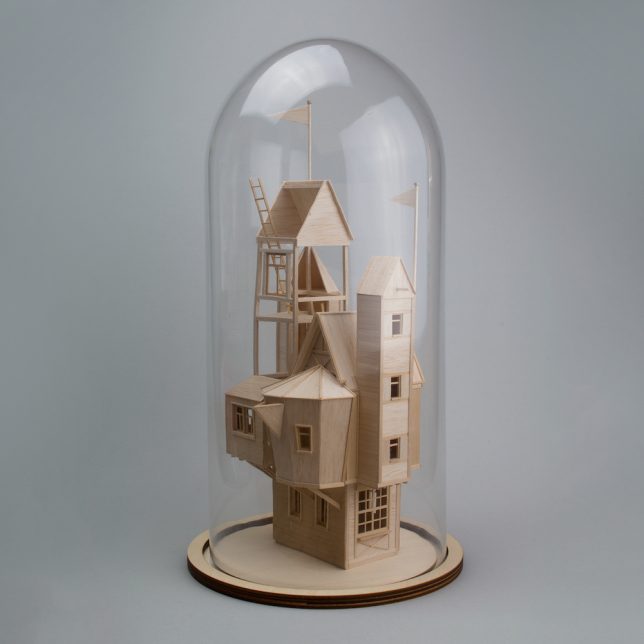
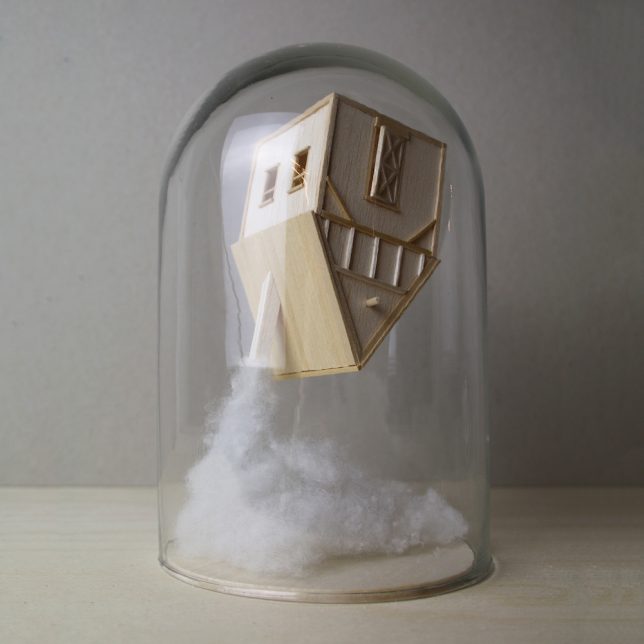
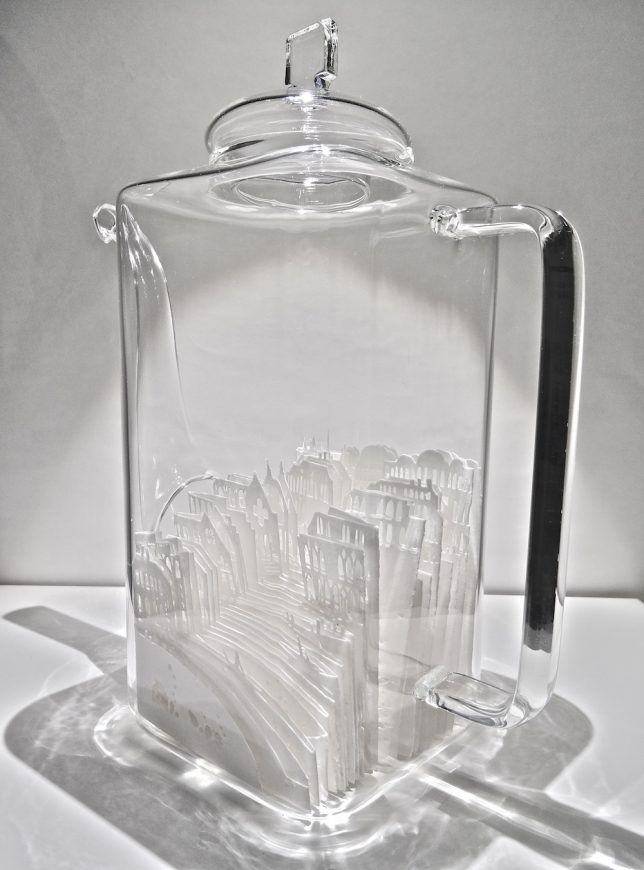
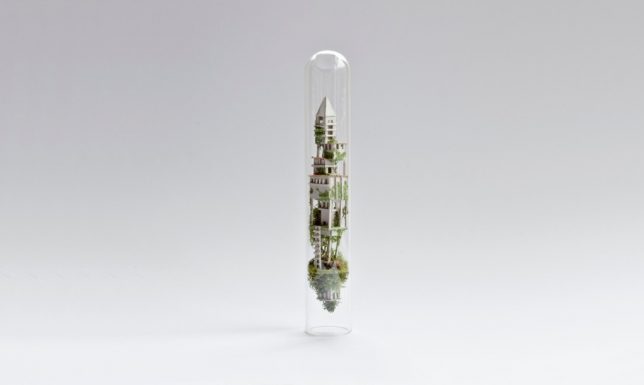
Sheltered by glass vessels like tiny self-contained biomes, these miniature buildings and cities seem to have their own atmospheres and variable gravity, with houses teetering on the edges of cliffs or springing out of clouds in the sky. Artists craft small-scale structures from balsa wood, paper, cardboard and other materials and house them under domes, bottles, teapots and Victorian terrariums.

Balsa Wood Architecture by Vera van Wolferen

wolferen 1

wolferen 2

wolferen 3

wolferen 4

Often incorporated into animations, Vera van Wolferen’s tiny balsa wood structures can also be structures telling their own stories. A recent series of structures perches tiny dwellings on stilts or stretches them several stories into the ‘sky’ beneath a glass dome, often emerging from cotton ‘clouds.’

Paper Cities by Ayumi Shibata

ayumi shibata 1

ayumi shibata 2

ayumi shibata 3

ayumi shibata 4

Slivers of two-dimensional cities and landscapes curl around each other within glass vessels in rosebud-like arrangements or stack up into faux hillsides to create a three-dimensional whole in these works by Ayumi Shibata. The artist uses traditional Japanese paper cutting techniques, noting that the Japanese word for ‘paper’ is ‘Kami,’ which can also mean ‘god,’ ‘spirit’ or ‘divinity.’

“Kami move freely beyond time, universe and places, appearing during events, as well as in our houses and our bodies,” she says. “These spirits also dwell in paper. In the religion of Shinto, white paper is considered a sacred material.”

Micro Matter by Rosa de Jong

rosa de jong 1

rosa de jong 2

rosa de jong 3

rosa de jong 4

rosa de jong 5

rosa de jong 6

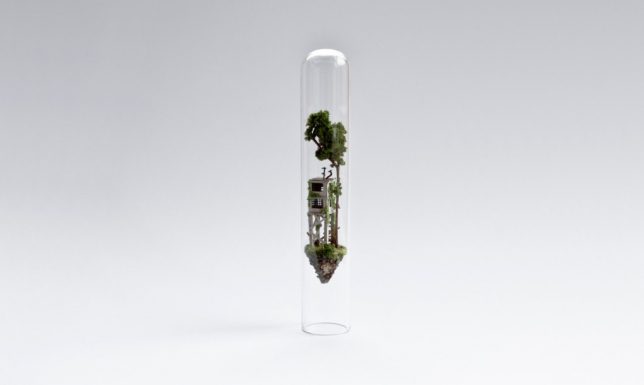
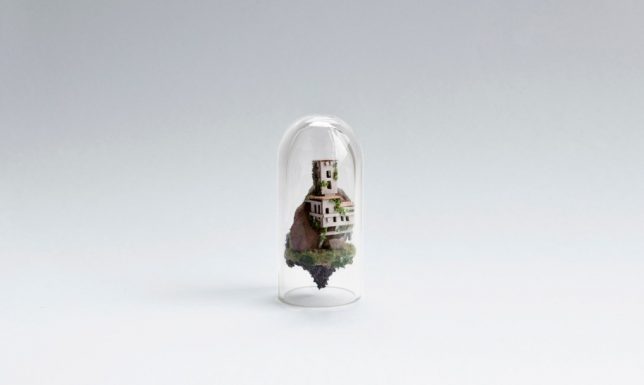
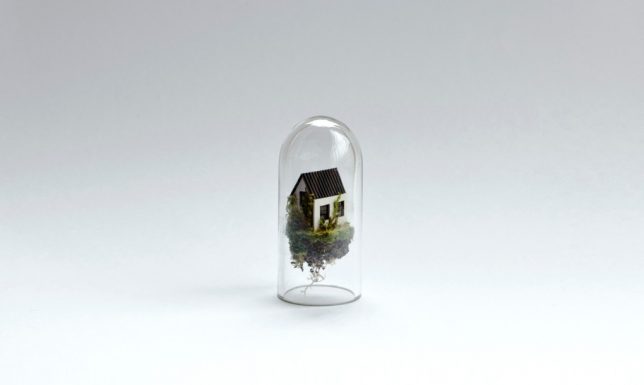
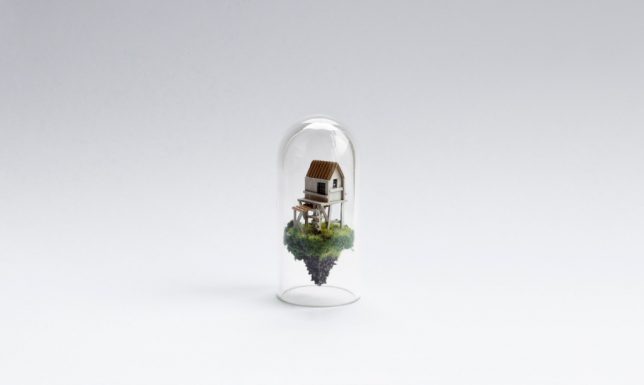
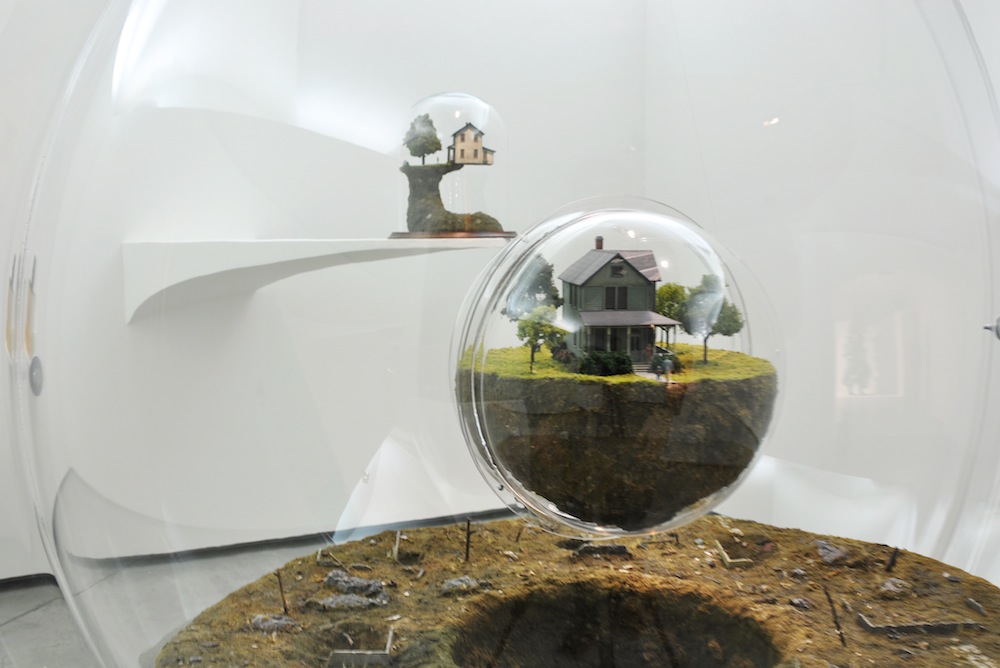
Enclosed within glass domes or test tubes, Rosa de Jong’s ‘Micro Matter’ sculptures bring unfathomably small worlds to life, each one seemingly floating in its own low-gravity atmosphere. The works often feature dilapidated homes, farm buildings, mines and construction sites, exploring the ways in which built environments interact with nature. The sculptures are created in a way that’s similar to building a ship in a bottle, snugly inserting the pieces to fit their vessels just right.

Next Page – Click Below to Read More:
Worlds Under Glass 33 Miniature Cities Architectural Sculptures

Share on Facebook


[ By SA Rogers in Art & Sculpture & Craft. ]

[ WebUrbanist | Archives | Galleries | Privacy | TOS ]


WebUrbanist

 
Comments Off on Worlds Under Glass: 33 Miniature Cities & Architectural Sculptures

Posted in Creativity


Absurdism: Artists Fight Over Use of World’s “Blackest Black” & “Pinkest Pink”

15 Feb

[ By WebUrbanist in Art & Drawing & Digital. ]

black whirlpool

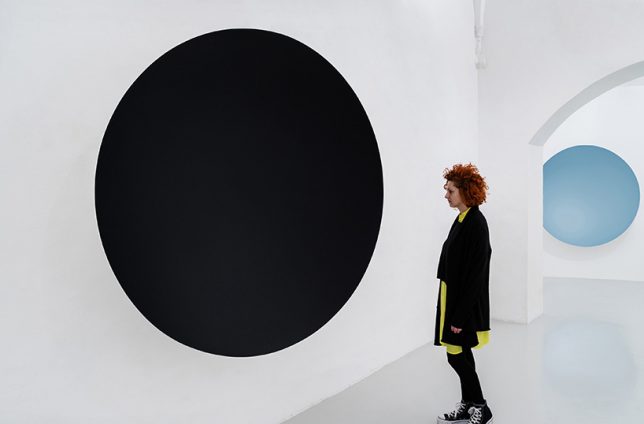
For the past few years, British artist Anish Kapoor has been making use of his exclusive rights to something called Vantablack, a high-tech pigment touted as the blackest shade of black. His unique access, however, has sparked an escalating (and increasingly absurd) feud in the art world.

Developed by NanoSystems, the remarkable Vantablack pigment uses microscopic tubes oriented to capture light and deflect it internally rather than letting it bounce in a way visible to viewers. Designed for military and astronomical applications, it absorbs an incredible 99.96% of light.

ventablack

But Kapoor’s usage rights have been criticized by other artists like painter Christian Furr who see it as monopolistic, limiting the potential of other creatives to explore artistic potential of the material.

“Using pure black in an artwork grounds it,” he notes. “All the best artists have had a thing for pure black – Turner, Manet, Goya. This black is like dynamite in the art world. We should be able to use it – it isn’t right that it belongs to one man.”

pink attack

Recently, as a sort of satirical retaliation, British artist Stuart Semple created a flourescent pink pigment, designed to be the “pinkest pink” in the world. To drive the point home, the shade is available for purchase (just a few dollars per pot) to anyone on the planet except Kapoor, who is legally banned from buying the stuff.

Anyone placing an order has to agree that they are not Anish Kapoor, nor associated with him or purchasing it on his behalf. It is designed to be the exact opposite of the blackest black, reflecting a maximum amount of light to make it appear as garishly bright as possible.

pinkest pink

Kapoor, however, managed to procure some anyway, posting images on social media and further fanning the flames of this off-color artistic war.

“I was really sad and disappointed that he felt so left out that he needed to orchestrate some conspiracy to steal our pink,” says Semple. “It would be nice if he owned up, said sorry and gave me my Pink back.” All in all, his reactions paint Kapoor as somewhat petty given his own exclusive use of the blackest black.

diamond dust glutter

Semple, meanwhile, has also created the “world’s most glittery glitter”, “the “world’s greenest green” and the “world’s yellowest yellow” and is similarly banning Kapoor once again from these creations — at this point, presumably any reaction would paint Kapoor further into a corner.

The idea of artists “owning” a color is not unique to this particular feud. A deep shade of blue (International Klein Blue) was patented by an artist decades ago. Since his death, however, it has been used in various contexts, including by performers of the Blue Man Group.

Share on Facebook


[ By WebUrbanist in Art & Drawing & Digital. ]

[ WebUrbanist | Archives | Galleries | Privacy | TOS ]


WebUrbanist

 
Comments Off on Absurdism: Artists Fight Over Use of World’s “Blackest Black” & “Pinkest Pink”

Posted in Creativity


Art History in Contemporary Life: Classical Figures in Modern Scenery

14 Feb

[ By SA Rogers in Art & Drawing & Digital. ]

classical paintings modern photos 8

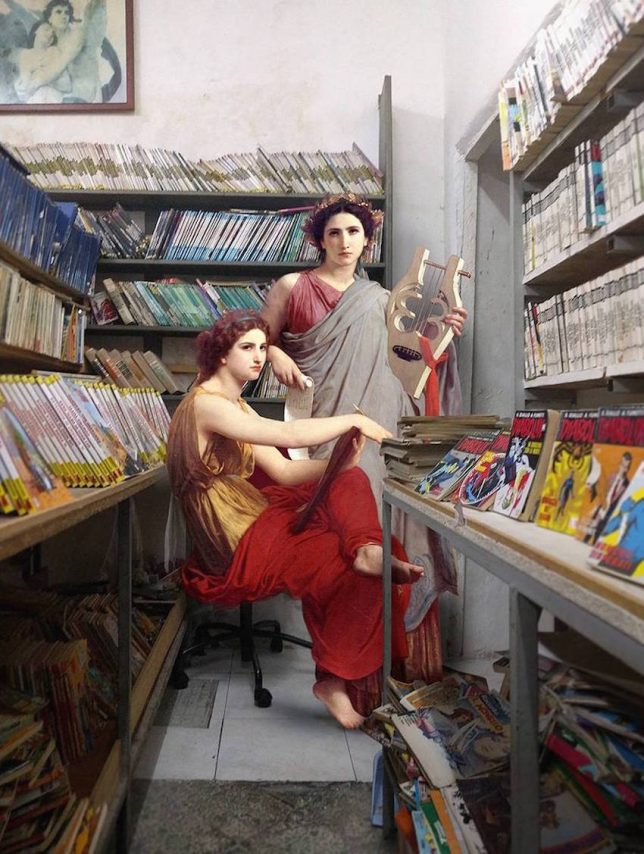
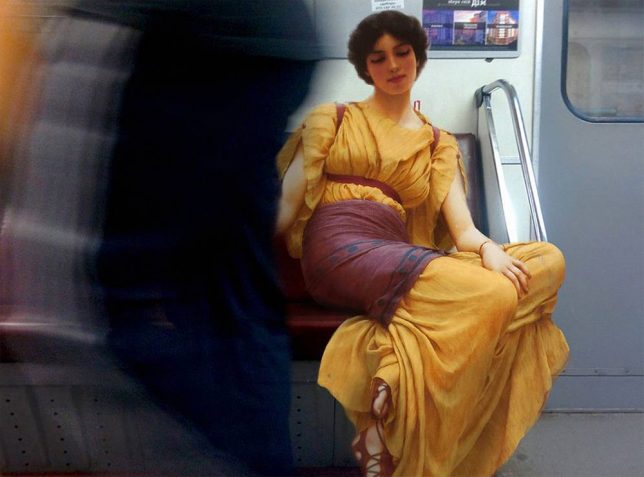
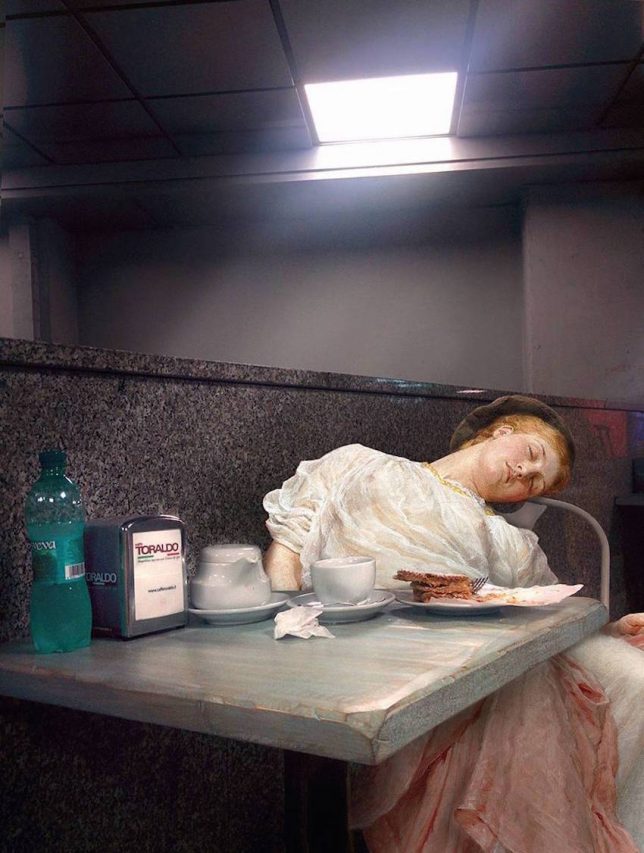
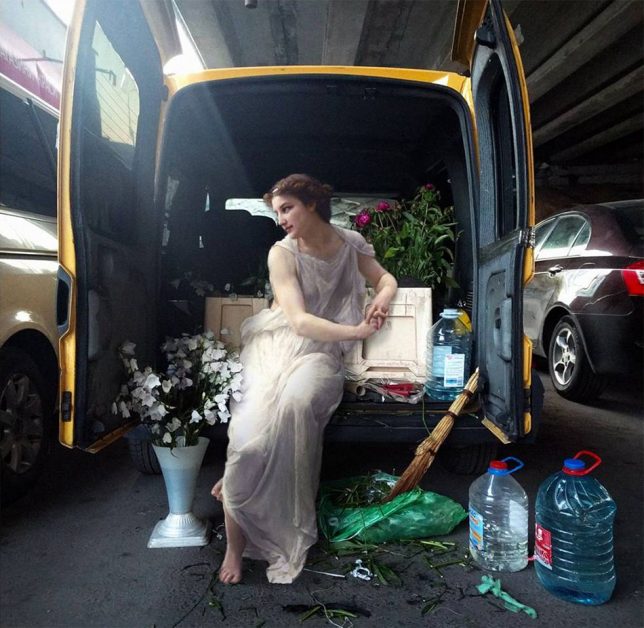
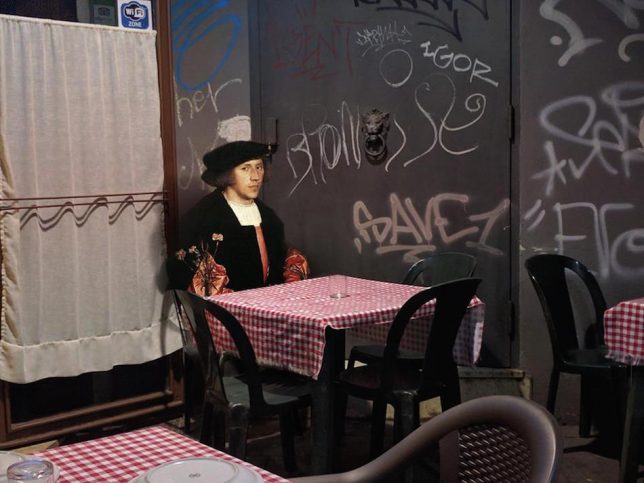
Dressed in garments from centuries long past, figures from classical paintings peer out the windows of metro cars, vend souvenirs, browse comics and otherwise interact with unlikely scenes in modern-day Naples, Italy. Artist Alexey Kondakov is back with another round of ‘Art History in Contemporary Life,’ his mash-up series that gives the world a new perspective on paintings from the distant past.

classical paintings modern photos 1

classical paintings modern photos 2

classical paintings modern photos 3

The Ukrainian artist is known for relocating angels, royals, knights, the Virgin Mary and other subjects from classical works by artists like Hans Holbein and William Bouguereau into modern-day scenes with careful attention to light and shadow for a convincing result.

classical paintings modern photos 5

classical paintings modern photos 8

classical paintings modern photos 10

Though the subjects remain painterly and the backdrops are crisp photographs of everyday city environments, the blended images read less like Photoshopped collages and more like finished works ready to be hung on museum walls.

Given this new context, the figures suddenly seem more real than they ever did before, as if we really could come across them playing harps in subway stations or hanging out in grungy bars.

classical paintings modern photos 4

classical paintings modern photos 6

classical paintings modern photos 8

Naples is a fitting choice for the latest series, simultaneously giving a nod to Italy’s history as birthplace of High Renaissance Art and illustrating how much the city has changed over the past 500 years. Previous iterations of ‘Art History in Contemporary Life’ were set in the artist’s hometown of Kiev, Ukraine. Check out more images from the Napoli Project at Kondakov’s website or Facebook.

Share on Facebook


[ By SA Rogers in Art & Drawing & Digital. ]

[ WebUrbanist | Archives | Galleries | Privacy | TOS ]


WebUrbanist

 
Comments Off on Art History in Contemporary Life: Classical Figures in Modern Scenery

Posted in Creativity


Sort of Subterranean: 15 Partially Underground Modern Home Designs

14 Feb

[ By SA Rogers in Architecture & Houses & Residential. ]

RD house 2

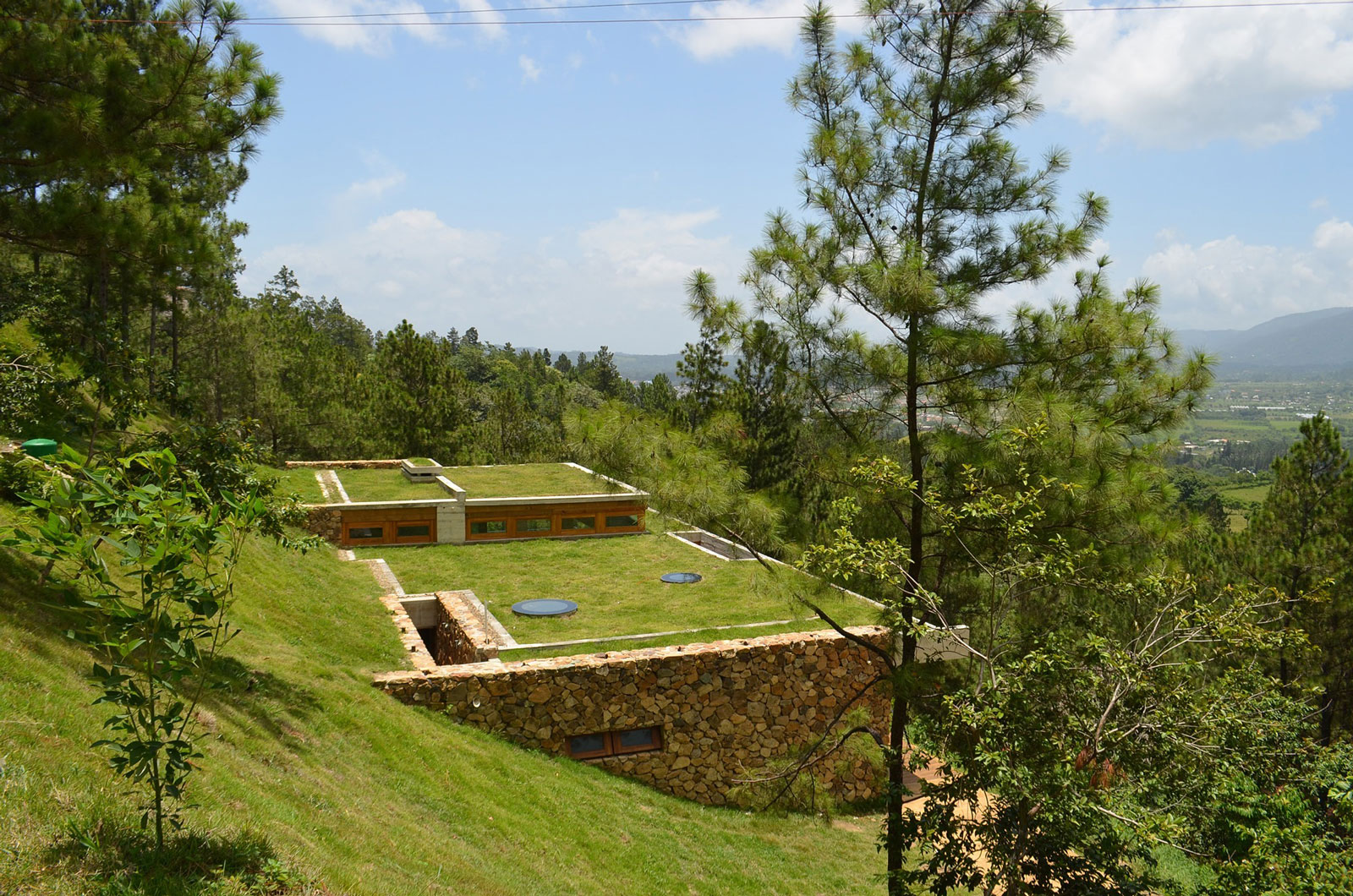
While fully subterranean homes can feel like grim bunkers, homes built partially into hills, cliffs and bluffs peek out from underground through glassy ‘eyes’ to gain daylight access and views of their surroundings. These covert residences are naturally camouflaged from several angles, blending into the landscape while still enjoying sun-dappled swimming pools, terraces and courtyards.

Underground Pavilion by Act Romegialli

underground pavilion

underground pavilion 2

underground pavilion 3

underground pavilion 4

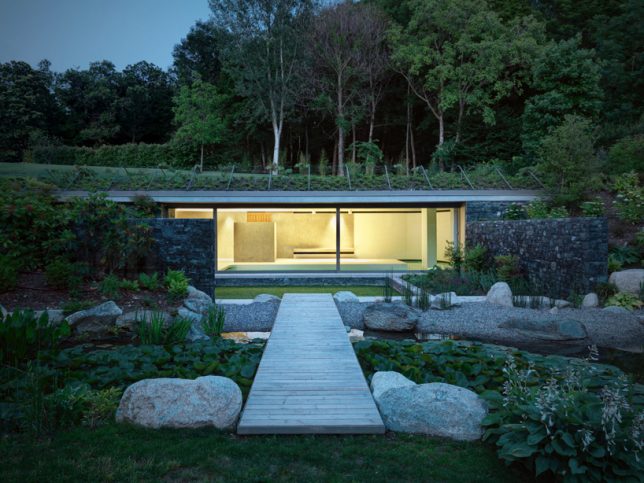
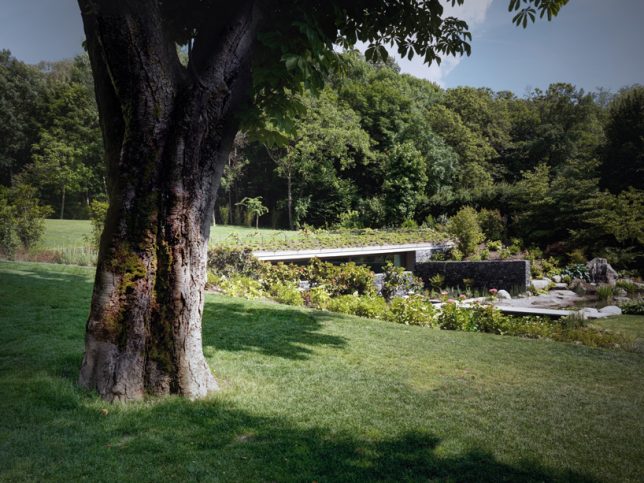
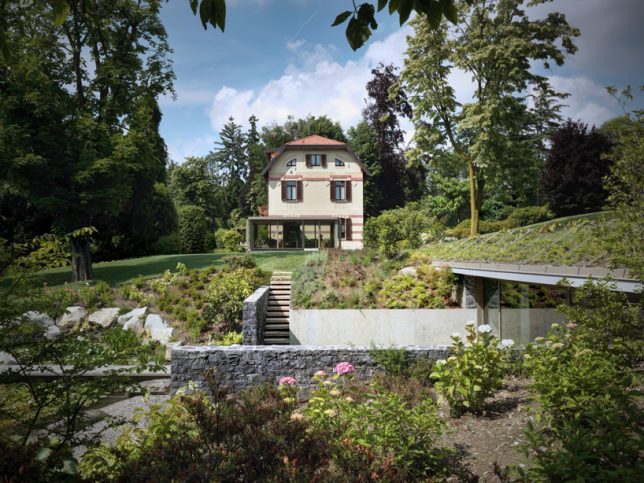
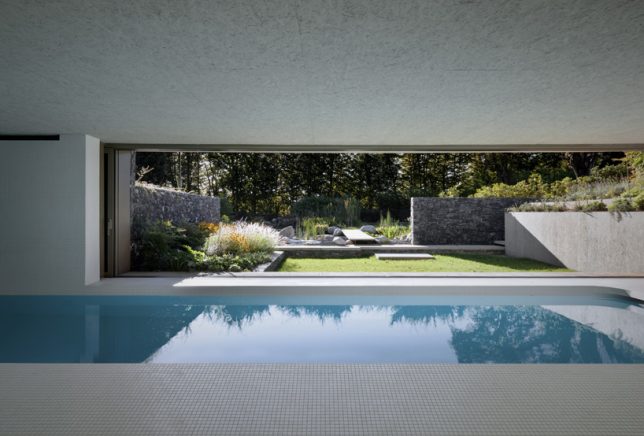
An addition to a traditional home in Northern Italy sits beneath the surface in the backyard, disguised by a green roof, with its ample glazing looking out onto an artificial pond. Local architecture firm Act Romegialli connected the new wing of the home to the original structure with an underground tunnel and placed an indoor swimming pool and gym inside the addition.

Two Single-Family Homes in Paraguay by Bauen

paraguay homes 1

paraguay homes 2

paraguay homes 4

paraguay homes 5

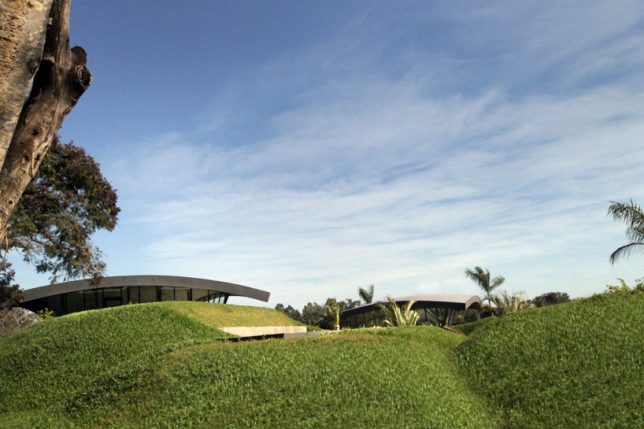
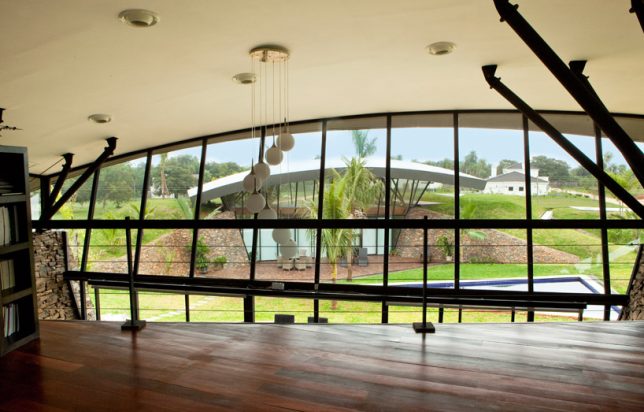
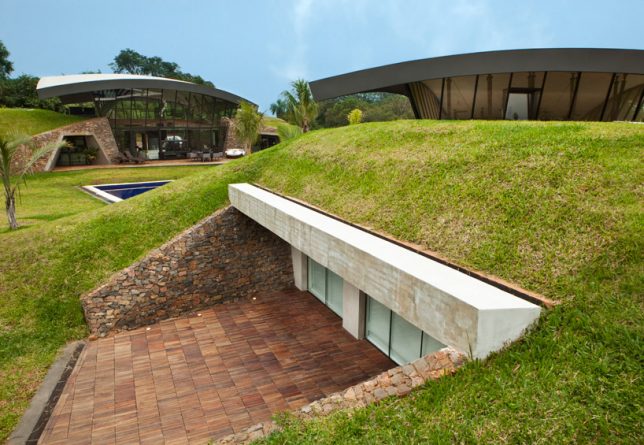
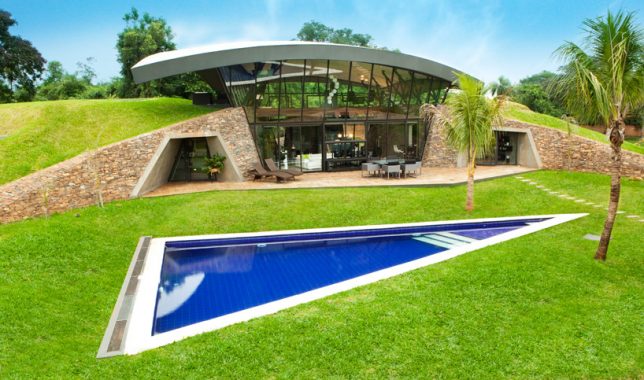
Twin arcs protrude above grassy hills concealing the bulk of ‘two single-family homes’ by Paraguayan firm Bauen. The architects terra-formed the artificial hills and filled in voids between them with triple-height glass enclosures. Both of the luxurious homes look out onto a shared swimming pool. The roofs of the homes mirror the shape of the hills, and from afar, they’re barely visible.

Casa del Acantilado by Gilbartolomé Architects

dragon house 1

dragon house 3

dragon house 2

dragon house 4

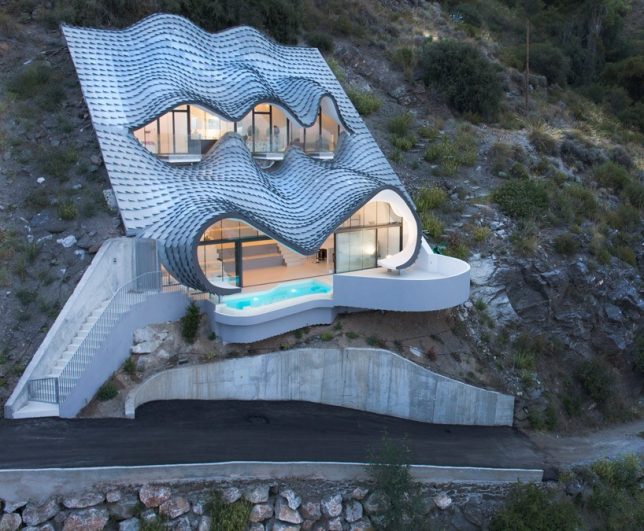
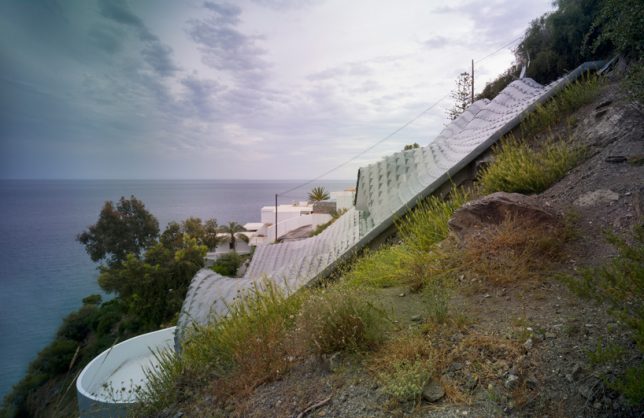
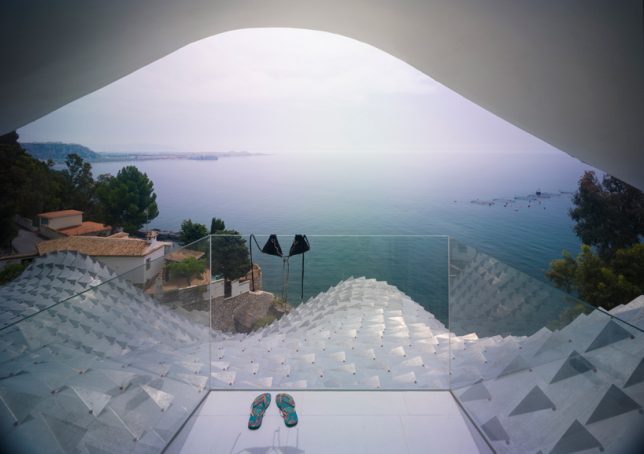
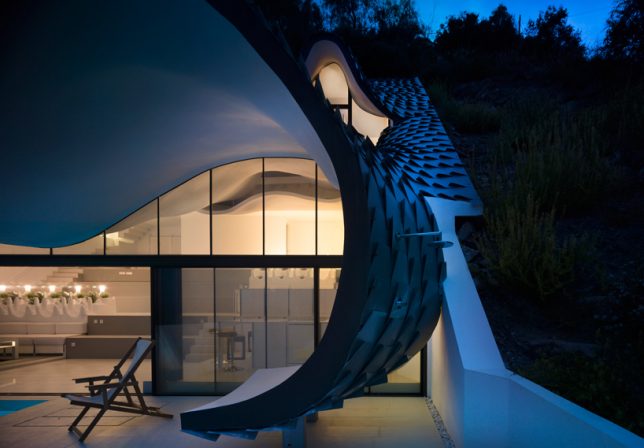
‘Dragon House’ by Gilbartolomé Architects takes a challenging site and transforms it into something truly spectacular, with a curvilinear tiled roof resembling scales on a reptilian hide. The home itself is built into a cliff overlooking the Mediterranean Sea in Granada, Spain, with three ‘eyes’ leading out onto glass-walled balconies to take in the views. The interior is spread across two levels, and the living room segues into a cantilevered terrace with a swimming pool.

Casa Brutale by OPA

casa brutale

casa brutale 2

casa brutale 3

casa brutale 4

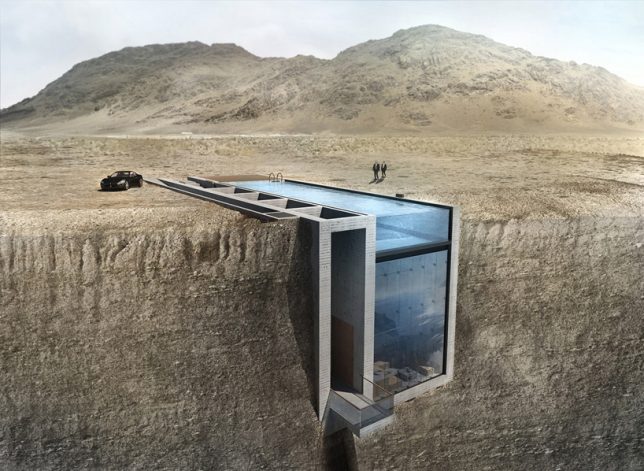
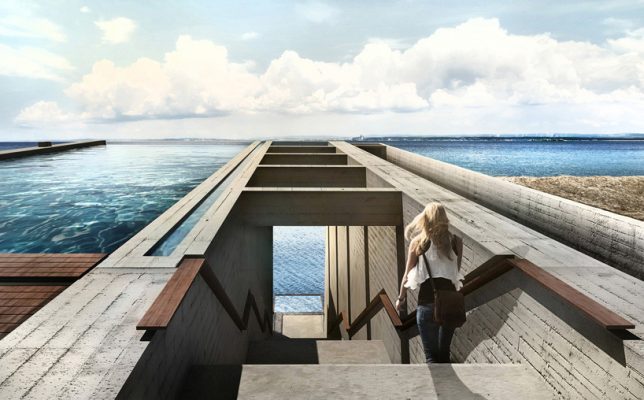
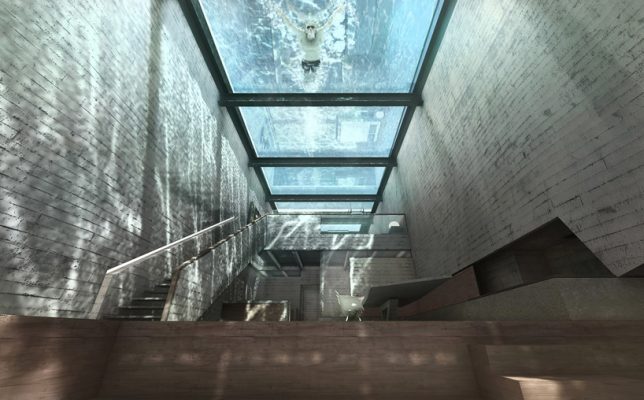
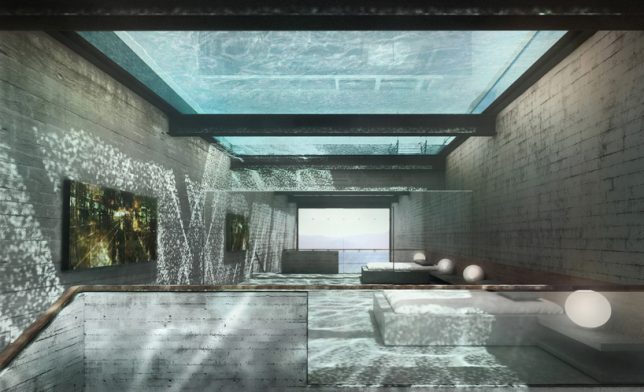
Set to be built into the cliffs of Beirut soon, rather than overlooking a sea as seen in these renderings, Casa Brutale by OPA instantly went viral upon its debut for its dramatic design, with nothing but its swimming pool and stairs visible from surface level. The glass-bottomed pool acts as a giant watery skylight for the entire underground home, which looks out onto the valley from a narrow glazed facade.

Pam and Jenny House by L’escaut

pam and jenny house

pam and jenny house 2

pam and jenny house 3

pam and jenny house 4

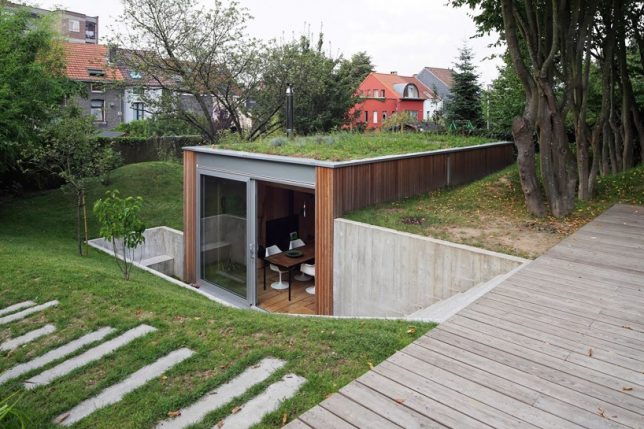
Positioned at waterline height within a garden, the ‘Pam and Jenny House’ by L’escaut is mostly subterranean but peeks out full-height glazing into a recessed courtyard to fill the space with light and make it feel larger. Seen from the main house, this addition looks like no more than a series of grassy plains.

Next Page – Click Below to Read More:
Sort Of Subterranean 15 Partially Underground Modern Home Designs

Share on Facebook


[ By SA Rogers in Architecture & Houses & Residential. ]

[ WebUrbanist | Archives | Galleries | Privacy | TOS ]


WebUrbanist

 
Comments Off on Sort of Subterranean: 15 Partially Underground Modern Home Designs

Posted in Creativity


Ouroborus Buildings: Artist Loops Infinite Skyscrapers Back on Themselves

13 Feb

[ By WebUrbanist in Art & Drawing & Digital. ]

unfinished design

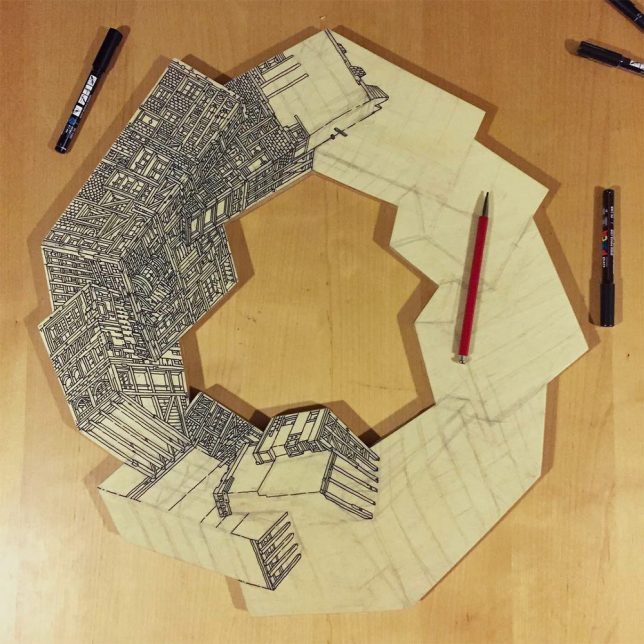
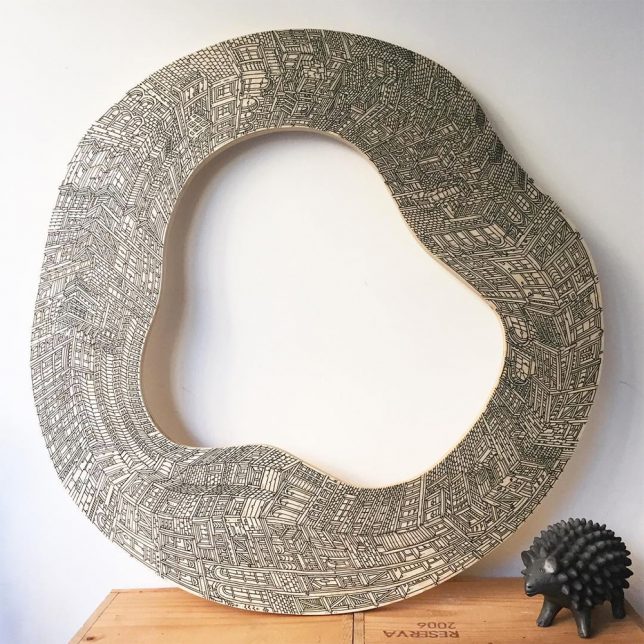
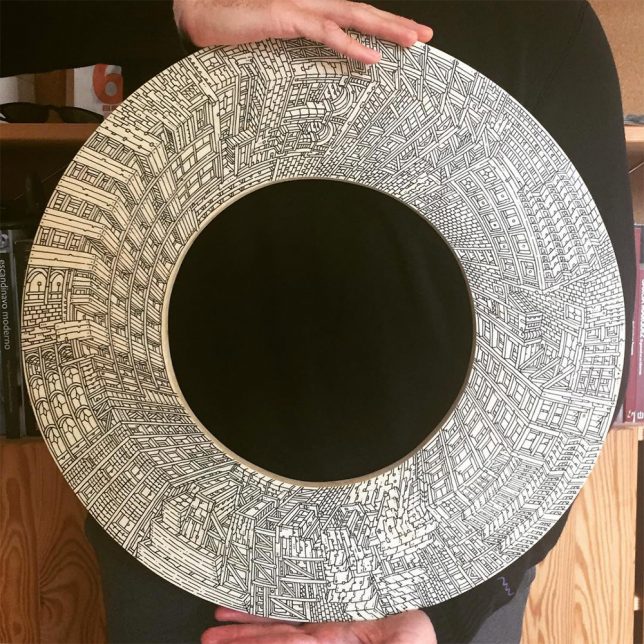
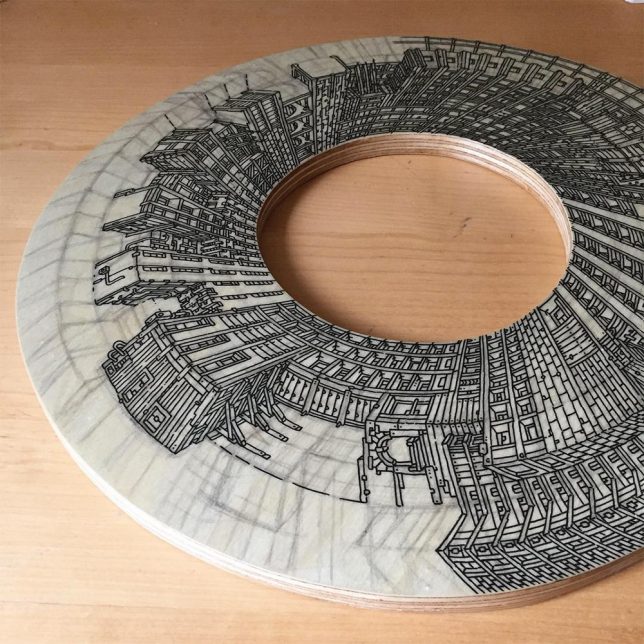
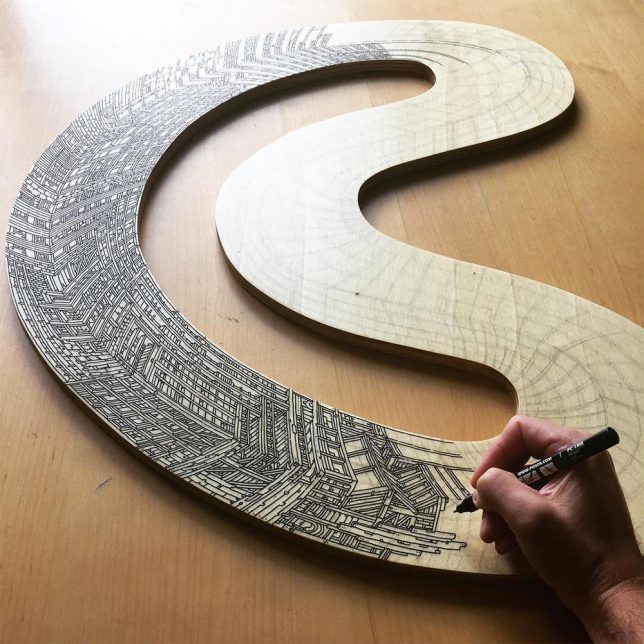
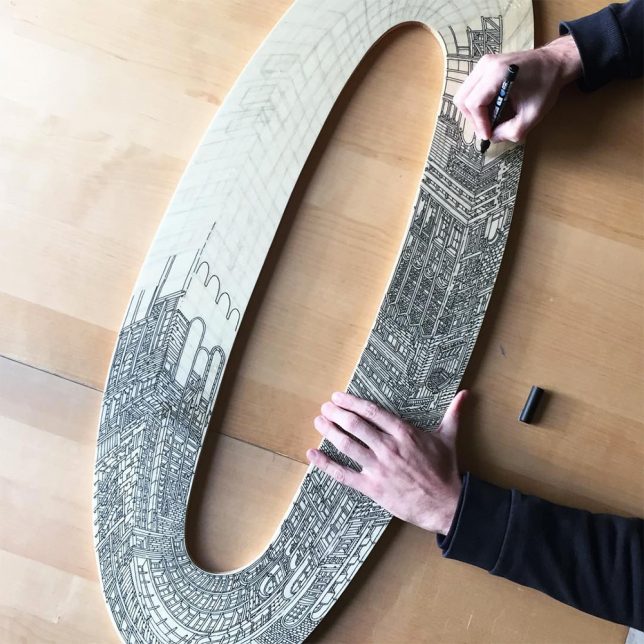
What would architecture look like if it had no beginning or end, no ground floor as starting point nor rooftop terminus? Artist Vasco Mourao explores exactly that question in his series Ouroboros, so named after the mythical dragon/serpent forever eating its own tail.

spiral skyscraper

plywood drawing

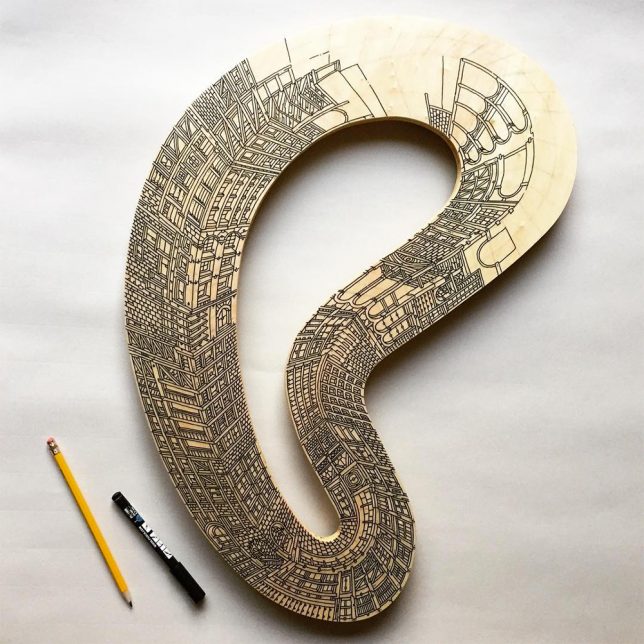
The Barcelona-based artist (an architect by training) illustrates his impossible-sounding seems on curved and angular cuts of plywood shaped into loops.

looped architecture

detail image

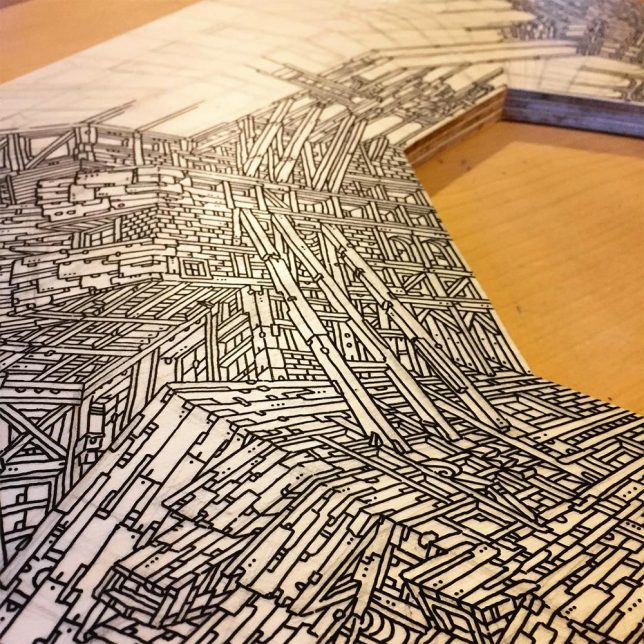
His work indirectly addresses a key transition point in the history of architecture as well — a time when concrete, steel and glass were first combined to make taller structure possible but before the Modernists rendered these buildings sleek and simple.

circular cut

unfinished design

Like early skyscrapers (featuring stretched Gothic decor and wood-inspired details), his designs extrapolate conventional materials and decorative approaches skyward. Their aesthetic is also reminiscent of places like Kowloon Walled City, where densification drove particularly strange connections between different structures.

deep loop

work in progress

skateboard

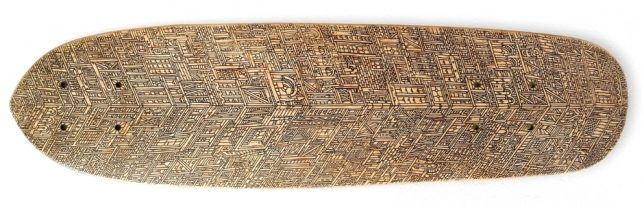
Meanwhile, Mourao also draws other cityscapes on different surfaces as well, from large-scale surrealistic murals to the bottoms of skateboards, often reprising similar themes of infinity-evoking architecture.

Share on Facebook


[ By WebUrbanist in Art & Drawing & Digital. ]

[ WebUrbanist | Archives | Galleries | Privacy | TOS ]


WebUrbanist

 
Comments Off on Ouroborus Buildings: Artist Loops Infinite Skyscrapers Back on Themselves

Posted in Creativity


Last Dance: A Dozen Hustled & Bustled Abandoned Discos

13 Feb

[ By Steve in Abandoned Places & Architecture. ]

abandoned-disco-1a

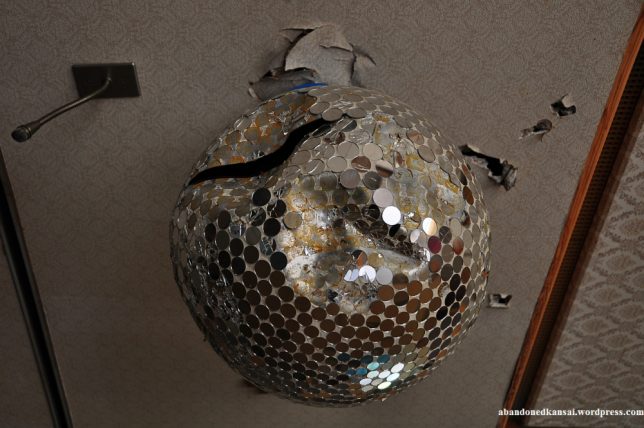
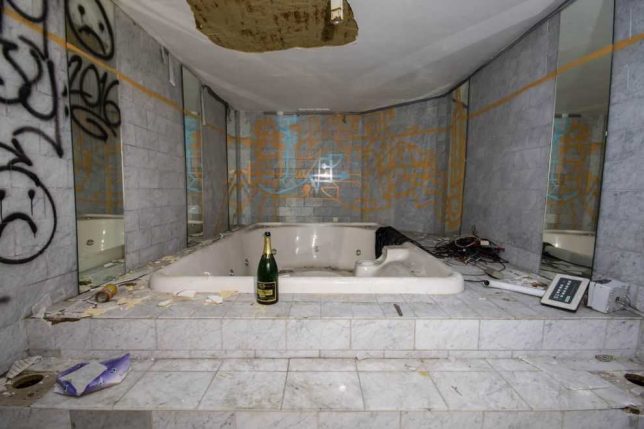
Disco ducks and dancing queens can no longer shake their booties since these dozen decrepit abandoned discotheques took down their mirror balls.

abandoned-disco-1c

abandoned-disco-1d

The 1970s haven’t aged well and the various labels applied to the much-maligned decade haven’t helped its rep: The Me Decade, the Malaise Era and the Age of Disco don’t evoke a wealth of fond memories. Even worse, Disco music and discotheques somehow managed to outlast their best-before-date in many places, notably Europe.

abandoned-disco-1b

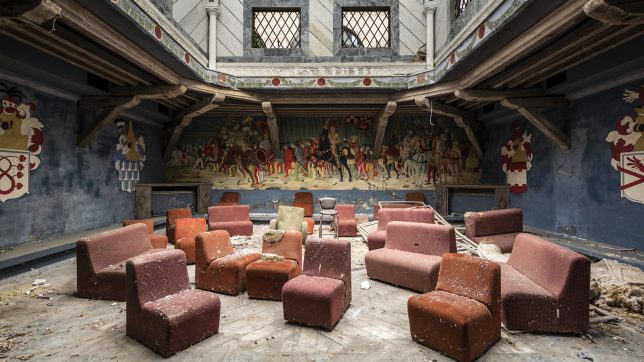
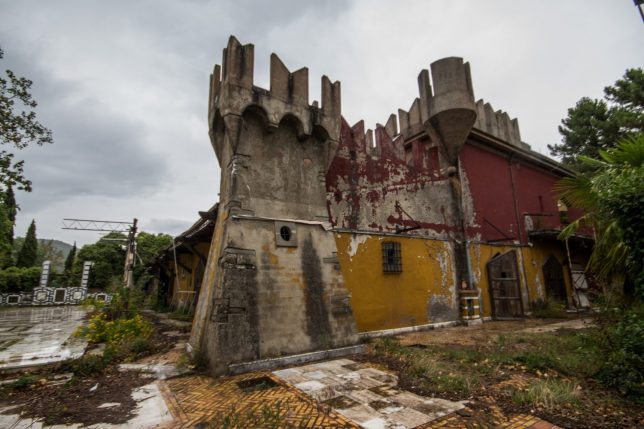
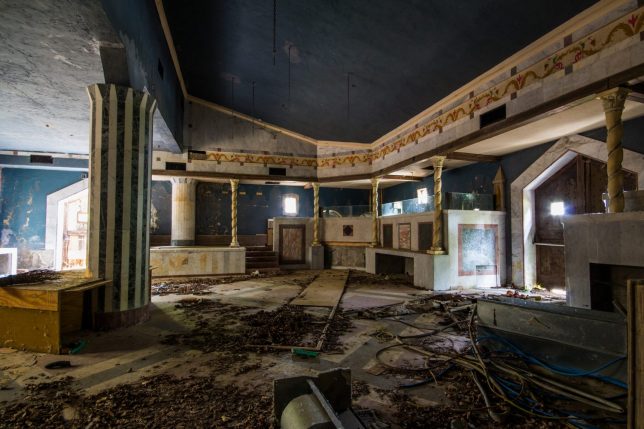
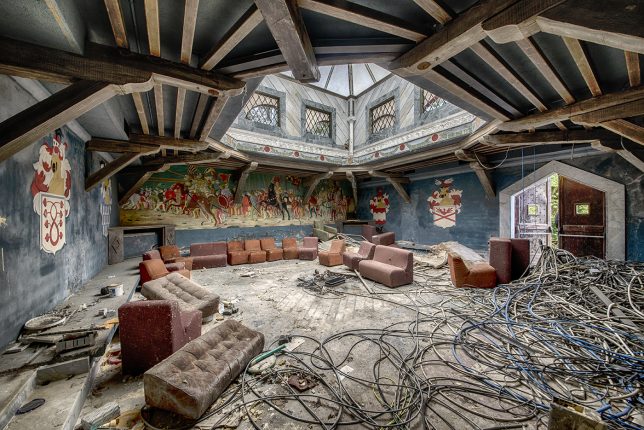
Take the Discoteca Excalibur, an Italian disco housed in a fake medieval castle. The dance hall was only open for a few years in the early 1990s, and again in 2004-05. Boogie knights!

Don’t Leave Me This Way

abandoned-disco-2b

abandoned-disco-2c

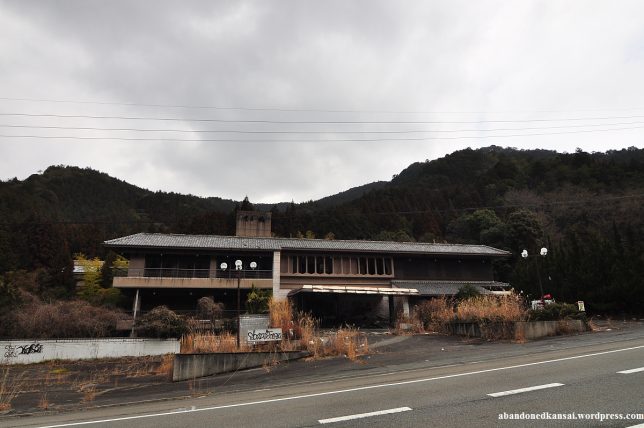
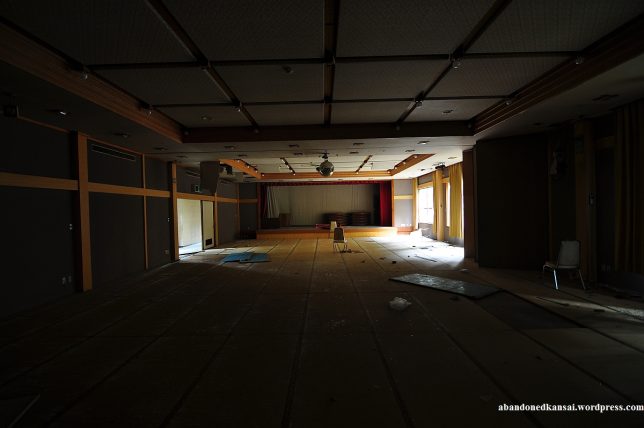
A disco by any other name, still sucks it would seem. Take the Good Omen Garden, a once-thriving dining & dancing emporium near Osaka, Japan. Building it out in the boondocks was neither a good omen nor a wise business decision.

abandoned-disco-2a

abandoned-disco-2d

Like many Japanese urban and rural abandonments, the Good Omen Garden displays a creepy “frozen in time” look with tons of fixtures and decor pieces left in situ, if not totally unmolested. Urbex explorer Florian from Abandoned Kansai ventured inside back in November of 2012 and lived to show & tell the tale.

I Will (Not) Survive

abandoned-disco-4a

abandoned-discoe-4b

abandoned-disco-4f

abandoned-disco-4e

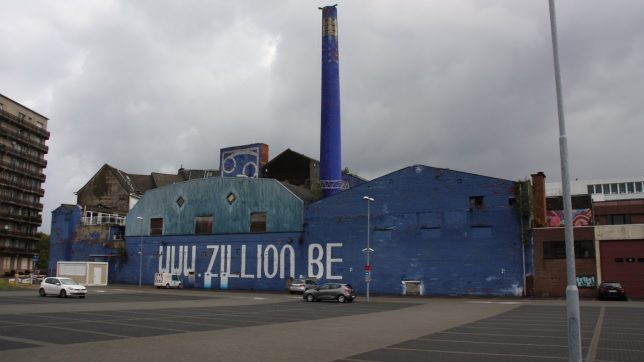
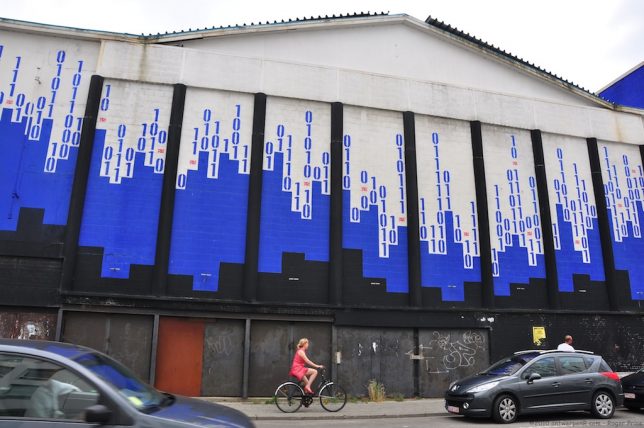
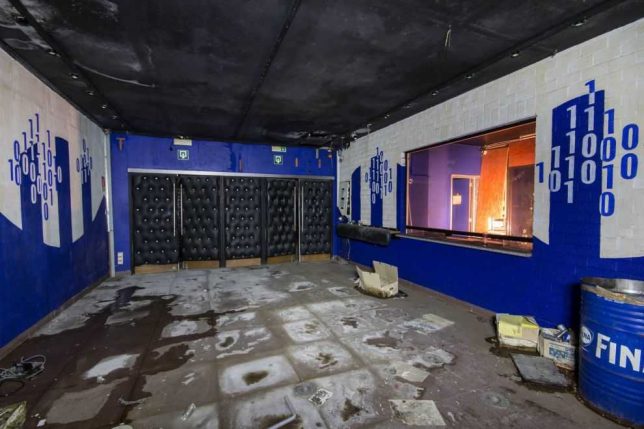
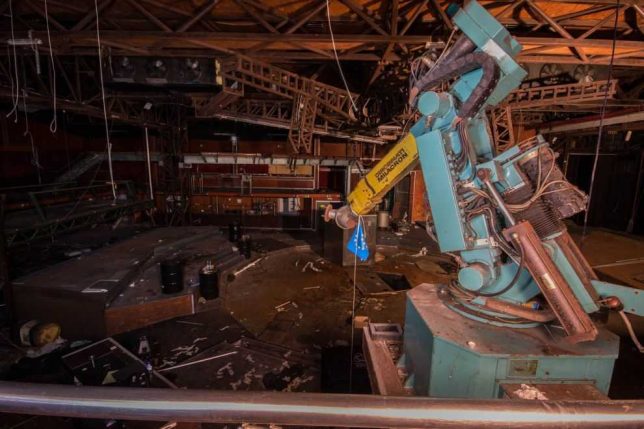
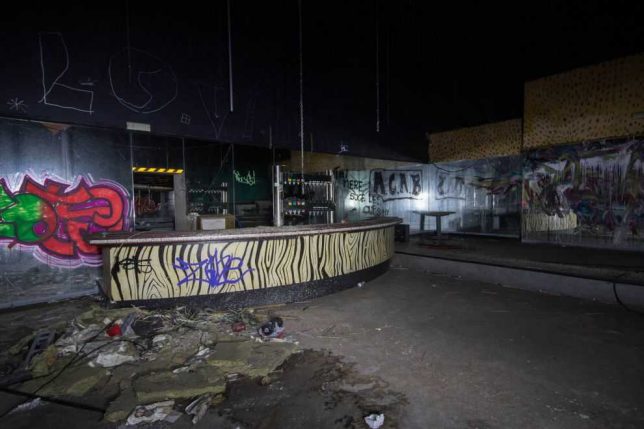
When Club Zillion in Antwerp, Belgium opened in October of 1997, it did so with a bang courtesy of an indoor fireworks show, smoke blowers, confetti cannons, and programmed industrial robots. The place’s main claim to fame was a hydraulic dance floor that not only rotated, it rose and dipped in tune with the music.

abandoned-disco-4c

abandoned-disco-4d

abandoned-disco-4g

Club Zillion closed with a whimper in 2001: its owner was convicted of human trafficking and did time while city authorities plotted the demise and demolition of the so-called “blue cancer”. Thanks to YouTubers Bros of Decay, you can take a twelve-minute video tour filmed in November of 2016, mere weeks before Club Zillion was razed. Images above courtesy of Flickr user Roger Price (antwerpenR) and Urban Treasure.

Lipps Unincorporated

abandoned-disco-3a

abandoned-disco-3d

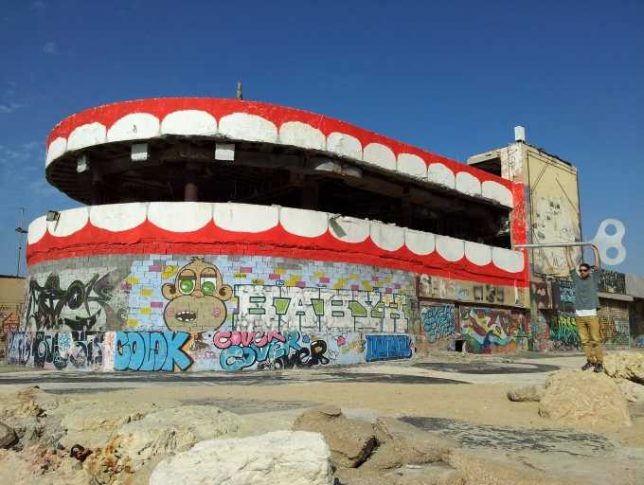
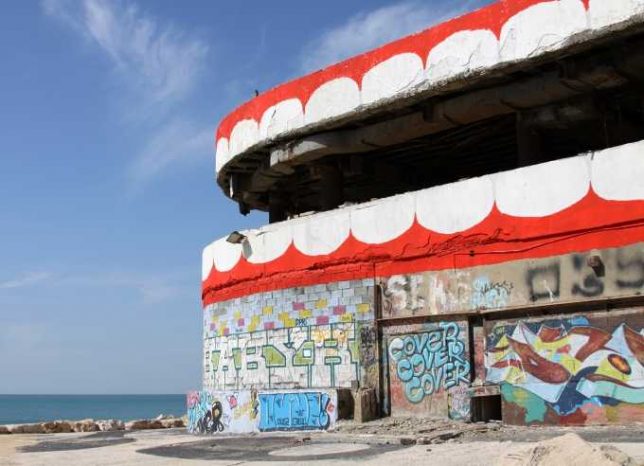
The abandoned Dolphinarium discotheque in Tel Aviv, Israel looked kinda cool and funky from the get-go thanks to its distinctive curved facade. Long abandoned by 2015, the former nightclub proved to be an irresistible template for Israeli street artist Dede, who re-imagined the building as a gargantuan set of wind-up chattering teeth – key included.

abandoned-disco-3c

abandoned-disco-3b

“Without any doubt this is the biggest art challenge I have ever had,” explained Dede. “I’ve had this vision for almost a year now.” With visions like this, who needs hallucinogens?

Next Page – Click Below to Read More:
Last Dance A Dozen Hustled Bustled Abandoned Discos

Share on Facebook


[ By Steve in Abandoned Places & Architecture. ]

[ WebUrbanist | Archives | Galleries | Privacy | TOS ]

WebUrbanist

 
Comments Off on Last Dance: A Dozen Hustled & Bustled Abandoned Discos

Posted in Creativity


Bike Over Traffic: World’s Longest Elevated Cycling Path Opens in China

11 Feb

[ By WebUrbanist in Architecture & Cities & Urbanism. ]

first cycleway china

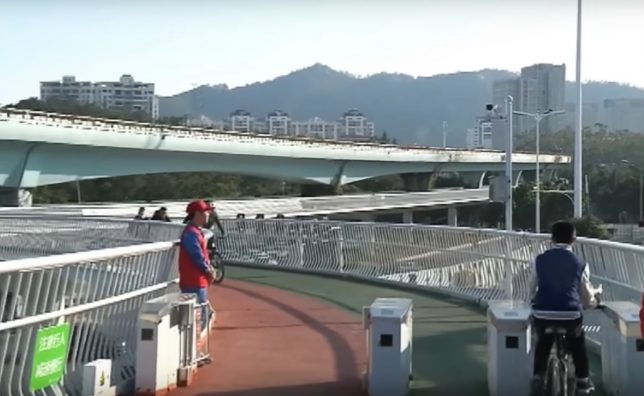
China’s first aerial bike path spans nearly five miles, raised over streets and highways and connecting six public transit hubs in the heart of Xiamen. If the new route is even close to as successful as its designers and planners expect, it could help usher in a new cycle-centric transport paradigm across the country.

Sixteen feet wide, the bike-and-pedestrian pathway network can accommodate 2,000 or more bicycles per hour. At night, 30,000 lights allow travelers to continue using the paths safely. Its planners anticipate an influx of ridership and have a system in place to actually close down the on ramps if too many bikers are already on the path.

raised bike track

Some sections of the cycleway are positioned under overhead mass-transit express lanes, offering some shelter from the elements (and less noise than riding alongside). Along the route, riders access the system via a variety of ramps tied into the city bus and subway system, aiming to bridge the gap between various forms of transportation.

elevated cycle path

Would-be bikers can also pick up bicycles via a ride share system positioned at entry and exit points. If the system does reach full utilization, city officials may extend the network further in the near future. Other cities in China (and around the world) can also look to this integrated system for inspiration for similar bike-oriented urban design strategies.

Share on Facebook


[ By WebUrbanist in Architecture & Cities & Urbanism. ]

[ WebUrbanist | Archives | Galleries | Privacy | TOS ]


WebUrbanist

 
Comments Off on Bike Over Traffic: World’s Longest Elevated Cycling Path Opens in China

Posted in Creativity