RSS
 

Archive for the ‘Creativity’ Category

Architecture Gets Graphic: 13 Ornamental Building Designs

22 Oct

[ By Steph in Architecture & Public & Institutional. ]
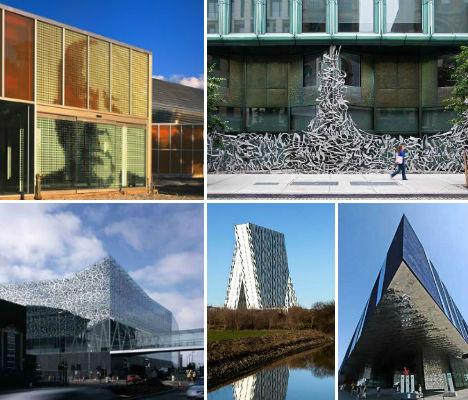
Modern architecture is not exactly known for being ornamental, but some architecture firms are beginning to pick away at the close association of modernism and minimalism. Led by Herzog & De Meuron, many practices have begun pulling bold, graphic and sometimes typographic elements into their building designs. Here are 13 examples of ornamental modern architecture.

Elbe Philharmonic Hall by Herzog & De Meuron
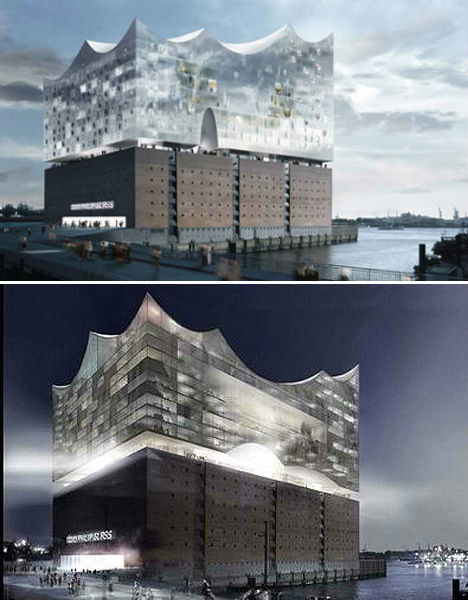
(images via: design boom)

Architecture firm Herzog & De Meuron is one of the main forces bringing some ornamentation back into modern architecture, and the Elbe Philarmonic Hall is a prime example. This concert hall, hotel and apartment complex in Hamburg, Germany looks like a wave shooting up out of the river, blending with its surroundings yet at the same time, standing out as a dramatic glassy pinnacle in the landscape. The building is currently under construction and expected to be completed soon.

John Lewis Department Store and Cineplex, UK
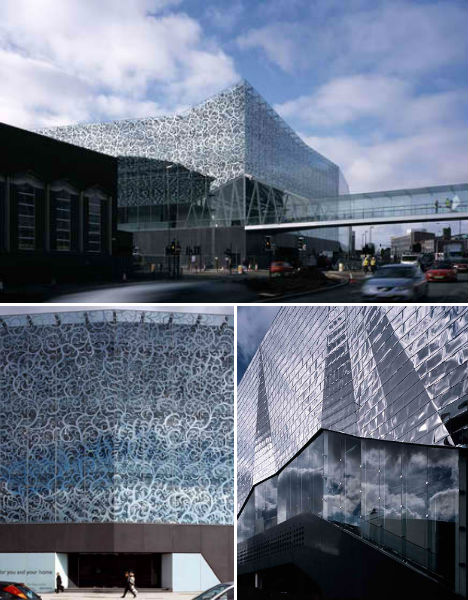
(images via: archinect)

A shimmering geometric silver facade meets glass printed with a beautiful abstracted vine print at the John Lewis Department Store and Cineplex by Foreign Office Architects. The glass allows light to stream into the store section of the building, while the monolithic back end keeps the theaters dark. The design on the glass pays tribute to Leicester’s textile heritage as well as that of the department store.

Lycee Louis Bleriot Extension, France
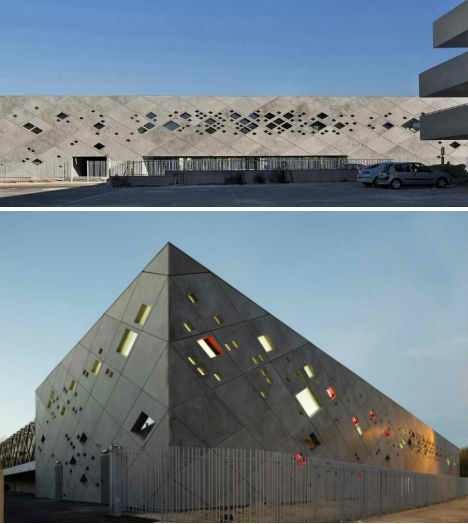
(images via: archdaily)

What could be an extraordinarily harsh, brutalist concrete rectangle is livened up considerably by a perforation of small diamond-shaped windows. The Lycee Louis Bleriot Extension by Christphe Gulizzi is a gymnasium that had to fit into a very limiting plot.

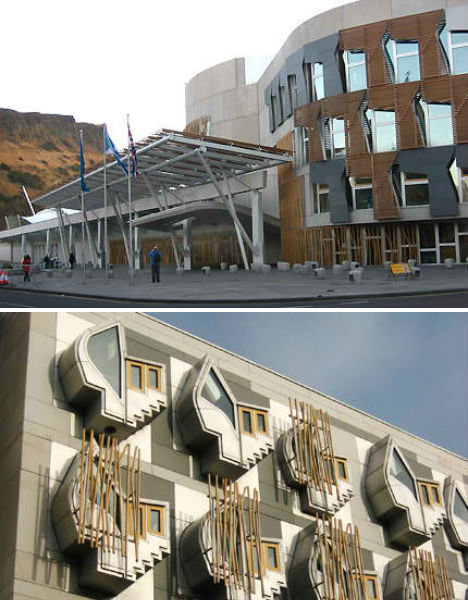
Scottish Parliament Building by Miralles Tagliabue EMBT, UK
(images via: galinksy)

Divisive and eclectic, the Scottish Parliament Building certainly doesn’t shy away from complexity. Designed by EMBT (Enric Miralles and Benedetta Tagliabue), the building cost an astonishing $ 750 million to construct and is ‘metaphorical’ in design. Explains Miralles, “The Parliament sits in the land. We have the feeling that the building should be land, built out of land. To carve in the land the form of gathering people together… Scotland is a land… The land itself will be a material, a physical building material…”

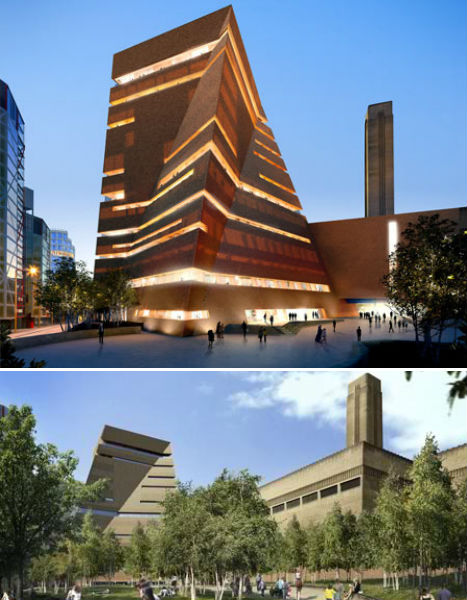
Tate Modern Expansion by Herzog & De Meuron, UK
(images via: dezeen)

Herzog & De Meuron’s extension to the Tate Modern art museum in London will add a new wing, as well as converting underground tanks previously used to store oil for a former power station into new gallery space. The main volume of the extension resembles a conventional rectangular building shape that has been twisted and skewed.

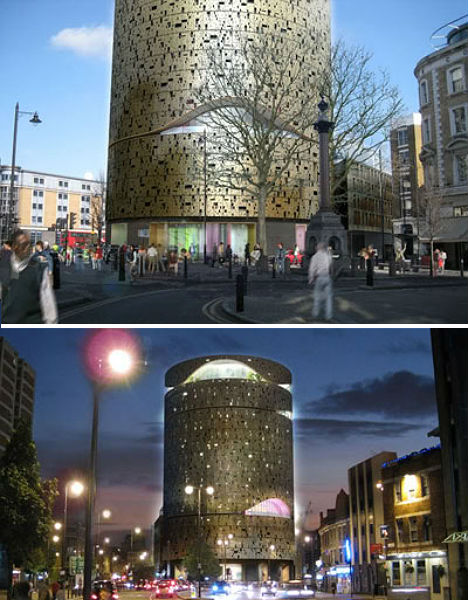
Art’otel Hoxton by Squire and Partners, UK
(images via: archiscene)

Squire and Partners designed the flagship hotel of Art’otel in London as a gold column covered in a perforated facade full of abstract patterns and rounded cut-outs that make the whole structure shimmer at night.

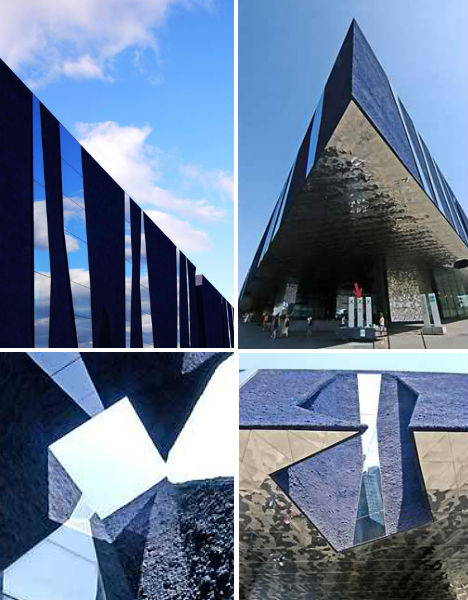
Forum by Herzog & De Meuron, Spain
(images via: arcspace)

Jutting above a public square like the bow of a massive ship, ‘Forum’ is an elevated triangular structure in Barcelona that invites the public into its reflective silver underbelly. Though the building looks darka nd intimidating approach, it holds a series of courtyards open to the sky that bring in light.

Bella Sky Hotel by 3XN Architects, Denmark
(images via: design boom)

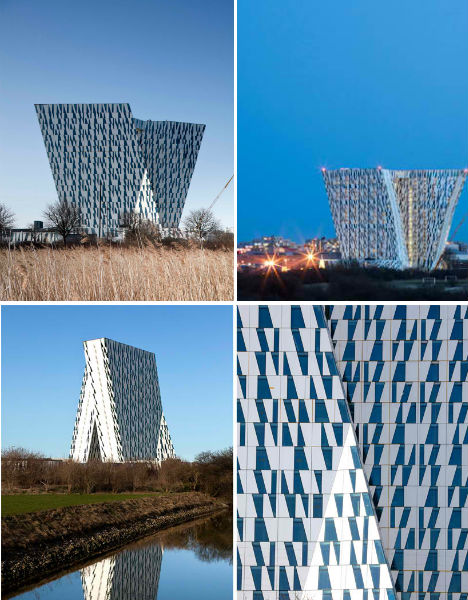
In both its shape and in the complimentary pattern of windows on its exterior, the Bella Sky Hotel by 3XN Architects looks almost typographic. Newly open in Copenhagen, the hotel consists of two asymmetrical towers and looks entirely different depending on your vantage point.

40 Bond by Herzog & De Meuron, NYC
(images via: archdaily)

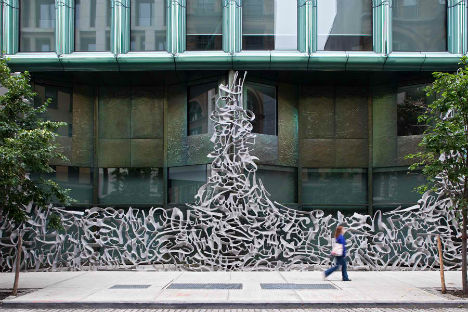
The standout feature on Herzog & De Meuron’s 40 Bond luxury residence in New York City is unquestionably this graffiti-inspired gate. A one-bedroom apartment in this building reportedly costs $ 18,000 a month.

C42 Citroen Flagship Showroom by Manuelle Gautrand Architecture, France
(images via: openbuildings)

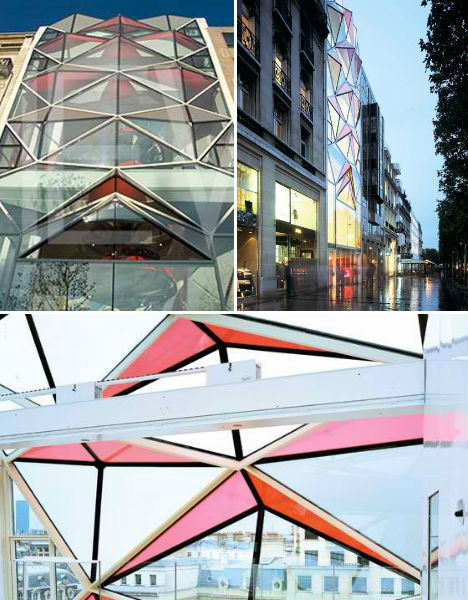
Diamond-shaped glass in soft shades of pastel pink that compliment the golden light streaming out of the interior characterize the new Citroën showroom on Champs Elysées in Paris. Once inside, that pink turns to red. Say the architects, “We originally conceived the use of red, the brand’s signature colour, in the glass panels but we decided it would be too bright from the outside. There were some concerns about the building not harmonising with its neighbours on the Champs Elysées, so we’ve created a filter that on first sight, masks the red colour from the exterior. This totally original filter, which is cleverly constructed inside the finished glass, also minimises the heat of the sun passing through, and will also create a diaphanous pearly white atmosphere inside the building.”

Sint Lucas Art Academy by Fashion Architecture Taste, Netherlands
(images via: dezeen)

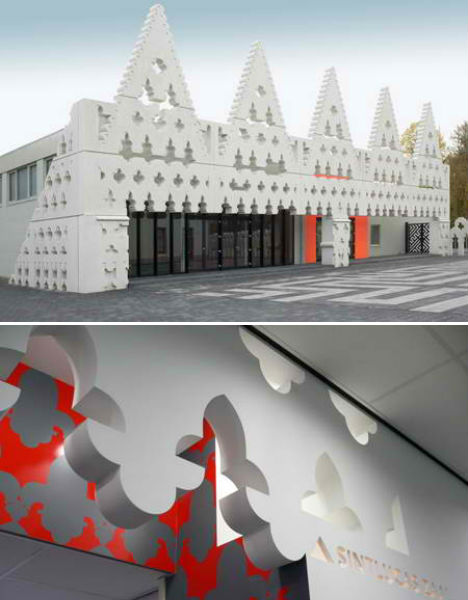
A 1960s building was given a dramatic makeover with a decorative facade inspired by both Dutch gables and the Doge’s palace in Venice, Italy. Architecture firm ‘Fashion Architecture Taste’ gave the Sint Lucas Art Academy an entirely new visual identity.

McCormick Tribune Campus Center by OMA, U.S.
(images via: arcspace)

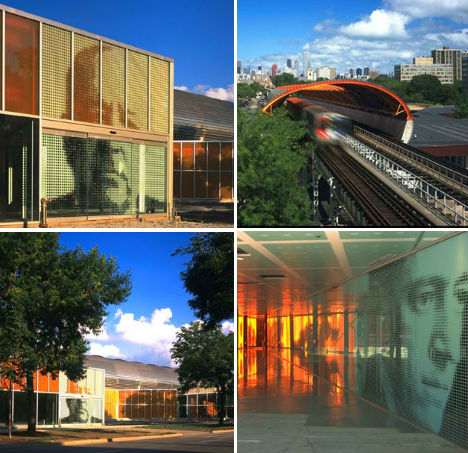
Working around a pre-existing elevated railway, OMA/Rem Koolhaas created a sound-isolating stainless steel tube that would form the basis of the McCormick Tribune Campus Center expansion at the Illinois Institute of Technology. The campus was originally designed by Mies Van der Rohe, whose portrait is emblazoned large on exterior and interior walls.

Midrash by Isay Weinfeld, Brazil
(images via: openbuildings)

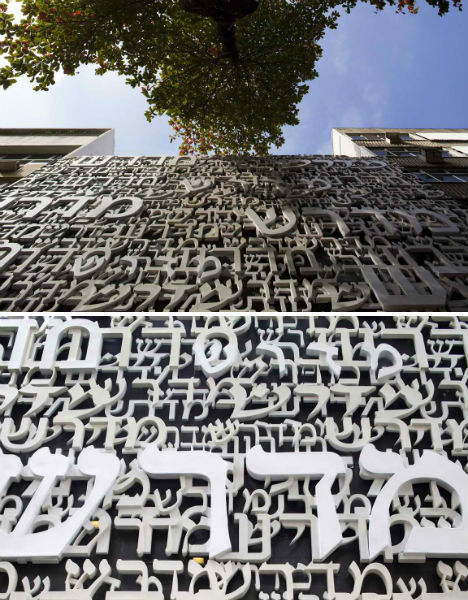
Designed to house the Jewish Congregation of Brazil, the Midrash Building by Isay Weinfeld in Rio de Janeiro has a fiberglass mesh facade made up of Hebrew words.

Placebo Pharmacy by Klab Architects, Greece
(images via: archdaily)

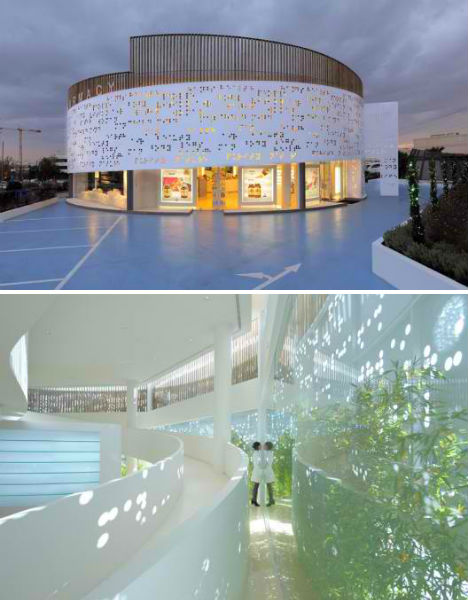
The shape and decorative elements of Placebo Pharmacy by KLab is about as far from Walgreens as you can get. In this case, the perforated mesh facade on the exterior is covered in braille.


Want More? Click for Great Related Content on WebUrbanist:

15 Cool High School, College and University Building Designs

If only more school buildings were as creatively designed as these 15, perhaps attendance rates would be higher.
32 Comments – Click Here to Read More »»


Black Buildings: 15 Examples of Monochromatic Architecture

These 15 buildings are brave and bold in solid black, from modern private residences to museums and offices.
Click Here to Read More »»


Share on Facebook


[ By Steph in Architecture & Public & Institutional. ]

[ WebUrbanist | Archives | Galleries | Privacy | TOS ]


WebUrbanist

 
Comments Off on Architecture Gets Graphic: 13 Ornamental Building Designs

Posted in Creativity


Japan’s Urban Spaceship: The Omiya Rocket Building

21 Oct

[ By Steve in Architecture & Offices & Commercial. ]


Let’s do launch! The shiny, streamlined, sc-fi styled Rocket Building dominates an otherwise unremarkable downtown street near Omiya Station in Saitama, just north of Tokyo, Japan. Home to rental apartments, a cafe, an educational daycare facility and more, the Rocket Building stands out even among Tokyo’s eclectic collection of oddball buildings.

Space Time Condominium

(images via: Film Crew It’s Own and Irostagram)

“I’m the urban spaceship, baby, I’ve got speed. I’ve got everything you need!” Well maybe not everything, but the Rocket Building in Sakuragi-cho, Omiya, Saitama – just north of Tokyo, Japan – can certainly be said to have speed even though it hasn’t moved a millimeter since it was completed back in the early 1980s.

(images via: Shaso)

The Rocket Building was one of a number of offbeat edifices that sprung up in and around Japan’s major cities as the country’s economic bubble inflated. Low interest rates, reasonable real estate prices and a steady flow of government funds into the construction sector saw projects approved which would normally never see the light of day.

(image via: Basubon Kanemaru)

By the mid-1980′s, Japan’s economy began to show signs of overheating. A combination of rising stock prices, increasing land values and a shortage of urban building space proved to be the death knell for one-off projects like the Rocket Building.

(images via: I Was Walking Thousands Bloom, Earth Exploration Journey and Beegle)

A building is a building, however, and in super-dense urban Tokyo no habitable structure goes to waste. As odd as the Rocket Building looks on the outside, its theme park ambiance slips away once one enters the chrome-edged surround of the cavernous front entranceway. We’re not sure if the Rocket Building has a doorman but if it did, he would likely be tempted to greet visitors with a cheery “All aboard!”

Lifting Off the Lid

(image via: Chokobo)

The Rocket Building may have originally housed a private museum though those days are long past. These days, the building’s owners lean more to the commercial than the artistic figuring there’s a niche market for tenants who appreciate the allure of living or working in a rocket-shaped building. hey may be onto something: just imagine your very own bachelor “pad” inside this 9-stage, er, 9-story structure!

(images via: Explore Self-Indulgently and Neutrino’s Clock)

Tenants renting space in the Rocket Building have changed from time to time. Some, such as the Rocket Nursery, are more than happy to play off their location as a way to distinguish themselves from competitors.

(image via: Tabelog Saitama)

How thrilled must pre-school age kids 6 years old or younger be to find out their school (or rather, a flexible-hours daycare) is located inside a sky-high shining rocket? Curiously, the Rocket Nursery is open 24 hours a day – in space there’s no night or day, it would seem.

(images via: 1seki Blog)

The landlords of the Rocket Building currently rent space on an ad-hoc basis with an odd assemblage of businesses rubbing shoulders within the structure’s confines. At one point the tenants included a “conversation cafe” called Leafcup, the Total Beauty College, and occupying the 9th floor something called “Bambitch” which sounds a lot more awesome than it probably is.

Space Age Digs

(images via: Chandra’s Life and Dragonfly)

Most images of the Rocket Building focus on its easily accessible, street-facing front but the building’s rear offers a heady dose of visual interest as well. Note the gold-toned wall panels that one might think aren’t really necessary and the curious cylindrical structure whose exact purpose isn’t obvious. Chimney, elevator shaft, garbage disposal, tower gantry?

(images via: Comitann, Panoramio/Posh208 and 7-Net Shopping)

As much as the Rocket Building’s appeal is a function of its colorful neighborhood, the latter also derives benefits from having the former in it’s midst. Grouchy homeowners and worn-down office workers alike can’t help but be cheered by the sight of a golden rocket gleaming warmly over the rooftops, even on cloudy days.

(image via: Minkara Carview)

The building’s design is actually quite complex – a pair of scalloped insets on either side of the main entrance allow for open-air balconies with a steel railing facing the street. As well, beneath one of the balconies is an extremely small (though typical for Tokyo) parking space which might possibly hold two small cars or minivans.

(images via: Diary of Goro and Edo/Kawagoe)

It has been suggested that in the years after the Rocket Building opened, the topmost story housed a small rotating observation deck that provided a very limited number of visitors a unique view over Omiya Station and the nearby neighborhood. Whether due to safety concerns, mechanical issues or the preferences of the building’s current tenants, the miniature rooftop upper stage has been fixed in a static orientation for some time.

Building Upwards, Literaly

(images via: Relieved Somewhere and Bring Back The Chance)

The Rocket Building isn’t especially tall as urban high-rises go, it just looks that way compared to most of the surrounding homes, shops and mixed-use buildings in West Omiya. The area was already settled and substantially occupied by the time the Rocket Building’s builders applied shovel to soil; this partially explains why the building appears to have been shoe-horned in amongst its neighbors.

(images via: Saitama Diary and Memorandum… So Forgetful)

Being a “big fish in a small pond” helps the Rocket Building retain some notoriety, as if looking like a spaceship ready to launch isn’t enough. The golden mini-missile capping the building often appears in wide-field photos of the area and curious visitors naturally wonder what’s supporting it – how nice that beneath the topmost rocket is a larger rocket one can enter at their leisure!

(images via: Comitann, DGC and Noodles Good Blog)

What does the future hold for Omiya’s iconic Rocket Building? The structure is aging and the building’s unique design and décor mean replacement parts and panels are either in short supply or are simply non-existent. West Omiya is changing as well, slowly shedding its traditional working class accoutrements and gradually melding into mainstream Tokyo.

(image via: I Was Walking Thousands Bloom)

Sooner or later, the block or blocks housing the Rocket Building will likely be razed and some massive plaza will rise in its place. For now, though, enjoy the quirky charm of the Rocket Building and appreciate it as a capsule comment, so to speak, of those bright days when building upwards in Tokyo was more than just an expression.


Want More? Click for Great Related Content on WebUrbanist:

Urban Exploration: Beginner’s Guide to Adventures in Building Infiltration

Have you ever been drawn to the calm beauty of abandoned buildings, or even tempted to explore forbidden structures in the urban landscape?
48 Comments – Click Here to Read More »»


Bubbletecture: Poppable Building Made of Soap Bubbles

A Dutch architecture firm creates an interactive exhibit in which visitors raise a temporary pavilion with glass-like bubble walls from mirrored pools of soap.
Click Here to Read More »»


Share on Facebook


[ By Steve in Architecture & Offices & Commercial. ]

[ WebUrbanist | Archives | Galleries | Privacy | TOS ]


WebUrbanist

 
Comments Off on Japan’s Urban Spaceship: The Omiya Rocket Building

Posted in Creativity


World-Warping Photography Bends, Twists & Tears Reality

21 Oct

[ By Delana in Art & Photography & Video. ]

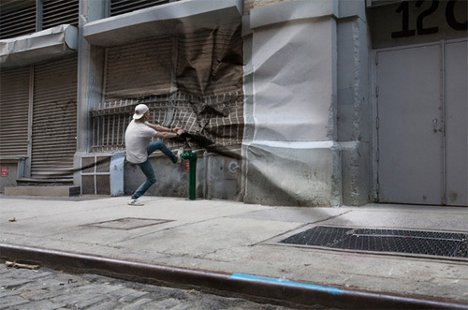
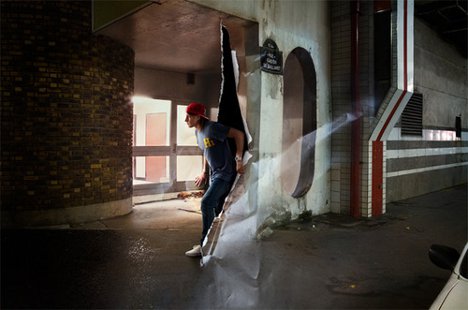
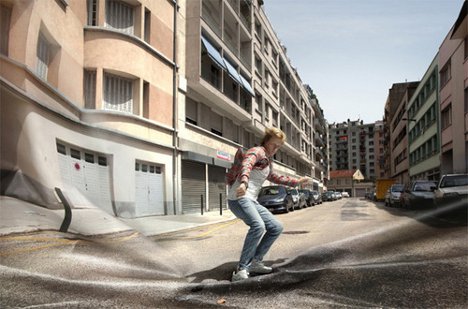
Life feels rather rigid and unyielding sometimes, which is why it’s nice to have art like Jan Kriwol‘s into which we can escape momentarily. Kriwol’s series “Paper Realities” only consists of three photographs, but they are remarkable for their realism and their fun treatment of fantasy.

In all three of the photos, the photographer has made the world appear as no more substantial than a piece of paper. A young man casually breaks through a split in the very fabric of space/time in one picture. In another, a man’s powerful jump has caused wrinkles to appear in the paper world. And in the third, a disgruntled figure pulls angrily at a locked storefront, causing sharp wrinkles to appear all around.

The photographs are simple enough, but they reflect a desire that nearly all of us have had at one time or another: to reach out and change reality. Kriwol’s characters do just that by interacting with their surroundings as if they were no more substantial than a parking ticket.


Want More? Click for Great Related Content on WebUrbanist:

Interpreting the City: Creative Urban Photography at Three Different Scales

Creative urban photographers have a way of representing cities in new and different lights.
9 Comments – Click Here to Read More »»


Portrait Photography: 12 Creative Portraiture Photographers

Ephemeral, always changing, portraits are about capturing a person in a precise moment of time. Here are 13 creative portraits and 12 portraiture photographers.
1 Comment – Click Here to Read More
»»


Share on Facebook


[ By Delana in Art & Photography & Video. ]

[ WebUrbanist | Archives | Galleries | Privacy | TOS ]


WebUrbanist

 
Comments Off on World-Warping Photography Bends, Twists & Tears Reality

Posted in Creativity


Video Tours Take You Around the World in Just One Minute

20 Oct

[ By Delana in Global & Travel & Places. ]

Most of us will never have the time or resources to travel all around the world – but for the lucky few who can make that trip, it’s a life-changing experience. “Regular guy” filmmakers Rick Mereki, Tim White and Andrew Lees undertook a grueling trip of 11 countries in 44 days. They filmed everything and later compiled it into three of the most beautiful, interesting short travel films ever made.

By the time they were done, the trio had traveled 38,000 miles and recorded over a terabyte of travel footage. They cut, mixed and stitched the footage together to create three one-minute films. “Move” shows Andrew (the actor of the group) walking in various places around the world.

“Learn” is a rather amazing compilation of the adventurous things the filmmakers learned during their travels. They blow glass, build pizzas, dance, learn to cartwheel in front of the Eiffel Tower, and so many more things that the rest of us only wish we could do in some exotic location.

“Eat” is the final installment in the series, and it is a delicious look at the foods of the world. The guys were clearly a bit daring in their cuisine choices, eating everything from unidentifiable meat to a huge insect. Like the other films, this one inspires an intense wanderlust – so who wants to sponsor our trip around the world?


Want More? Click for Great Related Content on WebUrbanist:

14 Hilariously Revised Wonders of the World

Do you enjoy bringing a little reminder of your trip home after a vacation? Michael Hughes shares his souvenirs with the world in a fun and entertaining way.
12 Comments – Click Here to Read More »»


Banksy Art: Locations Around the World

As the buzz around his name grows, so does the number of places where Banksy street art is spotted from the United States all the way to controversial work in the Middle East
19 Comments – Click Here to Read More »»


Share on Facebook


[ By Delana in Global & Travel & Places. ]

[ WebUrbanist | Archives | Galleries | Privacy | TOS ]


WebUrbanist

 
Comments Off on Video Tours Take You Around the World in Just One Minute

Posted in Creativity


Miniature City Scenes: 21 of Slinkachu’s Tiny Art Installations

19 Oct

[ By Marc in Architecture & Cities & Urbanism. ]

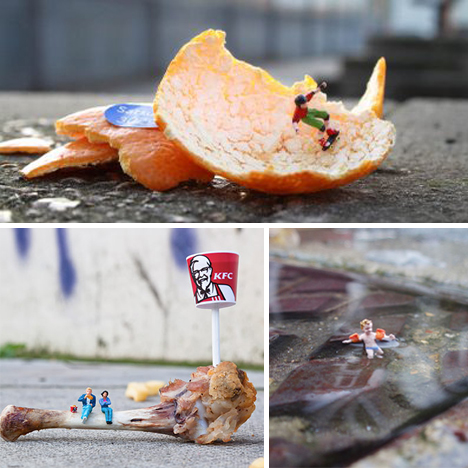
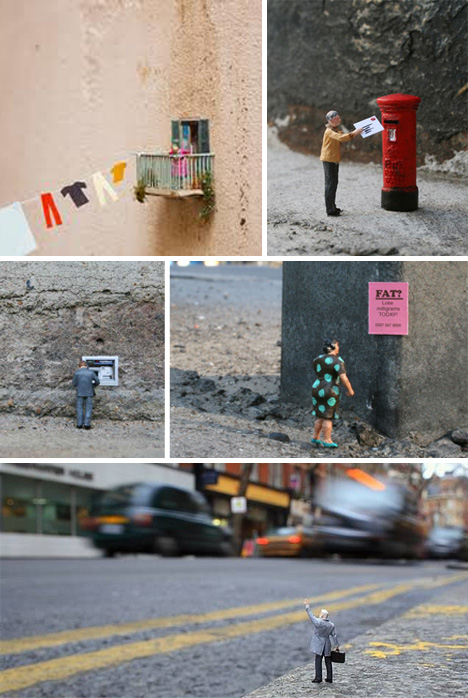
Slinkachu is a UK-based artist who creates tiny scenes on city streets that are both humorous and compelling. He photographs each scene and then leaves it to be discovered.

(Images via moreintelligentlife, dezeen, ekosystem, mashkulture)

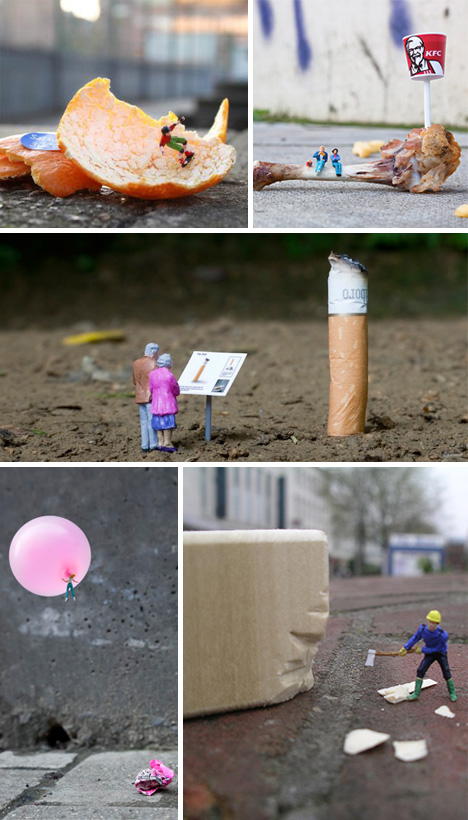
The urban-dweller’s relationship with wildlife is depicted interestingly in Slinkachu’s photos, with a humorous twist. A father defending his child from a bee takes a bit of a heavy handed approach that actually depicts a fairly typical reaction to bees during the summer. Deer struggle to integrate into an environment that’s not quite as clean as the pristine forests they’re known to inhabit, and of course a snail would find itself tagged with graffiti. It’s difficult to say whether the roaches in this photo are depicting protesters, or the actual fight against infestation.

(Images via lenscratch, mymodernmet, streetartutopia, designwars, thisiscolossal)

In the tiny world that Slinkachu inhabits, people do the same thing they do in our much larger spaces. A creative skateboarder uses the environment to create a great half pipe, people visit KFC for a quick lunch, and an outdoor sculpture stands tall with a plaque describing the artist’s intent. There’s work to be done so a man studiously chops wood in one photo. The final photo depicts the hilarious scene of a little girl literally being carried away by the size of her bubblegum bubble.

(Images via demilked, unurth, spankystokes, adore-whereveryouare)

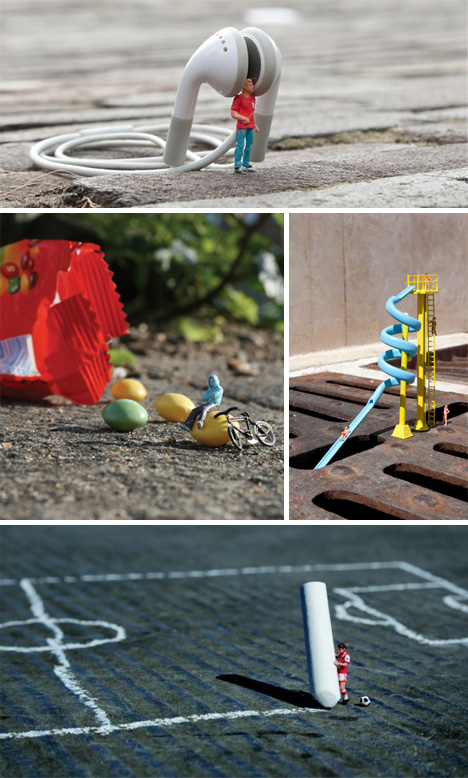
It is fun to imagine how a little world would deal with its limitations. In a comic take on the typical urban dweller, Slinkachu portrays a tiny man struggling with his earbuds, while a family takes a trip to the local waterpark… at a storm drain. No soccer field? No problem – a little chalk solves that problem. In this tiny world, a kid walking around with a bag of Skittles turns into a kid sitting on Skittles.

(Images via adore-whereveryouare, thedesigninspiration, sezio)

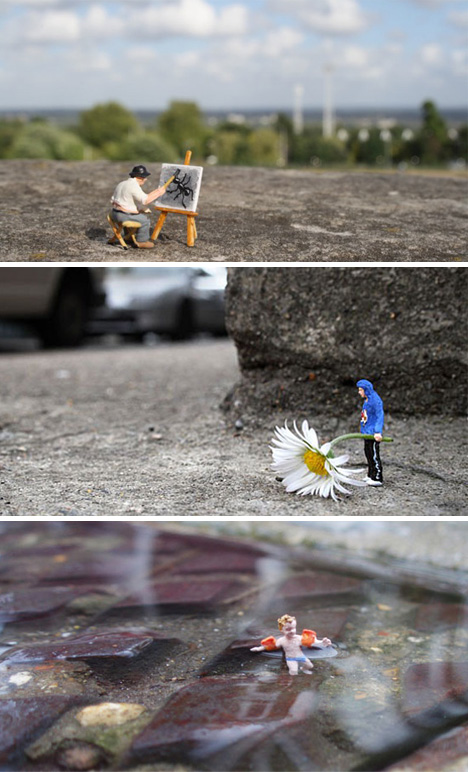
It would be really enjoyable to stumble on one of Slinkachu’s miniature scenes. Whether it’s a painter carefully crafting his ant portrait, or a romantic who grabbed a flower for his significant other, it pays to be more aware of one’s surroundings. Even a puddle on a sewer cover could house a mini art installation; in this case, a boy enjoying a summer swim with his floaties on.

(Images via rebelart, richardlittledale, ekosystem, ageofuncertainty, dezeen)

Normal city scenes take on a whole new level (literally) when brought down to a comically small scale. These miniscule urbanites might just be painted railroad props, but they still need to dry out their clothes, mail letters, lose weight, hail a cab, and go to the ATM for some cash. They are not so different.


Want More? Click for Great Related Content on WebUrbanist:

Urban Street Art Images in Miniature: The Little People of London

Wonderfully creative urban street art. These photographs, taken around town in London and even shown in galleries, are just a small portion of his “little people” collection.
26 Comments – Click Here to Read More »»


Tiny Toothpick Art Goes Far Behind Merely Miniature

These amazingly detailed replicas of architecture like the Eiffel Tower, the Burj Khalifa and the Golden Gate Bridge were created using just a single toothpick.
2 Comments – Click Here to Read More »»


Share on Facebook


[ By Marc in Architecture & Cities & Urbanism. ]

[ WebUrbanist | Archives | Galleries | Privacy | TOS ]


WebUrbanist

 
Comments Off on Miniature City Scenes: 21 of Slinkachu’s Tiny Art Installations

Posted in Creativity


Half Pipe, Double Trouble: 2 Skateboard-able Dream Homes

18 Oct

[ By Steph in Architecture & Houses & Residential. ]

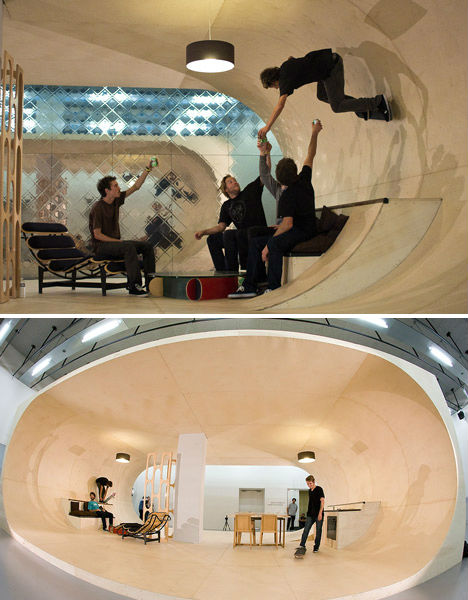
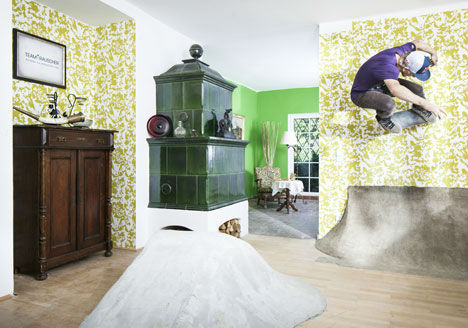
Skateboarders often have a tendency to eye virtually every surface as they go about their day, sizing it up for its curves and rails, imagining what it would be like to skate it. What if more structures were skateable, or even designed with skateboarders in mind? These two houses, Skate Villa by Philipp Schuster and PAS House by Francois Perrin and Gil Lebon Delapointe, are ultimate fantasy homes with curved walls, seats and even fireplaces.

PAS House

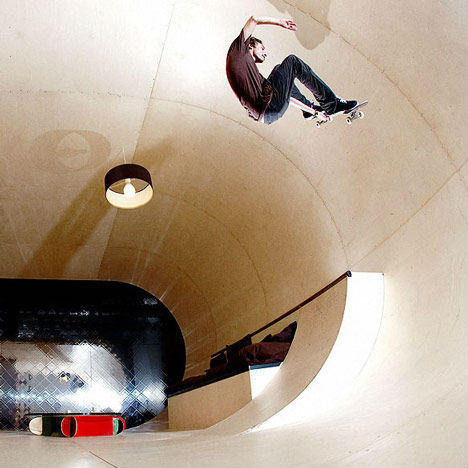
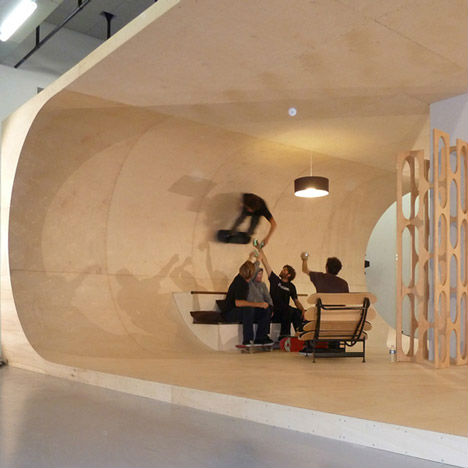
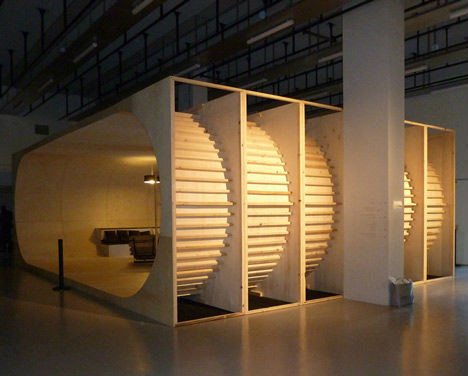
Designed as a ribbon providing a continuous surface to skate on from one end of the home to the other, PAS House was a collaboration between skateboarder and designer Gil Lebon Delapointe and architect Francois Perrin. The house is planned for a cliffside site in Malibu overlooking the Pacific Ocean, and a full-scale prototype was shown at Project Darwin in Bordeaux, France.


Created for Pierre Andre Senizergues, a former world champion and pro skater, PAS House includes a living room, dining area and kitchen as well as a bedroom, bathroom and skateboard practice area. The central part of the house forms a loop, with an interior measuring 10 feet in diameter.

Skate Villa

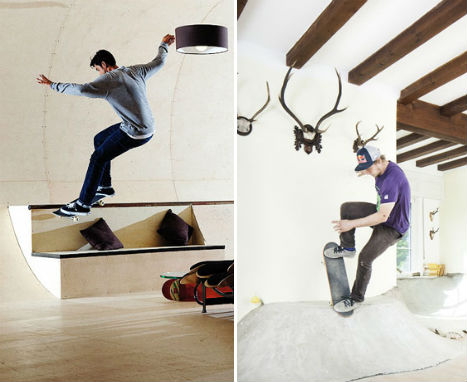
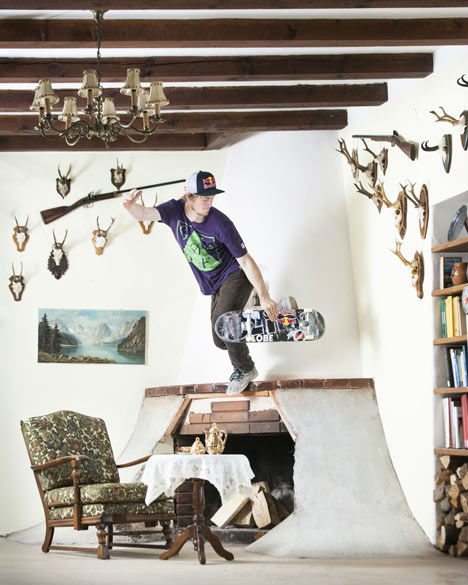
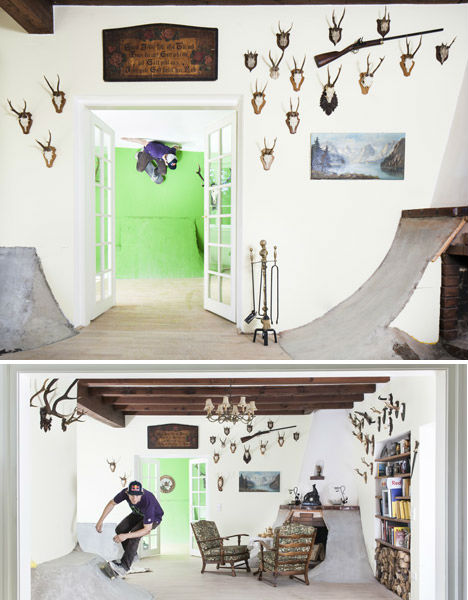
A derelict hunting cabin in Salzburg, Austria is now a bright, beautiful and almost totally skateable house with all the comforts and eccentricities of the original structure. At Skate Villa, concrete mounds added to the base of the walls add curves where there were none, and ramps were even created on interior structures like the fireplace.

Pro skater Philipp Schuster designed, gutted and renovated the house as his own personal indoor skate park after purchasing it from an elderly couple. The original character of the cabin was maintained with dark wood elements, hunting trophies and traditional lodge-style furniture.


Want More? Click for Great Related Content on WebUrbanist:

Skateable Architecture: 13 Irresistibly Curvy Structures

Far from prohibiting skaters, these 13 temptingly skateable structures – from house interiors to museum rooftops – were designed with skateboarding in mind.
1 Comment – Click Here to Read More
»»


Dream Designs: 10 Uncanny Ultramodern Homes

Modernism is style – ultramodernism is undefined, but for the purposes of this article is that amazing design approach which brings the future into the present.
31 Comments – Click Here to Read More »»


Share on Facebook


[ By Steph in Architecture & Houses & Residential. ]

[ WebUrbanist | Archives | Galleries | Privacy | TOS ]


WebUrbanist

 
Comments Off on Half Pipe, Double Trouble: 2 Skateboard-able Dream Homes

Posted in Creativity


Car Ferry Converted into Hulking San Francisco Houseboat

18 Oct

[ By WebUrbanist in Architecture & Houses & Residential. ]

It truly is a hulk of a thing to make into a live/work space, but there is an industrial loft-like quality that renders this decommissioned Icelandic car carrier appealingly open yet cozy at the same time.

Its owners, occupants and redesigers Olle Lundberg and Mary Breuer (architects and fabricators by trade of ) looked into everything from tugboats to ships before finding this offbeat beauty and deciding to call it home.

It ‘only’ cost a few hundred thousand to buy, but multiple times that to make fully habitable as an abode and office. Among other expenses, they had to hire the crew to take it on a seven-week trip from Iceland, through the Panama Canal to dock in Mission Bay.

Their secondary residence, much like their primary, is weird and wonderful as well – an oddly-shaped cabin that combines a small original rural structure with their own custom additions and populated with leftover furniture commissioned but then not purchased by clients.

The pool, for instance, is a massive wooden water tank rescued from a farm property, patched up with wood from a local winery, then added to the exterior and filled with liquid (which initially smelt of red wine when swimming). Images via New York Times photographer Peter DaSilva.


Want More? Click for Great Related Content on WebUrbanist:

Fire-Inspired: 14 Converted & New Lookout Tower Homes

From 15th century guard towers on the Italian coast to modern timber-framed fire towers in Montana, these 14 homes get their inspiration from high places.
3 Comments – Click Here to Read More »»


Manifest Destiny! Parasite Cabin Clings to San Francisco Wall

A rustic 19th-century cabin by artist Mark Reigelman is an unlikely sight clinging to the Hotel des Arts in the middle of urban San Francisco.
Click Here to Read More »»


Share on Facebook


[ By WebUrbanist in Architecture & Houses & Residential. ]

[ WebUrbanist | Archives | Galleries | Privacy | TOS ]


WebUrbanist

 
Comments Off on Car Ferry Converted into Hulking San Francisco Houseboat

Posted in Creativity


Gone to Seed: 9 Green Plant-Sprouting Product Designs

17 Oct

[ By Delana in Design & Products & Packaging. ]

Once a product’s primary function has been served, most of us choose to either throw away or recycle whatever is left. An increasing number of products, though, are meant to be reincarnated as beautiful, growing plants. When their first lives are over, these products can be placed into the ground to be reborn.

(images via: Democratech)

A group of MIT design students wondered what would happen if, instead of throwing away their pencil stubs, they could do something constructive with them. Thus the Sprout pencil was born – a pencil that can be used just like any other, but when it becomes too little to use it can be planted in a bit of soil. A small capsule on the end contains a seed that will sprout and grow, providing enjoyment far beyond the initial usefulness of the pencil itself.

(images via: Yanko Design)

The To Be Nature chopstick is a similar concept that contains a seed in a starch capsule at one end. When your meal is over, you can plant the chopstick in soil and water it to activate the seed. The new plant will use the stick as a support as it grows up tall and strong. As intriguing as the concept is, however, it seems like an odd design oversight to place the seed capsule on the end of the chopstick that comes into contact with food.

(images via: Lifebox)

A revolution in packaging, the Life Box turns a serious environmental offender – the cardboard box – into a positive for the environment. After it has carried its cargo to its destination, the box can be torn up and soaked to activate the many seeds embedded in the cardboard. Each Life Box contains enough tree seeds to grow an entire forest ecosystem, with all of the species contained in the boxes approved as non-invasive in the United States.

(images via: Jamie Wieck)

Nearly everyone gives out business cards, so it makes sense to make them memorable and relevant to your line of work. Designer Jamie Wieck came up with this brilliant idea for a sprouting business card. The card is actually an envelope containing alfalfa or watercress seeds. When moistened per the instructions it develops into a lush miniature garden that, as an added humorous touch, doubles as a head of green hair for the face printed on the front of the card.

(images via: BLDGBLOG)

Landscape architects Tur & Partner certainly got plenty of business by handing out these miniature landscape business cards. At first the image on the front looks like simple plans for an outdoor garden, but once you introduce water and sunlight the seeds embedded in the card’s paper begin to sprout, creating a surreal little garden right on the card’s surface.

(images via: Struck)

Advertising creative firm Struck took a slightly different tactic with their business card for lawn company Lush; this business card is actually a tiny envelope containing a handful of grass seeds. There is no need to destroy the business card to grow the grass, which is probably best for long-term exposure. The recipient is encouraged to spread the seeds and then contact the lawn care company in order to care for the brand new ground cover plants.

(images via: RecycledIdeas)

Etsy seller RecycledIdeas has come up with something new and brilliant in the arena of wedding favors: plantable skeleton keys that blossom into beautiful, colorful wildflowers. The keys act as novel decorations and weights for table markers during the reception. After the wedding is over, the seed-impregnated keys go home with guests and into the soil – with some sun and some water, the joy of the wedding day can go on long after the reception is over in the form of cheerful blooms.

(images via: Yanko Design)

Designer Joon Kim thinks that it’s really a shame to throw away disposable cups after the coffee that came in them is all gone. The Y in Cup concept would give the cup a new purpose once your latte has been drained. The bottom of the cup contains a small seed packet along with growing instructions. When you fill the cup with soil and plant the seeds inside, the cup becomes a desktop flower pot. The design would be much more effective if the cup were biodegradable so that it could be simply placed into the soil outside once the plant gets big enough, but as this is only a concept at this point and not an actual product, there is still time for improvements to the idea.

(images via: Bloomin)

Bloomin was a pioneer in the seed paper market, being the first company to introduce a commercial printable, biodegradable, seed-impregnated paper that will actually grow plants when placed into soil and cared for. Their product line includes everything from greeting cards and journals to calendars, coasters, wine glass tags and gift wrap – all with tiny seeds embedded in the paper, just waiting to grow into herbs, vegetables or flowers.


Want More? Click for Great Related Content on WebUrbanist:

15 of the World’s Most Brilliant Business Card Designs

Not all business cards are boring pieces of paper. Some are awesomely creative, memorable and even intimidating.
43 Comments – Click Here to Read More »»


What if the Package Were Part of the Product? 5 Innovative Industrial Designs for Ecological Living

What if you could simply reuse packaging as part of a product rather than sending away for disposal or recycling?
30 Comments – Click Here to Read More »»


Share on Facebook


[ By Delana in Design & Products & Packaging. ]

[ WebUrbanist | Archives | Galleries | Privacy | TOS ]


WebUrbanist

 
Comments Off on Gone to Seed: 9 Green Plant-Sprouting Product Designs

Posted in Creativity


Surf ‘n Siege: Huge Abandoned Island Fortress in Florida

17 Oct

[ By Steph in Abandoned Places & Architecture. ]

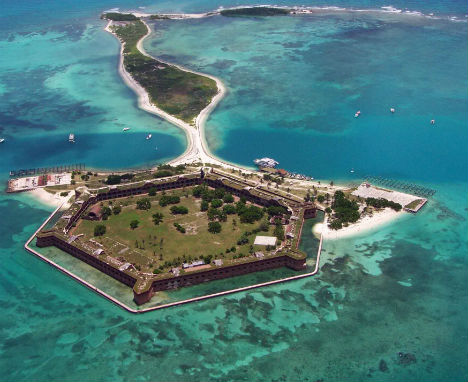
70 nautical miles off the coast of Key West in Florida is a series of seven islands set among a graveyard of over 200 ships, crowned with a massive 19th century fortress that lay abandoned for nearly a century. The Dry Tortugas once hosted Spanish explorer Ponce de Leon and an influx of marauding pirates; today it’s a bird and wildlife sanctuary and a national park.

(top image via: nps.gov; above images via: ricsae 1, 2, 3)

In 1513, Ponce de Leon became the first European to discover the island, naming it ‘Tortugas’ for the many green, hawksbill, leatherback and loggerhead turtles he found there. He and many pirates after him relied on the turtles for meat and eggs. Between the 1600s and the 1800s, hundreds of ships wrecked on the surrounding reefs and shoals, and word ‘Dry’ was added to the islands’ name on maps to warn mariners of the lack of fresh water.

(images via: vladeb 1, 2, 3)

Construction began on the 45-foot-high, hexagonal Fort Jefferson on Garden Key in the late 1840s when U.S. Army strategists became concerned about the security of shipping lanes in the Gulf of Mexico, and it was still unfinished 30 years later. It was briefly used as a prison for Union deserters in the Civil War, but was besieged in later decades by yellow fever, hurricane damage and the fact that its cannons had become obsolete. It was permanently abandoned in 1907.

(images via: evragasa, bruce tuten 1 + 2)

Fort Jefferson and the rest of the 64,700-acre Dry Tortugas were officially established as a national park in 1992. Fort Jefferson remains the largest all-masonry fort in the United States. While restoration efforts have helped preserve it, the forces of nature and time continue to take their toll. The islands can be accessed by a three-hour boat ride from Key West, or a 45-minute plane ride.


Want More? Click for Great Related Content on WebUrbanist:

12 Historic Abandoned Boats, Ships and Docks

These abandoned and forgotten ships, boats and docks stand as proof of a bygone era where water transportation was used in every industry.
15 Comments – Click Here to Read More »»


Anti-Zombie Fortress: Japan’s Abandoned Shime Tower

Zombie Apocalypse? Bring it on! I’ll be safe and sound above the fray in the partially moss-covered concrete winding tower at Japan’s abandoned Shime coal mine.
3 Comments – Click Here to Read More »»


Share on Facebook


[ By Steph in Abandoned Places & Architecture. ]

[ WebUrbanist | Archives | Galleries | Privacy | TOS ]


WebUrbanist

 
Comments Off on Surf ‘n Siege: Huge Abandoned Island Fortress in Florida

Posted in Creativity


Camouflage Posters Turn 3D Reality into 2D Illusions

16 Oct

[ By Steph in Art & Photography & Video. ]

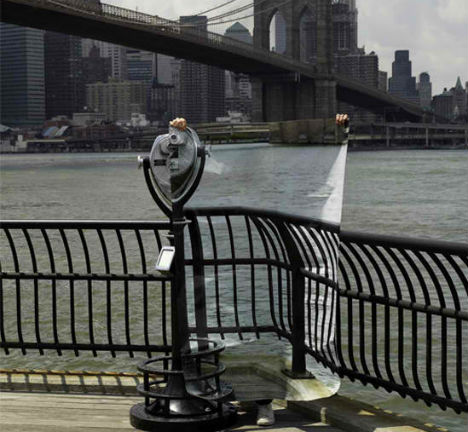
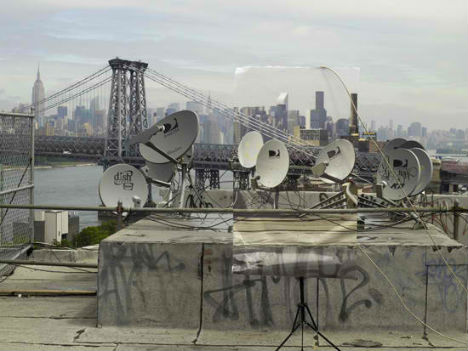
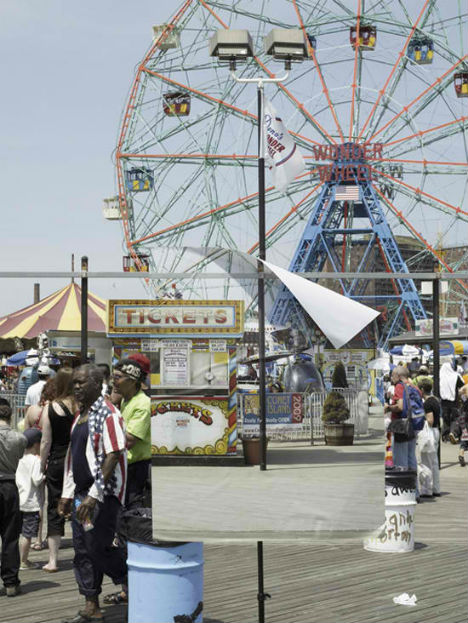
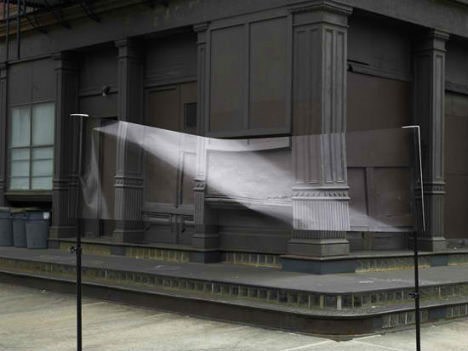
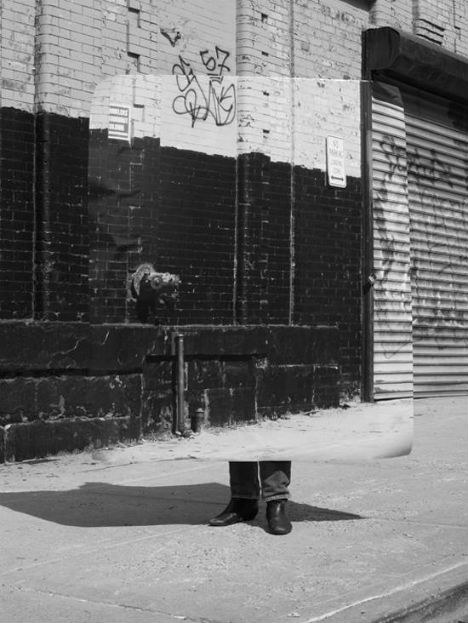
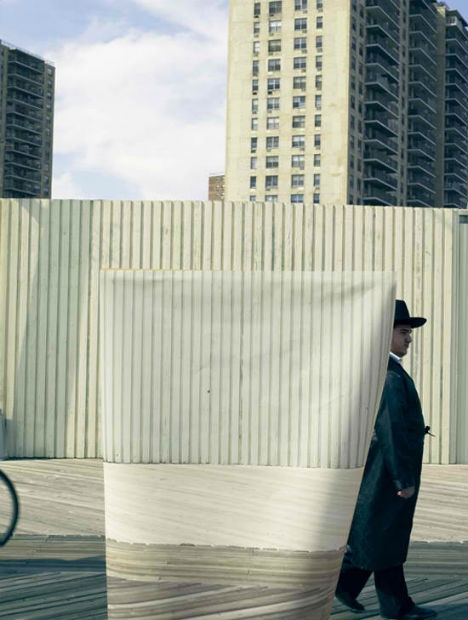
Blurring the line between reality and fiction, this urban camouflage photo series by French photographer Fred Lebain features posters that blend in almost perfectly with their environments. Lebain visited New York and took photographs of various scenes, went home to France and turned them into posters, and then came back and installed the posters were the photos were taken.

Called ‘A Spring in New York’, the series reads like slight blips in time, where scenes are glimpsed on a day not too long past, when few things were different – perhaps the amount of sunlight, or the number of people in the background.

The posters curling at the edges or blowing slightly in the wind lends a curious effect to the final images. The scene is wrinkling; reality is threatening to peel away like paper.

In some scenes, the posters really do act as camouflage, hiding part of the photographer so that only hands or feet can be seen.

The series is reminiscent of Liu Bolin, ‘The Invisible Man’, a Beijing-based artist who paints himself into his surroundings so convincingly that it’s often hard to spot him. See more examples of urban camouflage, including body painting and bizarre urban camo suits.


Want More? Click for Great Related Content on WebUrbanist:

Urban Camouflage: Liu Bolin, The Invisible Man

Chinese artist Liu Bolin painstakingly paints his subjects so that they seem to disappear into their surroundings in amazing urban camouflage photography.
10 Comments – Click Here to Read More »»


Invisible Boxes: Camouflaged Art Goes Postal, Hits the Street

Cayetano Ferrer likes putting prints on ordinary objects and capturing everyday scenes in strange ways on videos. This new project expands his approaches.
1 Comment – Click Here to Read More
»»


Share on Facebook


[ By Steph in Art & Photography & Video. ]

[ WebUrbanist | Archives | Galleries | Privacy | TOS ]


WebUrbanist

 
Comments Off on Camouflage Posters Turn 3D Reality into 2D Illusions

Posted in Creativity