RSS
 

Archive for the ‘Creativity’ Category

Star Wars IV Survives: Real Life Tatooine Located in Tunisia

06 Nov

[ By WebUrbanist in Global & Travel & Places. ]

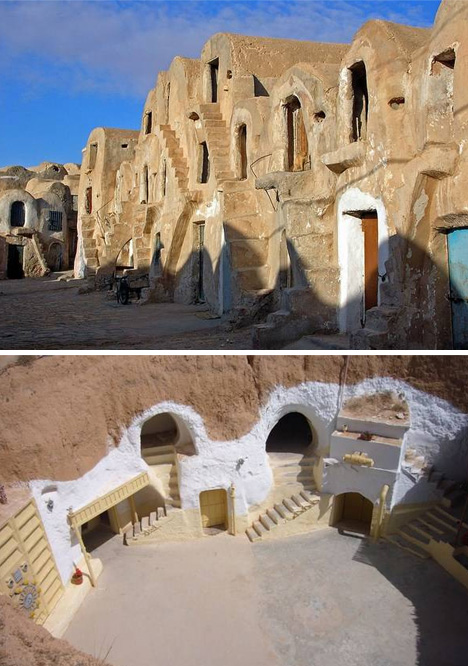
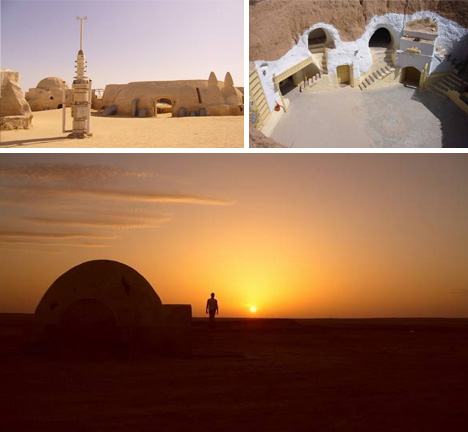
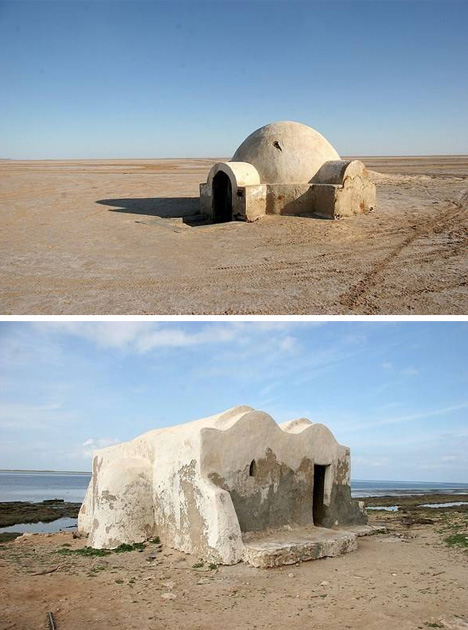
Yes, you can spend the night in Luke Skywalker’s home, see the hermit habitat of Obi-Wan Kenobi up close, and view other remnants of the original Star Wars movie via a series sets turned since turned into long-standing habitable buildings (contemporary on-location photos above by Könczöl Gábor and maciekke).

(Images by Hoylen Sue)

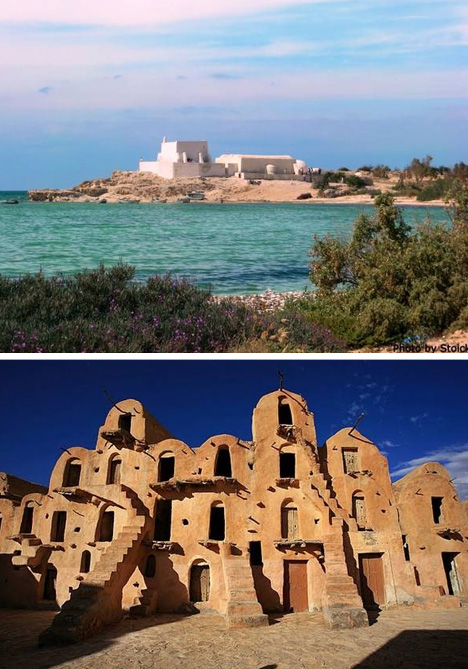
Los Apos provides an introductory guide with coordinates should you find yourself wandering Tunisia – meanwhile, here are some of the highlights of the journey, including bits and pieces of the fictional Mos Eisley and Espa.

(Images by Eckart and Michael)

Some of these buildings survive the first film trilogy, while others were rebuilt for the second series (or first, depending on how you look at it). But why? Because, in many cases, locals saw the structures as entirely serviceable and kept using them for housing, hotels, shops, storage and more.

(Images by Bernard Gagnon and Jean-Marc Matthey)

Some of the locations cater to fans: “In Matmata you can actually sleep in Luke’s home. The Hotel Sidi Driss served as the interior of the Lars homestead. Aunt Beru’s kitchen is still there, but except for some fiberglass and wooden frames, and the fresco on the dining room ceiling, you won’t find any props. Even so, it is easy to get excited when sitting in the very same dining room that the Lars family used. The hotel also has a well stocked bar with lots of Star Wars memorabilia and a Star wars inspired menu.”

(Images by Roger Noguera Arnau)

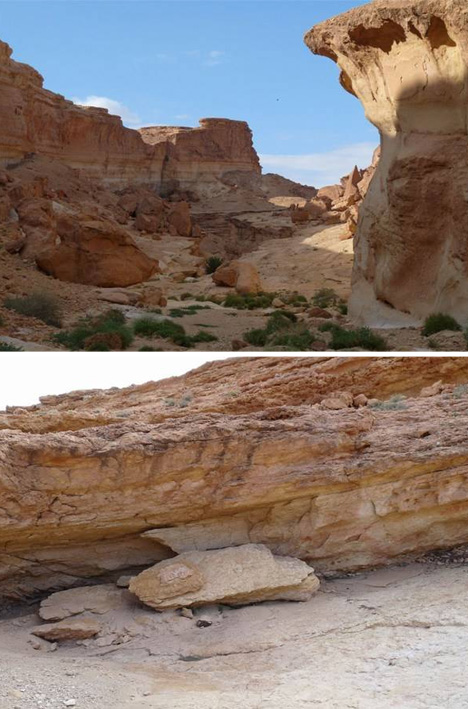
Savvy fans will recognize even building-free locations where Sandcrawlers roamed, Tusken Raiders pounced or Stormtroopers attacked. These are, one might say, the landscapes you are looking for. Still, whether the trip will spoil the fun or enhance the fantasy all depends on the traveler.


Want More? Click for Great Related Content on WebUrbanist:

Star Wars Invades Dubai in Digital Art Series

Half-completed construction sites in Dubai provide an eerie, futuristic, surprisingly otherworldly setting for a photo series featuring some familiar characters.
2 Comments – Click Here to Read More »»


Downward Facing Wookie: Amazing Star Wars Yoga

What makes yoga more fun and interesting for several geeky generations of sci-fi film fans? Star Wars-inspired poses like Reclined Jabba and TIE Fighter.
2 Comments – Click Here to Read More »»


Share on Facebook


[ By WebUrbanist in Global & Travel & Places. ]

[ WebUrbanist | Archives | Galleries | Privacy | TOS ]


WebUrbanist

 
Comments Off on Star Wars IV Survives: Real Life Tatooine Located in Tunisia

Posted in Creativity


A-cero is Awesome: 12 Dynamic Ultra-Modern Dwellings

05 Nov

[ By Steph in Architecture & Houses & Residential. ]

Spanish architecture firm A-cero is known for its striking modernist villas in its home country, as well as a growing body of international work. Influenced by contemporary sculpture, A-cero’s residences are sprawling arrangements of geometric shapes, curves and ramps in stark white, gray and black marble and concrete. Here are 12 of the firm’s most impressive private homes, including a high-end apartment renovation.

Open Box House

(images via: freshome)

Inspired by the modern works of Spanish sculptor Jorge Oteiza, A-cero’s Open Box House on the outskirts of Madrid consists of textured, angular concrete shapes complimented by the simplicity of a Japanese garden. The dramatic entrance includes bright, colorful LED lights set into the floor, and surrounding the home are several reflecting pools with geometric stepping stones.

Concrete House II

(image via: dezeen)

A single-story house doesn’t have to be less visually interesting than larger, multi-story residences. A-cero gave this low-lying home near Madrid concrete ‘fins’ that are occasionally filled with soil and planted with grass, creating slopes that lead up onto the roof.

House in Somosaguas

(images via: archdaily)

A-cero’s ‘Home in Somosaguas’ almost looks like a massive house boat from the side, especially when seen adjacent to a large reflecting pool. Stacked, staggered horizontal shapes create interior living spaces as well as outdoor terraces and a rooftop pool.

1001 Nights House

(images via: adelto)

Perhaps among the most unusual homes of the last decade, A-cero’s 1001 Nights House in Madrid features sloping outdoor surfaces that resemble skate ramps. The architecture firm brings out the colored LED lights to an even more dramatic effect, highlighting the curves and geometric forms as well as pools of water in white stone beds.

Three-Level House in Madrid

(images via: freshome)

Responding to a request by the homeowners to create a multilevel house that makes the most of the plot of land and also takes advantage of beautiful views, it’s safe to say that most architects wouldn’t have put forth a design that looks like this. A-cero says “The formal solution has been the result of an aesthetic look for categorical volume playing with their own heights and shapes and the surrounding environment.”

Memory House

(images via: freshome)

Perhaps one of A-cero’s most conventional-leaning creations, Memory House fits into its suburban surroundings while maintaining the firm’s signature sculptural style. The three-level home features an exterior made of white marble, bamboo and a combination of angular and curving shapes.

Casa de Campo

(images via: archdaily)

Though from most angles, this home looks unlike most other residences in the Dominican Republic, the sloping shapes of the roof greeting the pool in the back yard are suggestive of more traditional beach huts. The home is made of an indigenous stone that pays tribute to the seaside location and also reflects lots of light within both exterior and interior spaces.

Marbella House

(images via: archdaily)

Working with a difficult sloping home site, A-cero crafted a luxury residence with staggered levels that enable sweeping views of the Mediterranean Sea. The main level includes a large rectangular pool, and just above it is a first-floor bedroom with floor-to-ceiling glass windows and doors.

Concrete House I

(images via: a-cero)

Completed in 2006, the Concrete House (I) is a contemporary residence in Pozuelo de Alorcón, Spain. The solid-looking home is pierced by a number of unexpected hallways, courtyards and other voids, and decorated along the exterior by architectural projections like a black pergola extending out to the swimming pool.

Vivienda 19

(images via: a-cero)

Straight lines and simple shapes dominate this Madrid house, made of Travertine marble. The combination of all the white, large windows and built-in lighting give it a light feel despite the heaviness of its materials.

A Coruña

(images via: contemporist)

This home stands out among A-cero’s accomplishments simply because it’s not solid white, but rather a beautiful contrast of black and white marble. The L-shape of the house was determined by a triangular, sloped site, with the interior angle opening to a view of the estuary of A Coruña in Spain.

Apartment Renovation

(images via: freshome)

A-cero’s structures are so dazzling, it’s hard not to get caught up in the exteriors and forget about the interiors all together. But this apartment renovation in Galicia, Spain is one example of how the firm can infuse a space with its particular brand of aesthetics. Of course, the apartment is full of high-contrast colors and materials as well as lots of curves and geometric shapes.


Want More? Click for Great Related Content on WebUrbanist:

House of the Future: 12 Ultra-Modern Home Designs

With sharp angles, sterile white interiors and built-in furniture, these 12 house designs may give us an idea of what the homes of the future will look like.
6 Comments – Click Here to Read More »»


Minitecture: 15 Ultra-Modern Dollhouse Designs

Dollhouses aren’t just for kids, and they don’t only come in the frilly Victorian variety. These modern dollhouse designs will please kids and parents alike.
12 Comments – Click Here to Read More »»


Share on Facebook


[ By Steph in Architecture & Houses & Residential. ]

[ WebUrbanist | Archives | Galleries | Privacy | TOS ]


WebUrbanist

 
Comments Off on A-cero is Awesome: 12 Dynamic Ultra-Modern Dwellings

Posted in Creativity


Light’s Out: Seven More Eerie Abandoned Lighthouses

04 Nov

[ By Steve in Abandoned Places & Architecture. ]
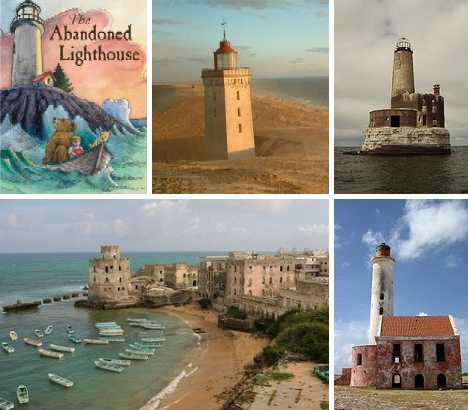

Is a lighthouse still a lighthouse when the light goes out and no one’s left to call it home? These 7 scenic sentinels slowly succumbing to the endless onslaught of wind and waves stand – barely – as solitary reminders of a time when fog-piercing lighthouse beams guided wayward mariners from the cold clutches of the devil and the deep blue sea.

Mys Aniva, Sakhalin, Russia
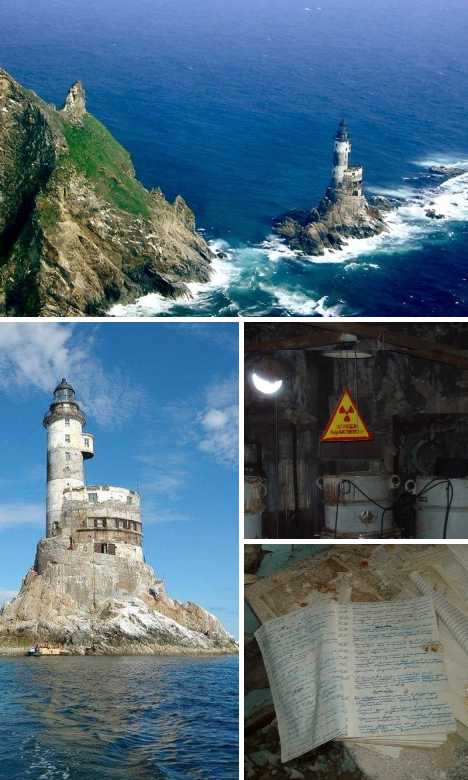
(images via: Flavorwire and English Russia)

Built under extremely difficult conditions on a formerly jagged rock just off the southeastern-most cape of Sakhalin island, the Mys Aniva lighthouse has seen a lot of history over its 3/4 of a century lifespan. Japan ordered the lighthouse built in the late 1930s when Sakhalin was divided between that country and the USSR. Sometime after the Soviets seized the whole of Sakhalin at the end of World War II, they installed an RTG (Radioisotope Thermoelectric Generator) to supply electricity to the lamp – yes, this was a nuclear-powered lighthouse!

(image via: Remembering Letters and Postcards)

The fall of communism in the early 1990s led to a decade of near-chaos with funds for all purposes in short supply. The Mys Aniva lighthouse, isolated though it was and is, has been looted and ransacked for its metal fittings though luckily its RTGs were removed before the unofficial salvage crews arrived.

Grand Harbor Lighthouse on Fish Fluke Point, Canada

(images via: National Geographic, Lighthouse Friends and Robert Williams Photography)

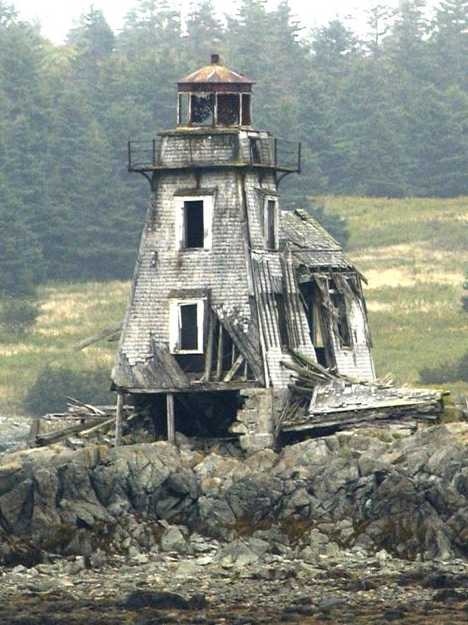
The Grand Harbour Lighthouse and attached keeper’s house at Fish Fluke Point on Ross Island, New Brunswick, Canada has been in a state of slow-motion collapse since 1963 when the station was closed. The once-picturesque lighthouse’s degeneration was accelerated by the great Groundhog Day Gale of 1976 but though it may make an excellent setting for a horror movie the lighthouse itself refuses to implode.
(image via: Swallowtail Keeper’s Society)

Opened in the fall of 1879, the Grand Harbour Lighthouse was a low-budget affair from the get-go: one of the early keepers was issued a hand-operated foghorn to be used as required. Cheap or not, the wood-framed complex has lasted longer than many stone structures of similar age. At this point it’ll take a superstorm of, say, Sandy-like intensity to finally knock its lights out for good.

Klein Curacao Lighthouse, Curacao
(images via: Curacao-TravelGuide.com, Debi van Zyl and Foter)

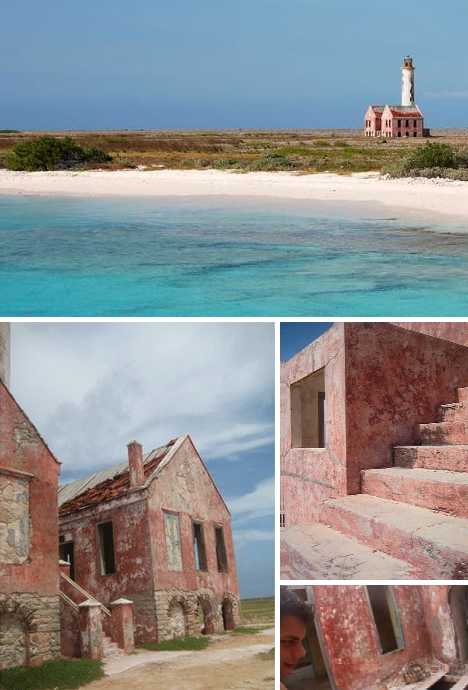
The Caribbean island of Curacao bore witness to the golden age of exploration, pirates, treasure-ships and more – and it’s got plenty of shipwrecks to prove it. In 1850 a lighthouse was constructed on the tiny, (3 km2 or 1.2 square mile) island of Klein Curacao situated 10 kilometers (6.2 miles) south-east of the mother island.
(image via: Gordon_C)

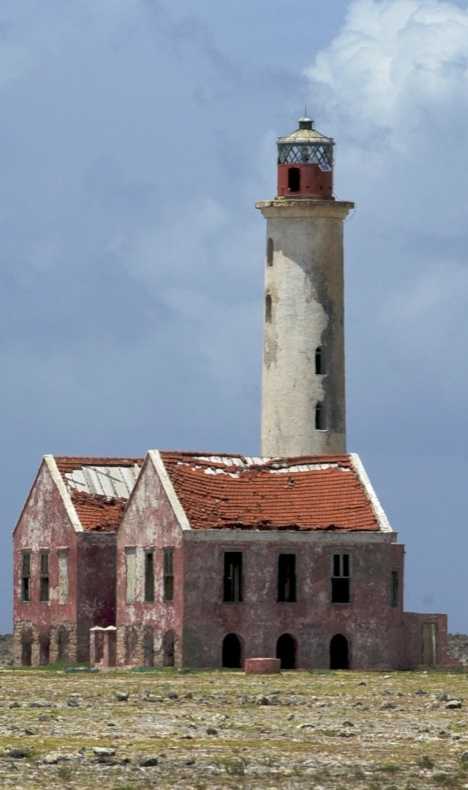
In 1877 a powerful hurricane destroyed the original lighthouse and in 1879 a stronger replacement was built. This lighthouse was subsequently storm-damaged and repaired again in 1913. Though the lighthouse had been abandoned decades ago and had been left to decay, the light itself was recently reactivated and an automatic solar-powered LED beacon was installed.

Waugoshance Light, Michigan, USA
(images via: Waugoshance Lighthouse Preservation Society and Beaver Island Jewelry)

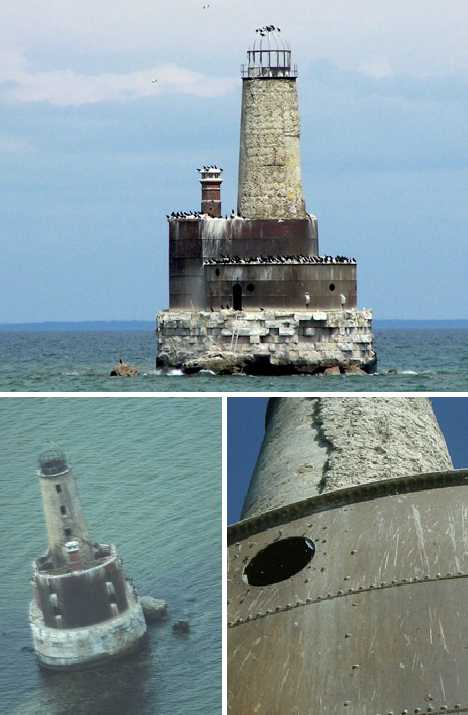
Not all lighthouses stand on the seashore; lakes need lighthouses too! Especially great lakes like, er, the Great Lakes where shipping (and shipwrecks) have been commonplace for several centuries. Take the late, great Waugoshance Light for instance. Built in 1851 to replace a lightship guiding ships through a treacherous area of the Straits of Mackinac, the Waugoshance Light was the first Great Lakes lighthouse to be surrounded on water on all sides.
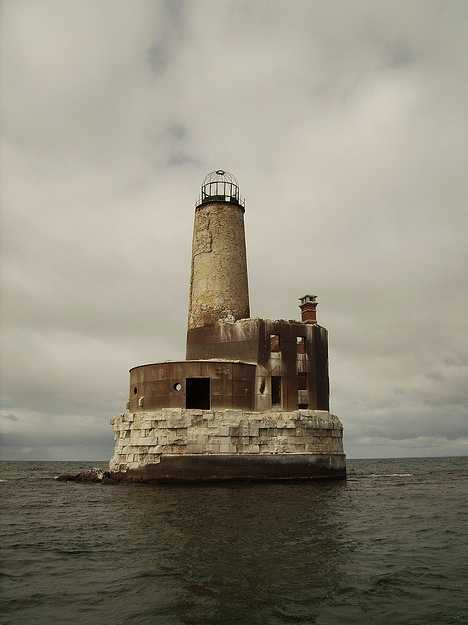
(image via: Divemi)

The Waugoshance Light was built of brick and covered with iron plating – built to last, it was. Unfortunately, the creation of deeper draft ships that had to use the Gray’s Reef passage saw the building of the White Shoal Light and the Grays Reef Light. The Waugoshance Light was decommissioned in 1912 and was used as a gunnery target by the U.S. Navy during World War II. That anything still remains of this rugged feat of engineering after more than 160 years is remarkable to say the least.

Mogadishu Lighthouse, Somalia
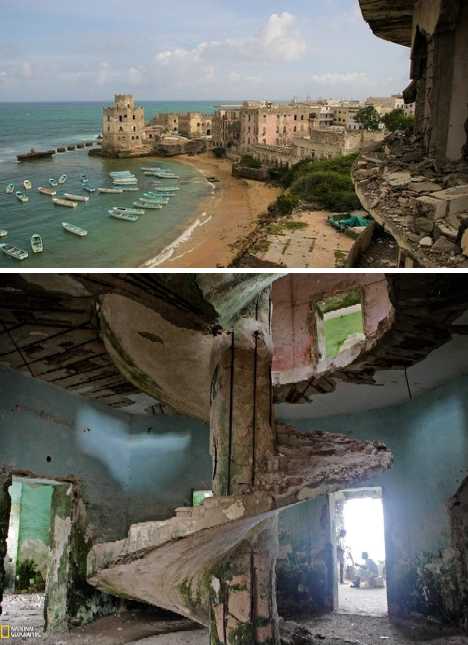
(images via: Dissident Nation and National Geographic)

Though shattered by two decades of on & off civil war, the Somali city of Mogadishu has a long and prosperous history based on sea trading. The country’s network of ports appealed to Italian colonizers during the latter quarter of the 19th century and with the establishment of Italian Somaliland extensive infrastructure was built. One of the outstanding and surviving examples is the Mogadishu Lighthouse, or the ruins thereof.

(image via: Frankkeillor)

Its light long dimmed and its open spiral staircase on the verge of collapse, the lighthouse serves these days as a shady retreat for fishermen, gamblers and partakers of the aromatic stimulant shrub called qat.

Rubjerg-Knude Fyr, Denmark
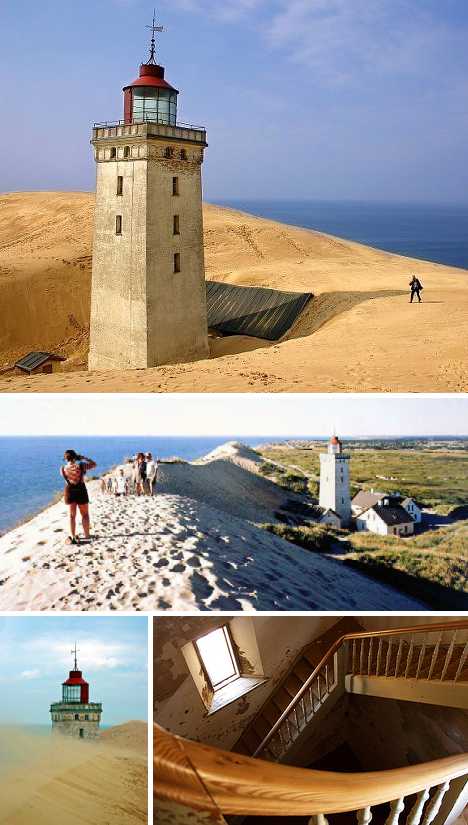
(images via: Environmental Graffiti/Anders Hollenbo, CIB W78 and ForoCoches)

When the Rubjerg Knude Lighthouse in Jutland, Denmark first fired up its lamp on December 27th of 1900, its builders were confident its location atop Lønstrup Klint 60 meters (200ft) above sea level would keep it out of the reach of windblown sand dunes that had made any seaside construction untenable. Though in time the dunes would not be denied, it would take almost 70 years for the lighthouse to be rendered inoperable and a further 35 for all the buildings in the complex to be abandoned altogether.
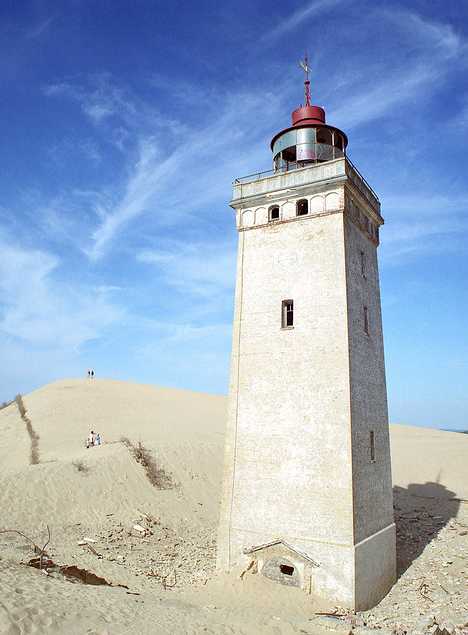
(image via: Mariorei)

One might think a lighthouse nearly subsumed by sand dunes would be located in the Middle East, North Africa, basically anywhere but Denmark! Live & learn, constant readers and potential lighthouse builders. It’s somewhat ironic a lighthouse constructed to help those who sail the waves would be wrecked by windblown waves of sand.

Great Isaac Cay Lighthouse, the Bahamas
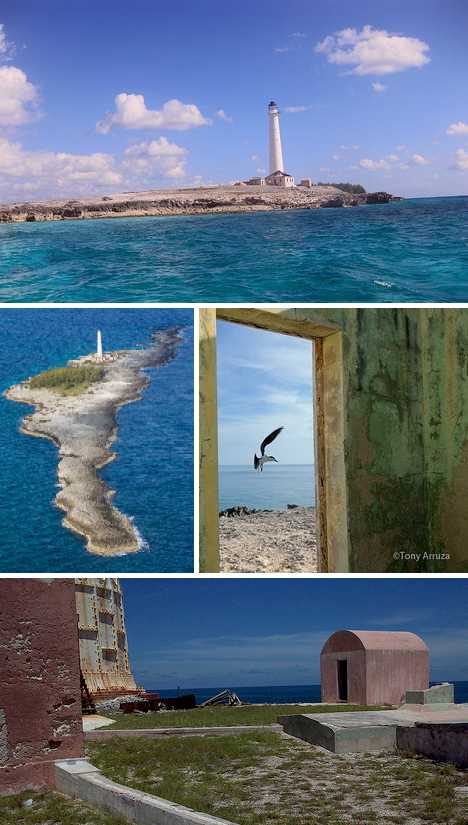
(images via: Megali.ST, FKA, Tony Arruza Photography and Joyous!))

The Great Isaac Cay Lighthouse was built in 1859 on tiny Great Isaac Cay in the Bahamas. The 152ft-tall tower is surrounded by a small group of decrepit and decaying outbuildings abandoned after the lighthouse’s last two keepers mysteriously vanished in 1969.
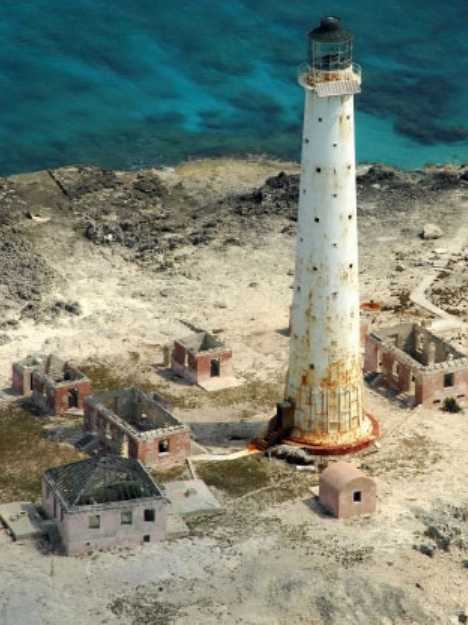
(image via: Artificial Owl)

The lighthouse still functions using an automatic lighting mechanism as it is still needed as a navigational aid. That’s just as well – the lighthouse has acquired a reputation for being haunted by the ghosts of shipwrecked ship passengers. It’s said that when the full moon shines, the spectral shades of a mother and child shipwrecked off the island in the late 19th century can be heard bemoaning their fate.

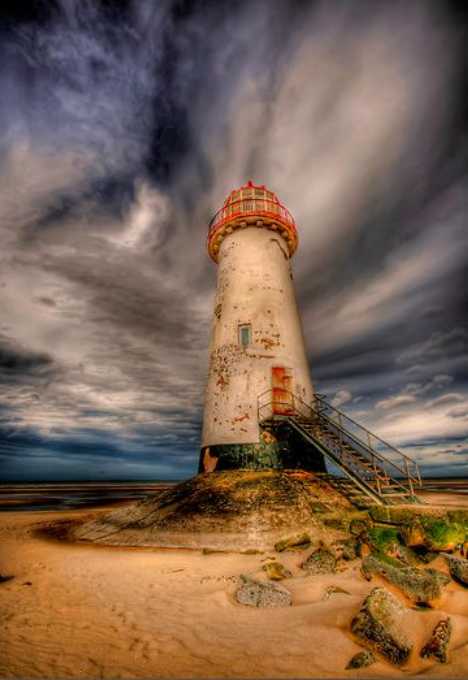
(image via: Michael John Grist)

The first to go were the keepers, made redundant by automated power generators. Next were the lighthouses themselves, relegated to superfluousness when GPS navigation offered ship captains accurate positioning any time of day, whatever the weather. Often built in isolated locations beset by the harshest of environments, these relics of a more romantic age are gradually giving up the ghost, ravaged by the same seas they sought to make safer for sailors. Last one to leave, please shut the door and turn out the light.


Want More? Click for Great Related Content on WebUrbanist:

Lost at Sea: Seven Beautiful Abandoned Lighthouses

These seven abandoned and inactive lighthouses represent marine history, and stand as tall, quiet beacons to what once was.
20 Comments – Click Here to Read More »»


14 Amazingly Beautiful and Historic Lighthouses From Around the World: Part Seven in an Eight-Part Amazing Houses Series

What is it about lighthouses that captures our attention? Is it the history behind these relics of a less technologically-advanced age? Is it the quaint charm of the towers?
8 Comments – Click Here to Read More »»


Share on Facebook


[ By Steve in Abandoned Places & Architecture. ]

[ WebUrbanist | Archives | Galleries | Privacy | TOS ]


WebUrbanist

 
Comments Off on Light’s Out: Seven More Eerie Abandoned Lighthouses

Posted in Creativity


Impossible Gadget Turns Digital Photos Into Analog Prints

03 Nov

[ By Delana in Gadgets & Geekery & Technology. ]

People around the world shed a little tear when Polaroid announced that it would stop producing the instant film that had become synonymous with the company’s name. The folks at The Impossible Project took up the torch and began producing instant film for Polaroid instant cameras, but they also realized that the photography world has changed significantly. They set out to produce something that was distinctly Polaroid, but that would also cater to the new generation of photographers who use their iPhones as their primary cameras.

(all images via: The Impossible Project)

The Impossible Instant Lab combines the best qualities of instant film photography and iPhone photography to create something entirely new and kind of magical. The device is more or less an iPhone cradle that turns digital photos into instant analog photo prints that you can actually touch, write on, and hand off to friends.

The portable “lab” makes it simple to turn iPhone photographs into physical instant film photos. Using the Instant Lab iPhone app, you pick the photo you want to print. Place the iPhone on the cradle, open the device’s shutter, and push a button to eject the exposed photo. That’s it – your high-tech digital photo is now a retro, low-tech, completely awesome Polaroid.

There are, of course, plenty of wi-fi and Bluetooth photo printers that can spit out hard copies of digital iPhone photos. The Impossible Instant Lab isn’t for the people who are satisfied with those pictures. This gadget is for the people who have felt like something is missing from their lives ever since Polaroid abandoned their instant photograph fans.


Want More? Click for Great Related Content on WebUrbanist:

Holgas, Polaroids & Pinholes: Lush Low-Tech Photography

Film photography is a dying art, but should we so fast to let go of the amazing images created with low-tech cameras like Holgas, pinhole cameras and Polaroids?
6 Comments – Click Here to Read More »»


Oh, Snap! 10 Camera Concepts Focused on Innovation

Digital photography has come a long, long way in the relatively short time it has been around. These forward-thinking camera designs want to push it further.
1 Comment – Click Here to Read More
»»


Share on Facebook


[ By Delana in Gadgets & Geekery & Technology. ]

[ WebUrbanist | Archives | Galleries | Privacy | TOS ]


WebUrbanist

 
Comments Off on Impossible Gadget Turns Digital Photos Into Analog Prints

Posted in Creativity


Super Skyscrapers! 20 Concept Towers That Reach Sky High

02 Nov

[ By Marc in Architecture & Cities & Urbanism. ]

Architects are all dreamers. While their special projects and grand ideas often aren’t considered practical enough to be created, looking at their concepts is a great way to see the potential that architecture holds in the future, as creativity and beauty is increasingly rewarded.

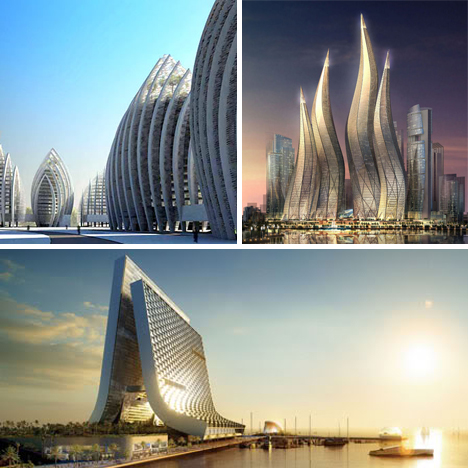
(Images via skyscrapernews, eikonographia, igreenspot)

The top left skyscraper is a dream of architects Adrian Smith and Gordon Gill, planned to be created in Dubai. The architecture firm TVS Associates came up with an even crazier concept for four towers, also planned for Dubai. Guess where that last building is being planned for? Yep, Dubai! Oppenheim came up with this gorgeously flowing Marina and Beach Tower.

(Images via webecoist, ibuildthetower, eamusing)

Designer Michael Jantzen loves to design towers with a fun, open aesthetic and a functional purpose (in this case, generating wind power while providing a beautiful view). The Watts towers are a famous one man project built in an abandoned lot by Sam Rodia, showing that some of these concepts can be built, even if it’s on a small scale. The final image is the back of a solar tower being built for the 2016 Olympic games being put on in Rio. The back has a gorgeous waterfall, and the front, featured below is equally stunning.

(Images via architecturepeanuts, adistinctiveworld, metaefficient, impactlab, inhabitat)

The Atrium City Towers, created by Adrian Smith, are a concept design for a series of connected towers to be constructed in Dubai. The front of Rio’s 2016 Olympic Games torch is a gorgeous structure, which will get a lot of use even after the games. These waterfront structures are planned for a Malaysian waterfront, and were designed by Studio Nicoletti Associati. Created for an Olympics, the “falling towers” building in Beijing, China (concept shown) are now a reality in the city. The Almaty Twin Towers are going to be built in Kazakhstan. They were designed by Norman Foster.

(Images via yankodesign, urbika, e-architect)

Zaha Hadid designed the “dancing towers” which reject the typical idea that towers have to be perfectly vertical. The Dubai Towers (now a canceled project) were also more fluid than most, adding a literal twist to the typical tower. The Nomas towers in Bahrain are an interesting concept and almost look like smoke stacks more than mixed use buildlings.

(Images via ecofriend, ctbuh, skyscraperpage, luxurylaunches)

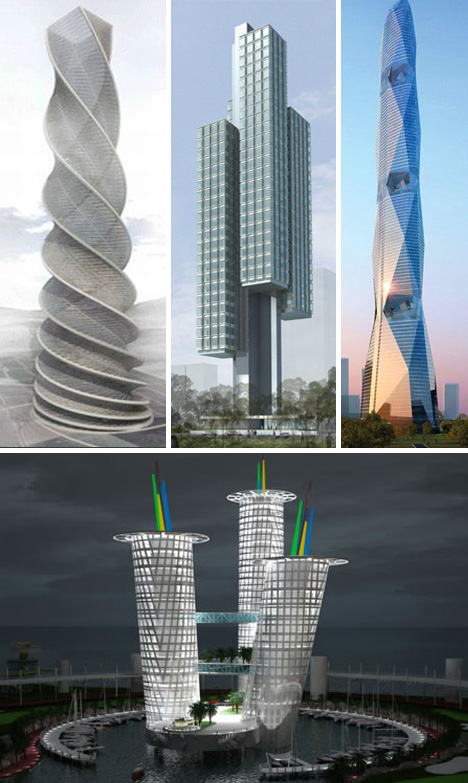
The Fog Tower was designed by  Alberto Fernandez and Susana Ortega and would stand at the edge of the Atamaca desert, absorbing moisture and creating a beautiful haze. the Singapore Towers are a wild twist on the typical tower, with several sections hanging off of a central core, and creating an incredibly unique look. This 101 story tower was designed for Dubai (where else?) and while it would stand out remarkably in most other cities, it says something about Dubai’s architecture that this one seems almost mundane. The Z10 Towers, designed by Dinesh Doshi, are mixed use and remarkable for their appearance, and the fact that they are surrounded by water.

(Images via greendiary, skyscrapercity)

The Moda-Gakuen Spiral Towers were designed for Nagoya City, Japan and have a stunning fluidity that is perfect for a structure on the edge of the water. Mumbai has this interesting design, an over 50 story building developed by Godrej Construction that is somewhat reminiscent of building blocks.


Want More? Click for Great Related Content on WebUrbanist:

Strange Skyscrapers: 14 of the World’s Weirdest Towers

From Bangkok’s elephant building and robot tower to an all-wooden skyscraper built by a single man, these 14 towering structures are among the world’s weirdest.
11 Comments – Click Here to Read More »»


Towers of Trash: 5000-Foot Junk Skyscrapers to Fuel Cities

Instead of burying our legacy under the Earth’s surface, these structures showcase the impact of the millions of tons of trash major cities produce on an annual basis.
1 Comment – Click Here to Read More
»»


Share on Facebook


[ By Marc in Architecture & Cities & Urbanism. ]

[ WebUrbanist | Archives | Galleries | Privacy | TOS ]


WebUrbanist

 
Comments Off on Super Skyscrapers! 20 Concept Towers That Reach Sky High

Posted in Creativity


Hanging Hotel: Hard-to-Reach Resort for Rock Climbers

01 Nov

[ By Steph in Conceptual & Futuristic & Technology. ]

If you can reach this futuristic hotel pod imbedded in the side of a mountain, your reward is a quiet resting space that you can customize to create a relaxing, meditative environment tailored to your whims. Designed for rock climbers, the Hanging Hotel concept by Dr. Margot Krasojevic was designed for Holden Manz Wine Estate Cape Town in Massif de L’Esterel in the South of France.

This ‘suspended campsite’ is a system of pods and platforms attached to the granite through borehole foundations injected into the rock face. The platforms on the exterior offer additional climbing surfaces, and places to rest while getting closer to the entrance.

Made of steel horizontal piles, columns and frames as well as plywood paneling, a carbon fiber-reinforced polymer shell and a wooden walkway, the Hanging Hotel clings to the rock face in seemingly precarious fashion, looking a bit like an artificial parasite.

Once inside, climbers can access what Krasojevic deems “the most important ingredient to this mix of materials” – a holographic filtered compound glass and prism louver system that alters the look and feel of the interior by adjusting the light level inside, reducing glare and producing shimmering colored light effects on the interior walls.

This orchestrated surreality takes advantage of climbers’ exhaustion and the physical effects of altitude to help them disassociate from the reality of the present moment for enhanced rest and recovery. “It can also ‘tune climbers in’ to the reality of the environment by creating a hyperawareness about the nuances of light that our vision may not be accustomed to seeing,” explains the designer.


Want More? Click for Great Related Content on WebUrbanist:

Incredible: 10 New Images of Dubai Underwater Hotel Design

A stunning new underwater hotel is planned for Dubai, complete with glass-walled guest rooms that give guests unparalleled views of marine life from their beds.
3 Comments – Click Here to Read More »»


Lanyang Museum Juts Out from the Landscape Like a Rock

The Lanyang Museum in Taiwan is inspired by the geological formations that surround it, jutting up out of the ground as if it’s pushing forth out of the rock.
1 Comment – Click Here to Read More
»»


Share on Facebook


[ By Steph in Conceptual & Futuristic & Technology. ]

[ WebUrbanist | Archives | Galleries | Privacy | TOS ]


WebUrbanist

 
Comments Off on Hanging Hotel: Hard-to-Reach Resort for Rock Climbers

Posted in Creativity


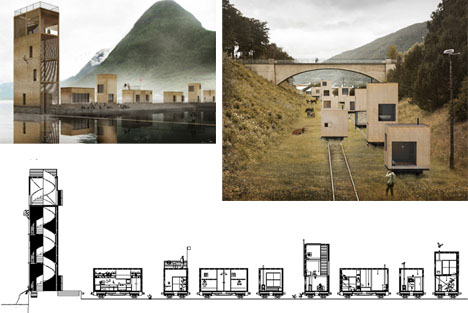
Cities on Rails: Mobile Master Plan Turns Trains into Towns

01 Nov

[ By WebUrbanist in Architecture & Cities & Urbanism. ]

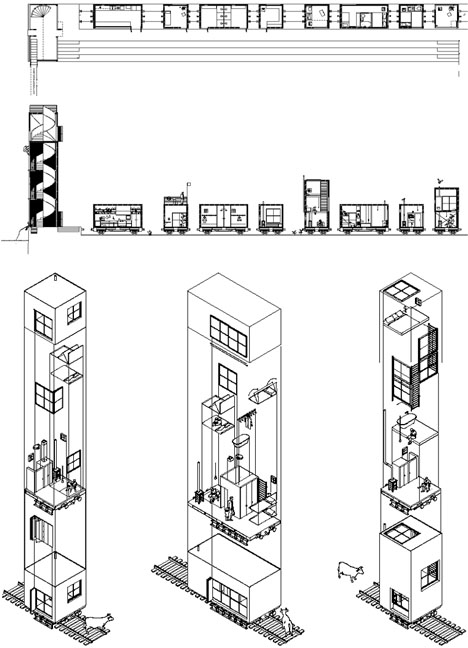
Modular thinking is brilliant and infectious, expanding and spreading from industrial-revolution technologies to three-dimensional printing and beyond. But how big can modularity get? Imagine the same concept applied to cities that move, grow and shrink on demand, gaining or shedding functions and spaces as needed.

Spoiler alert:  science-fiction writer China Mieville (of whom this author is a serious fan) first envisioned a permanent mobile life on rails in Iron Council, where residents deploy tracks in front of (then pull them up behind) an ever-moving rogue locomotive. Then in Railsea, he expanded this idea in a world where every inch of land is covered by iron rails and wooden ties. It sounds like far-fetched fantasy, but could something like this work in reality?

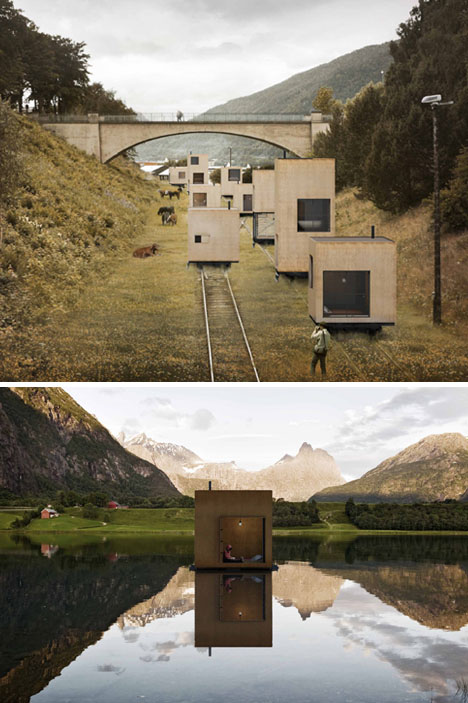
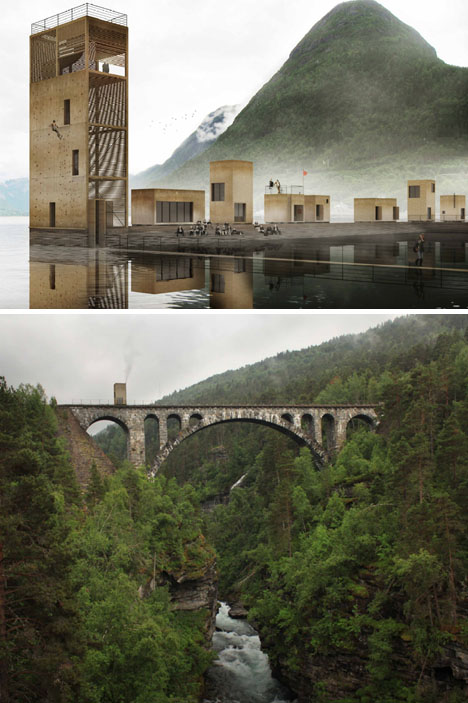
The Swedish architecture firm Jagnefalt Milton asks and answers this question in their daring and award-winning design of A Rolling Master Plan, conceived of as a way to utilize existing rail routes to shift entire towns – or even cities – worth of people and places.

Consider seasonal migrations, for instance: festivals, markets, concerts and other events that move throughout the year. What if they could take their architecture with them as they traveled? Then there are hotels, restaurants and other commercial functions that see demand change over time as well as by season. What if they could deploy rooms or eateries around a country at will? Sure, it is conceptual, but the real-life applications are astonishing once you start thinking about ways buildings could adapt if only they could move more freely.


Want More? Click for Great Related Content on WebUrbanist:

Rolling Out a Master Plan: Movable City on Rails

A concept for a Norway city that acts as a gateway to the country’s fjords puts public buildings on rails, creating a portable town that expands in the summer.
3 Comments – Click Here to Read More »»


24 Tales of Ghost Towns and Abandoned Cities

What in the world could cause entire cities to become abandoned? Here are twenty-four haunting real-life ghost villages, towns and cities from around the world.
86 Comments – Click Here to Read More »»


Share on Facebook


[ By WebUrbanist in Architecture & Cities & Urbanism. ]

[ WebUrbanist | Archives | Galleries | Privacy | TOS ]


WebUrbanist

 
Comments Off on Cities on Rails: Mobile Master Plan Turns Trains into Towns

Posted in Creativity


Urban LEGOs: Conceptual Cure for Civic Blight Blindness

30 Oct

[ By Steph in Architecture & Cities & Urbanism. ]

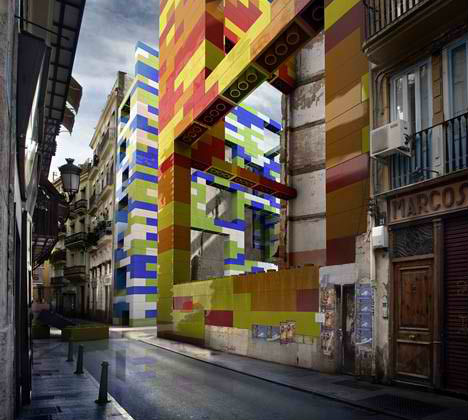
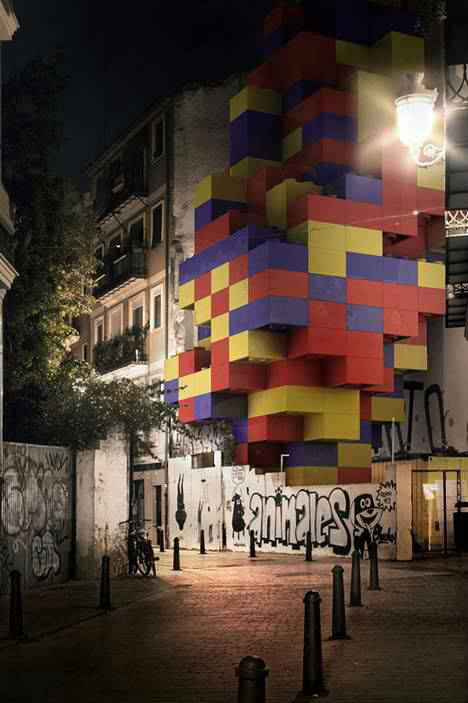
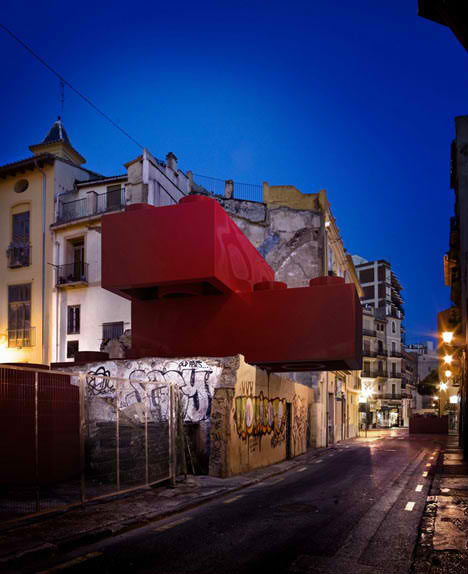
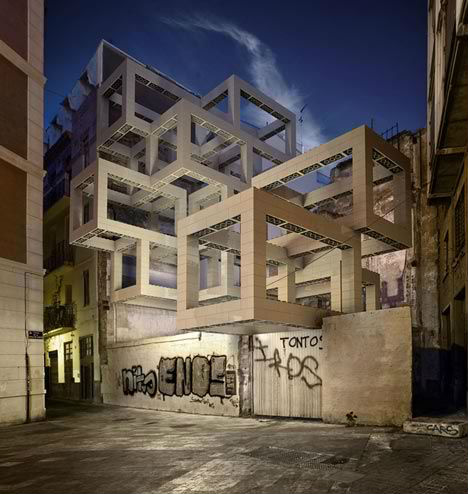
Chances are, you’d notice all of the vacant lots in your city if massive LEGO structures were used to call attention to the wasted space. ‘Habit Makes Us Blind’ is a concept by Spanish studio Espai MGR, digitally filling in unused areas of Valencia with colorful fantasy buildings suggesting how the space could be used.

As years go by, vacant lots – often walled off with ugly temporary fences that are soon covered in spray-painted tags – can almost become invisible to those who pass them on a regular basis.

With urban populations continuing to grow, space is at a premium. While the LEGO structures by Espai MGR aren’t practical in a real-world sense, they do illustrate just how much vertical space is still available, leading one to wonder what it could potentially become.

“This photographic work aims at calling people’s attention, just like painting those isolated walls yellow would. It demands the recreational use of those vacant lots through the eyes of a child, by filling them with impossible constructions, surrealistic installations in line with the problem. A children’s game as a neighbour’s shout, demanding the right to take part in their city.”


Want More? Click for Great Related Content on WebUrbanist:

LEGOs Bring Historical Figures to (Miniature Toy) Life

LEGO artist Jamie Spencer created over 90 historical figures, from Charlemagne to Elvis, using only official LEGO parts.
3 Comments – Click Here to Read More »»


Bricks and Scones: British House Built Entirely of Legos

Have you ever wished you could build a Lego house big enough to walk into? UK TV presenter James May and a team of volunteers and builders are doing just that.
5 Comments – Click Here to Read More »»


Share on Facebook


[ By Steph in Architecture & Cities & Urbanism. ]

[ WebUrbanist | Archives | Galleries | Privacy | TOS ]


WebUrbanist
 
Comments Off on Urban LEGOs: Conceptual Cure for Civic Blight Blindness

Posted in Creativity


Wallpaper Paint Rollers: Cool & Classic Patterns, DIY Style

30 Oct

[ By WebUrbanist in Design & Furniture & Decor. ]

Applying wallpaper is nothing if not frustrating – you have to line everything up just right, and if you ever want to take it down, it is nowhere near as easy as painting over an existing color on primed drywall.

But what might be more amazing than this nifty do-it-yourself patterned paint roller tool is that it is nothing new, as explained on The Painted House: “When I stumbled across these paint rollers in a market in Romania I was so excited ….”

“They have been used there for the last 100 years or so as an alternative to wallpaper. As an ardent upcycler I have been using them ever since to bring unloved fabrics and wonky old walls back to life.“ The resulting new-version rollers can put patterns to paper, walls and fabrics, adding substantive decor to more than just mere walls.

The company is beyond enthusiastic about their product and its various applications: “So far we have made metres of fabric, curtains, bunting, cushions, stationary, lampshades and wrapping paper, covered books and furniture, printed on walls, and someone is in the process of rollering the inside of their bell tent!”


Want More? Click for Great Related Content on WebUrbanist:

Wild Wallpaper: Interactive Decor You Can Rip & Color

Hanging wallpaper is made much more fun when you get to paint and peel it, revealing intricate geometric patterns that won’t be found on any other wall.
Click Here to Read More »»


Inside Out: Print-Crazy Wallpaper Made for Exterior Surfaces

Outdoor wallpaper brings bright colors and bold prints out to exterior walls in an eye-popping series by Italian design company Wall & Decó.
Click Here to Read More »»


Share on Facebook


[ By WebUrbanist in Design & Furniture & Decor. ]

[ WebUrbanist | Archives | Galleries | Privacy | TOS ]


WebUrbanist
 
Comments Off on Wallpaper Paint Rollers: Cool & Classic Patterns, DIY Style

Posted in Creativity


Home Mathematics: 12 Fractal Furniture & Architecture Designs

29 Oct

[ By Steph in Design & Furniture & Decor. ]

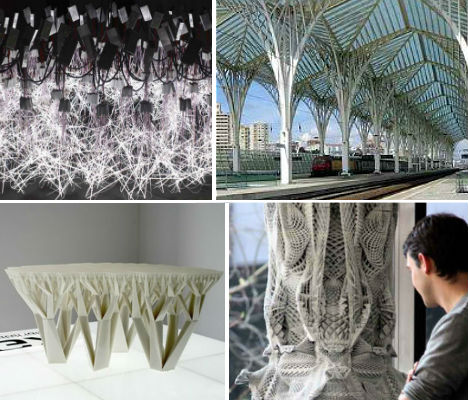
Geometry lies at the core of every design process, and as computer-aided design becomes more common, the patterns that can be found in architecture, furniture and home decor grow increasingly complex. The use of fractal geometry, in which a geometric pattern is repeated at smaller and smaller scales to produce irregular shapes and surfaces, is among the most visually interesting. Here are 12 fractal (and fractal-inspired) designs, from tables to the canopy over a train station.

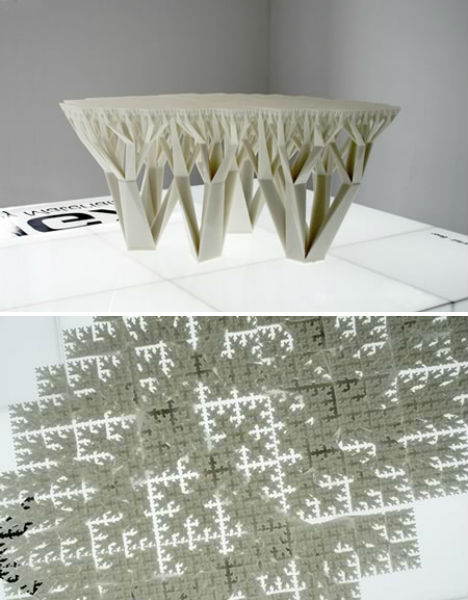
Fractal Table by Platform Wertel Oberfell

(images via: platform-net.com)

Mimicking fractal growth patterns found in nature, the Fractal Table by Platform Wertel Oberfell features legs that resemble tree trunks that divide over and over again until they’re dense enough to form a patterned surface.

Homune Table by Michael Young

(images via: design boom)

36 individual hand-blown glass fractals – six forms repeating six times – come together in this amber-colored geometric table by Michael Young. Says the designer, “over the years we have experimented with fractal structures creating endless constructions, not art but design experimentation,  studies into the unknown and transpired this research into the new lasvit glass table. we discovered that by blowing glass into only one metal tool and cutting it at different lengths, we could make logical and functional structures, the first thing being this special edition table.”

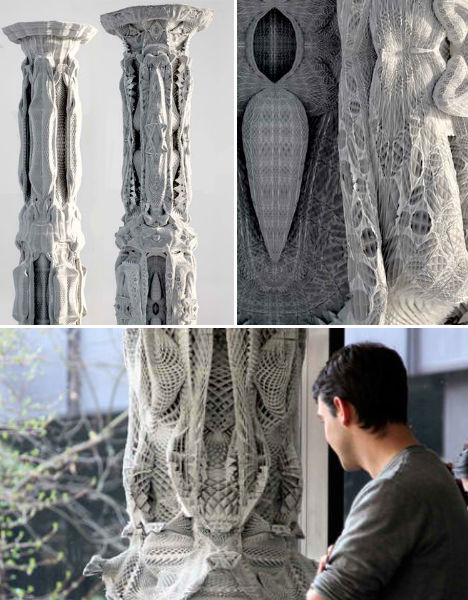
Ornamented Columns by Michael Hansmeyer

(images via:  design boom)

These columns are so complex, at first they don’t seem as if they could possibly be real. Michael Hansmeyer first designed his ‘ornamented columns’ using algorithms and subdivision processes that result in incredibly varied topographies. The designs were then created in three dimensions using 1mm grey board sheets that were individually cut using a mill or laser, then stacked together on poles that run through the core.

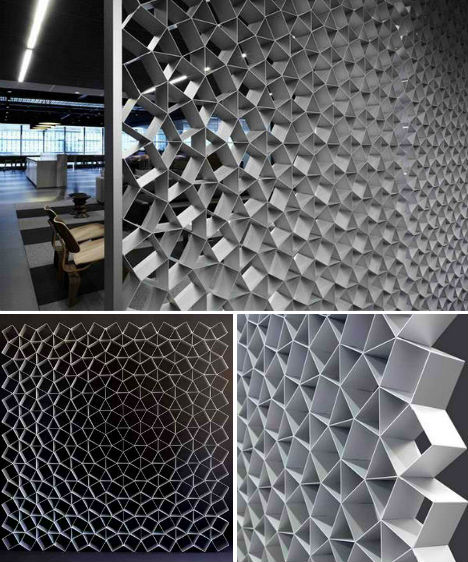
>Cellscreen by Korban/Flaubert

(images via: korbanflaubert)

Made of anodized aluminum, this room screen by Korban/Flaubert takes its inspiration from the fractal shapes of honeycomb.

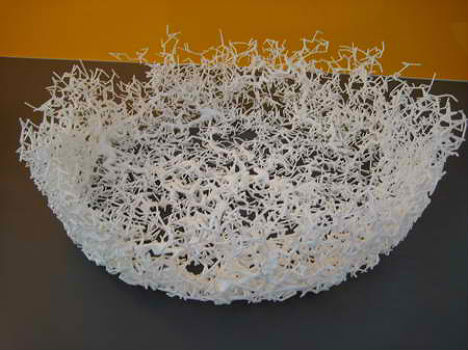
Diffusion Vessels by David Sutton

(images via: dezeen)

These unusual vessels were created by digitally fabricating the fractal growth patterns of natural phenomena like lightning and snowflakes through a process called ‘Diffusion Limited Aggregation’.

Embedded Project by HHD_FUN<

(images via: hddfun)

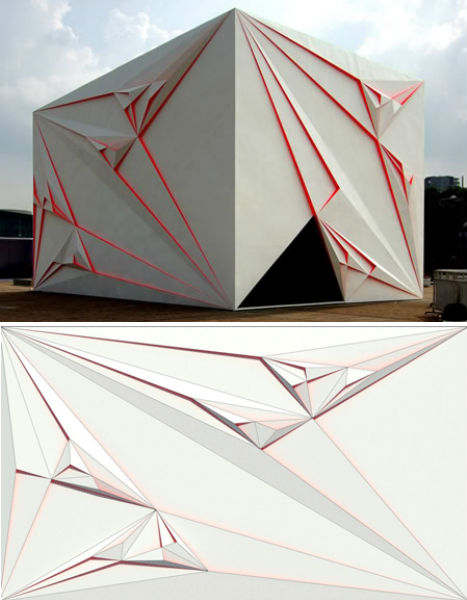
Architecture firm HHD_FUN created a pavilion in Beijing that features a pattern based upon a triangular fractal pattern. The faces of the pavilion were designed using a recursion algorithm, sub-dividing or ‘cracking’ each triangle into smaller and smaller triangles. At each ‘cracking’, new triangles are raised from the surface to create a three-dimensional pattern.

Absent Nature by Arik Levy

(images via: dezeen)

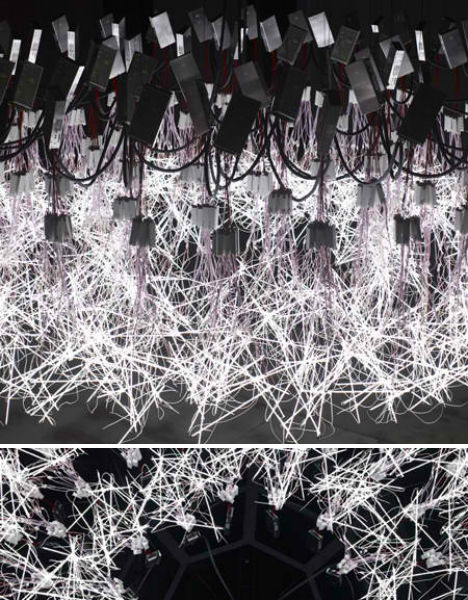
More than a thousand light tubes make up ‘Fractal Cloud’, a light installation by Arik Levy. “In the shadow of the Fractal Cloud light an enormous hexagonal ring of powerful light has been created from over one thousand light tubes woven onto another to become a single light-emitting textile projecting two small ricochets, one in colour and one in warmer white light.”

Fractal LED by Arik Levy

(images via: dezeen)

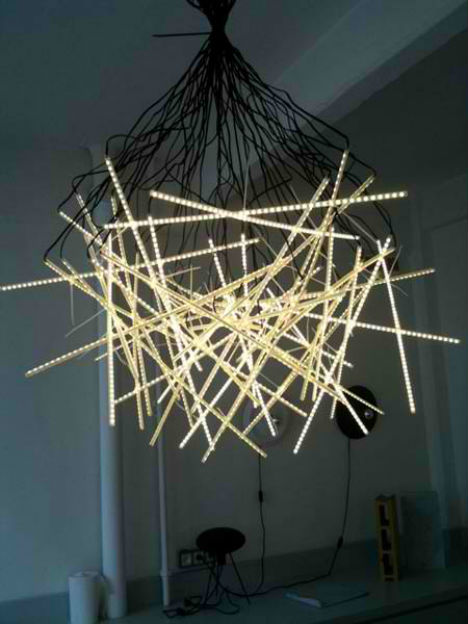
Arik Levy also completed this ‘Fractal LED’, another in his fractal LED light series.

Lisbon Oriente Station by Santiago Calatrava

(images via: wikimedia commons)

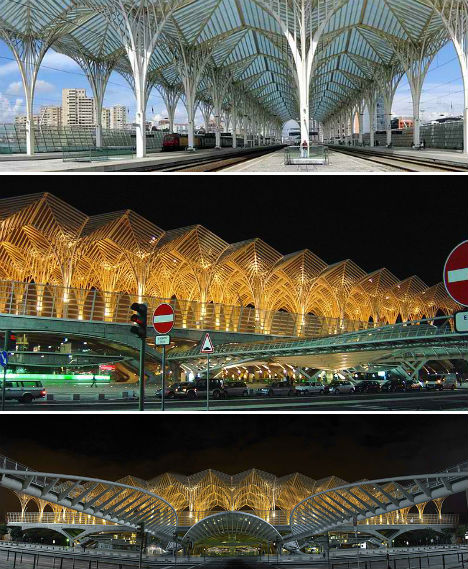
Lisbon’s Oriente Station by Santiago Calatrava is a dazzling example of mathematically inspired architecture. Calatrava is known for designs that are often rooted in natural patterns and forms, particularly sea life and birds.

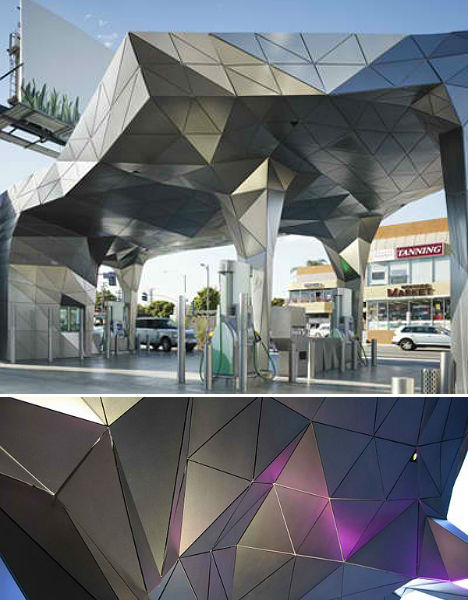
Helios House

(images via: wikimedia commons)

Its design may not technically be fractal, but the Helios House gas station in Los Angeles definitely has the look of a mathematical pattern to it, with its faceted stainless steel facade.

Fractal LiveBook

(image via: design boom)

This unusual design is a notebook computer that can be broken into smaller pieces, each of which is a reduced-scale copy of the whole. Says designer Pedro Calle, “Fractal LIVEBOOK is everything you need, it can be split into pieces each of which can work individually as laptops, pads, music players and tweak them with apps and widgets. It also can work together as a console with different touch-screens with programs, menus, tools, palettes, brushes and audio samplers, separating physically the workspace. Find all the fun on customizing your LIVEBOOK’s fractals, share them with your friends and enjoy making the digital realm a more analogous experience.”

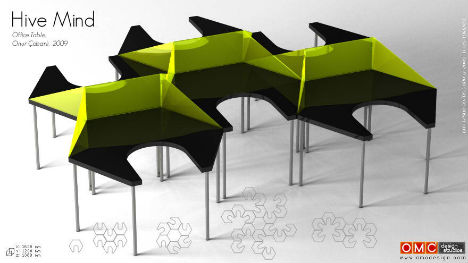
Hive Mind Office Table


(images via: omcdesign)

Offering more privacy and adaptability, and certainly better looks, the ‘Hive Mind’ office desk system is an alternative to conventional cubicles that can create fractal working spaces in various configurations.


Want More? Click for Great Related Content on WebUrbanist:

Flat-Pack Furniture: 3 Modern Designs from Noon Studio

Three designs from Noon Studio prove that simple is beautiful including a flat-pack cantilevered table, an oak and steel stool and an A-shaped leaning lamp.
Click Here to Read More »»


Art of Design: Amazing Artistic Furniture Designs

These 15 incredibly creative furniture designs are as much fine art and entertainment as they are functional seating, tables, beds and storage.
20 Comments – Click Here to Read More »»


Share on Facebook


[ By Steph in Design & Furniture & Decor. ]

[ WebUrbanist | Archives | Galleries | Privacy | TOS ]


WebUrbanist
 
Comments Off on Home Mathematics: 12 Fractal Furniture & Architecture Designs

Posted in Creativity