RSS
 

Archive for the ‘Creativity’ Category

Trap Streets & Rooms: Cartographic Errors Catch Copycats

19 Feb

[ By WebUrbanist in Architecture & Cities & Urbanism. ]

trap street map fake

Phantom settlements and trap streets are faked or falsified, intentionally introduced (or materially altered) by map makers to catch those who would copy them. And the practice is not limited to towns or roads – there are trap ponds, trap parks, trap buildings and trap sidewalks, too.

trap street real example

Now imagine the same thing applied to indoor spaces being mapped by new mobile device apps: trap rooms, halls, closets and stairwells – entirely fake spaces that could at worst confuse, but at best might become targets of offbeat geo-locational games.

trap room interior navigation

BldgBlog (image above by Laura Pedrick for The New York Times) speculates about introducing false information to interior maps of places like shopping malls:

“Nothing sinister—you don’t want people fleeing toward an emergency stairway that doesn’t exist in the event of a real-life fire—but why not an innocent janitorial closet somewhere or a freight elevator that no one could ever access in the first place? Why not a mysterious door to nowhere, or a small room that somehow appears to be within the very room you’re standing in?”

trap paper street

Unlike some paper streets (example shown above), which are planned but never become a reality, trap streets and phantom settlements (like Argleton, a faux town depicted below) are fictitious creations from the start, designed to mislead copyists into revealing their own copyright infringement. Normally innocuous (like: renaming or bending a road), you think of them as equivalent to programmer’s Easter Egg or a hidden watermark  on a photograph – a buried surprise in everyday maps.

trap phantom settlement

But what are the implications of doing this on a smaller scale of pedestrian circulation, deceiving people not by square mile, but by cubic feet? Could you frustrate the janitorial staff at a school, scare someone into imagining a secret room in their apartment complex? Would it trick urban explorers into actually physically trapping themselves? We will set these open questions aside and leave you with a little fun fact: while designed to catch copiers, trap streets cannot themselves be copyright.

Share on Facebook


[ By WebUrbanist in Architecture & Cities & Urbanism. ]

[ WebUrbanist | Archives | Galleries | Privacy | TOS ]


WebUrbanist

 
Comments Off on Trap Streets & Rooms: Cartographic Errors Catch Copycats

Posted in Creativity


Maldives & More: 12 Envy-Worthy Resorts of the Rich

19 Feb

[ By Steph in Global & Travel & Places. ]

Resorts for the Rich Main

Not all of us can afford to rent out an entire private island in the Caribbean, or even an ocean villa in the Maldives, but it’s fun to dream. With the most picturesque tropical views of crystal-clear blue-green waters and white sand beaches imaginable, these 12 luxurious island resorts don’t come cheap, but their oversized tubs, infinity pools and hammocks suspended over the sea are capable of making you feel more relaxed with photos alone.

Musha Cay, The Bahamas

Resorts for the Rich Musha Cay

Among the priciest resorts in the world, David Copperfield’s Musha Cay in The Bahamas is only accessible to those with millions in the bank. It’s $ 37,000 per night, with a four-night minimum, for up to 12 people. But at that price, the island is all yours – so if you’ve got the cash, it’s worth it. There are five plantation-style villas and The Landings, the main building holding the restaurant and clubhouse. Beach barbecues, jet skis, banana boats, tennis courts and a pool table that once belonged to Harry Houdini are just a few of the activities offered.

Maafushivaru Hotel, Maldives

Resorts for the Rich Four Seasons Maldives 2

Resorts for the Rich Maldives Paradise

Choose from a spacious pool villa or a cozier ocean villa at the stunning Maafushivaru Hotel in the Maldives. Each little getaway is perched above crystal-clear waters, with a serene white sand beach within easy walking distance. Rooms start at $ 2,600 per night – per person.

Laucala Island, Fiji

Resorts for the Rich Laucala

The all-inclusive Laucala Island resort is located on the largest private island in the Southern hemisphere, just off the coast of the Fijian island of Taveuni; it was once the private island of Malcolm Forbes and is now owned by the head of Red Bull. It features 25 bungalows, each with its own private pool and oversized outdoor stone or wooden bathtub. Coming with a group? Rent the Hilltop Residence, which has six bedrooms, three baths and a 360-degree view of paradise.

Coco Palm Bodu Hithi Resort, Maldives

Resorts for the Rich Coco Palm 1

Resorts for the Rich Coco Palm 2

Locate on a private island in the Maldives, the Coco Palm Bodu Hithi Hotel boasts eight restaurants, a spa with yoga and tai chi classes, and 100 guest units. Elevated wooden walkways lead from one section of the resort to another, and infinity pools jut out over the deeper blue of the sea water.

Hayman Hotel, Australia

Resorts for the Rich Hayman Hotel 1

Resorts for the Rich Hayman hotel 2

The incredible Hayman Hotel has its own artificial barrier island creating a private cove-like pool area. Nearly all the guest rooms overlook this massive aquatic playground and the sea beyond it, which is just a stone’s throw from the legendary Great Barrier Reef.

Share on Facebook


[ By Steph in Global & Travel & Places. ]

[ WebUrbanist | Archives | Galleries | Privacy | TOS ]


WebUrbanist

 
Comments Off on Maldives & More: 12 Envy-Worthy Resorts of the Rich

Posted in Creativity


Car-Free City: China Builds Dense Metropolis from Scratch

19 Feb

[ By Steph in Architecture & Cities & Urbanism. ]

China Carless City 1

Altering most of today’s cities to eliminate cars altogether would be a daunting, if not impossible, proposition – which is why China is starting from scratch. Great City will be built around a high-rise core housing 80,000 people, entirely walkable, and surrounded by green space.

China Carless City 2

Planned for a rural area outside Chengdu, the high-density Great City will give residents access to a ‘buffer area’ of gardens and greenery making up 60% of the total area of the city. Walking from the center of the city to the green spaces takes just ten minutes, and other nearby urban centers will be accessible by a mass transit system.

China Carless City 3

Chicago architecture firm Adrian Smith + Gordon Gill Architecture say the city will use 48% less energy and 58% less water than a more conventional city of the same size; it will also produce 89% less landfill waste and generate 60% less carbon dioxide.

China Carless City 4

The development addresses the problem of overpopulation, pollution and urban sprawl by compacting a lot of residents into vertical housing, growing food nearby. “The design is attempting to address some of the most pressing urban issues of our time, including the need for sustainable, dense urban living at a cost people can afford,” says Gill.

Carless City China 5

“Accordingly, we’ve designed this project as a dense vertical city that acknowledges and in fact embraces the surrounding landscape—a city whose residents will live in harmony with nature rather than in opposition to it. Great City will demonstrate that high-density living doesn’t have to be polluted and alienated from nature. Everything within the built environment of Great City is considered to enhance the quality of life of its residents. Quite simply, it offers a great place to live, work and raise a family.”

Share on Facebook


[ By Steph in Architecture & Cities & Urbanism. ]

[ WebUrbanist | Archives | Galleries | Privacy | TOS ]

WebUrbanist

 
Comments Off on Car-Free City: China Builds Dense Metropolis from Scratch

Posted in Creativity


Faux Facades: Fake Buildings Hide Trains, Power & More

19 Feb

[ By WebUrbanist in Architecture & Public & Institutional. ]

fake urban architecture

When is a building not a building? When it is only a facade, (aka) dummy! You might have passed right by train tunnels, communications towers or even entirely empty buildings and never realized you were being duped – until now.

Underground Train Passage & Ventilation in Rowhouse

fake architecture underground venting

Consider units 23 & 24, Leinster Gardens in Paddington, London. When underground rail was routed through the neighborhood in the 1860s, the residences at those addresses were razed … and replaced with a very convincing facade. Behind it: an empty void for the old engines to vent along their route, and metal bracing to help hold up adjacent structures. Hoaxes played on this place include everything from the pizza-delivery redirect to a prankster selling tickets to a charity ball at the address.

Subway Emergency Exit & Energy Converter in Townhouse

fake building over subway

One more urban ventilator before we move on: 58 Joralemon Street in Brooklyn, New York follows a similar pattern to its British brethren – blacked-out windows are the only up-close giveaway to an otherwise-complete illusion of occupation, while the railway runs below. This faux building has had multiple subway-related purposes beyond ventilation, though, including electrical conversion and emergency egress.

Power Substations in Houses, Offices, Factories & Castles

fake building power substations

Toronto has a century-long history of hiding its urban energy substations as all kinds of architecture, from small single-family homes to huge block-sized factory buildings, at addresses including 29 Nelson Street, 2833 Yonge Street & 640 Millwood Road. Some have caught fire in freak accidents – not something the neighbors like to worry about. Others have been decommissioned and converted to residential or commercial use, in a strange instance of life imitating the art of imitation.

Share on Facebook


[ By WebUrbanist in Architecture & Public & Institutional. ]

[ WebUrbanist | Archives | Galleries | Privacy | TOS ]


WebUrbanist

 
Comments Off on Faux Facades: Fake Buildings Hide Trains, Power & More

Posted in Creativity


Subterranean Quarry Hotel to Extend 328 Feet Underground

19 Feb

[ By Steph in Boutique & Art Hotels & Global. ]

Songjiang Quarry Hotel Construction 1

Construction has begun on an incredible 19-story, 5-star hotel that will be located deep within a 100-meter (328-foot) abandoned quarry near the base of Tianmashan Mountain in the Songjiang District of Shanghai. The 380-room Shimao Intercontinental Hotel seemed almost too wild to be true, and though its initial estimated opening date of May 2009 has long past, photos show progress at the quarry.

Songjiang Quarry Hotel Construction 2
Designed by British engineering firm Atkins Global, the Shimao Hotel mimics a waterfall with a glass atrium that extends from the ground-level roof all the way down into the quarry. Three of the floors will be above-ground, with the rest extending into the pit. Instead of pumping the water out of the flooded quarry, the designers aim to turn it into a man-made lake.

Songjiang Quarry Hotel Construction 3

Activities will take advantage of the unique landscape, including rock climbing, bungee jumping and water-based sports, and the hotel will also have its own cafes, restaurants, swimming pools, shopping and sporting facilities. Several of the public areas will be underwater, with others facing a 10-meter-deep aquarium.

Songjiang Quarry Hotel Construction 4

Songjiang Intercontinental Hotel will be powered with geothermal energy, and above-ground structures will have green roofs for insulation and to help them blend in with the surrounding scenery. Rooms are expected to start at $ 320 per night, and the hotel is scheduled to open in late 2014 to early 2015.

Share on Facebook


[ By Steph in Boutique & Art Hotels & Global. ]

[ WebUrbanist | Archives | Galleries | Privacy | TOS ]


WebUrbanist

 
Comments Off on Subterranean Quarry Hotel to Extend 328 Feet Underground

Posted in Creativity


Printing Prospects: 10 Hi-Tech Printer Prototypes & Concepts

19 Feb

[ By Delana in Conceptual & Futuristic & Technology. ]

futuristic printers

Printers have become much more complex than simply machines that spit out pieces of paper with ink on them. Designers are envisioning all kinds of futuristic printers that will give us information on demand, 3D printed objects, food and even body parts. These 10 concepts and actual products are on the very cutting edge of printer technology.

The Filabot

filabot

The Filabot, an invention from Vermont Technical College student Tyler McNaney, is reinventing the way 3D printing works. It is, in essence, a printer of the materials used for 3D printing. Confused yet? The Filabot takes waste plastics, grinds and melts them down, then extrudes the plastic into filament. The filament is the “ink” for 3D printers which is laid down layer by layer until the desired object is created.

 The Oksu

oksu

The Oksu, from designer Alex Zhulin, was created to share digital links in a physical format. When you find something you love – a YouTube video, for example – the Oksu prints out a speech bubble-shaped piece of paper with an image and description of the digital content. The paper also contains a near-field communication (NFC) chip which allows it to communicate with mobile gadgets, calling up the link on the screen. It’s kind of like sending a link via email, only there is a physical layer to the act. After the link has been visited, the little paper can still be used as a reminder of the interaction – which is much more fun than just saving an email.

The PrintBrush

printbrush

Having a printer available is so commonplace that most of us rarely think about the functionality of these machines. Swedish engineer Alex Breton thought about it, and he didn’t see any reason we have to be tethered to traditional printers with their very limited paper sizes. He invented the PrintBrush, a hand-held printer that can go anywhere and print onto anything. You simply hold the device and pass it over the surface you want to print on – the PrintBrush detects its position and the rate at which you’re moving it, ensuring that each pixel is perfectly placed.

Skin Cell-Printing Inkjet

skin cell printer

When skin is damaged beyond repair by burns or other wounds, a skin graft is usually the go-to treatment. But there are many complications inherent in skin grafts, including scarring and the possibility of rejection or infection. This device, created at Wake Forest University in South Carolina, would greatly reduce any risks by doing away with skin grafts entirely. Instead, the device “prints” – or, maybe more accurately, sprays – healthy skin cells directly onto a wound, where they can grow into a normal part of the patient’s skin. With this new method, there is no scarring, no risk of the body rejecting the new skin, and the repaired areas even grow their own hair. Perhaps best of all, the bio-printer drastically reduces wound healing time.

Toilet Roll Twitter Printer

toilet-side twitter printer

There’s no delicate way to put this: people like to read while on the toilet. Some of us choose to take a book or magazine in, but this very unusual printer was designed to take their place. Brought to life by German inventor Mario Lukas for a hardware competition, the device prints your Twitter feed directly onto a roll of toilet paper for reading and subsequent wiping. Using toilet paper printed with Twitter updates might be the ultimate way to show your feelings for the microblogging site and the folks you follow there.

Share on Facebook


[ By Delana in Conceptual & Futuristic & Technology. ]

[ WebUrbanist | Archives | Galleries | Privacy | TOS ]


WebUrbanist

 
Comments Off on Printing Prospects: 10 Hi-Tech Printer Prototypes & Concepts

Posted in Creativity


Möbius Strip: Plans to Build World’s First 3D-Printed House

19 Feb

[ By WebUrbanist in Architecture & Houses & Residential. ]

3d printed house

An unlikely and unique collaboration is in the works between an architect, an inventor and a mathematician-plus-artist to produce a first-of-its-kind printed house in a single shot using cutting-edge 3D construction technologies.

3d house form detail

Janjaap Ruijssenaars of Universe Architecture has teamed up with, Enrico Dini, the developer of D-Shape, with help from Rinus Roelofs to design and implement a looping wonder home made of a kind of concrete. It will use sand as the primary aggregate, and be based on huge panels (nearly 20 by 30 feet) with infill.

3d mobius strip home

This connected-panel system will be three-dimensionally complex – incredibly difficult for normal manufacturing processes, and consequently an amazing illustration of the potential of 3D printing for architectural applications. The Möbius strip shape, suggesting infinite possibility, seems an apt one for the project.

Share on Facebook


[ By WebUrbanist in Architecture & Houses & Residential. ]

[ WebUrbanist | Archives | Galleries | Privacy | TOS ]


WebUrbanist

 
Comments Off on Möbius Strip: Plans to Build World’s First 3D-Printed House

Posted in Creativity


Nest-Like 3D Printed House Will be Assembled in a Day

19 Feb

[ By Steph in Architecture & Houses & Residential. ]

3D Printed House 1

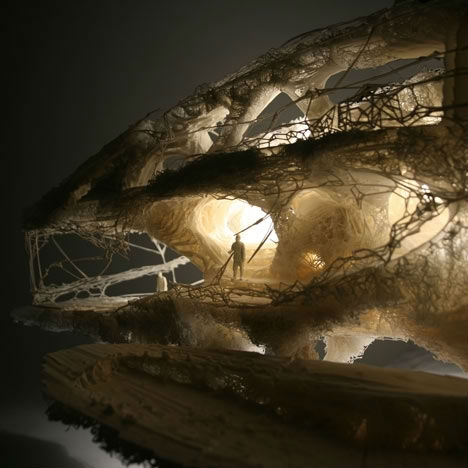
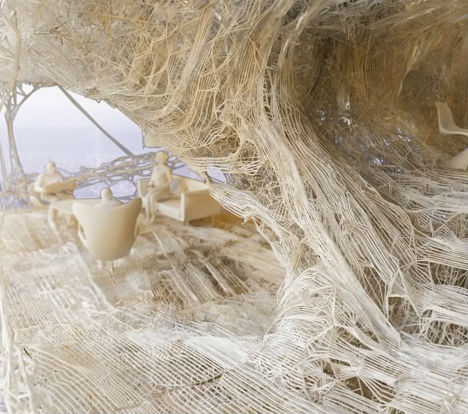
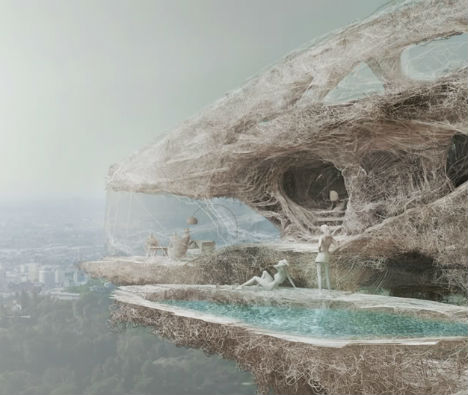
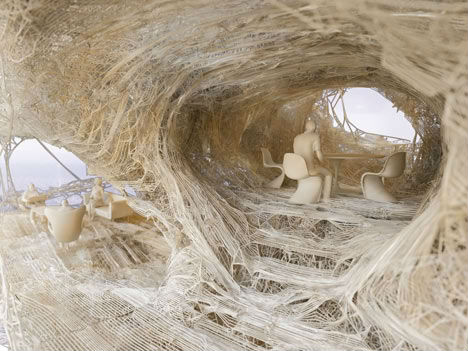
Dutch architects Universe Architecture hope their möbius strip ‘Landscape House’ will be the first home constructed with 3D printing technology, but London’s Softkill Design aims to beat them to the punch with this nest-like design. Made of plastic, the organic-looking ProtoHouse 2.0 could be built off-site in three weeks and assembled in a single day.

3D Printed House 2

Softkill Design plans to have the first prototype out by this summer. The single-story house will be 8 meters (26 feet) wide and 4 meters (13 feet) long, with prefabricated sections small enough to transport in vans and snap together on-site. The lightweight pieces fit together like velcro or buttons, without the need for bolting, screwing or welding. Once assembled, the structure looks like a spider’s nest.

3D Printed House 3

Gilles Retsin of Softkill Design told Dezeen of the competing Landscape House, “We actually don’t even consider that a 3D printed building because he is 3D printing formwork and then pouring concrete into the form,” Retsin said. “So it’s not that the actual building is 3D printed.”

3D Printed House 4

The original ProtoHouse 1.0 represented the first prototype for a 3D-printed building, in which all elements of the house – structure, cladding, interior and finishing – were printed. “When we started this research, it was kind of science fiction,” says Retsin. “It’s not actually that far off any more.”

Share on Facebook


[ By Steph in Architecture & Houses & Residential. ]

[ WebUrbanist | Archives | Galleries | Privacy | TOS ]


WebUrbanist

 
Comments Off on Nest-Like 3D Printed House Will be Assembled in a Day

Posted in Creativity


Surreal La Balade des Gnomes Hotel Offers Fantasy Getaway

19 Feb

[ By Steph in Boutique & Art Hotels & Global. ]

Surreal La Balade des Gnomes Hotel 1

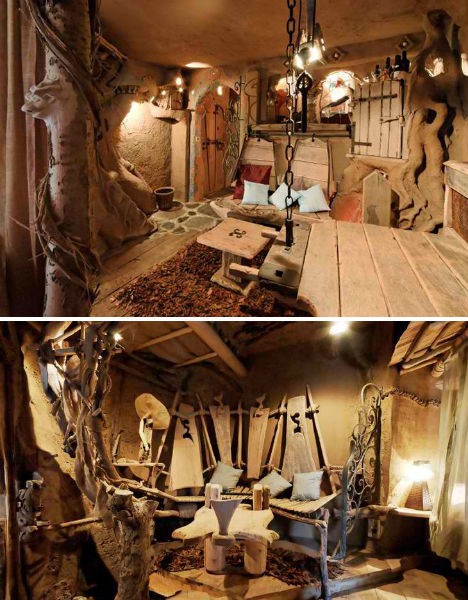
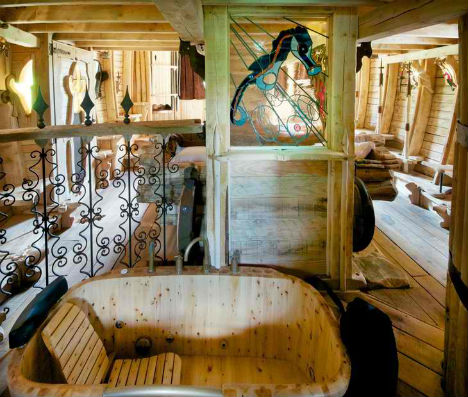
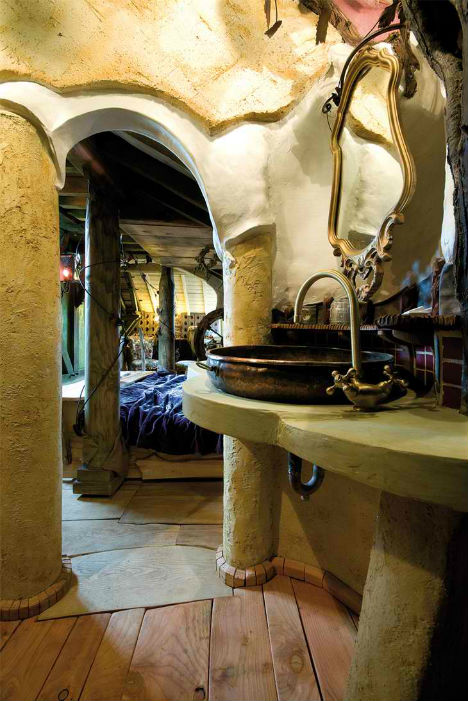
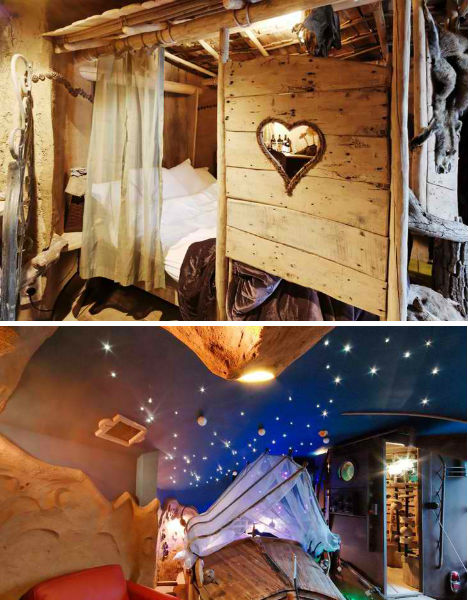
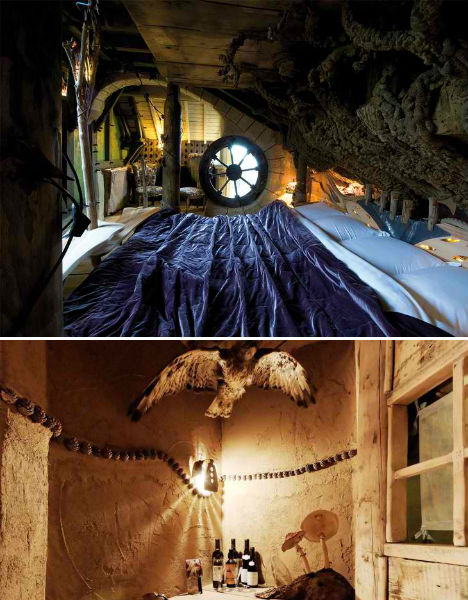
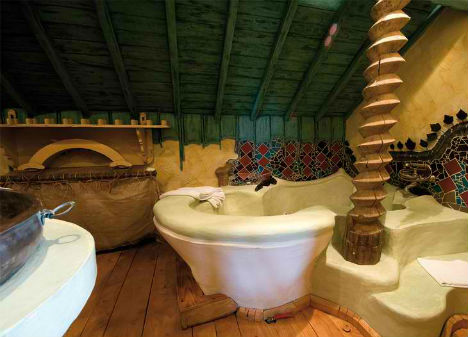
If your idea of a romantic getaway is to sleep in surreal, vaguely medieval rooms within a Trojan horse, perhaps you should be spending your Valentine’s Day at the bizarre La Balade des Gnomes Hotel in Belgium. ‘The Walk of the Gnomes’ offers ten themed rentals made of natural materials – the polar opposite of typical sterile, cookie cutter hotel rooms.

Surreal La Balade des Gnomes Hotel 2

Surreal La Balade des Gnomes 4Surreal La Balade des Gnomes Hotel 6

Architect Mr. Noel created the hotel on what was formerly an ordinary farm in the charming historic town of Durbuy, to complement his restaurant next door. The most stunning suite, from the outside, is the Trojan Horse, but the hotel also offers a troll’s lair and a Macquarie Island room with a boat-shaped bed.

Surreal La Balade des Gnomes 3

The natural building material cob, which is mud mixed with lime and straw, provides an ideal medium with which to sculpt irregular walls inlaid with mosaics and twisted branches. Some rooms look like castles straight out of Game of Thrones while others resemble alien landscapes.

Surreal La Balade des Gnomes 5

Surreal La Balade des Gnomes Hotel 7

No matter which room you choose, staying at this highly unusual hotel is bound to be an experience to remember. Rooms start at just €115 ($ 153).

Share on Facebook


[ By Steph in Boutique & Art Hotels & Global. ]

[ WebUrbanist | Archives | Galleries | Privacy | TOS ]


WebUrbanist

 
Comments Off on Surreal La Balade des Gnomes Hotel Offers Fantasy Getaway

Posted in Creativity


Expand on Demand: Secret Deck Spaces for Small Dwellings

19 Feb

[ By WebUrbanist in Architecture & Houses & Residential. ]

balcony unfolding design

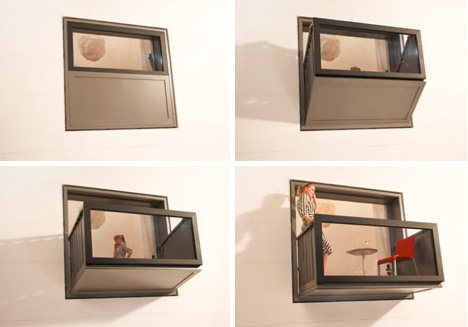
When it comes to tall apartment and condo buildings, the idea of adding more space is almost always out of the question – but what if you could push a balcony outward on demand, rather than adding an entire deck or patio? Here are three designs to expand outdoor space in creative ways.

balcony extension electronic system

The Bloomframe is a Dutch architect-designed system that turns a simple set of windows into a spacious exterior extension that can be electronically deployed and retracted – like a convertible top, you can experience the outdoors during nice weather, take out the grill, then close the unit as desired.

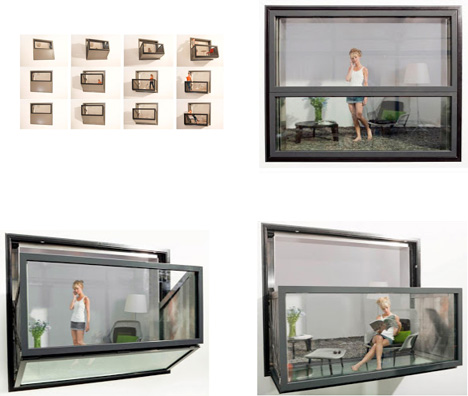
space extension juliet balcony

An alternative from Fakro works with existing frame sizes on angled roofs, and provides you both a way to lean out (a form of Juliet balcony, with window frame doubling as front rail) as well as overhead shelter from the rain. This system is also simpler and entirely mechanical, so deploying it is as easy as opening a normal glass window.

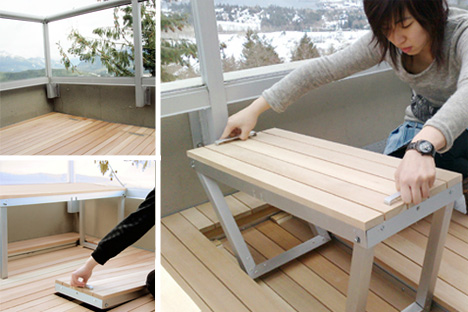
space saving deck furniture

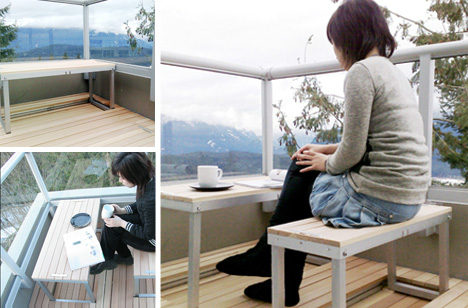
And for those who already have a deck, but not enough room to put any furniture on it, this space-saving furniture solution (Spaceless) by Sandy Lam is a great source of inspiration: her designs for a table and seat set that fold up for use and hide, camouflaged amid wood decking, when tucked back away.

space small balcony pictures

From the designer: “the average price of residential buildings in downtown Vancouver BC has reached $ 800 per square foot. Many people have to give up their garden living and move into concrete buildings because of this increase in housing prices. Even though living space is expensive, there is one space rarely used in condo buildings—the balcony. The goal of having “Spaceless” is to use the condo balcony to maximize living space and to improve the building environment by enhancing the functionality of the balcony space.”

Share on Facebook


[ By WebUrbanist in Architecture & Houses & Residential. ]

[ WebUrbanist | Archives | Galleries | Privacy | TOS ]


WebUrbanist

 
Comments Off on Expand on Demand: Secret Deck Spaces for Small Dwellings

Posted in Creativity