RSS
 

Archive for the ‘Creativity’ Category

Learning Zeppelin: Wooden Airship Docked on Museum Roof as a Reading Room

01 Apr

[ By SA Rogers in Architecture & Public & Institutional. ]
airship 1

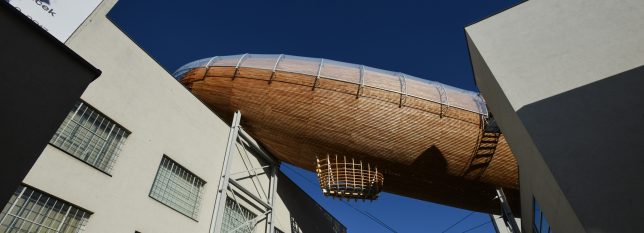
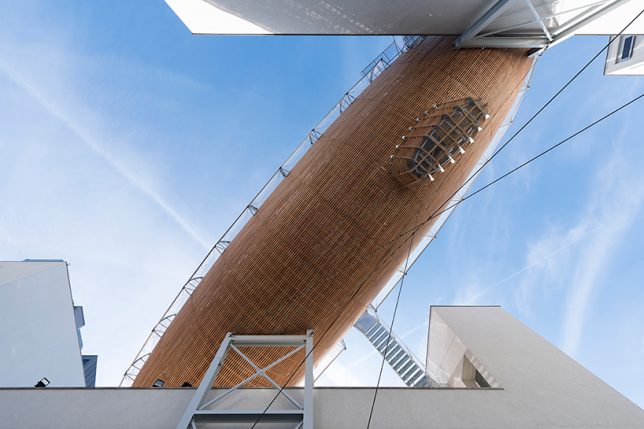
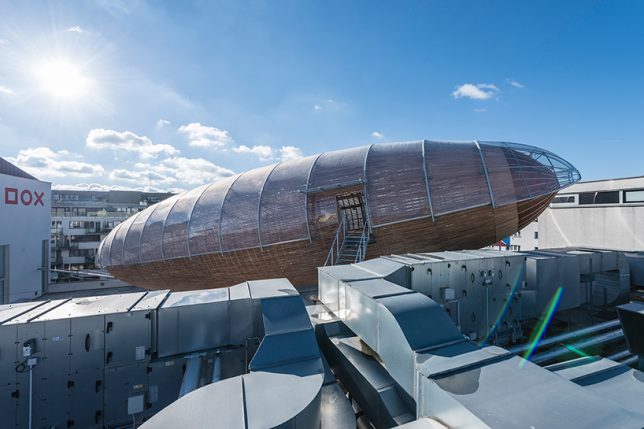
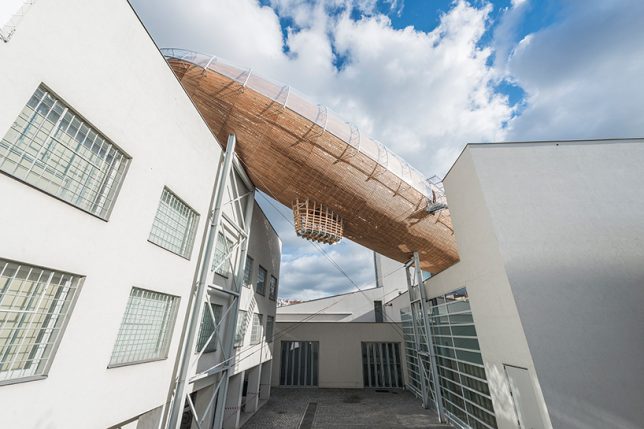
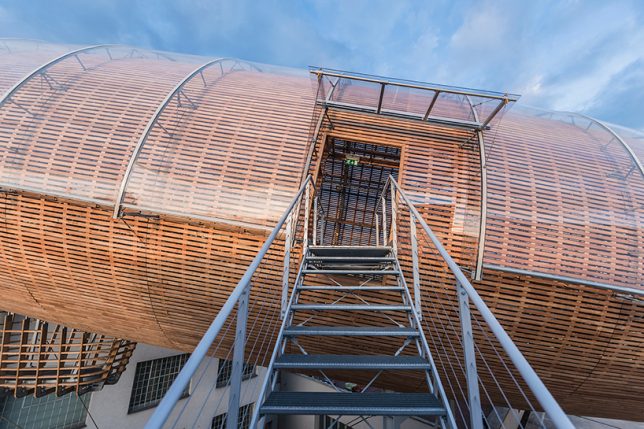
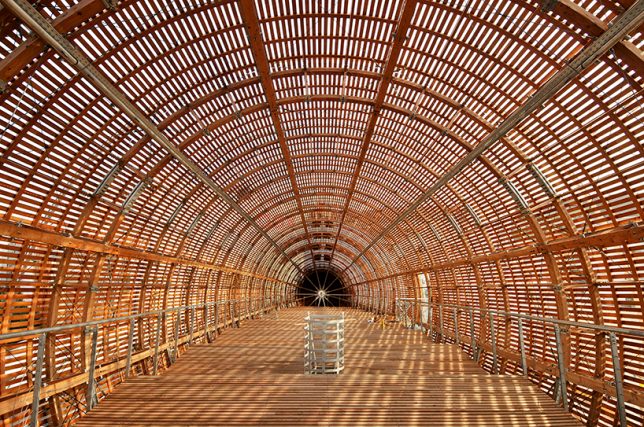
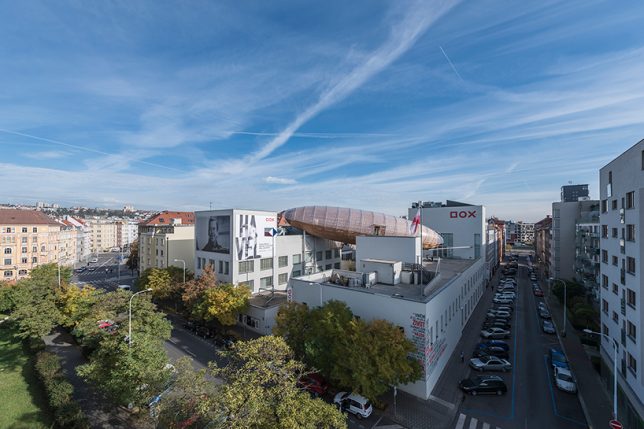
A wooden airship has seemingly crash-landed onto the roof of the DOX Centre for Contemporary Art in Prague, wedged between two white museum buildings for dramatic effect to serve as a new space for literature and reading. Conceived by Leos Valka, director of DOX, and completed by Hut Architektury, the Gulliver Airship measures nearly 138 feet long and features a basketweave-like construction open to the air, protected from the rain by a transparent roof.
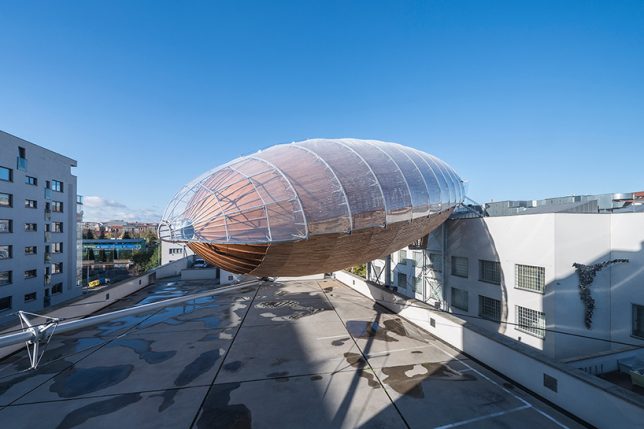
airship 2

airship 3

Taking inspiration from the zeppelins of the early 20th century, the airship aims to reflect the optimism, technological advancements and futurism of the era, inciting a sense of wonder when you gaze up at it from the ground level. Valka says he dreamed of “an absurdly fascinating organic shape” that would have a parasitic appearance, alien to the concrete and glass of the museum itself.
airship 4

airship 5

The ‘ship’ is accessible from the museum’s roof, and takes advantage of plentiful natural light for a pleasant reading environment. Adding such an unconventional structure is in line with the museum’s hope to encourage innovative thinking and take risks.
airship 6

airship 7

The DOX facility is a reclaimed factory, its renovation nominated for the prestigious Mies van der Role Award, and its purpose is “to create a space for research, presentation and debate on important social issues, where arts in dialogue with other disciplines encourage a critical view of the so-called reality of today’s world.”

airship 9

airship 10

“The shape of the zeppelin is symbolic,” reads a statement on the DOX website. “The early zeppelins represented the optimistic ideals of a new era of unprecedented technological advancements. With their remarkable monumentality and hypnotic dignity that would continue to fascinate generations to come long after they had vanished from the skies, they have always embodied the eternal human desire to fly, and have represented a certain utopian ideal.”

Share on Facebook


[ By SA Rogers in Architecture & Public & Institutional. ]

[ WebUrbanist | Archives | Galleries | Privacy | TOS ]


WebUrbanist

 
Comments Off on Learning Zeppelin: Wooden Airship Docked on Museum Roof as a Reading Room

Posted in Creativity


Cold Frontage: Storm Leaves Waterfront House Encased in Frozen Waves

30 Mar

[ By WebUrbanist in Art & Photography & Video. ]

ice house exterior

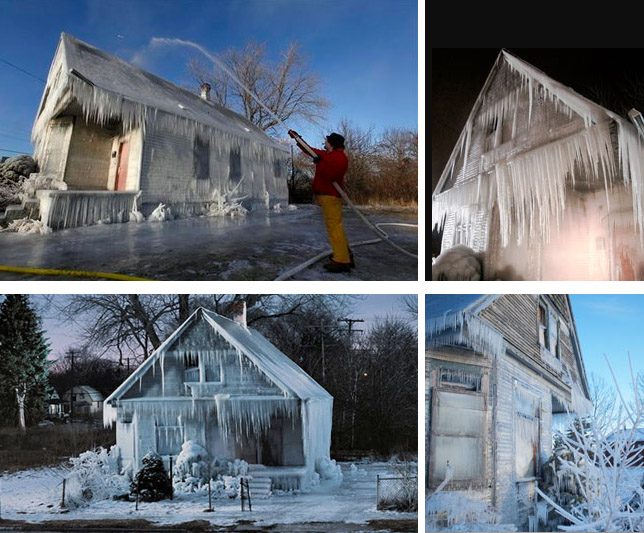
When a cold front blew in over Lake Ontario, photographer John Kucko caught wind of the phenomenon and rushed to shoot images of a remarkably frozen home.

iced over house

Located in Webster, New York, the house is entirely trapped inside ice, a combination of sheets and icicles wrapping the residence on all sides. Outdoor furniture and landscaping elements between the lake and the house were likewise wrapped in frozen water.

cold front

An unusual combination of waves, wind and freezing weather contributed to the mix, as well as the home’s proximity to the lake. Winds over 80 mile per hour pushed water the short twenty feet to the residence. You can see more images and videos on the photographers Facebook page.

ice house detroit

Years ago, artists in Detroit did something similar but intentional with an abandoned home, showering it with water and letting it ice over for effect.

Share on Facebook


[ By WebUrbanist in Art & Photography & Video. ]

[ WebUrbanist | Archives | Galleries | Privacy | TOS ]


WebUrbanist

 
Comments Off on Cold Frontage: Storm Leaves Waterfront House Encased in Frozen Waves

Posted in Creativity


Taking Competition to New Heights: This Skyscraper Dangles from an Asteroid

30 Mar

[ By SA Rogers in Conceptual & Futuristic & Technology. ]

dangling skyscraper 1

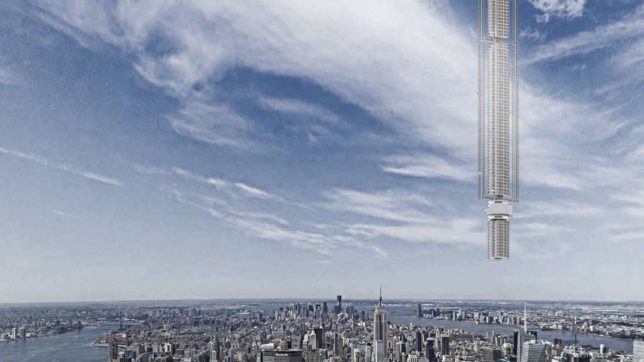
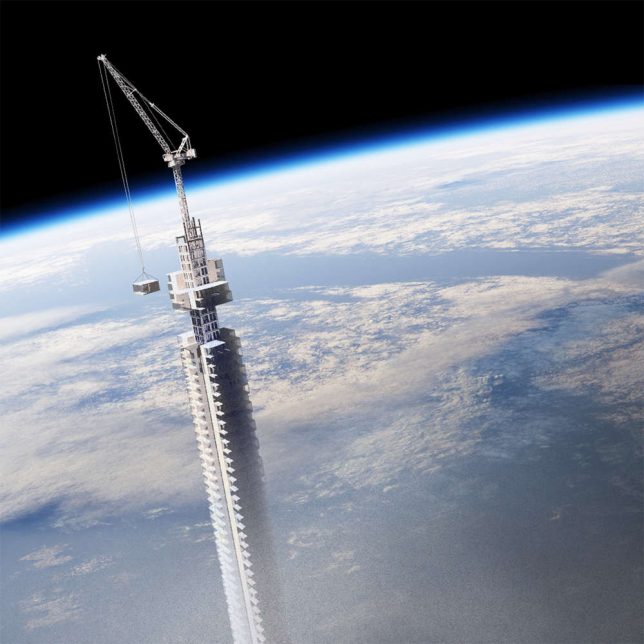
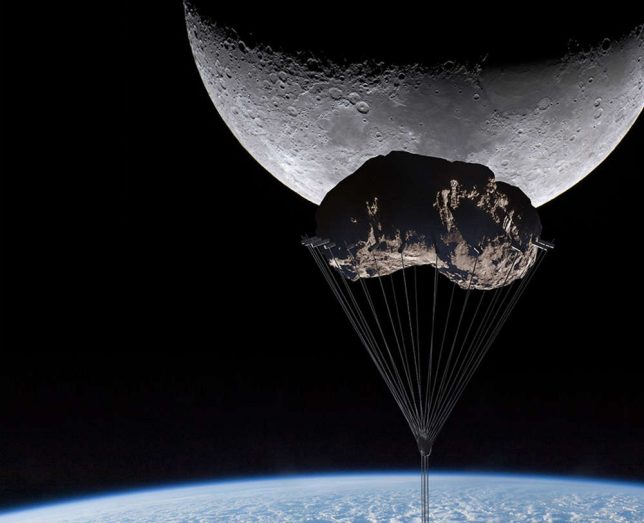
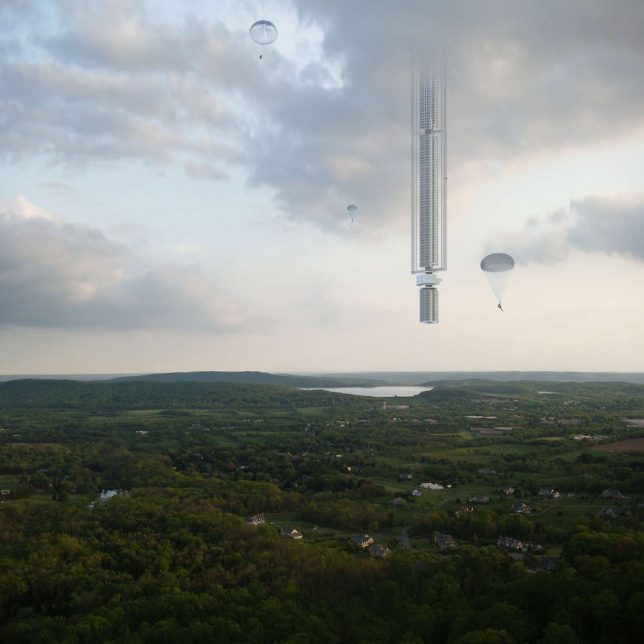
That tongue-in-cheek ‘world’s longest skyscraper’ design we highlighted last week seems totally reasonable compared to a new proposal taking the competition for the world’s tallest structure to absurd heights: The Analemma Tower literally dangles a skyscraper from an asteroid. An actual asteroid, orbiting the Earth. The design is firmly in sci-fi territory, with the renderings resembling matte paintings made for ‘70s and ‘80s movies set in space, but the architects offer details as to how this could actually work.

dangling skyscraper 2

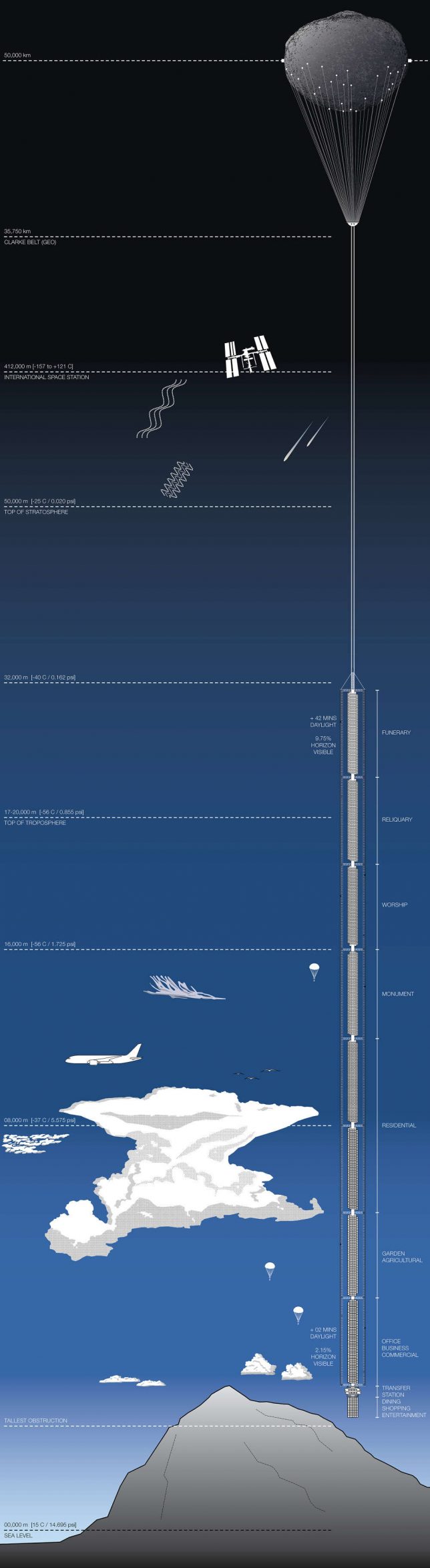
Clouds architecture Office envisions a space-based supporting foundation, noting that NASA has planned a 2021 mission to capture and redirect an asteroid. Of course, NASA’s budget is up in the air right now, and who knows what’ll happen to the United States’ space-related endeavors by then. The asteroid would be located about 31,000 miles above the Earth’s surface, with the tower using what the firm calls the Universal Orbital Support System (UOSS) to hang the multi-use tower via super-strong cables.

dangling skyscraper 4

The portion of the tower that sticks up above the Earth’s atmosphere will host an extraterrestrial cemetery, with the three sections below it designated for ‘devotional activities.’ The architects say these portions of the tower wouldn’t be attractive to live in due to “extreme conditions,” though they’d benefit from an extra 45 minutes of daylight each day. The residential area is fairly small in comparison, set just above the garden and agricultural section, an area for offices and business activities, and a transfer station with dining, shopping and entertainment options.

dangling skyscraper 5

Analemma would get its power from space-based solar panels, with water filtered and recycled in a semi-closed loop system and replenished with condensation captured from clouds and rain. It could be placed in an orbit allowing it to travel between the northern and southern hemispheres on a daily loop, with its slowest trajectory occurring over New York City so people can get on and off. They go into some detail on these technicalities on their website.

dangling skyscraper 3

“Manipulating asteroids is no longer relegated to science fiction. In 2015 the European Space Agency sparked a new round of investment in asteroid mining concerns by proving with its Rosetta mission that it’s possible to rendezvous and land on a spinning comet. NASA has scheduled an asteroid retrieval mission for 2021 which aims to prove the feasability of capturing and relocating an asteroid…”

“Analemma Tower is a proposal for the world’s tallest building ever. Harnessing the power of planetary design thinking, it taps into the desire for extreme height, seclusion and constant mobility. If the recent boom in residential towers proves that sales price per square foot rises with floor elevation, then Analemma Tower will command record prices, justifying its high cost of construction.”

Share on Facebook


[ By SA Rogers in Conceptual & Futuristic & Technology. ]

[ WebUrbanist | Archives | Galleries | Privacy | TOS ]


WebUrbanist

 
Comments Off on Taking Competition to New Heights: This Skyscraper Dangles from an Asteroid

Posted in Creativity


Wild Wood: 28 Temporarily Tamed Tree-Based Designs Branch Out

29 Mar

[ By SA Rogers in Design & Furniture & Decor. ]

pontus willfors main

Trees seem to temporarily allow humans to form them into a new shape and give them a different purpose before reclaiming their wild nature and going on with their tree-business in these wild wood designs. Taking a modern approach to branch-based furniture, decor and sculpture, they celebrate the natural qualities of the materials, allowing them to shine in a way that makes them feel truly alive.

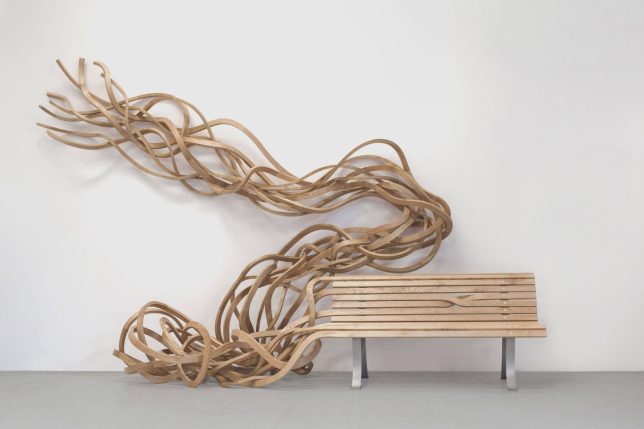
Spaghetti Benches by Pablo Reinoso

spaghetti bench 1

spaghetti bench 2

pablo reinoso 3

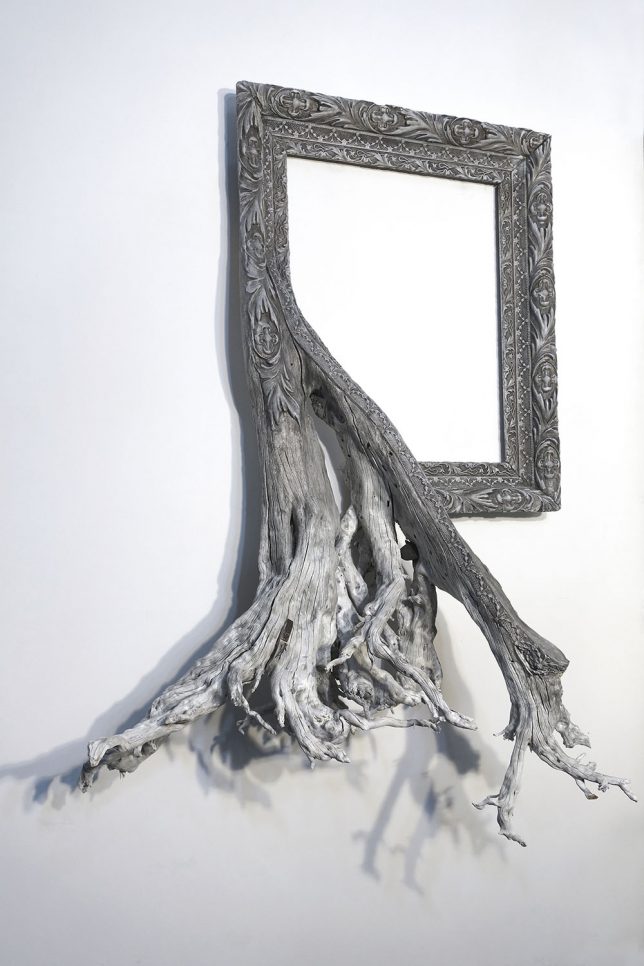
The slats of a wooden bench just keep growing as if they’re still alive, tangling together and climbing up walls, in Pablo Reinoso’s ‘Spaghetti Bench’ series. It’s almost like the tree the wood came from allowed itself to serve a purpose as seating only temporarily, and then decided to go about its life. The artist extends the same technique to other objects, like picture frames.

Fusion Frames by Darryl Cox

darryl cox 1

darryl cox 2

fusion frames 3

fusion frames 2

fusion frames

darryl cox 4

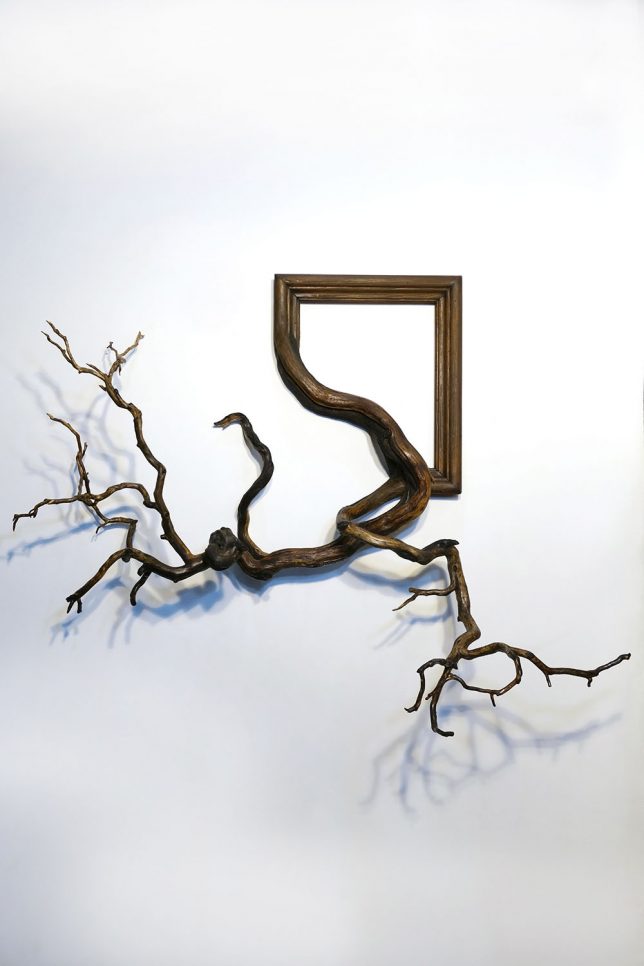
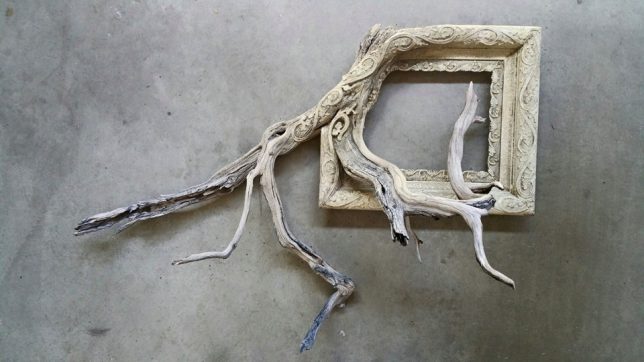
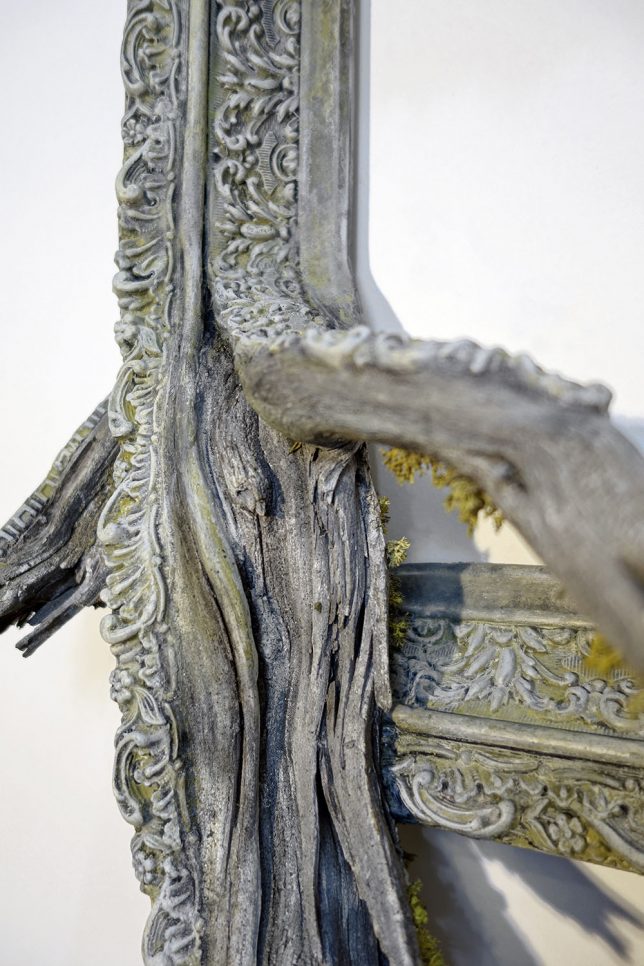
These hybrid frames by Oregon-based artist Darryl Cox start out as two separate objects – the reclaimed roots of manzanita, aspen and juniper trees, and a carefully matched picture frame. The artist carefully matches the tone and texture of the two objects and painstakingly blends them together with carving tools and paint. Look closely and you’ll find that the seams are virtually undetectable.

Sprouting Furniture by Pontus Willfors

pontus wilfors 1

pontus wilfors 2

pontus wilfors 3

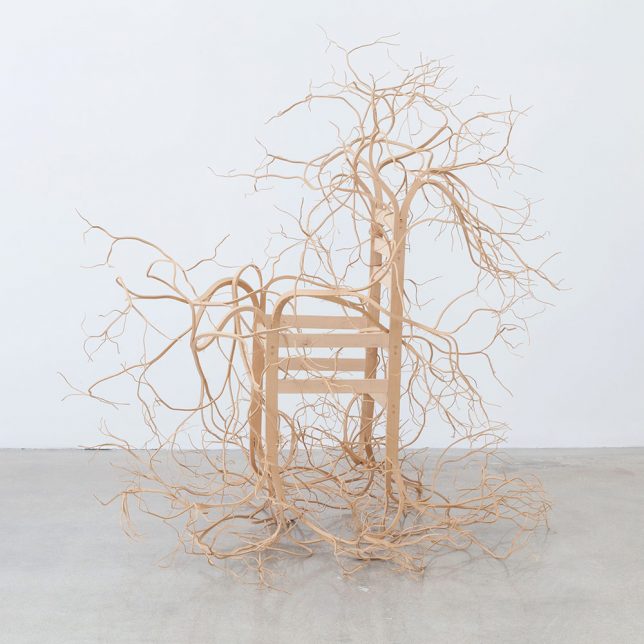
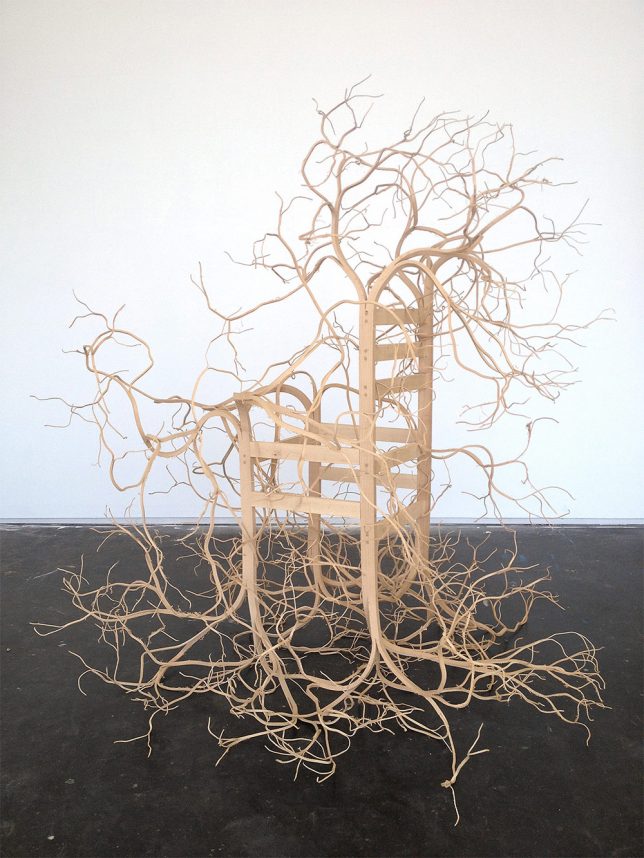
The temporarily tamed wood that’s been crafted into chairs and other functional items starts to rebel before you can even sit down in this series by artist Pontus Willfors. It’s almost as if the trees have decided they have no patience for human attempts to turn them into something unnatural.

Fallen Tree Bench by Benjamin Graindorge

fallen tree bench

fallen tree bench 2

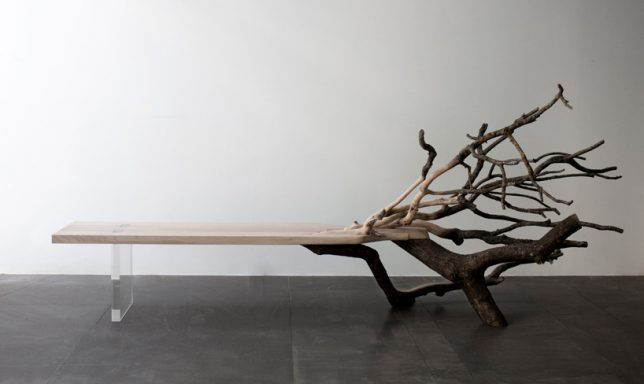
This bench by Benjamin Graindorge can’t hide its origins, the smooth surface giving way to stripped branches and then bark. ‘Fallen Tree Bench ‘ is fully supported on one side by a tangle of branches as if we caught it in mid-morph.

Driftwood Coffee Table & Side Table by Bernardo Urbina

bernardo urbina

bernardo urbina 2

bernardo urbina 3

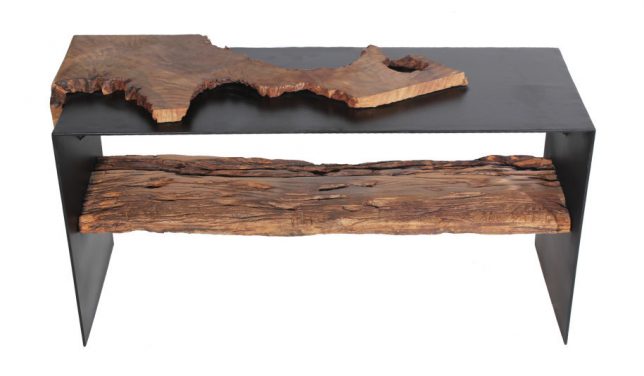
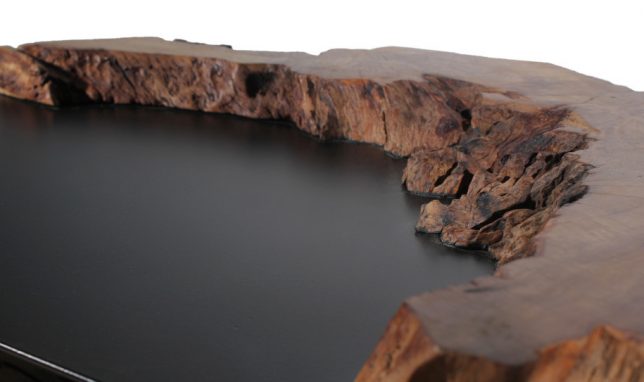
Designer Bernardo Urbina blends unexpected upcycled materials together into minimalist tables and other objects. For these two tables, he chose wrap Traviesa and Tugas wood around a black folded metal base.

Next Page – Click Below to Read More:
Wild Wood 28 Temporarily Tamed Tree Based Designs Branch Out

Share on Facebook


[ By SA Rogers in Design & Furniture & Decor. ]

[ WebUrbanist | Archives | Galleries | Privacy | TOS ]

WebUrbanist

 
Comments Off on Wild Wood: 28 Temporarily Tamed Tree-Based Designs Branch Out

Posted in Creativity


Autonomous Trap: Artist Uses Ritual Magic to Capture Driverless Cars

28 Mar

[ By WebUrbanist in Art & Installation & Sound. ]

car trap

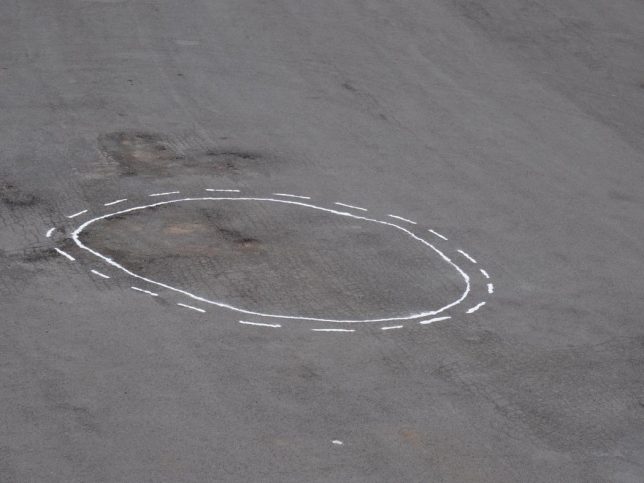
Somewhere between pagan magic, modern science and quirky satire, this installation project uses salt circles but also the logic of traffic lines to lure in and ensnare unsuspecting autonomous vehicles.

salt trap car

James Bridle‘s Autonomous Trap 001 employs familiar street markings found on divided highways – per the rules of the road, cars can cross over the dotted line but not back over the solid line. It sounds a bit absurd, but consider: driverless cars with various degrees of autonomy are already hitting the streets, and these do rely on external signals to determine their course. As these technologies gain traction, it is entirely likely that serious attempts will be made to spoof and deceive their machine vision algorithms.

“What you’re looking at is a salt circle, a traditional form of protection—from within or without—in magical practice,” explains Bridle. “In this case it’s being used to arrest an autonomous vehicle—a self-driving car, which relies on machine vision and processing to guide it. By quickly deploying the expected form of road markings—in this case, a No Entry glyph—we can confuse the car’s vision system into believing it’s surrounded by no entry points, and entrap it.”

autonomous vehicle trap magic

“The scene evokes a world of narratives involving the much-hyped technology of self-driving cars,” writes Beckett Mufson of Vice. “It could be mischievous hackers disrupting a friend’s self-driving ride home; the police seizing a dissident’s getaway vehicle; highway robbers trapping their prey; witches exorcizing a demon from their hatchback.” It has elements of cultural commentary that stem from acute awareness of real conditions, bordering on the absurd but also quite sobering.

mountain pass

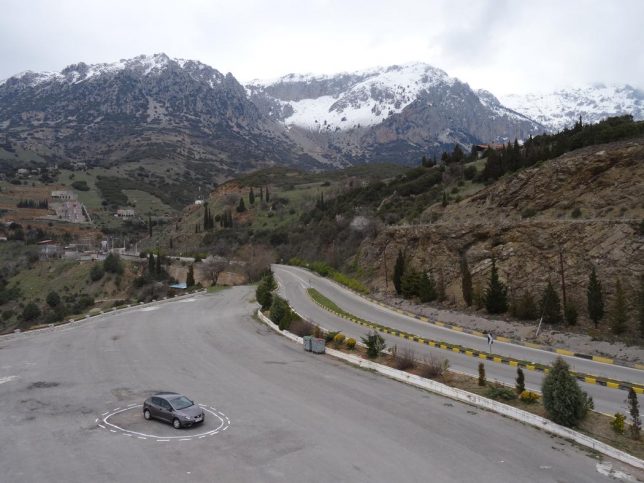
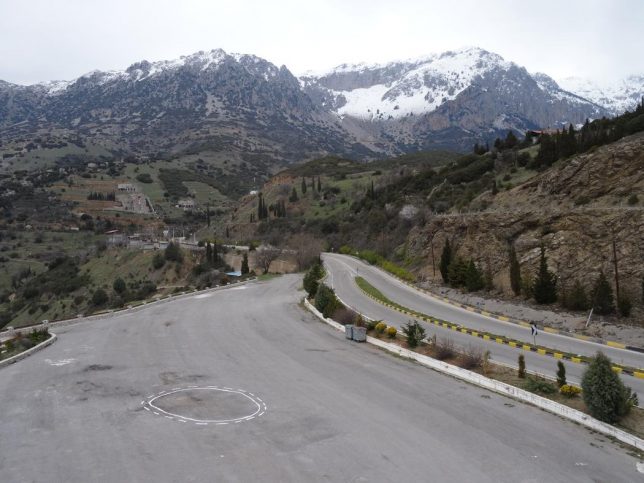
In fact, Bridle made his trap while training his own DIY self-driving car software near Mount Parnassus in Central Greece. “Parnassus feels like an appropriate location,” he says, because “as well as [having] quite spectacular scenery and [being] wonderful to drive and hike around, it’s the home of the Muses in mythology, as well as the site of the Delphic Oracle. The ascent of Mount Parnassus is, in esoteric terms, the journey towards knowledge and art.” Meanwhile, Bridle continues to work on other pieces related to contemporary technology, tackling subjects from machine vision and artificial intelligence to militarized tech and big data.

Share on Facebook


[ By WebUrbanist in Art & Installation & Sound. ]

[ WebUrbanist | Archives | Galleries | Privacy | TOS ]

WebUrbanist

 
Comments Off on Autonomous Trap: Artist Uses Ritual Magic to Capture Driverless Cars

Posted in Creativity


These Brutalist Sand Castles Might Be Cooler Than the Real Thing

28 Mar

[ By SA Rogers in Art & Sculpture & Craft. ]

modernist sand castles 11

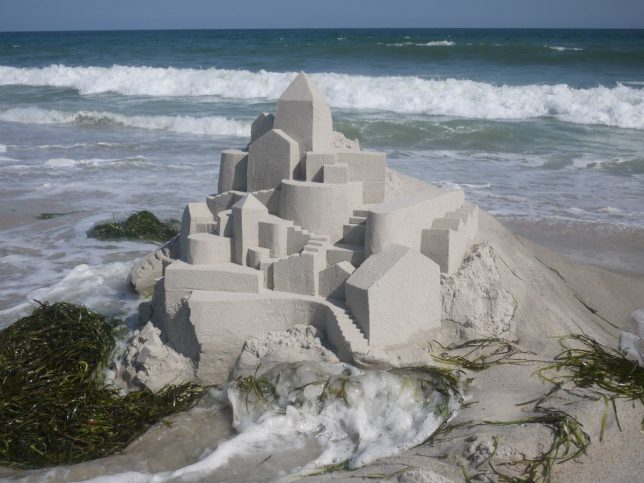
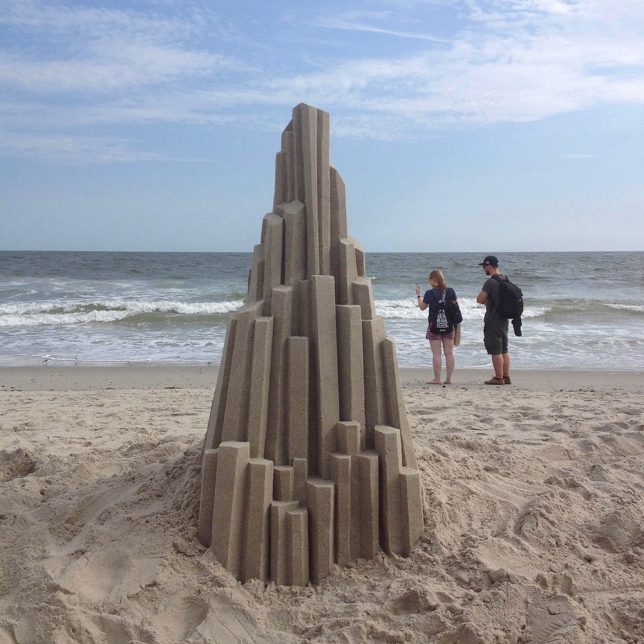
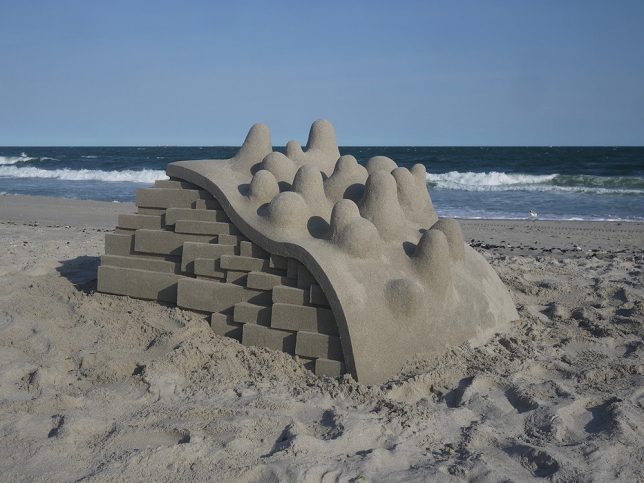
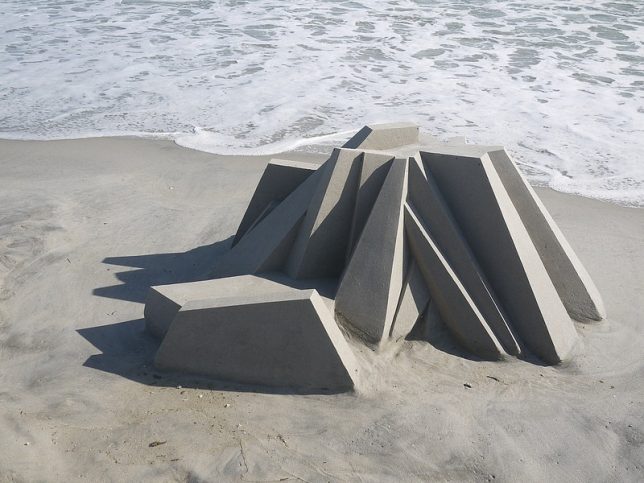
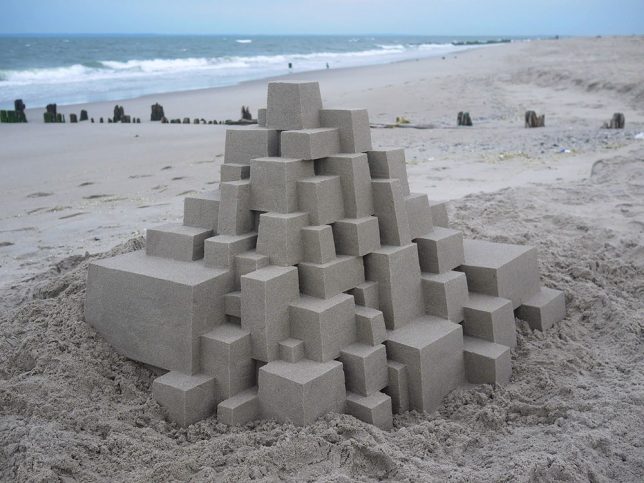
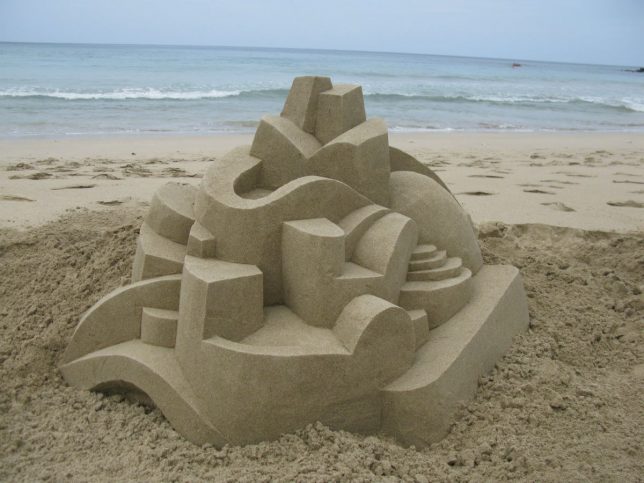
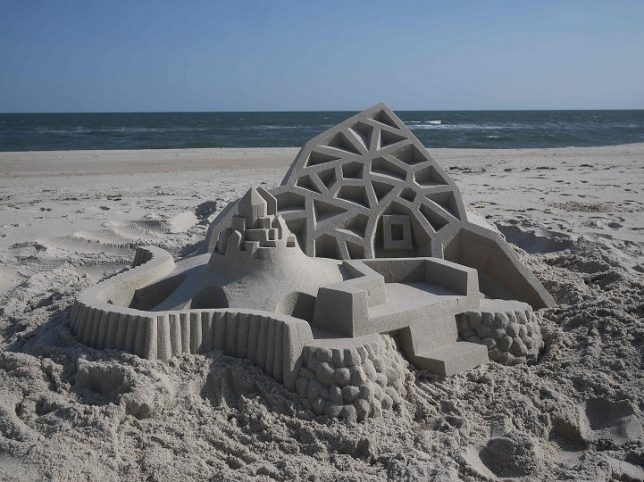
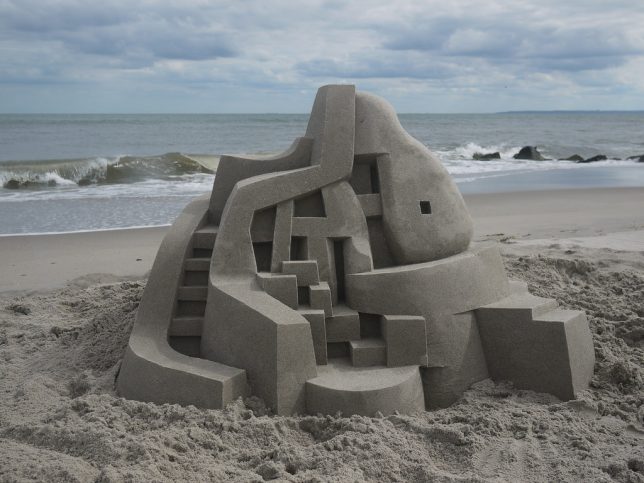
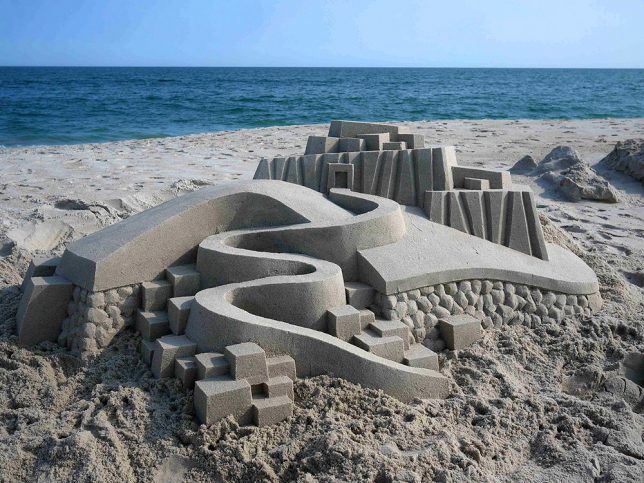
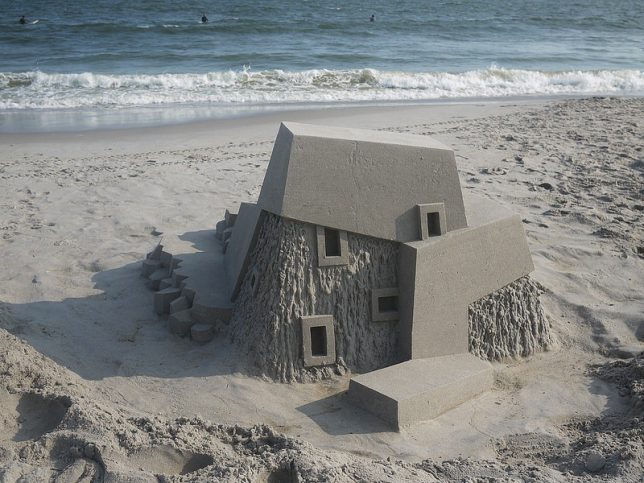
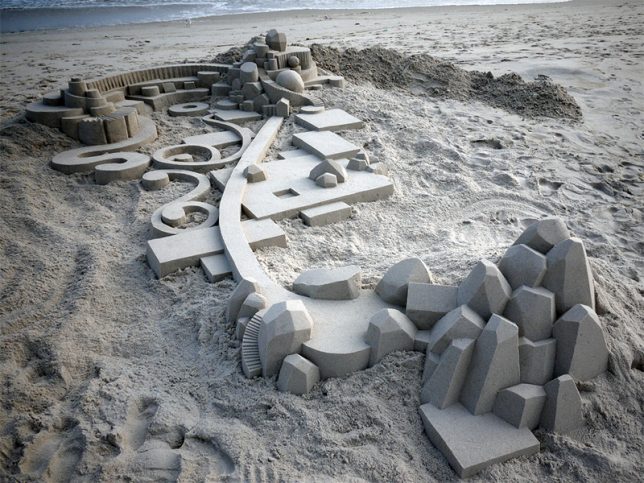
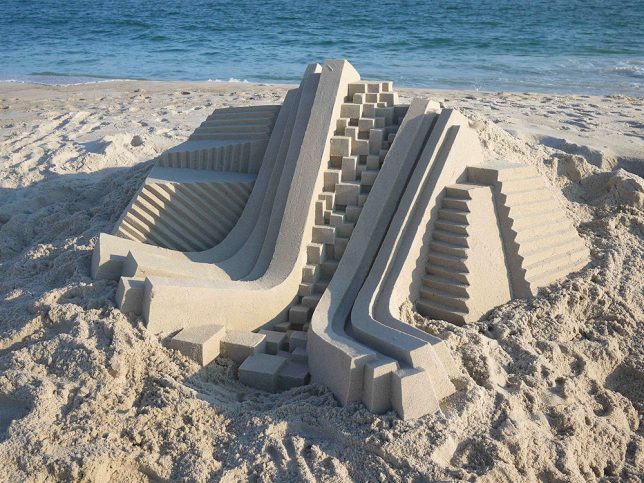
Brutalist architecture is often criticized for seeming cold, impersonal and out of human scale, but the same can’t be said for these structures when they’re miniaturized and ephemeral, destroyed in seconds by the sea. In fact, when they’re crafted out of sand on a beach, outside their usual context, we can appreciate the beauty of their geometry more than ever. Calvin Siebert’s modernist sand castles might just be better than the real thing.

modernist sand castles 10

modernist sand castles 9

While staying on Rockaway Beach in Queens during the summer, the professional sculptor and self-described ‘box builder’ crafts amazingly complex architectural structures that remain in place just long enough to photograph them, inevitably washing away. You might say that nature is… brutal.

modernist sand castles 12

modernist sand castle 1

While it’s not hard to imagine seeing some of these designs in the hills of Los Angeles, using sand as a medium enables Siebert to get more creative than the average architect in envisioning fantasy structures that could translate to concrete.

modernist sand castile 2

modernist sand castle 2

He doesn’t start with sketches, plans or even anything particular in mind, preferring to work intuitively, allowing the forms to take shape. He’s been creating these temporary works of art for the past six years, and has thousands of photos documenting them on his Flickr.

modernist sand castle 4

modernist sand castle 5

modernist sand castle 6

“Building ‘sandcastles’ is a bit of a test,” he says. “Nature will always be against you and time is always running out. Having to think fast and bring it all together in the end is what I like about it… once I begin building and forms take shape I can start to see where things are going and either follow that road or attempt to contradict it with something unexpected.”

modernist sand castles 7

modernist sand castles 8

“In my mind they are always mash-ups of influences and ideas. I see a castle, a fishing village, a modernist sculpture, a stage set for the oscars all at once. When they are successful they don’t feel contained or finished. They become organic machines that might grow and expand. I am always adding just one more bit and if time allowed I wouldn’t stop.”

Share on Facebook


[ By SA Rogers in Art & Sculpture & Craft. ]

[ WebUrbanist | Archives | Galleries | Privacy | TOS ]

WebUrbanist

 
Comments Off on These Brutalist Sand Castles Might Be Cooler Than the Real Thing

Posted in Creativity


21st Century Figurative Sculpture: 33 Modern Renderings of the Human Form

28 Mar

[ By SA Rogers in Art & Sculpture & Craft. ]

david mesguich 2

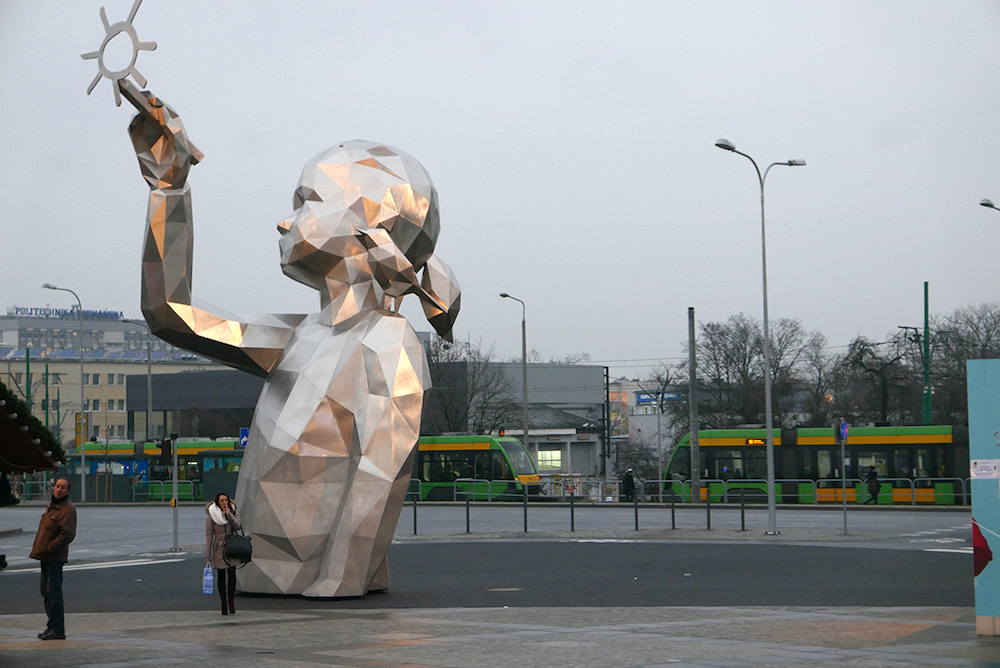
Michelangelo’s David may always represent a pinnacle of artistic achievement in figurative sculpture, but modern artists are adding some brilliant 21st-century elements to the mix in the form of glitches, kinetic parts, innovative methods and materials, and context from the digital era.

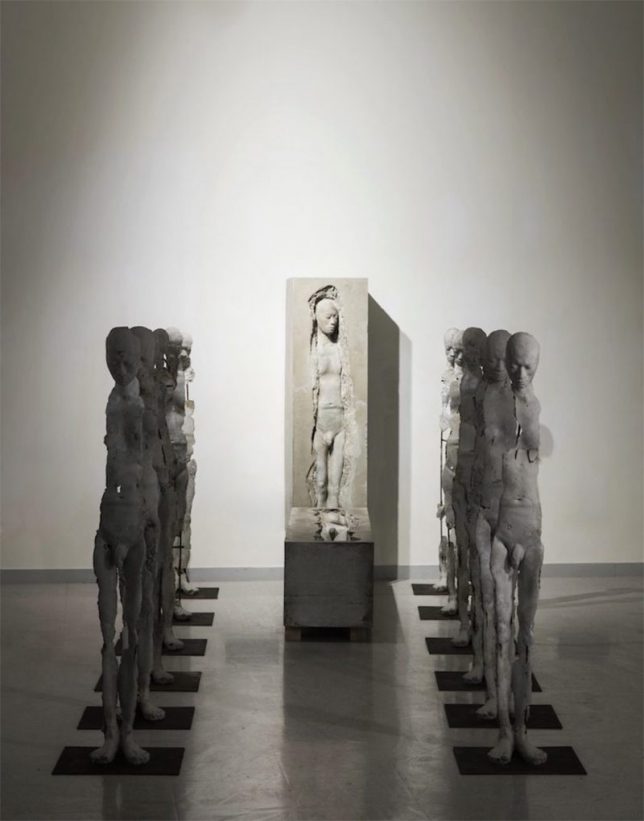
Hollow Humans by Park Ki Pyung

park ki kyung 1

park ki kyung 2

park ki kyung 3

park ki kyung 5

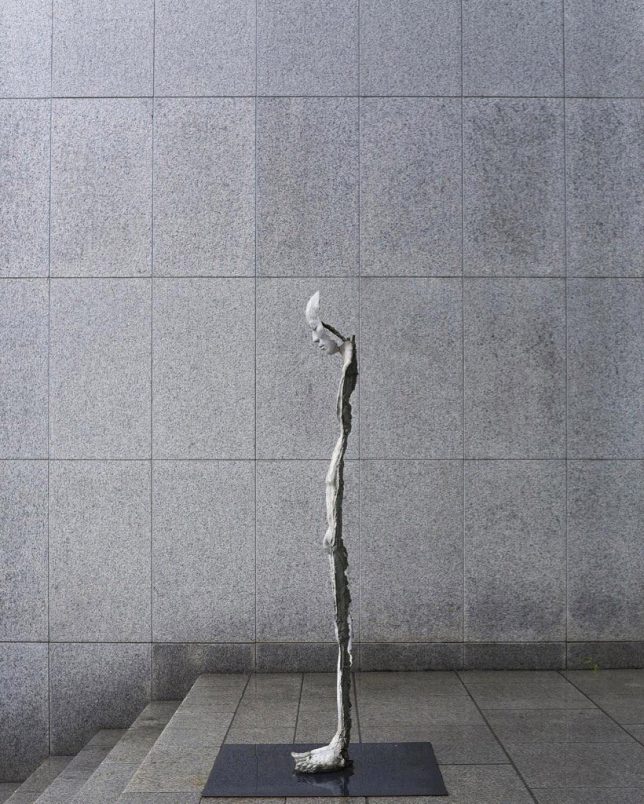
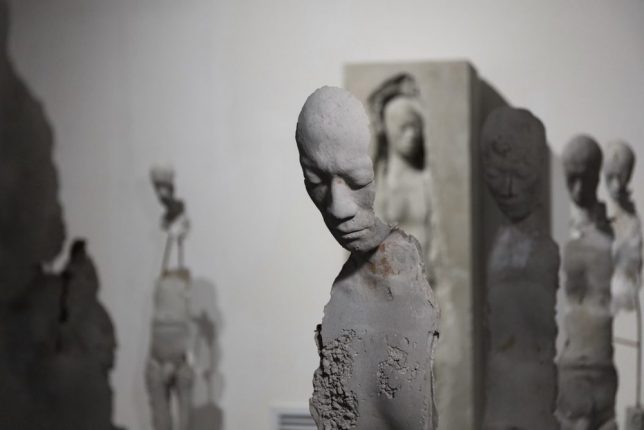
They appear to be impossibly thin veneers of stone, but these eerie sculptures by South Korean artist Park Ki Kyung are actually resin on a steel frame. The figures appear incomplete or fractured “to describe condition of emptiness,” says the artist. “I also use shape of human body with excluded front face, so that I can delete unique characteristics of each person. I describe images of ancient battle scene to show violence against self.”

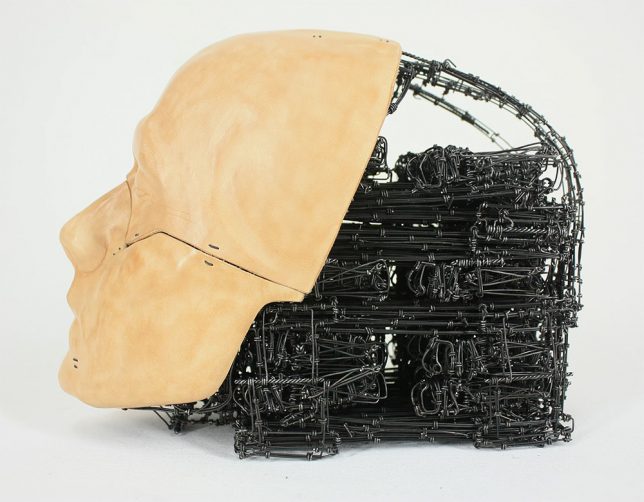
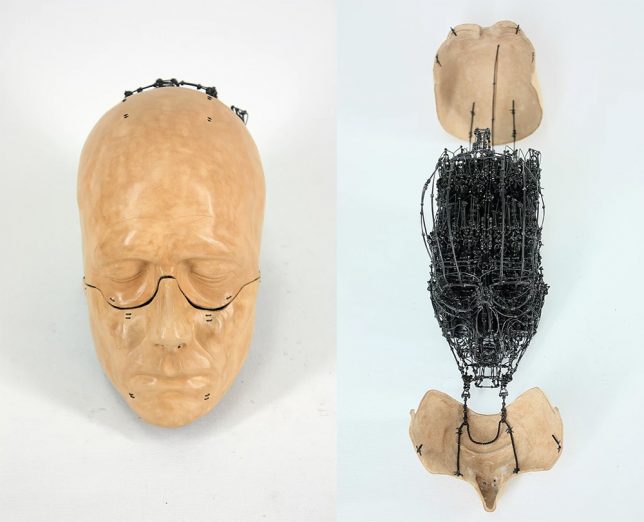
Anatomical Sculptures by Claude-Olivier Guay

claude olivier guay 1

claude olivier guay 2

claude olivier guay 3

claude olivier guay 4

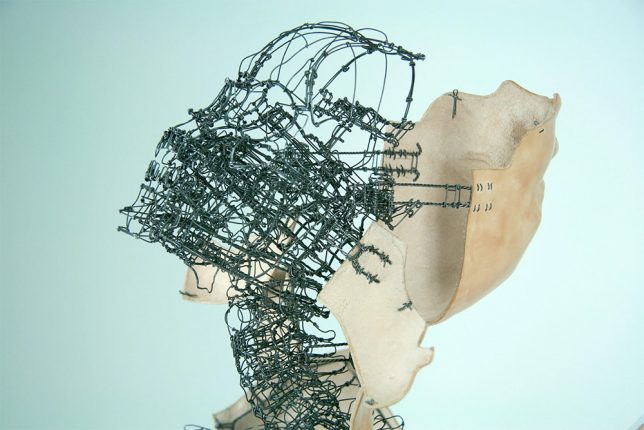
Each of these paneled human heads dramatically opens to reveal a matrix of wires inside, hand-bent by artist Claude-Olivier Guay with no more than a piece of pliers. In one remarkable case, a human torso shows us its skeletal framework, but what’s inside isn’t what it seems: the wire bends itself into an animal shape and gets down on all fours before transforming back into human form.

Wood Sculptures by Willy Verginer

willy verginer 1

willy verginer 2

willy verginer 3

willy verginer 4

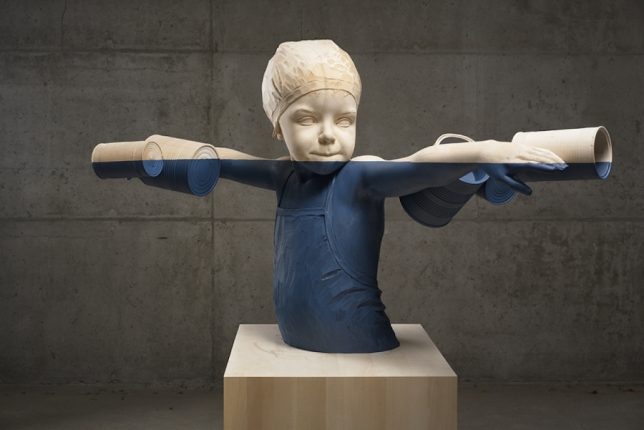
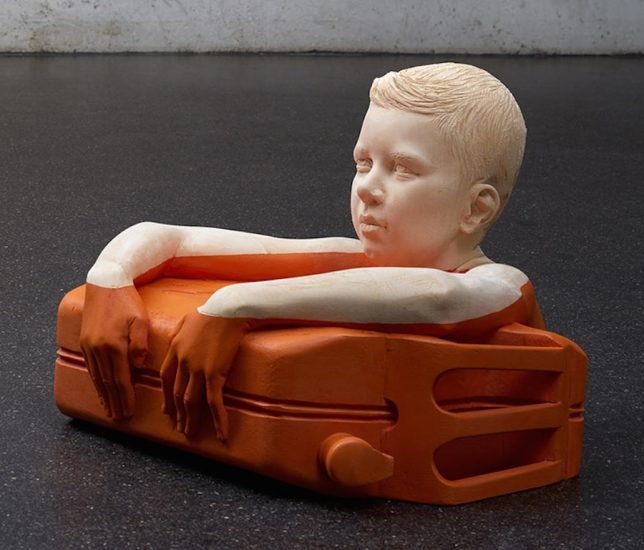
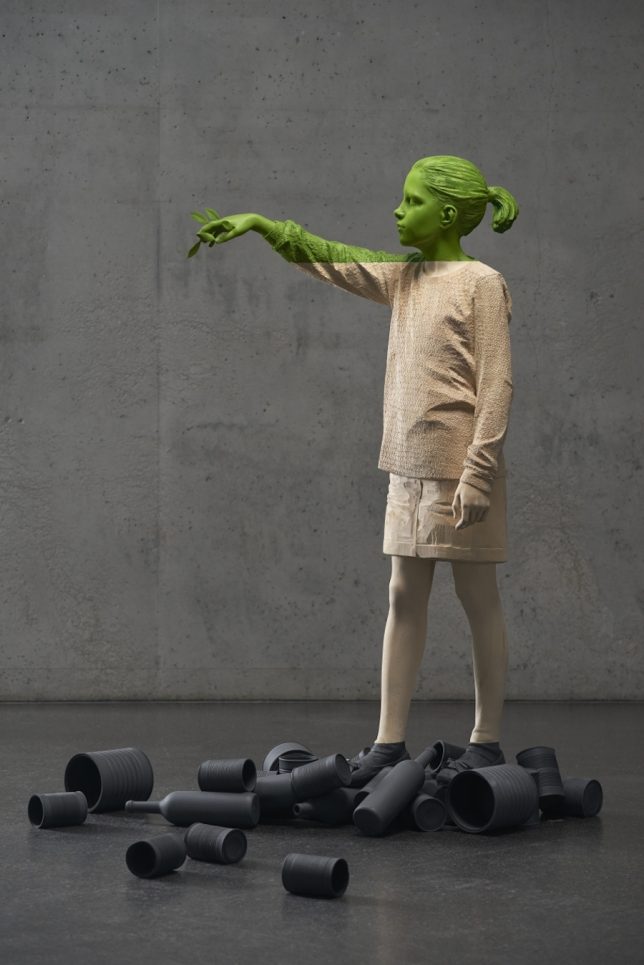
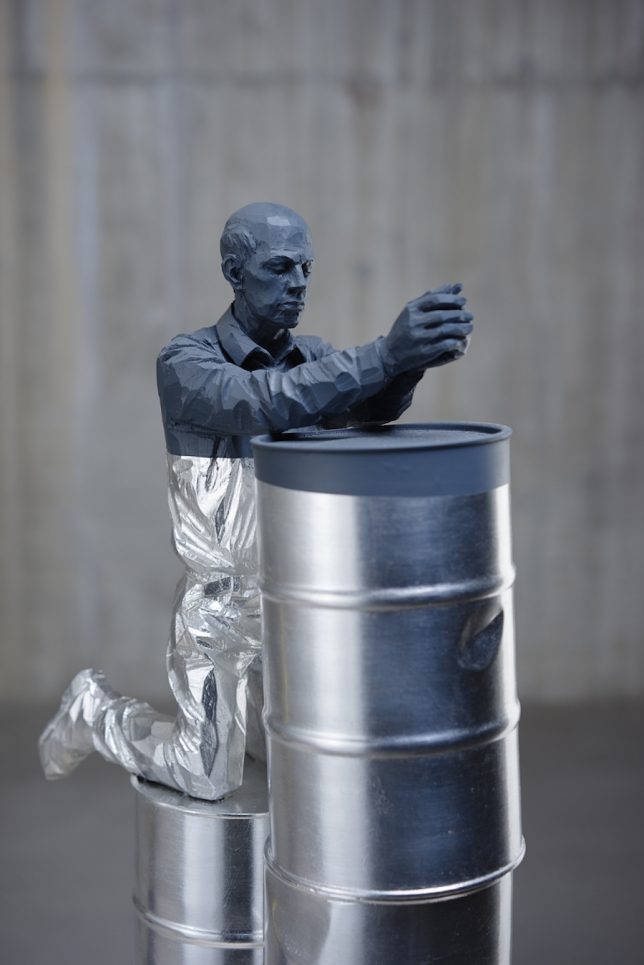
A child clutches a leaking gas can, families swim in tainted water and men pray over barrels of oil in this series by Italian sculptor Willy Verginer highlighting environmental degradation. The sculptures are made of wood and minimally painted for a graphic appearance.

Dissolving Children by Lene Kilde

lene kilde 1

lene kilde 2

lene kilde 3

lene kilde 4

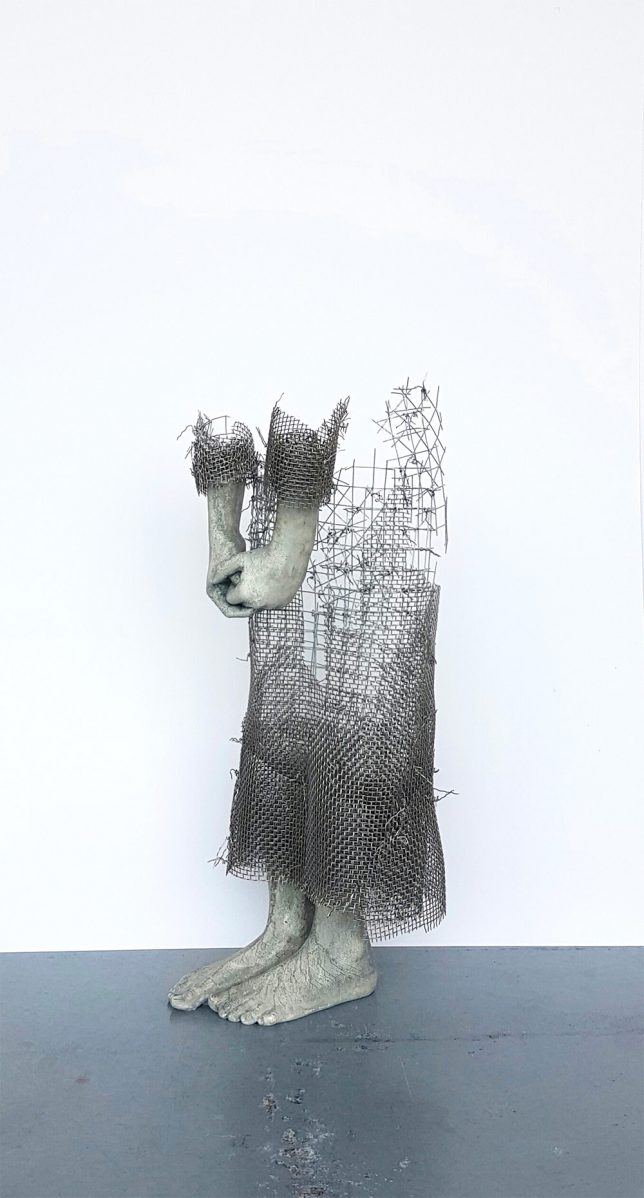
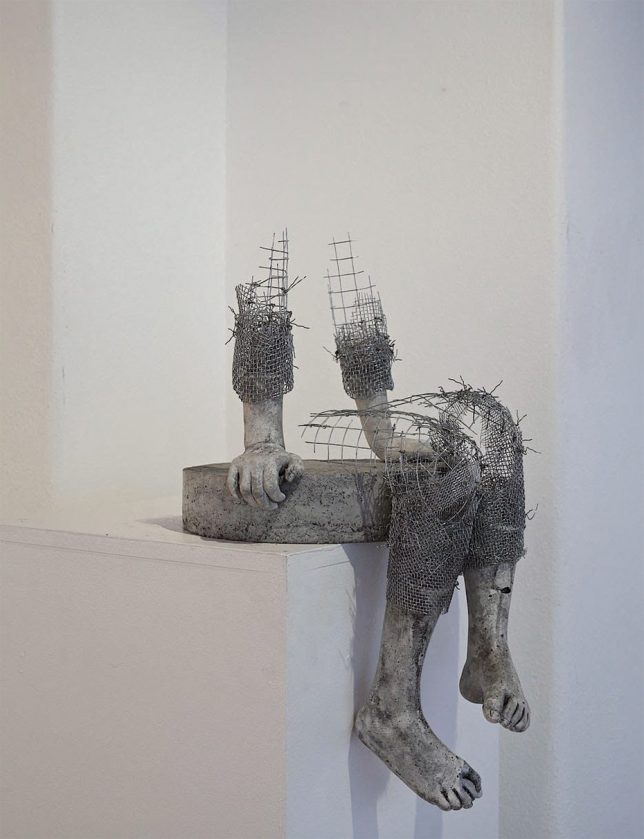
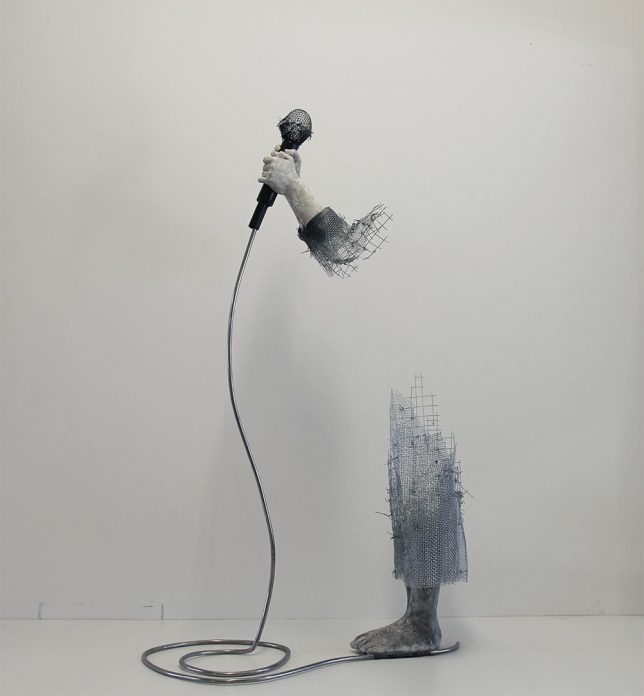
Limbs are often all that remain of children that have otherwise disappeared in the minimalist wire mesh sculptures of Norwegian artist Lene Kilde. Though the works may appear haunting and even mournful, the artist intends for the blank spaces to be filled in by the viewer’s mind, perhaps with their own images or memories.

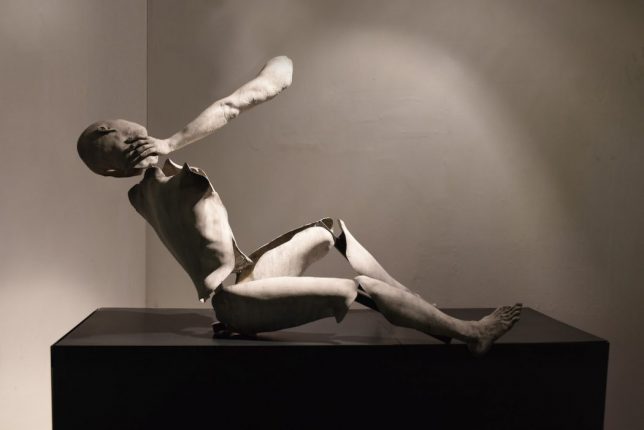
Pixelated Wood by Hsu Tung Han

hsu tung han 1

hsu tung han 2

hsu tung han 3

hsu tung han 4

Bodies in motion seem to be dissolving into pixels before our eyes, embodying a clash between the digital and the analog. Artist Hsu Tung Han crafts walnut, teak or African wax wood into human figures interspersed wit blocks. In this case, the glitch effect feels less about corrupted data and more about existential and spiritual matters, as if the figures aren’t entirely tethered to the physical plane.

Next Page – Click Below to Read More:
21st Century Figurative Sculpture 33 Modern Renderings Of The Human Form

Share on Facebook


[ By SA Rogers in Art & Sculpture & Craft. ]

[ WebUrbanist | Archives | Galleries | Privacy | TOS ]

WebUrbanist

 
Comments Off on 21st Century Figurative Sculpture: 33 Modern Renderings of the Human Form

Posted in Creativity


Search for Spoke: 8 Closed & Abandoned Bicycle Factories

27 Mar

[ By Steve in Abandoned Places & Architecture. ]

abandoned-bicycle-factory-1a

These closed and abandoned bicycle factories are relics of a bygone era before two-wheeled vehicles were supplanted by those with four wheels and an engine.

abandoned-bicycle-factory-1b

abandoned-bicycle-factory-1d

abandoned-bicycle-factory-1f

abandoned-bicycle-factory-1e

abandoned-bicycle-factory-1g

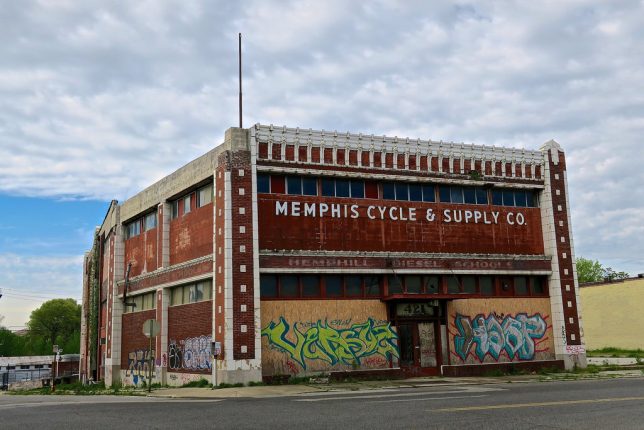
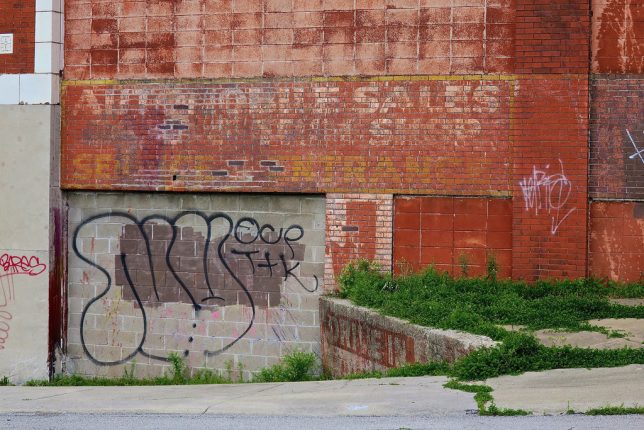
One of those old-timey bike factories was Memphis Cycle & Supply.  Flickr user Robby Virus captured the still majestic though graffiti-marred exterior of the building in April of 2016. ADANAY documented the interior while helping to clear the place out three months later.

abandoned-bicycle-factory-1c

Memphis Cycle & Supply appears to have closed around 2010-11 as photos taken before that time show un-boarded windows with stock on display. Flickr user Joe Pusateri (Jo Teri) snapped the building after dark on June 19th of 2011… a brave endeavor as the neighborhood is a tad sketchy to say the least. Curiously, the slipping “S” of the signage was repaired by the time Robby Virus snapped his photos in 2016, after drooping perilously for roughly a decade.

Hungary No Longer

abandoned-bicycle-factory-2a

abandoned-bicycle-factory-2b

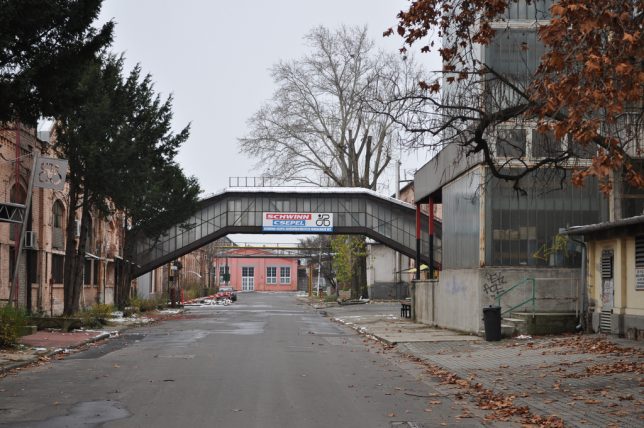
Schwinn is perhaps the most iconic brand name in American cycling history. Founded in 1895, the company’s products enriched many a child’s formative years. Schwinn declared bankruptcy in 1992 after losing a long battle to remain competitive with lower-cost manufacturers in the Far East. A failed joint venture with post-communist Hungarian firm Csepel shows the company didn’t go out without a fight, however. The images above by Flickr users Karl Eerola (keerola) and Waterford Precision Bicycles (waterfordbikes) were taken on November 28th of 2010 and July 26th of 2012, respectively.

Philadelphia Freewheelin’

abandoned-bicycle-factory-3a

abandoned-bicycle-factory-3c

abandoned-bicycle-factory-3d

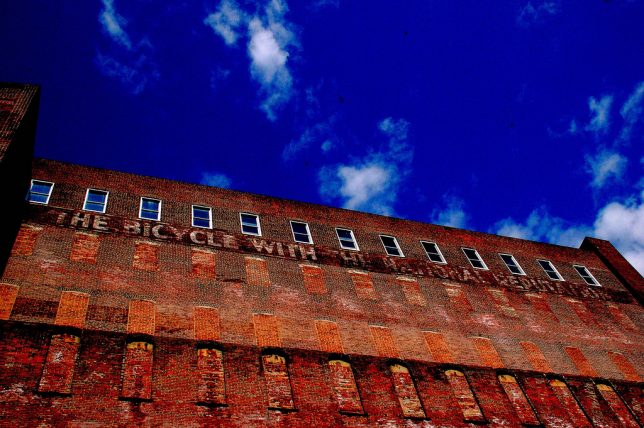
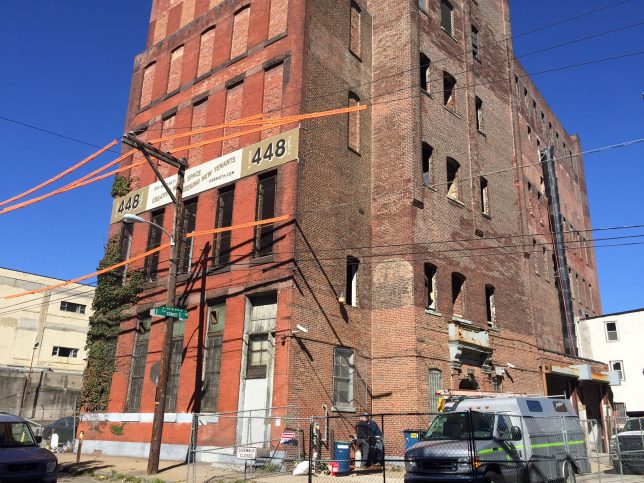
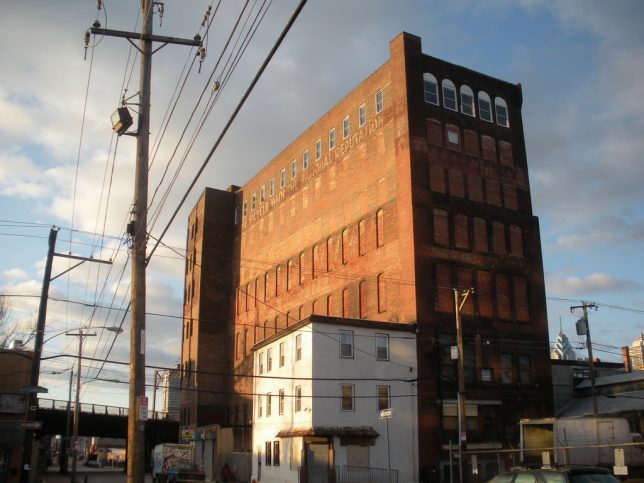
The Haverford Bicycle Factory at 448 North 10th Street in Philadelphia made Black Beauty bikes “The bicycle with a national reputation” but that didn’t stop it from shutting the doors when the flow of red ink proved unquenchable. Why the company went under in 1924 – in the midst of the Roaring Twenties – is a mystery; the grand red brick factory wasn’t more than twenty or so years old at the time. Flickr user Neil Fitzpatrick (joiseyboyy) captured the color-saturated image above on July 9th of 2010.

abandoned-bicycle-factory-3b

abandoned-bicycle-factory-3f

abandoned-bicycle-factory-3g

abandoned-bicycle-factory-3e

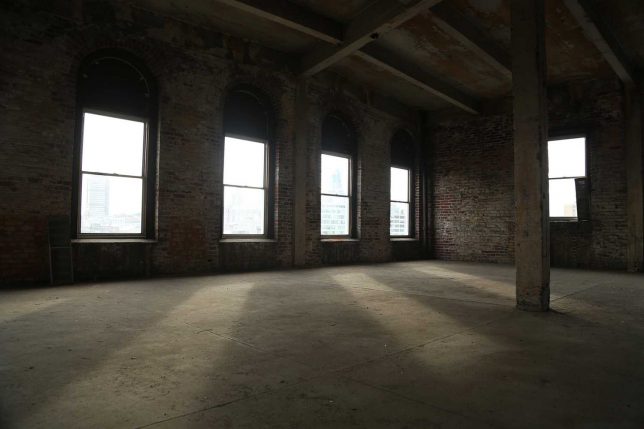
After sitting abandoned for years, the imposing building together with its smaller white adjunct was finally sold in 2015 for $ 2.75 million. Construction is currently underway to re-purpose the gutted structure as an “office/creative space” overlooking the newly-gentrified Callowhill neighborhood. Nice that the developers saw fit to retain the building’s historic painted-brick signage; appropriate that future tenants should bike to and from work.

Next Page – Click Below to Read More:
Search For Spoke 8 Closed Abandoned Bicycle Factories

Share on Facebook


[ By Steve in Abandoned Places & Architecture. ]

[ WebUrbanist | Archives | Galleries | Privacy | TOS ]

WebUrbanist

 
Comments Off on Search for Spoke: 8 Closed & Abandoned Bicycle Factories

Posted in Creativity


Modular Urbanism: Coin-Operated System of Portable Street Furniture

26 Mar

[ By WebUrbanist in Design & Furniture & Decor. ]

share stack system

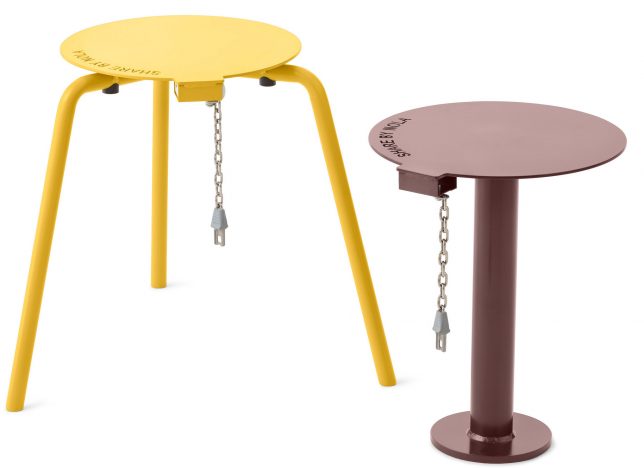
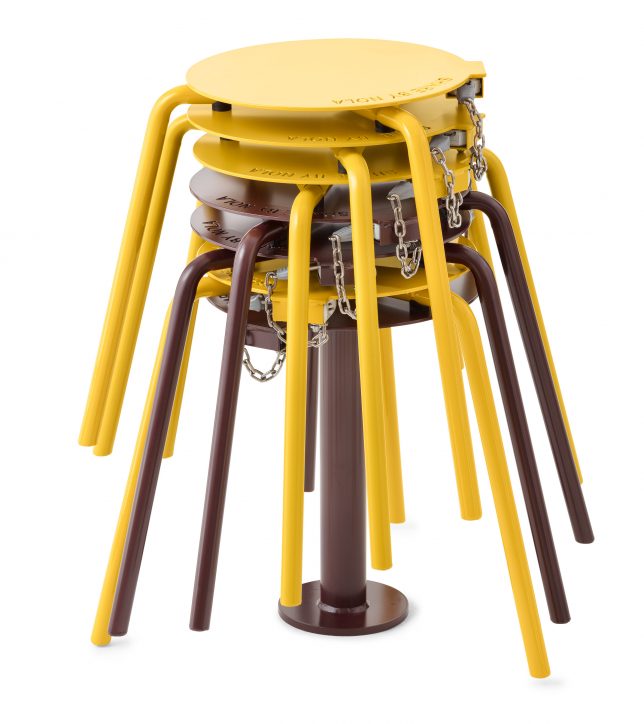
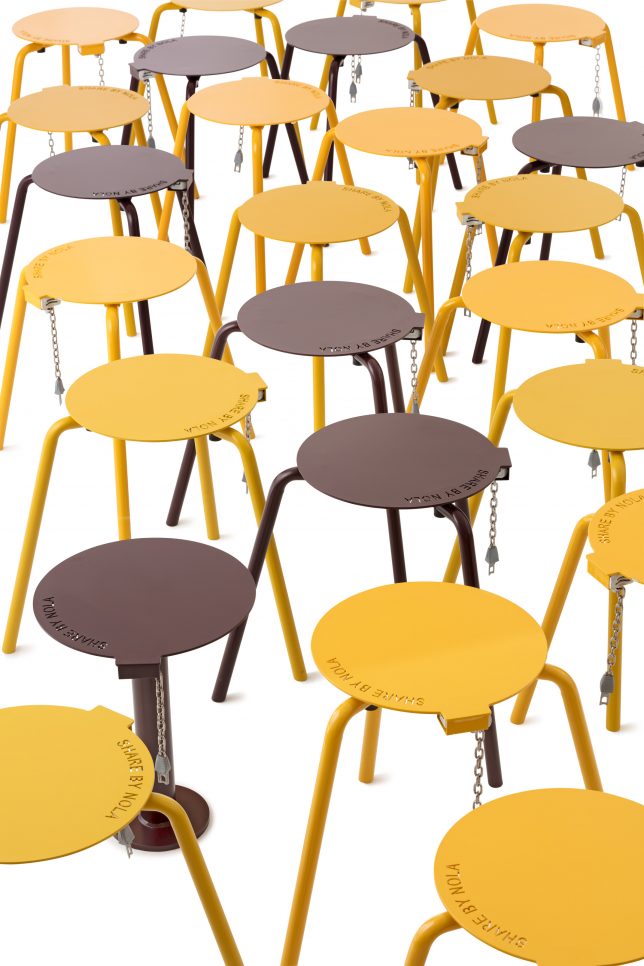
Much like coin-based cart systems found in supermarkets and airports, these stackable stools (which double as table surfaces) can be borrowed, moved around and returned with ease. Unlike fixed-position urban benches and tables, this design by Thomas Bernstrand lets users control their own experience, setting up a solo seat or group of seats and surfaces in the sun or shade as desired.

share stool stack

While not foolproof, of course (anyone intent on stealing them or leaving them out could do so), the furnishings do demand a small deposit to encourage people to to put them back when they are done. Also, the dangling chain and branded mark could help deter their disappearance into people’s homes.

share system

In the United States, where the maximum value of an everyday-use coin is fairly small, the incentive would be correspondingly diminished. But in Euro countries where denominations are typically higher, the price of failing to return the items would be significantly higher.

shair chairs

The metal stools are made to be heavy and durable, keeping them from being knocked over in the wind and making them suitable to frequent outdoor use. They also stack neatly into columns, taking up less space on the streets (or in shopping centers or parks or squares) when not in use.

share series chairs

The designs are an extension of the Share Series, a set of seats and other objects with similar coin-operated functionality intended for public use.

seats

Other pay-to-sit urban furniture projects include a chair series by Vincent Wittenberg, a bit more comfortable looking but they also take up more space on sidewalks.

Also: Fabian Brunsing, a Berlin-based artist and designer, took a different approach the problem (a bit more tongue-in-cheek). His bench uses coin deposits (but in this case non-refundable) that allow you to use a public bench. But when your time runs out: stand up fast to avoid the spikes.

Share on Facebook


[ By WebUrbanist in Design & Furniture & Decor. ]

[ WebUrbanist | Archives | Galleries | Privacy | TOS ]

WebUrbanist

 
Comments Off on Modular Urbanism: Coin-Operated System of Portable Street Furniture

Posted in Creativity


The Big Bend: U-Shaped ‘World’s Longest Skyscraper’ is Intentionally Absurd

24 Mar

[ By SA Rogers in Architecture & Cities & Urbanism. ]

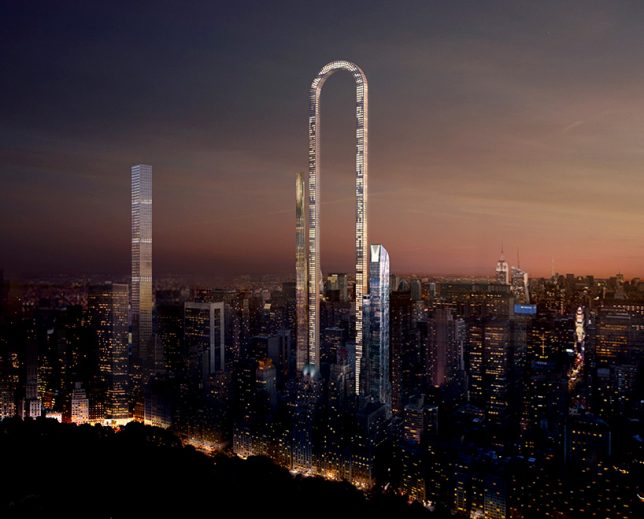
the big bend

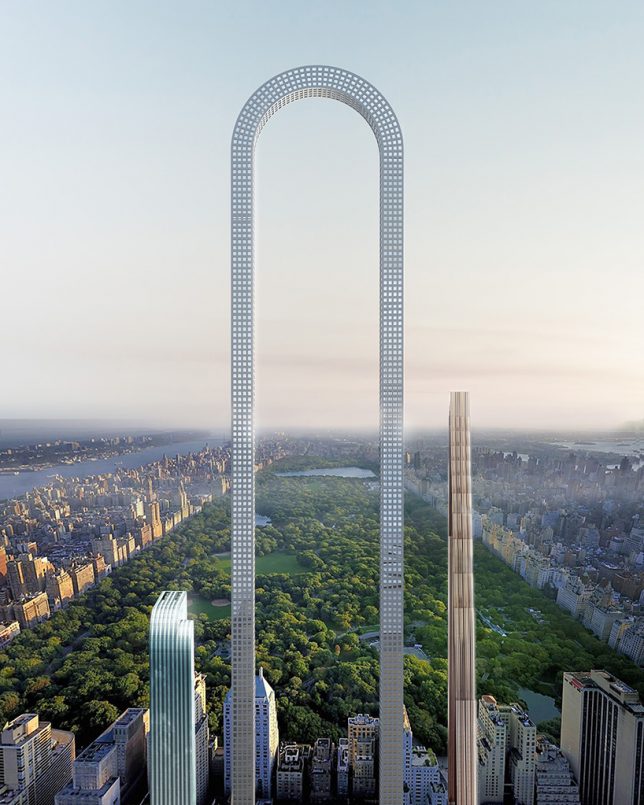
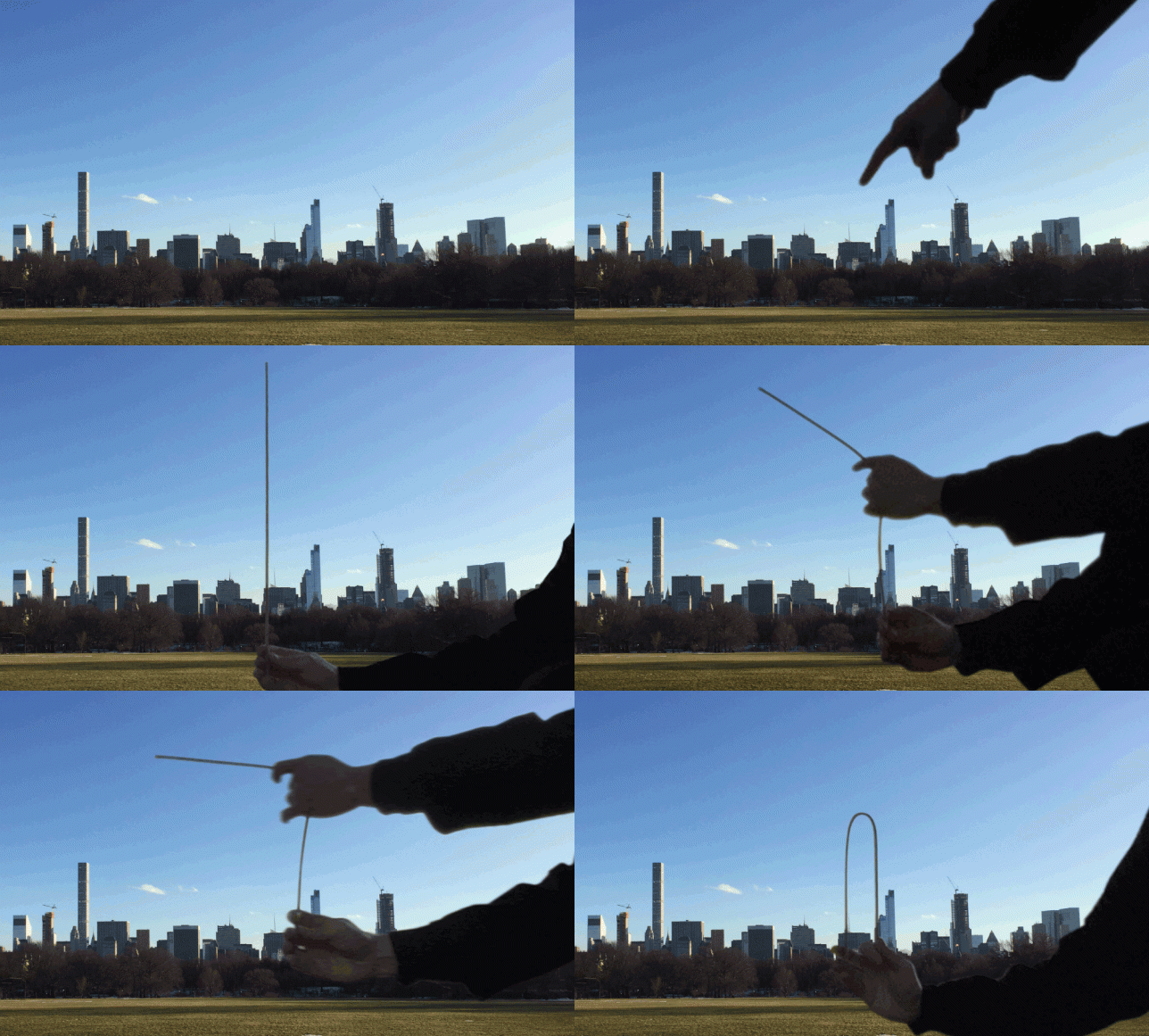
There’s lots of competition for the title of world’s tallest skyscraper, but does anyone care about the world’s longest – even when it extends vertically into an upside-down U shape? If you were to take ‘The Big Bend’ and straighten it out to stand on one end, it would extend impossibly high into the air, especially for how skinny it is. But architecture studio Oiio seems to be poking some fun at architectural norms and ‘luxury’ at the same time with this fictional structure.

the big bend 2

Designed to fit into New York City’s Billionaire’s Row, a controversial set of super tall, ultra-luxury residential skyscrapers that tend to block views and cast shadows into Central Park, The Big Bend wonders whether the prestige of an absurdly high structure still exists when it’s bent in half. It maintains roughly the same dimensions as a super tall structure, so does that mean the developers can charge as much for the apartments inside as they would if it extended all the way up into the clouds?

big bend gif

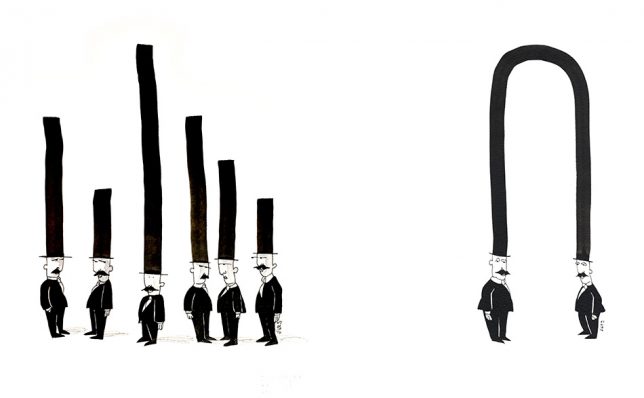
The tongue-in-cheek design repeatedly references the Monopoly-style, top-hatted caricature of a billionaire in its renderings, and the firm’s statements about their proposal reveal a frustration with the way buildings in this echelon are designed, regulated and priced.

the big bend 5 the big bend 4

“There is an undeniable obsession that resides in Manhattan,” says the firm. “It is undeniable because it is made to be seen. There are many different ways that can make a building stand out, but in order to do so the building has to literally stand out. We have become familiar with building height measurements. We usually learn about the tallest building and we are always impressed by its price per square foot. It seems that a property’s height operates as a license for it to be expensive. New York City’s zoning laws have created a peculiar set of tricks through which developers try to maximize their property’s height in order to infuse it with the prestige of a high rise structure.”

the big bend 3

“But what if we substituted height with length? What if our buildings were long instead of tall? If we manage to bend our structure instead of bending the zoning rules in New York, we would be able to create one of the most prestigious buildings in Manhattan. The longest building in the world. The Big Bend can become a modest architectural solution to the height limitations of Manhattan. We can now provide our structures with the measurements that will make them stand out without worrying about the limits of the sky.”

Share on Facebook


[ By SA Rogers in Architecture & Cities & Urbanism. ]

[ WebUrbanist | Archives | Galleries | Privacy | TOS ]


WebUrbanist

 
Comments Off on The Big Bend: U-Shaped ‘World’s Longest Skyscraper’ is Intentionally Absurd

Posted in Creativity