RSS
 

Archive for the ‘Creativity’ Category

Natural Lighting: Grow Your Own Glow-in-the-Dark Plants

10 Jun

[ By WebUrbanist in Conceptual & Futuristic & Technology. ]

glowing plant synthetic biology

Imagine the possibilities: cities illuminated at night not with carbon dioxide-producing energy sources, but with real glow-in-the-dark trees that light up streets and sidewalks alike.

glowing plant use cases

What started as a Glowing Plant campaign to raise just sixty-five thousand dollars has now ended with ten times that much in funding, all toward one purpose: naturally-glowing, biologically engineered plant life. The seed funding, in both senses, has been secured.

Glowing plants are not new, but crowd-funding the research and gene splicing,  aiming for sustained bioluminescence, and distributing the resulting plants all push into new (and apparently fertile) territories. The project team will start small, with household plants including glowing roses, and work up from there.

glowing plant how to

Concerned critics, however, have also noted that such ground-up, grass-roots synthetic biology experiments come with risks – including releasing new and untested plant strains into the wild.

glowing plants history process

With recommendations coming in from folks with Harvard to Singularity University on their resume, ranging to endorsements from known names including Cory Doctrow of BoingBoing, one hopes this team has their house in order. Still, even if the researchers in this case are careful and responsible, who is to say the next project of this type will be devoid of danger?

Share on Facebook


[ By WebUrbanist in Conceptual & Futuristic & Technology. ]

[ WebUrbanist | Archives | Galleries | Privacy | TOS ]


WebUrbanist

 
Comments Off on Natural Lighting: Grow Your Own Glow-in-the-Dark Plants

Posted in Creativity


As The Whirl Turns: 9 Abandoned Heliports & Helipads

09 Jun

[ By Steve in Abandoned Places & Architecture. ]

abandoned helipads heliports
Like the last episode of M*A*S*H, the choppers won’t be back. These abandoned heliports and helipads stand in silent contrast with their past buzzing busy-ness.

Old Cold Warrior

abandoned helipad Sweney Ridge California(image via: Randy52)

Sweeney Ridge in Pacifica, California is part of the Golden Gate National Recreation Area these days but back in Cold War times it sheltered a SF-51C Nike missile control facility. The sun-blistered helipad above was used to shuttle military personnel and support staff to and from the site. Kudos to Flickr user Randy Lloyd for capturing the eerie loneliness embodied in this long-disused helipad.

District 9 Revisited

abandoned heliport Cape Town South Africa(images via: Eduard Grebe, Tropicfruit and Wikipedia)

Only chunks of disarticulated concrete remain of a former heliport located at Mouille Point in Cape Town, South Africa. The gritty war-zone vibe and stark stenciled lettering evoke the disturbing atmosphere that permeated the futuristic 2009 sc-fi film District 9, shot on location in South Africa. Coincidence or just bad vibes?

abandoned heliport Cape Town South Africa(image via: Cape Town Daily Photo)

Text and arrow notwithstanding, you wouldn’t want to attempt any landing (by helicopter or otherwise) in this area. Are these the remains of a heliport in situ or have some of the original components been moved to a central scrap storage depot? Will the bits & pieces be reassembled someday by otherworldly refugees trapped in a desperate tug-of-war between brain and prawn? Further discussion on this topic has been banned by the MNU Department of Alien Affairs.

Ukraine Not Weak!

abandoned helipad Ukraine Kaniv(images via: KyivPost)

When Ukraine was awarded the honor of hosting the Euro 2012 soccer championship, the governmental powers that be decided a brand, spanking new heliport was needed to welcome assorted billionaires, oligarchs and the like. The order was given, $ 11 million worth of  funding was committed and before long, the city of Kaniv boasted an impressive new heliport with a spiffy glass-walled mini-terminal. Unfortunately, the assorted billionaires, oligarchs and the like DIDN’T like the Kaniv heliport, which these days only impresses those who appreciate infrastructural white elephants.

Next Page:
As The Whirl Turns 9 Abandoned Heliports Helipads

Share on Facebook


[ By Steve in Abandoned Places & Architecture. ]

[ WebUrbanist | Archives | Galleries | Privacy | TOS ]


WebUrbanist

 
Comments Off on As The Whirl Turns: 9 Abandoned Heliports & Helipads

Posted in Creativity


Useful Billboards? Advertisements Extend Into Urban Space

08 Jun

[ By Delana in Design & Guerilla Ads & Marketing. ]

smart ideas for smarter cities awning billboard

At its best, advertising is entertaining, even useful. At its worst, it is invasive, abrasive, and perhaps even offensive. IBM’s new campaign from Ogilvy France skirts the line, featuring public objects that are useful but which somewhat invade the urban space.

ogilvy france bench billboard

The Smart Ideas for Smarter Cities campaign includes three billboards that extend out from city walls and into the urban environment. One is an awning of sorts, providing a dry space for residents to get out of the rain or a bit of shade to get out of the sun.

ibm ramp billboard

Another is a small bench which gives weary pedestrians the chance to sit down for a moment. The last is a ramp that covers a portion of a small staircase, letting cyclists or luggage-wheeling residents take an easier route.

The campaign is meant to inspire viewers to think differently about their cities and how some elements could be tweaked to be more useful for residents. It’s something of a risk, however, since this invasion of the urban environment may not be welcomed by residents who think that advertising is already too ubiquitous on city streets.

(images via: Fast Company)

Share on Facebook


[ By Delana in Design & Guerilla Ads & Marketing. ]

[ WebUrbanist | Archives | Galleries | Privacy | TOS ]


WebUrbanist

 
Comments Off on Useful Billboards? Advertisements Extend Into Urban Space

Posted in Creativity


Sound in Sand: Complex Visualizations of Audio Frequencies

07 Jun

[ By Steph in Art & Installation & Sound. ]

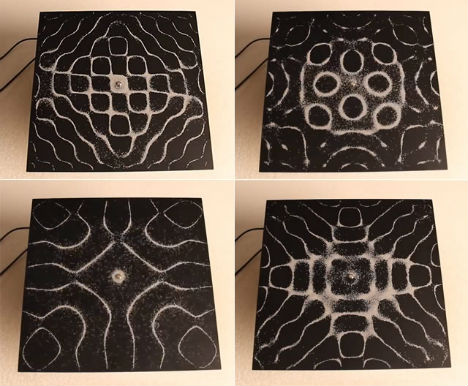
Sound in Sand 1
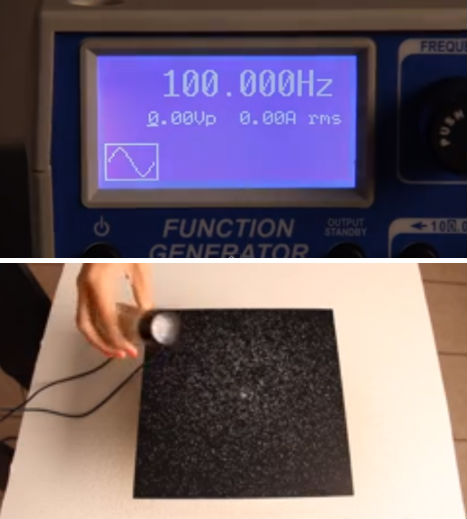
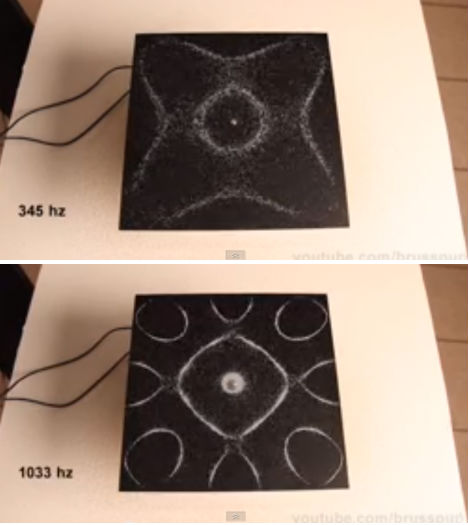
Grains of sand arrange themselves into complex geometric patterns according to audio frequencies in these fascinating resonance experiments by Youtube user Brusspup. The sand is sprinkled onto a black metal plate attached to a tone generator, which emits a series of increasing frequencies. The higher the frequencies, the more intricate the designs become.

Sound in Sand 2

This experiment is based on the Chiadni plate, invented by German physicist Ernst Chiadni in the 18th century. Chiadni used a violin bow along the edge of a glass plate covered with sand to create visualizations of sound. The plate is divided into regions vibrating in opposite directions, bounded by lines of zero vibration called nodal lines.

Sound in Sand 3

The plate was bowed until it reached resonance, at which point the vibration causes the sand to concentrate along the nodal lines where the surface is still. This technique is still used in the design and construction of acoustic instruments like violins and guitars.

Sound in Sand 4

Brusspup often experiments with the intersection of science and art. Previous projects have included running water through sound waves to produce incredible zig-zagging shapes, and a sound-based camera trick that makes water appear to travel backwards.

via This is Colossal

Share on Facebook


[ By Steph in Art & Installation & Sound. ]

[ WebUrbanist | Archives | Galleries | Privacy | TOS ]


WebUrbanist

 
Comments Off on Sound in Sand: Complex Visualizations of Audio Frequencies

Posted in Creativity


Tag Clouds: Geek Street Artist Remakes Messy Graffiti

07 Jun

[ By WebUrbanist in Art & Street Art & Graffiti. ]

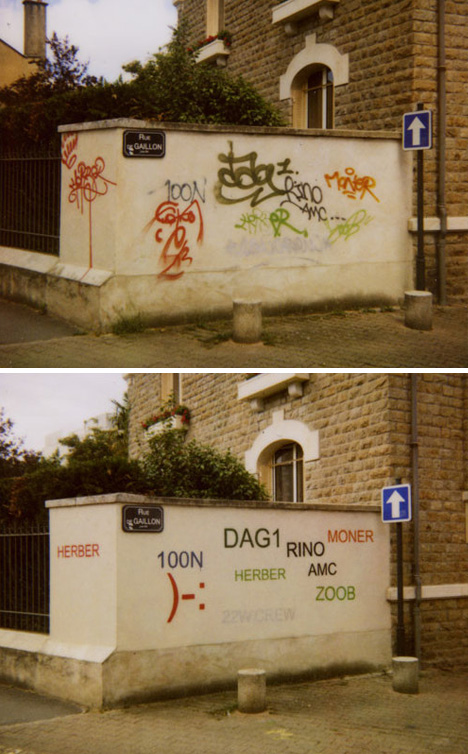
graffiti tag cloud project

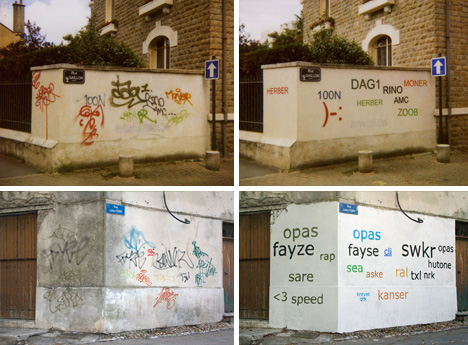
To the uninitiated, used to seeing it but not to reading it, graffiti scrawl can seem illegible. In a play on both tagging and technology, this artist turns traditional tags into computer-style tag clouds, among other geeky street art projects.

graffiti geek tag clouds

Mathieu Tremblin could be criticized for stripping the soul out of the works he modifies, but that is too narrow a reading of his art. He is really not suggesting a better way to graffiti, just commenting on what is there, and making what is right before our eyes already a bit more visible.

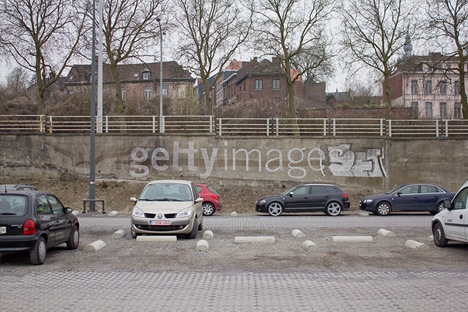
graffiti getty images spoof

In another work, he spoofs the ubiquity of digital watermarks by photographing a physical equivalent straight-on. We are so used to seeing these as after-print overlays on pictures, it takes conscious effort to realize it is part of the actual landscape.

geek graffiti removal project

Then, a complete reversal but in much the same mindset: a series of images where he has digitally stripped out graffiti by overlaying patches of Photoshopped color. In this case, it takes some time to recognize this is not just another case of painted-over graffiti removal.

Share on Facebook


[ By WebUrbanist in Art & Street Art & Graffiti. ]

[ WebUrbanist | Archives | Galleries | Privacy | TOS ]


WebUrbanist

 
Comments Off on Tag Clouds: Geek Street Artist Remakes Messy Graffiti

Posted in Creativity


Ground, Up! Curved Green Sky Gardens Wrap Tower Hotel

06 Jun

[ By WebUrbanist in Architecture & Offices & Commercial. ]

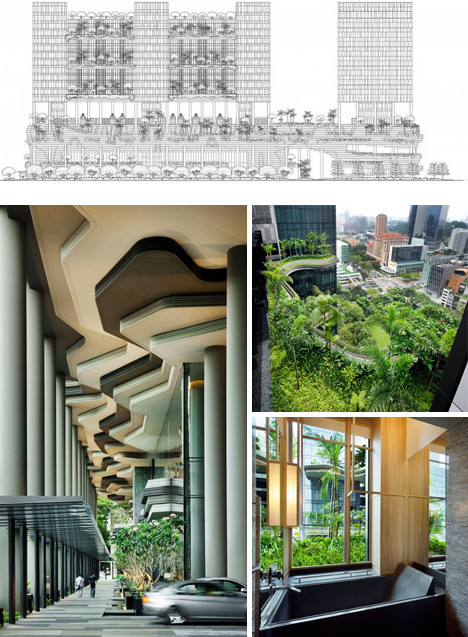
sky garden upper levels

The best of both worlds: guests at this hotel get to enjoy skyscraper-high views and still experience layers of intensive greenery on virtually all levels.

sky garden ground up

A series of sleek towers rises up from an organic base that provides shelter and visual interest on the lower levels. These curvilinear forms support an interstitial outdoor floor, and can also be found far above, stretched between the towers at upper levels, serving as platforms for lush greenery.

sky garden concrete cloud

A grid of circular concrete columns pierces the various levels, rising up to support the towers. These provide for the structural needs of the building, but also serve as a transitional design element to bridge the heavier free-form concrete clouds below and the lighter frame-and-cladding rectangles above.

sky garden terrace level

The design by WOHA is meant to be a landmark for its city “Most of Singapore’s recent architecture – especially in and around the city centre – is nothing more than generic and can be seen anywhere in the world, regardless of climate and culture.

sky garden plans details

The concept is about balance, as is the architectural result: “An equilibrium point of architectural anonymity has been derived from a number of factors. Finally the city has a uniquely expressive urban landmark that reinterprets and reinvigorates its location”

Share on Facebook


[ By WebUrbanist in Architecture & Offices & Commercial. ]

[ WebUrbanist | Archives | Galleries | Privacy | TOS ]


WebUrbanist

 
Comments Off on Ground, Up! Curved Green Sky Gardens Wrap Tower Hotel

Posted in Creativity


Living Architecture: Evolving Pavilion Made by Silk Worms

06 Jun

[ By Steph in Art & Sculpture & Craft. ]

Silk Worm Pavilion 1

Growing and transforming like a living organism, the Silk Pavilion created by the MIT Media Lab is a collaboration between digital and biological fabrication. The basis of the pavilion is a network of silk threads made by a CNC machine, which has become a cloud-like structure with the addition of natural netting from the dozens of silk worms that squirm all over its surfaces.

Silk Worm Pavilion 2

Twenty-six polygonal panels with silk thread stretched between them form a sort of scaffolding that enables the silk worms to work their magic of naturally produced architecture. The geometry of the base structure was created using an algorithm that routes a single continuous thread across the open sections to provide varying degrees of density.

Silk Worm Pavilion 3

The silkworms were deployed as a biological ‘printer’ to create the secondary structure. If the sculpture, which is installed at MIT, were allowed to remain in place indefinitely, the moths could produce 1.5 million eggs with the potential of constructing up to 250 additional pavilions.

Silk Worm Pavilion 4

“Affected by spatial and environmental conditions including geometrical density as well as variation in natural light and heat, the silkworms were found to migrate to darker and denser areas. Desired light effects informed variations in material organization across the surface area of the structure. A season-specific sun path diagram mapping solar trajectories in space dictated the location, size and density of apertures within the structure in order to lock-in rays of natural light entering the pavilion from South and East elevations.”

Silk Worm Pavilion 5

“The central oculus is located against the East elevation and may be used as a sun-clock. Parallel basic research explored the use of silkworms as entities that can “compute” material organization based on external performance criteria. Specifically, we explored the formation of non-woven fiber structures generated by the silkworms as a computational schema for determining shape and material optimization of fiber-based surface structures.”

via design boom

Share on Facebook


[ By Steph in Art & Sculpture & Craft. ]

[ WebUrbanist | Archives | Galleries | Privacy | TOS ]


WebUrbanist

 
Comments Off on Living Architecture: Evolving Pavilion Made by Silk Worms

Posted in Creativity


Flat-Pack Emergency Shelters Slot Together Like Puzzles

05 Jun

[ By Delana in Architecture & Houses & Residential. ]

emergency shelters flatpack plywood

Times of emergency call for quick action to get victims into safe shelters. Plenty of easily-assembled emergency structures have been designed over the years, but Australian architecture firm BVN Donovan Hill has presented an interesting take on the topic. Their idea goes together like a 3D puzzle, each piece of plywood slotting together as easily as a flat-pack furniture kit.

flatpack emergency shelter

The shelter consists of pre-cut plywood boards that would be delivered to a disaster site flat-packed. Each piece has notches that fit into the next piece; assembling one of the shelters requires no tools other than the hands of one or two people. Once the wooden skeleton has been assembled, a waterproof skin is put on the outside to keep out the elements. The goal is for the structure to be able to be assembled in just one day.

easily assembled flat pack emergency shelter

The inside of the structure features contours that jut out to create shapes that could be used for sitting or sleeping. That’s according to the designers – to us, the thin plywood shapes don’t look comfortable enough to support a person without an extreme amount of padding between them and the human body.

modular pre-cut easy assemble emergency shelters

According to the designers, one of their main goals in this design was to create a space that is not simply utilitarian, but one that creates happiness in times of tragedy. The shelters are small – around 100 square feet – but very heavy at about half a ton each. This makes each one quite substantial and perhaps usable for long periods if necessary.

temporary emergency shelter flat pack

The structures can be grouped together to create a temporary community, with some buildings serving as meeting places instead of grouping all of the victims together in one very large space. The concept will require a significant amount of fleshing out before it becomes a viable option for disaster relief, but the idea of an easily (and quickly) assembled, private temporary home is one that will appeal to just about anyone who has ever been displaced by a natural disaster.

(images via: Inhabitat)

Share on Facebook


[ By Delana in Architecture & Houses & Residential. ]

[ WebUrbanist | Archives | Galleries | Privacy | TOS ]


WebUrbanist

 
Comments Off on Flat-Pack Emergency Shelters Slot Together Like Puzzles

Posted in Creativity


Record Breakers: 7 Vehicular Wonders of the World

05 Jun

[ By Steph in Technology & Vehicles & Mods. ]

World Record Breaking Cars

Destroying lesser vehicles in more ways than one, these seven record-smashing cars and trucks are stronger, longer, faster, narrower, more fuel-efficient and way more expensive than the average vehicle. In most cases, you have to be a millionaire to afford one, but if you’ve got the cash, going over 460 miles per hour and crashing through buildings would make the indulgent purchase worth the dent in your bank account. This list includes only vehicles that are produced by civilians or available to the public, eliminating military and construction vehicles.

World’s Most Expensive Car: Bugatti Veyron

World's Most Expensive Car Bugatti Veyron

At a price tag of $ 2.4 million, the Bugatti Veyron SuperSport is the world’s most expensive car – and accordingly, only thirty of them have been produced. The Veyron SuperSport is powered with an 8-liter, W16 quad-turbocharged engine for a total of 1200 horsepower, and it’s made of lightweight materials like carbon fiber and aluminum. The Veyron 16.4 is the last version of this particular model that will ever be made. Is it worth the money? Sure, if achieving insane speeds of up to 267.81mph is important to you; no other car available to the general public and legal on the streets can go this fast.

The Bugatti Veyron held the title of the world’s fastest car for a while, until it was revealed that a speed limiter was switched off during tests. The title was stripped, and no other has been awarded. However, even nearly 270mph doesn’t reach the speeds that the actual world’s fastest car can achieve.

World’s Fastest Land Speed Car: Speed Demon Streamliner

World's Fastest Car Speed Demon
World's Fastest Car Speed Demon 2

This car definitely won’t be appearing on the highways anytime soon; it’s a one-off produced by George Poteet and Ron Main in an attempt to smash speed records, and that it did. The Speed Demon is the world’s fastest wheel-driven, piston-powered car, and it clocked an astonishing 439.562mph in a test at the 2012 Bonneville Speed Week. The shell is part of what makes the steam-powered Speed Demon so fast; it’s incredibly aerodynamic. The car boasts a Kenny Duttwiler 368-cubic-inch twin-turbo V8 engine.

World’s Largest Pick-Up Truck: Modified 1950s Dodge Power Wagon

World's Largest Pickup Truck

Said to be the largest car or truck in the world, this 1950s Dodge Power Wagon was made by oil billionaire Seikh Hamad bin Hamdan Al Nahyan of the United Arab Emirates in the mid 1990s. Looking to be at least five times as large as a standard Dodge Power Wagon, this model is more than just a cab on wheels – it holds four air conditioned bedrooms, a living room and a bathroom, with a motorized tailgate that drops down to become a terrace.

Hamad is a bit of an eccentric, obsessed with collecting oversized vehicles; he also has a giant replica of the Willys WWII Jeep and two jeeps welded together into a double-wide vehicle. He also holds a number of Guinness World Records for things like the biggest graffiti tag on the planet.

World’s Most Fuel-Efficient Vehicle: VW XL1

World's Most Fuel-Efficient Car

The world’s most fuel-efficient car will achieve 261 miles per gallon – beat that with your Prius. The XL1 is a two-seat diesel plug-in hybrid with a driving range of a little over 30 miles; the limited range is part of what makes it such a miserly gas sipper. Small, low to the ground and aerodynamic, the XL1 was built for fuel efficiency, if not for speed; it will take 12.7 seconds for the car to get from zero to 62 miles per hour. The car’s narrow profile means the passenger seat has to be set back slightly from the driver’s seat so each person in the car has a little bit of elbow room. It’s intended to be a production car, but VW says it plans to use “handcrafting-like production methods” to build it at its facility in Germany.

Next Page:
Record Breakers 7 Vehicular Wonders Of The World

Share on Facebook


[ By Steph in Technology & Vehicles & Mods. ]

[ WebUrbanist | Archives | Galleries | Privacy | TOS ]


WebUrbanist

 
Comments Off on Record Breakers: 7 Vehicular Wonders of the World

Posted in Creativity


Windows of New York: Weekly Documentary Design Project

05 Jun

[ By WebUrbanist in Art & Drawing & Digital. ]

windows of new york

Fascination bleeds into fixation in this wonderful ongoing series of illustrations by a graphic designer who enjoys the nuances of fenestration in his favorite city.

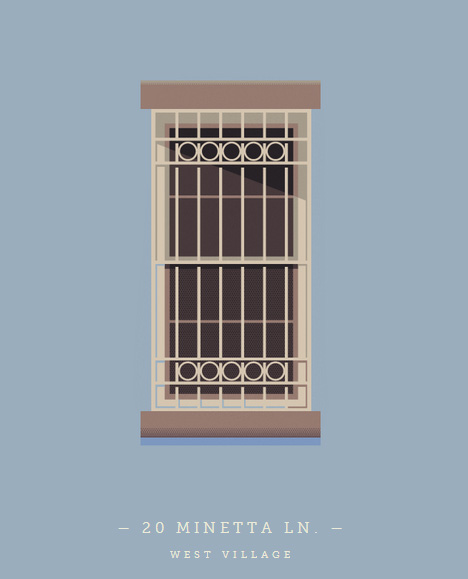
windows art project

Each piece in the series specifies not only the neighborhood (Hell’s Kitchen, West Village, East Village, Lower East Side, Alphabet City, SOHO, Williamsburg and more) but the actual address so truly curious fans can map out routes to find the source material.

windows graphic design series

From creator Jose Guizar, “The Windows of New York project is a weekly illustrated fix for an obsession that has increasingly grown in me since chance put me in this town. A product of countless steps of journey through the city streets, this is a collection of windows that somehow have caught my restless eye out from the never-ending buzz of the city. This project is part an ode to architecture and part a self-challenge to never stop looking up.”

windows illustrations look up

There is a consistency to the visual language (from shapes to color palette) employed in each piece, which only serves to highlight the surprise differences between the various windows featured. Hacks and modifications make their way into the images as well, from protective metal grating and air conditioners to window-hanging flower boxes and curious cats. Even former windows, now filled in with bricks, or covered by doors, are candidates.

Share on Facebook


[ By WebUrbanist in Art & Drawing & Digital. ]

[ WebUrbanist | Archives | Galleries | Privacy | TOS ]


WebUrbanist

 
Comments Off on Windows of New York: Weekly Documentary Design Project

Posted in Creativity