RSS
 

Archive for the ‘Creativity’ Category

Retro Rail: 14 Real & Visionary Historic Monorail Designs

30 Sep

[ By Steph in Technology & Vintage & Retro. ]
Retro Monorail Designs Main copy

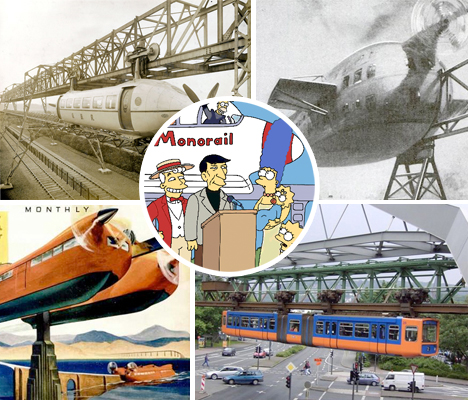
There’s nothing on earth like a genuine, bonafide, electrified six-car monorail. Or a one-car monorail with a propeller, or a high-speed rail plane, or even an amphibious monorail that can go from the elevated track right into the water. Some of these concepts were doomed from the start, some never got enough support to get off the ground and others still stand today.

Mountain Monorail with Propeller, 1936

Monorails mountain propeller

This fanciful concept illustrated by Kikuzo Ito in 1936, was invented by an American. The airplane propeller and tailfin keep the small car upright as it rides along the track in the mountains. An extra set of wheels extend from the sides to provide stability when it comes to a stop.

Wuppertal Schwebebahn, 1901-Present
Monorail Wuppertal

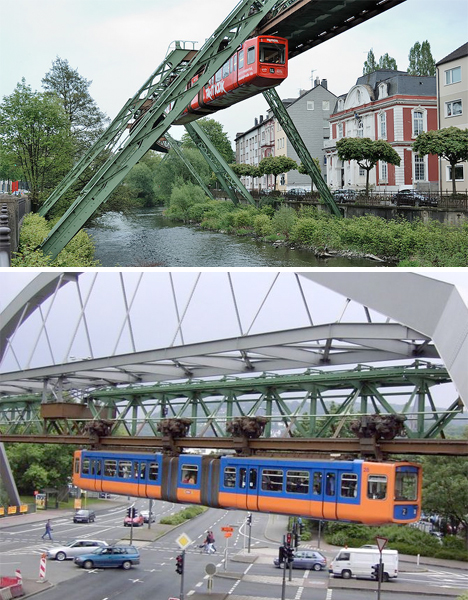
While most early monorail systems either never made it past testing stages or were dismantled soon after construction, the Wuppertal Suspension Railway in Wuppertal, Germany remains in operation after over a century. It was initially designed to be sold to the city of Berlin; the first track opened in 1901. The cars have been replaced over the decades, but since then, the monorail line has been closed just once. It moves 25 million passengers each year.

Bennie Railplane, 1930
Monorails Bennie

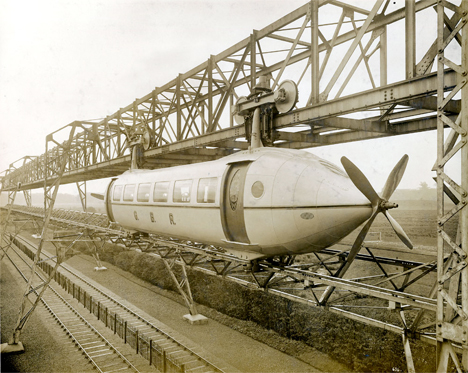
The propeller-driven Bennie Railplane, designed in 1930 by George Bennie, was a prototype that aimed to solve the problem of more economical and rapid transport via a high-speed monorail link from London to Paris. A short test track was built in Glasgow, Scotland, but the economic troubles of the ’30s doomed the project. The test track hung around, rusting and abandoned, through the 1950s.

Boyes Monorail, 1911
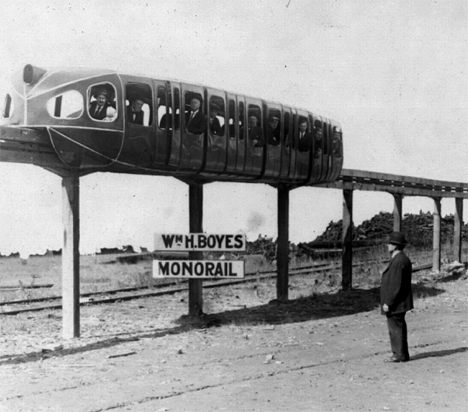
Monorail Boyes

The test track for the William H. Boyes Monorail was built and demonstrated in 1911 in Seattle, Washington, with wood rails and an estimated cost of about $ 3,000 per mile. When it opened, the Seattle Times proclaimed, “The time may come when these wooden monorail lines, like high fences, will go straggling across country, carrying their burden of cars that will develop a speed of about 20 miles per hour.”

Amphibious Monorail, 1934

Monorails Amphibious 1

Twin amphibian cars zoom from the desert into the open sea in this concept, dreamed up by the Soviet Government and featured in Popular Science in 1934. The idea was that the cars, which could reach up to 180 miles per hour, could travel three monorail lines totaling 332 miles in length in order to tap mineral wealth in Turkestan. They were reportedly tested in Moscow.

“The cars would be equipped with Diesel-electric drive, and each would carry forty passengers or an equivalent freight load,” explained Popular Science. “Where the longest of the projected routes crosses the river Amu-Daria, a mile and a quarter wide, it is proposed that amphibian cars be used. On arriving at the shore the cars would leave the overhead rail and cross the river as a boat. Soviet engineers are reported already surveying the route.”

Next Page:
Retro Rail 14 Real Visionary Historic Monorail Designs

Share on Facebook


[ By Steph in Technology & Vintage & Retro. ]

[ WebUrbanist | Archives | Galleries | Privacy | TOS ]


WebUrbanist

 
Comments Off on Retro Rail: 14 Real & Visionary Historic Monorail Designs

Posted in Creativity


Painting as Protest: Rainbow Stairs Spark Guerilla Reaction

30 Sep

[ By WebUrbanist in Art & Street Art & Graffiti. ]

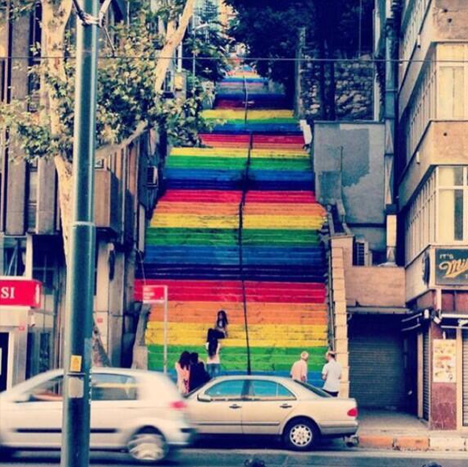
painted steps art image

It started with a single person painting one public staircase, but when city workers of Istanbul, Turkey covered this brightly-colored street art with dull gray paint, citizen activists picked up brushes in rapid response. Thus escalated an isolated incident into a quiet but powerful city-wide campaign mixing politics, graffiti and beautification.

painted staircase silent protest

Aged 64,local  retired engineer Huseyin Cetinel spend reportedly $ 800 on paint simply to make the steps in his area more attractive – he notes that nature is colorful, and suggests simply that cities can be as well.

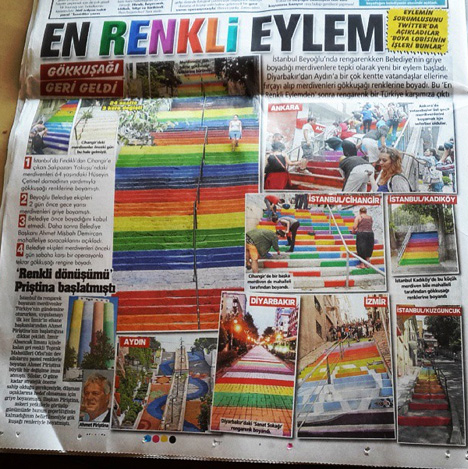
painting stairs newspaper story

As images of his work began to go viral online, many viewers saw it as a call for equal rights – a political statement. When the municipality painted the original stairs over (then initially denied doing so, adding to the confusion), that act was perhaps inevitably interpreted through a polarizing lens as well.

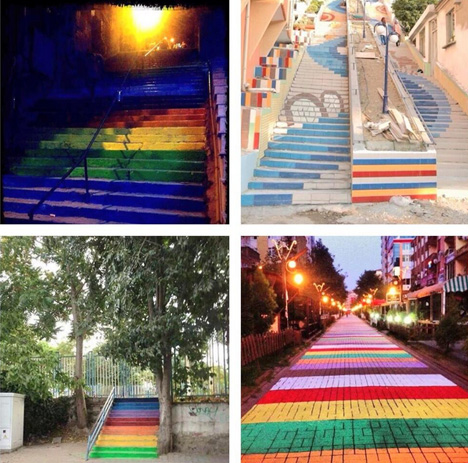
painted steps reaction political

Twitter and Facebook were awash with calls to color other sets of stairs around the hilly city, and a quiet war fought with guerrilla art began … the city whitewashing (or gray-painting) newly-colored staircases as people kept on recoloring them, before finally agreeing to let the steps be painted as the citizens wished.

As interviewed by the New York Times, local financial adviser Nalan Ozgul sees a larger lesson in these events: “There has been some movement in the society, a social uprising together with the Gezi Park protests, and this is just an extension of that spirit. The fact that the government-run municipality first denied having painted over the stairs, then agreed to paint them back in color, shows how desperate and indecisive they are about their policies.”

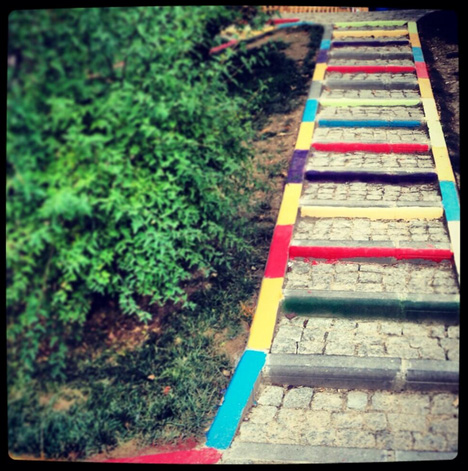
painted art guerrila action

Alternatively, perhaps this strange story shows the everyday tensions between ordinary people and relentless bureaucracies as much as it says anything  about the activist citizens and imposing governments of a particular time and place, but the effects are certainly colorful no matter how you look at them (Images via Instagram photographer sumrue and Twitter users @durmusbeyin, @demishevich, @verbikerem and @ozgelu)

Share on Facebook


[ By WebUrbanist in Art & Street Art & Graffiti. ]

[ WebUrbanist | Archives | Galleries | Privacy | TOS ]


WebUrbanist

 
Comments Off on Painting as Protest: Rainbow Stairs Spark Guerilla Reaction

Posted in Creativity


Floors So Vain: The World’s Ten Tallest Vanity Heights

29 Sep

[ By Steve in Architecture & Offices & Commercial. ]

CTBUH Vanity Height Top 10
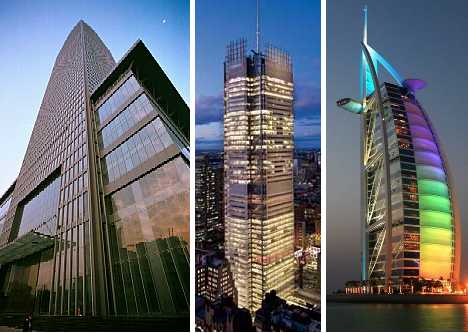
The Council on Tall Buildings and Urban Habitat (CTBUH for short) has coined the term “vanity height” to describe the empty, unoccupied space atop the world’s tallest towers. Here are the top ten wasteful Supertalls from the top down.

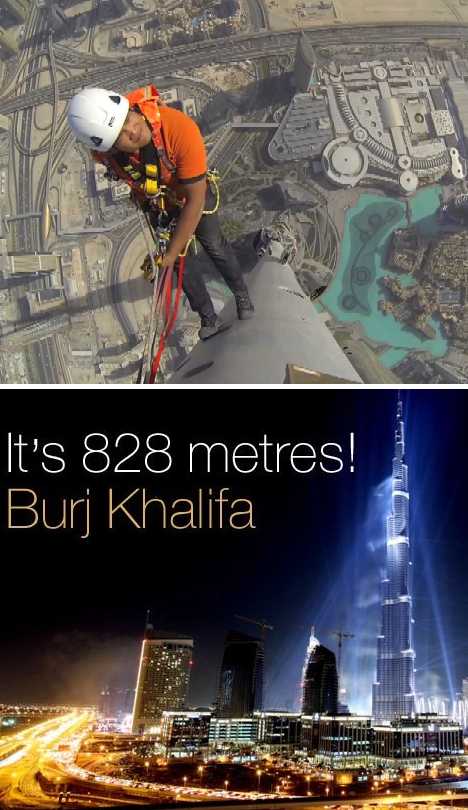
Burj Khalifa, Dubai, UAE: 244m/800.5ft of Vanity

CTBUH Burj Khalifa Dubai(image via: 4ever.eu)

The CTBUH has been using the term “supertall” to describe skyscraping buildings at least 300m (984.25ft) in height and has recently added the term “megatall” for buildings over 600m (1,968.5ft) high. All of the buildings on our list are at least 309m (1,013.75ft) tall but Dubai’s 828m (2,719ft) tall Burj Khalifa truly belongs in a class of its own.

CTBUH Burj Khalifa Dubai(images via: Business Insider and Izismile)

The Burj Khalifa’s staggering height is a bit misleading, however, if one takes the CTBUH Vanity Height factor into account. Fully 29% of the structure is non-occupiable – that works out to 244m (800.5ft), higher than a host of notable skyscrapers that DO offer renters and owners a significant amount of useable commercial and residential space.

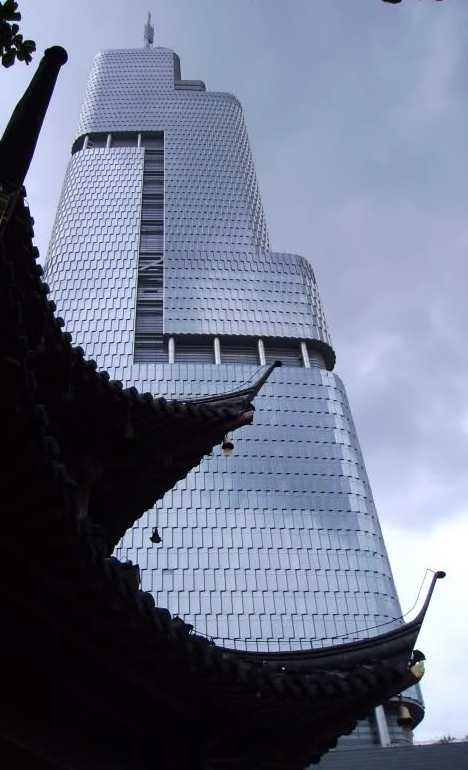
Zifeng Tower, Nanjing, China: 133m (436.5ft) of Vanity

CTBUH Zifeng Tower Nanjing(image via: Skyscraper City)

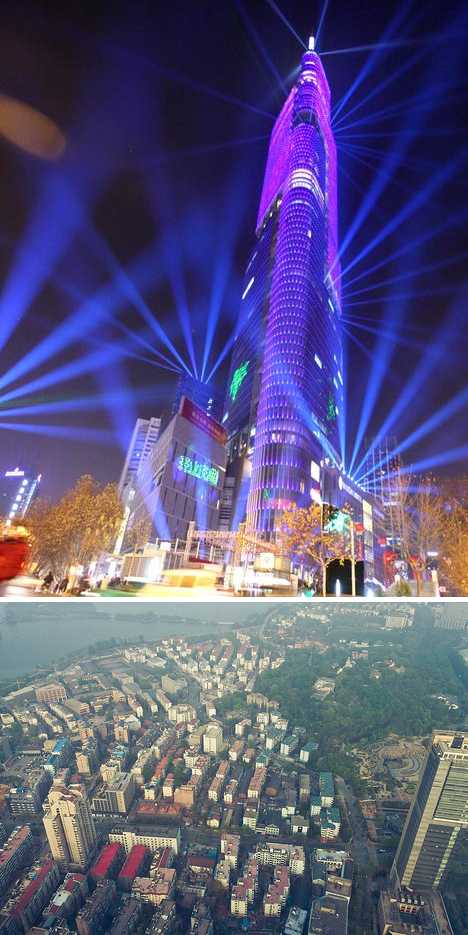
The 450m (1,480ft) tall Zifeng Tower boasts 89 stories and was completed in 2010. Looking out the window on an 89th-floor suite won’t get you the view you expect, however, as the top 30% of the building is non-occupiable. Formerly known as the Nanjing Greenland Financial Center, the building was designed by a team led by Adrian Smith of Gordon Gill Architecture.

CTBUH Zinfeng Tower Greenland Nanjing(images via: Forbes and Jeffchenbiao)

The Zifeng Tower still offers tenants and visitors 317m (1,040ft) of practical and accessible space, with the upper floors providing a spectacular view of downtown Nanjing from any direction. Restaurants, a hotel and a public observatory are stacked atop a mix of retail and office space in the Zifeng Tower’s lower section. Amusingly, the building’s official website header reads “GREEDLAND PLAZA/ZIFENG TOWER”… we realize this is a commercial endeavor but could the owners be a little less obvious?

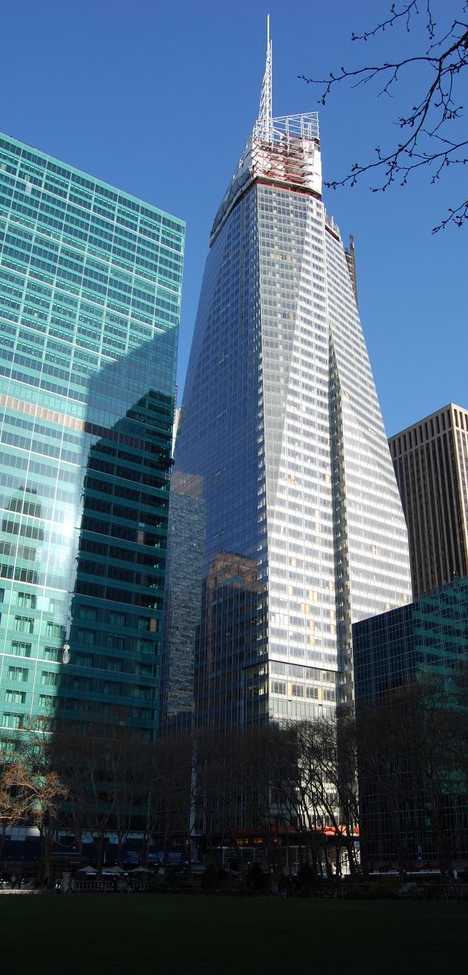
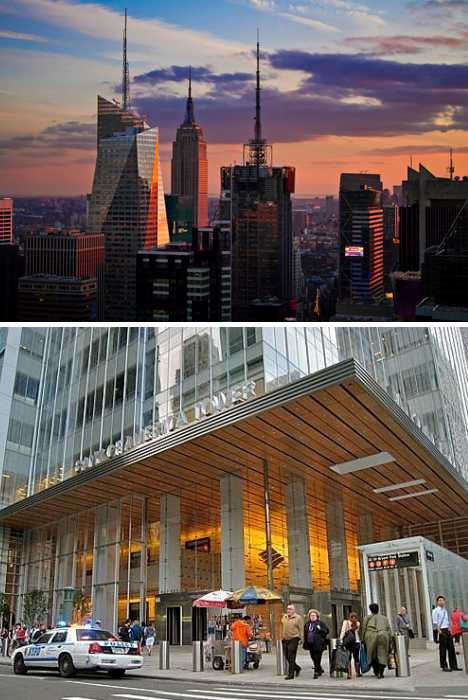
Bank of America Tower, New York, USA: 131m (429.8ft) of Vanity

CTBUH_ Bank of America Tower New York(image via: Panoramio/Ken Fries)

Too big to fail? Not according to CTBUH who note the 366m (1,200.8ft) tall Bank of America Tower in midtown Manhattan offers a mere 235m (771ft) of occupiable height to its tenants. That works out to a whopping 36% measurement of non-occupiable height. Not the ideal return on investment for the billion-dollar project, one might say.

CTBUH Bank of America Tower New York(images via: Horizon Solutions Site and Curbed)

On the bright side, COOKFOX Architects designed the Bank of America Tower to be one of the world’s most efficient and ecologically friendly buildings. Admirable indeed but the building, completed in 2009, needs asterisks added to its claims to be the third tallest building in New York City (after One World Trade Center and the Empire State Building) and the fifth tallest building in the United States… and you can bank on that.

Next Page:
Floors So Vain The Worlds Ten Tallest Vanity Heights

Share on Facebook


[ By Steve in Architecture & Offices & Commercial. ]

[ WebUrbanist | Archives | Galleries | Privacy | TOS ]


WebUrbanist

 
Comments Off on Floors So Vain: The World’s Ten Tallest Vanity Heights

Posted in Creativity


Ghost Food: A Conceptual Taste of the Future of Eating

28 Sep

[ By Delana in Conceptual & Futuristic & Technology. ]

smell and texture analog for extinct foods

Drive around any mid-size to large city and you’re destined to find a number of food trucks. In recent years they’ve become almost as ubiquitous as traditional stationary restaurants. A truck called GhostFood is throwing a very unusual hat into the ring by offering their customers not real food, but the experience of food.

ghostfood facial apparatus

GhostFood, a “participatory performance” from Miriam Simun and Miriam Songster (yup, a double-Miriam team) is meant to simulate the experience of eating foods that could soon be extinct. A 3D printed headpiece attaches to a visitor’s face just like glasses and replicates the olfactory profile of certain foods. A substitute edible substance with a texture identical to the “ghost food” is provided. The scent and texture combined trick the mind into believing that the actual food is being consumed.

endangered foods

The project is meant to increase awareness of the possible future of food. The GhostFood truck will serve up the experiences of eating cod eggs, peanut butter, and chocolate – all of which face the possibility of disappearance due to climate change. In the case of cod eggs, changing seawater salinity is increasingly causing them to sink rather than float, making them both inaccessible to humans and unable to hatch and form the next generation of cod.

foods in danger of becoming extinct

Peanuts are affected in multiple ways by climate change. Drier growing periods mean that it’s more difficult to harvest the peanuts, and shortened winters cause a mold called aflatoxin. The mold doesn’t actually harm the peanuts themselves, but it is toxic to humans. Chocolate is in a delicate situation thanks to drought, deforestation, and changing global temperatures. Although the artists are drawing attention to the unstable futures of these foods, they aren’t trying to educate or preach a certain ideology. Their goal is simply to demonstrate what our eating experiences might be like in the future when our favorite foods are no longer available on supermarket shelves.

(via: Edible Geography)

Share on Facebook


[ By Delana in Conceptual & Futuristic & Technology. ]

[ WebUrbanist | Archives | Galleries | Privacy | TOS ]


WebUrbanist

 
Comments Off on Ghost Food: A Conceptual Taste of the Future of Eating

Posted in Creativity


Secret Operation: Flightless Aircraft is a Research Station

27 Sep

[ By Steph in Art & Sculpture & Craft. ]

Secret Operation Aircraft Research Base 1

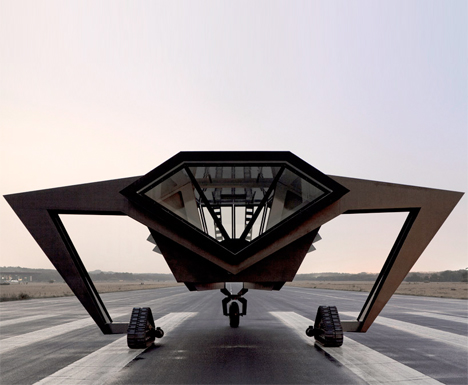
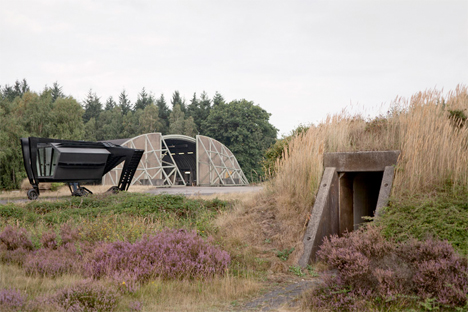
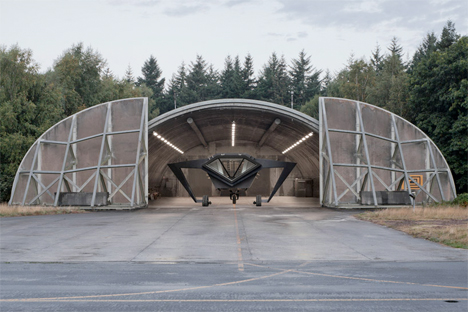
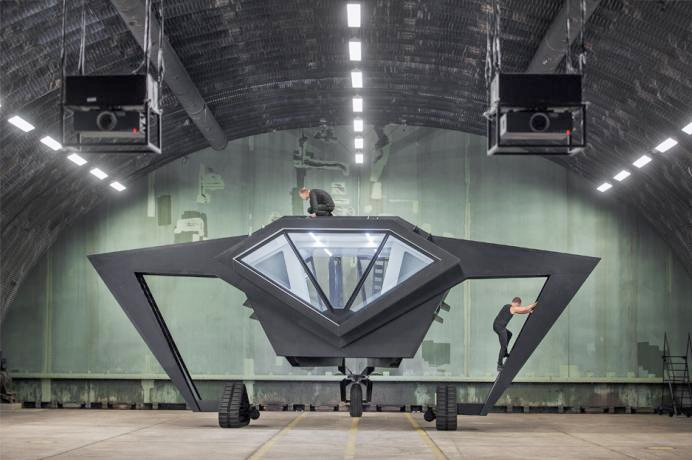
Anyone peering into a disused F15 hangar at the Cold War-era Soesterberg airbase in The Netherlands might have spotted this bizarre black structure and imagined that it was some kind of secret, high-tech aircraft project. They would have been half correct. The angular behemoth, with its wing-like appendages, is an imposing sight upon the airstrip as it rolls slowly out of Shelter 610.

Secret Operation Aircraft Research Base 2

Secret Operation Aircraft Research Base 5

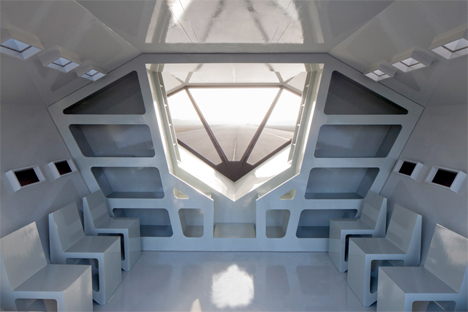
But look a little closer. It’s crawling so excruciatingly slowly for a reason. It’s not an aircraft at all – it’s moving on military treads. Secret Operation 610 is both a sculpture and a functional research station for aerospace engineering students at Technical University Delft who are developing ‘no noise, no carbon, just fly’ technologies .

Secret Operation Aircraft Research Base 3

Secret Operation Aircraft Research Base 4

Created by Rietveld Landscape, Secret Operation 610 deliberately mimics the look of science fiction aircraft. The point, essentially, is for it to look a bit scary. “The object revives the mysterious atmosphere of the Cold War and its accompanying terrifying weaponry,” say the designers.

Secret Operation Aircraft Research Base 6

The old runway serves as an ideal test site for state of the art aviation experiments, so this mobile research shelter enables students to become immersed in the atmosphere of the airbase as it rolls around. “The unconventional combination of nature and Cold War history offers an exciting environment for the development of knowledge about nature, technology and aviation.”

Share on Facebook


[ By Steph in Art & Sculpture & Craft. ]

[ WebUrbanist | Archives | Galleries | Privacy | TOS ]


WebUrbanist

 
Comments Off on Secret Operation: Flightless Aircraft is a Research Station

Posted in Creativity


Skyscraper Slums: Insider Tour of World’s Tallest Tent City

27 Sep

[ By WebUrbanist in Global & Urbex & Parkour. ]

skyscraper slum

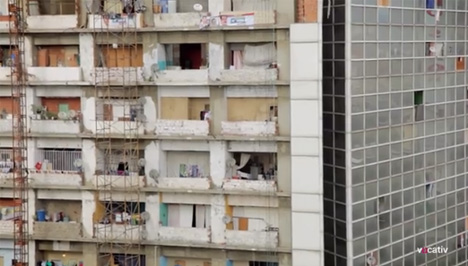
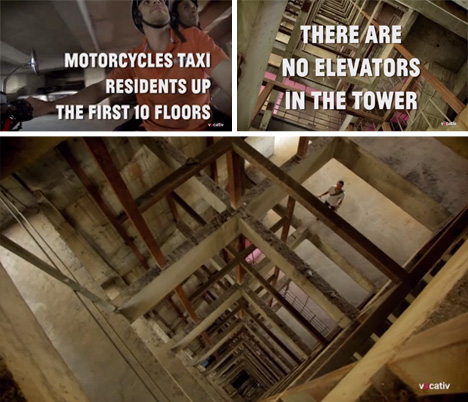
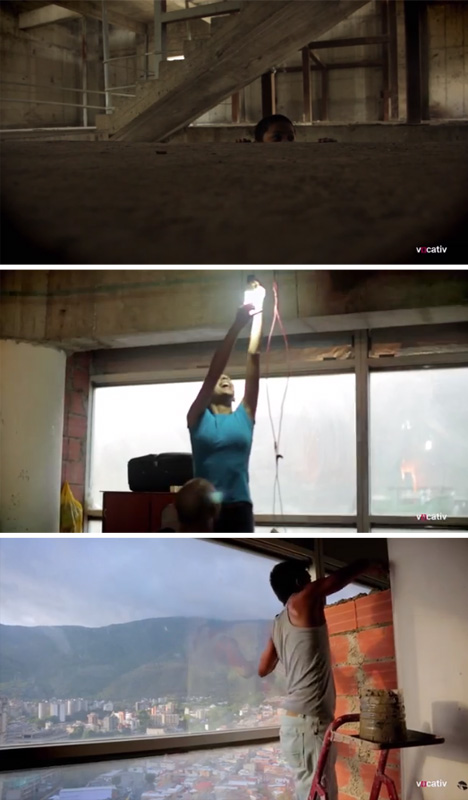
Housing over 2,500 people in 28 of its 45 floors, the Tower of David is a half-finished structure in Caracas, Venezuela, populated with displaced people. Like the now-vanished Kowloon Walled City or a huge vertical tent city, it is feared by officials and runs by its own rules. Its residents pool resources, including skills and money, to create and maintain independent and communal water supplies, plumbing and power grids.

Even the police are afraid to enter this effectively lawless structure, but through friends one video journalist was given permission to tour and film the facility – you can follow his adventure via the video above.

skyscraper squatter city life

What may be most remarkable is how much like a normal building it is, with new couples coming in and renovating dwellings, and established businesses (including a hair salon) and community spaces (at least one church).

skyscraper interior home renovations

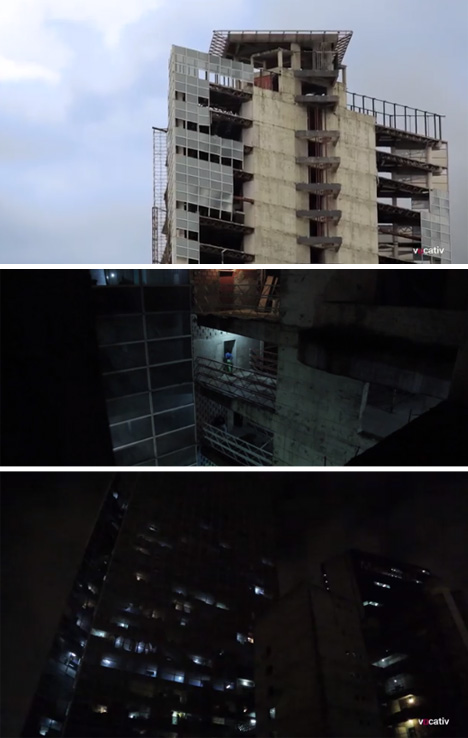
That is, of course, ‘normal’ once you get past architectural surprises like the absence of windows along some faces and the dizzying drops of dozens of stories off of unmarked edges lacking railings. The authorities also claim the structure is a hotbed for crime and violence, home to gang activity and drug cartels, but this one brief documentary, at least, suggests things are a bit more complicated than that.

skyscraper abandoned then occupied

As we described in previous coverage and with other images, the structure was being built into business skyscraper when construction halted during the 1990s financial crisis. It was then effectively abandoned and has since become a haven for a squatters who started moving in during the subsequent crisis 2007/2008. Now, these residents ride up the first ten stories taken by moped taxis or, if sufficiently poor, walk the distance. With no elevators, some skyscraper dwellers have to walk dozens of stories to get home. As in pre-elevator days, the top floors are thus the least desirable and many remain unoccupied –  from outside, you can see the light dwindling up toward the upper stories at night.

Share on Facebook


[ By WebUrbanist in Global & Urbex & Parkour. ]

[ WebUrbanist | Archives | Galleries | Privacy | TOS ]


WebUrbanist

 
Comments Off on Skyscraper Slums: Insider Tour of World’s Tallest Tent City

Posted in Creativity


Tensile Table: Floating Wood Furniture Levitates via Magnets

26 Sep

[ By WebUrbanist in Design & Furniture & Decor. ]

looping-levitating-table

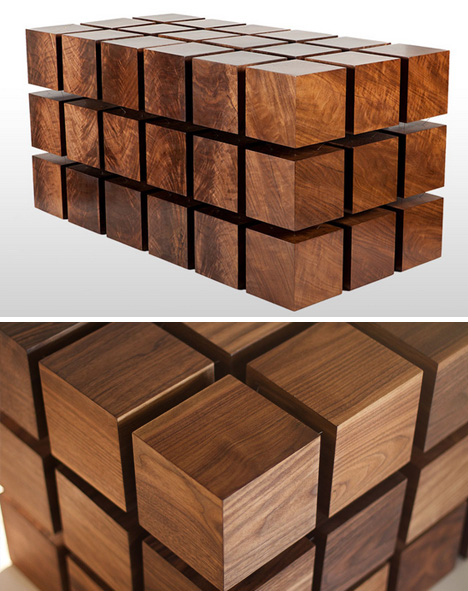
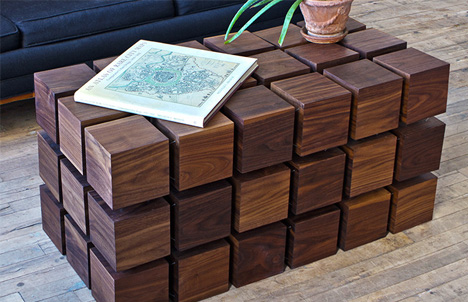
Science meets luxury in this levitating coffee table composed of hovering blocks that seem to magically shift back into formation when applied pressure is removed.

floating magnetic coffee table

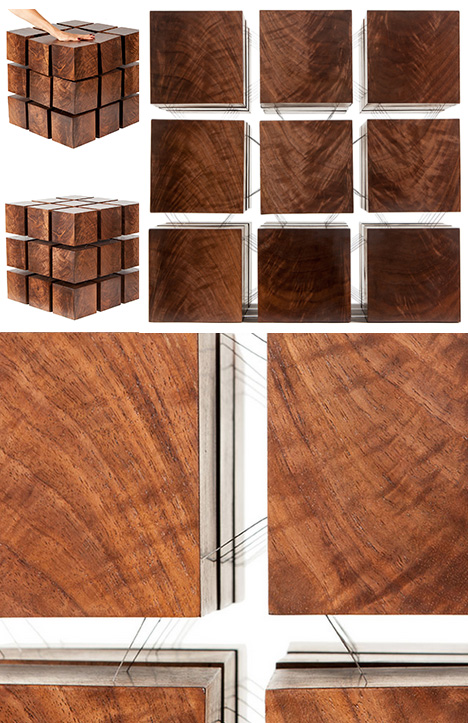
Like an over-sized Rubik’s Cube, the basic design is composed of a three-by-three grid of smaller wooden cubes, inexplicably (at least at a glance) separated in space. Also like its little cousin, the object is … puzzling.

floating table craft detail

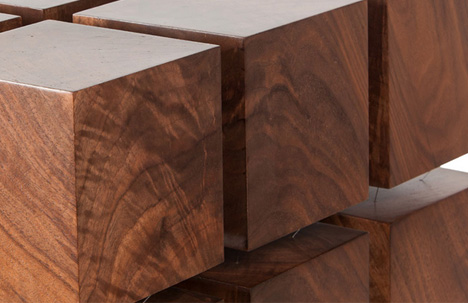
The solution to the puzzle hides partly in the voids – thin wires keep each cube from flying away from the others, while powerful magnets hold the constituent pieces apart.  Effectively, The Float Table, is a matrix of “magnetized” wooden cubes that levitate with respect to one another. The repelling cubes are held in equilibrium by a system of tensile steel cables.”

floating hover table magents

The co-founders of Rocket Paper Robot, creators of The Float Table, have backgrounds in robotics, electrical engineering and artificial intelligence, on the one hand, and design, film and advertising on the other. The company itself “is an engineering boutique specializing in the innovation and fabrication of high-end kinetic furniture, lighting, and installations.”

floating table wood wires

Of their work, RPR writes: ”It’s classical physics applied to modern design. Each handcrafted table is precisely tuned to seem rigid and stable, yet a touch reveals the secret to Float’s dynamic character.”

floating furniture design room

And about their firm: “We relish in defying expectations through artful execution with a staunch allegiance to utility,(apparent) simplicity and technical excellence. We also work with clients to customize aesthetic yet functional products that enhance the versatility of residential/commercial spaces and celebrate the expression of unabashed style.”

Share on Facebook


[ By WebUrbanist in Design & Furniture & Decor. ]

[ WebUrbanist | Archives | Galleries | Privacy | TOS ]


WebUrbanist

 
Comments Off on Tensile Table: Floating Wood Furniture Levitates via Magnets

Posted in Creativity


Blow-Up Building: Inflatable Concert Hall Tours Japan

26 Sep

[ By Steph in Global & Travel & Places. ]

INflatable concert hall Japan 1

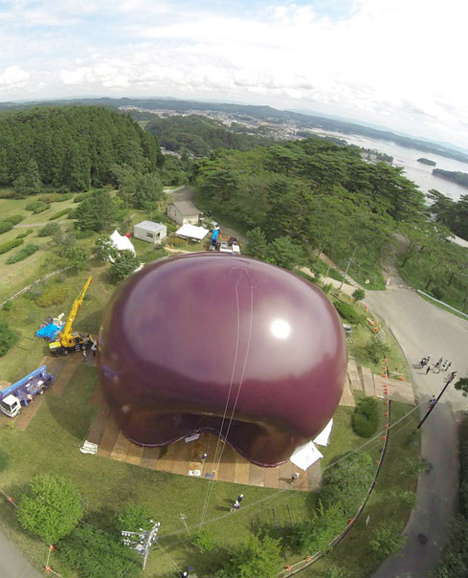
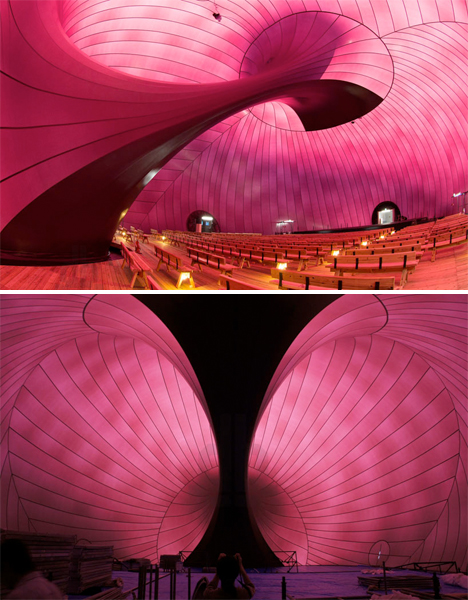
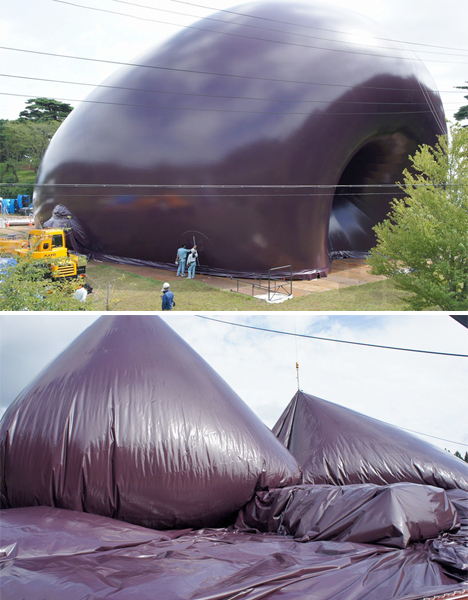
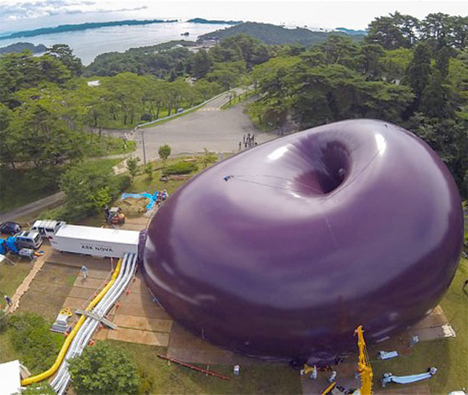
A giant purple bubble will rise from a pile of plastic to bring music, workshops and performance to Japan’s northeastern coast, which was devastated by an earthquake and subsequent tsunami in 2011. A collaboration between British sculptor Anish Kapoor and Japanese architect Arata Isozaki, the Ark Nova is the world’s first inflatable concert hall, and will tour the country for the Lucerne Festival Arknova 2013.

Inflatable Concert Hall Japan 2

Once fully inflated, the coated polyester structure measures nearly 60 feet in height and 115 feet in width. Its first stop is at a park in the town of Matsushima, which suffered serious damage to its many important cultural properties and artistic monuments, and lost thousands of residents.

Inflatable Concert Hall Japan 4

Wood from cedar trees that were damaged by the floods was used to create seating for 500 guests. The structure can easily be deflated, and will travel around the region to host events that organizers hope will help rebuild local culture and spirit.

Inflatable Concert Hall Japan 3

In addition to a range of modern concerts and performances, traditional Japanese culture such as kabuki theater will be celebrated. Children in the affected regions will also perform traditional arts and performances themed on the earthquake disaster.

Share on Facebook


[ By Steph in Global & Travel & Places. ]

[ WebUrbanist | Archives | Galleries | Privacy | TOS ]




WebUrbanist

 
Comments Off on Blow-Up Building: Inflatable Concert Hall Tours Japan

Posted in Creativity


Underground but Overboard: 15 Extreme Subway Stations

25 Sep

[ By Steph in Architecture & Public & Institutional. ]

Amazing Subway Stations Main
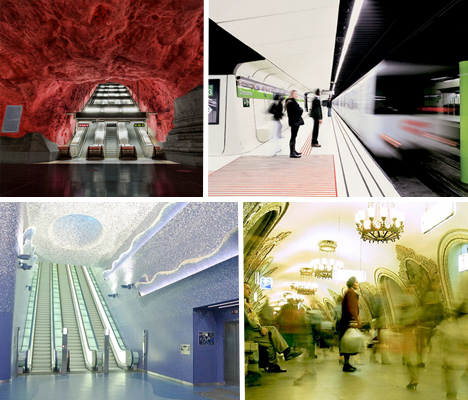
Far from the stereotype of a dark and grungy underground space where you don’t want to touch anything with your bare hands, these 15 standout subway stations are practically art galleries. From the gilded Baroque metros of Moscow to the world’s largest glass dome in Taiwan, these transit stations are worth a stop just to take a look around.

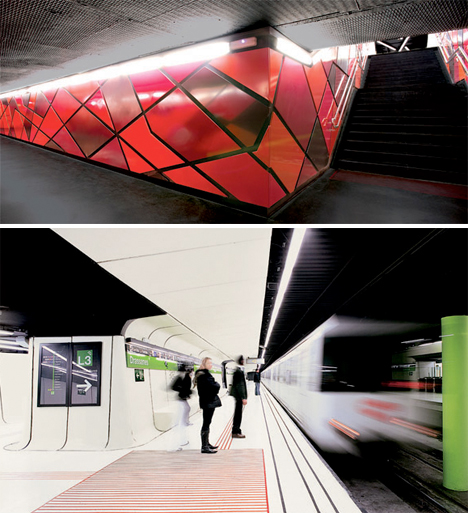
Drassanes, Barcelona

Amazing Subway Stations Drassanes 1

Amazing Subway Stations Drassanes 2
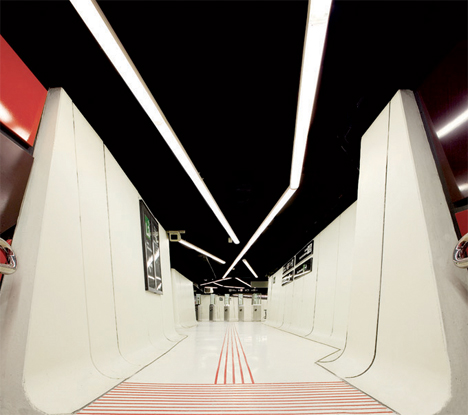
An old subway station in Barcelona, built in 1968, was covered with new surfaces to create an entirely new look, with black resin floors and lightweight white glass-reinforced concrete over the walls. The result is bright and clean with pops of color and a much more updated feel.

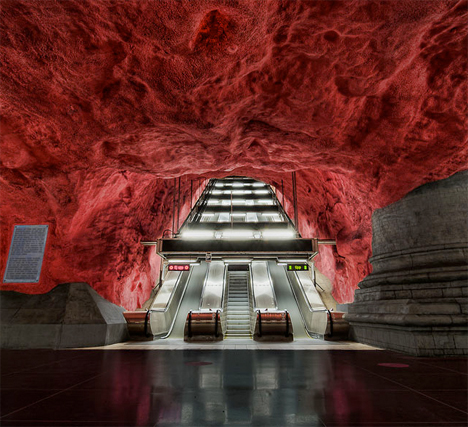
Radhuset, Stockholm

Amazing Subway Stations Radhuset

Stockholm boasts an incredible 90 decorated subway stations, each of which bearing its own unique visual identity. This one, Radhuset (courthouse) was built in 1975, and resembles a bright red cavern.

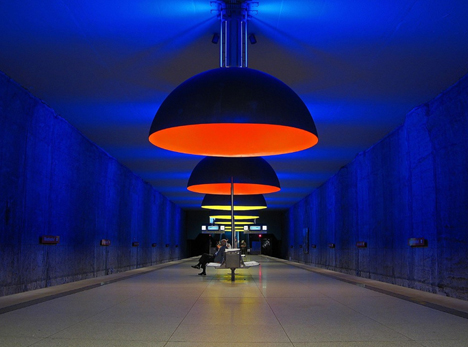
Westfriedhof, Munich

Amazing Subway Stations Westfriedhof

The dramatic Westfriedhof station in Munich, Germany features eleven large lamps that cast colored lights onto various areas of the platform. The ceiling and walls are just barely illuminated in a deep, dark blue.

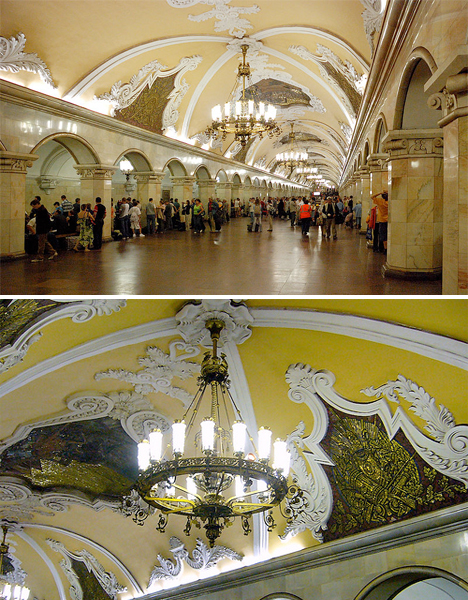
Komsomolskaya, Moscow

Amazing Subway Stations Komsomolskaya

The busiest transport hub on the Moscow metro is a showcase of Stalinist architecture, with a palatial Baroque theme in bright yellow. It’s one of the most luxurious subway stations in the world, with marble columns, murals and massive chandeliers.

Toledo, Naples, Italy

Amazing Subway Stations Naples

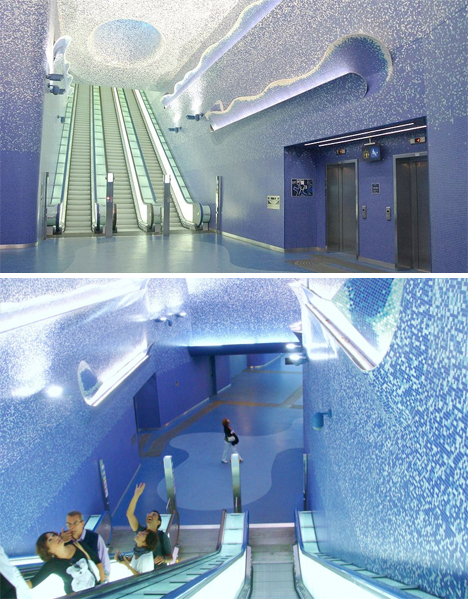
The stunning Crater of Luz by Oscar Tusquet Blanca is the centerpiece of the Toledo station in Naples, Italy – one of the most art-filled subway lines in the world. The Naples metro features 13 ‘Art Stations’  that aim to give everyone a close-up look at prime examples of contemporary art.

Next Page:
Underground But Overboard 15 Extreme Subway Stations

Share on Facebook


[ By Steph in Architecture & Public & Institutional. ]

[ WebUrbanist | Archives | Galleries | Privacy | TOS ]


WebUrbanist

 
Comments Off on Underground but Overboard: 15 Extreme Subway Stations

Posted in Creativity


Storefront Transformer: Magic Box Reprograms Empty Space

25 Sep

[ By WebUrbanist in Architecture & Offices & Commercial. ]

modular shop design concept

From urban blight to versatile site, one modular cube can convert unused storefronts of New York City into flexible destinations – community workshops one day, performance spaces or pop-up shops the next. Think: AirBNB for retail space meets coworking venue and co-op incubator all in one kit of parts.

pop-up-animation

Architecture Commons describes the “miLES [made in the Lower East Side] Storefront Transformer [as] a versatile set of furnishing and amenities to program any storefront – essentially a 6ft cube that can be easily transported and subdivided to roll through any storefront door.”

modular cube deployment options

The idea is to make any particular configuration easily obtained and changed on demand. “When unfolded, the Transformer provides functional elements such as shelving, partitions, tables, seats, stage, as well as infrastructure such as lighting, WIFI, power strips, speakers, projectors, and PA system so you have all the basic ingredients to create your own pop-up!”

modular store pieces parts

Their current Kickstarter campaign aims to fund a prototype to be built and installed later this year in one of the 200+ empty store fronts on the Lower East Side of Manhattan.

community modular space program

“Imagine a shape-shifting storefront, one space, many possibilities: from an independent arts space one week to designer fashion boutique the next; from cooking classroom on Thursday to locavore snack bar on Friday.”

modular pop up themes

The goal is to provide a boon for all parties involved, including the building owner, local community and those who could use a bit of space but can’t afford full-time rent.

storefront popup weekly events

storefront activation modular program

“We make it quick and easy to turn underutilized storefronts into anything you can imagine. We give entrepreneurs and artists an easy and affordable way to showcase their work. The neighborhood gets a variety of vibrant programmed uses in a previously vacant space. Landlords get short-term rental income and increased visibility to help them find a longer-term tenant for their space. It is a win-win proposition for multiple stakeholders. “

Share on Facebook


[ By WebUrbanist in Architecture & Offices & Commercial. ]

[ WebUrbanist | Archives | Galleries | Privacy | TOS ]


WebUrbanist

 
Comments Off on Storefront Transformer: Magic Box Reprograms Empty Space

Posted in Creativity