RSS
 

Archive for the ‘Creativity’ Category

Fallen Starchitects: 7 Failures of Famous Architects

24 Feb

[ By Steph in Architecture & Offices & Commercial. ]

Architectural Failures 1

Even the world’s most famous and celebrated architects have their failures, whether due to unforeseen consequences of an extraordinarily complex design or just plain shoddy construction. From the mold and cracks in Frank Lloyd Wright’s masterpiece Fallingwater to downright dangerous flying roof panels at Calatrava’s opera house in Valencia, these structural defects have led to injuries, lawsuits and in some cases, potential razing of a project before it’s even opened to the public. You can’t quite call these buildings outright failures just because they’ve got structural issues, especially since some of them are already iconic. But is this what happens when architects neglect practical considerations in favor of bold aesthetics?

Mold and Structural Failures: Frank Lloyd Wright’s Fallingwater

Architectural Failures Fallingwater 1

The masterpiece of perhaps the only architect who’s a household name in America, Fallingwater by Frank Lloyd Wright was a fantasy home, a grand experiment that sought to push the boundaries of existing technology and building methods of the time. Cantilevered over a waterfall on Bear Run in rural Pennsylvania, the residence is undeniably stunning. Who wouldn’t want to live in a house perched right over the water, constantly filled with aquatic sounds and reflections? Anyone who’s ever dealt with mold. Fungal growth and excess humidity got so bad so quickly, owner Edgar Kaufmann nicknamed the house ‘Rising Mildew.’ And that’s just one of the major problems that began to plague the house almost immediately after it was built.

There were conflicts all along between Wright, Kaufmann and the contractors building the house and various elements were rebuilt several times. The cantilevers developed for the structure weren’t quite up to the task of holding it up, and the building started to deform before it was even complete in 1937. Two large cracks formed on the terrace’s parapet as soon as the formwork was removed. Wright insisted that the design didn’t require any kind of propping system, but by 1995, a deflection of 7″ was measured at the edge of the largest cantilever, along with a number of serious cracks. The Western Pennsylvania Conservancy, which owned it by that point as a museum, had to do an extensive restoration and add steel trusses to support the cantilevers. Of course, these problems hardly put a dent in the importance of this house’s impact on 20th century architecture, or in Wright’s legacy.

Roof Falling Off: Calatrava’s Palau de les Arts Reina Sofia Opera House, Valencia, Spain

Architectural Failures Calatrava Opera House

Architectural Failures Calatrava Winery

Santiago Calatrava is best known for sweeping, bird-like designs that seem like they could lift up off the ground and fly away. His Palau de les Arts Reina Sofia Opera House in his hometown of Valencia, Spain is a perfect example of his signature style, with 14 above-ground stories and three below-ground, all covered in a curved roof reminiscent of a helmet. The tallest opera house in the world at 246 feet, it contains four auditoriums. Right after it opened to the public in 2005, a series of problems began to plague the structure: the main stage platform in the largest hall collapsed, forcing the cancellation of performances. Then, the complex was inundated with 7 feet of floodwaters, destroying electronic equipment in the lower levels.

But in early 2014, the city of Valencia filed suit against Calatrava for a more serious issue: sections of the mosaic roof began to come off in high winds, forcing authorities to cancel performances and close the building to the public. And this is just one among many lawsuits and accidents relating to Calatrava’s structures. A conference center he designed in Oviedo suffered structural collapse, his footbridge to the Guggenheim museum in Bilbao has required the city to pay out medical costs for dozens of pedestrians who slipped on the glass surface, and another footbridge over the Grand Canal in Venice has required ‘excessive repairs.’ Calatrava was also ordered to pay for the leaking roof of the Ysios Winery (pictured above.)

Leaking, Cracks and Falling Ice: Gehry’s Strata Center

Architectural Failures Gehry Strata Center 1

Architectural Failures Gehry Strata Center 2

This massive 720,000-square-foot academic complex for the Massachusetts Institute of Technology is known as the Ray and Maria Stata Center after its two primary donors, and houses the Computer Science and Artificial Intelligence Laboratory in addition to other academic departments and offices for thinkers like Noam Chomsky. It would be hard for anyone who knows the slightest thing about architecture to miss the fact that it’s a Frank Gehry design, with its sharp angles and melange of metallic finishes. Like most of Gehry’s work, the structure is both praised and reviled – you either love it or you hate it. Gehry himself says it “looks like a party of drunken robots got together to celebrate.”

But MIT administrators have a less than glowing opinion of it for a different reason. The structure leaks, masonry has cracked, mold has developed, drainage has backed up and falling ice and debris repeatedly blocks emergency exits. MIT sued the architect in 2007, accusing him of negligence and breach of contract in the design of the center. Gehry’s response is that MIT is simply after his insurance money, stating “A building goes together with seven billion pieces of connective tissue. The chances of it getting done ever without something colliding or some misstep are small. I think the issues are fairly minor.”

Falling Apart: Zaha Hadid’s Guangzhou Opera Center

Architectural Failures Guangzhou Hadid 1

Architectural Failures Guangzhou Hadid 2

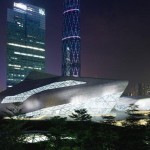
Zaha Hadid’s Guangzhou Opera Center has been praised as the world’s most beautiful performing arts venue with a futuristic ‘twin boulder’ design on the edge of the Pearl River. Sharp angles, geometric patterns and stark white surfaces belie Hadid’s organic inspiration, taken from the geology and topography of the setting. Dotted with starry lighting, the main auditorium has a womb-like feel in gleaming gold. Unfortunately, just a single year after it opened to the public, the building was marred by falling glass and large cracks in the walls and ceilings, leading to serious leaks.

Like many of these ‘failures,’ the problem here isn’t so much Hadid’s design as it is the shoddy materials and construction techniques of the contractors that built it. Many of the 75,000 granite slabs that make up the exterior have begun to fall off, with some blaming poor quality craftsmanship and others blaming Guangzhou’s extraordinarily humid climate. But in China, deadlines to complete even the most complex buildings are often rushed, and a lot of architecture is built with the expectation that it will only stand for about 25 years. The construction group that built the opera center say that it was just extremely difficult to fulfill Hadid’s vision.

Next Page – Click Below to Read More:
Fallen Starchitects 7 Failures Of Famous Architects

Share on Facebook


[ By Steph in Architecture & Offices & Commercial. ]

[ WebUrbanist | Archives | Galleries | Privacy | TOS ]


WebUrbanist

 
Comments Off on Fallen Starchitects: 7 Failures of Famous Architects

Posted in Creativity


Animating Van Gogh: World’s First Fully-Painted Feature Film

24 Feb

[ By WebUrbanist in Art & Photography & Video. ]

animated-film-comes-alive

It is a fantastic endeavor and nearly finished – a movie made up of 56,800 stop-motion paintings, all presented in the style and told by the characters of the tale’s protagonist: Vincent van Gogh.

animated-van-gogh-film

The first full-length feature of its kind, Loving Vincent uses van Gogh’s own techniques to explore the life and death of the artist, “through his paintings and by the characters that inhabit them.”

van gosh painting studio

As its creators explain, “the intrigue unfolds through interviews with the characters closest to Vincent and through dramatic reconstructions of the events leading up to his death.”

van gogh character still

This production by Breakthru Films features 120 of the artist’s paintings and draws its plot from 800 letters, using them to flesh out a deeper picture of this often-misunderstood painter whose work goes well beyond his most famous Starry Night and Mona Lisa.

van gogh movie trailer

In van Gogh’s own words: “Well, the truth is, we cannot speak other than by our paintings” – these industrious filmmakers are taking him at his word, and animating his images and subjects to tell his story.

van gogh loving vincent

Breakthru was founded by Oscar award-winning animator Hugh Welchman. Unfortunately, the project did not raise sufficient funds on Kickstarter, but given how far they have come one can only hope the work does not end in tragedy.

Share on Facebook


[ By WebUrbanist in Art & Photography & Video. ]

[ WebUrbanist | Archives | Galleries | Privacy | TOS ]


WebUrbanist

 
Comments Off on Animating Van Gogh: World’s First Fully-Painted Feature Film

Posted in Creativity


Rolling Stop: 10 Abandoned Roller Skating Rinks

23 Feb

[ By Steve in Abandoned Places & Architecture. ]

abandoned roller skating rinks
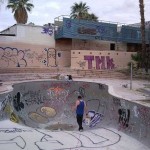
These abandoned roller skating rinks once saw social interaction mesh seamlessly with healthful recreation backed by a toe-tapping musical soundtrack.

Faded Starlight

abandoned Starlight Roller Rink Utah(image via: Arbyreed)

Pretty much all that remains of the former Starlight Roller Skating Rink and outdoor dance hall are the bandshell, ticket booth and concrete outdoor “dance floor”. Located between Toquerville and Pintura just off the old Cedar City highway (now I-15), the Starlight was built in the early 1940′s as an open-air dance hall and/or roller skating rink, the latter activity taking precedence as the Big Band era closed.

abandoned Starlight Roller Rink Utah(images via: Arbyreed)

According to the oldest resident of Pintura (likely a former patron), the Starlight Roller Skating Rink was abandoned in 1953 as the Korean War was drawing to a close. Credit Utah’s arid climate for preserving the facility’s remnants and credit Flickr user Arbyreed for these spectacular photos taken in February of 2010.

Alberta Blues

abandoned roller rink Calgary Alberta Canada(image via: Michael Oliver)

Who could imagine a roller skating rink wouldn’t be able to thrive in Calgary, Alberta? Oh, just about everyone: this is CANADA, a place where real skating is done with ice skates and nobody pays for the privilege… during Calgary’s long cold winter, at least. Props to Flickr user Michael Oliver for the disturbing yet delightful image above.

A View To A Bushkill

abandoned Bushkill Park roller rink(images via: TheUnknownCameraman)

Bushkill Park had a good run – the Easton, PA-area amusement park was open from 1902 through 2004 – but severe flood damage inflicted by Hurricanes Ivan and Wilma caused the storied park and its signature roller rink to close pending a massive renovation nobody thinks will actually occur. Almost a decade after the worst flooding in a century, Bushkill Park remains stubbornly comatose.

abandoned skates at Bushkill Roller Rink(images via: TheUnknownCameraman)

If Bushkill Park’s owners need funds to jump start the clean-up they might try selling off some of the roller rink’s massive inventory of skates before they rot away. Check out this video from TheUnknownCameraman to virtually experience exploring the post-apocalyptic rink.

Beaten Down In Eatontown

abandoned Eatontown Roller Rink(images via: Legend Has It… and Atlanticville)

The former Eatontown Roller Rink in Eatontown, New Jersey closed in 2005 and has been quietly deteriorating ever since. Well, not exactly EVER… on February 19th of 2009, high winds caused part of the building’s roof and side walls to collapse. The Eatontown Roller Rink’s rather sudden demise may have been a blessing for its owner, who was planning to demolish the moldering roller rink anyway. Now it won’t take quite so long.

Next Page – Click Below to Read More:
Rolling Stop 10 Abandoned Roller Skating Rinks

Share on Facebook


[ By Steve in Abandoned Places & Architecture. ]

[ WebUrbanist | Archives | Galleries | Privacy | TOS ]


WebUrbanist

 
Comments Off on Rolling Stop: 10 Abandoned Roller Skating Rinks

Posted in Creativity


If You Build It: A True Story of Hands-On Design Education

23 Feb

[ By WebUrbanist in Architecture & Public & Institutional. ]

design build project movie

What if high schools replaced shop classes with results-driven, full-scale architectural projects, where the goal was to collaborate and make something substantial for the entire community? If it sounds idealistic, perhaps it is – the reality on the ground can be full of setbacks and surprises, as this film illustrates in evocative detail. The title of the documentary in perhaps intentionally open-ended, because, unlike the phrase’s cinematic inspiration (Field of Dreams), what will happen if you build something is never quite clear until you try.

Directed by Patrick Creado, If You Built It is the compelling story of a one-year design/build program set in a small American town – a story that is both inspirational and heartbreaking. Its protagonist teachers are enthusiastic visionaries who are exceptionally driven. Its director shows these strengths but is unafraid to also highlight their steep learning curve, right alongside that of the students, who struggle at first to understand what two outsiders want to teach them and why.

design build movie poster

Studio H, a collaboration of designers/builders Emily Pilloton and Matthew Miller, is named for its focus on “humanity, habitats, health and happiness”. Its mission is born of a noble desire to enable people to change where, how and how well they live, all through design.

design build model making

Of course, working with a community as outsiders is challenging, as this pair learned when they moved to Bertie County, North Carolina, for the first year of their program. Their mission: to start small and build up to a student-decided project for the community, which turns out to be a farmer’s market inspired by contextual farm architecture.

design build studio h

In the press, idealized renderings and carefully-staged architectural photographs often gloss over the gritty reality of designing and building projects, as well as the slow change in thinking that comes with learning to design. Likewise, a look at highly-funded architectural programs and never-to-be-built college-student projects can make it easy to forget we have an opportunities to educate high school students everywhere through designing to build.

design build construction collaboration

For anyone not educated in design, this movie provides  a unique window into how it can be taught and how understanding design processes can help us see unrealized possibilities in our everyday lives and built environments. For the broader public, the documentary also provides fascinating insights into the present and uncertain future of rural America.

design building process outdoors

In the end, the film is neither a tale of outright success or total failure, but it does show how even the best intentions may not work in every situation. In a key flashback, we are shown scenes of a home built for charity by Miller as a thesis project that ultimately failed in practice but also provided him critical real-world feedback on projects where the owner is just a passive recipient. Anyone interested in the intersection of architecture and education should watch If You Build It and sign up for screenings to share it with students.

rural design farmers market

design build project results

A synopsis: “IF YOU BUILD IT follows designer-activists Emily Pilloton and Matthew Miller to rural Bertie County, the poorest in North Carolina, where they work with local high school students to help transform both their community and their lives. Living on credit and grant money and fighting a change-resistant school board, Pilloton and Miller lead their students through a year-long, full-scale design and build project that does much more than just teach basic construction skills: it shows ten teenagers the power of design-thinking to re-invent not just their town but their own sense of what’s possible.”

Share on Facebook


[ By WebUrbanist in Architecture & Public & Institutional. ]

[ WebUrbanist | Archives | Galleries | Privacy | TOS ]


WebUrbanist

 
Comments Off on If You Build It: A True Story of Hands-On Design Education

Posted in Creativity


MegaFaces: Massive Display Enables 3D Selfies at Sochi

22 Feb

[ By Steph in Art & Installation & Sound. ]

MegaFaces Sochi LED 1

Giant faces measuring 25 feet in height emerge in three dimensions from an ‘architectural Mount Rushmore’ at the entrance of Sochi’s Olympic Park. ‘MegaFaces’ is an interactive installation by architect Asif Khan consisting of a fabric pavilion that is manipulated into the shape of visitors’ faces by 11,000 actuators located just under the cube’s stretchy membrane.

MegaFaces Sochi LED 3

Three visitors at a time enter a booth located inside the pavilion to have their faces digitally scanned and displayed on a massive scale for everyone outside to marvel at. Each face is magnified by 3500%. The effect is that of a giant pinscreen, but it’s technically the world’s first “three dimensionally actuated large-scale LED screen.”

MegaFaces Sochi LED 2

The 11,000 actuators that create the images are tipped with translucent spheres containing RGB-LED lights, so a combination of physical movement and light intensity creates the pinscreen effect. The idea is that anyone can “become a hero,” reflected to the world on a large scale.

MegaFaces Sochi LED 4

“Whether we are taking a self-portrait and posting it for our friends to see, or texting an emoticon to show how we feel, we’ve translated a fundamental means of self-expression into a new medium,” says Khan. “That is why I think of this pavilion as a synergy between architecture and digital platform. At the same time it’s a monument to all of us. The concept is to make people the face of the Olympics.”

Share on Facebook


[ By Steph in Art & Installation & Sound. ]

[ WebUrbanist | Archives | Galleries | Privacy | TOS ]


WebUrbanist

 
Comments Off on MegaFaces: Massive Display Enables 3D Selfies at Sochi

Posted in Creativity


Deep Roots: Underground Farm in London Air-Raid Tunnels

21 Feb

[ By WebUrbanist in Culture & Cuisine & Global. ]

underground tunnel london gardening

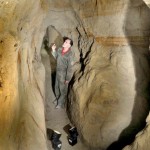
100 feet beneath the surface, below even the level of the London Underground, there is another layer of World War Two shelters where something amazing is coming to life.

underground hyrdoponic garden farm

underground farming campaign idea

Richard Ballard and Steven Dring are behind Growing Underground, experimentally introducing hydroponic systems to 2.5 acres of abandoned subterranean passages right in the UK’s capital city.

growing subterranean tunnel space

growing underground urban context

The closed-loop nature of their approach means that weather and environmental factors (like rodents and runoff) are nothing to worry about. There are other advantages of their situation, too: 70% less water is needed to grow below ground, and their agricultural system is self-recycling, low-maintenance, pesticide-free and carbon-neutral.

underground crowdfunding green produce

Their unique and central location means they can provide ultra-local micro-greens to restaurants, wholesalers and retail vendors right above where they grow, all in a matter of hours.

underground vegetable growing hyrdoponics

growing underground package design

Their planned crops so far range from pea shoots and broccoli to garlic chives and mustard leaf, not to mention edible flowers and miniature vegetables. Mushrooms and tomatoes are also on the horizon.

grown underground farming example

growing underground founder pair

From the company: “Because we have total control over their environment, each tiny leaf tastes as amazing as the last and because they are unaffected by the weather and seasonal changes, we can reduce the need to import crops and drastically reduce the food miles for retailers and consumers.”

Share on Facebook


[ By WebUrbanist in Culture & Cuisine & Global. ]

[ WebUrbanist | Archives | Galleries | Privacy | TOS ]


WebUrbanist

 
Comments Off on Deep Roots: Underground Farm in London Air-Raid Tunnels

Posted in Creativity


Touch to Open: Kinetic Doors Unfold Like Life-Sized Origami

21 Feb

[ By WebUrbanist in Design & Furniture & Decor. ]

flip-animated-kinetic-doorw

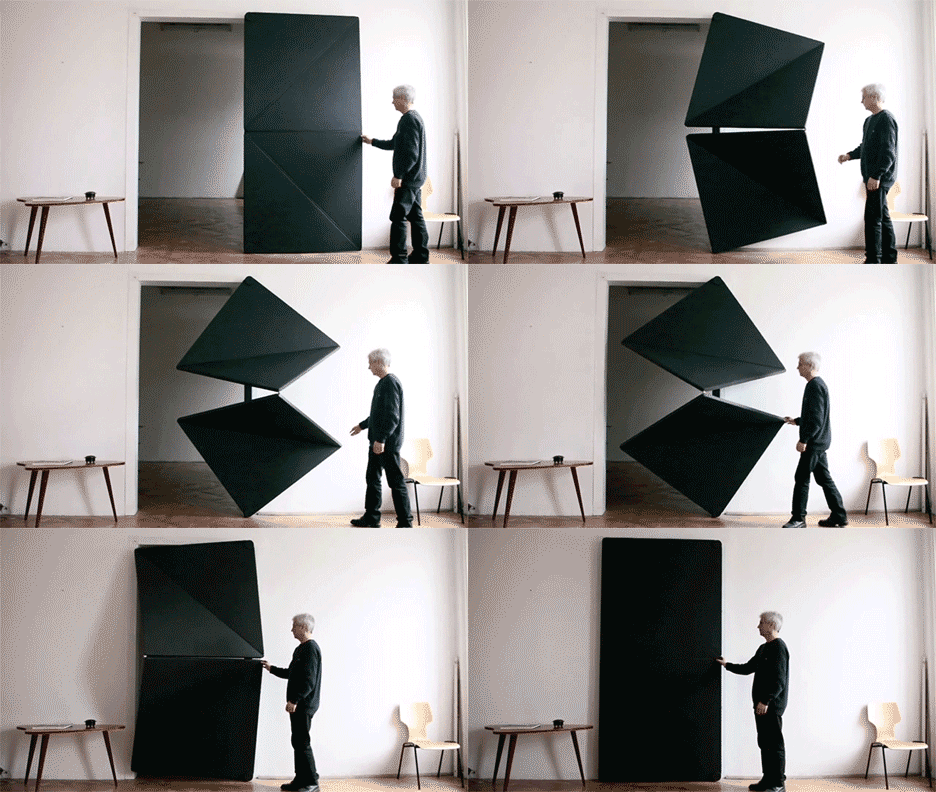
Made of rubber, metal, glass and wood, these dynamic flip panel doors tackle perhaps the world’s original architectural invention in a series in a fresh, new and interactive fashion.

flip-panel-door-loop

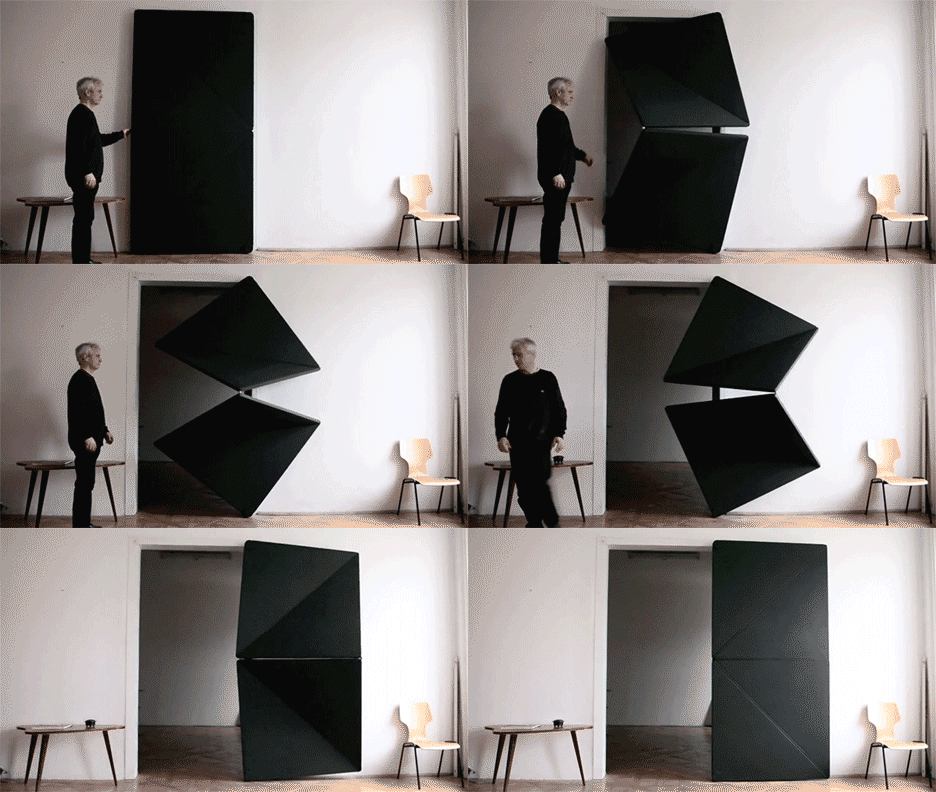
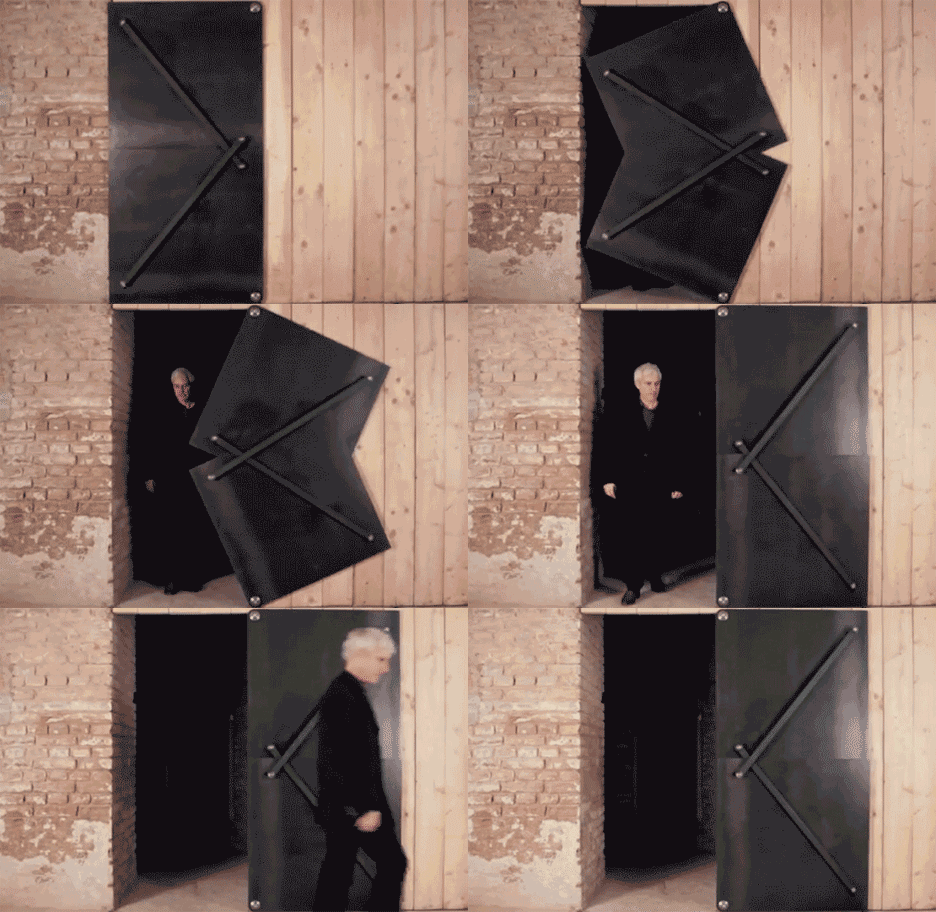
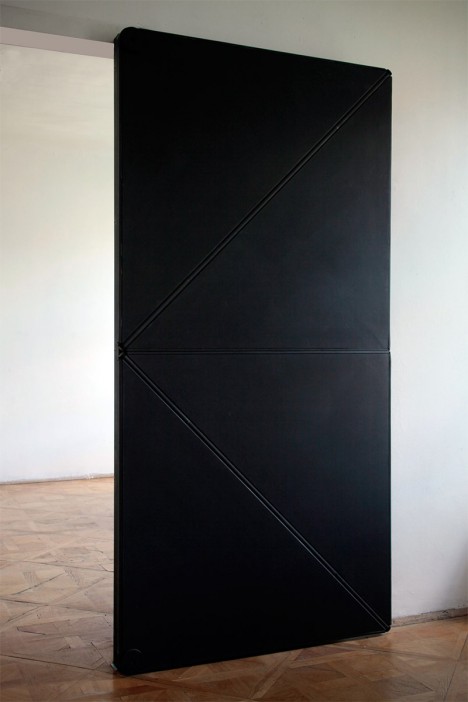
Each member of the Evolution Door set by Austrian artist, designer and builder Klemens Torggler involves a multi-panel contraption the flips open and re-closes in a fantastic feat of kinetic motion.

flip-steel-door-design

The steel version of the door is particularly ingenious as its space-saving method of action. Like its sliding cousins, it avoids the in-and-out motions of a typical doorway to minimize the space you need to set aside in front of or behind it.

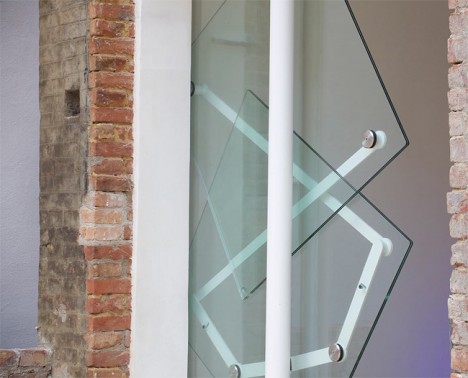
klemens toggler glass door

The glass design uses a minimalist framework of structural supports, all of which then disappears entirely into a secret wall space hidden alongside it.

With steel and glass variants in particular, though, viewers are sure to wonder how one avoids getting a finger pinched if they are not paying full attention,  hence this short video regarding benefits of the softest member of the Evolution family.

flip panel door design

Aside from the finger-friendly end result, there is something brilliant in the common approach of these works: each bypasses all positions outside of the binary ones – these doors are either opened or closed between uses, never resting anywhere in between.

Share on Facebook


[ By WebUrbanist in Design & Furniture & Decor. ]

[ WebUrbanist | Archives | Galleries | Privacy | TOS ]

WebUrbanist

 
Comments Off on Touch to Open: Kinetic Doors Unfold Like Life-Sized Origami

Posted in Creativity


Invisible Cities: Tweets and Photos as Terrain on a Map

20 Feb

[ By Steph in Gadgets & Geekery & Technology. ]

Invisible Cities Data Visualization 1

What would it look like if you could actually see all of the tweets and Instagram photos from a Beyonce concert in New York City hovering above the skyline in physical form? A project called ‘Invisible Cities’ answers that question with an interactive map that displays geocoded activity from various online services in real time with individual nodes appearing anytime a message or image is posted.

Invisible Cities Data Visualization 2

Using a Leap Motion controller and various hand gestures, the user navigates a three-dimensional data landscape, with all of that information literally at their fingertips. As data is aggregated, the landscape of the city changes, with new hills and valleys representing areas where social networking is the most and least active.

Invisible Cities Data Visualization 3

Invisible Cities Data Visualization 4

The individual nodes seen on the maps are connected by narrative threads based on themes emerging from the information as it comes streaming in. So, those tweets from the Beyonce concert look a bit like a stream of smoke rising out of Barclays Center in Brooklyn as users exclaim, “Jay Z and Beyonce on stage together right now OMG!”

Invisible Cities Data Visualization 5

Take a look through Central Park and you’ll see Instagram posts of people running, walking their dogs or having a picnic. Version 1.0 is now available for the Leap Motion Controller and can be downloaded for free on Airspace. The creators, Christian Marc Schmidt and Liangjie Xia, say “Through an immersive, three-dimensional information landscape, the piece creates a parallel experience to the physical environment, one of intersections, discovery, and memory.”


Share on Facebook


[ By Steph in Gadgets & Geekery & Technology. ]

[ WebUrbanist | Archives | Galleries | Privacy | TOS ]


WebUrbanist

 
Comments Off on Invisible Cities: Tweets and Photos as Terrain on a Map

Posted in Creativity


Off the Wall: 14 3D Graffiti Sculptures, Furniture & More

20 Feb

[ By Steph in Art & Street Art & Graffiti. ]

3D Graffiti Main

Flat paint on two-dimensional surfaces springs to life in surprising ways in these 14 graffiti-inspired projects ranging from sand sculptures to entire apartment buildings. Street art’s impact on visual culture expands into furniture design, architecture, art installations, 3D printed works and fantastical digital animations that envision graffiti moving through space like living organisms.

The Hive Apartment by ITN Architects

3D graffiti the hive building

Built for an architect and street artist, the facade of this Melbourne house fittingly includes built-in graffiti made from precast, four-meter-tall concrete letters spelling out ‘The Hive.’ The lettering is a load-bearing part of the building, making for a striking transition between the modern house and its old brick tailor shop neighbor.

Large-Scale Graffiti Sculptures by Zeus

3d graffiti zeus

3D graffiti art Zeus 2

London-based graffiti artist Zeus brings his art into three dimensions with a variety of large-scale sculptural works including tags that protrude from walls and cars.

Graffurniture

3d graffiti graffurniture 1

3D graffiti graffurniture 2

3D graffiti graffurniture 3

Street graffiti moves into the living room with coffee tables, side tables and chairs marrying tag style with baroque furniture traditions. Designer Luis Alicandu is a former tagger who has since turned his creative urges into a passion for industrial design.

Digital 3D Graffiti Animations

3D graffiti technica digital

These 3D graffiti creations by ‘Graffiti Technica’ are totally digital, but watch the videos to see incredible animations that bring street art to life in a novel way, cruising through the air like alien organisms.

Graffiti Analysis Series by Evan Roth

3D graffiti analysis

Here’s a totally different way of looking at making graffiti three-dimensional: a sculpture that captures a tagger’s movements as they work. Designer Evan Roth created this piece, CAP, algorithmically by motion-capturing the writing of street artist CAP in the 1983 documentary Style Wars. The piece is made of chrome-dipped ABS thermoplastic.

Next Page – Click Below to Read More:
Off The Wall 14 3d Graffiti Sculptures Furniture More

Share on Facebook


[ By Steph in Art & Street Art & Graffiti. ]

[ WebUrbanist | Archives | Galleries | Privacy | TOS ]


WebUrbanist

 
Comments Off on Off the Wall: 14 3D Graffiti Sculptures, Furniture & More

Posted in Creativity


Point & Click: Street Stencils Show Tourists Where to Shoot

19 Feb

[ By WebUrbanist in Global & Travel & Places. ]

shitty photo standing spot

Urban travelers love taking pictures, but ideal angles are not always obvious to visitors – many ultimately either stand in same hard-to-find spot or fail to take an interesting photograph altogether.

shitty photos shoe stencil

shitty photo stencil yellow

shitty perspective angle picture

That’s where Mimi Chan and Utsavi Jhaveri step in, spray-painting a set of shoe prints around cities. These markings in turn tell people where to place their feet, point and click to capture the ‘perfect’ (if a bit redundant) image of a given monument or sight.

shitty pic street graffiti

Starting with San Francisco and New York City, the pair found some of the project upsides included: having an excuse to wander cities (especially after dark), getting external sponsorship to cover expenses and ultimately being thanked by tourists who genuinely appreciated being told how and where to take a better picture – all that and increasingly copious press coverage, of course.

no shitty photos project

no shitty photos coverage

Overtly, the #noshittyphotos project is aimed at reducing poor photography via these cookie-cutter stencils, but of course it makes you wonder: does the world really need more photos taking from the same angle of the same thing? What is it about retaking the same shot that attracts people to documenting something over and over again? Does it help us remember or is it simply a way to lay our own small claim to having seen something?

Share on Facebook


[ By WebUrbanist in Global & Travel & Places. ]

[ WebUrbanist | Archives | Galleries | Privacy | TOS ]


WebUrbanist

 
Comments Off on Point & Click: Street Stencils Show Tourists Where to Shoot

Posted in Creativity