RSS
 

Archive for the ‘Creativity’ Category

Modular Remix: Parking Garage Picked Apart, Reassembled Like LEGO

31 May

[ By WebUrbanist in Architecture & Offices & Commercial. ]
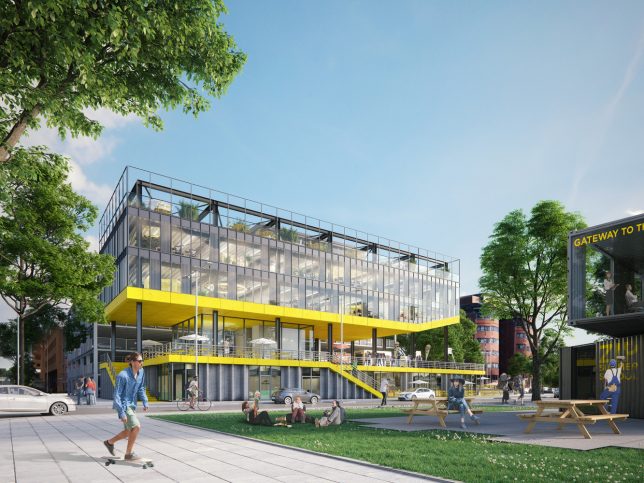
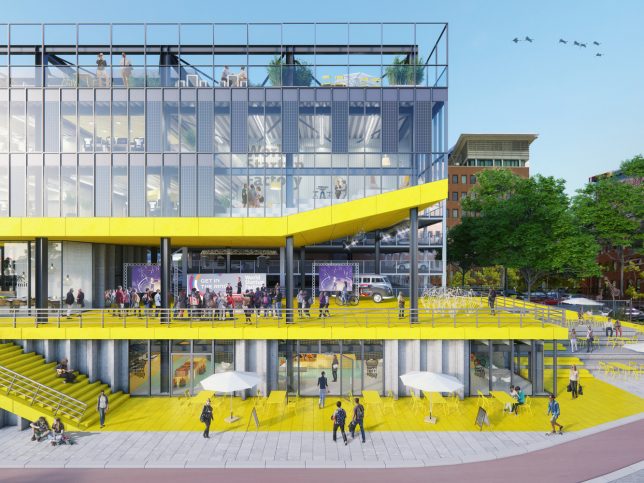
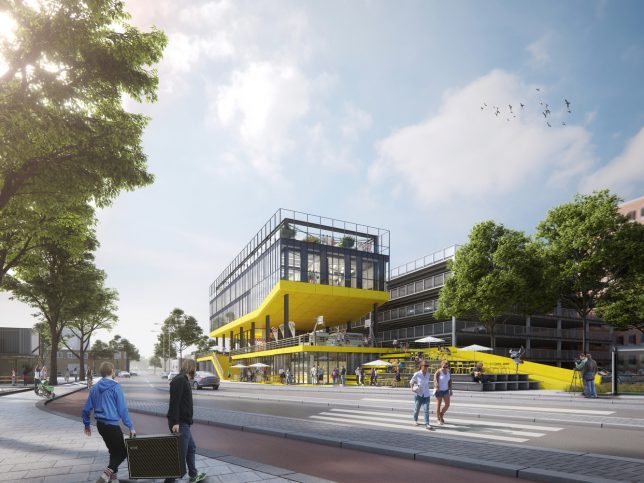
As autonomous vehicles begin to roll out on city streets, adaptive reuse projects like this one could help old parking structures readily find new and productive urban purposes. This award-winning design by Dutch firm Studio Komma and The Men of Foam for The Hague features a mixed-use program built on the bones of an existing parking garage, with a twist: parts can be moved around like modular LEGO blocks.
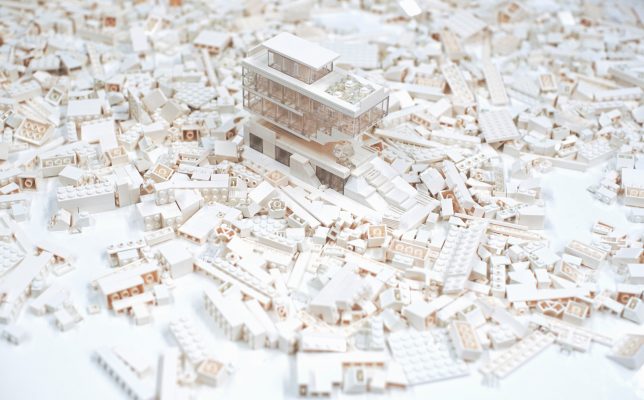
And the LEGO piece is no idle comparison — the team used actual bricks to mock up their designs, focusing on how individual modules could play larger roles in the overall scheme. They also considered how these same re-situated units might later be shifted around to serve other functions.
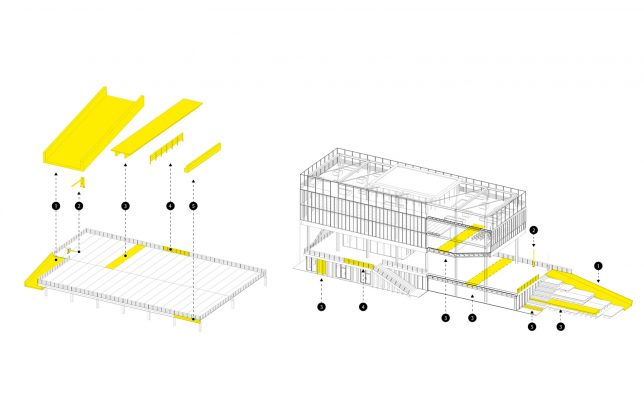
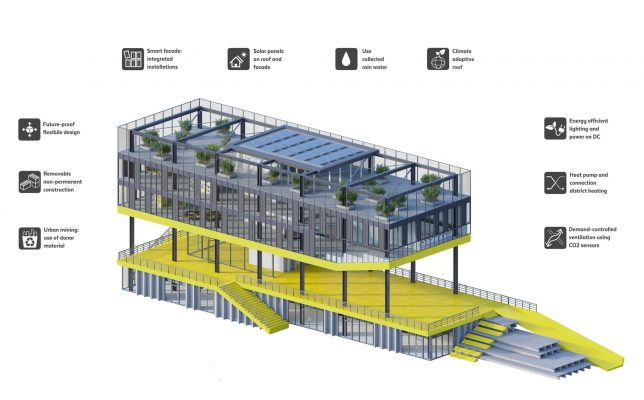
Ground floors commercial and social spaces are fit into the framework of the extant garage, using the old second-story parking level for overhead shelter. Above the existing second level, new levels reuse ramps and other elements to grow the program vertically — these mostly-indoor third and fourth floors shelter an outdoor public zone left open in the middle.
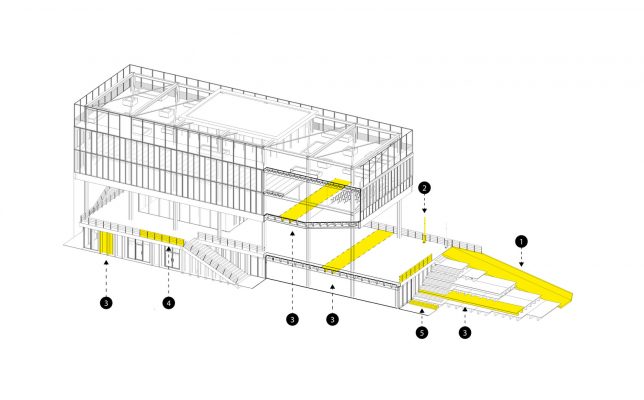
Colors and details in the proposed scheme highlight elements of the adaptive reuse while aiming “to create an iconic building that is an accelerator for the transformation of an industrial area into a new energetic urban district.” Pieces of the old structure are preserved and made modular, fitting into the new program where useful but retaining aspects of their original shape and character to illustrate change over time.
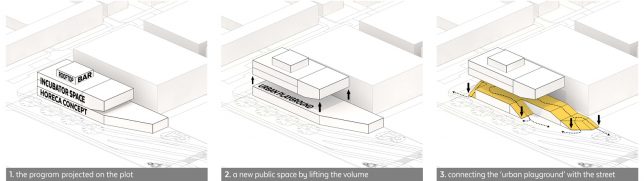
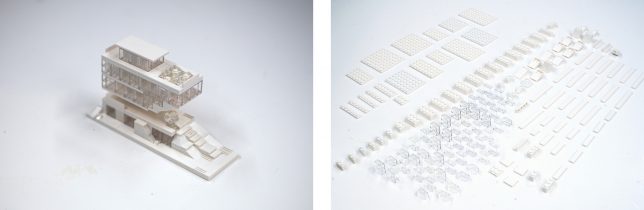
In developing the ZIP2516 scheme, which subsequently won the Lot 2 Urban Lab Challenge, the architects were “challenged to think about temporary structures that have a permanent high quality.” Its modularity is intended to extend into the future as well — additional elements (like glass cladding and structural supports) are made to be moved as the needs of the site and city continue to evolve.

Share on Facebook


[ By WebUrbanist in Architecture & Offices & Commercial. ]

[ WebUrbanist | Archives | Galleries | Privacy | TOS ]


WebUrbanist

 
Comments Off on Modular Remix: Parking Garage Picked Apart, Reassembled Like LEGO

Posted in Creativity


Industrial Scars: Aerial Photos of Humankind’s Harrowing Impact on Earth

30 May

[ By SA Rogers in Art & Photography & Video. ]

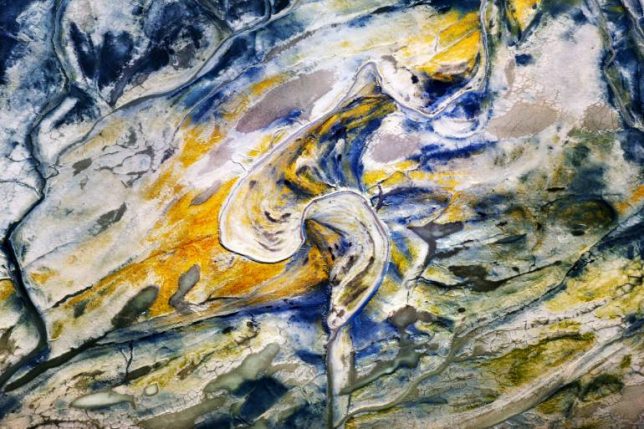
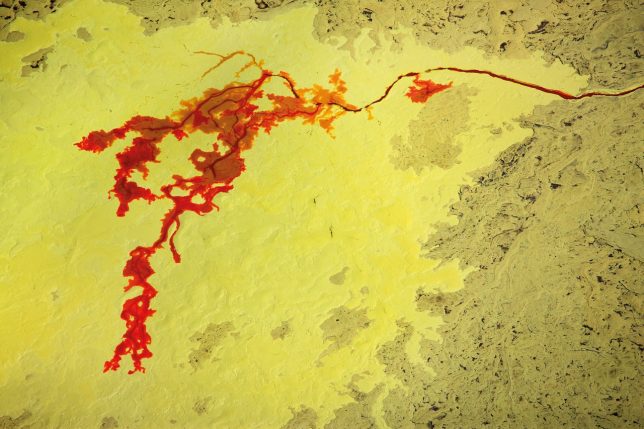
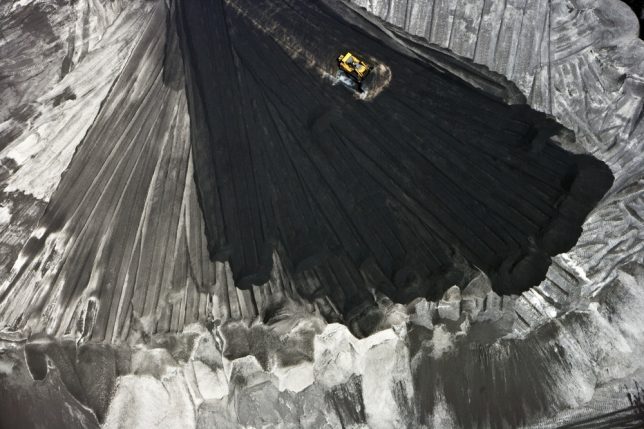
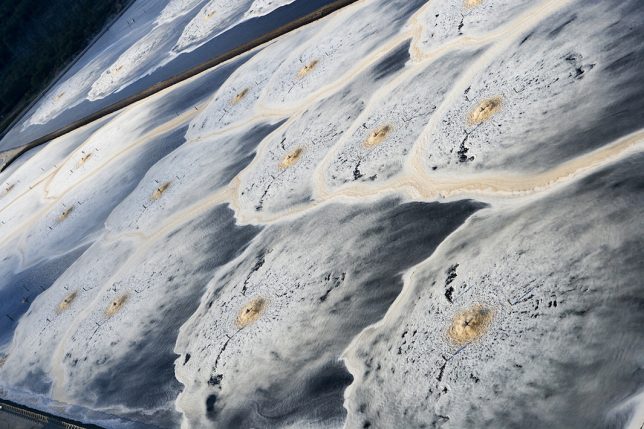
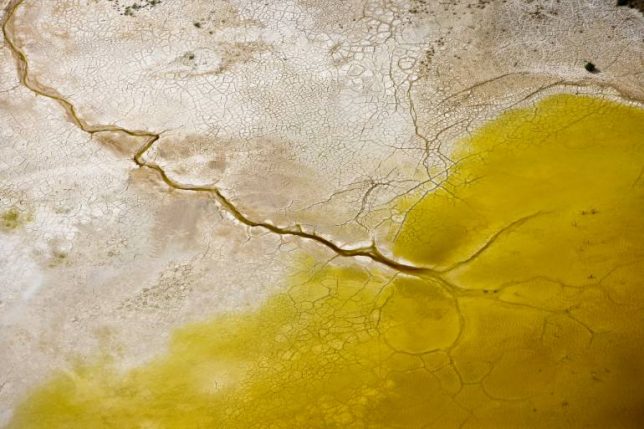
In strikingly well-composed, vividly colored scenes resembling abstract paintings, J. Henry Fair’s aerial photographs of toxic waste and industrial activity on Earth give us an uncomfortable look at the cost of human progress. In fact, the images seem unreal: how could the damage caused by industrial pollution be so strangely beautiful? Tar sands, mountaintop removal mining, fertilizer runoff, coal ash, factory farming and devastating oil spills aren’t exactly the stuff that stunning art is usually made of, but Fair is no ordinary artist, forcing us to face the duality of what we’ve created.

Shooting these scenes from the air gives us a perspective we don’t normally have, as if we’re flying over them in person, reckoning with the damage that comes with our consumption of fossil fuels, large-scale farmed meat, chemicals and other commodities that do significant harm to the environment in their sourcing and manufacturing.

Coal combustion waste may not be pretty, but its splashes of rust and bronze against its black and white surroundings are undeniably striking. Some heavy metals, like ‘red mud’ bauxite waste from aluminum production, are almost floral in their contrast to green.  Oil from the BP Deepwater Horizon spill is mesmerizing in its flowing red ribbons against the cobalt blue of the Gulf of Mexico waters. Phospho-gypsum fertilizer waste is a brilliant blue-green, like a gemstone; it contains both uranium and radium, piled dangerously close to drinking water aquifers.

“What interests me about this series is its essential irony and hope,” he says. “The thinking person participating in the modern world understands that all of us are living unsustainably, the impending consequences on our economy are real and significant. But in fact, with a little effort and luck, these limitations could be overcome, ensuring a secure future. And so we must hope, as we are all invested. My goal is to produce beautiful images that stimulate an aesthetic response, and thus dialog. If the pictures are not beautiful, the viewer will not stop to consider them.”

These images and many more are available in the form of a hardcover book set to be released on July 6th, ‘Industrial Scars: The Hidden Costs of Consumption.’

Share on Facebook


[ By SA Rogers in Art & Photography & Video. ]

[ WebUrbanist | Archives | Galleries | Privacy | TOS ]


WebUrbanist

 
Comments Off on Industrial Scars: Aerial Photos of Humankind’s Harrowing Impact on Earth

Posted in Creativity


Modern Homes for Mermaids: 12 Houses Built Around Swimming Pools

30 May

[ By SA Rogers in Architecture & Houses & Residential. ]

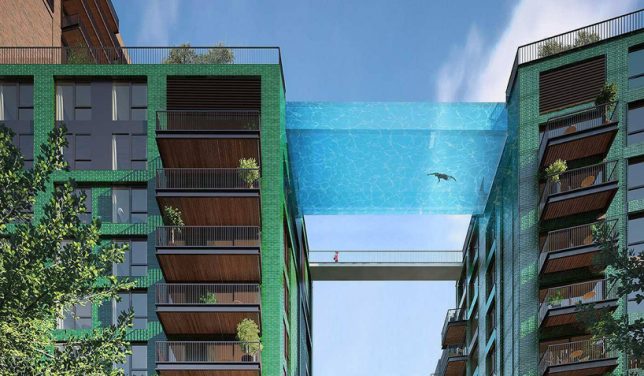
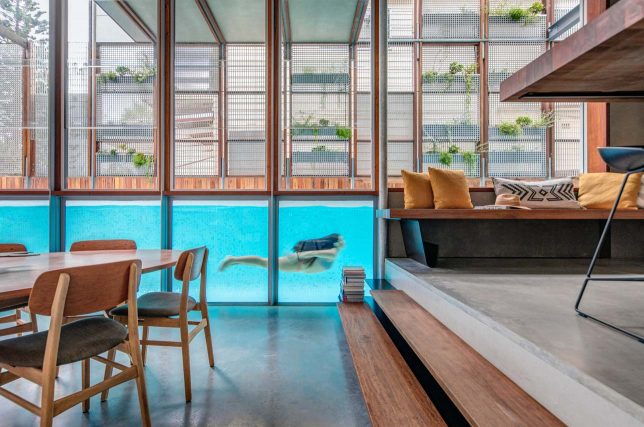
Like oversized aquariums made for humans, these glass-walled swimming pools put bathers on display and making splashing in shimmering waters the defining feature of the homes, hotels and apartment blocks they’re built into. Transparent sides or floors allow them to peer into adjacent interiors or look down onto landscapes, blurring the lines between these watery worlds and the spaces around them.

North Bondi by CplusC Architects

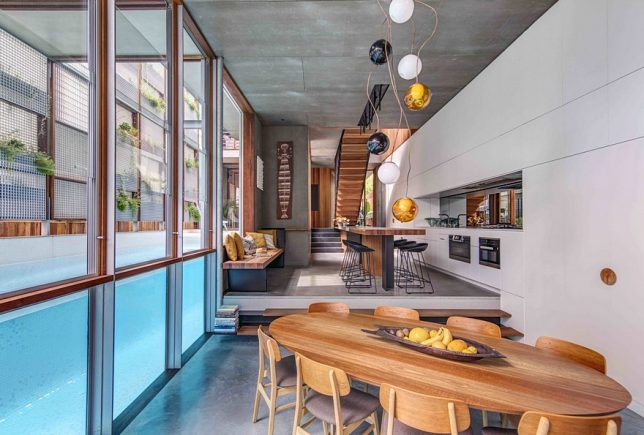
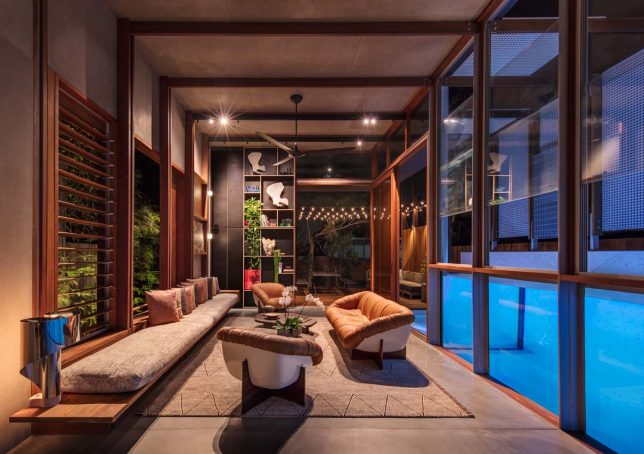
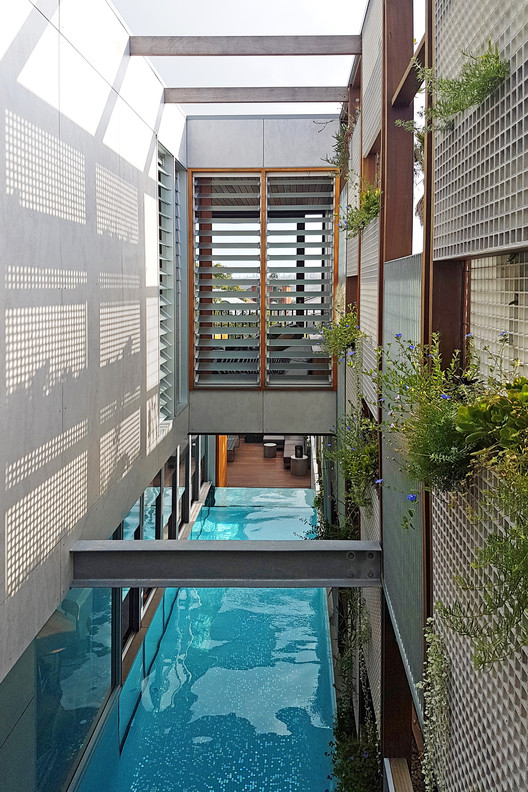
A glass-walled lap pool runs along the edge of the North Bondi residence by CplusC Architects, hemmed in on the other side by an envelope-like perforated privacy screen that protects the home from noise and the eyes of neighbors.

Villa Clessidra by LAAV Architects

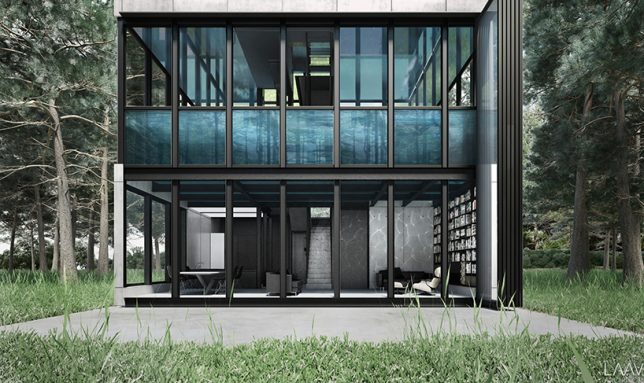
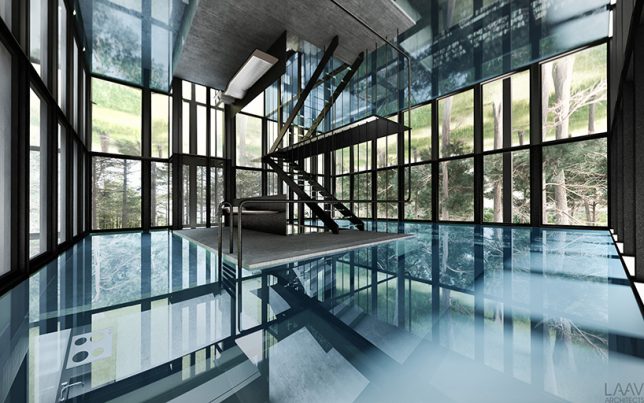
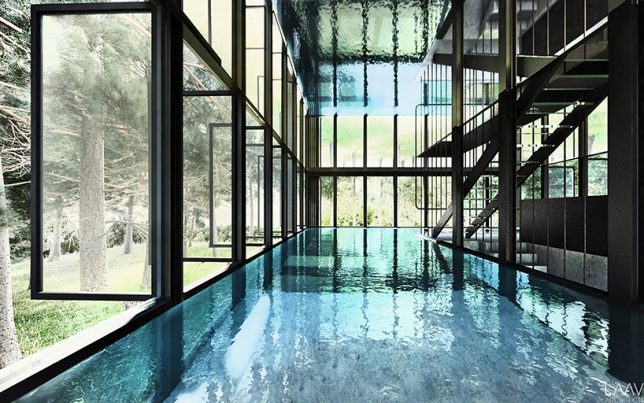
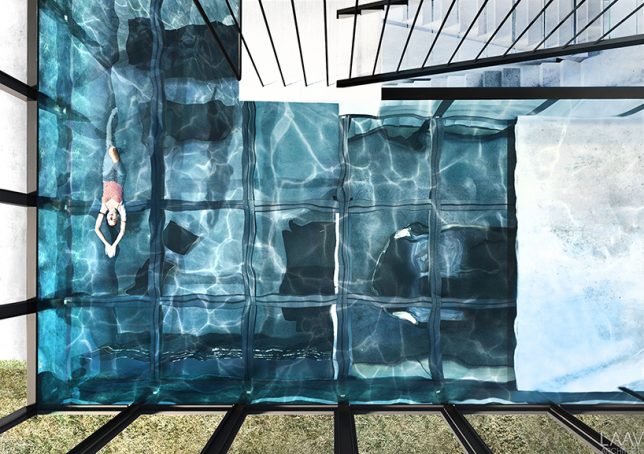
Villa Clessidra by LAAV Architects is a modern three-story vacation home in the forest for relaxing getaways, sliced right through the middle by a swimming pool occupying a ‘transparent zone’ with glass walls, floors and ceilings so it’s visible from all around.

Farrar Residence by Peter Bohlin and Greg Mottola

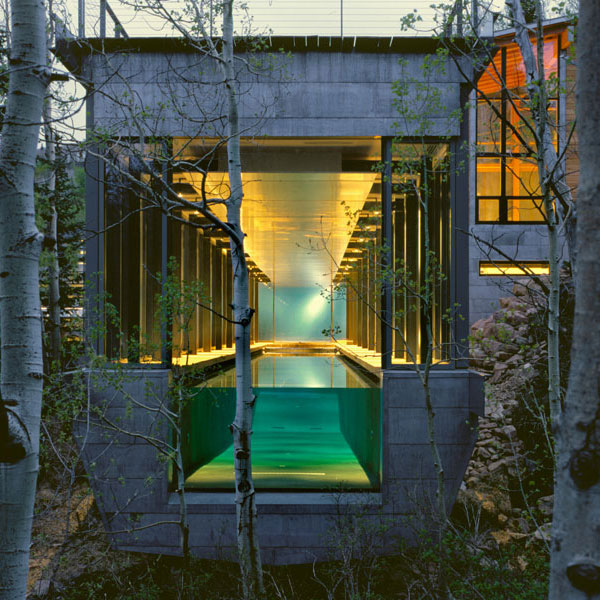
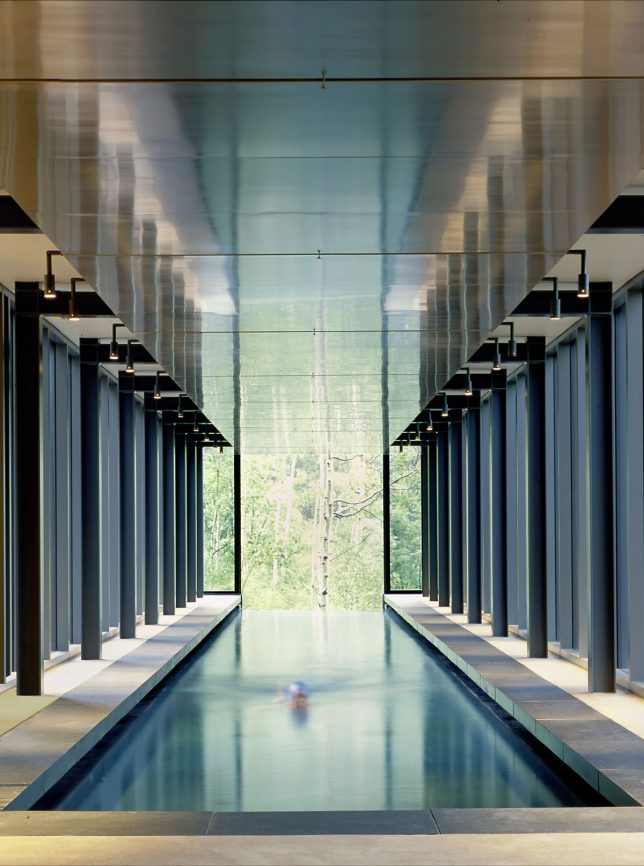
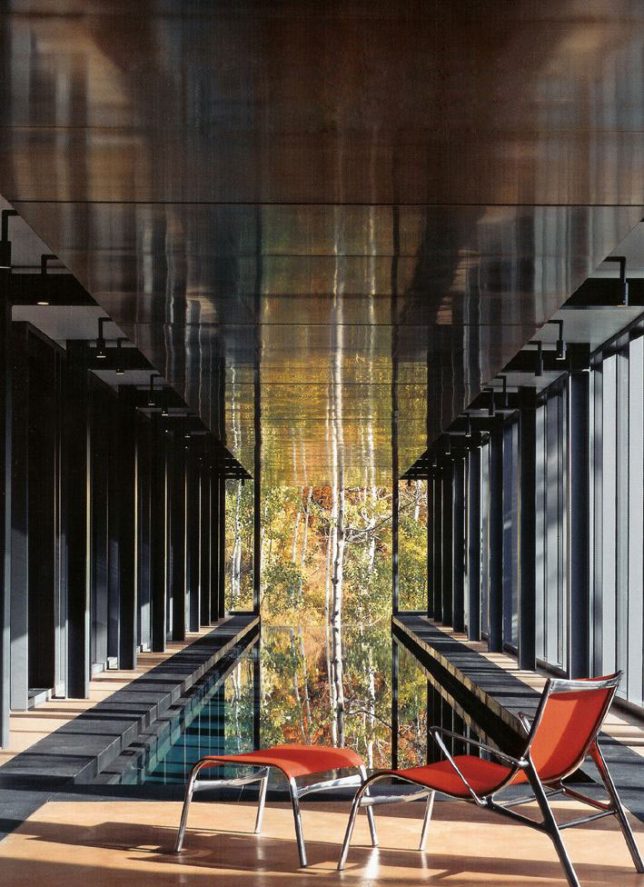
A glass-ended infinity pool overlooks an aspen-covered mountainside in Park City, Utah, extending out over a tumbling stream. “The rhythm of columns that flank the pool progressively tightens, creating a false perspective,” says Bohlin Cywinski Jackson architects. “The line between interior and exterior is blurred. The relation to earth, sky and the materials of the house shifts with the changes in light and season on the mountain.”

Spa House by Metropolis Design

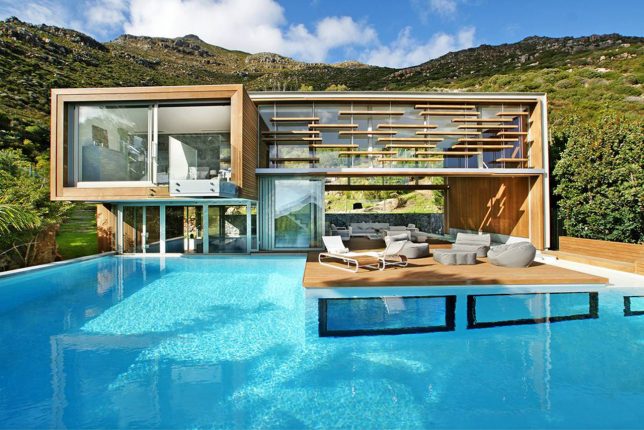
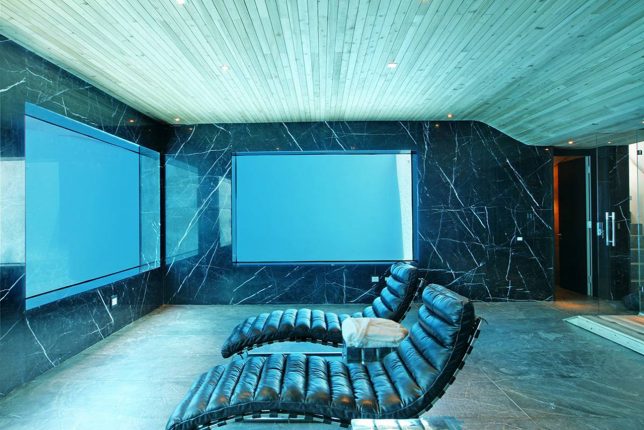
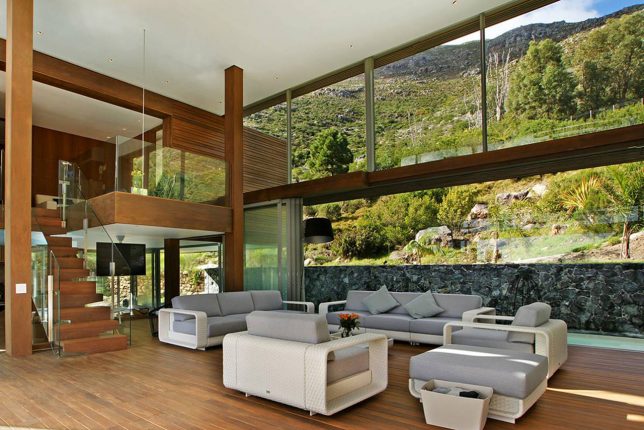
Not only do operable glass walls slide all the way open to welcome a lap pool into this home’s interior – as well as the larger connected swimming pool out back – but glass windows in the water connect the pools to the home’s lowest level, creating the feel of being in a submarine.

Next Page – Click Below to Read More:
Modern Homes For Mermaids 12 Houses Built Around Swimming Pools

Share on Facebook


[ By SA Rogers in Architecture & Houses & Residential. ]

[ WebUrbanist | Archives | Galleries | Privacy | TOS ]


WebUrbanist

 
Comments Off on Modern Homes for Mermaids: 12 Houses Built Around Swimming Pools

Posted in Creativity


Memorable Memorials: 10 Extraordinary War Monuments

28 May

[ By Steve in Culture & History & Travel. ]

These extraordinary war monuments stand out from the crowd in commemorating those who have fallen while performing their duty in the service of their country.

Memorial Day was formerly known as “Decoration Day” and was traditionally celebrated on May 30th – a date upon which no major battles had been fought. Memorial Day differs from Veterans Day in that the latter honors veterans of war. We lead off with a unique war memorial designed to fulfill its mission, as it were, on only one day every year: November 11th, at 11:11am, no less. The Anthem Veterans Memorial in suburban Phoenix, Arizona, was dedicated in 2012. The monument’s white stones, red bricks and blue sky reflect the colors of the American flag.

The Anthem Veterans Memorial consists of five staggered stone pillars signifying the five branches of the United States military. Designer Renee Palmer-Jones precisely aligned the pillars so that at 11:11am on November 11th, the sun’s rays pass through elliptical cutouts in the five pillars. The sunlight spotlights a mosaic of The Great Seal of the United States set into the red-bricked Circle of Honor.

Soldierstone Memorial

Most people have neither seen nor even heard of Soldierstone… and that’s just as the memorial’s creator, the late Stuart Allen Beckley, intended. The retired Army lieutenant colonel and Vietnam veteran sought to pay tribute to the uncredited people who assisted foreign soldiers over many decades of war in Southeast Asia.

Secreted in a clearing deep in Colorado’s 1.8-million-acre Rio Grande National Forest at 10,000 feet above sea level, Soldierstone‘s central 10-ft-tall monument bears quotes engraved in Vietnamese, Laotian, Cambodian and French – the languages of America’s allies through thirty years of fighting. Flickr user MJM1977 visited the memorial on July 24th of 2014.

Polar Bear Monument

The Polar Bear Monument in Troy, Michigan, commemorates fallen soldiers of the North Russian Expeditionary Forces. About 75 percent of the 5,500 Americans sent to Archangel, Russia as part of the post-WWI Allied Intervention were from the Detroit area and called themselves the “Polar Bears”.

96 soldiers were KIA in Russia and in 1929; the remains of 56 were recovered and subsequently interred on this site on May 30th of 1930. Flickr user Jazz Guy (flickr4jazz) visited the Polar Bear Memorial on May 2nd, 2011.

Next Page – Click Below to Read More:
Memorable Memorials 10 Extraordinary War Monuments

Share on Facebook


[ By Steve in Culture & History & Travel. ]

[ WebUrbanist | Archives | Galleries | Privacy | TOS ]


WebUrbanist

 
Comments Off on Memorable Memorials: 10 Extraordinary War Monuments

Posted in Creativity


Urban Blinds: Skyline Curtains Turn Bright Days into Dark City Nights

28 May

[ By WebUrbanist in Design & Furniture & Decor. ]

Casting pixelated patterns into day-lit rooms, these shades swap boring views (or overly bright days) for iconic scenes of metropolises at night.

This particular set by HoleRole features famous structures from cities like Manhattan (the Chrysler) and London (the “Gherken”).

In each piece, minimal geometric windows and pinpoint stars on black prompt observing eyes to complete each picture, but theirs is not the only (or first) approach to urban curtain design.

Aaalto+Aalto designed a similar series (Better View) some time ago but with a few key differences. For one thing: by varying the sizes of the perforations, their built landscapes take on more dimension. Implied curves as the windows recede, for instance, allow the flat surface to appear warped (as illustrated above).

Also, the larger holes let some details shine through from the background. While visible window elements and natural scenery can be identified with inspection, they also serve to animate the scenes — instead of a black-and-white image, additional details make it seem like there are objects or activities filling in the windows. The net effect adds a bit of character and fun unpredictability.

Of course, none of these are true “blackout” curtains in the traditional sense, but for mood lighting during the day they are certainly a bit more interesting when total darkness is not required.

Share on Facebook


[ By WebUrbanist in Design & Furniture & Decor. ]

[ WebUrbanist | Archives | Galleries | Privacy | TOS ]


WebUrbanist

 
Comments Off on Urban Blinds: Skyline Curtains Turn Bright Days into Dark City Nights

Posted in Creativity


Trippy Transformations: Makeup Artist Creates Unreal 3D Illusions

26 May

[ By SA Rogers in Art & Drawing & Digital. ]

Makeup artist Mimi Choy slices, disjoints, stretches, blurs and otherwise radically transforms her own face in stunningly realistic optical illusions using nothing but makeup. No templates, prosthetics or Photoshop go into the creation of her surreal photos – she freehand them all, often using standard cosmetics from brands like MakeupForever and Kryolan theater makeup. The Vancouver, Canada-based artist shows off her trippy looks on Instagram alongside her more standard everyday makeup looks.

Mostly using herself as a canvas for her optical illusions, Mimi says, “To be honest, I never thought anybody would be interested in following my bizarre late-night creations a few years ago because it wasn’t ‘on trend.’ But I continued because illusion art is challenging and I like having to push limits each time. Later on, I realized it’s not about creating looks that are ‘popular’ or would guarantee likes/follows, it’s about creating our own trend and breaking barriers.”

Mimi says she rarely even has a specific plan in mind when she starts painting – she just goes for it, and allows the result to come about spontaneously. Check out her Instagram @mimles for lots more wild and intricate makeup creations.

Share on Facebook


[ By SA Rogers in Art & Drawing & Digital. ]

[ WebUrbanist | Archives | Galleries | Privacy | TOS ]


WebUrbanist

 
Comments Off on Trippy Transformations: Makeup Artist Creates Unreal 3D Illusions

Posted in Creativity


Hidden Stories: 3D-Printed, Architect-Designed Rings Tell Looping Tales

26 May

[ By WebUrbanist in Design & Products & Packaging. ]

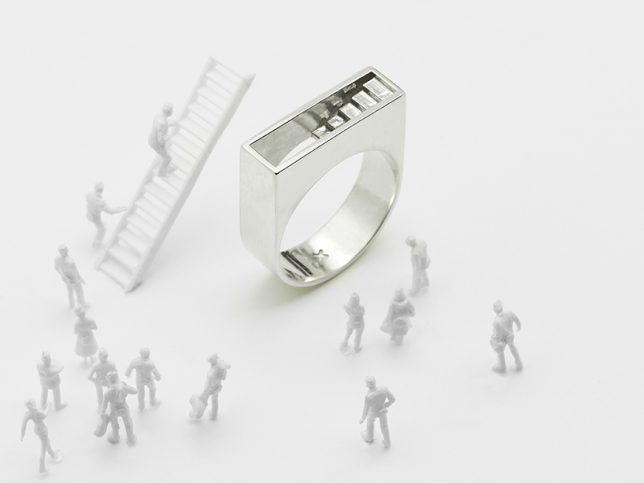
Most jewelry tells some kind of a story (about its origin if nothing else) but these pieces are a bit more explicit, featuring tales of structures, characters and actions in miniature built environments.

Architectural designer Artur Dabrowsk produces rings, cuffs, necklaces and bracelets that revolve “around the concept of ‘depth’ in terms of formal language (shadow lines, composition, depth of field) as well as in meaning (details, storytelling).”

Whether he is crafting mysterious staircases to nowhere or endlessly looped brick arches, each piece involves careful attention architectural detail (including theoretical structural load calculations) and is available in brass, bronze or silver.

The brick ring specifically goes back to his days in architecture school — “there is something very tactile and nostalgic that give [bricks] both timeless function and meaning,” says the designer.

“I was raised in a brick clad apartment building in Brooklyn,” he explains, “so I associated the brick wall as a shelter for my introverted childhood. The arch became a metaphoric portal through which I could turn the corner, open up, and express myself while still proud of my introverted self.”

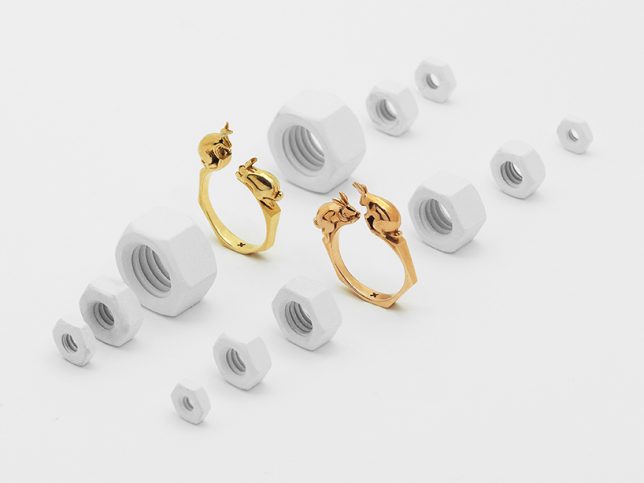
Dabrowsk also has a thing for rabbits, which are something he has sketched idly for a long time and has since started to include as characters in his tiny built environments. “I started drawing them in the margins of my notebooks during grade school and personify them to express thoughts, situations or feelings I was having.”

“I think the imagery of it being personified is playful — the rabbit is cute, hops around, eats, multiplies… and lives naively in this world.” Even here, though, he is conscious of real-life conditions – the suspended rabbit above hands from what would, in reality, be the bare minimum load-support beam across an abyss.

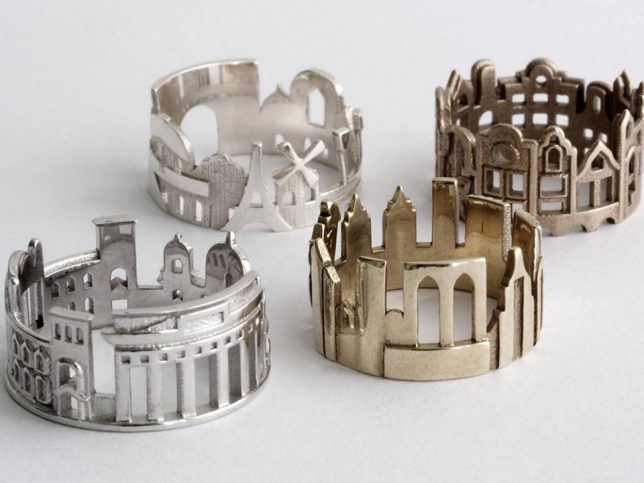
Fans of architectural jewelry should also take a peak at this series of wearable skylines, featuring famous scenes and settings (though in a more two-dimensional format) from around the world.

Share on Facebook


[ By WebUrbanist in Design & Products & Packaging. ]

[ WebUrbanist | Archives | Galleries | Privacy | TOS ]

WebUrbanist

 
Comments Off on Hidden Stories: 3D-Printed, Architect-Designed Rings Tell Looping Tales

Posted in Creativity


Bamboo Architecture: 14 Sustainable and Spectacular Organic Structures

25 May

[ By SA Rogers in Architecture & Public & Institutional. ]

Extraordinarily flexible yet strong, the fast-growing grass known as bamboo serves as a versatile medium for architectural projects with sculptural flair, especially when it’s bent or woven. These examples of artistic bamboo structures show off the material’s potential and hint at how it could play a role in futuristic yet sustainable architecture and infrastructure in the years to come.

5 Incredible Structures at the Bamboo Architecture Biennale

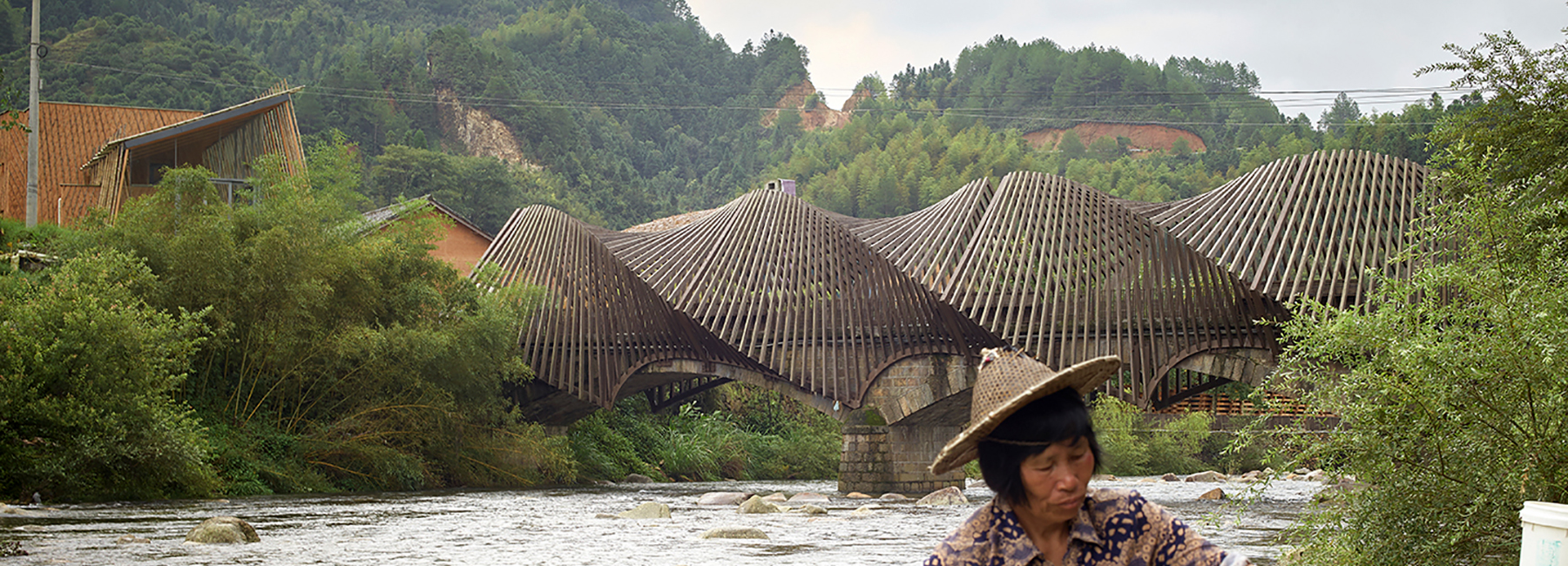
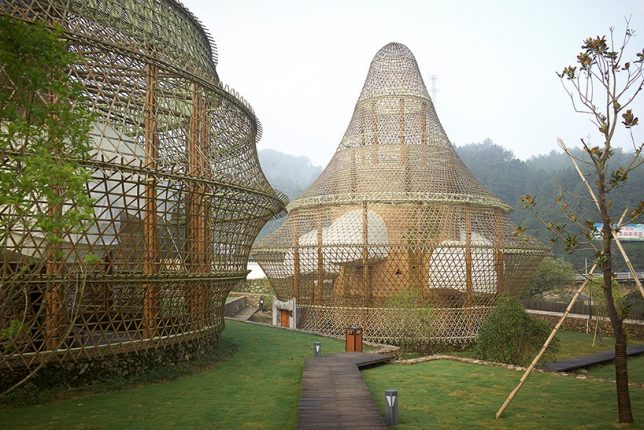
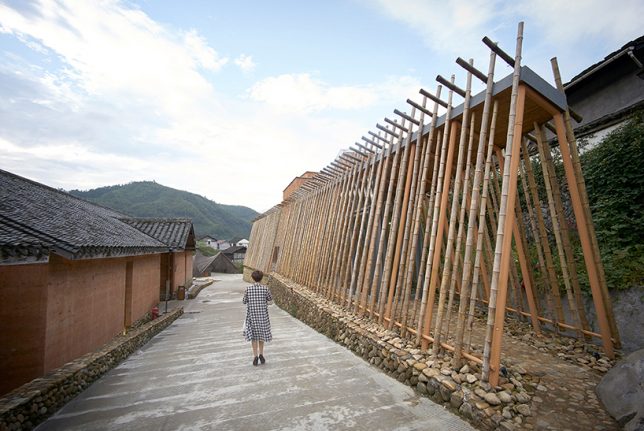
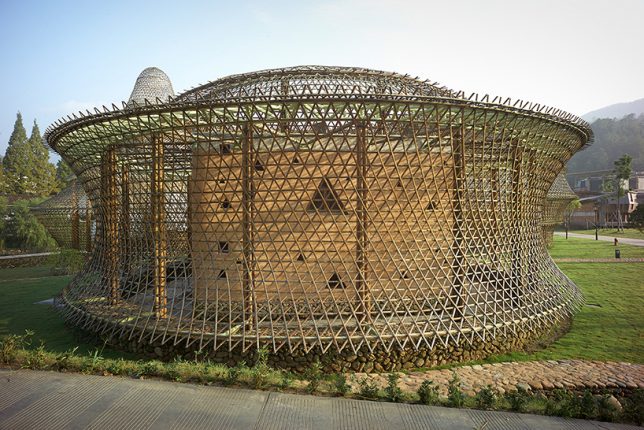
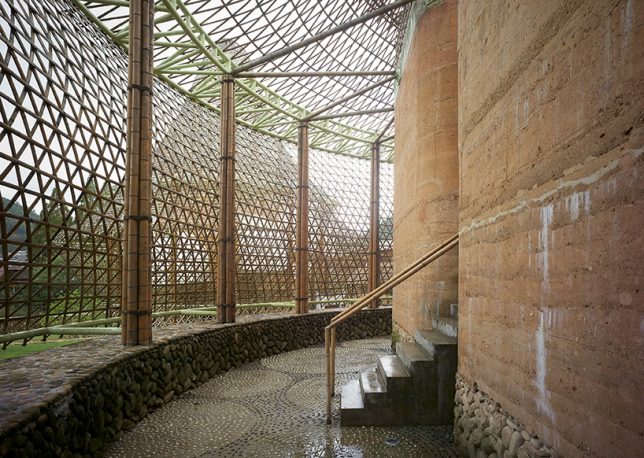
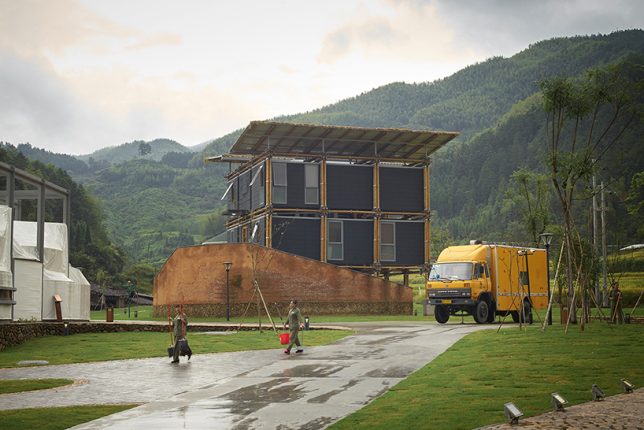
At the first annual Bamboo Architecture Biennale in 2016, which was held in the village of Baoxi, China, 12 architects demonstrated different methods of bamboo construction, including Kengo Kuma, Simon Velez, Anna Heringer and Vo Trong Nghia. Each of the pavilions serves a certain purpose, like Kuma’s ceramics museum and Heringer’s youth hostel. The bamboo bridge (pictured top) by Ge Quantao is especially impressive.

Wuxi Harbor Bridge by Mimesis Architecture Studio

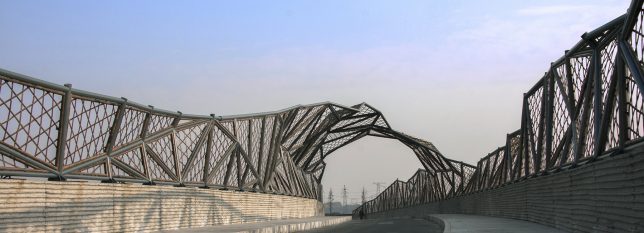
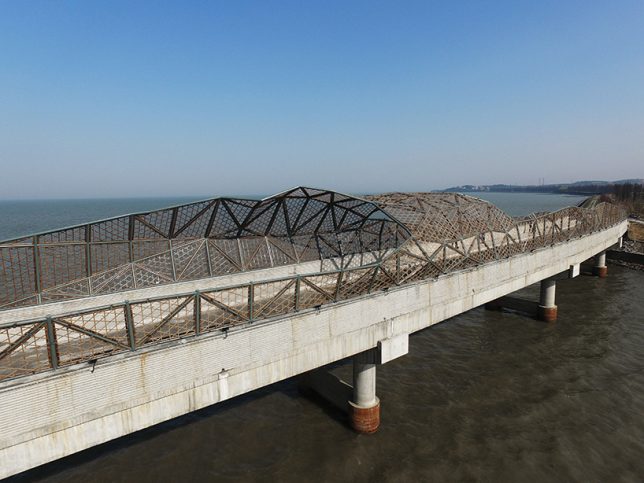
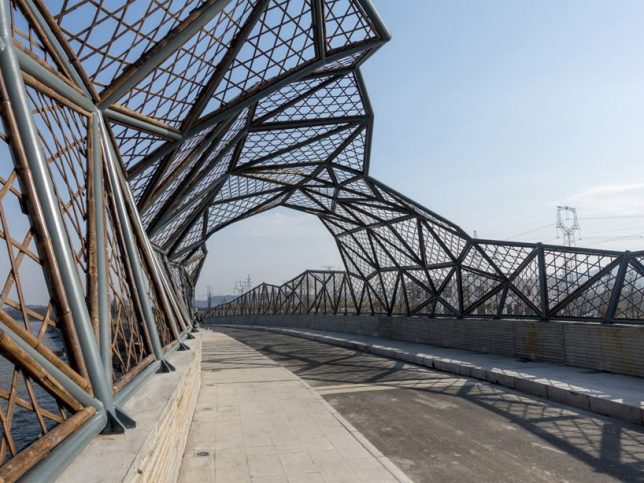
Mimesis Architecture Studio shows how beautifully bamboo can augment structures made from other materials via the Wuxi Harbor Bridge, using it as formwork for the handrails of the deck and to create carbonized bamboo nets along the top of the bridge. These nets are weatherized and strong, not to mention easy and cheap to replace.

Green Ladder: Temporary Pavilion by Vo Trong Nghia

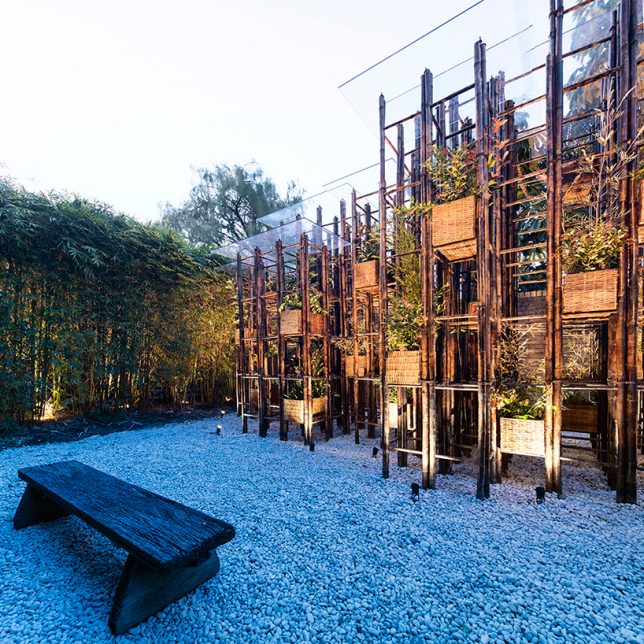
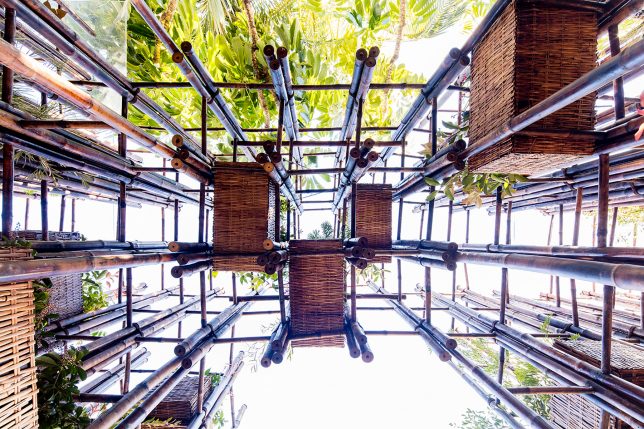
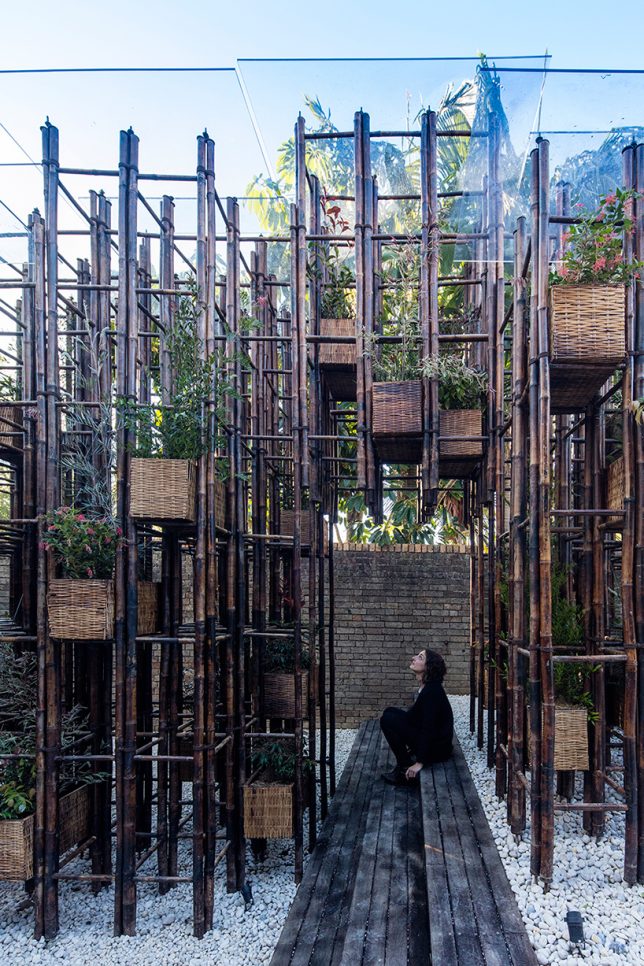
Bamboo poles create a grid-like network supporting planter pots to bring nature back to the city in this pavilion by Vo Trong Nghia. The project aims to raise awareness about the importance of access to nature in cities, especially in vietnam, where green spaces are increasingly rare.

Reconstruction of the Universe: Pavilion by Sun Xun

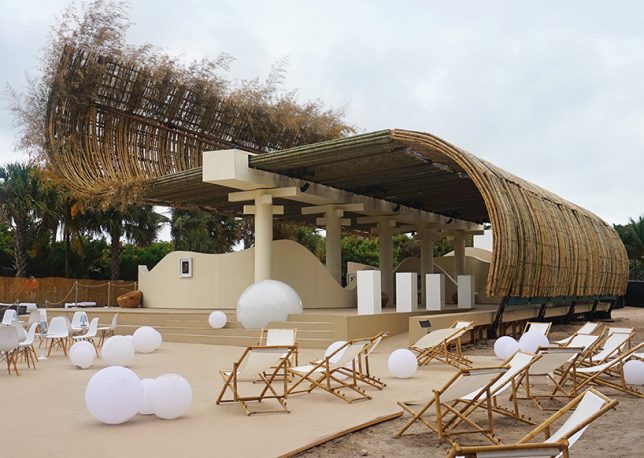
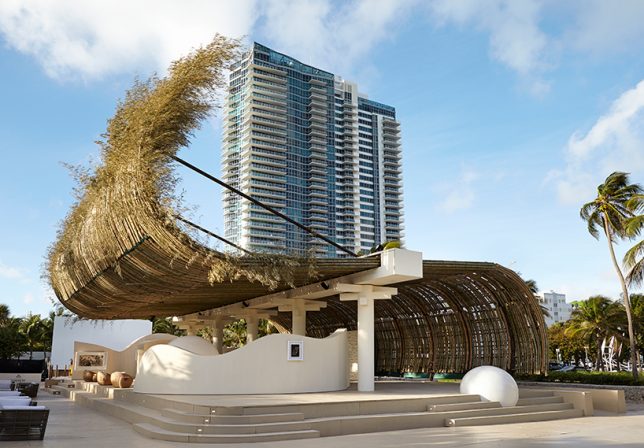
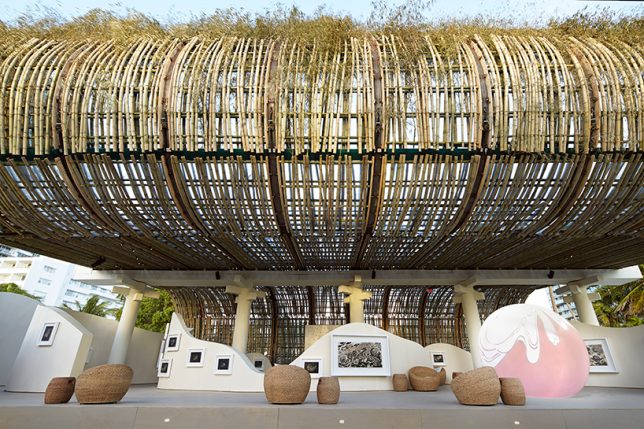
Bamboo curls up and over an outdoor space to act as a shade-providing roof in this project by Chinese artist Sun Xun and Swiss watchmaker Audemars Piguet for Art Basel. It’s made of 1300 madame timber bamboo poles, facing the ocean.

Next Page – Click Below to Read More:
Bamboo Architecture 14 Sustainable And Spectacular Organic Structures

Share on Facebook


[ By SA Rogers in Architecture & Public & Institutional. ]

[ WebUrbanist | Archives | Galleries | Privacy | TOS ]


WebUrbanist

 
Comments Off on Bamboo Architecture: 14 Sustainable and Spectacular Organic Structures

Posted in Creativity


Amsterdam Airbnb in a Metro Station Mocks Misleading & Harmful Hotels

25 May

[ By SA Rogers in Boutique & Art Hotels & Travel. ]

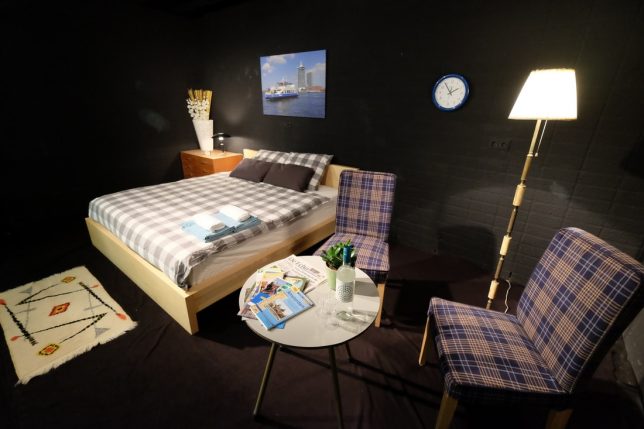
Anyplace can be an Airbnb – including vans, sheds, housing that should rightfully be for rent to the city’s residents, and cozy rooms ‘by the metro’ that turn out to actually be in the metro station. In fact, the latter example is on display in the metro station Wibautstraat in Amsterdam’s city center right now, walled off with glass to put guests on full display of commuters in a commentary on how misleading and harmful listings on the travel accommodations website can be.

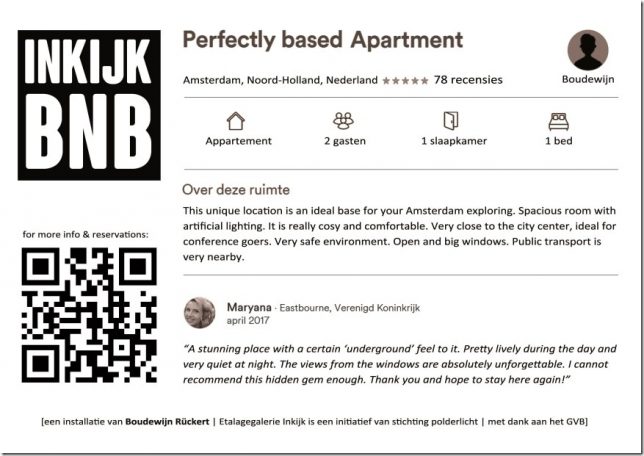
Created by Dutch artist Boudewijn Rückert, the installation could be read in a variety of ways without context. If you didn’t know the artist’s intentions, you might think this was an advertisement, or an unconventional room made available by Airbnb as a promotional stunt. But lean in and take a close look at the placard accompanying the exhibition.

The text reads, “This unique location is an ideal base for your Amsterdam exploring. Spacious room with artificial lighting. It is really cosy and comfortable. Very close to the city center, ideal for conference goers. Very safe environment. Open and big windows. Public transport is very nearby.”

As Rücker notes on his website, roughly 15,000 homes are currently offered “as a permanent holiday” in the city, excluding them from housing and contributing to gentrification. Plus, the way these accommodations are typically styled makes them exceedingly generic in the sterile Silicon Valley aesthetic increasingly referred to as ‘Airspace.’

The artist outfitted the room in furniture and decor you could find in any city around the world thanks to Ikea, along with “a butt-ugly vase with plastic flowers,” with nothing but a photo of an Amsterdam ferry on the wall to hint at the room’s geographic location.

While he’s aware that the installation is bound to press the buttons of Airbnb fans and perhaps the company itself, he hopes it will stimulate conversation around how renting out all these rooms is affecting the lives of people who live in the host cities – a controversy that’s definitely not limited to the city of Amsterdam.

Share on Facebook


[ By SA Rogers in Boutique & Art Hotels & Travel. ]

[ WebUrbanist | Archives | Galleries | Privacy | TOS ]

WebUrbanist

 
Comments Off on Amsterdam Airbnb in a Metro Station Mocks Misleading & Harmful Hotels

Posted in Creativity


Pillars of Green: 85,000 Plants on World’s Largest Vertical Garden Facade

23 May

[ By WebUrbanist in Architecture & Houses & Residential. ]

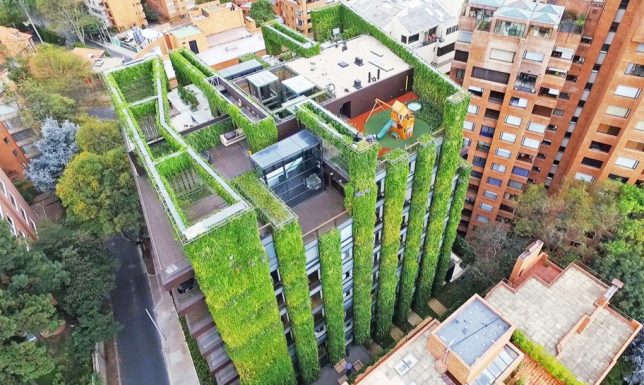
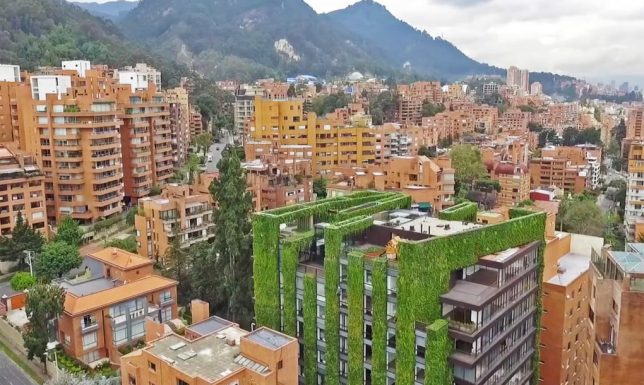
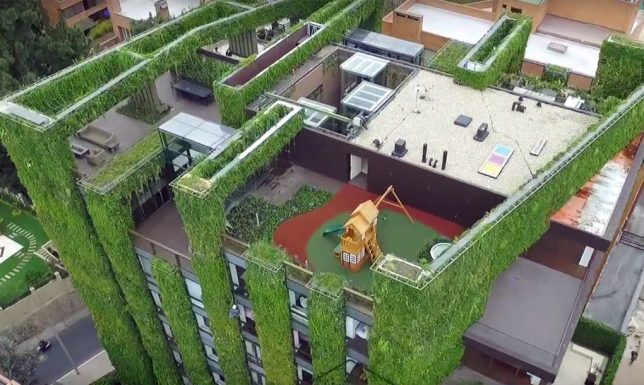
An extensive living facade system in Bogota, Columbia, represents growth in the right direction, away from unrealistic tree-covered skyscrapers toward more sustainable and useful vertical greenery.

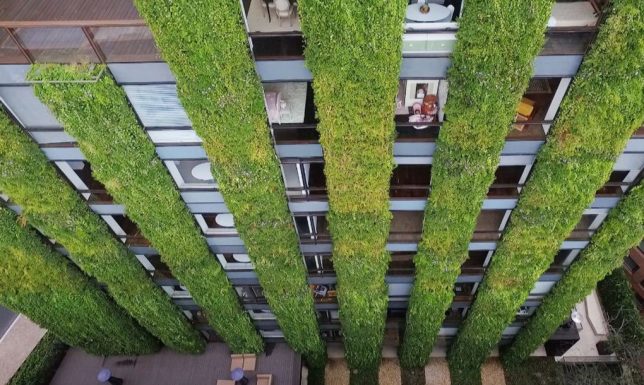
The Santalaia building has plants spanning over 30,000 square meters of its surface area, able to produce oxygen for over 3,000 people annually (and filter tons of heavy metals, harmful gases and other airborne particulates). Paisajismo Urbano installed this specific system, developed by Ignacio Solano.

The recent trend (in renderings and to some extent reality) of putting trees onto tall towers is problematic from engineering and ecological standpoints. “Intensive” greenery requires thicker layers of soil and more complex systems for watering, maintenance and structural support. “Extensive” greenery, by contrast, provides many of the same benefits with lower cost and less wasted energy.

Many architects are naturally tempted to place trees on buildings, which do have a few functional advantages (like providing shade and making for nice-looking renderings). Still, building residents as well as the public would be better served in most cases by systems like this one. Even then, it is important to determine in advance what the goals and intended benefits are, since any green installation is complex and requires ongoing support.

Share on Facebook


[ By WebUrbanist in Architecture & Houses & Residential. ]

[ WebUrbanist | Archives | Galleries | Privacy | TOS ]


WebUrbanist

 
Comments Off on Pillars of Green: 85,000 Plants on World’s Largest Vertical Garden Facade

Posted in Creativity