Category: Creativity

  • Free to Forge: Open Source 3D-Printed Metal Mesh Furniture

    [ By WebUrbanist in Gadgets & Geekery & Technology. ]
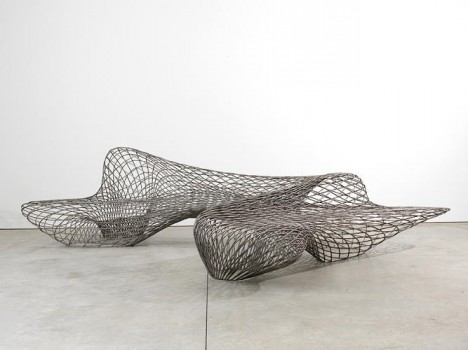
    3d printed metal bench

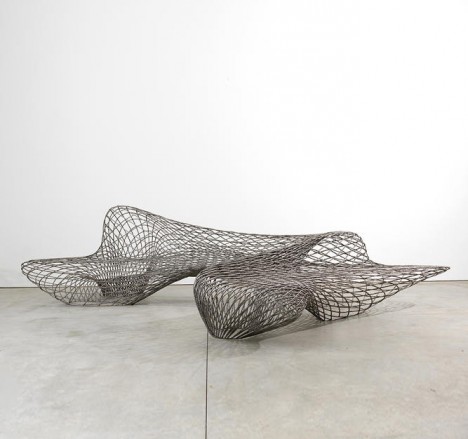
    Completed by a robot programmed to extrude material in midair, the world’s first fully 3D-printed metal furniture shows off a fresh range of possibilities for creating intricate structures and complex shapes on demand.
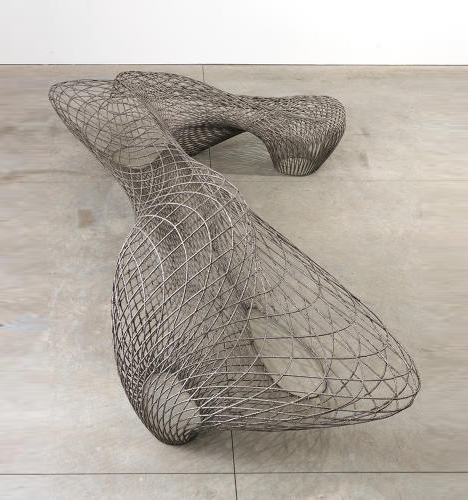
    dragon bench design details

    Employing Autodesk and an MX3D machine, Dutch designer Joris Laarman created the Dragon Bench (above) and other pieces (below) that illustrate the rich potential of metals using additives to harden as they are deployed.
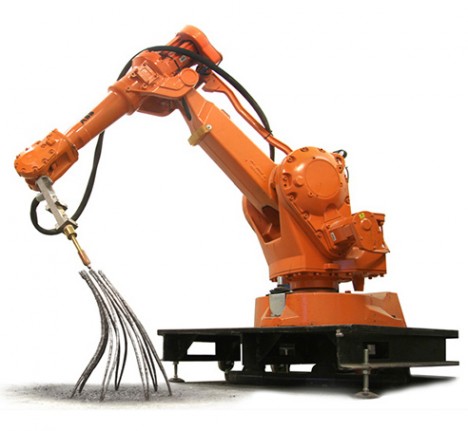
    mx3d robot machine

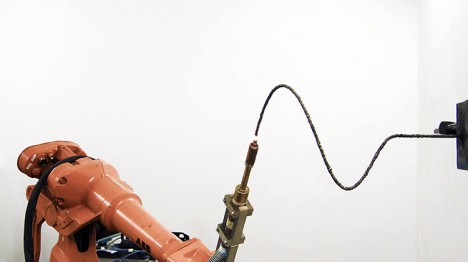
    With this industrial robot [and] advanced welding machine we are able to print with metals, such as steel, stainless steel, aluminium, bronze or copper without the need for support-structures. By adding small amounts of molten metal at a time, we are able to print lines [horizontal, vertical and spiral] in mid air. The combination robot/welding is driven by different types of software that work closely together. This will eventually have to end up in a user friendly interface that allows the user to print directly from CAD.”
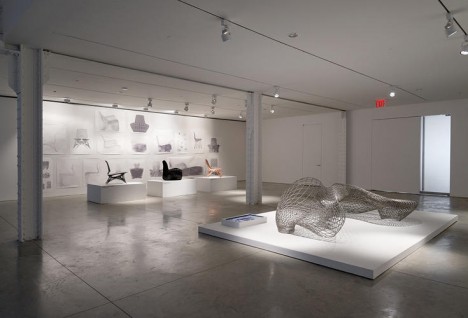
    3d printed exhibit design

    3d open source maker

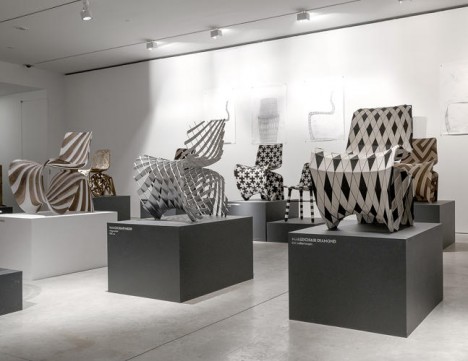
    3d printed chair series

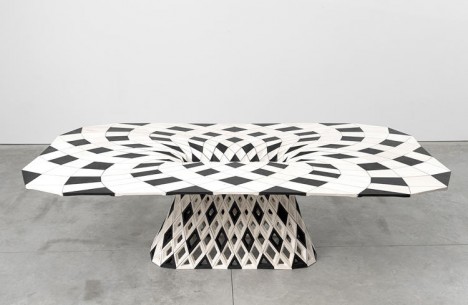
    Within this series, currently on display at Friedman Benda gallery in New York City, are a set of organic (also 3D-printed) polyurethane chairs and table. Puzzle-piece parts are made first, costing around $ 50 – the components are assembled into a finished whole. The plans for these are also going to be made available online as free resources for anyone who wants to make their own – an easier, less material-dependent entry point for someone without access to their own metal-printing robot (at least as of yet).
    mx3d demo example

    bench

    The potential of this technology extends well beyond stand-alone objects – components for cars, buildings or other infrastructure could be generated using the same machines and techniques. Meanwhile, when it comes one-off custom works of either art or design, three-dimensional complexity is suddenly a much lower hurdle to overcome.

    Share on Facebook


    [ By WebUrbanist in Gadgets & Geekery & Technology. ]

    [ WebUrbanist | Archives | Galleries | Privacy | TOS ]


    WebUrbanist

  • High-Speed Art: Murals Spray-Painted for Train Passengers

    [ By WebUrbanist in Art & Street Art & Graffiti. ]

    mural art purple field

    Made to been seen at high speeds, these colorful patterns intentionally form a sequential whole when experienced by commuters in adjacent railway cars.

    mural art train view

    mural art with train

    Katharina Grosse (with photos by Steve Weinik for the City of Philadelphia Mural Arts Program) conceived of this seven-section series, dubbed Psycholustro, as a way to engage everyday travelers with a project that addresses their in-motion perspective and the passage of time.

    mural up tunnel view

    mural green painted section

    Grosse, a German artist based out of Berlin, targeted different sites with different bright colors, in some cases covering up existing graffiti on buildings or walls (with the expectation of re-tagging by other artists).

    mural green white detai

    mural striped closeup shot

    Lime green lights up an abandoned warehouse while bright orange highlights multiple structures and exposed rocks.

    mural art purple orcks

    mural art purple ties

    In a potentially controversial move, however, a purple area covers not only piles of rocks but also sections of nature, including grasses, shrubs and trees.

    mural art scene

    mural art spray paint

    Grosse describes her project as something that “shifts your notion of size through movement” seeming huge from up close but to scale when you pass it by from your seat on a train.

    mural art wall close up

    mural art fast speed

    mural art orange building

    Stephen Gardner, an Amtrak vice president, explains the project’s impetus: “There are some things that we can do better than other competing modes of transport, and that is to provide the traveler with a deeper engagement with the diverse landscape. One of our taglines is, “Enjoy the Journey.’”

    Share on Facebook


    [ By WebUrbanist in Art & Street Art & Graffiti. ]

    [ WebUrbanist | Archives | Galleries | Privacy | TOS ]


    WebUrbanist

  • Cute Cameras: Animal Shapes Make CCTV More Palatable

    [ By Steph in Design & Fixtures & Interiors. ]

    Cute CCTV Camera Designs 1

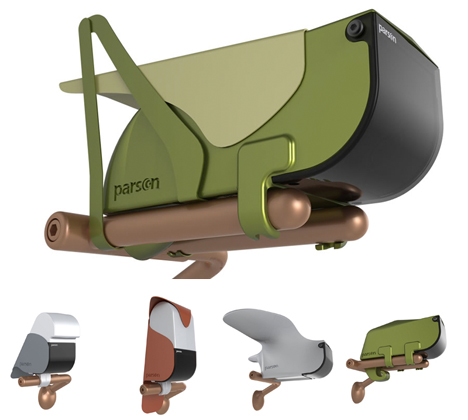
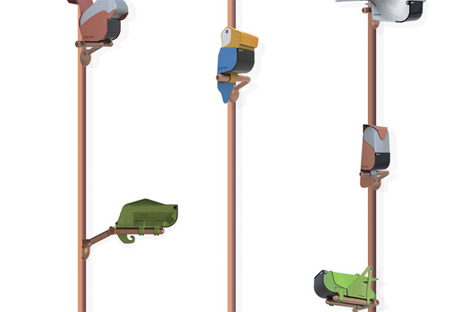
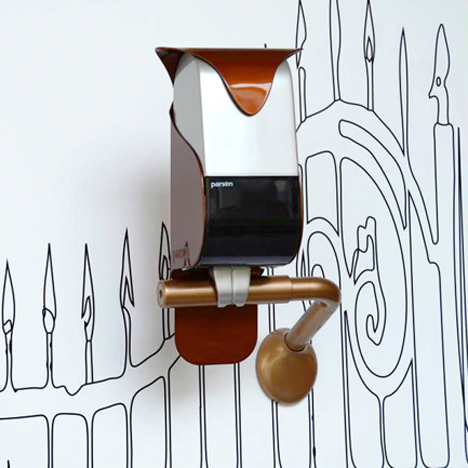
    Would a cute, artistically designed chameleon sculpture make you feel better about being watched? A new series of CCTV camera cases by Italian designer Eleonora Trevisanutto transforms ugly, ordinary security equipment into decorative objects that make surveillance seem a little less intimidating.

    Cute CCTV Camera Designs 3

    Cute CCTV Camera Designs 4

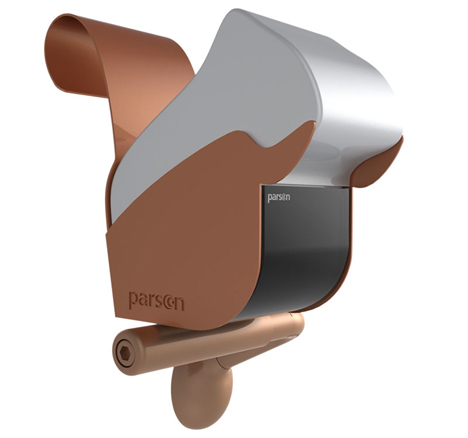
    You’re still being watched, sure, but by a lizard, squirrel, grasshopper, owl or an adorable abstracted bird. It’s like a kinder, gentler Orwellian vision of the future. “The camera is no longer a ‘looming control’ means, but a decor element, an integral part of the place in which it is located.”

    Cute CCTV Camera Designs 5

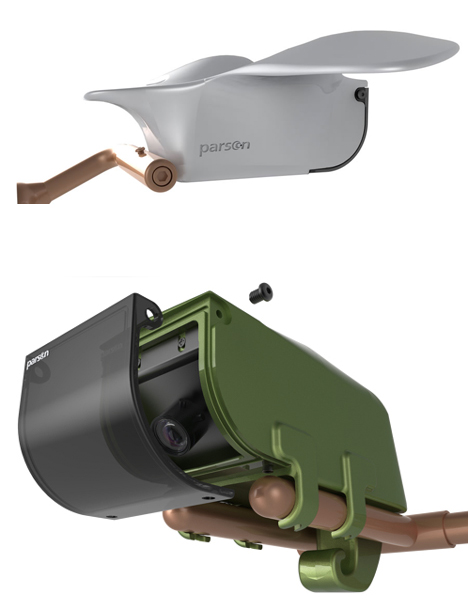
    The need for less intimidating CCTV cameras does make sense for places like retail stores, daycares and other businesses where security is necessary, as well as private homes. The models don’t just differ visually; each animal offers its own individual functions, equipped with vision systems that can perform different operations like face recognition. That’s right – that lizard knows exactly who you are.

    Cute CCTV Camera Designs 2

    While many of us are so used to seeing ordinary cameras virtually everywhere we go that we don’t even notice them anymore, Parson’s ‘Animal’ series was made to be seen.

    Share on Facebook


    [ By Steph in Design & Fixtures & Interiors. ]

    [ WebUrbanist | Archives | Galleries | Privacy | TOS ]


    WebUrbanist

  • Cemeteries in the Sky: 7 Compact Vertical Burial Designs

    [ By Steph in Architecture & Cities & Urbanism. ]

    VERTICAL BURIAL MAIN

    A skyscraper filled with corpses may sound morbid, but soon, such things may become a necessity. The earth is already packed with dead housed in oversized caskets that have been designed to outlive us all – so what are we going to do with the never-ending stream of human bodies as we face life’s greatest inevitability?

    Skyscraper Cemetery for Norway

    Vertical Burial Norway Cemetery Skyscraper

    A metal exoskeleton around a central core serves as the framework for a multi-story graveyard that looks, on each individual floor, the way any ordinary graveyard would. It’s got trees, benches and memorials. The only difference is, it’s high above ground level, and roofed by the next level of graves. Norweigian designer Martin McSherry envisions the Skyscraper Cemetery that can help solve the problem of lack of burial space in the country, with a crane permanently situated beside the structure to constantly add new floors as needed.

    Memorial Necropole Ecumenica, Brazil

    Vertical Burial Brazil

    The world’s tallest existing cemetery is Brazil’s Memorial Necropole Ecumenica, a 32-story high rise where tombs are rented by the year and private memorial rooms go for about $ 105,000. Because of the hot Brazilian climate, bodies must be interred within 24 hours, so the MCE, as it’s known, is open 24 hours a day, 365 days a year. The building also contains a chapel, lagoon, peacock garden, waterfalls, an aviary full of parrots and toucans and even a small restaurant.

    Tower for the Dead, Mexico City

    Vertical Burial Tower for the Dead

    The population of residents aged 65 and older is expected to triple in developing countries over the next four decades. That’s a big problem when it comes to burying the dead, especially in places like Mexico City where buildable area is very scarce. Creating more conventional cemeteries would mean losing valuable agricultural land and what few unspoiled green spaces are left. This proposal, Tower for the Dead, actually combines vertical necropoles with inverted skyscrapers for an 820-foot-deep subterranean complex conceived as a massive screw driving into the earth. The experience might be a little intense, as each floor has a theme based on a stage of grief.

    “This project proposes an underground vertical cemetery for Mexico City – a vision that takes into consideration the overpopulation, the scarcity of land, and the psychological and sensory experience of grieving. The ‘Tower of the Dead’ allows the family members of the deceased to be reborn, after a trip to the underworld, where they just buried their loved one.”

    Vertical Cemetery for Paris

    Vertical Burial Cemetery for Paris

    This vertical cemetery concept for land-challenged Paris would create “a symbolic tower with a rightful place within the city that the deceased so much loved,” a city that currently has so little space for graves that many remains have still not been properly buried. A skylight pours natural light into the center of the tower, down into a water pond at the base, with a spiral ramp offering a walkway to the top floor. Flexible filaments on the outside of the tower each stand for a deceased person, aiming to embody their essence as they move in the wind.

    Stacked Cemeteries of New Orleans

    Vertical Burial New Orleans

    New Orleans is one city that already stacks its dead vertically, up to four tombs high. The reason for this is simple: the city is set well below sea level, so the water table is far too high for underground burial. Dig just a few feet down, and you’ll hit soggy sand. For a while, residents attempted it anyway, stacking heavy stones on top of the caskets to hold them down, but storms would bring them floating up to the surface. Families are typically stacked together within individual vaults. At the city’s infamous Lafayette Cemetery, human remains are even interred right in the walls that surround it.

    Moshka Tower Cemetery, Mumbai

    Vertical Burial Moksha Mumbai

    The Moshka Tower was designed for Mumbai to free up a significant amount of ground space for the living, accommodating all four of the major cultures and religions found within the city (Hindu, Muslim, Christian and Parsi.) Facilities are available for both garden burial and cremation. A tower of silence is located on the roof for Parsis, and additional space is available for worship, prayer and meditation. The multi-layered facade is filled with vegetation to absorb heat and CO2, and new technology enables more sustainable cremation that doesn’t fill the air with pollution.

    Mountain of the Dead, Egypt

    Vertical Burial City of the Dead

    Egypt’s Mountain of the Dead, also known as Gebel al Mawta, is a Roman-era burial site that towers above the landscape of the Siwa Oasis, looking a bit like an ant hill. Made of limestone, it was developed during the 26th Dynasty of Egypt, and served as a hiding place for soldiers during World War II. Tombs cover virtually every square inch of its base as well as its terraces and all sides of the conical portion. Many of the tombs have been raided over the centuries, and robbery continues to be a problem.

    Amphitheater for the Dead: Hong Kong Hillside Cemeteries

    Vertical Burial Hong Kong 2
    Vertical Burial Hong Kong 1

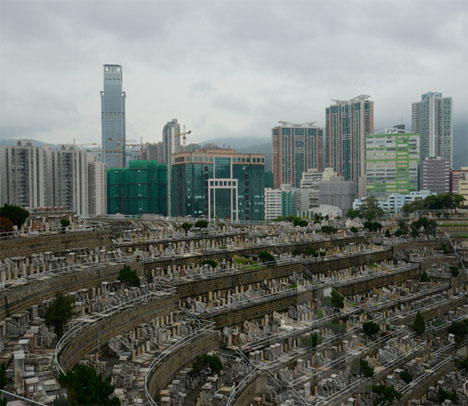
    Look out onto the hillsides from a high-rise in Hong Kong and you’ll see something that’s highly uncommon in the west: tier after tier of graves built onto hillsides resembling ancient amphitheaters. Each grave within these cemeteries is shoehorned beside the other. It didn’t take long for this trend to die down in the city – the practice began in the ’60s, and by the ’80s, space ran out, so officials had resorted to interring bodies in nearby high-rise buildings. Hong Kong is twice as dense as New YOrk and four times as crowded as London, so it’ll be interesting to see what they come up with next.

    Share on Facebook


    [ By Steph in Architecture & Cities & Urbanism. ]

    [ WebUrbanist | Archives | Galleries | Privacy | TOS ]


    WebUrbanist

  • Street Smart: Solar Roadway Lights Up & Feeds Power Grid

    [ By WebUrbanist in Conceptual & Futuristic & Technology. ]

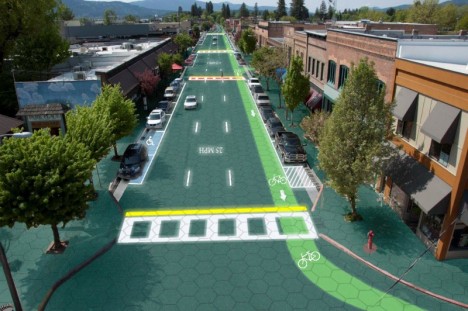
    solar roadway graphic design

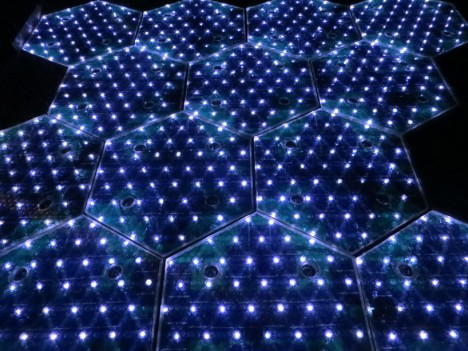
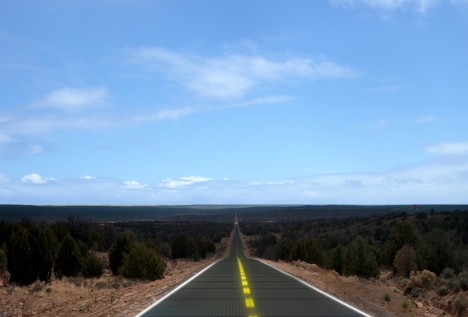
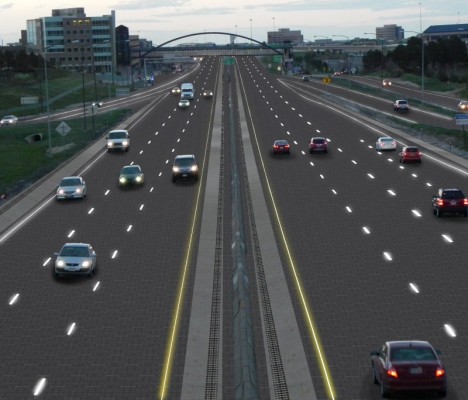
    Currently in crowdfunding, these hexagonal pavers can provide energy, melt accumulated snow and ice, light up with LEDs, all while being tough enough to support trucks weighing 250,000 pounds.

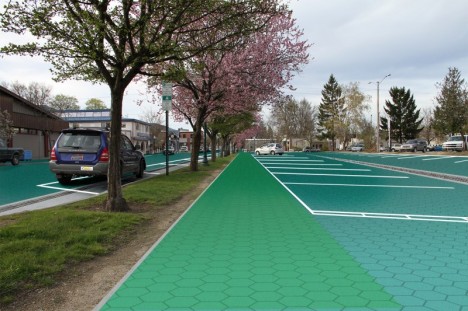
    solar roadway parking sidewalk

    Designed by American electrical engineer Scott Brusaw to work everywhere from roads, parking lots and driveways to sidewalks, bike paths and playgrounds, you can walk, drive or park on these hexagrams with ease. They have been extensively tested for load-bearing capacity as well as traction and impact resistance.

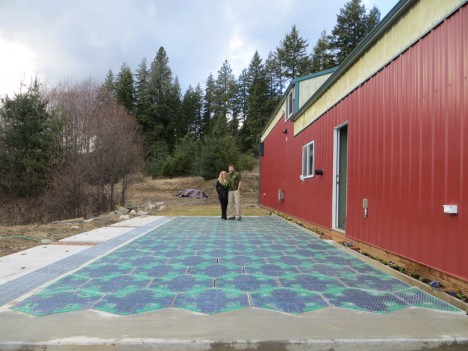
    solar road test panels

    solar roadway led lights

    More about the project from IndieGoGo (graphics by Sam Cornett): “Solar Roadways is a modular paving system of solar panels that can … pay for themselves primarily through the generation of electricity, which [in turn] can power homes and businesses connected via driveways and parking lots.”

    solar roadway rural highway

    solar roadway system sketch

    Current working prototypes are already powerful, as demonstrated above. Beyond existing capabilities there are many possibilities for further development, including mutual induction technologies that would allow charging while driving and more complex LED systems to create changing road displays on demand.

    Share on Facebook


    [ By WebUrbanist in Conceptual & Futuristic & Technology. ]

    [ WebUrbanist | Archives | Galleries | Privacy | TOS ]


    WebUrbanist

  • The Bus Stops Here: 7 Transit Shelters by Famous Architects

    [ By WebUrbanist in Architecture & Public & Institutional. ]

    angled bus shelter

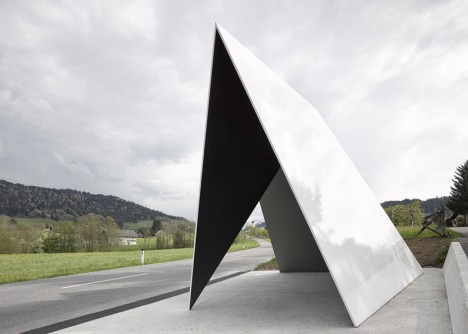
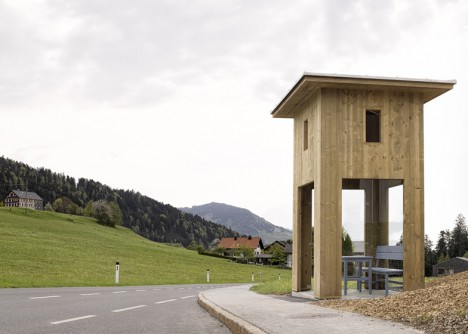
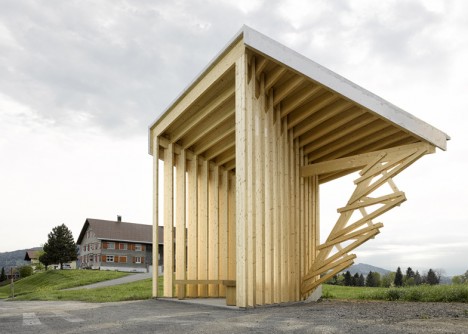
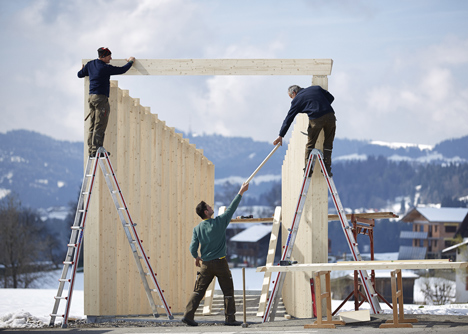
    Trading a free vacation for their design input, a series of world-renowned designers each contributed their vision of a bus shelter to a tiny town of just 1,000 residents in Austria.

    wood remix bus seat

    stepped bus shelter design

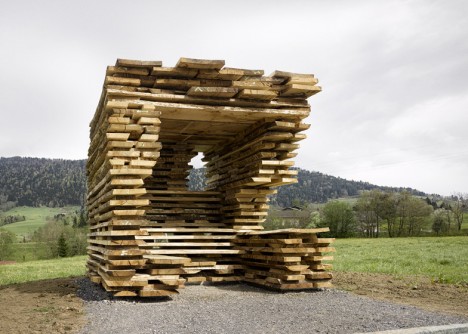
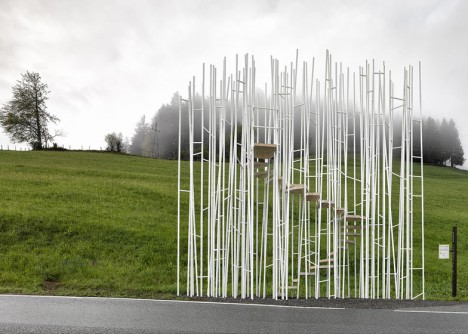
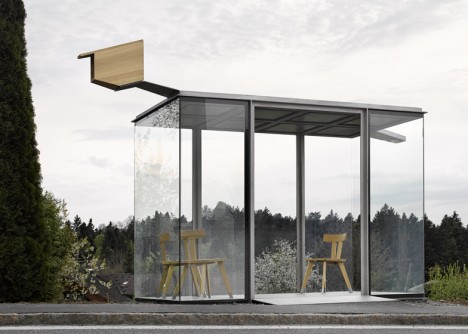
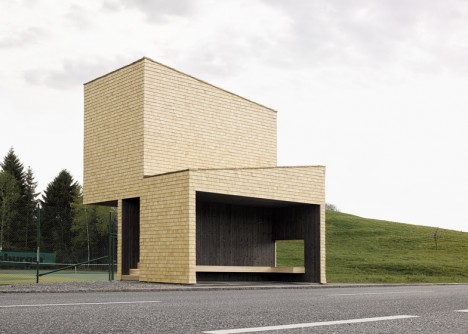
    Each structure within the Bus:Stop project is unique and dramatic, aimed at creating a new attraction for the area in addition to the existing natural and resort amenities of Krumbach and its surroundings.

    architect bus stop project

    tall top bus stop

    All provide differing degrees of refuge from the elements, with some drawing on regional building typologies (stacked raw wood) or directing attention to site-specific views within and around the town (angled indicators pointing to sights).

    teired wood bus stop

    interior exterior bus stop

    The last example above is the largest, providing both a bus shelter as well as a second-story viewing platform for a local tennis court.

    bus stop design build

    bus stop construction

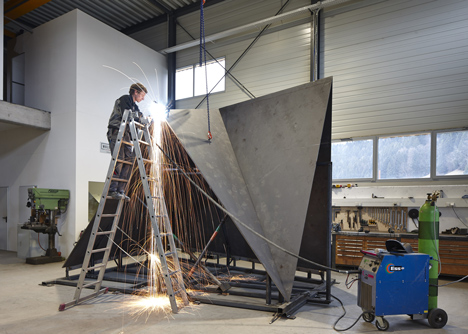
    Together with a local architecture firm and craftspeople, theses diverse shelters reflect both international design approaches and boast the capabilities of regional creatives and builders.

    bus stop finished

    The list of contributors includes: “Japanese architect Sou Fujimoto, Wang Shu’s Amateur Architecture Studio from China, Norwegian studio RintalaEggertsson Architects, Ensamble Studio from Spain, Chilean architect Smiljan Radic, Architecten de Vylder Vinck Taillieu from Belgium and Russian architect Alexander Brodsky. The project was overseen by Dietmar Steiner, the director of Vienna architecture museum Architekturzentrum Wien. Local private sponsors including hotel and inn owners, craft workers and business people provided the majority of the funding and services to support the process. The bus stops were inaugurated on 1 May and an exhibition documenting the design and construction process is currently on show at the Vai Vorarlberger Architektur Institut in the city of Dornbirn.”

    Share on Facebook


    [ By WebUrbanist in Architecture & Public & Institutional. ]

    [ WebUrbanist | Archives | Galleries | Privacy | TOS ]


    WebUrbanist

  • Tiny Frank Lloyd Wright-Inspired House Atop Miner’s Ruins

    [ By Steph in Architecture & Houses & Residential. ]

    Frank Lloyd Wright Miner's Shelter 1

    Gleaming glass, oxidized steel and matte black wood contrast with the rough concrete ruins of an old miner’s shelter found in the desert near Scottsdale, Arizona. ‘Miner’s Shelter‘ was designed and built by Dave Frazee of Broken Arrow Workshop as part of the Frank Lloyd Wright School of Architecture’s student shelter program, and is situated to take advantage of the remote natural environment.

    Frank Lloyd Wright Miner's Shelter 2

    Intended to serve as a rustic shelter for respite and relaxation rather than as a permanent dwelling, the off-grid structure is just large enough to accommodate a bed, sticking to the limited size of the concrete pad discovered there. The existing concrete chimney was incorporated into the design, which frames views of adjacent mountains and the Phoenix Valley.

    Frank Lloyd Wright Miner's Shelter 5

    The backside of the shelter is covered in oxidized steel panels that help it blend into the warm desert tones of its setting. In the distance are several similar student shelters, some still in use and some in ruins.

    Frank Lloyd Wright Miner's Shelter 3

    Wright spent every winter of the final two decades of his life camping in a tent-like structure in the desert before starting the tradition of building permanent, modern structures through Taliesin West, the Arizona branch of his architecture school.  The program “demonstrates how climate, building materials, site orientation, and client needs and preferences inform design choices based on the tenets of Wright’s organic architecture.”

    Share on Facebook


    [ By Steph in Architecture & Houses & Residential. ]

    [ WebUrbanist | Archives | Galleries | Privacy | TOS ]


    WebUrbanist

  • A Different Angle: 15 Great Geometric Home Accessories

    [ By Steph in Design & Furniture & Decor. ]

    Geometric Home Accessories Main

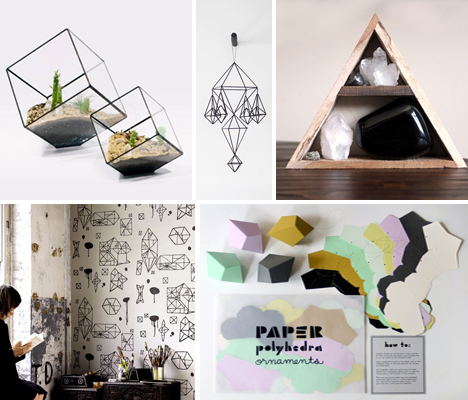
    Bring the clean, graphic lines of cubes, pyramids, prisms and other polyhedrons to your home with these (often literally) sharp accessories. Hand-drawn shapes on wallpaper, icosahedron salt and pepper shakers, DIY origami ornaments, modernized Himmeli mobiles and diamond-shaped cookie cutters are among these 15 affordable geometric decorative objects.

    Random Geometry Wallpaper by Nama Rococo

    Geometric Home Nama Rococo

    The imperfect nature of hand-drawing adds a bit of a quirky feel to the ‘Random Geometry’ wallpaper by Nama Rococo. Plaster an entire room with it, create an accent wall or just frame a single sheet for $ 100.

    Score + Solder Terrariums & Planters

    Geometric Home Score + Solder

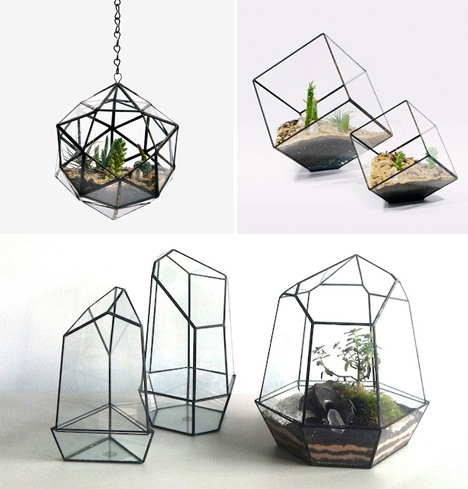
    Glassworker Matthew Cleland of Score + Solder creates stunning geometric terrariums, planters, lamps and more, handmade to order from his 13-acre farm in British Columbia.

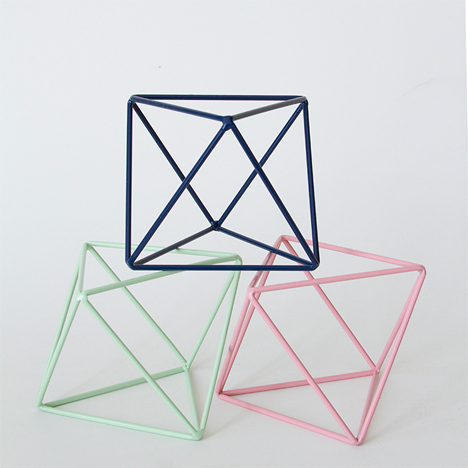
    Octahedron Decorative Objects by Eric Trine

    Geometric Home Octahedron Decor

    Perfect for the mantle or as a conversation piece on the coffee table, this octahedron decorative object by Eric Trine costs just $ 32.

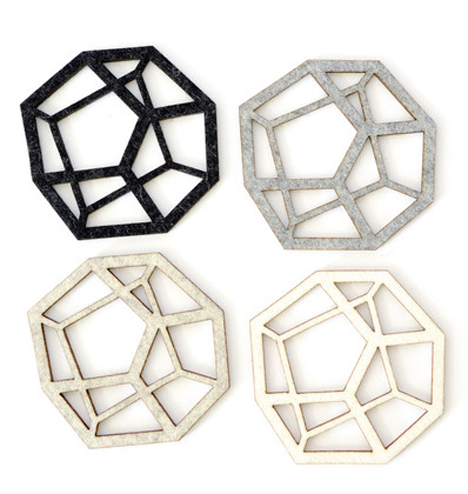
    Pentahedron Coasters by Koromiko

    Geometric Home Pentahedron Coasters

    Protect your table from condensation with this set of four handmade felt pentahedron coasters, handmade in San Francisco by Koromiko, $ 40.

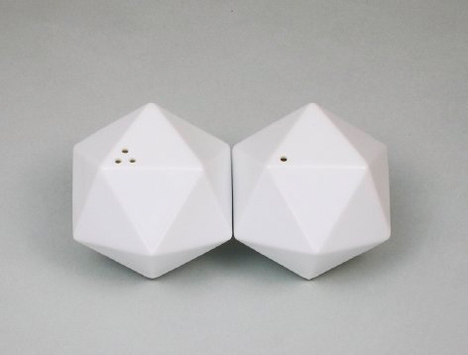
    Icosa Salt & Pepper Shakers by Club88inc

    Geometric Home Icosa Salt and Pepper

    This set of icosahedron-shaped salt and pepper shakers by Club88inc, $ 35, will fit perfectly into the palm of your hand.

    Next Page – Click Below to Read More:
    A Different Angle 15 Great Geometric Home Accessories

    Share on Facebook


    [ By Steph in Design & Furniture & Decor. ]

    [ WebUrbanist | Archives | Galleries | Privacy | TOS ]


    WebUrbanist

  • Mini Book of Major Events: Whole World History in Your Hand

    [ By WebUrbanist in Art & Sculpture & Craft. ]

    mini book major events

    In a handful of pages in a book the size of a fingernail, this book artist tells a minimalist story of life on Earth, illustrating pivotal moments with brief text and tiny images.

    mini life arises page

    mini dinosaur extinction page

    mini fire discovered page

    mini agriculture planting page

    A beautiful bit of hand-bound book art, The Mini Book of Major Events is just one of a series of micro-volumes made by Evan Lorzenzen, all of which pack large ideas into the smallest space possible.

    mini the plague page

    mini electricity discovered page

    mini first contact page

    mini book of major cover

    Of course, selectivity is key – which events warrant mentioning when space is at a premium? Then, how does one illustrate these most effectively at such a minute scale?

    mini book wordless volume

    tiny book folded open

    little book inside pages

    little book of big ideas

    Along similar lines, The Little Book of Big Ideas tackles large and important concepts from war and death to love and infinity, again with lovely drawings alongside each.

    Share on Facebook


    [ By WebUrbanist in Art & Sculpture & Craft. ]

    [ WebUrbanist | Archives | Galleries | Privacy | TOS ]


    WebUrbanist

  • Tuned Out: 11 Off-The-Air & Abandoned Radio Stations

    [ By Steve in Abandoned Places & Architecture. ]

    abandoned radio stations
    Don’t touch that dial or pause for station identification, these eleven decrepit, decommissioned and DJ-less radio stations have signed off forever.

    Broadcast Noose

    abandoned radio station(images via: Rural Ruin, JJ MacCrimmon)

    I’ve got Dr Johnny Fever and the only prescription is more cowbell? Sorry Johnny, all the cowbell in the world ain’t gonna bring back the hundreds of small and independently-owned radio stations that once dotted the landscape… from coast to coast! JJ MacCrimmon brings us one example that will remain anonymous so as to avoid further depredations from music-hating vandals and graffiti artists.

    abandoned radio staion(image via: Rural Ruin, JJ MacCrimmon)

    This station may have started out as a residence and although it’s not known exactly when it was abandoned, the presence of scattered long-play records indicates it operated before stations stopped playing actual vinyl over 15 years ago. That’s the door to one of the broadcast booths above… somehow the painted smiley face on the porthole window fails to inject any humor into this sorry scene.

    Where Is Your Radio God Now?

    abandoned radio station WCHR 94.5 FM(images via: History’s Dumpster and Tim Loesch)

    The former WCHR station building in Bucks County, PA began broadcasting Christian music on August 7th, 1965 from this small but solidly-built structure. In 1998, the independent station was bought by Nassau Broadcasting and shortly thereafter, transmissions from this location ceased or as one might say, gave up the holy ghost.

    KOME-atose

    abandoned radio station KOME Tulsa(images via: Mike Ransom, Tulsa TV)

    What’s abandoned in Tulsa, stays abandoned in Tulsa, or so it would seem in the case of KOME 1300 AM. Supposedly off the air by 1965, the station building is surprisingly clean and uncluttered – why hasn’t anyone salvaged that sumptuously padded control room door? We’re guess KOME was a country music station because (A) it’s in Tulsa and (B) there’s a Stetson Hats poster on one of the control room walls. Kudos to Jim Hartz for capturing KOME’s current status and Flickr user Mike Ransom of Tulsa TV for posting these and many other interior images.

    Men Out Of Work

    abandoned radio station Cook Australia(image via: TasermonsPartner)

    TasermonsPartner of deviantART found a lovely vignette to represent an abandoned radio station in the ghost town of Cook, Australia. Once upon a time, Cook was home to over 300 people but times change and these days a mere 10 holdouts are holding out for… a Vegemite sandwich, perhaps.

    Next Page – Click Below to Read More:
    Tuned Out 11 Off The Air Abandoned Radio Stations

    Share on Facebook


    [ By Steve in Abandoned Places & Architecture. ]

    [ WebUrbanist | Archives | Galleries | Privacy | TOS ]


    WebUrbanist