RSS
 

Archive for the ‘Creativity’ Category

30 Years of Graffiti: Peeled Dutch Wall Sample Reveals Colorful Art History

18 Jun

[ By WebUrbanist in Art & Street Art & Graffiti. ]

The sides of the structure are painted from ground to roof, but peeling back layers of artwork reveals just how far back the building’s vibrant history goes.

“This is Doornroosje, the location where I took the piece from, “explains Paul De Graff. “It’s a Graffiti Hall of Fame in the city of Nijmegen, the Netherlands. What started as a 70’s Hippie cult place, became a center of music and art in the early 80’s.”

It was apparently “one of the first places where it was legal to smoke cannabis” and “the building is surrounded by walls that are all spray painted from top to bottom.”

And over its many years and various uses, the building has gathered coats of paint, which De Graff has deconstructed like a geological core sample (or piece of Fordite).

Like a good urban scientist (or someone trying to sell proof with a section of the Berlin Wall on the streets of Germany), he also shows people exactly where it came from, then includes a banana for scale.

Share on Facebook


[ By WebUrbanist in Art & Street Art & Graffiti. ]

[ WebUrbanist | Archives | Galleries | Privacy | TOS ]


WebUrbanist

 
Comments Off on 30 Years of Graffiti: Peeled Dutch Wall Sample Reveals Colorful Art History

Posted in Creativity


Crazy Cat Castle for Sale: 20 Acres of Terror in the Arizona Desert

16 Jun

[ By SA Rogers in Destinations & Sights & Travel. ]

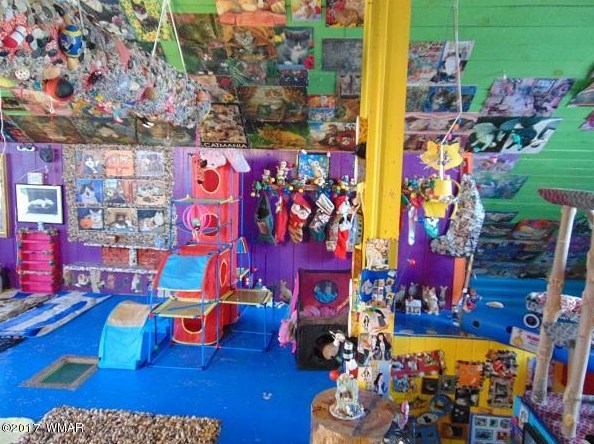
Are you one of the 3 billion people worldwide estimated to be infected with toxoplasmosis, the brain-controlling parasite passed onto humans by our feline overlords? This protozoa invades the host’s brain and makes it do things that are counterproductive to survival – and apparently good taste. How else would you explain this Arizona real estate listing for a dream home only a crazed cat mom could love? “If you love cats this is the home for you!” reads the Caldwell Banker description. “If not bring your sandblaster!”

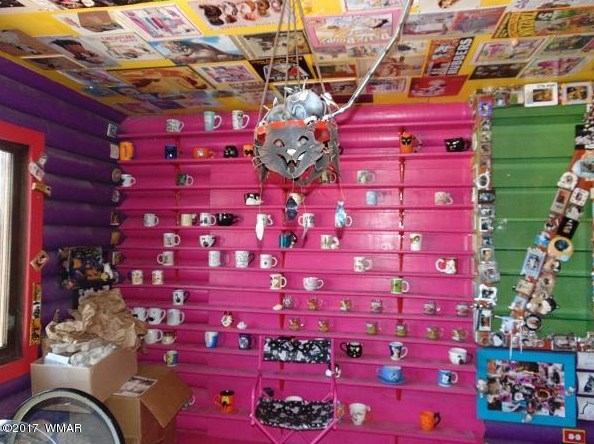
The first important thing to note is that the former owners actually only had two cats. This isn’t an out-of-control animal hoarding situation. It’s just an extremely bonkers decorating scheme carried out by people who are really, really into cats. You might think – “So, what, they’ve got some built-in cat walkways and cat castles?”

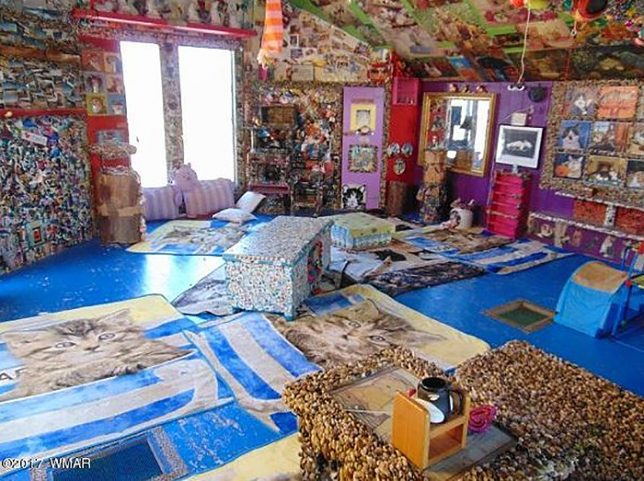
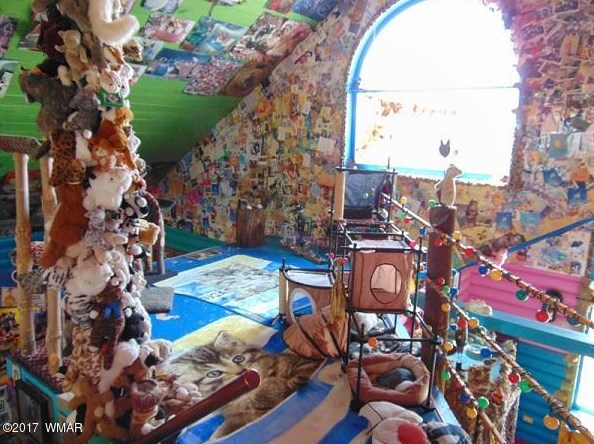
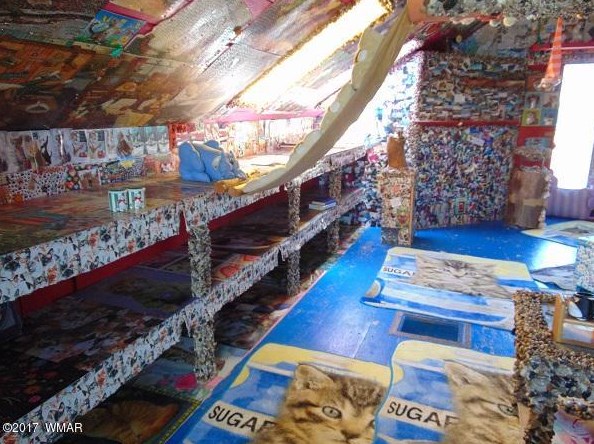
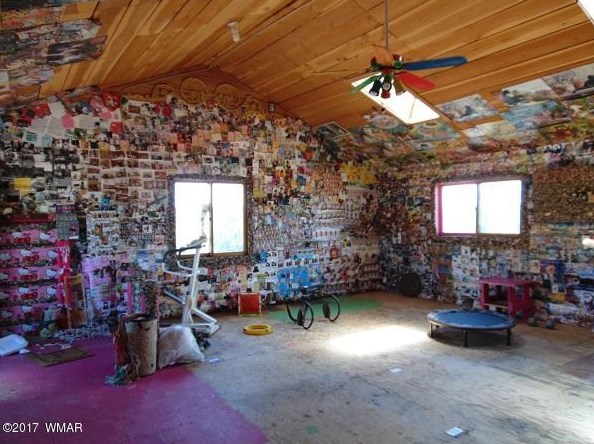
Oh, they’ve got those things, all right. Including a three-story Medieval cat castle made of stone. Upstairs, in what was apparently the cat overlords’ bedroom, every single surface is plastered with stuffed cats, photos of cats, oversized posters of cats, cat toys, cat houses, stockings full of cat treats. But that’s not all.

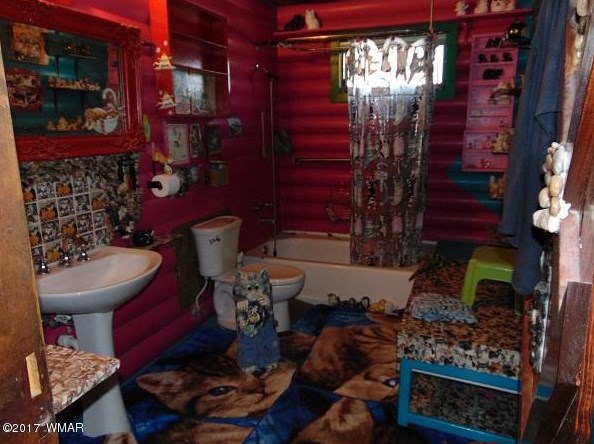
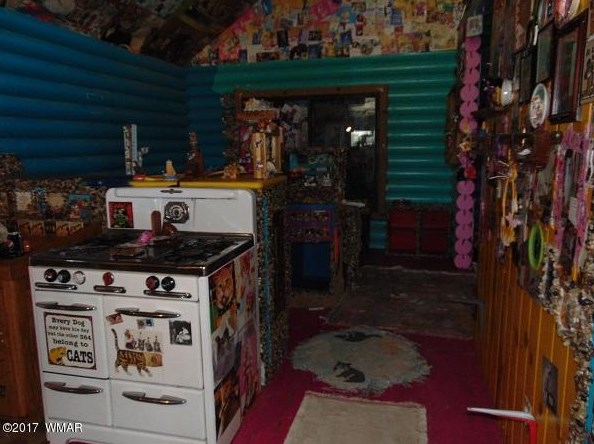
Continue going through the photos and you’ll see that the theme carries throughout the rest of the house. The kitchen, bathroom, living room and bedrooms are all similarly decorated (on top of log cabin wall surfaces painted a garish mix of colors.) There’s even a cat-shaped chandelier.

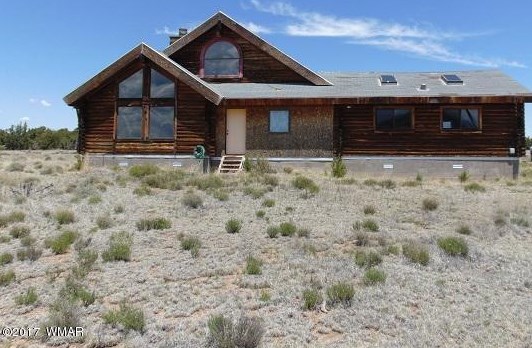
The 2,500-square-foot home is listed for $ 240,000, and it comes with 20 acres of land in the town of Concho, about 200 miles northeast of Phoenix. The town itself has a population of just 38. So really, what we’re looking at is the perfect place for mind-controlled cat slaves to establish their very own cat-worshipping compound. Or, you know, just a really great sanctuary for cats that need a safe and loving home.

Share on Facebook


[ By SA Rogers in Destinations & Sights & Travel. ]

[ WebUrbanist | Archives | Galleries | Privacy | TOS ]


WebUrbanist

 
Comments Off on Crazy Cat Castle for Sale: 20 Acres of Terror in the Arizona Desert

Posted in Creativity


Cyberpunk City: World’s First Self-Driving Grocery Store Hits Streets of Shanghai

16 Jun

[ By WebUrbanist in Architecture & Offices & Commercial. ]

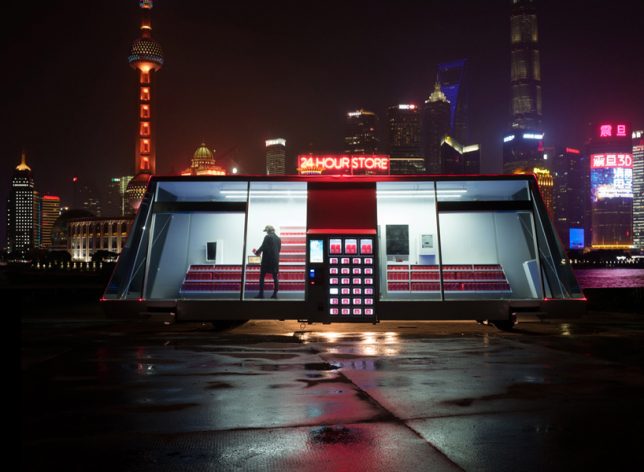
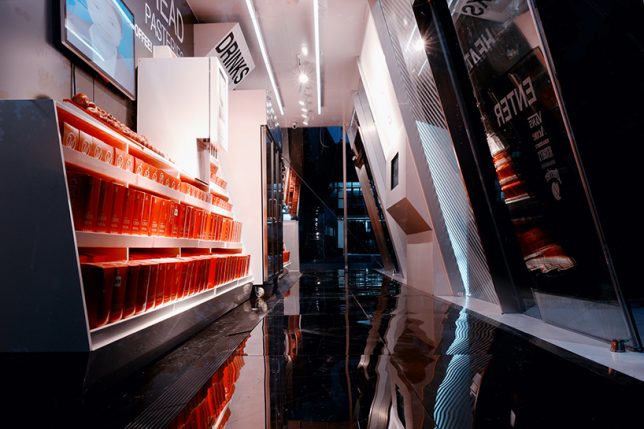
It’s a tale as old as time, or at least: science fiction films — an autonomous grocery store on wheels (staffed by a holographic assistant) that can deliver late-night snacks as well as everyday essentials.

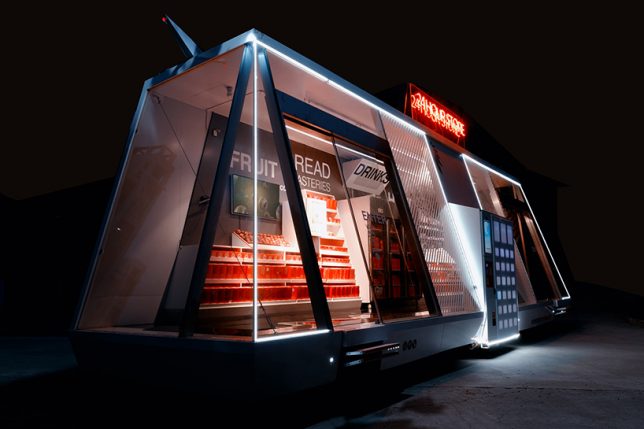
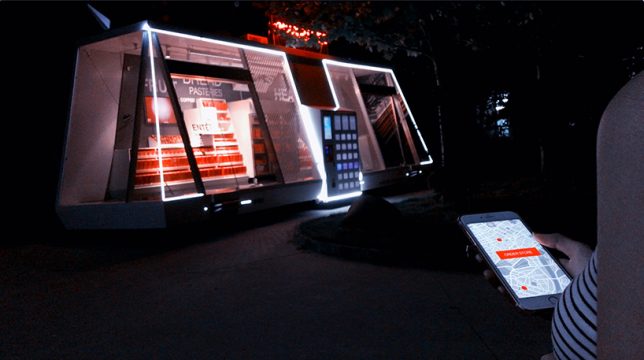
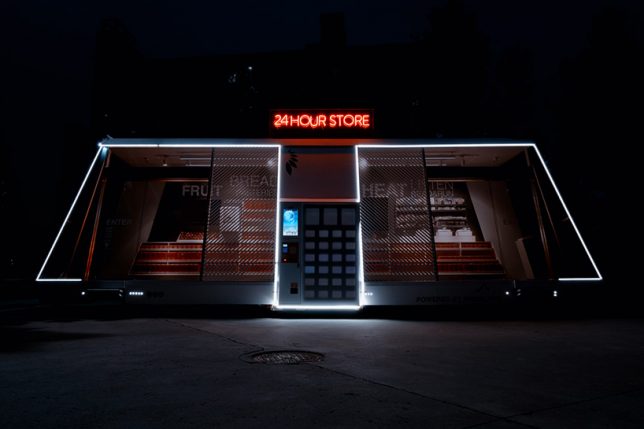
The Wheelys “Moby Mart” looks the part as well, sporting a trapezoidal shape, illuminated display in front, vintage neon sign on top, and mysteriously uniform boxes on the shelves inside.

But that retrofuturistic look is just part of the package: fueled by solar panels on the roof, this driverless shopping center operates staff-free 24/7.

When it runs low on stock it returns itself to a warehouse automatically for reloading — eventually, its makers hope to task a fleet of rooftop drones to do those pickups (maybe they could be extended to make deliveries, too).

Like other new grocery store prototypes, there will be no need to check out — items taken are automatically tallied and added to a shopper’s bill. If you need any help, the aptly named Hol (a holographic store assistant) is on hand to assist.

To top it all off, the Moby Mart has the potential to be carbon-negative, at least in terms of its urban travels — soaking up the sun for fuel, it also captures and cleans smog on its grocery runs.

A project of Himalayafy, Hefei University and Wheelys the first prototype is currently being tested out in Shanghai, a sweet spot for cyberpunk fans but a bit far for some of us to travel. But don’t worry: if all goes well your city may get one soon, too.

Share on Facebook


[ By WebUrbanist in Architecture & Offices & Commercial. ]

[ WebUrbanist | Archives | Galleries | Privacy | TOS ]


WebUrbanist

 
Comments Off on Cyberpunk City: World’s First Self-Driving Grocery Store Hits Streets of Shanghai

Posted in Creativity


Kowloon Walled City: Drone Photos Reveal a Re-Growth of Urban Density

15 Jun

[ By SA Rogers in Drawing & Digital. ]

Once notorious both for its lawlessness and a maze of urban density so intense that sunlight couldn’t penetrate to its lowest levels, Kowloon Walled City was demolished in the 1990s, but a new version of it is rising from the ashes. Standing in stark contrast to the modern towers of Hong Kong just beyond its borders, Kowloon was an autonomous ‘city of anarchy’ built up from the ground like lasagna. 500 buildings were packed into less than seven acres, and there were no municipal services like trash collection or running water.

Outsiders called it the City of Darkness, and it certainly had a squalid appearance, but former residents remember it with fondness as a friendly and tight-knit community where everyone worked together to uphold their own poor but inventive society. But Hong Kong (and later, Britain – check out our previous coverage for the history) wasn’t too fond of the fact that it was run by the mob and packed with gambling dens and brothels, not to mention concerns about its structural soundness. So in 1993, all 50,000 inhabitants were cleared out and the whole thing was razed to the ground.

In its place came a 330,000-square-foot park full of paths and pavilions named after the city’s former streets and buildings. Ponds, gardens and floral walkways took the place of layer after layer of haphazard architecture. That park is still there – but it seems that the wild profusion of growth associated with Kowloon’s spirit couldn’t be contained. It may be modernized, with orderly rows of skyscrapers instead of a labyrinthine network of mismatched towers, but it’s growing more packed every year, and this level of density is creeping into the rest of Hong Kong, too.

Photographer Andy Yeung proves as much with his new drone photography series, Walled City. “The Kowloon Walled City was once the densest place on Earth. Hundreds of houses stacked on top of each other enclosed in the center of the structure. This notorious city was demolished in 1990s. However, if you look hard enough you will notice that the city is not dead.”

“Part of it still exists in many of current high density housing apartments where the only view out of the window is neighbor’s window. I hope this series can get people to think about claustrophobic living in Hong Kong from a new perspective.”

See the whole series at Andy Yeung’s website or on 500px.

Share on Facebook


[ By SA Rogers in Drawing & Digital. ]

[ WebUrbanist | Archives | Galleries | Privacy | TOS ]


WebUrbanist

 
Comments Off on Kowloon Walled City: Drone Photos Reveal a Re-Growth of Urban Density

Posted in Creativity


Architecture for Airheads: 13 Intriguingly Interactive Inflatable Structures

15 Jun

[ By SA Rogers in Art & Installation & Sound. ]

Who can resist a gigantic bubble that’s big enough to climb into? Inflatables aren’t just practical, packing down to surprisingly small packages and then popping right back up into sizable structures, they’re also just plain fun, whether they act as portable temporary architecture, offer bouncing surfaces, react to movement with light and sound or just casually perch on top of buildings like it’s no big deal.

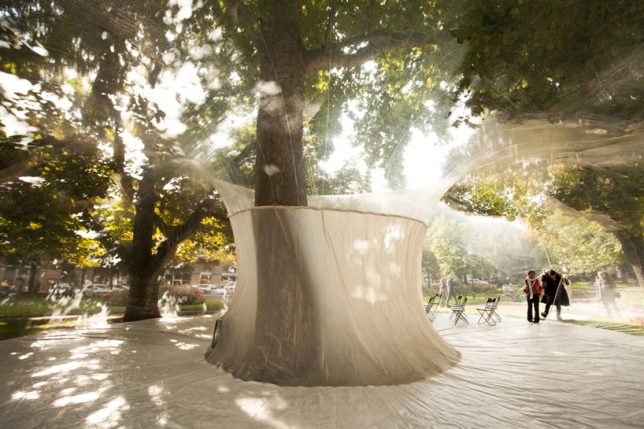
Stage for Oerol Festival by Plastique Fantastique
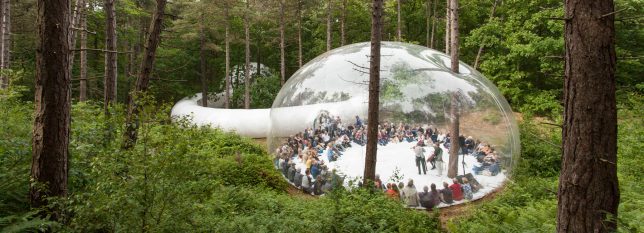
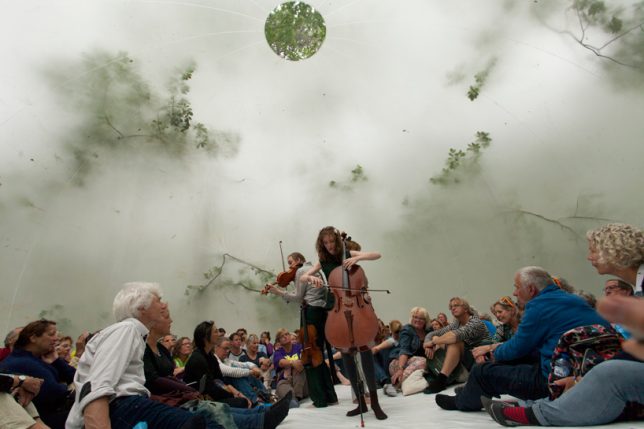
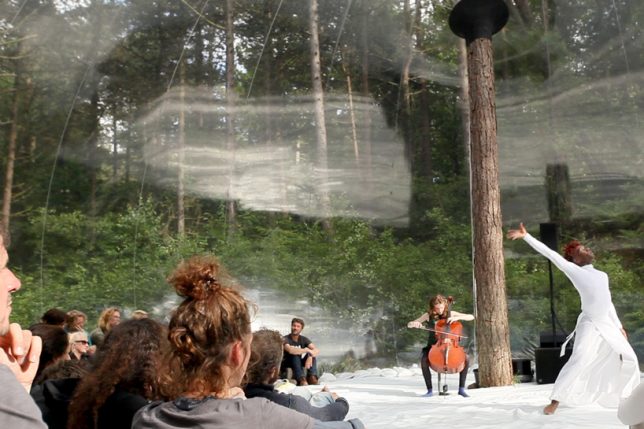
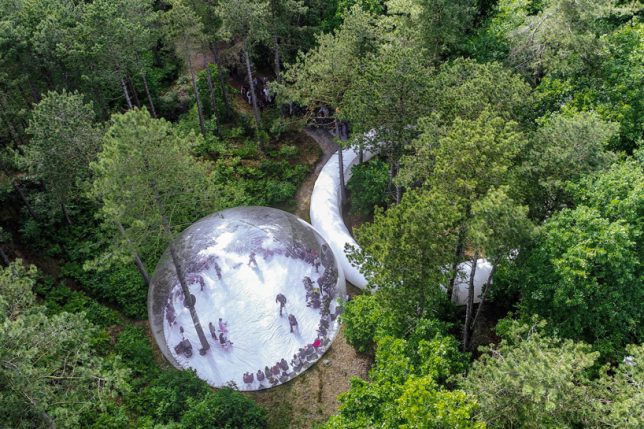
An entire island is used as a stage for events during the Oerol Festival in the Netherlands, and this year, Plastique Fantastique has crafted a special way to enclose some of that space without cutting it off from its surroundings or erecting a permanent structure. This inflatable creation is a transparent orb pierced by a single tree trunk, its skin reflecting the performers as they move

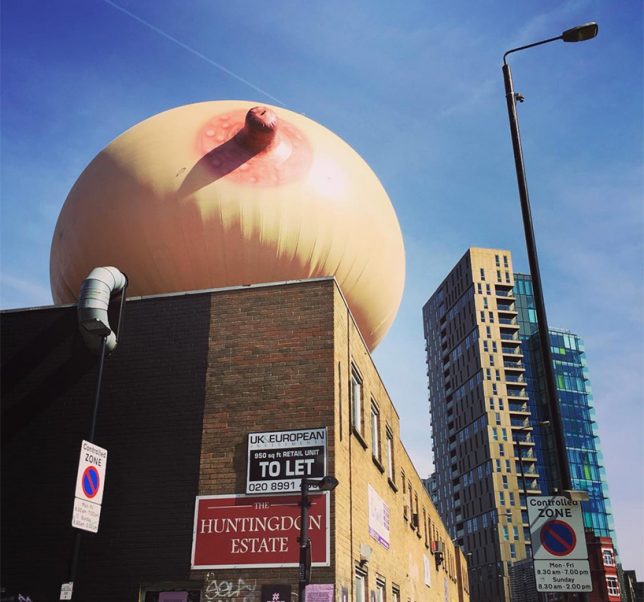
#FreeTheFeed Inflatable Breast Sculpture

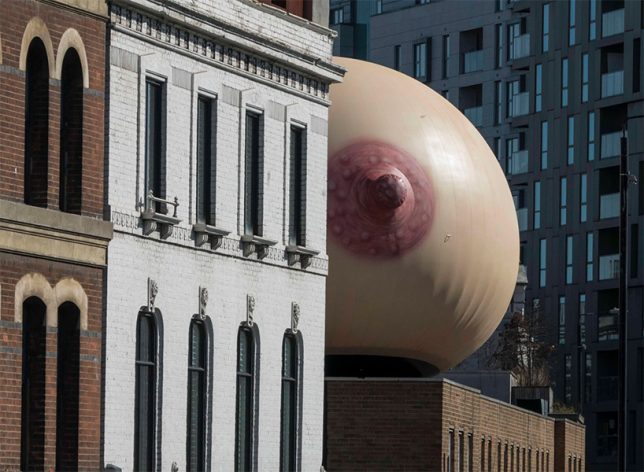
A campaign by Mother London to normalize breastfeeding in public, called #freethefeed, placed a gigantic inflatable breast on top of a brick building in the east London district of Shoreditch during Mother’s Day in the UK. For anyone who might be scandalized at such a sight, nearby flyers explained the project’s educational motives. “It’s hard to believe that in 2017, UK mothers still feel watlched and judged when feeding in public, by bottle or breast. This was our Mother’s Day project. A celebration of every woman’s right to decide how and where they feed their children without feeling guilty or embarrassed about their parenting choices.”

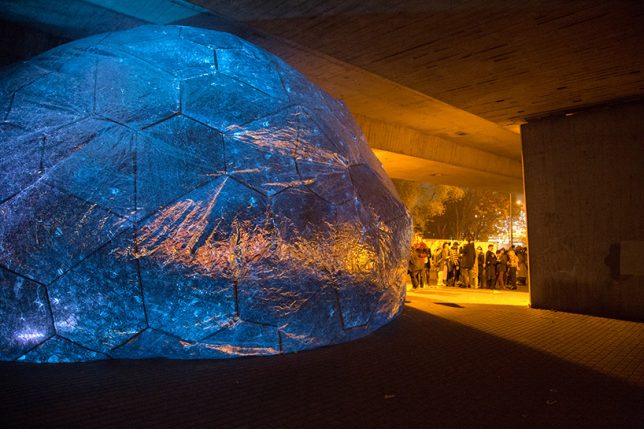
Inflatable Infinity Space

Crinkled metallic fabric creates an inflatable silver sphere in which the cosmos seem to be contained. ‘Osmo’ was created by London-based studio loop.ph for the Light Night Canning Town 2014, placed beneath London’s high-traffic A13 flyover to recreate a stretch of star-filled sky that has been lost to development.

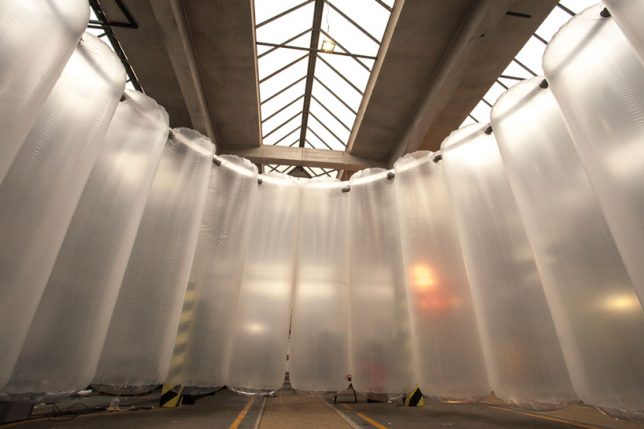
SiloSilo by Plastique Fantastique
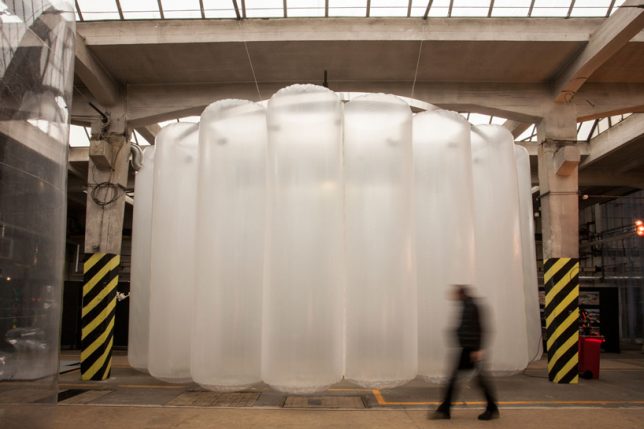
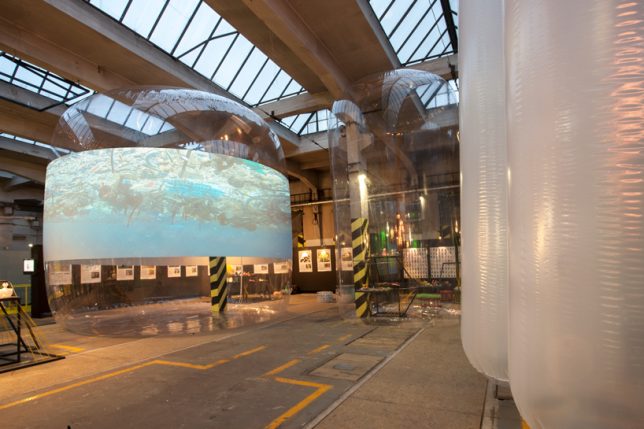
Creating a series of conference spaces and acting as a backdrop for video projection, a bunch of giant inflated cylinders bring awareness to the use of recycled materials as part of the traveling project SiloSilo. For example, a donut-shaped inflatable called ‘MEDUSA,’ which packs down small enough to transport in a box, represents the amount of plastic garbage produced by the city of Pilsen, Czech Republic in just three days.

Inflatable Floating Playground in Dubai

Partiers bounce, jump and dive off a series of inflatable structures spelling out ‘DUBAI’ in the water at Jumeirah Beach residence. The ‘dubaiTAG’ installation by Wibit Sports is made from nearly 100 modular components to create an inflatable waterpark.

Next Page – Click Below to Read More:
Architecture For Airheads 13 Intriguingly Interactive Inflatable Structures

Share on Facebook


[ By SA Rogers in Art & Installation & Sound. ]

[ WebUrbanist | Archives | Galleries | Privacy | TOS ]


WebUrbanist

 
Comments Off on Architecture for Airheads: 13 Intriguingly Interactive Inflatable Structures

Posted in Creativity


Sea Monsters: Massive Crocheted Sea Urchins Float Over Singapore

14 Jun

[ By SA Rogers in Art & Installation & Sound. ]

Mutant sea urchins seem to have evolved into monstrous, buoyant creatures capable of rising above the surface of the sea, glowing softly against the skyline in Singapore. Made from crocheted lace, these three oversized urchin installations by Choi + Shine invite passersby to pause within them and take in the city through their patterned shells.

Created for this year’s i Light Marina Bay Festival, which focuses on sustainability, The Urchins are hand-crafted and interactive, each one hanging high enough to dwarf even the tallest visitors. Made from UV- and weather-resistant polyester cord stretched on an aluminum frame, the urchins hang from ultra thin cables.

“At night, the mysteriously hovering and glowing large Urchins create a sense of magic as if time has stopped,” says Choi + Shine. “When viewers enter into the Urchins, they will be surrounded by a single layer of glowing, lacy surface, where they can enjoy the detail and texture of the Urchins and see the city, water and the sky through this visual filter.”

“When other viewers see the occupants in the Urchins, the occupants will glow within the lacy room, creating an illusion of ethereal levitation of the occupants, while the occupants become a part of the artwork.”

Share on Facebook


[ By SA Rogers in Art & Installation & Sound. ]

[ WebUrbanist | Archives | Galleries | Privacy | TOS ]


WebUrbanist

 
Comments Off on Sea Monsters: Massive Crocheted Sea Urchins Float Over Singapore

Posted in Creativity


Brutalist Victory: Concrete Skylines Dominate Radical Retro-Future Cities

13 Jun

[ By WebUrbanist in Architecture & Cities & Urbanism. ]

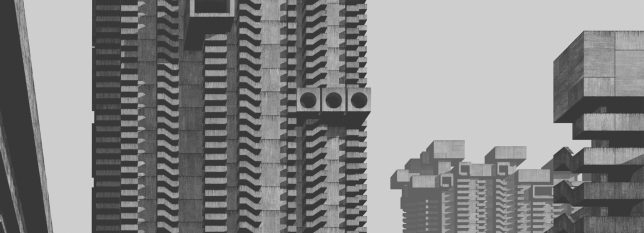
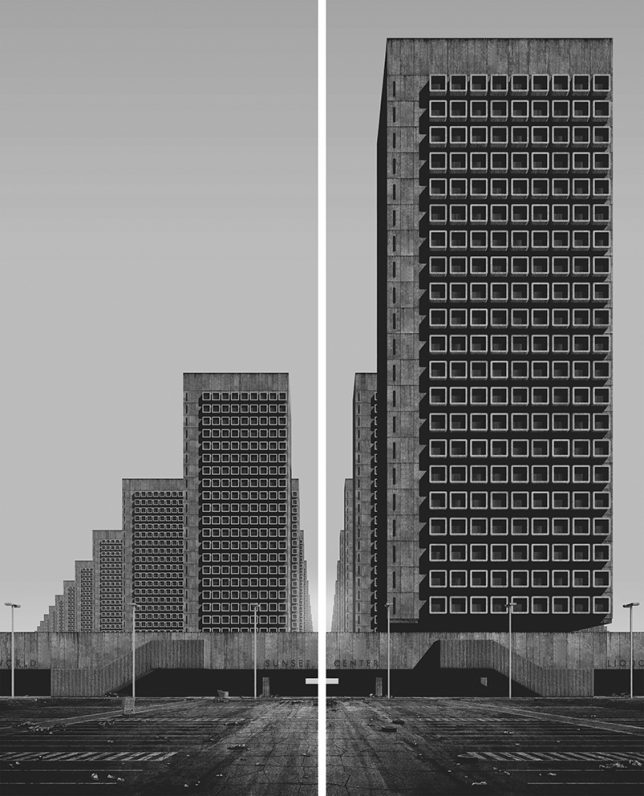
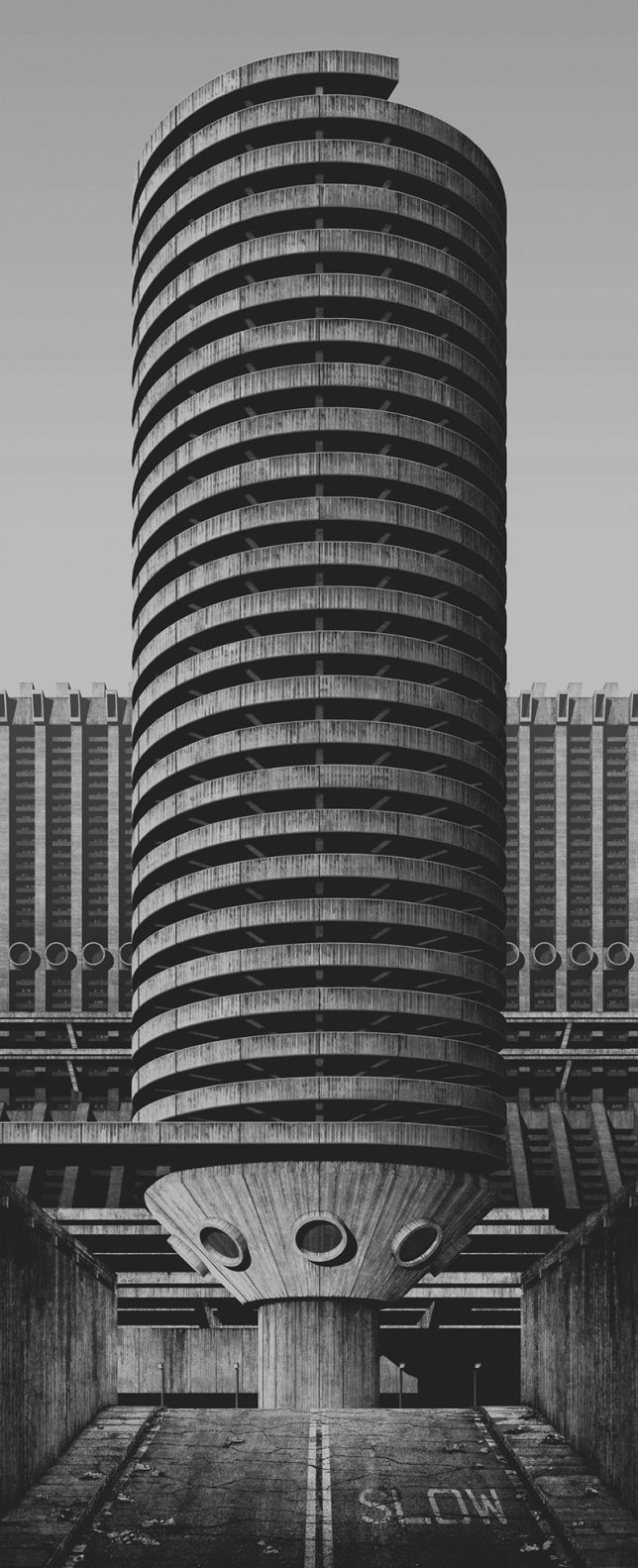
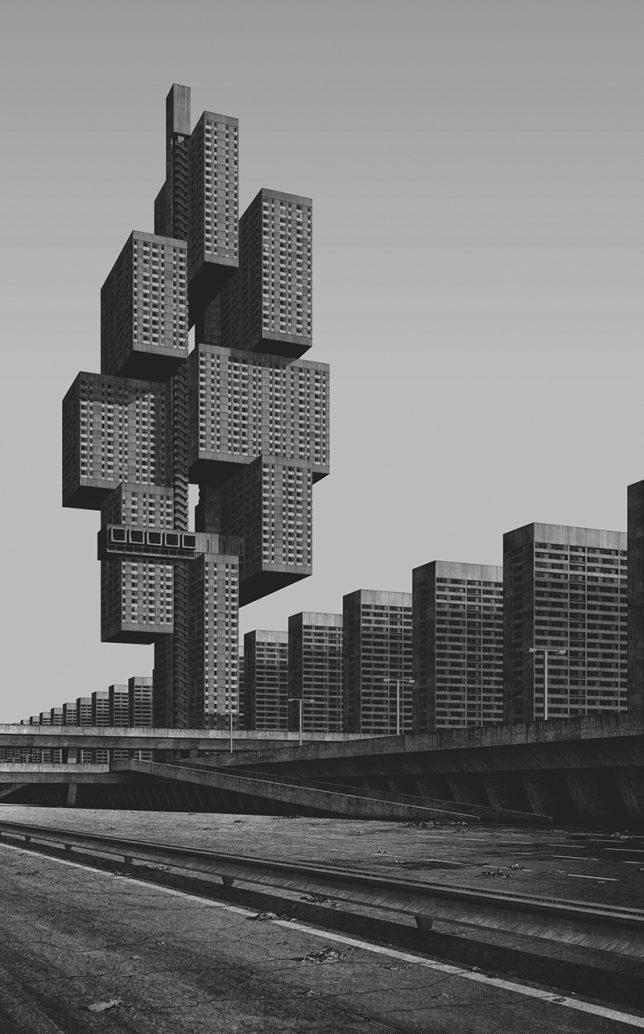
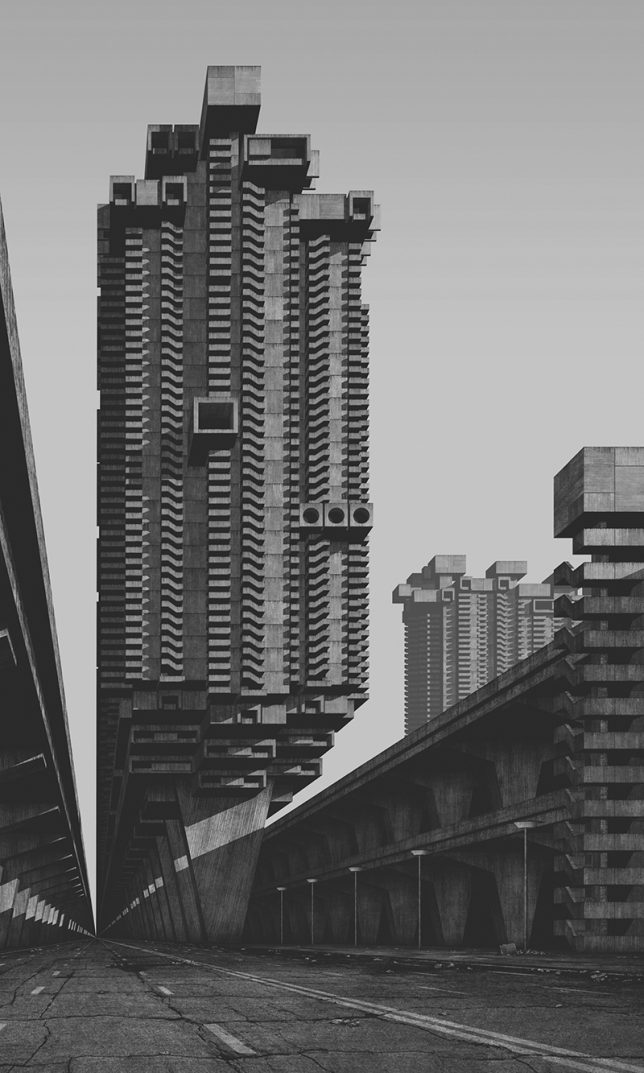
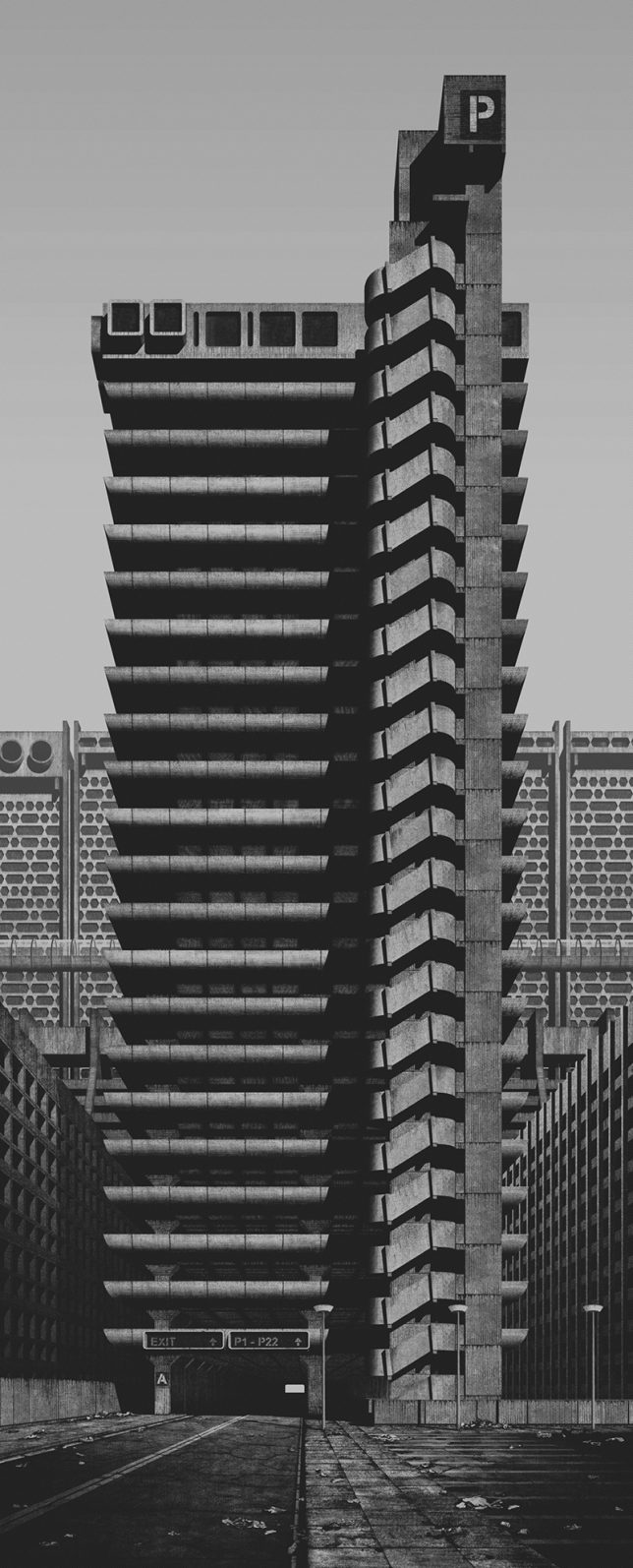
Architectural trends come and go, but some visions are more persistent than others, and Brutalism could have been among them. This artist asks and answers the question: what if concrete monstrosities of the 1960s and 70s had somehow won the war against the steel-and-glass towers that dominate contemporary skylines?

German digital artist Clemens Gritl has built a virtual world around this retro-futuristic vision, dubbed “A Future City from the Past”, populated with extreme forms of concrete idealism. His “super-brutalist” metropolis extrapolates the revolutionary aesthetic of this harsh material, seen for a time as representing social progress and democratic ideals in architectural form.

Through 3D modeling (exhibited as black-and-white 2D images), this series presents something that could have been seen as utopian but inevitably, with Brutalism in hindsight, feels oppressive and dystopian. His renditions are meant to look like products of a past time, capturing Modernist-worthy views of these giant-sized Brutalist creations.

“All buildings and structures are homogenic,” says the artist. “The differentiations of architectural styles and eras are eliminated and replaced by geometric structures, repetition and absolute materiality.”

“Ballard’s novel paints a dark dystopian picture — the architecture of a single residential tower becomes the driving force for mysterious changes of the tenants behaviour. Can the presence of a high-rise structure truly create such a threatening atmosphere and social tension, culminating in murder, decay, destruction and even anarchy?”

Individually, various structures recall Modernist greats as well, like a towering residential complex arrayed on piloti (columns) as envisioned and realized by Le Corbusier. But, like Corbu’s masonry towers for his idyllic cities, the results do not look particularly livable. Perhaps the portrayal is also a little unfair — after all, Corbu at least envisioned these things surrounded by green landscapes.

Share on Facebook


[ By WebUrbanist in Architecture & Cities & Urbanism. ]

[ WebUrbanist | Archives | Galleries | Privacy | TOS ]


WebUrbanist

 
Comments Off on Brutalist Victory: Concrete Skylines Dominate Radical Retro-Future Cities

Posted in Creativity


Haul For One: U-Haul Adapts & Reuses Abandoned Buildings

12 Jun

[ By Steve in Architecture & Offices & Commercial. ]

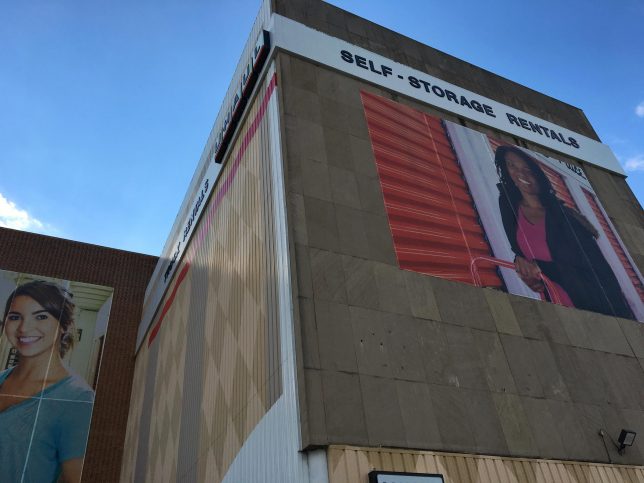
U-Haul company’s commitment to renovate and reuse abandoned buildings is not only economical, it also serves to revitalize post-industrial neighborhoods.

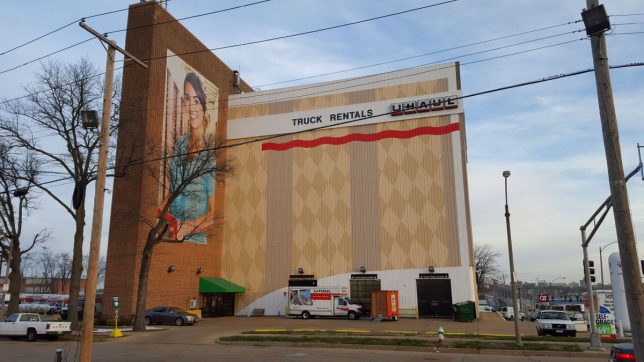
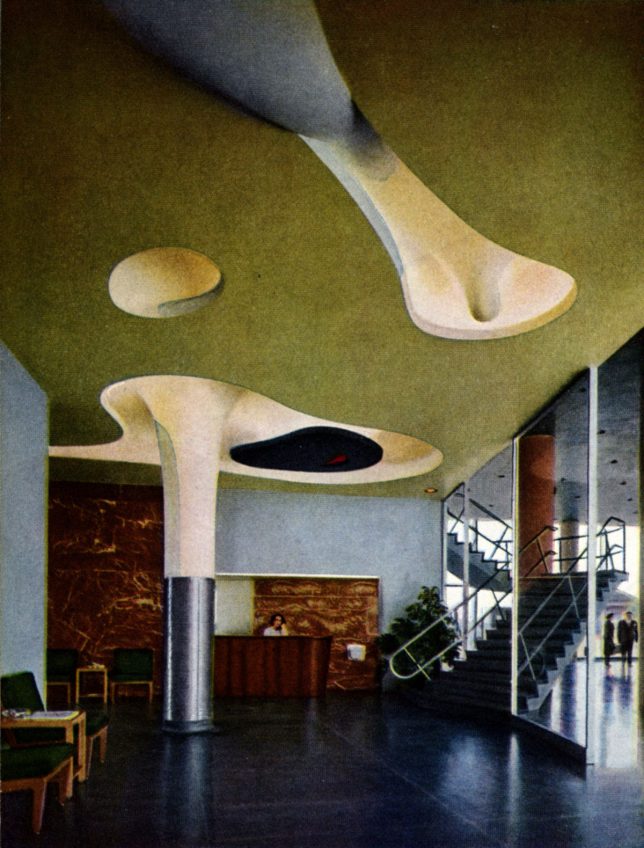
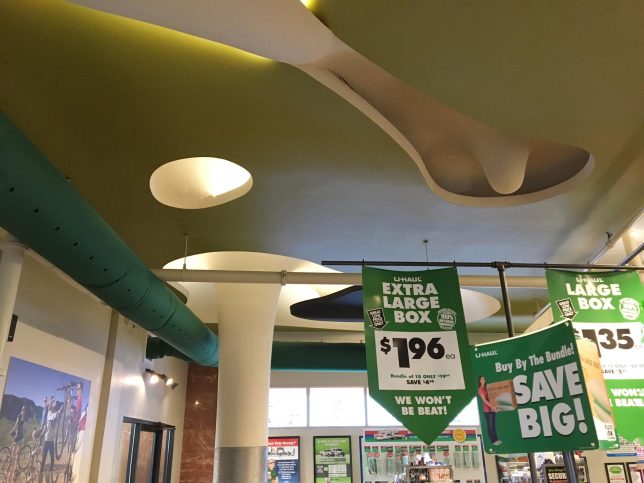
One of U-Haul’s most noteworthy adaptive reuse projects is the former Magic Chef head office building in south St. Louis, Missouri. Built in 1947-48 and designed by architect Harris Armstrong, the building’s lobby featured a beautiful sculptured ceiling created by legendary Japanese-American artist Isamu Noguchi.

Magic Chef sold its St. Louis buildings and factories in the late 1950s and the head office building at 1641 South Kingshighway sat abandoned for about a decade before U-Haul bought it in 1977.

A practical renovation in the early 1990s saw a drop ceiling installed beneath Noguchi’s sculptural ceiling but thanks to U-Haul’s current focus on adaptive reuse and respectful regional marketing, both the building and its unique mid-century lobby ceiling are undergoing a well-deserved renaissance.

Shop The Pig

U-Haul’s corporate sustainability initiatives pay off for both the company and the community in a number of ways including lightening the local carbon footprint, reducing consumption of energy and resources on new construction, and helping cities and towns reduce their inventories of unwanted buildings. Saving historic architecture isn’t always a priority, however. This former Fox Brother’s Piggly Wiggly supermarket in Saukville, Wisconsin is a prime example. The defunct grocery store was converted into the U-Haul Moving & Storage of Port Washington full-service moving and self-storage facility over the summer of 2016.

For St. Pete’s Sake

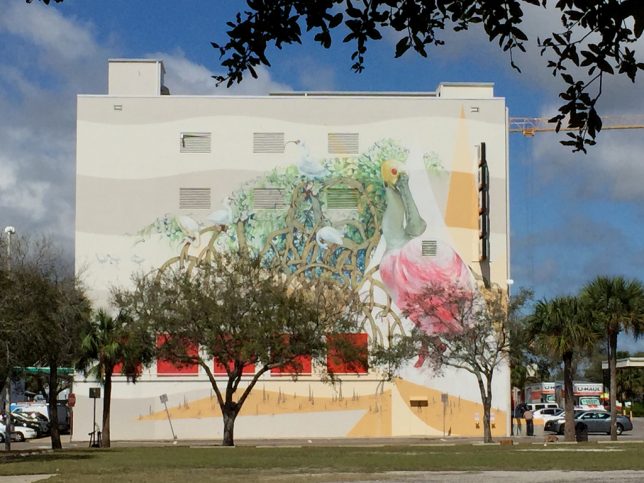
U-Haul doesn’t have to expend the expense required to beautify their adaptively reused buildings but aren’t you glad they do? Take the U-Haul depot above, located in downtown St. Petersburg, Florida. Formerly a drab, dreary, abandoned rail-connected cold storage building, the structure now boasts a gigantic mural of Tampa Bay wetlands fauna and flora on one side highlighted by an artistically rendered Roseate Spoonbill. Flickr user Mark Evans (st_asaph) captured this uplifting urban scene on February 27th of 2017.

Next Page – Click Below to Read More:
Haul For One U Haul Adapts Reuses Abandoned Buildings

Share on Facebook


[ By Steve in Architecture & Offices & Commercial. ]

[ WebUrbanist | Archives | Galleries | Privacy | TOS ]


WebUrbanist

 
Comments Off on Haul For One: U-Haul Adapts & Reuses Abandoned Buildings

Posted in Creativity


World’s Largest “Car Vending Machine” Dispenses Real Bentleys & Ferraris

10 Jun

[ By WebUrbanist in Design & Guerilla Ads & Marketing. ]

Combining architecture, advertising and technology, this car dealership lets users punch in numbers to bring their vehicle of choice down a 15-story showroom looming above in full view. The tall lit-up facade of Autobahn Motors acts as a billboard and show space, letting fans scope out a Lamborghini from a distance then take it out for a test drive on the streets below.

The design responds in part to the lack of surface real estate in this space-crunched island city-state, but it also serves as great marketing for the business. While not the first such automobile-vending tower in the world, it is the largest, and it works quickly: a user-selected vehicle can be brought down in just two minutes from the floors far above. Given land scarcity in cities, this unusual-looking typology makes a lot of sense, and could start to spring up in other places as well.

Meanwhile, for those in the United States: Carvana has smaller versions located in Austin, Texas and Nashville, Tennessee. These are less a response to density issues and more driven by marketing and novelty.

And while the towers aren’t quite as tall the effect is still pretty neat – modular platforms provide vehicles on demand from an array of sports cars, hatchbacks, minivans and trucks.

As a bonus for fans of quirky interactivity: their system operates even more like a vending machine – users are given a giant coin to insert, which lets them bring down the vehicle of their choice from the display racks above.

Share on Facebook


[ By WebUrbanist in Design & Guerilla Ads & Marketing. ]

[ WebUrbanist | Archives | Galleries | Privacy | TOS ]


WebUrbanist

 
Comments Off on World’s Largest “Car Vending Machine” Dispenses Real Bentleys & Ferraris

Posted in Creativity


Bikesphere: Car-Detecting Ring of Red Light Puts Cyclists in a Safety Bubble

09 Jun

[ By SA Rogers in Design & Products & Packaging. ]

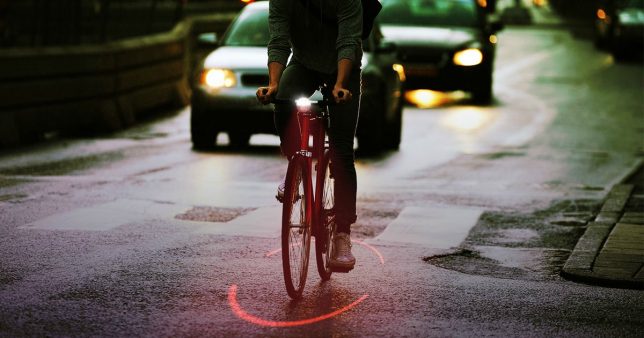
There’s no missing cyclists – or the zone of space you need to safely pass them – when they’ve got a ring of red light encircling them as they ride down the road. Michelin’s new open-source project, Bikesphere, features a light sensor and proximity detecting sensor that work together to monitor the environment around a cyclist and react accordingly if a car gets too close, pointing a double laser spotlight on the ground to define a safety area.

As it stands, riding a bike in an urban area can be a risky proposition, with more than 5,000 avoidable accidents happening every year due to cars passing cyclists at an unsafe distance.

During the day, the Bikesphere works like a normal light-detecting bike lamp, turning on when you go through dark areas as needed. By night, it’s ready to defend you, projecting a single-lined sphere for the entirety of your ride. When it can tell a car is coming, the light turns into a double line and starts to spin faster to alert both the cyclist and the driver.

Bikesphere is the first crowd-sourced idea to come to fruition through Michelin’s #TrendyDrivers movement, which aims to change the habits of drivers to make the roads safer. When an idea is approved, they fund the project to get it off the ground. Ultimately, the Bikesphere will be made public, so anyone who wants one can purchase the common components and download the plans to print the rest using standard 3D printers.

Share on Facebook


[ By SA Rogers in Design & Products & Packaging. ]

[ WebUrbanist | Archives | Galleries | Privacy | TOS ]


WebUrbanist

 
Comments Off on Bikesphere: Car-Detecting Ring of Red Light Puts Cyclists in a Safety Bubble
Posted in Creativity